- Garden and park solar-powered lamps: varieties
- Bollards
- Built-in lights
- Luminaires for water structures
- Decorative lamps
- Large lamps
- Wall lamps
- Portable solar battery - especially for tourists
- Types of solar panels
- Advantages
- Where and how is solar energy used?
- Scope of solar panels
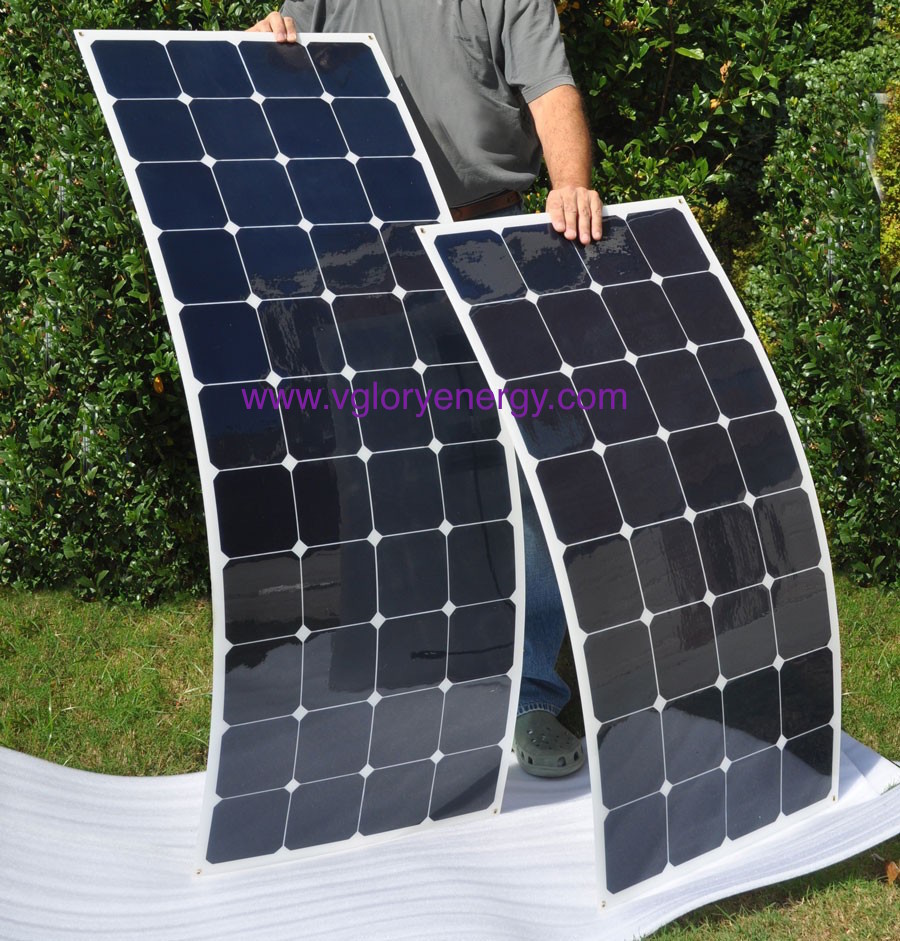
- Features of the use of flexible amorphous panels
- Manufacturing
- Solar car as an invention of the twentieth century
- Choice
- Review
- Battery connection methods
- Conclusions and useful video on the topic
Garden and park solar-powered lamps: varieties
Depending on the size and type of the site, landscaping and overall design style, luminaires can be used in various shapes, types of light dispersion and other characteristics. Consider the types of lighting for the garden solar-powered and their features.
Bollards
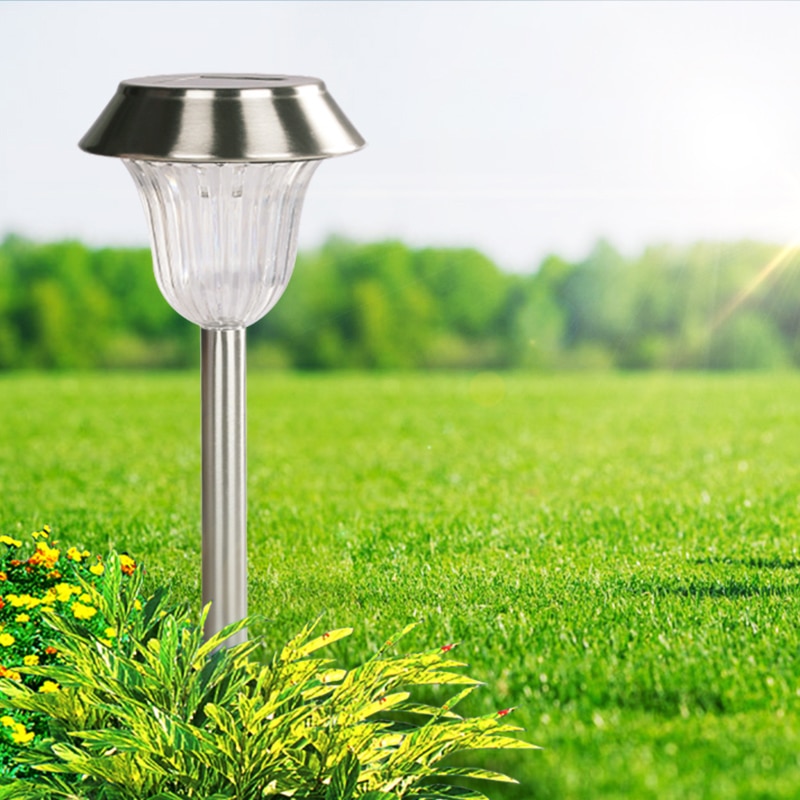
- Lamps in the form of poles or bollards are the most common type of spot lighting for a garden plot.
- This type is mainly intended for lighting paths, paths, flower beds, garden figurines and other garden decor elements where there is no need for bright and strong lighting.
- The height of the lamps can reach from 50 to 150 cm.
- The design of the light source can be the most diverse, it all depends on the manufacturer's imagination, starting from the standard classics - a spherical shape and a cone, ending with various silhouettes of figurines, bells, etc.
- Such lamps are easy to move, they can be removed from the ground and stuck more tightly in the place where it will fully perform its functions.
- Most often, bollards are used precisely in the design of areas in the style of high-tech and minimalism. These are columns retracting from the ground with a luminous flux directed downwards.
Built-in lights
Such light sources are mainly needed in order to indicate the contour of the object.
Usually they are installed along the perimeter of the path, in the ground, in the steps of the stairs, and are also used as illumination of various objects from below, for example, the facade of a building, sculptures, art objects, shrubs, etc.
Such lighting should not be too bright and powerful, it only highlights and illuminates an object or structure so as not to go astray in the dark or draw attention to a specific object.
Basically, recessed lights use LEDs, but if you need to illuminate the facade of a building, you need a certain angle of inclination and a powerful beam of light so that the light falls as high as possible and can illuminate the entire building in length.
Luminaires for water structures
If you are the owner of a reservoir, pool or fountain, the illumination of such an object will look very beautiful.
In addition, the use of such a design for a home pond is important from a safety point of view, because in the dark you can stumble and end up in the water, even if you know your area very well.Orientation by touch in the twilight still does not insure you and your children from a possible fall.
The backlight can be made both monochrome and multi-colored, and this is especially true for fountains.
Luminaires can be installed along the perimeter of a water structure or even under water. However, you should not place them so that the light falls directly on the water, so the beam of light will not penetrate into the depths of the water, and you will not get the expected charm from the dispersion of lighting in the pond.
However, you should not place them so that the light falls directly on the water, so the beam of light will not penetrate into the depths of the water, and you will not get the expected charm from the dispersion of lighting in the pond.
Decorative lamps
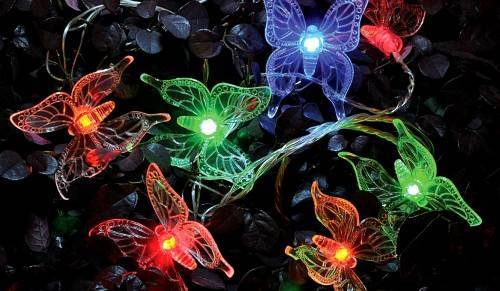
- Such lighting sources for a personal plot often serve simply as its decoration.
- The shape and color of lamps of this type can be very different. You can stop at the form of fairy-tale characters, garlands of birds located on trees or backlit flowers.
- Solar-powered ball lamps look very restrained and elegant, when the garden can acquire the style of a galaxy with the help of forms of lamps of various diameters, placed at different heights.
Large lamps
- This type of lighting is mostly mounted on a sturdy pole, as they are tall enough to function as large street lights powered by electricity.
- Their batteries are well protected from dust and moisture. Such flashlights are an expensive pleasure, since powerful LEDs are located inside, which, when fully charged, can work from 3 to 4 days without interruption.
- The height of such a column can vary up to several meters. They work year-round, regardless of the season.
Wall lamps
- These light sources perform the same function as recessed fixtures, but they also have their own characteristics. They should be installed in such a way that the sun's rays hit the surface for as long as possible during the day, otherwise they will not have time to charge properly.
- When fully charged, the wall lamp can work up to 10 hours, and if it is a cloudy day, then such a light source will not be able to fully fulfill its function. The sunnier and brighter the day, the better the battery will charge.
- Such lamps are used to illuminate the walls of houses, garages, fences and other structures.
Portable solar battery - especially for tourists
Everyone nowadays has electronic gadgets. It doesn't mean that some have less and some have more. All of them need to be charged, and for this you need chargers. But, this issue is especially acute for those who get into places where there is no power supply. Solar panels are the only way out. However, their prices remain high, and the choice is small. The best option, as is commonly believed, is Goal Zero products (although there are both Russian products and Chinese ones - as always in doubt).
But it turned out, that's not all bad that is made in China or Korea. Particularly pleased with the solar panel company YOLK from Chicago, which began production of a compact solar panel Solar Paper - the thinnest and lightest. Its weight is only 120 grams. But there are other advantages - a modular design that allows you to increase power.The solar battery is similar to a plastic box, similar in size to an iPad, only twice as thin. A solar panel is placed on its front side. There is an output for a laptop and USB ports on the case and for connecting other solar panels, as well as a flashlight. Inside this miracle box are batteries and a control board. You can charge the device from the outlet, and at the same time it can be a phone and two laptops. Of course, the device is also charged from the sun. As soon as light hits it, the indicator lights up. In field conditions, the solar panel is simply irreplaceable: it successfully charges all the necessary devices - phones faster, laptops.
Portable solar panels are compact in size: they are even available in the form of key chains, which can be attached to anything. They were developed in order to be able to take them on fishing trips, etc. They must have a flashlight so that at night you can light up the road, tent, etc., mounts that make it easy to place them on backpacks, kayaks, tents
It is very important that such a device has a built-in battery that allows you to charge your devices at night.
Types of solar panels
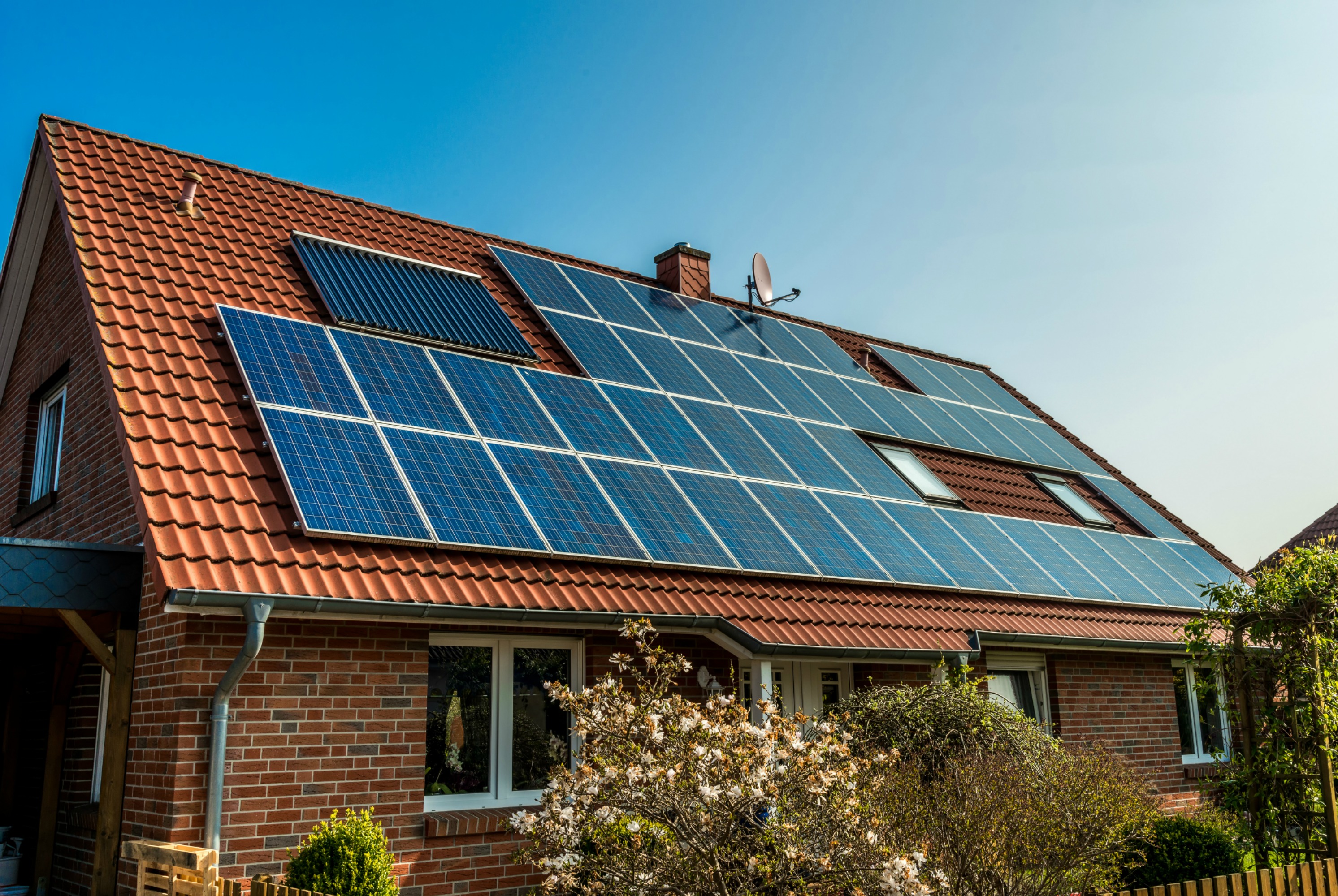
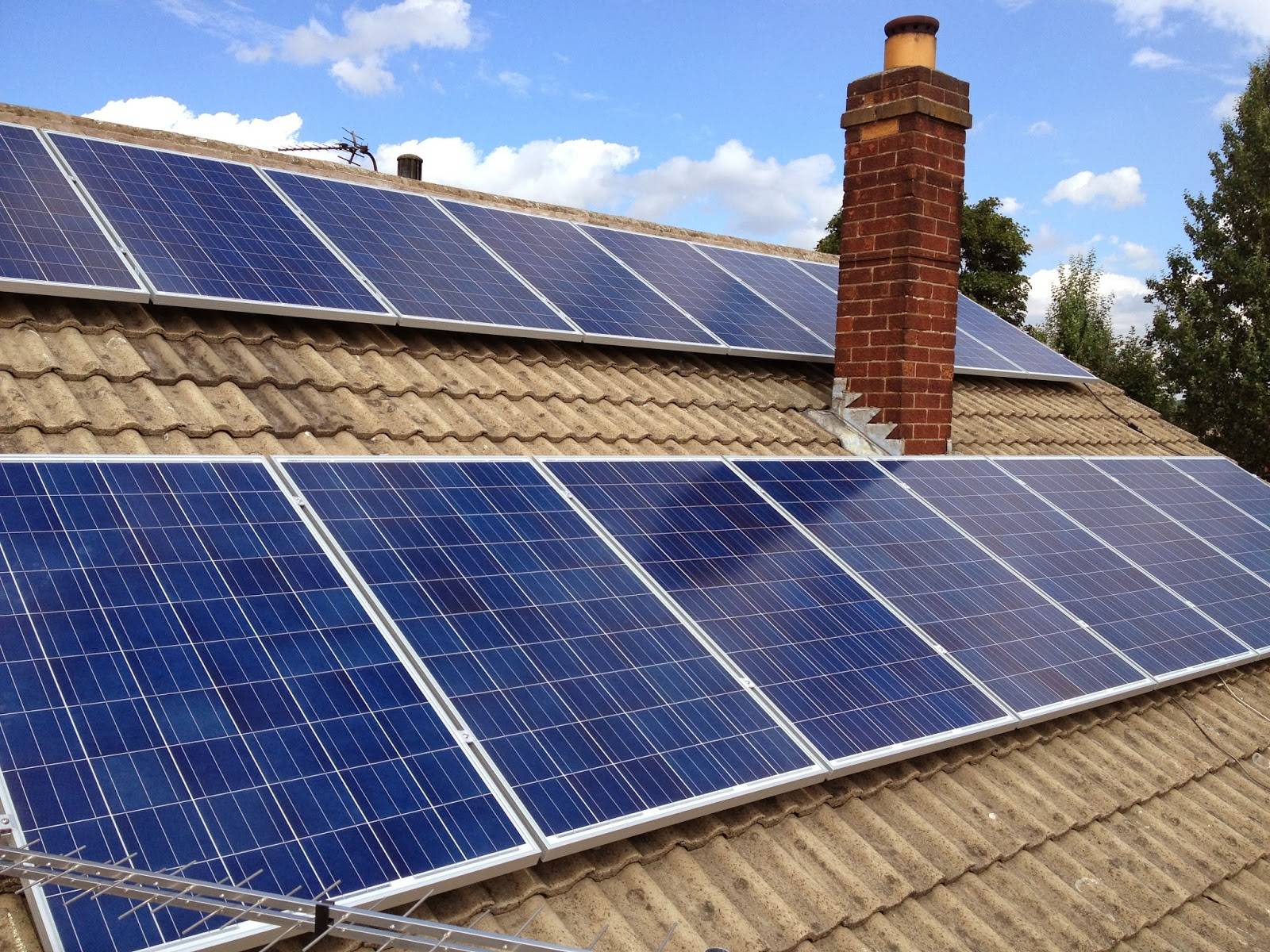
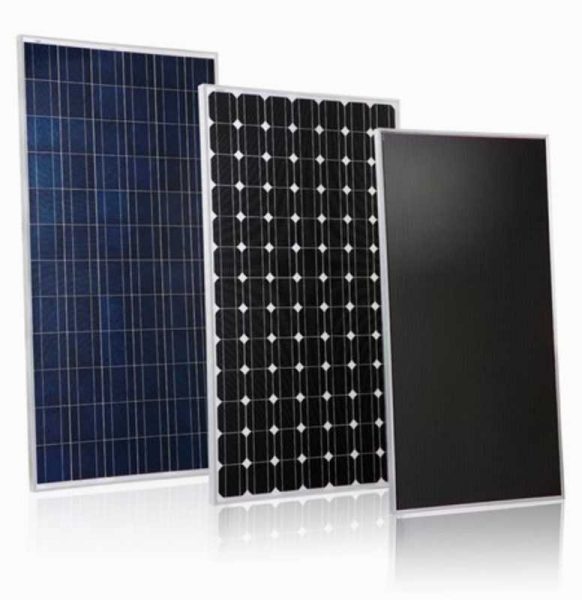
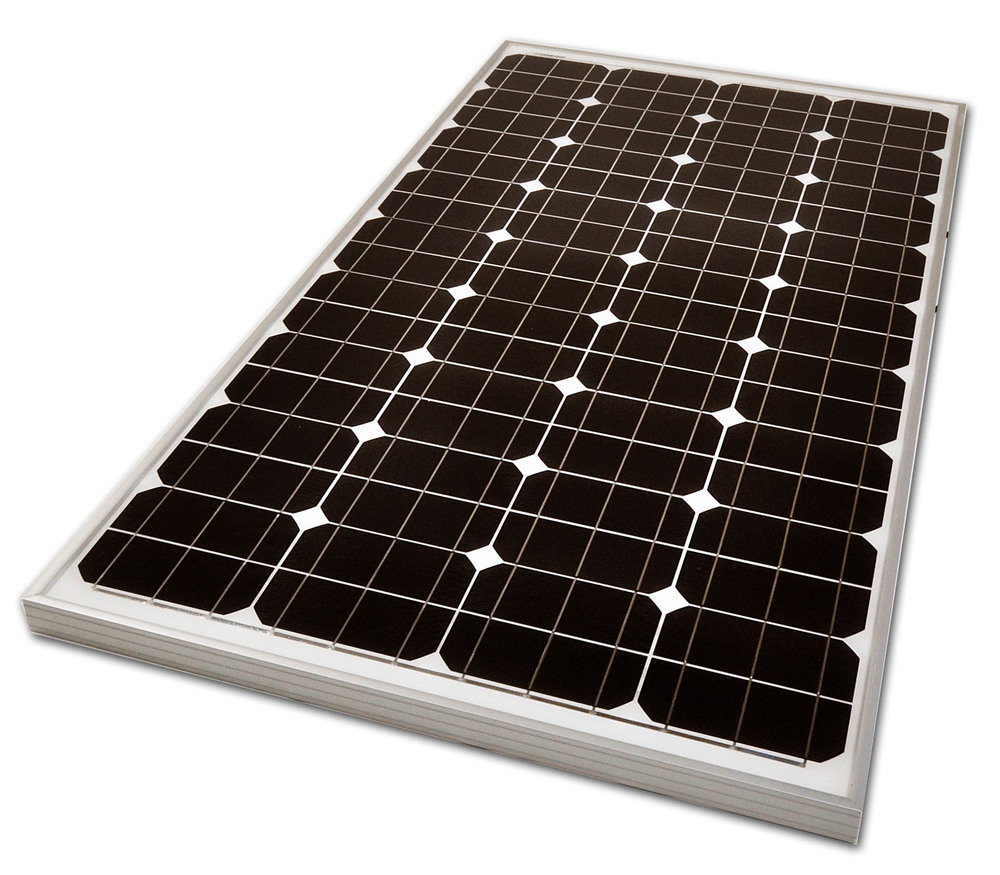
All solar panels appear to be the same at first glance - dark glass-covered elements with conductive metal strips housed in an aluminum frame.
But, solar panels are classified according to the power of the electricity it generates, which depends on the design and area of \u200b\u200bthe panel (they can be miniature plates with a power of up to ten watts and wide “sheets” of two hundred or more watts).
In addition, they differ in the type of photocells that form them: photochemical, amorphous, organic, as well as those created on the basis of silicon semiconductors, in which the photoelectric conversion coefficient is several times higher. Consequently, more power (especially during sunny weather). A competitor of the latter can be a solar battery based on gallium arsenide. That is, there are five types of solar panels on the market today.

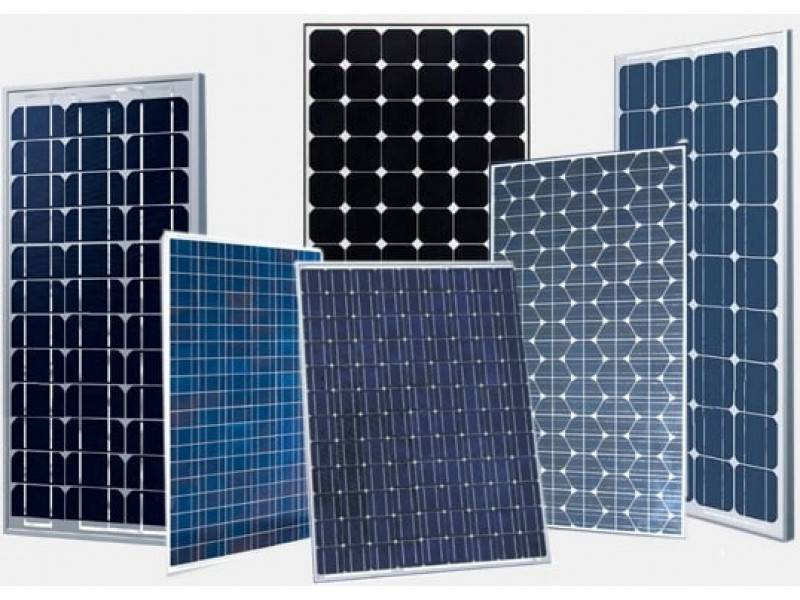

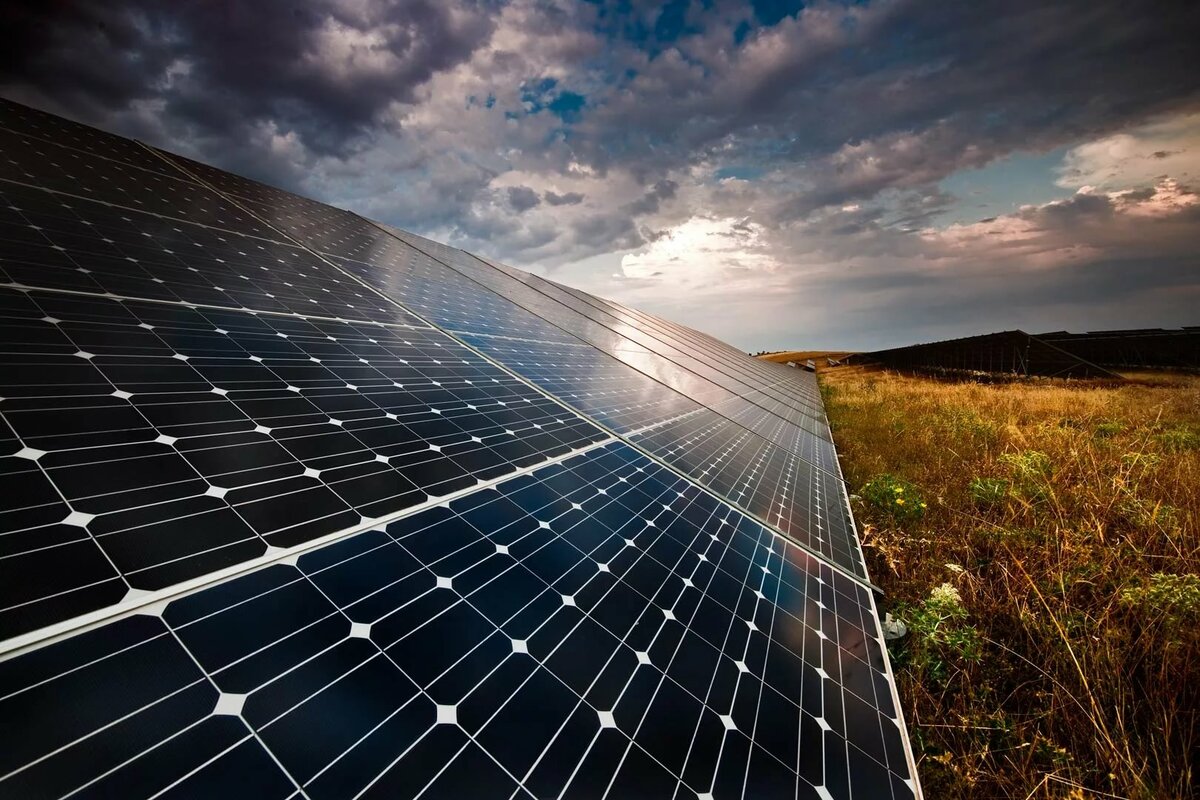

They differ in the materials used to make them:
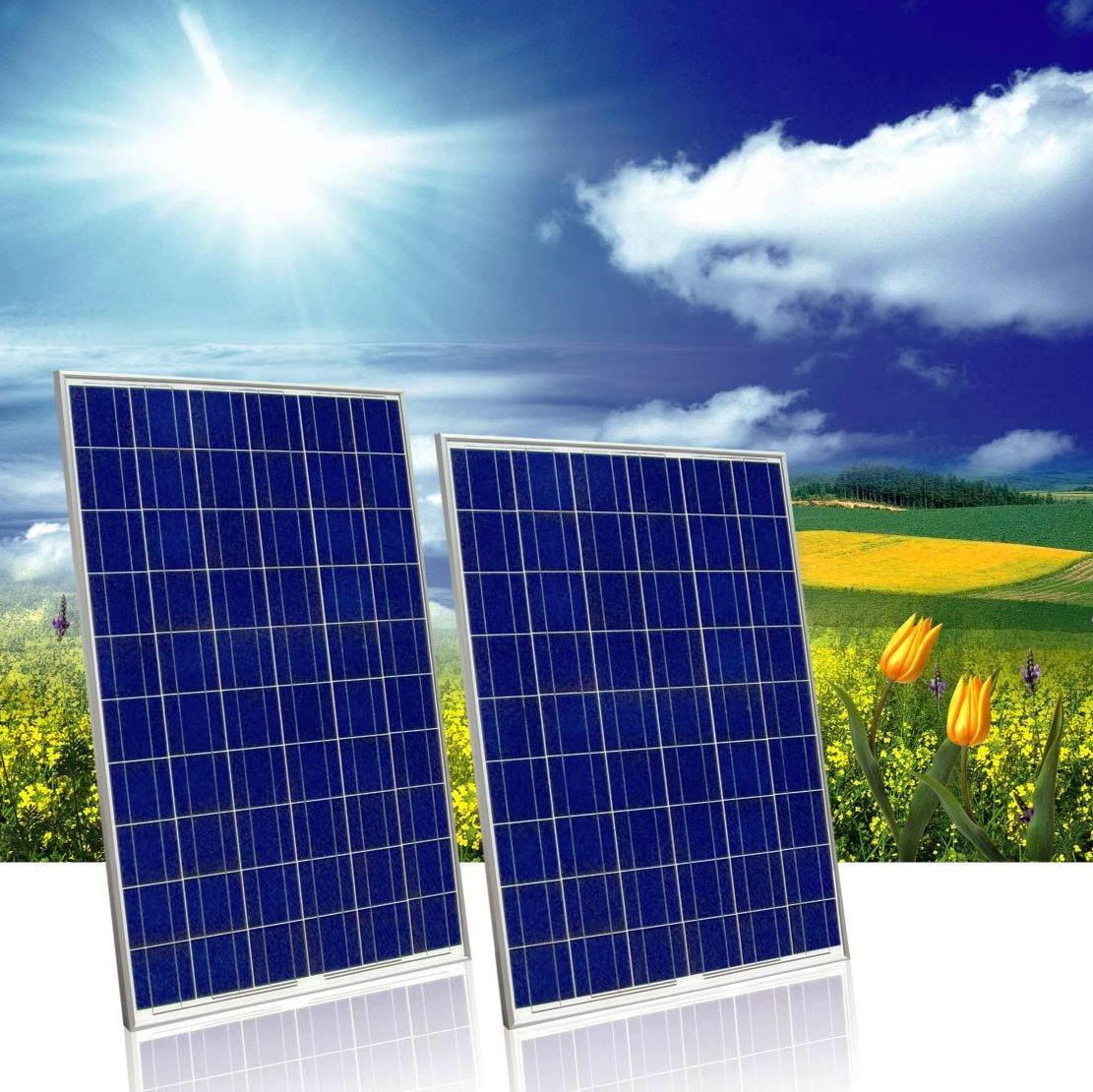
1. Panels of polycrystalline photovoltaic cells, with a characteristic blue color of the solar panel, a crystal structure and an efficiency of 12-14%.
Polycrystalline panel
2. Panels of single-crystal elements are more expensive, but also more efficient (efficiency - up to 16%).
Monocrystalline panel
3. Solar panels made of amorphous silicon, which have the lowest efficiency - 6-8%, but they produce the cheapest energy.
Amorphous silicon panel
4. Cadmium telluride panels created using film technologies (efficiency - 11%).
Panel based on cadmium telluride
5. Finally, solar panels based on CIGS semiconductor, consisting of selenium, indium, copper, gallium. The technologies for their production are also film, but the efficiency reaches fifteen percent.
Solar panel based on CIGS
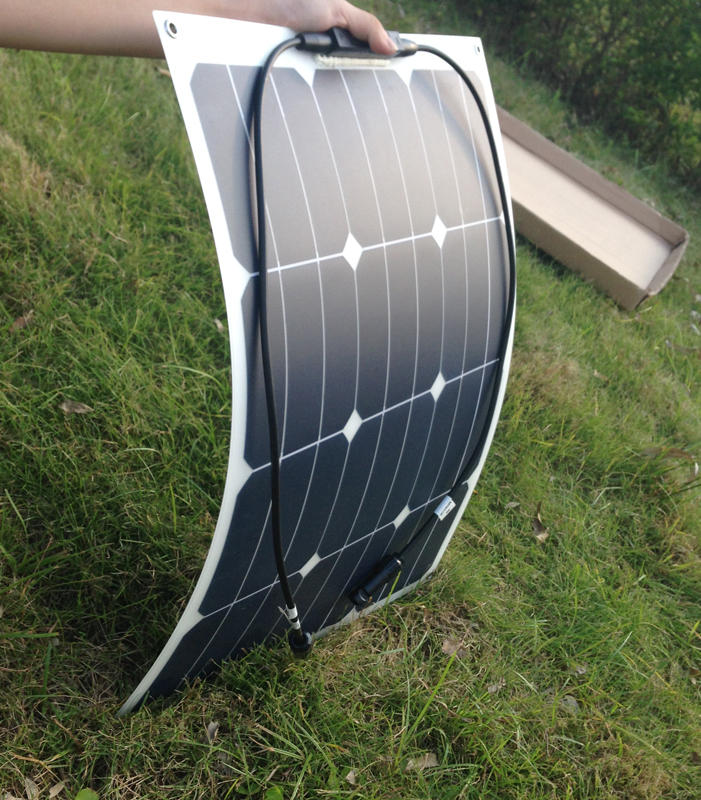
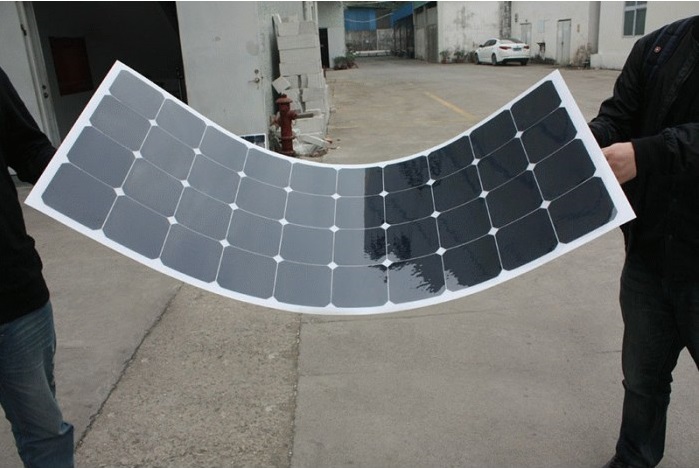
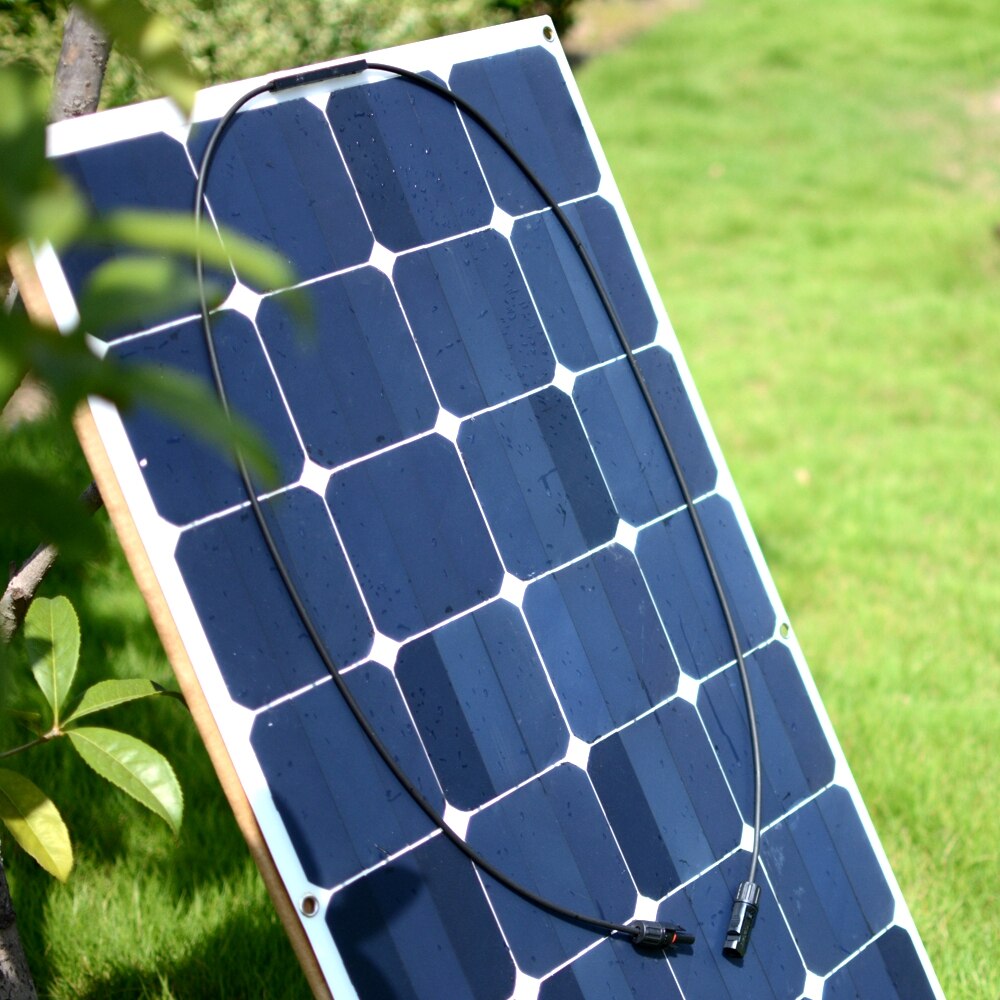
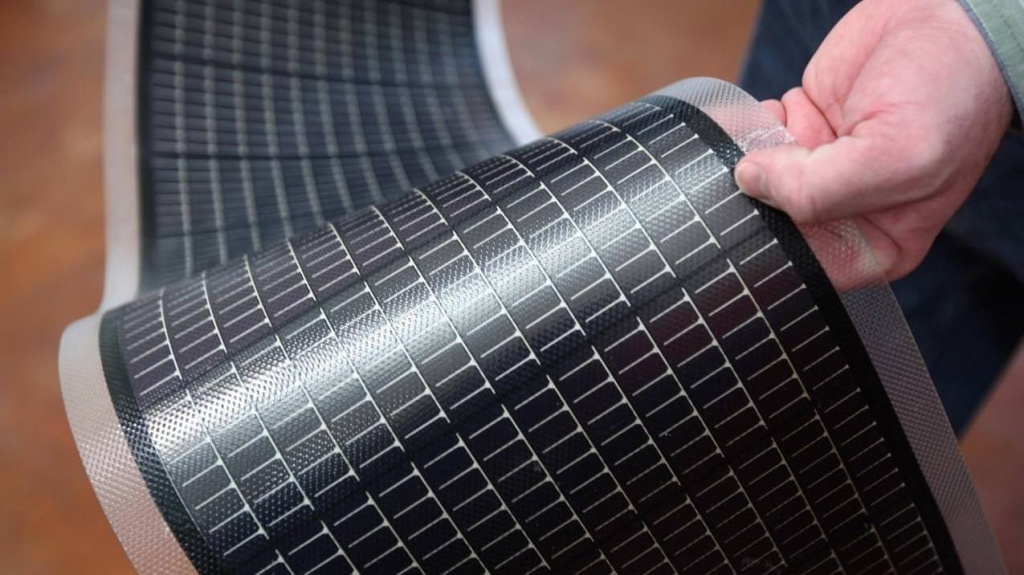
In addition, solar panels can be flexible and portable.
Advantages
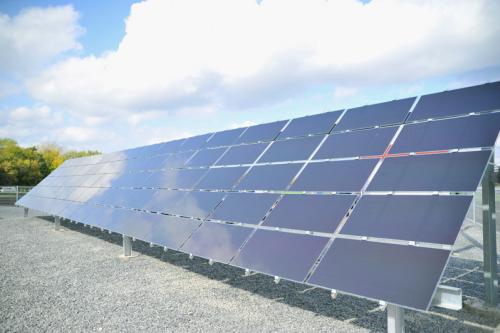
Thin-film amorphous panels have many advantages over crystalline analogues:
better performance at high operating temperatures. Due to their less dependence on heat, they are more efficient than crystalline ones in warm weather.It is clear that they lose power when heated, but not as much as the usual solar panels, in which it can be reduced by 20%.
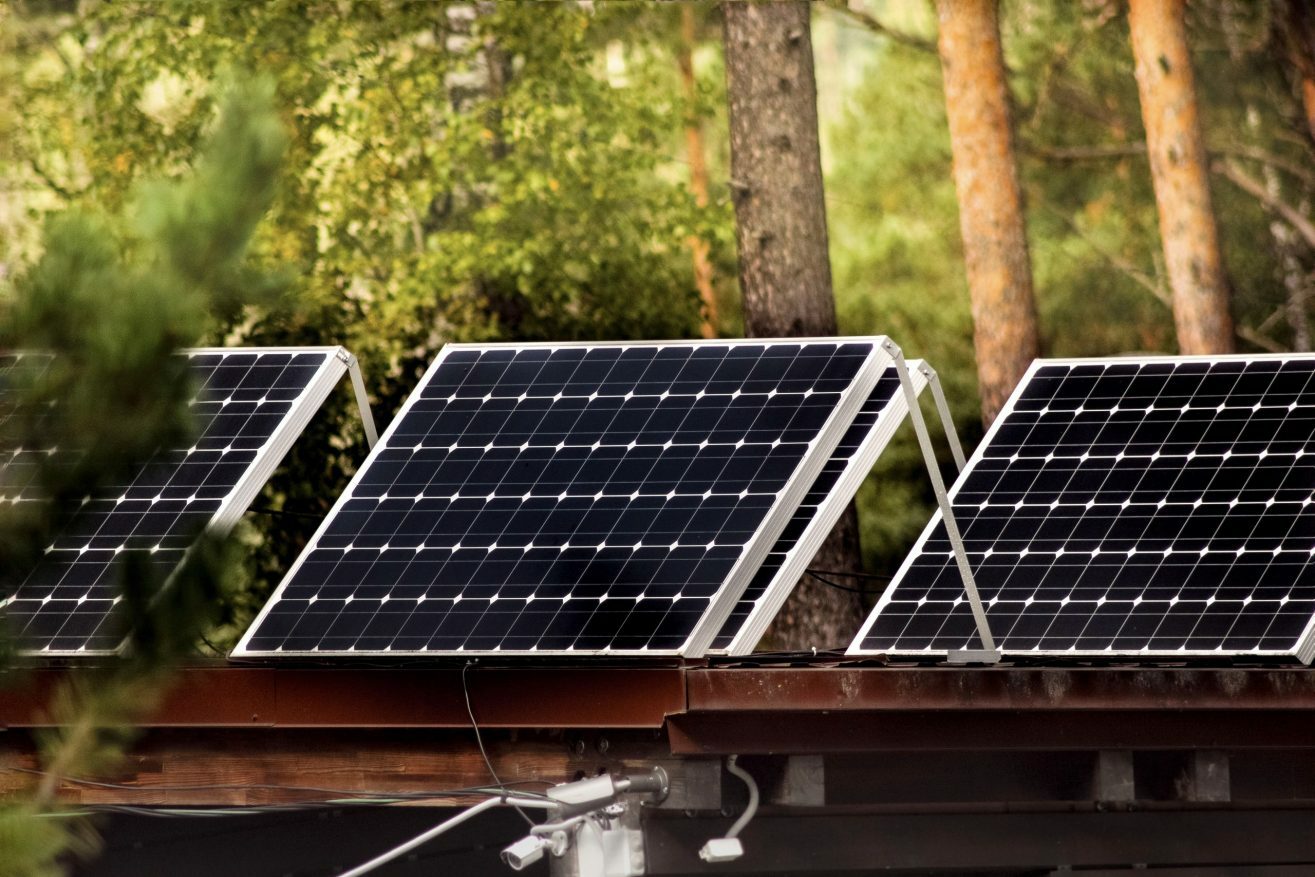
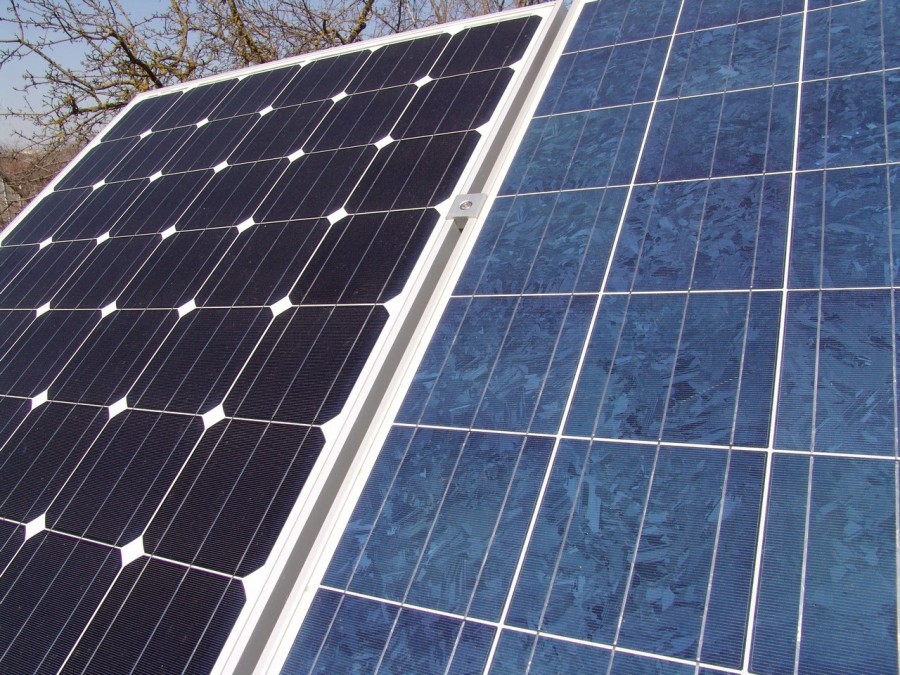

They are capable of generating electricity in low light, therefore, they are more efficient, in comparison with crystalline counterparts, in rainy weather, at dusk and snowfalls.
Amorphous systems continue to generate electricity at a time when classical crystalline structures stop generating it. They produce it more by 20% than their counterparts.
- allow hidden installation;
- cost less due to low production costs. The favorable cost of each Watt is also explained by the infusion of significant investments, which allows increasing their output and reducing the price;
- high flexibility and low thickness make installation, repair and maintenance easier;
- less dependent on shading and dirt on the front surface, while silicon performance is reduced by 25%;
- Minimum defects. The process of creating the modules in question is very simple. Due to the absence of the need for soldering to connect the modules to each other (they are immediately formed into a single structure), there are fewer defects in finished products.
The disadvantages, as you can see, are more than offset by the advantages of the panels.
Where and how is solar energy used?
Flexible panels are used in various fields. Before you make a project to power your home with these solar panels, find out where they are used and what they are. features of their use in our climate.
Scope of solar panels
The use of flexible solar panels is very wide.They are successfully used in electronics, electrification of buildings, automobile and aircraft construction, and space objects.
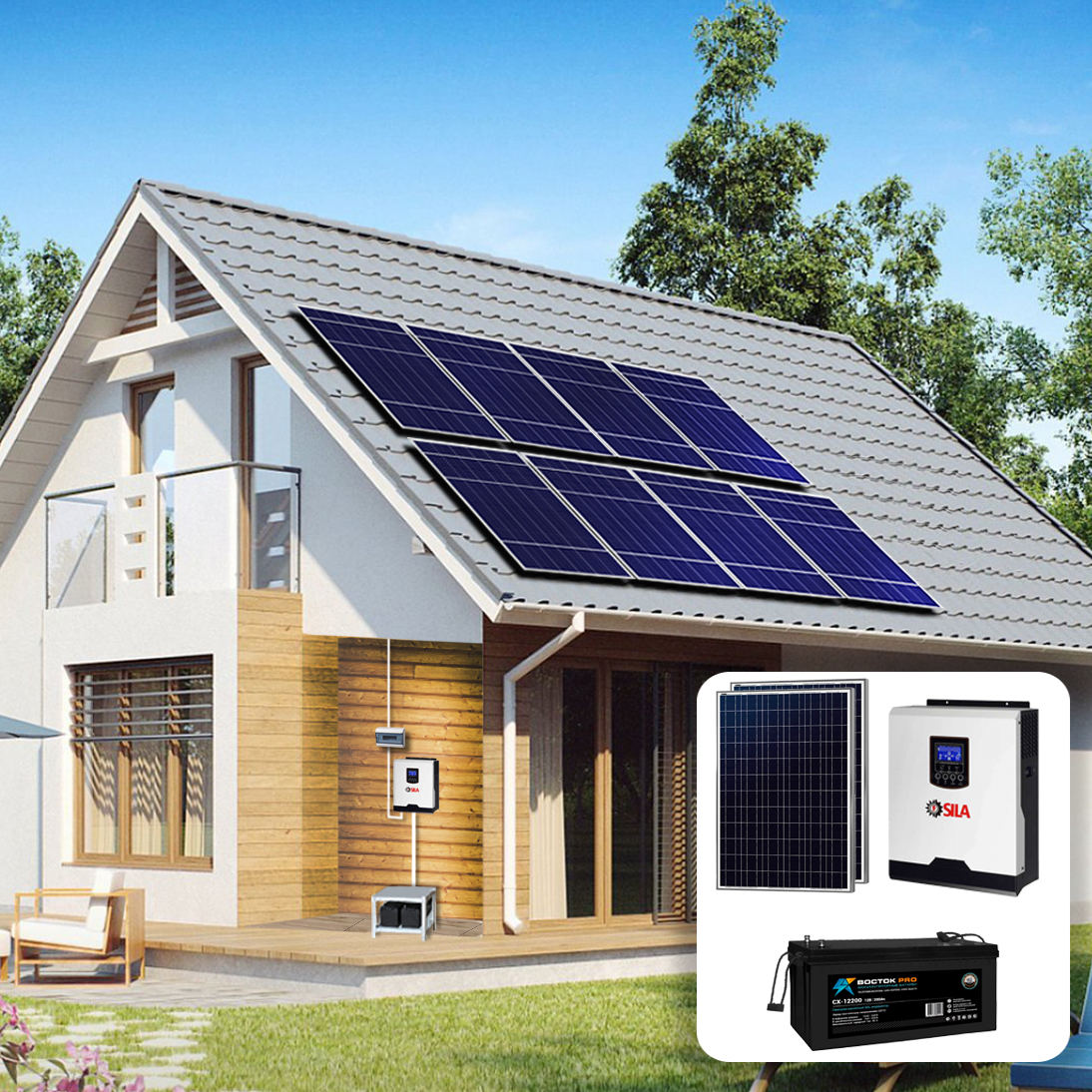
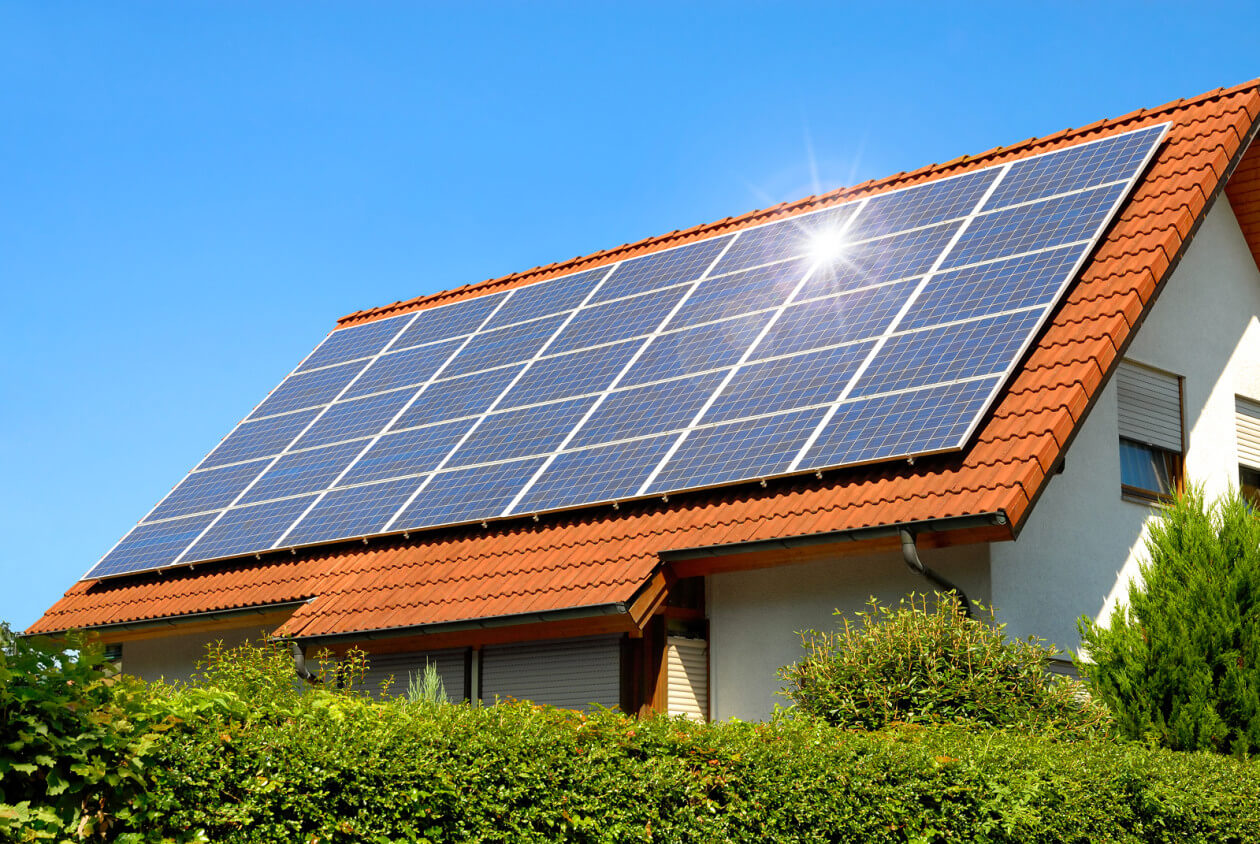
In construction, such panels are used to provide residential and industrial buildings with electricity.
Solar energy can be the only source of electricity, or it can duplicate the traditional power supply scheme, so that in case of insufficient efficiency in a certain period, the house does not remain de-energized
Portable chargers based on flexible solar cells are available to everyone and are sold everywhere. Large flexible tourist panels for generating electricity anywhere in the world are very popular among travelers.
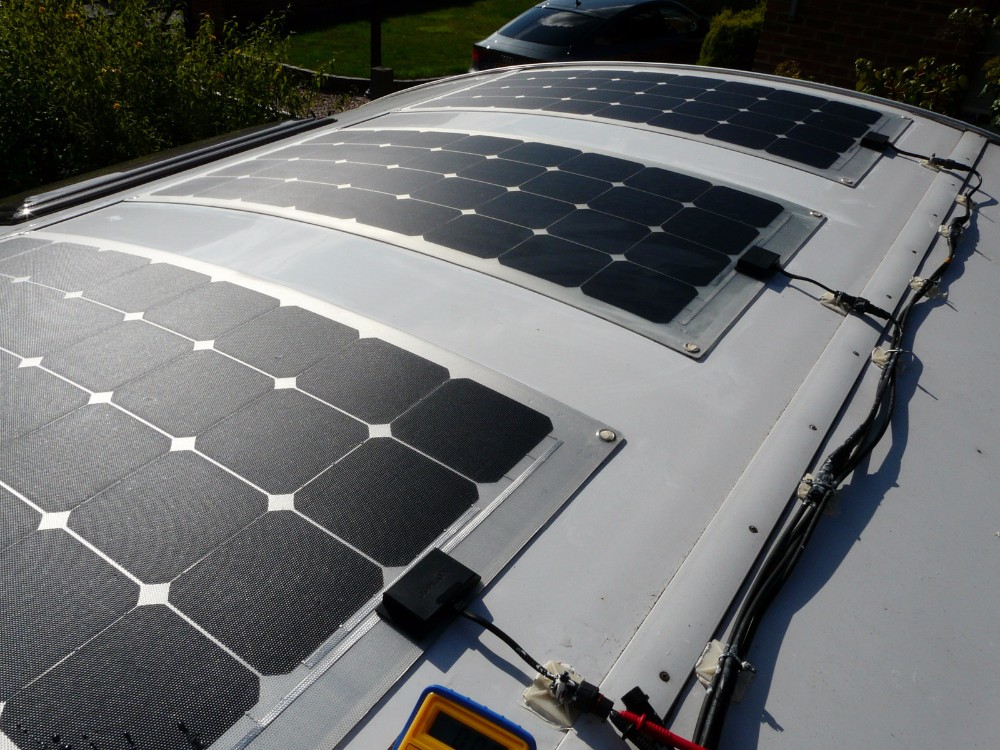
Flexible batteries are also good because they can be used in almost any situation. They can be easily placed on the roof of a car or yacht hull.
A very unusual but practical idea is to use the roadbed as the basis for flexible batteries. Special elements are protected from impacts and are not afraid of heavy loads.
This idea has already been implemented. The "solar" road provides energy to the surrounding villages, while not occupying a single extra meter of land.
Features of the use of flexible amorphous panels
Those who plan to start using flexible solar panels as a source of electricity for their home should be aware of the features of their operation.
First of all, users are concerned about the question, what to do in winter, when the daylight hours are short and there is not enough electricity for the functioning of all devices?
Yes, in cloudy weather and short daylight hours, the performance of the panels is reduced.It is good when there is an alternative in the form of the possibility of switching to a centralized power supply. If not, you need to stock up on batteries and charge them on days when the weather is favorable.
An interesting feature of solar panels is that when the photocell is heated, its efficiency decreases significantly.
In the summer heat, the panels become hot, but they work worse. In winter, on a sunny day, solar cells are able to capture more light and convert it into energy.
The number of clear days per year varies by region. Of course, in the south it is more rational to use flexible batteries, since the sun shines there longer and more often.
Since during the day the Earth changes its position relative to the Sun, it is better to place the panels universally - that is, on the south side at an angle of about 35-40 degrees. This position will be relevant both in the morning and evening hours, and at noon.





Manufacturing
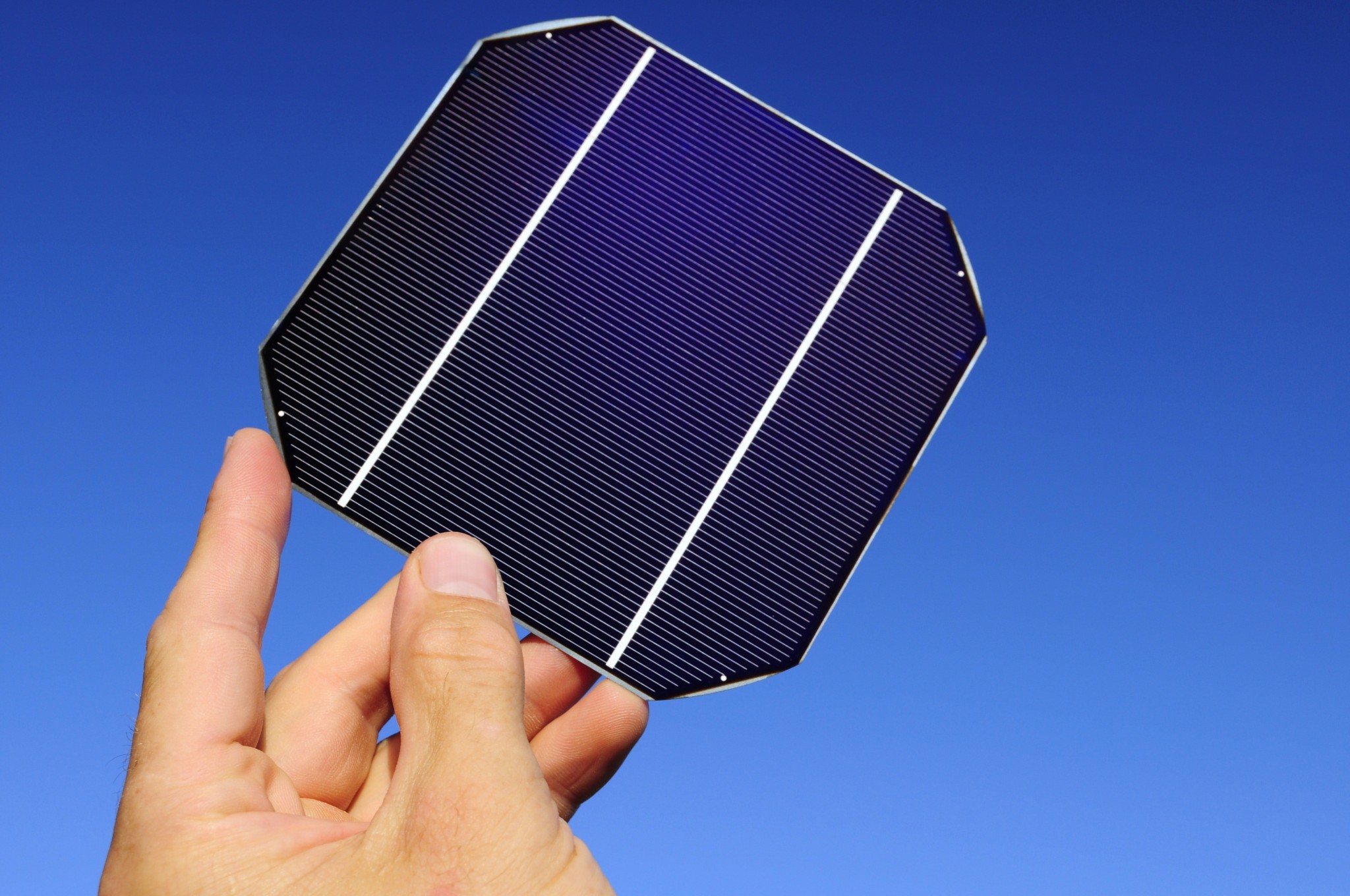
Only carefully purified silicon is suitable for the manufacture of a semiconductor converter. Its shape has, as a rule, the form of a cylinder with a diameter of only tens of millimeters.
In a silicon wafer, regions are formed that are differently saturated with “holes” and electrons. In other words, having "hole" p-conductivity and n-electronic conductivity.
By “holes” is meant a metal from which electrons are partially removed by impurities, i.e. this is the "positive" band, or p-conductivity.
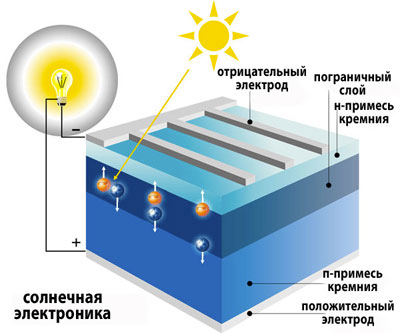
According to this principle, the first PET - photoelectric converters were created, the efficiency of which reached almost 30% under normal conditions and about 22% - at high temperature.
Solar car as an invention of the twentieth century
The history of the creation of solar-powered vehicles began in the mid-twentieth century in the United States, however, due to the fact that the technologies of that time did not allow the production of a powerful solar battery of small size, and the batteries produced were not energy-intensive, the development of this the automotive industry was suspended. Only in the 1990s did they return to this topic and work continued.
The increase in the efficiency of solar panels has made it possible to increase the amount of electricity they generate, and energy-intensive batteries of a new generation have made it possible to create the necessary energy reserve when moving over long distances.
The use of new materials in the manufacture of the body, new transmission systems and types of electric motors also affected the development of this type of car. Now body elements are made of durable and lightweight plastic, parts with the lowest level of rolling resistance are used in the transmission, and brushless-type devices using poles made of rare-earth magnetic materials are used as engines.
Another of the inventions that began to be used in cars in the sun was motor-wheels. In this case, the electric motor is located on each of the driving wheels of the vehicle, which increases the overall efficiency of the transmission mechanism.
The increase in the power of the solar battery installed on the car was also influenced by the fact that such devices can now be produced flexible, therefore, placed on all body elements, which increases the area absorbing solar energy.
Choice
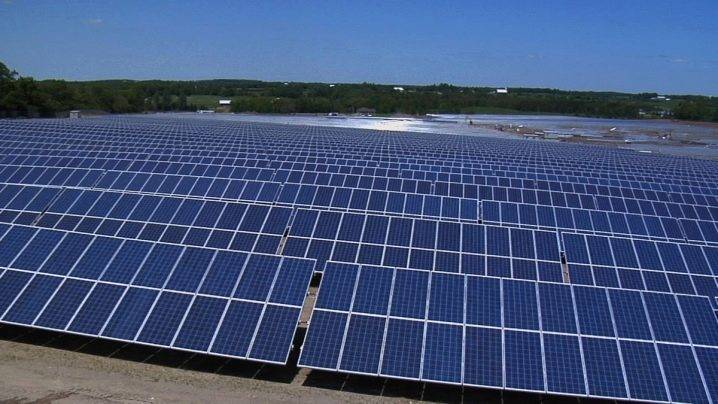
One of the important selection criteria is the climatic conditions of the area in which the solar panels will be installed. The number of sunny days in a year and the length of the day itself are taken into account. Based on these data, the power of electricity that the battery should produce per hour or day is determined. For the northern regions, textured glass is suitable, it effectively copes with the work even on cloudy days. Modules made of micromorphic silicon do not require precise orientation to the sun, their total annual power exceeds other thin-film batteries. They are often chosen by residents of areas with low light.
When choosing a module for a home, you need to consider what electrical appliances will be in demand, whether the intended purchase will have enough power for them.
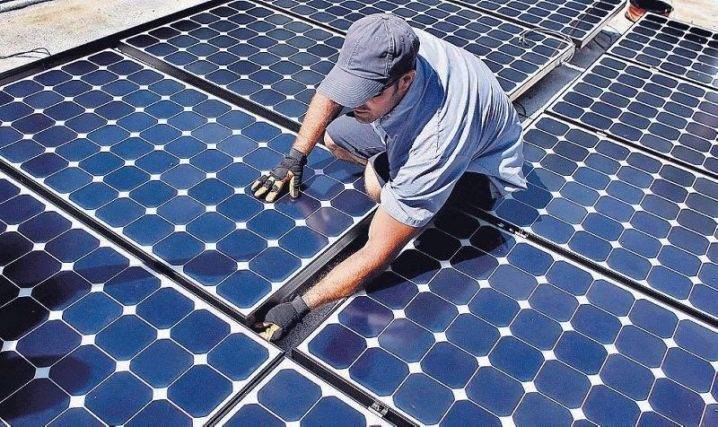
When buying, the type of construction, material, thickness of the photocell, module manufacturer are taken into account - all this affects the price, quality and duration of work. It is not necessary to overpay for foreign brands, Russian-made modules have proven themselves well, focused on our climatic conditions.
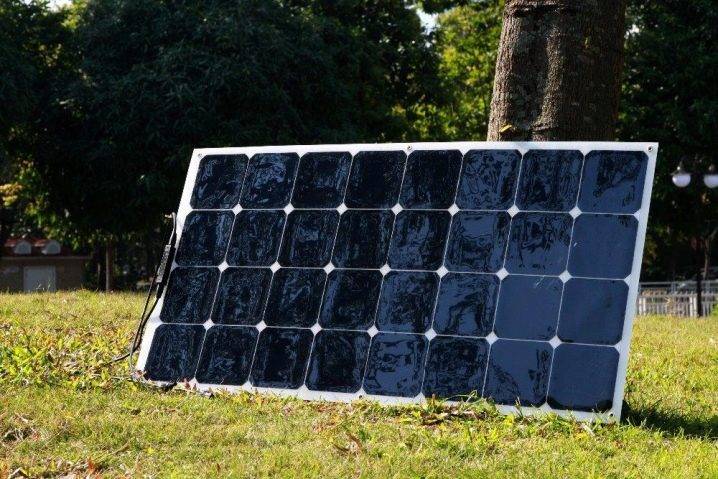
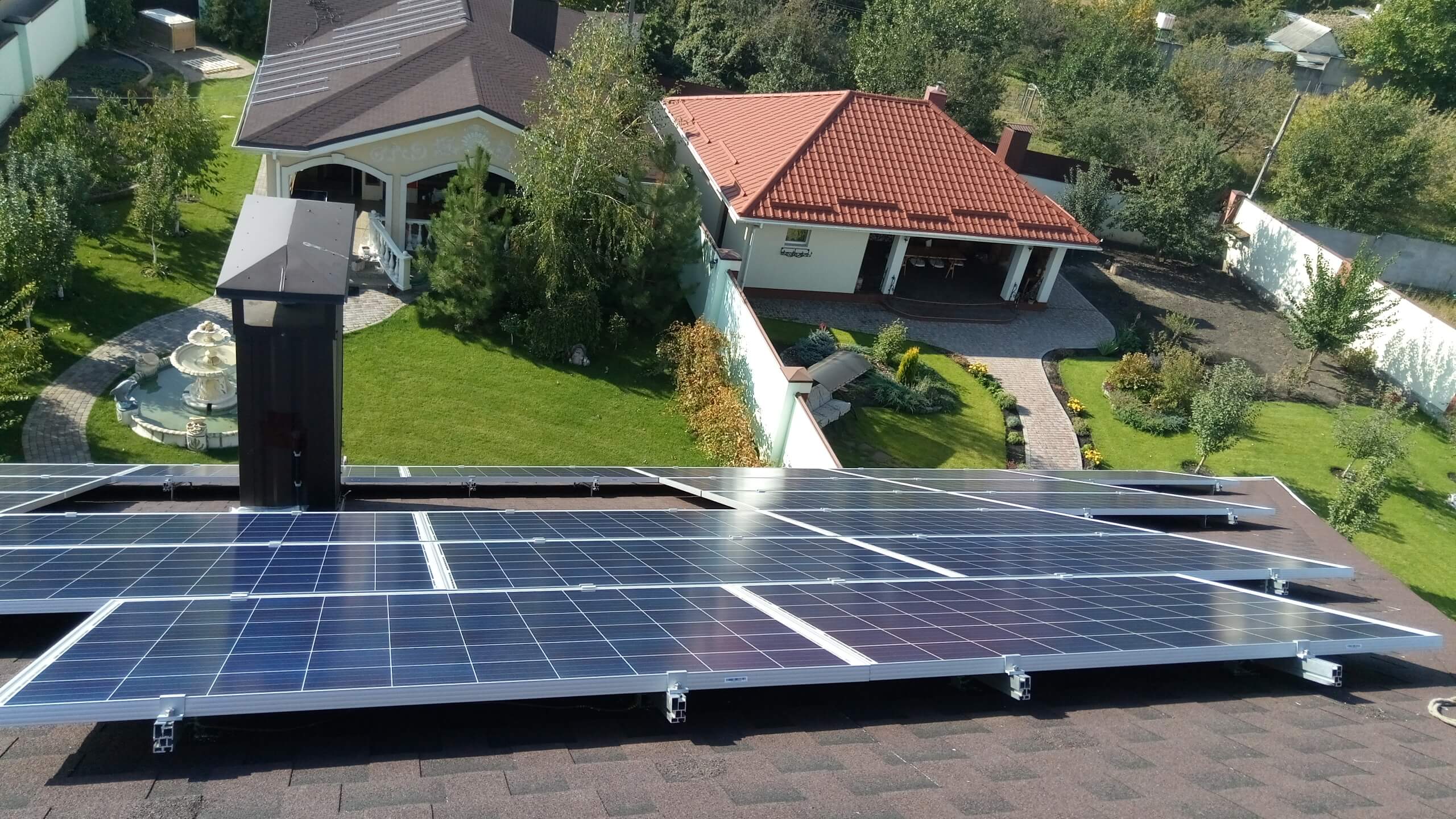
To calculate the number of modules, it should be taken into account that a family of 4 people, on average, consumes 200–300 kW of electricity per month. Solar panels produce from one square meter from about 25 watts to 100 watts per day. To fully satisfy the house in the needs of electricity, you will need 30-40 sections. Equipping with solar panels will cost the family about 10 thousand dollars. Panels should be installed on the south side of the roof, where the maximum amount of sunlight falls.

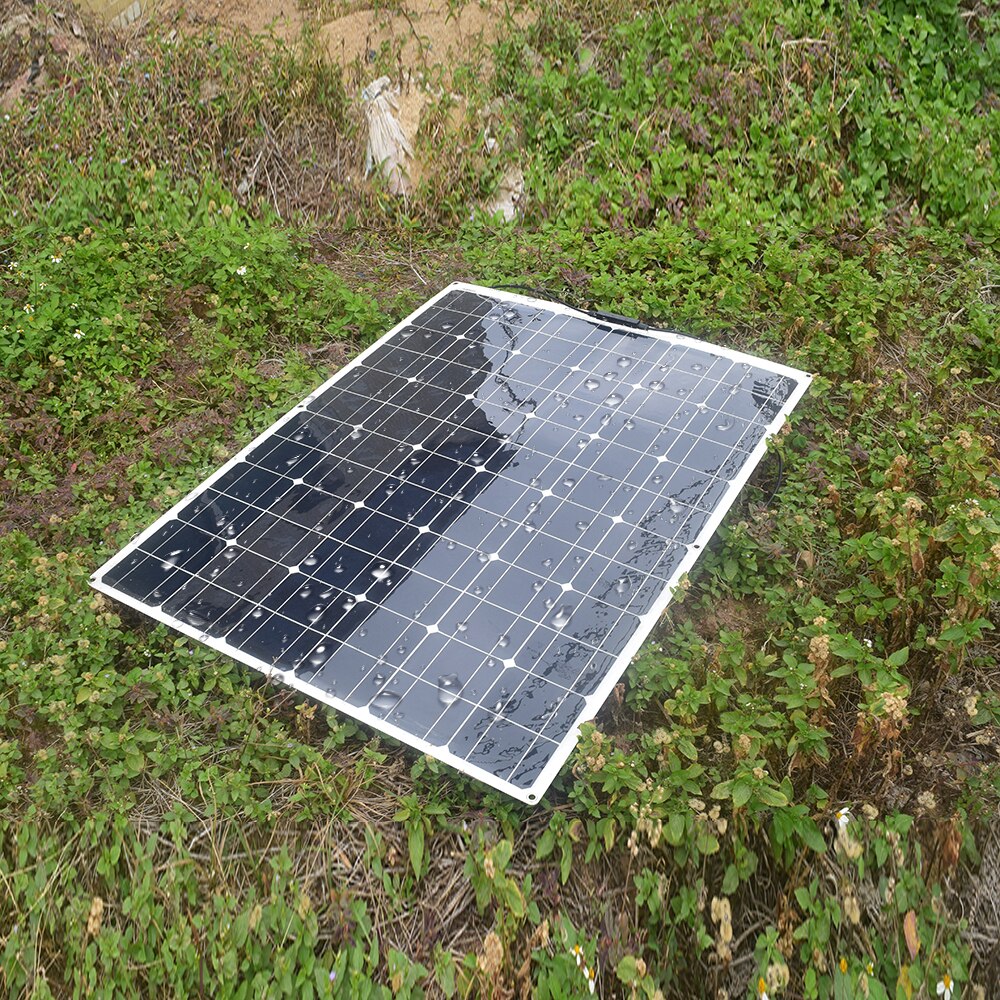

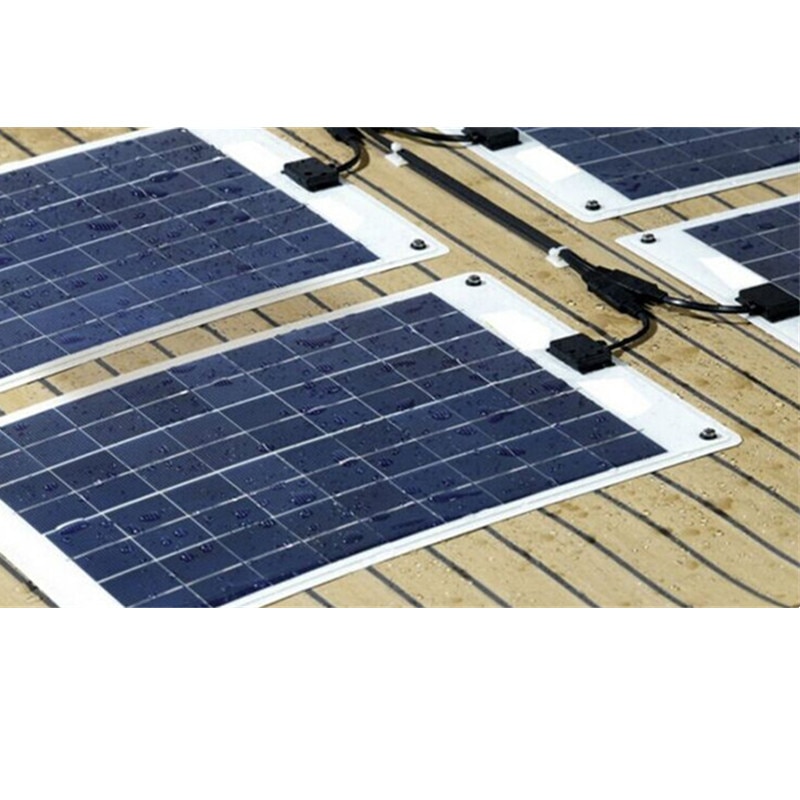


To make a choice, you should understand which type of module is more suitable for the buyer:
- Monocrystalline solar cells cost $1.5 per watt. They are smaller and more efficient than other types of similar batteries. Their overall coverage takes up less space. Given the power and quality, it is better to make a choice in their favor. The only downside is the high cost.
- Polycrystalline batteries cost $1.3 per watt. In terms of power, they are inferior to single-crystal ones, but they are also priced cheaper. Budget opportunities attract buyers, besides, recent developments of such batteries have greatly brought their efficiency closer to single-crystal counterparts.
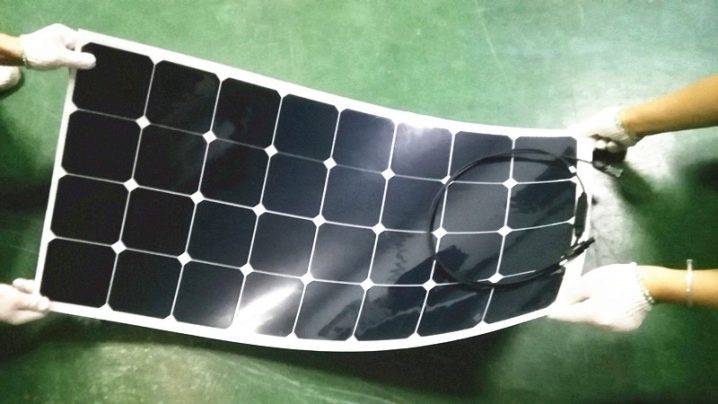
- Solar thin film panels have less power per square meter than previous models. The situation is evened out by the appearance on the market of micromorphic silicon modules. They produce a good total power for an annual period of time, they have proven themselves well in the work of the visible and infrared spectrum. For them, attachment to the sun's rays is not important. The battery life is 25 years. The modules have an inexpensive production technology, this has affected their cost - $ 1.2 per watt.
- Of great interest is the hybrid panel, as it generates thermal and electrical energy. The design combines a heat collector and elements of a photovoltaic battery.
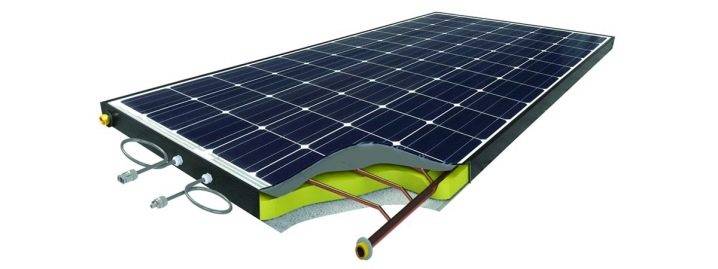
According to the description of solar panels, it can be seen that micromorphic silicon panels are more suitable for areas with low illumination, southern regions can use polycrystalline batteries. For those who are not financially constrained, more powerful single-crystal solar cells will be an excellent choice.
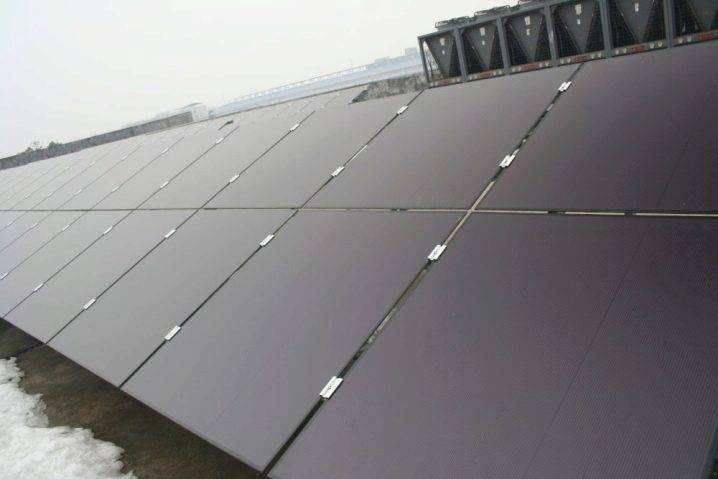
Today, there are still complaints about flexible solar panels, but tomorrow, of course, is behind them. Their active improvement leads to a decrease in cost, they confidently displace crystalline analogues from the industrial and domestic spheres of human activity.
For an overview of flexible solar panels, see the following video.
Review

Today solar thin film batteries in addition to the classic installation on roofs, it can be used instead of glazing. Such modules are distinguished by a variety of colors, which allows buildings to give a unique appearance.
The tempered glass that covers the photocells has greater mechanical strength than ordinary glass and is safer. Therefore, the upper floors of houses in many countries, as well as loggias and balconies, are glazed with it.
In addition, it provides sufficiently good transparency to guarantee high efficiency even in diffused light, i.e. they not only look aesthetically pleasing, but also save the budget.
For an opaque battery, you will have to pay about 9 thousand rubles, for a color transparent partly (20%) -16 thousand.
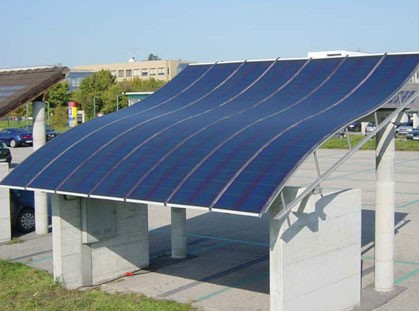
Nevertheless, experts believe that the future of solar energy belongs to them.
They refer to the following advantages of thin-film batteries:
- low cost;
- small difference in efficiency;
- constant increase in the cost of crystalline analogues.
In addition, thin film technology is considered the most reliable. Already today, several types of thin-film batteries, also called "flexible", have been developed, for the creation of which they use:
- amorphous silicon;
- cadmium telluride/sulfide;
- diselenides are copper-indium and copper-helium.
Battery connection methods
One solar battery will not be enough.To ensure the full operation of the power plant, it is necessary to use several devices of the same type. It is desirable that they be even from the same batch, then all the characteristics will match.
If you want to increase the overall capacity of the system, then you should use one of three ways to connect these batteries. We are talking about a parallel, serial or combined connection.






In parallel, the capacities of the available batteries are added and compared with the total voltage that is used.
When connected in series, the last indicator is summed up. The capacity of only one battery is taken to it, and not the total.
At the moment, combined connections are most often used. With it, you need to sum the capacitance and voltage. However, this method has its drawbacks. With this connection, the batteries for the solar battery may become unbalanced. As a result, the total voltage will be the same, and the capacitances will begin to change. Because of this, some devices will be undercharged, while others will be recharged. Accordingly, their service life will be reduced. That is why a special controller must be purchased with the system, as well as jumpers, with which you can equalize the battery voltage.
Conclusions and useful video on the topic
Videos and reviews that cover flexible panels from popular manufacturers will help you make the right choice. You will be able to see what your house will look like after the installation of the equipment, experts will help you choose the right number of batteries and consider installation rules.
How flexible solar panels are arranged and what they are made of:
You can also install a flexible battery in an apartment on the facade of a high-rise building, why not:
A little more about the production and advantages of flexible elements:
Solar batteries make it possible to become energy independent, not to monitor the prices of gasoline and utilities. If you invest a certain amount once, you can consume unlimited energy for using household electrical appliances and recharging the battery of an electric car. More and more people are switching to alternative energy, because it is the future.