- What is an infrared heatercolor
- Infrared heater devicecolor>
- Infrared wavebandcolor>
- Which gas heater is better to buy
- Types of gas heaters
- How to choose the heater power
- Types of gas convector chambers
- Catalytic heater - no flame and no noise
- infrared heating
- Types of IR heaters
- Types and characteristics
- Infrared
- Catalytic
- Convector
- The best gas outdoor heaters
- Ballu BOGH-15E
- Ballu BOGH-15
- Aesto A-02
- Kinds
- catalytic
- infrared
- Convector
What is an infrared heatercolor
Infrared heater - - a heater that uses infrared radiation in its work and is used for the main or additional heating of premises, as well as local areas of street space or workplaces in the workshop.color>
Heaters are usually used for space heating. Depending on the method of heat transfer, they can be convective or radiant.
Convective ones work on the principle of mixing cold and hot air, while the temperature difference between the air mixture on the ceiling and the floor can reach large values.
Radiant ones transfer heat mainly due to infrared radiation, place them above the heated area or on the ceilings and walls of the room.
Air, if it is not saturated with water vapor, almost completely transmits radiant energy. This energy directly heats any objects in its path, and they in turn give off heat to the air.
That gives a significant economic effect compared to convection heating, which consumes part of the generated heat to heat the subceiling space where it is not needed.
In addition, infrared radiation is felt by a person immediately after it is turned on, which eliminates the need for preliminary heating of the room and can significantly reduce heating costs.
Infrared heater devicecolor>
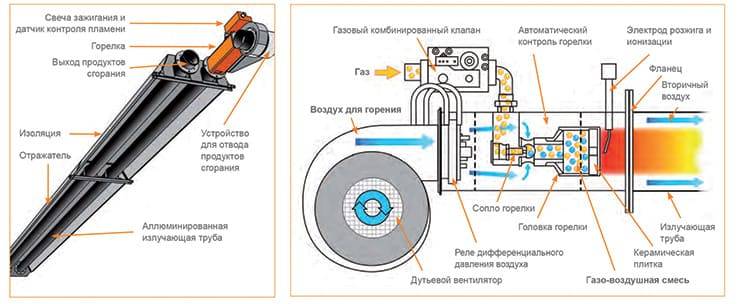
The main structural element of an infrared heater is an emitter that generates infrared radiation. In order to provide directional radiation and protect the housing from overheating, a reflector made of a heat-resistant element is placed behind the radiator.
The reflector on the reverse side is covered with a heat-insulating material, which further protects the body from exposure to high temperatures.
If the heater is used in places where people or animals are located, the emitter is covered with a metal mesh to prevent involuntary burns or electric shock.
Infrared Wave Rangecolor>
Infrared Wave Range represents an electromagnetic wave located in the range of radiation from 0.74 microns. up to 2000 microns.color>
Infrared heaters are heating devices that provide heat transfer from a radiator with a high temperature to bodies with a lower temperature by means of electromagnetic (infrared) radiation.
Infrared radiation is absorbed by surfaces encountered in its path, turning intothermal energycolor>,
and air is heated from these surfaces. This allows you to significantly save energy for space heating compared to convection heating. The wavelength of the infrared radiation range depends on the heating temperature of the emitters installed in infrared heaters. It is in the range from 0.74 µm. up to 2000 microns. The dependence of the wavelength of infrared radiation on temperature expresses Wien's displacement law. A graphical representation of this law for various temperatures is shown in the figure. It can be seen from the graph that the surface area under the curve relating to a certain temperature is proportional to the amount of radiant energy, and it greatly increases with increasing temperature. In addition, it can be concluded that the wavelength λ at which the maximum value of the curve is determined, it shifts with increasing temperature by smaller values.
Which gas heater is better to buy
If for some reason your workshop, garage or country house does not have a stationary heating system, you need to think about a mobile heat source. Electric heaters are expensive to operate, and the power grid is far from being available everywhere. In such a situation, a liquefied gas cylinder with a gas heater will be the best solution to the problem. The user will only need to strictly follow the instructions of the manufacturer of such equipment, do not forget about the need to comply with fire safety rules and ensure stable ventilation.
Types of gas heaters
The operation of a typical gas heater is based on the combustion of liquefied petroleum gas.It comes through a flexible hose from a standard cylinder through a reduction gear. Oxygen is taken from the surrounding air.
There is no need to equip a special chimney to remove combustion products. Their number is small. In some gas heaters, the content of carbon monoxide in the atmosphere is monitored by a gas analyzer, which will stop the gas supply to the burner long before the maximum concentration is reached. In practice, it turned out that the operation of natural exhaust ventilation is sufficient to prevent this from happening.
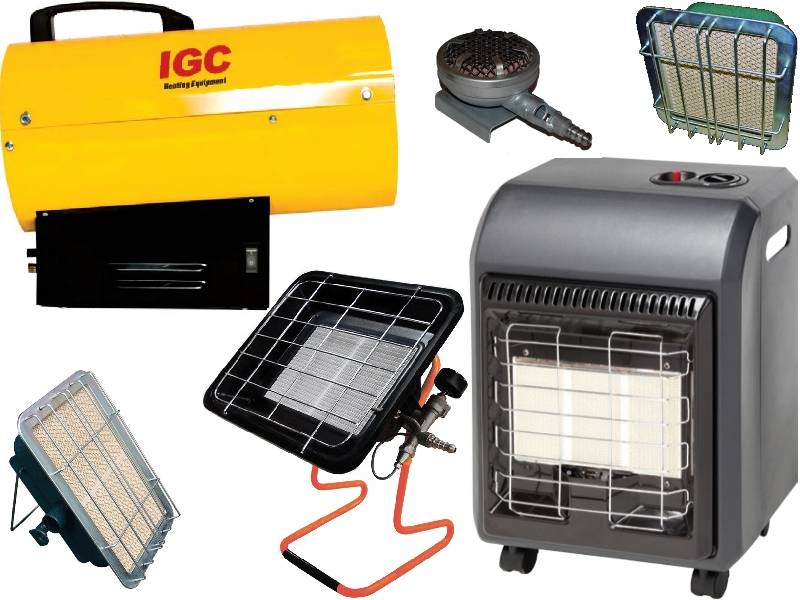
According to their design features, gas heaters for interior spaces are divided into two large groups:
- gas panels
- gas ovens
Gas panels
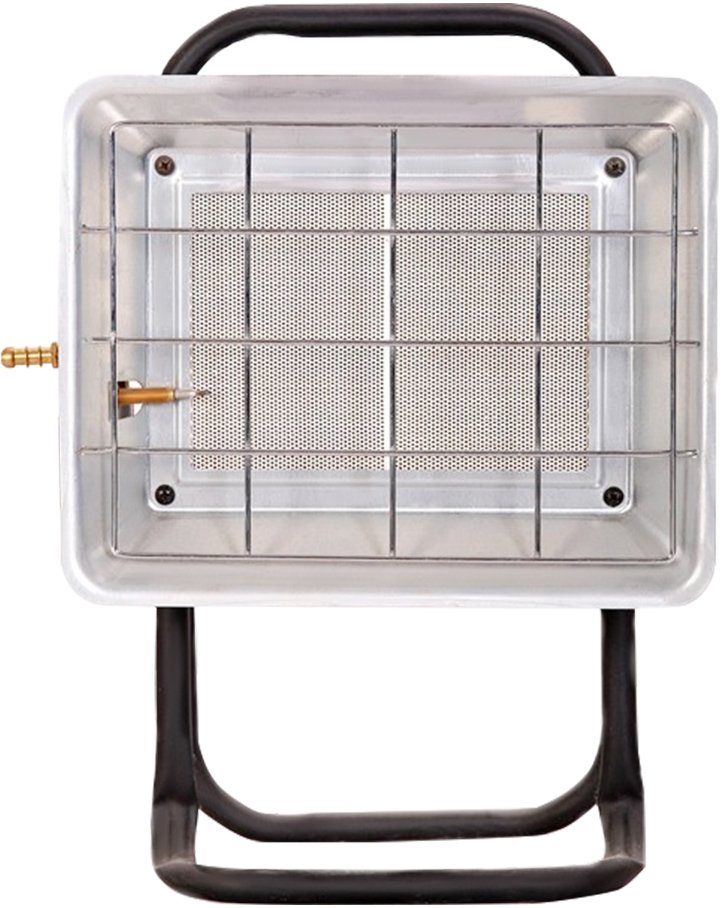
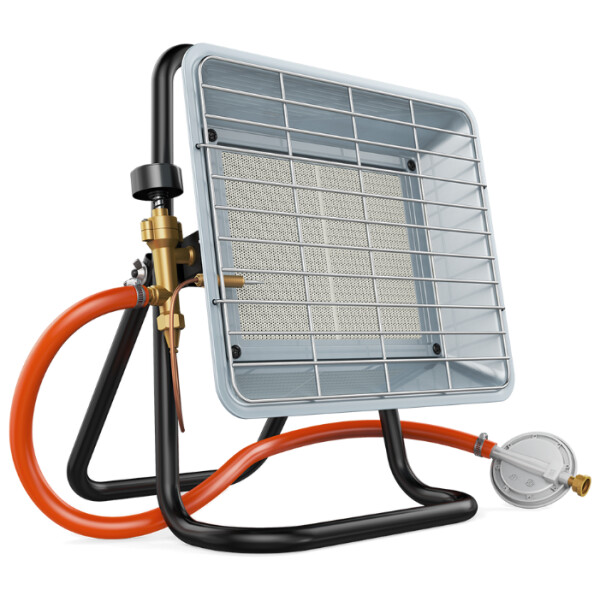
Gas panels are mobile devices. They are made of lightweight materials, have small dimensions and an open design. Such devices consist of:
- a wide heating element, protected by a protective grille;
- frames or stands with a stable base that reduces the risk of accidental tipping.
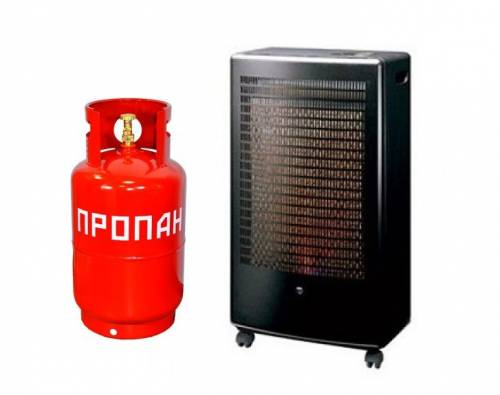
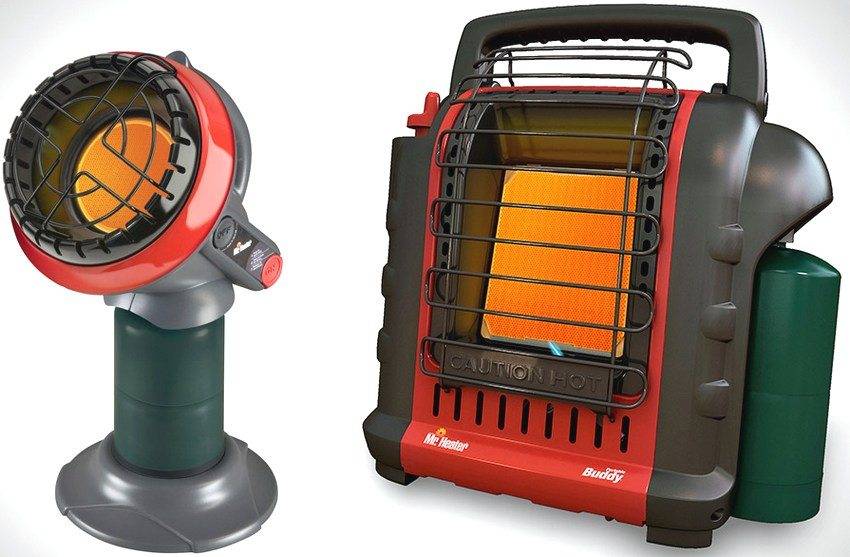
Gas heater powered by a small cylinder.
Gas heater powered by a large cylinder.
The gas cylinder must be installed aside at a safe distance. Heat transfer from a flameless burner is carried out in all possible ways: heat transfer, convective transfer of air masses and infrared radiation. The heating power is usually controlled manually by a valve. Such a heater is quite quickly able to raise the air temperature in a room, garage or small workshop.
gas ovens
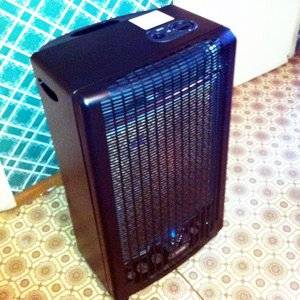
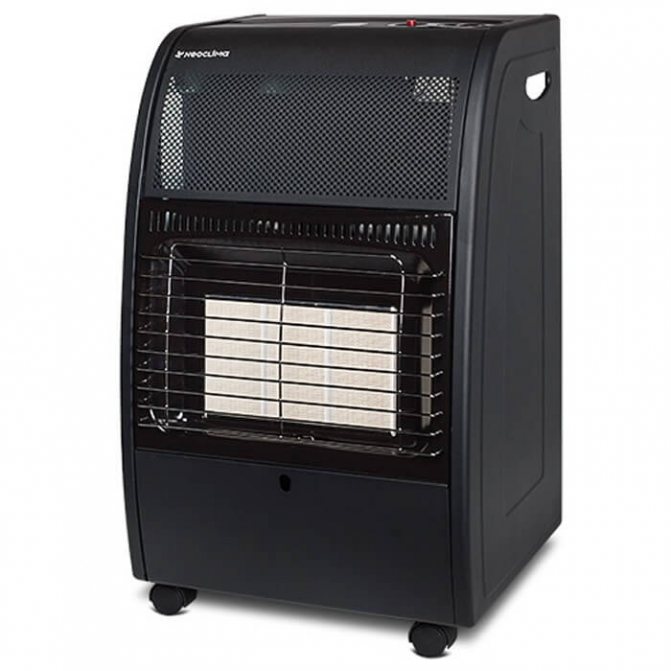
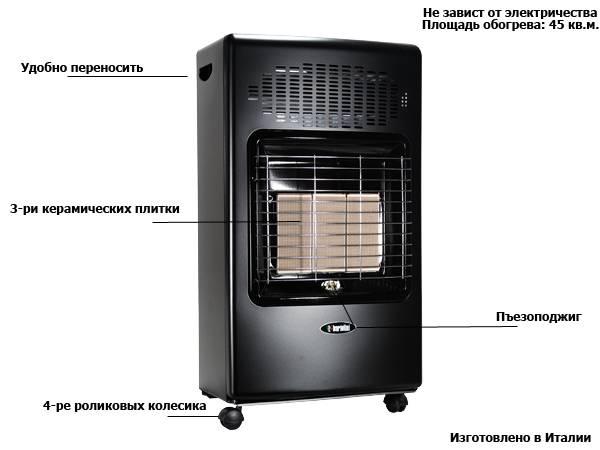
The gas oven has a stable housing made of durable materials. A liquefied gas cylinder is placed inside it.To increase mobility, the entire structure has rollers or wheels. The heat source is ceramic panels mounted on the front wall of the device.





The choice of operating mode is carried out using the control unit. Most models from well-known manufacturers are equipped with automatic rollover protection. Such heaters usually develop high power and are able to maintain a comfortable temperature in large residential or utility rooms.
How to choose the heater power
The main technical characteristic of the heater is power.
It must match:
- the size of the heated room;
- the degree of insulation of the building;
- climatic conditions.
All these indicators are taken into account when calculating according to a simplified formula:
Q=V*dt*K
where:
- Q - the minimum thermal power of the purchased heater (kcal / hour);
- V is the total volume of the heated room (m3);
- dt is the difference in air temperatures inside and outside the house (оС);
- K is a coefficient that takes into account heat loss through the outer walls of the building.
The value of K is taken:
- 3.0-4.0 for thin-walled pavilions, garages and outbuildings;
- 2.0-2.9 for brick buildings with walls one brick thick;
- 1.0-1.9 for brick cottages with two-brick exterior walls, an attic or an insulated roof;
- 0.6-0.9 for well-insulated buildings.
For example, let's calculate the minimum heater power for a small workshop located in a separate brick building with two-brick walls. Room length 12 m, width 6 m, height 3 m.
Workshop volume 12 * 6 * 3 = 216 m3.
Let's assume that the workshop is used during the daytime.We believe that in winter during the day the air temperature in this area rarely drops below -15 ° C. The temperature that is comfortable for work is +20 ° C. The difference is 35 ° C. The coefficient K is taken equal to 1.5.
Calculating the minimum power gives:
216 * 35 * 1.5 \u003d 11340 kcal / hour.
1 kcal/hour = 0.001163 kW. Multiplying this value by 11340, we get the desired power of 13.2 kW. If during work you often have to open the entrance gate, then it is better to purchase a 15 kW heater.
Types of gas convector chambers
Indoor and outdoor camera views are provided. The difference between the device of a closed type lies in the presence of a complete set of a coaxial tube. The power of the convectors is 4 kW, which can cope with the heating of an area of 40 square meters. m. The closed view of the gas convector is practical in everyday life. Combustion products and gas do not enter the room. At a low cost, it meets safety and environmental standards.
In the open version of the model, there is no coaxial pipe, so the combustion products are not brought out. There is a safety valve and an air analyzer. At a critical moment, it will automatically respond to a lack of oxygen in the air by turning off. The heating structure is not intended for operation in enclosed spaces.
Advantages of gas heating:
- flameless heating principle;
- compactness of the model;
- heat transfer range - from 2 to 15 kW;
- economical resource consumption -300 gr/kW/h;
- does not depend on the supply of electricity;
- does not burn out oxygen;
- affordable cost;
- ease of operation.
Now let's talk about the disadvantages:
- one of the main ones is installation, for a coaxial pipe, in order to remove combustion products, a hole in the wall is necessary;
- do not forget about the need for a through passage provided for the gas supply pipe;
- inertia - the design quickly heats up and cools down just as quickly, such a system is more convenient and safe for a garage or heating utility rooms.
Catalytic heater - no flame and no noise
20sq. m.

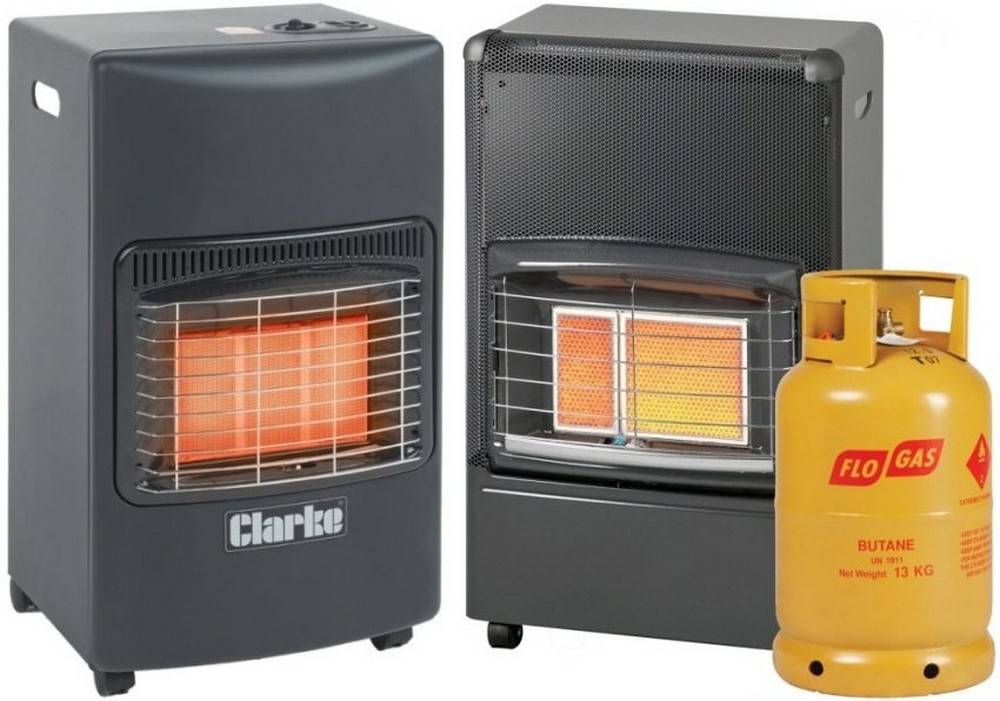
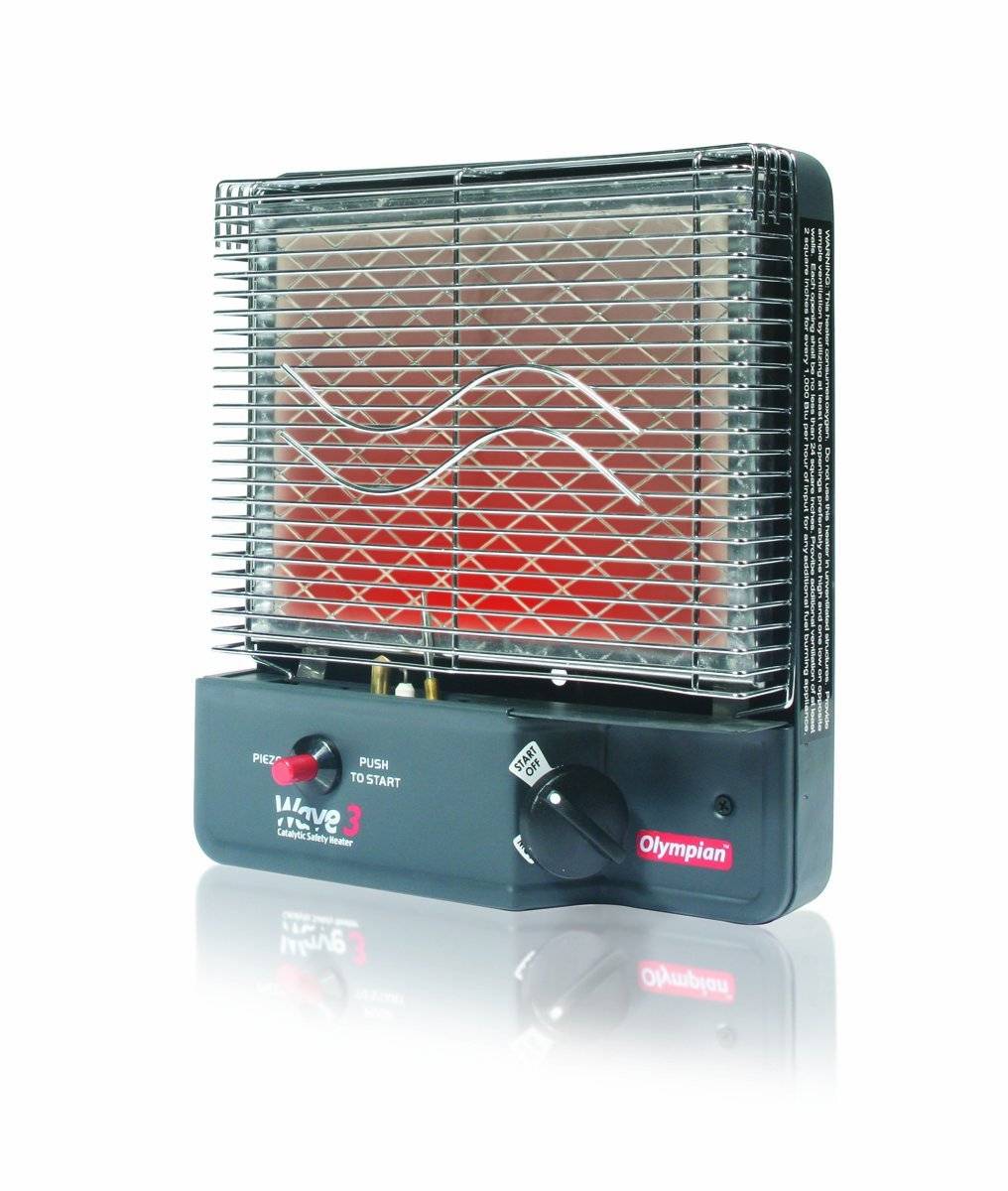


Catalytic combustion is the so-called "surface combustion" used for propane-butane gas flameless burners and is characterized by the absence of a flame. The process occurs due to the oxidation of a certain group of inorganic substances in the air.
In the course of combustion, a lot of heat is released, and the degree of heating of the catalyst is determined by purple or yellow colors. The efficiency (80%) of such a device is higher than that of classical models. They have not yet received wide distribution, unlike European countries. The design is mobile, and thanks to the wheels it moves freely around the house. The catalytic panel is made of fiberglass.
infrared heating
The system is built on the principle of solar radiation - heated objects give off heat and heat the surrounding objects. Such heating does not change the ratio of oxygen and humidity in the air, and allows you to feel comfortable at any temperature.
Electromagnetic waves provide uniform heating of the living space. For the heating element, ceramic plates are used, organized into a reflector. There are light long-wave, with a radiation temperature above 800 ° C and dark medium-wave with degrees below 600 ° C.
The difference is in the wavelength, which depends on the heating temperature: higher degrees - shorter than the wave.Their color is determined by the emission of light: medium-wave ones have a soft color, which is unusual for dark ones - they do not emit light at all. By location and type are divided into ceiling, wall and floor models.
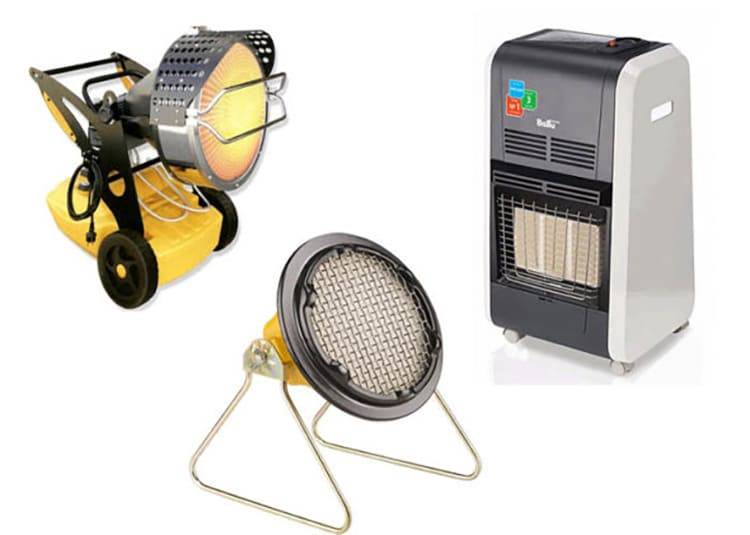
Types of IR heaters
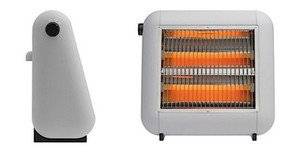
1.2- 4.2 kW. up to 60 sq. m.
According to the type of resource consumption, they are divided into gas, diesel, electric types. Gas and diesel models turned out to be cost-effective in practice. Their efficiency is about 90%.
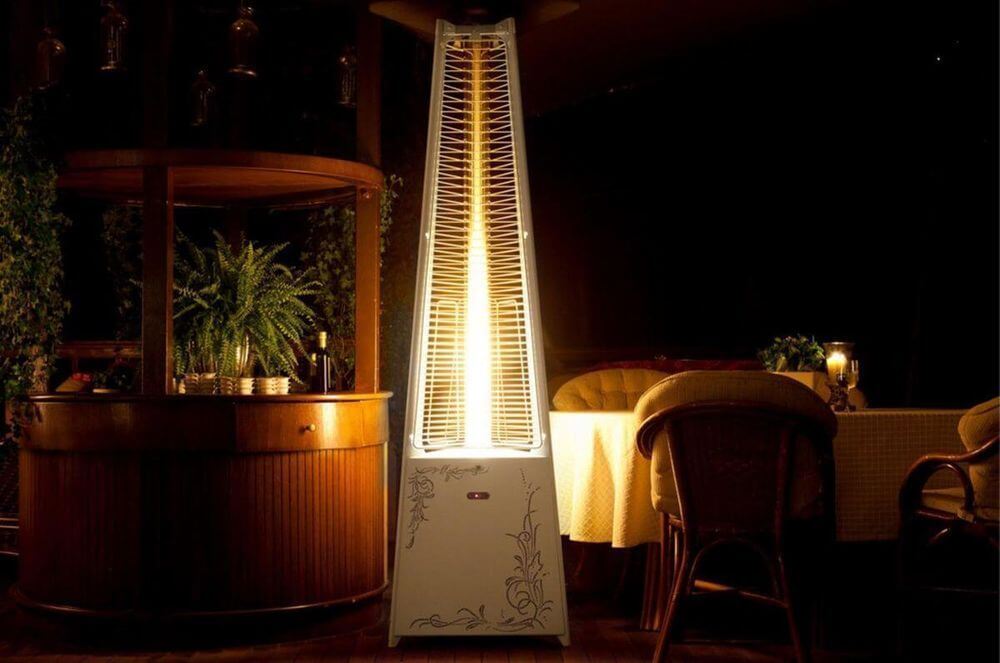
Infrared devices for heating individual areas, open verandas or recreation areas are becoming in demand. The heating structure is presented in the form of a cylindrical rack, with an internal hose for connecting the cylinder and the burner. For operation, control is provided with a sensor that controls combustion. A special valve will take care of safety. The power is 4.2 kW, which allows heating 20-25 square meters. m.
Advantages of infrared gas heating:
- 50% savings in resources compared to heating boilers;
- the only local type of heating - heats a specific area, not the whole room;
- the direction of heat flow is freely adjustable;
- easy installation;
- mobility;
- feeling of warmth immediately after switching on;
- does not reduce the humidity and oxygen content in the air.
Flaws:
Cons are more related to a street-type heater:
- it is necessary to constantly clean and carry out annual calibration, and a series of tests;
- professional services are expensive;
- high explosiveness.
Heaters are worthy of consumer attention. Perhaps due to the high cost, the models are not as popular as they deserve. The price of IR models is 5000 rubles.
Types and characteristics
In the case when additional heat sources are required, an excellent option would be to purchase a heater. The best option for heating your own homes is a device that runs on gas. However, before you buy, identify your requirements for a future device.
Today, a large selection of heaters is presented, designed for different areas, operating conditions. So, on sale you can find three types of gas heaters:
- infrared (ceramic);
- catalytic;
- convector.
Infrared
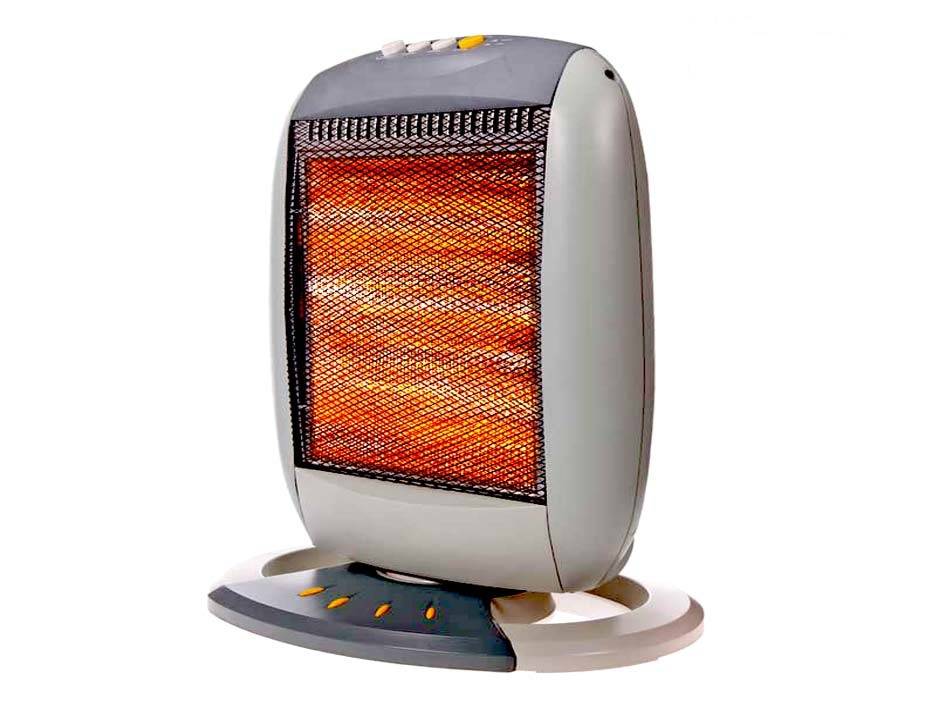
Such a heater operates on the principle of our Sun. During their work, the infrared rays emitted by the ceramic panel, reaching the surface of furniture, walls, objects, heat them up. Those objects and interior details that have come under the influence of infrared rays begin to give off the accumulated heat to the surrounding space (for more details, see the article on the principle of operation of a heater with infrared radiation).
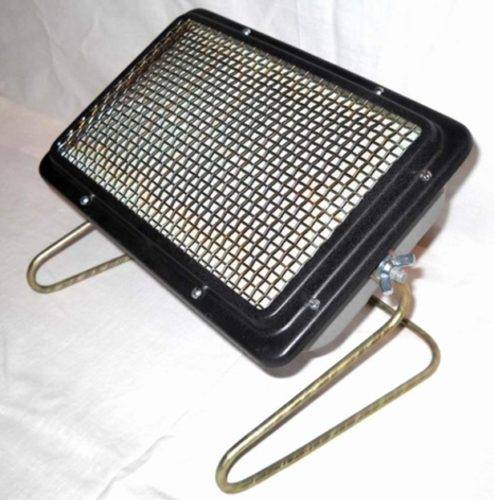
Infrared gas heaters consist of:
- metal case;
- heat exchanger;
- divider;
- control unit;
- reducer.
The dimensions of the device can be different: small, weighing about 6 kg, which are suitable for heating rooms up to 60 sq.m and impressive, which can heat an area up to 100 sq.m.


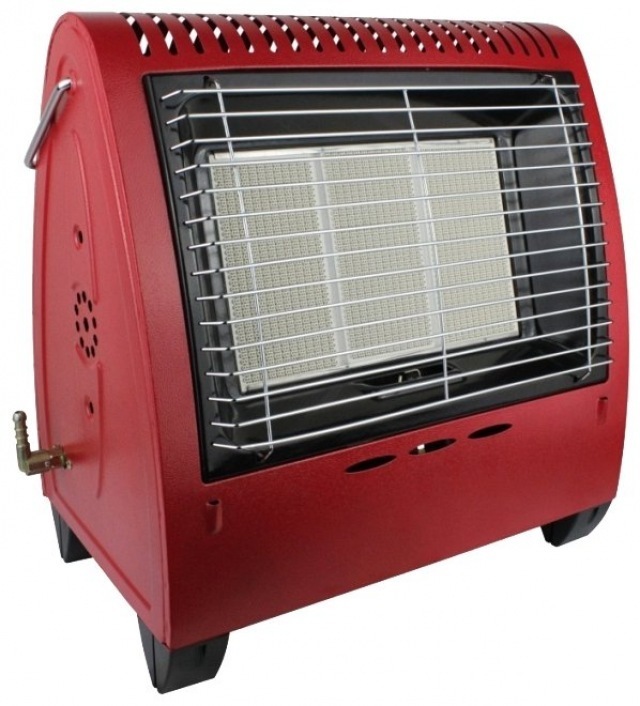
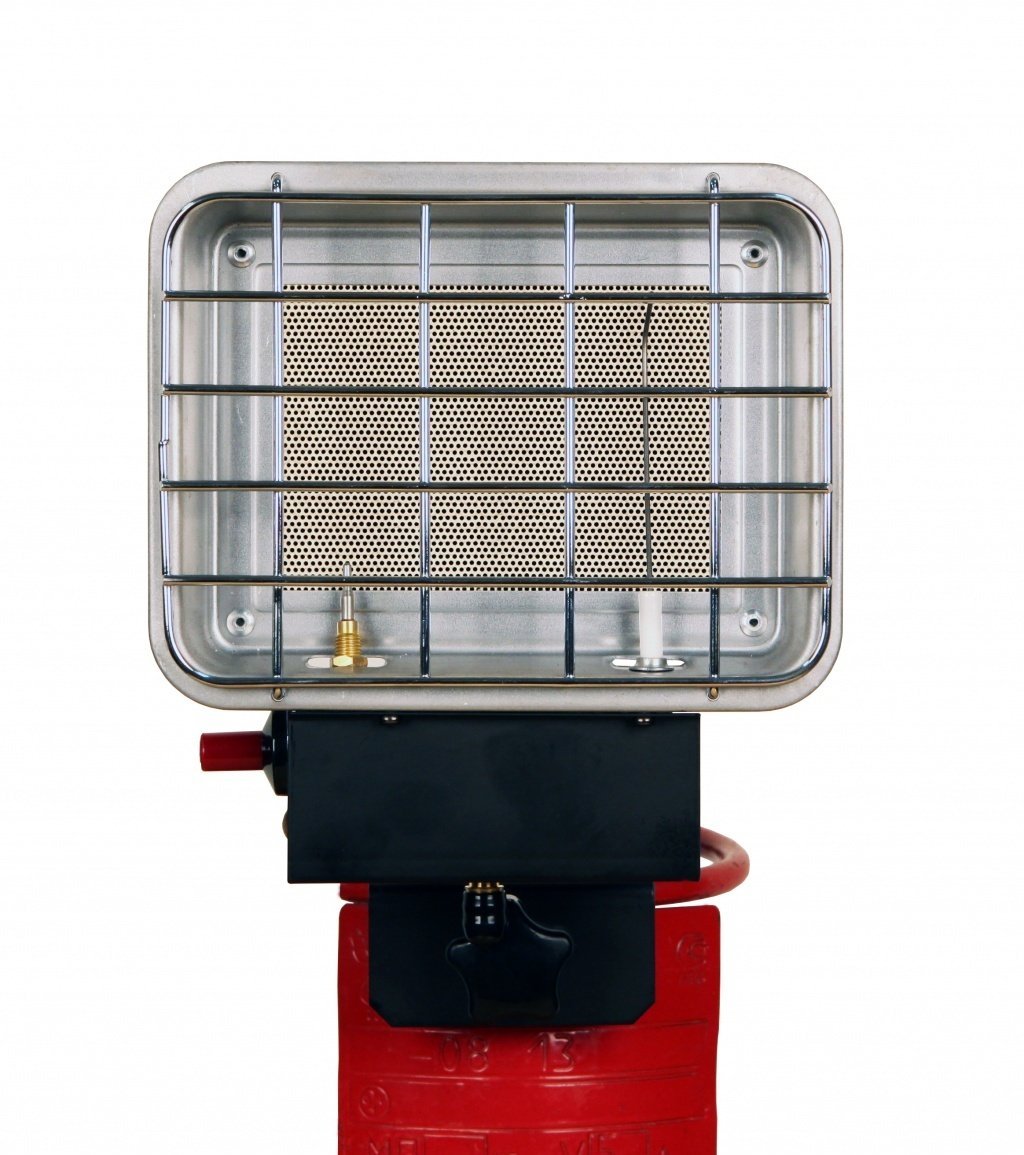


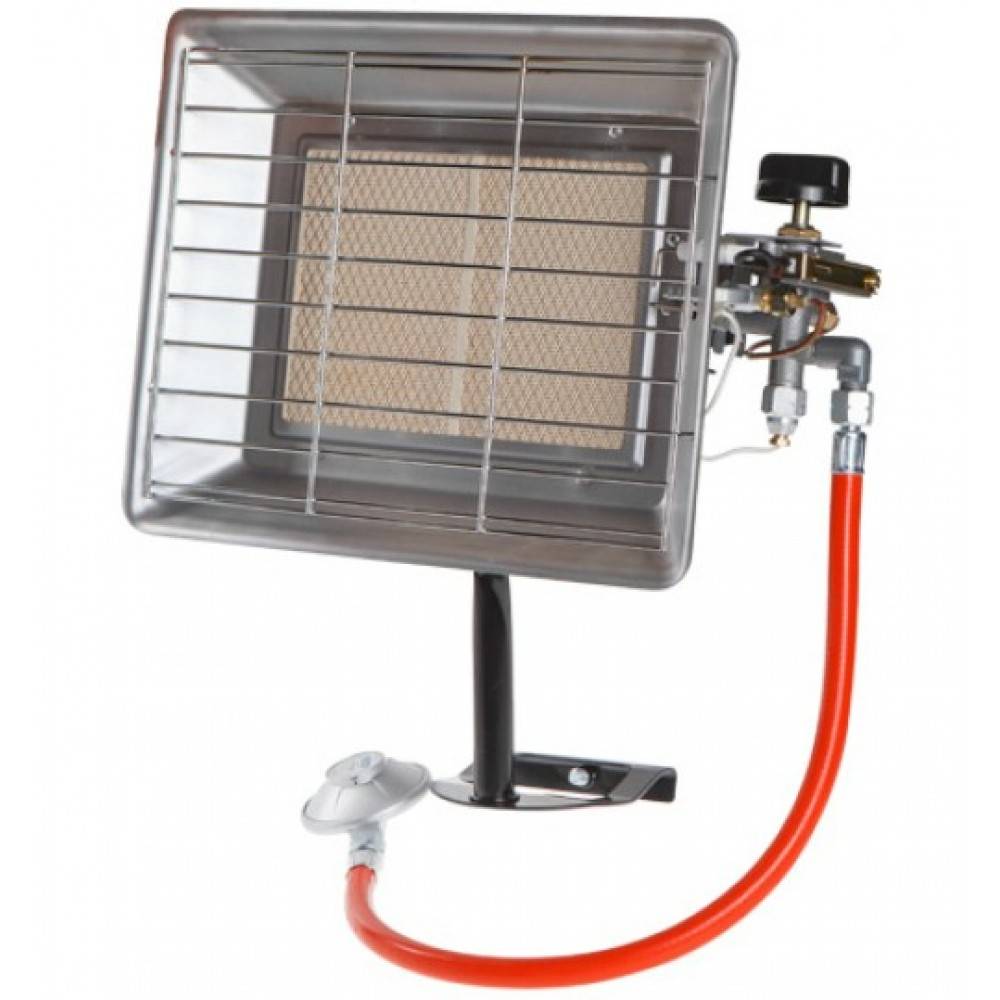
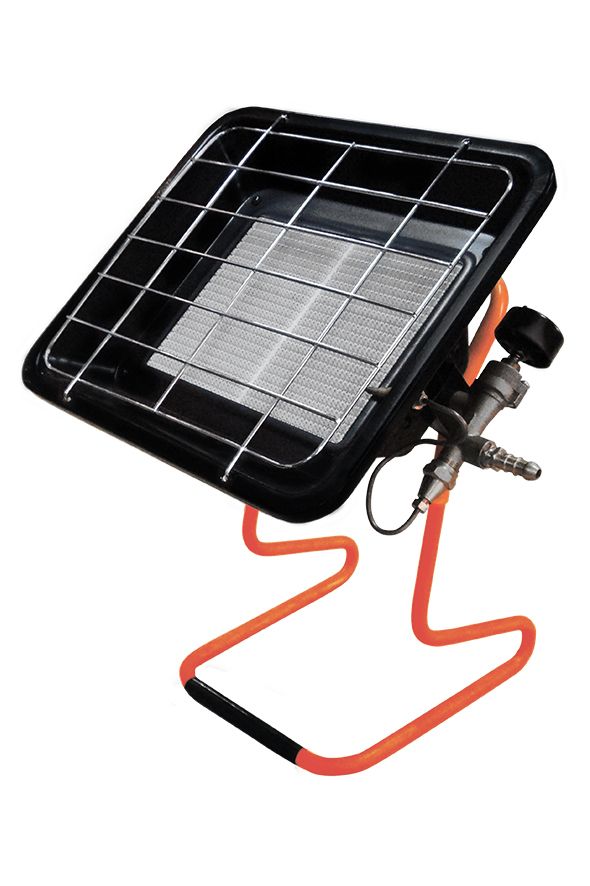

Infrared gas devices are divided into:
- Ceramic. As a heat exchanger, they use a ceramic plate, which can heat up to a temperature of over 800 degrees.
- Catalytic (flameless combustion). Thermal radiation from such devices is not higher than 600 degrees.
There are also outdoor infrared heaters. Their name speaks for itself.It is good to use such devices in arbors, on a balcony, terraces, lawns. The performance of such a device is in no way inferior to the classic one. It, like a home gas heater, has a high efficiency. The only caveat is that the outdoor space will quickly consume the heat generated by heated objects.
Catalytic
A feature of such devices can be called the fact that they work without flame and noise, being the safest in the line of all gas-fired heaters.
The heat exchanger in such models is made of fiberglass, on which a catalyst made of palladium or platinum (with copper, chromium or iron oxide) is applied on top. When the gas interacts with the catalyst coating, a chemical reaction occurs, the result of which is heat. It is clear that with this principle of operation, combustion products and smoke are completely absent. Quite often, catalytic models are equipped with fans and electric heating elements, which increases their efficiency and makes them volatile.
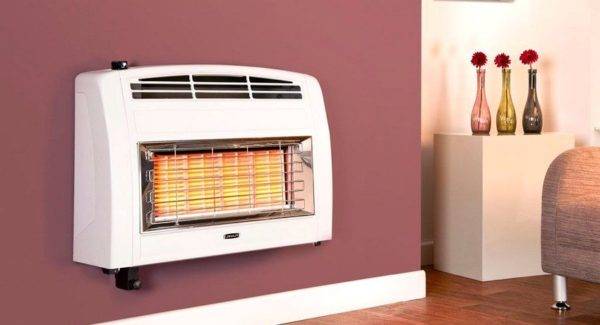
Convector
This type of device differs in the installation method. Installation of a convector device requires a chimney. He, like catalytic, warms up only the space around him. However, it has a flame, like any other gas boiler. Oxygen, without which combustion will not occur, enters the appliance through the chimney. And through it the smoke is diverted to the street.
The principle of operation of convector devices is as follows:
- Gas is supplied to the combustion chamber.
- Oxygen enters the furnace through the chimney.
- With the help of a special button on the panel, gas is ignited.
- The flame heats the heat exchanger, which in turn transfers heat to the air.
This type of gas heaters work on the principle of convention. Through small oblong holes located on the bottom and top of the case, cold air enters the device, where it is heated by a heat exchanger. As a result, it leaves the inside of the heater, escaping to the surface through the top slots. For more efficient operation of the equipment, it is equipped with a fan that promotes active air convection. It turns on from the icon located on the case.
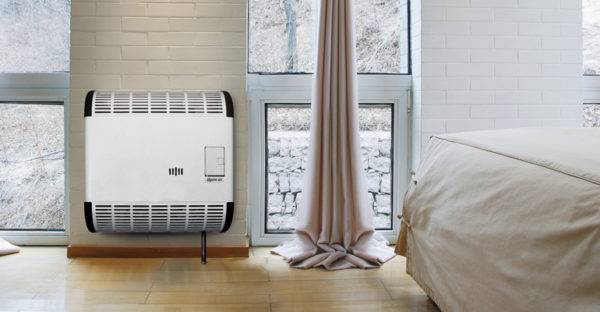
Convector heaters, like infrared and catalytic models, are equipped with control sensors that are responsible for certain processes occurring inside the equipment. If any problems arise, the sensors will fix this and activate the automation, which will turn off the equipment.
The best gas outdoor heaters
Ballu BOGH-15E
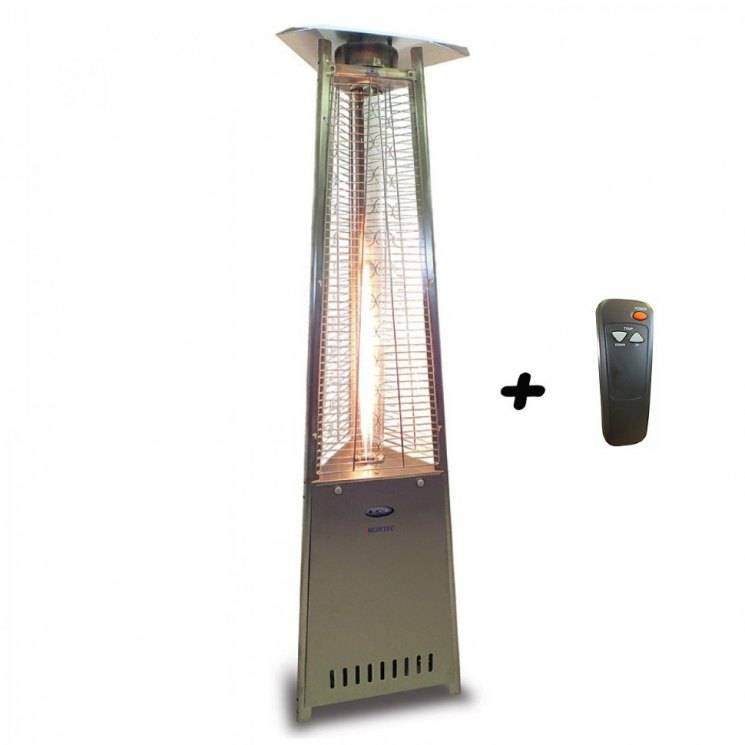
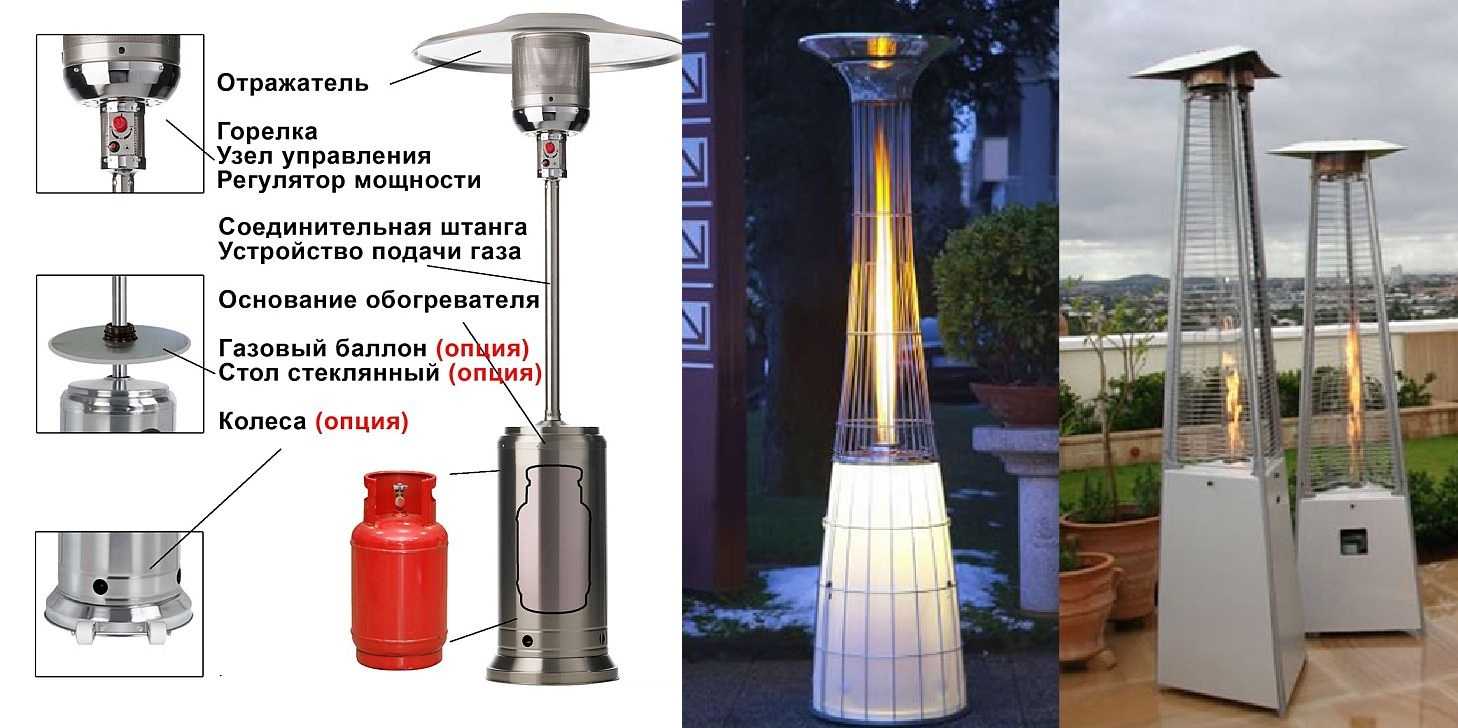
The body is made of stainless steel. It looks like an elongated pyramid and remotely resembles a gigantic lit candle. The structure is mounted on rollers. A small canopy protects the heater from rain and snow.
The principle of operation of the device is based on the radiation of thermal energy. A gas cylinder with a volume of 27 liters is fixed in its lower part. Flameless burners with ceramic emitters are installed on top. There is a lock in case of tipping over, flame out or gas leakage. The heater works stably at ambient temperatures from -20 to +30o C. The heating area is up to 20 sq.m.
Main characteristics:
- thermal power 13.0 kW;
- nominal gas flow rate 0.97 kg/hour;
- dimensions 2410x847x770 mm;
- weight 40.0 kg.
Watch product video
+ Pros of Ballu BOGH-15E
- High power.
- Unusual appearance.
- Ease of management. There is a remote control.
- Fire safety.
- The device for afterburning exhaust gases eliminates gas contamination.
- IP dust and moisture protection class
- There is a possibility of placing advertisements.
— Cons Ballu BOGH-15E
- Big weight.
- Poorly finished inner edges.
Conclusion. This heater is suitable for installation in parks, hotels, restaurants, outdoor cafes, terraces and home gardens. He is able to create a corner of comfort even in the most dank weather.


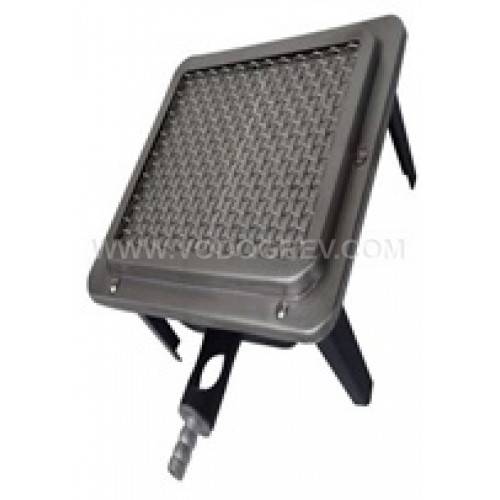


Ballu BOGH-15
Another model from the same manufacturer. She has similar characteristics. The most important difference is the lack of remote control. It is not so convenient to carry out ignition and regulation of operating modes in this case, but the buyer receives a significant gain in price.
Aesto A-02
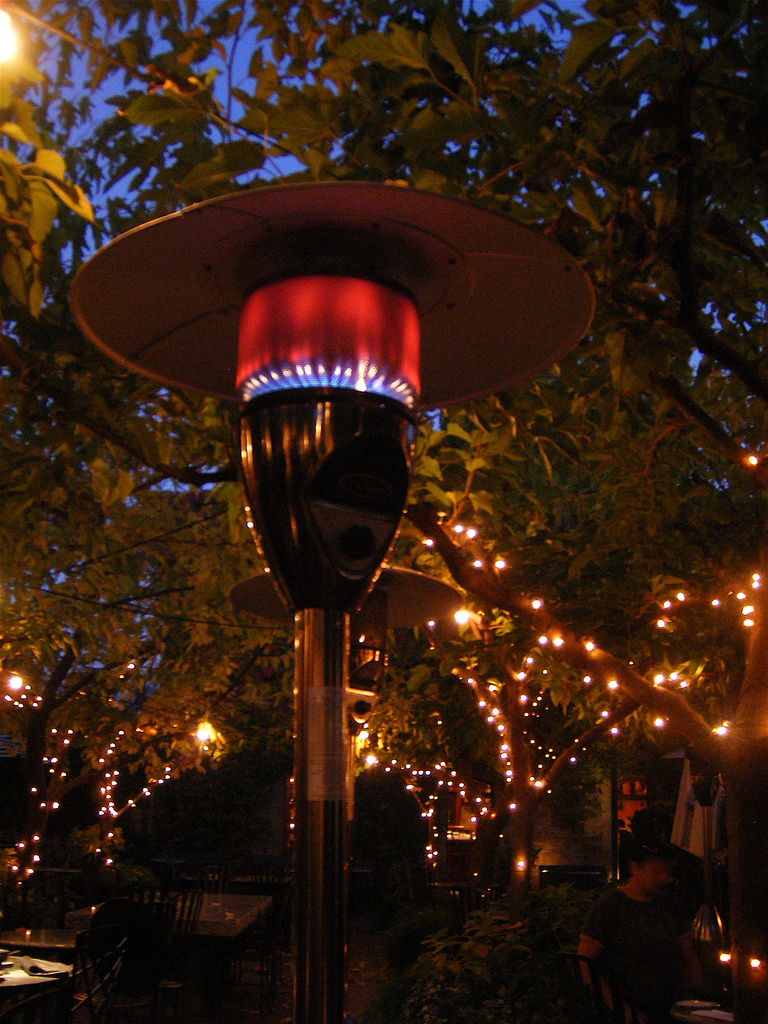
This Chinese-made heater is externally stylized as a familiar street lamp. It serves to create a comfortable zone of up to 22 m2 directly under the open sky. It is made of stainless steel and aluminum, which corresponds to the manufacturer's declared service life of 15 years.
The 27 liter LPG cylinder is placed in a cylindrical compartment at the base of the instrument. The burner is at the top. It is protected from precipitation by a conical visor, which additionally plays the role of a reflector of thermal waves. The design is collapsible, which simplifies the transportation and installation of the product.
Management is carried out manually. It is possible to smoothly adjust the power. For ignition, a built-in piezoelectric element is used.When the heater is overturned, the safety blocking of the gas supply is activated.
Main characteristics:
- thermal power 13.0 kW;
- nominal gas flow rate 0.87 kg/hour;
- dimensions 2200x810x810 mm;
- weight 17.0 kg.
+ Pros Aesto A-02
- High power.
- Reliable construction.
- Beautiful design.
- The ability to smoothly adjust the intensity of the flame.
- Fire safety.
- Low price.
— Cons Aesto A-02
- Lack of remote control.
- Wheels are not provided.
Conclusion. An outdoor heater of this brand is able not only to warm, but also to decorate with itself any recreation area in an open area. It can be installed in a park, square, outdoor cafe or restaurant. Affordable price allows you to use such equipment on individual personal plots.
Kinds
To create an optimal climate in rooms remote from the central heating system, various types of heating devices are used. The most popular models, of course, are gas. After all, the arrangement of heating with the help of blue fuel is the cheapest option today. In addition, such devices are completely independent of electricity, and in many cases are also mobile.
According to the principle of obtaining heat energy, it can be divided into:
- Catalytic;
- infrared or ceramic;
- Converter.
catalytic
This type of heater is characterized by the presence of a catalytic panel that oxidizes the gas fuel, resulting in the generation of thermal energy. Catalytic appliances are the safest and most environmentally friendly gas heating options. During operation, the combustion process is completely excluded, only the air space is heated, and not the surrounding objects.Also, a significant advantage of the equipment will be the absence of noise. Models can be additionally equipped with electric heating elements and ventilation devices. The disadvantage of equipment with a catalytic panel is their high price. Despite the rich functionality and high level of security, most often consumers prefer budget models of a different type.
infrared
The popularity of infrared models is due to the extended range of applications compared to devices of a different principle of operation. They can be used as outdoor heating devices (for verandas, gazebos and other outdoor recreation areas). Also suitable for heating rooms with a square above 20 m ^ 2.
Infra-red rays coming out of the ceramic panel heat up the surfaces of surrounding objects and walls. After warming up, the reverse process occurs: the objects begin to give off the accumulated heat to the environment.
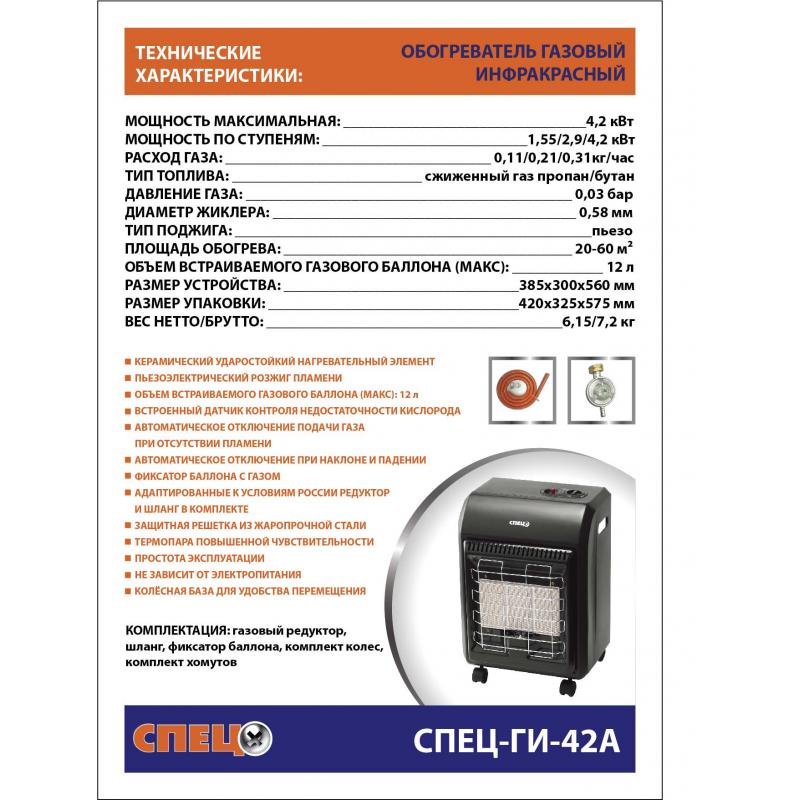




IR devices are divided into autonomous and stationary. The first option requires the installation of a propane cylinder, for the second, a connection to the main gas pipeline is made. The portable device is convenient to use during outdoor activities for heating the tent.
Classification of infrared heaters by type of installation:
- To the ceiling;
- On the wall;
- On the floor.
Advantages of IR heaters:
- Compact size, ergonomic design;
- Autonomy. Devices operating on a gas cylinder can not only be installed anywhere in the room, but also taken with you to nature;
- They have high efficiency (about 80%);
- Design features provide economical fuel consumption;
- Possibility of outdoor accommodation (in the garden; in the gazebo; by the pool).
Cons of IR heaters:
- The process of combustion of fuel occurs, resulting in the formation of carbon monoxide;
- High temperature and an open source of flame do not allow the use of equipment near flammable objects and in fire hazardous areas.
Despite the non-absolute fire safety, for heating large areas and rooms with high ceilings, the best options for heating equipment are IR heaters. Outdoors, they are able to cover an area of up to 6 square meters.
Convector
They work on the principle of a gas gun. Thermal energy is generated through the combustion of fuel. Further, with the help of a fan, the heat flow is directed to the desired zone. Installation of the appliance requires a chimney. Oxygen necessary for combustion enters through the chimney, and smoke is removed through it. The principle of operation is simple. Cold air enters the device through oblong holes in the lower and upper parts of the case. After that, it is heated by a heat exchanger. As a result of heating, warm air masses break out to the surface through the upper slots of the device.
The disadvantages of using convectors include the presence of an open flame, which does not provide a high level of fire safety.