- Features of the use of a gas tank
- Storage capacity
- What is main (natural) gas?
- Convector heating
- The main components of the gasification project
- Short Instructions
- How to choose the volume of the gas tank
- The nuances of choosing an installation
- Classification of gas tanks
- Capacity and a number of consequences
- How to calculate the amount of gas and choose a container for its storage
- Fuel storage principle
- Installation methods
- Profit or ruin
- Gas tank maintenance
- Ease of connection
- Natural gas connection
- Approximate list of documents for conducting main gas
- Connecting a gas tank
- Types of gas tanks
- Flaws
- Final Comparison Table
Features of the use of a gas tank
Independence of heating can be achieved in different ways, but in each case, the use of its own fuel sources is provided - firewood, diesel and the same gas. For example, boilers can also be connected to cylinders, but this option justifies itself only in the case of temporary heating with modest requirements for heat generation
The problem is that small containers require frequent replacement and, most importantly, regular connection to the consuming equipment.In turn, the reviews of the owners of gas tanks indicate that the volume of about 5,000 liters in the average operating mode is consumed within 6 months
This is the main advantage of using such gas storage facilities. Another thing is that there is a problem of placing a rather massive structure. On the site adjacent to the house there should be a free area for its installation.
Storage capacity
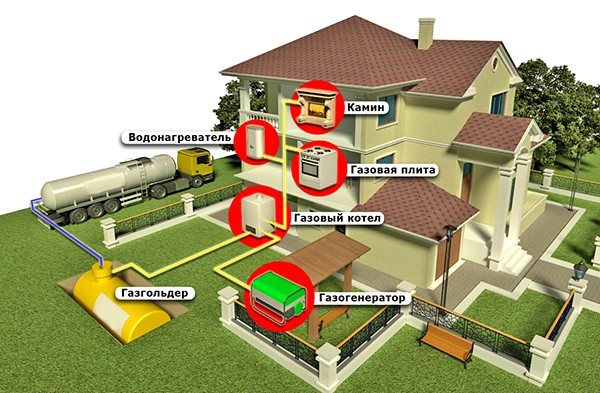
A gas tank is a container for storing gas, and in a specific situation of heating a country house, a container into which LPG, liquefied hydrocarbon gases, a mixture of butane and propane are poured. LPG is not at all the gas that is supplied to homes through the pipes of the main gas pipeline - methane-based fuel is used there.
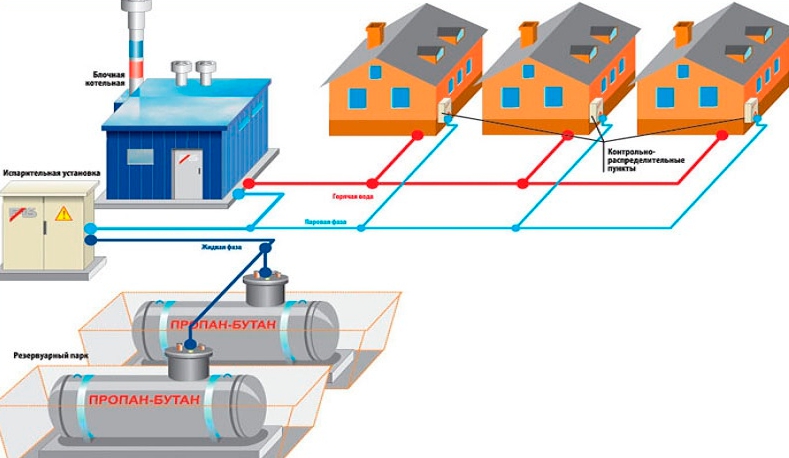
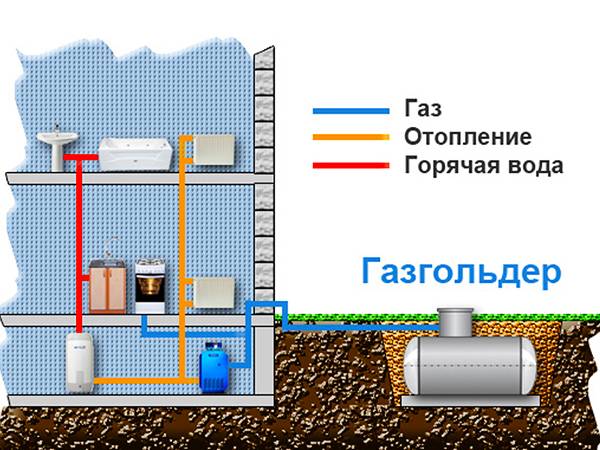
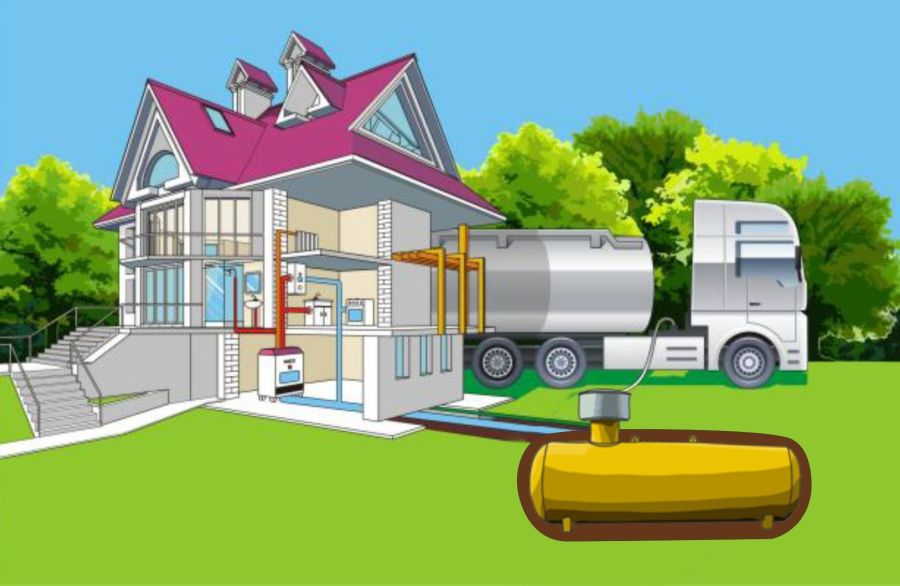
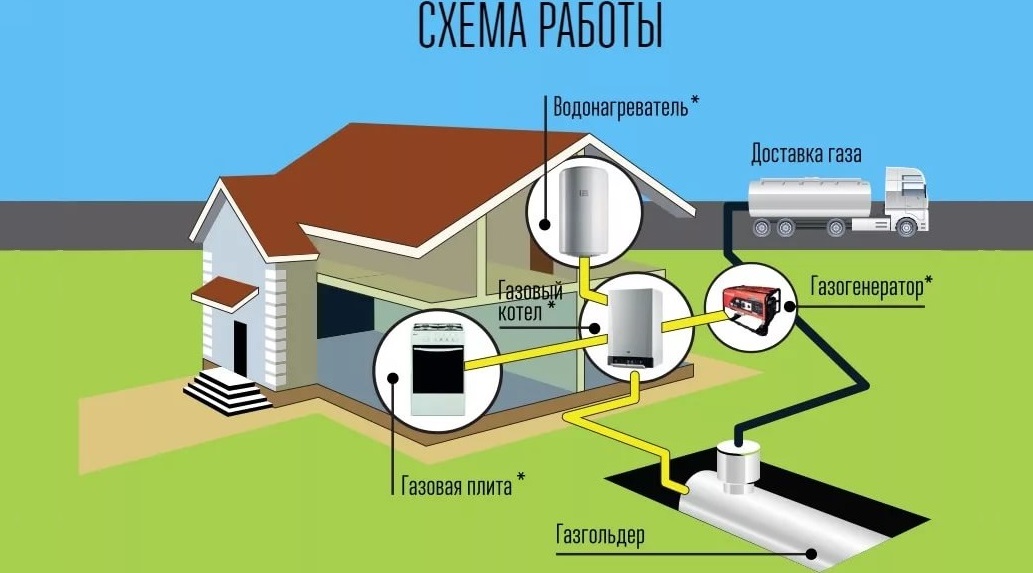
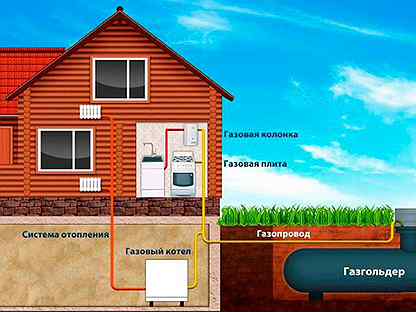
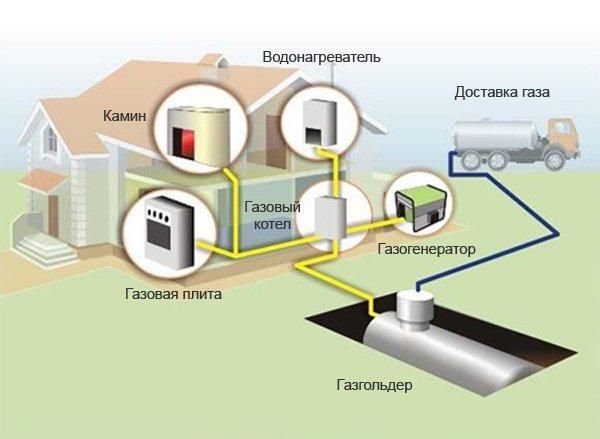
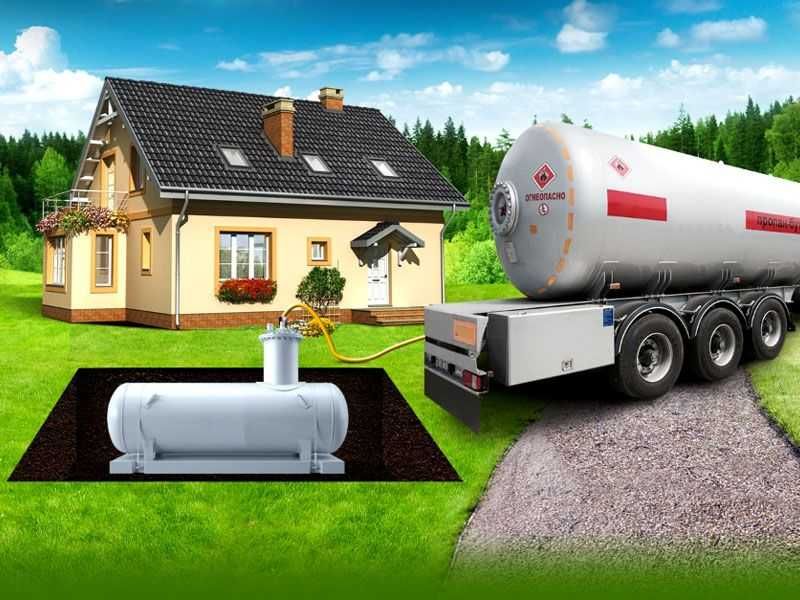
From a conventional gas cylinder, a gas tank differs in size and stationarity; it is installed on the site for several decades and is periodically refueled from a special tanker. An underground gas pipeline is laid to the house from the reservoir (it must be at a certain distance), through which the evaporated gas enters the boiler.
Gas holders are made of steel and treated with special compounds against corrosion. The device is equipped with sensors that help control the gas flow and show the pressure in the tank.
The history of gas tanks began in 1781 in the laboratory of the French chemist Lavoisier. To store gas in his laboratory, he made a rectangular container of 100 liters, and after a few years he realized that the gas tank should be cylindrical. Further, gas holders were used mainly in science, industry and urban utilities (for gas lamps).
Over time and the development of science, gas tanks have changed, modified, and finally a variety has appeared that is used to heat private houses. These are cylindrical tanks of constant volume, capable of withstanding high pressure: there are tanks in which gas is stored at a pressure of up to 18 atm.
What is main (natural) gas?
For those who are far from oil and gas production, the analysis of all the nuances of the “gas” issue in detail often causes a headache. There is natural, liquefied, bottled, compressed, main gas, etc. Plus, there are a bunch of abbreviations (CPG, LNG, LPG, GMT, APG). And all this is about the fuel that we use in everyday life for heating water (coolant) and cooking.
It is rather difficult to understand from scratch in all types of this fuel, so familiar to many Russians.
It is necessary to clearly distinguish between natural gas in the main pipeline and liquefied gas in the gas tank - they have different characteristics and composition
As such, natural gas extracted from the bowels of the earth is a mixture of:
- methane;
- heavy hydrocarbons (ethane, propane, butane, etc.);
- hydrogen and hydrogen sulfide;
- water vapor;
- nitrogen;
- helium and other inert gases.
Depending on the deposit, the proportion of the first component in this mixture reaches 70–98%.
However, the “natural gas” that enters apartments and houses through pipes is methane already purified from impurities with a meager amount of an odorant (a substance with a sharp unpleasant odor that makes it easier to detect leaks).
It is not safe to supply all the mixture extracted from the earth through gas pipelines for domestic needs without processing. It contains a lot of explosive and harmful components for humans. It is easier and safer to clean methane from everything else.
After purification at the field, this already purely methane gas enters the GTS (gas transmission system). And from it, through gas distribution and compressor stations, it is supplied through gas pipelines, first to settlements, and then to consumers.
This is how natural gas enters the homes of private owners and city apartments to be burned in gas stoves, boilers and boilers.
In addition to burning in gas boilers and stoves, methane is also used as a natural gas motor fuel (GMF), it is safer than a propane-butane mixture and is half the price of gasoline
The gas in the apartment and HMT based on methane are the same in composition. However, the first one “flows” in the gaseous state through the pipes. But the second one is pumped into the cylinders of cars in a form compressed to a pressure of 200–220 bar. Such gas motor fuel is called compressed (CNG). It is he who is sold at gas filling stations of Gazprom.
At the same time, there is also LPG (liquefied petroleum gas), which is also often used for filling cars. But it no longer consists of methane, but of a mixture of propane and butane. About him further - this is just what is pumped into gas tanks.




The methane class also includes natural gases:
- LNG (liquefied).
- APG (adsorbed).
The first one is liquefied by cooling at minus 160C to simplify transportation and storage. It is he who is transported in huge tankers across the oceans.
The second option is methane, which is adsorbed on a solid porous sorbent. Unlike LNG, its storage does not require equipment to maintain ultra-low temperatures.
At the same time, the pressure in the tank does not rise above 30-50 bar, so it is much easier and safer to store and transport it.However, this technology has not yet become widespread in Russia and the world, due to the high cost of adsorbent production.
Convector heating
This method of heating country houses with gas cannot be called too common. But sometimes convectors, including gas ones, are still used to heat private residential buildings. Such systems work on the basis of a simple law of physics. Warm air, as you know, rises, and cooled air falls down.
The advantages of convector heating in the first place include:
-
no negative impact on the air (oxygen is not burned out);
-
no effect on air humidity;
-
economy, ease of installation.
The disadvantages of this type of heating are:
-
feeling of "overheating" of the air;
-
high temperature difference at the bottom and top of the room;
-
low efficiency in high rooms.
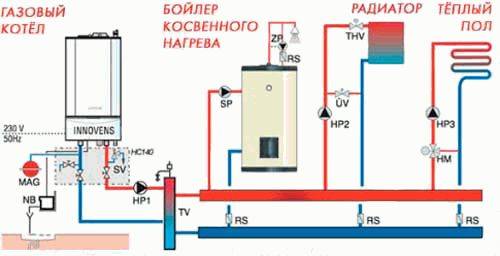
The main heating equipment in such systems used for heating private houses with gas is a convector that runs on blue fuel. The air is heated by passing through the heat exchanger of this device and enters the premises.
The main components of the gasification project
Not every place on the site is suitable for installing a propane-butane tank. In order for all conditions to be met, it must have the appropriate dimensions. The main thing is that a free entrance is needed to the tank, otherwise it becomes impossible to fill and maintain it.
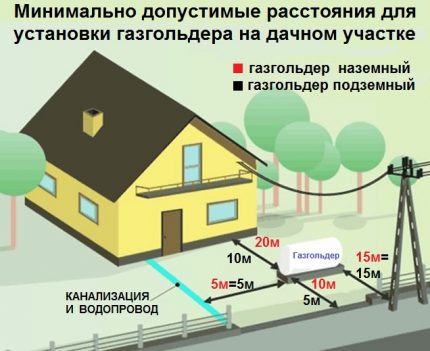
When choosing a place for a gas tank, it should be noted that the gas tanker has a hose no longer than 24 m.In accordance with SNIP, you need to retreat about 2.5 m from the perimeter of your household, and if there is a source of water intake, then the norm provides for a distance of 5 m to it
All communications can only be laid underground. The container itself should not be under a driveway or other road.
The optimal distance from the road to the reservoir is 5 m. At least 8 m should be retreated from household buildings on your site. To the foundation of the house - 10 m, and from the neighbor's house - 20 m. The factory data plate should be in sight. The rules for choosing a location for the location of a gas tank are given in an article devoted to this issue.
It is allowed that the installed tank rises above the ground by a maximum of 0.6 m. It must be grounded, and if static voltage is present on the site, measures must be taken to protect against electrochemical corrosion.
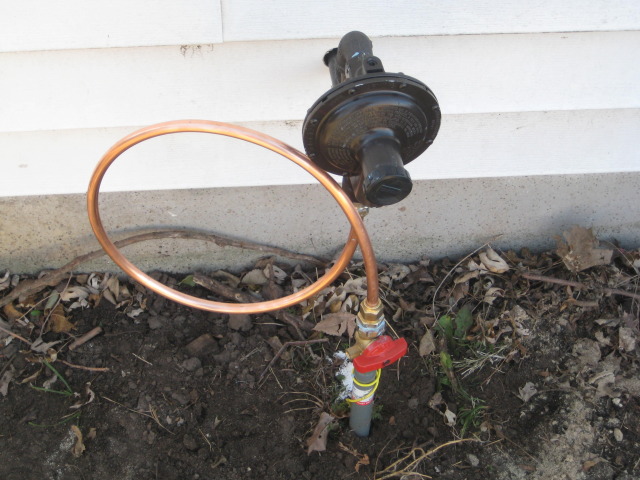
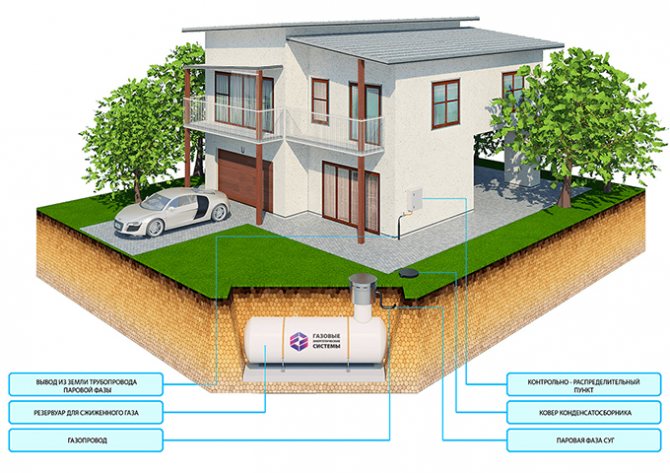
In terms of autonomous gasification, it consists of a tank that has been manufactured and passed all stages of testing at the factory, pressure regulators, protection, and a gas pipeline. Protection consists of magnesium electrodes located at a distance of about 0.35 m from the tank. The purpose of the condensate trap is to collect liquid butane, which then evaporates on its own.
The gas pipeline is assembled from pressure polyethylene pipes. A gas pipeline is laid before entering the house, assembled from metal pipes and equipped with a shut-off valve and a bellows type compensator. The internal pipeline is equipped with thermal shut-off valves.
To immerse the gas tank, a pit is prepared, at the bottom of which a pillow of sand and gravel is arranged. Next, a monolithic base with a height of at least 160 mm is poured.Without this, the unit can squeeze groundwater out of the pit. Sometimes the tank is immediately fixed on the finished reinforced concrete slab, and then all together lowered into the pit.


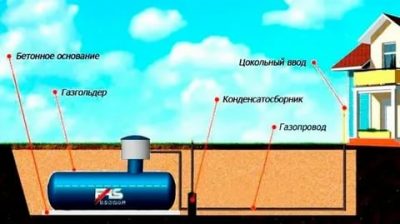

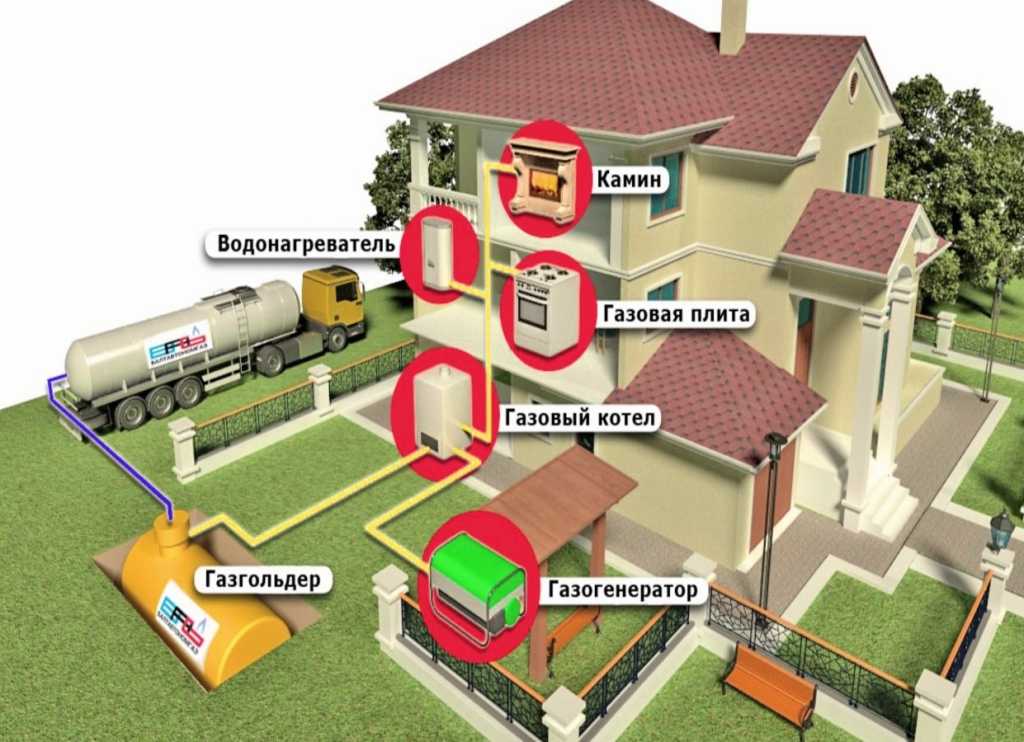
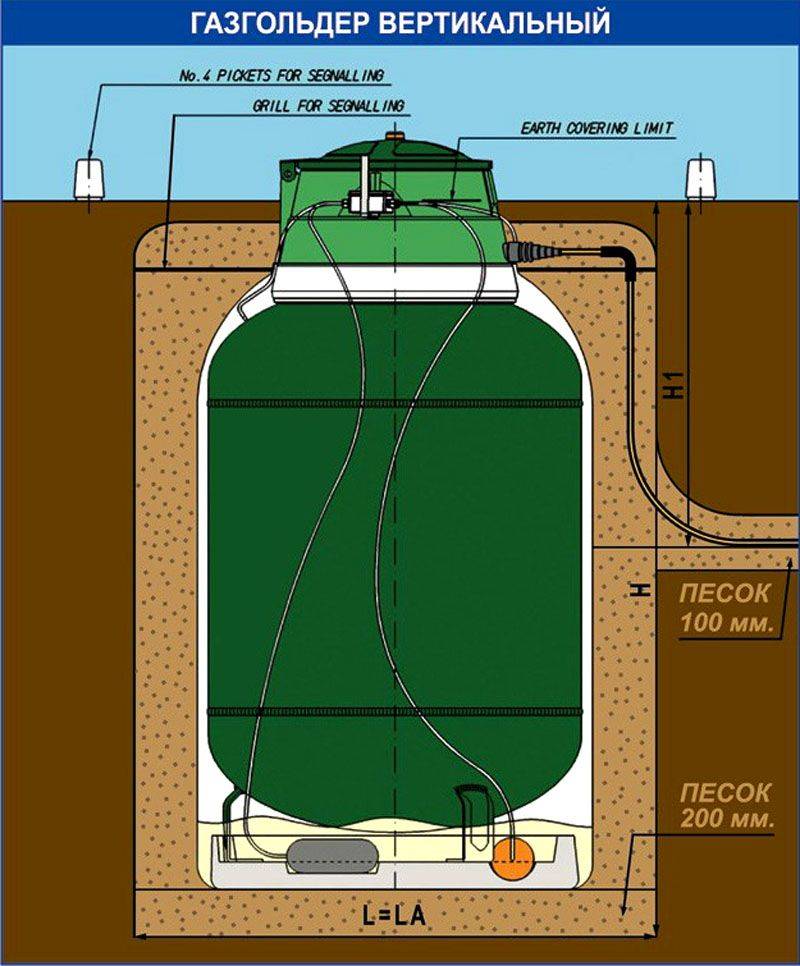
After fixing the tank, it is coated with a special grease that protects the metal from corrosion. The next stage is the anode-cathodic protection device. After that, the gas pipeline is laid, it and the pit are covered with soil.
Short Instructions
Installation scheme parapet gas boiler type.
Technical documents that contain a description of the area and a plan for supplying gas from the central pipe are drawn up and executed by licensed organizations. Usually these are the technical specialists of the gas company.
All installation of equipment for connecting gas (water heaters, boiler, meter, pipes) is done by a team of installers.
Conclude an agreement for gas supply from the central pipe and an agreement for the installation of equipment. These are completely different works, and they are carried out at different estimates.
The room where you plan to install gas equipment must have ventilation, a window, lighting and a concrete floor. If you want to install the whole set in the kitchen, then you will have to drill holes in the doors and make ventilation near the gas installations.
After the installation is completed, it is necessary to conclude a contract for the maintenance of gas equipment. Call an employee from the gas control department and draw up an act for putting equipment and gas meters into operation.
Related article: How to choose and install sliding interior sliding doors
Take the commissioning act and conclude an agreement in the customer service department of the gas campaign for the supply of gas and its payment by the meter.
How to choose the volume of the gas tank
Modern industry produces different types of gas holders. They differ in volume, design, type of occurrence, material and wall thickness, price, manufacturer. To choose the right one, you need to take into account many different points.
The first criterion for choosing a gas tank is volume. Now gas tanks are offered with a volume of 900 to 10,000 liters, but it is better to buy a roomy enough one so that you have to refuel no more than once a year - this is the most profitable tactic.
MblForumhouse Member
Typically, a capacity of 4850 is enough for a house of 190 square meters.
It is difficult to accurately calculate the volume, manufacturers recommend calculating fuel consumption using the formula 22–25 liters of gas volume per meter of house area. You can trust these companies, but it's better to play it safe.
HryunchaForumhouse moderator
Less than 4.8 cu. m. do not take! Here the same principle as in a car: no need to wait to the bottom of the tank, it is better to refuel in advance.
Most manufacturers strongly recommend adhering to the following filling parameters:
- not less than 5% (there should not be less fuel in the tank)
- not higher than 85% (more capacity is not filled).
These indicators allow you to maintain a working pressure in the gas tank, with which its operation will be safe.
The nuances of choosing an installation
Which gas tank is better to choose for at home? This issue should be resolved in several stages. Before you start choosing a model, decide for what purposes you need the device. The choice will depend on several variables:
- the number of connected fuel consumers. It can only be a heating boiler or a boiler, a stove, a water heater and a generator;
- in what mode do you use the residential facility - as a temporary shelter for the weekend or as a place of permanent residence.
If you have answered these basic questions, proceed to the selection of a model according to the following criteria:
| Tank strength | The tank must hold high pressure. The thickness of the steel walls is at least 8-12 millimeters. All seams must be of exceptional quality. If the system is installed in the northern regions, the tank is additionally equipped with partitions inside. |
| Corrosion resistance | The service life of the device is two to three decades. All this time the system will be in the ground, under the influence of moisture. For protection, the tank body is coated with various compounds, the most stable is polyurethane. In addition to coating, the system is equipped with cathode-anodic electrochemical protection. |
| The quality of the locking mechanisms | All hatches and other elements of the system must be leak-proof and securely lock the tank at any temperature. |
| Compliance of the model with operating conditions | Depending on the region and the individual requirements of the site, gas tanks of a vertical or horizontal type, aboveground or underground, are selected. |
| Neck device | The lower the mercury column in your area falls, the deeper you will have to dig the tank. So, the neck should be at least half a meter. The neck is equipped with a special hatch for periodic inspection. If there is no such hatch, for inspection you will have to dig out a container for external inspection, and this is an extra waste of time and effort. |
| The presence of paws | The support feet prevent the body from deforming and additionally strengthen the tank body from mechanical stress. |
| Price | Keep in mind that the price of a gas tank for a private house cannot be democratic.If the product is of high quality and meets all domestic standards, it will cost a lot. Do not fall for tempting offers, otherwise you will not only pay twice, but also risk your safety. |
Classification of gas tanks
Gas tanks are divided according to several criteria: by size (capacity), storage principle, installation method.
Capacity and a number of consequences

Large (up to 10,000 l) and small (2,000 l) gas containers are produced in size. The number of fillings and refuelings depends on the size: with a small tank, the tanker will have to be called more often. The optimal number of fillings is 2 times a year. The cost of construction and installation for its installation also depends on the size: the larger the tank, the more expensive the land work will cost, and the more space will be needed on the site.



How to calculate the amount of gas and choose a container for its storage
Before purchasing, you should decide how much gas you need to use. It depends on the:
- ambient temperature and season;
- on the thickness of the walls of the house and the quality of insulation;
- on the economy and efficiency of the boiler used;
- on the quality of the fuel itself.
To calculate the annual fuel consumption in liters, you need to carry out a whole series of mathematical calculations. Manufacturers simplify the calculation to the following scheme: per meter of area of \u200b\u200bthe room, the approximate consumption of gas volume is 22 - 25 liters. According to their recommendation, a large house with an area of 300 or more square meters will require a gas tank for 10,000 liters. For heating a small room (up to 100 square meters), a tank with a volume of 2,700 liters is enough.
Fuel storage principle
Distinguish gasholders of constant and variable volume. At a constant volume, the gas is stored at a pressure of up to 1.8 MPa. With a variable tank volume, the gas is stored inside at ambient temperature and atmospheric pressure with virtually no compression.
Installation methods
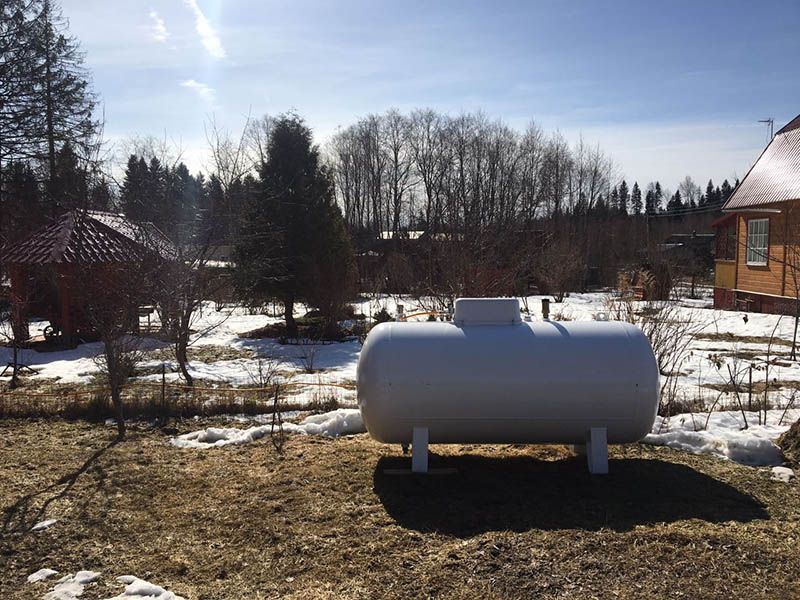
According to the principle of installation, vertical, horizontal and mobile tanks are sold.
Vertical models do not require serious earthworks - they can be installed on the surface. Such models are compact, take up little space and have a small working area. The tanks must have an insulating winding that will maintain the required rate of gas evaporation during the cold period of time. Preheaters can also be used to speed up the process.
In horizontal tanks, the mixture passes into gas more efficiently. The working surface has a large area, the tanks are filled by 85% of the nominal value. The main thing is to choose the right size of the product.
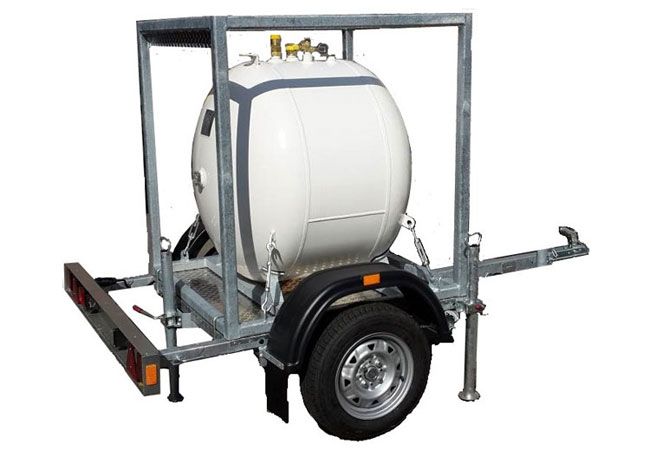
The third type is mobile, mobile gas tanks of small capacity (up to 500 liters). Profitability is considered a plus - they can be refueled at stations with a reduced price for liquefied gas. They do not require installation and installation underground. The disadvantage of mobile devices is that refueling should be constant.
Profit or ruin
How profitable is a gas tank, does it pay off and when does it make sense to put it in a dacha or country house, and when not? This issue has been discussed on FORUMHOUSE for many years. There is no universal answer here, each case is individual, it all depends on the size and quality of home insulation, the climate of the region, and prices for other types of fuel.
But here are the things we managed to agree on:
- Gas tank heating will be more profitable if you fill the tank once a year, in May.The cost of fuel in May is 20% lower than in October. But for this, the tank must have a sufficiently large volume.
- Gas tank heating is definitely cheaper than diesel heating, and in a number of regions of our country it is in second place in terms of payback after natural gas;
Westpoint Member of FORUMHOUSE
Barrels with a volume of 4850 for a house of 130 sq.m. should be enough for a one-time refueling for a year. That's half of what I spend on pellets now.
If the area of the house is more than 100 square meters, an autonomous gas heating system based on a gas tank may already be appropriate. If you just need to heat a small cottage, it would be more correct to stop at electricity.
spbplumbing Member FORUMHOUSE
It all depends on capital investments, but a gas tank will come out cheaper than a diesel boiler with piping, chimney, tank, installation.
HryunchaForumhouse moderator
Personally, I don't regret it at all. Ownership experience 8 years.
Even those people who regret aloud that they installed gas tanks do not want to sell them.
Here are a few reviews about how much it cost to heat a LPG house to users of our portal in the past 2020.
MblFORUMHOUSE member, Moscow.
The total area is 150 square meters + bath 70. Of these, I constantly heat up to + 21 degrees 60-70 m, in the bath I maintain +5 all week, on weekends +21. Consumption per year in this mode is 40,000-45,000 rubles. In liters, somewhere around 2500. I have a barrel with a volume of 4850 liters.




A member of our portal with the nickname IlyaKu has been operating a 6400 l gas tank for four years. The area of his house is 10 square meters, and he chose such a large reservoir, planning to subsequently connect the house of relatives to it. Both houses are permanent residences, without underfloor heating, with radiators.
IlyaKuFORUMHOUSE Member
While there was one house of 160 m2, the GG was enough for the whole year and with a huge supply, the supply allowed you to choose when it was more profitable to refuel (minimum price May-June, maximum October-December).
After connecting the second house, a house with an area of 140 m2 has to be refueled twice a year, a total of 119,000 rubles for two houses in 2020, in the past 129,000.
FORUMHOUSE members who live close to each other find partners on the forum to refuel together. Judging by the reviews, this allows you to save from 50 kopecks to a ruble for each liter - it is much more profitable for tankers to carry full tanks.
But this is about fuel consumption; many people are more afraid of the cost of installing equipment. They are really considerable, but - and you can look at it from different angles.
ChaleForumhouse Member
Believe me, compared to the cost of a house with some furniture and appliances, 350 thousand for everything together with the first gas station will seem like a small amount.
Gas tank maintenance

The main measure in the maintenance of the gas storage facility is periodic refueling. As a rule, mixtures of butane and propane are used, the percentage of which varies depending on local climatic conditions. Filling is carried out when the gas content in the tank drops to a level of about 25%. Direct filling is carried out by special services with gas carriers and fuel supply hoses, which are immersed in the neck of the gas tank. Owner reviews often criticize the lack of professionalism of gas supply companies providing such services.
Therefore, in order not to miscalculate in choosing a service for refueling a gas tank, you should pay attention to the following points:
- The presence of an invoice describing the composition and quality of the provided mixture.
- Use of specialized gas meters and level gauges to read fuel volume.
- Fleet size. Large companies always have 4-5 gas carriers at their disposal to meet the needs of consumers during periods of seasonal hype.
- The presence of hoses of the required length. It is necessary to estimate in advance how far the tanker truck will be able to direct the hose in the conditions of a particular site (on average, from 20 to 50 m).

Ease of connection
Natural gas connection
And here everything is very sad. Let's start from the beginning - if there is no gas pipe near your house. Check out Mosoblgaz's gasification plans for 2020. Perhaps soon an optimistic sign “Construction and installation work is underway” will appear in your village.
What if you don't want to wait? You need to go straight to the gas company (it's the only one in the region, you can't go wrong) and prepare a budget. The budget depends on the proximity of the pipe to you, the appetites of the gas company and the demands of the contractors that have merged with it.
It also pays to be patient. Because gas companies are monopolists. And they are in no hurry. And if you are in a hurry, get ready to write to all authorities or “buy” a place in the queue.
There are reports that people with all the documents ready on hand are waiting for their turn for a year or two, while less scrupulous neighbors are gasified out of turn.
By the way
If you want to gasify the house in 4 days, discuss with the engineer the implementation of liquefied gas.
Carry gas in 4 days
Approximate list of documents for conducting main gas
- Connection permission.
- A copy of the registration certificate of the house.
- Topography of a land plot with a gas pipeline and communications.
- A package of documents for the installed gas equipment (certificate of conformity, permission to use, contract for future maintenance).
- Chimney inspection report.
- Specifications for the gas supply of a residential building.
- Project and coordination of the location of gas equipment.
- Estimate of work, contract for the implementation of technical supervision.
- Agreement with a licensed installation company.
- Executive technical documentation.
- The act of acceptance by the commission of the completed scope of work.
- The act of sealing the gas meter. Agreement for periodic bypass of the gas pipeline route and maintenance of the shut-off device, gas supply.
Paperwork takes a long time. If you do not turn to intermediaries and collect documents yourself, you will have to take time off from work or even a full vacation. Just to travel around the regional authorities and host numerous inspectors.
You will have to pay for each paper. If everything is perfect in your documentation, the pipe itself will be laid quickly.





It is the complexity of connection and bureaucracy that force people to stay on electric heating. The unbearable procedure will not only not pay for the transition to main gas, but will also deprive the last nerves and philanthropy.
Connecting a gas tank
In the case of installing an underground tank, there is no paperwork from the word "absolutely". All you need is real estate documents. Even a permit for excavation is not needed - you are digging a pit on your own land.
The installation procedure with all the design takes 3 days.Work on the site will be completed in 8-9 hours: dig a pit, install a gas tank and bring a gas pipeline into the boiler room, bury the gas tank. Further, liquefied gas, like its “colleague” from the main, constantly enters the heating boiler without your help.
4
Types of gas tanks
If we are talking about tanks in a stationary design, there are 2 types of gas tank - underground and aboveground. Capacious reservoirs allow organizing autonomous gas supply in year-round houses. It is recommended that a gas tank for a cottage be made stationary, while at the same time, a mobile tank can be used for occasional use in the country during the winter.
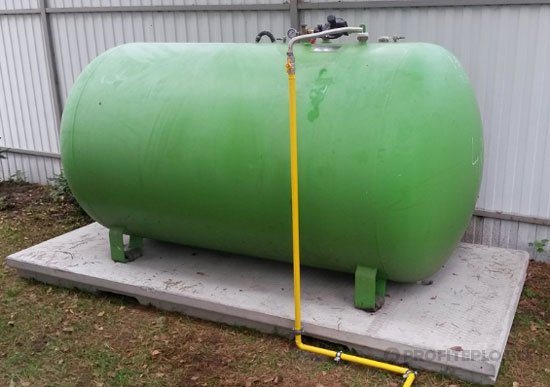
Ground gas tank
Features of gas tanks
- Ground storage. In European countries, this option is popular, since the installation of the tank does not require serious financial costs and time for excavation. But in Russia, in regions with a colder climate, it is not rational to use above-ground tanks - at low temperatures, liquefied gas evaporates more slowly. The ground gas tank will have to be supplemented with special evaporators and the body insulated to ensure the required level of gas pressure in the pipes. The use of an outdoor gas tank is rational if the task is to provide heat to high-rise buildings, cottage settlements, to combine summer cottages, since it is necessary to use large tanks (up to 6,000 m3), which are expensive to hide underground.
- Underground tanks. The location of storage for liquefied gas underground, below the freezing point of the soil, has a number of advantages:
- it is not required to use additional equipment in order to maintain the evaporation of gas in the tank at a consistently high level;
- the site is not cluttered with a structure with a container, retains an attractive appearance.
- mobile tanks. A small tank for liquefied gas is mounted on a trailer. Due to special equipment, it is connected to the gas communications of the house in a matter of minutes. Filling the tank with fuel can be done at any gas station. Tank volume - up to 500 m3. This is enough to heat a small house. A mobile gas supply station allows you to provide fuel for the cottage during winter living.
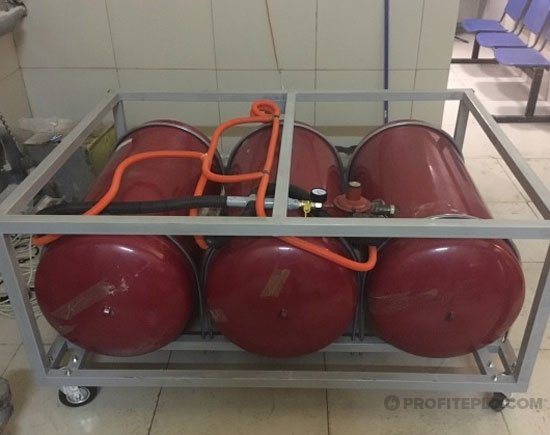
Mobile gas holderUnderstanding which gas tank to choose, it is necessary to evaluate the advantages and disadvantages of tanks in various designs
- Vertical gas tank. The advantage is the ability to install the container in a small area, as well as the stability of gas evaporation due to the fact that the mirror area does not change when the fuel level decreases. Among the disadvantages: it will take more effort to prepare the pit, taking into account the height of the reservoir and the level of soil freezing, a small area of gas evaporation. To increase the productivity of the station, some companies equip vertical models with heating elements that promote intensive evaporation. Also, for an optimal pressure level in the local gas system, two vertical containers can be connected to one branch pipe. Vertical models are usually used for houses up to 150 m2.
- Horizontal tank. It has a high performance, but it depends on the level of fuel in the tank.When about 1/3 of the volume remains, gas evaporation is noticeably reduced, and a special reducer is required for stable operation of the system. Gas holders of horizontal execution require the preparation of a pit of less depth compared to vertical models, they are suitable for gas supply to houses with an area of more than 200 m2.
Horizontal gas tank
Flaws
Autonomous gas heating of a private house, like any other technological system, has its drawbacks:
- Obtaining permission from local officials to conduct appropriate communications.
- High costs for the purchase of boiler equipment.
All this can pay off only after 3-5 years. However, some voice a figure of 10-15 years, but such statements require verification for each specific case. In addition, today the forecasts regarding the cost of gas are rather disappointing: analyzes predict its significant increase.
Final Comparison Table
The above calculations are relevant for a house of 100 m2. Costs do not reflect all options, the real figures are affected by the climate of the region, the severity of winter, the level of thermal insulation of the house.
Options
Pellets
LPG (gas holder)
Efficiency
50-90%
97%
Fuel cost
48 thousand rubles in year
49-54 thousand rubles. in year
Cost of equipment
from 40 thousand rubles
from 155 thousand rubles plus gas boiler
Connection
Boiler installation
Installation of a gas tank on the site and a boiler in the house
Ease of operation
Need regular fuel loads daily or once a week
The quality of the pellets is important.
Full autonomy after refueling 1-2 times a year.
Reliability
high
High, problems can arise only with the wrong choice and installation
Safety
The danger of carbon monoxide
High, no risk
Dependence on electricity
Yes
Not
Fuel depot
Need
Not needed
Service
Loading, cleaning
Tank refilling, technical inspection twice a year
A combination of a gas tank and a gas boiler provides ease of use, a certain independence from external factors (electricity, the quality of pellet production). But it implies the presence of free space on a site away from residential premises and the implementation of such a project will cost more than a “competitor”.
Pellet equipment is cheaper, as is the fuel itself. But it requires high quality pellets, constant maintenance or additional costs for modernization. At the same time, it gives low efficiency when compared with a gas tank. But the gas boiler also requires annual maintenance.
We also recommend that you familiarize yourself with the comparison between a gas tank and main gas.