- Gas-burners
- What is necessary?
- How to achieve security
- Injector diameter
- Power
- fittings
- Advantages and disadvantages
- Burner design
- How to make a chimney with a gas generator
- Trouble-shooting
- Primary requirements
- Rules for the safe operation of equipment
- Brick gas ovens
- Metal gas furnaces
- The principle of operation of the gas furnace
- Required materials
- Furnace installation
- Preparation for the manufacturing process. Supervisory requirements
- Homemade gas burners
- Burner with valve VK-74
- Burner converted from acetylene gas cutter
- Gas mini burner
- Main steps
- Frame
- Nozzle
- Assembly
Gas-burners
And in the end we will give drawings of several burners for gas furnaces. For artistic forging, they are quite suitable, and, whatever you say, it is the most demanded of blacksmithing. All these burners are direct-flow injection burners. Much more efficient and versatile vortexes are too complicated for self-production.
The first one, in Fig., is the most difficult. To do it, you need to be a milling turner of at least 5 real ranks. But it works on any gas (except acetylene, see below!), gasoline-air mixture and gives a very powerful boost: it can also blow a large stationary hearth, described above.
blueprints gas burners for the forge
The next one (see the figure) is simpler and contains fewer details, although even here it is necessary to accurately sharpen shallow cones. The blower is also great, but it only works on propane. For butane, a very narrow nozzle is required, and butane is used little.
It is necessary to grind clean the outer surface of the D1 injector and drill the nozzle in one setting. The nozzle is drilled with a carbide drill and run clean with a reamer. This is the main drawback of the design: a small, precise tool is required, which is not available everywhere and not always.
Below in fig. two burners are simpler. On the left - chiseled universal for household gas or propane. A small mobile forge can blow through at most, but turning parts can be done by an average turner. You just need to master the technology of landing parts in a hot fit. Which, however, is not difficult.
On the right is a homemade burner. Most of the parts, including the nipple, are from a bicycle. From the lathe, you only need to grind the smallest sprocket from the bicycle gearbox to size. This burner is omnivorous: propane, butane, household gas cocktail, gasoline air. But it can only heat the small closed brick hearths shown at the beginning.
What is necessary?
Working tools and material for the future design - that's what you need to prepare before creating the device itself.
- Handle material. There are no strict criteria for its selection, therefore it all depends on the ingenuity and capabilities of the manufacturer. The handle should be comfortable, not warmed up during operation. It is most reasonable to take the finished handle - a handle from a failed boiler or soldering station will do.
- conductive tube. It must be steel, because the manufacturer chooses a steel tube with a diameter of not more than 1 cm and a wall thickness of 2.5 cm.
- Burner body. And it should be steel, and the divider is made of brass twig.
- Nozzle. It is made from a metal rod.
Of the tools you will need: a grinder, a semi-automatic welding machine, a file, a drilling machine or a drill, a tap, a drill, a lerka, a hammer, pliers, a cleaning and cutting wheel, a brush for metal, protective equipment. You don't always need everything from the list, but it is present in the standard set.
How to achieve security
Here the matter is in the so-called. the Reynolds number Re, showing the relationship between the flow rate, density, viscosity of the current medium and the characteristic size of the area in which it moves, for example. pipe cross section diameter. According to Re, one can judge the presence of turbulence in the flow and its nature. If, for example, the pipe is not round and both of its characteristic dimensions are greater than some critical value, then vortices of the 2nd and higher orders will appear. Physically distinguished walls of the “pipe” may not exist, for example, in sea currents, but many of their “tricks” are explained precisely by the transition of Re through critical values.
Not all homemade gas burners are accurately calculated according to the laws of gas dynamics. But, if you arbitrarily change the dimensions of parts of a successful design, then the Re of fuel or sucked air can jump beyond the limits that it adhered to in the author's product, and the burner will become smoky and voracious at best, and quite possibly dangerous.
Injector diameter
The determining parameter for the quality of a gas burner is the cross-sectional diameter of its fuel injector (gas nozzle, nozzle, jet - synonyms). For propane-butane burners at a normal temperature (1000-1300 degrees), it can be approximately taken as follows:
- For thermal power up to 100 W - 0.15-0.2 mm.
- For a power of 100-300 W - 0.25-0.35 mm.
- For a power of 300-500 W - 0.35-0.45 mm.
- For a power of 500-1000 W - 0.45-0.6 mm.
- For a power of 1-3 kW - 0.6-0.7 mm.
- For a power of 3-7 kW - 0.7-0.9 mm.
- For a power of 7-10 kW - 0.9-1.1 mm.
In high-temperature burners, the injectors are made narrower, 0.06-0.15 mm. An excellent material for the injector is a piece of needle for a medical syringe or dropper; from them it is possible to pick up a nozzle on any of the specified diameters. Needles for inflating balls are worse, they are not heat resistant. They are used more like air ducts in supercharged micro-burners, see below. In the clip (capsule) of the injector, it is soldered with hard solder or glued with heat-resistant glue (cold welding).
Power
In no case should you make a gas burner with a power of more than 10 kW. Why? Let's say the efficiency of the burner is 95%; for an amateur design, this is a very good indicator. If the burner power is 1 kW, then it will take 50 watts to self-heat the burner. About 50 W soldering iron can get burned, but it does not threaten an accident. But if you make a 20 kW burner, then 1 kW will be superfluous, this is an iron or electric stove already left unattended. The danger is aggravated by the fact that its manifestation, like the Reynolds numbers, is threshold - either just hot, or flashes, melts, explodes. Therefore, it is better not to look for drawings of a home-made burner for more than 7-8 kW.
fittings
The third factor determining the safety of the burner is the composition of its fittings and the manner in which it is used. In general, the scheme is as follows:
- In no case should the burner be extinguished with a control valve, the fuel supply is stopped with a valve on the cylinder;
- For burners with a power of up to 500-700 W and high-temperature ones (with a narrow injector that excludes the transition of the gas flow Re beyond the critical value), fed by propane or isobutane from a cylinder up to 5 liters at an outside temperature of up to 30 degrees, it is permissible to combine the control and shut-off valves in one - regular on the cylinder;
- In burners with a power of more than 3 kW (with a wide injector), or powered by a cylinder of more than 5 liters, the probability of a “breakthrough” of Re beyond 2000 is very high. Therefore, in such burners, between the shut-off and control valves, a gearbox is also required to maintain pressure in the supply gas pipeline within certain limits.
Advantages and disadvantages
The use of gas heat generators in the bath has a lot of advantages:
- efficiency. You just need to open the valve and set fire to the nozzle, and in an hour the steam room will be ready. There is no need to harvest and store firewood / coal, load the firebox, control the workflow,
- high efficiency. The performance of equipment on gas is much higher compared to TT units,
- environmental friendliness. During operation, gas burners for sauna stoves provide for a low level of emissions harmful to the environment,
- ease of maintenance and care. There is no need to remove the ash, as is the case with solid fuels. All you need is a chimney cleaning
- economy. This figure is almost 30% higher than that of TT boilers, and more than 100% higher than that of heat generators.
The main disadvantage of gas burners for sauna stoves is the need to issue permits for installation.
Burner design
A standard homemade burner functions in this way. Under pressure, gas is supplied from a cylinder through a special hose. The most commonly used gas is propane. The volume of supplied gas is changed by a regulating working valve located on the cylinder. Therefore, the installation of an additional reduction gear is not required.
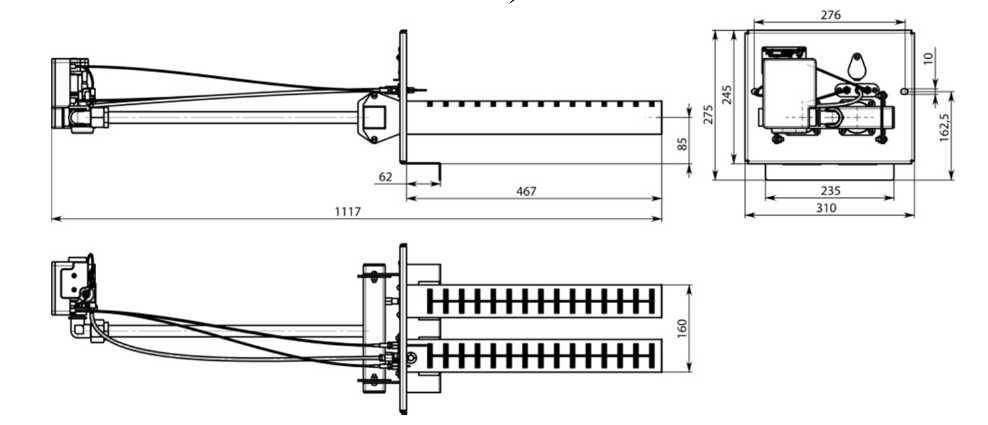

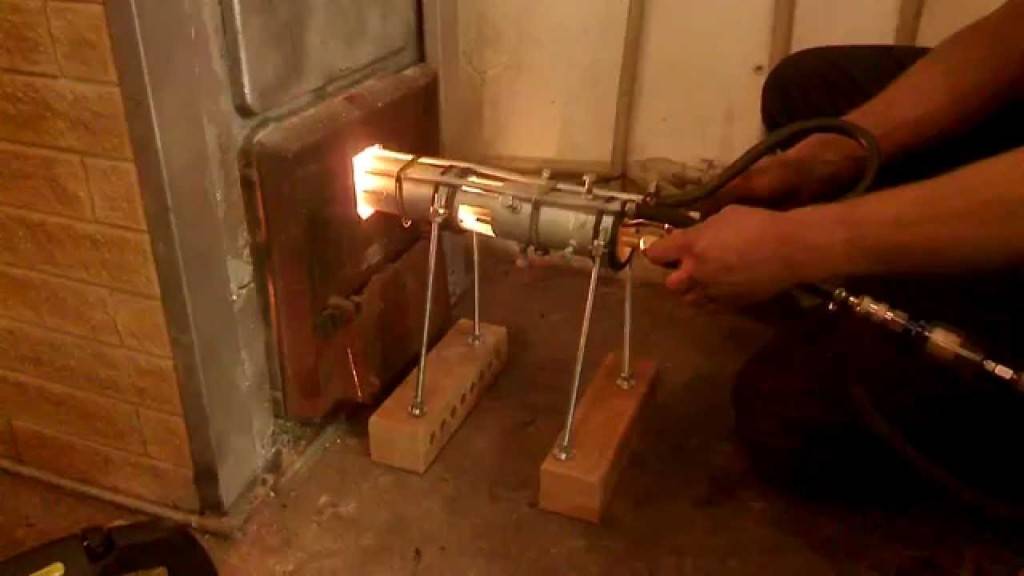
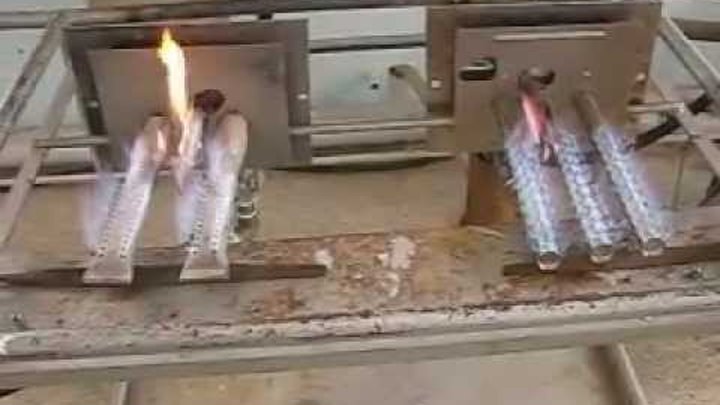
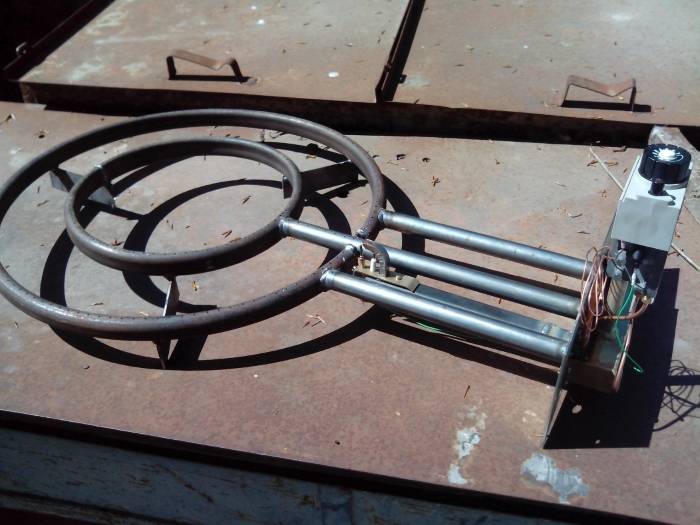
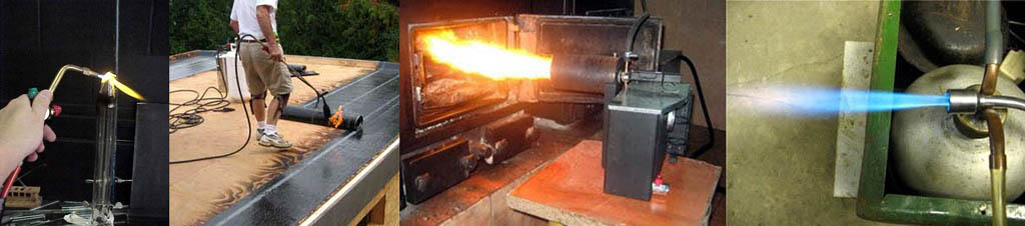
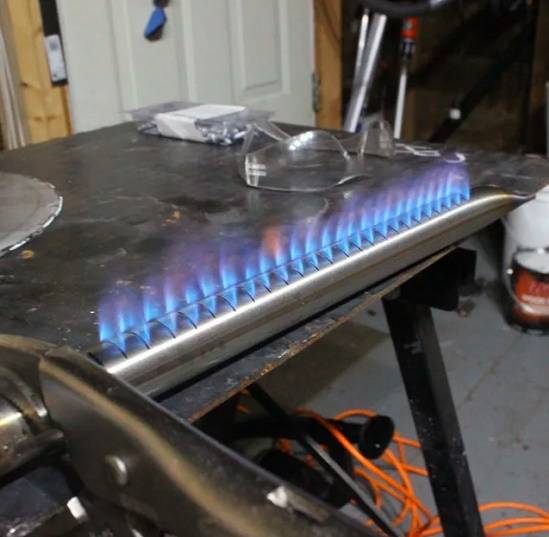

The shut-off valve is located behind the main valve and is attached to the gas cylinder. It is used to open or close the gas supply. All other adjustments (length and intensity of the flame) of the burner itself are carried out using the so-called working tap. The supply gas hose, through which gas is supplied, is connected to a special nozzle. It ends with a nipple. It allows you to set the size (length) and intensity (speed) of the flame. The nipple together with the tube is placed in a special insert (metal cup). It is in it that the creation of a combustible mixture occurs, that is, the enrichment of propane with atmospheric oxygen. The created combustible mixture under pressure enters through the nozzle into the combustion area. To ensure a continuous combustion process, special holes are structurally provided in the nozzle. They perform the function of additional ventilation.
Based on such a standard scheme, you can develop your own design. It will consist of the following elements:
- body (usually it is made of metal);
- a gearbox that is mounted on a cylinder (a ready-made device is used);
- nozzles (made independently);
- fuel supply regulator (optional);
- head (the shape is selected based on the tasks to be solved).
The body of the burner is made in the form of a glass. The material used is ordinary steel.This form allows you to provide reliable protection against possible blowing out of the working flame. The handle is attached to the body. It can be made from various materials. The most important thing is that it provides convenience during work. Previous experience shows that the most optimal length for such a handle is in the range of 70 to 80 centimeters.

Gas burner device
A wooden holder is attached to the top. A gas supply hose is placed in its body. This allows you to give the structure a certain strength. Flame length can be adjusted in two ways. With the help of a reducer located on the gas cylinder and a valve mounted on the tube. Ignition of the gas mixture is carried out thanks to a special nozzle.
How to make a chimney with a gas generator
The easiest option is to install a sandwich pipe in the bath. For a gas stove and a boiler, a chimney is needed in the same way as when burning wood. Carbon monoxide will form in the furnace and, in the absence of a chimney and good exhaust, will accumulate in the steam room. The main danger is that it has neither color nor smell, and it is very easy to get poisoned by it.
Modern gas ovens are equipped with special sensors that, in case of poor exhaust, work and shut off the gas supply. But in order to save money for a summer residence or a garden plot, the cheapest generators are purchased.
A properly organized chimney should have the following components:
- Through hole in the ceiling.
Umbrella that prevents sparks from getting on the roof of the sauna.
For a brick oven, you can assemble a gas pipe. But it will be more difficult to care for her, and installation work will not be cheap. It is easier to mount a sandwich pipe.
Mounting the structure is simple, even a beginner who does not have prior training can handle it. The joints will be located at the outlet of the furnace, at the joints between the ceiling and the roof.
The design of the sandwich pipe has a heat-insulating gasket, but since the temperature in the baths is always high, the roof and ceiling can still burn out. To avoid this, it is necessary to insulate the ceiling and roof from asbestos fiber or metal sheets.
An umbrella is mounted on top of the pipe. It can be done with your own hands from an old tin can: the bottom and lid are cut out, the walls are cut in one place so that a rectangle is obtained, a cone is rolled out of it. It will prevent rain from getting inside.
With proper installation of the chimney and equipment, the gas in the bath will become a convenient and safe fuel. And you can make an iron stove with your own hands. But you need to understand that any little thing can lead to dire consequences. If you are not confident in your knowledge, then it is better to resort to the help of specialists.
Heating a private building is one of the main tasks
that arises before people who want to live in a warm and comfortable room.
Until now, the use of a stove is considered a very popular way, a variety of which depends on the size of the building, the preferences of the owners and other factors
.
Trouble-shooting
Having a boiler at home brings many advantages, but also has a number of disadvantages, and the user does not always know how to do it right. Boiler faults are common to many types
It is important to determine the cause of these faults in a timely manner before calling the emergency service. List of the most common and most likely faults
First of all, if the boiler does not start, you need to check the circuit nodes:
- network voltage;
- malfunction of the switch or motor fan of the boiler;
- damaged boiler cables;
- false contacts of operation of automation or commissioning equipment;
- the presence of water, whether the gas boiler is powered to the minimum required mark specified by the equipment manufacturer.
If the boiler failure is not caused by any of these problems, the following procedure should be followed:
Pay attention to the noises produced by the boiler, because they are often the first witnesses to destruction. They can also be due to hot water trapped inside the furnace or due to the presence of air in the heating system due to clogged air ducts.
Pipe burst
It usually occurs due to problems with the boiler feed valve jamming, various scale-forming deposits in the boiler, or malfunctioning condensate drainage systems.
Failures due to exceeding the pressure and temperature readings, their respective sensors can cause trips, for example, due to a broken thermometer or vice versa, which is especially dangerous as a result of a real overheating of the boiler.
The heating circuits do not work, possibly poor feed water quality and scale formation in the boiler pipes.
The occurrence of a problem with the burner (breakage of the flame, accumulation of gas causes detonation and explosion).

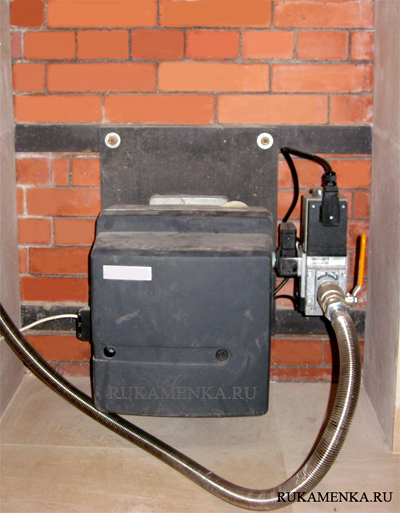
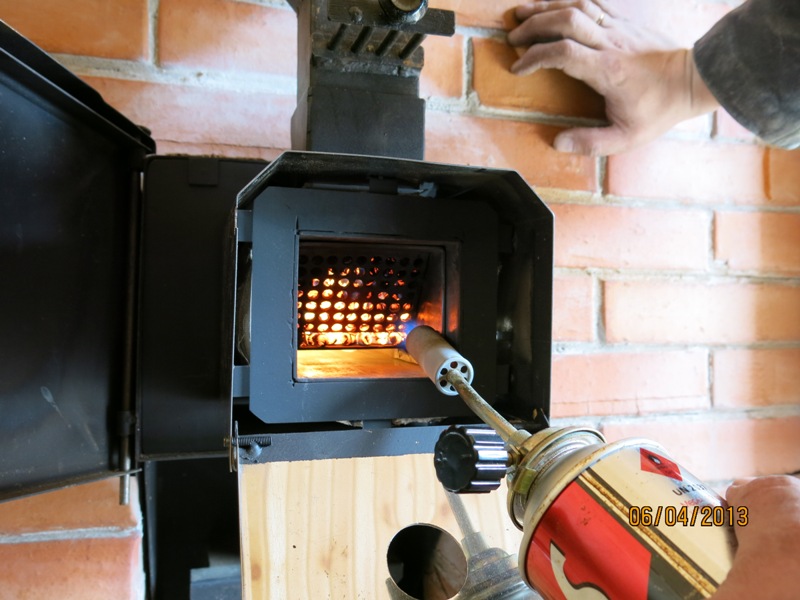
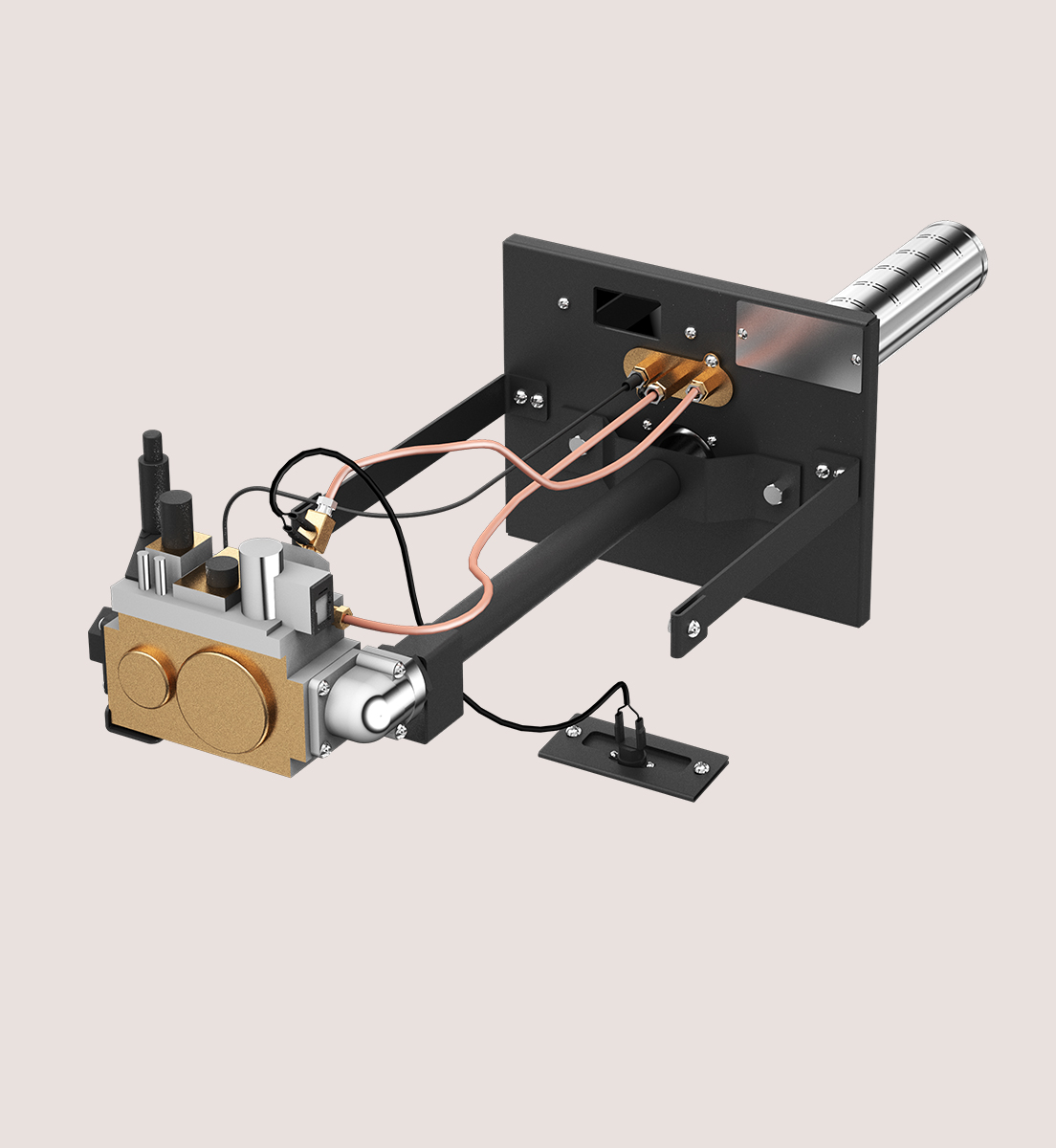


In the event of some of these problems, mainly pressure or temperature, the boiler monitor displays an error message, then the system shuts down and restarts automatically. If the problem persists after restarting, it is best to call a specialist to fix the problem.It should be noted, however, that most of these failures can be avoided.
The best prevention is to have the boiler checked, maintained and cleaned annually, usually by a specialist. This will prevent clogging and rupture of pipes. Prevention is better than recovery, and a simple annual inspection will keep equipment and users safe from potential emergencies.
Primary requirements
We list the signs of a high-quality gas burner:
- The fuel burns out completely: this requirement is very important, since incomplete combustion of gas not only reduces the efficiency of the heater, but also pollutes the atmosphere with nitrogen oxide and carbon monoxide.
- The device has a fairly long service life.
- The design is extremely simple, installation does not cause difficulties.
- The noise emitted by the burner does not exceed the values allowed by sanitary standards.
If the burner is combined, that is, it is able to work with different types of fuel, then it should be quickly and easily reconfigured for one or another type of fuel.
Rules for the safe operation of equipment
Gas cylinder equipment, if used improperly, can become a source of severe explosion or fire.
When performing welding work, be sure to use personal protective equipment: goggles, gloves, special shoes.
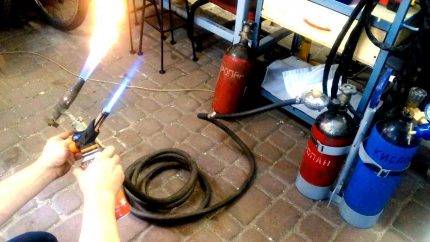 Before starting work, you need to carefully inspect the equipment for damage. If the equipment is dirty, be sure to remove the dirt
It is possible to work with propane cylinders only in well-ventilated areas, while the air temperature should not be below 0 ° C.
Absolutely forbidden:
- Work near open flames.
- Keep the cylinder tilted when working.
- Place vessels under the sun.
- Carry out work without a gearbox.
- Warm up the gearbox over an open flame.
In addition, if you smell gas, you must immediately stop working and close the valve on the cylinder. We also recommend that you familiarize yourself with the main causes of the explosion of gas cylinders.
Working without personal protective equipment, you can get burned, not only from open flames, but also from accidental contact with hot parts.
If the considered home-made burners are not suitable for you, we recommend that you familiarize yourself with other options for making useful home-made products discussed in our articles - a blowtorch burner and a sauna stove burner.
Brick gas ovens
Furnaces of this design warm up for a long time, but they keep heat well. Therefore, it is worth starting to warm up early.
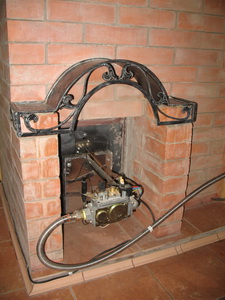
Appearance is not much different from the most ordinary wood-burning stove. It will look great in a bath, decorated in a traditional style. The furnace door serves to access the heater, which is located inside the structure. It is heated by the currents of warm air, which rise due to the combustion of gas.
Here, directly above the burner, there is a heater, which has special requirements. Stones for heating are located in a trough made of metal, which has a side along the entire perimeter (this does not allow poured water to the fire).
Metal gas furnaces
A gas stove for a do-it-yourself bath made of metal is distinguished by a relatively small thickness of the walls of the body and a small number of stones in the heater. Such a model warms up quickly, but also cools down quickly too. Models of this type are quite compact, they can equip a bath of almost any area.
This design is cheap in cost. If you have a small set of tools, you can make it yourself in the shortest possible time. Here we will describe the manufacture of a gas oven that is powered by a gas cylinder. Many speak positively about such a design, which has a very simple device.
The principle of operation of the gas furnace
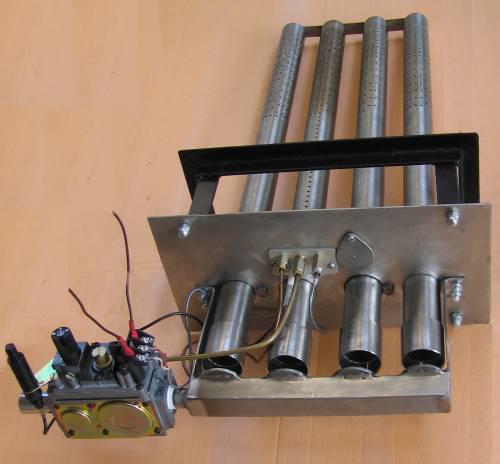
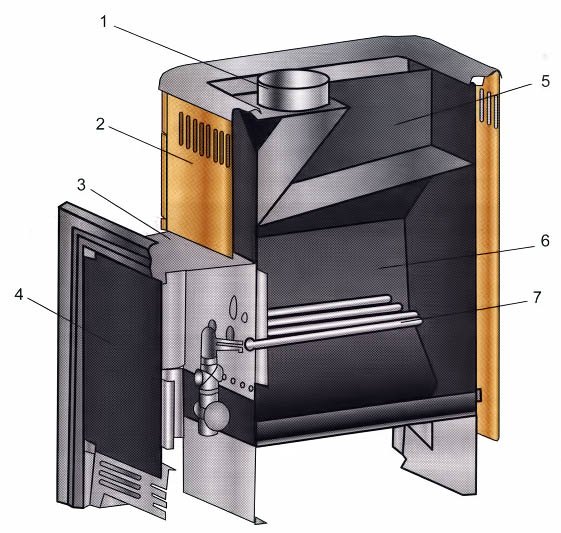
In a separate chamber, which is located in front of the burner, the gas is mixed with oxygen. Air enters the furnace and ensures normal combustion. To ensure air supply and the possibility of cleaning the burner, a door is mounted in the lower part of the furnace. Gas is supplied through a tube.
If bottled gas is used for the stove, this should be taken quite seriously. Such a cylinder should be placed outside the bathhouse. Some install cylinders in the ground, a few meters from the bath. Keep in mind that the propane mixture is more efficient for the operation of the furnace.
Required materials
Materials must be prepared in advance.
This will allow you not to break away while working:
Many write that you can use any old gas cylinder to ensure the operation of the furnace.
- Any brake disc, most importantly, without cracks, it will serve as the basis for the heater.
- Buy two gas pipes with a diameter of 50 mm (they will provide gas and air supply to the chamber) and one with a diameter of 100 mm (a chimney will be made from it).
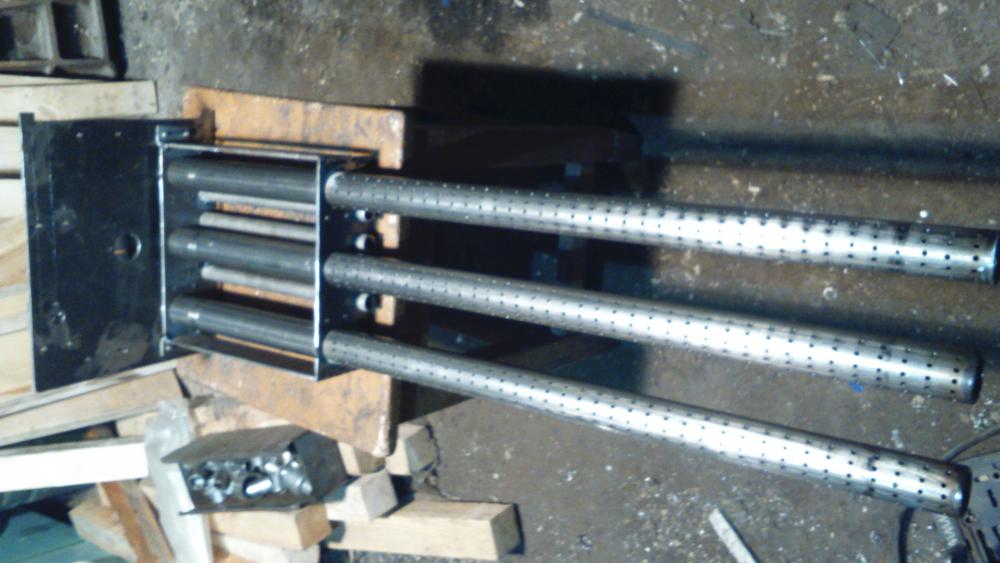
- Gas burner (better than atmospheric type).
- Connections for connections.
In no case do not take connections made of silumin. They are cheap, but when heated or a small impact immediately burst. You should buy made of copper or bronze.


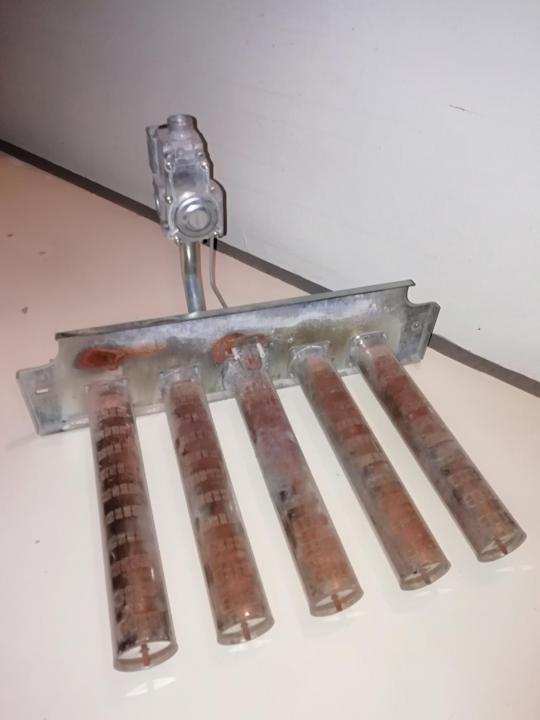


Furnace installation
To begin with, we trim the cylinder using a grinder and a cutting wheel. The diameter of the cutting base must match the radius of the brake disc so that it can be fixed without problems. When fastening, it is best to use welding, after which metal streaks should be cleaned with a grinder and a cleaning wheel.
- To supply air to the system, we prepare a pipe with a radius of 50 mm. We make about 10 holes in it with a diameter of about 5 mm.
- We make a hole slightly larger than the diameter of the pipe at the bottom of the cylinder. We install the pipe so that the whole end enters 20 cm from the cylinder. We weld the joint.
Cut out the door
- According to such a system, a gas supply pipe is fastened.
- To connect to the gas, we install an adapter for gas installation. The joint is treated with a sealant.
- We fix the chimney in the upper part of the pipe.
- Cut out a hole for the door. Curtains are attached to the cut piece of metal and attached to the body.
When installing the furnace, it is extremely important to protect the wall from overheating and fire. For this, a expanded clay sheet is mounted between the furnace and the wall. This insulation is done in two layers.
Finally, a reflective stainless steel screen should be used. It is possible to equip the furnace with an indirect heat exchanger
This insulation is done in two layers. Finally, a reflective stainless steel screen should be used. It is possible to equip the furnace with an indirect heating heat exchanger.
Properly selected gas stoves for a bath and high-quality installation work will provide you with a comfortable and safe stay.
Preparation for the manufacturing process. Supervisory requirements
Consider preparation for the manufacturing process.
Having dealt with devicem gas burner and having decided on the model, you can proceed to the next preliminary stage. Make a list of required materials and tools. The following list can be taken as a basis:
- fuel control valve;
- welding machine, grinder.
- steel tube 100 mm long and with walls 2 mm thick;
- steel cap, piezoelectric element, rubber for the handle;
Don't forget the little things like connectors. For example, for a valve of the VK-74 type, it is necessary to stock up on a cap with a conical thread.
Now let's take a closer look regulatory requirements.
A burner for a sauna stove, made on its own, must have a certificate of suitability from Rostekhnadzor. When using main gas as fuel, it is necessary to issue such a document with the gas supply organization. Moreover, a special permit is required for operation.
_
Organization - means legal entities under the laws of the Russian Federation (except for banks), including organizations whose main activities are financed from the budget.
Certificate - Written evidence certifying something. (MDS 12-9.2001)
Exploitation - the stage of the life cycle of an object, at which its quality is implemented, maintained and restored (healthy state). (GOST R 51617-2000)
The following requirements are imposed on the installation of an atmospheric model in a bath:
- compliance with fire prevention measures;
- the top of the pipe is equipped with a spark arrester;
- the pipe is isolated from the ceiling and roof.
- good adjustable traction;
- the presence of proper ventilation;
- the minimum volume of the bath is 12 m3;
_
Ventilation - exchange of air in the premises to remove excess heat, moisture, harmful and other substances in order to ensure acceptable meteorological conditions and air purity in the serviced or working area with an average unavailability of 400 h / g - for round-the-clock work and 300 h / g - for one-shift work during the daytime. (SNiP 2.04.05-91)
Roof - the top element of the coating that protects the building from the penetration of atmospheric precipitation. (SNiP II-26-76); - the top element of the coating that protects the building from atmospheric precipitation. (VSN 35-77)
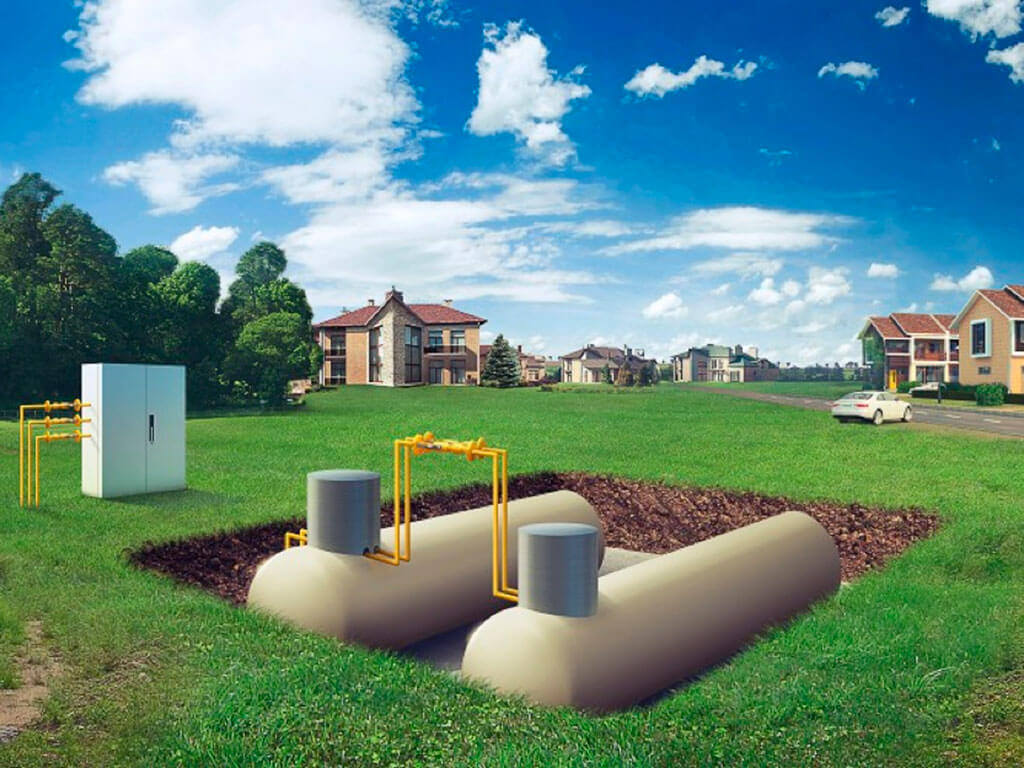
Cylinders can be placed in a special metal cabinet separate from the bath. Gas holders are located in an underground tank at a distance of more than 5 meters from the bath. The connecting pipes must be checked by a specialist for tightness. They are made of steel, copper and other non-combustible materials.
It is better not to install a homemade burner without the permission of the authorized bodies, as practice shows. It's too risky in terms of security.
After receiving the operating permit and all briefings, you should ensure that the normal operation of the homemade burner is observed. sauna stove. If necessary, clean the chimney and reinforce the insulation. It is necessary to periodically check the joints of the burner and the pipeline for tightness.
Keep a special log to track the dynamics of changes in the state of the equipment.In the process of heating the bath with a homemade nozzle, follow the usual fire safety rules. Write down in it the dates and the maintenance operations performed on the elements of the gas unit.
_
Fire Safety Rules - a set of provisions that establish time. compliance with the requirements and norms of fire safety during the construction and operation of the facility. (GOST 12.1.033-81)
rule — a clause describing the actions to be performed. (SNiP 10-01-94)


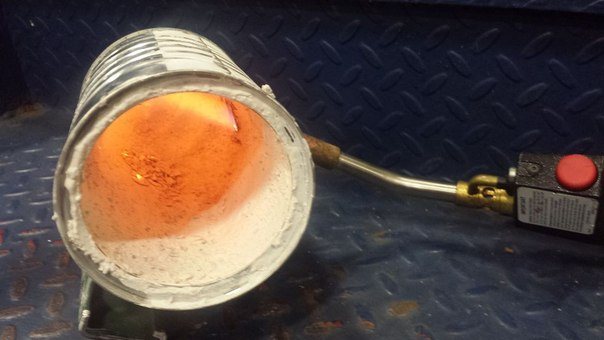
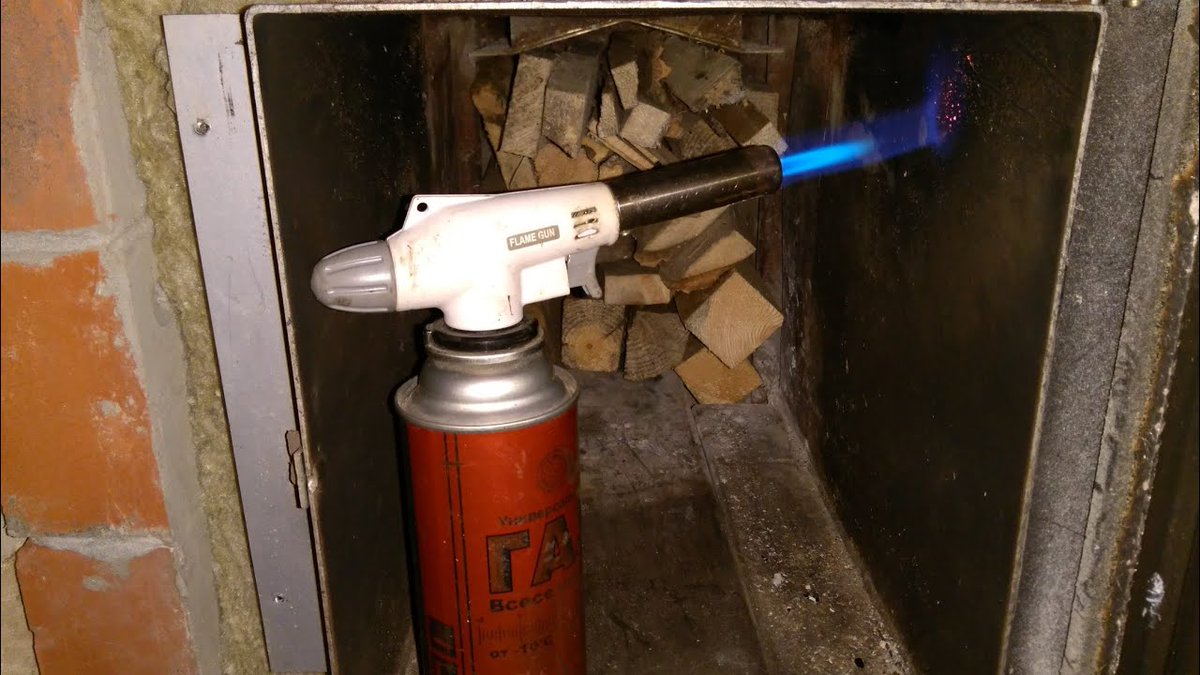


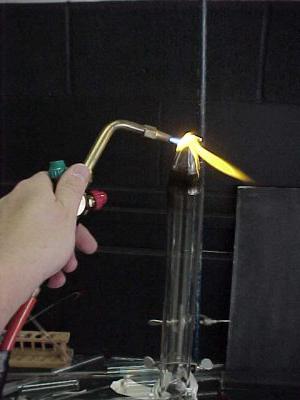
The following article will acquaint you with the intricacies of making a gas burner from an ordinary blowtorch, which is worth reading for skilled home craftsmen.
Homemade gas burners
The main components for the manufacture of powerful gas burners are industrial valves. They may be new, but for a homemade device, it is sufficient to use used ones in the absence of a gas leak. They are designed to work in tandem with a 50-liter propane gas cylinder with an angle valve and a reducer.
Burner with valve VK-74
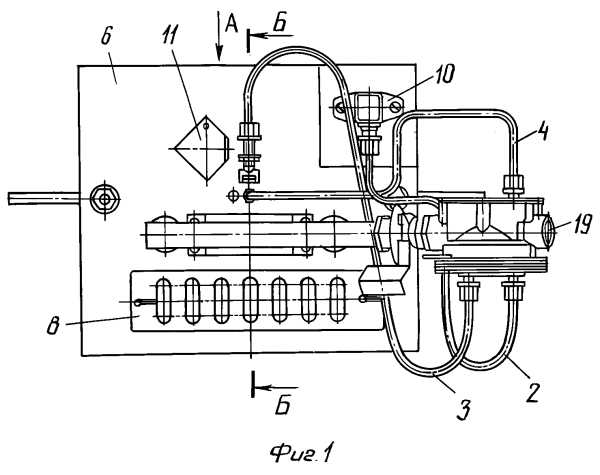
The device of this burner is shown in fig. 1. The valve of the oxygen cylinder VK-74 is taken as the basis. A fitting-handle machined on a lathe is installed to the outlet end, to the corrugated part of which a hose from the cylinder is connected. A cap with a prepared threaded hole for the jet is screwed onto the part of the valve with a K3 / 4˝ conical thread, with which it was connected to the gas cylinder. You can use a ready-made version of a blowtorch or gas stove.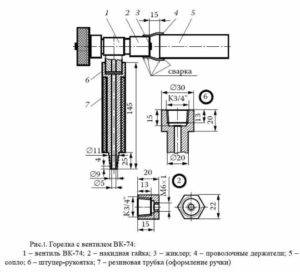
The nozzle is made from a piece of steel pipe 1/4˝ 100 mm and welded to the cap on two pieces of wire ∅5 mm.A distance of 15 mm should be left between the cap and the nozzle for air to enter the combustion zone. By bending the wire holders, the position of the nozzle is adjusted to achieve the center position of the flame.
The sequence of actions for ignition of the burner:
- Open the cylinder valve;
- Bring a lit match to the nozzle and slowly open the burner valve;
- Control gas ignition;
- Regulate the flame with the burner valve
A homemade gas burner of this design has one drawback associated with the peculiarity of the location of the valve. The gas flow is directed in the opposite direction to the normal position. Stuffing box seals experience constant gas pressure (including when the valve is closed), so it is necessary to constantly monitor the tightness of the seals.
Burner converted from acetylene gas cutter
If you have an acetylene torch with a defective oxygen supply valve, do not rush to throw it away. It will also fit for the manufacture of a burner (Fig. 2.). 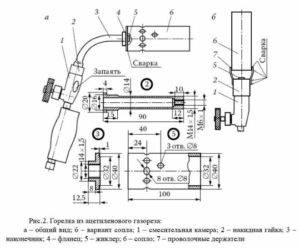 Alterations require a mixing chamber, the contents of which must be removed to reduce weight. You will need to remove the oxygen barrel and valve. Solder the resulting hole with hard solder. Connect the hose coming from the gas cylinder reducer to the M16 × 1.5 left-hand threaded fitting.
With a union nut on the mixing chamber, fix a home-made tip bent at 45 ° to make it more convenient to work with the burner. Screw the flange with the nozzle welded to it onto the thread of the tip.
One of the options for the execution of such a burner is the use of a cap with an M22 × 1.5 thread. The design of the nozzle here is similar to the nozzle of the burner described above. Homemade gas burner is ready to go.
Gas mini burner
Mini gas burners are more suitable for working with small parts. The mini burner is based on a ball inflation needle. It is necessary to make a cut in it, a little further than the middle of the needle. Some needles already have a similar hole, which greatly speeds up the work process. Next, you need to take a syringe needle, and bend it about 45 degrees in the middle.
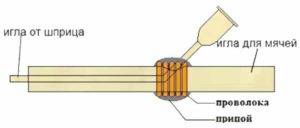 The design of the mini gas burner
The pointed end of the syringe needle is best sharpened so that it is straight. After that, it must be inserted into the ball needle in such a way that one end of it comes out through the hole, and the other protrudes from the large needle by several mm. The resulting mini design should be fixed with soldering. After that, droppers must be attached to the bases of the two needles. Clamps - Dropper regulators should be moved as close to the needles as possible. In the resulting burner, they will act as regulators for the supply of gas and air. They also need to be fastened together, and this is best done with a thermal gun. It remains only to connect a source of compressed gas to the finished device, the burner is ready for use. Such a homemade gas burner can heat objects up to 1000 degrees.
It must be handled with care and safety precautions.
Main steps
It is not difficult to make a burner or a mini-burner according to the drawings, as already noted, without spontaneous changes in parameters.
Frame
The body is usually steel. A brass rod with a width of 2 cm is suitable for its manufacture. A divider can be made from the same rod. Then several holes are made to help form the circulation of oxygen in the apparatus. Fire, as you know, does not exist without oxygen.There should be 4 such holes: each about 1 mm in diameter. They are made in the core of the burner divider. The next step is to press the divider into the body of the device. The inner flange is installed with a gap of 0.5 cm. This gap will subsequently slow down that powerful gas flow that comes to the igniter.
Nozzle
This part of the device provides fuel supply from the cylinder to the outside. It is made from a metal rod. At the moment, the master will need a two-millimeter drill to form a blind hole in the nozzle. And for the jumper you will need a four-millimeter drill.
Then a hose from the gearbox, made of special fabric or rubber material, is fitted to the end of the tube. Fastening is carried out with a clamp by using a conventional screwdriver.



Assembly
When the mechanism is accurately fixed correctly, you should set the desired pressure in the cylinder, supply gas from it. The air is then completely expelled from the hose. The length of the fire, if all the parts are located correctly, will be 40-50 mm. There is another manufacture and assembly of the burner, in this case - a miniature one. This device is convenient in that it is easier to make it yourself, and you can hold it in your hands without fear of getting burned. That is, for those who doubt their abilities regarding more complex manufacturing, this option is suitable.
What you need to make and assemble a mini-burner:
- old, broken gas burner;
- thin copper tube (10 mm);
- copper wire;
- syringe needle;
- bolt number 8.
And everything is done like this.
- First, a tube for the burner is prepared (a file is used).
- The nozzle is made from a medical syringe.
- The tube is connected to the wire.
- 2 pieces of copper tube are connected.
- The adjusting bolt is inserted.
- The adjustment of the device is being tested.
- A stand for the burner is being made.
- It remains to check the performance of the device.
Natural gas appliances are made from a metal pipe, a handle from a blowtorch and a spray can. A home-made device is suitable for soldering copper, for repair roofing, for singeing the necessary structural parts.