
- Self-manufacturing
- How to choose a filter media
- DIY coarse water filter
- What is the filter housing made of?
- Subsequence
- Zeolite, silver
- Features of homemade filters
- How many liters of homemade liquor can you skip?
- Potential filter media
- Aquarium water filter
- Design features of industrial and home-made installations
- Why do you need a water purification device?
- Overview of filtration materials
- Is it really necessary to purify water from natural sources?
- Prices for water filters "Barrier"
- How to make a cleaning system at home
- From a bucket and a plastic bottle
- From 2 bottles
- From paper
- Is it possible to make your own from PVC pipes?
- Self-manufacturing
- Stationary filter device of three flasks
Self-manufacturing
Filter device
Features of the manufacture of the simplest filters - in the multilayer materials with different cleaning properties. Each new level contributes to the additional removal of impurities, contaminants or certain properties of water.
To build a filter with your own hands, you can use available fillers and simple fixtures.
At home, for a homemade filter as cleaners, you will need:
- Paper napkins, gauze or a wide bandage.Water from a well or water supply is perfectly cleaned with their help, but the fragility of materials is the reason for their frequent replacement.
- Thin cotton, canvas or linen fabric, cotton wool is more durable in composition and lasts longer.
- Charcoal, which can be purchased at the store or made by yourself.
- Silver coin or other small silver items.
- Small pebbles, gravel, clean river or quartz sand, previously washed and calcined for disinfection.
As containers for unfiltered and purified water, you can use a plastic or enameled bucket with a lid and a plastic five-liter bottle. The volume of dishes used can be increased or decreased depending on the need.
Simple water filter
Walkthrough:
Step 1. In the lid of a bucket for clean water, in the center you need to cut a hole for screwing a plastic bottle upside down. The fit of the two elements must be tight. The cut edges should be processed with sandpaper or a file, and 5-6 punctures should be made in the bottle cap to drain the purified liquid.
Step 2. Preparing a container for water purification. If a five-liter or other plastic bottle is used, then you need to carefully cut off the bottom to fill the vessel with filter materials and insert it into the hole in the bucket lid.
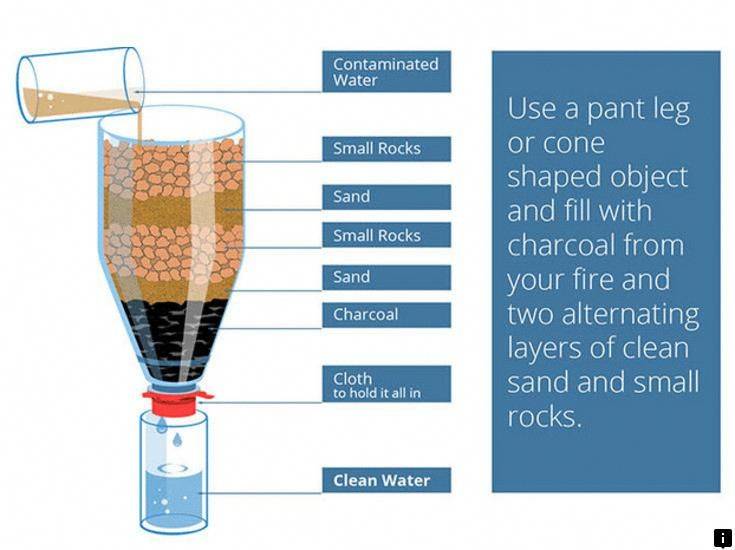
Step 3. In the place of the neck, a thin fabric or cotton wool is laid in layers from the inside with a snug fit to the walls. From above, you need to fill in pre-prepared crushed coal 5-6 cm high and compact it a little with a heavy object. This is the main filtering component, its capabilities are calculated approximately from the ratio: 1 tablet of activated carbon per 1 liter of liquid.
Step 4. On top of a layer of coal, you need to spread out gauze or a bandage in several layers, carefully closing the previous level, and place silver pieces or coins on top for bacterial cleaning.
Step 5 Place a layer of clean sand 2-2.5 cm high and make sure that it does not leak to the coals. Mixing can cause the filter to clog. Sand enhances filtration without letting in foreign particles. From above it is necessary to lay gauze in 4-5 layers so that there is no funnel when filling the container with water.
Step 6. You can start test cleaning after filling the container
If the design is determined for a continuous supply of water, then it is important to monitor the pressure, which should not exceed the throughput of the filter.
The performance and quality of filter cleaning depend on the number of layers and their density. It is considered the best indicator for cleaning 2-3 liters of water per hour.
It should be noted that purchased filters essentially have the same cleaning properties, even if pyrolyzed ground coconut shells are used instead of carbon filler.
You can cook charcoal yourself by calcining a hardwood tree placed in a metal dish in a fire. Ephedra cannot be used due to the large amount of resins they contain. Birch logs are ideal for making activated carbon.
The filtration layers should fill approximately 2/3 of the total volume of the bottle, and 1/3 remains for unfiltered water.
How to choose a filter media
When choosing a container for a filter, you need to calculate everything properly, because the cleaning properties primarily depend on a properly formed “filling”.The volume of the filter container must be such that it can easily accommodate all components.
As an absorbent, natural materials are widely used, such as quartz river or washed quarry sand, gravel, activated carbon and zeolite. As you know, any filter begins with a primary coarse layer. Often this role is assigned to fabric materials based on cotton.
Natural materials are highly impractical in terms of hygiene. Firstly, in a humid environment, such a filter layer is subject to decay processes, which causes an unpleasant odor. Secondly, the structure of the fabric implies a very rapid contamination of the filter with unwanted particles, which increases the need to change the layer.
Much better performance is observed in synthetic counterparts. More preferable in this regard is lutrasil. The material has moisture-resistant qualities and is more resistant to contamination than cotton or bandage.
Non-woven polypropylene fabric - lutrasil can be used as the bottom layer for final water treatment
A very budget option for a fabric filter can be considered a synthetic layer that is used in making coffee.
Quartz sand does an excellent job of retaining small particles, as well as filtering heavy chemical compounds. While gravel is the opposite, it is better to weed out large inclusions of unwanted materials.
A mineral called zeolite has an incommensurable cleansing effect.
Zeolite is widely used in the field of water purification. Extracts from it heavy metals, organic compounds, phenol, nitrates, ammonium nitrogen, etc.
The active effect of the substance with a bang will cope with water pollution with metal and salt suspension, and also neutralize pesticides and other products of processing of the agricultural industry.
DIY coarse water filter
Before proceeding to consider this topic, it is necessary to determine what all the necessary elements of the device will be. In this case, the range is quite wide.
What is the filter housing made of?
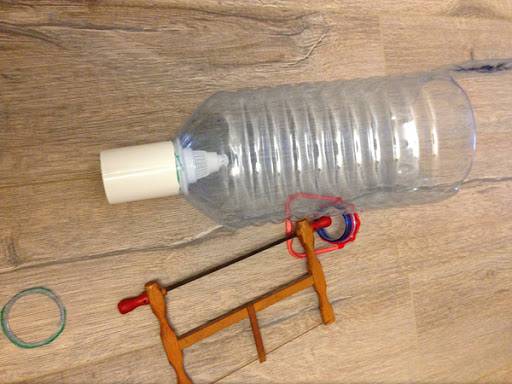
If we are talking about home-made devices, then the first contender in most cases is a practical, sometimes irreplaceable, plastic container. For example, a 5 liter bottle. However, the capacity depends only on the needs of the owners. The second option is a plastic bucket. The filtration container must not only hold a certain amount of liquid, but also provide enough space for the absorbent materials.


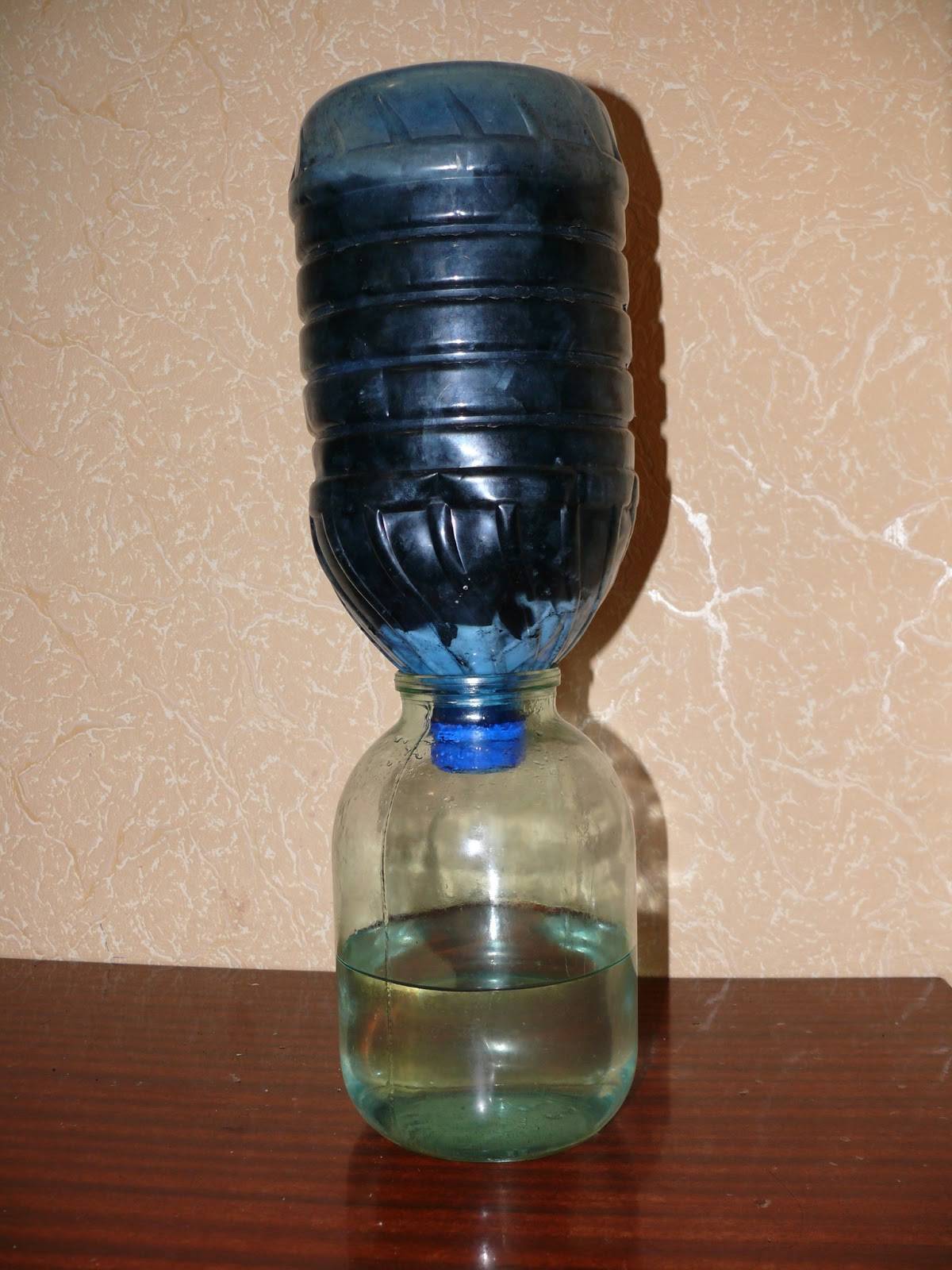


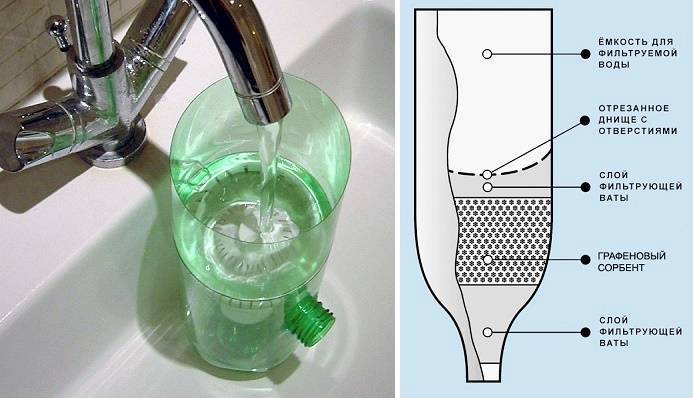

Subsequence
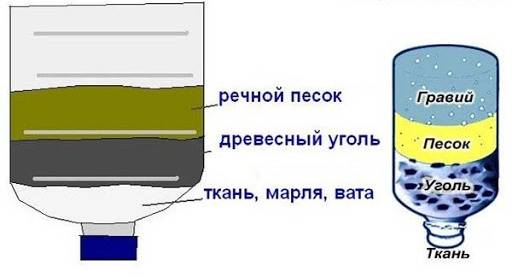
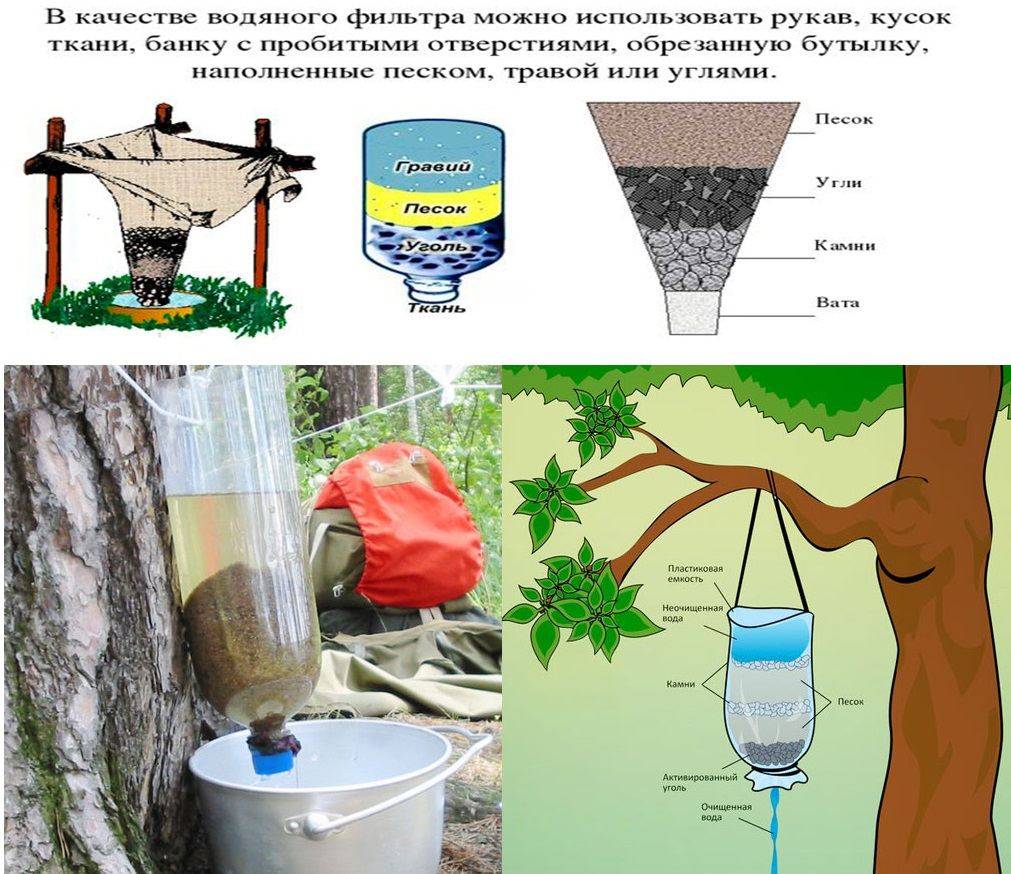
- Lutrasil or natural fabric (cotton wool) is always at the very bottom of the structure. This layer must ensure that there are no impurities at the bottom of the filtrate tank. Naturally, lutrasil remains the best candidate, since any natural fabric will absorb pollution, which means that soon it will begin to be threatened not only by an unpleasant smell, but also by the onset of decay.
- Charcoal in the simplest filters becomes the middle layer. The porous substance purifies the liquid from nitrogen, organic impurities, pesticides, chlorine, from various chemical compounds. Purchased material is optimal because it has an ideal structure. Domestic charcoal has the worst porosity, so it will be less effective in cleaning. A charred coconut shell or seeds of apricots, peaches, plums can become a replacement for it.
- River sand often becomes the next layer.It traps various large and small particles, soil or clay impurities. River sand is ideal, having well-treated, water-polished surfaces. A career view would not be the best option: it can stick together during filtration. The best choice would be a fine fraction of the material, it guarantees maximum cleaning efficiency.
- Gravel of medium, fine fraction - protection against very large inclusions. This layer is necessary if water for filtration is taken from open natural sources, or from wells that have not been cleaned for a long time.
At the request of the hosts, other candidates can add to the list.
Zeolite, silver
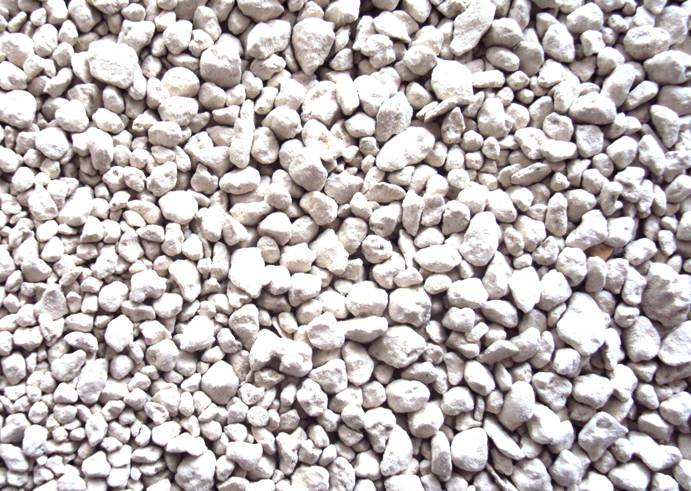
Zeolite is a mineral of volcanic origin. This filter media can be called an all-rounder. It is a more efficient analogue of quartz sand, since its porosity is 16% higher. Zeolite removes from water:
- ammonia;
- ammonium;
- bacteria;
- viruses;
- oil products;
- nitrates;
- organic impurities;
- pathogens;
- pesticides;
- radioactive elements;
- heavy metals;
- phenol.
Zeolite relieves the liquid of hardness salts, softens water, reduces the concentration of fluoride and chloride ions. The scope of the mineral is not limited to water treatment. It is used in medicine (example - Smecta), food industry, crop and animal husbandry.
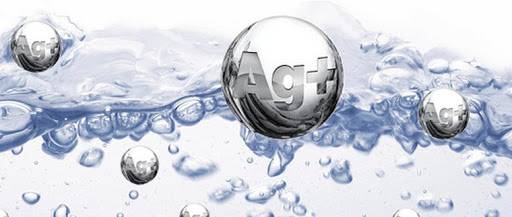
Silver is not part of the coarse filter itself, but it is recommended to use it for disinfecting already purified water. The best sample of the metal is 999. Silver can be used to “ennoble” tap water, but it is still not recommended to drink unpurified liquid.
Some layers are interchangeable.For example, zeolite can take the place of sand or coal. Silver for cleaning is not necessary, but if this useful metal is at home, then its use is advisable.
Features of homemade filters
After some time, you will have to replace such a system with a more professional one. This is due not only to the wear of old parts, but because of their low absorbent and cleaning efficiency in relation to microorganisms contained in water.
To ensure the sterility of the reservoir, modern filters are equipped with a mineralizing system. Before buying equipment, it is worth checking the water in the laboratory for mineral content and then, based on the results of the examination, select a filter with the appropriate mineral composition.
There is no such function in homemade equipment, therefore, after the cleaning stage, it is recommended to boil the filtrate.
Also compare the power of the filter with the pressure of the water. Incorrect calculation of the intensity of water pressure in relation to a home-made filtration system can affect the performance of the equipment.
How many liters of homemade liquor can you skip?
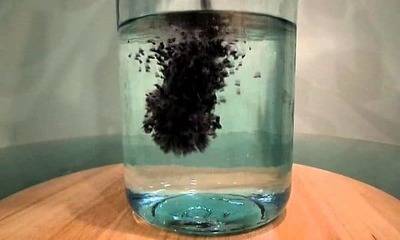 Purification of moonshine in the amount of 10-15 liters is done in one replaceable unit, which then changes.
To filter a larger volume of alcoholic beverage, new cartridges are required.
This is due to their rapid contamination by the filtered liquid.
The system cartridge consists of 3 parts, each of which performs its function:
- part for coarse cleaning - designed to adsorb fusel oils, large organic particles and some components of chemical elements;
- part for deep cleaning - designed to retain smaller organic particles, chlorine and other elements of moonshine pollution;
- part for disinfection and the final filtration process - the final stage of deep cleaning, in which chemical or organic elements with a diameter of more than 0.5 microns are adsorbed by the filter.
Since moonshine before filtration contains a lot of fusel oils and distillation by-products, the filter clogs quickly.
Therefore, after processing 10-15 liters of the drink, the cartridge must be changed in order not to get a reverse release of toxic substances due to the termination of the filter's function.
Potential filter media
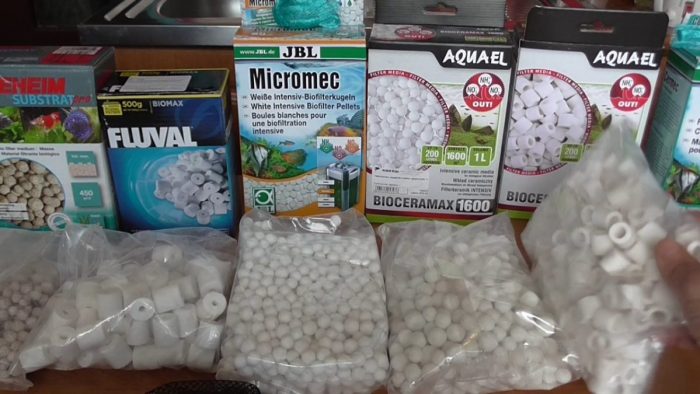
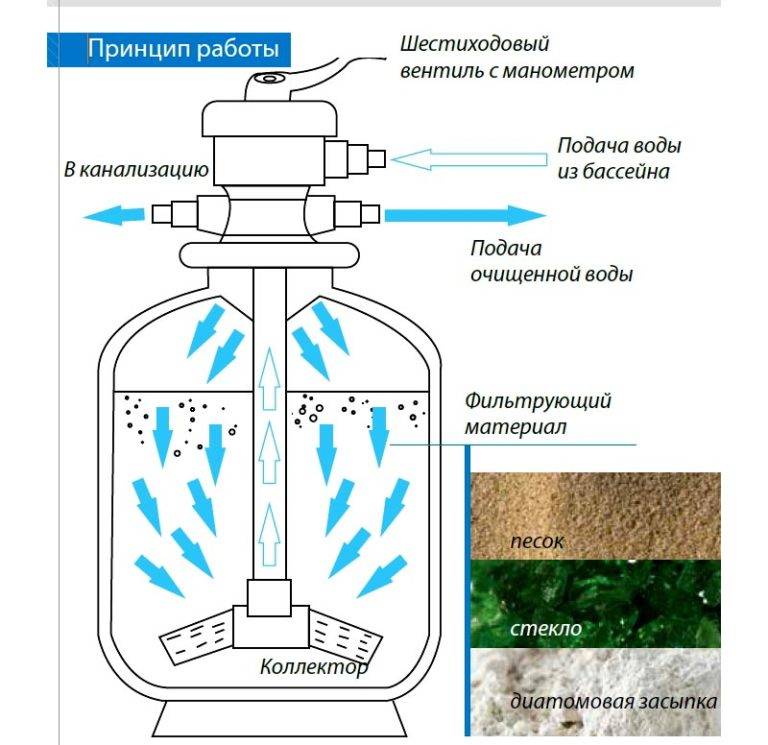
Any filter, simple or more complex, works the same way. The principle of these devices is no different. The treated water passes through dense layers of cleaning materials. Some of them are able to retain large particles, others are able to absorb chemical compounds, remove odors. There are substances that disinfect, eliminate hardness, and reduce the concentration of salts.
If the tenants decide to make a coarse water filter with their own hands, then they face a paramount task. This is a correct, competent selection of layers for a future device. Several materials can be used as cleaners.
- Charcoal. This is the first, most famous candidate. You can make it yourself or buy it in a store. For example, you can buy coal intended for barbecue.
- Materials used for drainage systems. These include sand, gravel, small stones. In this case, for disinfection, they must first be washed and then calcined in the oven (on fire).
- Linen, cotton, gauze, cotton wool or paper napkins. Any of these applicants can be part of the coarse filters. The most short-lived, unreliable option is paper.
- Zeolite is a sorbent mineral used in the production of filters for water purification. It traps organic compounds, heavy metals, ammonium nitrogen, as well as nitrates and phenol.
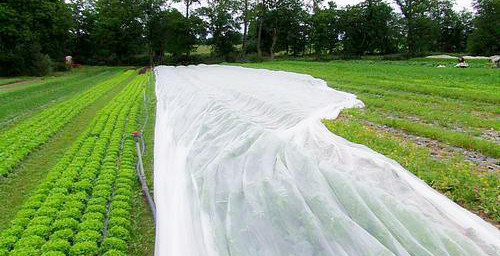
- Lutrasil - polypropylene non-woven material - agricultural canvas. The material is moisture resistant, able to resist various contaminants well.
Another candidate is silver. It can disinfect liquid at the molecular level. Clean items (such as cutlery) are placed on the bottom of the water filter tank. Silver lasts for several hours, but it is better to leave it overnight.
Aquarium water filter
As you know, for the normal life of aquatic inhabitants, it is necessary to clean the tank in a timely manner and maintain the purity of the water. Owners of small aquariums will come in handy with instructions for building a filter at home.
The body of a homemade hard water filter can be any plastic tube of a suitable diameter, including, in the absence of such, 2 syringes will work well.
Before assembly, you need to prepare some additional parts: a spray bottle (often used in detergent bottles), a sponge with a high degree of rigidity, as well as a mechanism by which the structure will be attached to the wall of the aquarium (suction cup).
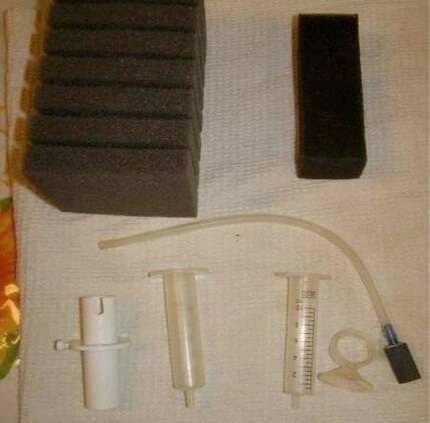
The main advantage of the design is ease of manufacture. All components can be easily found at home
The first step is to remove the movable part of the syringe, it will not come in handy.Then, using hot glue or other sealant, connect the workpieces to each other, after cutting off the spouts.

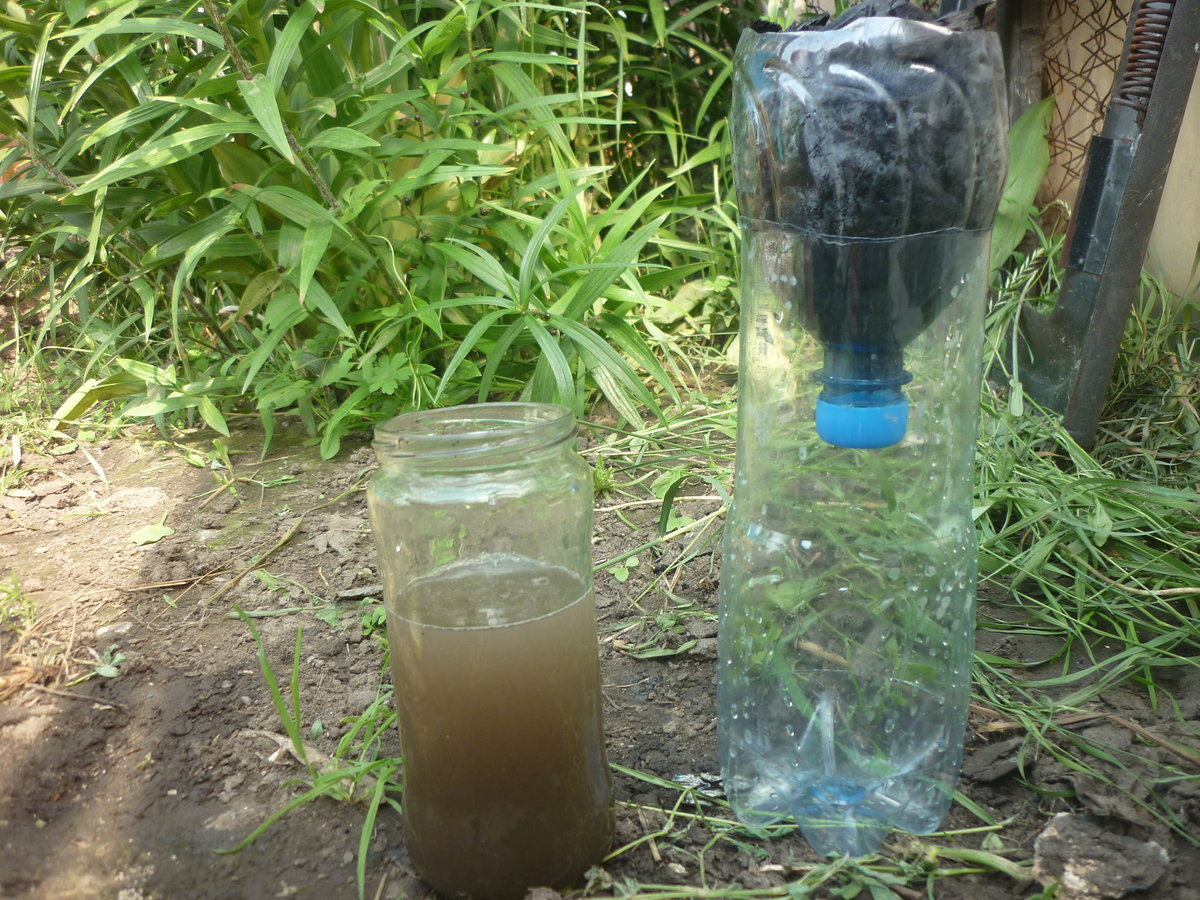


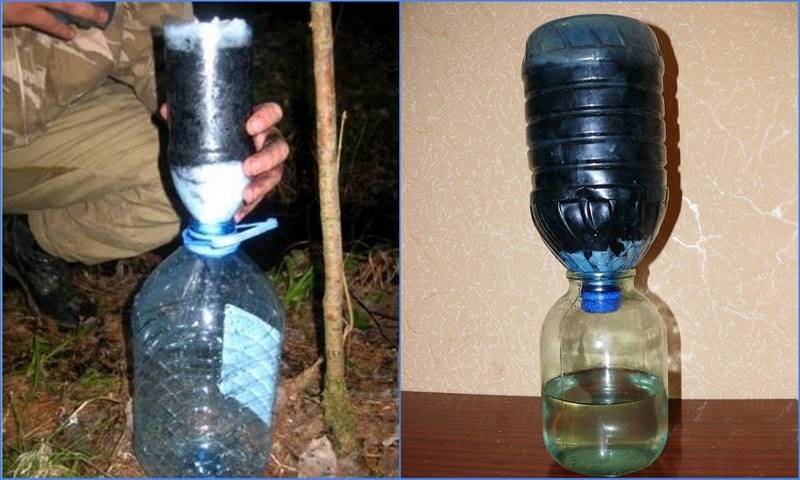

For the flow of water, it is necessary to make a perforation. An ordinary soldering iron will do just fine with this, and if you don’t have one, you can heat any metal object, such as a nail, over the fire and make holes over the entire area of the syringe.
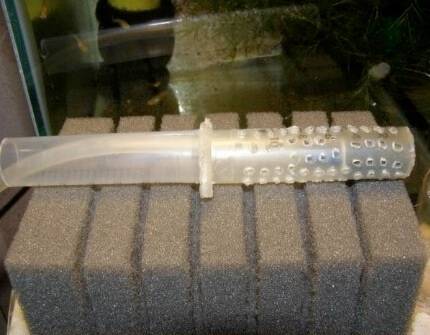
To optimize the speed of water passing through the filter, it is recommended to make holes at a uniform distance from each other.
In some cases, it is possible to fill the filter capsule with some kind of granulate, the best option would be to use zeolite, because. The absorbent does a good job of filtering out nitrates.
Next, you need to place the atomizer inside the case, while its flexible tube should go evenly along the entire length of the cassette.
Then the makeshift cartridge should be completely wrapped with a sponge and the outer layer fixed so that it does not unwind. That's all, the power of such a filter is quite enough to purify the water in a small aquarium.
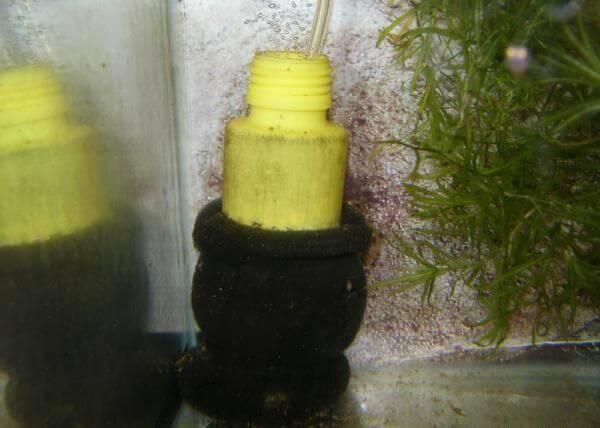
The design is quite compact and can fit in any small tank
Design features of industrial and home-made installations
Purified from harmful chemical and bacteriological impurities, life-giving moisture is considered accessible to people only after filtration. In cities, due to the wear and tear of communications to consumers, it comes with rust, lime inclusions and other additives. In such conditions, even the aquarium needs water purification, otherwise the fish will not survive.
If the house is connected to the water supply, the owners use washing machines, dishwashers, which are even more sensitive to water quality.Manufacturers equip their products with mesh filters, which provide coarse cleaning, but fine particles up to 5 microns are passed through. For many household devices, this is harmful, they need additional fine filtration.
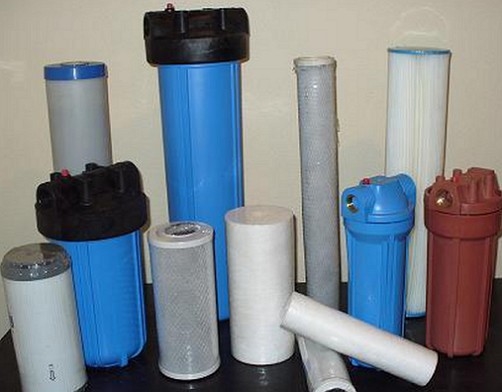
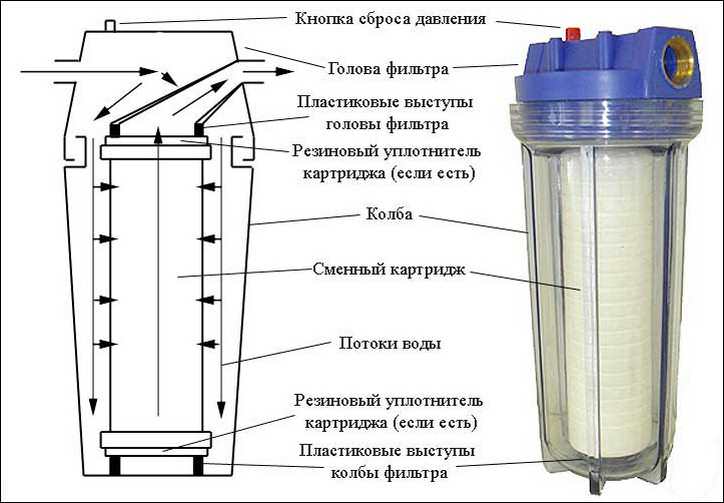
Simple household filters for the home
Industrial units are produced separately for cold and hot water, it is unacceptable to use them for other purposes. In addition, a pressure regulator is required if pressure drops are observed in the pipes. All such installations have one or more cartridges plus a sump in the form of a flask or glass. The quality of the water depends on the material used and the cell dimensions of the working elements.
All of them require periodic replacement, because harmful impurities accumulate. The cost depending on the design is sometimes very impressive. A do-it-yourself water filter allows you to get rid of unnecessary financial expenses, and the quality of cleaning may exceed some industrial designs.
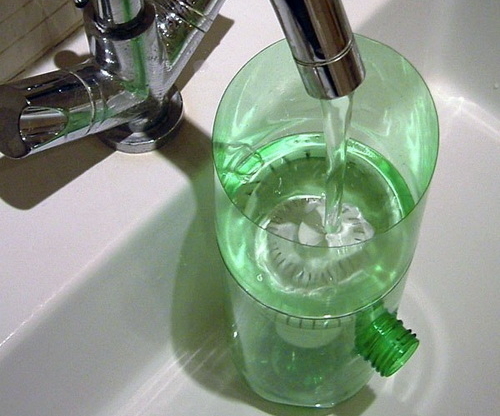
A simple homemade device
Why do you need a water purification device?
Pitcher-shaped filters are already on the list of basic kitchen interior fixtures. They will do a great job if you need to filter a couple of liters of liquid. But when it comes to large volumes, handheld and household devices are useless and you have to look for a commensurate alternative.
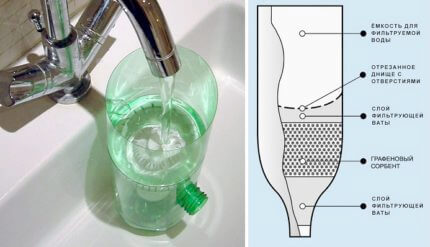
A properly assembled filter is quite capable of purifying tap water, but it’s better not to drink it right away, but to let it stand for a while
Suspension of sand, fine clay particles, organics, waste products of all kinds of animals and microorganisms make water from open reservoirs categorically unsuitable for drinking. The same is true with wells.
The agricultural industry annually becomes on a par with the heavy and chemical industries in terms of wrecking, due to the amount of nitrates used. So, the use of nitric acid to fertilize the soil saturates the groundwater with harmful salts.
Be that as it may, even the most modern equipment periodically needs to replace cleaning cassettes, to say nothing of home-made ones. After a certain time, it is imperative to replace the handicraft system with a specialized one.
This is important to do because the water may contain pathogenic bacteria and other unwanted microflora, which is absolutely not amenable to filtration, and only a sanitary and epidemiological station can cope with bacteriological contamination of a river or a well.
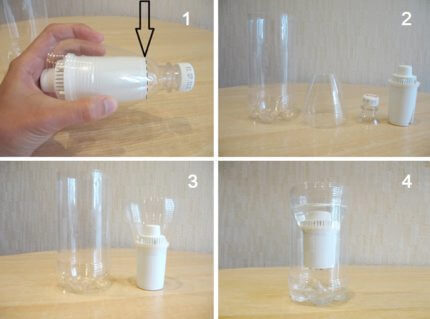
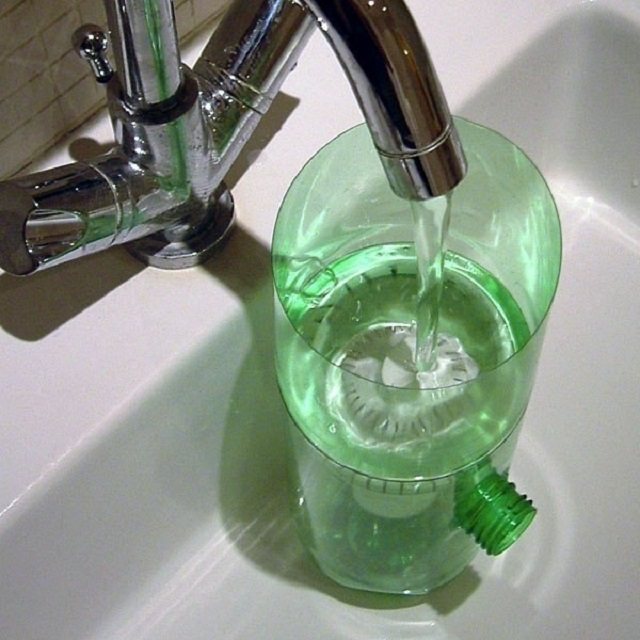
To make a simple water filter, you only need an Aquaphor-type cartridge. The device is enough to clean approximately 179 liters
Overview of filtration materials
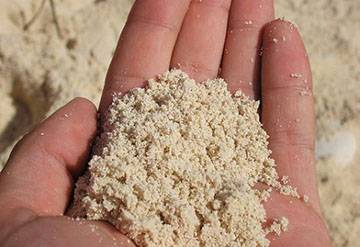
- cotton wool;
- various fabrics;
- gauze folded in several layers;
- paper napkins;
- coarse sand;
- lutraxil is a non-woven material made of polypropylene fibers, which is used to cover the beds.
The packing of these materials plays the role of a very fine sieve and can even trap bacteria.
In addition to mechanical water, it is also necessary to subject it to chemical purification, that is, to remove various soluble substances from it - hardness or heavy metal salts, waste products of microorganisms, other organic contaminants, etc.
Of all the materials used for this purpose, activated carbon is the most affordable. It can be purchased at a pharmacy, or you can make it yourself - the technology is extremely simple:
- It is necessary to prepare several birch twigs or scraps. In principle, you can use any other wood except coniferous. Also, good activated charcoal can be made from the shells of the seeds of various fruits.
- Sliced wood must be calcined without air access.
- The coal obtained in this way should be wrapped in cheesecloth and held for several minutes in a stream of hot steam. We will use an ordinary kettle as a steam generator. During this procedure, water molecules will occupy free bonds in the carbon.
- Taking an old frying pan, which is no longer used for cooking, put wooden blanks on it, then fill them with sand. Now you need to put the pan on the fire and fry all its contents for two to three hours.
- Wood can be pushed into a tin can, then closed and put into a fire for a while.
Under the influence of high temperature during the calcination stage, the wood will crack with the formation of many tiny pores. This is activated charcoal. The sorbent properties of such a material are due to the imbalance in its pores, as a result of which they “try” to be filled with at least something. By drawing in a variety of chemical contaminants, microcracks make water safe and eliminate unpleasant odors and tastes from it. With use, the pores fill up, and the activated carbon backfill has to be changed.





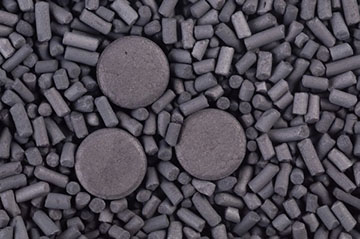
The effectiveness of this material depends on the surface area of all pores.In 1 gram of home-made coal, 10 - 50 square meters are usually obtained. m, less often - up to 100 sq. m. When activated in the factory (coconut shell, anthracite, silica gel and other materials are used as raw materials), the surface area of the pores can be increased to 1000 or more square meters. m per 1 gram. Therefore, industrial-made activated carbon has a much greater resource than home-made. For example, just one tablet can purify 0.9 - 1.2 liters of water.
In the absence of activated charcoal, you can use ordinary wood, which is sold today in many stores.
Is it really necessary to purify water from natural sources?
Today, in almost every kitchen, you can find the simplest design filter for water purification, made in the form of a transparent jug, inside of which there is a replaceable container (cartridge) with an adsorbing composition.
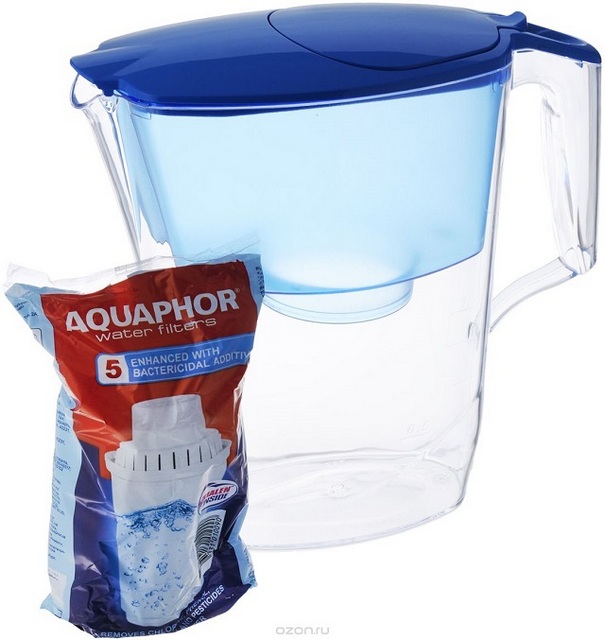
Filter jug for water Aquaphor "Ultra".
These devices are inexpensive and are great for treating small amounts of water. It would seem - why not a way out for a long trip to the country, where you have to use water from a well or even an open reservoir, and a stationary cleaning system is not provided?
The jug itself is not so expensive, and is sold complete with a filter cartridge, which must be replaced periodically, as the installed resource becomes dirty, with a new one. But if you have to clean a large amount of water, then the cartridge will have to be changed often, and it costs, by the way, not so little. That is, you have to take a spare with you so that because of this you do not have to return to the city to purchase a new one.
It also happens that if not only intended for drinking and kitchen, but all the water entering the house must pass through the filter. It is clear that an ordinary jug is no longer enough here, since it simply cannot cope with such a voluminous task.
This is especially important when water is taken from open reservoirs or wells, as it often contains fine particles of clay, sand, organic matter, and waste products of microorganisms. This water is not suitable for drinking.
In addition, various wastes from agricultural work accumulate in the soil, from where they inevitably end up in groundwater over time. Therefore, water not purified in a special way may contain nitric acids, nitrates, chlorine impurities, sulfates, pesticides and other toxic compounds. And if we add here the still prolific landfills of household waste, industrial emissions carried by atmospheric precipitation and automobile exhausts, spilled oil products ...
Prices for water filters "Barrier"
Filter Barrier
Thus, drinking untreated water from untested sources at the laboratory level is extremely risky. And cleaning with the help of the simplest filter jugs is not at all a suitable way to get rid of these compounds dangerous to humans - such devices are designed, rather, for the purification of tap water that has already passed a certain preparation cycle.
And yet, even such a jug (with a working cartridge, of course) is better than nothing at all. But what to do if, as they say, “circumstances pressed”, and there is no way to use the factory filter device? The way out is to try to make, at least for a while, a filter with your own hands.
How to make a cleaning system at home
Easy to do, just follow the instructions. Most often, a homemade filter is made from:
- from a bottle
- paper,
- PVC pipes.
From a bucket and a plastic bottle
The filter can be made independently using a plastic bottle and a bucket.
For this you will need:
- five-liter bottle of drinking water;
- plastic bucket with a lid;
- activated charcoal, tissue paper.
Sequencing:
- Cut out the bottom of the bottle.
- Cut a suitable hole in the lid of the bucket.
- Insert the bottle upside down into the lid.
- Pour the filler (it is better to use activated carbon) into the bottle.
Important! The neck of the bottle and the hole in the lid of the bucket should fit snugly against each other. To achieve this, you can use a rubber gasket. Before you start drinking purified water, the filter must be washed
To do this, pour a few liters of water into it and let it drain. Fine particles of coal will be washed out, and the next batch will already be drinkable.
Before you start drinking purified water, the filter must be washed. To do this, pour a few liters of water into it and let it drain. Fine particles of coal will be washed out, and the next batch will already be drinkable.
From 2 bottles
Going on a long trip, it is not very convenient to carry heavy bottles of drinking water. It would be wiser to take some devices with you and make a filter at a halt. From the house you will need to take two plastic bottles, gauze or synthetic fabric.
Sequencing:
- Cut off the neck of one bottle and the bottom of the other.
- In the nearest reservoir, collect sand and ignite it on a fire.
- Make coals on the fire.
- In a bottle without a bottom, put in sequence: gauze, coal, sand.
- Make holes in the lid and screw it to the neck.
- Put the bottles in each other.
The quality of the filler is of great importance. If activated charcoal is not stocked up in advance, you can use wood. As a raw material, it is better to take birch, or other deciduous trees. Conifers contain essential oils, which later get into the water.


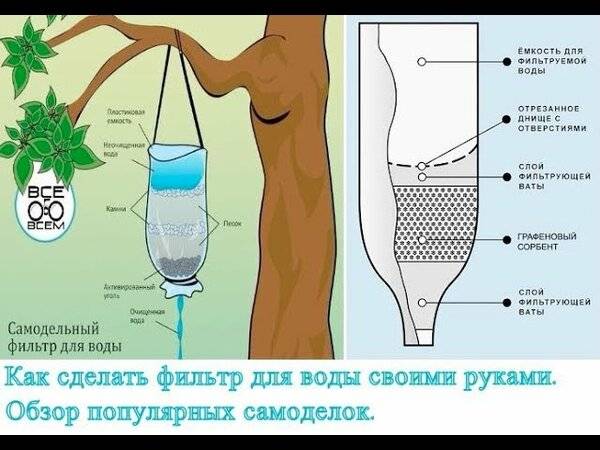

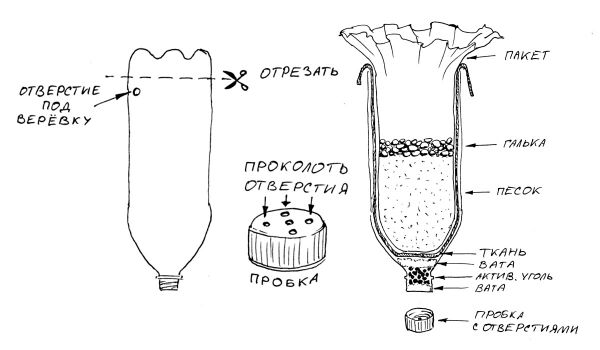
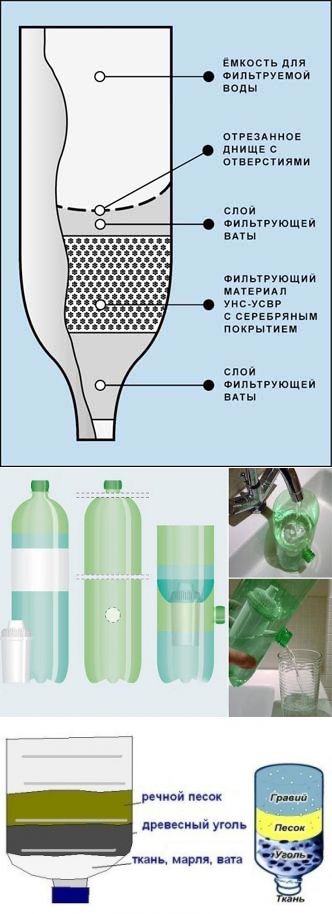


After the firewood turns into coals, they must be collected in a metal container and ignited until red. Only then will they be ready for use in the filter.
From paper
This method is the simplest, but also the least reliable. A large volume of water cannot be purified through a paper filter. It will need to be changed frequently.
For manufacturing you will need:
- small capacity;
- funnel;
- paper towel.
What to do:
- Insert the funnel into the glass.
- Fold up the paper towel.
- Insert the bag into the funnel.
The effect will be better if you use several bags at the same time by inserting them into each other. Thus, a multilayer filter will be obtained, which will better retain dirt.
Paper weight matters a lot. Newspaper is considered the most optimal for these purposes. Checking the quality is easy. It is enough to make a few bags and pour water into them. The longer it will seep into the container, the denser the paper.
Is it possible to make your own from PVC pipes?
A homemade device for purifying water from pipes will do its job perfectly. It is suitable for home, summer cottages and will make even water from the lake suitable for drinking.
What will be required:
- plastic water pipe;
- two plastic bottles;
- gauze, cotton wool, plastic cover;
- sintepon, coal.
Progress:
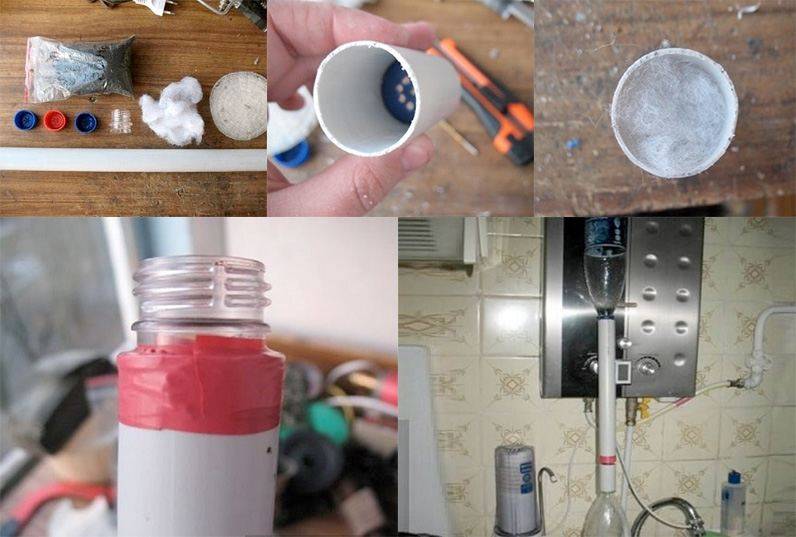
- Cut the pipe into two pieces. One more, the other less.
- Put a layer of gauze (cotton wool) inside the larger pipe.
- Glue the plastic cover with the thread outward, drill a few holes in it.
- Fill the pipe with sintepon.
- Close another lid with the thread outward and drill holes. Do not glue this time.
- Cut off the neck from the bottle, fix it on the pipe so that the thread remains free. The connection must be tight. Wrap the outer side with electrical tape several times.
- Put a perforated cover on the thread. Pre-fix several layers of gauze on the inside.
- Pour activated carbon into the smaller pipe.
- Connect both pipes with a thread. The carbon filter should be at the bottom.
- Screw the bottles to the ends of the structure. At the top, cut the bottom and fill it with water.
Important! The filler should not be laid too tightly. It should not prevent water from flowing down.
Self-manufacturing
Filter device
Features of the manufacture of the simplest filters - in the multilayer materials with different cleaning properties. Each new level contributes to the additional removal of impurities, contaminants or certain properties of water.
To build a filter with your own hands, you can use available fillers and simple fixtures.
At home, for a homemade filter as cleaners, you will need:
- Paper napkins, gauze or a wide bandage. Water from a well or water supply is perfectly cleaned with their help, but the fragility of materials is the reason for their frequent replacement.
- Thin cotton, canvas or linen fabric, cotton wool is more durable in composition and lasts longer.
- Charcoal, which can be purchased at the store or made by yourself.
- Silver coin or other small silver items.
- Small pebbles, gravel, clean river or quartz sand, previously washed and calcined for disinfection.
As containers for unfiltered and purified water, you can use a plastic or enameled bucket with a lid and a plastic five-liter bottle. The volume of dishes used can be increased or decreased depending on the need.
Simple water filter
Walkthrough:
Step 1. In the lid of a bucket for clean water, in the center you need to cut a hole for screwing a plastic bottle upside down. The fit of the two elements must be tight. The cut edges should be processed with sandpaper or a file, and 5-6 punctures should be made in the bottle cap to drain the purified liquid.
Step 2. Preparing a container for water purification. If a five-liter or other plastic bottle is used, then you need to carefully cut off the bottom to fill the vessel with filter materials and insert it into the hole in the bucket lid.
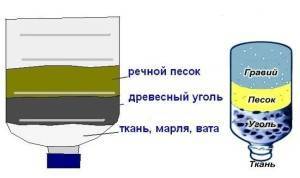
Step 3. In the place of the neck, a thin fabric or cotton wool is laid in layers from the inside with a snug fit to the walls. From above, you need to fill in pre-prepared crushed coal 5-6 cm high and compact it a little with a heavy object. This is the main filtering component, its capabilities are calculated approximately from the ratio: 1 tablet of activated carbon per 1 liter of liquid.
Step 4On top of a layer of coal, you need to spread gauze or a bandage in several layers, carefully closing the previous level, and place silver pieces or coins on top for bacterial cleaning.
Step 5 Place a layer of clean sand 2-2.5 cm high and make sure that it does not leak to the coals. Mixing can cause the filter to clog. Sand enhances filtration without letting in foreign particles. From above it is necessary to lay gauze in 4-5 layers so that there is no funnel when filling the container with water.
Step 6. You can start test cleaning after filling the container
If the design is determined for a continuous supply of water, then it is important to monitor the pressure, which should not exceed the throughput of the filter.
The performance and quality of filter cleaning depend on the number of layers and their density. It is considered the best indicator for cleaning 2-3 liters of water per hour.




It should be noted that purchased filters essentially have the same cleaning properties, even if pyrolyzed ground coconut shells are used instead of carbon filler.
You can cook charcoal yourself by calcining a hardwood tree placed in a metal dish in a fire. Ephedra cannot be used due to the large amount of resins they contain. Birch logs are ideal for making activated carbon.
The filtration layers should fill approximately 2/3 of the total volume of the bottle, and 1/3 remains for unfiltered water.
Stationary filter device of three flasks
Now let's figure out how to make an effective filter on your own to connect it directly to the system. For these purposes, we need three flasks with the same geometric parameters, in which we need to place the filler.
From the containers prepared in this way, we will make a productive stationary filter for cleaning tap fluid, guided by the following diagram:
- Take two 1/4 inch adapter nipples. Connect them all three flasks into one design.
- Seal the joints of the nipples (their threads) with a sealing fluoroplastic tape (the so-called FUM material).
- Connect the 1/4 inch holes of the two outermost flasks to the tube with straight adapters.
- Insert the prepared filter into the pipeline (you will need a half-inch connector and a tee).
- Connect a regular water tap to the filter outlet pipe.
High-quality water in modern conditions, especially drinking water, is a very rare phenomenon. If several decades ago there were still clean springs, wells, now it is a rarity even in rural areas. Agricultural firms pollute the soil no less than industry and herbicides. Mineral fertilizers inevitably penetrate into the sources. Water filtration has become a necessity.
Jug-type installations have become frequent guests in the kitchen in the city and in the country. For a small volume of liquid, they are effective. But if you need to clean tens or hundreds of liters, such devices are unsuitable. When the site has a well, a well, a pool, water filters are necessary. You can buy those designed for this purpose, but do-it-yourself ones are always cheaper.



