- Stationary filter device of three flasks
- Homemade filter on a hike
- Method one
- Method two
- Method three
- Do-it-yourself coal column
- Coal preparation
- Column manufacturing
- Filtration
- cleaning
- Features of homemade filters
- Disadvantages of homemade drinking water filters
- Drink Recipes
- How to make a bottle filter
- How to clean the filter in the aquarium?
- We make a water filter with our own hands to clean well and borehole water
- Why filter well water?
- Overview of filtration materials
- The simplest plastic bottle filter
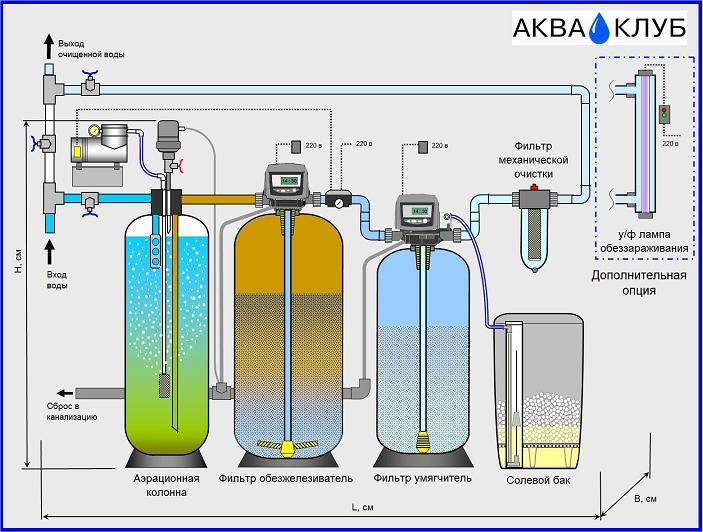
- Three-flask design for a full plumbing
- Mechanical varieties
- Tubular
- Reticulate
- Wire
- gravel
- If there is no filter
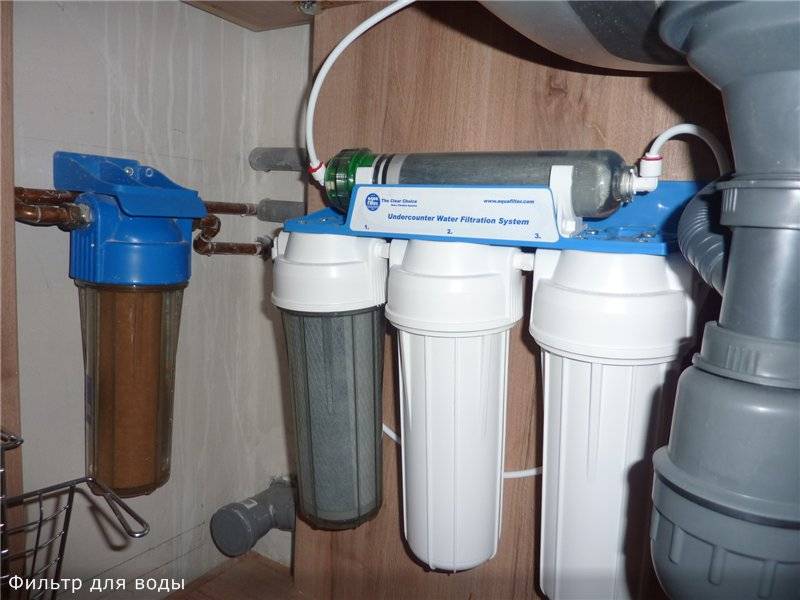
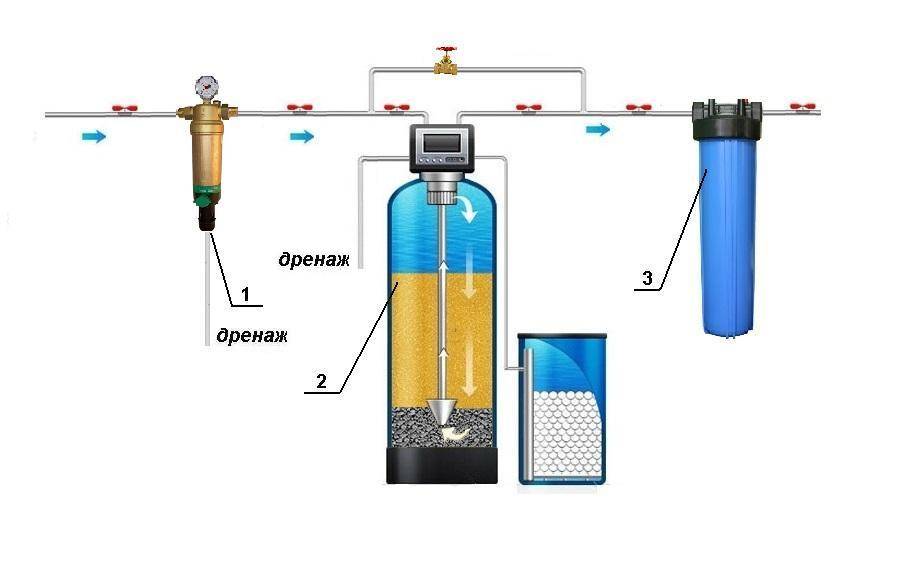
Stationary filter device of three flasks
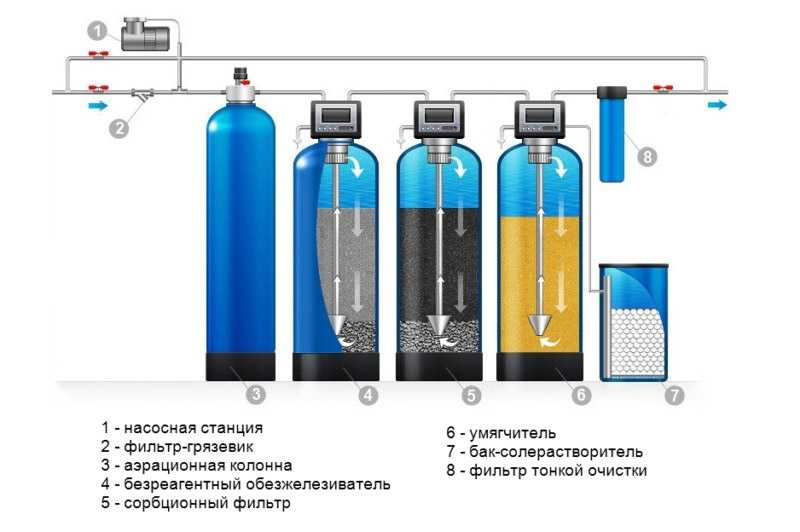
Now let's figure out how to independently make an effective filter for connecting it directly to the water supply system in the apartment. For these purposes, we need three flasks with the same geometric parameters, in which we need to place the filler.
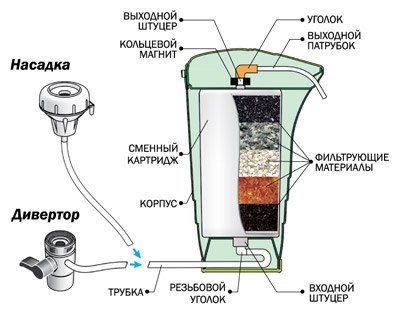
From the containers prepared in this way, we will make a productive stationary filter for cleaning tap fluid, guided by the following diagram:
- Take two 1/4 inch adapter nipples. Connect them all three flasks into one design.
- Seal the joints of the nipples (their threads) with a sealing fluoroplastic tape (the so-called FUM material).
- Connect the 1/4 inch holes of the two outermost flasks to the tube with straight adapters.
- Insert the prepared filter into the pipeline (you will need a half-inch connector and a tee).
- Connect a regular water tap to the filter outlet pipe.
Use an effective filtering device connected directly to the water supply to your health!
Homemade filter on a hike
It often happens that when going on a hike, we stock up on drinking water in insufficient quantities. There are no shops, wells in the area, but there are plenty of natural reservoirs, puddles, etc. How to make dirty water drinkable?
Method one
When collecting a camping first aid kit, we always put several packs of activated charcoal, bandages and cotton wool. We need all this and a plastic bottle for the filter.
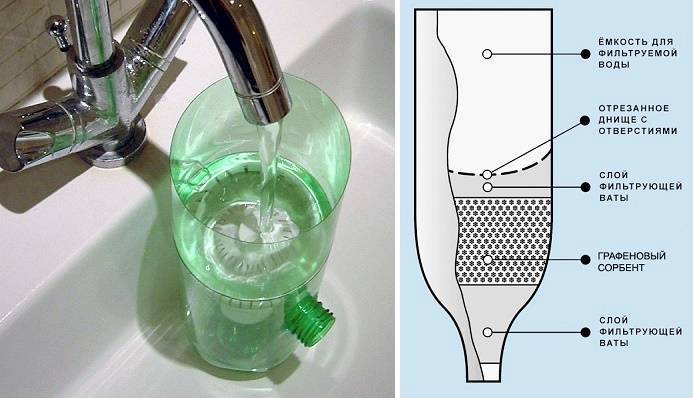
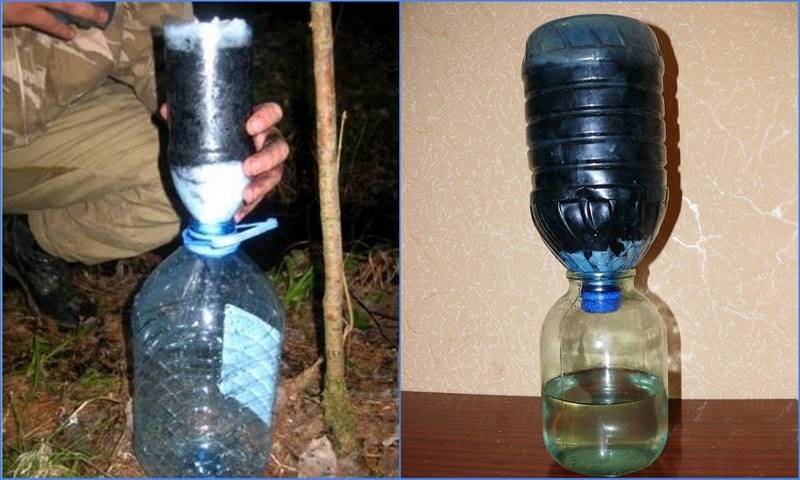
- In a plastic bottle, cut off the bottom and turn over.
- We put a layer of cotton wool in the neck.
- We fold a strip of bandage in several layers (the more, the better) and put it on top of the cotton layer in a bottle.
- Pour crushed charcoal tablets on top, a layer of bandage and cotton wool on top.
Method two
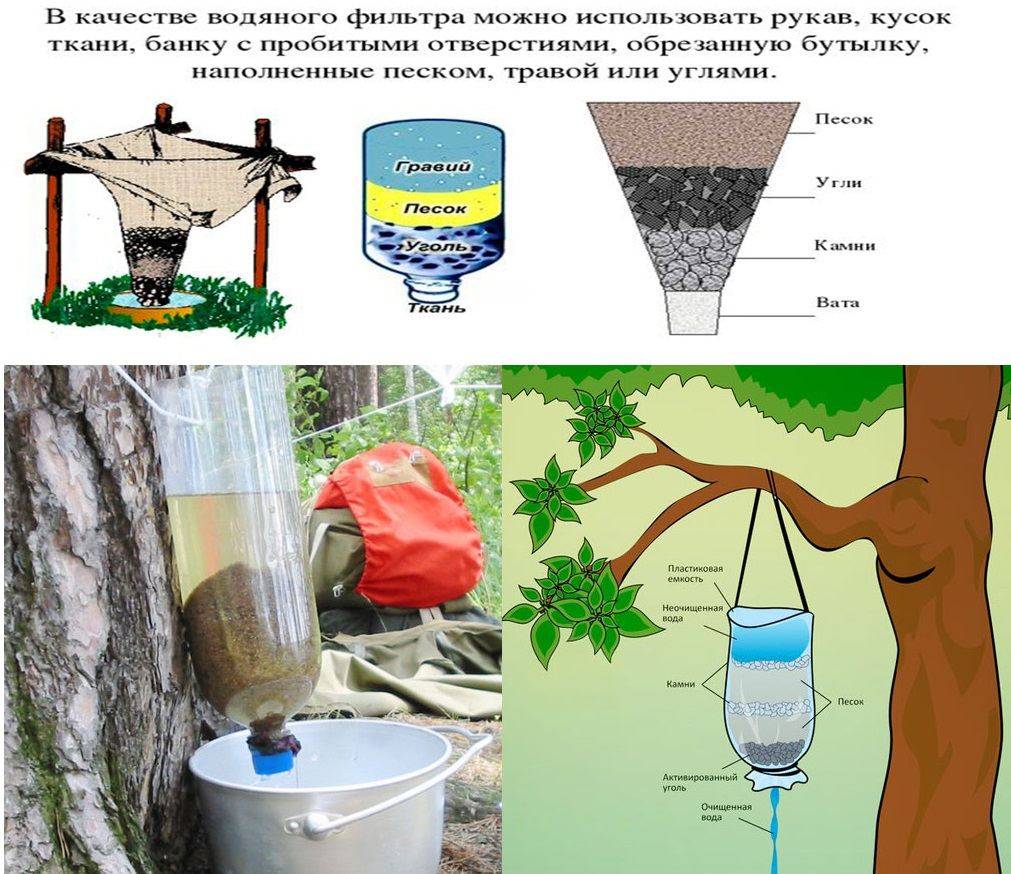
You can do without a first aid kit. For this system, we need a plastic bottle with a lid, moss and coal from a fire (not very large so that it fits more tightly into the container) and a small piece of cloth.
- We make several small holes in the lid, put a fabric folded in 3-4 layers into it. Screw the lid into place. Cut off the bottom of the bottle.
- We fill the container with moss and coal in layers, starting and ending with moss. The more layers we put, the cleaner the water will be.
Method three
We make the most primitive filter.To do this, we need two containers (bowlers, mugs, etc.) and a bandage or a long strip of some cotton fabric.
We unwind the bandage equal to the height of the container taken 8-10 times. Fold it in half and twist it into a rope. Fold it in half again. We lower the folded end of the tourniquet into a container with dirty water to the very bottom, the free ends into an empty container.
- The water tank must be above the receiving tank.
- The free ends of the tourniquet should be lowered below the folded end in the water.
- The higher the level of dirty water, the faster it is filtered, so it makes sense to add dirty water to the upper tank.
- The free ends should not come into contact with each other and with the walls of the vessels.
- If you need to skip a large amount of water, you can make several flagella.
Water filtered in this way will not be perfectly clean and transparent. Mainly dirt, sand, suspensions, silt will be filtered out.
It is important to remember that such camping filters purify water only from dirt and turbidity. Bacteria and microbes are stored in it
Therefore, filtered water must be boiled before drinking.
Do-it-yourself coal column
You can independently make two types of columns: to purify moonshine during distillation or to finally get rid of the final product from fusel oils after distillation.
The second option is simpler, and also allows you to do finer cleaning. And even better - use both installations for the sake of obtaining exceptionally pure alcohol.
Coal preparation
Buy or make your own charcoal.
Note! Only coal obtained from birch or coconut palm is intended for the column (the latter, for obvious reasons, can only be bought)!
It is undesirable to “refuel” it with barbecue coals bought on the occasion, since combustible materials are often added to them. . Therefore, it is best to buy special coal for filling columns.




Therefore, it is best to buy special coal for filling columns.
On the Internet, it is offered for this purpose in small pieces (up to 1 cm in diameter) - in this form it is only suitable for a column connected to a distiller.
To use it to filter the finished moonshine, grinding is necessary.
Advice. Put the coal taken from the fire or bought into a bag and beat with a hammer. Then take away large pieces - they can be broken again.
Sift what's left through a sieve. Use the finest dust to clean the finished moonshine, a slightly larger fraction (ideally - like fine grains) - for filtering.
Column manufacturing
Before proceeding with the creation of a coal column with your own hands, it is necessary to prepare the materials:
1. For a column connected to a distiller:
- food stainless steel pipe up to 0.5 m long, 100 mm in diameter;
- screw cap with fitting (top);
- non-removable cover with fitting (welded or soldered);
- filter-mesh fixed at the bottom;
- legs.
2. For filtering alcohol distillate:
- 2 liter plastic bottle with cut off bottom. Preferably - not to the end;
- cotton wool or cotton pads.
3. Coal is required for any column model.
Everything is more or less clear with the connected column, it is the “last link” in the distiller chain
It is important to fix the finished and tucked device strictly vertically. A column from a plastic bottle is prepared as follows:
A column from a plastic bottle is prepared as follows:
A column from a plastic bottle is prepared as follows:
- The bottom is not cut off completely to make a kind of lid. It is needed so that the coal does not float when you pour the liquid.
- Holes are made in the lid with an awl.
- Cotton wool or cotton pads are inserted into the neck and the cap is screwed on.
- The bottle is filled with crushed coal.
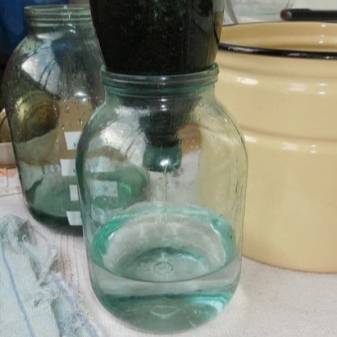
- The neck is inserted into a jar (preferably a three-liter one).
Attention. Choose a PET bottle with an elongated neck and make sure it fits securely without distortion. Pour moonshine on top of coal
Moonshine is poured on top of the coal.
Filtration
Alcohol through the holes in the lid will first pass in a trickle, but as the cotton wool is clogged with dust, it will only drip. It is possible that the dripping will stop with time.
In this case, you need to drain the moonshine remaining in the bottle into the dishes, unscrew the cap and replace the cotton wool, after which the process should be continued.
cleaning
Filtered moonshine, for completeness of cleaning, must already be filled with coal dust in a jar. Approximate calculation: 3 - 4 spoons per three-liter jar of alcohol.





Carefully! You don’t need to pour a lot of coal, because with an overabundance, by “binding” fusel oils, it can “steal” the degree. Moonshine should be cleaned from a couple of days to a week. The jar needs to be shaken periodically
By the end of the cleaning, the alcohol should be transparent, and the coal dust should lie in a layer on the bottom. After that, you need to filter through cotton wool, discs or filter paper.
The jar needs to be shaken periodically. By the end of the cleaning, the alcohol should be transparent, and the coal dust should lie in a layer on the bottom. After that, you need to filter through cotton wool, discs or filter paper.
Moonshine should be cleaned from a couple of days to a week. The jar needs to be shaken periodically. By the end of the cleaning, the alcohol should be transparent, and the coal dust should lie in a layer on the bottom. After that, you need to filter through cotton wool, discs or filter paper.
Reference. Pharmaceutical activated carbon is the least suitable for cleaning, since it also contains talc, sometimes starch. Many complain that this product gives bitterness to the drink.
Features of homemade filters
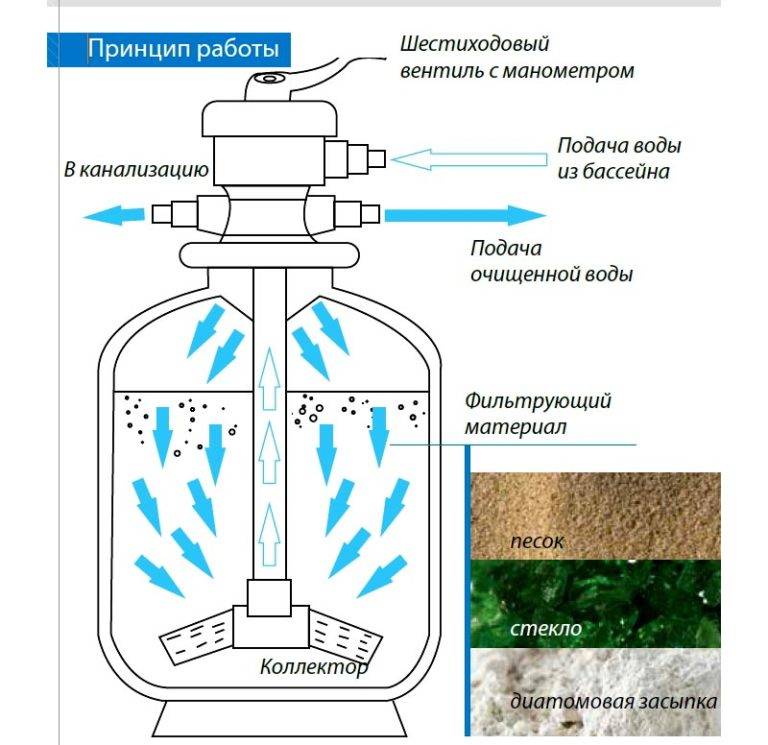
At first glance, tap water appears clean. In fact, it contains a lot of dissolved compounds. The water filter is designed to “retain” these substances: chlorine compounds, iron compounds, etc. Their excess can lead to the development of various diseases, as well as affect the general condition of the body.
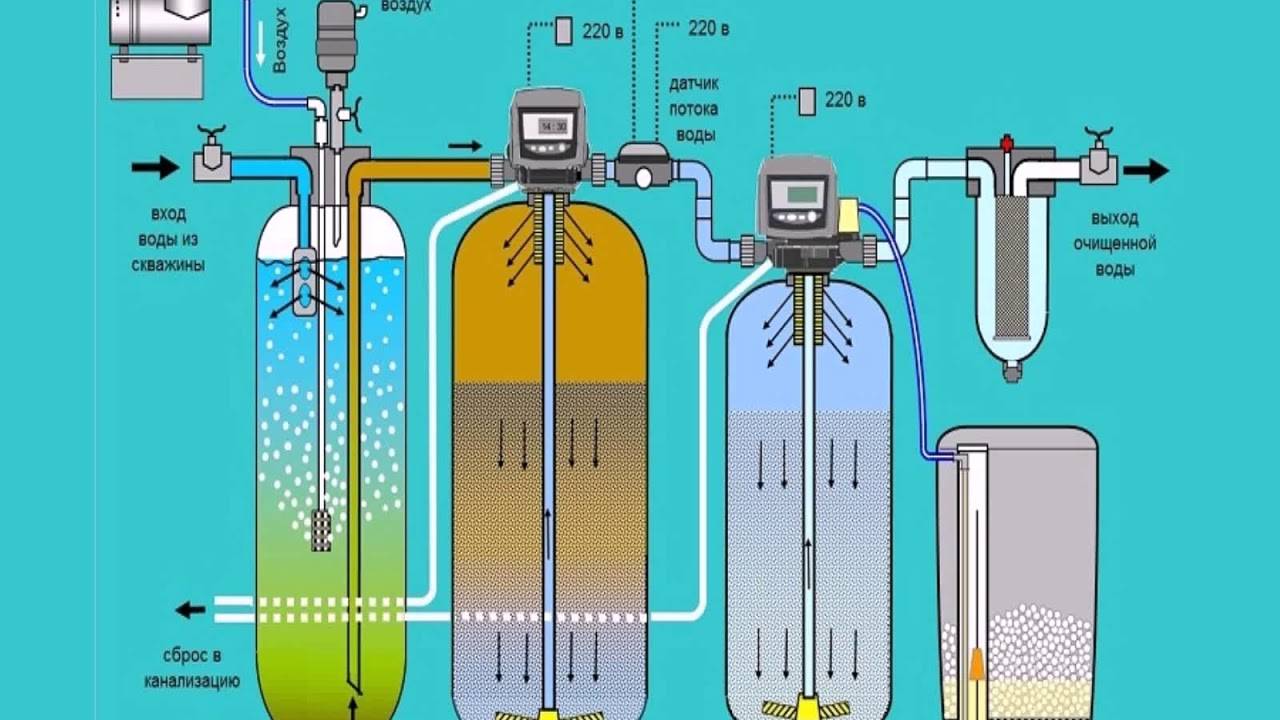
What about well water? Many believe that it does not require cleaning, and they will be wrong. It may contain nitrates, a large number of bacteria, pesticides (seep through the treated soil). Also, the design of the well may be subject to corrosion. All this affects the taste and useful qualities of water.
It is not necessary to buy expensive store devices - a homemade water filter is capable of good cleaning.
Of course, if you want crystal clear water, it's better to get a modern system after some time. This is due not so much to the wear of parts, but to a lower absorbent and cleaning ability in relation to bacteria.
Water pressure also plays a huge role in cleaning. Improper pressure intensity in relation to the filter system reduces performance.
It is not recommended to make a flow-type water filter with your own hands, as it is unprofitable - a ready-made stationary system is more profitable.
Disadvantages of homemade drinking water filters
All this is wonderful, but one cannot fail to mention the shortcomings of self-made filters. And they are quite significant, and they must be remembered when using water for drinking after it has been purified.
- Homemade filter structures are not able to trap serious pollution and contamination. This factor is especially relevant to the purification of water from open reservoirs. The pores of the filter media can retain only a part of the existing contaminants. However, in camping or extreme conditions, when it is necessary to get clean water, such filters become indispensable helpers.
- The traditional problem of any water filters, both homemade and factory-made products, is cartridge contamination. With each water treatment, the concentration of harmful microorganisms and chemicals increases. Due to the fact that self-cleaning is not provided for in such water filters, the materials that make up the backfill must be changed quite often. No other solutions for high-quality filter cleaning have yet been found.
- When tap water passes through the filter, together with polluting substances, absorbent materials also retain minerals useful for humans, that is, they demineralize water to a certain extent. Not everyone likes the taste of such water.
Drink Recipes
There are several recipes that are simple, while the usual herbs, spices and products will change the moonshine beyond recognition and turn it into an amazing drink that is not ashamed to treat friends or relatives.
A few simple recipes to improve the characteristics of the distillate or what can help make alcohol elite:
- If you want to make honey vodka, then you should prepare: 1 liter of moonshine, 2 sprigs of cloves, 4 black peppercorns, 1 tbsp. a spoonful of honey, as well as 2 pieces of red pepper in pods. Spices and herbs are placed in a glass container, then moonshine is poured into the container. The container is removed in a dark place where the drink will be infused for 2 weeks. After this time, it is worth getting a jar, add honey to alcohol and put the container in a dark place for 2 days. When the time is up, the jar is taken out, the liquid contained in it will have a cloudy color. The drink is stirred with a wooden spoon. It is ready to drink, but before drinking, it must be filtered.
- You can, using tea and spices, make cognac at home. The recipe is simple: for 5-6 liters of distillate you need 2 tbsp. spoons of sugar, 2 tbsp. spoons of black tea, lemon or orange zest, vanillin on the tip of a knife, cloves - 10 sprigs, 10 peppercorns, 6-7 bay leaves. Spices and spices are added to moonshine, the container is tightly closed with a lid and sent to infuse in a dark place. After 10-12 days, cognac will be ready to drink. It should be filtered through a filter to eliminate all unnecessary impurities.
- Starka is a drink that is prepared using several components. You will need: 1 finely chopped lemon with a crust, 3 liters of good moonshine, 30 grams of ground coffee, 2 tbsp.spoons of glucose or sugar, 2.5 grams of nutmeg, 45 grams of oak bark, vanillin on the tip of a knife. All components are poured with alcohol and placed in a dark place where the drink will be prepared for 10 days. Before use, the starka is filtered several times. It should be chilled or drunk with ice, like whiskey.
Banal sugar syrup will also help to change the taste of moonshine. You can add cranberries or other berries to the drink, but first they should be chopped in a blender and poured with sugar syrup or glucose. To taste, such a drink will resemble cranberry tincture.
The taste and softness of moonshine are given by various components, do not be afraid of experiments. At home, you can make good drinks that, according to their characteristics, will not be inferior to elite alcohol.
How to make a bottle filter
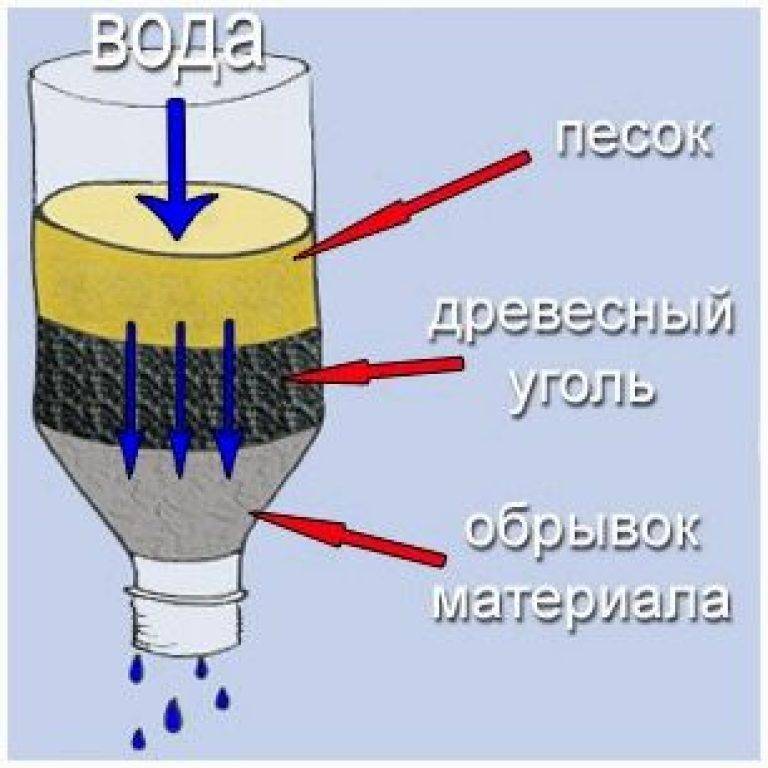
First you need to make a few holes in the cork from the bottle. This can be done with either a knife or an awl.
From the bottle itself you need to cut off the bottom.
Then you need to screw the cap onto the bottle and plug the neck with cotton from the inside or put one or two cotton pads from the first aid kit.
Crumble a few tablets of activated charcoal on a layer of cotton wool. You can not feel sorry for him, the more the better.

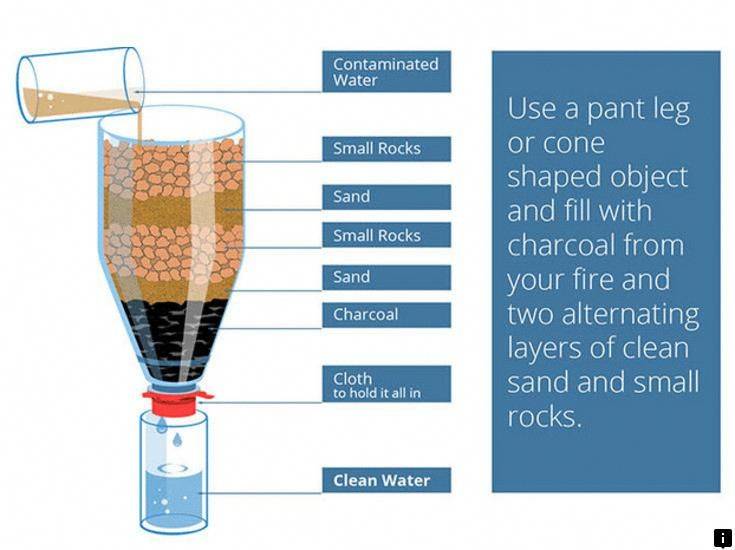


A layer of coal should be covered with a thin layer of cotton wool or a cotton pad.
So that the cotton wool is not clogged with sand, we make the next layer from a piece of cloth. A clean handkerchief is perfect for this.
In the corner of the plastic bag, make small holes or carefully cut off the tip. Now it must be inserted into the bottle with this hole down.
It remains to pour river sand into the bag.If there is small river pebbles, it can be poured onto the sand so that it does not erode when you pour water. Don't forget to leave room for water on top. It will pass through the sand gradually.
So you have a camping filter made of improvised materials ready.
How to clean the filter in the aquarium?
Caring for the device is a simple task, the main thing is that it be done regularly. Some parents, fearing for their children, choose aquariums without corners, but are afraid that cleaners for them are very expensive or difficult to operate and maintain. In fact, a filter for a round aquarium is inexpensive and just as easy to care for as a standard one:
- Cleaners should be washed as often as required by the device. In a small filter, dirt accumulates faster and therefore they need to be cleaned 1-2 times a week, large units can be washed once every couple of months.
- Filter cleaning should be carried out as quickly as possible and always in water. This is due to the fact that in the device, in addition to accumulated dirt, there are colonies of microorganisms that affect the biological balance of the aquatic environment.
We make a water filter with our own hands to clean well and borehole water
The problem of drinking water purification is becoming relevant not only for citizens, but also for rural residents. To make water from a well or well drinkable, you can make a water filter with your own hands.
Why filter well water?
It would seem that what could be cleaner than well water, sung in ancient Russian epics? Alas, modern reality is not at all like a fairy tale. Water in private wells can be contaminated with a variety of substances, such as:
- nitrates;
- bacteria and pathogens;
- impurities that impair the taste and quality of drinking water.
For an excess of nitrates in drinking water, i.e., salts of nitric acid, one should “thank” the farmers who widely use fertilizers and pesticides in the cultivation of agricultural products. Some of these substances inevitably seep into the aquifer of the soil.
The simplest filter can be made from a plastic bottle with filler
Poor quality and damage to equipment lead to the fact that an admixture of rust, sand, etc. appears in the water. Drinking such water is simply unpleasant. Therefore, for giving it is recommended to buy or make at least a simple water filter.
Overview of filtration materials
The principle of operation of the filter is simple and familiar to everyone. It is necessary to pass water through a layer of filter material. The filler may be different:
- the cloth;
- cotton wool;
- paper napkins;
- gauze;
- sand;
- grass;
- coal;
- lutraxil.
You can buy charcoal at the store or make your own.
For regular use, other materials are used, mainly charcoal. It is laid in layers, alternating with sand, gravel, grass, etc. Lutraxil is a synthetic material made from polypropylene fibers.
The simplest plastic bottle filter
The use of conventional household filters for a small dacha is rarely convenient. Such devices require water to flow from the water supply under a certain pressure, and not every country house has a water supply with suitable characteristics. Pitcher filters purify water too slowly.
In addition, you will have to constantly change cartridges. Therefore, a homemade water filter made from a plastic bottle and a bucket with a plastic lid may be the most viable option.
Homemade water filter can be made from an ordinary plastic bottle
This filter uses charcoal and ordinary cloth as a filler.
The simplest filter for giving is made in this way:
1. Cut off the bottom of a plastic bottle.




2. Cut a suitable hole in the plastic lid of the bucket.
3. Insert the bottle into the hole with the neck down.
4. Fill the filter with media.
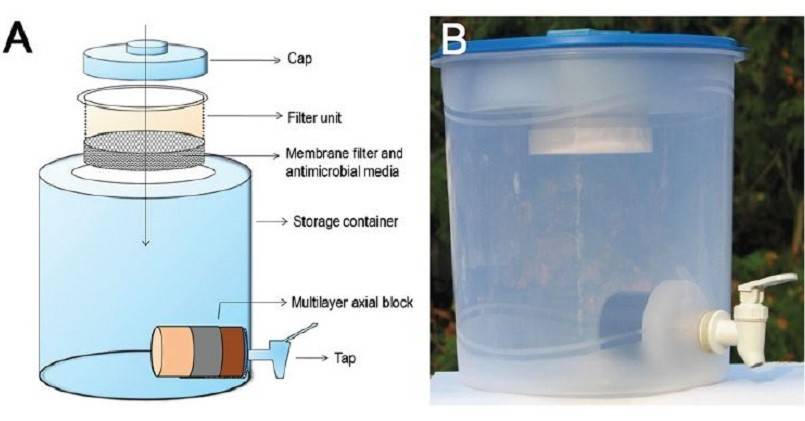
On top of the receiving container, you need to install a plastic bottle with a volume of 10 liters, in the bottom of which a filling hole has been made. For the manufacture of the filter, you can use a piece of 40 mm polypropylene pipe. The top and bottom of the pipe are covered with pieces of perforated plastic, which is recommended to be fixed with hot glue. The pipe is filled with charcoal.
Such a homemade filter should fit tightly into the neck of a standard ten-liter bottle. It remains to connect the receiving tank with the filter and the bottle. A full bucket of well water can be immediately poured into the installation, which will be filtered after a few hours. Thus, the house will always have a supply of clean drinking water.
Three-flask design for a full plumbing
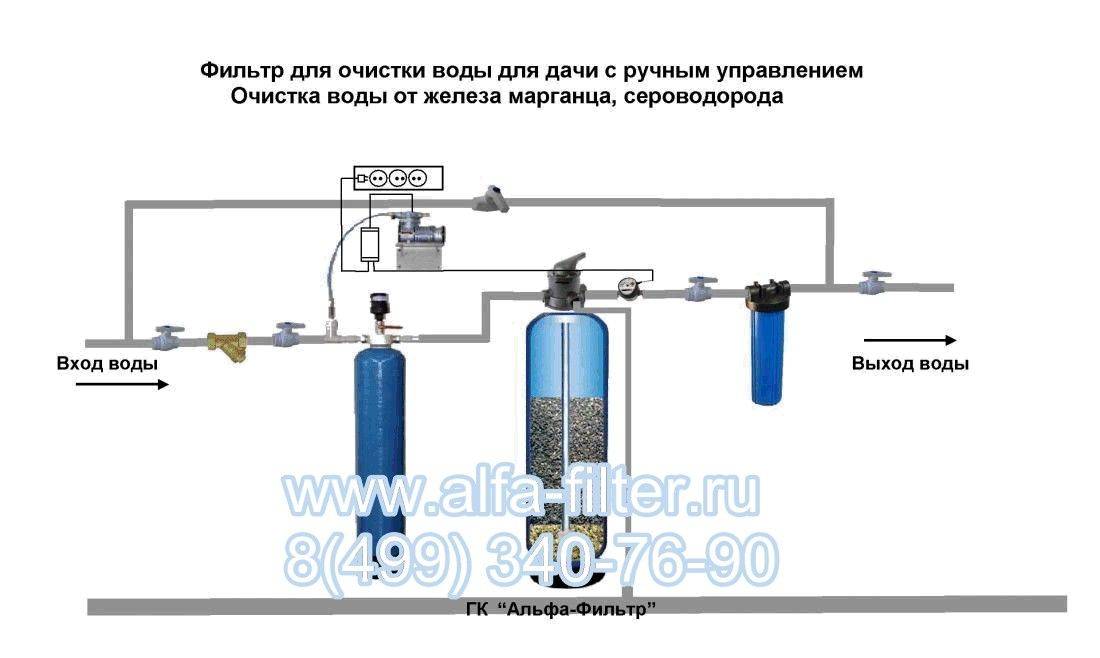
Happy owners of a full-fledged water supply in a private house can make a three-flask home-made filter for water purification. For this you need:
- Buy three identical flasks.
- Connect the flasks in series with two quarter-inch nipples. In this case, it is necessary to strictly adhere to the in / out designations in order to observe the direction of water movement. The threads of the nipples should be sealed with FUM tape.
- The end holes of the flasks are connected to the quarter-inch tube with straight adapters.
- Connect the filtration system to the water supply with a tee that is cut into the water supply using a 1/2” connector.
- At the outlet, a standard tap for drinking water is connected to the filter system.
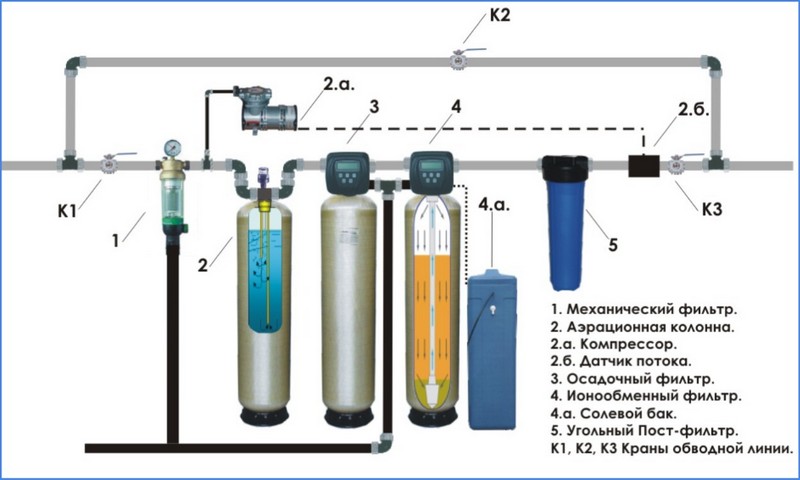
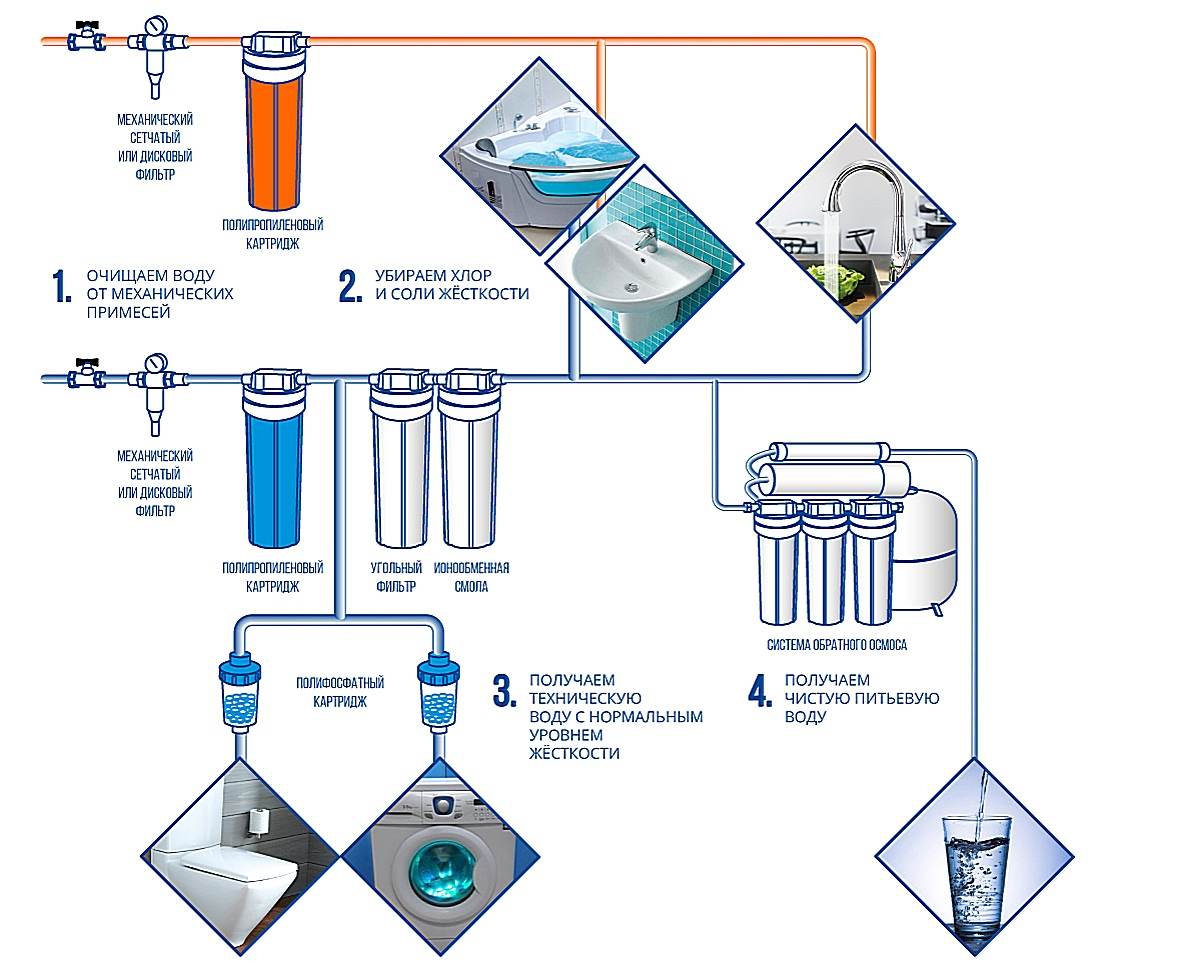
- Fill the flasks with filter material. You can use a polypropylene cartridge, a carbon filter and an anti-scale filler.
This is interesting: Walls in the corridor - finishing options
Mechanical varieties
Coarse water purification systems are used at the first stage of water treatment. Their device allows you to effectively screen out large impurities contained in the stream:
- Sand;
- Rust (ferric iron);
- Pebbles of various fractions.
- The next stages of filtration;
- Plumbing;
- Plumbing equipment.
Tubular
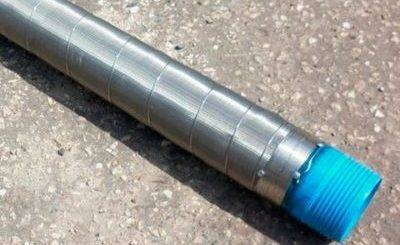 Water purification begins at the base of the well, where a filter for primary (coarse) purification is placed.
The basis of the design is a perforated pipe, the perforation area of which reaches 20-30% of the surface area.
The device separates solid insoluble particles from the water flow. In practice, two categories of tubular systems are used:
- Perforated (perforated) filter. In the lower part of the casing, small holes (1-2 cm) are applied in a certain order. The filter is designed for high loads, therefore it is suitable for use in deep formations. The main disadvantage is the decrease in productivity due to silting of holes.
- With slotted base. Slots are cut instead of holes. Slotted designs provide higher performance. The disadvantage of the system is that it copes worse with soil pressure.
Reticulate
Both types of bases themselves have a low cleaning ability, therefore they are supplemented with a filter element in the form of a special mesh made of stainless steel or plastic that covers the surface.
Mesh filters are widely used due to their properties:
- Quality. The fine mesh structure provides improved filtration and handles particles ranging in size from 0.01 to 1.5 mm.
- Material. The stainless steel mesh is durable and easy to clean. The carbon fiber mesh works flawlessly, but is harder to clean.
- Options. The mesh filter is made independently, or a ready-made device is purchased. Industrial devices are equipped with a self-cleaning system, which is why they are sometimes called self-cleaning. Productivity depends on the sizes and makes from 5-10 to 650 m3/h.
- Advantages. Do-it-yourself design is distinguished by a budget price and low maintenance costs. Mesh filters are unpretentious in operation and are suitable for use in any conditions; with local damage continue to work.
Important. A big plus of purchased units is the possibility of continuous operation, since filtering and washing of mesh elements is performed simultaneously.
Wire
The second option for improving the tubular design is to use wire wound with a certain pitch.
The wire filter element has the following features:
- Design. A wedge-shaped wire is used, the parameters of which determine the fineness of the filtration.
- Dignity. Due to the thickness of the wire, the system is characterized by a long service life and high strength.
- Flaw.It is almost impossible to make a high-quality wire structure on your own. Filtering at the point of winding damage is not carried out.
gravel
The mechanical primary treatment device includes a gravel filter, which exists in two versions:
- Zasypnoy. Gravel is poured into the water intake area (into the frame of the bottom filter), where it plays the role of an additional filter load; the thicker the layer, the better and longer the filter will work.
- Surface. The gravel is used as backfill around the casing.
Reference. When the described methods for removing impurities are not enough, the system is reinforced with an industrial coarse filter, cartridge or backfill, with a control valve.
If there is no filter
If there is no filter at hand, but you need to somehow purify the water with your own hands, you can use a number of methods that will show very good results:
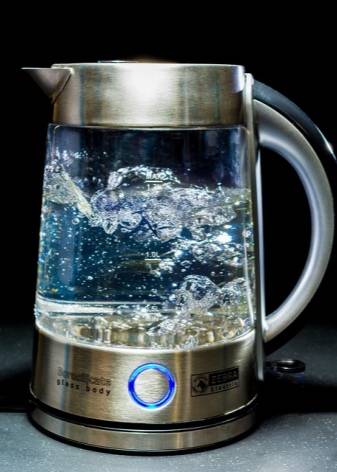
Boiling. With it, you can get rid of harmful microorganisms, although a side effect is an increase in the amount of salts that fall to the bottom of the vessel.


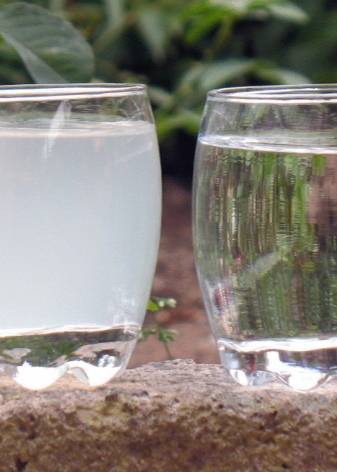
Settling helps to get rid of volatile chlorine and other impurities. It is necessary to carry out such events for at least 8 hours, and after the time has elapsed, pour water carefully and do not raise the sediment
It is important to wash the water container well from time to time with soap in order to remove the remnants of harmful substances, and water, even settled, should not be stored for more than 3 days.
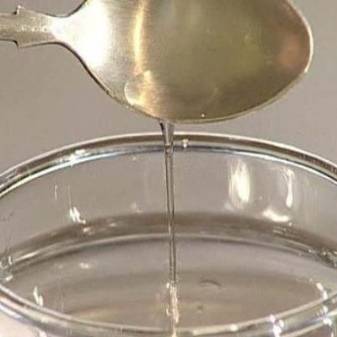
- Silver. You can use a simple spoon made of this material, which should be washed well and placed in a small carafe. After water is poured into it, you need to wait only a day and you can use the purified liquid.The use of silver coins for such purposes is impractical due to impurities and small size.
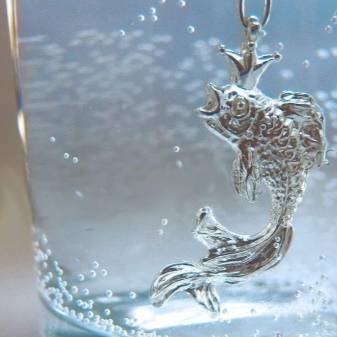
- The ionizer has the form of a chain with a figure at the end, which is lowered into the water, where the ion exchange process takes place, and the chain itself is on the glass. So the water should stand for a while, after which it can be drunk.
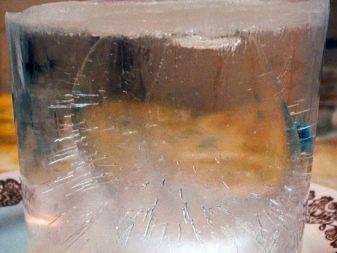
- Freezing is the easiest and most affordable way to purify water. To carry out the procedure, you need a bottle into which water is drawn, but not to the very edge, twisted with a lid and placed in the freezer. It is enough to wait six hours and remove the bottle from the refrigerator. As soon as the ice melts, you can drink water.
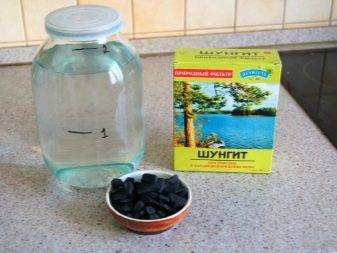
- Shungite is a special stone that is placed in a decanter of water and infused. After that, the water is ready for use.
- The use of activated charcoal tablets, which are crushed and wrapped in gauze. You also need a plastic bottle in which you need to cut off the spout and put a layer of gauze into it, then wrapped coal and again a layer of gauze. The resulting homemade filter is inserted into a bottle into which water can be poured.
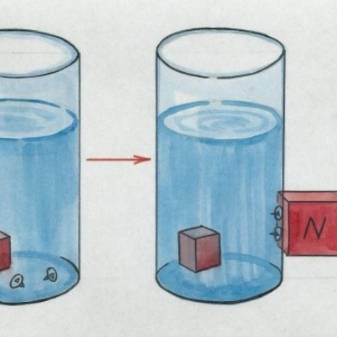
- Magnets. It is possible to use several identical magnets that will provide a uniform magnetic field in a homemade filter. In addition, it is necessary to have fittings with gaskets, from which a throughput system for water purification is constructed. The magnetic filter helps soften the water and minimize the amount of limescale on the dishes.
Making any of the options is not difficult, the main thing is to have the right ingredients on hand and use them correctly. Although the methods are varied, they have a similar principle - this is the disposal of water from unnecessary and harmful components that adversely affect the human body.