
- Fan pipe design
- Materials and diameters
- The principle of operation of the fan pipe
- When a sewer pipe is needed in a private house
- What is a sewerage system in general?
- Rules for installing a fan riser
- How to do without a fan pipe
- Installation
- How to determine what installation is required
- What it is
- Is installing a high performance aerator sufficient to eliminate the downpipe?
- In a private house
- In an apartment building
Fan pipe design
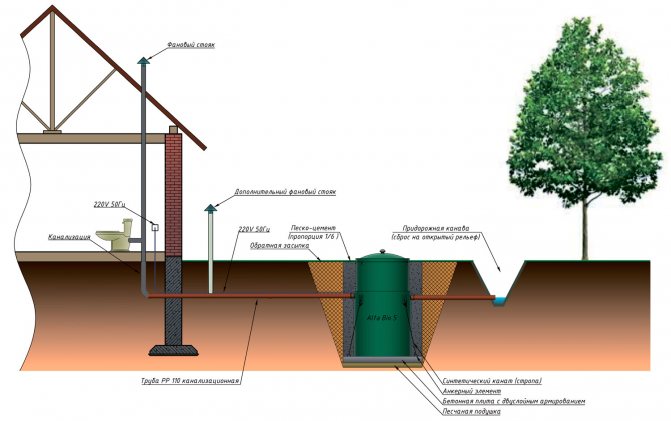
To begin with, let's pay attention to the cases in which it is necessary to create a fan sewer:
- In the case when the riser or a large section of the sewer pipe has a diameter of less than 0.5 cm. Even for a house that has only a few sources of wastewater, such a section is quite small.
- When using an autonomous sewerage system of a closed type, for example, septic tanks into which oxygen is not pumped. If the effluents are discharged into semi-open wells, then the vacuum in the system passes partially. Septic tanks are built in such a way that they are completely isolated from the outside world. In this way, the likelihood that an unpleasant odor will spread throughout the territory is eliminated.
- In the case of a high probability of salvo discharge of a huge amount of water.If the house has several bathrooms and showers, swimming pools, artificial reservoirs, as well as a large number of equipment that uses water in their work, then a fan removal of vapors and gases should be provided, since a volley discharge will be significant.
When designing a fan pipe, the following points are taken into account:
- The diameter of the fan pipe and the sewer riser must exactly match. Only in this case it is possible to ensure effective discharge of the sewer system to eliminate the possibility of a vacuum.
- The location of the fan pipe relative to windows and balconies should also be taken into account, since unpleasant air will enter the room.
- The fan pipe must be located strictly vertically, otherwise its efficiency drops significantly. Therefore, when creating a project, this point should be taken into account.
- If the house has an attic floor, it is necessary to provide for the location of the outlet near the walls and other communication elements. That is why, when building a private house, its project is already created with a background sewer system.
- All information is applied to the design drawings of the structure, which avoids problems.
When choosing the type of pipe, attention should be paid to the following points:
- To solve the problem, a PVC version is also suitable. Such pipes have a lot of advantages, among which we note low cost and weight. The light ones are easier to fix, they do not require maintenance. Modern autonomous sewer systems are often created using PVC options.
- Cast-iron pipes, which have recently enjoyed low popularity, can also be installed.There are quite a few disadvantages: high cost, high weight, difficulties during installation work, and so on.
- More recently, when creating a fan sewer, ceramic pipes were used, but today they are extremely rare. The reasons are high cost and fragility.
The above information determines that it is important enough to conduct the creation of the project in a timely manner and implement it.
Materials and diameters
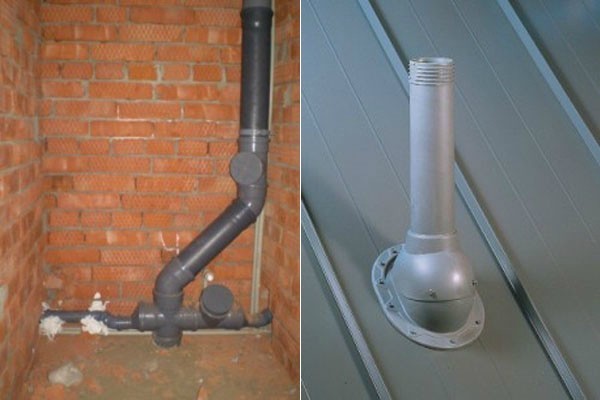
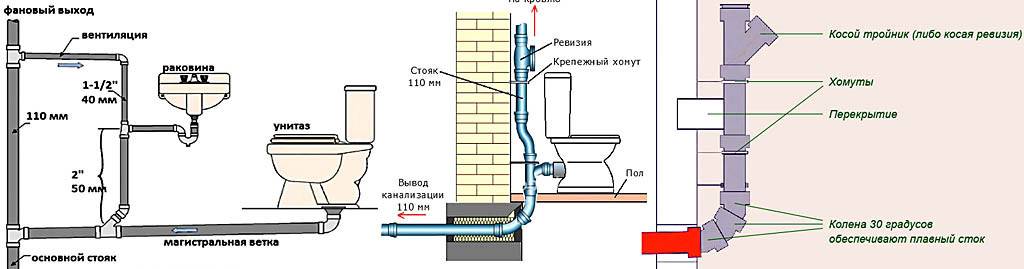
Fan pipes are made of cast iron, polypropylene, PVC. Their diameter is equal to the diameter of the sewer riser. Most often it is 110 mm. To connect the outlet of the riser with ventilation, the following fan pipes are used:
- Sewer PVC pipes, they are connected to the riser using tees, deployed at different angles.
- Rigid pipes are inserted into the socket of the riser, on the reverse side they have a rubber cuff.
- Corrugated branch pipes with soft elastic cuffs. Designed for connection to a riser that does not have a socket. The reverse end of the pipe has an elastic membrane with a hole. Used to install a toilet.
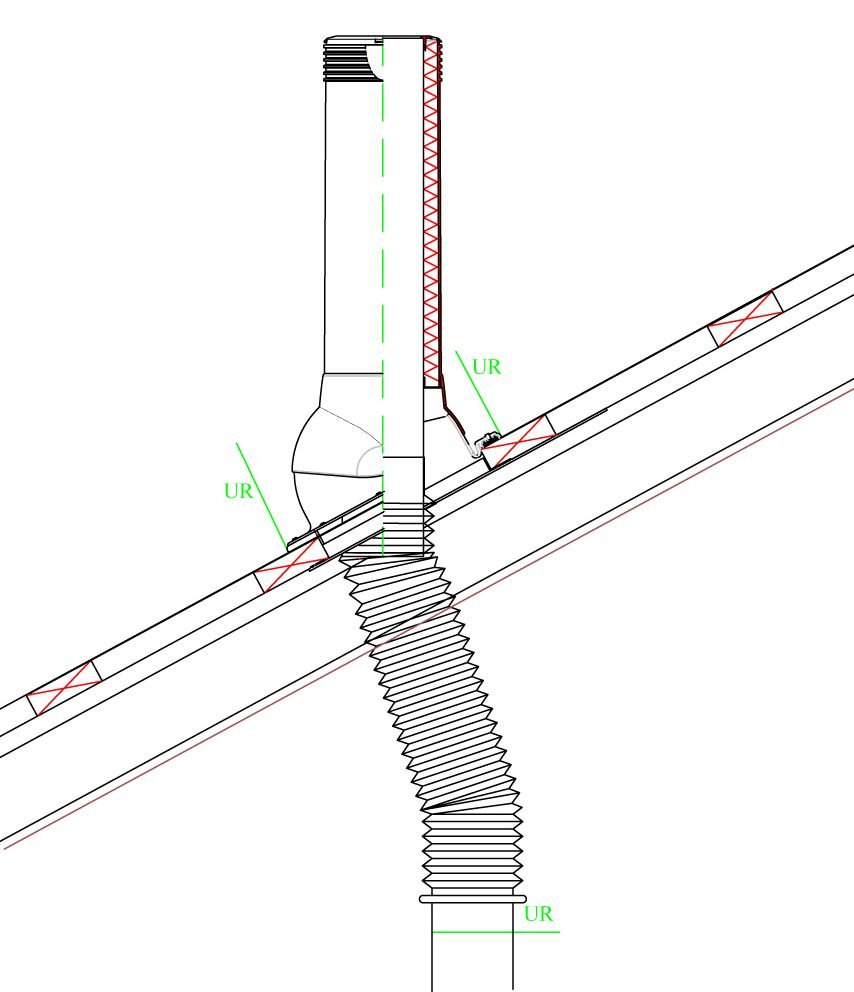
- Corrugated pipes with rigid branch pipes at the ends. It is used to connect the riser and the ventilation pipe as it passes through the roof.
The principle of operation of the fan pipe
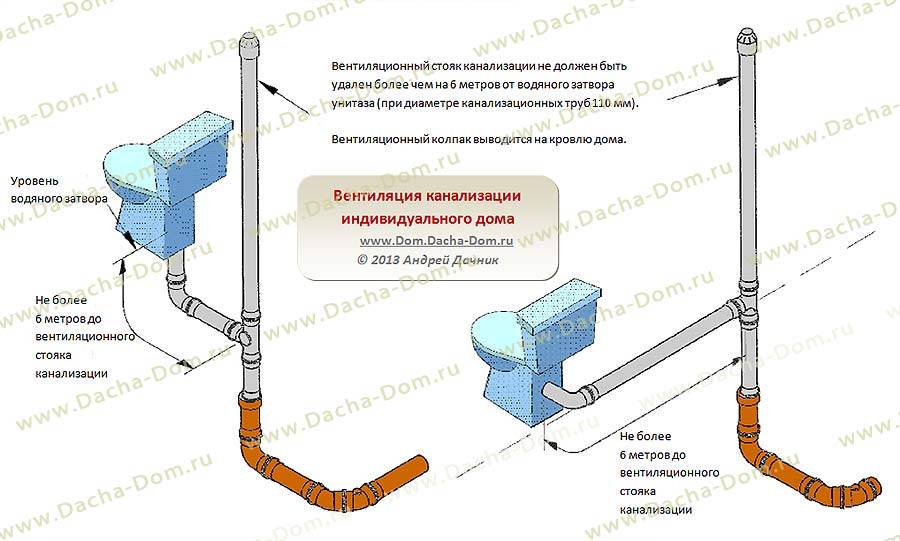
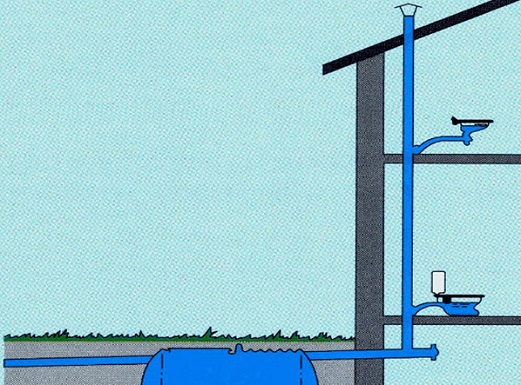
The fan pipe is a structural element that connects the pipeline to a specially erected ventilation duct. Its key purpose is to remove gases and odors distributed from the sewer.
The presence of a ventilation riser in the system guarantees the absence of unpleasant loud sounds in the living quarters that occur at the time of draining the water, and the “fragrances” of sewage sewage ( )
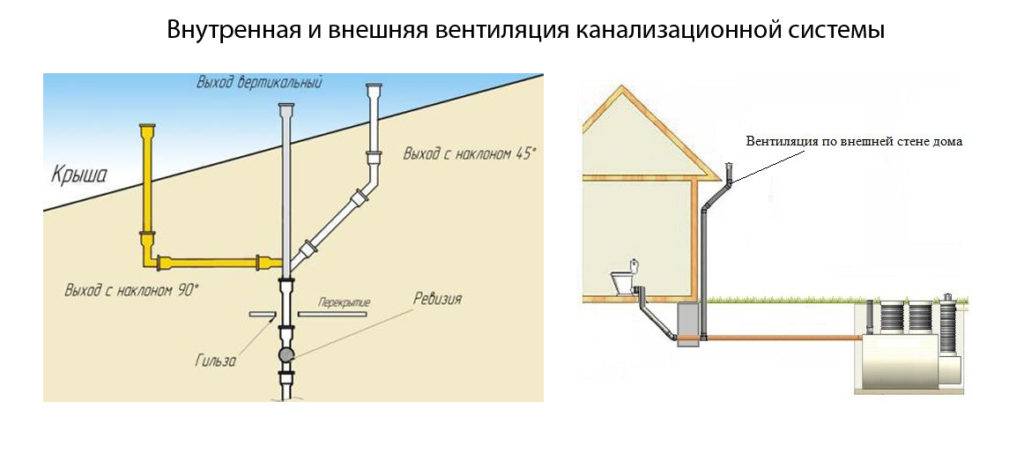
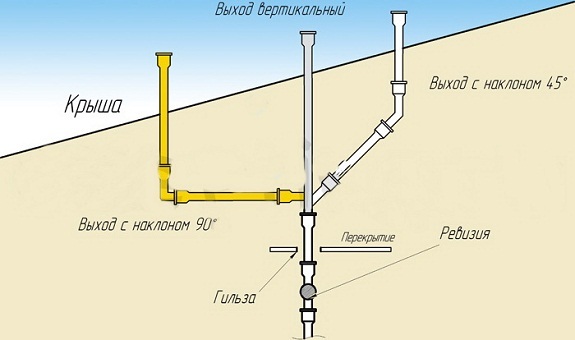
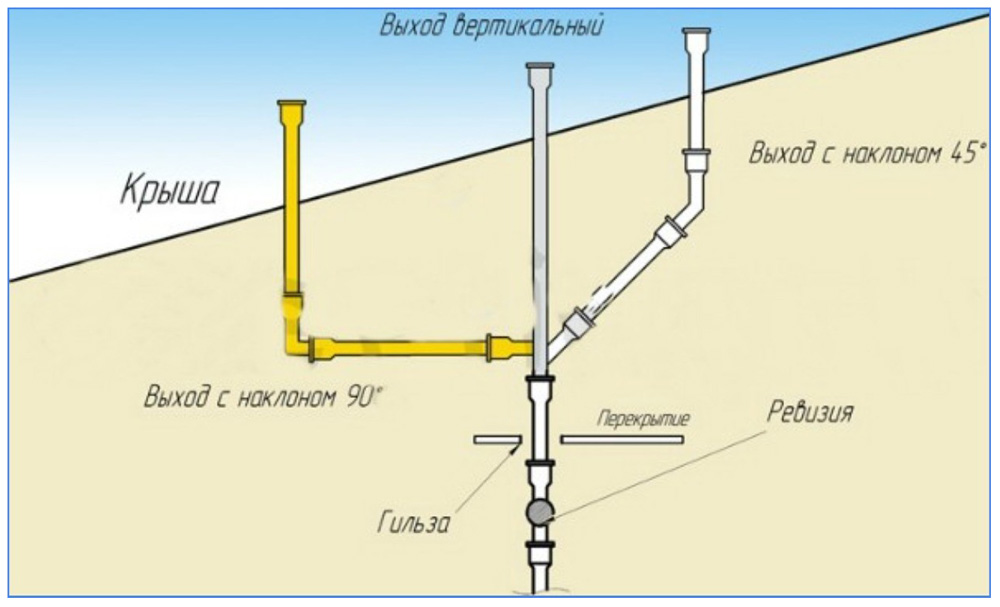
The length and shape of this element can be arbitrary. There are models of vertical and horizontal execution, beveled at a right or acute angle.
The principle of operation of the fan pipe is simple. Wastewater entering the vertical riser creates a vacuum in the cavity of the pipeline. It can be partially compensated by water, which acts as a hydraulic damper in the siphons of installed plumbing.
The piston formed from the liquid with all its strength and a characteristic “smacking” sound at one moment breaks and breaks through the plumbing valves, emptying the siphons.
As a result, water is completely sucked out of all water seals. Therefore, there are no obstacles for sewer "flavors". Due to this, they quickly spread throughout the building.

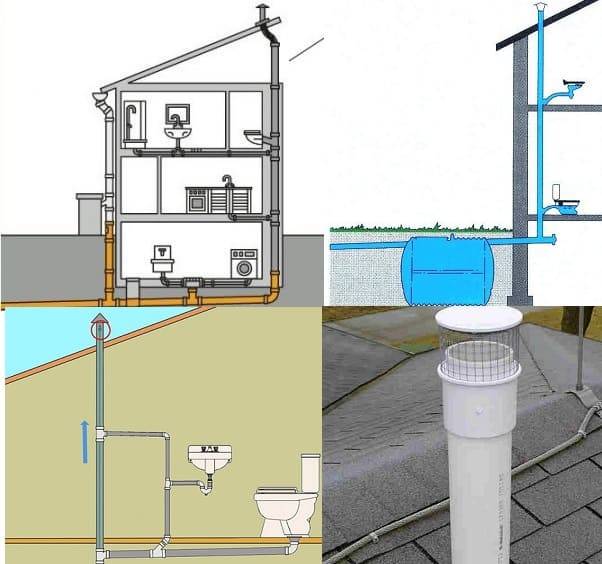


This effect also manifests itself when the fecal pump quickly pumps out the contents of a cesspool or septic tank into the tank of a sewage machine
The trouble is that the appearance of an unpleasant "fragrance" in living rooms is not limited. The natural process of decomposition of feces is accompanied by the release of gases harmful to households: methane and hydrogen sulfide.
If the system is equipped with a fan riser, at the moment of “throw-in” there are no such consequences, since the vacuum created in the collector simply does not have time to break through the hydraulic dampers in the siphons.
This is prevented by atmospheric air flows, which, simultaneously with the occurrence of vacuum, are drawn into the system, blocking the penetration of gases into the room when draining and pumping out the septic tank.
This is interesting: Gasket sewer pipes in the ground — work rules
When a sewer pipe is needed in a private house
The movement of sewage is associated with the processes of gas formation. The rarefaction of gas formations occurs when a liquid medium flows down a vertical riser. The resulting draft is partially taken up by siphons that pass water through them. However, when a large volume of liquid is drained simultaneously from several points (shower, toilet, sink, etc.), a vacuum may form in the siphons and the piping system.
At the same time, the lower points of the sewer become a source of the spread of unpleasant odors through plumbing fixtures into residential premises. Install a fan pipe even in one-story private house worth at least in order to avoid such volley (one-time) emissions of sewer gases with persistent unpleasant odors.
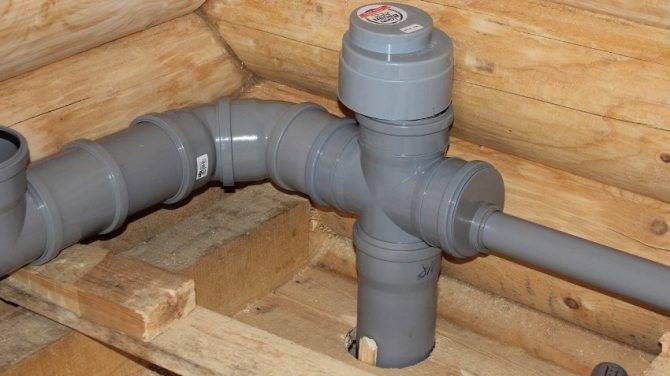
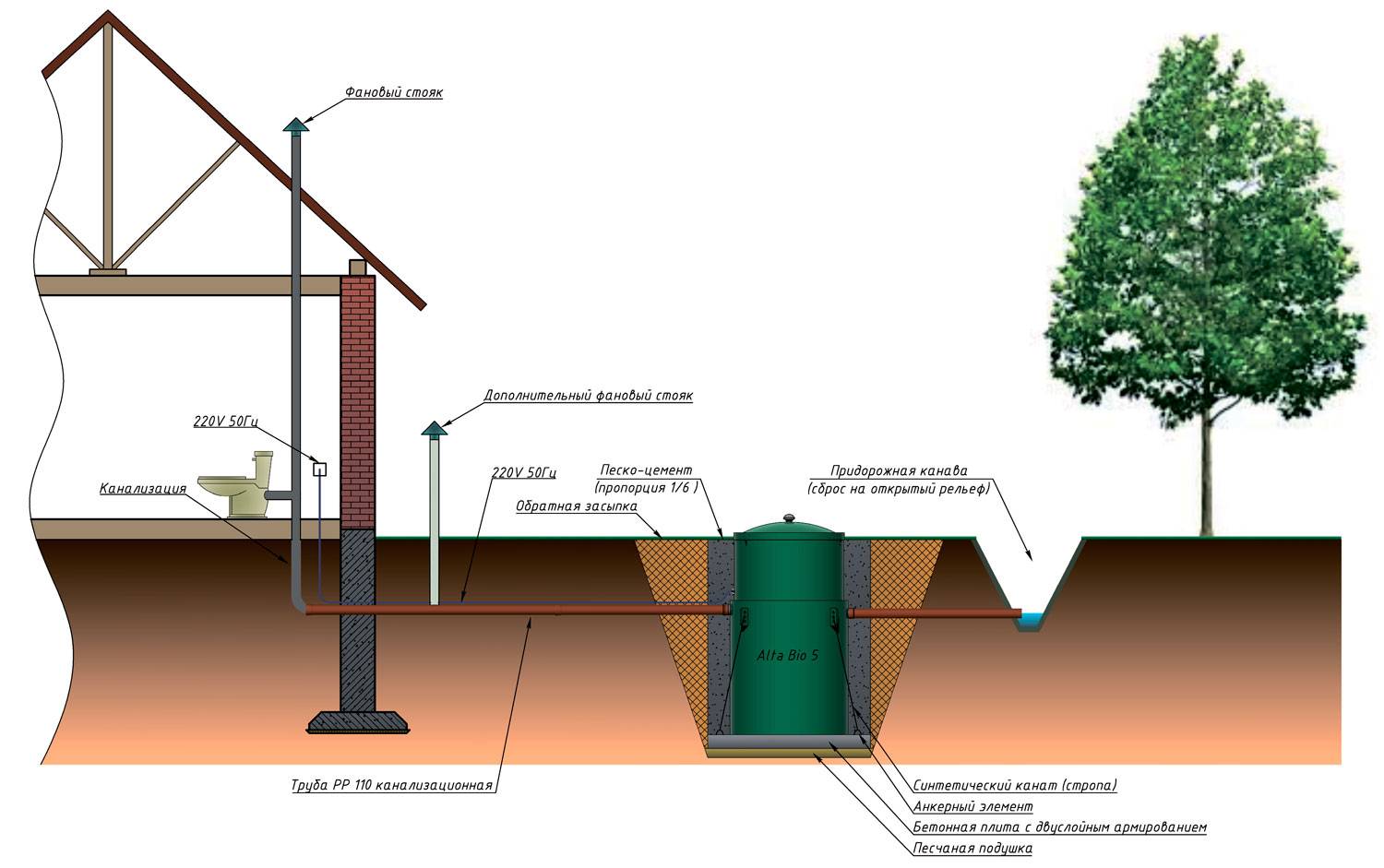
Fan pipe for individual households with an autonomous sewer system
It is necessary to install a fan pipe for an individual household with an autonomous sewer system in the following cases:
- in a one-story building there are several bathrooms;
- in a two-story or three-story residential building, bathrooms are equipped at least on each floor;
- the dwelling is equipped with several risers of small diameter (usually 50 mm);
- there is a structure that simultaneously discharges a very large amount of wastewater into the sewer system, for example, a pool or a jacuzzi;
- when a sewer tank, septic tank or drain pit is located at a distance from the residential part not exceeding ten meters.
Sewerage in a private household can be equipped without a fan pipe in consultation with experienced construction specialists. In any case, when deciding whether to install a fan pipe in a private house, it is worth making simple calculations on your own.
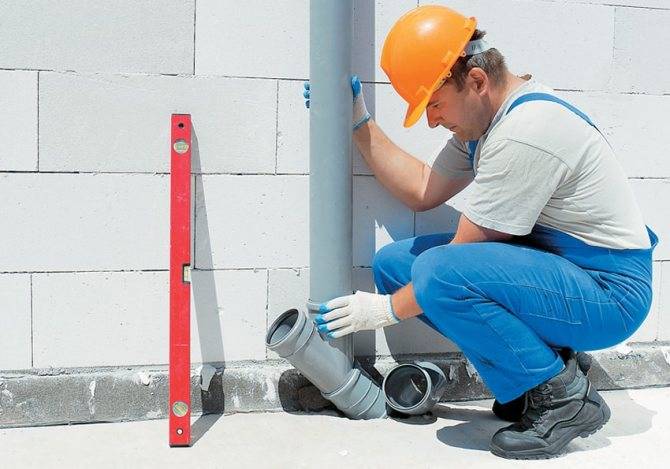
Installing a pipe in a private house
The cross section of the sewer pipe, as a rule, is 110 mm. The toilet bowl drain diameter is 70 mm, the drain from the bathroom goes through a pipe with a diameter of 50 mm. Therefore, with the simultaneous use of several plumbing devices in the house, one of which will be a toilet bowl, a volley release of gas formations from the sewer system into the room becomes quite possible.
What is a sewerage system in general?

If you look at the sewerage system without connecting sanitary ware and a fan riser, then we will see just a pipe of a certain diameter
It is important to understand here that this pipe starts from a sewer well, a septic tank, and so on. That pipe has to go somewhere.
And what happens in these green places? In wells, septic tanks there is an accumulation or reception and further transportation of sewage.
At the same time, the internal sewerage system is almost always in an empty state. But from the well or septic tank, the smell and steam from sewage go into the pipe. Thus, the sewer system works like a chimney. It creates natural traction.


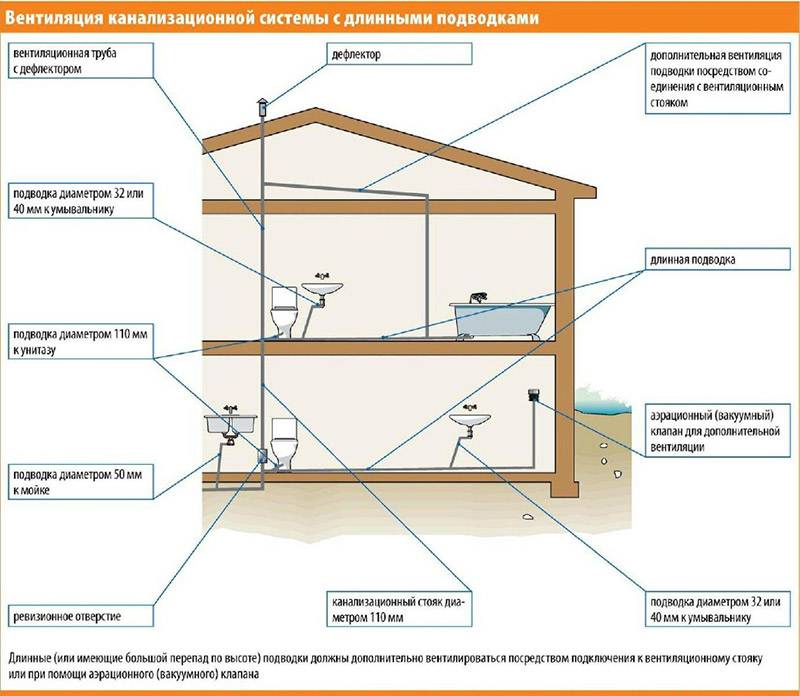

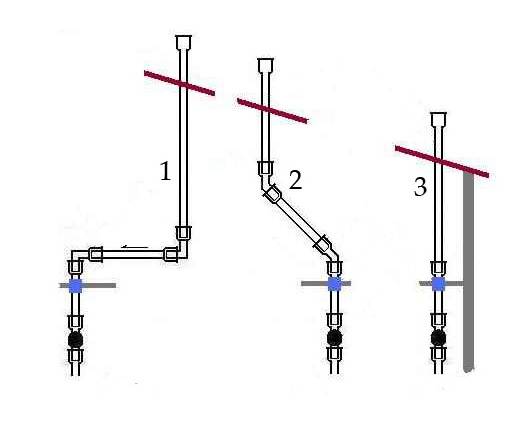
The second property of the sewer system begins to appear during its operation. For example, we flush the toilet, and about 4-8 liters of water enter the pipe. Consequently, for some time the pipe is filled with a water plug and the effect of a syringe or piston is obtained.
But if we assume that this water plug moves towards the well where there are no obstacles, then air must enter the pipe from the plumbing fixtures so that this plug moves and does not create a vacuum.
But since all plumbing fixtures are connected to the sewerage system using a water seal or siphon in a simple way. Therefore, there is no unhindered air access for the movement of the water plug. That is why, according to the laws of physics, the resulting vacuum begins to fill with air from outside.
Thus, filling the vacuum occurs forcibly through the water seal of the toilet bowl, sink, washing machine, bathtub, and so on. That is, through the lightest or least filled siphon, along the path of least resistance.
Rules for installing a fan riser
According to the instructions of SNiP 2.04.01-85, it is mandatory to install a fan sewers at a building height above 2 floors. However, for a one-story building, the use of this device may be necessary. In a country house, where residents are only in the summer, the number of sanitary appliances is minimal, the fan pipe can not be used.
The country house of permanent residence is saturated with plumbing. Often these are several toilets, a shower, a bathtub, a jacuzzi, a dishwasher and a washing machine, and other water drain points. The location of the septic tank is important, distance less than 8 m is sufficient. For the correct and comfortable operation of the sewage system, the installation of a vent pipe is necessary.
How to do without a fan pipe
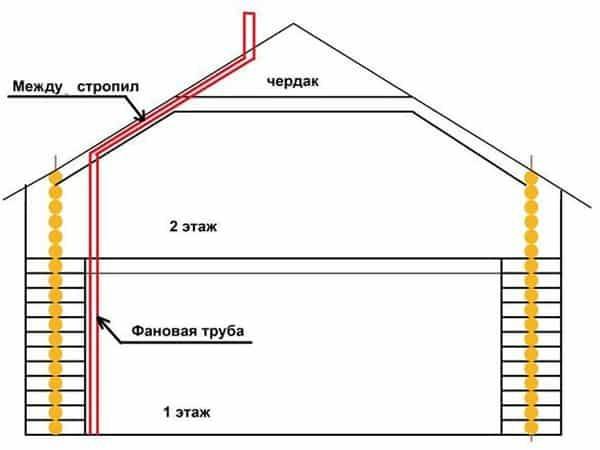
The installation of a fan pipe involves its exit in individual and multi-apartment residential buildings through the roof, if this condition is easily feasible in public construction, then in the private sector there are great difficulties with the implementation of this plan, which also promises considerable financial costs. Since the riser and the fan pipe in a private house pass through all the rooms and into the attic through the roof, they will spoil the aesthetic appearance of the rooms, take up extra space, and create inconvenience when using housing.
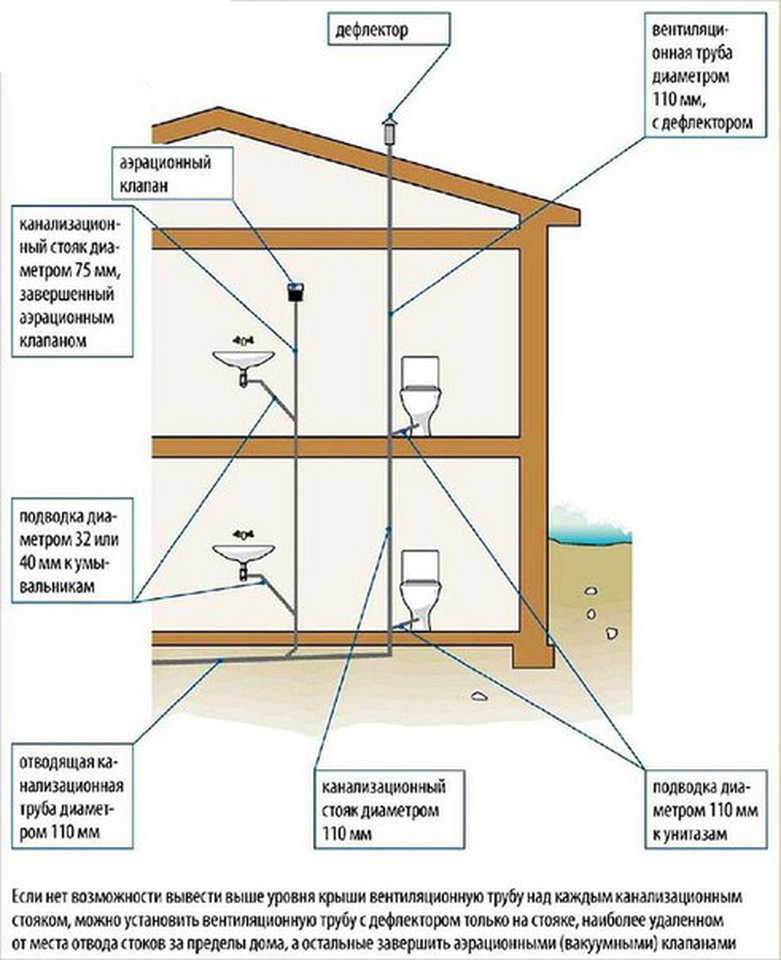
Therefore, it is rational to use in this case the installation sewerage system without exhaust through the roof, and it exists in the form of a vacuum valve. The device is placed on the top point of the sewer riser, it works according to the following principle.
In the absence of a drain into the sewer, the sealing gasket hermetically blocks the passage channel, preventing the flow of fetid air from the riser into the room. As soon as the water is drained, the elastic diaphragm inside the vacuum valve is drawn in due to the vacuum, thereby opening the access of outside air to the riser. The pressure inside the pipeline is equalized and due to this there is no breakdown of hydraulic seals.
Thanks to the use of a vacuum valve, sewerage without a vent pipe, with the same efficiency, brings a number of significant advantages to the consumer from a constructive and financial point of view.
Rice. 10 External type and principle of operation vacuum valve
A 110 mm sewer pipe is an important part of the entire system, which connects the riser to the ventilation outlet.Due to the presence of a corrugation and a soft seal, it allows hermetically joining branch pipes of riser and ventilation pipes located at considerable distances from each other or in a position of misalignment
Installation
Before you install a fan pipe, you need to calculate its dimensions. To install a corrugated pipe and a waste pipe, a branch with a diameter of 110 mm is used. This indicator depends on what diameter the drain pipe has. Most often, the drain from the toilet is made with a cross section of 75 mm, but with a strong pressure of water, it can overlap, which will create some inconvenience. Therefore, for its additional protection, a larger diameter fan pipe is used.
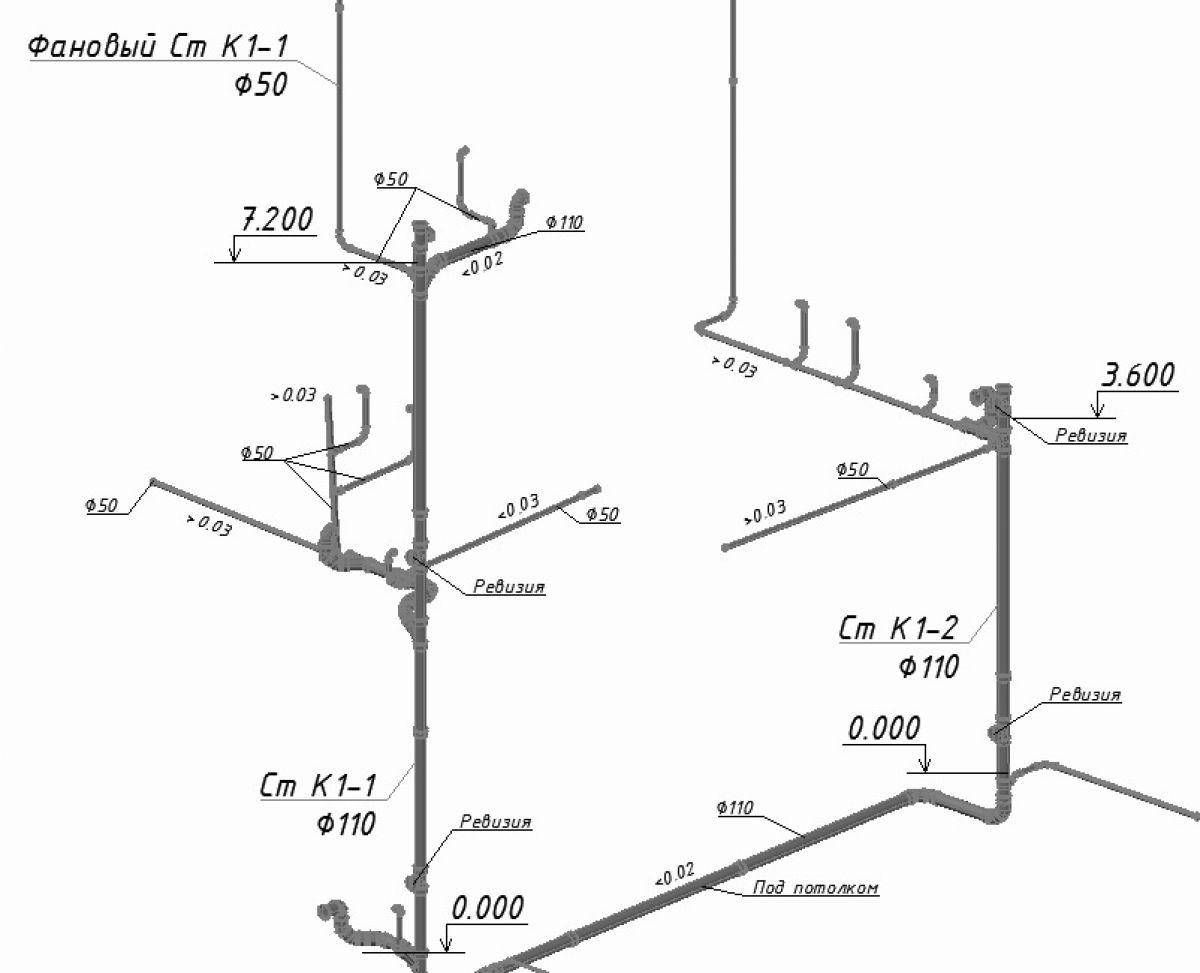
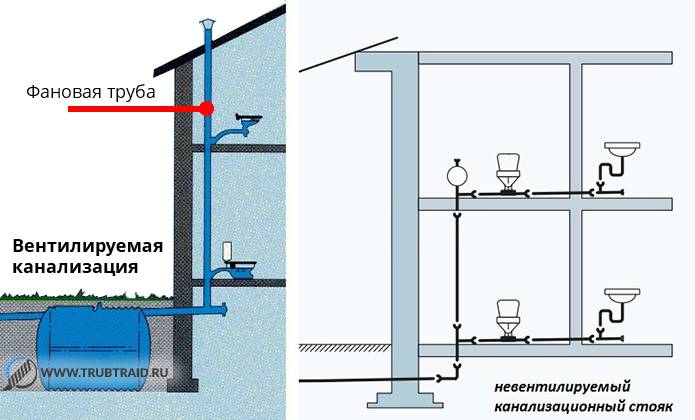
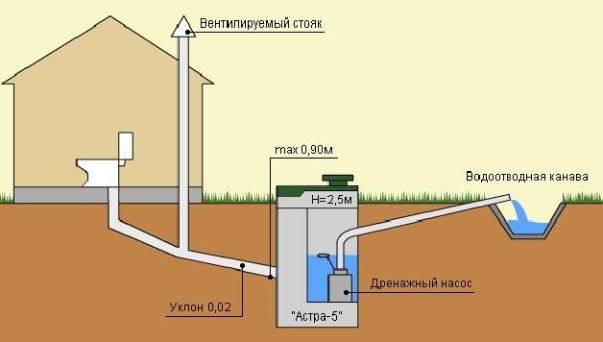 Scheme: fan ventilation
Another serious point of the installation is that the tap fan pipe must be in a place where sewer odors will be ventilated with fresh air. It is advisable to place it in an open space or directly combine it with ventilation ducts.
Video: preparation and installation of cottage sewer pipes




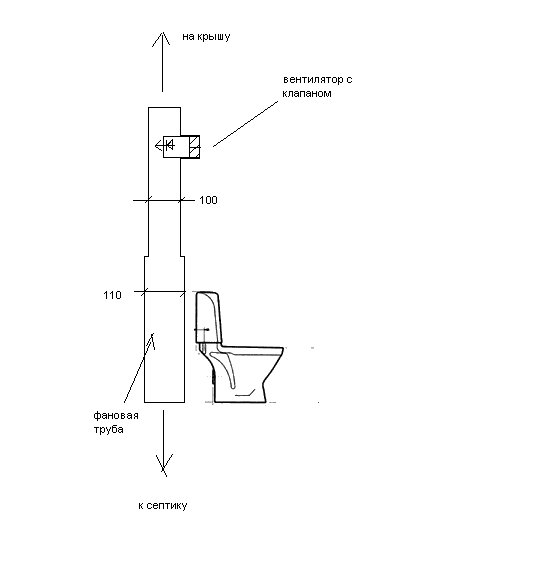
Basic rules for installing a flexible fan ventilation pipe:
- The section of the fan connection is always larger than the size of the main pipe, otherwise the connection will not be airtight and may be broken with a high pressure of sewage;
- The reinforced sewer sewer pipe should be led out under a cold room that is not heated, but start in a warm one, this will help organize proper ventilation. At the same time, according to SNiP, attics (because the fan must go down) and outdoor premises are not suitable for installation, since it is necessary to provide excellent thermal insulation of the pipe;
- Most often, one such ventilation is installed for the whole house. To ensure branching, a special cross is used. Sometimes a tee is used. In some cases, with the wrong layout of the building, you can make several ventilation for each bathroom, but then for each scheme is developed individually.
After you have decided what fan ventilation and sound insulation are for, you need to proceed with the installation of the pipe. To do this, you first need to prepare the work process. The water in the riser is turned off, and the pipe is cut in the intended place. Depending on the type of ventilation arrangement, you can install a pipeline horizontal or vertical. Horizontal placement will not disturb the beauty of the interior, but is considered a more complex design than vertical.
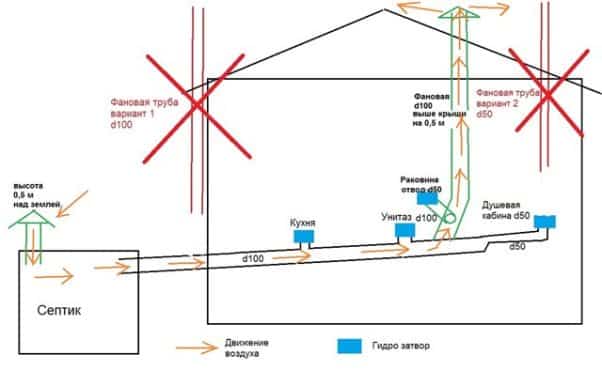 Scheme: installation of a fan pipe
After communication with the socket is introduced into the prepared main pipeline to a certain depth. Some masters use a detachable fan pipe for ease of installation. The sliding design is allowed, if necessary, to clean the sewer system.
No matter what diameter external or internal outlet pipe has been selected, it is not necessary to install a vacuum check valve.
What it is? The vacuum valve or gasket is used for the following purposes:
- Protection of sewage from rodents and other animals;
- To prevent the return of drains. There are quite frequent cases when a return pipe was not installed at all in the sewer riser, then in case of an accident, feces can go back to housing;
- If there is a problem with mixing, the valve prevents artificial impurities from returning to the sewer;
- With its help, complete sealing of drains is ensured.
Mounting reverse valve is a simple but very important process of installing a sewer system. To begin with, the water in the riser is blocked, the pipe is completely wiped from the inside and degreased with special compounds
It is very important not to lubricate it with silicone sealants or adhesives - they can adversely affect the integrity of the valve
After that, a special insert is inserted into the pipe, which will later serve as the basis for the fan. Then, the vacuum valve is mounted. It must be snapped into the pipe, but make sure that the petals of the device are open, bent to the base.
If the knee size is within 110 mm, then you must also use a special adapter. This is a box with additional taps, which will help to make a tighter connection between the valve and the line. Another option for installing the valve is directly into the pipe, then the connection is a cut pipe into which the valve is inserted along with the fan.
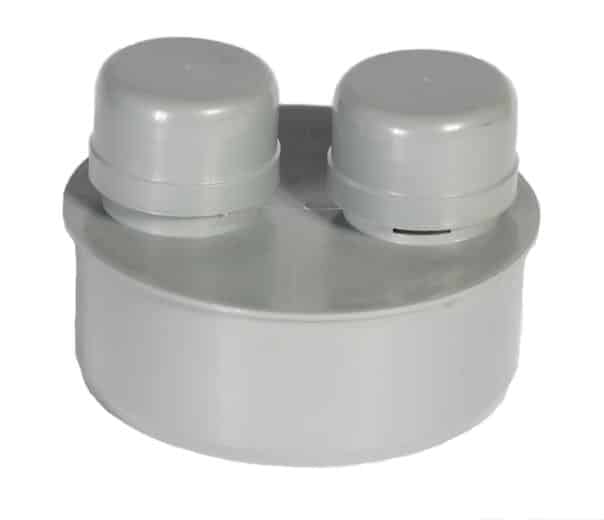 check valve
You can buy communication at any plumbing store, a white fan pipe of 75 brands such as Mcalpine, Jimten, Plastimex, Sanmix, Viega is very popular (price depends on size, reinforcement and other characteristics).
How to determine what installation is required
The fan pipe is an optional, but highly desirable element of the sewer system, which perfectly stabilizes its operation. It is considered that installation is necessary, for all houses with a height of more than one floor
However, when designing sewers, it is important to take into account other secondary factors:
The diameter of the sewer pipes.If the diameter of the pipes of the sewer riser is less than 110 mm, then the sewage pipes for the sewer must be installed, since it is enough to drain the toilet bowl and the bathtub at the same time to fill the full volume of the riser.
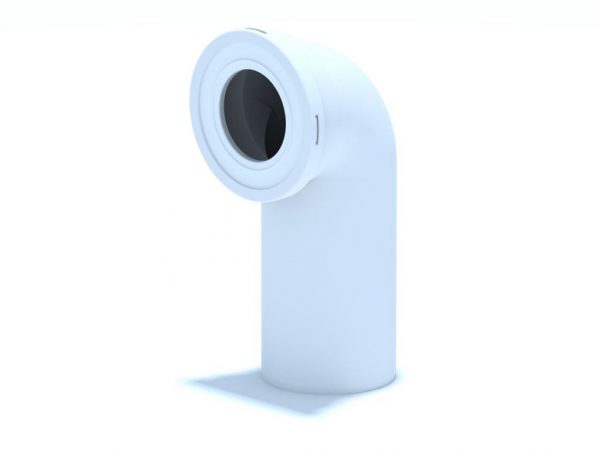
If the septic tank is located in the immediate vicinity of the house. Even if the house is one-story, but the sewage tank is too close to it, you need to make sure with the help of a fan valve.
If the layout of the house suggests that it will have several bathrooms or baths that can potentially be used at the same time, then it is better to reduce the risk of a vacuum in the system.
If the house has plumbing fixtures that have a large volume of wastewater, for example, a swimming pool, a jacuzzi, a large bathtub.


Remember that the amount of wastewater is affected not only by the number of plumbing fixtures, but also by the intensity of their use. If the building has two bathrooms located one above the other, but only one family lives in it, it's hardly a fan pipe will be needed, but it certainly will not be superfluous.
When designing the sewer systems of private houses, many factors must be taken into account, ranging from the number of floors and devices that drain water into the riser, ending with the diameter of the pipes. Fan pipes are categorized according to their shape, diameter and the material used to make them. The diameter of the drain pipe depends on the diameter of the sewer riser. According to the material, they are divided into the following types:
- Metal. Traditionally, the communication elements of the sewer system were made of cast iron. It is quite strong, durable and relatively inexpensive alloy. The disadvantages of this material are heavy weight and low ductility.
- Plastic.Now, cast-iron fan pipes are gradually being replaced with plastic ones, since this material is much more plastic and easy to process. Plastic models are lighter, cheaper and much more practical than cast-iron ones, so they almost forced cast-iron ones out of the plumbing market.
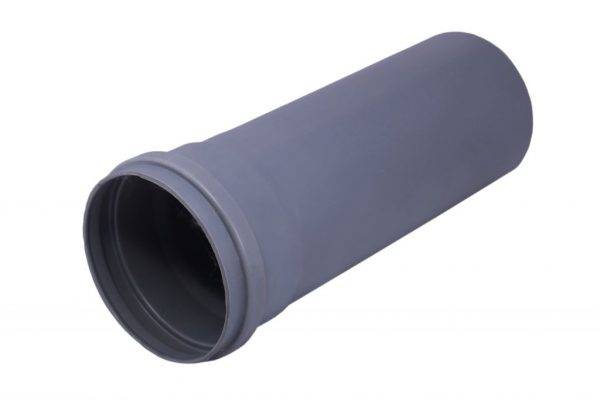
Please note! When installing or replacement of a fan pipe, it is possible to connect cast-iron sections with plastic, the main thing is to choose the right diameter of the pipes, so that in no case there is a decrease in the section in the system.
What it is
When a private house is being built, it is necessary to bring various communications to it. One of them is sewerage. At first glance, you might think that it is enough for her to equip only a sewer drain. Actually this is not enough.
In order to explain the purpose of the fan riser, you need to remember how the toilet is drained in more detail. After the sewage merges, a certain amount of water then gets there. Part of it remains in the toilet. It is actually a water seal, the role of which, in particular, is to bad smell from sewage did not enter the living quarters
It is important to understand that this protective layer of water is inside the toilet.
If several such plumbing fixtures are installed in the house, then in each of them, which is not currently in use, there is such a water seal.
When a drain occurs in one of the toilet bowls, then for a short period of time immediately after the outflow of sewage and drained water, the pressure here decreases. Since all the others are connected to this pipe, water seals are broken in them and an unpleasant smell penetrates into the premises.

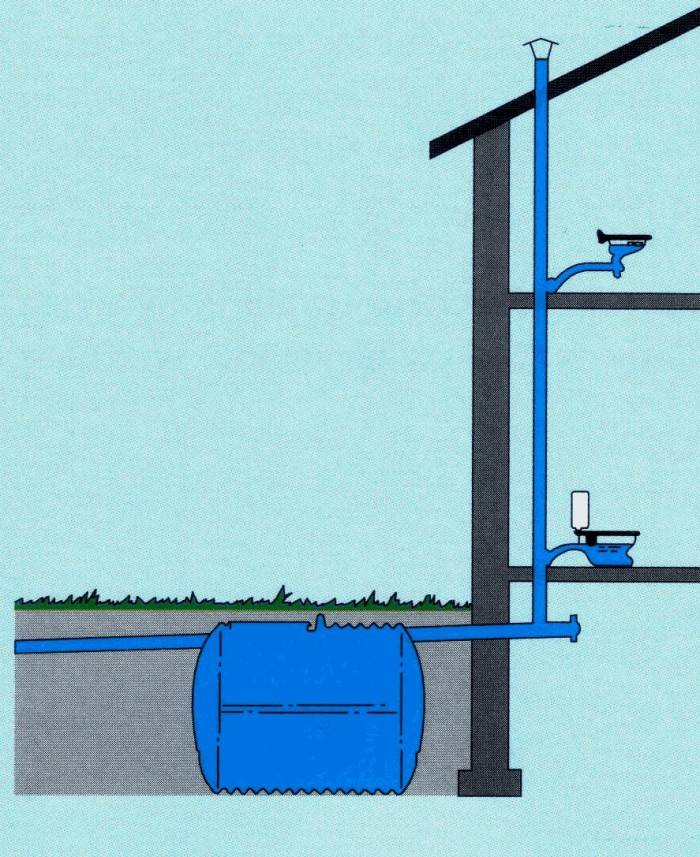
Diagram of device and operation ventilation system
It is important to note that this situation exists not only in relation to toilets, but to all drains that are connected to the sewer. For example, we can talk about a water seal in a bathroom or in a sink if they are connected in the indicated way
This situation could have been avoided if the pipe had an additional outlet through which air could freely enter it. In this case, low pressure at the drain point would not arise and the water seals would not be broken anywhere.
Through a similar pipe could also go sewer odors. A fan riser is a pipe that performs the indicated functions, which is connected to the sewer system of the house and brought out of it.
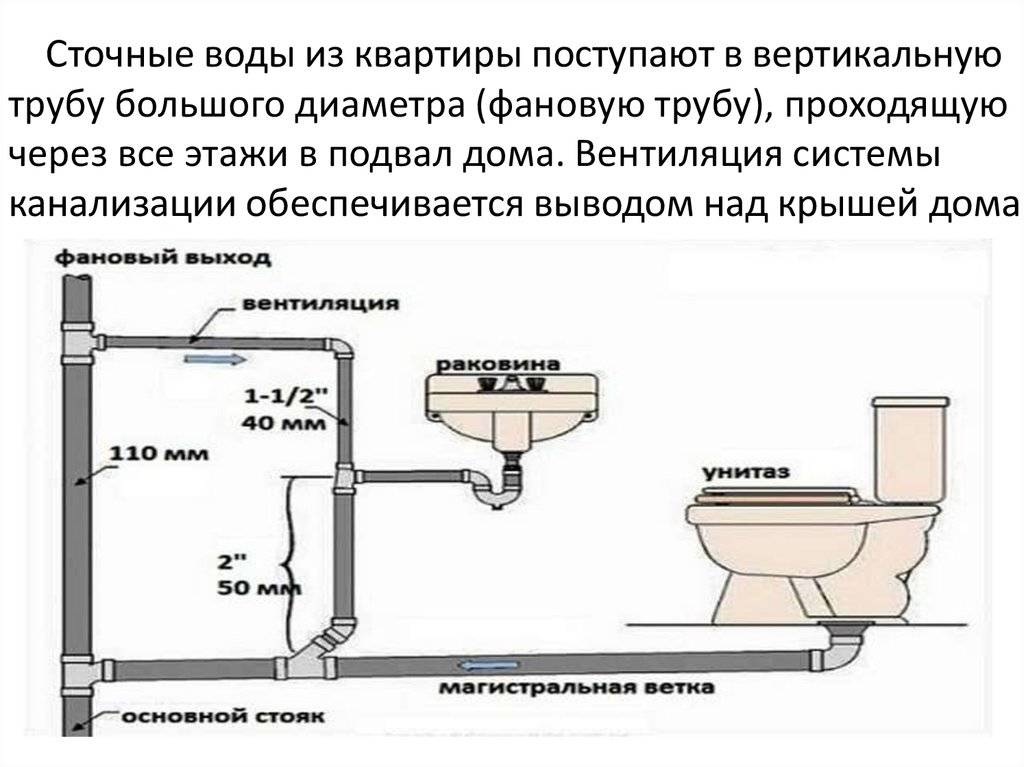
How necessary. In fact, the system in question is actively used in apartment buildings. In the sewer system, the flow from the apartments goes into a vertical pipe.

Vertical pipe system sewerage, performing the function of a fan riser
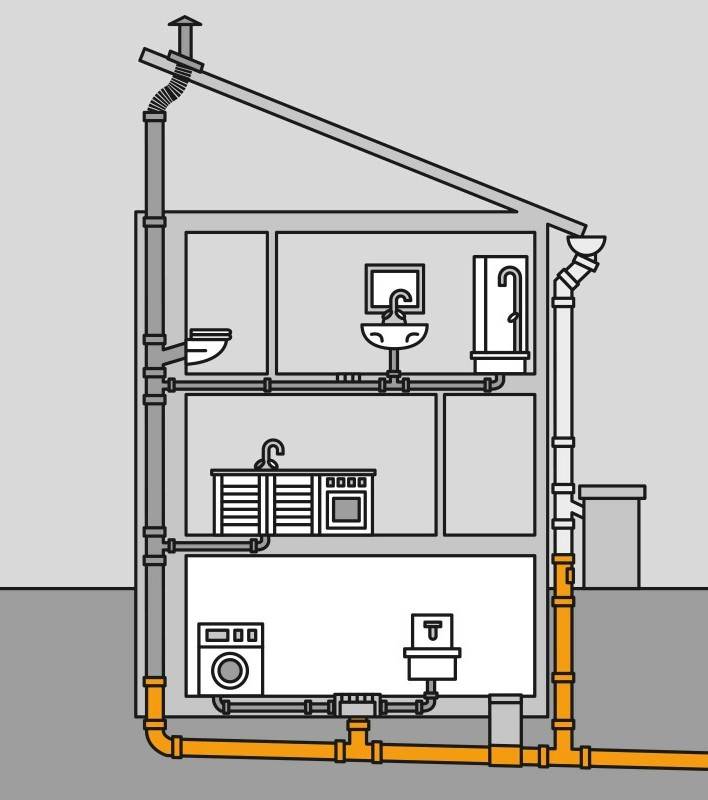
Its lower end is connected to the drain system, and the upper end is brought to the roof and actually performs the function of a fan riser.
Is installing a high performance aerator sufficient to eliminate the downpipe?
So, having decided to get rid of the bulky vent pipe in the bathroom, in accordance with clause 3.15 of SP 30.13330.2012, the property owner will receive nothing more than an unventilated sewer riser - not connected to the atmosphere


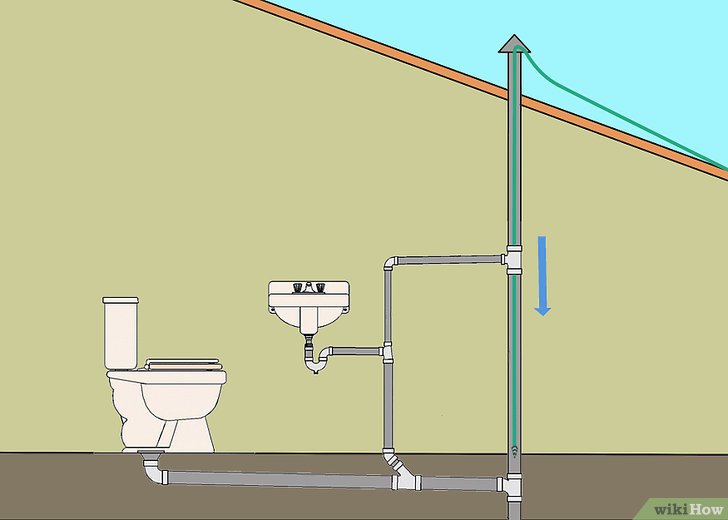




However, it is still important for him to ensure the normal flow of two processes (they are described in the section "Why extend the riser?") - the removal of decompression loads and the removal of gaseous products from the system
With the first decompression task, as already found out, the installation of a suitable air valve helps to cope.
The set "But" is caused by the implementation of the second condition. Indeed, in paragraph 8.2.22 of SP 30.13330.2012 it is clearly stipulated that such unventilated risers can be equipped if the ventilation mode of the external network is maintained. How will toxic gaseous decay products of organic matter be removed? Consider two typical situations - for sewers in a private house and in an apartment building.
In a private house
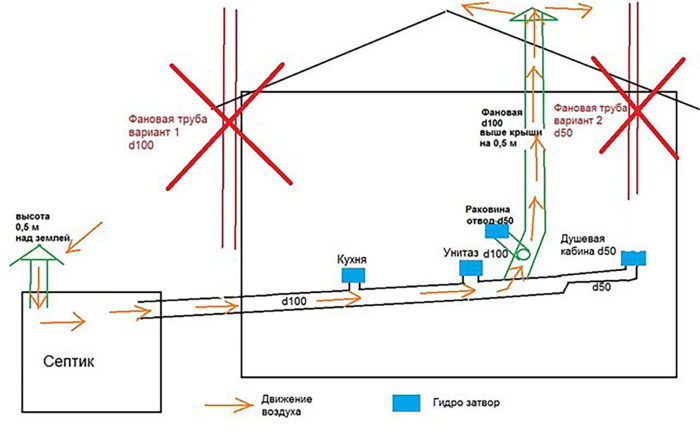
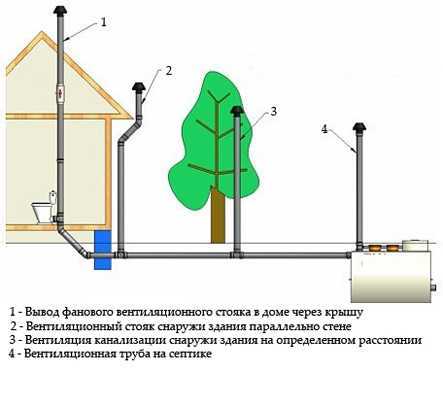
Owners of separate low-rise housing solve the tasks of waste disposal by installing local treatment facilities, storage or through traditional cesspools. A prerequisite for the operation of these sanitary facilities is the arrangement of ventilation ducts. Depending on local conditions, they can be made in various ways, for example, as shown in Figure 6, pos. 2-4.
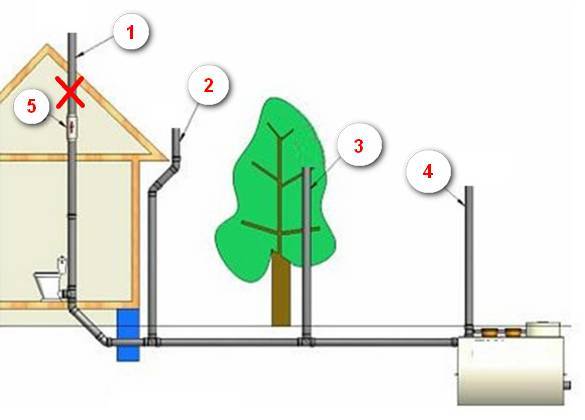
Figure 6. If in a private house the fan pipe (item 1) is cut off by installing an aerator (item 5), then the instruction of clause 8.2.22 of SP 30.13330.2012 on ventilating the external network is removing toxic gases from it, when using additional additional communications (pos. 2-4) - observed.
In an apartment building
ventilation risers in apartment buildings was originally designed based on the free communication of the sewer with the atmosphere (Figures 1 and 2). In fact, it should be carried out through the highest point of sewage communications, that is, through a fan pipe led to the roof. Refusal of the hood (Figure 7) is allowed only in an exceptional situation. In SP 30.13330.2012, it is described for operated roofs in clause 8.2.20. In this case, indeed, it is allowed to install an air valve at the mouth of the riser on the top floor. However, according to par.8.2.22 the mode of removal of sewer gases from the external network must be maintained. Therefore, to ensure it, it is necessary to install auxiliary ventilation communications according to the types indicated in Figure 6, pos. 2-4, which is rather problematic in the conditions of urban development.
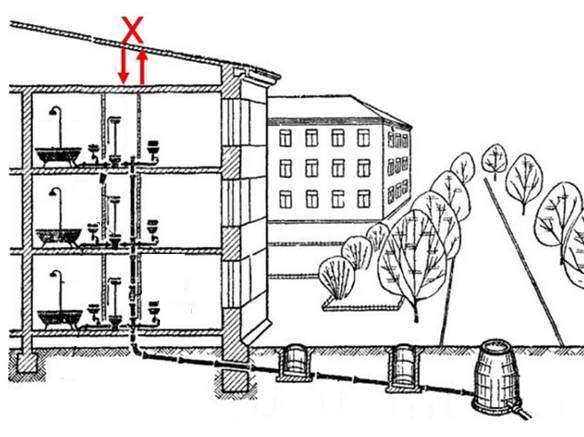
Figure 7. Refusal of the fan pipe in apartment building - ventilation sewerage is not possible



