Natural ventilation of the air at home is a simple and economical solution, since the ventilation system installed in a private house in accordance with all the rules provides its owners with comfort.
Principles of operation of natural ventilation, pros and cons
The ventilation mechanism in a private dwelling functions simply.
Different temperatures inside the house and outside produce high pressure. Air moves through the ventilation ducts due to pressure, due to which the ventilation of the room is obtained.
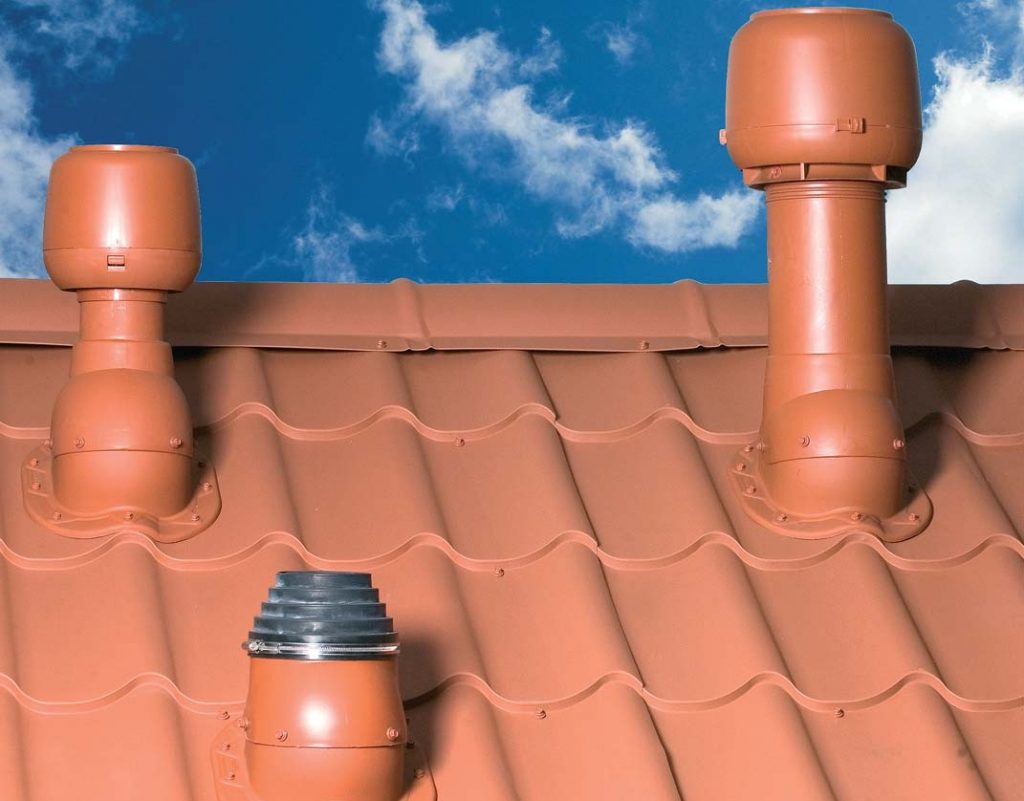
With the help of natural ventilation, air exchange is maintained in the house, air is cleaned, and foreign odors and substances are eliminated.
Ventilation, set according to the principle of the influence of natural mechanisms, can be operated in every room.
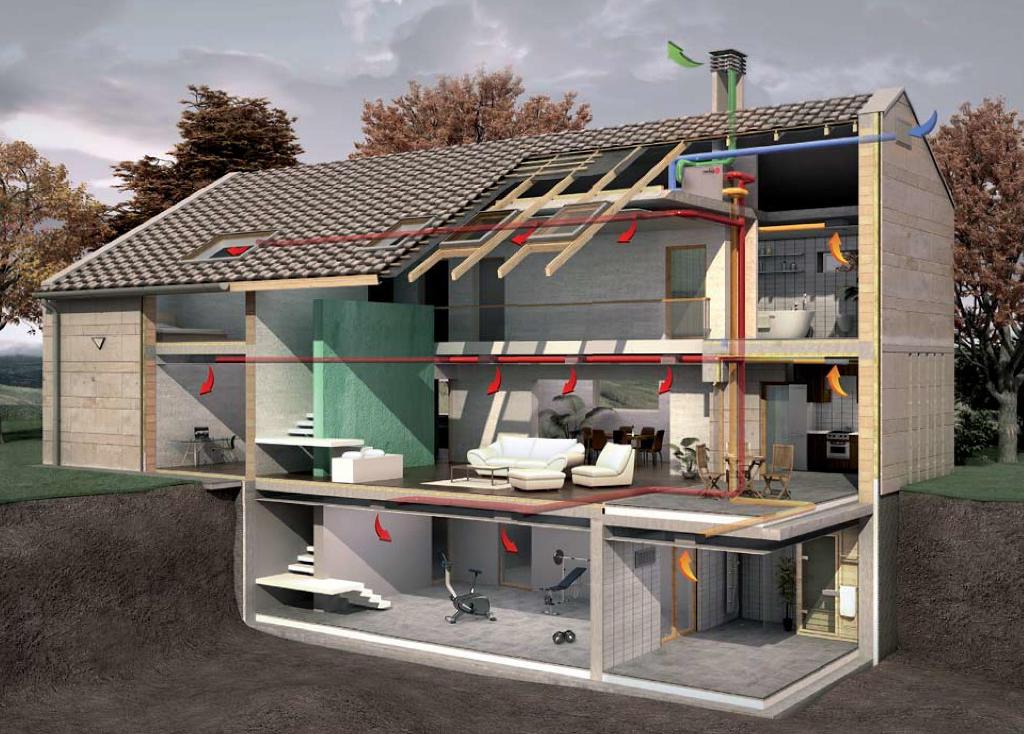
Stages of air purification of natural ventilation system
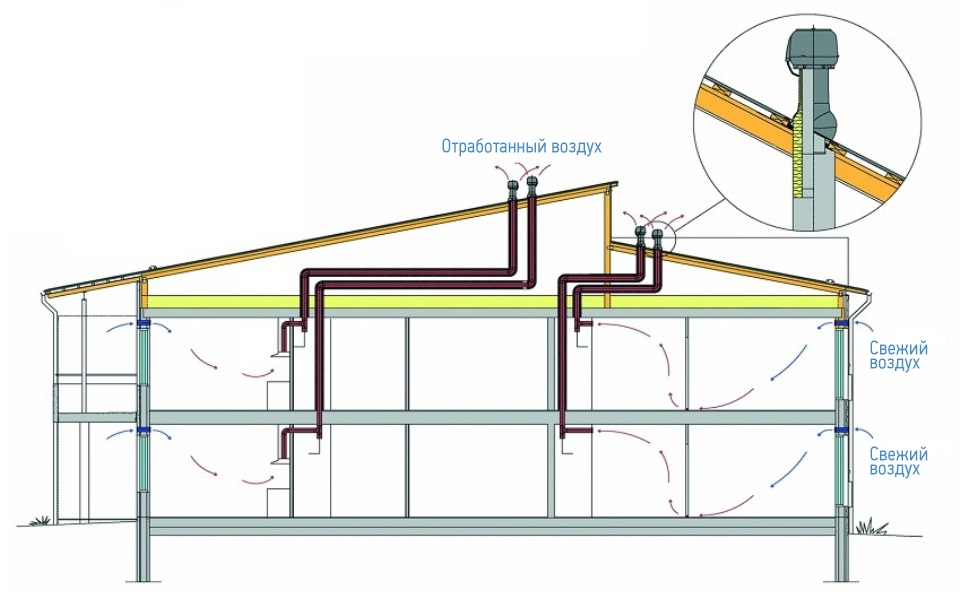
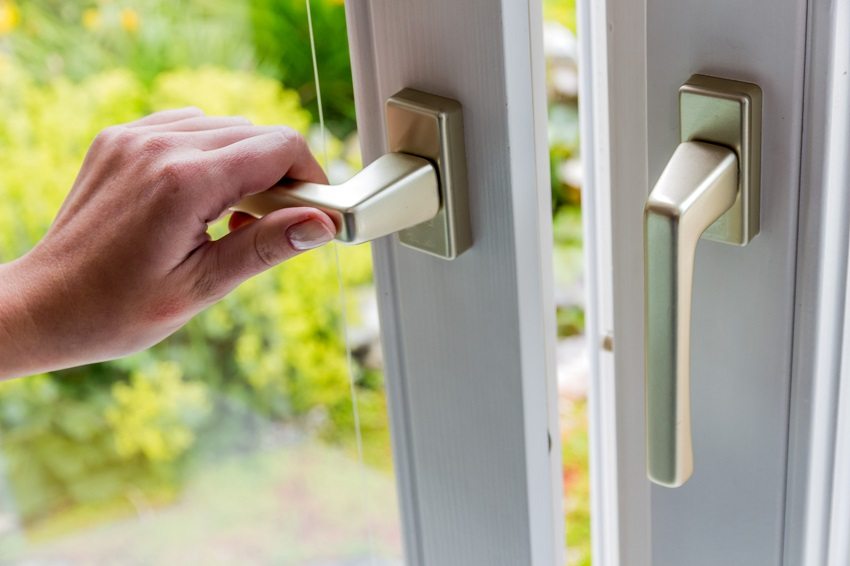
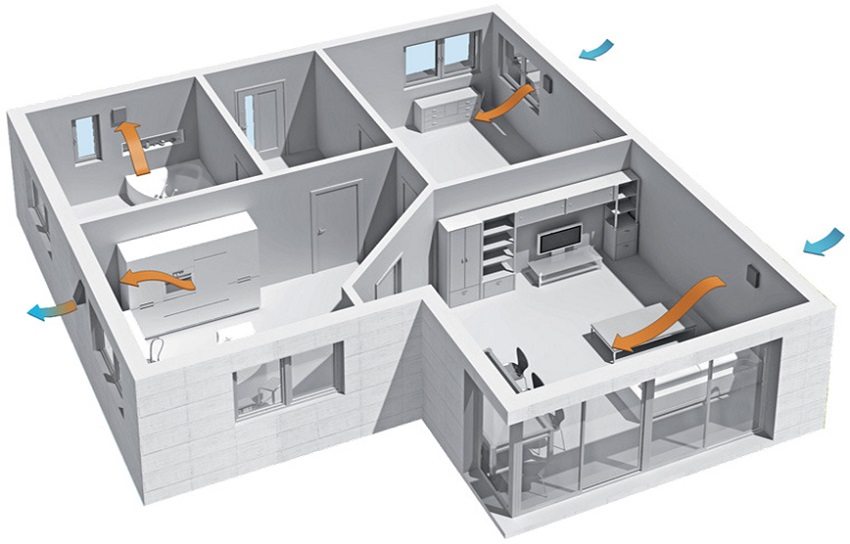
- Purified air masses enter the house through open sashes, windows and entrance doors, all kinds of gaps formed as a result of window and door mechanisms weakly adjacent to the frames.
- In a private dwelling, the air moves randomly, moving from one room to another, affecting any corner.
- After passing through the whole house, the air goes out through the ventilation ducts.
The positive qualities of natural ventilation in a private house include the following indicators:
- The construction of natural ventilation does not take much time.
- The functioning of such a system is carried out without outside help.
- The cost of natural ventilation.
- Lack of electricity consumption.
- Quieter than other ventilation systems.
Disadvantages of natural ventilation:
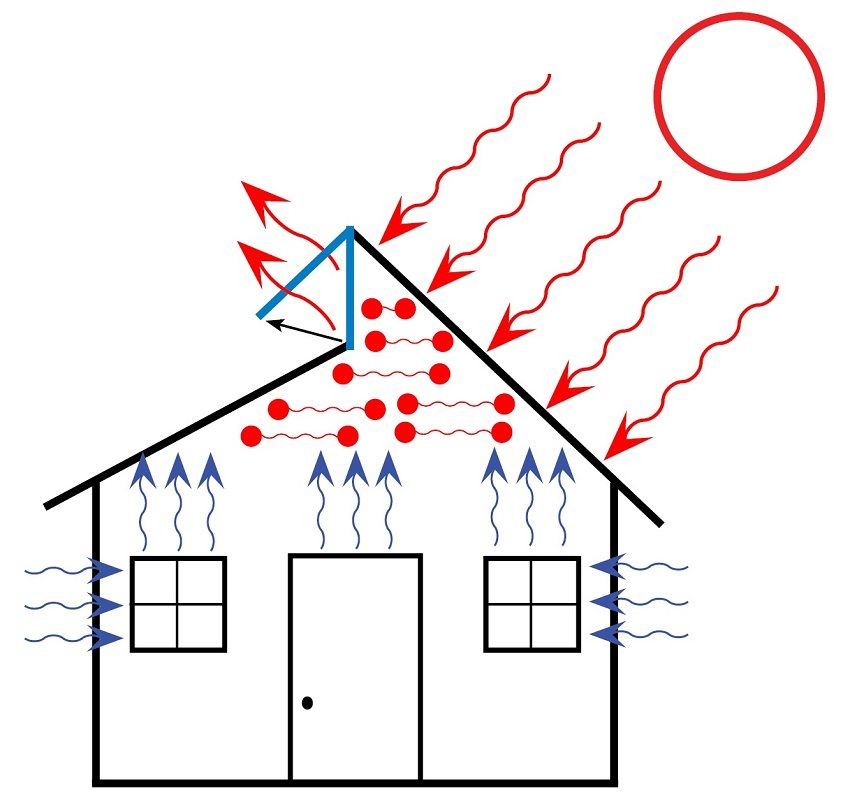
- The movement of air through ventilation depends on temperature and pressure.
- In a modern private house there are many obstacles that impede the free movement of air masses.
What determines the rate of air exchange
The temperature outside, the presence of wind, precipitation and other manifestations of the elements - pressure indicators depend on all this, affect the performance of ventilation.
In addition, all these natural phenomena are affected by the gravitational forces of the Earth, which must also be taken into account when installing such a system.
So, in winter, air exchange will occur more intensively, and in summer it may be difficult to ventilate the room.
We must not forget about the main sources of ventilation of the room.Windows and doors should be made in every room of the house, since air masses move inside the house along the path of least resistance, respectively, the wind will not flow from one room to another if they are on top of each other or on the same plane.
In a two-story private house, the last floor will warm up better even in winter, due to the fact that warm air is lighter than heavy air and due to this it always rises. In a one-story private house, air distribution will occur more evenly.
In winter, the process of stratification (mixing) of air masses proceeds better.
Exhaust ventilation in a private house has an advantage over a combined analogue due to energy savings.
In the cold season, the accumulation of dampness increases and there is a risk of drafts, therefore, for a private house, it is important to take into account all the parameters of ventilation of the premises.
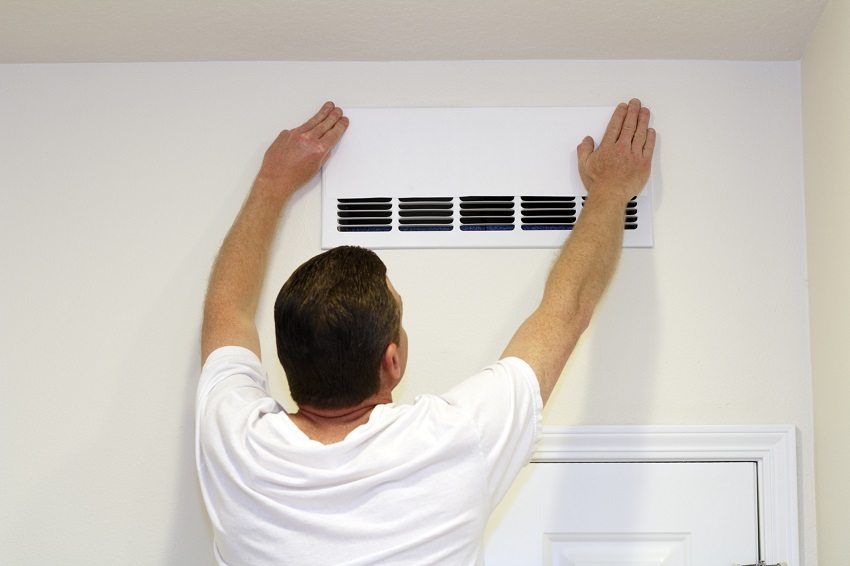
The rate of air exchange also depends on natural and climatic conditions. In winter, ventilation will occur faster due to increased stratification of air masses, and in summer this process slows down due to the equalization of temperature and pressure.
Do not forget that the location of windows and doors will affect the rate of ventilation. If these openings are on the same side of the house, it will be more difficult for air masses to push into the remote corners of the house.
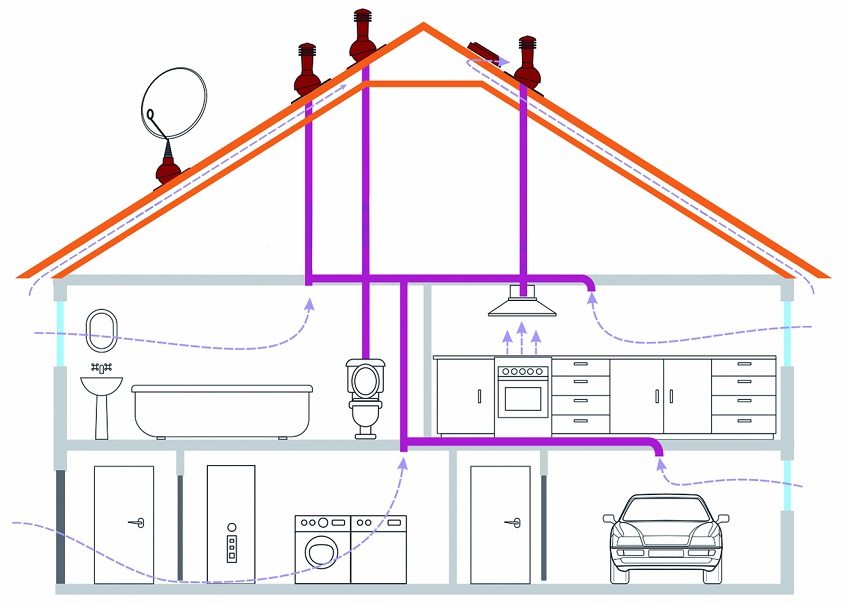
You can calculate the volume of air exchange using the following scheme:
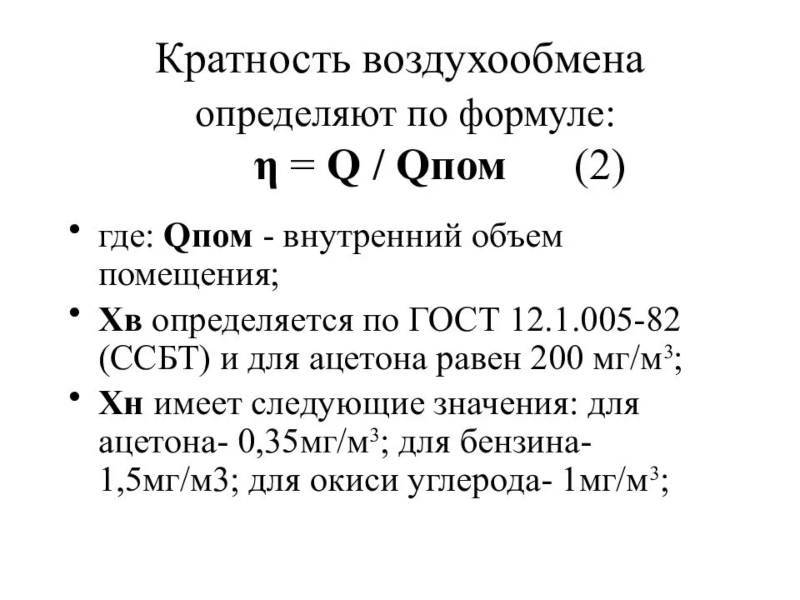
Natural ventilation system and device in a private house
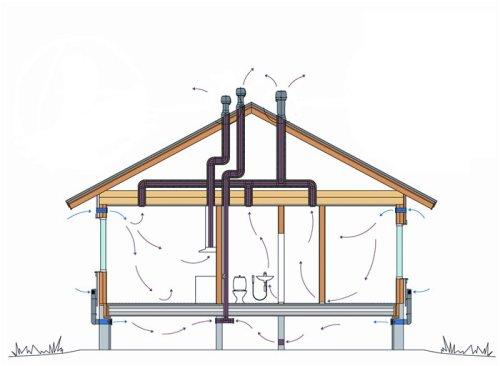
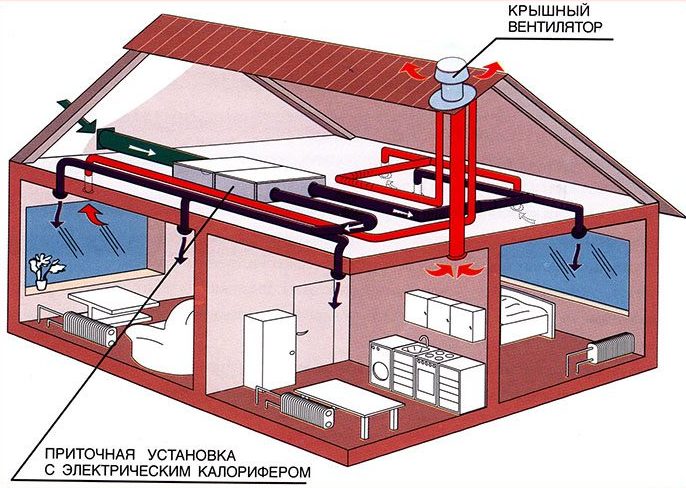
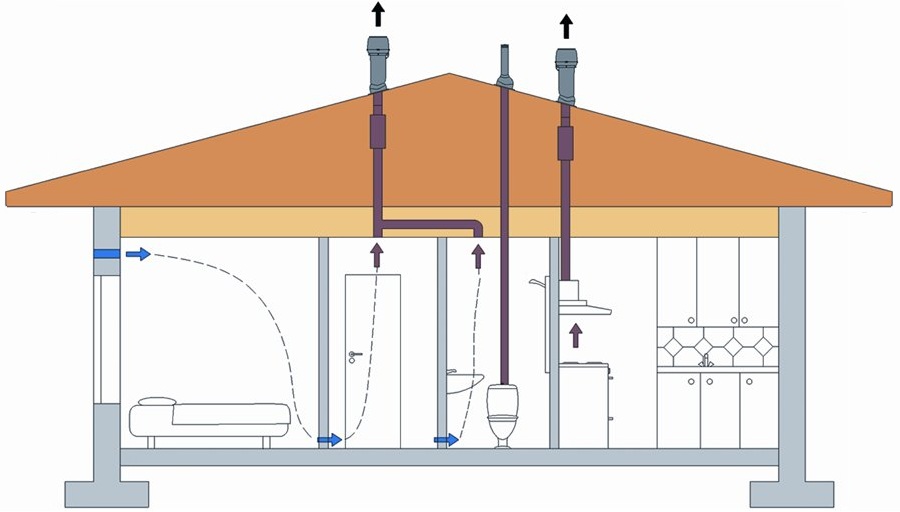
The ventilation design consists of ducts built into the walls or attached with openings, hidden gratings, as well as horizontal air ducts and an exhaust shaft.
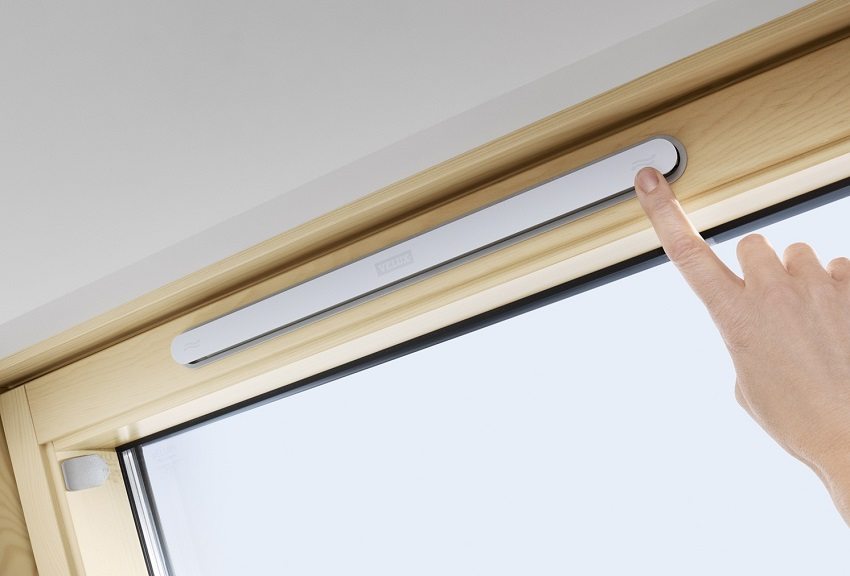
Special supply valves are mounted in the walls of the house. They provide fresh air filtration, allow you to regulate air flow with dampers and temperature, and eliminate excess dampness and stuffiness in the premises.
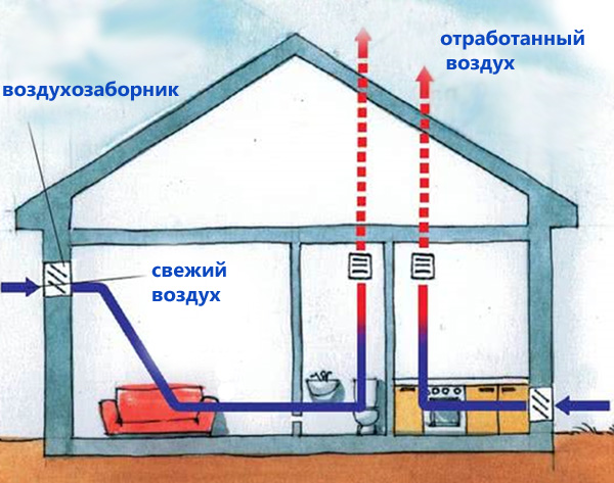
All exhaust ducts in a private house go into one shaft.
The ventilation ducts themselves are of several types:
- Embedded - mounted, as a rule, at the stage of building a house and are voids in the walls of brick or concrete blocks.
- Suspended - consist of galvanized steel or reinforced plastic.
Rules for the installation of natural ventilation
In order to install natural ventilation in a private house with your own hands, you need to design its appearance, establish the location and mark the exit points of the ventilation pipes.
Ventilation consists of straight pipes, which perform the function of drawing in air, and horizontal exchange air ducts, which ensure the circulation of air masses in all corners of the house.
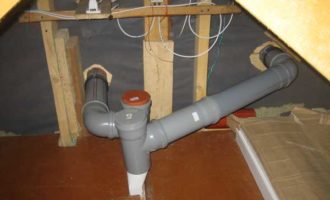
All of the above construction must have access to one or more ventilation shafts, as shown in the diagram:
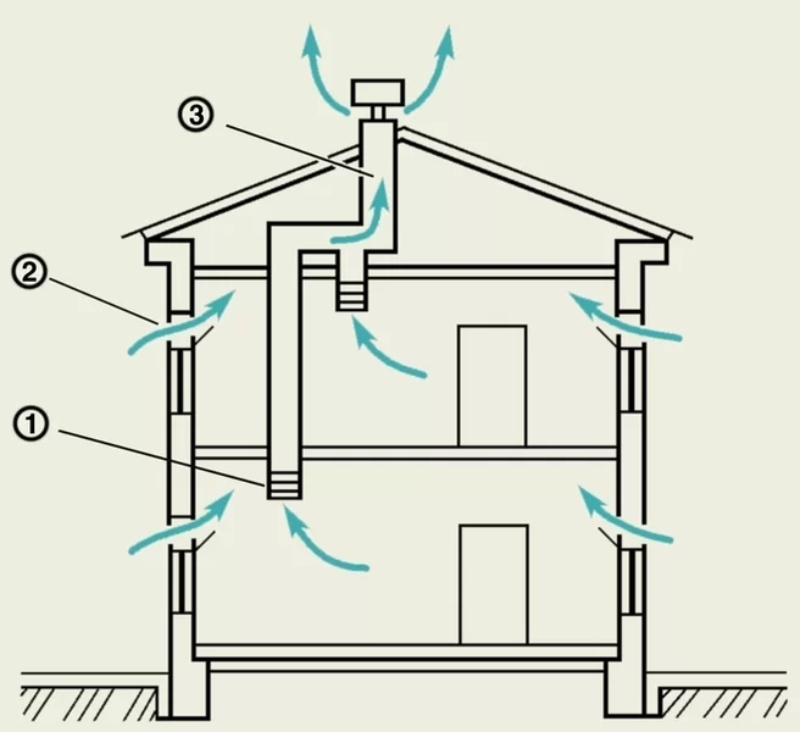
The outlet channel of the mine should be at a mark above the level of the roof of the house, in order to ensure high-quality air exchange.
Height is a very important parameter when installing the outlet channel, since if the norms are not observed, there will be no natural draft.
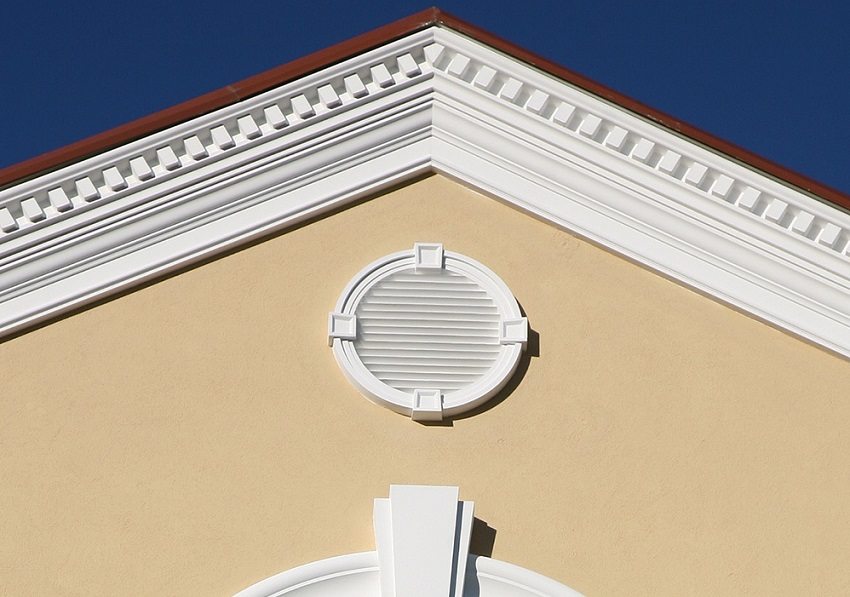
To filter the incoming air masses, it is necessary to install grilles at the ventilation outlets and supply valves in the walls of the room.
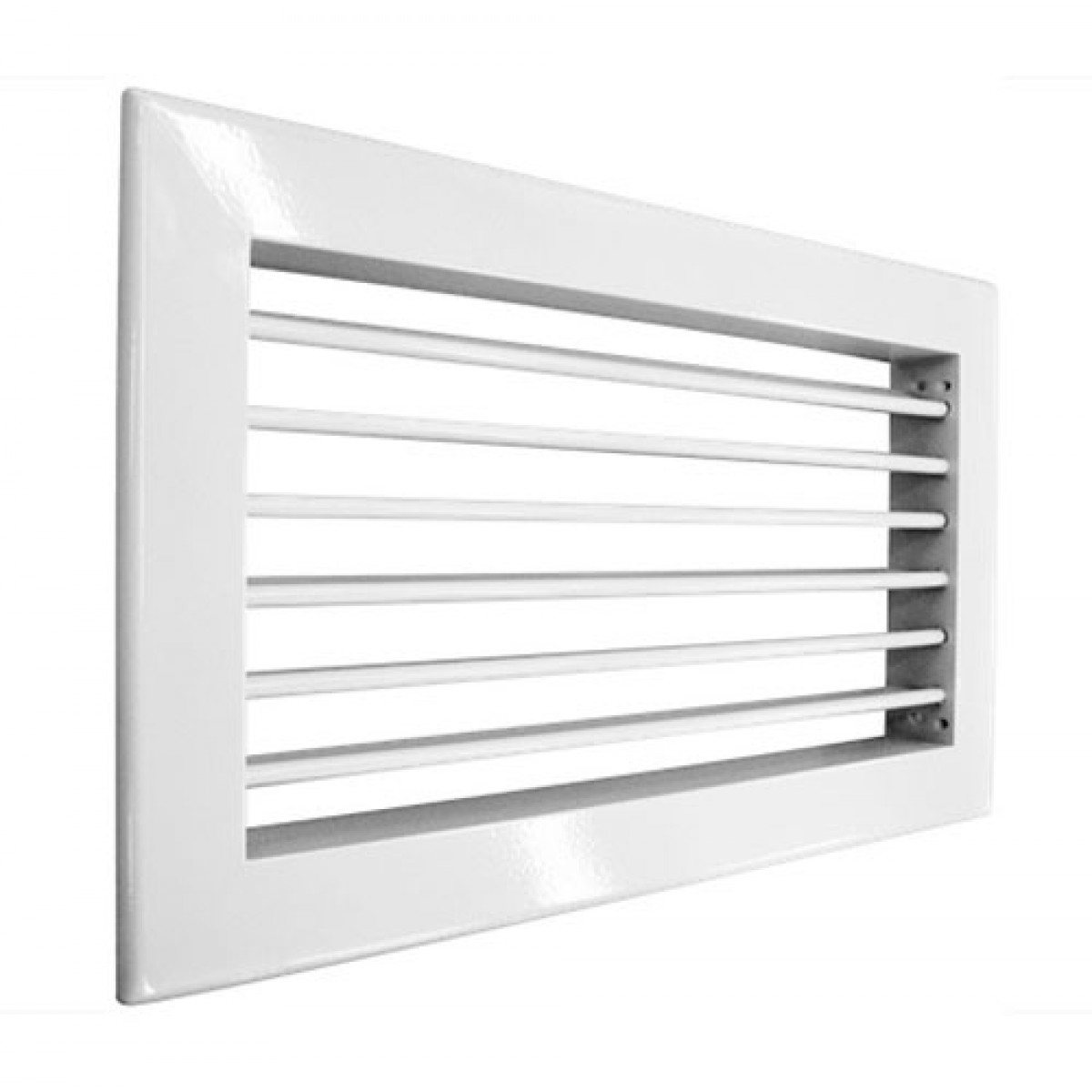
Inlet valves are more an addition to the system than its obligatory honor, and in order to avoid freezing of the room through them in winter, it is recommended to install them only on internal walls. However, they significantly increase the ventilation power.
When ventilation is installed in a one-story house or apartment, several outlets of the ventilation ducts are combined into one shaft.
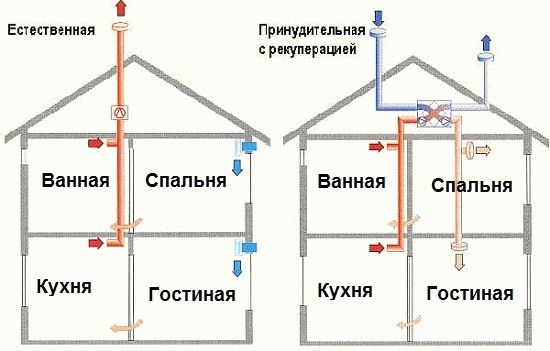
If the installation of natural ventilation is carried out in a room still under construction, then a channel is laid in the bearing wall, its cross section is measured by 140 mm. Approximately, the thickness of laying such a channel will be equal to the size of one and a half bricks. Further from this channel, horizontal branches are made to the rooms, which can already be plastic or aluminum, depending on the choice of the owners of the house.
Installation of natural ventilation
The calculation of the amount of air and the rules for installing natural ventilation are established in SNiP 41-01-2003 "Building norms and rules of the Russian Federation, heating, ventilation and air conditioning", sets of rules: SP 66.13330.2011 and SP 44.13330.2011. In these regulations, you can find the answer to the main question - how to properly make natural ventilation in a private house.
These regulatory legal acts regulate that ventilation must meet the following indicators:
- In places of frequent stay of people (in rooms, bedrooms, living room, etc.), the amount of air exchange per person should be at least 30 m³ per hour.
- In the kitchen, it is necessary to maintain a constant air exchange of at least 100 m³ per hour.
- In the bathroom, in the shower room or combined bathroom - 75 m³ per hour.
In addition, the kitchen is the main source of odors, moisture and condensation. Especially from such phenomena, residents of private houses suffer in winter.
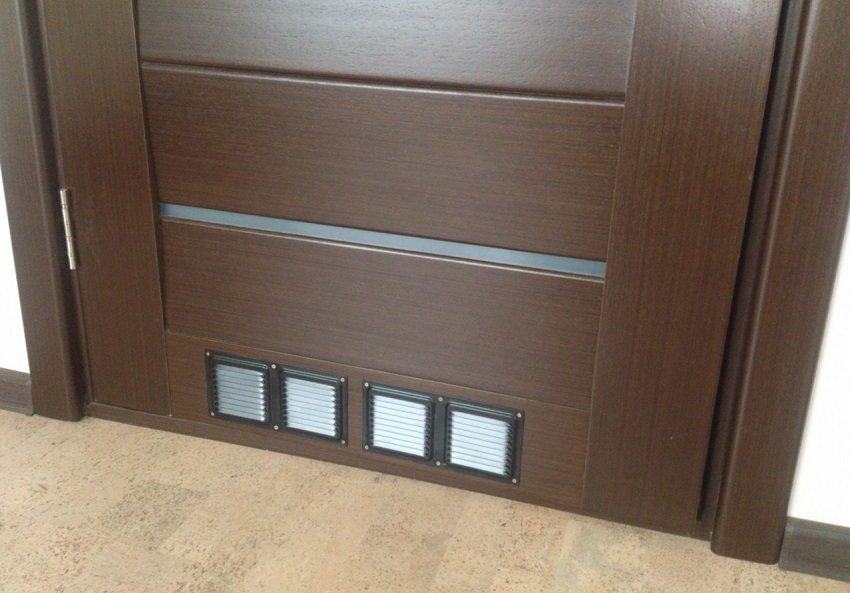
The solution to this problem can be the installation of supply valves on the windows or the additional installation of a special grille on interior doors.