
- No. 6. Heating and hot water supply
- solar systems
- Heat pumps
- Condensing boilers
- Biogas as fuel
- House Design Stage - Energy Efficiency Planning
- Description
- house shape
- sunlight
- thermal insulation
- Translucent elements
- tightness
- Ventilation system
- Advantages and disadvantages
- How to create an energy efficient home
- Construction technology
- Passive house technology
- No. 5. Smart House
- Principles of building an energy efficient house
- The advantage of an eco-house
- What will our world be like in 10 years?
No. 6. Heating and hot water supply
solar systems
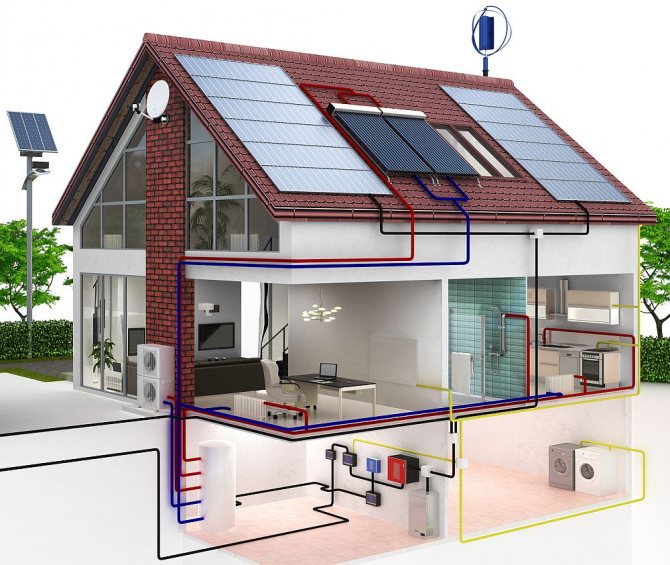
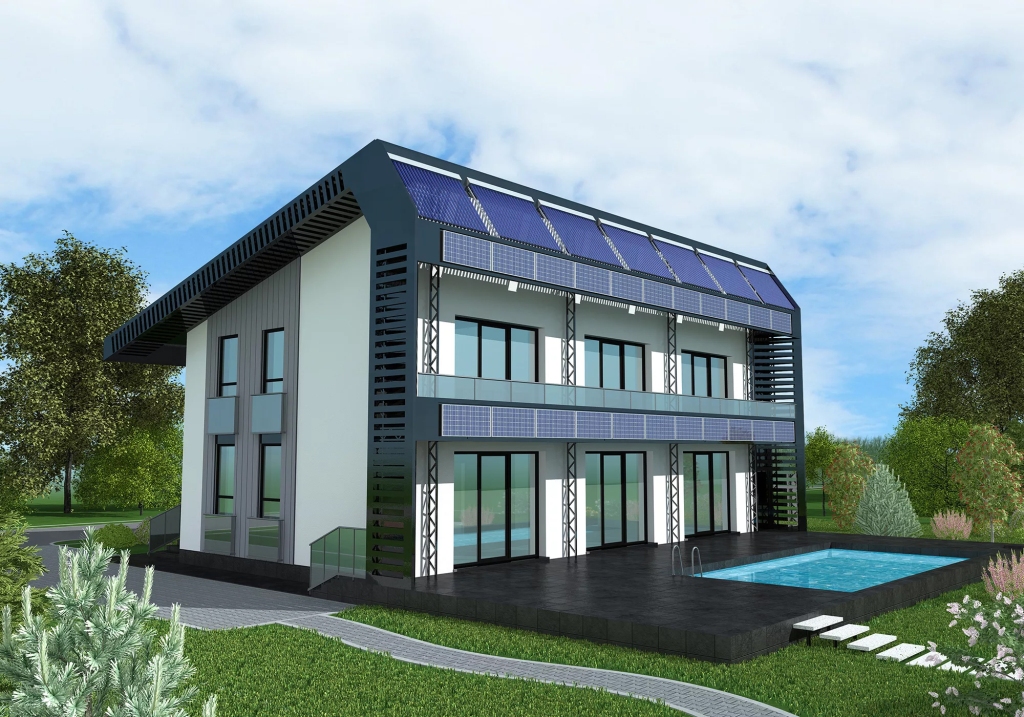
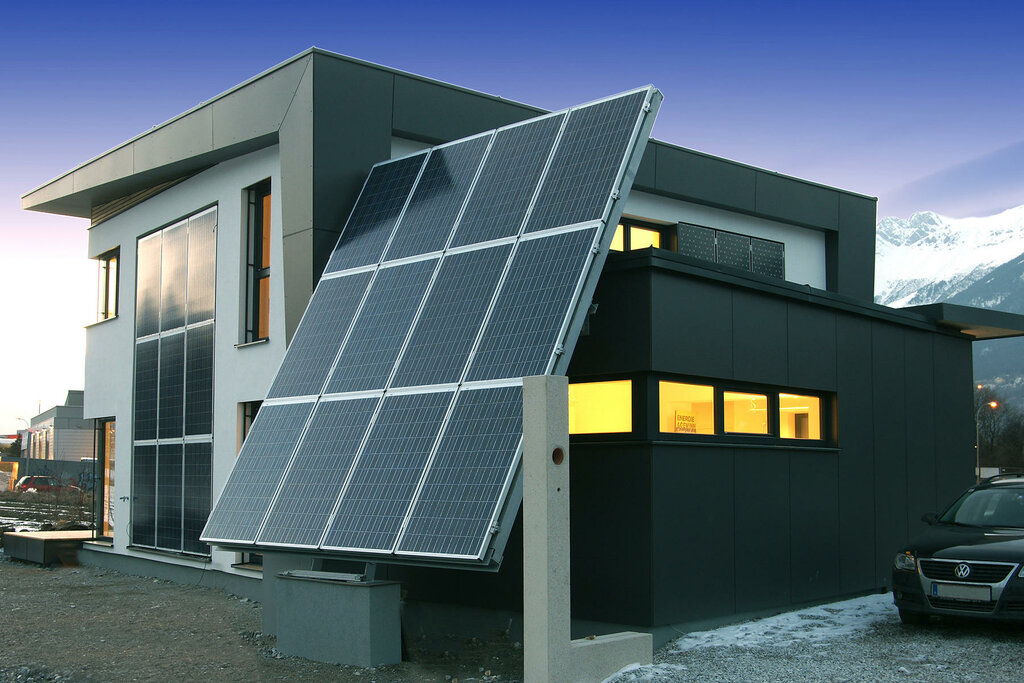
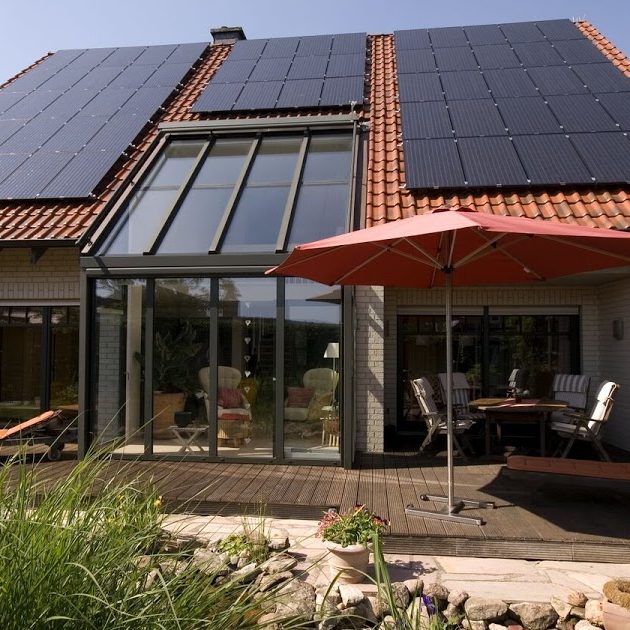
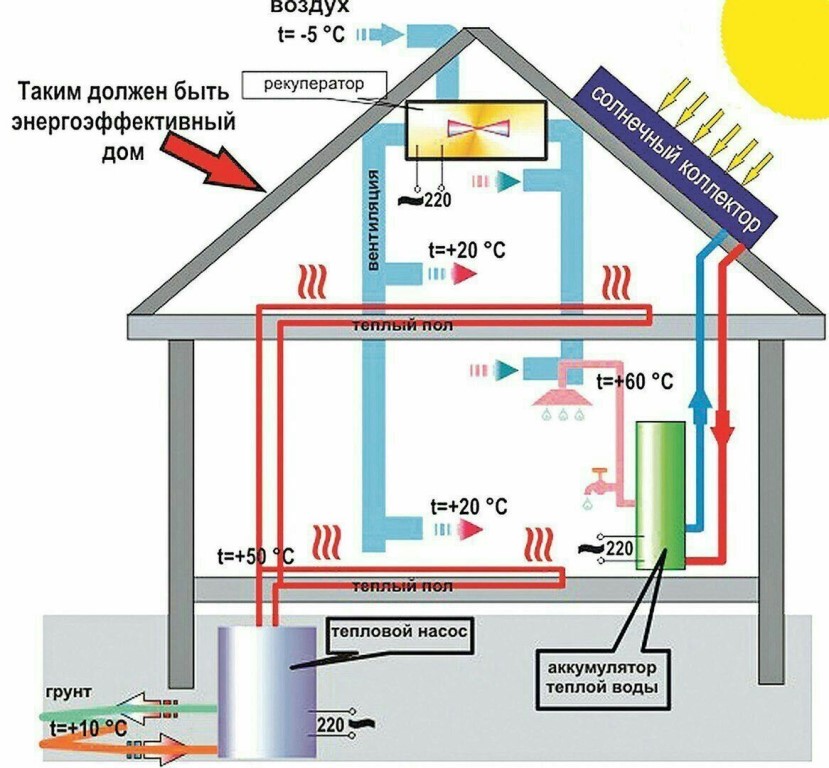
The most economical and environmentally friendly way to heat a room and heat water is to use solar energy. Perhaps this is due to the solar collectors installed on the roof of the house. Such devices are easily connected to the heating and hot water supply system of the house, and the principle of their operation is as follows. The system consists of the collector itself, the heat exchange circuit, the storage tank and the control station. A coolant (liquid) circulates in the collector, which is heated by the energy of the sun and transfers heat through the heat exchanger to the water in the storage tank. The latter, due to good thermal insulation, is able to keep hot water for a long time. In this system, a backup heater can be installed, which heats the water to the required temperature in case of cloudy weather or insufficient duration of sunshine.

Collectors can be flat and vacuum. Flat ones are a box closed with glass, inside it there is a layer with tubes through which the coolant circulates. Such collectors are more durable, but today they are being replaced by vacuum ones. The latter consist of many tubes, inside of which there is another tube or several with a coolant. There is a vacuum between the outer and inner tubes, which serves as a heat insulator. Vacuum collectors are more efficient, even in winter and in cloudy weather, maintainable. Service life of collectors is about 30 years or more.
Heat pumps
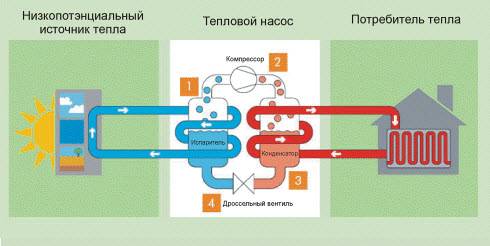
Heat pumps use low-grade environmental heat for home heating, incl. air, subsoil and even secondary heat, for example from a central heating pipeline. Such devices consist of an evaporator, a condenser, an expansion valve and a compressor. All of them are connected by a closed pipeline and operate on the basis of the Carnot principle. Simply put, a heat pump is similar in operation to a refrigerator, only it functions in reverse. If in the 80s of the last century heat pumps were a rarity and even a luxury, today in Sweden, for example, 70% of houses are heated in this way.
Condensing boilers
Conventional gas boilers operate on a fairly simple principle and consume a lot of fuel. In traditional gas boilers, after burning the gas and heating the heat exchanger, flue gases escape into the chimney, although they carry a fairly high potential.Condensing boilers, due to the second heat exchanger, take heat from the condensed air vapors, due to which the efficiency of the installation can even exceed 100%, which fits into the concept of an energy-saving house.
Biogas as fuel
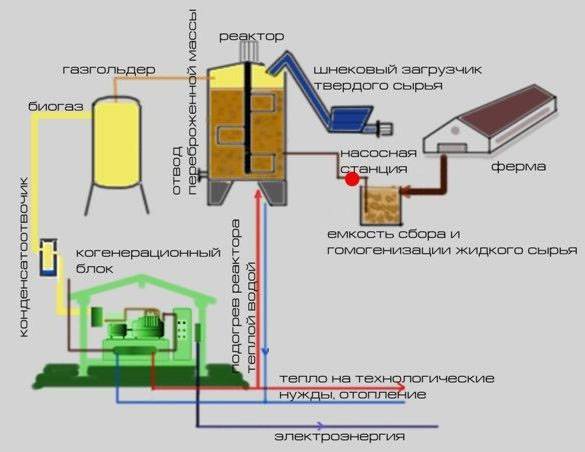
If a lot of organic agricultural waste accumulates, then a bioreactor can be built for biogas production. In it, biomass is processed due to anaerobic bacteria, resulting in the formation of biogas, consisting of 60% methane, 35% carbon dioxide and 5% other impurities. After the cleaning process, it can be used for heating and domestic hot water. Recycled waste is converted into excellent fertilizer that can be used in the fields.
House Design Stage - Energy Efficiency Planning
Already during the selection of a land plot for the construction of a future living space, the natural landscape should be taken into account. The terrain must necessarily be flat and not have elevation differences. However, if there are still differences, then they can be profitably used, it will ensure the supply of water, the cost of which is minimal.
As mentioned earlier, it is worth choosing a side that is more lit by the sun, because it can be used instead of an electric one. Soundproofing and thermal insulation must be provided already when the project of an energy-efficient house is being prepared, because energy saving is simply impossible without them.
The porch slope, roof and canopy should have an optimal width so that there is no shade in the presence of daylight, while protecting the facade from rain and overheating. The roof is designed taking into account the critical weight of snow in winter.Do not forget to organize high-quality insulation and competent water drains.

All passive house equipment is “linked” into a single energy-efficient system at the design stage
Description
The concept of a passive house (otherwise called an energy-saving house) defines a list of technical requirements with which energy consumption in a house is 13%. The energy consumption indicator for the year is 15 W * h / m2.
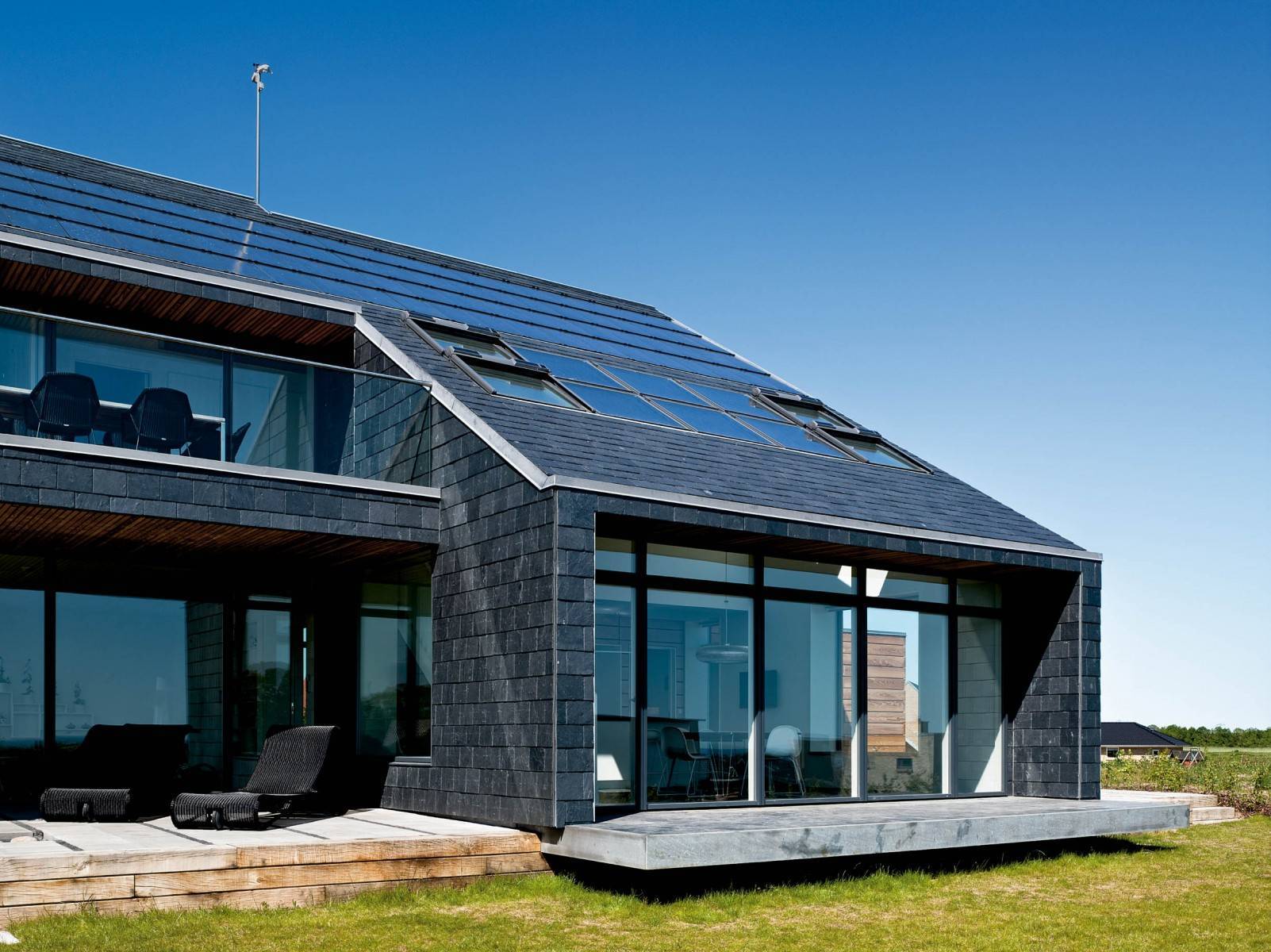

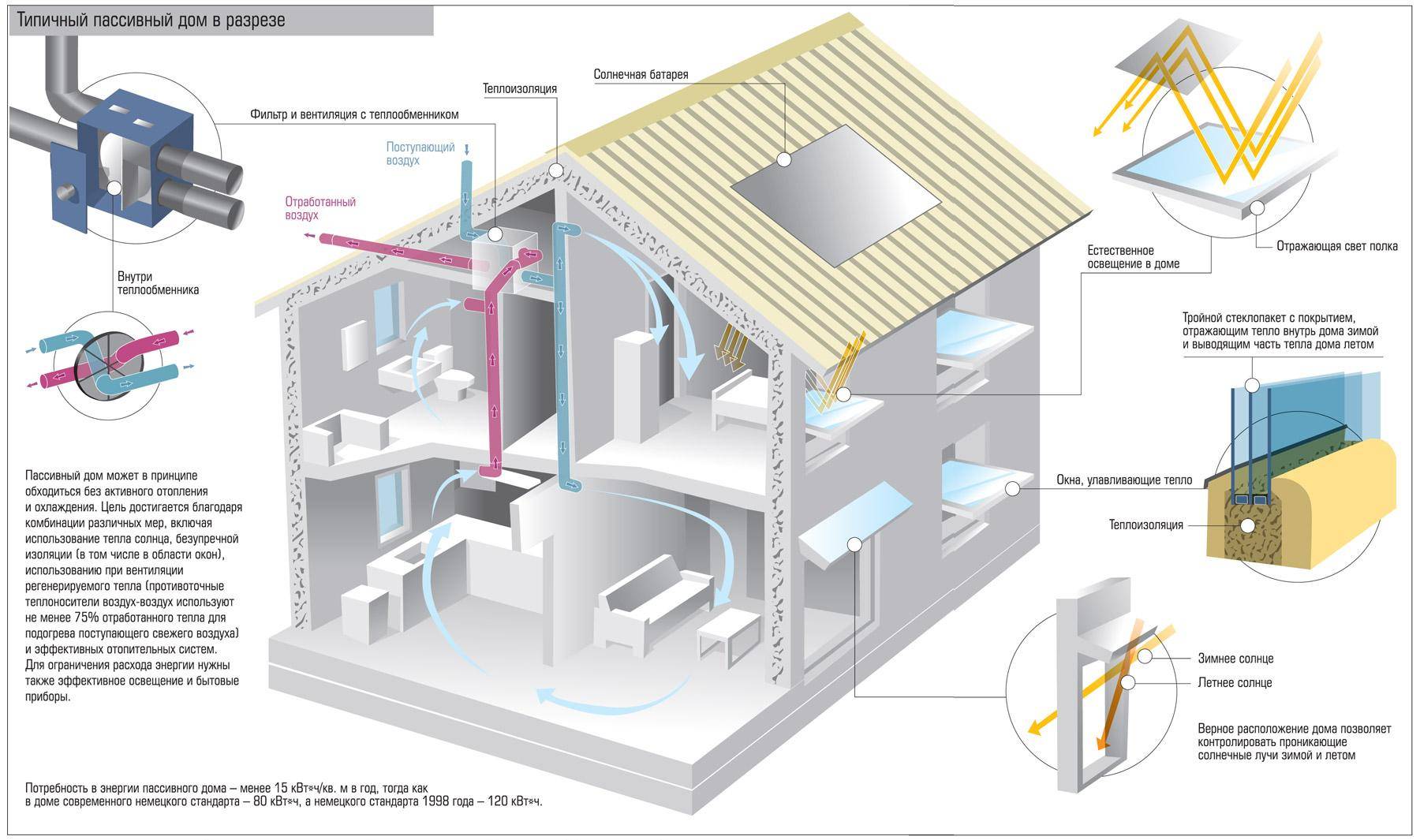


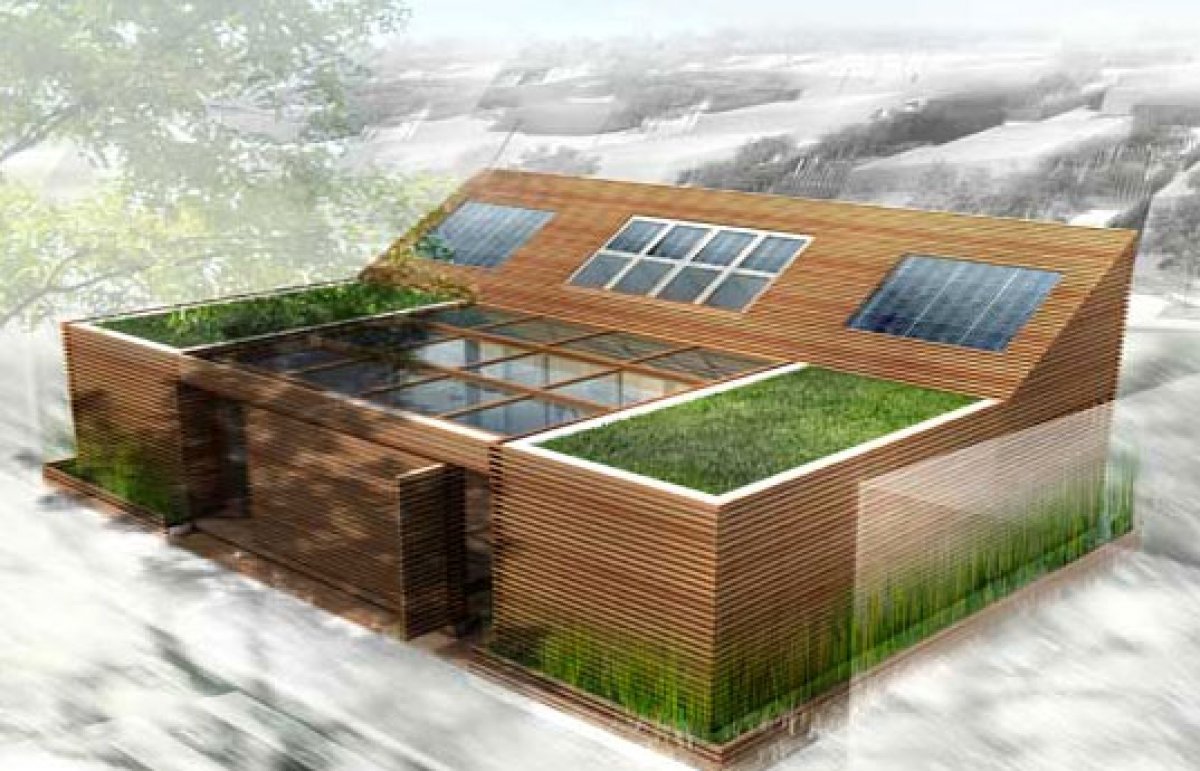

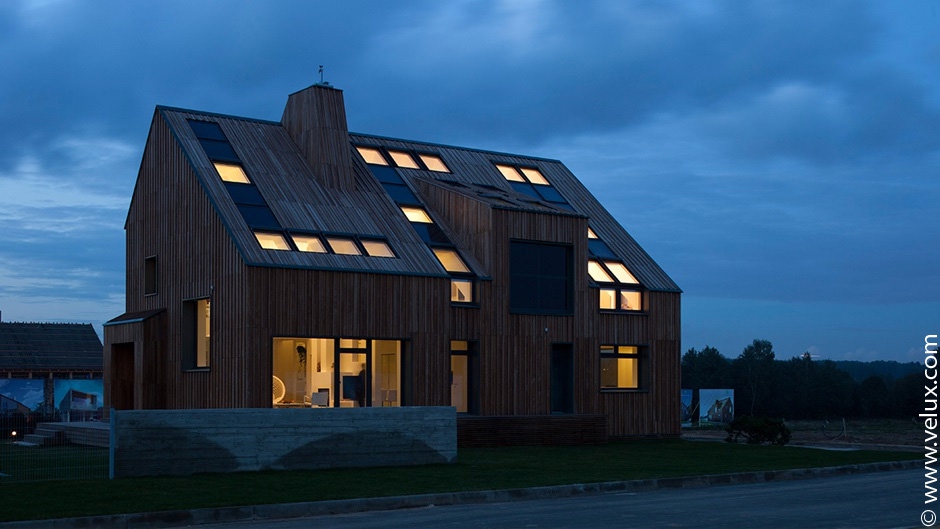
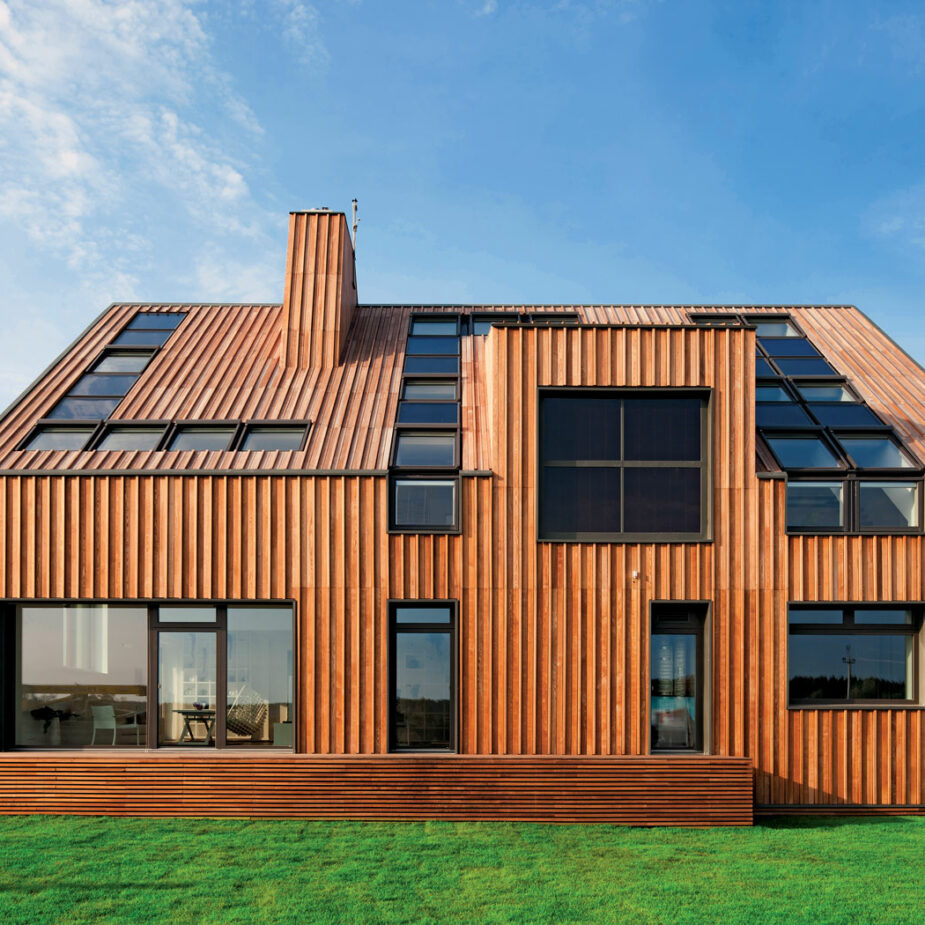

For the construction of such a house, it is necessary to adhere to certain requirements that will create conditions for low energy consumption. To fully familiarize yourself with a passive house, you need to disassemble each element that makes it up separately.
house shape
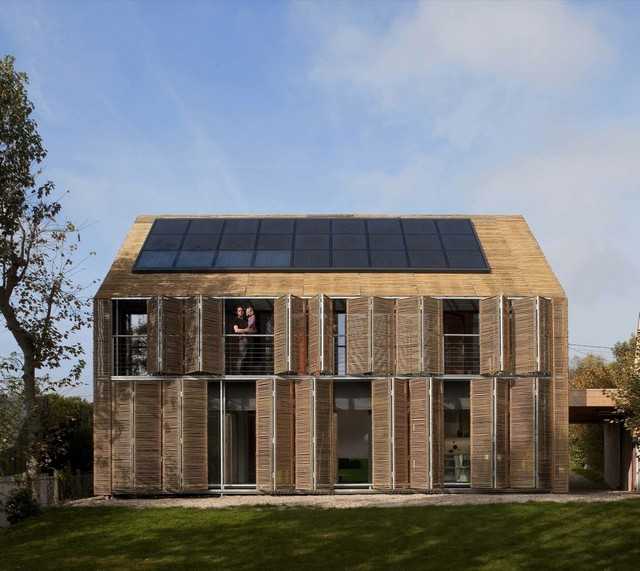
Considering that there is a direct dependence of heat losses on the total area of the house, in the process of designing a passive house, it is important to pay attention to the shape of the structure, such as in a domed house. An energy-saving private house should be made in such a way that the compactness factor is within the normal range. This indicator determines the ratio of the total area of \u200b\u200bthe house to its volume.
This indicator determines the ratio of the total area of \u200b\u200bthe house to its volume.
Be sure to take into account the need to use all future rooms and premises when determining the shape and area of \u200b\u200bthe house. The passive house should not be allowed to have unused or little-used rooms (spacious dressing rooms, guest rooms or toilet rooms). They require a significant amount of energy to maintain. The ideal option for a passive house is the spherical shape of the structure.
sunlight
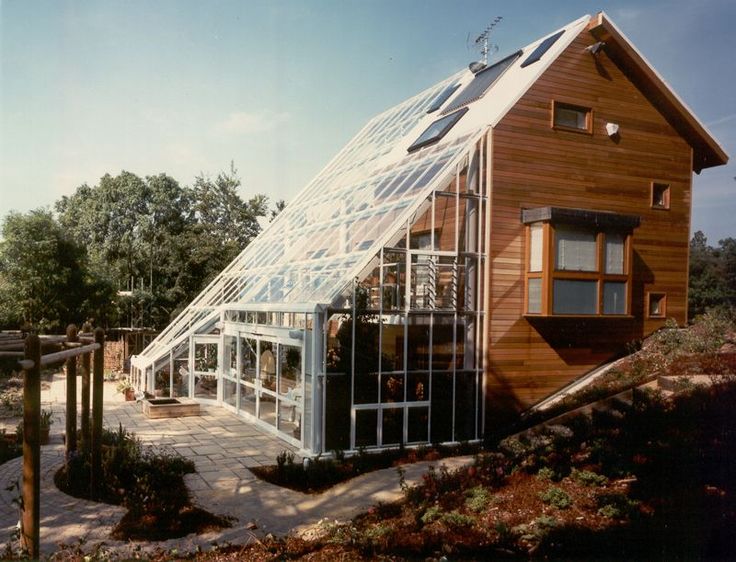
Since the construction of a passive house is aimed at further maximum energy savings, an important point is the use of a natural energy source, i.e. sunlight. For maximum energy savings in a passive house, all windows and doors are located on the south side. At the same time, glazing on the north side of the facade is not recommended. It is not worth planting massive plants next to the passive house, from which a large shadow is cast.
thermal insulation
One of the important points that are taken into account when building a passive house is providing the structure with thermal insulation.
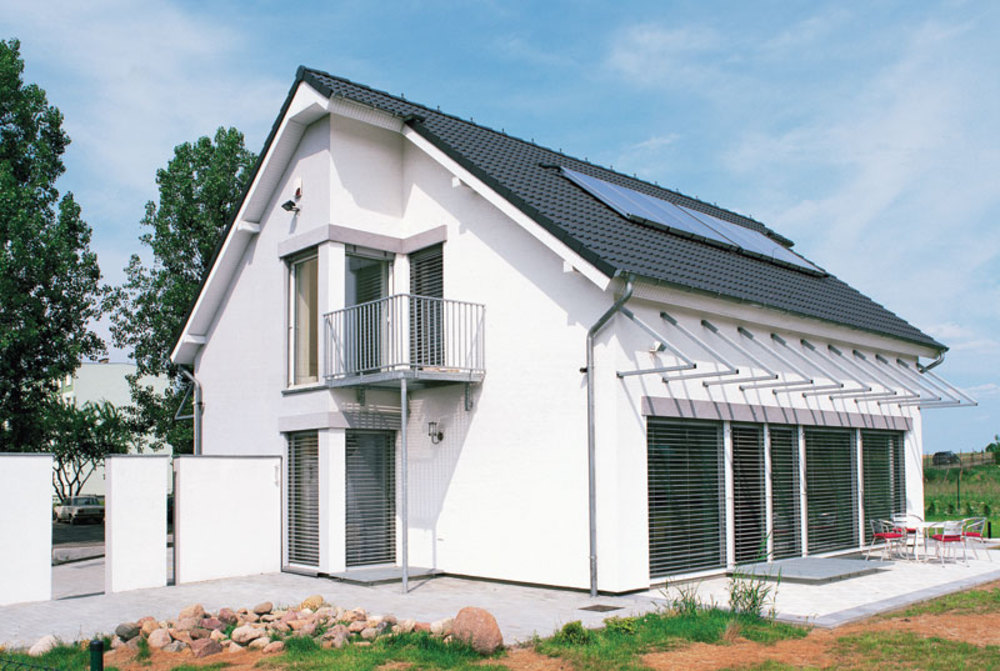
It is important to avoid any possibility of heat loss. Thermal insulation is provided by all corner joints, windows, doors, foundation
In particular, carefully carry out the laying of heat-insulating materials in walls (for example, in straw house) and the roof. At the same time, a heat transfer coefficient value of 0.15 W / (m * k) is achieved. The ideal indicator is 0.10 W / (m * K). The materials to achieve the above values are: foam with a thickness value of 30 cm and SIP panels, the thickness of which is at least 270 mm.



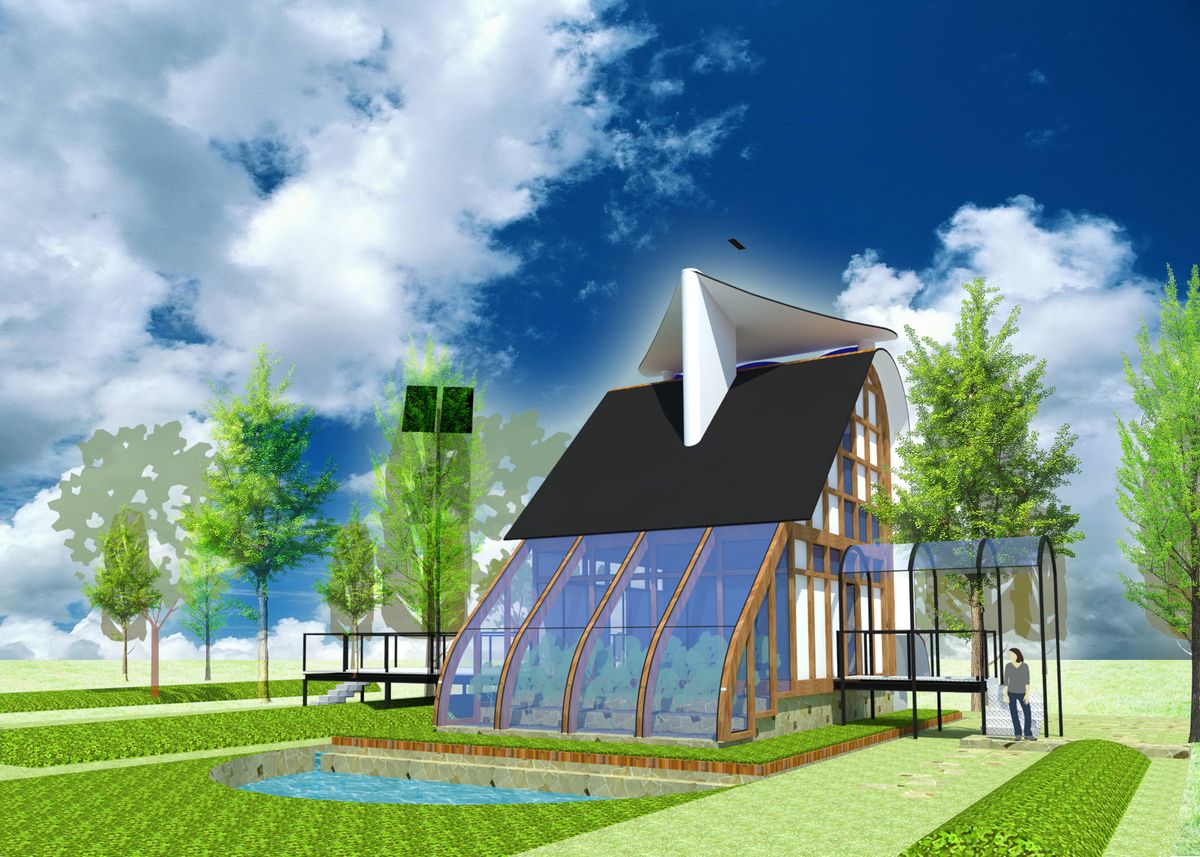
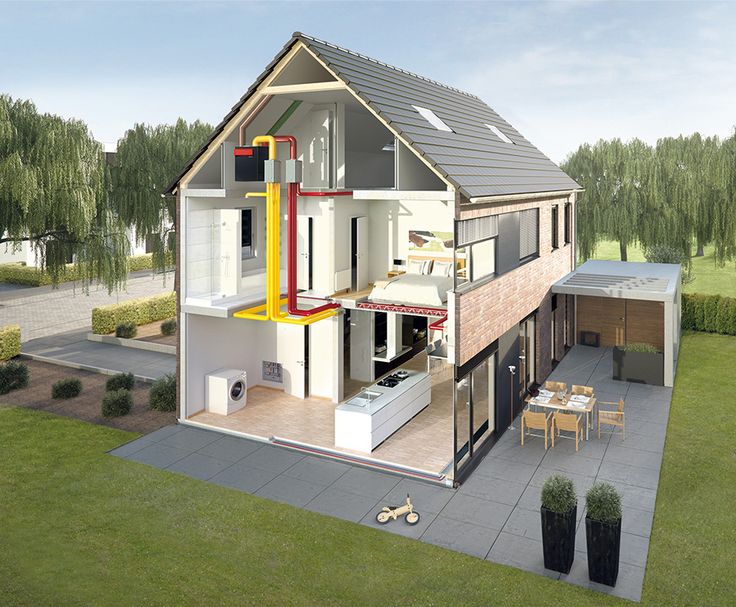
Translucent elements
Considering that significant heat loss occurs through windows at night, it is necessary to use only energy-saving types of windows. The glasses with which the cells are equipped serve as solar batteries. They store solar energy during the day and minimize heat loss at night.
By themselves, energy-saving window structures have triple glazing. Inside their space is filled with argon or krypton. The value of the heat transfer coefficient is 0.75 W/m2*K.
tightness
The tightness index in the construction of a passive house must be significantly higher than that of a conventional structure. Airtightness is achieved by processing all joints between structural elements. This also applies to window and door openings. Often, a hermabutil sealant is used for this purpose.
Ventilation system
The ventilation system in the design of an ordinary house involves heat loss of up to 50%. A passive house, whose technologies are aimed at reducing heat loss, requires a different approach. Ventilation is constructed according to the recuperation type. The recovery rate is important in this matter, only a value of 75% or more is allowed.
The essence of such a ventilation system is simple. The amount of air entering the room, as well as the level of its humidity, is regulated by the system itself. Fresh air entering the system is heated by the warm air that leaves the premises. This allows you to save energy for heating fresh air masses, since heat is transferred to the still cold air from the heated room.
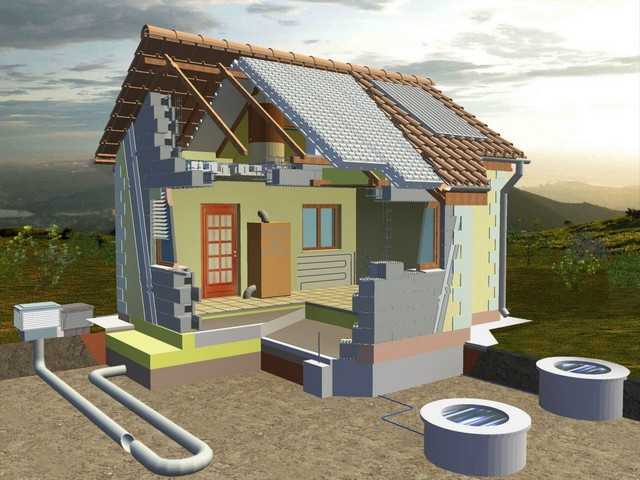
Advantages and disadvantages
Of the advantages that characterize a passive house, there are:
- the main and main advantage is the minimum power consumption during operation;
- The air that enters your home through the ventilation system is always clean. It does not contain dust, pollen and various harmful substances;
- houses do not shrink, which allows you to do finishing work immediately after the construction of the structure;
- environmentally friendly materials are used in construction;
- in maintenance, the passive house is unpretentious, for example, if it is necessary to carry out repairs, bulk work will not be required;
- the duration of the period of use is 100 years;
- the possibility of erection in various and variations of architectural solutions;
- a passive house is subject to redevelopment at any time, since it almost completely lacks internal load-bearing walls.
Of the shortcomings, the following are noted:
- temperature constancy. Throughout the house, the temperature regime is the same, i.e. both in the bedroom and in the bathroom the temperature is the same. In some cases, this causes discomfort, because you want a cooler microclimate for the bedroom, and more warmth for the bathroom;
- there is no way to use radiators, because they simply do not exist. Drying clothes or warming up after a long walk near the radiator will not work;
- often owners of passive houses are faced with the problem of excessive dryness of the air. This problem appears due to the frequent opening of the front door throughout the day, especially in winter;
- it is also not possible to open a window and ventilate the room at night in a passive house.
How to create an energy efficient home
Before you start choosing materials for home insulation and their thickness, you should decide on some important inputs:
- square of the future at home;
- area of each facade;
- opening type for windows and their sizes;
- surface volume cellars and foundations;
- internal volume living quarters;
- height ceiling;
- option ventilation - forced or natural.
Main heat loss in the house happens through:
- ventilation holes;
- enclosing structures, namely walls, foundation and roof;
- window openings.
Already at the stage of project preparation, it is worth striving to create minimal heat losses in all these components of the house at once, i.e. they should be similar, around 33.3%. Thus, a perfect balance is achieved between benefits and special additional insulation.

The percentage of heat loss at home
Building an eco-house, as a rule, costs an order of magnitude more expensive. Usually, this is 15-20 percent, but these costs will justify themselves over time. This time is approximately during the first year of living in a new house.


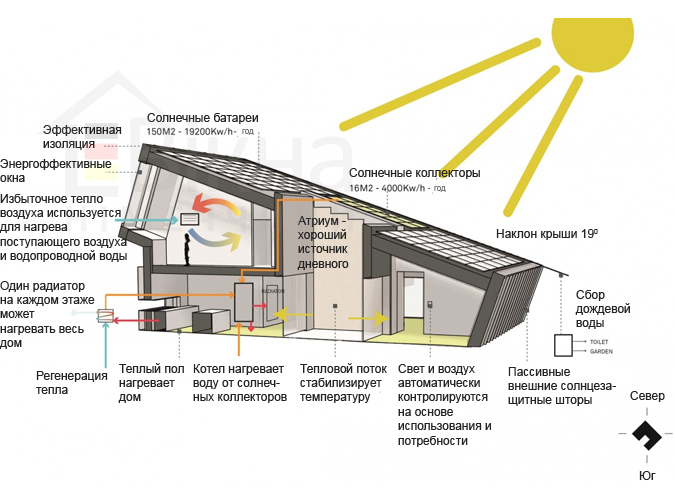
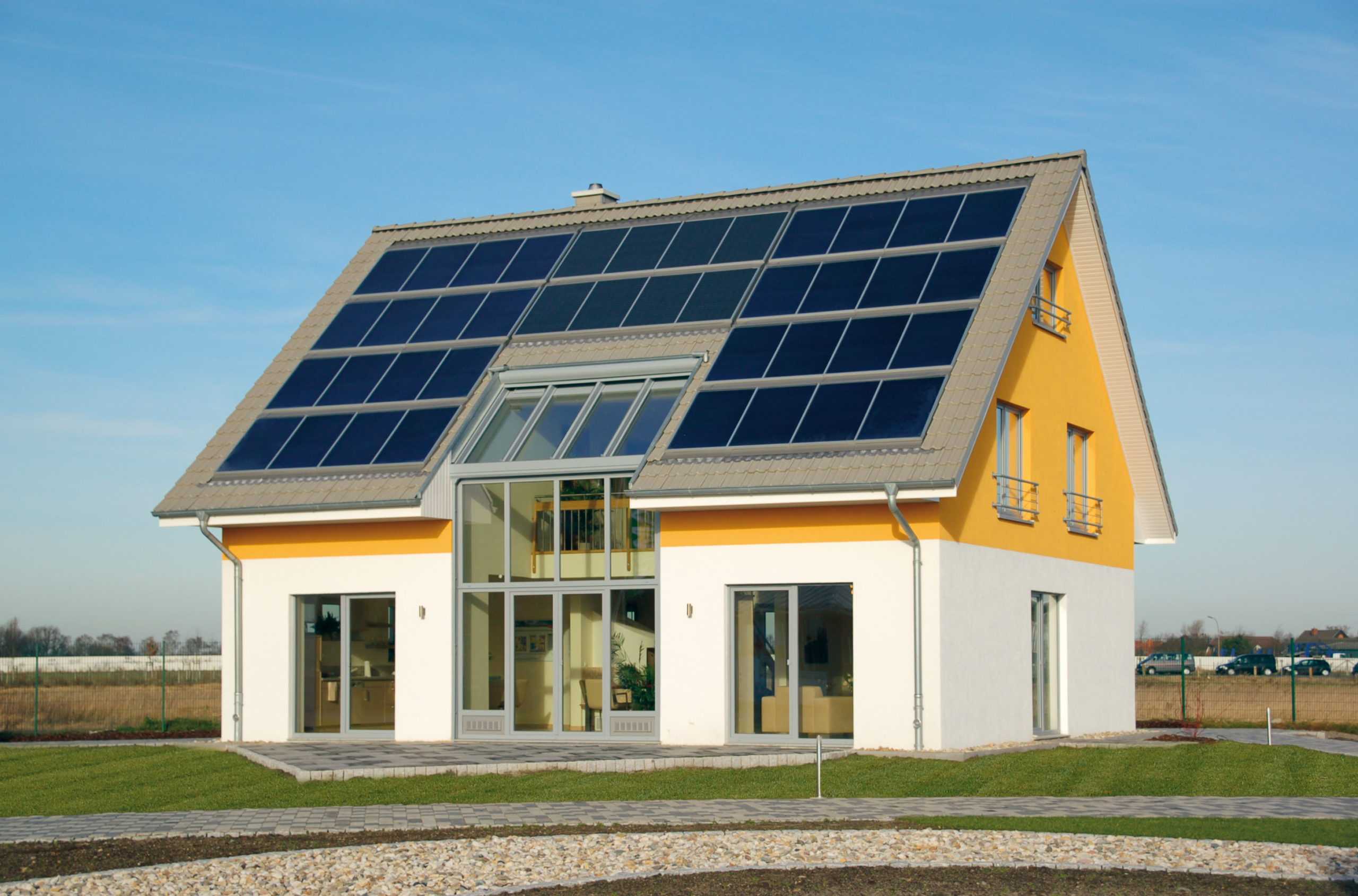

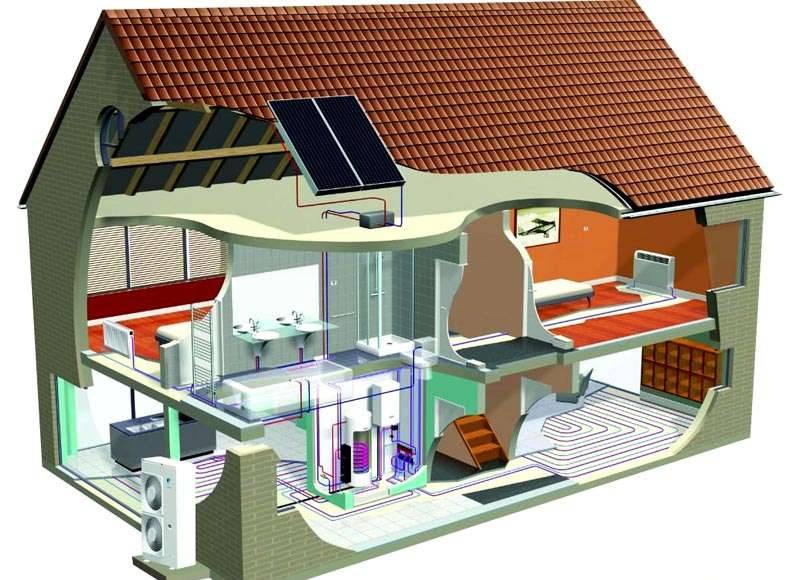


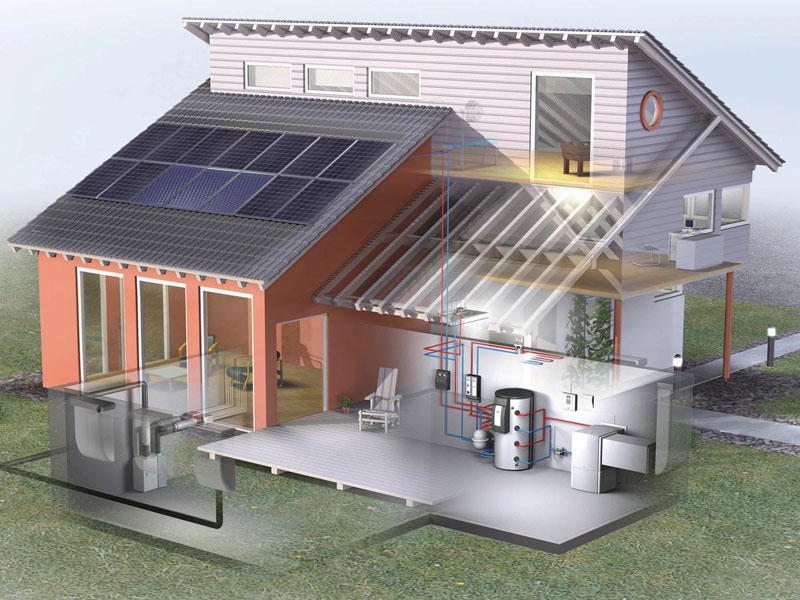
Complex of events to improve the energy efficiency of your home:
thermal insulation of walls - almost all insulation options involve the creation of composite walls, i.e.
puff, where each layer has its own purpose (bearing, heat-insulating part and lining);
ceiling insulation - all the heat rises, so the insulation of this component of the house is very important;
floor insulation - cold flooring contributes to rapid heat loss (use of polystyrene or mineral wool);
thermal insulation of window and door openings.
Construction technology
If you want to build a passive house with your own hands, you will have to devote a lot of time to this.
It is important during construction to understand the essence, which includes energy saving technologies for a private house. There are a lot of options for using materials for construction and thermal insulation.
Before you start building a passive house on your own, it is recommended to order a project of such a house from professionals. They will be able to calculate all the nuances of the design and indicate the necessary materials that are suitable specifically for the selected piece of land.
If there is a desire to build a passive house, the following technologies are used in its construction:
- warm walls;
- warm floor;
- foundation insulation;
- roof waterproofing;
- use of SIP panels for walls, floors and roofs.
You can use the following algorithm of actions:
- after the project of the passive house has been made, they proceed directly to the installation work;
- Initially, a foundation is built and its insulation is carried out. Materials for this are selected individually. A good option for insulating the foundation is foam glass. A grid is being carried out for a liquid floor heating system. After that, they begin to assemble the frame of the house;
- start building the roof. For insulation and waterproofing, when laying the roofing, an insulating material and a waterproofing film are mounted to the frame;
- complete waterproofing of walls and floors;
- start finishing the facade;
- install windows and doors;
- the final stage of construction is the finishing of the facade of the house.
Passive house technology
To achieve a high level of energy savings, the construction of energy efficient houses requires competent work at the same time. in four directions:
- No thermal bridges – try to avoid inclusions that conduct heat. To do this, there is a special program for calculating the temperature field, which makes it possible to detect and analyze the presence of all unfavorable places of all structures of the building fencing, for future optimization.
- Heat recovery, mechanical ventilation and internal sealing. Finding and eliminating its leaks is created by organizing tests on the airtightness of buildings.
- thermal insulation must be provided in all external sections - butt, corner and transition. In such a case, the heat transfer coefficient must be less than 0.15 W/m2K.
- modern windows - low-emission double-glazed windows, which are filled with an inert gas.
Factors affecting energy efficiency
No. 5. Smart House
To make life more comfortable and at the same time save resources, you can equip your home with smart systems and appliances, thanks to which it is already possible today:
- set the temperature in each room;
- automatically lower the temperature in the room if no one is in it;
- turn on and off the light depending on the presence of a person in the room;
- adjust the level of illumination;
- automatically turn on and off ventilation depending on the state of the air;
- automatically open and close windows to let cold or warm air into the house;
-
automatically open and close blinds to create the required level of lighting in the room.
Principles of building an energy efficient house
The main goal of creating such housing is to reduce the consumption of heat and electricity, especially during a hot period. Among the main tasks:
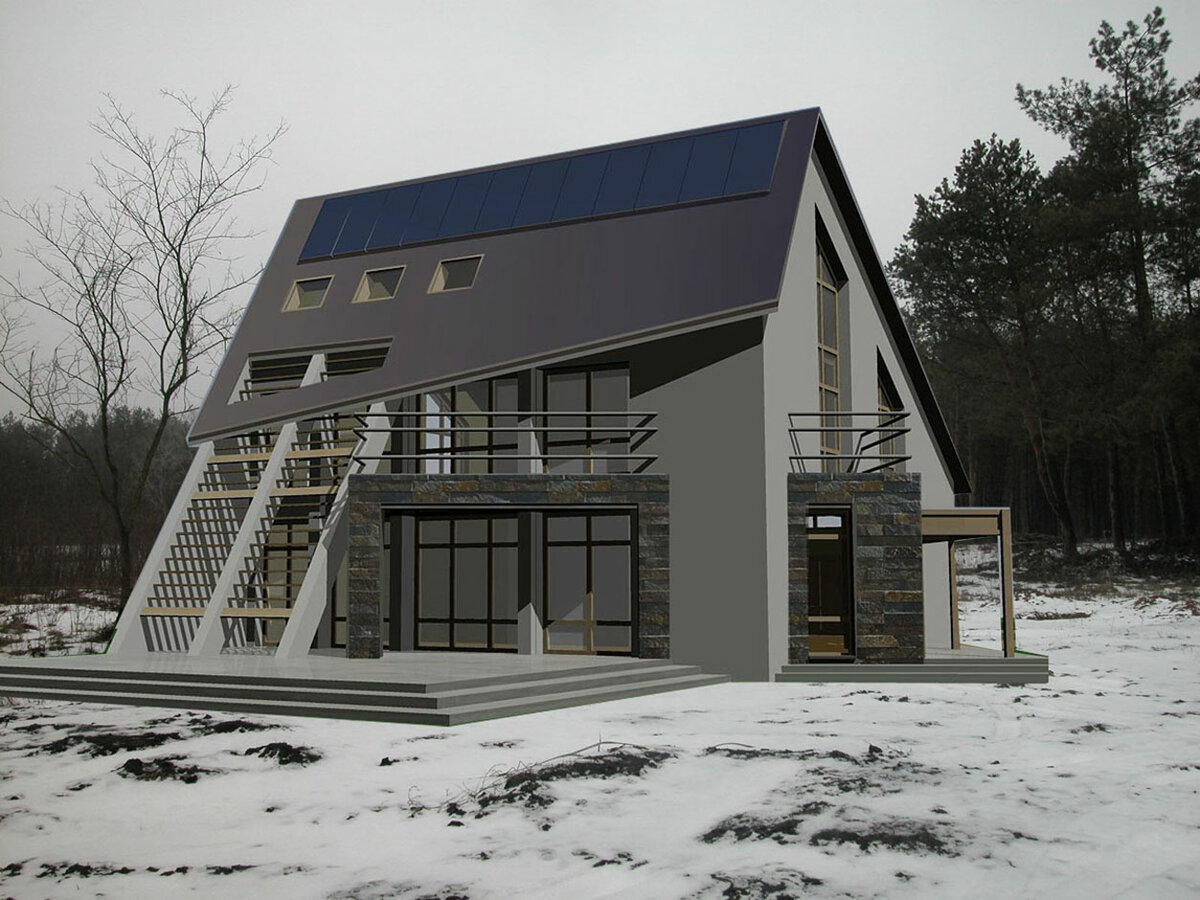
- simple perimeter shape and buildings and roof forms;
- complete tightness;
- extension thermal insulation layer - not less than 15 cm;
- orientation to the south;
- exception "bridges of cold";
- usage eco-friendly and warm materials;
- application renewable natural energy;
- creation of mechanical ventilationnot only natural.
Natural ventilation produces the largest amount of heat loss, which means that its efficiency is very low.This system does not function at all in summer, and in winter it is necessary to ventilate the room in a timely manner.

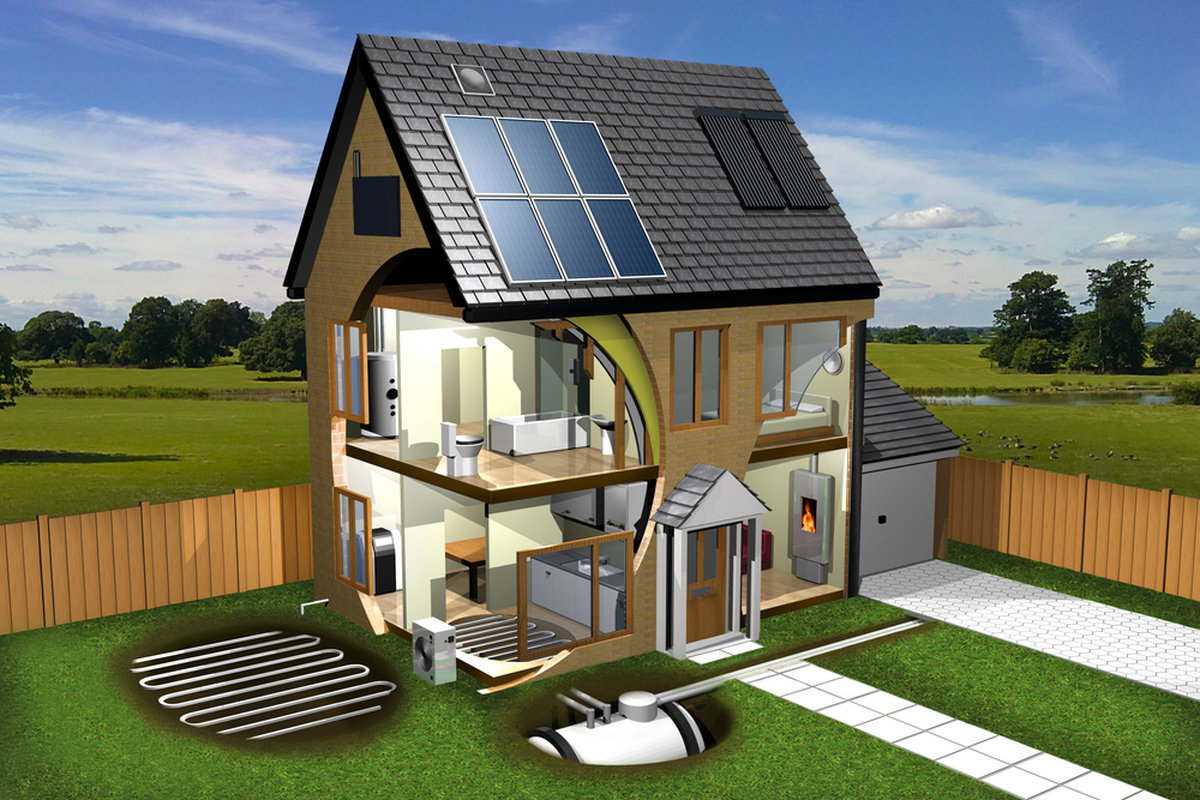




Installing a device such as an air recuperator makes it possible to heat the incoming air. It provides about 90% of the heat by heating the air, which means that you can get rid of the usual pipes, boilers and radiators.

Basic principles for designing and building an energy efficient home
The advantage of an eco-house
The energy saving house has a number of positive qualities in front of other types of living spaces:
- economy - if the house is passive, then all electricity costs will still be at the same low level, even if the cost rises;
- increased level of comfort - cleanliness, pleasant microclimate and fresh air, all this is provided by a special engineering system;
- energy saving - for heating needs in these houses, the costs are 10 times less compared to ordinary ones;
- Benefit for health - there is no mold, no drafts, increased humidity and constantly fresh air;
- no harm to nature – modern energy-efficient technologies reduce the level of emissions of harmful substances into the atmosphere.

A modern eco-house can be described in one word - balance
Passive living space is considered a special energy efficiency standard, which makes it possible to arrange living comfort in an environmentally friendly and economical way, with minimal harm to the environment. At the same time, resource consumption is reduced as much as possible, which means that there is no need to install a separate heating system, or the size and power of the already created one are quite small.

The set of features of a passive house
What will our world be like in 10 years?
Fight against fake news
As an article published on the Science Focus portal says, technology can lead us to a world where we are not sure what is real and what is not. At the same time, thanks to technology, we can distinguish fact from fiction, which is especially true in the era of fake news and Deepfake.
Most likely by 2030, technology will help us lead a better life, mentally and physically healthy. Jobs are also expected to undergo some major changes.
genetic revolution
Today, many researchers are pinning great hopes on the CRISPR method for genome editing, which can be used to treat hereditary diseases or significantly reduce the risk of developing Alzheimer's disease. There is even talk of the possibility of reversing the process of biological aging. But how far can we go in this war on disease? After all, most ailments are caused not by one gene, but by a combination of several genes and environmental factors. Some genes that predispose us to one disease also protect us from another.
The researchers note that one of the main problems today is the availability of CRISPR, which is expensive. Moreover, editing the human genome also raises ethical dilemmas - for example, a Chinese scientist who used CRISPR-Cas9 technology on unborn babies was widely publicized, for which he is now serving a prison sentence.




Perhaps over the next 10 years we will be able to solve a number of complex ethical issues.
However, many scientists hope that in the future doctors will be allowed to use this technique for the benefit of people, but the "finer details" have yet to be determined.Presumably, different cultures will approach ethical issues differently. So in this regard, the future is complex and difficult to predict.
space revolution
The last time a human foot stepped on the surface of the Moon was in 1972. Then, few could predict that people would not return to the Earth's satellite for another 50 years. As for the latest plans of world space agencies (both private and public), the plans for the next decade include not only the launch of robotic vehicles, for example, the Europa Clipper (the launch is scheduled for 2021), the James Webb Space Telescope, but also a return to the Moon and flight man to mars.
In general, speaking about space exploration, I would like to believe that the study of the solar system and the observable universe in the next 10 years will bring long-awaited news and answers to questions that excite the imagination. Who knows, maybe in 2030 humanity will know for sure that it is not alone in the vastness of the infinite universe.



