
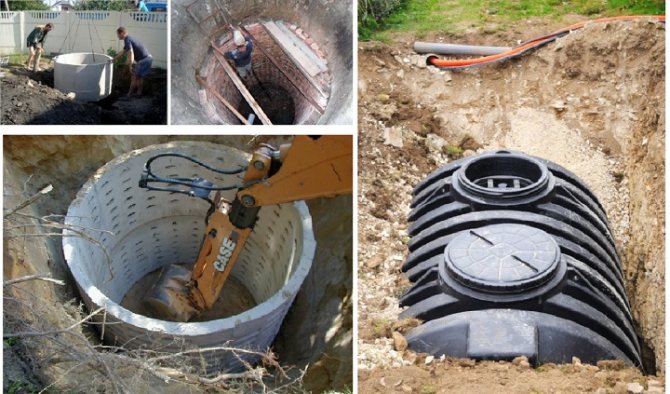
- Works on the device of internal sewerage
- Creating a seepage well
- Advantages and disadvantages of septic tanks
- Step-by-step equipment of a septic tank from concrete rings
- List of required tools and materials
- Why choose a septic tank for your home?
- What are and on what principle do septic tanks work?
- How to ensure the normal operation of the sump
- Prices for submersible pumps
- Advantages and disadvantages of plastic drives
Works on the device of internal sewerage
Sewer installation inside the building
Having a layout of all points of the system, and having purchased the necessary material, you can proceed with its installation. The central riser is installed first. Its diameter is chosen about 110 mm, and for the removal of gases, the upper part protrudes above the roof level or is displayed in the attic. Two types of pipes are used:
- PVC - the material is chemically resistant, not subject to corrosion and overgrowth, the smooth inner surface freely passes drains, installation is carried out by the socket method. Prices for PVC are quite affordable.
- Cast iron - reliable and durable, but have a large mass and are difficult to install. The cost of such pipes is significantly higher than plastic ones.
- Ceramic - have excellent characteristics, but are expensive.
Sewer outlet 45 degrees After installing the main riser, located 4 meters from the windows, horizontal pipelines are laid. The ability to monitor the condition of the pipes and perform cleaning is provided by inspection hatches, which are located above the toilet and at the lowest point of the system. When installing pipes, avoid 90-degree turns that impede the movement of drains.
Each plumbing fixture in its device must have a siphon with a water seal that prevents the penetration of an unpleasant odor into the room. The pipe from the toilet is connected directly, with a pipe of at least 100 mm in diameter.
To connect the sink and bathtub, pipes with a diameter of 50 mm are sufficient. The mains should be placed at an angle that ensures the movement of water. The sewerage device in the country provides for the preliminary preparation of a hole in the foundation for the withdrawal of the sewer pipe to the outside. A non-return valve must be installed at the outlet, which does not allow wastewater to flow back.
Creating a seepage well
The filter well can only be installed on a soil base that is well permeable and absorbs water. If sands, crushed stone or gravel-pebble deposits lie under its conditional bottom, then the disposal of treated effluents into the underlying soil layers will occur without the slightest obstacles.
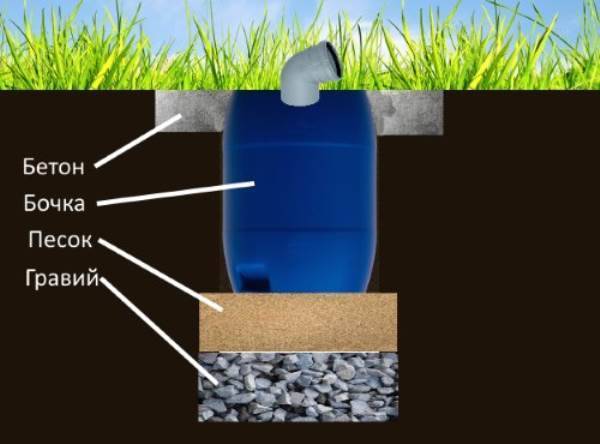
An absorbing well of 1 m is covered with a soil filter so that the backfill fractions decrease with height. First, the bottom is filled with sand - the thickness of the sand layer should be 30-40 cm, then a layer of fine gravel is formed - 30-40 cm.
The upper tier of the soil filter is usually larger crushed stone or gravel, covered with a layer of 20-30 cm.
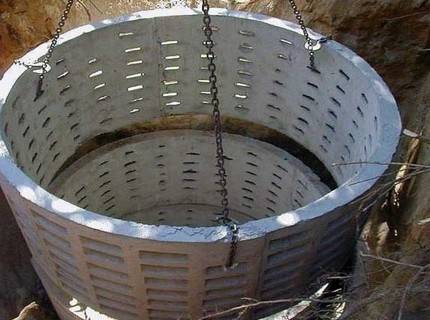
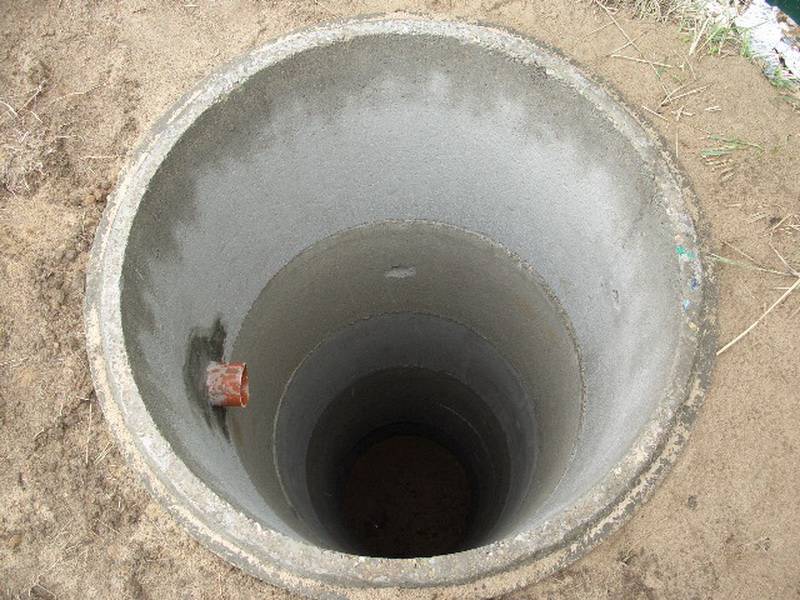
For the construction of the walls of the well with bottom and side filtration, perforated rings are used, the diameter of the holes of which is about 30-50 mm
If it is intended to dispose of wastewater not only through the bottom, but also through the walls, the lower ring of the drainage well must be perforated. It is installed using the same technology as rings with solid walls. The voids between the walls of the pit and concrete rings are covered with gravel.
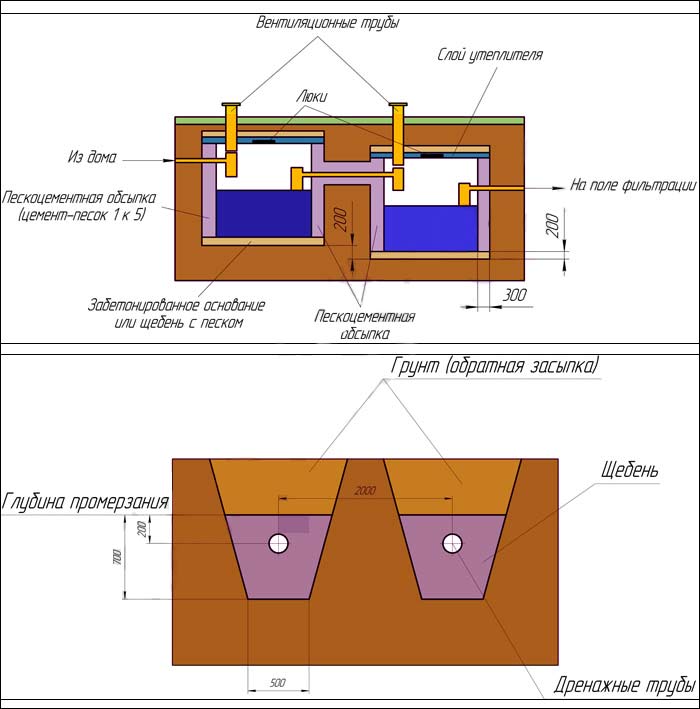
If it is planned to build a filtration field, perforated pipes are used. They are laid on a gravel-sand "cushion", which ensures the infiltration of treated effluents into the underlying soil layers, and are covered with geotextiles from above and covered with earth.
Advantages and disadvantages of septic tanks
The question of which is better - a cesspool or a septic tank, is best considered in terms of efficiency, as well as the cost of manufacture and maintenance.
At the same time, it is important to remember about the safety of the structure.
Note that in most parameters it is the septic tank that wins, which is distinguished by such advantages:
- a high degree of purification of domestic wastewater - the water at the outlet of the device can be used for household purposes;
- the absence of an unpleasant odor in the area;
- hermetic design reduces the risk of sewage getting into groundwater and makes the structure safe for the environment;
- there is no need for regular pumping - the removal of the sludge residue can be carried out once every few years.
The disadvantages of septic tanks include:
- more complex design;
- increase in the cost of construction;
- strict requirements for the use of household detergents. Conventional chemistry is detrimental to microorganisms, so you have to use special compounds;
- a decrease in bacterial activity with a decrease in temperature - at 4 ° C and below, the sewage processing process stops.
Despite some nuances, the use of a septic tank allows you to preserve the nature and health of others, and this is a plus that cannot be crossed out by any difficulties and financial costs.
Step-by-step equipment of a septic tank from concrete rings
As previously mentioned, it is well rings that are more often than other material used to equip septic tanks. To do this, the first step is to dig holes in the ground. Having decided on the place, they take out the soil, manually, or using an excavator. The second option will allow you to minimize the time spent on work. The fact is that when working manually, you will have to dig alone, because there simply will not be room in the pit to accommodate 2 workers.



In the course of arranging a pit for well rings, you can immediately sort the soil. The fertile layer can be taken out to the garden or flower beds, everything else should be taken out of the land or used in the construction of the house.
In the process of laying the sewer pipe, gray and orange pipes can be used. Grays are suitable for interior work, and therefore it is better to use the orange version outdoors, as it is more dense, resistant to temperature changes and external influences. It is necessary to observe the slope, which is important at the stage of arranging the pipe. The slope should be low so that the largest fecal residues float on the water, providing maximum passability. In general, a slope of 1-2 degrees per 1m of pipe will be sufficient.
As soon as the trench is ready, the pipes are laid, the holes for installing the well rings are prepared, it is necessary to order the delivery of the material on the manipulator. You cannot put such rings manually, and therefore it would be more correct to use a manipulator that will not only deliver, but also unload, and also carry out installation.
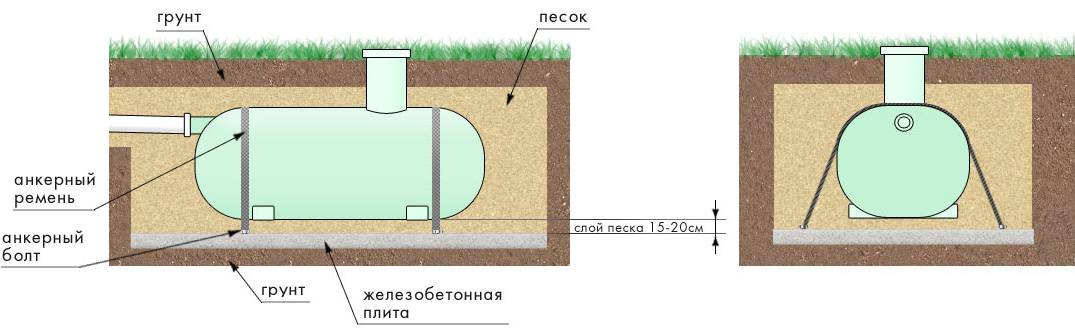
By the time the machine arrives at the site, it is important to prepare the bottom of the first tank. It should be leveled with an abundant amount of sand, then a reinforced concrete base should be lowered to the bottom, since the task is to make a completely sealed septic tank
Along the edges of the base, it is necessary to decompose the cement mortar, after which the first ring should be lowered. Similarly, using a solution, the following rings should be mounted.
If our scheme has no more than 2 septic tanks, then the bottom of the second tank should not be made airtight. To do this, the base of 2 tanks is deepened lower than that of the first, then sand is poured to the bottom, pebbles are poured over it, and only then well rings are laid. Lids and metal hatches are laid on the tanks at the very last moment.
Having finished the connection with plastic pipes, you should sink to the bottom of the 2nd tank and make the maximum number of holes in it. These holes should connect the drainage water to the rubble that surrounds the chamber from the outside. The holes should be made as large as possible, choosing a diameter of about 2-3 cm. During operation, only yellow pipes should be used, since they have maximum strength and can withstand significant loads.At the end of the work, a well hatch should be installed, after which it is necessary to fill the space around the well rings that form the tanks with soil or crushed gravel. The second option is the most preferable, but costly in terms of investing money.
Do not forget about ventilation, which will remove the gases formed during the decomposition of organic residues. It can also be made from sewer pipes.
List of required tools and materials
A ready-made septic tank costs a lot of money, it is much cheaper to make it. A do-it-yourself septic tank, without the need for pumping, must have at least 2 containers in the design, which are connected by a pipe. In such cases, sewage will enter the first tank and preliminarily settle, after filling such a tank, the sewage will go by gravity into the second tank.
It also screens out both heavy and light fractions. The heavy ones eventually settle to the bottom and continue to rot until the sewage clarifies. After filling this compartment of the device, the liquid flows into the filtration chamber, it is equipped with a bottom with the so-called perforation, and filter material.
Concrete septic tank do-it-yourself rings diagram
Broken brick or crushed stone is quite suitable as a material for filtering. But under this layer, a sand cushion is additionally laid. If desired, the filtered liquid can be diverted to additional facilities from which water enters the sump. Using this filtration method, you can water garden plants, as well as fertilize the soil.




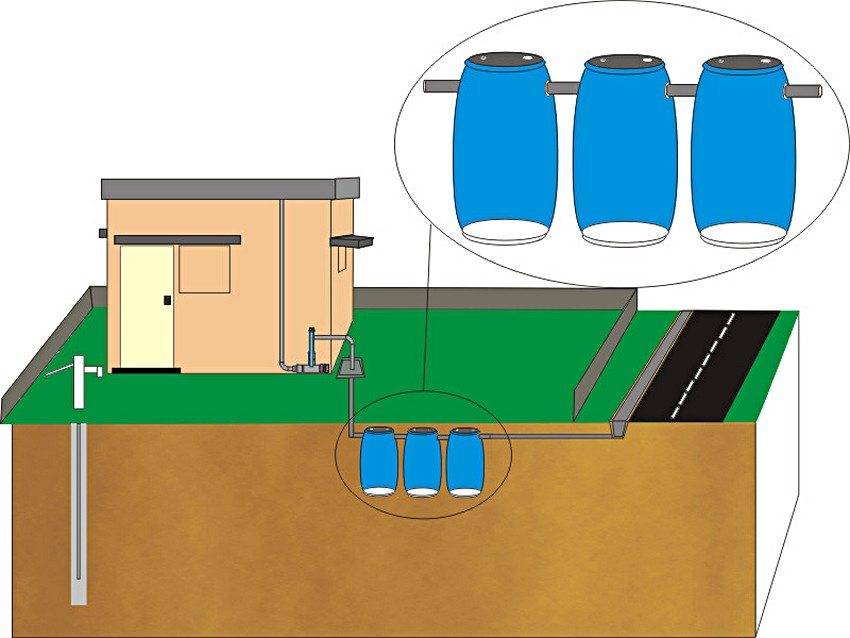
To construct a do-it-yourself septic tank that functions without pumping out, people use a wide variety of materials and tanks.
Among the entire range are popular:
- Clinker brick.
To design septic tank compartments, you must have experience with bricks. After forcing the walls of the structure from the outside, it is advisable to perform waterproofing by applying mastic and filling the distance with clay. In the middle of the chamber, the brick is plastered.
- Solution. The bottom of the structure is first poured with ready-made concrete, then the formwork is installed, and the walls are poured. During the construction of the formwork, it is necessary to strengthen the structure, and reinforcement is used for this. After the solution dries, the product is treated with sealants.
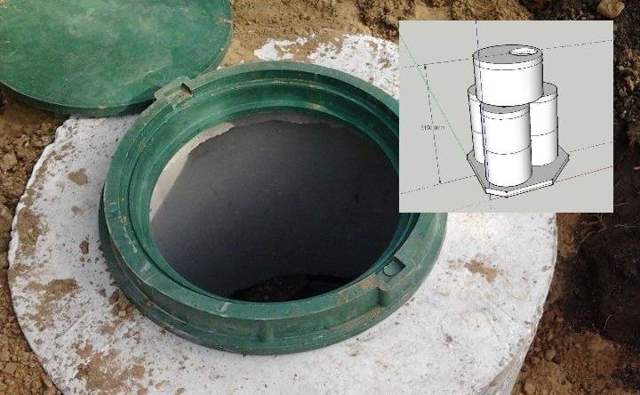
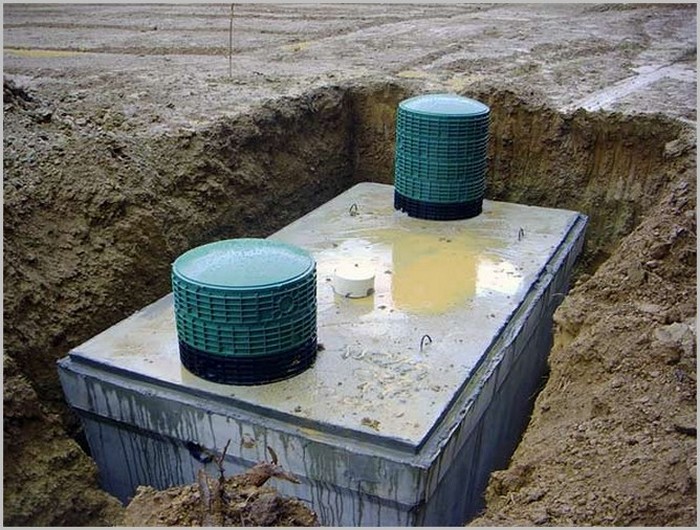
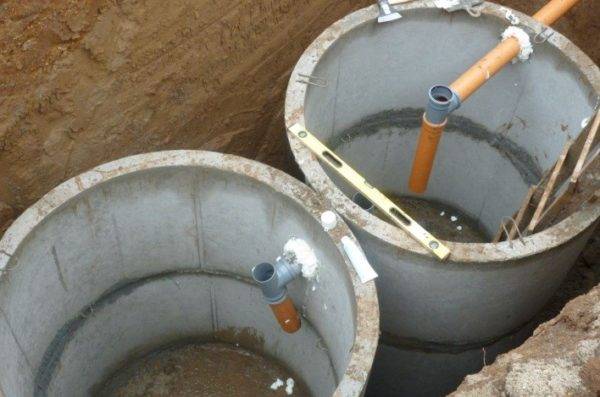
- The best option for building this is a do-it-yourself septic tank made of concrete rings, the scheme is presented above. Such a system is considered easier, since the rings are already ready, they are installed in a dug hole, on top of each other, but it is not advisable to use more than 3 pieces for one chamber. It is this amount that is necessary so that the product does not sag under its own weight. During the installation of a septic tank from concrete rings according to the scheme, it is better to use a winch or call special equipment. Upon completion, the seams are qualitatively sealed with mortar and treated with bituminous mastic for better sealing.
- Plastic and metal tanks.
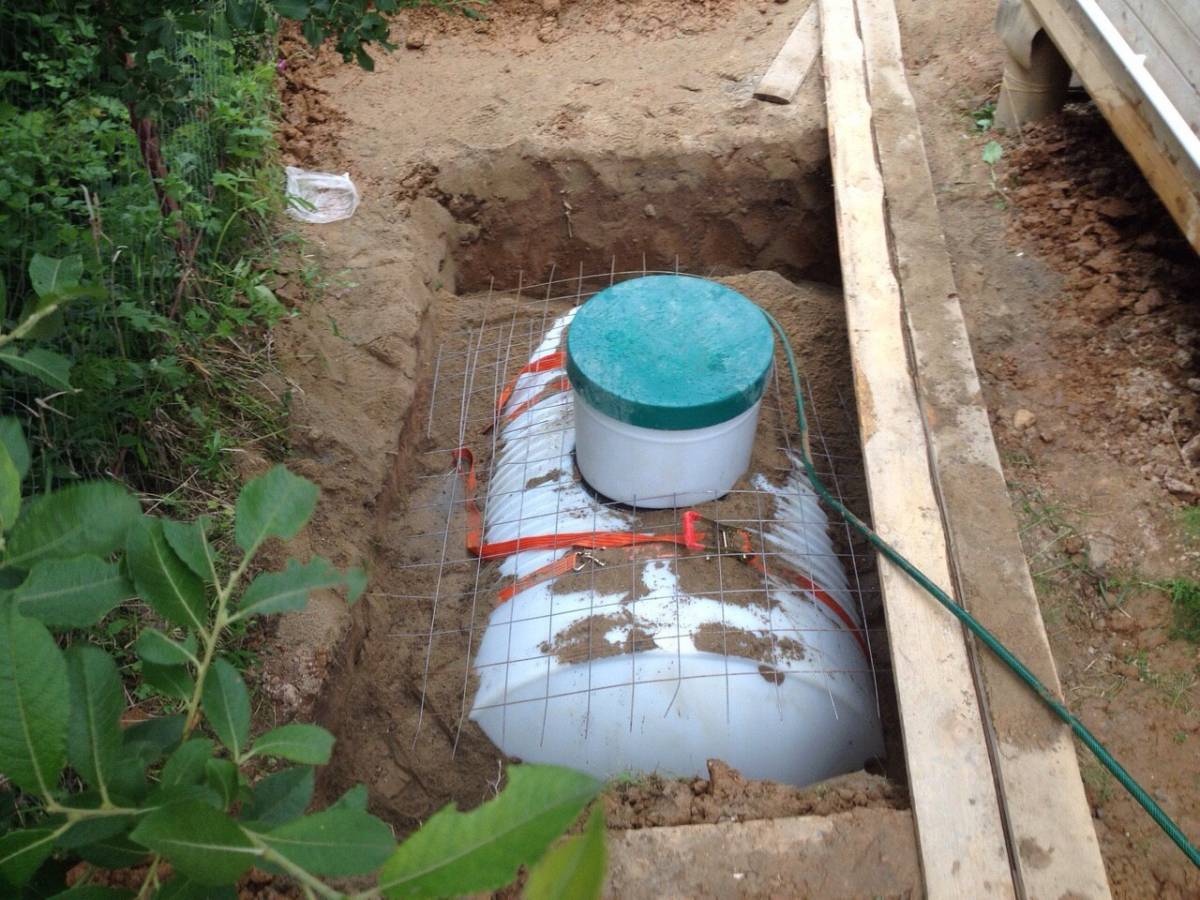
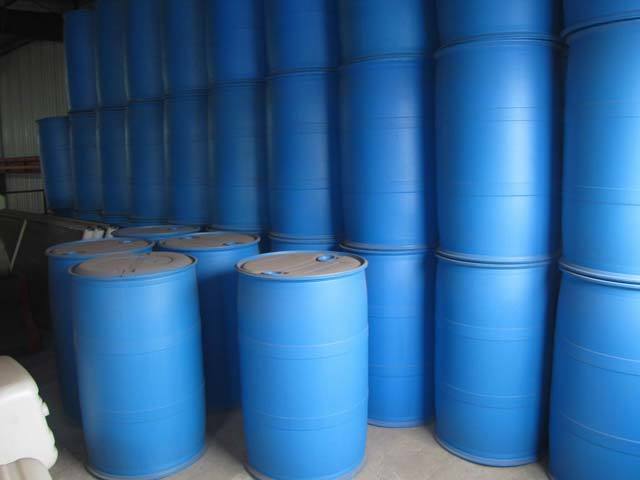
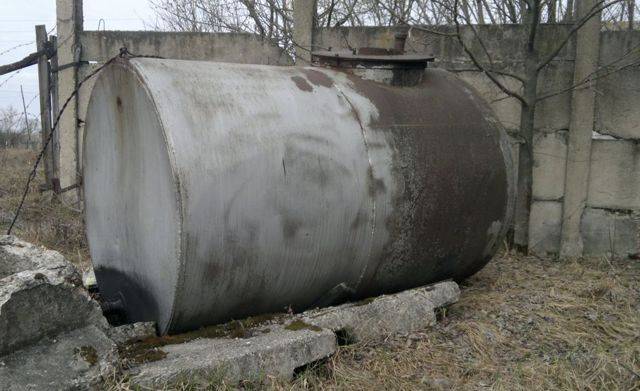
They are perfect for do-it-yourself septic tank equipment in the country house operated without pumping, especially if there are old, but whole containers. The disadvantage of metal containers is considered to be low resistance to corrosion. Here, a plastic barrel is ideal for such an installation, as they are resistant to external influences, tolerate sub-zero temperatures and do not deform under ground pressure.
When choosing a material, the following criteria must be taken into account:
- The quality of incoming waste;
- Distance to groundwater;
- Indicators of building material;
- Individual building abilities and personal opportunities regarding money.
After all, if you decide to equip a septic tank with your own hands, using a brick, but do not have masonry experience, then you will have to call a bricklayer and spend extra money on this.
To design such a system, you must have the following material and tools:
- Crushed stone, cement and sand;
- Reinforcement or rods with a cross section of at least 1 cm;
- To organize the overlap, you need a corner, pipes, and preferably a channel;
- To construct the formwork, you will need timber, slats and boards;
- Nails and screws;
- Means for carrying out isolation;
- A container for the mixture and measurements of the material, as well as a concrete mixer for mixing;
- Bulgarian, wood saw and welding machine;
- Rammer and hammer;
- Screwdriver or electric drill with a nozzle for self-tapping screws;
- Roulette and building level.
When it is necessary to insulate not only pipes, but also the septic system itself, additional material is needed, mainly expanded clay or mineral wool.
Why choose a septic tank for your home?
If earlier the only autonomous sewage was a pit, then today it is in most cases not suitable for use. Let's look at these options in more detail:
- Stock volume has increased significantly. This was influenced by the development of civilization and technological progress. Many have washing machines and dishwashers, bathtubs, jacuzzis, bidets and many other innovations.Building a cesspool with so much drain waste is simply not rational, so you will have to pump out of it very often, and this will hit your pocket hard.
- The construction of the pit is dangerous for the environment, as it is not airtight;
- The cesspool emits a very unpleasant smell.
What are and on what principle do septic tanks work?
Many people dream of their own house and a piece of land adjacent to it. However, such real estate also has a negative point - you have to take care of communications and pay for their maintenance during operation on your own.
In particular, we are talking about a system for collecting sewage waste, which ideally should not require frequent pumping or do without it at all. In this regard, an ordinary cesspool, which fills up rather quickly, is not the best solution. The owners prefer a device such as a septic tank, which, in order to save on labor, they tend to make on their own.




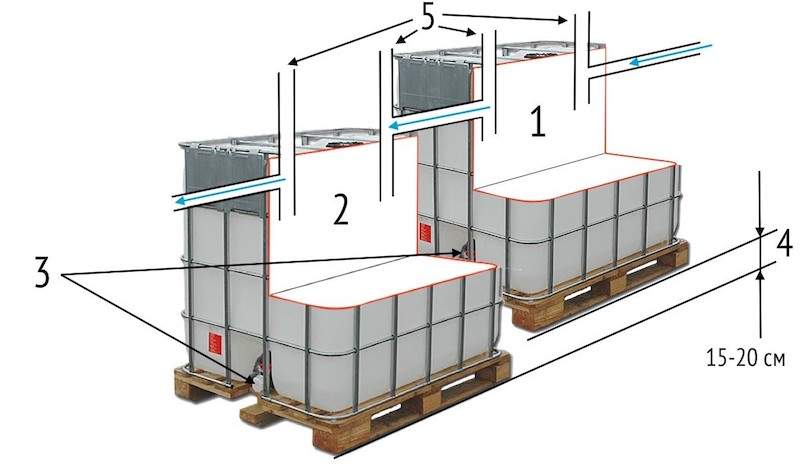
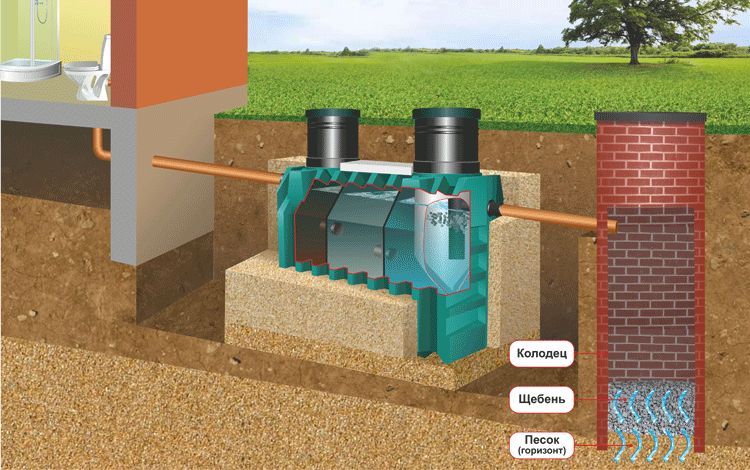
 The septic tank consists of at least two tanks
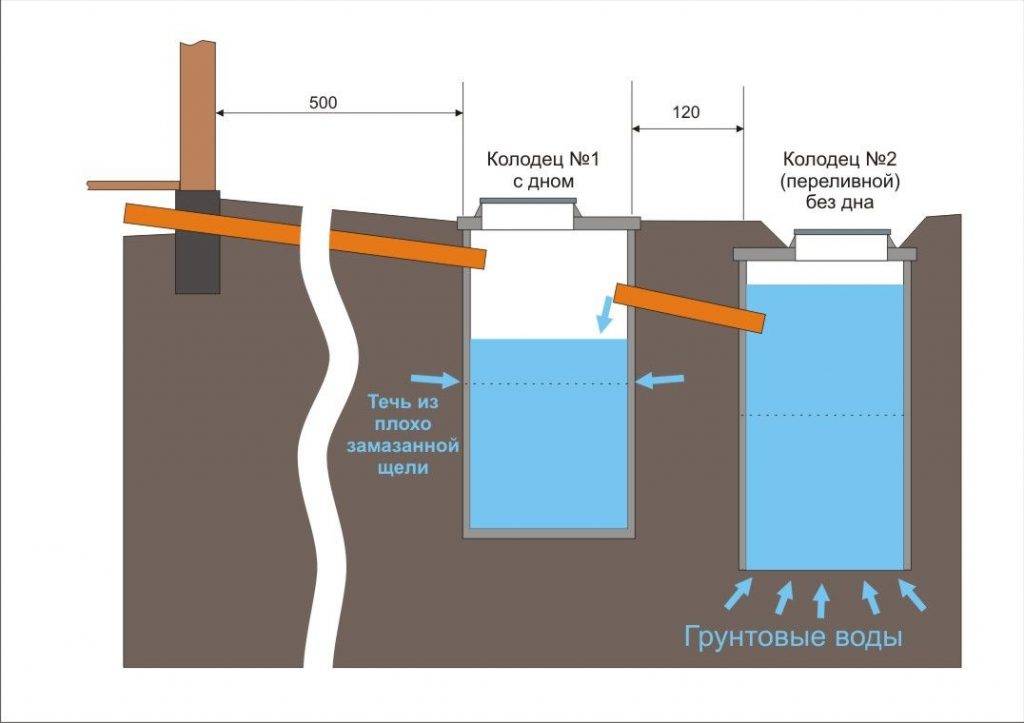
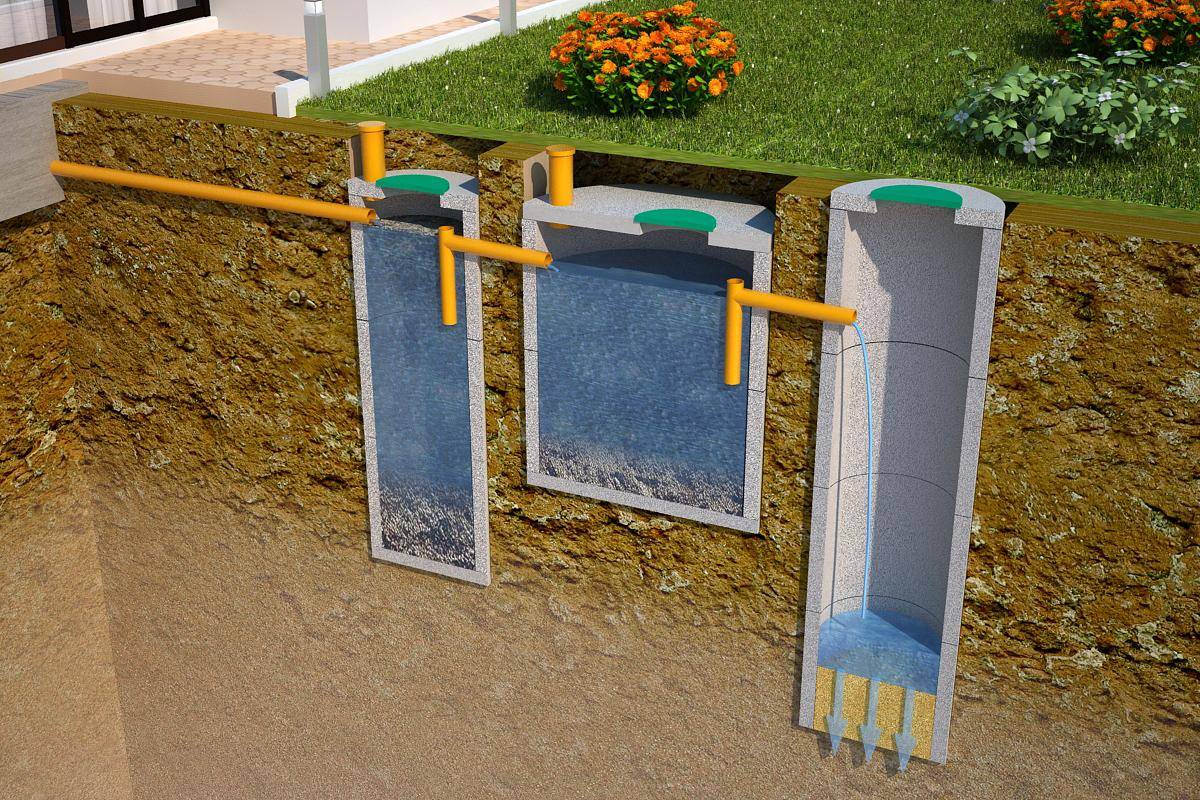
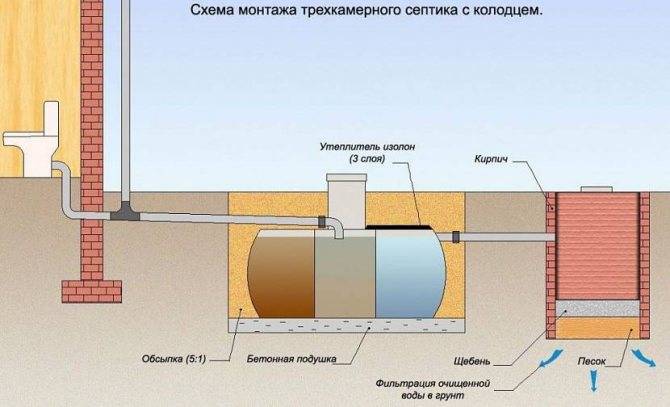
A septic tank differs from a pit by the presence of two or three chambers and an overflow, since the second tank is connected by a pipe to the first. The liquid component of the effluent overflows along it, and the solid content precipitates, accumulates, and then is cleaned by a sewage method.
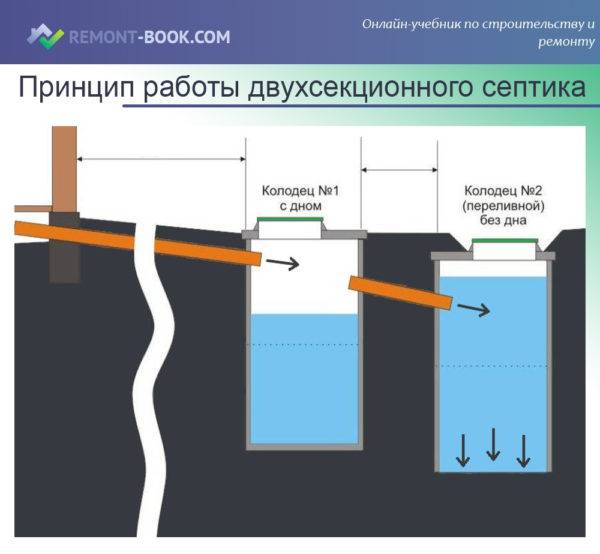 The principle of operation of a two-section septic tank
From the second reservoir, which has a drainage bottom, the water, which is gradually cleared through a coarse-grained backfill, simply goes into the ground. With this approach, the first settling tank is filled very slowly, and therefore does not require constant pumping. This scheme is most often used in individual houses, although there are others.
For example, there may be not two cameras, but three.In this case, in the intermediate tank, the liquid content is also settled and practically clarified, and when it gets into the third tank, it can not only be dumped into the ground. The water here, of course, is not clean enough to be used for household needs, but it is quite suitable for irrigation or a home pond, in which some people breed carps or crayfish.
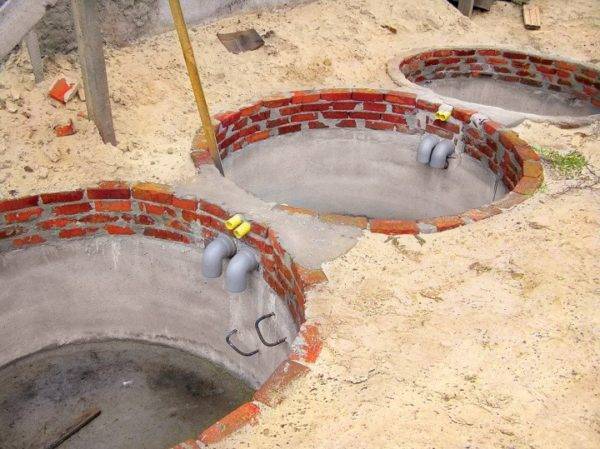 Three-chamber option
Scheme of operation of a three-chamber septic tank
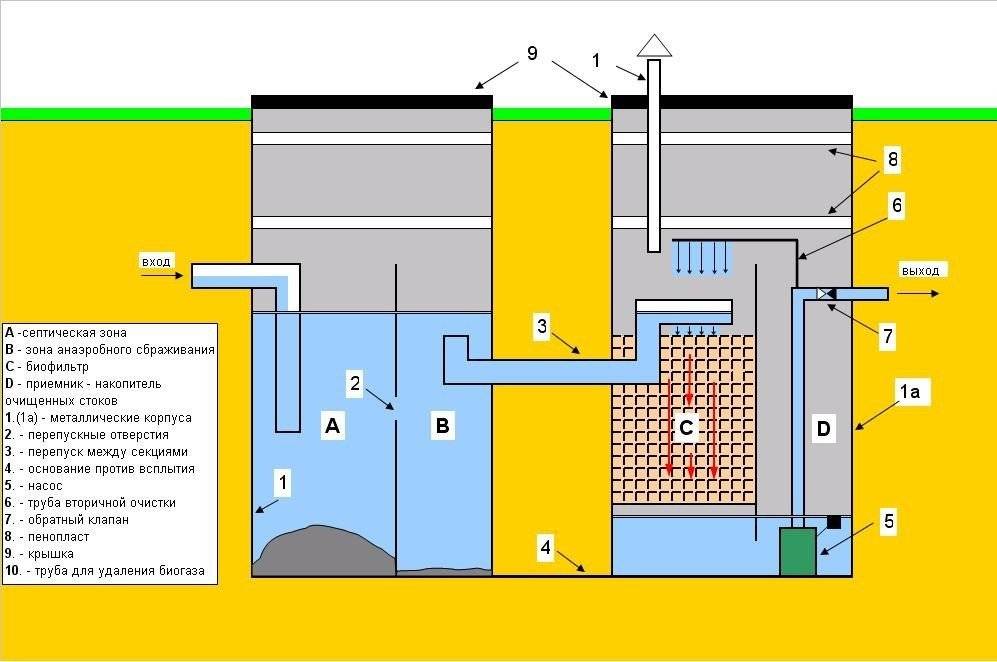
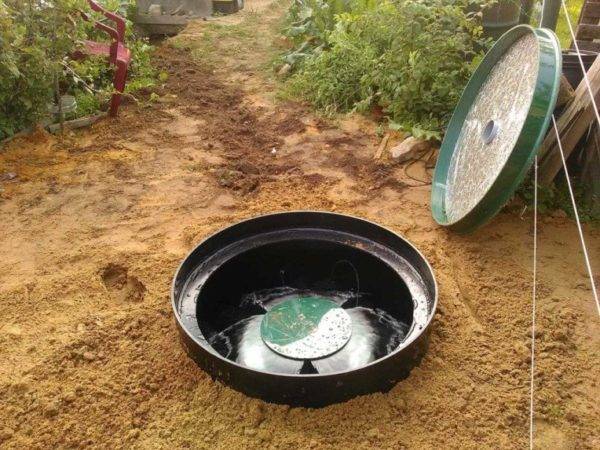 Bioseptic does not require pumping
How to ensure the normal operation of the sump
The main requirement for sewer sedimentation tanks is their tightness. To eliminate the possibility of contamination of groundwater, runoff should not directly seep into the ground.
Similarly, the water contained in the soil should not get inside the septic tank, otherwise all its contents, and the container itself, may float to the surface. Therefore, where there is such a threat, it is necessary to provide around the sewer sump and a drainage system.
Not only the walls of the tank should be airtight, but also the places where the pipes pass through them, for which sleeves, rubber or paronite seals, and silicone-based sealants are used.
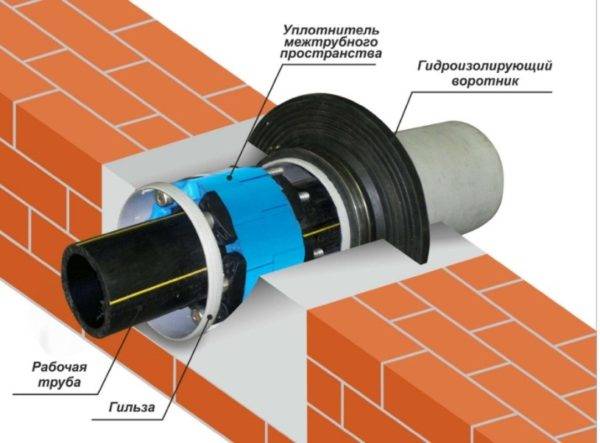 Pipe entry sealing
For normal operation of the septic tank, its storage part must have sufficient volume. It takes about 72 hours for the heavy masses to separate from the water and settle to the bottom. Accordingly, the sump must be of such a size that the effluents that fall into it can be in it during this time.


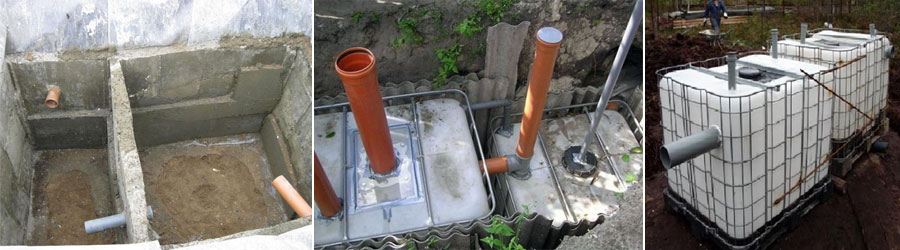

Water consumption and its disposal always depends on the number of people living in the house. A family of three will produce a maximum of 2.5 m³ of wastewater in three days.Such a “collective” does not require a larger capacity, since in this case the masses will stagnate, which is also not good.
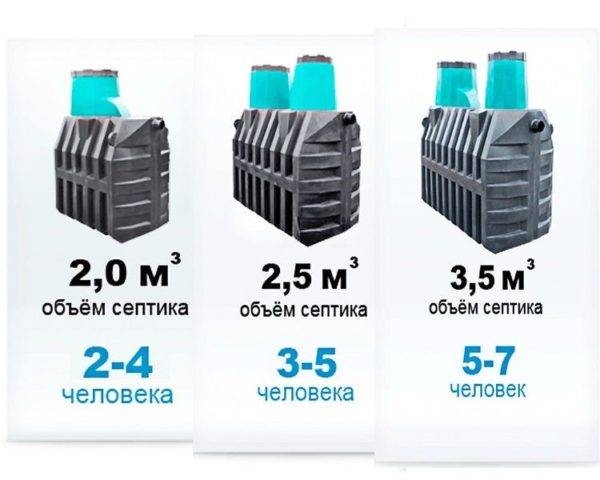 Approximate volume of the tank
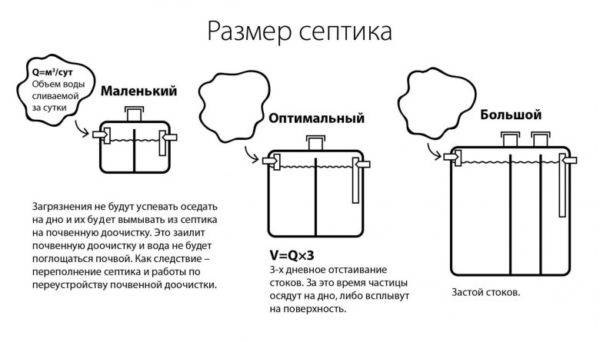 You don't need a big septic tank, you need an optimal one
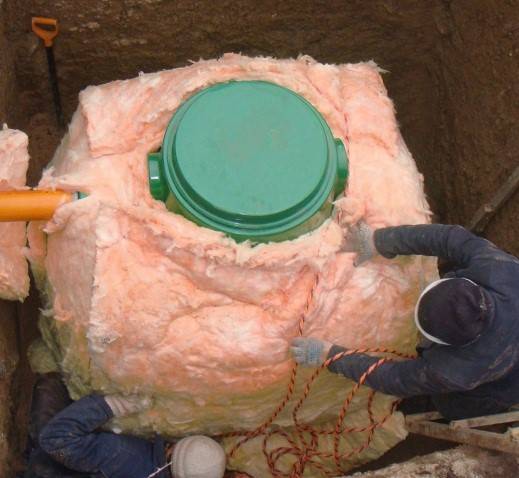 Insulation of the head of the septic tank
When constructing sewer septic tanks, it is necessary to take into account not only the level of groundwater, but also the depth to which the earth freezes. Most often, it is necessary to insulate, if not all the walls of the container, then at least its head.
In order not to have to introduce a fecal pump into the system, effluents must fall into the tanks by gravity, and this can only be ensured by creating a pipeline slope. Sometimes the natural landscape of the site plays into the hands, but due to it only a small difference in elevations can be leveled. It will not be possible to organize a significant slope by using the relief unambiguously.
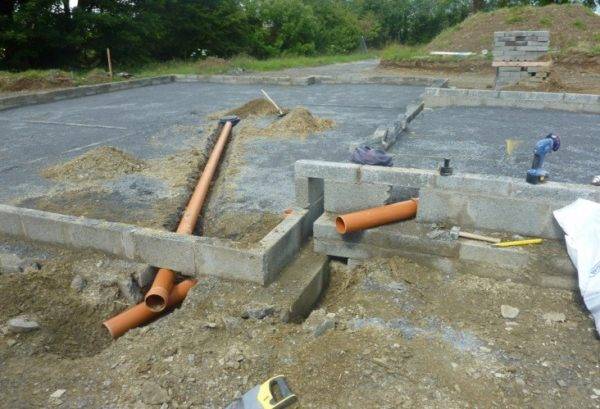 The slope of the pipeline must be towards the drain
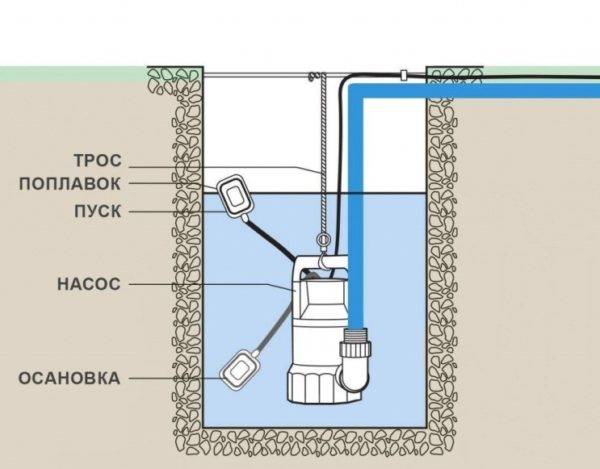 If it is impossible to organize a slope in the septic tank, you will have to install a pump
Prices for submersible pumps
Submersible pump
And one more, very important aspect that must be taken into account when arranging a septic tank is the need to remove gases formed during the fermentation of organic substances. This will be ensured by a fan pipe, which, in principle, is present in any sewer, including in multi-apartment buildings - only there it is displayed on the roof of the house, and here it will barely rise above the head of the tank.
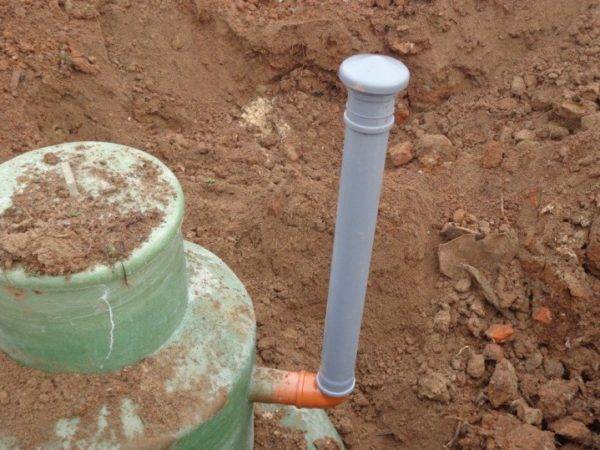 Ventilation (fan) pipe
Advantages and disadvantages of plastic drives
Like any other device, a plastic septic tank has a number of advantages and disadvantages. Among the advantages of using this variety should be highlighted:
- Undeniable safety in relation to the ecological state of the earth and the environment, especially from an epidemiological point of view. The plastic from which the accumulative septic tank of Chistok is made is especially resistant to decomposition in the soil, which prevents the release of substances and microorganisms potentially dangerous for soil biocenosis.
- Resistant to large volume bursts from the pipe system, which is ensured by reliable tightness and durability of the storage tank.
- Significantly simplified installation procedure when in any meteorological conditions of the area.
- Low weight, which, when properly installed drive, greatly facilitates it.
- No need to assemble the components of the plastic cleaner due to the fact that it is a monolithic structure that requires only installation on site.
- Relative cheapness in the market.
- A storage type septic tank does not depend on the power supply, which not only reduces the cash costs for electricity, but also prevents problems in settlements with power outages.
The disadvantages of operating sewer plastic septic tanks include:
- All the same small mass in the event that the soil on the site has a tendency to increase its volume in winter. In this situation, a light drive can be taken out of the ground, this is especially often observed if it is installed incorrectly.
- Limited terms of use.
- Possible formation of deformations and various types of curvature of the hull under the influence of the weight of the earth or groundwater pressure.
- Possibility of damage to the hull by rodents.
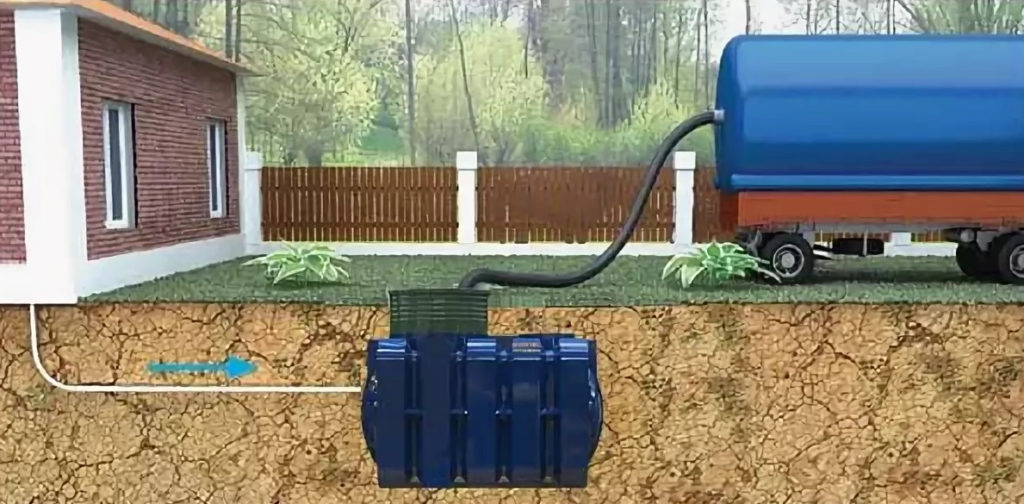
- The need for regular cleaning to ensure its normal continuous functioning. To do this, the owner of a private house will need to involve the forces of vacuum trucks and provide access to the cleaning drive at any time.
- The preparation of a special pit for placing a septic tank in it is also problematic, especially if it is installed manually by the homeowner himself.
- Not all plastic septic tanks are suitable for the chemical method of cleaning the incoming water, which can lead to the appearance of an unpleasant odor in the area.



