- Types of convectors
- wall
- floor standing
- How convection works
- Manufacturing materials
- Feature Comparison
- Comparison with other heaters
- Convector or oil heater
- Infrared heaters or convectors
- Comparison of fan heater and convector
- Which is better: split system or convector
- How to reduce heating costs
- Mounting method
- Rating of electric convectors
- Microclimate devices for the home
- Country house heating
- Choice between infrared heater and convector
- The principle of operation of the gas convector
- Conclusions and useful video on the topic
Types of convectors
There are many types of convectors, which are divided into several groups: according to the type of installation, according to the principle of heating and air circulation. Therefore, the choice of a convector is made according to its technical characteristics. Device types:
- The heater can be either with natural or forced air circulation.
- They come with electric, water or gas heating methods. Electric convectors for heating are also divided into infrared models.
- According to the method of fastening - floor, wall.
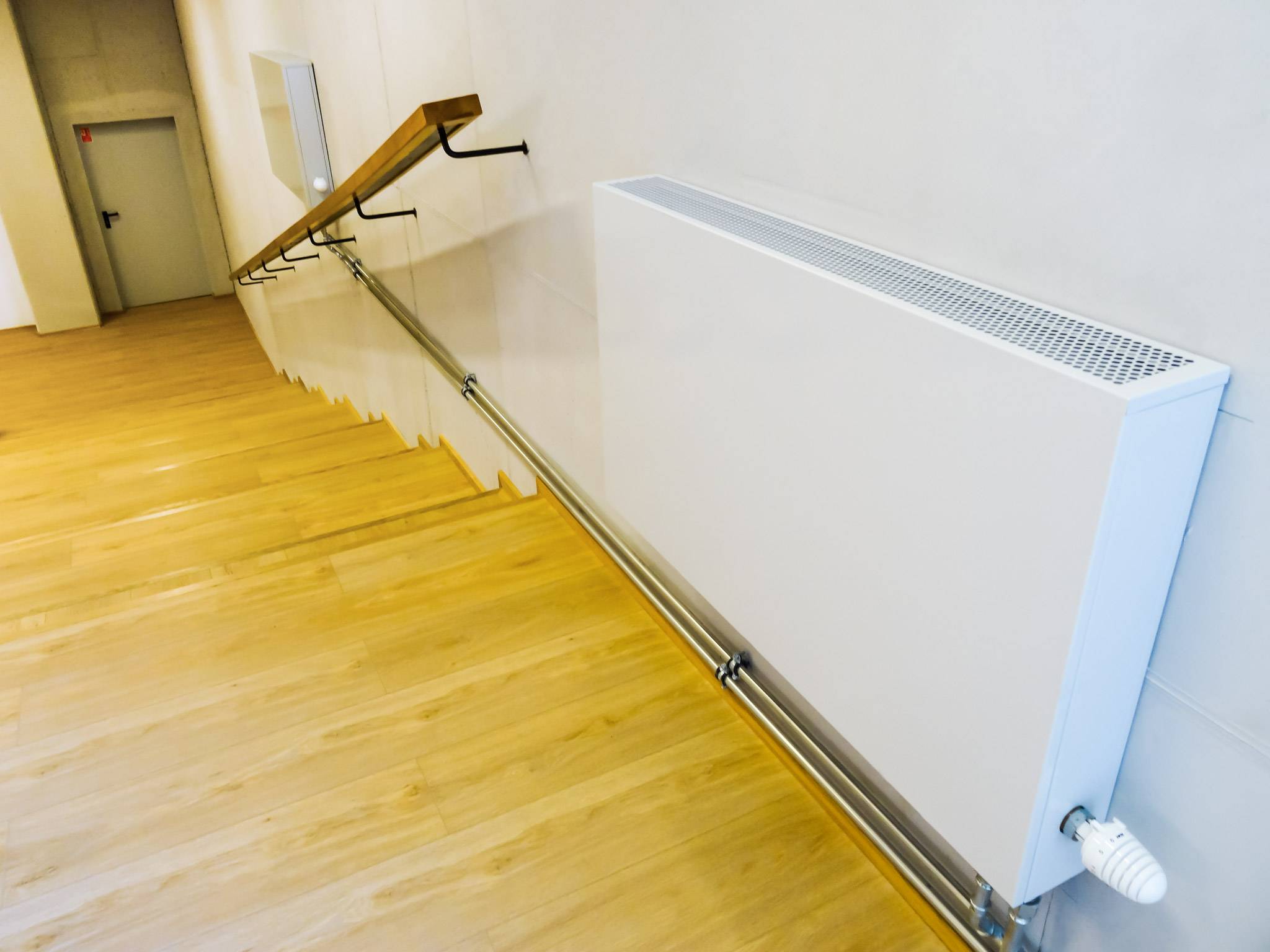
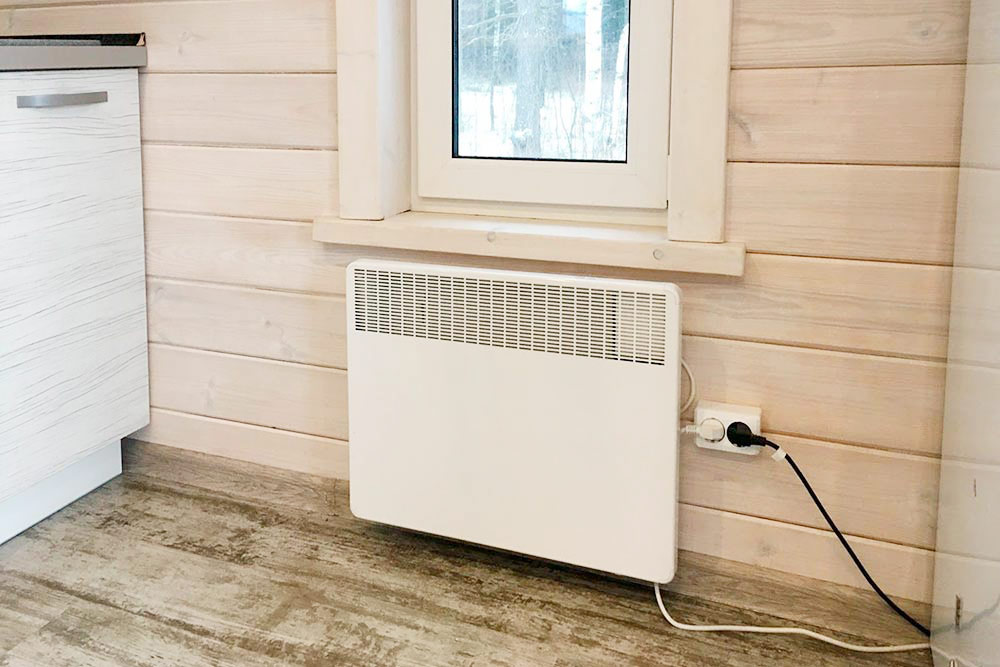
wall
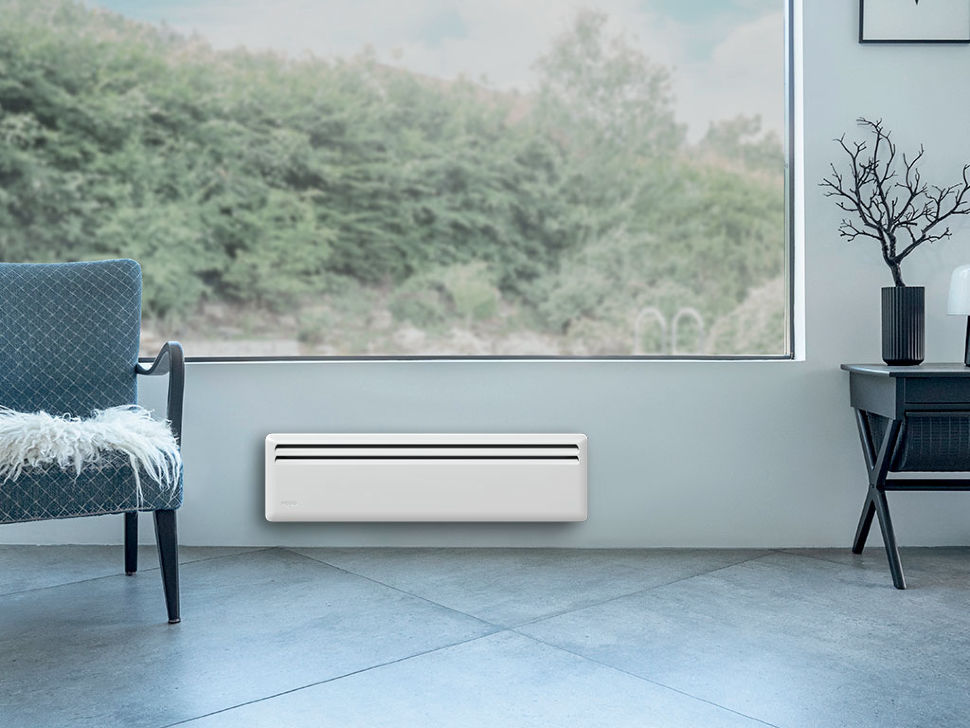
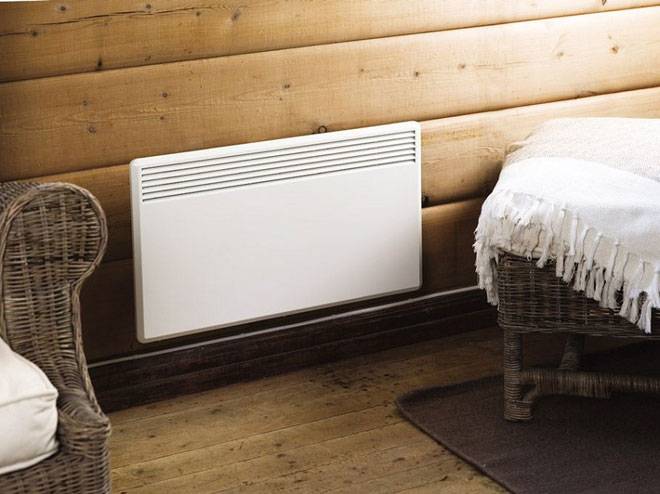
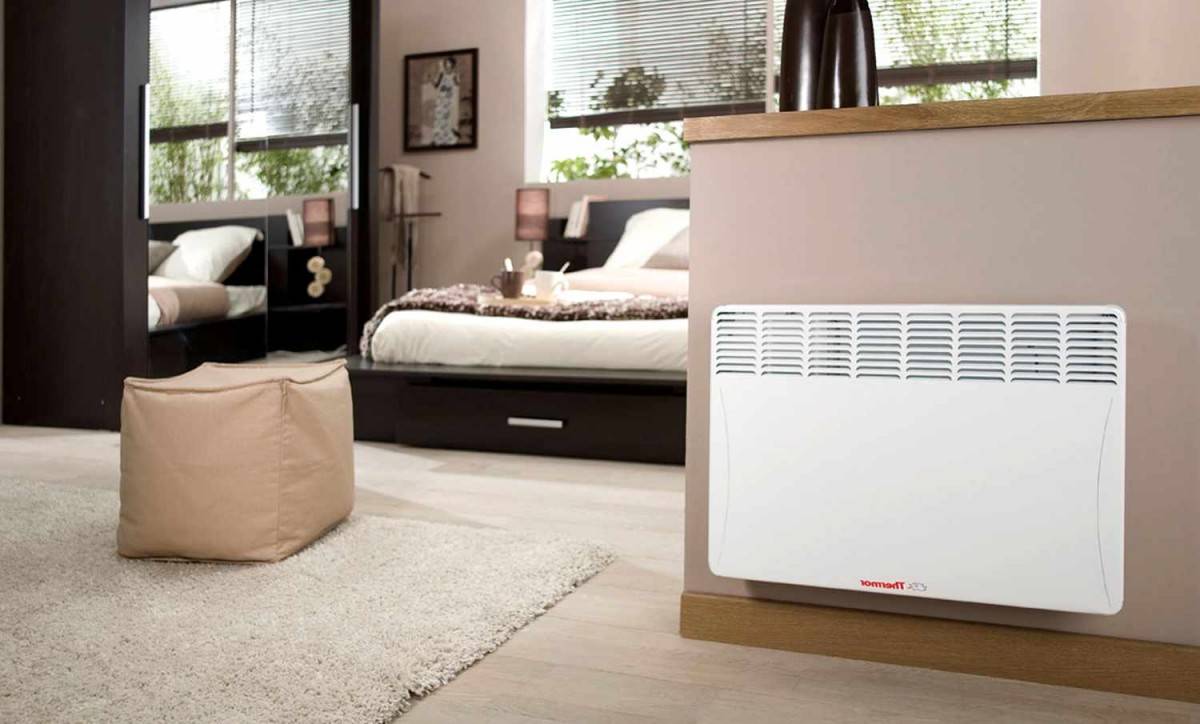
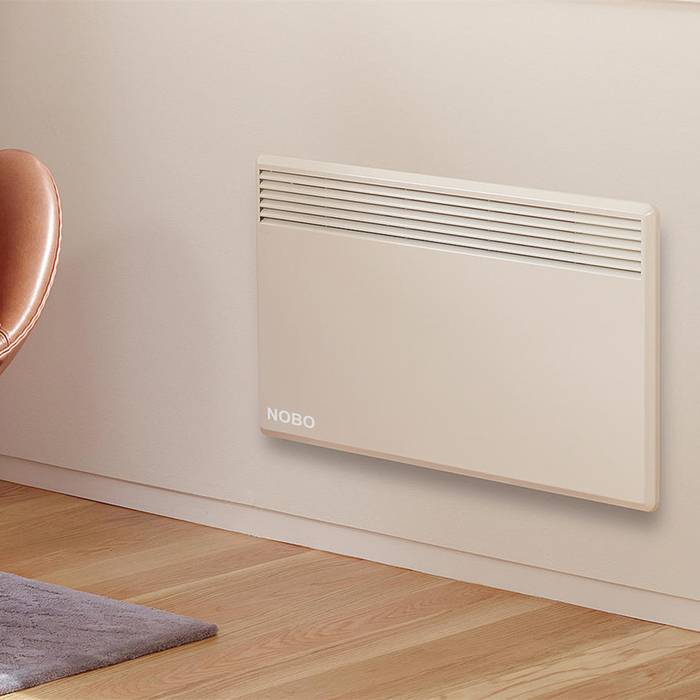
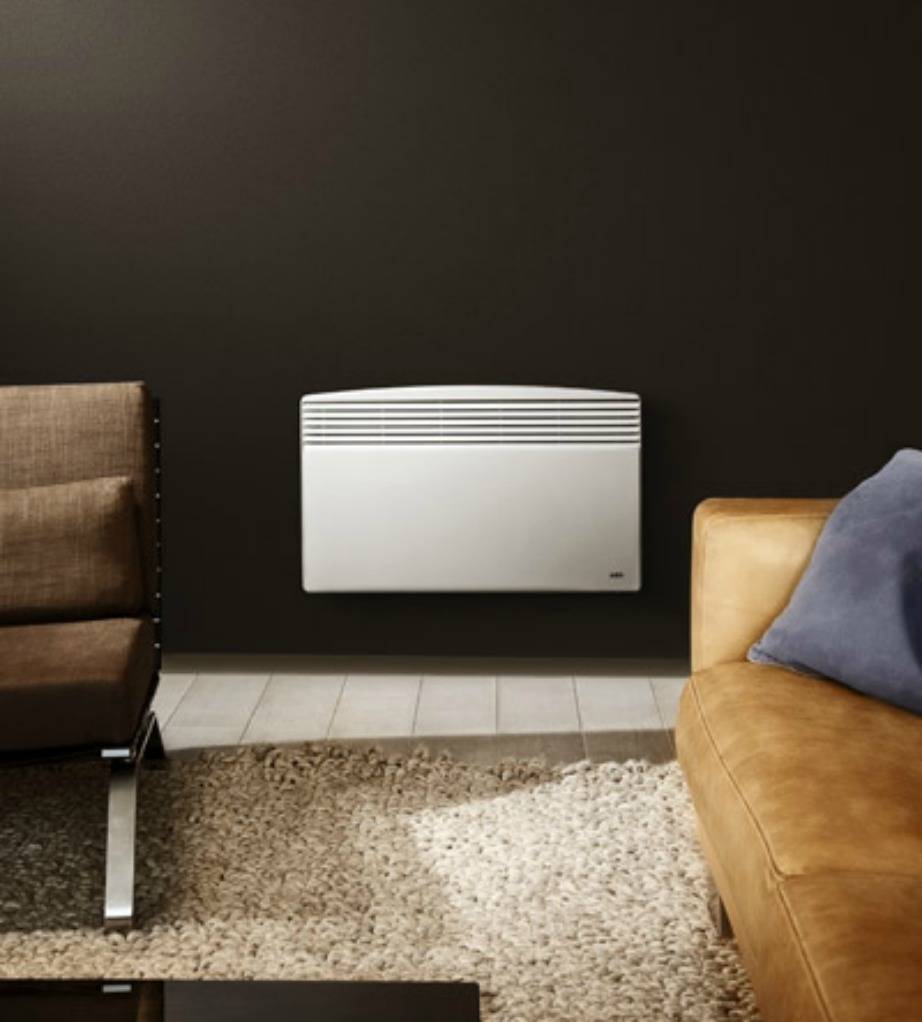
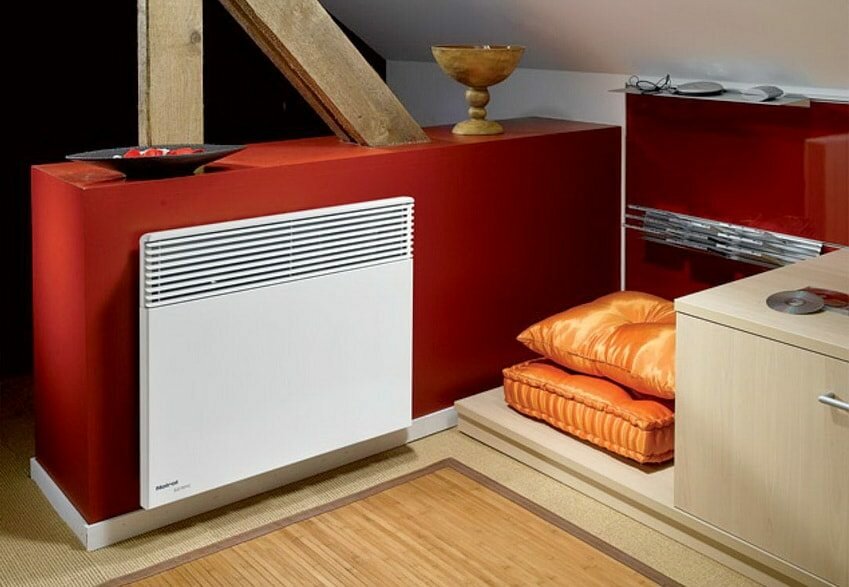
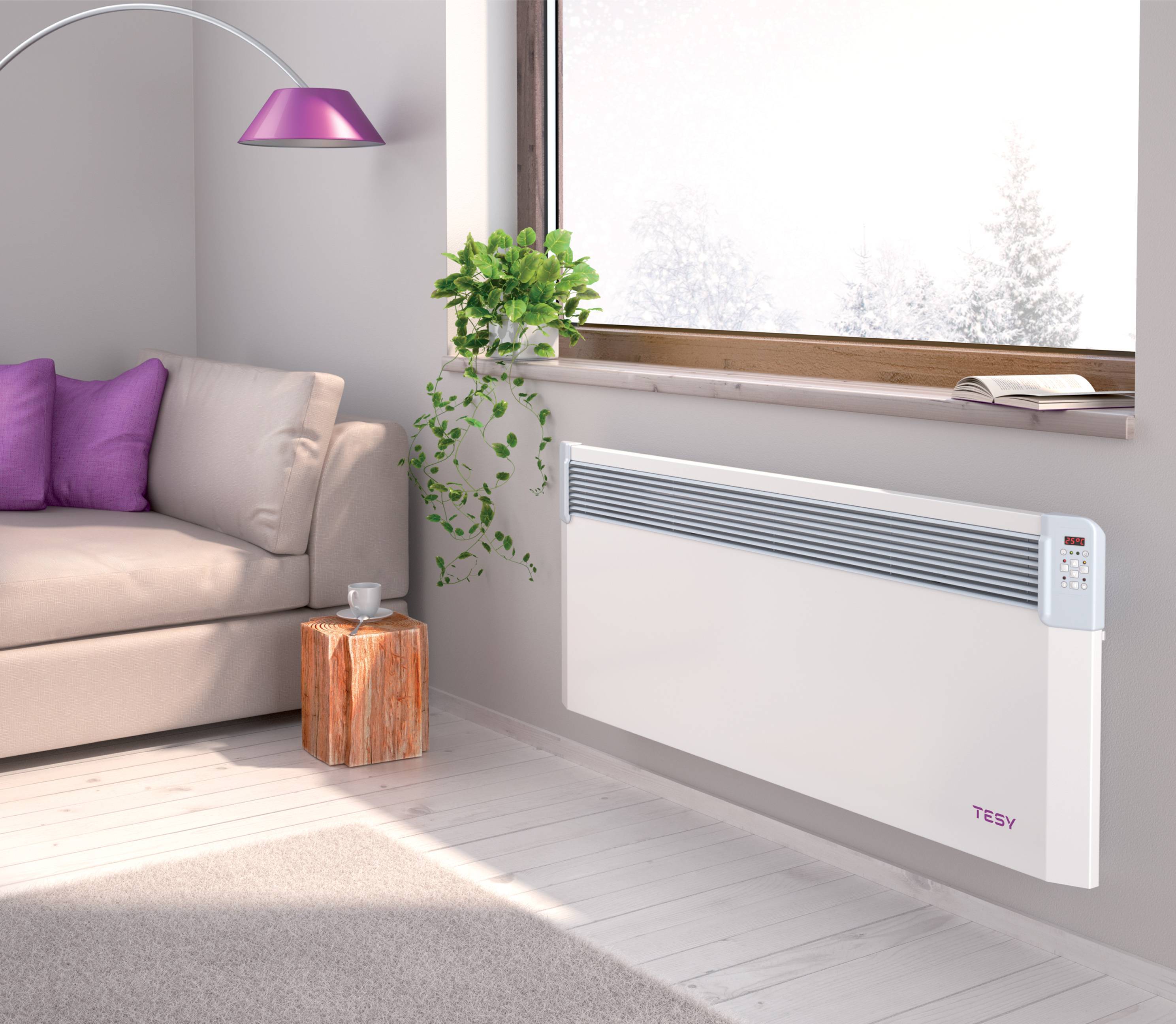
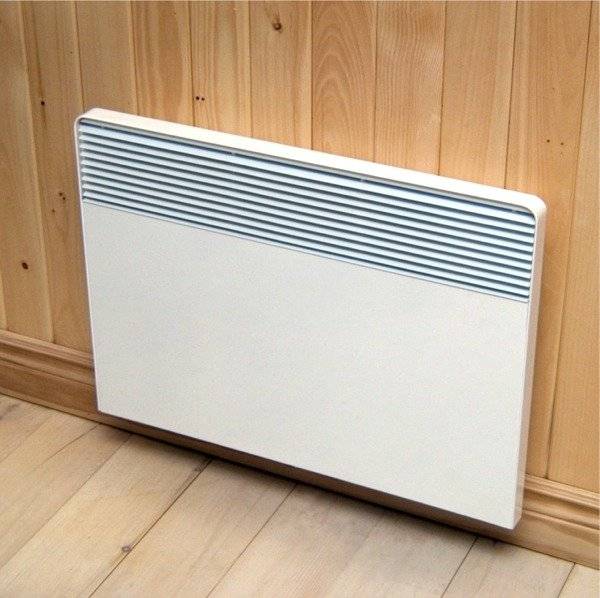
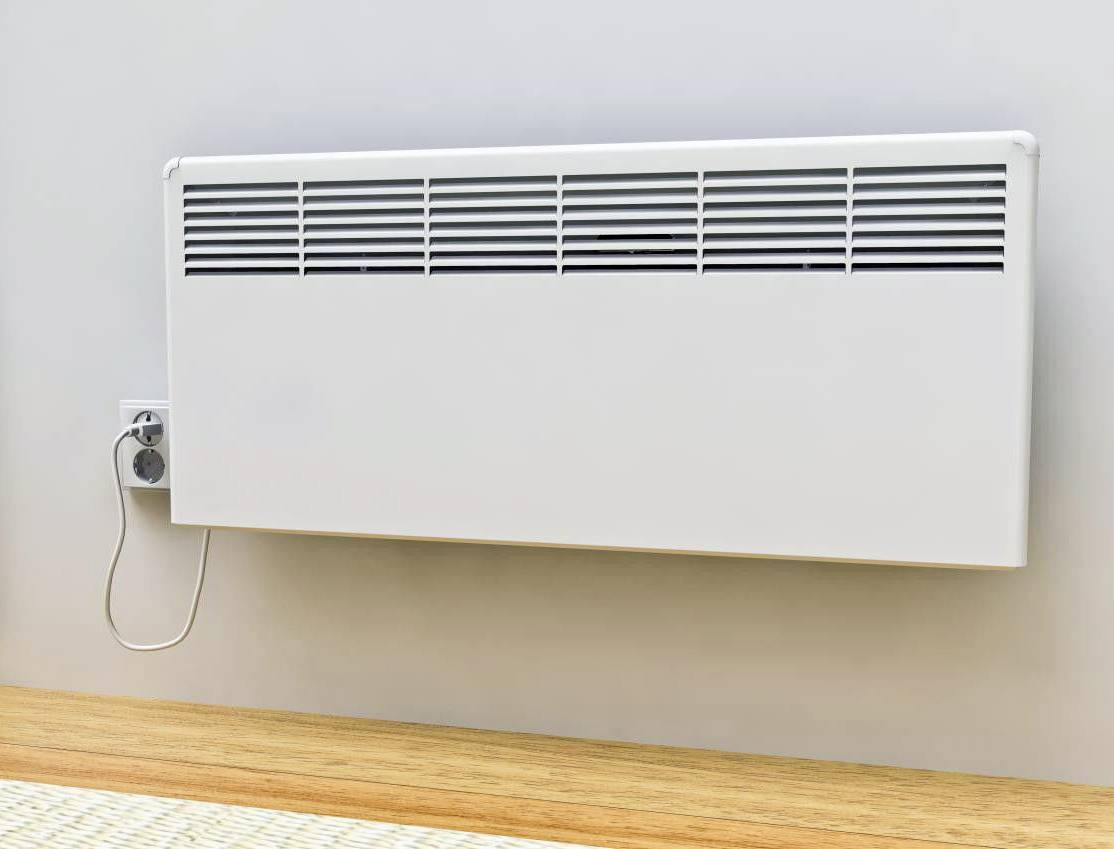
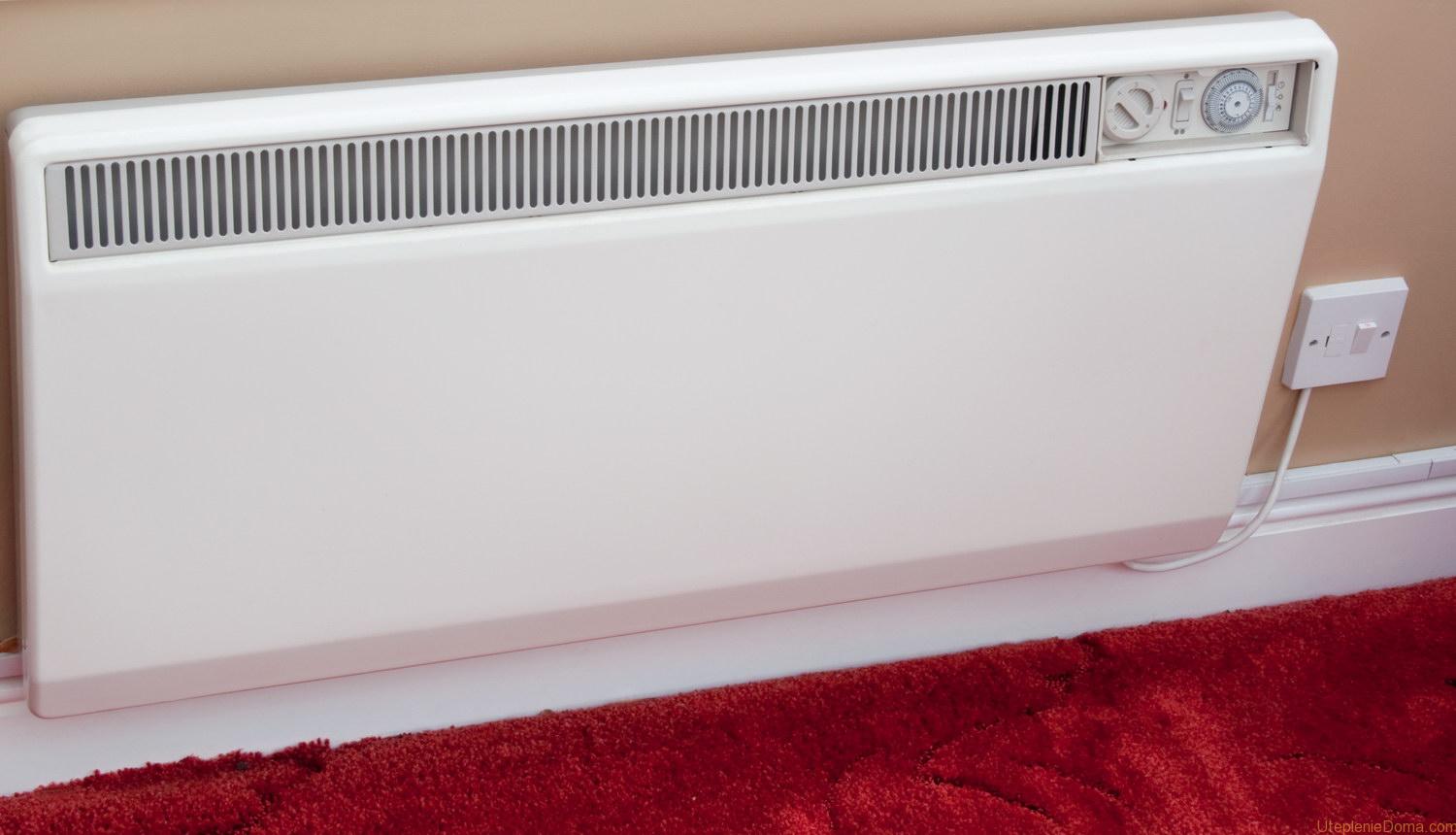
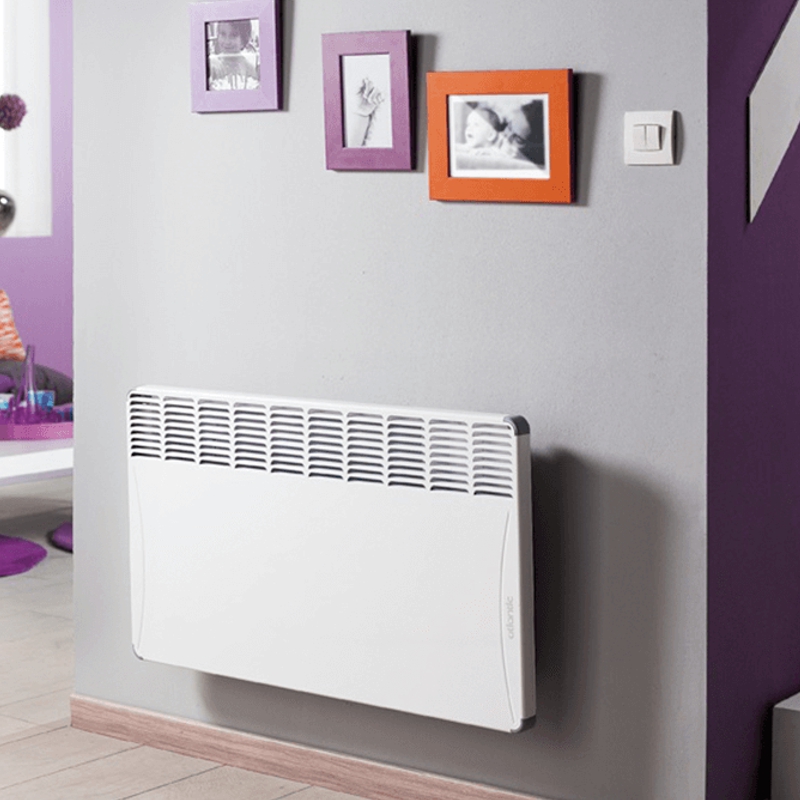
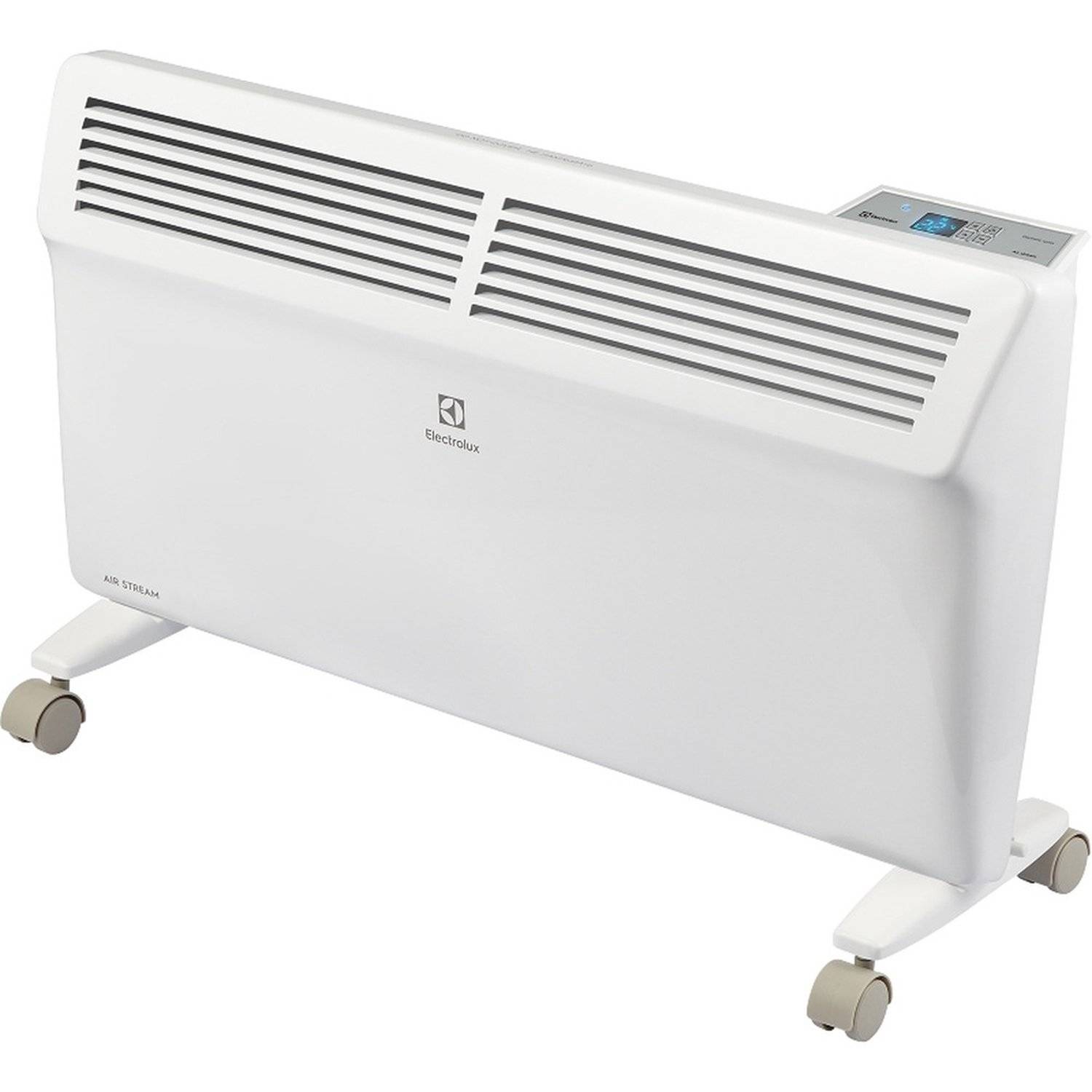
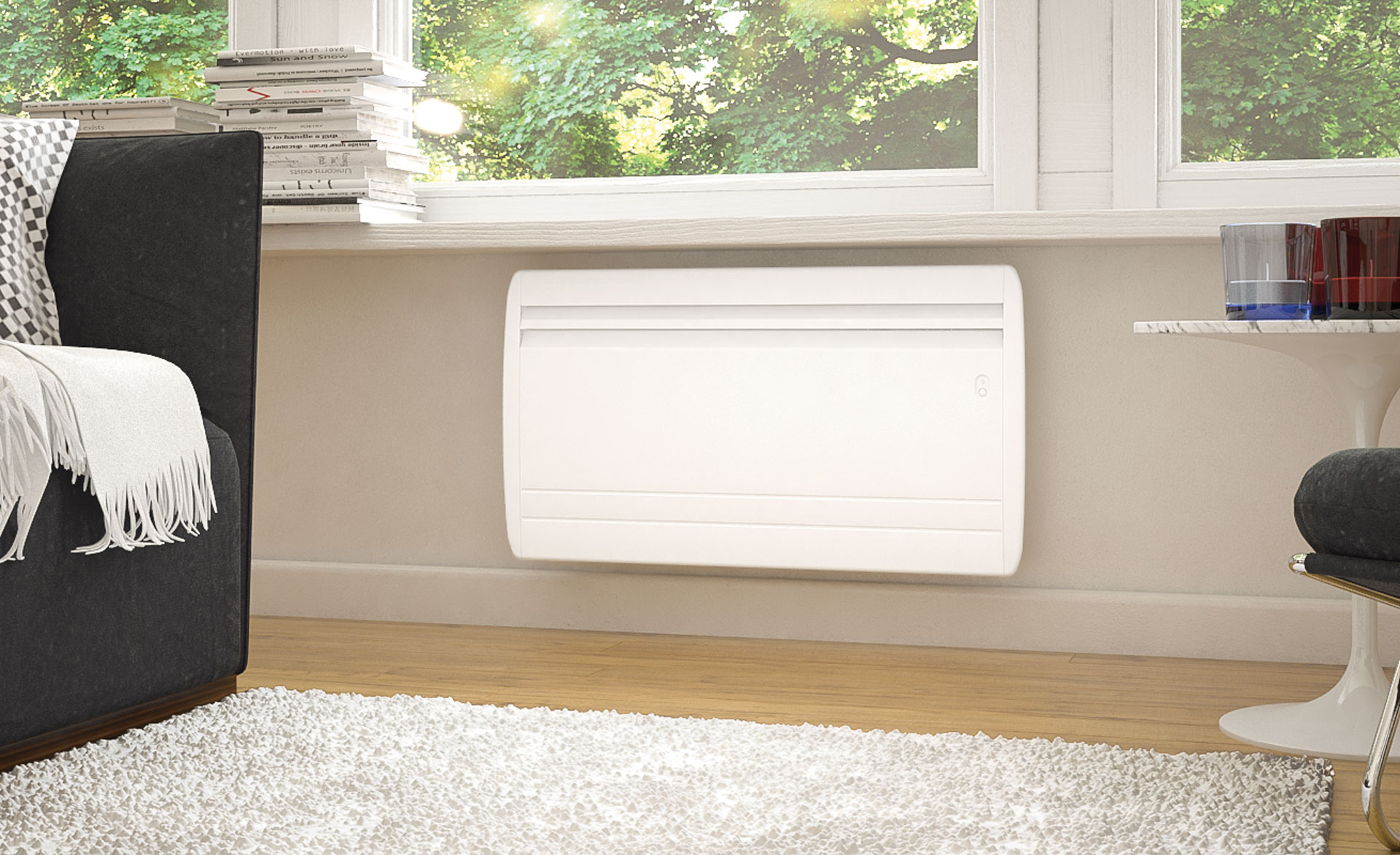
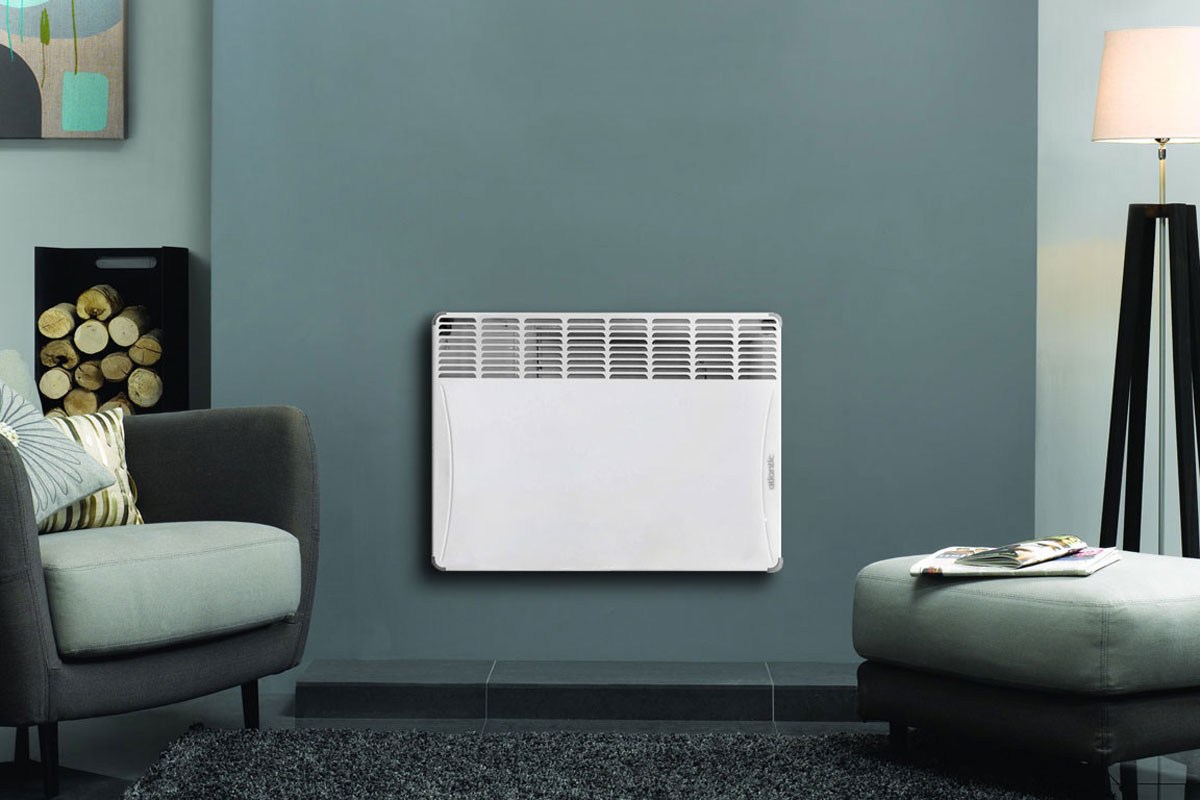
The wall heater has a compact size. It comes in horizontal, vertical and ceiling types. Devices are available with or without a built-in thermostat.In appearance, the heaters are panel, film or have the form of tubular lamps. According to the heating method, they are divided into infrared (thermal radiation) and convection (air circulation) models. Design features:
- Wall models are equipped with a flat box-shaped body. The body thickness is small, but corresponds to the height of the device and, according to the principle of operation, is similar to a vertical pipe, the inlet and outlet of which has a temperature difference. Because of this, increased air draft is created. Thanks to this shape of the body and the closed space, air enters the heater, thereby ensuring rapid heating.
- On the end side of the housing in the lower part there are small slots for the entry of cooled air.
- At the bottom of the device, one or more heating elements are installed, which are produced in the form of cast modules or a separate coil. Elements are switched on simultaneously or in turn. The start method depends on the selected mode.
- In the upper part of the case there are holes in the form of curtains. Hot air comes out through them. Curtain models are movable or fixed. With the help of movable elements, you can adjust the air flow in any direction.
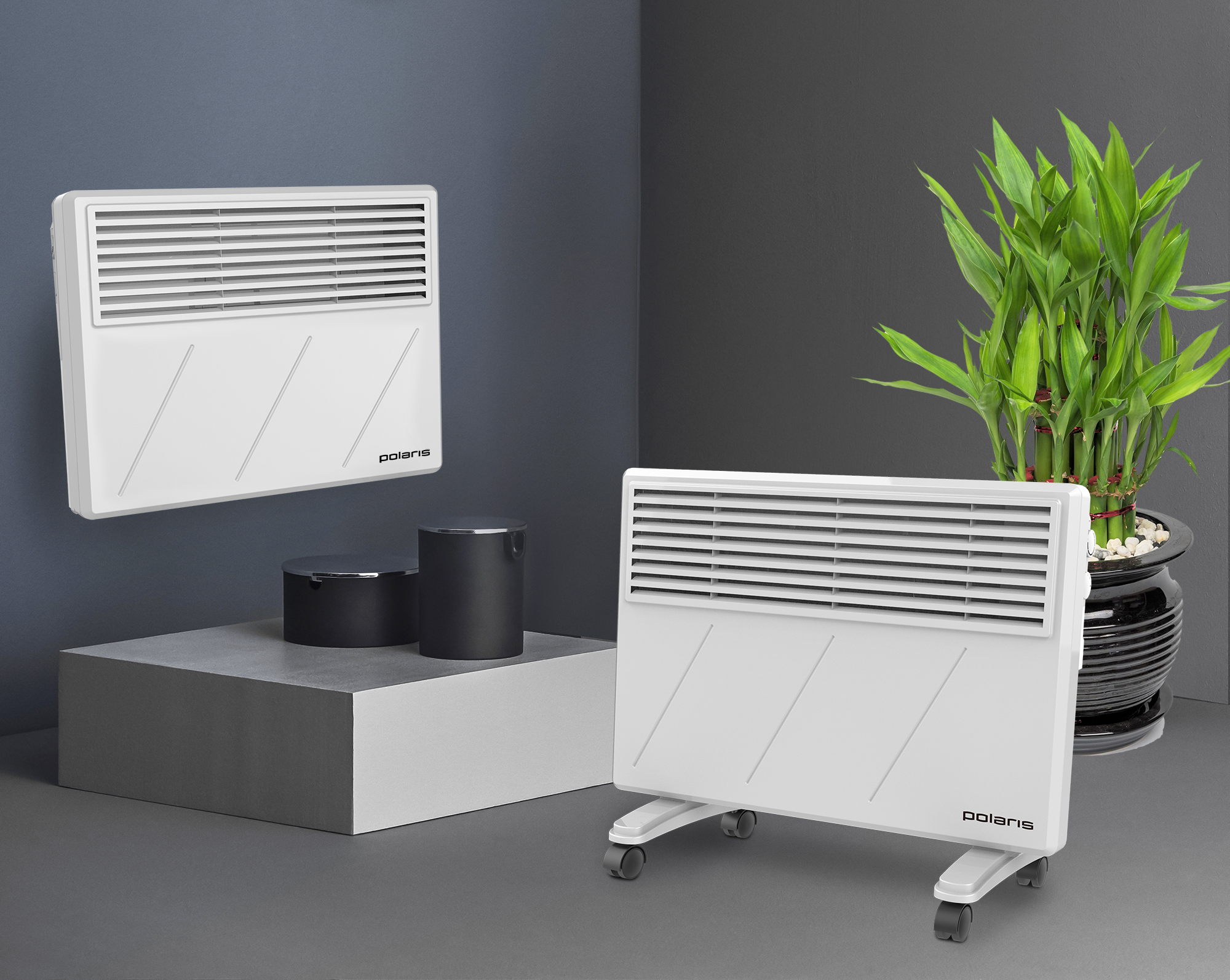
Regardless of the type of wall convector, installation is carried out on brackets. This is due to its light weight. Sometimes the device is equipped with additional legs.
floor standing
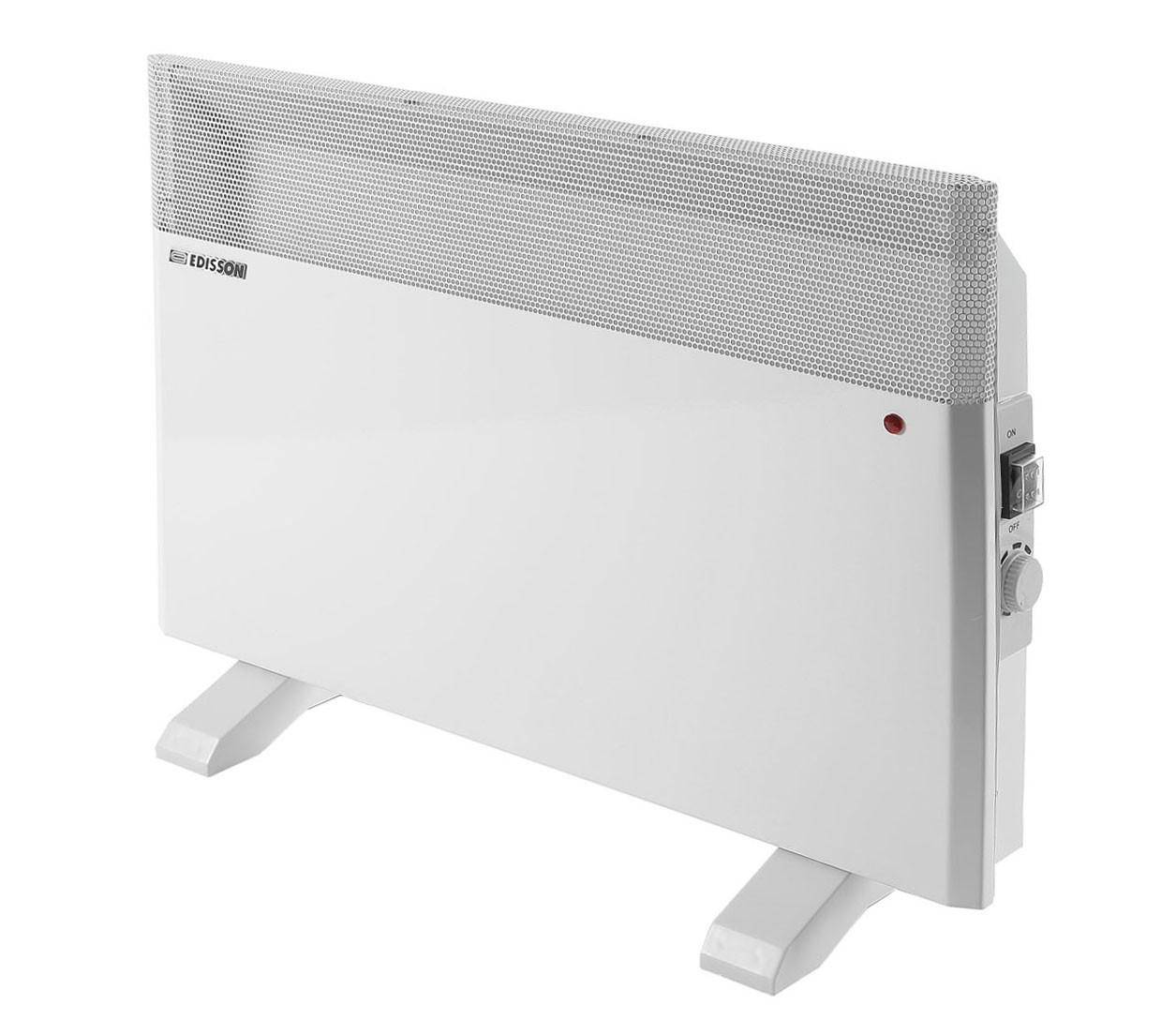
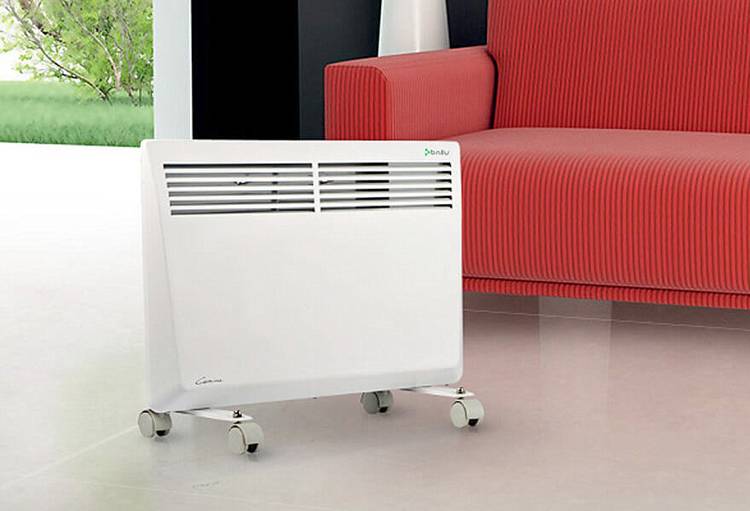
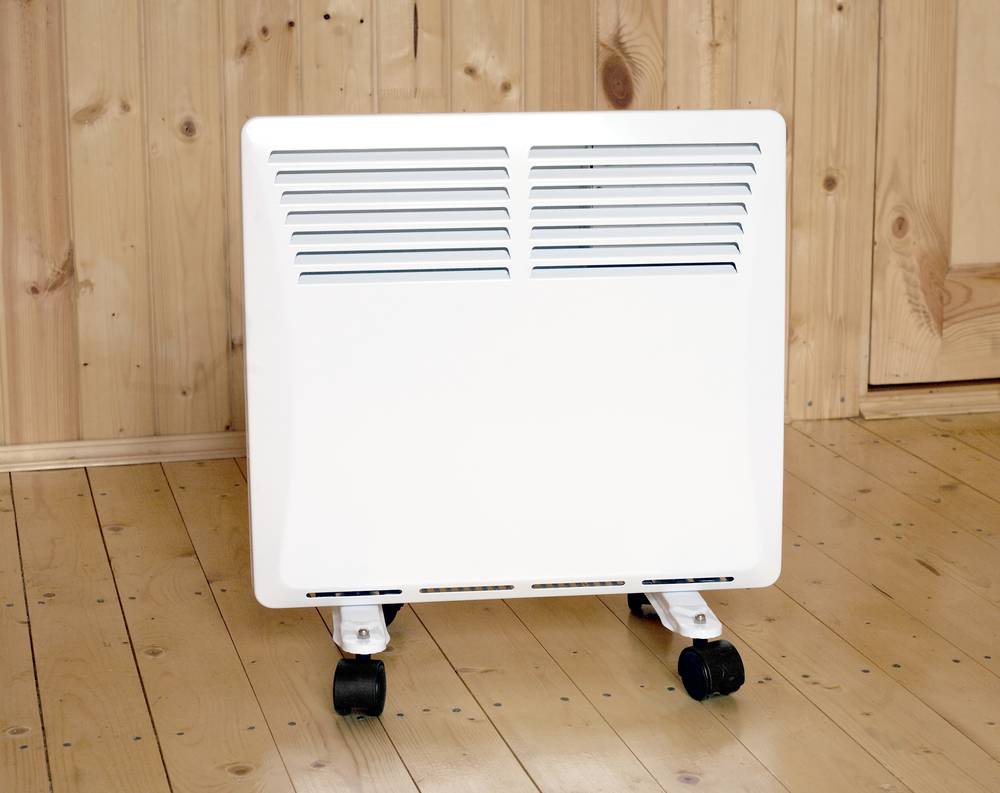
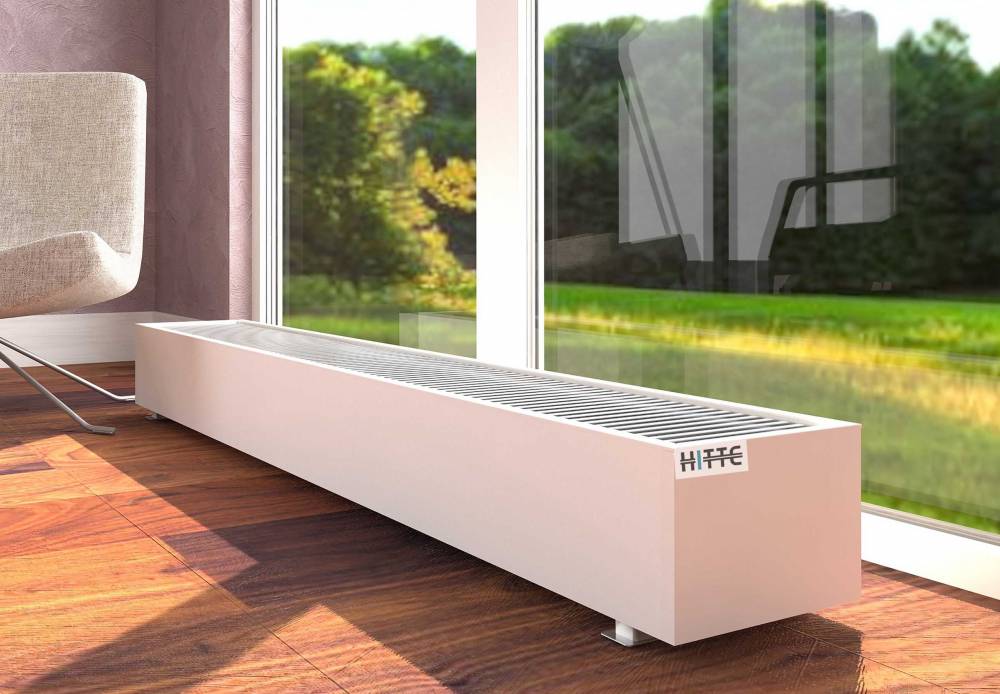
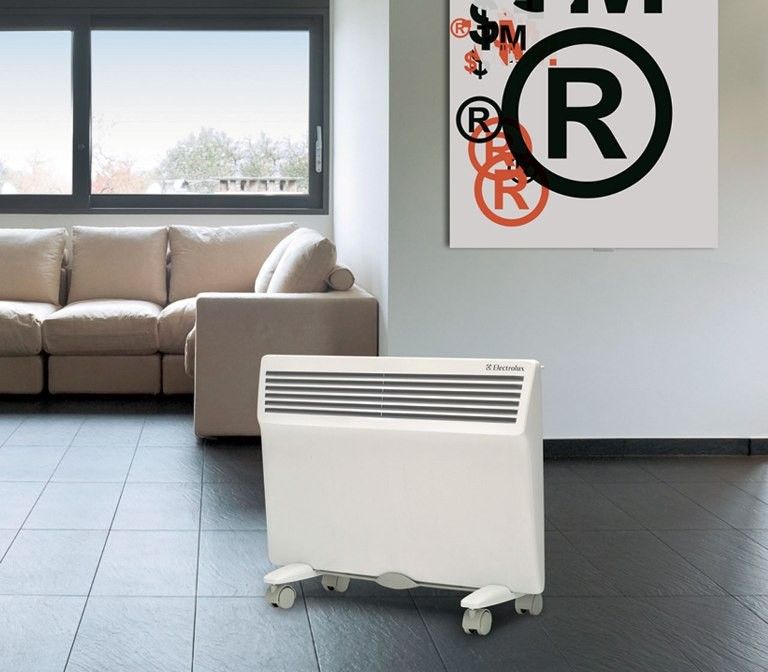
Floor electric convectors for heating are installed on wheels, since they have no other rigid mount. The device has a beautiful appearance, high efficiency, works silently. Some models can be additionally equipped with a heated towel rail and a humidifier.This model is convenient in that it can be moved to any place. Disadvantage: limitation on the length of the wire.
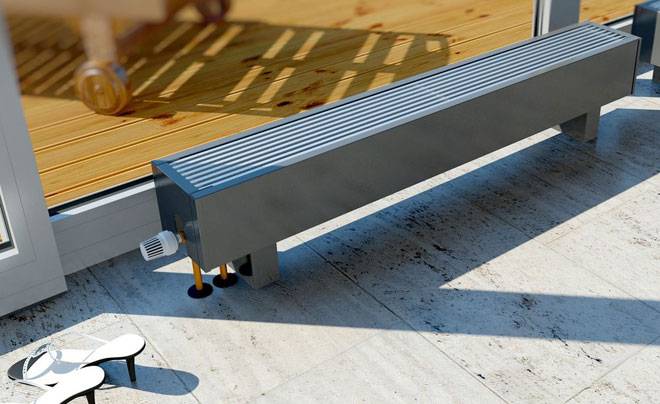
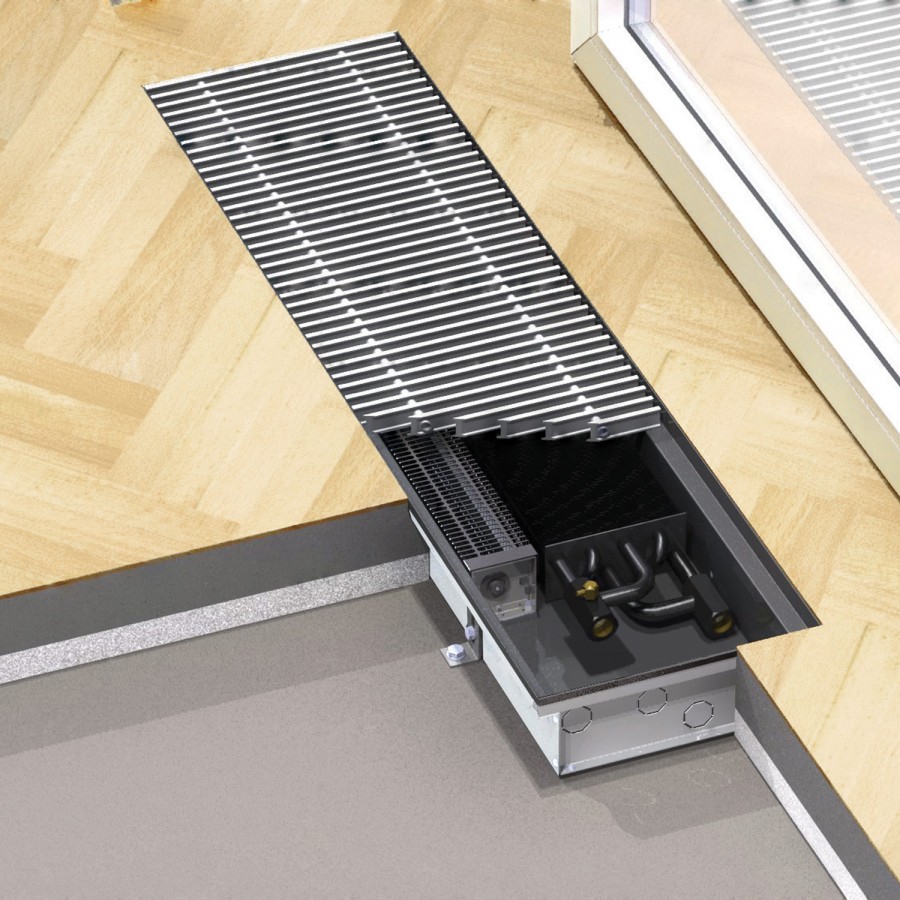
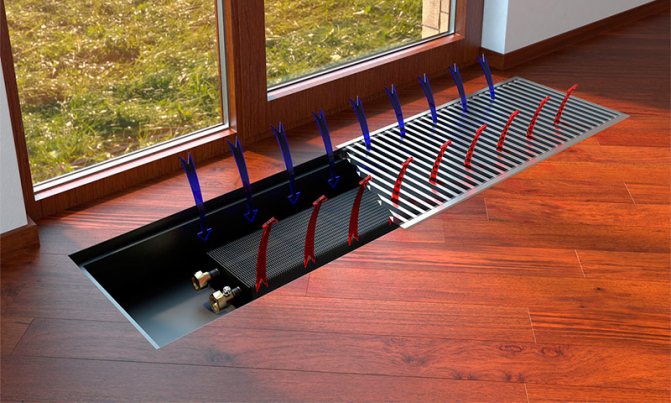
One of the varieties of floor structures is devices built into special niches that are made in the floor. From above, the heater is covered with decorative grilles. Through these devices, cold air enters, heats up and exits. Heating devices of this design are intended for use in rooms:
- with a small area
- in doorways between rooms (to create thermal curtains);
- in children's rooms;
- in rooms with panoramic windows.
All outdoor devices are compact in size. This allows you not to make large niches in the floor. Long convectors are produced under panoramic windows of great length. They are powerful and expensive. The installation of the heater under the window is done so that the capture of cold air occurs from the side of the window.
How convection works
Convection is the natural movement of air in space based on physical laws. The air flow acts as a heat carrier, accumulates heat, and then transfers and distributes it in space.
The electric convector is ideal as an additional source of heat in the room, if for some reason the central heating cannot cope with the heating of the rooms. This is an elegant and simple solution for creating a comfortable environment.
Convection heaters (known as convection heaters): have no moving parts, so they are completely silent. They create natural air currents that circulate quietly throughout the room.
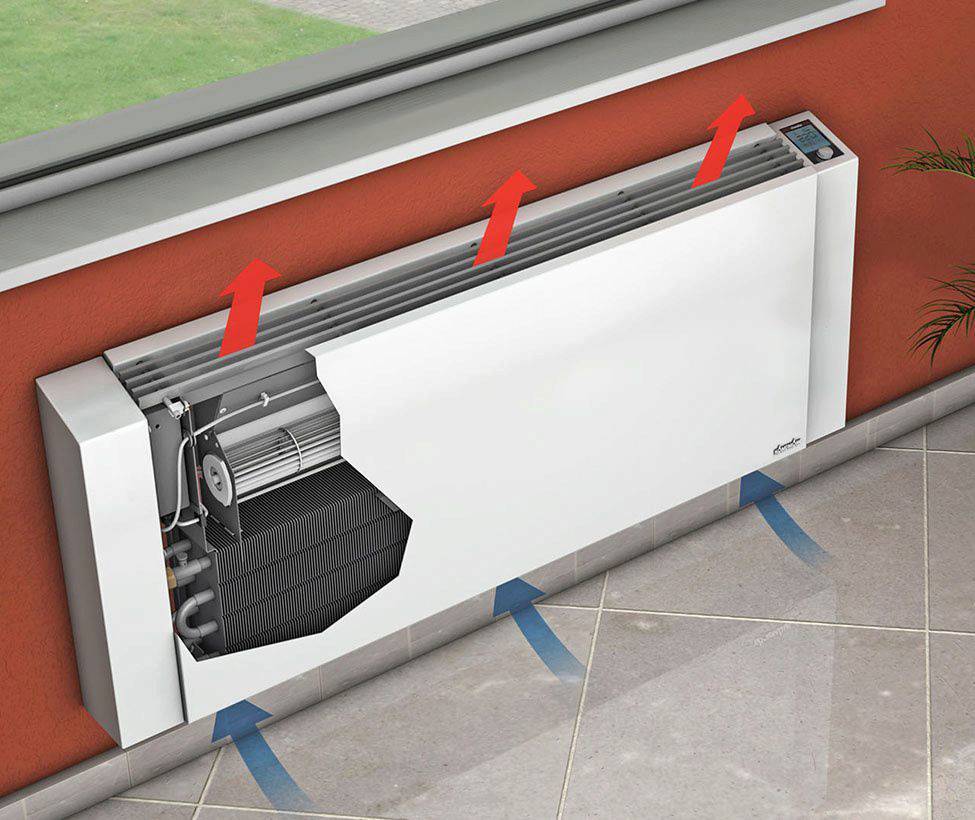
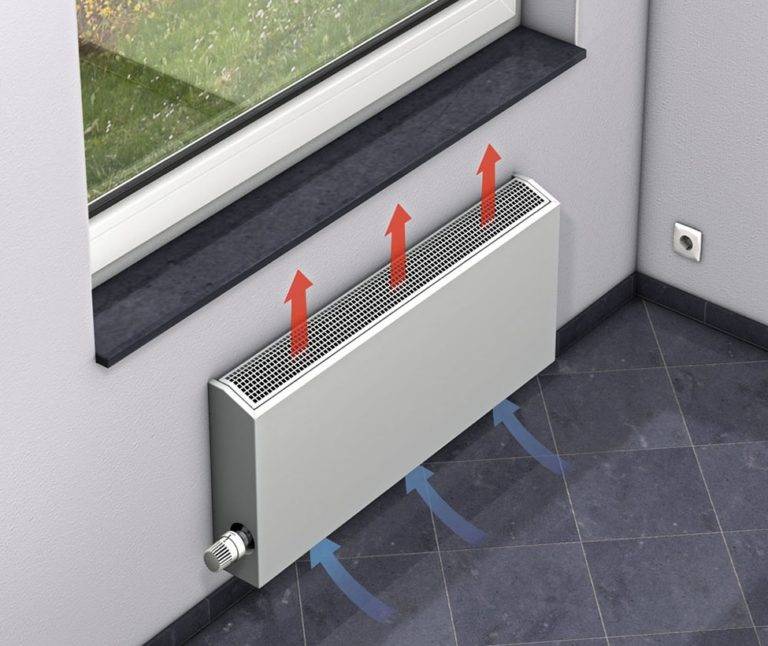
The principle of operation of these heaters is simple - to direct cold air flows through their body, where the heating element is located, and then bring these flows of warm air into the room. Convectors use physical laws for heating, thermally induced rise of air masses.
During operation, the convector generates the movement of heat and air. Heat is obtained when electric current is applied to heating elements, such as heating elements. The cold air is heated in the convector and is usually discharged upwards or laterally as hot air.
Warm air rises, while drawing in additional cold air space from below, this sets in motion the entire air mass in the room. To maintain a certain temperature, the air must be constantly enriched with heat again and again.
Convection additionally depends on the shape of the radiator. A good example is a radiator, like a direct heating system that creates air movement along its typical finned shape. When the equipment is turned on, the radiator coolant (oil, gas, water) heats up and circulates in the device. The radiator starts to work to radiate heat. Cold air enters the fins from below, heats up and rises. A cycle begins that heats up the room.
The power of convectors is expressed in watts. The connection is made through a connection (connector, "plug") with a conventional power supply or separately installed cables. As a rule, the higher the power, the more expensive the heater costs.But if you choose a powerful heater that warms up the room quickly and then turns off, it will use less electricity than a heater that takes longer to warm up the room.
Manufacturing materials
The bodies of most heating convectors are made of metal. The most common copper-aluminum alloy coated with heat-resistant paint.
For users who want to make the convector not just a heating device, but also an interesting element of the interior, models with screens made of heat-resistant glass, ceramics or quartz are produced.
Heat exchangers of gas units are made of steel, aluminum or cast iron. The most advantageous cast iron heat exchanger due to its high thermal conductivity and durability. However, if you do not follow the rules of operation, cast iron can burst with a sharp temperature drop. Aluminum is the best heat conductor, but has a low heat resistance. Steel is inferior to aluminum in terms of thermal conductivity, but has the required strength. In addition, steel is lighter than cast iron and has a low cost.



In water convectors, the heating element is made of metals with high thermal conductivity and corrosion resistance: cast iron, stainless steel, aluminum, etc. In addition, in water and gas models, manufacturers often install radiators made of steel, copper, aluminum, or a combination of both. The best option is to choose a radiator in which the tubes are made of copper and the fins are made of aluminum. This combination is highly efficient, corrosion resistant and durable.
Grid shapes: rectangular, oval, rounded, etc.When choosing a grate that matches the style of the room, the main thing to consider is the distance between the bars of the grate. small objects can get in there.
When choosing heating convectors for a summer house or apartment, in addition to the type of appliances themselves and features of their installation it is required to take into account thermoregulation, power (features of power selection for each type of device are different), etc.
In our subsequent articles, you will find all the criteria for choosing convectors depending on their type and choose a device that will warm you in the cold season and create the most comfortable indoor environment.
Feature Comparison
The speed of air heating by convectors is very low, but they allow to achieve the most uniform temperature distribution. It will not be possible to warm up in a cold room from a convector heater, you will have to wait several hours. The heat from the infrared emitter can be felt almost immediately, and there will be no accumulation of warm air near the ceiling. You can direct the beams directly to the area where the person is located.
Ease of use depends on instrument configuration. Wall models of convectors do not take up additional space and are easy to use. Stand-alone appliances can interfere with movement. Portable infrared heaters require a large area for placement. To free up space, it is recommended to purchase suspended models that can be placed on walls or ceilings.
Unlike infrared heaters, convectors do not require monitoring of their operation. The device can be safely left switched on unattended.Infrared devices are characterized by a greater fire hazard, so it is recommended to use them with constant monitoring.
Do not direct the radiation of infrared devices on surfaces that can be damaged by elevated temperatures. Nearby furniture and furnishings can become very hot.
The environmental friendliness of infrared heaters is higher, since they do not contribute to significant air movements inside the room. Convectors carry out constant circulation, as a result of which dust can rise into the air. But none of the devices of both types emit harmful substances during operation.
Convectors reduce the level of humidity much more strongly, so they are recommended to be used in conjunction with humidifiers.
have great durability
Energy costs depend on operating conditions. Studies show that infrared heaters are more economical than convectors. Savings in the use of infrared radiation is achieved due to the high heating rate. After reaching the desired temperature, the infrared heater can be turned off, but heated objects will retain heat for a long time. And the convector often has to work continuously.
It is not possible to unambiguously determine which heating method is better. The choice always depends on the specific tasks and operating conditions. A good solution would be to combine devices. You can purchase a combined heater or use two devices with a different principle of operation.
Comparison with other heaters
There are many types of household appliances capable of heating a room: split systems, fan heaters, etc.Consider how convectors differ, and how they are better or worse than other heating devices.
Convector or oil heater
Above we said that the essence of the devices is the same. The oil heater is made of metal, in the form of a radiator battery, inside which there is mineral oil and a heating element. When the device is turned on, the oil heats up and accordingly heats the metal case, which in turn warms the air. The design provides for various operating modes and a rheostat that turns off the device when the temperature rises.
If we compare convectors (here we mean direct contact of the heat exchanger with heating elements) and oil heaters in terms of efficiency, the former win - they consume 25% less electricity. Yes, TENs with direct contact heat up faster. In oil appliances, the heating element heats up, then the oil, the body warms up, and only from the body heat is transferred to the environment.
When comparing mobility, it all depends on the type of device. For example, it is clear that the ceiling or wall model is installed in one place and it is problematic to move them.
If we take portable devices, the comparison is not in favor of oily devices - mobile models weigh less, they are easy to transport and can even be installed on a shelf. Oil appliances also move with the help of wheels, but mineral oil gives the device weight - it is sometimes problematic to lift them to the floor or bring them to the car.





Infrared heaters or convectors
Infrared heaters consist of a special radiant plate.The infrared stream does not heat the air masses - the rays increase the temperature of the objects they collide with, in turn, these objects give off heat to the environment.
Infrared heaters are an efficient and cost-effective device that can quickly create heat. They are easy to use and do not require special installation. However, in these models, due to their design, convection is minimal and only a certain area can be heated. If there is no constant movement of air masses, part of the room will be warm, and part will remain cold.
Compared to convectors, IR heaters are more compact, mobile and consume less electricity. But they are only suitable for heating small rooms (balconies, toilets, etc.) or for heating a certain area (desktop).
Comparison of fan heater and convector
Fan heaters are a great option for quickly heating a room. The design of the fan heater consists of an electric or water heating element, a fan directed at it and a housing in which they are enclosed.
If we compare a fan heater and a convector, the fan heater is more “gluttonous” in terms of energy consumption. It consumes more energy, but also heats up rooms faster. If the fan heater is equipped with a thermostat, after reaching the required temperature, the device switches off.
The disadvantages of a fan heater can be considered a high level of noise emitted by rotating blades and an unpleasant odor (in models with nichrome wire) due to the combustion of dust particles. However, fan heaters with ceramic heating elements do not burn dust, oxygen and are considered the safest and most efficient.
Which is better: split system or convector
Split systems do not need a special introduction. Everyone knows air conditioners that can not only cool in summer, but also warm in winter. When compared with convectors, split systems lose significantly in terms of cost - more expensive, but more opportunities.
Of course, an air conditioner with heating is able to warm the room, but if it is below 20 degrees outside, the outdoor unit may freeze and the device can no longer be used. In addition, the split system requires complex installation, and it will not work to move it from room to room.
Convectors in this regard are much more advantageous. They can be rearranged, they are not afraid of sub-zero temperatures outside the window and they do not need to be looked after, like air conditioners.
In terms of energy savings, it is difficult to choose a favorite - devices actively consume electricity, it all depends on many factors, ranging from the type of construction and heating elements to the ambient temperature. And air conditioners emit, albeit not strong, but noise that can interfere with especially sensitive people.
How to reduce heating costs
We have already written more than once that reducing heat losses helps to make electric heating cheaper. How to reduce heating costs? Here are the main steps to help reduce energy costs:
The main indicators of heat loss in private homes. If you insulate the walls, floor and attic, as well as put good windows and doors, you will significantly save on heating.
- door insulation - if your house has uninsulated doors, feel free to send them to the scrap. Spend some money and buy a normal door with good thermal insulation;
- triple glazing will help reduce heat loss by about 10%. Also, heat loss is reduced by reducing the area of window openings. This is not always possible, but you can just brick up a couple of unnecessary windows;
- insulation of the attic will give another 5-10 percent savings;
- creating additional thermal insulation of walls - for example, by lining a house made of cement block with bricks and mineral wool, you will get significant savings.
Some of these tips are easiest to implement at the stage of building a home - do not create too wide window openings and reconsider the number of windows, provide insulation with mineral wool or other thermal insulation, think about attic insulation, immediately order triple energy-saving double-glazed windows.
Mounting method
Placement and installation of convectors is best done in certain areas of the room, for example, under windows or in the floor area, depending on the condition of the thermal insulation and the purpose of use. Proper installation of the heater results in an invisible heat shield that prevents the spread and penetration of cold into the room.
Modern or renovated buildings that have optimal insulation or central heating do not require protection from cold air; in such rooms, the convector can only be used for short-term heating of the rooms.
Rating of electric convectors
The most popular heating devices that consume electrical energy. This is not surprising, since there are quite a few advantages of this type of heaters:
- ensuring the same temperature in all points of the room;
- noiselessness;
- work without accumulation of dust and unpleasant smell;
- during operation, humidity does not decrease, since oxygen is not burned;
- high heating rate;
- energy saving;
- small dimensions;
- ease of use and reliability.
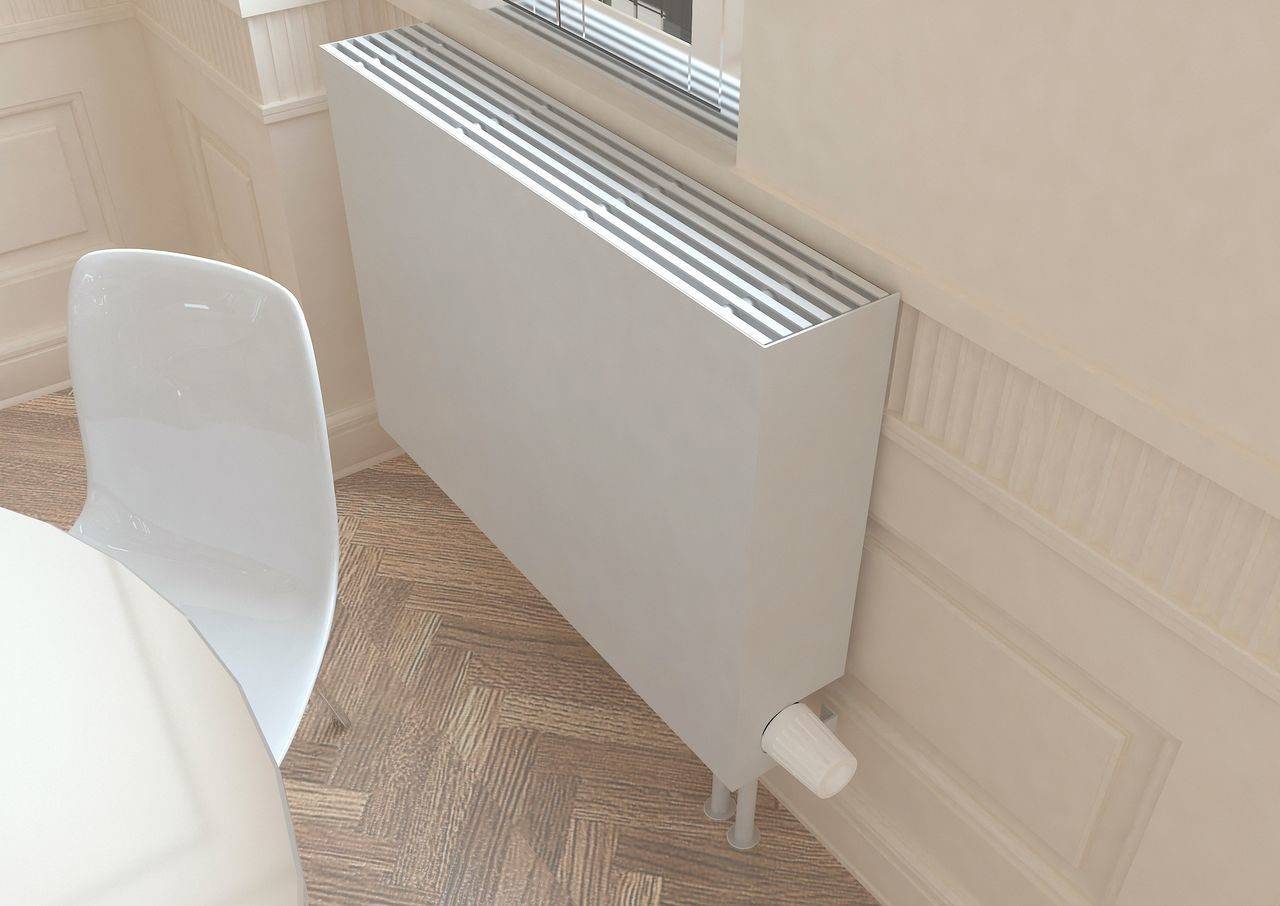
There is no single answer to the question of which electric convector is better. The products of such well-known brands as Noirot, Neoclima, Electrolux, Ballu, Timberk have been tested by many users and time. Therefore, the models of these companies often take first place in the rankings of the best electric convectors. Every day, new manufacturers of microclimate household appliances appear on the market. The cost of the products they offer is slightly less due to the uncertainty, but it is difficult to judge their quality and level of reliability.





Microclimate devices for the home
For a dwelling with an autonomous heating system, in which people are constantly present, convectors select low power, since they serve mainly as additional sources of heat.
Top 5 best electric heating convectors for home.
| Place in the ranking | Company name, model | Advantages | Flaws |
|---|---|---|---|
| 1 | Ballu BEC/EZER-1000 | High level of fire safety due to protection against overheating and tipping. Timer up to 24 hours. Noiselessness. Possibility of air ionization. | Shaky due to errors in the design of the legs |
| 2 | Timberk TEC. PS1 LE 1500 IN | High heat transfer due to the increased area of the heating element. Two modes of operation. Timer. Ionizer. | Clicking sounds during automatic switching |
| 3 | Stiebel Eltron CNS 150 S | Noiselessness. Possibility of use as the main type of heating. | High price |
| 4 | Electrolux ECH/AG-1500 EF | Reaching operating temperature in 75 seconds. Moisture protection. Self-diagnosis and preset memory functions. | In reality, the heating area is less than indicated in the device passport |
| 5 | Noirot Spot E-3 1000 | Quiet work. Protection against overheating and moisture. | There are no wheels for moving |
Country house heating
When wondering which convector to choose for a summer residence, one should take into account that there is no central heating there and heating is needed only for a few days in the winter or cold autumn-spring period. Therefore, when rating convectors for summer cottages, the main criterion is the selection of high-power equipment, preferably with an anti-freeze function. One kilowatt of device power will be enough only for 10 square meters of heated space.
Five of the best electric convectors for summer cottages
| Place in the ranking | Name | Advantages | Flaws |
|---|---|---|---|
| 1 | Nobo C4F20 XSC Viking | Large heating area. Operating temperature is reached in 1 minute. Economy | High price |
| 2 | Hyundai H-HV14-20-UI540 | Optimal price. Possibility of heating a large area. | Wheels must be purchased separately |
| 3 | Noirot Spot E-3 2000 | Quickly reach operating temperature. Frost protection function. | Short power cord. The caster legs are not included. |
| 4 | Ballu ENZO BEC/EZMR-2000 | Universal installation. Air ionization. Saving settings after power off. Child lock. | In the nominal mode of operation, the real heat transfer is less than that declared by the manufacturer |
| 5 | Electrolux ECH/AG2-2000MF | Air purification and filtration functions. Considerable service life. Possibility of work at the increased humidity. | No instrument indicator lamp |
Despite the numerous advantages of electric convectors, their disadvantages are dependence on an uninterrupted supply of electricity and the impossibility of heat storage. Therefore, the ideal option is to use them in combination with other heating methods.
Choice between infrared heater and convector
Quite often, modern consumers today do not know what to choose - an infrared heater or a convector. Which is better, you can understand by reading the article. It is worth recognizing that both of these devices are popular for suburban real estate. Electric convectors have managed to prove themselves, having appeared on the market since the 90s. last century. They are easy to use and easy to follow.
Infrared heaters appeared only 5 years ago, today they are representatives of the latest generation. If you also cannot decide what to choose - a convector or an infrared heater, then you should pay attention to the fact that the first type of device heats the room due to the constant movement of air flows. They arise due to the temperature difference in individual areas of the room. This heats up one layer of air after another, which ensures a relatively uniform temperature.
In this case, one layer of air after another is heated, which ensures a relatively uniform temperature.
As a disadvantage of such devices, one can single out the creation of a comfortable temperature only in a certain part of the room.Therefore, while looking for an answer to the question: “Infrared heater or convector - which is better?”, You can make the right decision only when you become familiar with all the features of these devices. For example, infrared devices heat a room by radiating heat flows with a clear direction. That is why in a minimally short period of time, literally in 10 minutes, the area to which the rays extend will acquire a comfortable temperature. In this case, the cost of electricity will be insignificant, which is especially noticeable when compared with convectors.
Electric convectors quite often benefit from the fact that they can fit into almost any interior. Most often, such units are installed in a wall niche or on special legs to make the device mobile.
If you are thinking about the question of which is better - a convector or an infrared convector, then you should pay attention to the fact that the last unit will work not only due to air flow, but also heating objects. Among other things, infrared heaters can be installed even in the bathroom. If they are placed on the surface of the ceiling, then the floors and tiles will heat up in the room.
Experts advise choosing convectors if you want to equip an autonomous heating system in the country
If they are placed on the surface of the ceiling, then the floors and tiles will heat up in the room. Experts advise choosing convectors if you want to equip an autonomous heating system in the country.
The principle of operation of the gas convector
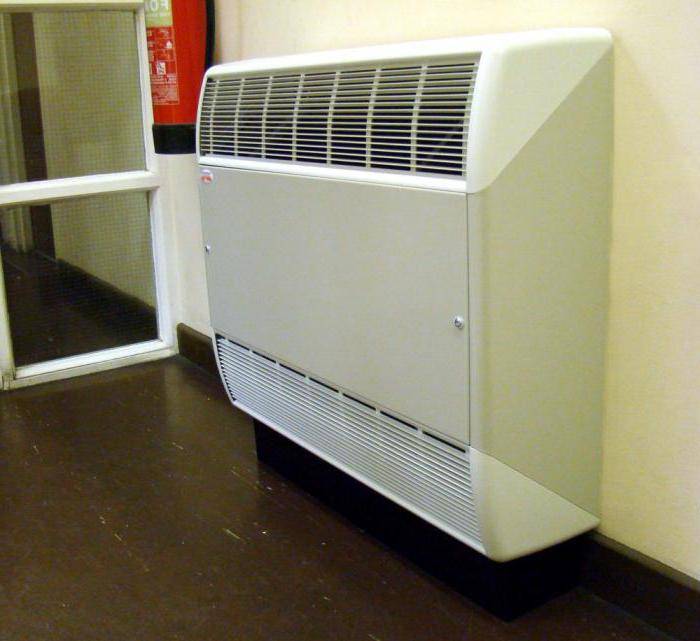
The mechanism of operation of the heating gas appliance is as follows:
- The gas that enters the convector through the gas pipeline burns in a closed combustion chamber.
- A special coaxial flue is connected to each battery. Fresh air, due to flowing through a pipe with hot combustion products, enters the room already warmed up, which allows increasing the efficiency of the heating device due to the possible combustion of fuel in the chamber. The principle of operation of a gas convector schematically
- The air in the room begins to flow through the convector heat exchanger in a continuous flow due to convection. That is, the air, heating up in the heat exchanger, becomes lighter and, making room for a new cold air flow, rises.
To increase the efficiency of the gas convector, it should be as close as possible to the floor surface!
More details about the gas convector, its principle of operation - the video can be viewed here:
Gas heating convector: its varieties
Today, manufacturers produce various types of gas heating batteries, which differ from each other:
1. Gas steel convector
The best option is a steel heat exchanger, because. it has high heat resistance, low weight and relatively low cost.



Aluminum, having excellent thermal conductivity, is quite expensive, while it has poor heat resistance.
Modern cast iron gas convector
And cast iron is a brittle material, i.e. under the influence of sudden changes in temperature, it can crack, and eventually become unusable.
2. Gas convector with fan 3. Gas radiator with remote thermostat 4.
1) Ceiling gas convector.
Ceiling gas heating battery
2) Gas wall convector.
3) Gas floor convector.
It should be borne in mind that ceiling appliances are used to heat industrial and commercial premises of a large area. The gas wall convector is most often used for heating residential and non-residential premises, for example, a garage.
Wall mounted gas heating battery
It is better to place such a heating device under the window, so that it not only heats the air in the room, but also creates a thermal curtain for the cold air trying to enter the room through the window.
For heating large areas, you can use not only a ceiling, but also a gas floor convector. In everyday life, such a device is usually not used, because. it has large dimensions and considerable weight, and the place of their installation requires special preparation of the base.
If you want to make a screen for a radiator yourself, pay attention to the following article on our website
Conclusions and useful video on the topic
There are many heaters - good and different. An extensive assortment is confusing, and intrusive advertising only confuses the choice. We offer videos that will help you prioritize and buy the model that is right for you.
To choose, you need to clearly understand what exactly you expect from the device. The video will help you decide on the parameters:
The efficiency of household appliances is of fundamental importance. How to choose the most effective model is described below:





Honest reviews from real users always matter:
Technology sometimes breaks down. We offer instructions for servicing the fan heater:
Do-it-yourself video tutorial on repairing a convector:
If you have already decided what is better to buy - a fan or a convector, pay attention to some of the nuances.Any heater must be compact, economical, have an overheating protection system
Take a closer look at models with air ionizers, remote controls. These are very convenient additional functions that will help make heating not only efficient, but also convenient.
Have you already chosen the type of heater that is best for you? Or are you still in doubt and want to clarify a certain point? Ask your questions below - our expert will try to help you.