- Which storage water heater to buy
- What water heater to choose?
- Extra options
- The best indirect heating boilers
- Electric instantaneous water heaters
- No. 4 - Thermex Surf 3500
- Prices for water heater Thermex Surf 3500
- No. 3 - Electrolux NPX 8 Flow Active 2.0
- Prices for water heater Electrolux NPX 8 Flow Active 2.0
- No. 2 - Stiebel Eltron DDH 8
- Prices for water heater Stiebel Eltron DDH 8
- No. 1 - Clage CEX 9
- What performance is needed?
- The best non-pressure storage electric water heaters
- Stiebel Eltron SNU 10 SLI - compact water heater for the kitchen
- Gorenie TGR 80 SN NG/V9 - with large tank
- Hyundai H-IWR1-3P-CS
- Design and principle of operation
- How to choose an instantaneous electric water heater
- Expert advice
- Connection points - non-pressure and pressure version of the instantaneous heater
- Non-pressure water heaters
- Pressure flow water heaters
- Advantages and disadvantages
- Design features
Which storage water heater to buy
Storage boilers are pressure and non-pressure. In the former, the inner walls constantly feel the pressure of water coming from the network.For their safe operation, a system of valves is required, each of which must perform its own function: safety valve - to drain excess water into the sewer, stabilizing the pressure, the return valve to prevent the heated liquid from seeping into the water supply system. But such water heaters also have a significant advantage: the ability to connect several points of analysis to them at once.
Non-pressure water heaters can feed just one specially designed faucet or shower. Their body does not experience heavy loads, since water flows by gravity, and not under pressure. This is more of a country option.
Everyone chooses the volume of the tank according to their needs for hot water. The smallest boiler of 10 liters is only enough for washing dishes. A 120-150 l heater will allow all family members to take a bath in turn. When choosing, be guided by the average figure - about 30 liters of hot water is spent on taking a shower by one person.
A few more tips to help you choose the right water heater:
- The most durable will be a stainless steel boiler with a titanium coating.
- The welds will not leak on models with an inner tank made of plastic and ceramic coating - they simply do not exist, although such models are rare and usually do not last very long.
- A "dry" heating element will last longer than an open one, and it will be easier to replace it if necessary.
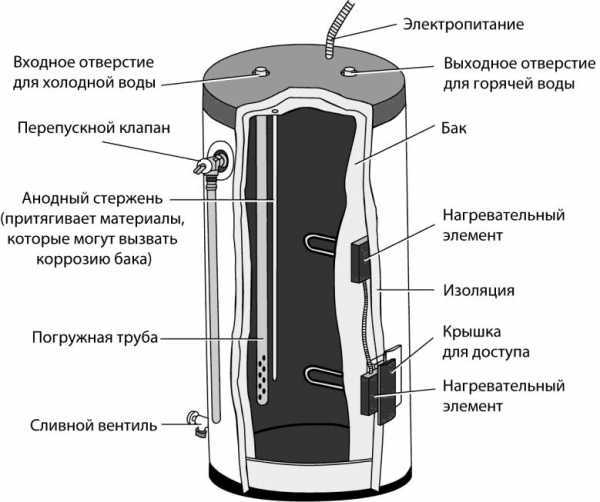
- The presence of a magnesium anode will extend the life of a conventional heating element and protect welds from corrosion - the most vulnerable point of the internal tank.
To choose a boiler that fully meets your needs, reliable and economical - read our article. Or just buy one of the best water heaters featured in this review.
What water heater to choose?
Which option to choose - flow or storage? The choice largely depends on a number of factors and your personal preferences.
We can definitely say that the most practical option is a drive with a volume of about 50-80 liters, powered by electricity. Firstly, this source of energy is now almost everywhere, and the effect of a thermos will allow you to get water during the day with almost no heating and constant switching on. In addition, such a heater can be connected so that it supplies both the bathroom and the kitchen with water at once. We remember the disadvantages - it takes a long time to heat the water if it has cooled down or the tank has been refilled.
A gas heater is also a good option. And, perhaps, it is worth choosing it if you have gas connected to your house. The device is easy to maintain, inexpensive and economical, the water heats up quickly. The main thing is to ensure that the room with the installed heater is well ventilated with an exhaust hood.
Flowing gas water heater in the kitchen
An important parameter is performance. It depends on it how much water and for how long the heater is able to heat. Think about how much water you spend per day and, based on this, choose a device according to performance and power. If we talk about the drive, then everything is simple: it will heat up any volumes, you just need to wait. But the flow model heats the water right there, but the greater the pressure and water flow, the higher the power of the device should be. You can also mention ease of use here: think about which device, given their heating rates, it will be easier for you to use.
By the way, a lot depends on the desired level of water heating. Maybe you don't want boiling water coming out of a faucet.The main thing is to be aware of the power limits and check the condition of your wiring before you buy a very powerful protochnik.
Volumes matter too. So, for a large house, you need a heater-accumulator of 100 liters or more. But for a summer residence or a family of 1-2 people who live in a small apartment, a device of 30-50 liters is enough. There are capacious tanks for 200 liters - they are usually mounted on the floor, and not mounted on vertical surfaces.
Water heater takes up a lot of space
And how to calculate the optimal performance indicators of the protochnik? Estimate it by the flow rate, which can be calculated using the formula: V = 14.3 * (W / T2 - T1). T1 is the water temperature in the pipe, T2 is the selected liquid heating temperature, W is the heater power, V is the flow rate. Also, the speed of water in the pipes can be calculated by turning on the water and filling the container with it for one minute. Next, you just need to measure the amount of water that managed to flow out during this time. Now you can see which heaters manufacturers recommend for a particular flow rate.
Another nuance is the installation features. They also need to be taken into account. If you choose a drive, then keep in mind that you need to fix it on a solid, preferably load-bearing wall. Remember that it is very heavy - add the weight of water to the mass of the heater when it is full. Such devices should not be placed on plasterboard or wood walls. Well, remember about the availability of free space. Storage heaters take up a lot of space and cannot be installed in a room that is modest in size.
Another thing is the protagonist. It is light and small, and it can be placed in absolutely any room and on any wall.The main thing is to be able to connect it in principle because of its power.
Any heater needs to be serviced so that it serves for a long time and without complaints. Let's see what features the owners of drives and protochniks will have to face in this case. So, the drive should be regularly inspected and cleaned.
It is important to check the condition of the magnesium anode and even change it occasionally. In such a heater, scale may appear, which must also be removed.
If we neglect all this, then the service life of the device will not exceed five years in most cases. But with the protochnik, things are easier. It is only necessary to clean the heater sometimes, and that's it. And the service life of such a device is more than 10 years.
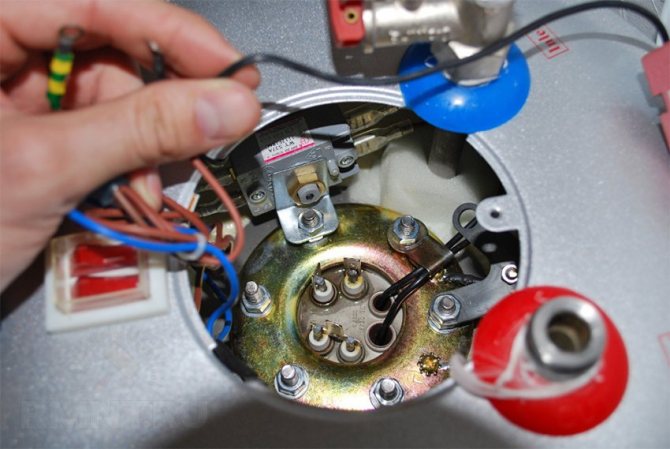
Replacing a heating element for a boiler
And a few more words about service. So, gas appliances in any case need to be checked every year. Still, you are dealing with gas, and its leakage can lead to tragic consequences.
Extra options
There are several more “gadgets” that the best models are equipped with:
Boilers come with a "wet" or "dry" heating element. "Dry" heating element is safer and more durable. It is placed in a special sealed flask and does not come into contact with the liquid at all. This eliminates the possibility of scale formation or electric shock.
The level of thermal insulation of the water tank. The thicker the insulation layer, the longer the water will stay hot.
Pay attention to models with an insulating layer of at least 35–40 mm, and prefer polyurethane foam as a material, it is much better than foam rubber
Pay attention to the presence of features such as accelerated heating, protection against overheating or freezing, the presence of a magnesium anode
The best indirect heating boilers
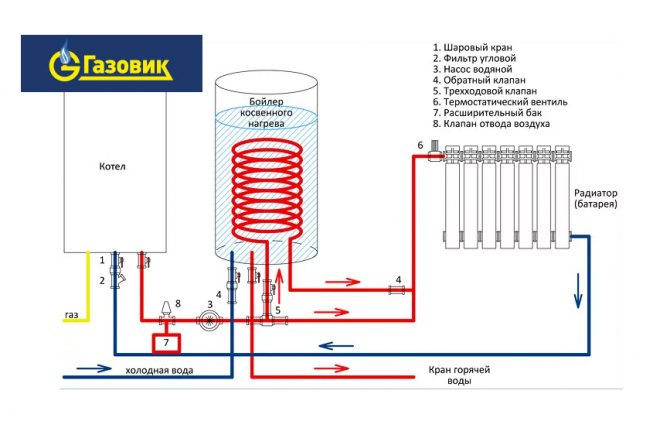
Indirect heating boilers use the energy generated by a heating boiler or other similar devices. A special coil or tank is placed inside the apparatus. Due to the built-in circulation pump, the coolant constantly functions in the tank, which serves as a source of water heating. The main advantages of such devices are increased efficiency (in fact, the boiler itself does not consume anything), good thermal insulation, unpretentiousness (does not require constant attention), safety and long service life (up to 60 years).

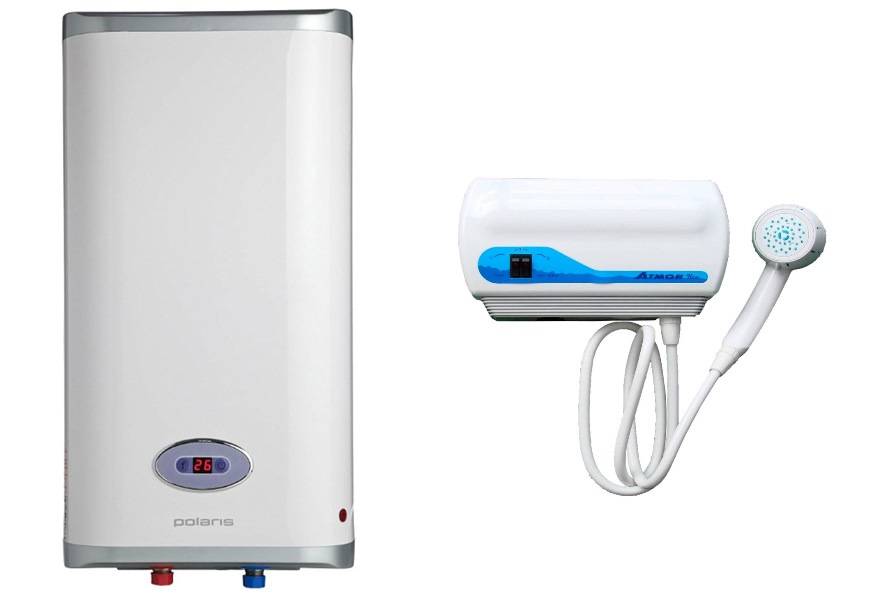




The device is installed next to the heating boiler, and heating, as a rule, occurs only when the heating is turned on. This is the main disadvantage of such devices. However, with proper installation of the heating system, this disadvantage can be avoided.
Electric instantaneous water heaters
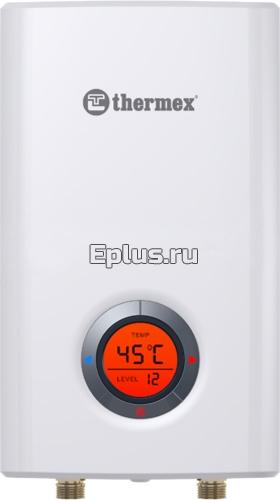
No. 4 - Thermex Surf 3500
Thermex Surf 3500
Inexpensive, low-power, but reliable device that is suitable for installation in a small apartment or in the country. An excellent solution to the problem of seasonal water shutdown for relatively little money.
The cost of this device starts from 4000 rubles. The model consumes 3.5 kW of electricity and is designed for one point of water intake. There is an indicator for turning on the column, and the device is protected from overheating and turning on without water. Degree of protection against liquid at the 4th level. The heating element is spiral and made of steel. The heat exchanger is also steel. Dimensions - 6.8x20x13.5 cm. Weight - just over 1 book.
Users note that this model has a high build quality and is very convenient to use.It does not take up much space, slightly loads the power grid and at the same time does an excellent job of heating water. The main disadvantage is the weak water pressure at the outlet.
pros
- low price
- small size
- heats water well
- consumes little energy
- simple use
- secure fastening
Minuses
- weak outlet water pressure
- short power cord
- only for one intake
Prices for water heater Thermex Surf 3500
Thermex Surf 3500
No. 3 - Electrolux NPX 8 Flow Active 2.0
Electrolux NPX 8 Flow Active 2.0
A rather expensive model with not the highest performance, which has a self-diagnosis function and a water filter in the kit. A compact option for those who want to have a reliable water heater at home.
The cost of the model starts from 15 thousand rubles. The device can easily heat up to 60 degrees 4.2 liters of liquid in one minute, while consuming 8.8 kW. Electronic type control, there is an indicator for turning on and operating the device, as well as a thermometer. The heater readings can be monitored on the display. Protection against overheating and switching on without water is in the list of functions. Dimensions 8.8x37x22.6 cm.
According to users, this heater will not spoil the interior, as it has a stylish and interesting design. It heats water well and quickly and is easy to use. The main downside is, of course, the price.
pros
- heats water quickly
- stylish design
- convenient use
- reliable
- compact
- water filter included
Minuses
high price
Prices for water heater Electrolux NPX 8 Flow Active 2.0
Electrolux NPX 8 Flow Active 2.0
No. 2 - Stiebel Eltron DDH 8
Stiebel Eltron DDH
A heater that is designed to supply hot water to several points of water intake at once.The model has a high degree of protection against water and is as safe as possible for humans.
The cost of this heater starts from 15 thousand rubles. The productivity of the device is 4.3 l / min, the power is 8 kW. Mechanical type control, reliable and simple. There is an indicator of heating and turning on the device. Heating element in the form of a heating element made of copper. Dimensions - 9.5x27.4x22 cm.
Users note that this is a small but very effective device that will allow you to have hot water at home from several points of water intake at once. Heats water quickly and only when it is turned on. Very easy to use. Cons - the price and "gluttony" in terms of electricity. Ideal for the period of periodic shutdown of hot water supply.
pros
- heats water quickly
- small size
- copper heater
- powerful
- good performance
- high level of protection
- can be used for multiple water points
Minuses
- high price
- wastes a lot of electricity
Prices for water heater Stiebel Eltron DDH 8
Stiebel Eltron DDH 8
No. 1 - Clage CEX 9
Clage CEX 9
A rather expensive option, but it is designed to supply hot water to several water intake points and has a control panel. Included is a water filter. The high level of protection against water makes the device as safe as possible.


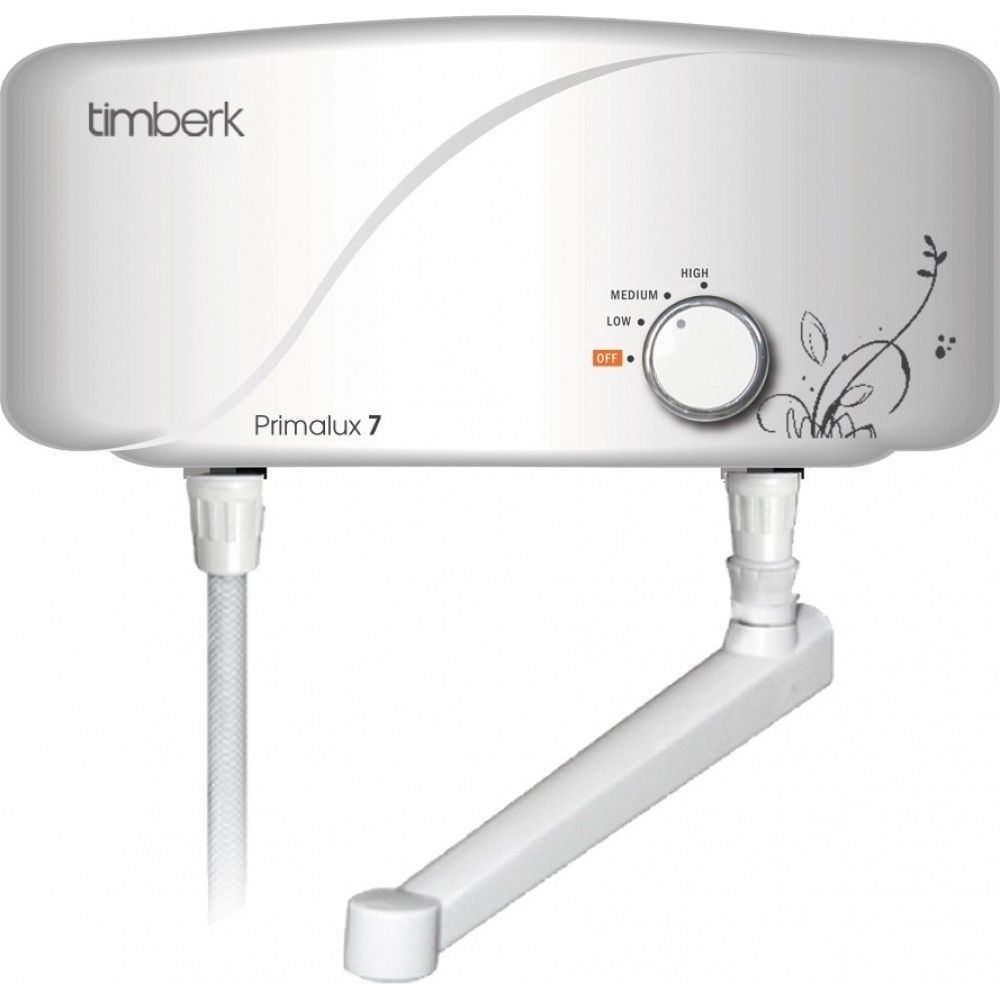


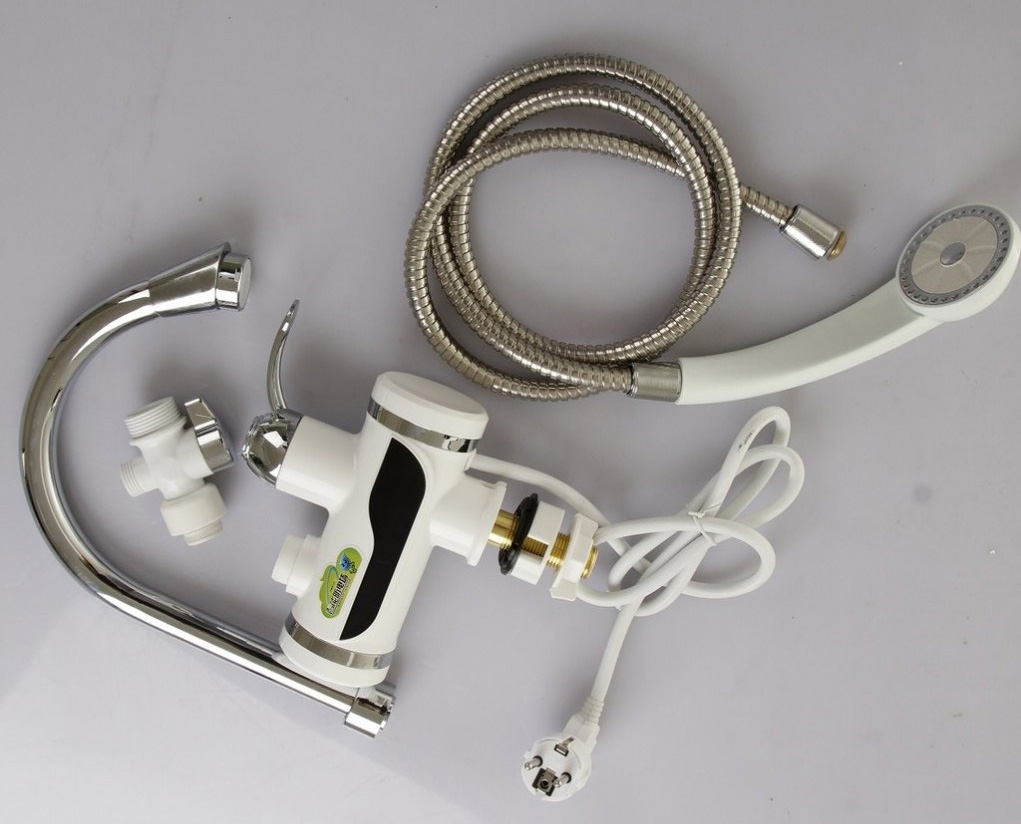


The cost of this heater is high and starts from 23 thousand rubles. This option is capable of heating up to 55 degrees 5 l / minute, while consuming 8.8 kW of electricity from a 220 V network. There are indicators for heating and turning on, as well as a display. The model is equipped with a self-diagnosis function, if necessary, limits the heating temperature. Inside there are 3 spiral heaters made of steel. Dimensions - 11x29.4x18 cm.
Users write that this heater is very well assembled, reliable and comes with a mounting card. It can be seen that the manufacturer paid a lot of attention to detail. Heats water very quickly and is easy to set up and operate. Made in Germany and that says it all.
pros
- German quality
- compact
- reliable
- heats water quickly
- high level of security
- designed for several water points
Minuses
high price
What performance is needed?
As we have said, performance is largely dependent on power. However, this indicator is written in the characteristics of the heater, so you do not need to calculate it using some formulas.
It is important that the performance of the device matches the performance of the draw-off point. In the article on choosing a pumping station, we provided a detailed table with water consumption for each point
Here we just point out that for a washbasin, the average flow rate is 10 l / min, and for a shower 12 l / min. Of course, it is very difficult to find a flow heater with a capacity of 10 - 12 l / min, and its power will be very large. What to do then? You can take a device with a capacity of 5 l / min, but the outlet temperature will be lower than stated by the manufacturer. For example, by connecting a Timberk WHEL-7 OSC non-pressure heater to a tap, we get a capacity of either 4.5 l / min with an outlet water temperature of 60 ° C or, if we open the tap to a maximum, 9 - 10 l / min at a temperature of 40 °C. 40°C is a perfectly normal temperature for washing dishes or taking a shower.
By the way, if you need water only for domestic use (for example, in a seasonal dacha), you can buy a heater combined with a mixer.It's cheaper and doesn't take up much space. In many models, you can preset the water temperature so as not to manually adjust it.
The best non-pressure storage electric water heaters
The specifics of the operation of a non-pressure water heater usually does not allow it to be equipped with a large volume tank. He also needs a mixer of a special design, which is usually not included in the package and is purchased separately. Despite this, such models are in demand. Often, installing a non-pressure valve is the only way to get hot water in a country house or in a private house where there is no main water supply.
Stiebel Eltron SNU 10 SLI - compact water heater for the kitchen
4.9
★★★★★
editorial score
72%
buyers recommend this product
The high quality characteristic of Stiebel products is also inherent in this model. The manufacturer gives a guarantee for the internal tank up to 10 years. Its high-quality polystyrene insulation keeps the high temperature of the water well, which allows you to get rid of most bacteria.
Since the tank of an open water heater does not experience water pressure, less durable, but not subject to corrosion, heat-resistant plastic, polypropylene, was used for its manufacture. Accordingly, the magnesium anode was not needed. The compact model with a thin body does not take up much space, it is easy to install and operate. But you can place such a boiler only under the sink.
Advantages:
- High efficiency and economical mode of operation;
- Anti-Dropf protection saves water;
- Termo-Stop system minimizing heat losses in connecting pipelines;
- The case has a protection class ip 24;
- Safety limiter;
- Restart function.
Flaws:
- There is no special mixer included;
- Small tank volume.
The small Stiebel Eltron heater is reliable in operation and simply indispensable where there is no main water supply.
Gorenie TGR 80 SN NG/V9 - with large tank
4.9
★★★★★
editorial score
72%
buyers recommend this product
This vertical boiler from a well-known Slovenian manufacturer is rather an exception among such devices, since it has a large tank. It is made of steel with a protective enamel coating. Additionally, the tank protects the magnesium anode from corrosion. Model of Thai assembly, the manufacturer gives a 2-year warranty on it.
Advantages:
- Two modes of operation - normal and economy;
- There is protection against freezing and overheating;
- Fast heating of water for such a volume;
- Simple mechanical control.
Flaws:
You will have to buy a power cable and a special mixer;
Gorenie TGR is suitable for a large family living in a house without a centralized water supply.
Hyundai H-IWR1-3P-CS

If you thought that you could only choose cars from Hyundai, you were wrong. This concern also produces high-quality climate equipment, a variety of electrical appliances. Among them are pretty good water heaters.
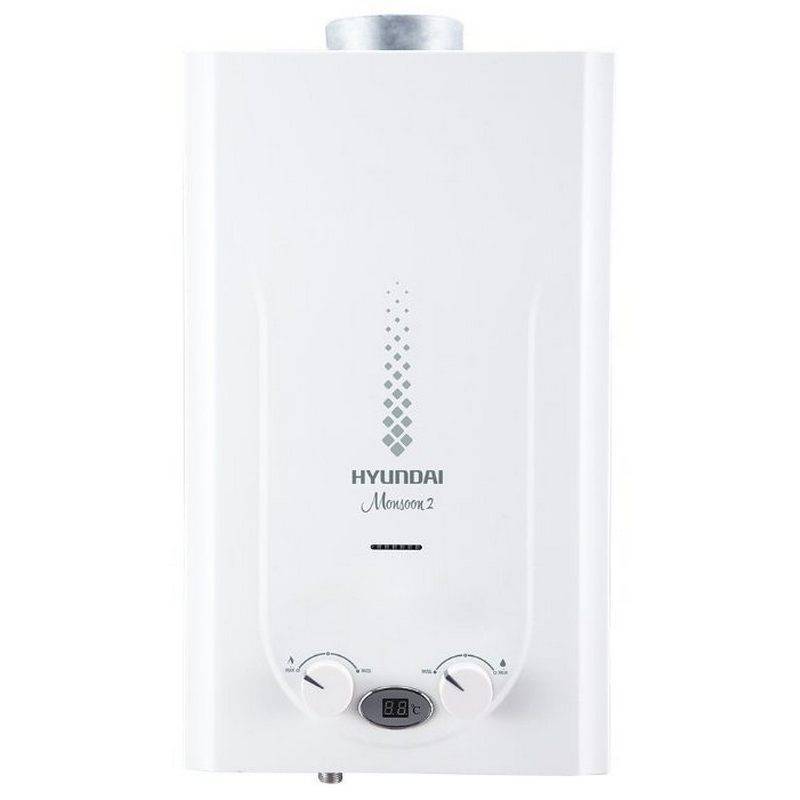

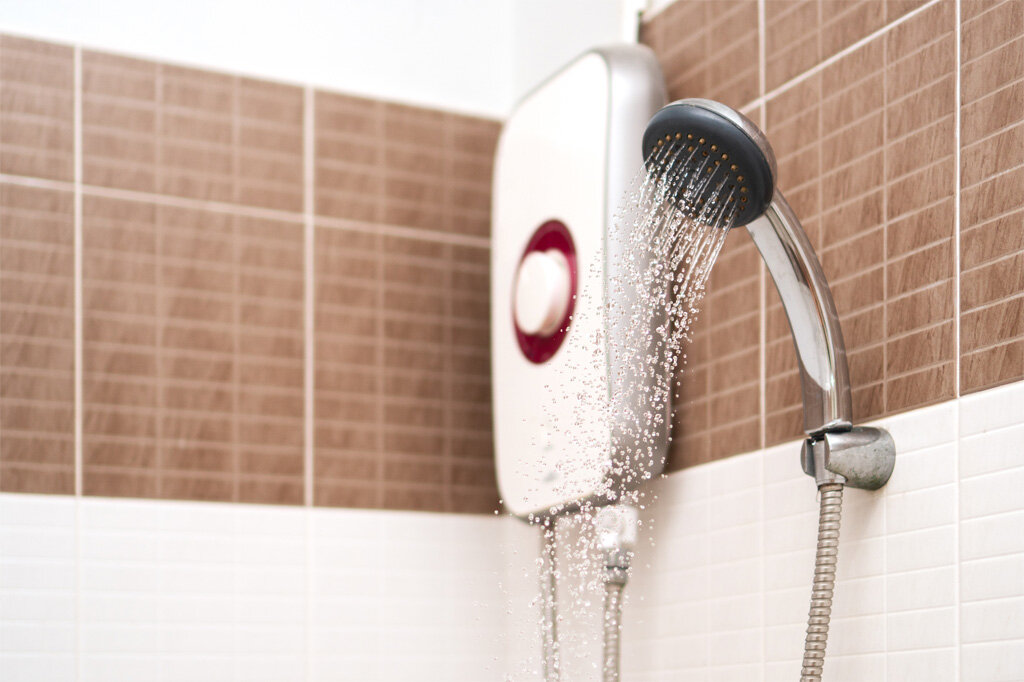
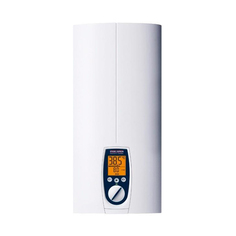
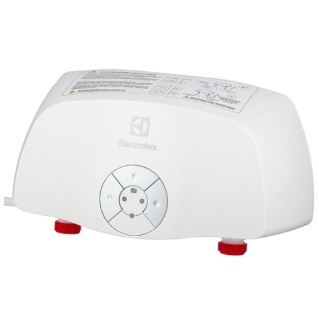

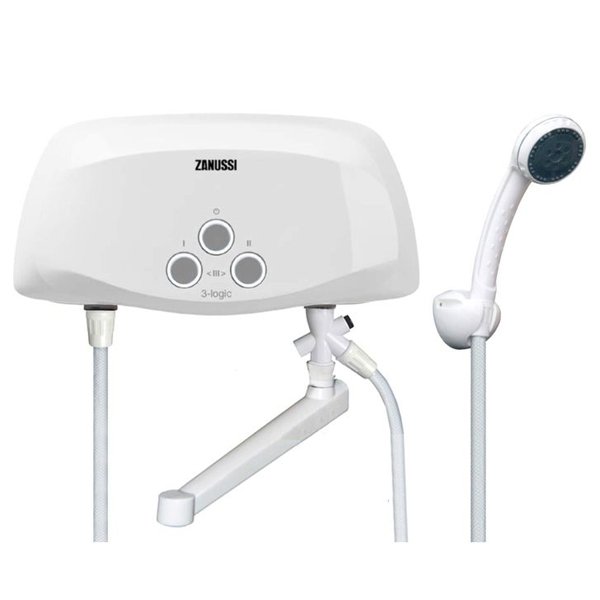


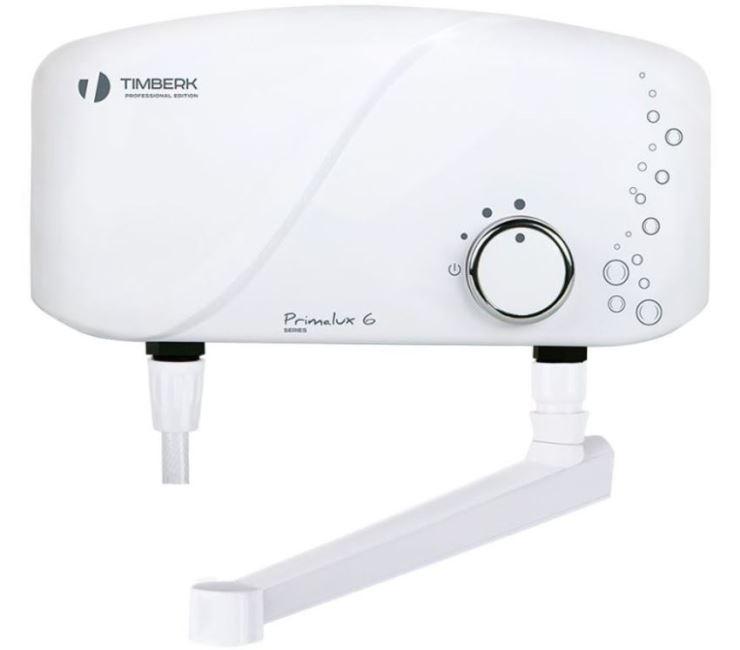
The power of this device is not too high - only 3.5 kW. Nevertheless, this is enough to take a pleasant warm shower, wash your hands or wash dishes. The kit includes a filter cleaner, a hose, a shower faucet, as well as a nozzle for it.
The design is simple, durable and reliable, there are 4 levels of protection against moisture, overheating control and power-on LED. Mechanical control, simple.
Positive points:
- very simple control;
- complete set;
- small sizes;
- strong and reliable design;
- water filtration;
- very attractive price.
Flaws:
- low power;
- short electric cable (less than 1.5 m).
Design and principle of operation
An instantaneous water heater is a device that is quite capable of improving a person’s life at times in the summer, namely, during a shutdown of hot water by utility services. This small design is designed to quickly warm a certain amount of water, which will already make it possible to wash dishes, take a shower, rinse hands - in a word, if there is a flow heater, a person will practically not notice that the hot water has been turned off, since he has it at home will always be.
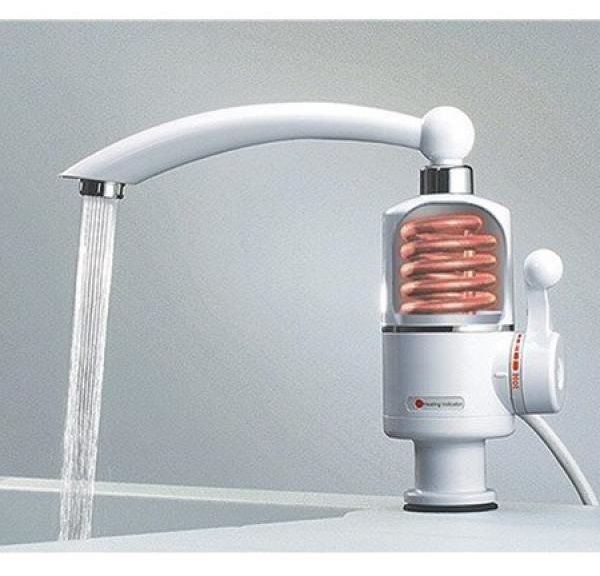
The heater is small in size and is a case made of plastic or metal, inside of which there is a small volume of a flask for water, as well as a heating element or a spiral that heats the liquid. The more heating elements, the faster the water heats up, but the energy consumption also increases.
Instantaneous water heater design
Water is heated as follows: it enters the tank, where, thanks to the connection to the mains, the heating elements are already working with might and main, and takes over thermal energy from them. Further, it flows out of the heater itself in a heated form. Due to the small volumes, heating occurs very quickly - cold water heats up almost instantly. Usually heating occurs to a level of 40-60 degrees.
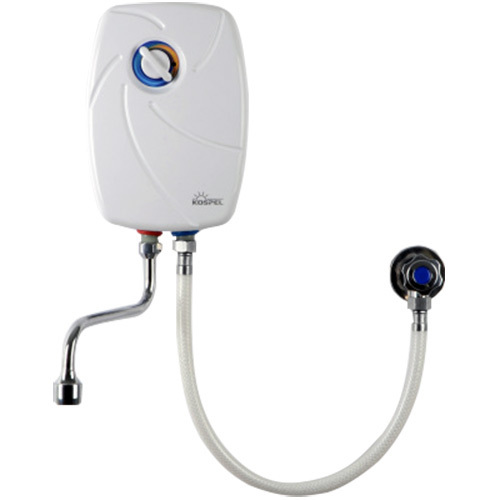
The heater itself is usually installed on the wall. The connection to the network is carried out by means of an electric cable. You also need to connect the heater to a water source. By the way, there are two types of flow type heaters.Let's take a look at them in the table below.
Table. Pressure and non-pressure devices.
| Type of | Description |
|---|---|
| pressure head | Such a device constantly experiences water pressure from the main. The device looks like a small boiler. It can usually be connected to several water outlets at once - for example, in the shower and kitchen. This is a powerful option that can really heat water for the whole house. It happens single-phase and three-phase. Its main disadvantage is its high cost and high electricity costs. But it's perfect for a large family. |
| Non-pressure | Inside the device, the pressure will not exceed the most common atmospheric pressure. It will be protected from liquid pressure by a conventional valve, which is mounted at the inlet. These are rather weak devices in terms of power, which are usually used during a short-term shutdown of hot water or in the country. |
Scheme of installation of instantaneous pressure type water heater
The advantages of flow heaters are as follows:
no need to wait until the water heats up - it warms up immediately after turning on the heater, passing through it;
power consumption is available only during the operation of the device;
small size, which is extremely important for small rooms and small apartments;
relatively low cost - there are very cheap models;
can be installed right next to the tap;
You can heat water in any quantity you like - its quantity is not limited by the volume of the container.
As for the disadvantages of flow heaters, this, as is the case with any other similar devices, is an increase in electricity costs, as well as the need to ensure proper connection to the mains.For example, powerful water heaters must be connected to a three-phase network, as well as to high-quality reliable copper wiring.
How to choose an instantaneous electric water heater
The main characteristic of a flowing water heater is its power. The higher it is, the more the water flow will have time to warm up.
Of course, a lot here also depends on the flow rate, so by lowering the pressure, you can increase the outlet temperature.
But it’s better to immediately take a water heater with a good power reserve in order to fully use the equipment, and not seek compromises.
- 3 kW is enough for use in the country or installation in an apartment on a separate tap. With a good flow, the water heater will have time to raise the water temperature only up to 30 ° C.
- Heaters with a power of 3 to 7 kW easily bring the flow temperature up to 50 ° C - this is enough to wash the dishes or swim in the summer.
- 7–12 kW are produced by productive pressure units that heat water up to 60 °C. They are suitable for year round use.
- Over 12 kW are produced only by powerful three-phase water heaters, designed for several points of water intake.
According to the principle of operation, flow-through water heaters are divided into non-pressure and pressure. The first type does not experience the pressure of the main flow, has less power and is suitable for serving only one point of consumption.
Pressure devices are distinguished by higher power, so such heaters can provide hot water to several sources at once, for example, a shower, a washbasin and a faucet in the kitchen.
The material of the heating core also matters. For example, copper elements show better heat transfer, and stainless steel has a long service life.
Additional heater options include: built-in faucet or shower, thermometer, overheating protection, self-diagnosis system and remote control.
Expert advice
As a conclusion, let's summarize all of the above:
Power is the most important criterion in choosing an instantaneous electric water heater
For rapid heating of water up to 45 °C, the power of the heating elements is 4-6 kW;
Performance is the second most important parameter to pay attention to. For one sampling point, a device capacity of 3-4 l / min is sufficient. For each subsequent point, add 2 l / min;
Control type
The hydraulic one has a simpler design, but the heating is not regulated or can be positionally regulated. Electronic control allows you to control the heating depending on the incoming fluid temperature and system pressure;
Water heater type. Non-pressure are installed at one point of water selection. Pressure stations can serve several points at once;
Safety. Pay attention to devices with a multi-level security system. Ideally, the device should be equipped with an RCD.


Watch a video on how to choose an instantaneous water heater
Connection points - non-pressure and pressure version of the instantaneous heater
According to the method of connection to the water main, instantaneous water heaters are divided into two groups.
Non-pressure water heaters
Heating systems of this group are not connected directly to the mains. They are designed to serve only one point of water distribution. Water enters the non-pressure device through an already installed tap or mixer.Such a heater is not subjected to the main water pressure, and the pressure in it does not exceed atmospheric pressure. At the outlet, the non-pressure heater is provided with its own swivel spout or shower hose, or a combination of both nozzles.
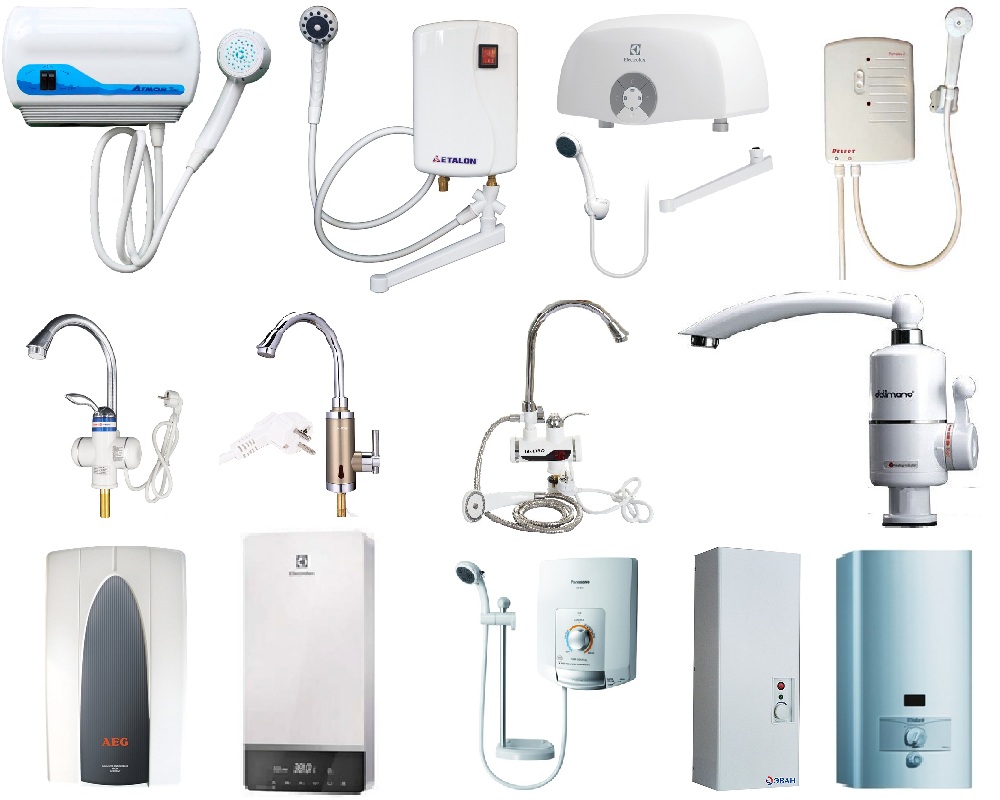
Various versions of such devices are available:
A separate heater housing that mounts next to a sink or shower faucet.
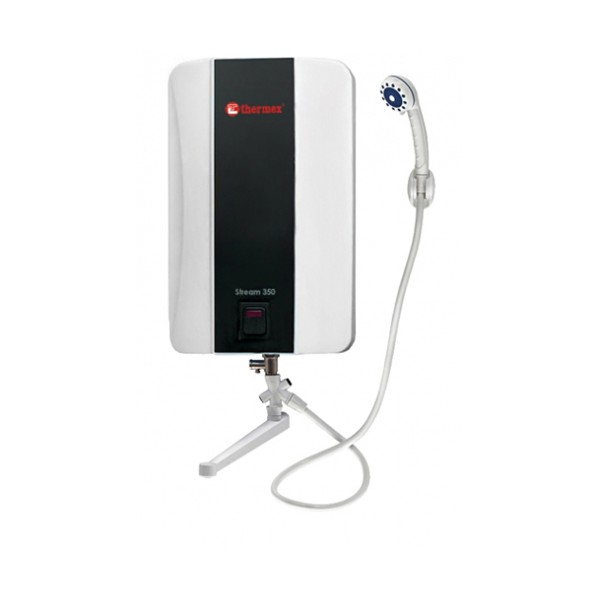
Non-pressure water heater with a combination of a faucet and a shower hose at the outlet
- In the form of a heating nozzle attached to the tap. The disadvantage is that the considerable size of such a nozzle does not allow it to be used on low taps.
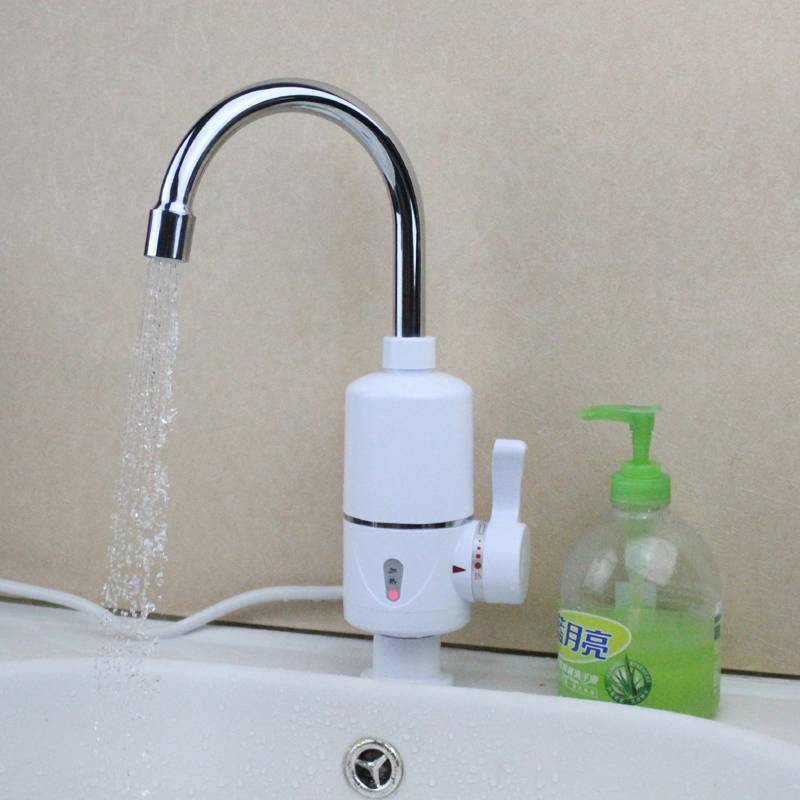
- A faucet with a heater already built into its body.
Faucet with built-in electric heater
As a rule, non-pressure models have a small power (3-7 kW), which is enough to provide hot water to one distribution point. It is possible to mount the non-pressure connection to two different taps or mixers, as shown in the diagram.
Scheme of connecting a non-pressure flow heater to two points
But the use of a non-pressure device according to such a scheme is unlikely to provide sufficient heating with the simultaneous operation of both mixers - there will not be enough power. And with sequential work, the scheme is quite viable.
For the heater to work, it must be connected to the mains. Low power consumption does not require special circuits connections with protective devices. It is enough to plug it into a standard household wiring outlet. Modern pressureless models are equipped with safety valves that turn off the heating when the water pressure drops.
The ease of connecting non-pressure water heaters and their low power allows them to be used as temporary devices during periods of hot water shutdown or in places of temporary residence. Their use is justified in one or two connection points in summer cottages - at the kitchen sink and in the summer shower. If you need constant heating of water throughout the year, it is better to use a pressure option.
Pressure flow water heaters
Heaters of this type are capable of heating water for several outlets, which is enough to fully provide hot water to an apartment or an entire country house. In fact, this is a small heating system, which is why pressure water heaters are sometimes called system water heaters.
The pressure device cuts into the main water supply line - into the cold water riser in houses with a central water supply or after a pumping station in country houses with their own water supply.
All filters that ensure the purity of water must be connected before water enters the pressure heater. After leaving the heater, water supply is distributed to all points of consumption. The heating is turned on only when water is consumed - by a signal from a sensor that reacts to the flow of water. It takes 1–2 minutes for the system to reach the required heating mode.
If a pressurized system is installed in a house where there is already hot water supply, for safety in case of its absence, then the connection diagram should provide a quick switch from one source of hot water to another.
Scheme of a flow-through pressure system that allows you to switch the source of hot water from central to internal
Simultaneous heating of water for several consumption points requires the appropriate power of the heating elements. For a single-phase electrical network with a voltage of 220 V, pressure pumps are produced with a power of up to 12 kW. The operation of more powerful systems (up to 25 kW) requires a three-phase voltage of 380 V. The connection of such devices must be carried out by specialists.
But even to connect a powerful device in a single-phase version of the network, it is necessary to provide protection against overloads. It is desirable to use a residual current device (RCD) and an additional machine that controls the phase line.
Scheme electrical connection of instantaneous water heater into a single-phase network
In addition to protection, you also need appropriate electrical wiring that can withstand the current consumed by a powerful flow heater. As a rule, it is necessary to install a separate power line for the operation of the flow system. In houses where electric stoves are already installed, you can use their power line as a last resort. But in this case, the operation of the electric stove and the water heater is only possible separately.
Advantages and disadvantages
Advantages of flow heaters:
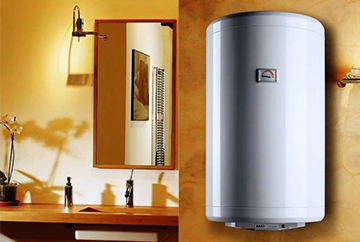
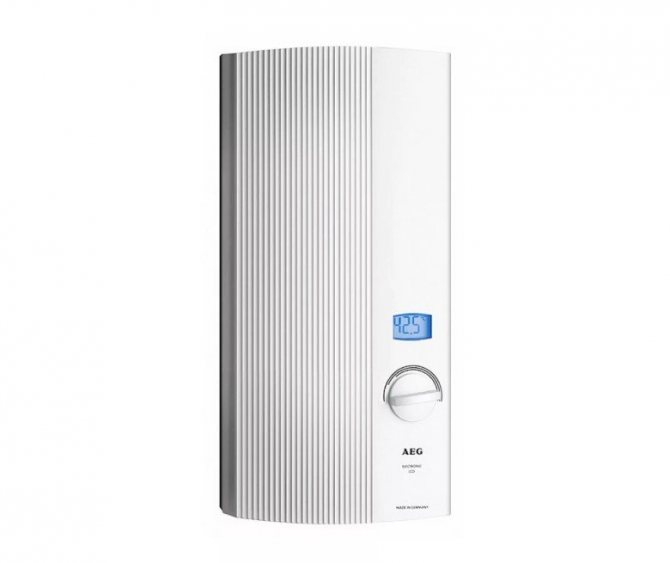
- They heat water quickly.
- They take up little space.
- Do not load the wall, easy to mount.
- They are cheaper than storage.
- Easy to manage.
- Do not require special procedures for draining water and cleaning.
- There are no incidents that a portion of hot water is over and you have to wait until the next one heats up.
An excellent feature of the flow device is that it does not consume energy in a passive state, which means that the heater is suitable for those who use water irregularly. For example, when most of the time a person is at work.




Flaws:
- If water is used frequently and a lot, a flow heater can be expensive, because it consumes a lot of electricity at a time.
- A powerful device requires a thick cable.
- A low-power appliance that does not need special wiring may not provide enough water, especially in winter when the water gets colder.
Powerful devices are not even equipped with a cord with a plug, so that the owners would not think of plugging it into a regular outlet!
Design features
In order to make the right choice of a water heater, you need to take into account its functional features. For instantaneous heating of water, the power of the water heater must be at least 3 kW. Such power will be sufficient for installation as a water heating device in the summer for a washbasin or sink. The power of the water heater up to 5 kW will be enough to provide water heating for the same sink or washbasin in winter.
To adequately meet the needs, the power of the water heater should be from 7 to 15 kW. Such power will be enough to provide water heating for a shower or bath. It is enough to simply determine the approximate required power if the water flow in liters per minute is multiplied by 2.
The thickness of the electrical wires will depend on the power of the heating element, but this is an incorrect definition. Technically, this parameter is called the cross-sectional area of the conductor. Measured in mm2. When using copper wires with a cross-sectional area of 1.5 mm2, a water heater with a power of more than 3.3 kW cannot be connected. With a water heater power of up to 5 kW, the cross-sectional area of the wires must be at least 2.5 mm2.
If it is necessary to connect a device of significant power, it is necessary to increase the cross-sectional area of \u200b\u200bthe wires. You can approximately determine the cross-sectional area by assuming that for every 2 kW of device power, the cross-sectional area of \u200b\u200bthe wire should be 1 mm2, but this is true for copper wires. If you choose aluminum wires, then the power should be reduced to 1.5 kW.
If you choose a wire cross-sectional area smaller than recommended, during operation of the water heater, the electrical wires will inevitably heat up to the melting temperature of the insulation. A short circuit will occur, which can lead to fire and electrical shock. The method of connecting to the electrical network depends on the power of the water heater. Appliances with a power of up to 5 kW are equipped with an electric cord with a plug. To connect more powerful water heaters, a separate line is required.
To classify water heaters according to the method of connecting to the electrical network, there is a division into:
- single-phase;
- three-phase.
If a water heater is purchased for installation in a house or apartment where there is only one phase, a single-phase device should be purchased. If there are three phases at the input, select a three-phase device
It is also necessary to pay attention to the power of the device - for a single-phase water heater it will not be more than 12 kW, for a three-phase one - from 11 to 27 kW. If there is protection against scale formation in the water heater, the device will be able to provide economical and uninterrupted operation for a long time.
For this, a magnesium anode is included in the design. Another important point when choosing a water heater is the degree of security. Studying the passport data, you can find something like this set of letters and numbers - IP 24.This is a designation of the degree of protection of the body of an electrical device from the penetration of various solid objects and water.
The first digit indicates the degree of protection against dust, the second degree of protection against water. Since the water heater is usually installed in a room where there is high humidity, you need to determine the device with what degree of protection you need to buy. There are 8 degrees of protection against water. The higher the degree of protection, the better the device is protected. If this indicator is not indicated in the passport characteristics, then it is better to refuse to purchase such a device.
The body material is important for the correct choice of instrument. The body itself is considered enameled. Housing made of materials such as copper and polypropylene can also provide good protection for internal parts and long uptime. To ensure electrical safety, the water heater is equipped with a residual current device (RCD). The principle of operation of the RCD is based on comparing the incoming and outgoing current. If there is a significant leakage current, the device is disconnected from the mains. You can also buy and install such a protective device separately.