- Extra options
- Temperature control
- Remote control
- Instantaneous or storage water heater - which is better?
- Which water heater is best?
- Seasonal shutdown of hot water
- There is no hot water at all
- How to choose an electric water heater for a summer house or garden plot
- Advantages and disadvantages of gas water heaters
- Rules for the operation of a storage water heater
- Pros and cons of electric boilers
- Installation and operation
- Device and mechanism of work
- What is the safety valve on the boiler for?
- When is it appropriate to use a water heater?
- The principle of operation of instantaneous water heater
- Pressure type
- Non-pressure type
- Cumulative
- Stages of installation of instantaneous water heater
- Feature Comparison
- Weight and dimensions
- Device performance
- Economy of use
- Installation nuances
- Storage or instantaneous water heater to choose?
- Bulk
- Description
- Results
Extra options
Temperature control
Electronic systems allow precise control of water temperature. For example, in a number of Electrolux models, the accuracy of maintaining the water temperature is 1 ºС, in Stiebel Eltron models - 1 or 0.5 ºС. For the kitchen, such accuracy, perhaps, is not needed, but for the bathroom it does not hurt.
Adjusting the water temperature can be stepwise (usually three to eight steps, the more the better) or stepless, which is more convenient. Also, in some more advanced models, a display can be provided with an indication of temperature and water consumption, energy consumption level and a number of other parameters.
Remote control
Some water heaters can also be equipped with remote controls, which is very convenient, especially if the water heaters themselves, according to the rules of the PUE, are located out of reach of a person in the bath or in the shower.
Instantaneous or storage water heater - which is better?
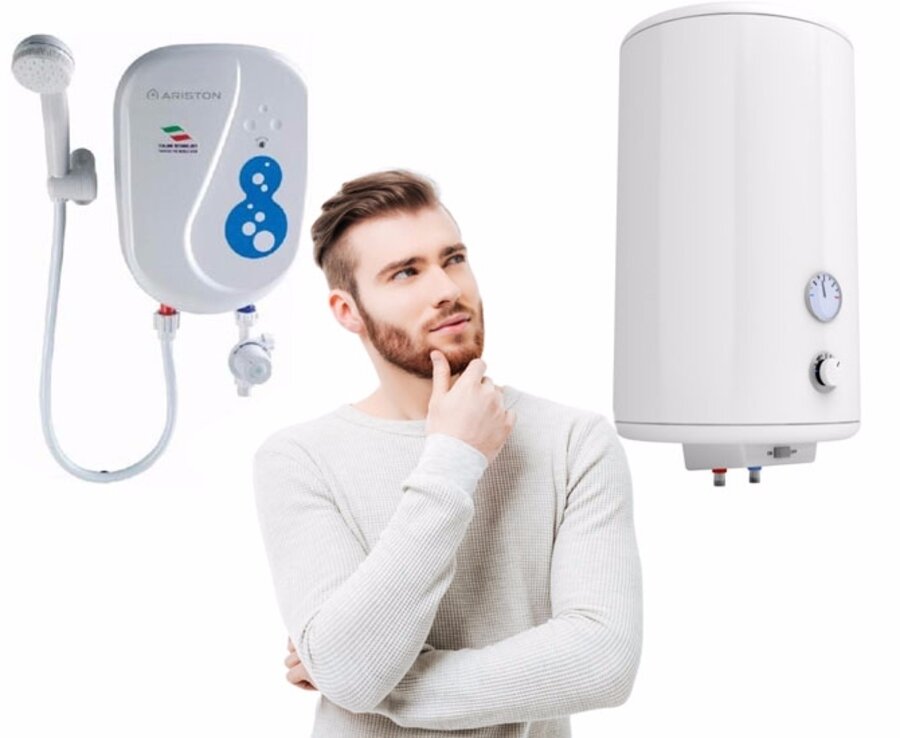
In order to correctly determine the type of water heater (boiler) in the selection process, it is necessary to familiarize yourself with the comparative characteristics of such equipment.
| Options | Type of equipment | |
| Flowing water heater | Accumulative water heater | |
| Performance Metrics | Warming up the water to the desired indicators depends on the power level of the device | The optimum water temperature set on the device |
| Economy | Intensive consumption of electrical energy during use | Less intensive, but long-lasting electricity consumption |
| Dimensions and installation features | The need for a separate line and the installation of an RCD, as well as the arrangement of grounding | Mounting on a solid base in the form of a brick or concrete wall |
| Features of operation and maintenance | It may be necessary to replace the heater | Periodic tank cleaning and magnesium anode replacement |
It should be noted that compliance with the installation and operation rules, as well as the presence of grounding and a protective shutdown system, make it absolutely safe and convenient to use both options for water heaters.
Which water heater is best?
To choose an electric water heater, decide how much and how often you need hot water. Situations are different, and solutions for them are also different. Let's look at some of the most typical reasons for buying water heaters.
So which electric water heater to choose
Seasonal shutdown of hot water
The work of utilities is organized differently in different regions. What they are united in is that they turn off the hot water supply for a while - to restore the system or for some other reason known to them. But the "temporary shutdown" has its own gradation. Somewhere they turn off for a couple of weeks, somewhere for the entire warm period of time. The solution for these cases might be:
If hot water is turned off for a couple of weeks, the best solution is to install individual flow tanks. They require minimal costs both in terms of purchase and in terms of installation / connection. A 2-3 kW power source is enough to take a shower with pleasant temperature water in the summer, and a less powerful heater can be installed for washing dishes.
If the “temporary shutdown” is before the start of the heating season, you need to approach the issue differently. There are several options:
The same individual flow drives. Even with not too much power in the warm period, they cope with the task. But the main drawback is that there is no supply of warm water. And further
When choosing, pay attention to the material from which the tank for heating water is made. Plastic for permanent long-term use are unsuitable and quickly fail
Models with copper or stainless tanks cost more, so when buying two pieces (in the bath and in the kitchen), you should already think about purchasing a pressure (system) water heater.
System flow drive. A more expensive solution both in terms of purchase (with a price of $ 200-250 and above) and in terms of connection. But there is water in the tap and in the shower, it is possible to set the required temperature. It can be turned on during the summer and off in the winter. It can also work if the water in the system is not warm enough in winter.
Storage water heater. A good decision if you have a place to place it. The advantage is that there is some reserve (in the amount of the volume of the tank) of hot water. Minus - you have to wait until the water heats up or find a model with a temperature maintenance mode.
To choose an electric water heater for the summer season, first decide whether storage or flow is more suitable for you. Both of them have their own "fans". There is another option - flow-accumulative models, but there are already very few of them and there is nothing to choose from. Although the idea is great.
There is no hot water at all
If there is no hot water at all, storage water heaters are most often installed. Now they are made like a thermos - in a layer of thermal insulation, which adds volume to them, but reduces the cost of heating water, as it cools more slowly. This is precisely the decisive factor - the availability of a supply of warm water. On the other hand, if you only need a couple of liters of warm water, you will have to heat the entire volume, which is also irrational.Another disadvantage is that usually a separate boiler is installed for each draw-off point. In the kitchen - a smaller volume, in the bathroom - more. Again, this is an additional cost.
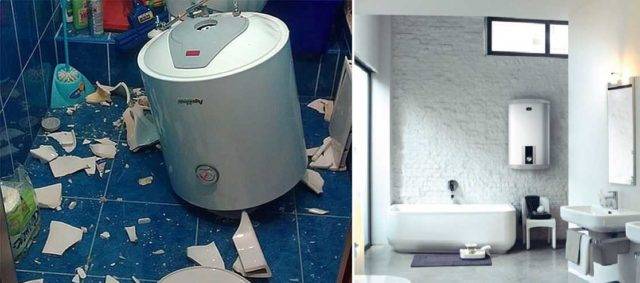
There are two more drawbacks to accumulative ones: a considerable weight, which can withstand any fastener and not the most attractive look ...
The second way to make an individual hot water supply is to install a system instantaneous water heater and make hot water wiring from it. A good option if there is no way to put a gas column.
How to choose an electric water heater for a summer house or garden plot
If the cottage has running water, any of the described options is possible. Only system protochnik put extremely rarely
In any case, when buying a water heater of any type, pay attention to such a parameter as the minimum operating pressure. In dachas, it doesn’t happen big - about 2 Atm, or even 1 Atm or even less
So the lower bound is very important in this case.
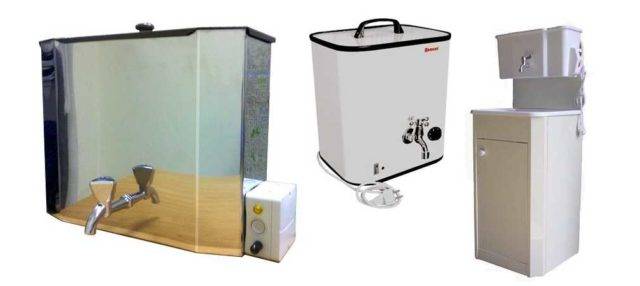
An electric boiler for giving a bulk type can even be with a washbasin
If the country house has water from a well, even if it is a pump, but without a system that provides constant pressure, there is only one option - a bulk electric water heater. This is a good replacement for a bucket with a boiler. Much more convenient to use.
Advantages and disadvantages of gas water heaters
The strength of domestic flow-type gas water heaters lies in the ability to instantly heat water, one has only to open the corresponding tap on the mixer.
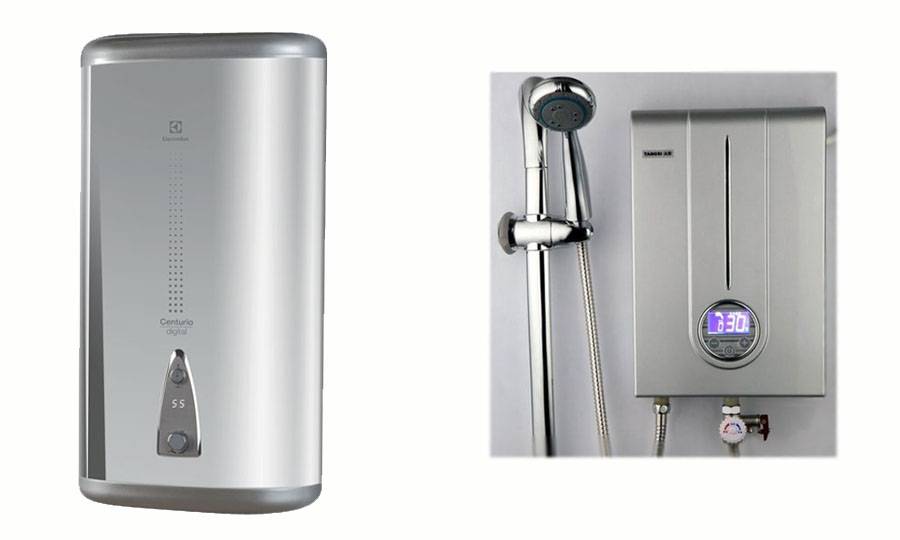


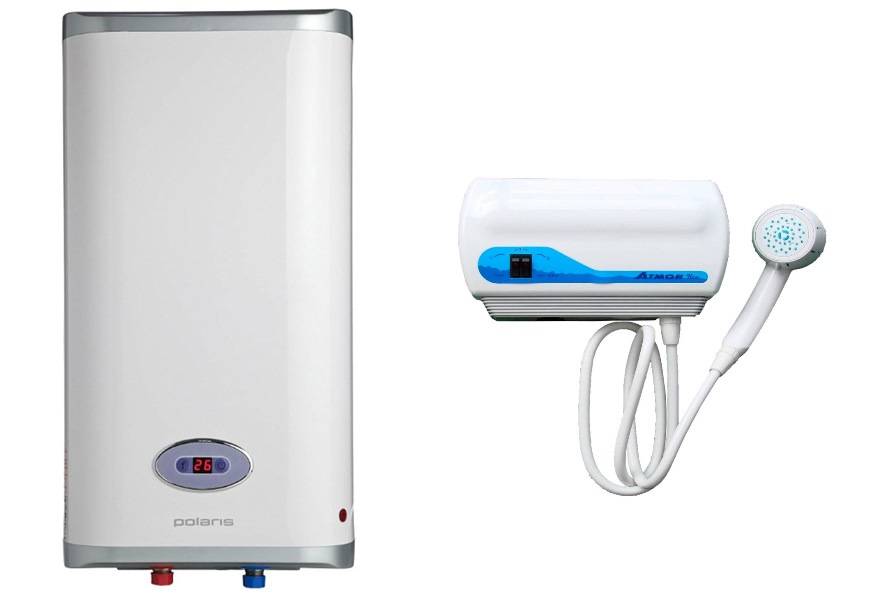
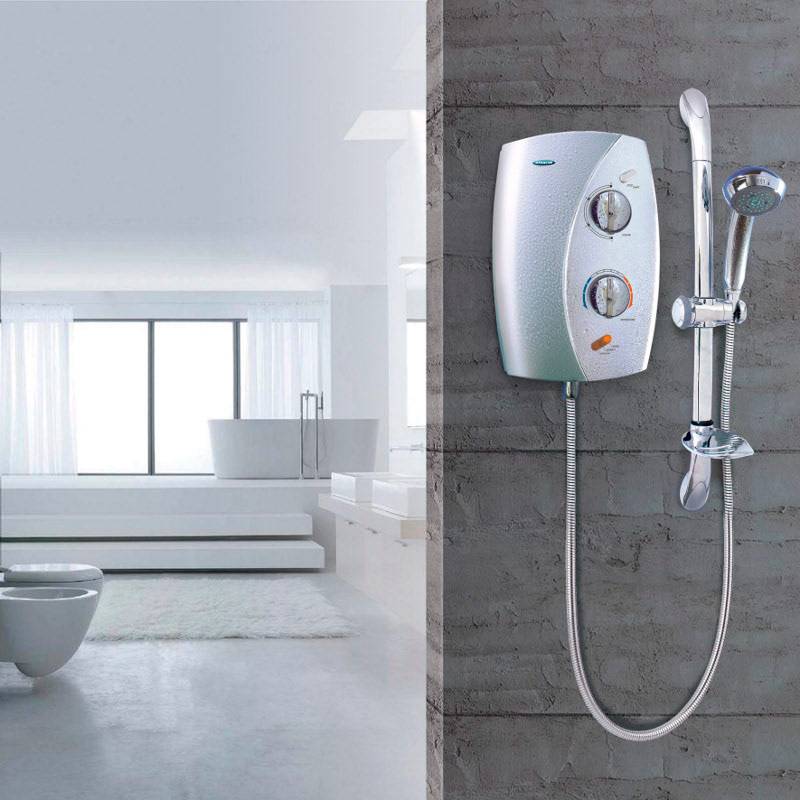
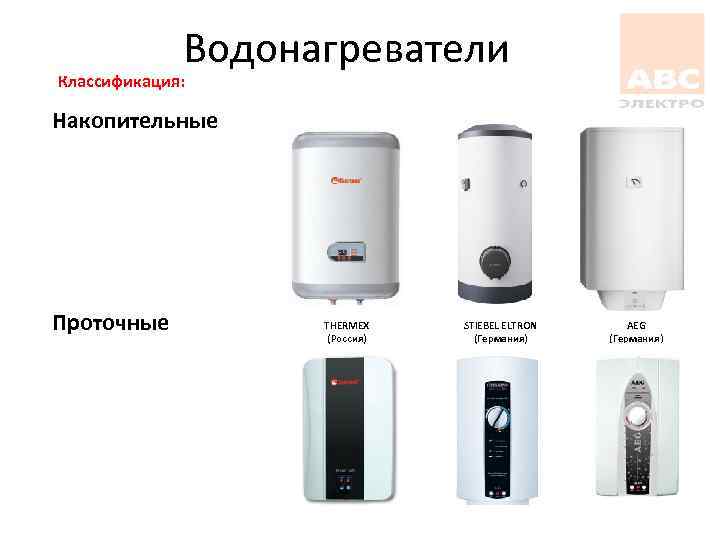


Moreover, the column continues to supply hot water indefinitely while the valve is open. It is these qualities that make flowing gas heaters so attractive in the eyes of users.
Let's pay attention to other advantages of gas water heaters:
- Models with an open combustion chamber do not depend on the supply of electricity.
- Turbocharged devices with a closed chamber are economical and efficient, since they are equipped with a multi-stage or modulating burner, whose power is automatically adjusted depending on the load.
- The gas heater takes up little space due to its small size. Harmoniously fit it into the interior of any kitchen - no problem.
The very best speakers are not as efficient as electric heaters. Their efficiency does not exceed 90%, although in practice this is imperceptible.
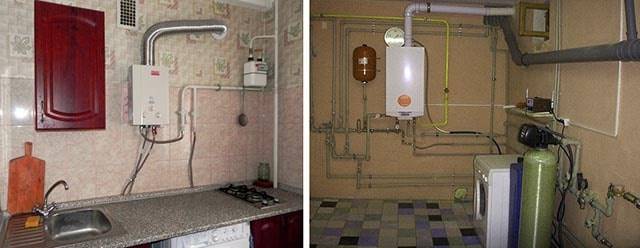
The flow apparatus is equally easily placed in the boiler room of a private house and in the kitchen of an apartment
You ask: if everything is so good with gas water heaters, then why do many owners of private houses and apartments buy and install electric boilers? This is due to the shortcomings of the columns, of which there are few, but they are quite significant:
- The device gives out the amount of water indicated in the passport, heated by a certain amount (delta). For example, a gas column Neva 4511 with a power of 21 kW can provide a flow rate of 11 l / min when water is heated by 25 ° C. If water with a temperature of only 10 ° C enters the house, then heating it to 35 ° C will be enough for only one consumer. And at a delta of 40 ° C, the flow rate becomes much less - 7 l / min. To increase it to at least 8.5 l / min, you need more power - 28 kW and a more expensive heater.
- A geyser cannot simply be bought, installed and connected.It is necessary to coordinate the installation of gas-using equipment with the management company and complete the project, and to connect, hire an installation company whose staff has the appropriate "crust" and permissions.
- When gas is burned, combustion products are formed that require discharge into the chimney duct or through a coaxial pipe.
- If the pressure in the water supply drops below a certain level, the water heater will turn off.
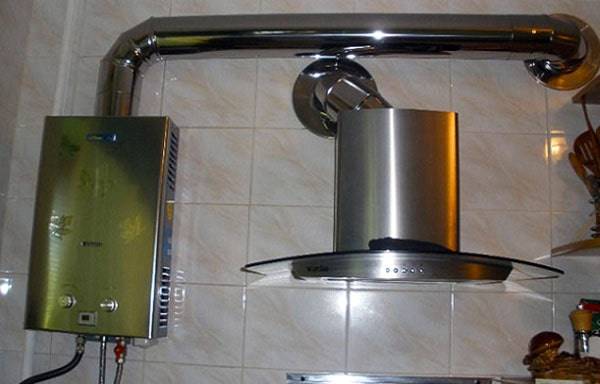
A chimney is required to remove combustion products from the column
Now that all the pros and cons are well known, let's move on to choosing a water heater.
Rules for the operation of a storage water heater
Regular operation of the storage water heater implies a constant connection to the electrical network. So the device will have the opportunity, when cooling, to heat the water to the set temperature without significant energy costs. In this case, the filled tank is less exposed to the corrosive process.
If the boiler is constantly turned off, savings cannot be achieved, because the equipment spends more electricity to heat the liquid. Shutdown is possible with rare use (once a month).
The disconnected device must not be left in an unheated room if the temperature in it drops below +5⁰ C. When choosing heating equipment for a summer residence, this fact must be taken into account.
Pros and cons of electric boilers
The principle of operation of these devices is as follows: the entire volume of water in the tank is heated by an electric heating element to the temperature set by the user. Its optimal value is 55 °С, the maximum is 75 °С. It takes from 1 to 3 hours to heat up from scratch, depending on the initial temperature in the water supply.
When the maximum temperature threshold is reached, the electric boiler is able to immediately provide a large flow of hot water with a simultaneous request from several consumers. The duration of operation before cooling depends on the capacity of the tank and the flow rate. Given these features, we list the strengths of storage heaters that operate on electricity:
- The ability to satisfy the request for high water consumption from several consumers at the same time.
- The operation of the device does not depend on the pressure in the water supply and the initial temperature of the water.
- Installing and connecting a boiler is much easier than any other water heater. Installation does not require any permits, chimney ducts and ventilation with triple air exchange are also not needed.
- Long service life. In most models from different manufacturers, the heating element is protected by a ceramic shell and will not burn out from scale formation.
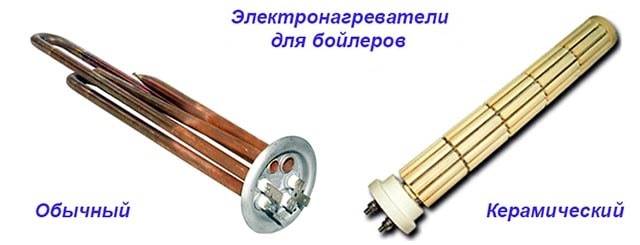
The weaknesses of the storage type water heater are the limitation of the total volume of hot water supplied and the long time for heating the next portion, when the stock in the tank has been completely used up. The disadvantage can be aggravated by the wrong choice of a boiler by volume, then 2 options are possible:
- a device with a tank that is too large takes longer to heat up, and in standby mode it wastes more electricity;
- a small container is an insufficient supply of hot water, which is not enough for all needs and you will have to constantly wait until a new portion is heated.
The last significant drawback is the significant size of the storage tank, which plays a big role in the apartment.It is not easy to allocate space in the kitchen or in the bathroom for an apparatus with a capacity of 80 liters, because approximately the same volume is needed for a family of 4 people.
Installation and operation
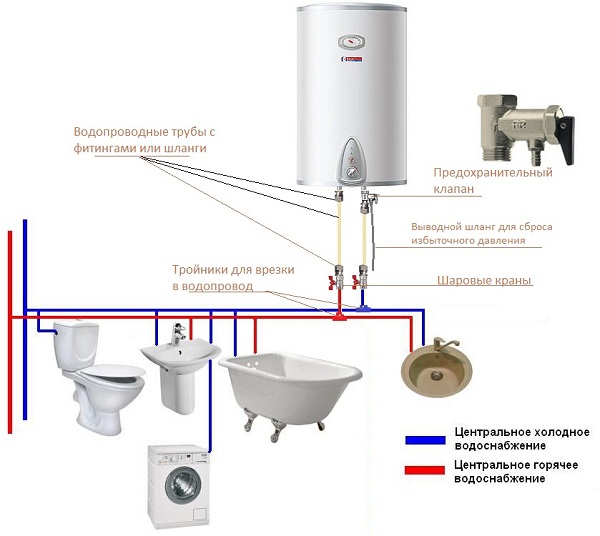
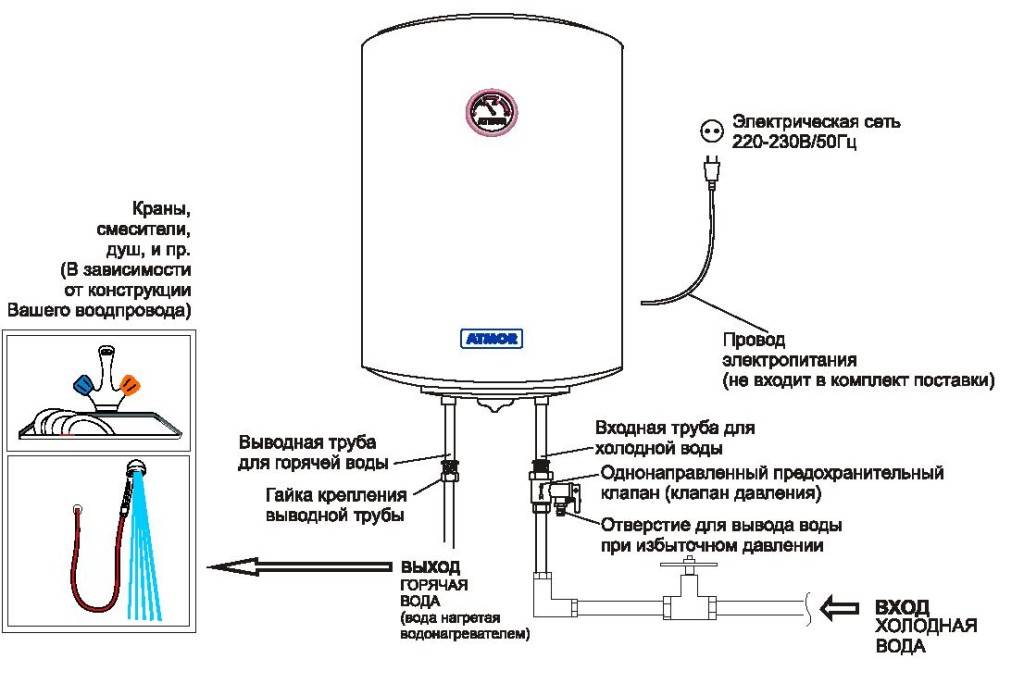
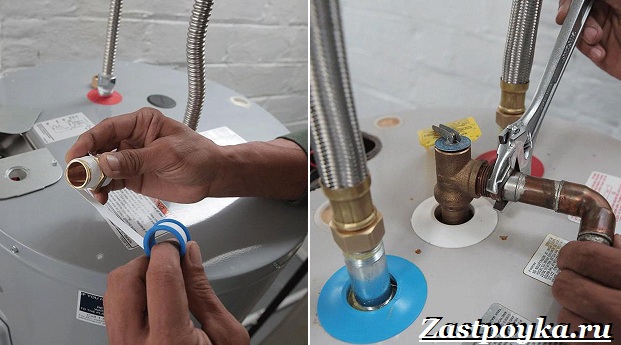
For example, a power cable (long enough) and a blast valve are required. A safety valve is installed at the cold water inlet in the tank in order to reduce the pressure in the boiler itself.
You will need additional water pipes to connect the tank. Connecting fittings, a drainage tube and valves will act as fasteners. The drainage tube is put directly on the blast valve and is discharged into the sewer or sink.
You need to think about coarse and fine water filters (they are changed at least once every six months). A circuit breaker should be brought out separately so that the tank is autonomously powered by electricity.
We can say that it is not difficult to install the boiler yourself. Experts recommend watching visual video tutorials and carefully studying the instructions. But some argue that the service life depends on the correct installation and you will not have to resort to warranty service.
To install a storage water heater of 100 liters, reliable grounding is required. For too strong tap water pressure, it is recommended to install a reducer.
Direct connection of the boiler to the water supply is carried out only with the help of plastic / metal-plastic pipes (flexible hoses are not allowed). Near the tank, there must be free space indicated in the instructions (it should not be neglected).
What does the fitter do during the warranty inspection? He must clean the tank from scale, dirt and impurities (once a year, for some models - twice). The same is done with the blast valve.
Particular attention is paid to the anode inside the tank, it must be replaced with a new one. He enters all this into the warranty card with the help of marks.
Do not refuse the help of specialists, because only they will be able to carry out a qualified inspection, repair and maintenance.
As for the price of storage water heaters, they will depend on the manufacturer and the volume of the tank. Models from such creators as Zanussi, AEG, Ariston, Bosch, Elektrolux, Thermex, Timberk have a special quality. All samples are equipped with only high-quality materials, endowed with a high degree of reliability and a long service life.
* An electric storage vertical boiler costs from 2 thousand rubles and more; * An electric horizontal storage boiler costs from 4 thousand rubles and more.
Device and mechanism of work
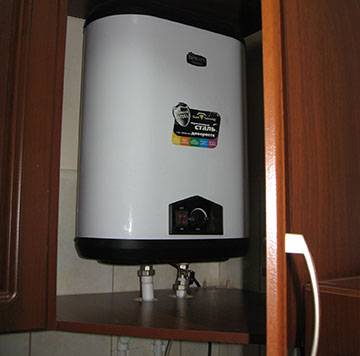 Most often, water heaters are installed, the performance of which is ensured by burning gas or using electricity.
It is quite rare to find equipment operating on liquid or solid fuels.
Electric water heaters are installed in the absence of a centralized gas main, in urban and suburban conditions.
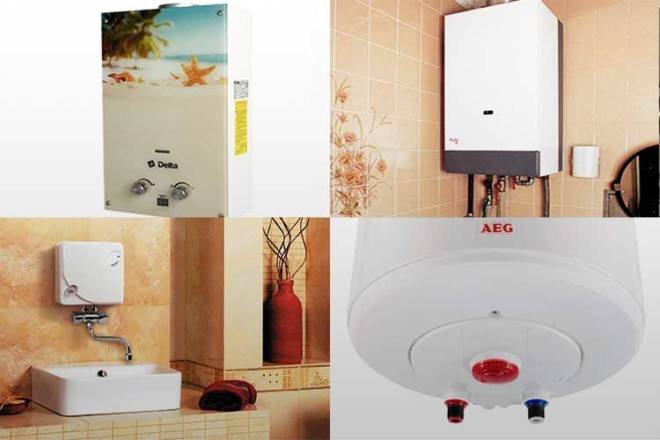
This type of device is represented by flow and storage models that differ in functionality, design features and mechanism of action:
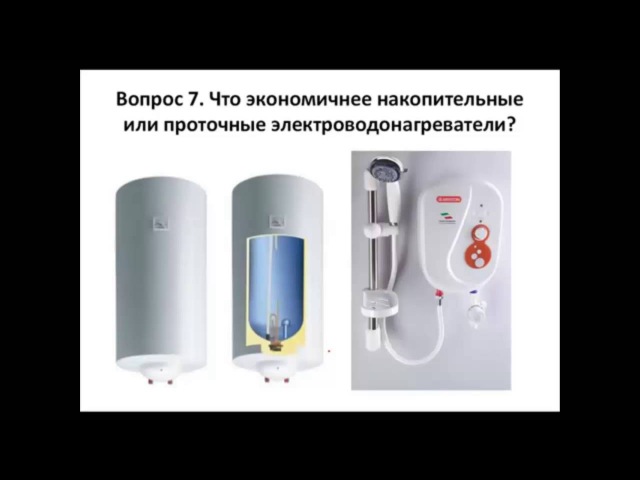
- The design of flow models is represented by a housing and a protective system, a terminal block, a pipe for supplying cold water, a heating element in the form of a heating element, as well as a control system, a pipe for hot water intake and a transformer. Flowing water heaters of the electric type can be non-pressure and pressure. The first option is used in showers and in the country, it is distinguished by not too high energy consumption rates, and, accordingly, a low power level. Pressure equipment is characterized by the ability to control the temperature of water heating.
- The design of reliable and economical storage models is represented by a housing, a tank, a heat-insulating layer, a magnesium or titanium anode and a heating element, a thermostat and a control unit, as well as a security group and a temperature sensor, an indicator and an electric cable. A significant part of electric models of the storage type consumes no more than 2 kW of electricity in the process of heating water.
It should be noted that the main difference influencing the choice of the type of equipment is the amount of energy consumed. Flow models use about 25-30 kW, which is due to the instantaneous heating of the water passing through the heating element.
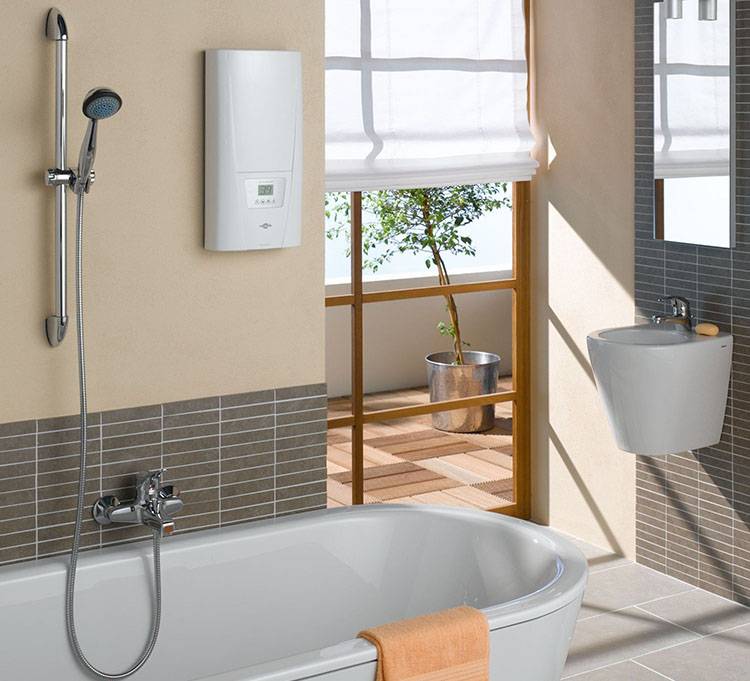
Instant water heating is one of the advantages of an electric instantaneous water heater.
As practice shows, for the operation of a flow heater, it is necessary to provide an electrical supply with voltage indicators of 380 V. Among other things, the difference between such water-heating equipment is the supply of hot water exclusively for one point.
The most economical in operation is still the time-tested, but improved gas-type water heating equipment.
What is the safety valve on the boiler for?
The boiler is a water tank with a heating device, which can be: a solid fuel furnace, a gas burner, a coil for hot coolant from the heating system (indirect heating) and a thermoelectric heater (TEN). Most boilers are equipped with heating elements, which is convenient and does not require large expenses for the arrangement.
The boiler is filled with water and is under pressure equal to the pressure in the water supply. When heated, the water expands and the pressure in the boiler tank increases. To prevent heated water from being squeezed out into the pipeline with cold water and not drained in the absence of cold water, a check valve for the water heater is installed on the inlet pipe.
The boiler is equipped with safety automatics that regulates the heating temperature set by the user. The upper part of the boiler remains always empty of water. The presence of air serves as a shock-absorbing cushion to compensate for the expansion of water, and therefore the pressure does not increase significantly and not as quickly as if there was no air.
Automation allows you to heat water no higher than 80 degrees. But if it fails, the heating will continue uninterruptedly and can lead to the formation of high pressure that can damage the boiler. To prevent this from happening, install a safety pressure relief valve for boiler . Which, when the pressure exceeds the set value, opens and discharges excess water.
Manufacturers of electric water heaters have combined two valves, a non-return valve and a safety valve, into one housing. Now this device performs both functions.
When is it appropriate to use a water heater?
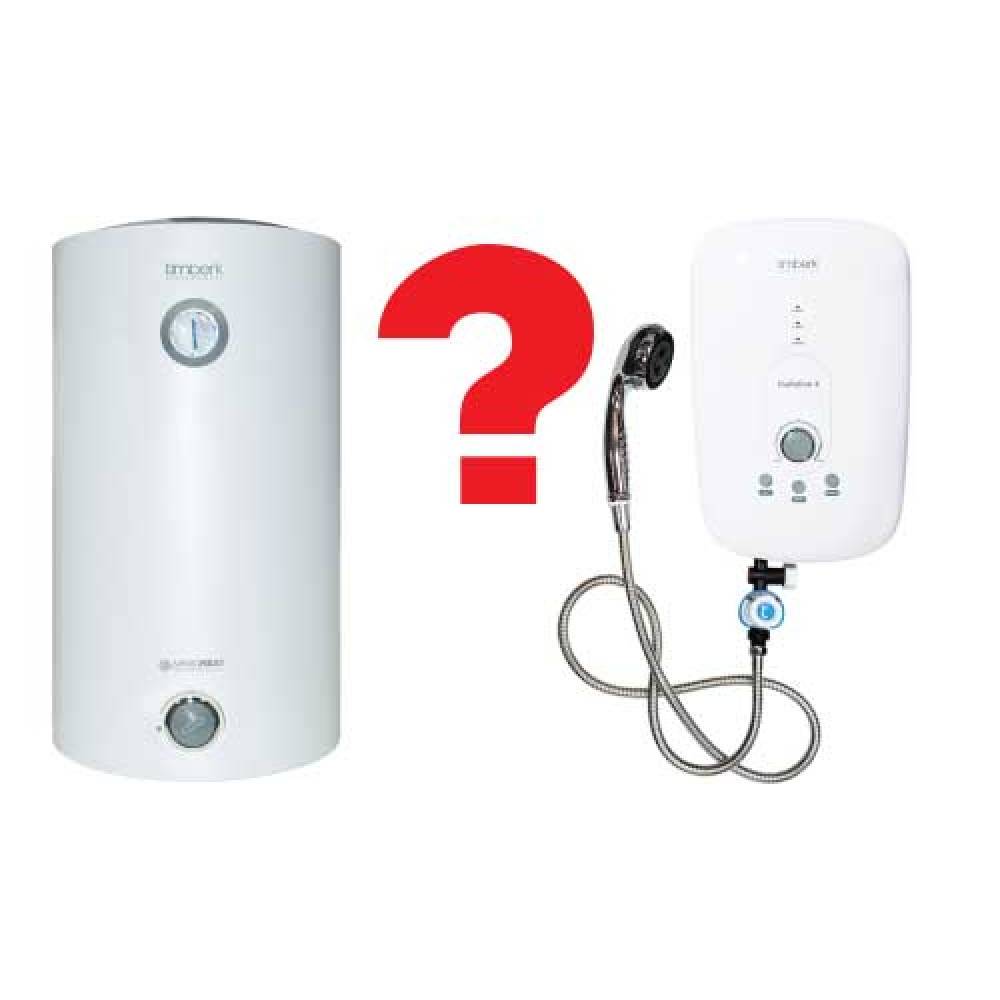
So which water heater should you choose? Accumulative or flowing? Gas or electric?
1. Gas heater, as we have already said, is the privilege of residents of gasified houses and owners of gas tanks. Gas is much cheaper than electricity, which is why many people take advantage of the opportunity they have. Many, but not all. For example, owners of private houses with individual gas heating, as a rule, try to implement an integrated system with hot water heating for hot water from a heating boiler with an indirect heating boiler, if it does not have to pull hot water pipes to too remote points of water intake.
Boiler and boiler of indirect heating.
Often, residents of gasified houses and apartments prefer to install an electric heater, simply because it is easier to install and more convenient to use. In a word, even in houses with gas supply, the probability of finding a gas water heater and other hot water systems is about the same.
2. If there is no gas, there is, of course, not much to choose from - you will have to take an electric heater. But flowing or storage - depends primarily on the state of the power grid. If the network is not able to withstand the load created by the instantaneous heater, the storage heater becomes the only option suitable for your home.
If the power supply system at home is capable of providing any necessary power, then the choice between flow and storage models should be made based on the expected intensity of operation of the equipment. Will the water heater only replace the existing centralized hot water supply during periods of planned shutdown, i.e. work on the strength of a few weeks a year, or will he have to supply you with hot water all year round due to the lack of other sources of the latter?



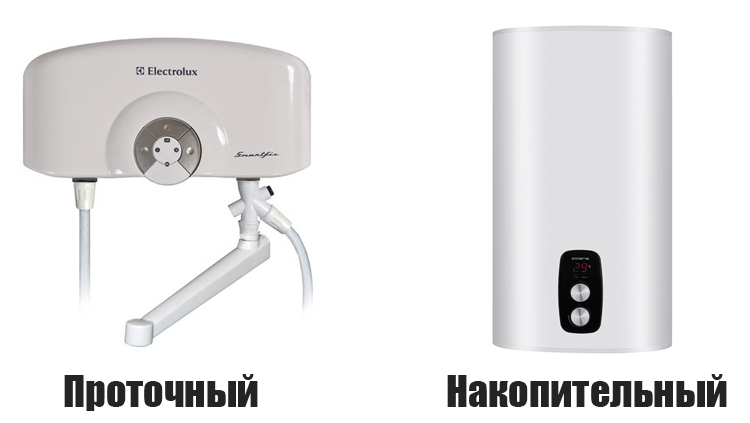
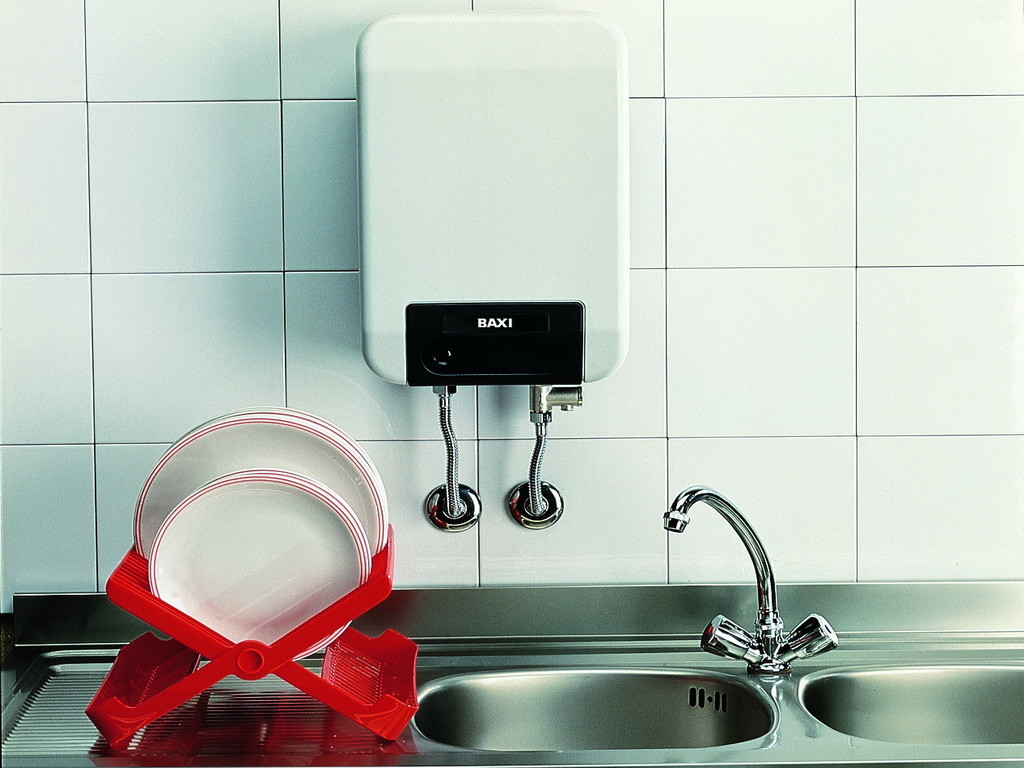
3. For occasional use, it is more advisable to purchase an instantaneous water heater. It is compact and, therefore, does not take up too much space in an already cramped bathroom. Even an inexpensive non-pressure model of a relatively small capacity will help you survive several days / weeks allotted for the prevention or repair of the pipeline of a centralized DHW system.
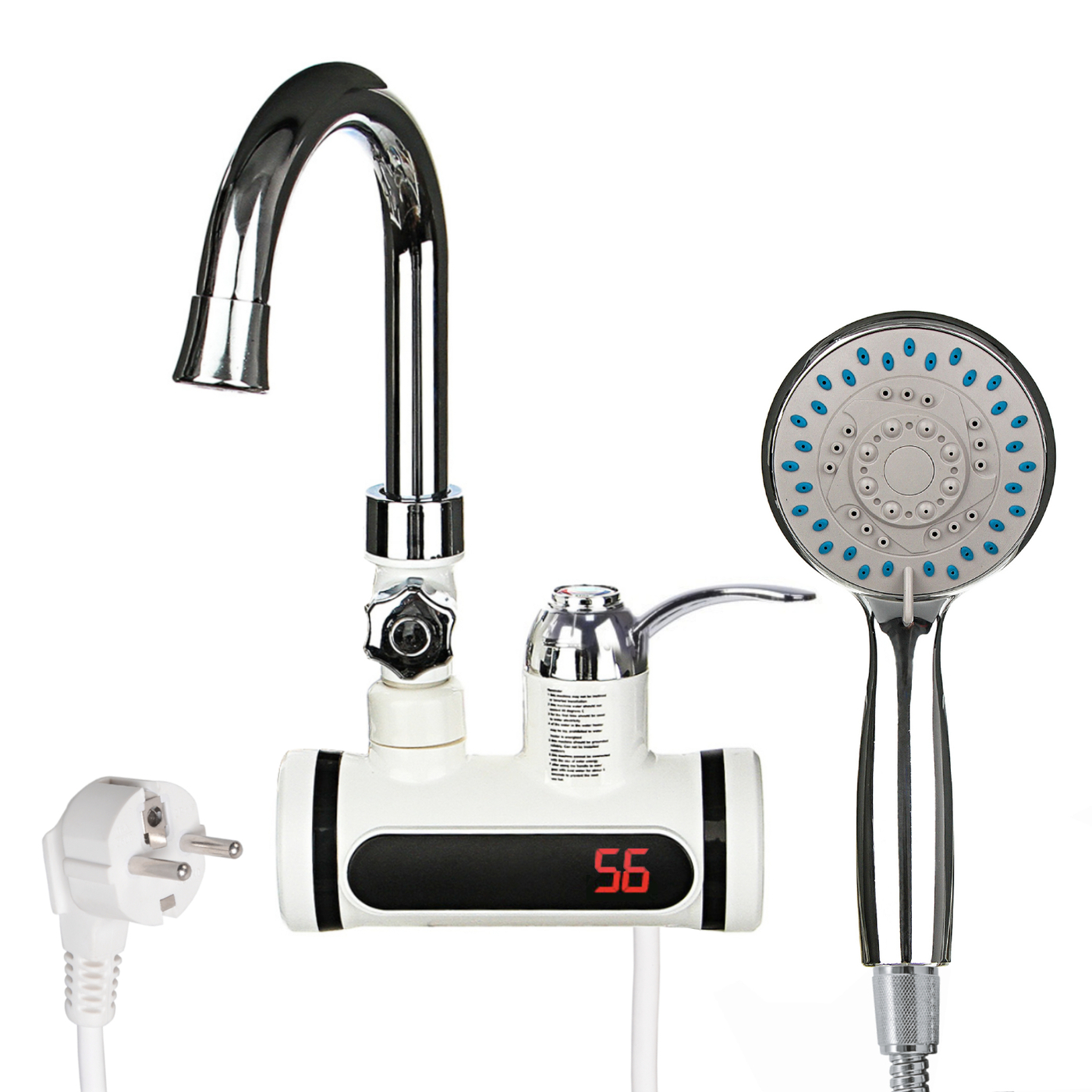
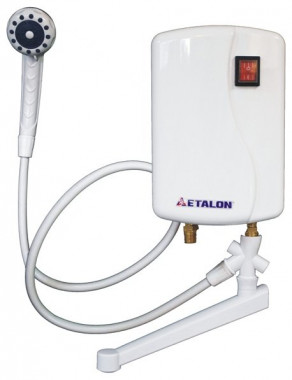
Non-pressure instantaneous water heater with shower head.
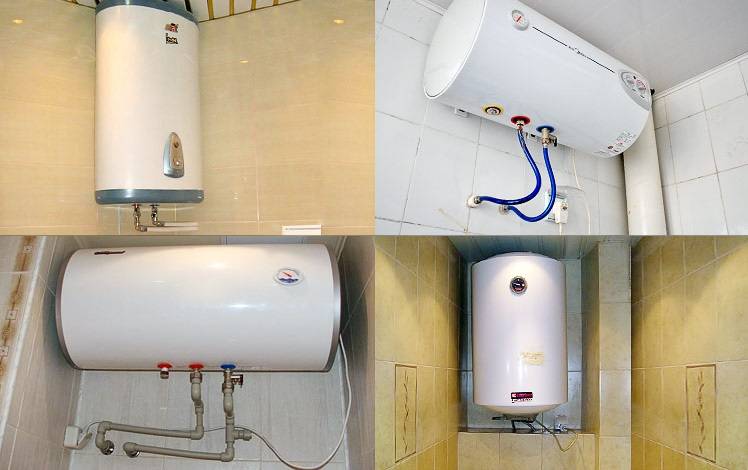
4. In the same case, when the device is assigned the role of a constant source of warm water, then the accumulative one may be more convenient, although not cheaper. In country houses, where, unlike city apartments, the issue of lack of space is not so acute, you can meet a storage electric heater much more often than a flow one.
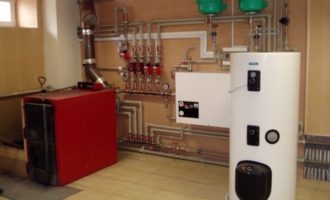
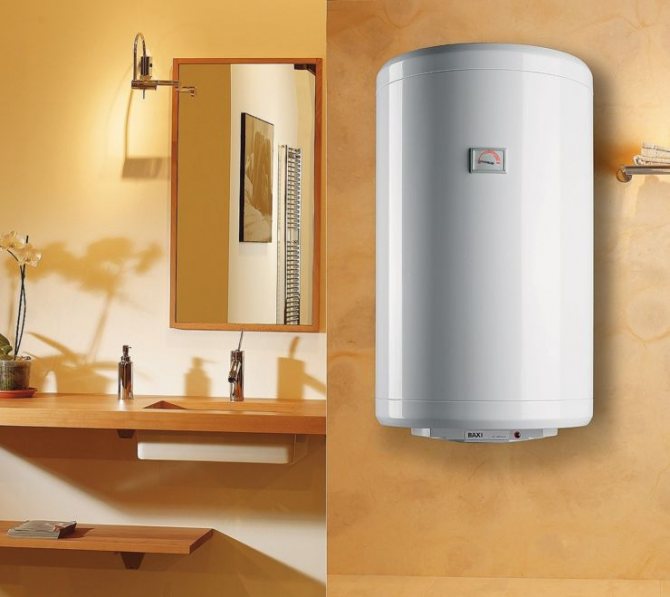
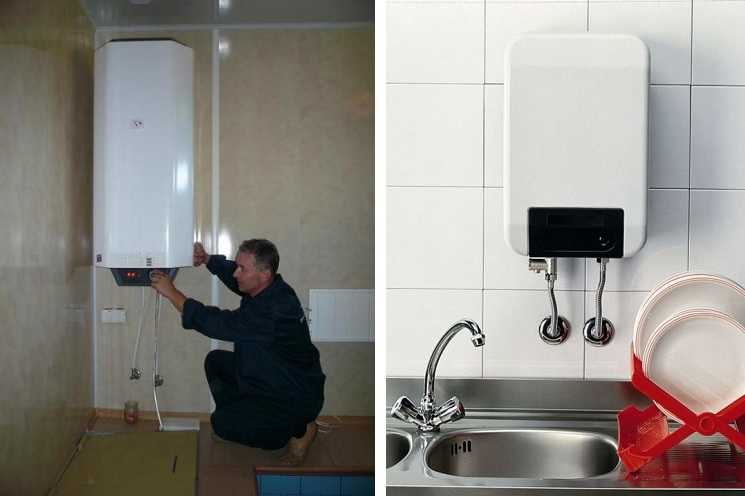
Large storage water heater.
As you can see, there is no unequivocal answer to the question of which is better - instantaneous or storage water heater. It depends on many factors, including the presence or absence of gas, the quality of the electrical wiring, the expected frequency of use of the heater, the location of the object to be supplied with hot water, your personal preferences, after all.
The principle of operation of instantaneous water heater
A potential buyer should be aware that there are two groups of threaders that work a little differently:
Pressure type
Such a water heater crashes into the water supply somewhere before branching, so that hot water can be supplied to several points of water intake. When the taps are closed, it experiences the pressure of the water supply, which is why it is called pressure.
Schematic diagram of the installation of a pressure instantaneous water heater
Non-pressure type
Commonly referred to as "faucet water heaters" or "heated faucets". To connect such a device, a tee cuts into the water supply, to the outlet of which a tap is screwed. The water heater is connected to this tap. Thus, only one hot water draw-off point will be available. It is most convenient to connect to the outlet to the washing machine, to which you just need to screw the tee.
It is even easier to connect to the nozzle on the faucet, to which a hose with a shower head is screwed. True, this option will not be very convenient to use: a regular shower hose and a water heater connection will have to be screwed in and out alternately.
Non-pressure flowers are equipped with a spout (this element is also called a gander) and a shower head of a special design, which provide a comfortable water supply at low flow rates. If you connect an ordinary shower head to the water heater, water will flow out of it not as a “rain”, but in one stream. If you increase the flow, "rain" will appear, but the water will become cool.
The spout and watering can supplied with the water heater are not only designed for low consumption, but also have structural elements that allow you to adjust the flow while maintaining the parameters of the jet.
In this case, the flow rate will change (and with it the temperature), but the water will in any case flow out in the form of “rain”. The spout is configured in the same way, only the nozzles for it are interchangeable.
It is convenient to use an electric water heater in a country house, in a private house of permanent residence, when there is no connected gas main, hot water supply. Acceptable cost (compared to gas) also plays an important role when buying, and often preference is given to an electric heater. At the same time, it must be remembered that the correct operation of the device is the key to a long uninterrupted service.
Cumulative
The main purpose of the water heater is that the water it is filled with is heated to a certain temperature, then you can use it in any quantity.
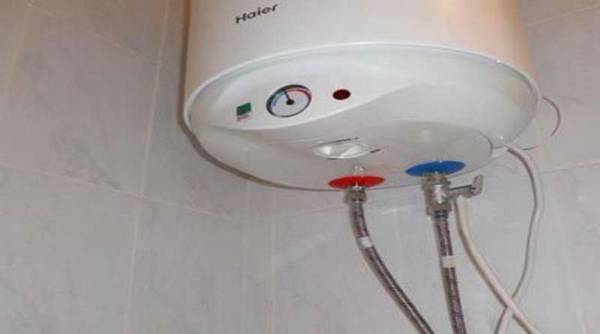
Externally, the device is a capacity of a certain displacement. The tank is covered with a heat-insulating layer, water from the water supply system enters it, which is subsequently heated by built-in electric heaters - heating elements.
The storage water heater is equipped with a thermostat that controls the water temperature. In order to set the required temperature, just turn the control knob. As soon as the water temperature reaches the required level, the thermostat will turn off the power supply.
Thanks to the insulated walls of the tank, the water retains heat for a long time, but as soon as it cools down, the thermostat automatically turns on the power supply and the heating elements heat the water again.
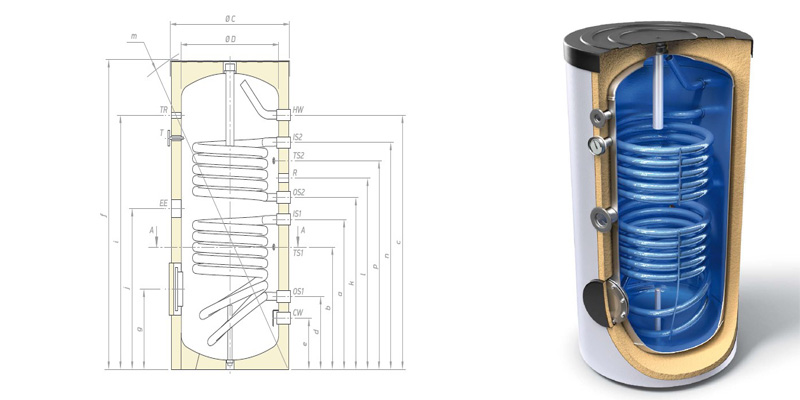
Several elements can be distinguished in the device of a storage type water heater: 1 - housing, 2 - thermal insulation, 3 - cold water supply pipe, 4 - thermostat, 5 - heating element, 6 - magnesium anode, 7 - hot water outlet pipe, 8 - internal boiler capacity.
Storage water heater device
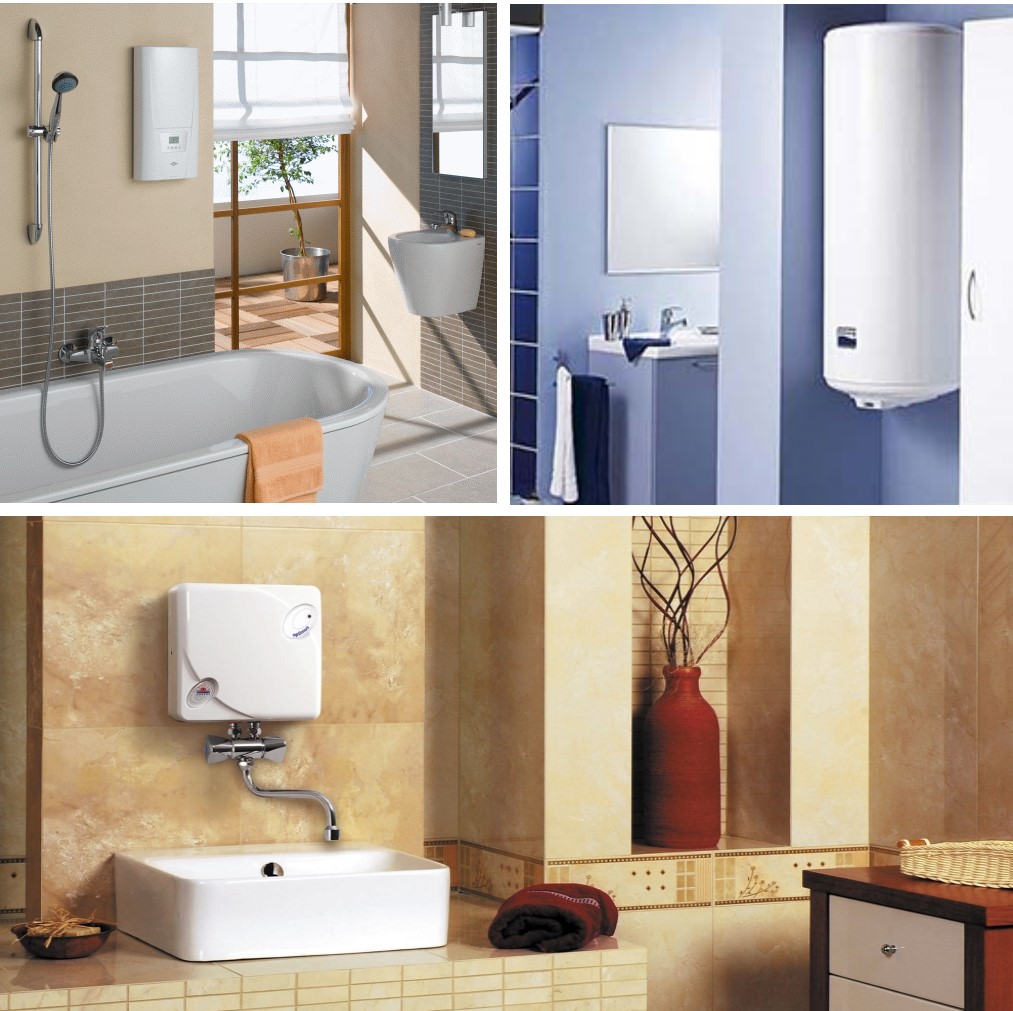
Despite the fact that storage water heaters are quite impressive in size, they fit perfectly into the interior.
Storage units have many advantages:
- no installation difficulties: for the operation of the boiler, one electrical outlet with grounding is enough;
- for a sufficiently long period of time, the device can maintain the desired water temperature, this is due to the presence of a good heat-insulating layer;
- the ability to supply hot water to several points of consumption at the same time;
- models of such devices are different in shape and design, so you can choose the option that suits your interior;
- the water in the tank will be enough to take a shower or bath;
- acceptable cost.
Despite a considerable number of positive points, it is important to note a number of disadvantages that are typical for storage boilers:
- For a family of two people, a water heater with a capacity of at least 80 liters is required, therefore, for a family of 3-4 people, a larger capacity unit (from 100 liters) will be required. Moreover, the larger the tank in volume, the more space is needed to accommodate it.
- As the water cools, the water automation turns on the heating elements, which means that more electricity will be consumed.
- The need for regular cleaning: this is due to the fact that when the water is heated, various deposits fall on the walls of the device, which accumulate and turn into a layer of scale, and if the water heater is not cleaned, it will quickly fail.
Stages of installation of instantaneous water heater
The place for the body of the device is chosen as convenient as possible so that in the process of using water, splashes do not fall on the box. In the case of models that are installed directly to the outlet of the pipeline, a tee, shutoff valves and a valve will be required.

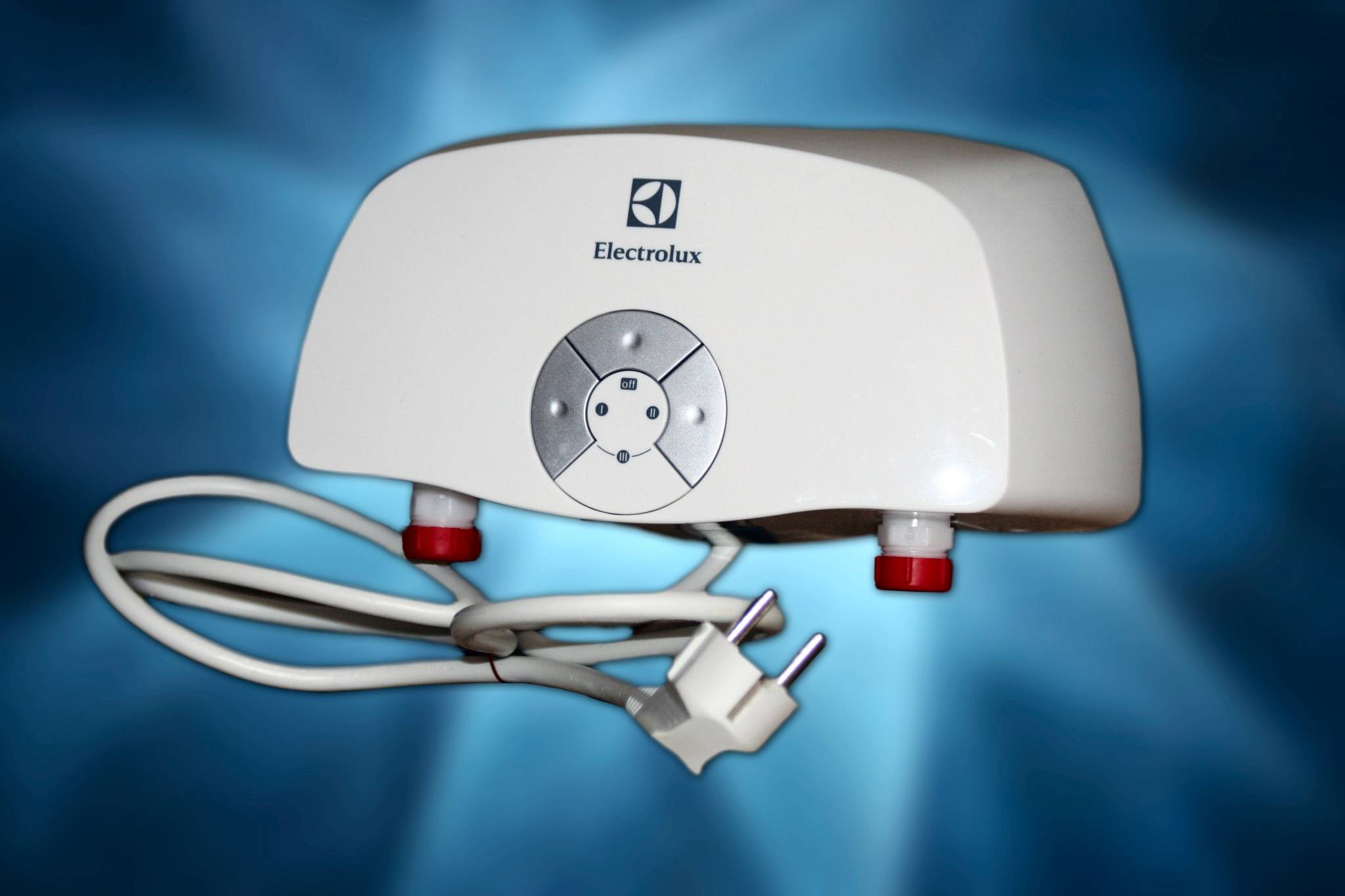

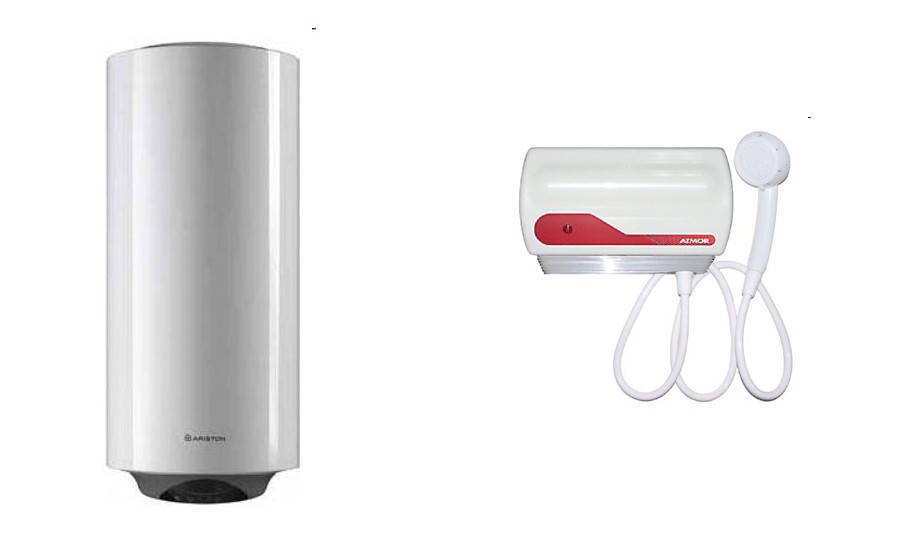

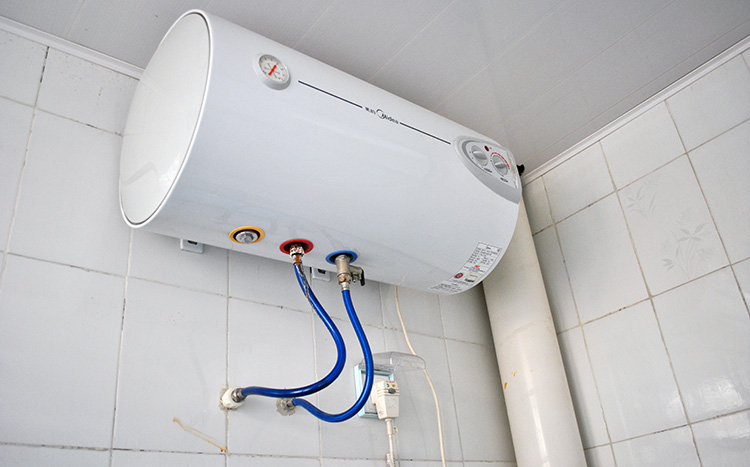


The order of work is carried out according to the following scheme:
- supply of electrical network with a machine on the shield;
- fastening the case to the wall or to the sink (depending on the model);
- after shutting off the water in the pipeline, connect using fittings and valves;
- supply cold water and pass through the device to control the tightness of the joints;
- connection to the network and control of the operation of heating elements.
Experts strongly recommend installing a filter before entering the instantaneous water heater to remove small specks and rust, which can cause equipment damage.
Feature Comparison
Weight and dimensions
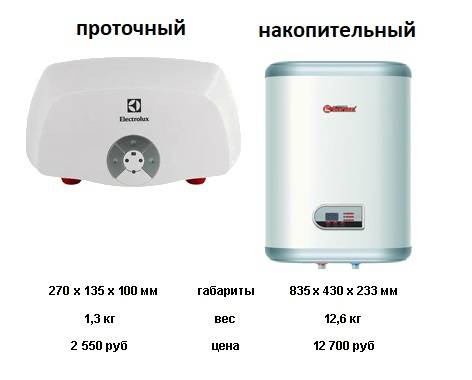
According to these parameters, of course, the winners are devices with instantaneous water heating. Their dimensions are compact, and their weight does not exceed 2 kg. They will not be noticeable even in a standard shower stall, as their dimensions vary between:
- height - 14-17 cm;
- width - 30 cm;
- thickness up to 10 cm.
Although boilers of this size can be found, their total capacity does not exceed 10 liters. This volume is not enough even for 1 family member. Therefore, they must be installed at least 50 liters, and the dimensions will be impressive. In addition, boilers up to 120 liters can be installed on the wall. If the volume is larger, then the device is mounted on the floor. It can be installed in this case in the attic, which will significantly save space.
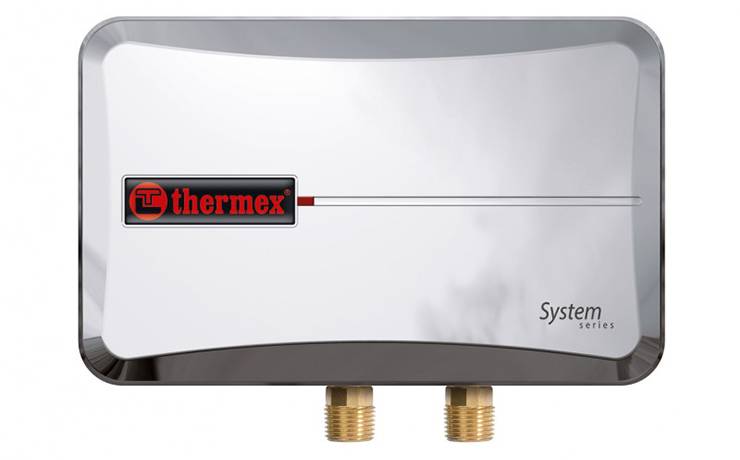 But they win by their size
Device performance
In the case of installing a boiler, its heating element is already designed for a certain volume of water, so when choosing a model, you need to pay attention only to the dimensions of the tank. Sizes must be chosen according to the needs of the family
The optimal sizes of the boiler for a different number of people will be as follows:
- 1 person - up to 50 liters;
- 2 - up to 80 l;
- 3 - up to 100 l;
- 4 - up to 120 l;
- 5 - up to 140 liters.
As practice shows, for a shower you need a heater of 5-8 kW, for a faucet in the kitchen - up to 5 kW. If you need to supply several points in the house, then the total amount must be at least 12 kW.
Economy of use
Many users, wondering which water heater to choose - storage or instantaneous, do not even consider the latter when they find out how much electricity it uses. Although if you understand this issue, you can understand that to heat a certain amount of water, the same amount of energy is needed, regardless of which heating element is used - flow or storage.
Based on this, we can conclude that the boiler consumes more energy, as it constantly maintains the desired temperature.Approximately 1-2 kW it will use additionally every hour to maintain the temperature.
If we talk about the price of boilers and instantaneous heaters, then the former cost 2-3 times more. Although it all depends on the power of the model and its manufacturer. Preventive maintenance for flow heaters is also more economical, as the filter only needs to be replaced every few years.
The boiler needs constant descaling, as well as replacement of the magnesium anode. If this is not done, then the water heating time will gradually increase, and the device itself will most likely fail. But even with regular maintenance, boilers rarely last more than 10 years, which cannot be said about flow heating elements. They work much longer.
Installation nuances
Installing a water heater is easy. There are special brackets for wall mounting. Make it easy. A hose with a centralized water supply is connected to the inlet, and the outlet is connected directly to the mixer.
If you install powerful partings of 5 kW or more, then you need to connect them directly to the shield. The required voltage in this case is 380 V.
Boilers must be installed on special anchor bolts. The device is connected through the RCD to a dedicated socket with grounding.
In both cases, it must be understood that a storage or instantaneous electric water heater is best installed above the sink. Thus, there will be free access to management. If the boiler is installed in the attic, every time you need to change the temperature regime, you will need to climb up.
Storage or instantaneous water heater to choose?
To live in a country house, isolated from the central water supply, it is necessary to solve the issue of using water for all needs in full: it is necessary to wash and wash dishes, to be able to take a shower and a bath. If water is supplied, it must be heated.
Residents of apartment buildings are also concerned about these problems, but, fortunately, for a rather short period of time - the period for turning off hot water in the summer to repair pipes has been reduced to 10 days. But, people want to be able to fully use the resource and also look for and choose heaters, comparing their efficiency, installation difficulties and much more.



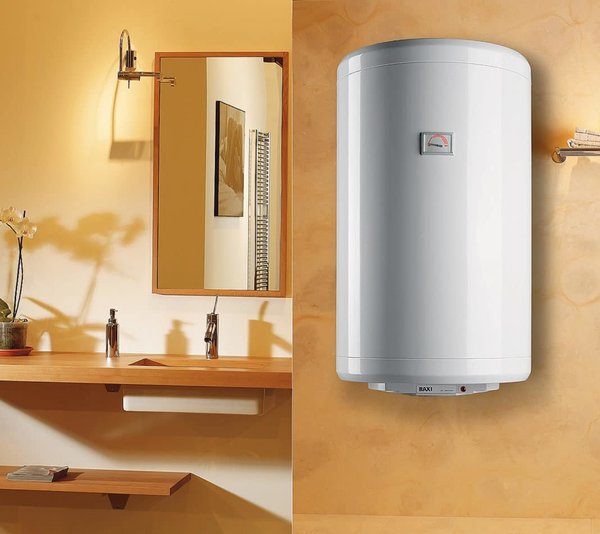
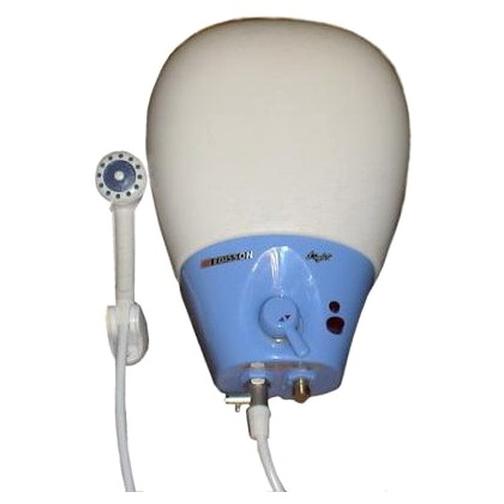
People's reviews. Which water heater to choose?
Bulk
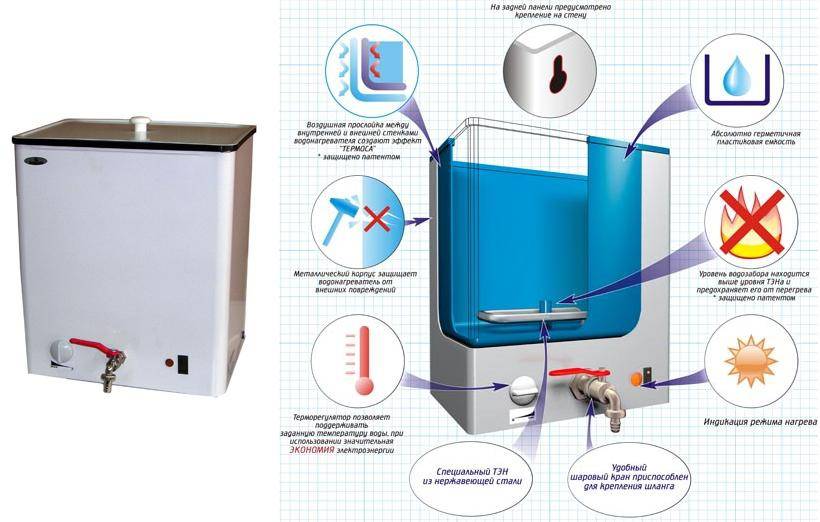
Bulk water heater - an improved bucket from boilers. In fact, this is an ordinary container (usually made of stainless steel) with built-in heating elements, a tap and / or a hose and a shower head. For ease of use, a thermostat has been added (we set the desired temperature) and a thermostat (needed to maintain the required temperature). This is a great option for giving, hiking (if you have a generator), garage.
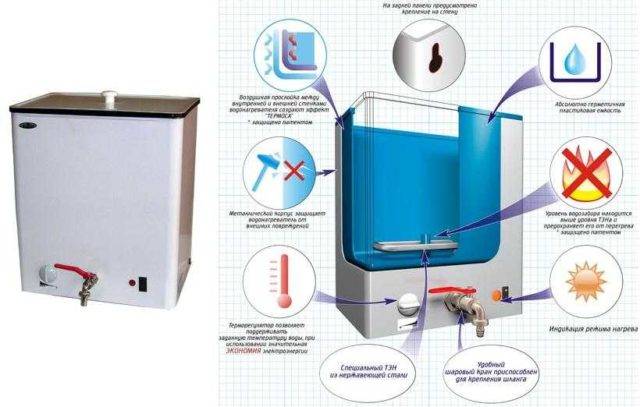
The device and appearance of bulk electric water heaters
The hot water heater does not need to be connected to the water supply. Just pour water into the container through the filler hole or by removing the lid, after which the heating is turned on. Tank capacity - 15, 20, 30 liters. There are also few stamps: Alvin, Dachnik, Dachny, Aquatex. The prices are more than democratic, which is not surprising with such a device. Stainless steel tanks cost from $50, enameled metal from $25,
Description
Flow-accumulative type heaters are actively used for residential premises, as well as for cottages and other suburban buildings. Experts assure that the device is a hybrid of a storage boiler and a standard flow heater.
Inside the device there is a tank, the dimensions of which are different (depending on the model), and an effective thermal heating element (TEN). The device heats water to the required temperature in a short period of time and stores it with a sealed tank. For the manufacture of budget models, professionals use a non-pressure scheme, and for more expensive and complex products, a standard pressure one. Currently, the popularity of such devices has just begun to grow.
If you are going to buy such products, you should familiarize yourself with the advantages and disadvantages of the acquisition, as well as pay attention to the tips for choosing
Results
For an area with a small footage, an instantaneous water heater is the best option.
The main things to look for when choosing a water heater:
- heating rate;
- the ability to provide the necessary hot water for the needs of the family.
From the point of view of financial and energy costs, flow-through ones look more advantageous.
When choosing, it is necessary to take into account the dependence of flow models on the availability of high-quality electrical wiring and the level of pressure in the water supply.
The dimensions of storage devices require a large footage in the room.
If you expect to consume significant amounts of water, it is better to purchase a gas heater.