- Overview of the TOP-5 best models
- Micathermal heaters
- The principle of operation of the infrared heater
- Popular brands
- Monolithic quartz heaters
- Inverter heaters for home
- temperature difference
- Low heating rate
- Poor efficiency at high ceilings
- Convectors are gathering dust
- Other cons
- How to correctly calculate the profitability of the model
- Pros and cons
- Overview of electric heaters
- Infrared heaters
- Why are convectors good?
- pros
- Minuses
- What can a fan heater offer?
- Heating system options
- Electric boiler
- infrared panels
- Using convectors
- Which electric home heating should you choose?
Overview of the TOP-5 best models
Quartz heater Teplako - characteristics:
- Power 500 W.
- IR radiation.
- For a room of 20 m².
- Safety shutdown in case of overheating and overturning.
- Mechanical temperature controller.
- Thermostat.
- Possibility of remote smart control.
MEGADOR Group-100 MG – parameters:
- Electric heater of plinth type 400 W.
- Increased moisture protection.
- For a room of 6-8 square meters. meters.
- Light indication of work.
- Ideal for heating a bathroom, bath, shower, pantry, sauna, hallway, bath.
JARKOFF JK-9002 – features:
- Film radiator in the form of a picture for 500 watts.
- Dimensions 1050x600 mm.
- Heating up to 1000C.
- Creates comfortable conditions in the room, does not overdry the air.
AEG IWQ 120 - characteristics:
- Quartz radiator that heats up in 30 seconds.
- Coverage up to 20 m².
- Protection against water, wind, corrosion - allows you to install in a damp room.
- Heating regulator.
Nikapanels 330 - properties:
- IR radiator 330W.
- The dimensions of the porcelain stoneware panel are 600x600 mm.
- Area from 3 to 12 m².
- Heating up to 850С.
- Does not consume oxygen.
- 1st class of protection.
Model Nikapanels 330
Micathermal heaters
Micathermal heaters have appeared on the household appliances market recently. This is a subtype of infrared heaters developed on the basis of innovative technologies. It is believed that the device has the best efficiency among all heating devices due to the fact that it does not heat up itself, but transfers energy to those objects that are within the radius of action as a heat wave. In nature, the sun has a similar principle of action in relation to what is located on the earth. Such heating does not have a negative effect on the microclimate in the room. Micathermic heater does not require time to warm up, the heat from it is felt almost instantly.
The heating element is a special grid (produced using the unique Micatherm technology) made of nickel, coated on both sides with mica plates. As a result, there is a technological sandwich inside the heater. This combination of technologies and materials provides structural strength, high heating efficiency and heat wave propagation.
Advantages:
- Profitability. Energy consumption is a quarter less than that of a classic heater.
- Maintaining a comfortable microclimate.
- Safety. The device itself does not heat up, it is impossible to burn yourself on it.
Flaws:
- The instrument is load sensitive. For example, if you dry clothes on it, this can lead to failure.
- The heater is not suitable for the role of the main, the only heating device in the room. It can only serve as an auxiliary device.
The principle of operation of the infrared heater
The principle of operation of the heater is to quickly heat objects and walls in the room. The air temperature rises from heated furniture and other surfaces and, according to physical laws, begins to spread throughout the room. Therefore, the heating effect is felt already a few minutes after the device is turned on. Drafts and humidity do not affect the operation of the heater.
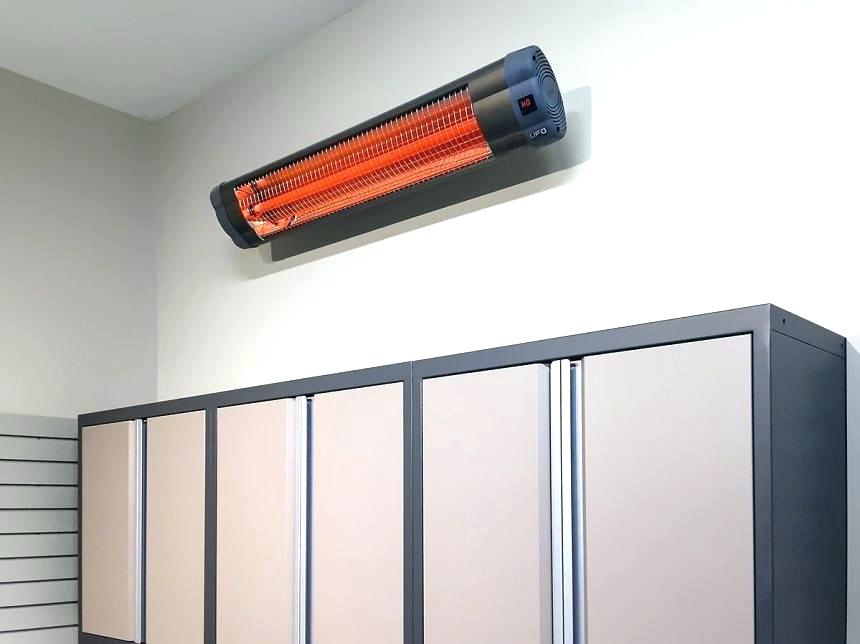
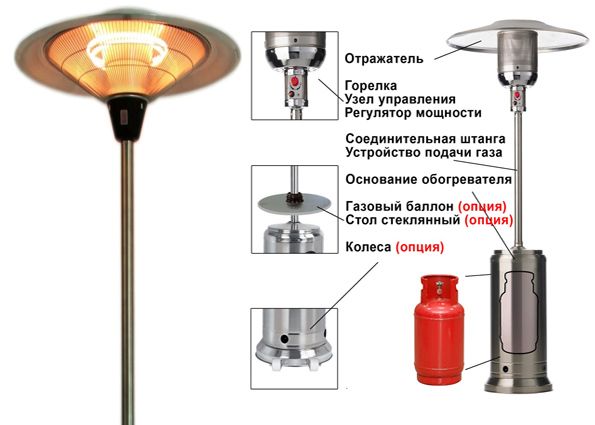
Models are available with different placements. Everyone can choose the best option for themselves. If the area is small, then a wall-mounted installation is more suitable. To capture a larger area, it is recommended to use the ceiling view. You can also choose a floor model.
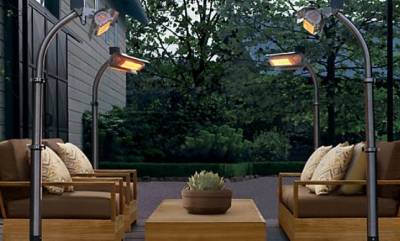
Infrared heaters are the only type of additional heat source that is used in open areas: cafes, children's sports grounds, etc.
Popular brands
It is no secret that when a potential buyer contacts specialized salons of heating equipment, any seller will be able to offer him more than a wide range of models that represent the lines of a huge number of manufacturing companies
In such situations, it is quite difficult for many to navigate and make the right choice, taking into account all the important criteria. As practice shows, the desire to purchase the cheapest heater, just like the pursuit of a big name, can be a serious mistake.
Of the many brands of wall heaters, you can pay attention to the following industry representatives
Almac is a Russian company specializing in the production of heating and medical equipment. Heaters of this brand have already managed to establish themselves due to high quality, efficiency and long service life.
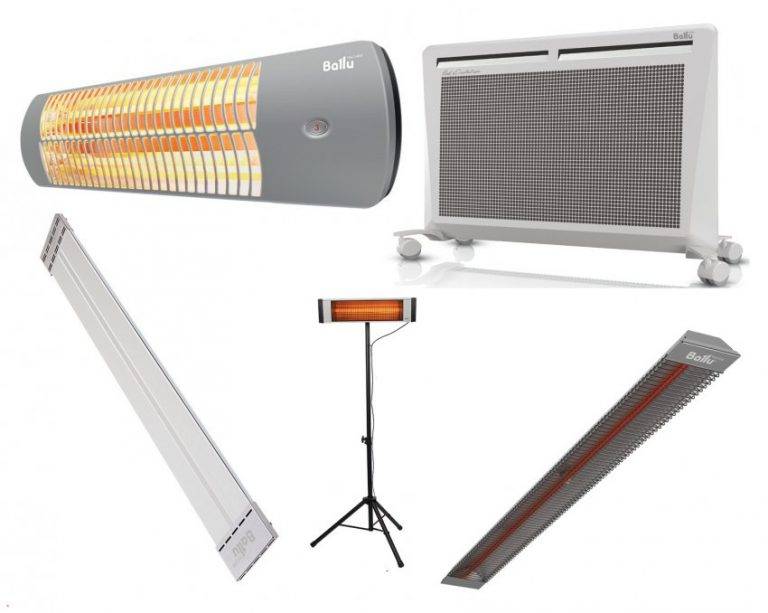
Ballu is one of the industry leaders with a list of undeniable competitive advantages

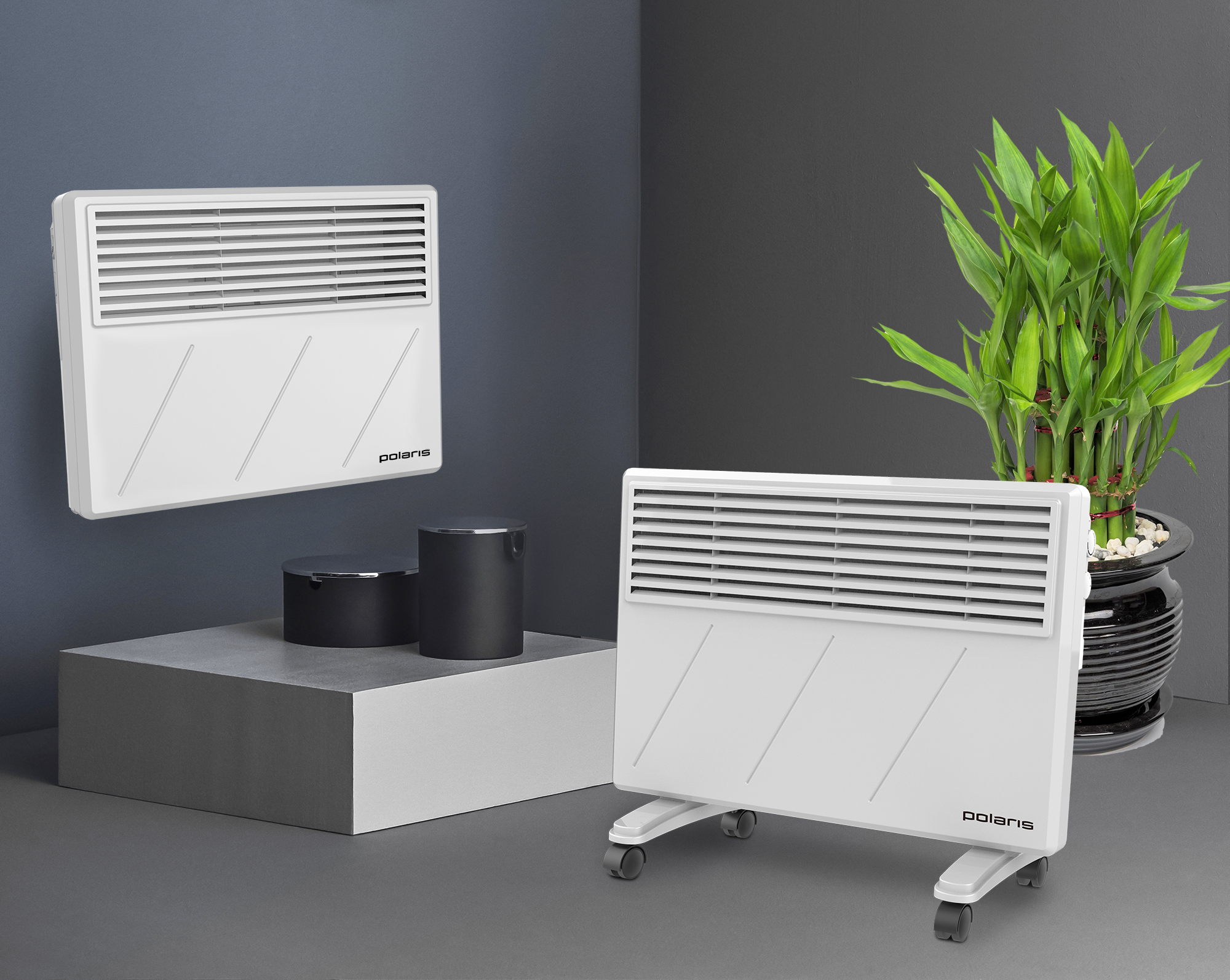
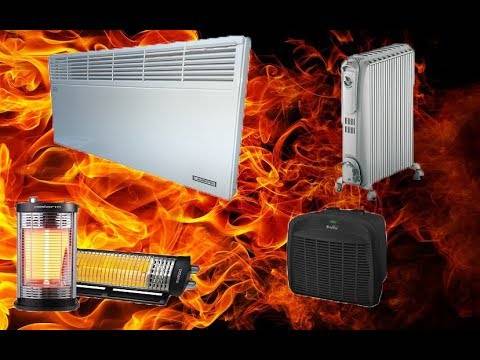

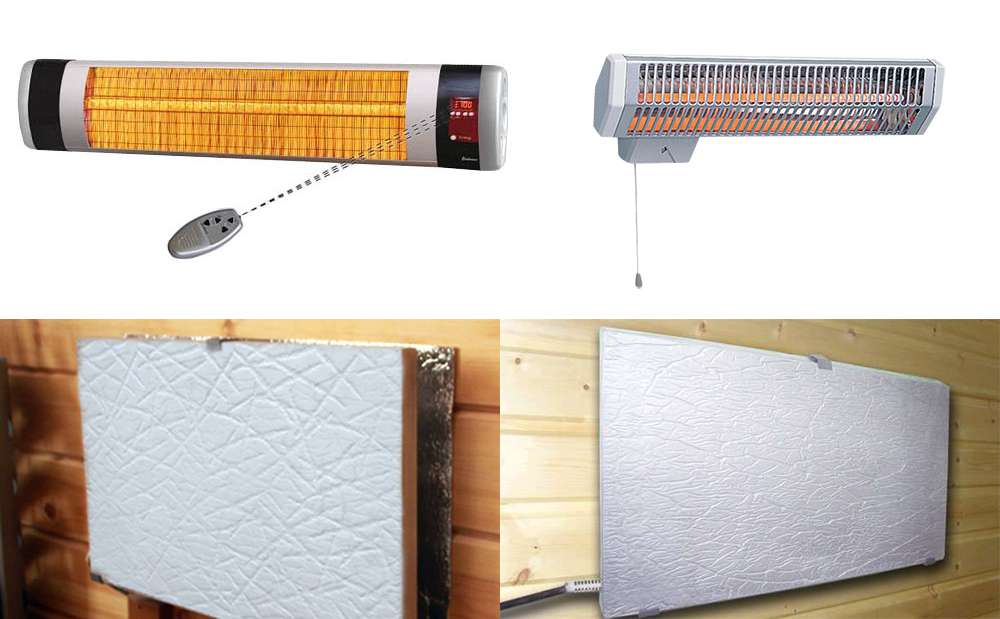



Users focus on the quality of infrared wall heaters of this brand.
Timberk is a Swedish company with production facilities in Russia. Products are distinguished by affordable cost and compliance with all applicable international standards.
Ecoline is a brand of the Russian company TST, whose products are adapted for operation in harsh climatic conditions.
Of course, this is not a complete list of leading manufacturers. Popularity ratings are constantly expanding and updating. You can find all the necessary information on thematic forums and specialized sites.
Monolithic quartz heaters
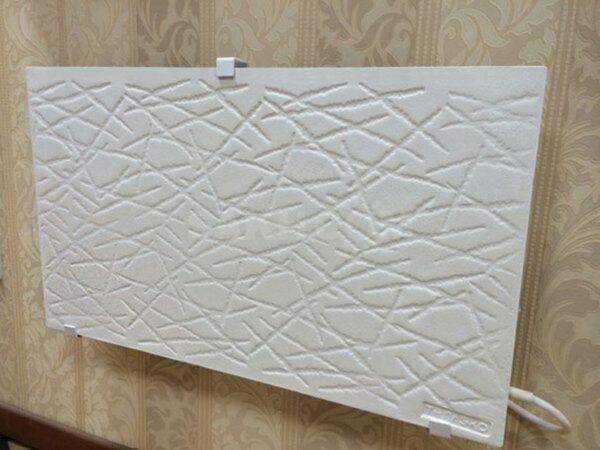
Quartz heater is a slab of quartz and marble chips. Both materials are inert to heat. Inside the panel there is a heating element, which itself heats up to 120 degrees, but the stove from it heats up slowly and only up to 65 degrees. And just as slowly gives off heat to the room. The heater, in fact, accumulates heat inside the "stone" panel.
Advantages:
- Profitability. The heater works in the active mode for a short time, and then gives off the heat stored by the quartz.
- Everyone can handle the installation, just follow the instructions for use.
- Does not affect the microclimate of the room. The heater gives natural heat which does not dry, does not burn oxygen.
- Suitable for rooms with high humidity, as it does not have open sections of the electrical circuit.
- The surface temperature does not exceed 60-65 degrees, so the device is safe.
- This device is relatively inexpensive.
- There is automation (thermostat), thanks to which the device itself, without the participation of the operator, can work in a given mode. Considering that the device is fireproof, it can be left in a country house to maintain minimal heat in the off-season.
Flaws:
- The materials used - quartz melt and marble chips - are very heavy. Such a device weighs from 15 kg (a small device for 1 kW).
Inverter heaters for home
Today, air conditioners are no longer perceived by many as devices that can only cool the house in the summer heat. They can also easily cope with the task of heating the room in the cold season.
Many consumers wall-mounted heating systems that use inverter air conditioning are attracted primarily by their environmental friendliness. The fact is that during the operation of inverter devices there is no combustion of fuel, which means the absence of harmful emissions into the atmosphere. These devices are also highly economical and easy to use.
They have another important advantage - they can be used to heat rooms much larger than other types of electric heaters are capable of.
temperature difference
If you do not perceive the feeling of air temperature well, then this minus will not be the most critical for you. But if you feel temperature changes literally by a degree, then you will not like the scheme with convector heaters - there will be a large temperature difference between the upper and lower parts of the room, which is a clear minus. The feeling of the difference is the simplest - people's feet get cold.
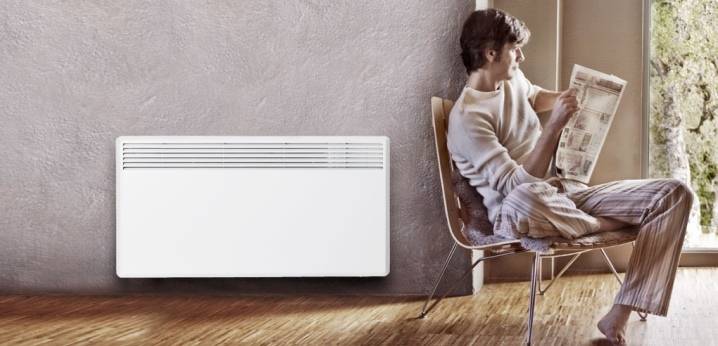
We advise you to purchase convector heaters, the outlets of which are located on the front wall, and not in the upper end - they provide more uniform heating.
Low heating rate
Electric convectors with a fan warm up the room much faster.
A noticeable minus, but it will be noticeable only during start-up periods and when the temperature changes on the regulators - convector heaters provide slow warm-up. But you can fight this disadvantage - for this it is enough to purchase convectors with built-in forced convection fans. The fans are switchable, so there will be no discomfort at night.
Poor efficiency at high ceilings
Not the brightest minus, since in most houses the ceiling height is up to three meters, and less often - 3 meters. At higher ceilings, convectors lose their effectiveness - the temperature difference between the top and bottom is too high, there is difficult convection. In such rooms, it is best to use high-power infrared devices. As for convectors, their purchase will be a waste of money.
Convectors are gathering dust
Models with a built-in filter generate less dust, but they also need to be cleaned periodically.
If you install convector heaters in your home, be prepared for dust moving around the premises. For healthy people, this is not critical, but it is better to get rid of dust. As for allergy sufferers and young children, the dusty atmosphere is harmful for them. If you decide to heat with convectors, do not neglect regular wet cleaning and dust removal from the equipment
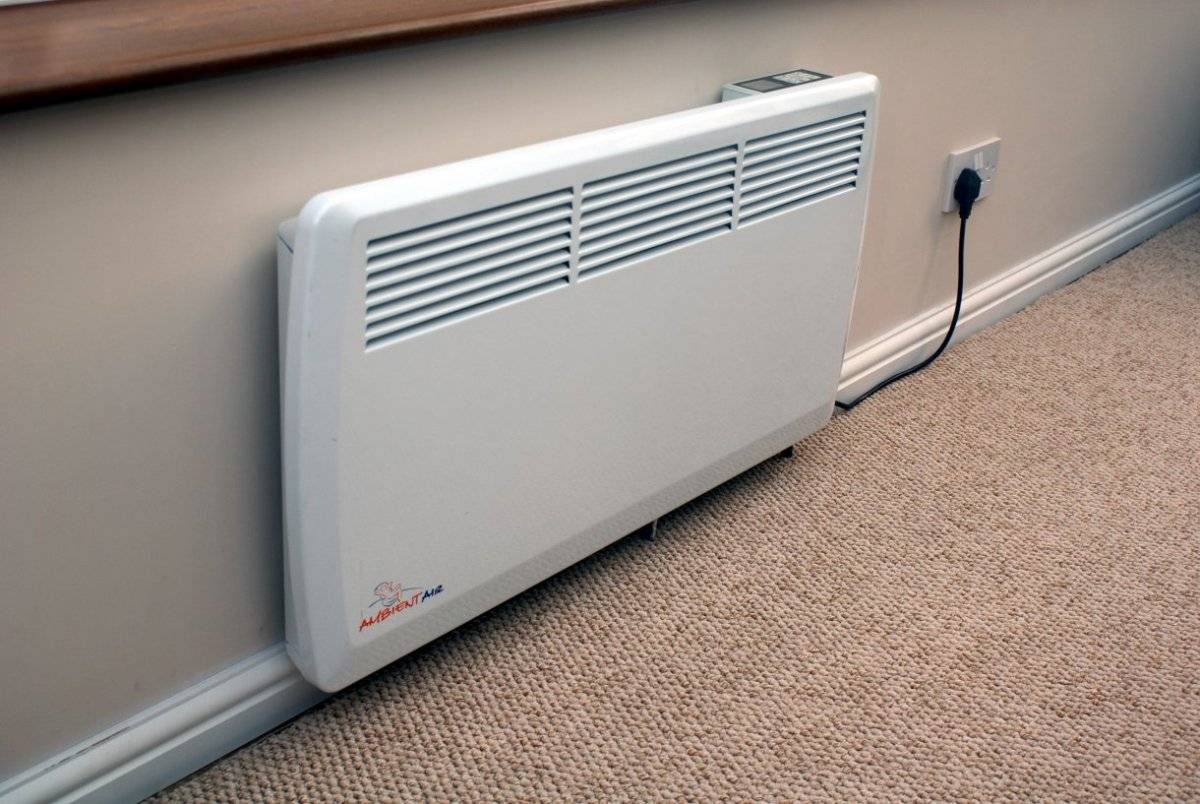




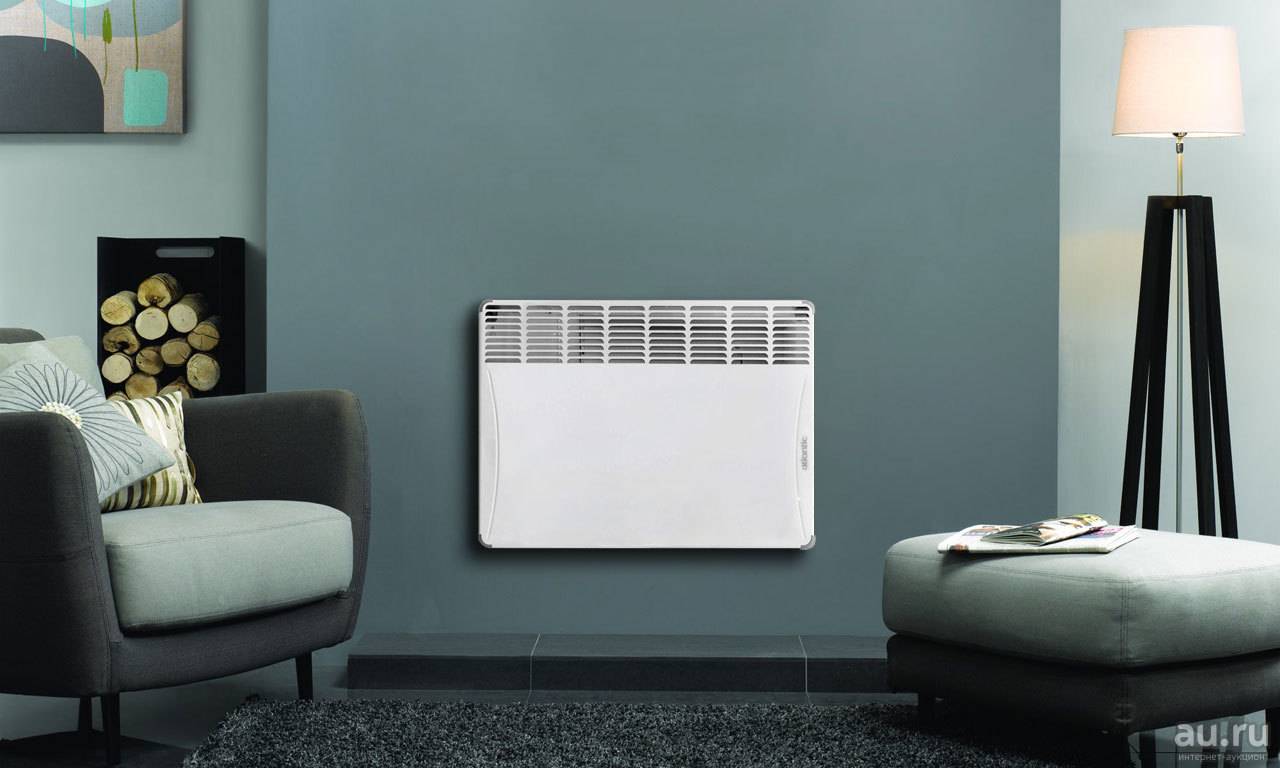
You can also pay attention to models with built-in dust filters.
Other cons
In conclusion, consider a few more small cons:
- During the operation of convector heaters, weak drafts are formed - they are noticed by some sensitive people;
- Convectors may crackle - this is the effect of thermal expansion of materials, but it is not noticeable in all appliances;
- There may be an unpleasant odor - most often it is noticeable when you first turn it on. If the smell is constantly heard, the problem lies in the cheapness of the materials from which the equipment is assembled - do not save on heating.
How to correctly calculate the profitability of the model
Each device has both its advantages and certain disadvantages. Infrared products have the same power as a water heating system, but the costs will be half as much. The convector does not belong to economical equipment, but in combination with thermostats, you can reduce heating costs by one and a half times.
The choice of suitable equipment depends on certain technical characteristics.
To reduce your energy consumption, follow these simple tips:
- overlay the building with another layer of brick with thermal insulation;
- doors should be insulated, and windows should be triple;
- insulation of the attic space will reduce heat loss;
- installation of thermostats.
Such a reduction in heat loss will make heating with heaters more economically profitable.
Watch this video on YouTube
Pros and cons
All portable room electric heaters have one common advantage. This is their mobility - the ability to carry the device and put it in the right place. In addition, each type of heater has its own advantages and disadvantages. Oil appliances and others operating on the principle of direct heat exchange are easy to operate. Their simple design provides several levels of protection: from overheating and shutdown in case of an accidental fall. These devices operate without noise and have a low fire hazard.
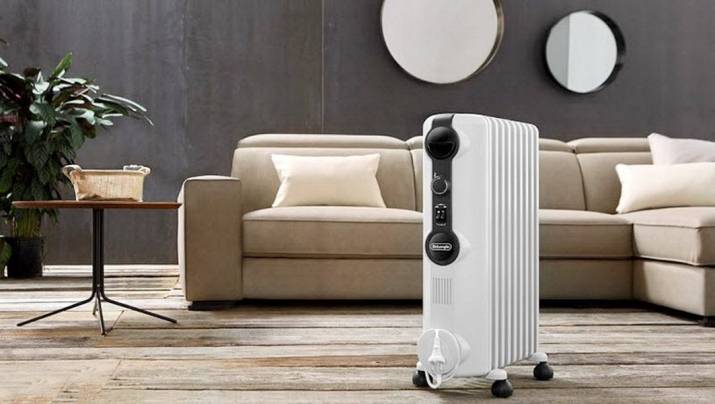
The fan heater has the following advantages:
- is easy to use;
- provides very fast air heating in a specific place and is able to warm a small room;
- has compact dimensions and does not take up much space;
- It is light in weight, making it easy to carry indoors.
- the cost of the device is relatively small.
The disadvantages include such nuances:
works quite noisy due to the fan;
able to carry dust and dry the air, which does not heal the atmosphere;
devices with an open coil are unsafe: they can cause a fire, therefore, require careful operation.
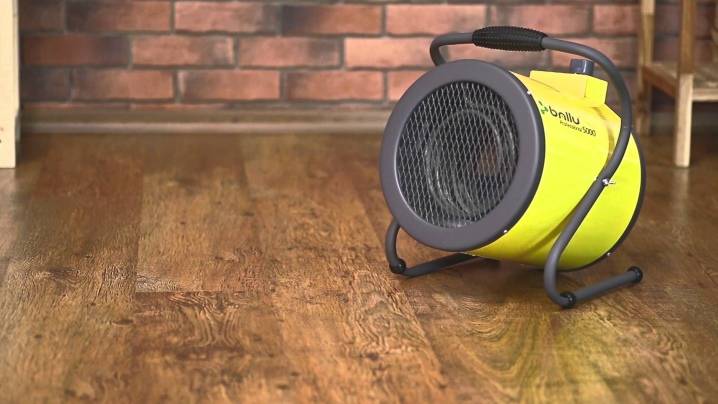
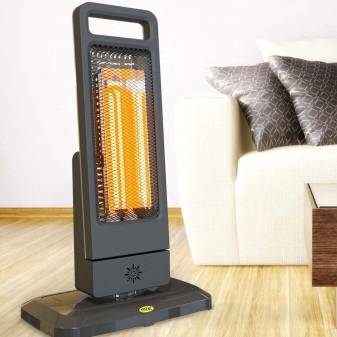
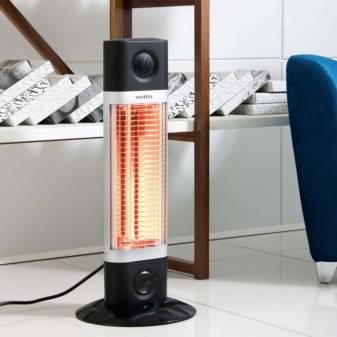
The advantage of infrared heaters is that heat rays can be directed to the right place. They can warm the human body, its warmth is pleasant and comfortable, but the air will be warm only within the radius of the rays, and outside it it will be cold.This can be considered a disadvantage. The advantages of these devices include also low electricity consumption, fast heating rate, the ability to use in open spaces (on the veranda, terrace). The downside is the fragility of their design, the rapid cooling of the air after shutdown. In addition, they have the highest cost.
Overview of electric heaters
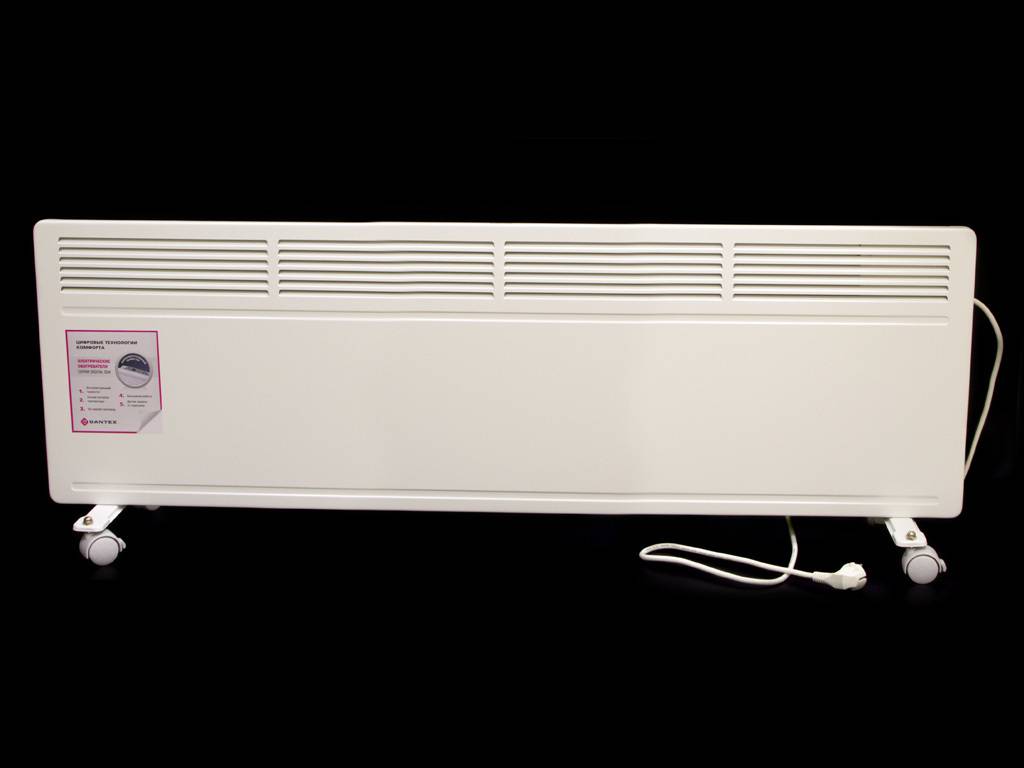
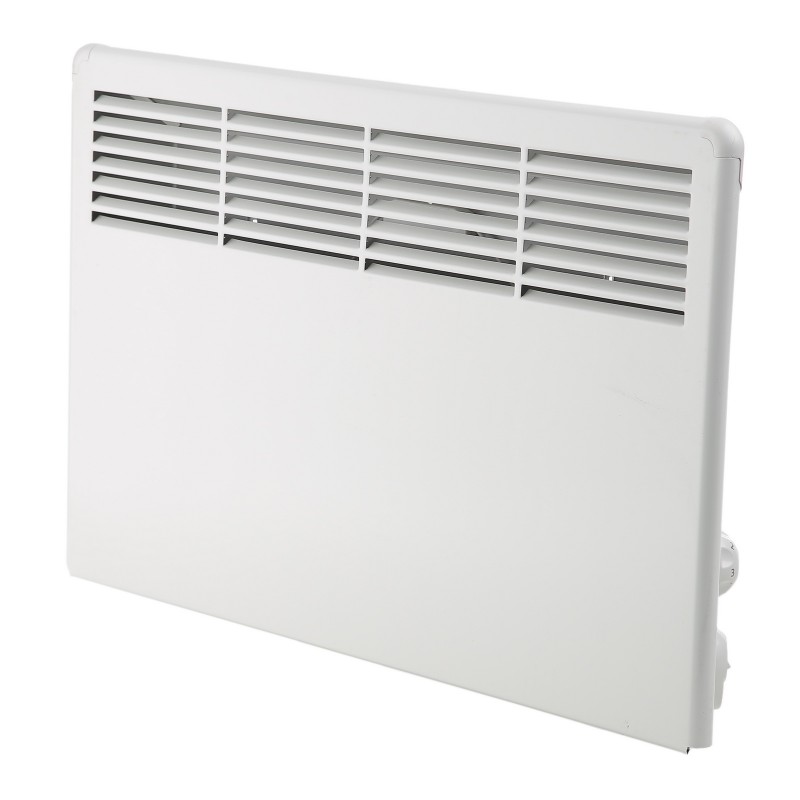
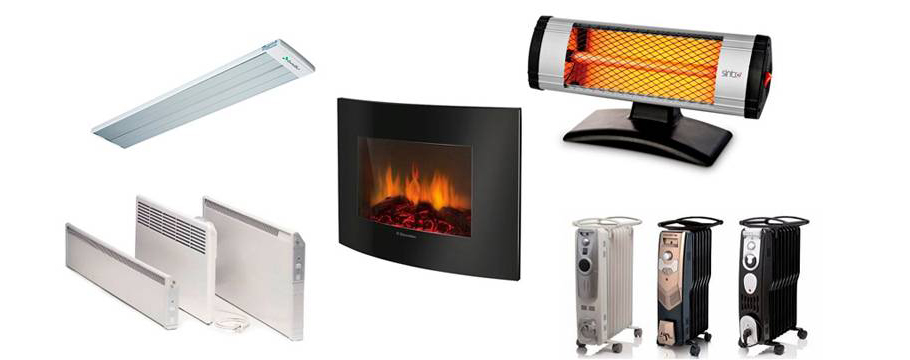
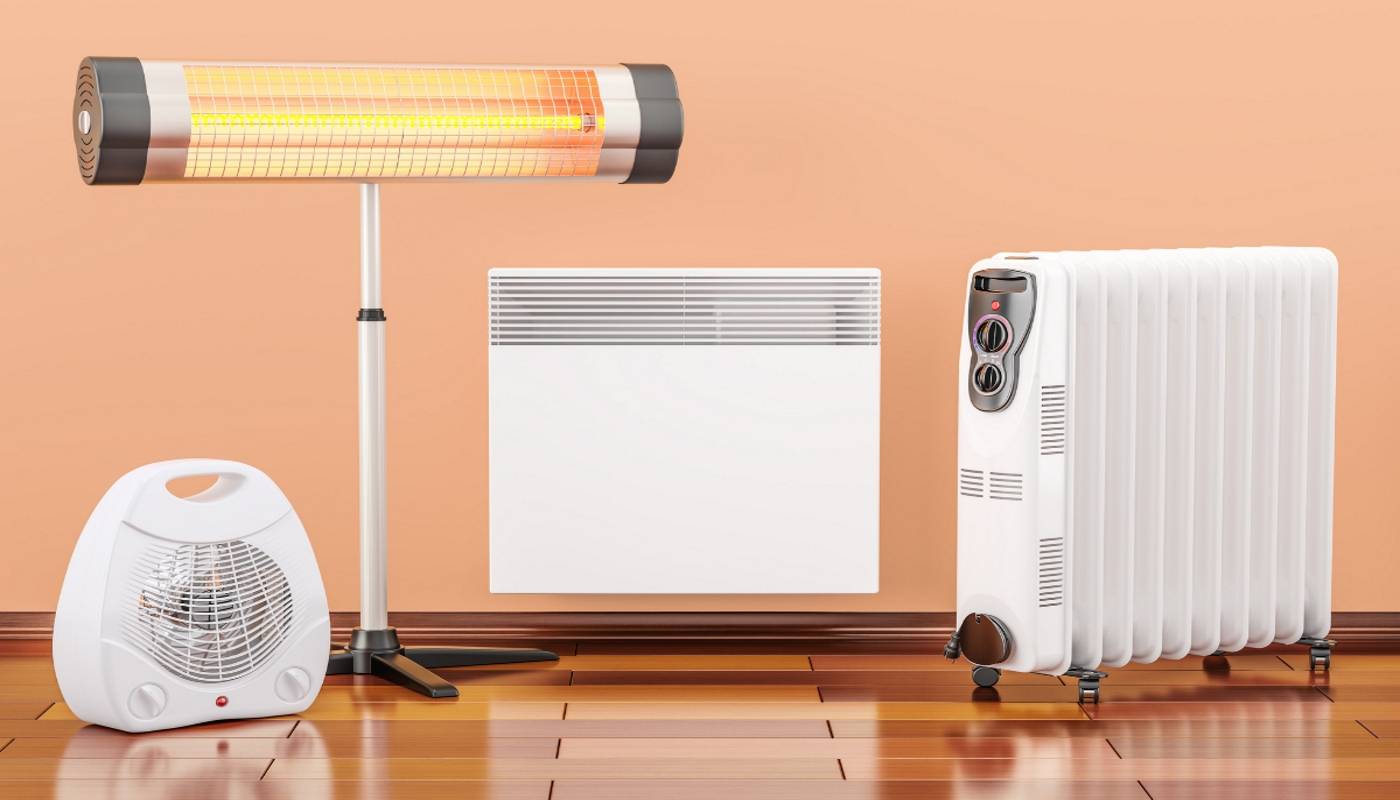
The power of electric convectors varies from 500 W to 2.5 kW. Installation of devices in the room should take into account the principle of movement (convection) of warm air upwards. The design of most models allows elegant wall mounting.
A common and popular option for convection-type heaters are oil heaters. The radiator-type metal case, consisting of several sections, is filled with a certain amount of liquid mineral oil. At the bottom of the radiator is a heater that transfers heat to the oil, which heats the radiator sections and further - according to the textbook. The room is warm, the cat is purring and everyone is fine.




These heaters are:
- ease and safety of use;
- most models are equipped with wheels, they can easily move along the floor surface, despite the weight of 4 kg and more than 15;
- oil heaters reach the set operating temperature longer and retain it for a long time after being disconnected from the network;
- as part of modern designs there is a control unit with a thermostat.
Vertical arrangement is a feature of this type of heaters. A special control circuit and protection against overheating in the control unit will ensure power off when the heater falls and restore it after the return of verticality.Lines of oil heaters have power from 0.5 to 2.5 kW. Low cost, quiet operation, no need for installation, ease of installation and connection make them the most popular among consumers.
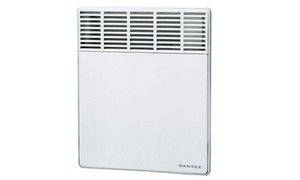
A rather high energy consumption, a long heating time due to natural convection, an irrational distribution of warm air in the room, bulkiness, and the use of useful space in the room for many consumers become the defining disadvantages. If at home oil heaters will fit, then in the cramped space of a modern office space with high loads on the supply network of office equipment, they will certainly not be up to par.
A heat fan can quickly and effectively raise the temperature in a closed room, driving cold air through a heating element. There are several design options for such heaters that determine the cost of the device. The simplest of them is a spiral or plate heated by a passing electric current. Such a heating element has a number of disadvantages, but it is very inexpensive.
The open designs of heaters are characterized by the release of unpleasant odors due to the combustion of dust contained in the driven air stream. Another disadvantage is the burning of oxygen upon contact with the heated material of the heater. The design of the tubular heating element is more perfect. It is safer, its operating temperature is lowered. However, such a device is more expensive. Environmentally friendly ceramic heater design. But fan heaters of this type are the most expensive.
In the standard equipment of the devices there is a control unit with a thermostat and a combined regulator of power consumption and fan speed. Despite the shortcomings, among which there is a significant noise during operation of the device, low energy efficiency and efficiency during long-term use, fan heaters still take second place after oil heaters. One of the design options of this type is a heat gun, which is widely used in the installation of stretch ceilings.
In the description of all heaters of the above types, the operation condition was the closed volume of the room. This is understandable, the air was heated in it, but it is worth opening a window or a door and part of the warmed air will rush out. It will naturally be replaced by cold outside air.
Infrared heaters

Infrared heating can be:
- local, economically consuming electricity;
- creating zones of high temperature in strictly defined places;
- there is no inertia for such devices - it will become warm immediately after switching on;
- one of the most advanced electric heaters of this type are models equipped with carbon lamps.
Among the many advantages are versatility and ease of installation, connection and operation. Heaters have increased safety, high efficiency, low weight, high mobility. However, their cost remains the highest among all domestic electric heaters.
Why are convectors good?
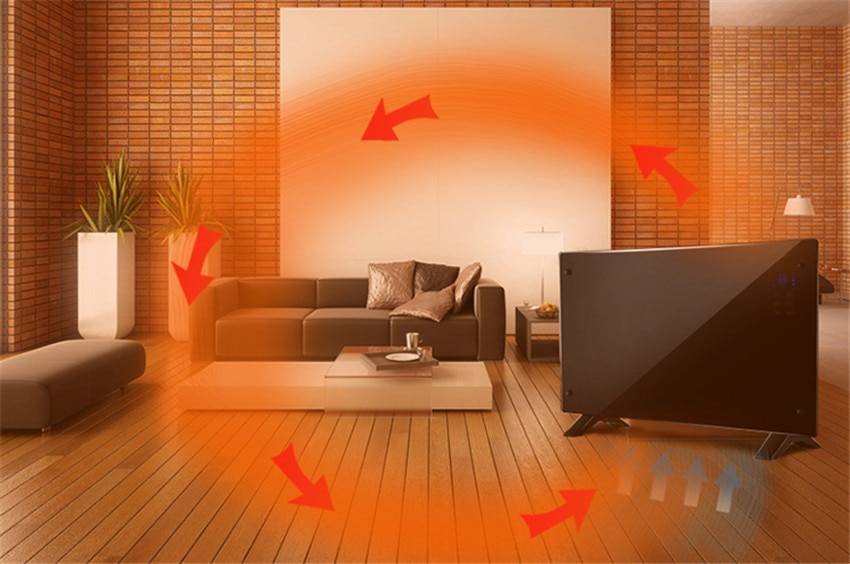
By the name of this device, it is easy to guess that its operation is based on the use of convection currents.
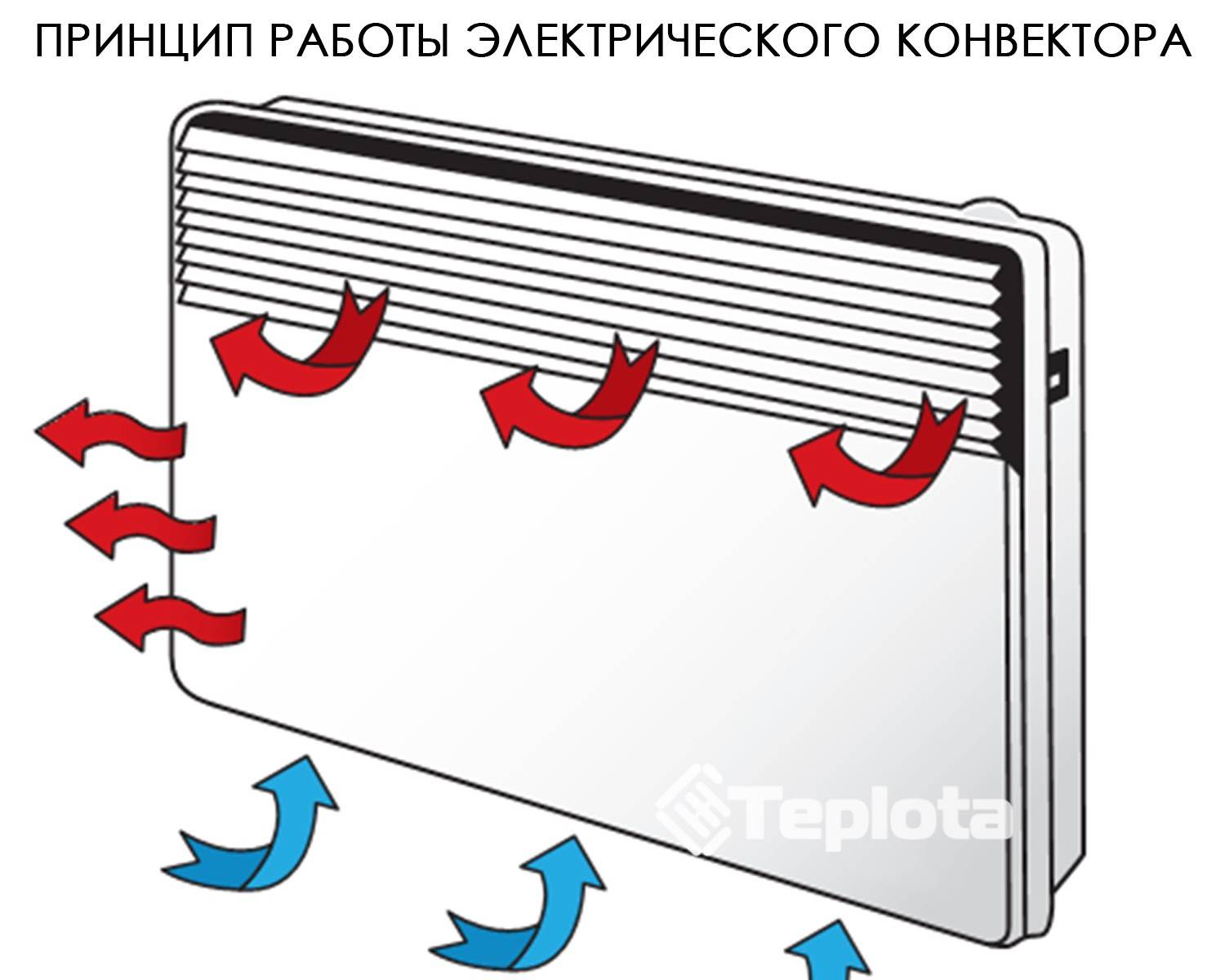
The design of this device has special gaps in the lower part of the case. It is through them that cold air flows get inside and are heated by the heating element installed inside the heater.
When the air is heated to a sufficiently high temperature, it, according to the laws of physics, becomes lighter and goes to the ceiling of the room, at the same time giving off thermal energy to the room, due to which a comfortable temperature is created.
pros
The main advantages that electric convectors have are the following:
- the use of a very useful overheating protection function in many models;
- the presence of a thermostat that automates the operation of the heater;
- no noise during the operation of the device;
- operational safety. Even at maximum settings, the heating temperature of the heater body does not rise above 60 degrees Celsius;
- democratic price.
Minuses
It is also necessary to mention the shortcomings that these devices have:
- long time required to warm the air in the room;
- the inability of convection heaters to heat large rooms.
If we compare convectors with oil counterparts, then the first ones are not so inertial. Because of this, they do not require additional warm-up time. It became possible to create the required temperature in the room in a short time with the help of these devices due to the use of the air contained in the room as a heat carrier.
Many modern models of these devices can be mounted on the wall using special brackets. However, most often consumers choose floor structures that are mobile.They can be quickly and easily transferred to another room at any time.
What can a fan heater offer?
small size
The plastic case of the fan heater contains a heating element, which can be made of different materials - metal, ceramics or their variations. It is this element that blows the fan.


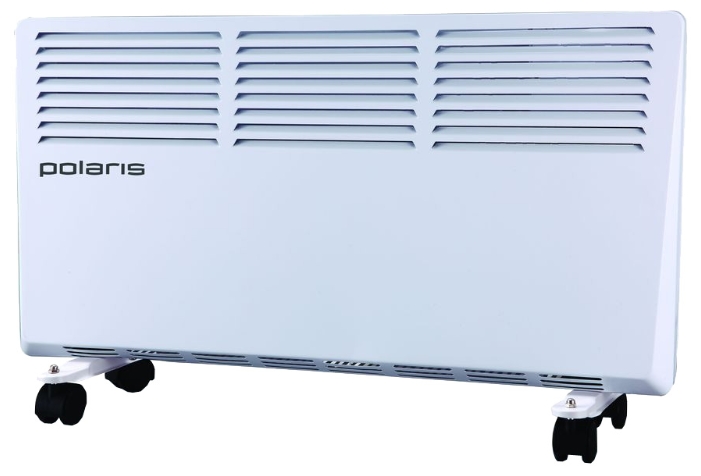


In more expensive models, manufacturers use a metal case. In them, the place for the fan is reserved behind the heating coil, which is very practical. In this case, warm air masses move strictly in a certain direction and, as they move, warm the air in the room.
If desired, in these devices, you can turn off the heating elements. Then they turn into an ordinary fan.
Modern wall-mounted fan heaters are provided with power mode switching regulators. They allow the owner to independently set the desired temperature for heating the room. Models that are equipped with electronic units can be supplied with special devices - remote controls, timers and other add-ons.
However, such heating equipment, including wall-mounted ones, has a rather serious disadvantage, because of which it cannot be considered the best heater for the home - during operation, the fan creates a lot of noise that can cause inconvenience to the owner and others living in the house at night. For this reason, it is undesirable to use such devices in apartments inhabited by people suffering from insomnia.
Heating system options
Types of electric heating:
- electric central heating boiler;
- infrared heating;
- convectors.
Electric boiler
This is a classic scheme for individual heating of a house. There are two main options for transferring energy to a coolant - direct and indirect.
Electric boilers with indirect heating of the coolant operate due to a tubular electric heater or induction. When using a heating element in the design of the boiler, a spiral is installed, which is enclosed in a metal shell. The element is carefully sealed with materials that do not conduct electricity, but pass heat well. When electricity is supplied, the heat from the spiral through the filler is transferred to the upper layers of the heater body, which are immersed in water and warm the coolant.
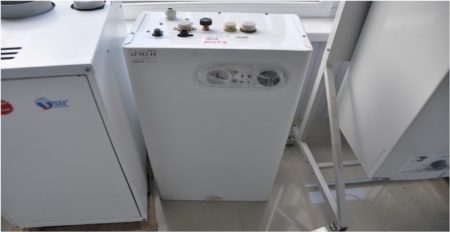 Electric direct heating boiler
Boilers with induction technology are more advanced and economical. It is easier to organize heating with their use. The principle of operation is based on the ability of certain metals to heat up due to the action of a magnetic field. The main structural element is an induction coil with a central part made of a magnetic alloy.
Disadvantages of boilers:
- When using a heating element as a heating element, scale is formed, which reduces the thermal conductivity of the boiler, so frequent maintenance is required.
- Induction ones cost a lot, their power is not automatically regulated.
- To use electrode heaters, the coolant must have certain physical and chemical properties: resistivity and the amount of electrolytes.
The main disadvantage of boilers as a heating element is the need to install pipes and radiators, inside which the coolant circulates. In small country houses it is unprofitable.Installation of electrical equipment is expensive, and the efficiency is lower than that of analogues.
infrared panels
The use of infrared heaters for heating is a good solution. During operation of the device, objects that are under direct radiation are heated. The depth of heating depends on the design of the heater and can reach several centimeters. Due to the phenomenon of thermal convection, the furniture gives off heat to the environment.
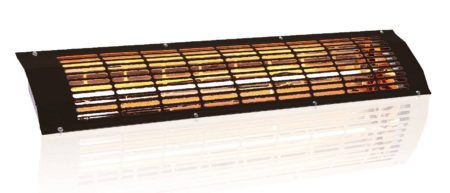 infrared reflectors
Types of infrared emitters:
- Reflectors, in which the spiral is enclosed in a quartz flask. Heat is reflected from the mirror surface, which allows you to heat a large area.
- Panel. In such devices, a tubular electric heater is fixed in a ceramic plate.
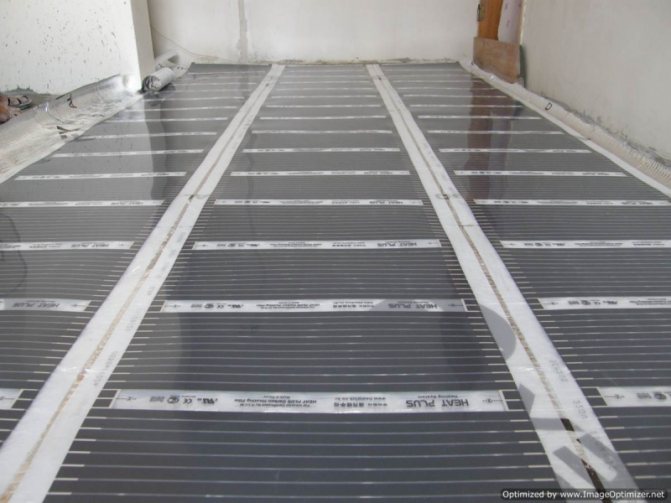
- Film: carbon sputtering is applied to a polymer film.
Heaters of the first type produce shortwave infrared spectrum. Use them as an addition to the main heaters. Disadvantages: low efficiency due to the type of radiation. The device is difficult to adjust, in the process of work the body heats up very much.
The second type includes heaters that operate in the long-wave range. The ceramic panel does not heat up above +90 C, but the case temperature is slightly lower. Operation is regulated by an electric or mechanical thermostat. Manual control is inaccurate. Electronic versions are more reliable, it is easy to adjust the heating rates by degrees.
The most effective models using carbon film. Usually they are attached to the underfloor heating system. There are wall and ceiling options. When installed on the floor, all elements are heated evenly.Control over the operation of the equipment is automatic, with the participation of sensors.
Using convectors
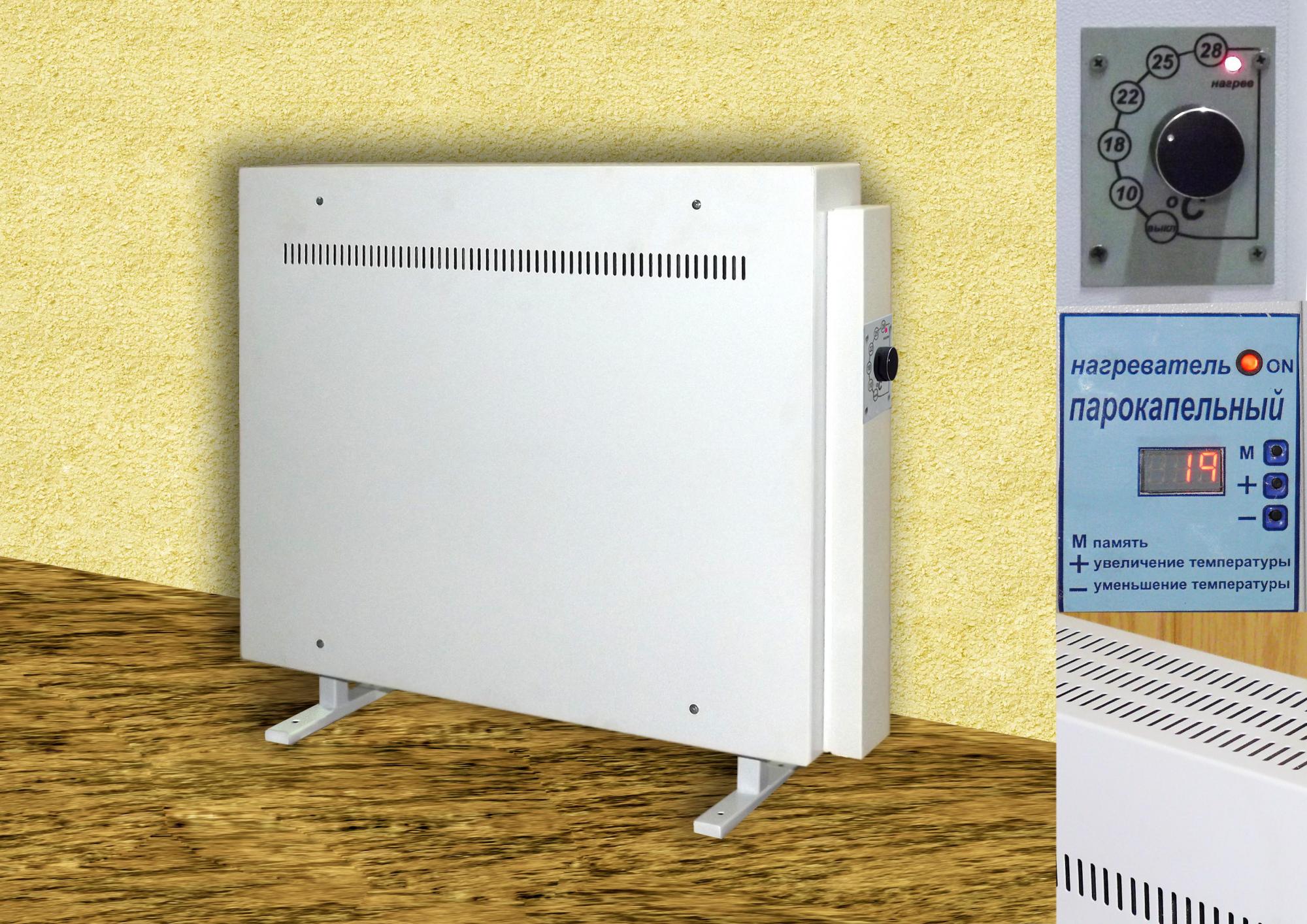
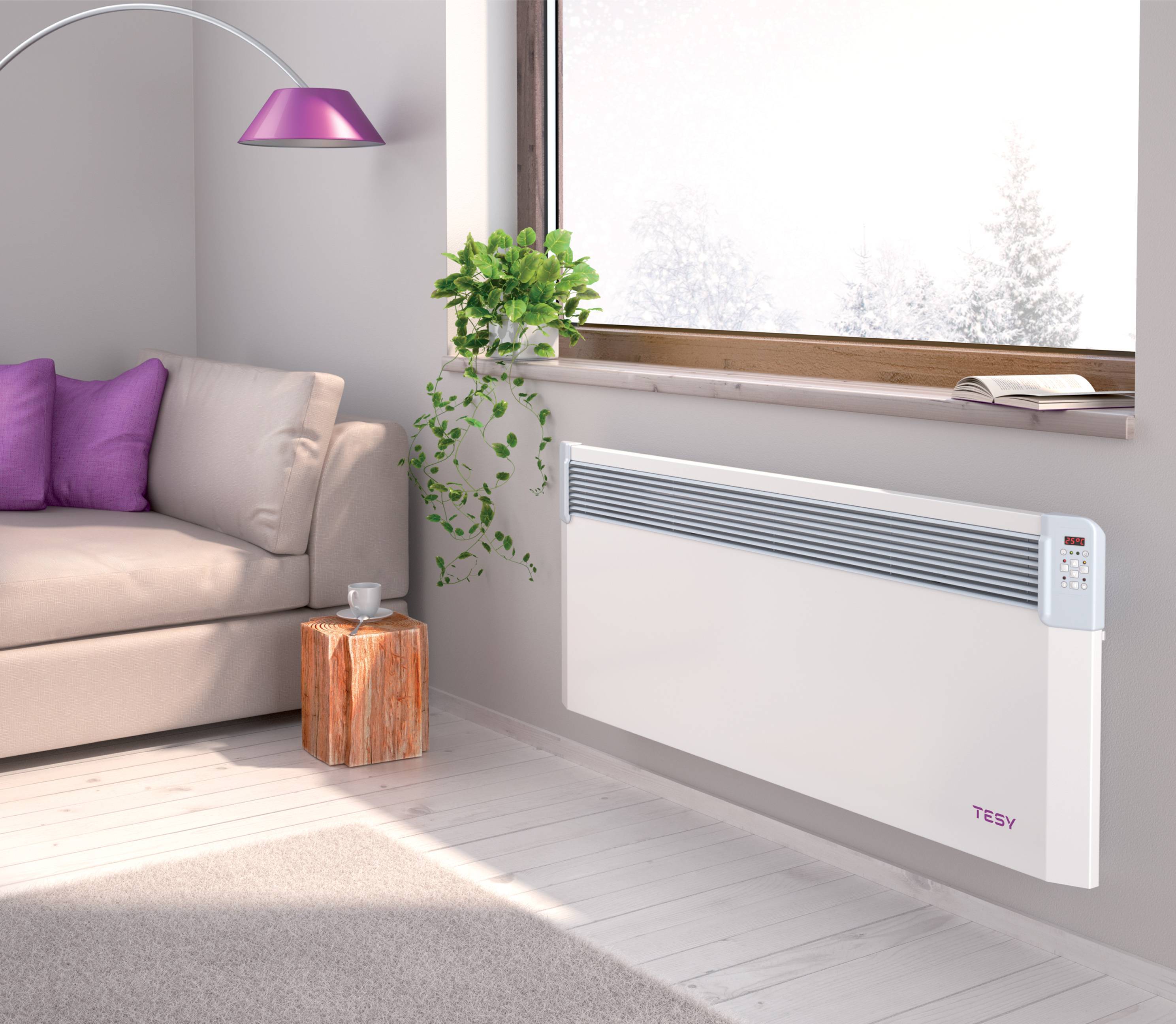
Convectors are similar to ceramic electrical equipment. An open tubular heating element is placed in a metal case, which is placed inside a radiator made of plates. The principle of operation of the device: air enters through the lower passage, the heated gas exits through the upper opening.
The faster the speed of the upward air flow, the better the room heats up. Such devices are controlled in 2 ways - mechanical or electronic.


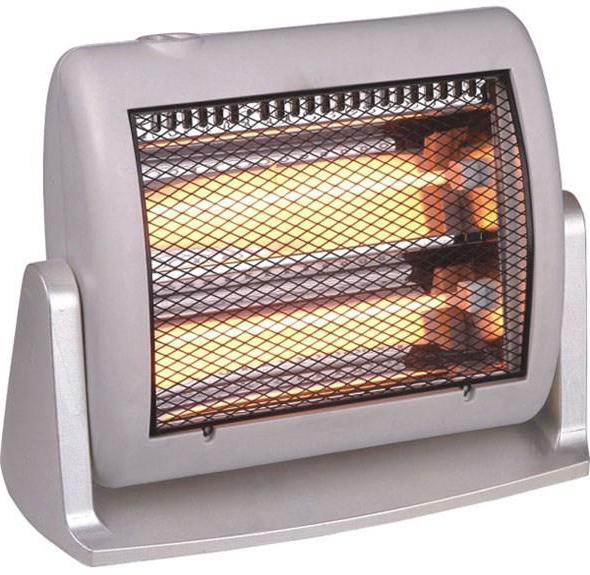


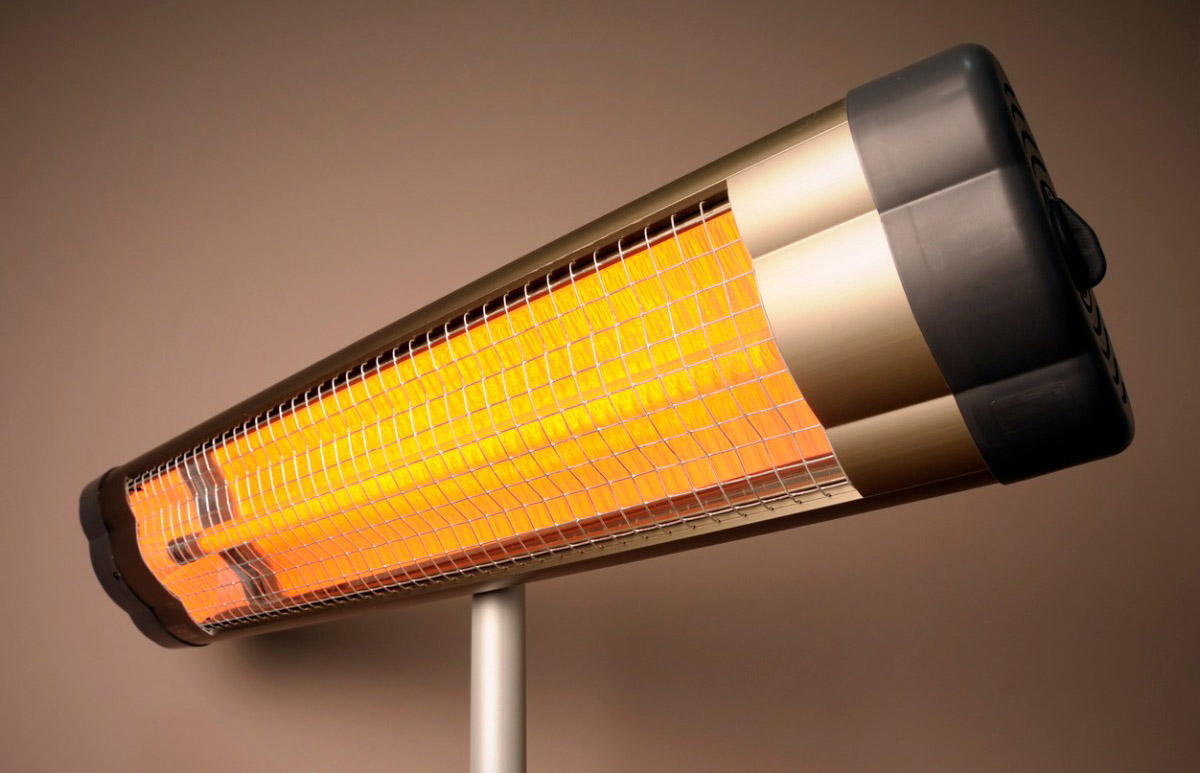


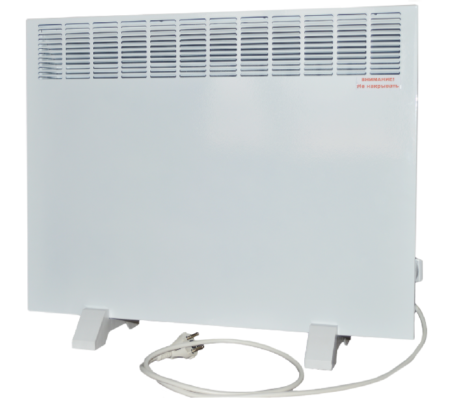 Convector
Convectors have a very high heating rate. It takes no more than 2 minutes to heat the heating element to the maximum temperature, after which the room begins to warm up quickly. Other advantages of convectors include:
- Low price;
- Safety.
- Possibility to complete the heating system with additional elements.
- Undemanding to a stable voltage.
- Compactness.
Convectors do not dry the air in the house. They can be used for both large and small rooms.
Which electric home heating should you choose?
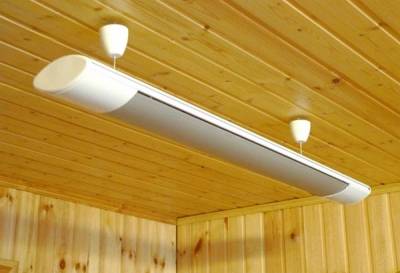
Ceiling IR heater is an excellent option for heating both home and garden. It looks like a normal fluorescent lamp.
Want to buy an electric heater, but don't know where to stop? If electric heaters are planned to be used as the main equipment, we recommend that you pay attention to wall convectors or infrared ceiling and wall heaters. A combination of these devices is possible, which will provide faster and more uniform heating of the premises.
As an alternative, we recommend infrared underfloor heating (a great option for the kitchen, nursery or bathroom).
How to choose electric heaters for summer cottages? If you live in the country on a permanent basis, we advise you to purchase all the same convectors or infrared heaters. For temporary use, portable infrared models, such as carbon ones, can be recommended. You can also use fan heaters for this, but you need to take into account the fact that they will make noise - you won’t sleep with them.