- How does the heating system work?
- Purpose of screens for batteries
- Lattice purpose
- Materials for the manufacture of grids for batteries
- Types of screens for batteries and their features
- Glass screens
- Screen materials
- Wood
- Metal
- MDF
- Plastic
- Glass
- Forging
- Drywall
- Exotic materials
- Tips & Tricks
- How to install
- What fasteners are needed
- Mounting
- Do screens affect heat distribution?
- Making your own screen-box
- Necessary tools and materials
- Sizing and sketching
- Cutting parts
- Assembly
- Installation
How does the heating system work?
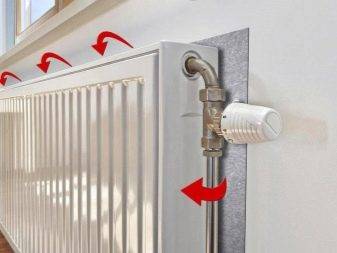
If you are afraid that by covering the heating devices with screens, the room will become cooler, then this is not so. A correctly chosen design, taking into account the principles of operation of the radiator, does not reduce the degree of its heat transfer.
Heating devices carry out heat transfer in two ways - convection (mixing of cold and warm air masses) and radiant energy (radiation power is higher, the higher the temperature of the radiator).
Batteries begin to heat the air at first due to convection, but as the temperature rises, infrared radiation becomes more intense.Heaters made with the latest technology are able to capture changing external conditions, redistributing energy flows in order to increase its transfer.
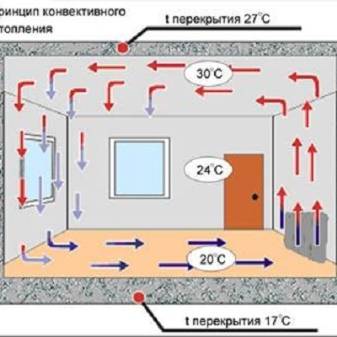
Suppose air circulation is hindered by a curtain or a decorative shield. A modern radiator will begin to raise the temperature of the front panels so that heat transfer begins to occur not by convection, but by infrared radiation. This property significantly increases the efficiency of the radiators.
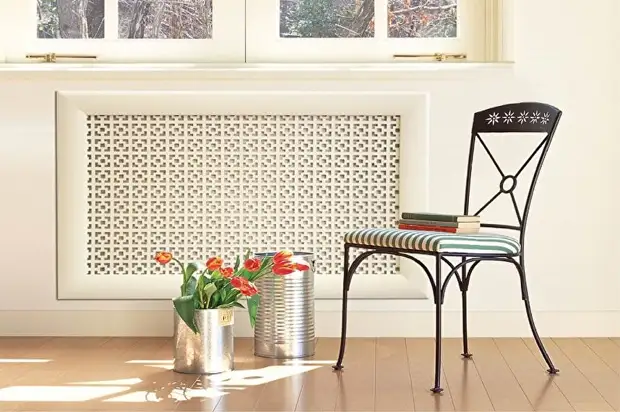
With any type of radiators, it is necessary that the front panel of the decorative screen has many holes, and there is enough space between the panel and the radiator for the formation of an air gap. Thus, heat transfer by convection will not be disturbed.
Purpose of screens for batteries
Modern screens are designed to perform many functions, namely:
- Protection against accidental shock, as the bulging edges of the batteries can cause injury. Screens are often installed in rooms with a large crowd of people, in schools, clinics, gyms; - Ensuring the normal and effective operation of the heating battery; - Protecting radiators from the accumulation of dust and dirt, which greatly simplifies cleaning; - Decorative function - a huge number of ways to decorate screens allows make them a stylish addition to the interior.
By installing a screen that covers an unsightly radiator, you can completely abandon the long curtains, replacing them with modern rolled or Roman canvases.
Lattice purpose
Lattice is an economic element that can be used to good use. It is used in residential areas and offices. On the market there are elements made of such materials:
- wood;
- glass;
- plastic;
- metal.
Moreover, each type has advantages and disadvantages, therefore, before choosing a grill for a heating battery, you need to determine the purpose of its installation.
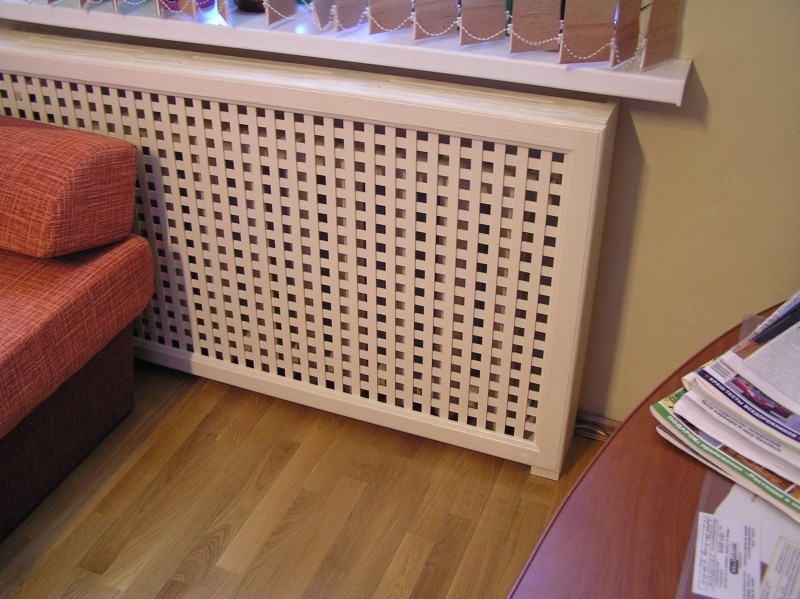
The overhead grille performs the following functions:
- protects the device from contamination, prevents dust from entering between sections;
- makes the room more beautiful;
- increases safety, the radiator grill is recommended for use in homes where there are children, it will help prevent accidental burns.
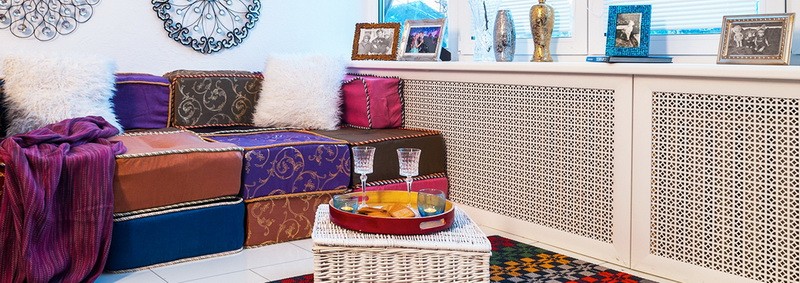
Studying the general advantages of all overlays, regardless of the type of construction and material, they distinguish:
- uniform distribution of heat flow throughout the room, which will allow you to pay less for heating;
- complete safety, the risk of accidental burns is excluded;
- addition, supports the overall style concept of the room;
- will help hide old, unattractive cast-iron radiators.
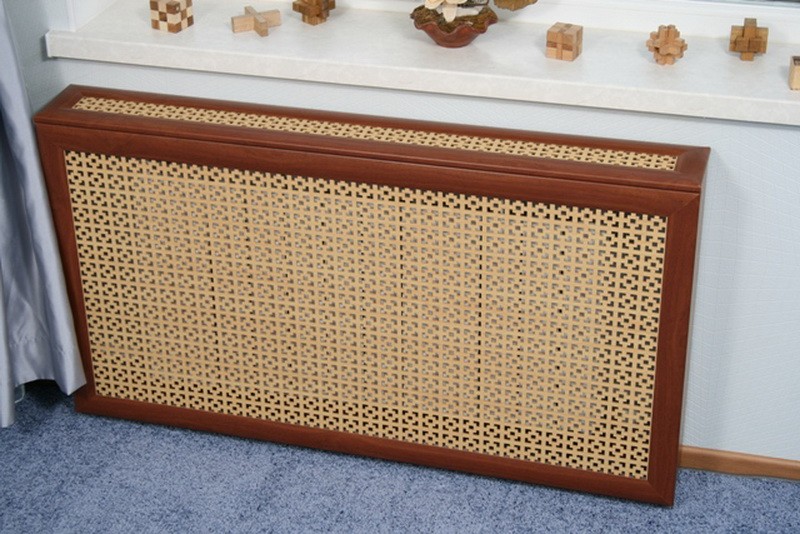
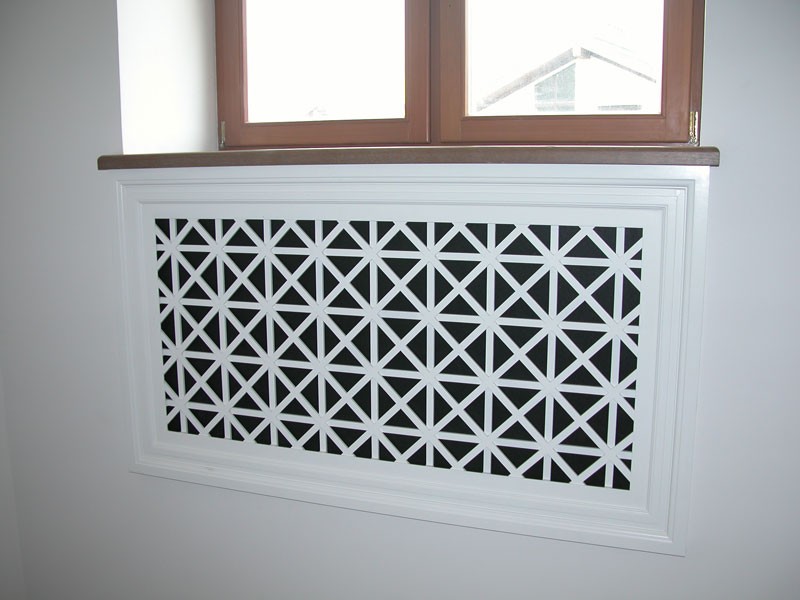
The screens are equipped with through holes on the front panel. They help to evenly distribute heat throughout the room, thereby increasing convection.
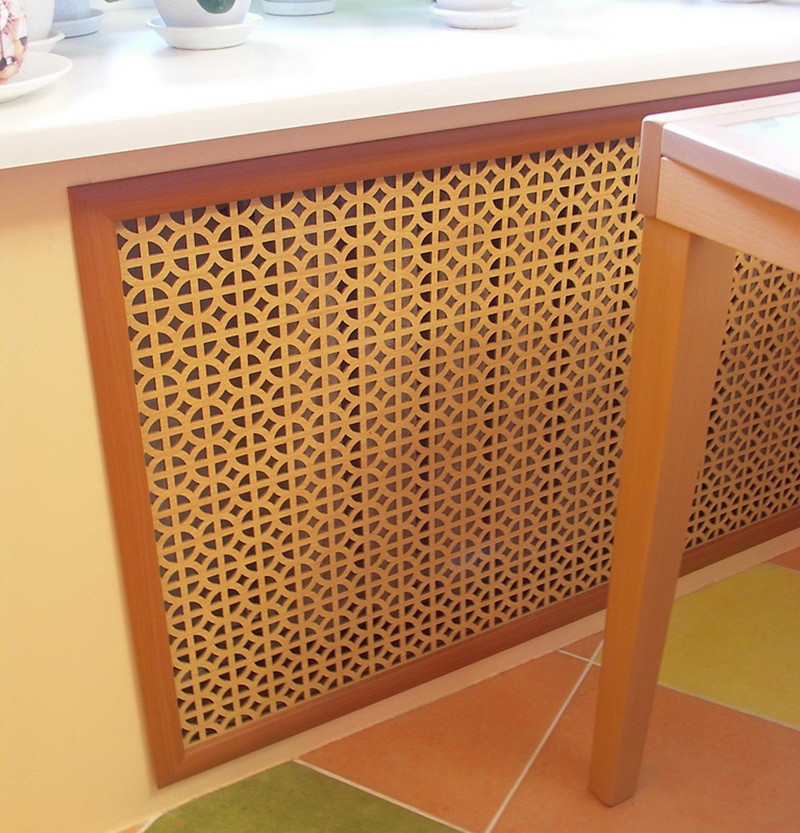
Do not ignore that the decorative screen does not change the technical characteristics of the convector. If the batteries are clogged inside and practically do not heat, there is no need to wait for an improvement in the quality of their work.
Materials for the manufacture of grids for batteries
Not only its appearance depends on the correctly selected material for a decorative protection element, but also how long it will retain its appearance, how easy it will be to carry out daily care of the product. For many, the cost of such interior decoration is also important.
Each of the materials used for their manufacture has its own characteristics that affect the quality of products.Let's talk about the most popular materials most often used to create these decorative designs.
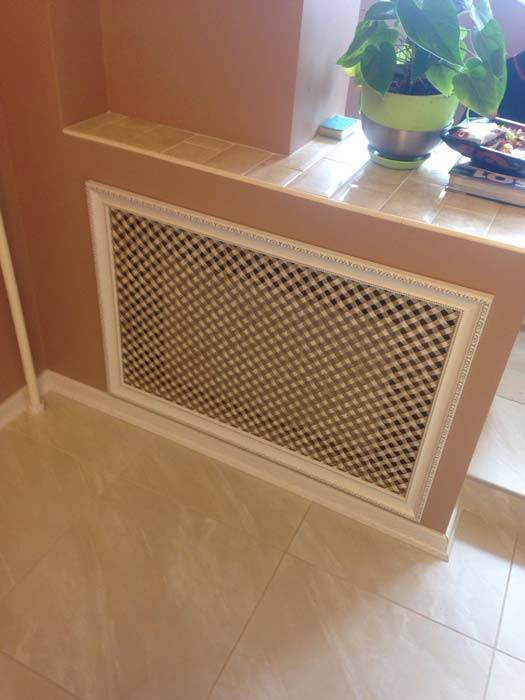


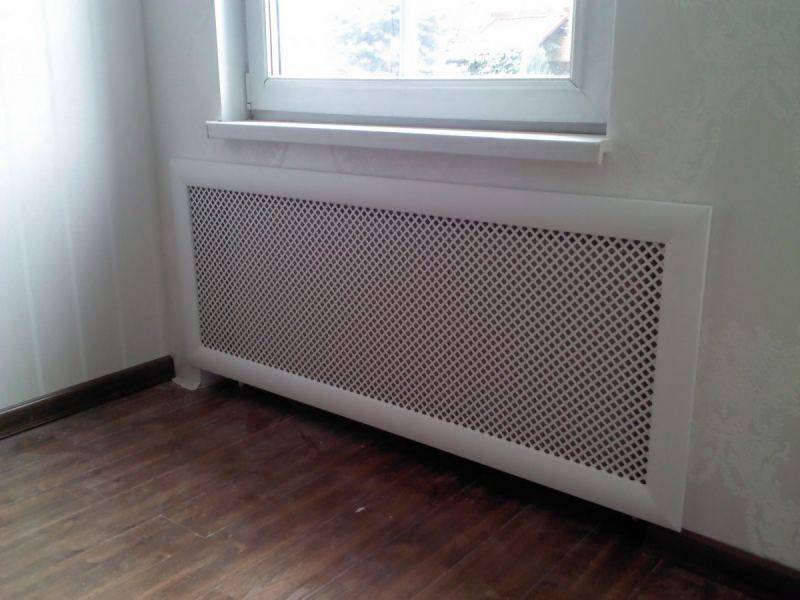


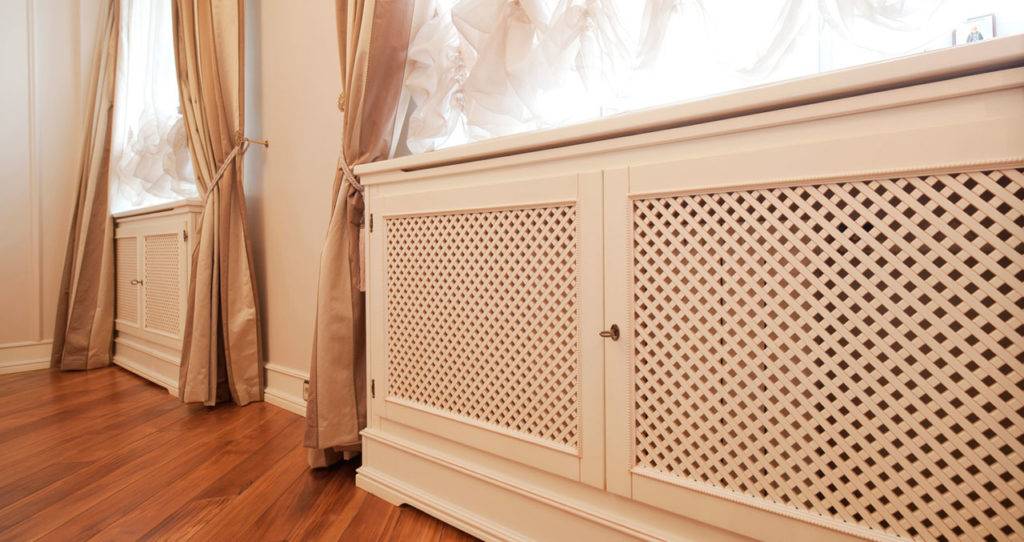


Metal screens in an economical version look like a thin metal box painted white. There are also other colors. There are no special frills in their design, therefore the cost of such products is low. The price of a hinged metal protective screen starts from 250 rubles.
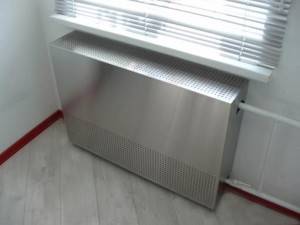 The cost of products made of stainless steel is much higher, as they are usually decorated with a pattern made using perforation. This finish gives the product a more elegant look, but it is difficult to fit into the home interior. The main advantage is the ease of installation (they are simply hung on radiators) and low cost.
Wooden screens are made in a more diverse assortment, so it is much easier to choose a product that harmoniously matches the interior of the room. In the manufacture of wooden decorative lattices to order, precious woods are often used. This is done not only to decorate the interior, but also to minimize the shortcomings of wooden products.
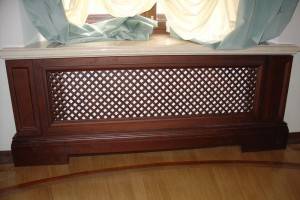 Wood tends to deform under the influence of temperature changes and fluctuations in humidity levels.
These factors affect quality wood much less, however, and the cost of valuable wood species is higher.
The work of craftsmen who make products from valuable wood is not cheap, and the purchase of material costs a considerable amount.
However, the elegance of the manufactured structures will allow them to decorate the interior of any style, including elements of wood.
MDF battery screens used to make decorative screens make it possible to produce products that can compete with natural wood in quality and cost. From this material, they are made in any color and shape. In the form of decoration, welt patterns are most often used, performed using programmed machines. The color palette offered by manufacturers can match the color of the interior, or vice versa, differ sharply from it.
- Plastic decorative screens at their cost are the most affordable for consumers. They are available in a variety of colors and sizes, ready-made products can be selected for any room. When choosing, it is necessary to carefully monitor the quality of the material, since low-quality plastic deforms when exposed to high temperatures and releases substances that are harmful to health. Therefore, even high-quality plastic is not recommended for residential premises and institutions visited by children.
-
Glass screens made of
stained glass or tempered glass, designers use to create original, sophisticated interiors. The structure made of glass is very fragile, so it should be handled with extreme care. However, the appearance of glass overlays, with exclusive drawings applied to them, complements the interior of the room so favorably that they deserve special treatment.
Types of screens for batteries and their features
The modern market offers residents dozens of varieties of screens that differ not only in the shape or material from which the product is made, but also in size, as well as in the manufacturer. Screen selection begins with determining the optimal material for specific conditions.
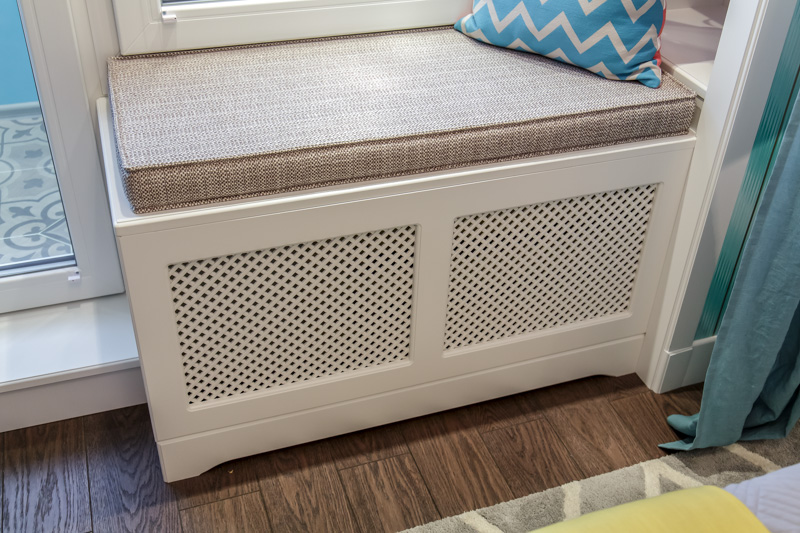
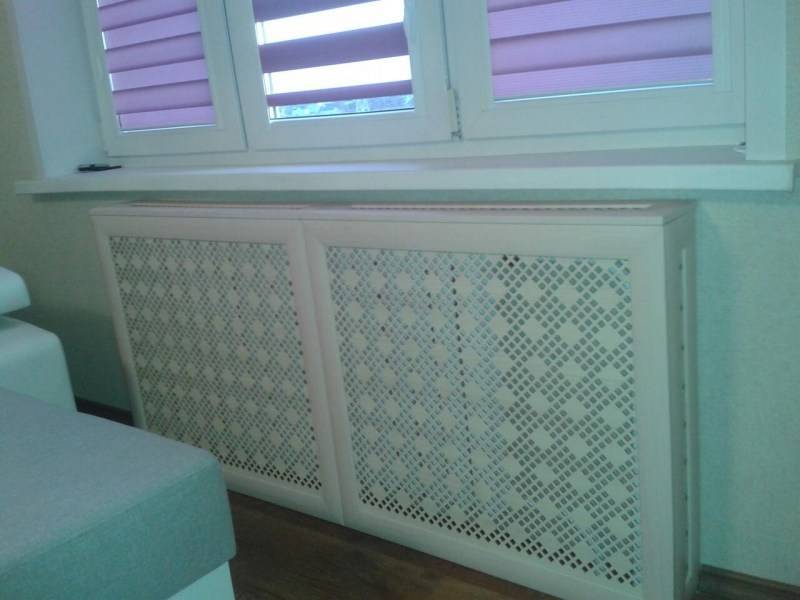
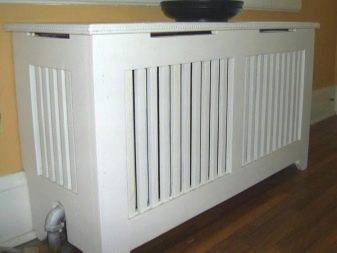
The metal screen-box looks like a full-fledged cabinet and fits well into the overall interior
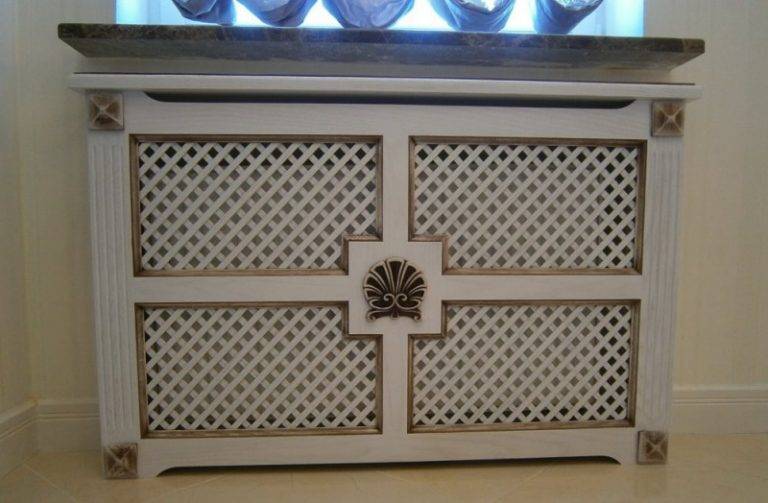
Wooden battery screens are the most common type. Attractive in such products is the safety of the material for humans, and the quality factor, and spectacular appearance. High-quality products made of expensive wood species become not just protection for radiators, but a real work of art and interior decoration. Wooden boxes will be a great addition to a classic or historic interior, as well as a soft and homely country style.
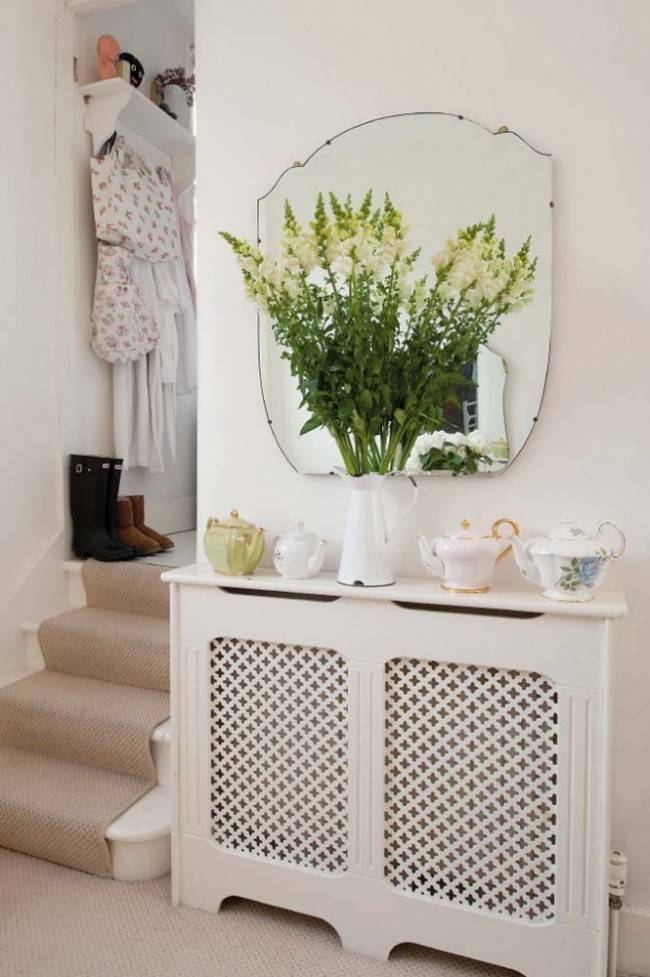
If the battery to be hidden is not initially located in a niche, then it is better to choose a screen for a radiator with a box
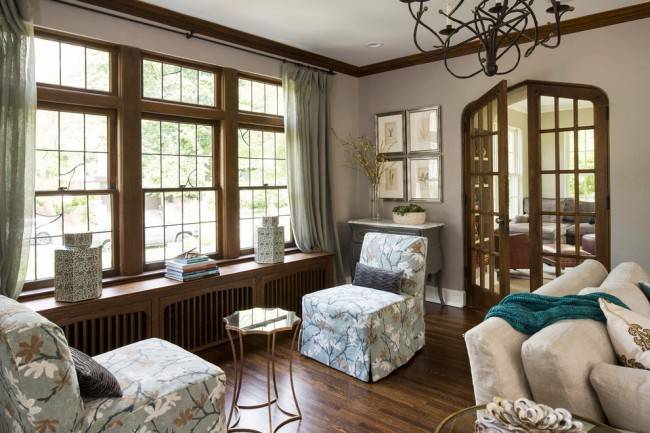
Wooden screens are great for decorating purposes as they look quite attractive.
The metal screen for the battery is suitable for modern interiors, as it is concise and simple. In addition, such sheet steel products are relatively inexpensive due to the ease of production, while remaining quite reliable. A much more spectacular option is a stainless steel box, which will be more attractive in appearance due to the possibility of applying a perforated pattern, but at the same time it will cost much more. Caring for metal models is easier than for wooden and glass models: a simple wash under running water is enough.
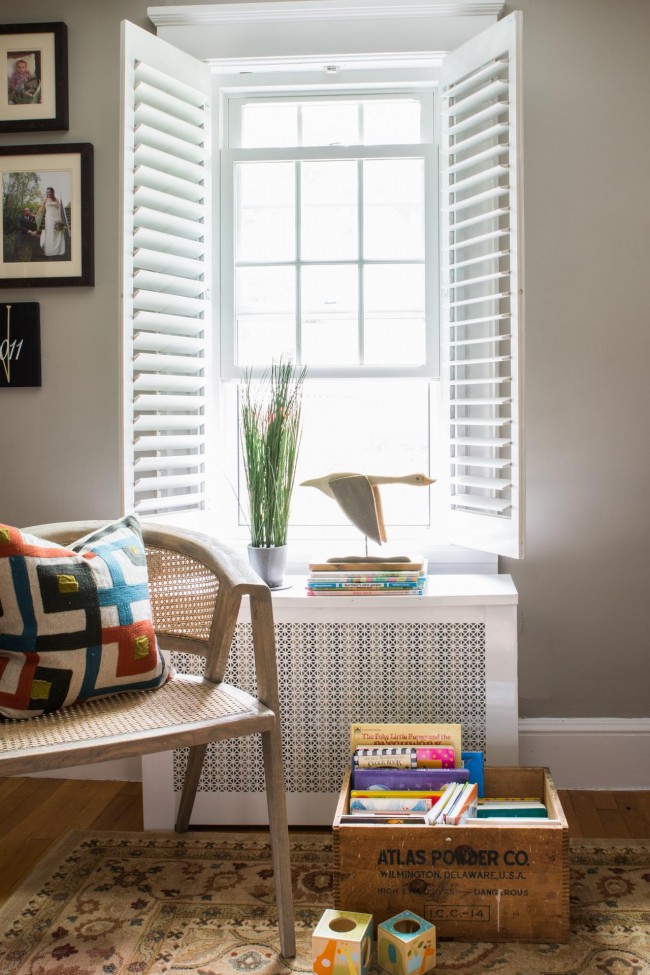
Properly installed screens will transform the room and at the same time will not interfere with the propagation of infrared radiation into the room and will not reduce heat transfer and heating efficiency.
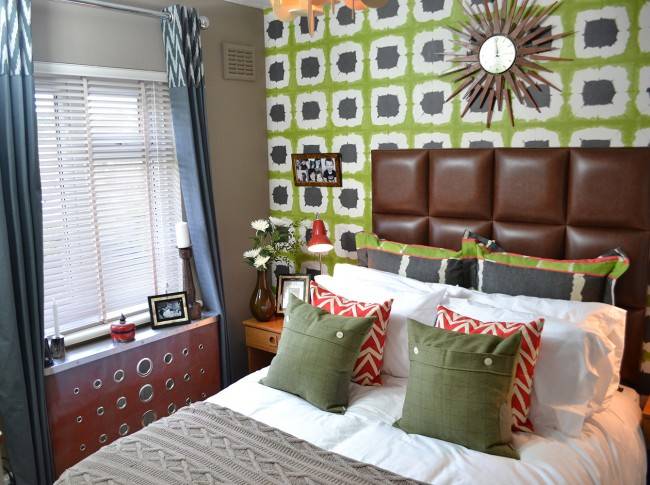
A variety of protective canopies made of stainless steel are quite practical and, subject to certain rules, look aesthetically pleasing in the interior of a living room
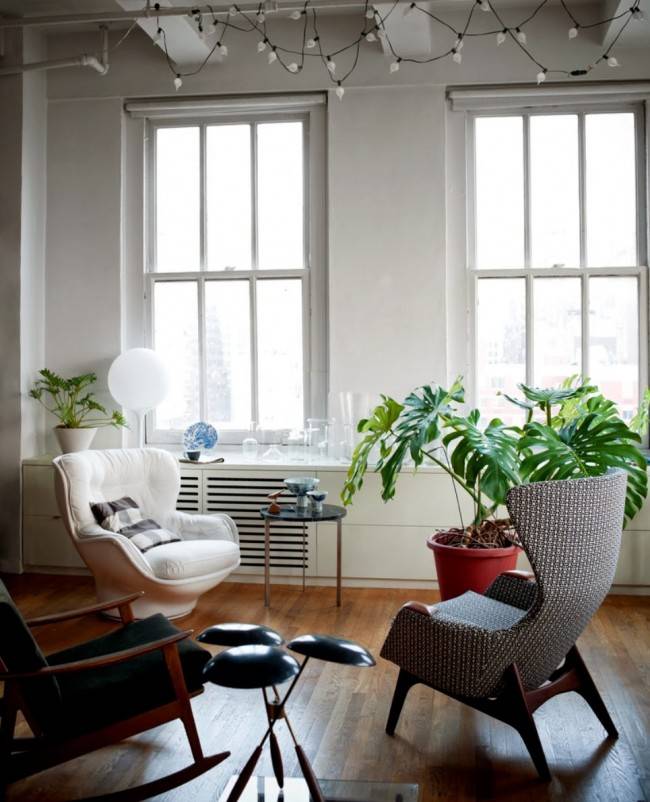
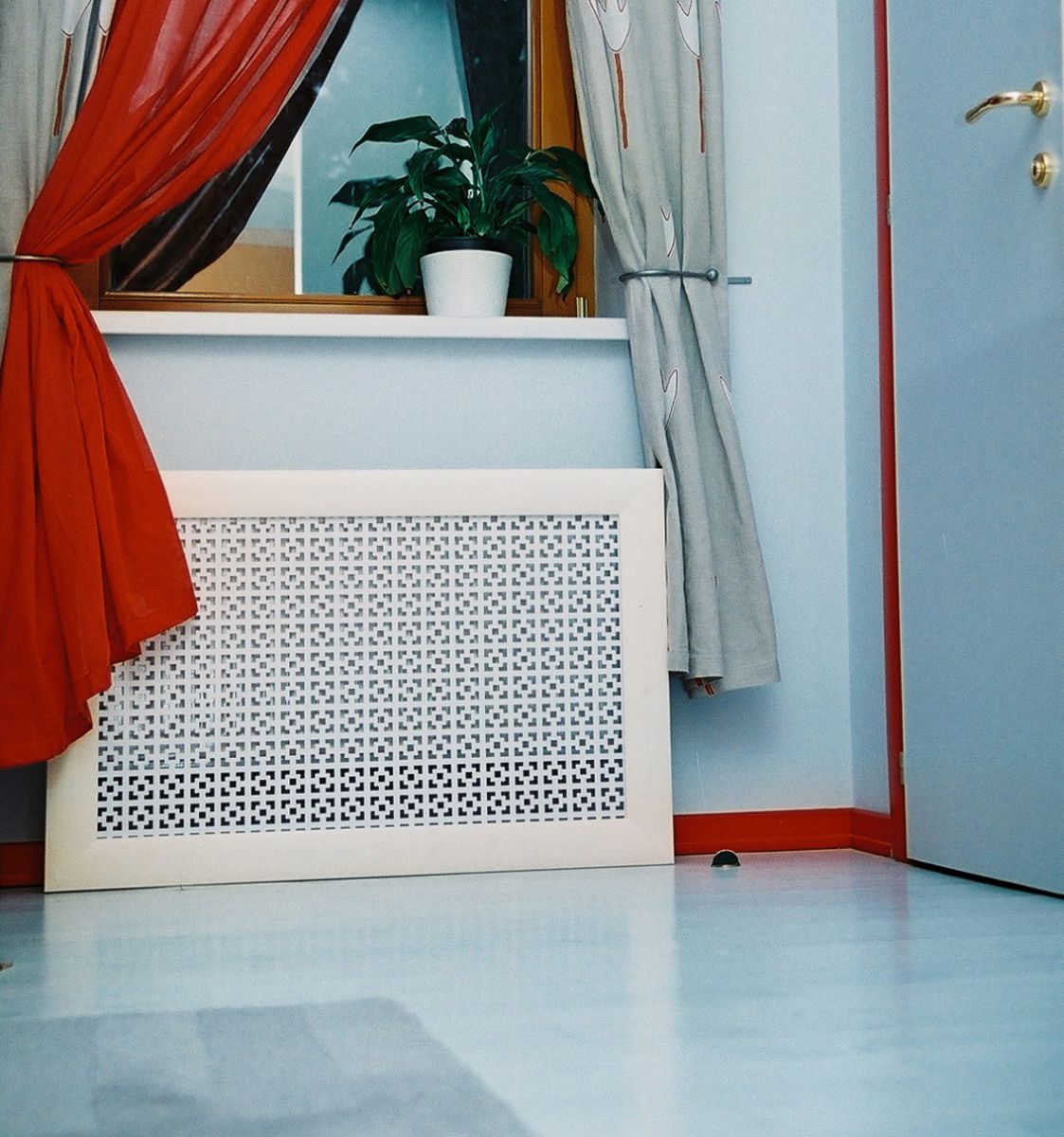
Flat screens are most in demand, this is due to the fact that they are used to decorate radiators built into niches under windows.
Glass screens for radiators - a new word in battery protection. For their manufacture only tempered glass is used. The optimal thickness of the glass should be at least 8 mm, and the presence of a processed edge guarantees the safety of the residents of the apartment. The attractiveness of such models lies in their visual lightness and airiness.
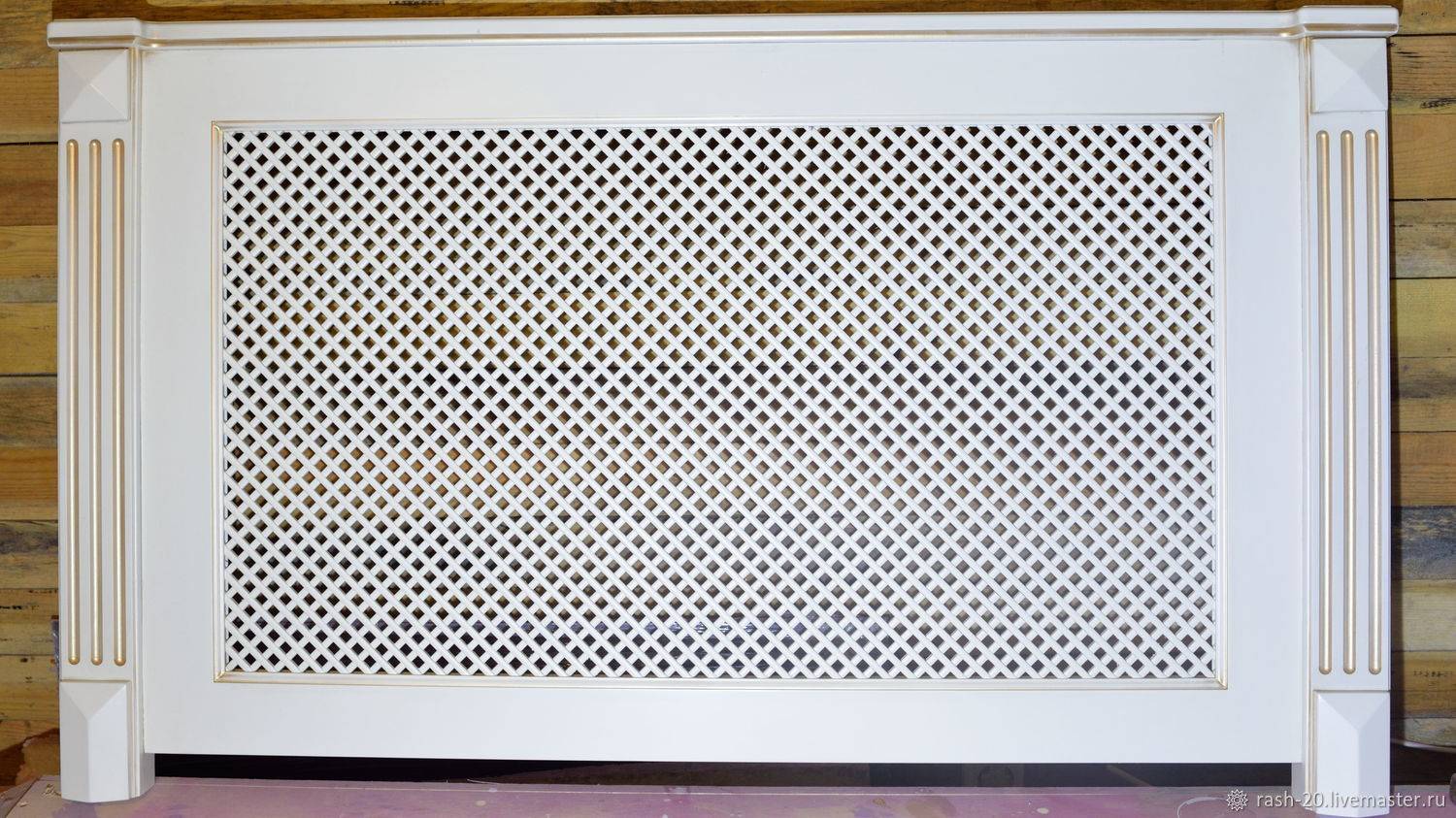





Glass screens for radiators - a stylish interior detail
Rattan panels are considered the most environmentally friendly and safe for human health, and a wide range of colors allows you to choose the perfect option for any interior. When choosing a material, it should be remembered that artificial rattan is the preferred option in terms of ease of maintenance. Most often, rattan is used not autonomously, but as a filling for an MDF box. Such a screen looks attractive and stylish.
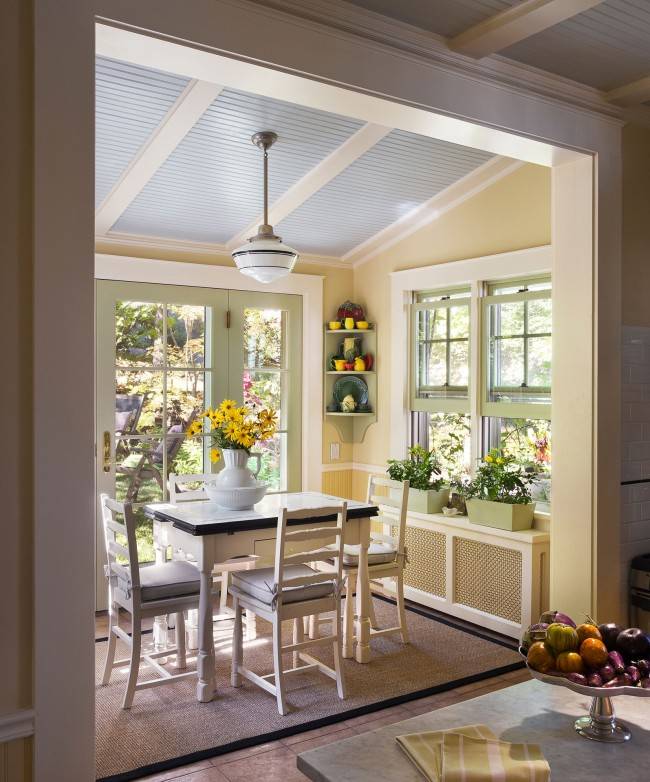
Screens made from natural materials are more suitable for classic and vintage interiors. Artificial materials are more typical for interiors with a modern design.
Another way to classify is to take into account the shape of the screen. On this basis, the following types of screens are distinguished:
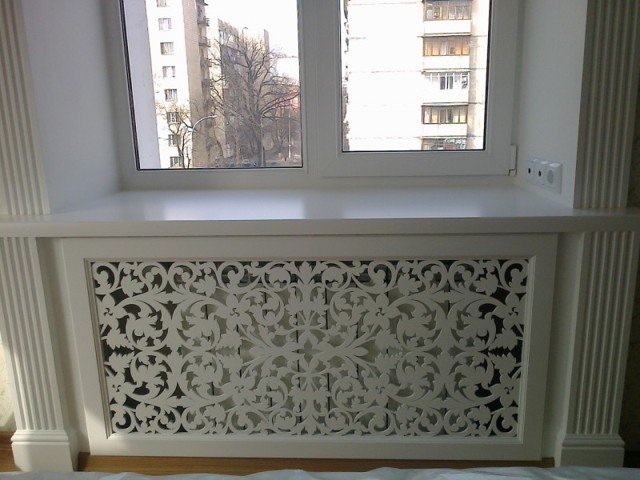
Flat battery protection panels are suitable for recessed radiators.Carving and drawing on the screen plane allow you to turn it into a stylish and original interior decoration.
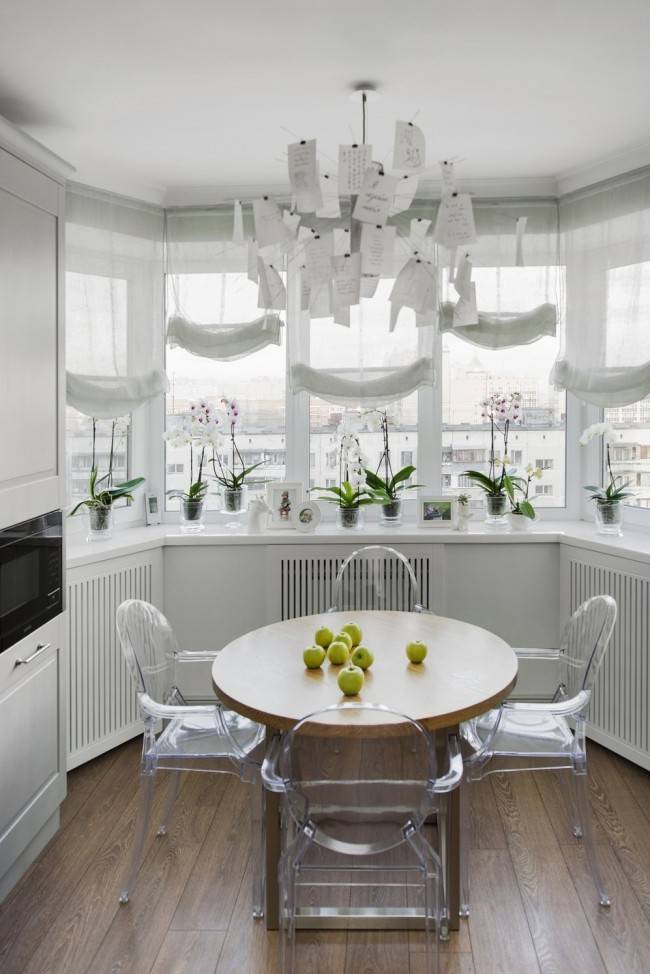
A hinged screen for a battery without a cover is used when there is a need to decorate cast-iron batteries protruding beyond the window sill. Unlike a box, such a screen looks much lighter and does not clutter up the room.
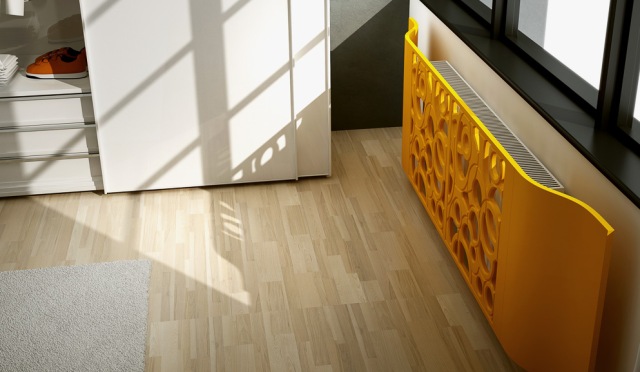
The hinged screen for the battery without a cover ensures maximum penetration of warm air into the room and at the same time perfectly copes with a decorative purpose.
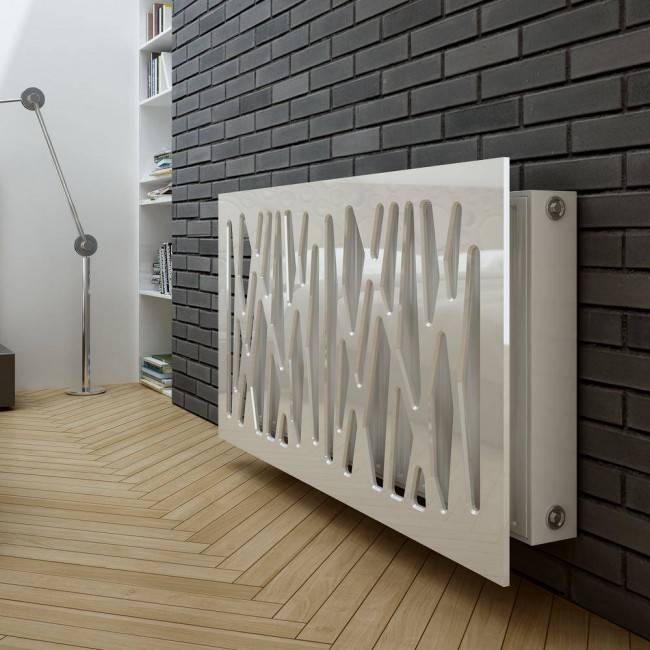
Hinged screen made of sheet metal
Hinged panels with a lid are traditionally made of metal and are installed independently without any problems. Such screens do not interfere with the passage of heat and help maintain a comfortable atmosphere in the room.
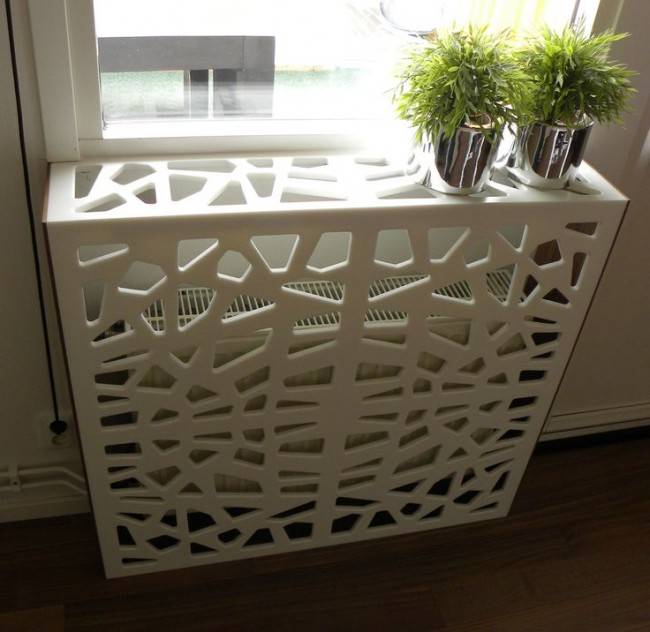
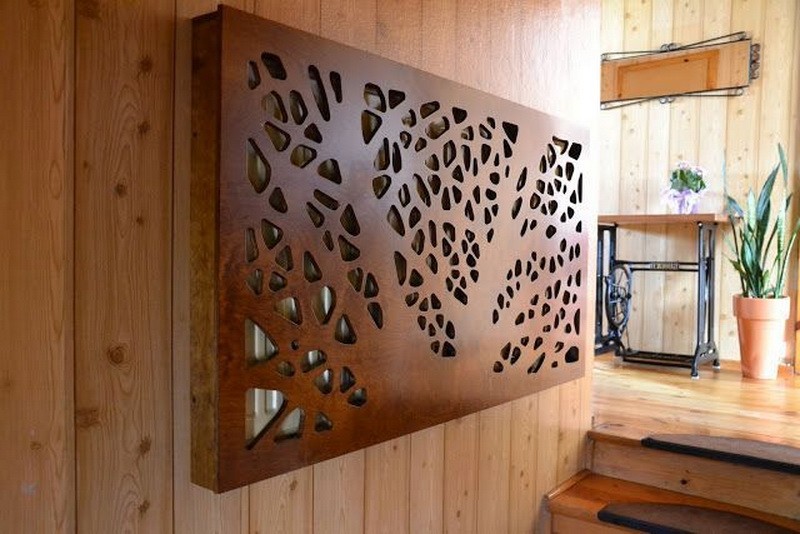
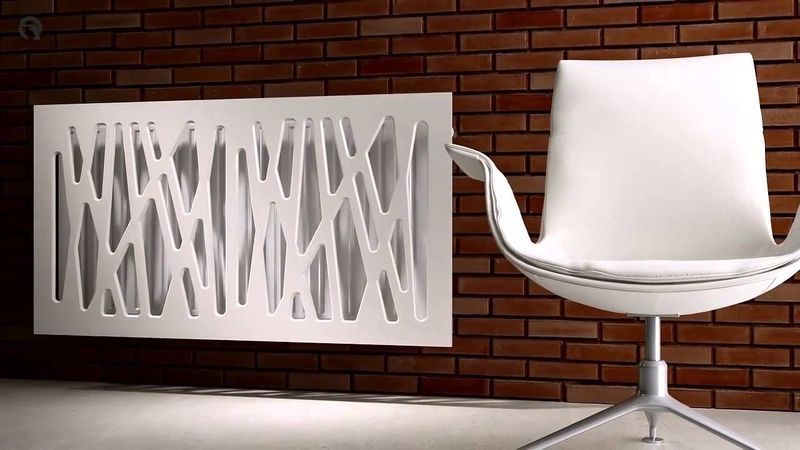
A protective screen for a heating battery, the structure of which, a chaotic grid, is an unusual and rather attractive solution.
The boxes allow you to completely close the battery, and the box itself can be used not only as a protection for the radiator, but also as a stylish and original bedside table.
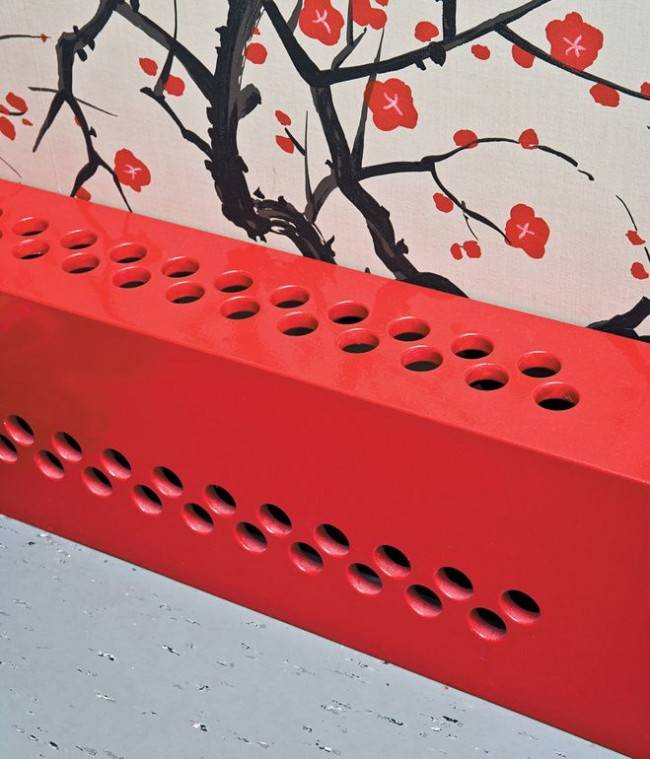
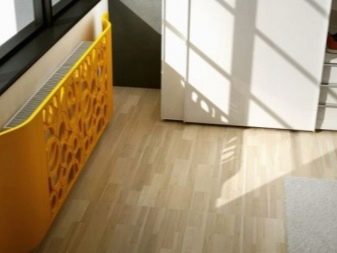
Radiator box, which, thanks to its bright color, will become an accent for any interior
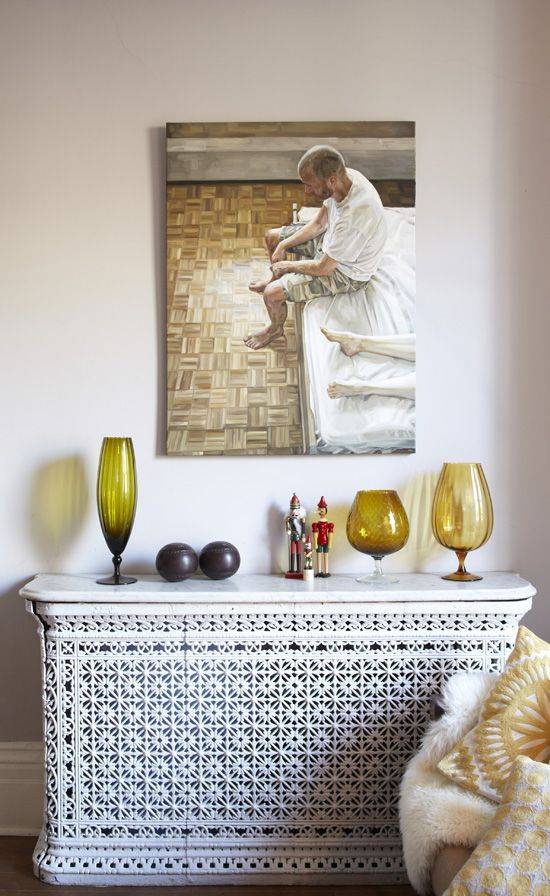
Openwork metal box for the radiator looks luxurious
Glass screens
Glass screens are not often found in interiors, although they have high aesthetic possibilities. Such designs are made of tempered glass, the thickness of which is not more than 8 mm. Thanks to a special treatment, the glass is resistant to scratches and damage, and the rounded corners are absolutely safe.

Most often, glass screens are produced in the form of a solid panel. Stained glass models are not cheap, acrylic glass is considered a more budget option.Such designs simply impress with their diverse decorative design. All kinds of techniques reveal the wide potential of design possibilities, allowing you to create stunning patterns, drawings, textures and stained glass windows.
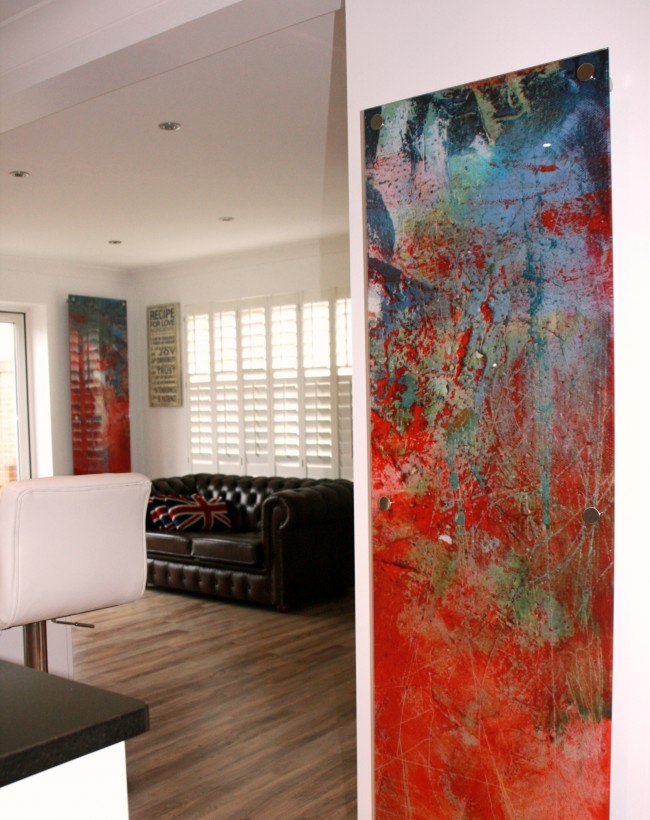
Glass screens are easy to clean with ordinary window cleaner. They have good heat transfer, but in some cases in this category they can be inferior to screens made of other materials and with perforations.





Screen materials
Buy decorative screen for radiator available from the manufacturer. First you need to study all the possible materials from which it can be made.
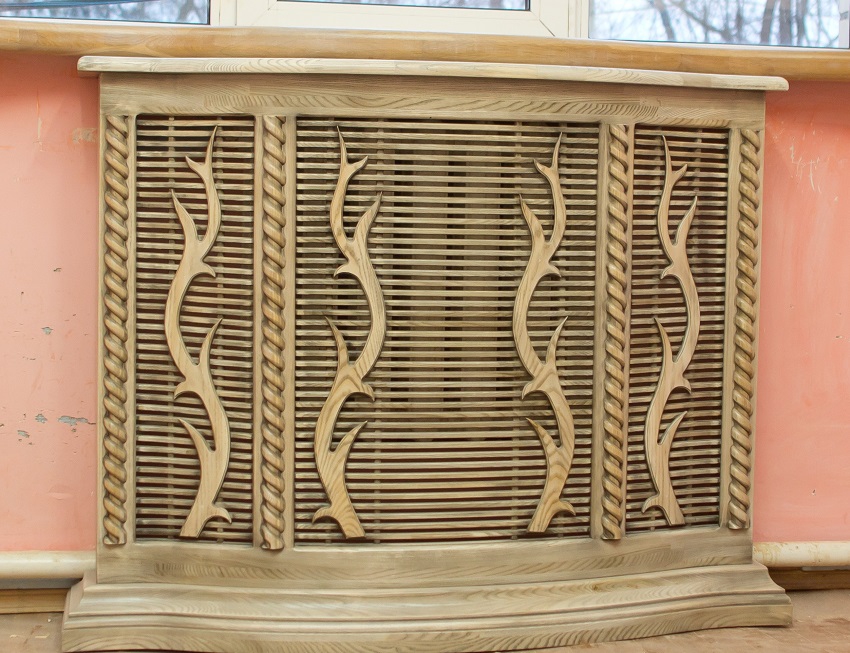
Wood
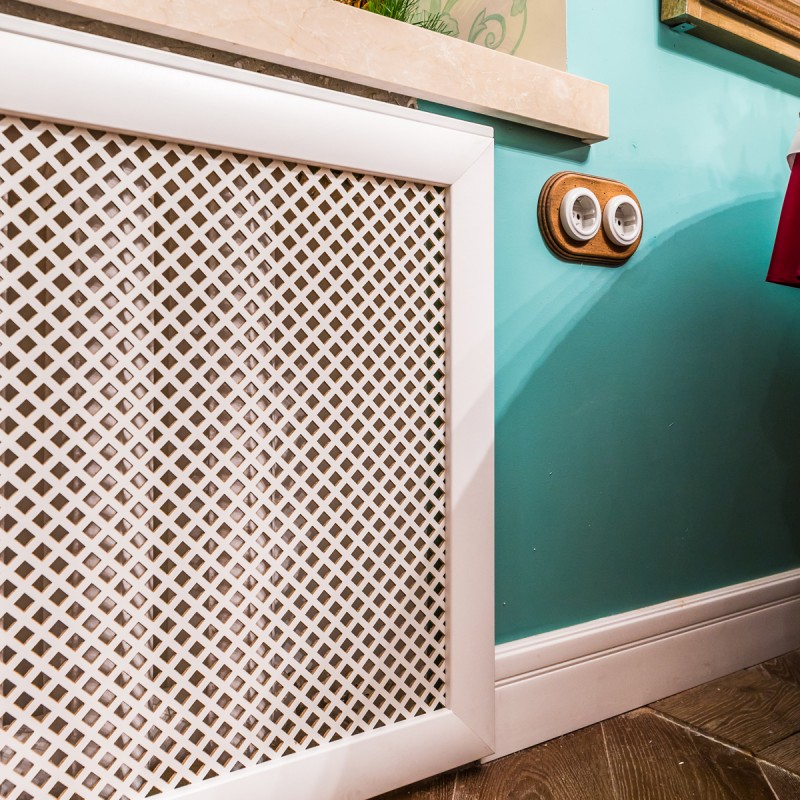
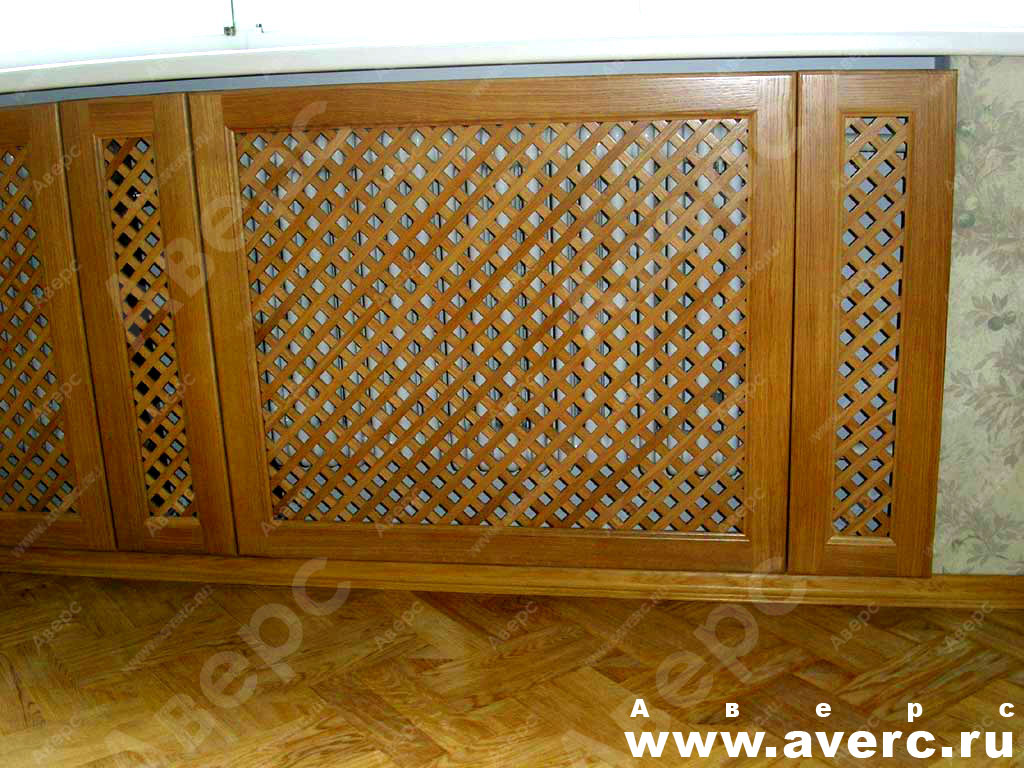
Wood panels are popular due to their aesthetic appearance. Wooden lattices are both quality, and a cosiness, and a presentable look. This material is environmentally friendly, which allows it to be used in children's rooms and medical institutions.
Nevertheless, the tree is subject to drying and gradual deformation, so you need to have a source of moisture, at least put a vessel with water nearby.

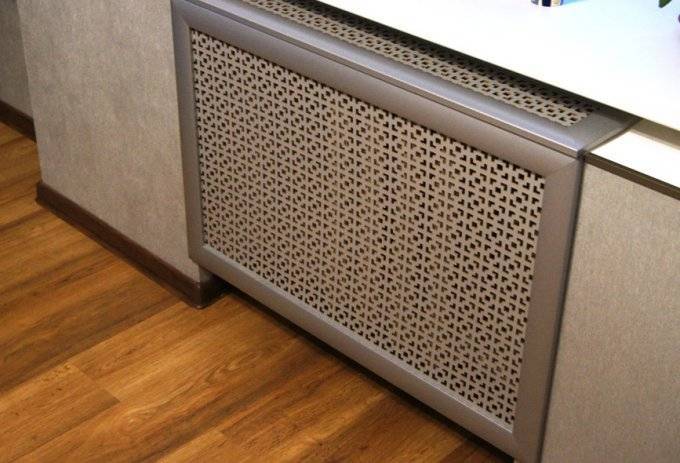
Metal
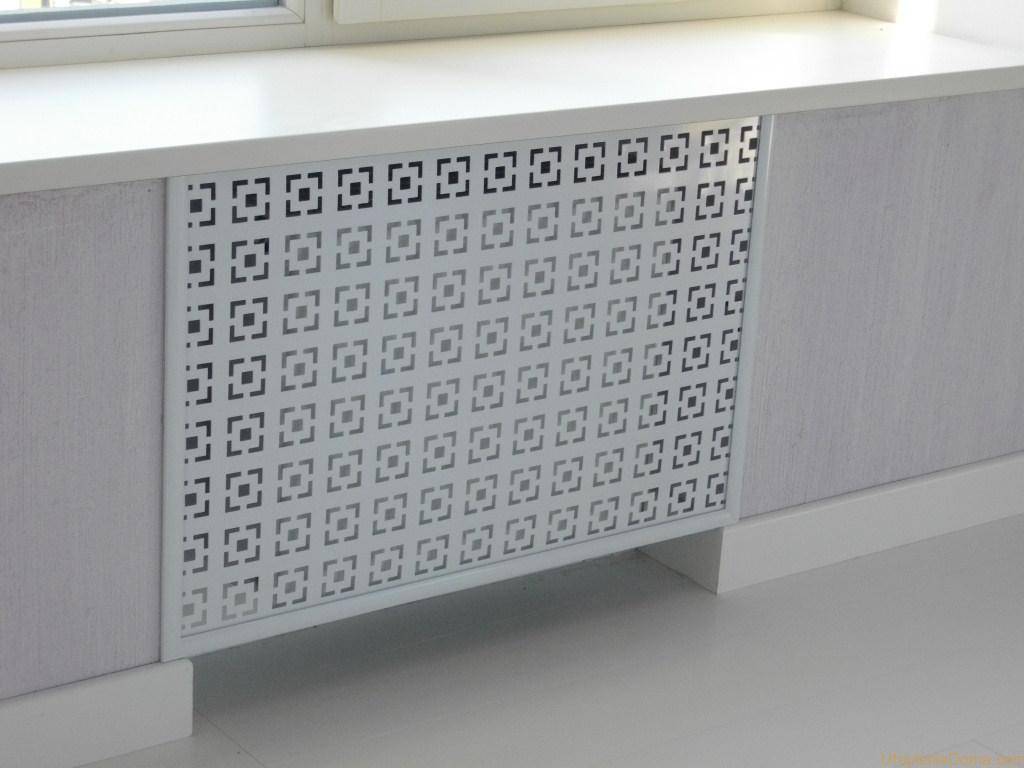
Metal grilles bring a modern touch to the interior. Depending on the color and type of perforation, they can be used in rooms of different character. The advantage is that you can choose almost any shade that matches the color of the walls, or, conversely, contrasts with it.
Thanks to factory equipment, you can “embroider” any patterns on a metal sheet with holes through which heat will flow. The metal heats up quickly and can cause burns in children, so you should not install such a screen in a nursery.In addition, if the material is thin, it will be prone to deformation upon impact.
MDF
Lattices from MDF - a budget option for fans of wood products. Due to its structure, the fibreboard will not dry out due to overheating. In addition, modern material can be made in different colors: oak, wenge, walnut, cherry and others. Such a variety of colors is rarely seen in the range of wood panels.
The product is equipped with a perforated HDF board. When caring for the panel, you need to remember that MDF is “afraid” of contact with water.

Plastic
When choosing a screen made of plastic, you must definitely familiarize yourself with its performance characteristics. Many types of plastic deform when heated and begin to release harmful substances. Although the cost of plastic elements is low, you still need to make sure that this part lasts for a long time.
The industry offers a wide range of panels in different shades. In addition, a picture, such as a 3D image, can be applied to the screen.

Glass
A very interesting way to decorate, related to the Art Nouveau style. The glass panel on the battery looks stylish, expensive, unusual. The color screen is prepared from tempered glass for stained glass, its edges are polished. Glass can be colored or act as a background for drawing, photo printing, airbrushing.

It is possible to use the methods of artistic cutting, sandblasting painting. A large selection of decoration methods makes this screen exclusive. On the reverse side, condensation may accumulate on the glass wall. You can prevent this process by making perforations - several holes for air circulation.

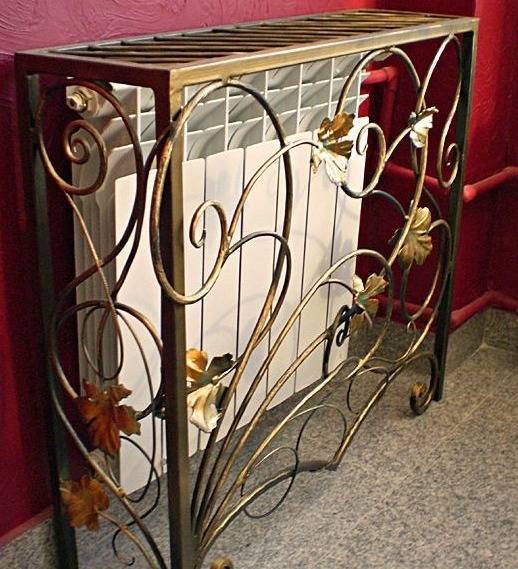
Forging
Forged gratings also have great potential for creating exclusive models. Almost every piece is handmade. And at the same time, it sets the tone for the whole room. Forging has a long, well-known past: graceful grilles decorated the fireplaces of old European castles and Russian noble estates.
Choosing such a decorative heating screen, you should choose the appropriate elements for interior design. These can be castle-style lamps, imitation brickwork, tapestries or antique furniture using Gothic elements, such as lancet arches.
Drywall
Drywall boxes are the most common because they can be made by hand. The choice of final finishing is the widest: the product can be painted, wallpapered or applied with decorative plaster.
The disadvantages include the complexity of perforation, which increases thermal conductivity.
Exotic materials
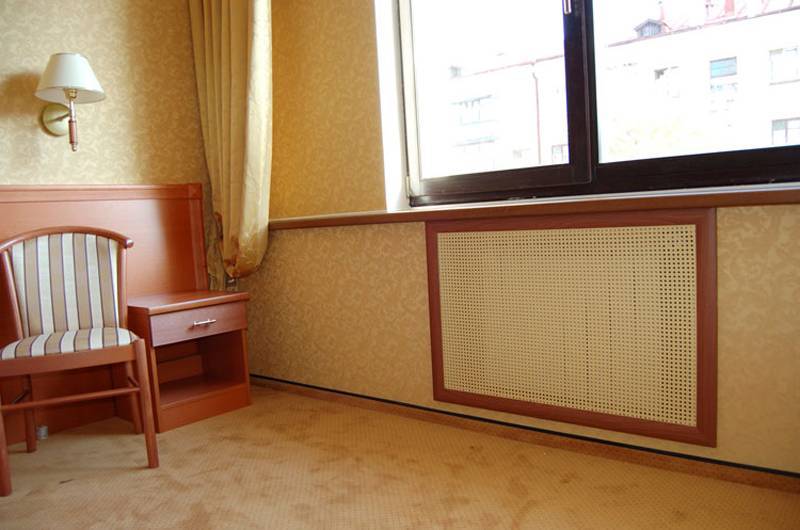
In addition to well-known and proven materials, you can choose an exotic coating for the product. For example, use bamboo panels, jute rope. Leather is also worth a try - it's eco-friendly and interesting. The style of such a room will turn out to be colonial, southern.


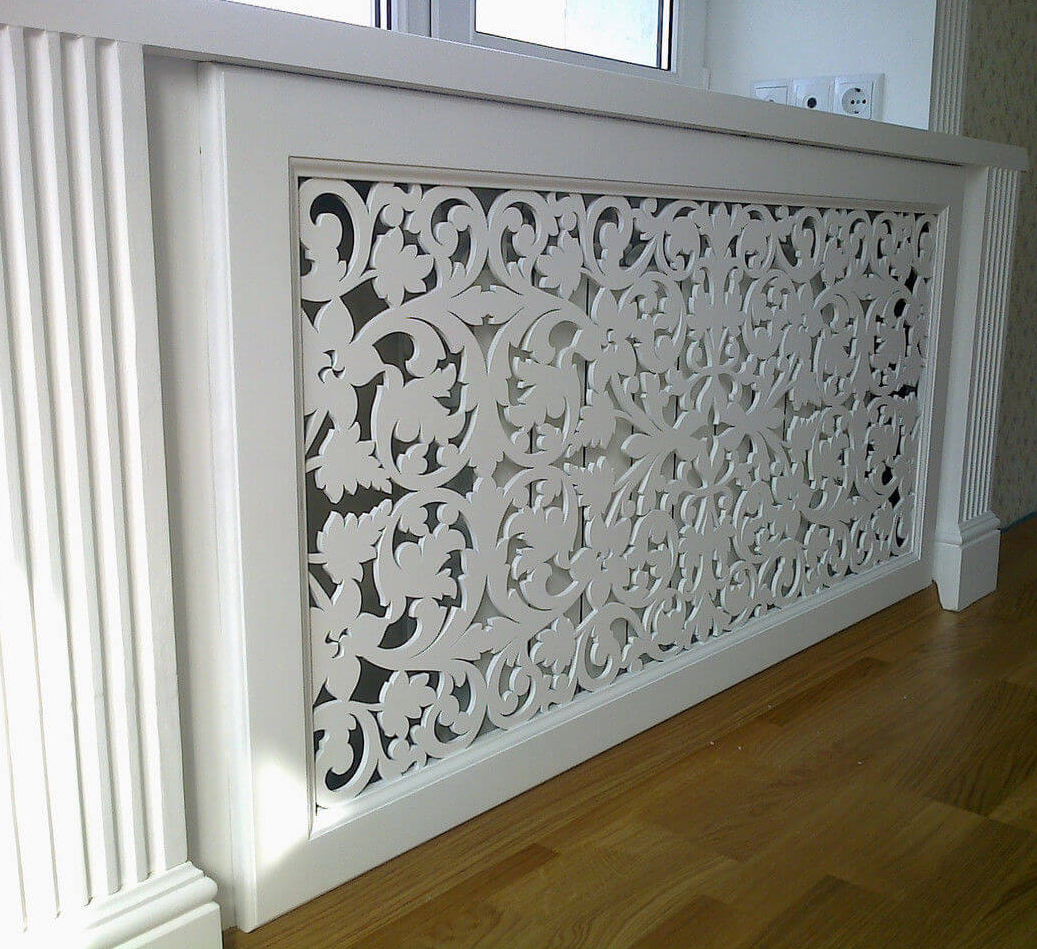


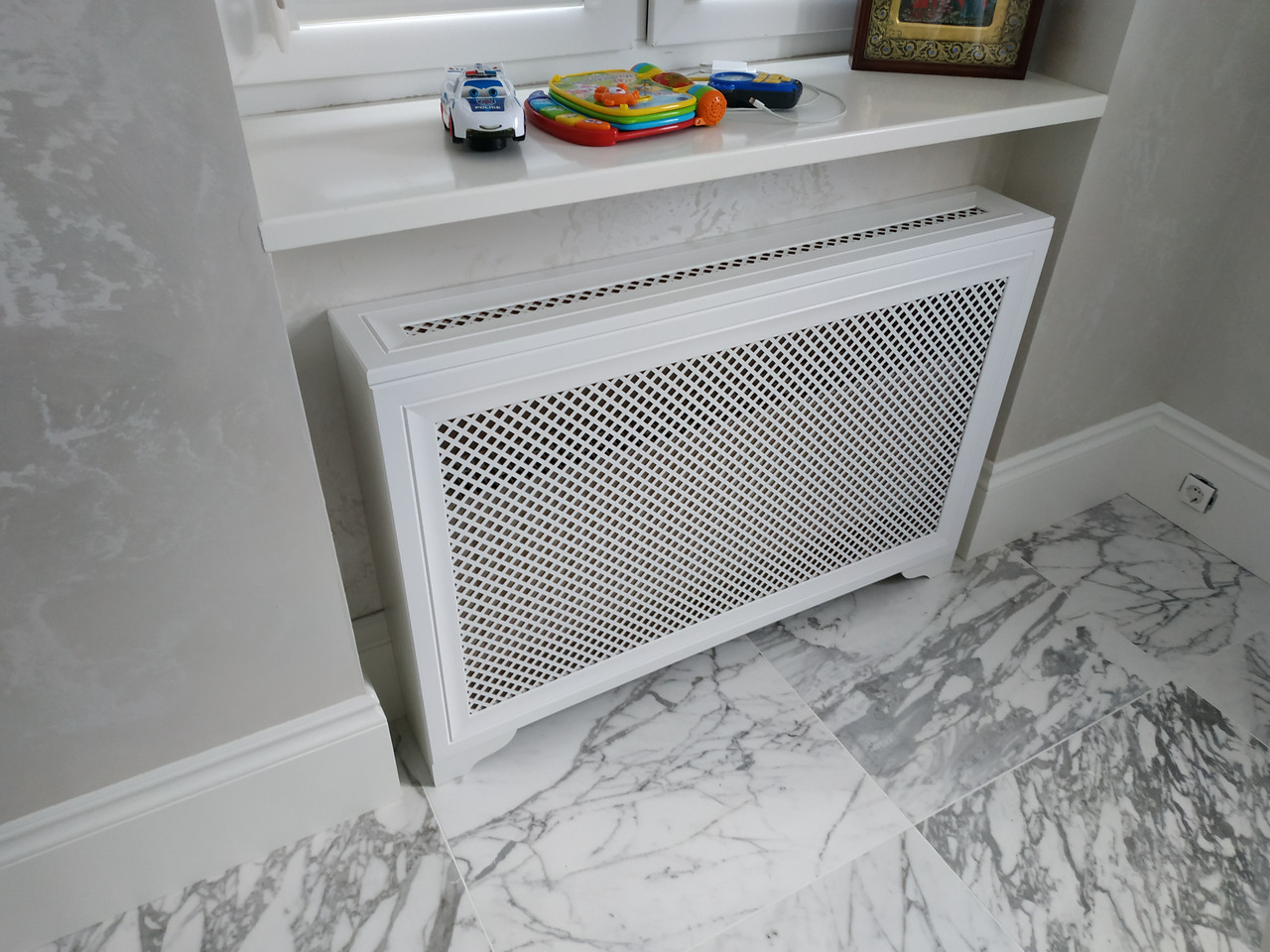
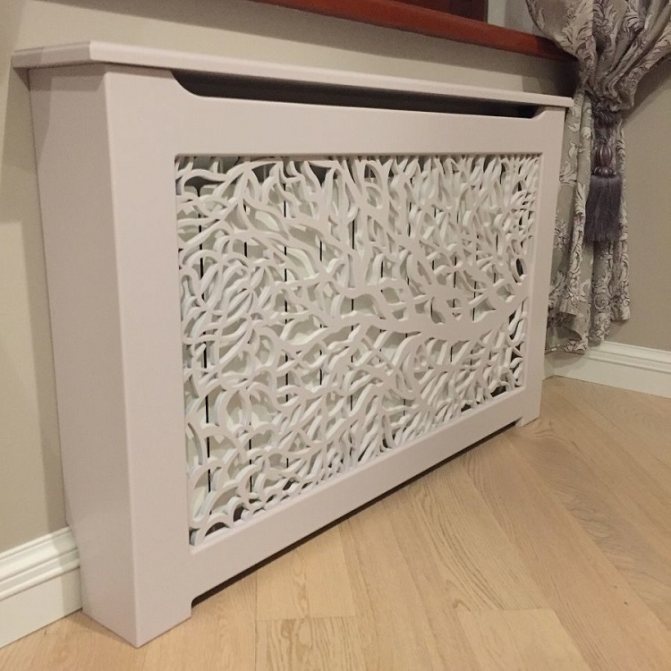

Thanks to special perforation lines, the skin breathes and passes warm air.

Tips & Tricks
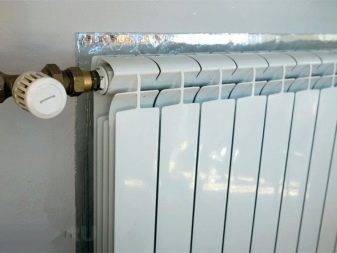
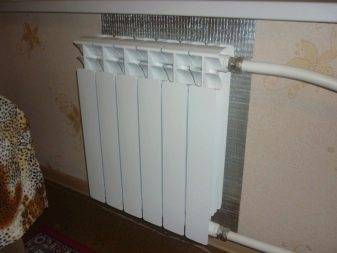
Properly mounted foil material behind the radiator will definitely increase heat dissipation. To decorate the device in a children's room or bedroom, it is better to use lattices made of natural bases. For example, it is worth considering wooden options or MDF options. A good solution would be to independently manufacture a structure from old furniture.
It is important to understand that the main types of batteries emit two types of heat:
- radiant;
- convective.
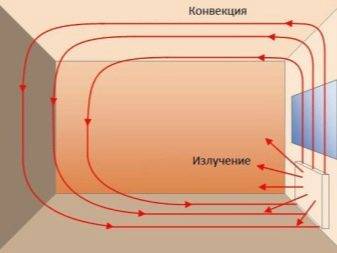
The first option refers to the type of direct infrared rays. Carriers with a low temperature give out a zero indicator of this energy. However, when the temperature of the batteries is over 60 degrees, the value of radiant energy cannot be discounted - it is this part of the heat that is lost when installing radiator grilles.
Screen gratings also worsen the converter component. However, the right choice of decor option can reduce losses to zero.
An alternative way to decorate batteries looks great - decorating with paints: radiators can be painted using oil watercolors. To create an image of a 3D part, patterns are applied not only to the radiator itself, but also to the wall.
As a result of creating such a work of art, the front part of the radiator battery (for example, cast iron) and the verticals conventionally represent one plane.
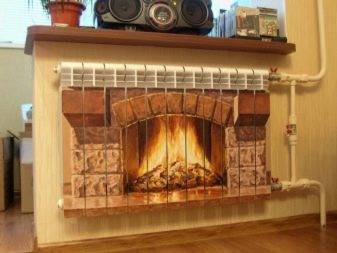
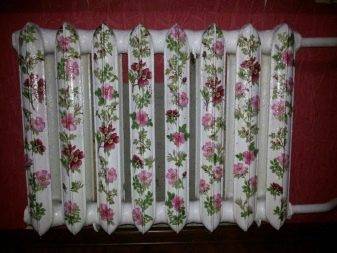
The selected version of the radiator grille should be not only beautiful and reliable, but also convenient for parsing. Repair or replacement of the heater should not be complicated by the installation of a radiator grille. Radiator protection looks interesting when it is in harmony with the general view of the interior - this design should not stand out against the background of the general environment.
It is undesirable to clutter up the decorative screen with furniture, since in this case not only the heat exchange mode will be violated, but also the beauty of the decor will go unnoticed. The screen, in particular its facade, must necessarily be perforated - the holes will provide the best air circulation mode.
The installation of the grille implies the observance of certain norms.For example, the allowable minimum distance from the radiator should be 3 cm. Add 10 cm in width, and about five in height. Thus, the grille for a standard radiator (80 cm high and 200 cm long) will have dimensions of 85x220 cm. If side parts are provided, then their width should not be less than 30-40 cm.
Of the presented products with standard parameters, a metal product 900x2000 mm or a wooden analogue with identical dimensions, but with a slightly higher price, can be considered a suitable option.
How to assemble a decorative screen for a radiator, see the following video.
How to install
The gratings should be mounted in such a way that in the future the operation of the radiator and pipes does not cause difficulties. At least once a year, it is necessary to clean the parts from contamination, so access to them is necessary.
Sometimes there are emergencies in which an instant reaction is necessary, and unscrewing the fasteners can take precious time. In this regard, it would be advisable to think over a mounting system that allows you to remove the radiator protection with one movement.
What fasteners are needed
The simplest in this matter are hinged and attached screens - they can be removed or moved away. The flat, wall-mounted ones are the most problematic. However, using a couple of planks, you can fix the box on the wall. In this case, the slats should have a beveled top edge.
In addition, metal plates or magnets can be used. Instead of a plank of wood, it is allowed to fix a metal corner in the wall.For flat screens, you need to take magnets, plates or loops with hooks. Sometimes such screens are made in the form of sliding doors.
Mounting
Knowing how the battery works, you can build a structure that improves heat transfer with your own hands. For this, it is recommended to use metal. However, to work with it, you need a large number of tools and skills.
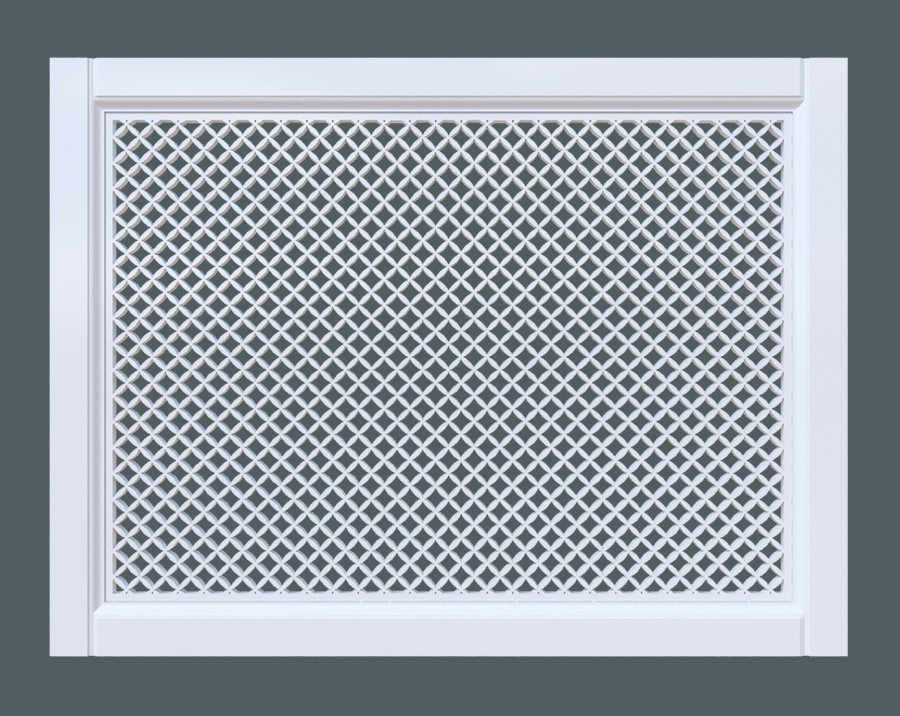
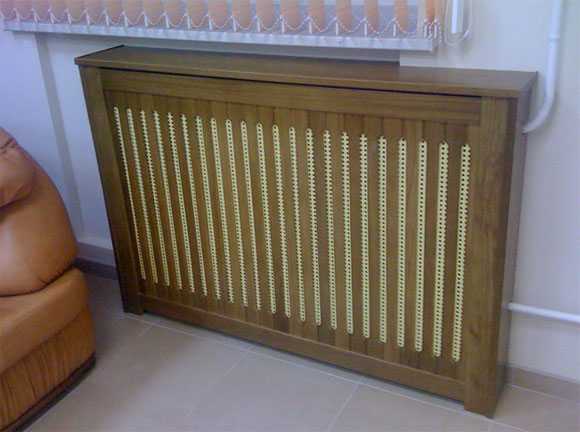
It is possible to build a lattice both from a grid and from a fiberboard (chipboard). The product will resemble a box with legs, where the lid will be located below and above. A facade with sides is assembled from the frames. The mesh that is inside the wood frame will provide good airflow.


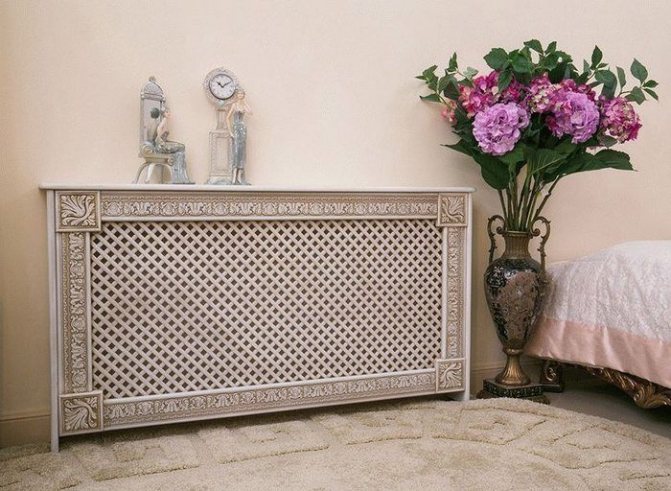
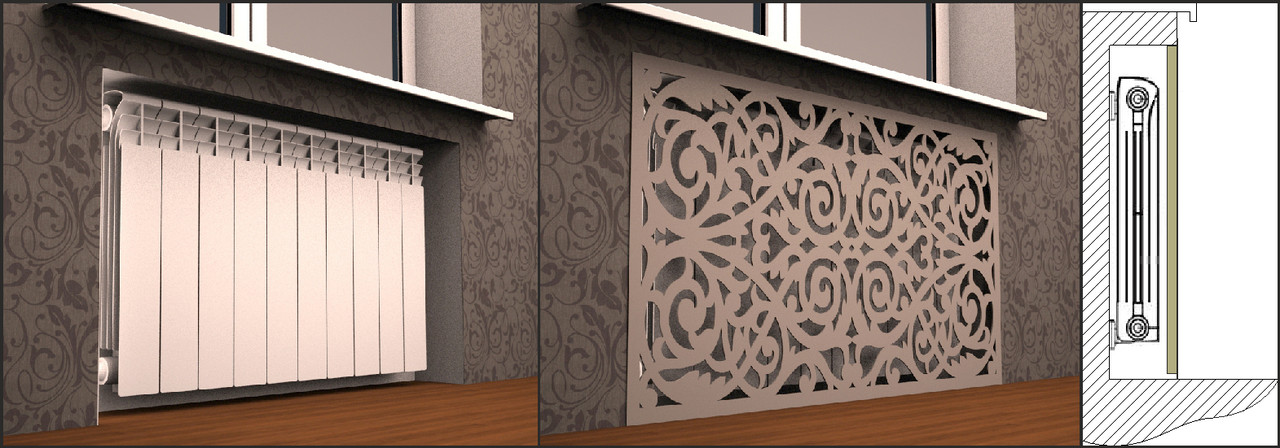



Stages of work:
- Prepare blanks. Knowing the dimensions of the battery, for air exchange it is necessary to add from three to eight centimeters on both sides.
- Joints of parts should be sanded.
- Cut the grid to the size of the radiator.
- Fasten the frame to the mesh and sides.
- Using corners and self-tapping screws, build a box.
- For better heat dissipation, a metal sheet should be mounted at the back.
- Legs are attached to the bottom of the box.
- Install the manufactured box to the radiator using corners and self-tapping screws, fixing it in the wall from each side.
- Elements can be painted or decorated with self-adhesive.
Do screens affect heat distribution?
Radiators emit two types of energy - radiant (with direct radiation) and convective. If the coolant has a low temperature (less than 50 degrees), even thin screens can prevent proper heat transfer. Massive closed structures completely force warm air to accumulate inside, preventing natural convection.
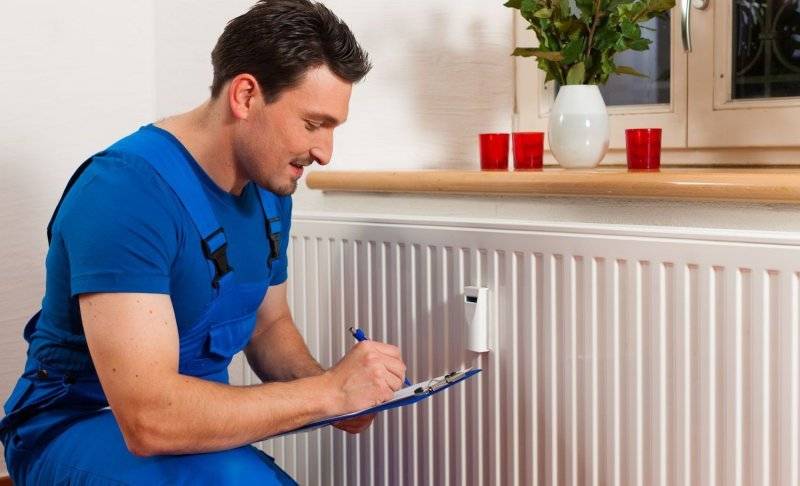
It turns out that just a decorative screen returns part of the heat to the heating system. It is possible, and even necessary, to prevent heat loss by using a heat-reflecting foil film. It is glued behind the battery.
Making your own screen-box
Some home craftsmen make boxes on their own. There is nothing difficult in this. There would be a desire and time.
Necessary tools and materials
From what to make stitching, each craftsman decides for himself. The materials are listed above. However, not everyone has a welding machine for steel or plastic, so they will have to be abandoned. Usually, the lining is made of wood, using plywood or chipboard. Popular and laminated fiberboard. You can aim at a combined option: a wooden frame and plastic panels, for example.
A few tools are needed:
- roulette;
- pencil;
- drill driver;
- set of drills;
- wood saw;
- "Bulgarian"
- construction stapler;
- dowels and screws.
You will also need pine bars with a section of 50 x 50 and 40 x 40 mm for the frame. They can be replaced with steel corners 25 x 25 mm.
Sizing and sketching
First, measure the dimensions of the radiator: length, height, width. The box should be 100 mm longer and wider than the radiator, and 50 mm higher.
A sketch of the future sewing is preliminarily drawn on a sheet of paper, on which all real measurements are sequentially applied. At this stage, you need to think about the method of fastening the future structure. The most optimal options are hinged or floor-supported (attached). In the second case, the casing will have 4 legs, if the pipe does not interfere with those that are near the wall. Otherwise, you will have to shift the hind legs forward or rely on the pipe.
If it is possible not to fix the structure to the wall, you must do so, because in the future the protection will have to be removed for maintenance and repair of the battery. And if an emergency arises, everything must be done quickly.
Cutting parts
First, according to the dimensions from the sketch, the frame parts are cut from a corner or bar with a section of 40 X 40 mm. If the facade is made of fiberboard or plastic, two additional horizontal ties must be installed under it so that the panel does not sag. Then cut out the details of the skin.
The front part must necessarily be with holes, and they are made in such a way that the total open part is more than 50% of the panel area. Otherwise, the principle of convection will be violated and the heat will remain inside the box. If you have a jigsaw, you can cut neat grooves.
Next, cut out the side walls (they are usually solid) and the top cover (removable or blind with holes).
Assembly
The frame made of wood is assembled on self-tapping screws, steel - using "cold welding" on an epoxy basis. If the house has a welding inverter, then the task is facilitated. When assembling, right angles are controlled. The resulting design is tried on to the battery. If all is well, sheathing sheets are installed on the frame, having previously made cutouts for pipes in the sidewalls.
Installation
After assembly, the screen is installed in a regular place.
Installation methods may be different:
- hinged (supported by a radiator);
- to the wall with dowels and screws;
- attached (on legs with support on the floor);
- hanging (to the windowsill from below).
Fastening should be simple so that dismantling takes a minimum of time.