- Pyrolysis heating boilers
- First and foremost - reducing heat loss
- programmer
- electrical systems
- Kinds
- Pros and cons
- Boiler characteristics
- Maintaining the temperature level in one specified degree
- Reducing heat loss
- Ways
- Improving Efficiency
- Alternative heating methods
- Solar collectors - cheap and economical
- Infrared heaters
- Video description
- Convectors
- Video description
- As a result - how to optimize electric heating
- More Saving Tips
- What other appliances are available for economical heating?
- Choice of the cheapest fuel
- Ways to economically heat a private house
- Water heating
- Peculiarities
- Advantages and disadvantages
- Warm floor
- Building insulation
- Determine the type of fuel used
- Solar collectors
- Conclusions and useful video on the topic
Pyrolysis heating boilers
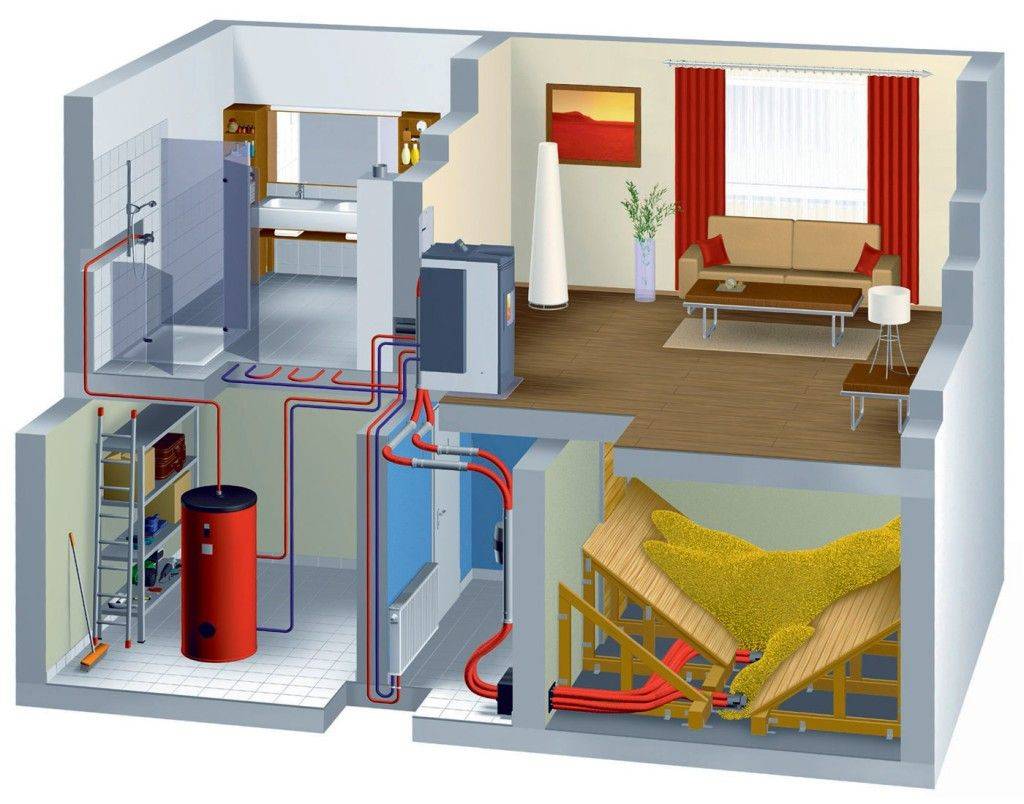
Wood-burning heating equipment in itself is quite profitable - but the savings can be increased further by using a pyrolysis boiler, by installing which a rather economical heating system for a private house is created. In addition to economic benefits, such a boiler also reduces the frequency of laying firewood (conventional boilers need to be melted every 2-4 hours, and pyrolysis boilers increase this time to 10-12 hours).
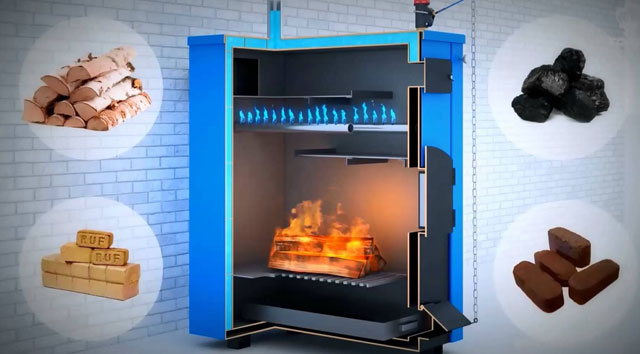
All this benefit is made possible by the fact that the fuel is burned in two stages. At first, firewood smolders slowly due to the limited access of oxygen at high temperatures. Most of the fuel in the combustion process is processed into carbon monoxide and volatile hydrocarbons. Combustible gases enter the afterburner, where, due to oxygen, they are completely burned out with decomposition into carbon dioxide and water.
First and foremost - reducing heat loss
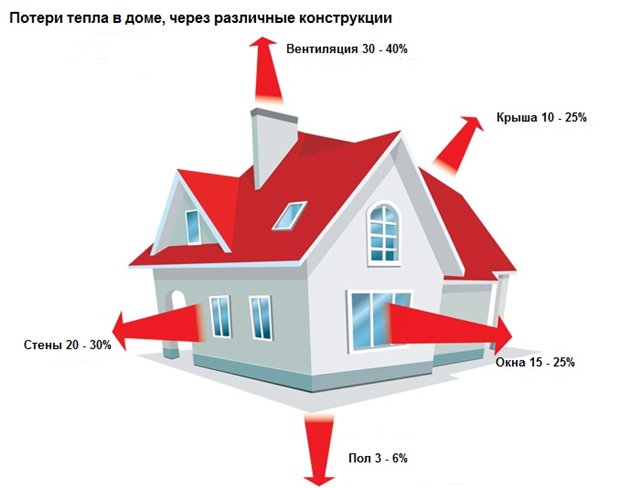
Before choosing fuel, a boiler (or other thermal energy generator) and a heat distribution system for a cottage, you need to take a closer look at the house itself. If heat losses through walls, windows, ventilation, underground and roof are huge, then no tricks to increase the efficiency of the internal heating circuit will help.
First you need to take care of the insulation of all structures and engineering systems of the home.
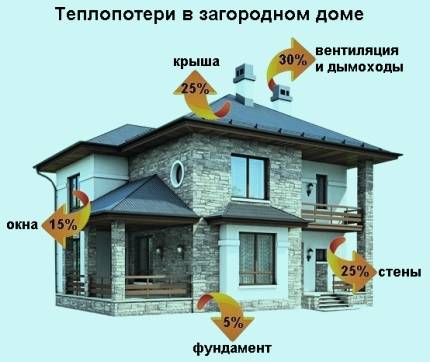
With a high level of heat loss, any attempts to increase the efficiency of the heating system will be pointless, anyway, most of the heat will go outside. And it will require a lot. The enclosed space of a cottage is one thing, and a street open to winds and bad weather is quite another.
The technology and materials of insulation are selected based on the climatic conditions of the area where the house stands. There are certain building codes with minimum requirements for wall thickness and thermal insulation for each Russian region. But without knowledge in heat engineering, it is not worth doing a project on your own. Either the calculations will be made incorrectly and the heat loss will be higher, or you will have to overpay for a too thick layer of insulation.
When viewing the finished project and the subsequent construction of the house, special attention should be paid to:
- double-glazed windows - up to 25% of all heat losses go through the windows to the street;
- roof and ceiling to the attic - this is another 10-15%;
- ventilation system - the proportion of heat loss through ventilation with natural circulation can reach 40-50%.
Walls and floors are also places for heat to escape from a building. But no one neglects their warming initially. But many owners of private houses often forget about ventilation and attic.
Another point is the presence of "cold bridges" in the building envelope. Any iron part penetrating the wall from the street inside serves as a place of simply enormous heat loss. Even a small metal pin, albeit slowly but inexorably, “draws” heat from the housing
The project should not have such bridges, and during construction it is important to ensure that they are not formed from various metal fasteners
In addition, "cold bridges" can be:
- ends of floor slabs;
- window and door slopes;
- basement walls;
- lintels and inserts made of concrete or iron.
All these places must be carefully insulated, otherwise you can not even dream of saving on heating. No one has ever succeeded in heating the street.
Depending on the quality of insulation, the coefficient of thermal conductivity for one building that appears in the heat engineering calculation can differ significantly. The thicker the insulation and the fewer points of "leakage" of heat, the smaller the amount of fuel that has to be burned afterwards to heat the cottage. The money spent on reducing heat loss will definitely pay off. You should not skimp on this issue, but you should not forget about the reasonableness of investments either.
programmer
It is able to replace the automatic sensor and allows you to reduce fuel consumption, thereby providing economical heating at home. The device has earned many positive reviews from consumers. The programmer allows you to control yourself both automatically and manually.
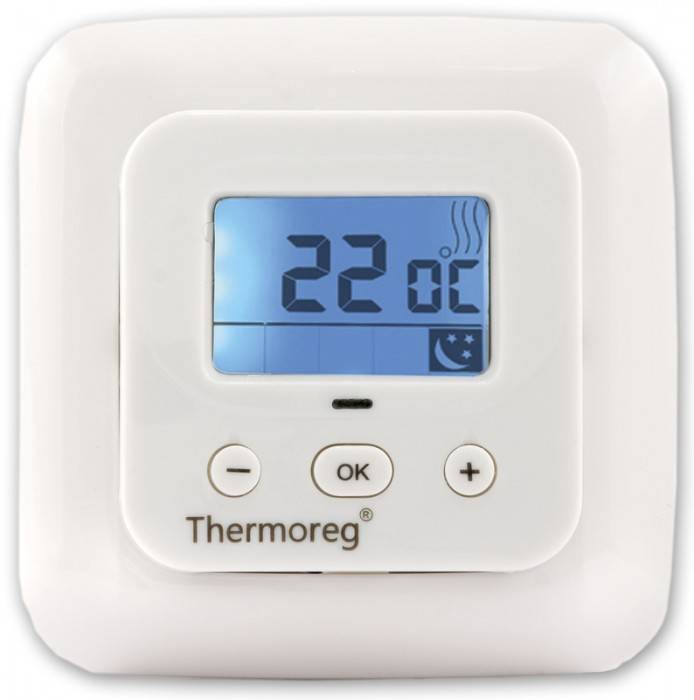 programmer
You set the indicators you are interested in, and they will be observed as long as they satisfy you. When using the automatic mode, you can set the temperature change within a day. An hour before you arrive home, the programmer changes the indicators upwards and creates the conditions necessary for you.
electrical systems
Any electrical home heating system can be equipped according to two principles.
- Direct. Heating of any room is produced by devices that are powered directly from the network.
- Indirect. With this principle, a coolant is used that will heat the radiators that are installed in the rooms.
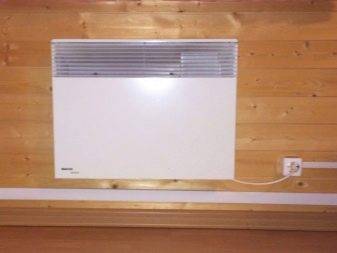
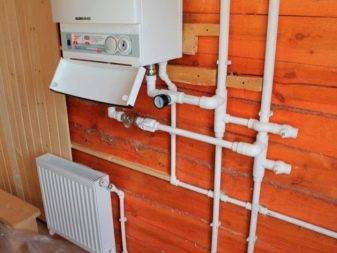
Here are the electric heating systems in order of increasing investment price:
- fan heaters and various convectors;
- heating with infrared radiation;
- electric heaters;
- warm floors (cable and film);
- conventional water system, which is equipped with an electric boiler and radiators of various sizes.
Kinds
Heating a house with electricity can be of several types:
- convection;
- warm floor;
- infrared;
- water.
Thermal fans often have a forced injection of air masses and a fairly mobile design. They can be installed in the most convenient places.
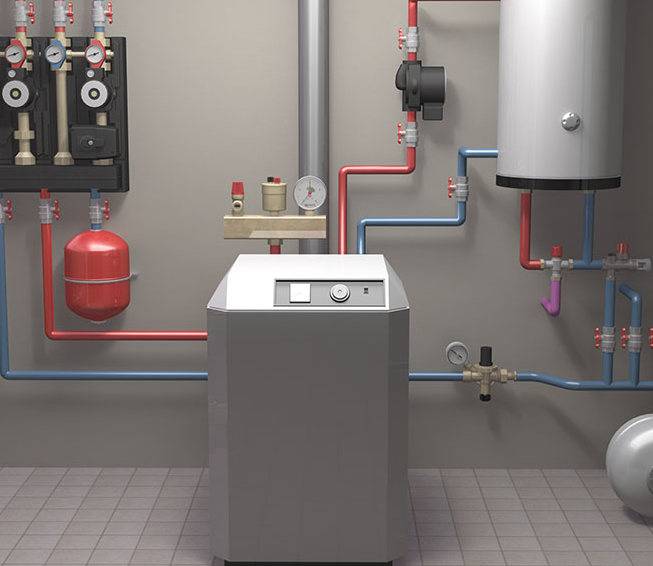


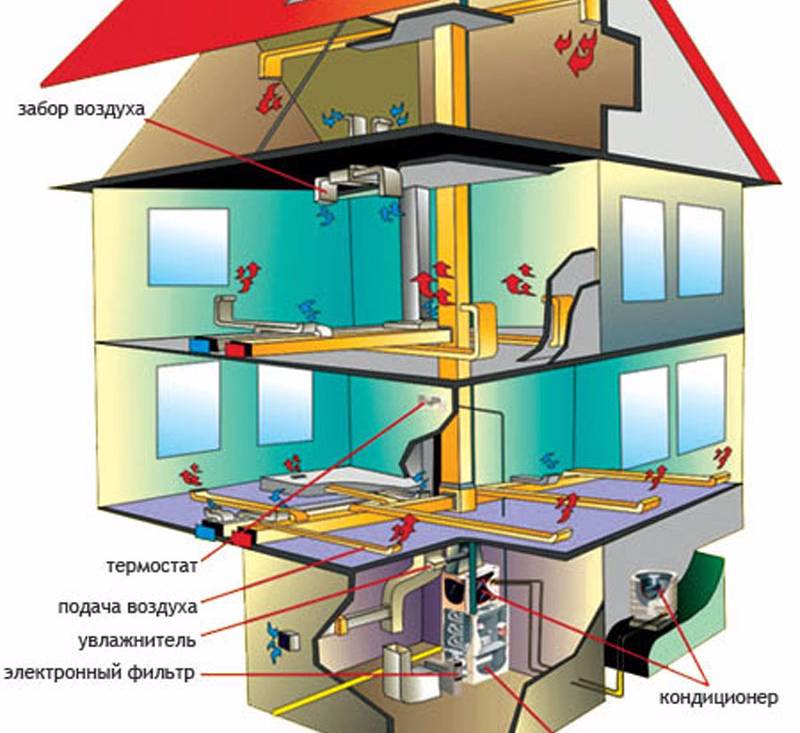


The heating system based on infrared radiation is much more efficient. These devices are attached to the ceiling and heat all surfaces, which then heat the air with themselves.
Such an entertaining method of heating as underfloor heating is very popular. The method is based on a heating film, cable mats or a heating type of cable, which can heat a very spacious room. The device itself is inexpensive, but installation under a screed or coating will clearly deal a significant blow to the family budget.
The basis of all mikathermic heaters are non-metallic heating plates, which were developed using a new unique technology.
Pros and cons
Electric heating of your own home has significant advantages.
- Ease and simplicity of installation. This equipment does not require a separate boiler room or smoke passage.
- Safety. There are no products of combustion and the presence of carbon monoxide.
- Low initial investment.
- Reliability and quietness.
- High level of efficiency. Electric heating is necessarily equipped with a special system that will allow the owners to regulate the temperature in any room of their house.
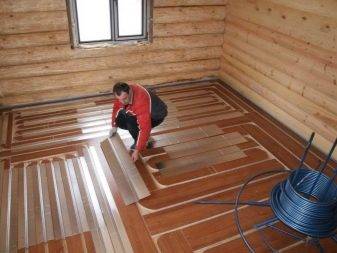
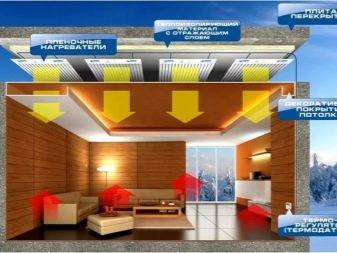
Energy dependence can be called another significant drawback. Space heating is not possible if the electricity goes out.
Unstable voltage in the network can also be called a disadvantage; this problem will be extremely acute in rural areas.
If you still decide on electric heating, then you will need to take into account the general condition and power parameters of the electrical wiring in your home. A large cottage for these purposes will need a three-phase network.
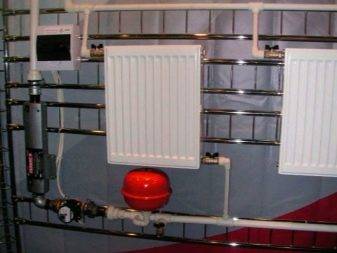

Boiler characteristics
Modern electric boilers operate on three principles of heating the coolant:
- heating elements;
- electrodes;
- using magnetic induction.
The first option can be called the most common.The coolant from the system passes into the boiler, where it quickly heats up with the help of tubular heating elements and returns back to the system. This type of equipment is considered safe, quite functional, and also has built-in automation, and it will control the temperature in the rooms and the temperature of the coolant itself.
Electrode devices work on a different principle. In this device, the heating element consists of two electrodes - voltage is applied to them. The coolant is heated due to the electric current that will move through it from the first electrode to the second, after which the coolant enters the heating system.
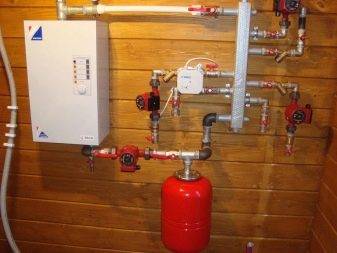
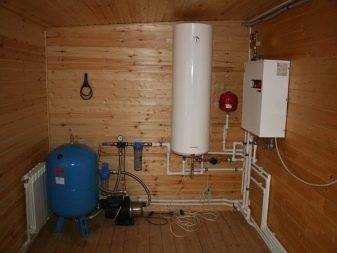
The design of induction-type boilers is more complex, although structurally they are much more attractive. This type of boiler does not have such heating elements that the townsfolk are accustomed to. The heat exchanger, being part of the magnetic circuit, heats up the coolant with the help of a strong magnetic field, which passes through it into the heating system.
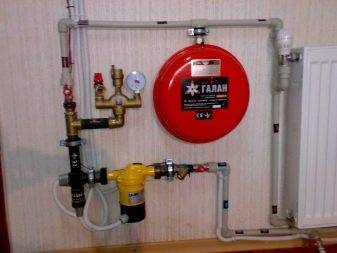
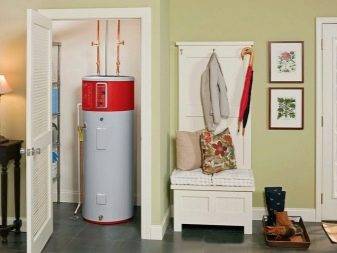
Electric heating of a cottage in the form of indirect heat transfer has significant advantages over heating with gas and air: hot water electric boilers are very reliable, do not require a chimney and have a high efficiency.
Maintaining the temperature level in one specified degree
When installing equipment such as economical heating systems for a country house, in order to achieve savings in heating, the first thing to do is buy thermostatic heads and sensors for reading indoor temperatures. They are mounted on heating elements.To install the temperature sensor, connect the pipes that will connect the sensors and the boiler.
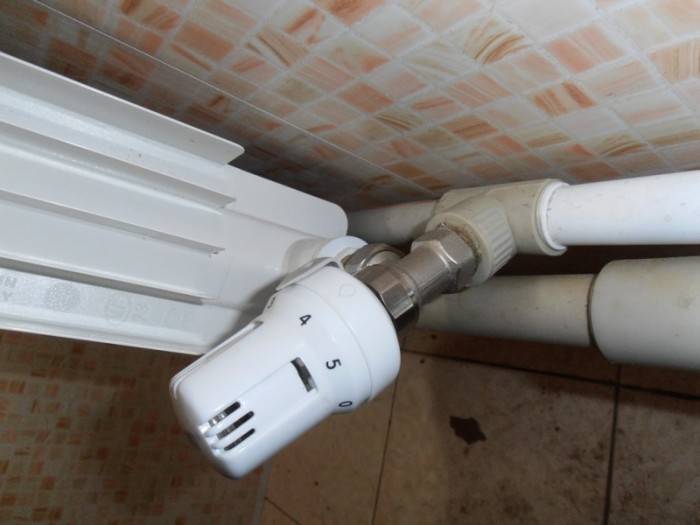
This kind of work is best done at the stage of building a house.
If the house is already ready, we recommend paying attention to wireless sensors. You must understand that such sensors will cost more, but you save on labor costs with hidden installation of equipment.
Reducing heat loss
In order to get the most efficient and profitable heating system, it is necessary to take a more responsible attitude to the issue of reducing heat loss. Let's remember what an ordinary person does if he freezes. She makes hot tea, takes a warm sweater and woolen socks out of the closet. That is, it warms up as much as possible. It turns out that a person does not allow his natural warmth to come out.
The same should be done with the house. It is necessary to reduce heat loss to the maximum, and for this you will have to use an integrated approach - that is, to insulate the house both outside and inside the room. The main thing is that you can do it yourself, without the help of specialists and additional financial costs.
Ways
It is possible to increase the heat transfer resistance of structures. To begin with, those that are more profitable to insulate. For example, if the walls of the building are initially warm, then it is cheaper to increase the thickness of the insulation material on the roof, on the floor, and also to choose more energy-efficient windows.
Each specific project may have its own solutions:
- you can use "warm" windows, which will be protected from the outside by roller shutters;
- it is possible to install a modern automatic ventilation system with a certain amount of air and heat recovery;
- waste heat recovery can be used.
Improving Efficiency
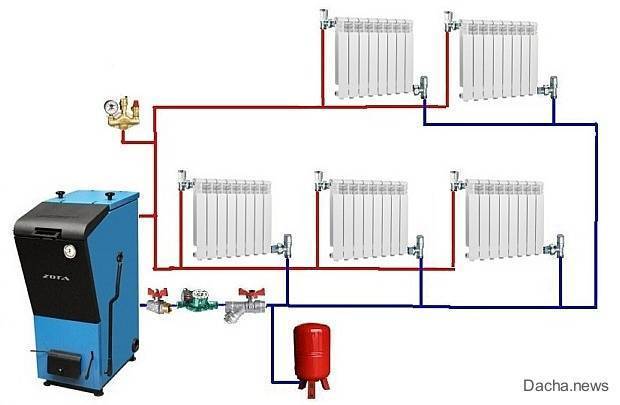
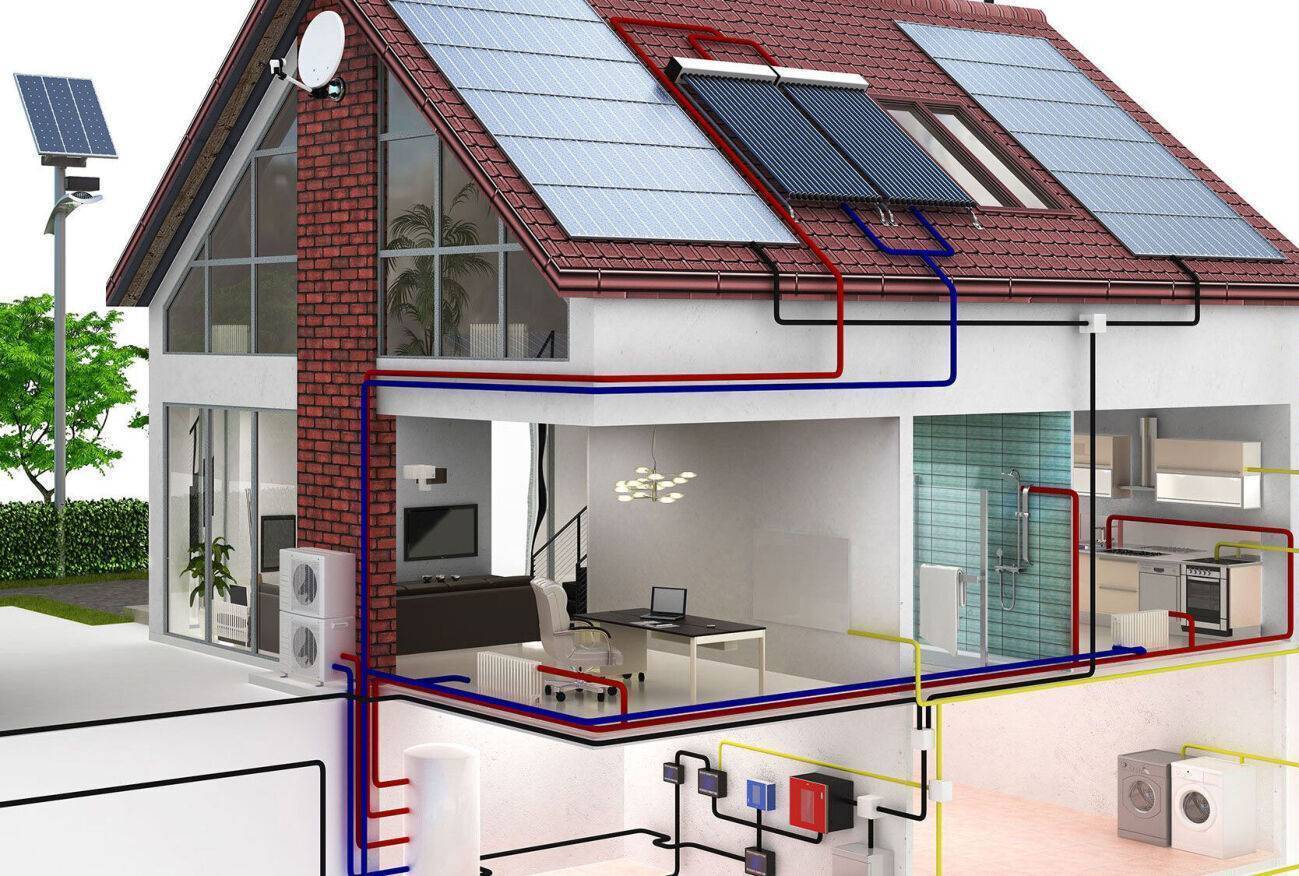
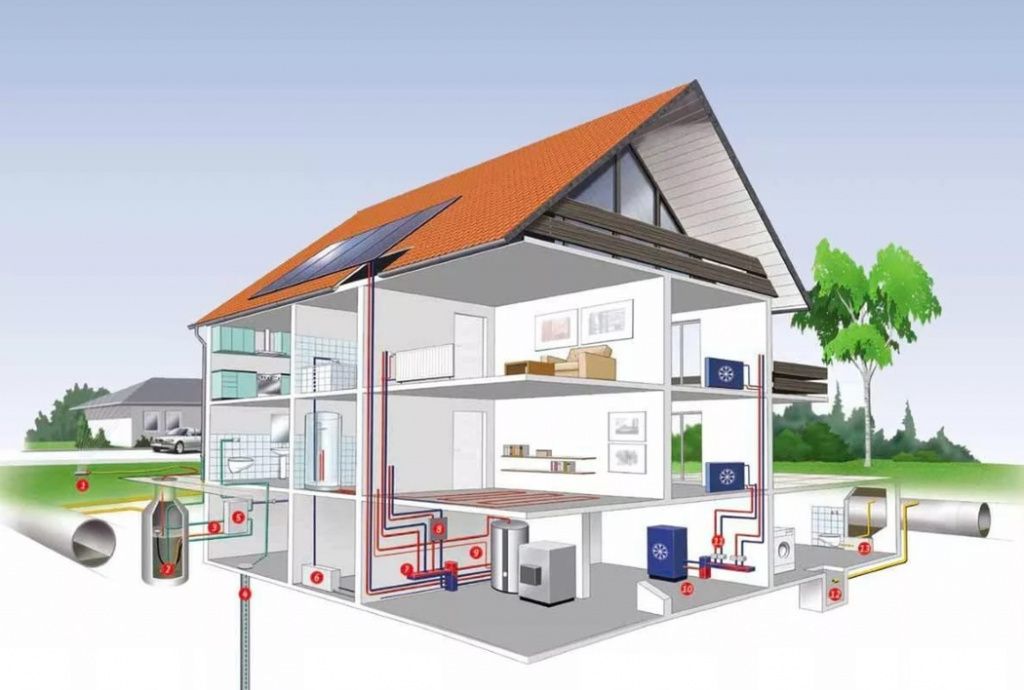
To increase the efficiency of home heating, you can introduce a variety of modern technologies that reduce fuel consumption into the heating system. There are a huge number of piping methods alone from the boiler to the radiators. There are heating equipment of various designs and all kinds of additional equipment, which can significantly increase the efficiency of the entire system by 10–15% or even more. But at the same time, you need to carefully weigh the pros and cons.




Alternative heating methods
If heating in a private house does not require fuel, does this mean that it is the most economical? Depends on the cost of the equipment and how effective the system will be.
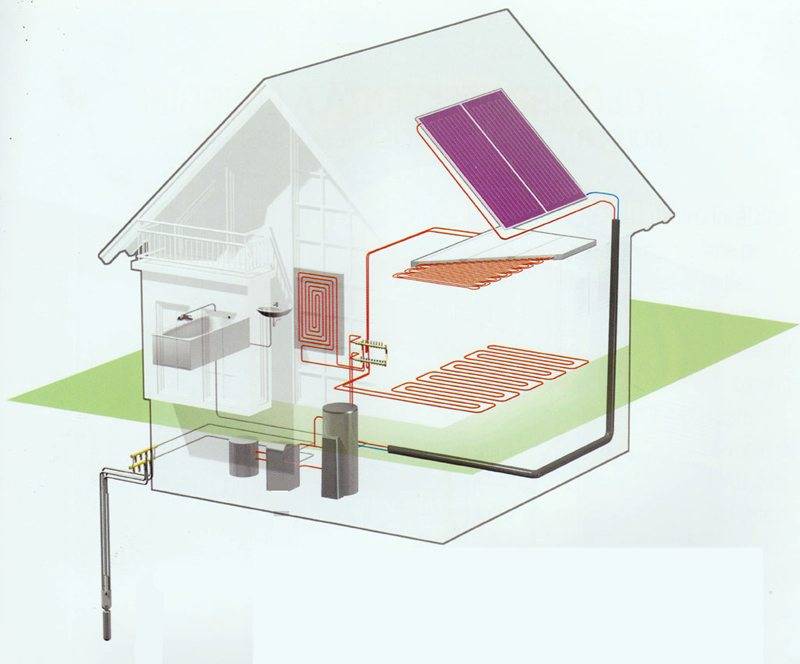
Solar collectors. For all its attractiveness, this type of heating can be considered, rather, as an additional source of heat. In winter, its effectiveness drops sharply due to worsening weather, so this option is probably only suitable for the southern regions.
Heat pumps. A relatively new technology that uses heat from the bowels of the earth, water or soil for heating. Here, the cost of installation and the payback period are frightening, and this is at least 10 years. In addition, the laying of pipes will require a considerable area on which it will be impossible to build or plant trees.
Solar collectors - cheap and economical
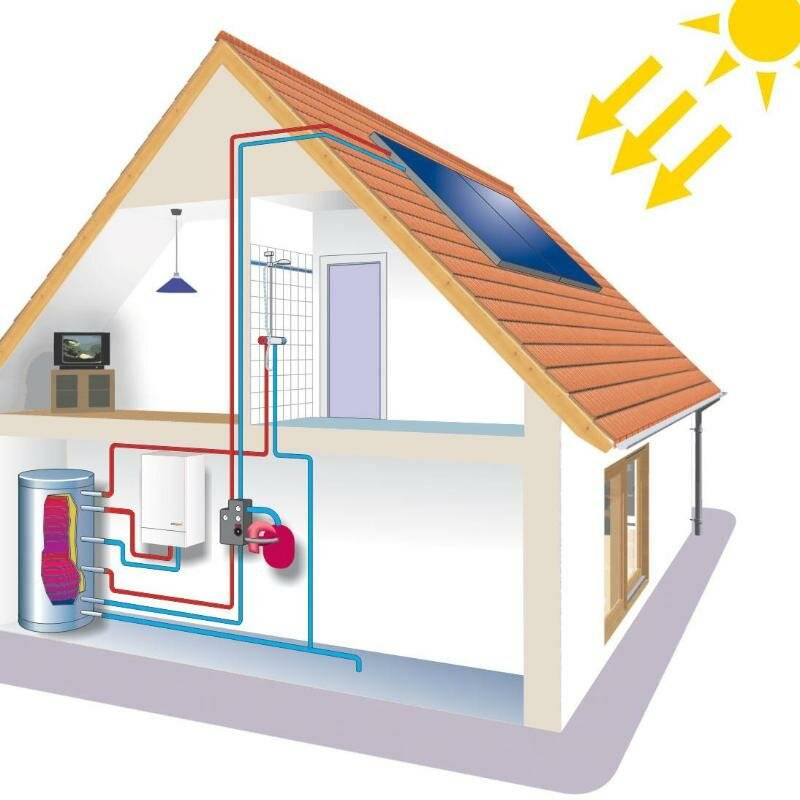
Solar collectors use the heat of sunlight to heat water, which is then sent inside the building. They consist of a panel of heat-absorbing material into which a mixture of water and antifreeze is pumped to collect heat. This mixture then heats the water in the hot water system, so solar collectors must be integrated into the existing heat distribution system.
Photo 3. Solar collectors installed on the roof of the house. Devices must be placed at a certain angle.
Such thermal systems can be useful not only in warm climates. Even a small increase in water temperature dramatically reduces the amount of energy needed to heat it. Solar collectors create favorable conditions for the start of any heating systems. This means less energy is used overall.
Infrared heaters
There are several types of heaters that use radiation (radiation) as a transfer of thermal energy. This transmission method is considered the most effective for heating a room - first, objects that stand in the way of infrared radiation are heated, and then air is heated from them, due to secondary convection.
Video description
Clearly about infrared heaters in the video:
There are three fundamentally different types of infrared heaters:
-
reflectors, in which the incandescent spiral is enclosed in a quartz glass bulb;
-
panel - in a ceramic monolithic plate "sealed" heating element;
-
film - with carbon sputtering on a polymer film.
Heating a house with electricity of the first type refers to heaters operating in the short-wave range of infrared radiation.
Disadvantages - the lowest efficiency (due to the visible part of the radiation), the lack of precise temperature control and the high temperature of the case.

The infrared panel is so safe that it can be hung on wooden walls
Film heaters are the most efficient. Usually they are used as part of a warm floor, but in principle they can be mounted in walls or on the ceiling.But it is the installation as part of the floor covering that most of all corresponds to the correct and uniform heating of the room. The operation is controlled automatically using a pair of "temperature sensor-thermostat".

If there is not enough space on the floor, then the film heater can be mounted on any free plane
Convectors
Outwardly, convectors are very similar to panel ceramic heaters, but inside the metal case there is an “open” heating element, enclosed inside a plate radiator. The fundamental difference is in the method of heating - cold air enters the case through the bottom row of holes, in contact with the radiator, heats up and exits through the upper row of holes.

Stylish convector panel looks great in a modern interior
As with panel ceramic heaters, there are two types of thermostats - mechanical and electronic. And it is the electronic operation control that ensures the accuracy of adjustment and the ability to work in several modes:
- individual, with manual control, used to heat a separate room;
- group, operation of several devices under the control of one (common) thermostat, which ensures uniform heating of a large area or the same heating mode for several rooms;
- intelligent, control with a remote control, connection to a GSM module and control using standard commands from a remote terminal (mobile communication, Internet), connection to a router and control via a local network and / or Internet.
Video description
What is better to choose: an electric boiler or an electric convector - clearly in the video:
NOBO, a leading European manufacturer of convectors, produces two compatible smart control systems for electrical appliances. Including "warm floors" (through a thermostat) and any other household appliances that are connected to the network (through a shield, a "break" in the circuit or turning on / off sockets). To do this, they produce special thermostats, socket receivers and flush-mounted relay receivers.
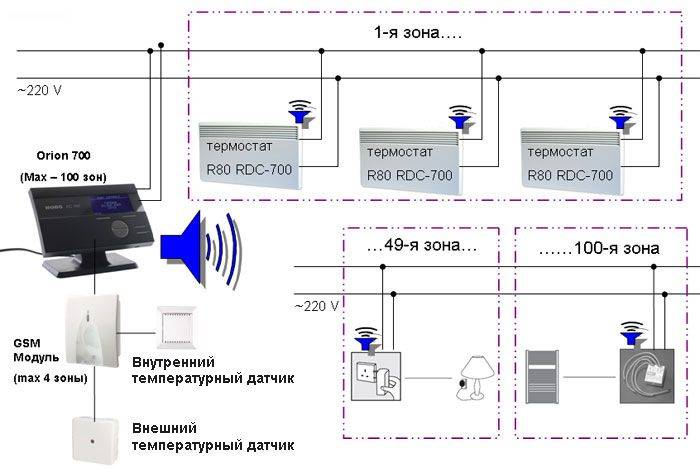
One of two control schemes for a multi-zone electrical system
As a result - how to optimize electric heating
In addition to a competent selection of heating equipment, an efficient and optimal (in terms of costs) heating system with electricity is possible only with comprehensive insulation of the house - from the basement to the roof. Otherwise, the cost of heating a house that is blown through will be much higher, even despite the high efficiency of the heater itself, and heating a house with electricity is unlikely to be cheap.
More Saving Tips
In addition to the methods discussed above, there are several related tricks that can be used to achieve the desired savings.
The following rules should be followed:
- you can not close the radiators with decorative panels, blackout curtains, furniture, clothes;
- at least once a year it is necessary to clean the boiler heat exchanger from accumulated dirt and dust;
- if the equipment is installed in an unheated room, it is recommended to perform high-quality insulation of the boiler, boiler and outgoing pipes;
- between the radiator and the wall, it is desirable to install special energy-reflecting screens made of aluminum foil;
- when using gas for heating water, it is worth installing economical shower heads;
- if the geyser is not working, the burner should not be in an active state.
Before the start of the heating season, it is necessary to check the system every time and eliminate all identified shortcomings. Common problems include air locks, leaks at the junctions of structural parts.


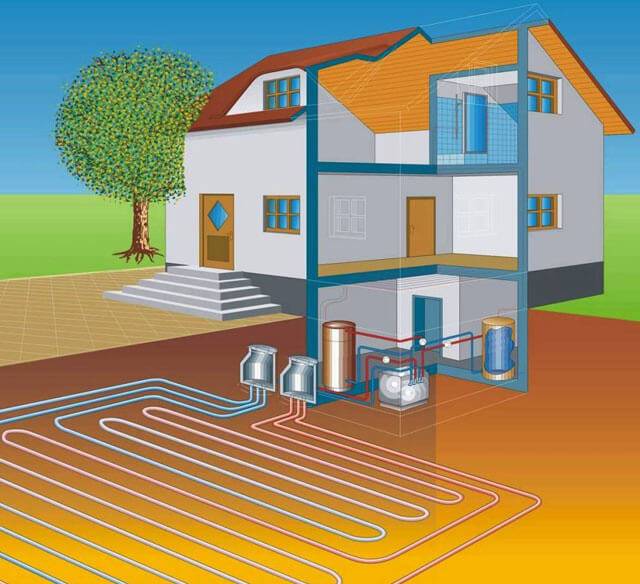




In order to save gas to the maximum, it is necessary to constantly monitor the condition of places of possible heat leakage - seal the gaps in the windows with foam rubber strips, tighten the door hinges, additionally upholster the doors, blow out the borders around the inlet and outlet openings of the pipes with mounting foam
Savings should be economical, so it is important to control gas consumption everywhere, including in the kitchen. In the process of cooking on the stove, the flame should be regulated at each stage of cooking, reducing the intensity of combustion at the right time.
For faster cooking and less gas consumption, it is recommended to cover the dishes with a lid, use special pots with grooves on the bottom, and whistling kettles.
What other appliances are available for economical heating?
There are many devices that allow, with good heating, to save the finances of consumers. These are heat pumps, and economical heating of the house with electricity, and solar panels, and solid fuel boilers or a geothermal heating system. All these options are the most economical in comparison with gas heating.
But, it is worth noting that the cost of equipment and work on its installation is very high.Also consider the cost of spare parts for an economical heating system for giving in case of necessary repairs. To reassure you, let's say that, despite the high cost, they will still justify themselves.
As you can see, there are many ways to economically heat a private house. To simplify the task, choose the most economical heating for yourself, and also use automatic energy-saving appliances.
Choice of the cheapest fuel
The second issue in saving on heating is the type of fuel used. Moreover, it is necessary to look not so much at the cost of a kilocalorie at the outlet of the boiler, but at the total cost of fuel, heating equipment and its maintenance. It is necessary to consider everything in a complex.
If we compare various water heating units, then electric boilers will be the cheapest. However, electricity bills are unlikely to please anyone later. Plus, for a large cottage, in most cases, you will have to lay an additional cable.
For a well-insulated house of 100 square meters, the existing capacities may be enough. But to heat a two-story dwelling, electric “fuel” will require much more. At the same time, standard networks were not originally designed for such loads.
Natural gas in Russia is considered one of the most economical ways to heat private houses. However, there are several nuances here. If there is already a highway in the village, then the connection to the gas pipeline occurs quickly and inexpensively.
But if the distance from the house to it is 200 m or more, then inserting into this pipe will cost a pretty penny. Plus, all approvals and obtaining technical conditions can take up to a year.
For the installation of a gas tank and equipment for it, you will have to pay from 150 to 250 thousand rubles. Fortunately, most of the companies involved in such equipment perform all the work in a couple of days.
Another fairly cheap boiler is one that runs on mining or diesel. Moreover, if fuel can be obtained at a reasonable price, then such liquid fuel boiler equipment may well become the most economical way to heat private housing.
Averaged over Russia, the options for heating a country house in the aggregate of all costs are arranged in the following order:
- Stove on wood or coal.
- Gas boiler on main gas.
- Wood pellet boiler.
- Boiler equipment for liquid fuel.
- Electric boiler.
The most economical option is a conventional wood or coal stove, provided that there are no problems with fuel in the area of \u200b\u200bresidence. The cheapness of fuel and the cheapness of equipment also affect here.
However, such a furnace requires constant supervision. And that takes a lot of time and effort. Plus, it is unlikely that it will be possible to especially increase the efficiency of the heating system connected to it. It is difficult to adjust anything or somehow control the economical consumption of logs (coal).
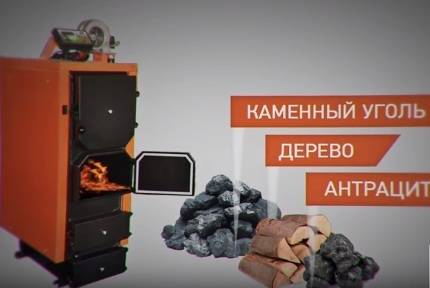
Much in the matter of the cheapness of fuel depends on its availability in the area where the house is located - in some regions coal or firewood is the cheapest, while in others gas is ready to give them a considerable head start
The most convenient and safe to use electric boiler. He does not need a chimney, plus the automation itself monitors everything and, as necessary, heats the coolant in the system.
With proper installation of electrical wiring, the likelihood of a fire with this method of heating is reduced to almost zero.He certainly should not present other problems.
However, electricity costs are frankly high. It’s also good if you can connect a two-tariff meter with a reduced night rate. Otherwise, opting for an electric boiler is only a last resort. It is difficult to call it the most “economical” due to the high costs of “burned” kilowatts of electricity.
Ways to economically heat a private house
The amount of energy required to replace the lost heat depends on four factors:
- location of the house (in colder regions, consumption is higher);
- the size of the building;
- energy efficiency at home;
- energy efficiency of the heating system.
The first factor is the main one, but it does not depend on you. The colder the weather outside, the more energy is required to maintain a comfortable temperature inside.
The size of the house is also important. A spacious room contains a significant amount of air that needs to be warmed up. Therefore, a large house requires large heating costs.
A great opportunity to save energy and money is to improve the energy efficiency of your home and its heating system. There are several ways to do this:
- choose the optimal type of heating system;
- improve facade insulation;
- repair the heat distribution system (air ducts and pipes);
- eliminate heat leakage through doors, windows and various cracks.
Water heating
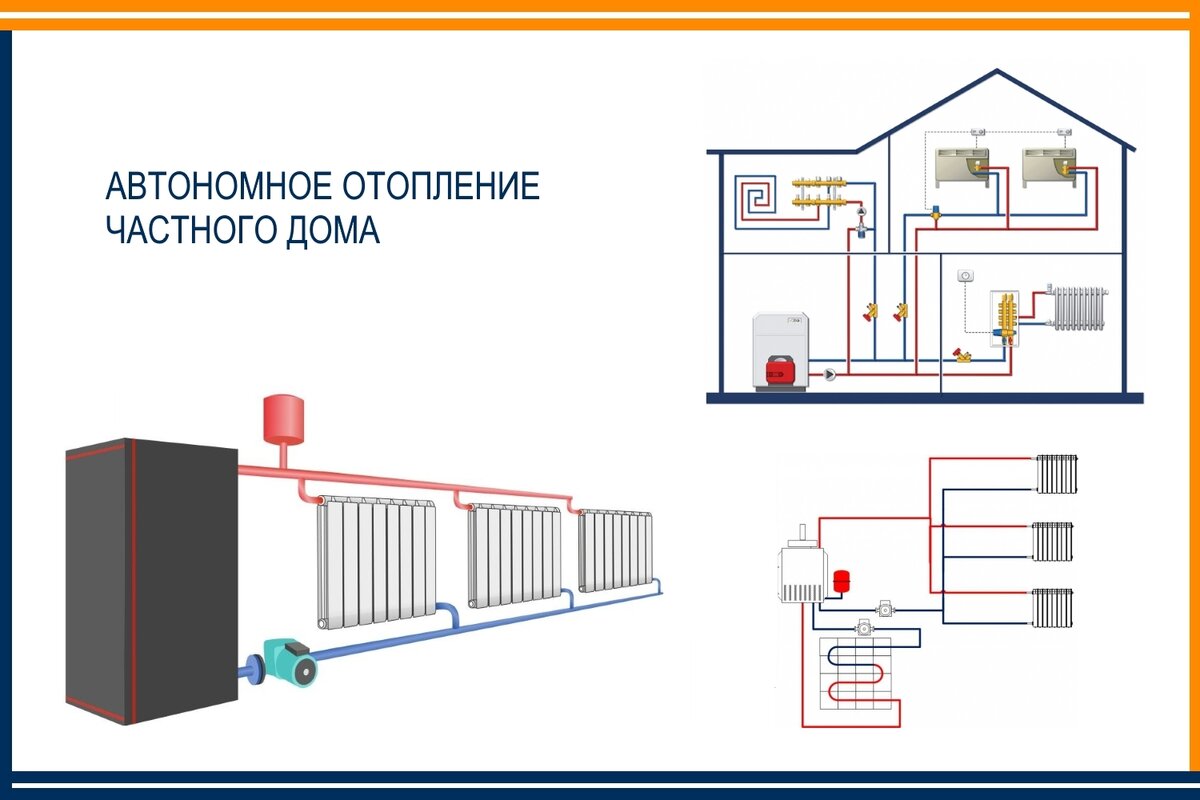
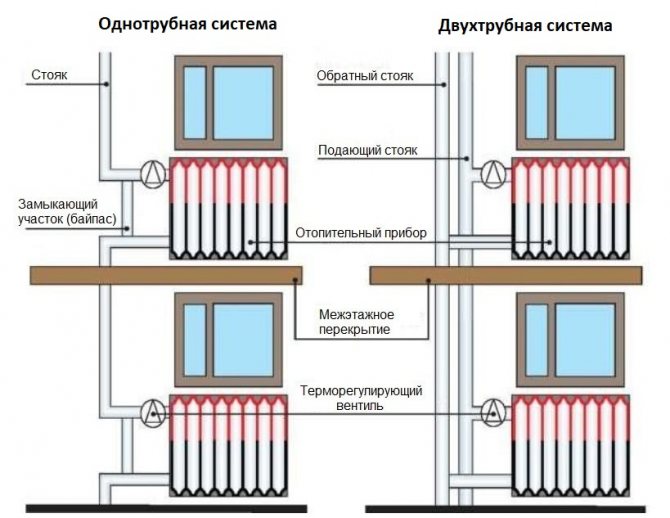
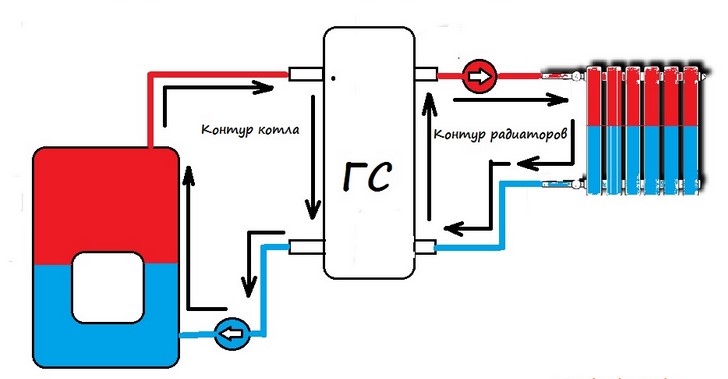
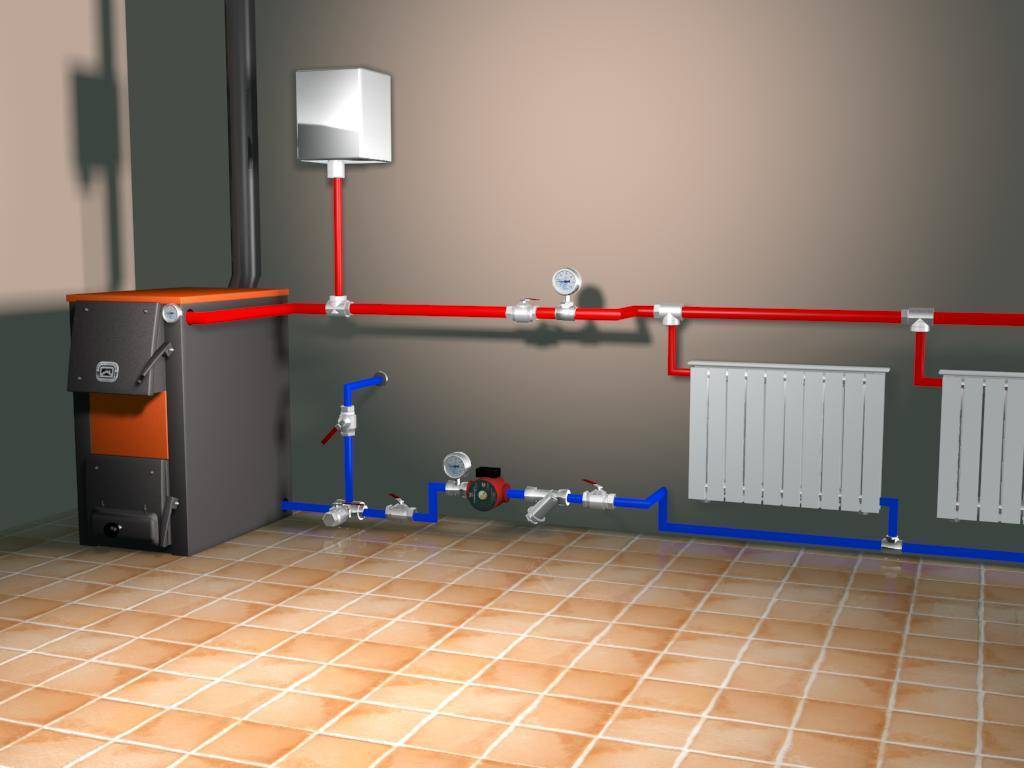
The general characteristic of this type of cottage heating is to heat water or other coolant in the boiler, after which the liquid passes through the pipes of the house, giving off the heat it receives to the radiators, after which it returns to the boiler again.
According to the types of coolant circulation, this economical method is divided into 3 types:
- with natural circulation:
- with forced circulation;
- with combined circulation.
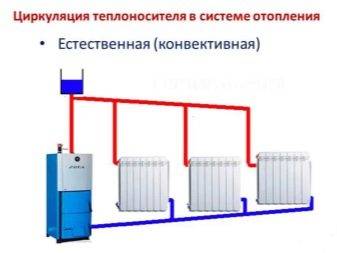
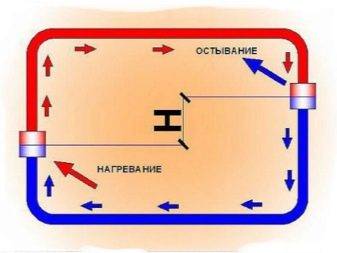
The movement of the coolant here is carried out due to the difference in the density of heated and cold water. Heated water is lighter than cold water and is therefore displaced by it in the heating boiler to the uppermost part of the heating network. Cooling slowly, it descends along the system, thereby heating the room in the radiators, and then returns to the boiler again.


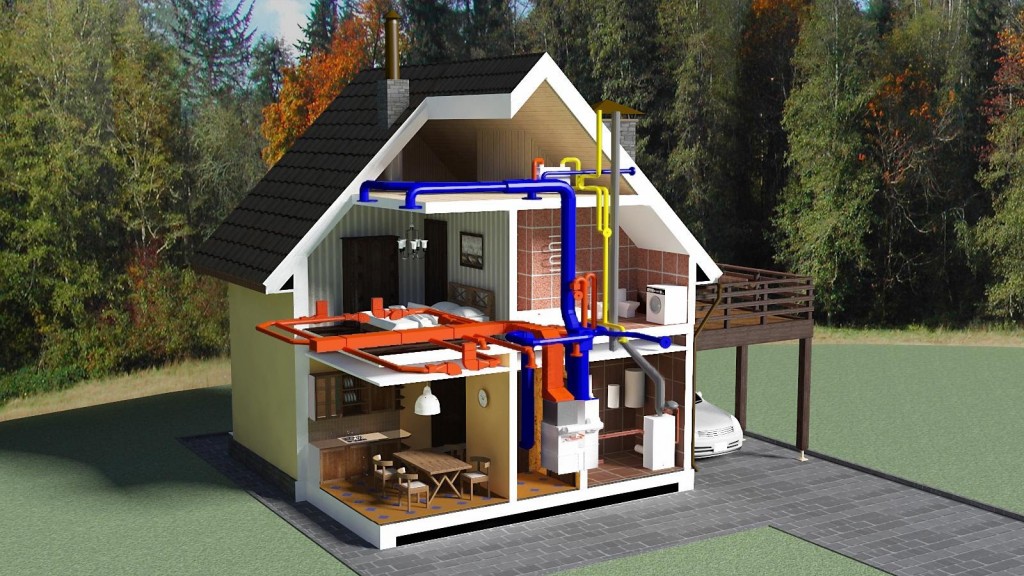



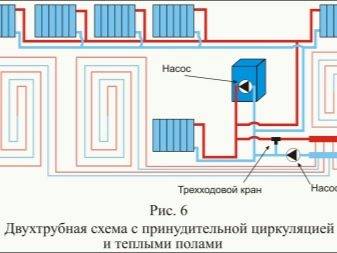
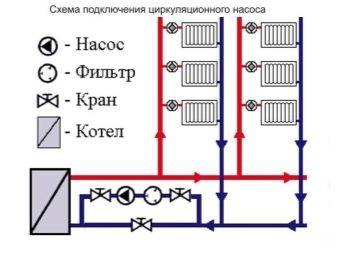
Otherwise, forced circulation heating operates.
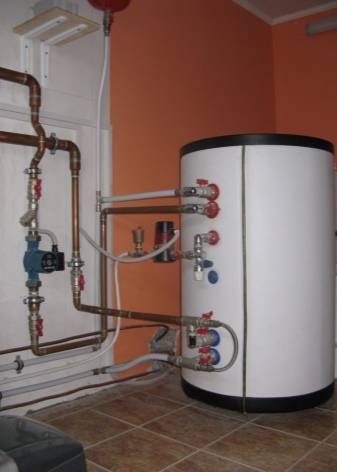
These systems will differ from natural circulation heating by the presence of a circulation pump powered by electricity. The pump can be built-in separately, or it can be contained in the heating boiler itself.
This method of heating directly depends on the circulation pump, but at the same time it increases the efficiency of the heat supply itself by 30%.
Heating with combined circulation will allow you to safely switch from natural to forced circulation.
The pros and cons of the combined circuit are the same as those of the previous two circuits, and depend on its mode of operation.
Peculiarities
The features of water heating systems include a decent selection of boilers that can work with them with high quality, but at the same time there is a relative complexity of installation compared to other methods of heat supply.
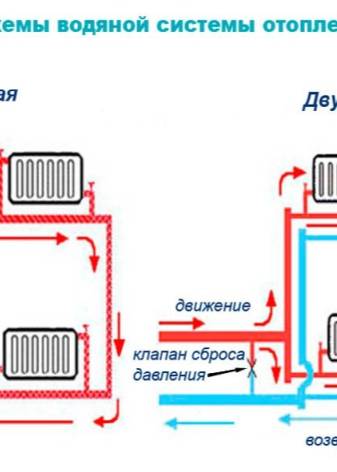
Advantages and disadvantages
Positive features of natural circulation:
- independence of the system from the supply of electricity;
- durability.
When evaluating the profitability, it is necessary to take into account the negative aspects of such schemes:
- the inability to heat 100 m2 of the house due to excessive hydrodynamic resistance of the networks, if they are long, the water ceases to circulate normally in them;
- the need to operate the boiler in a constant mode;
- Difficulties with temperature control in rooms.
Positive aspects of forced circulation schemes:
- installation requires much smaller pipes than in gravity heating systems;
- efficiency due to the operation of the pump is increased by 30%.
Disadvantages of schemes with forced circulation:
- in addition to the consumption of the main fuel for heating the coolant, electricity will be consumed for the operation of the circulation pump;
- if the power fails, the system will not be able to work.
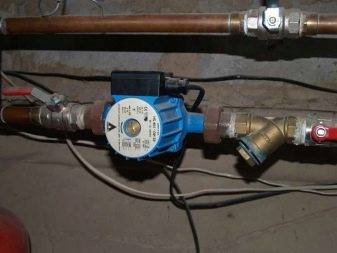
Warm floor
Underfloor heating is the oldest form of central heating. Even the Romans used an underfloor heating system that warmed buildings and baths. Today's underfloor heating system is gaining more and more popularity in Russia.
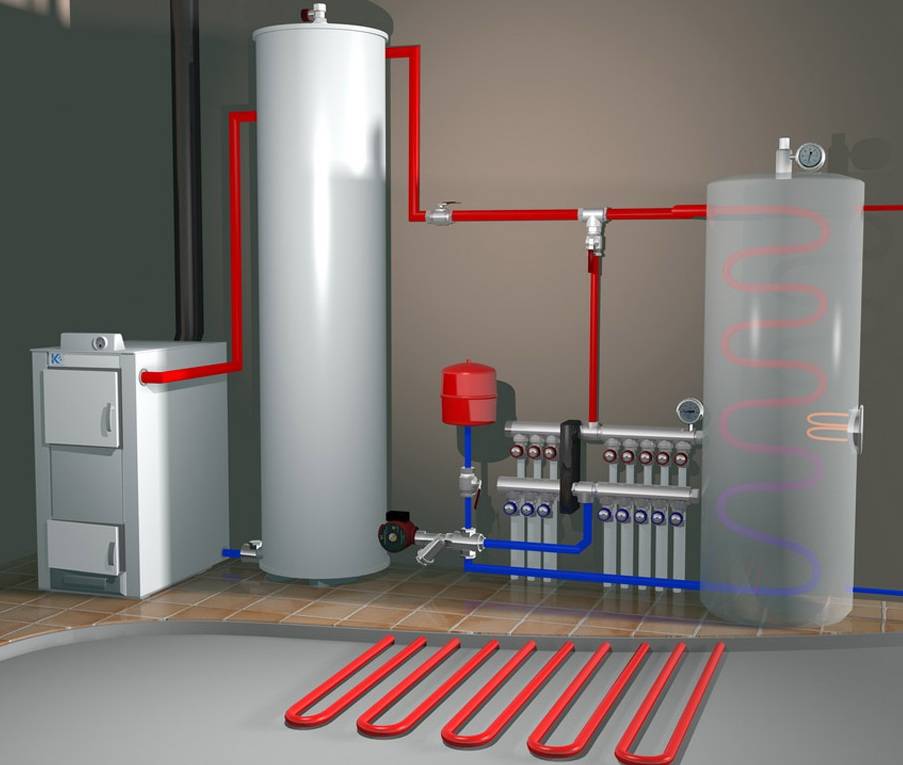
Underfloor heating is a system that heats a house through a heated floor covering. There are two types of such a system. In the first type, warm water heats the floor by passing through a pipeline laid under the floor (“wet” system). In the second, the floor is made warm by means of electric coils placed under it (a "dry" system).
Concrete floor slabs heat up, and heat is radiated from under the floor into the room. A "wet" system can be connected to a gas boiler to heat water. This will help to significantly save on cheap gas fuel.
Attention! This type of heating requires extensive construction work. Therefore, its installation is best done during the construction of the house.
Building insulation
Remember, in order to spend less money on heating a room, it is important to make sure that this heat does not escape through the walls. Simply put - before you choose economy heating for your home, you should insulate it
The house can be insulated ready-made or at the stage of its construction. Thanks to good thermal insulation, you will start heating less often, and the system will maintain normal performance for many years. This will significantly reduce fuel consumption. Good insulation of the house - low heat loss and economical heating of a private house. When building a well-insulated house, it is important to make a foundation in compliance with all norms. Use thermal insulation materials from the best manufacturers. For laying the foundation foundation, purchase building blocks, and insulate the facade with polystyrene foam. Today, expanded polystyrene is the only material with low thermal conductivity. It is the best material for insulating the outer walls of buildings.
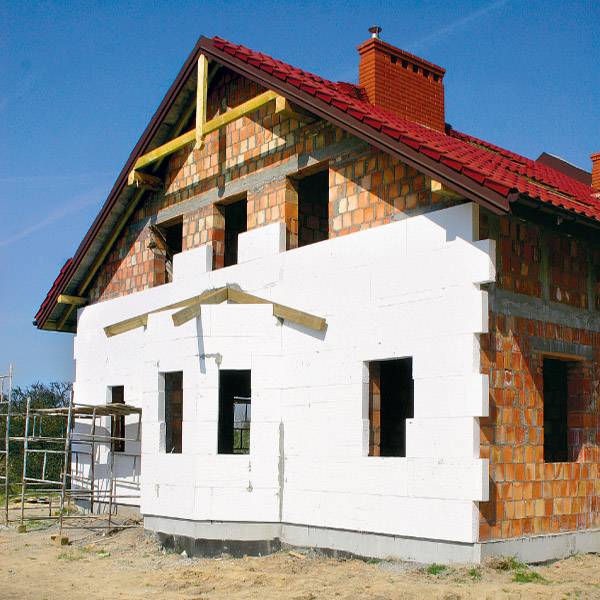 Insulation of the house with foam
Thermal insulation materials of good quality and at an affordable price will help you improve your home with minimal financial outlays. For greater reliability, consider an example. A well-insulated room consumes at least 50% less energy. We compare an ordinary building with an insulated one. To heat the house before the insulation, you spent 100 kW, and after that 50 kW will be enough for you.
What does it mean? This means only one thing, you will save money on reducing the consumption of electricity from which the heaters are powered, thereby your economical home heating system will justify itself.
After high-quality insulation of the house, you can purchase any type of heating equipment.It will be possible for you to use solar panels, heat pumps or solid fuel boilers without gas.
Determine the type of fuel used
Gas boilers have the lowest ratio of the initial purchase and installation cost to operating costs. In addition, they are completely autonomous and can work for weeks without human intervention, they do not require the preparation of fuel and the organization of a place for its storage. Therefore, if a gas main is laid near the house, we recommend choosing a gas boiler without hesitation.
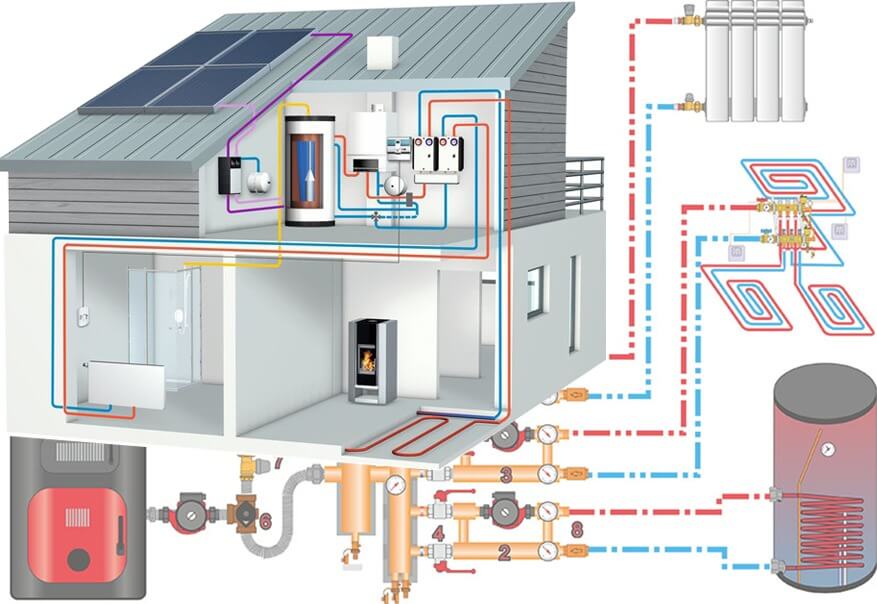


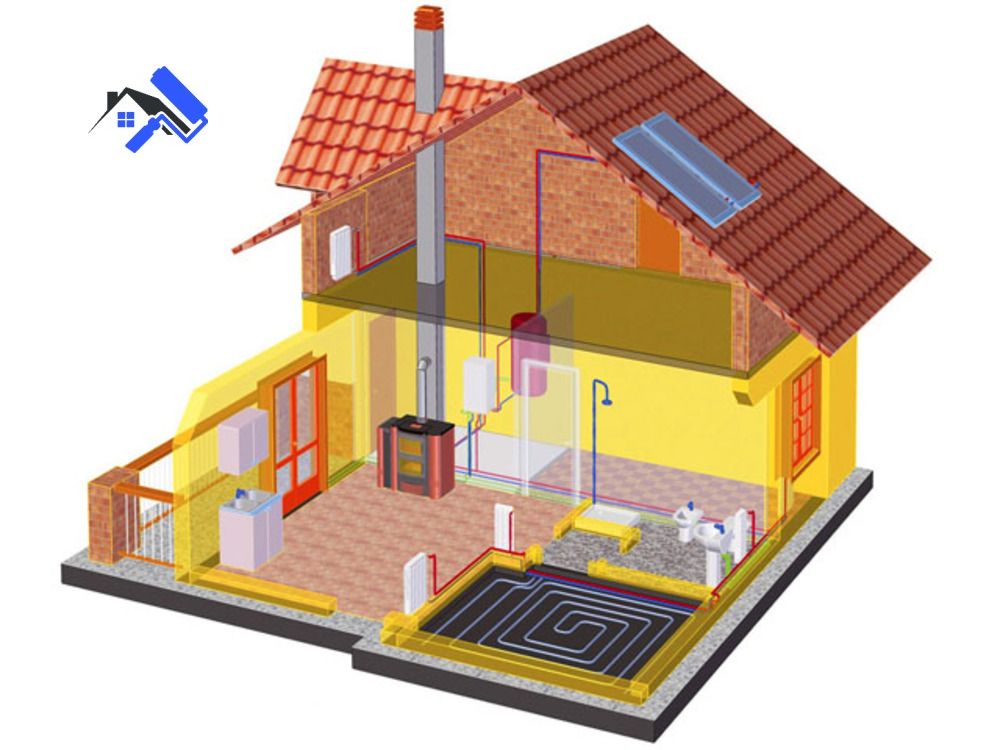


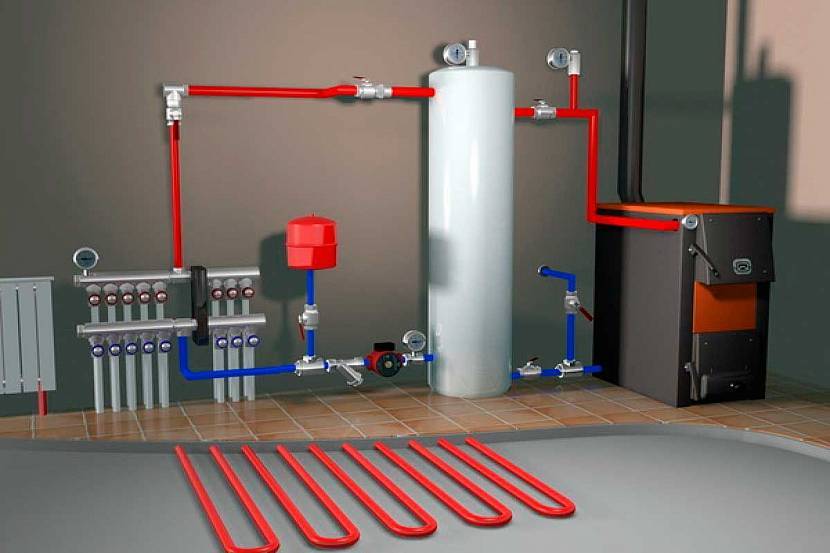

If there is no gas main, the most budget option would be solid fuel models: wood, coal or universal: burning wood, coal, peat, and pellets
One has only to pay attention to the material of the heat exchanger, it is desirable that the thickness of the steel be 5 mm or more, the service life of such heat exchangers is much longer (from 10 years)
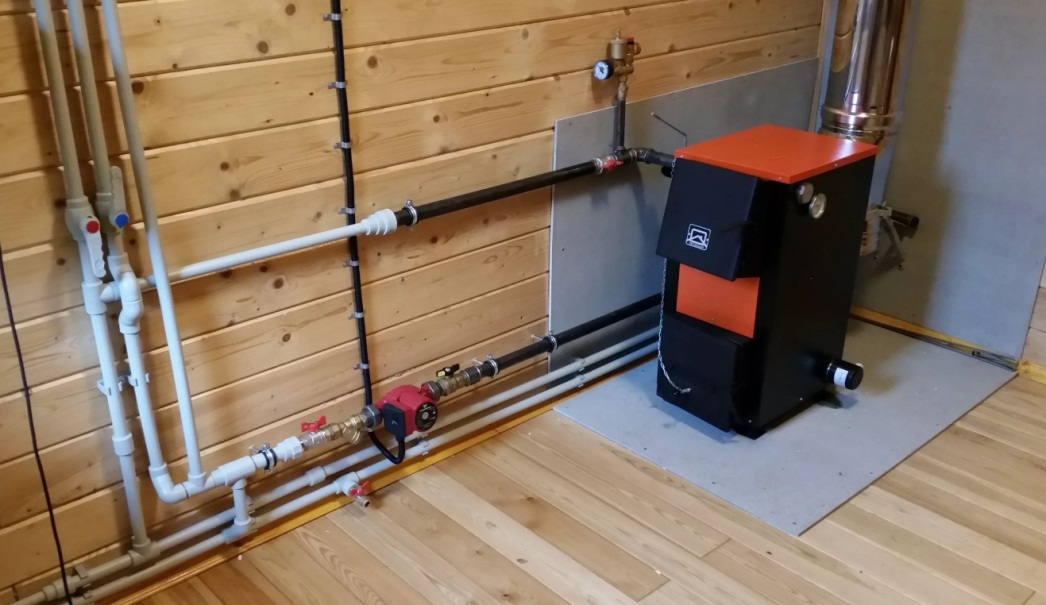
 The simplest and most inexpensive design of a solid fuel boiler using the example of the Warmos series of models.
Diesel boilers and waste oil boilers have an initially high cost, and operating costs depend on the price at which mining or diesel fuel can be found. Electric boilers should not be considered as a budget option, since their operating costs, even at nightly electricity rates, are the highest. For heating a house of 100 sq. m. may require from 8 to 12 thousand rubles / month.
Solar collectors
Unlike solar panels, collectors are designed to heat water. There are two forms solar collectors - flat and tubular. The most efficient models of these devices can process up to 85% of the energy received from sunlight - and this is quite a high figure.
However, collectors also have a number of disadvantages. First of all, it is worth noting that solar collectors can only work during the daytime. In addition, even during the day, the efficiency of the device may vary depending on external conditions - cloudy weather significantly reduces the efficiency of the collector.
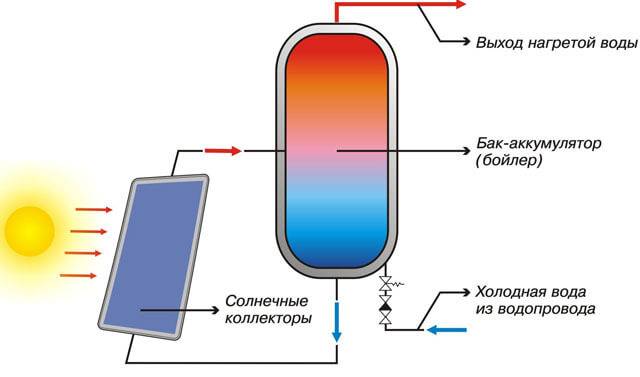
Savings when using these devices is provided by solar energy - it is absolutely free, i.е. direct heating costs are zero. If we consider this issue from this angle, then we can make an erroneous conclusion that solar collectors are the most profitable heating possible. With a long sunny day, a 60 m2 collector battery generates up to 240 kW / h per day. Even a small collector under suitable weather conditions can significantly increase the efficiency of heating.
Conclusions and useful video on the topic
When choosing the most economical heating option for your cottage, you should take into account many factors and parameters, and the selection of videos below will definitely help you with this.
Which heating is better:
What fuel is the cheapest to heat a country house:
How much does gas and electric heating cost:
There is no universal option for the cheapest and most economical heating. For each particular house, it is necessary to calculate all the costs of fuel, equipment for heating the coolant and the arrangement of the heating system as a whole.
Often you have to build on the availability of a particular fuel, and only then select a boiler for it. Plus, you should definitely not forget about the high-quality insulation of the cottage and pipes to the radiators.
Share with readers your experience in improving the efficiency of the heating system. Please leave comments on the article and ask your questions. The feedback form is located below.