
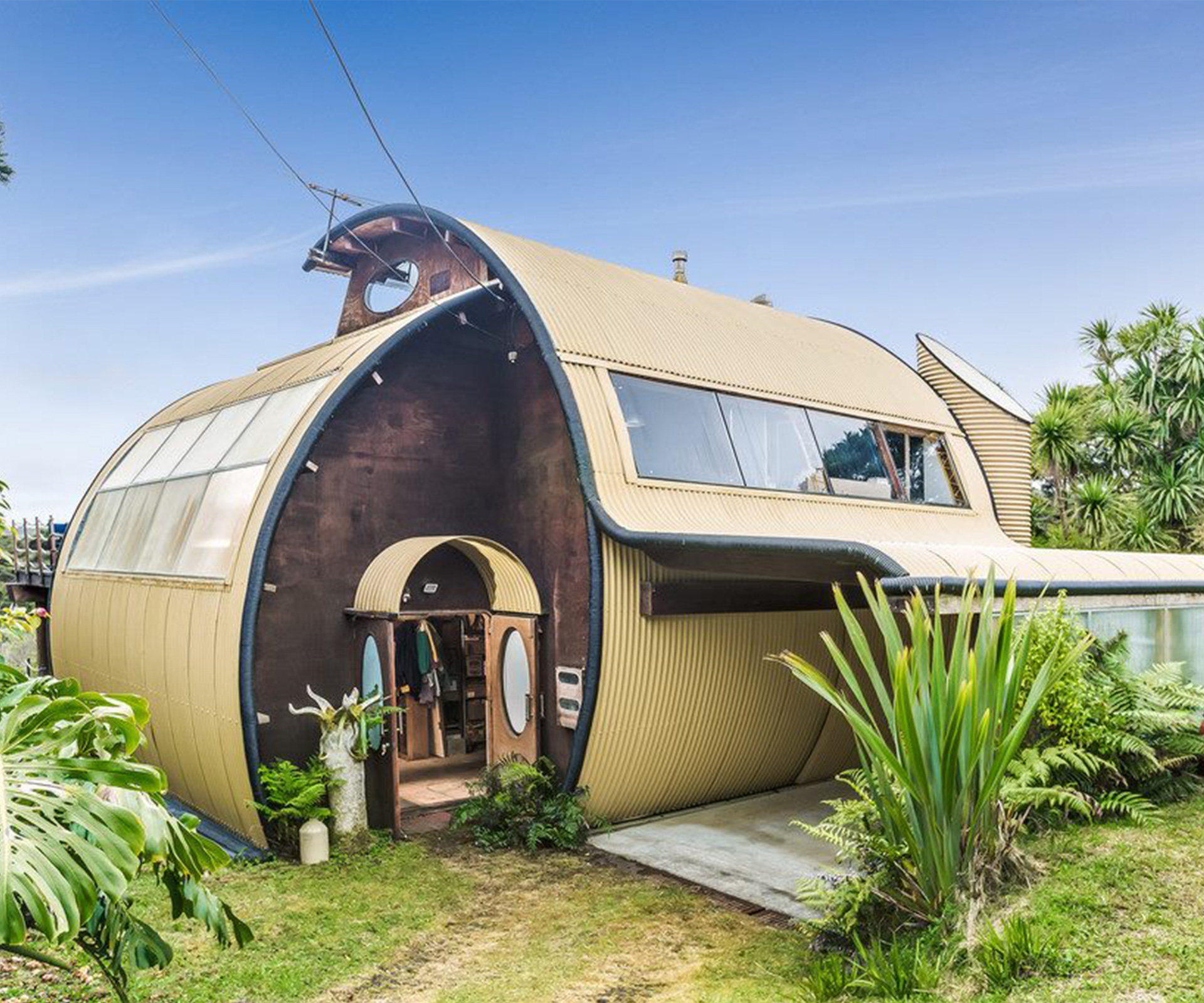
- Ecology at home
- Eco house materials
- General Tips
- Biogas devices
- What materials are used for ecological construction?
- Building a log house
- Straw house building
- Building a house from straw and clay
- Packed earth construction
- Construction of an eco-house from bags of pressed earth
- What are cavitation plants
- How to make an eco-house with your own hands
- Ventilation system
- Smart home system
- Features of insulation and heat supply
- What is an Ecohouse?
- Heat pump
- DIY construction
- Location selection
- Eco house thermal insulation
- Foundation
- Walls and cladding
- We build an eco-house from logs
- Buildings from glass containers
- Conclusions and useful video on the topic
Ecology at home
Modern man spends most of his time at home. Therefore, everyone wants their home to be not only comfortable, but also safe. Studies have shown that in many apartments the air environment is much more polluted than outside the window. In order to reduce the content of harmful substances in the air, doctors advise airing the living space at least twice a day.
The ecology of the house depends not only on air, but also on finishing materials, raw materials from which furniture is made, radiation from household appliances and many other factors.Mold and fungus under wall decoration, as well as dust, contain a large number of harmful bacteria. Wiring done incorrectly, together with a large number of household appliances, form electromagnetic radiation, which is many times more than permissible. Many surrounding objects can serve as sources of radiation. And tap water is not of high quality. Contains such harmful elements as iron, chlorine and mineral salts.
The ecology of the house requires materials that do not contain toxic substances. Furniture from natural raw materials, without chemical impurities. Get rid of old furniture. It can serve as a source of bacteriological contamination.
To create a safe home, it is important to use air and water purifiers. They will help you clean up your house.
The problem of the ecology of a dwelling depends on the area where it is located. Housing must have a good soundproofing and sound absorption system. The environmental friendliness of the home environment has a positive effect on the health of the whole family.
Eco house materials
An alternative to the current "elite" housing can be the construction of houses from environmentally friendly materials: wood, straw, clay, shell rock, earth (compressed earth in the form of bricks), and .. aerated concrete (yes, although this material is new, it is quite environmentally friendly if the technology is observed without the use of harmful additives).
Such structures may be more labor-intensive during construction, but at the same time they are less expensive and cheaper in operation. They are built not on flat areas, under which whole oak forests are cut down, but harmoniously fit into the environment, preserving its originality. Trees serve them as natural protection from cold northern windsand shade the terrace on hot summer days.
Houses made of straw or adobe blocks are several times warmer than brick houses, so the cost of heating them is much less. The material from which they are made is inexpensive and easily renewable. During their construction, the use of any heavy equipment is not required. All these arguments speak in favor of "green" construction. But the most significant, in my opinion, is the positive impact on the health of people living in the house, especially allergy sufferers and asthmatics.
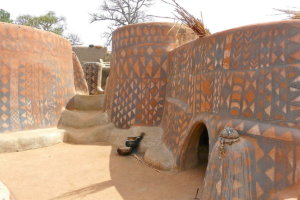 And these are traditional adobe African dwellings
General Tips
When choosing materials, in no case be guided by fashion or advertising on TV, but by common sense and personal gain. Even environmentally friendly materials can cause inconvenience to your family members with increased allergic sensitivity.

Ecohouse in the Canary Islands
Also, carefully consider your budget. And remember that eco houses need to be constantly looked after, monitor their condition. This means that rarely visited buildings (country houses) need to be built more thoroughly. In houses of permanent residence, but with a large population, strength characteristics are a priority: increased use of individual elements can lead to accelerated wear.
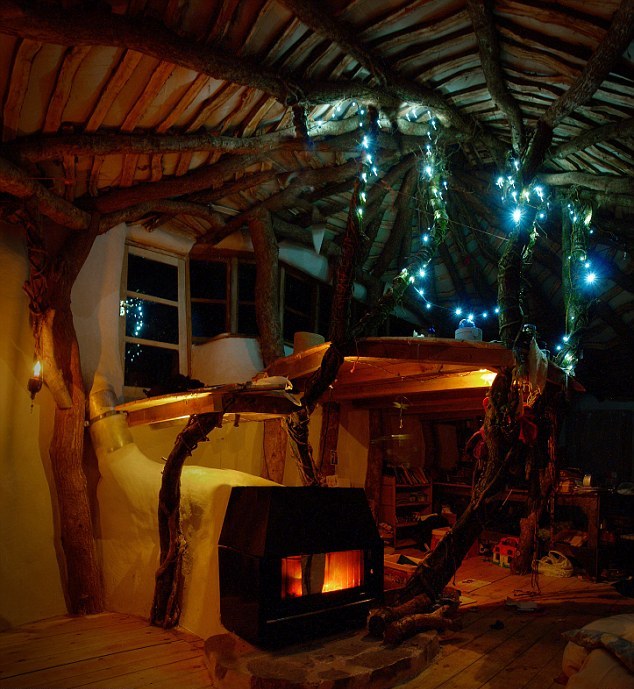
Ecohouse Simon Dale
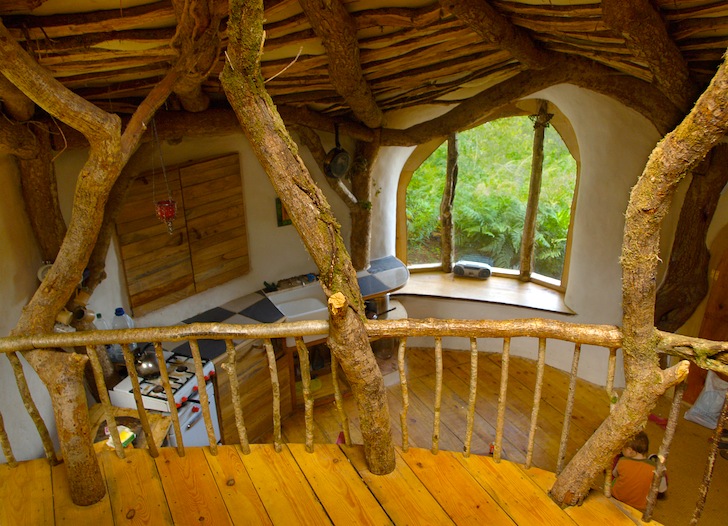
Ecohouse Simon Dale
Be sure to remember the frolicking children, their playfulness and curiosity. Until they have grown, refrain from an abundance of combustible materials (straw, wood). Although in other cases this solution is more than perfect!



Biogas devices
In order for biogas gas generating plants to work most efficiently, the substrate that is loaded into the reactor must be crushed. When processing plant waste (branches, leaves, weeds), garden garbage grinders are used. Among them there are quite powerful units that can turn branches up to 20-25 cm in diameter into small chips.
For grinding food wastethat enter the sewer system, food waste grinders are used. Such a device is connected to the kitchen sink and connected to the sewerage system. Shredded waste is loaded into a container for biogas production - a gas generator. The substrate is mixed with a certain amount of water and substances are added to it that will accelerate the process of biological decomposition of waste. The biogenerator constantly maintains a temperature of about +25…+30 degrees. Several times a day, the contents of the tank are automatically mixed.
About a week later, an active fermentation process begins in the bioreactor, accompanied by the release of biogas. Next, the biogas enters the wet gas holder, which is a container filled with water. A cap is placed in the water, to which tubes from gas generating systems are connected. When the cap is filled with gas, it floats to the surface, turning on the compressor, pumping the resulting gas into the gas storage.
What materials are used for ecological construction?
Today, it is possible to build ecological housing from many materials. For example, successfully used: logs, straw, adobe, clay, clean compacted earth or earth in bags.At first glance, all these eco-friendly materials seem unreliable, but with the right construction technology, the house turns out to be strong and durable. Let's analyze each material in more detail.
Building a log house
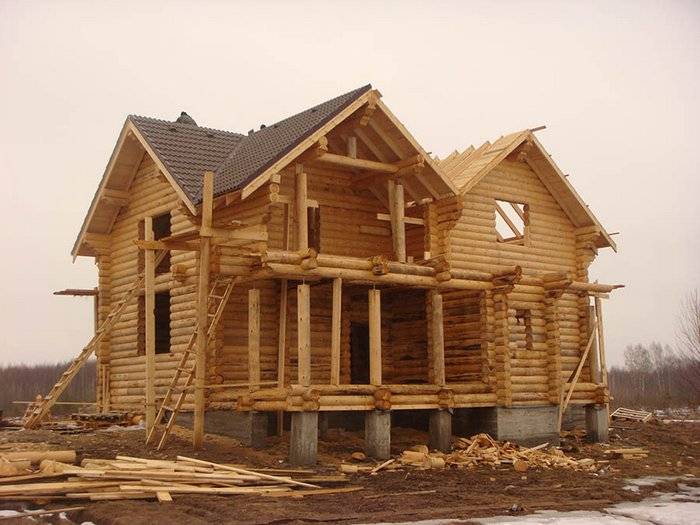 It is not so easy to build a house from logs, it will require the use of manual work.
From a distance, the walls of a log house resemble stone ones, but if you look at the building from a close distance, it becomes clear that the house is wooden. The construction process takes place by laying logs fastened together with a lime-cement mortar. From the material, species of soft trees are used, for example, cedar or pine. These rocks have a high resistance to expansion or contraction, and are also able to provide high thermal and sound insulation. It is not so easy to build a house from logs, it will require the use of manual work, but if the structure is built correctly, it will meet all your expectations.
Straw house building
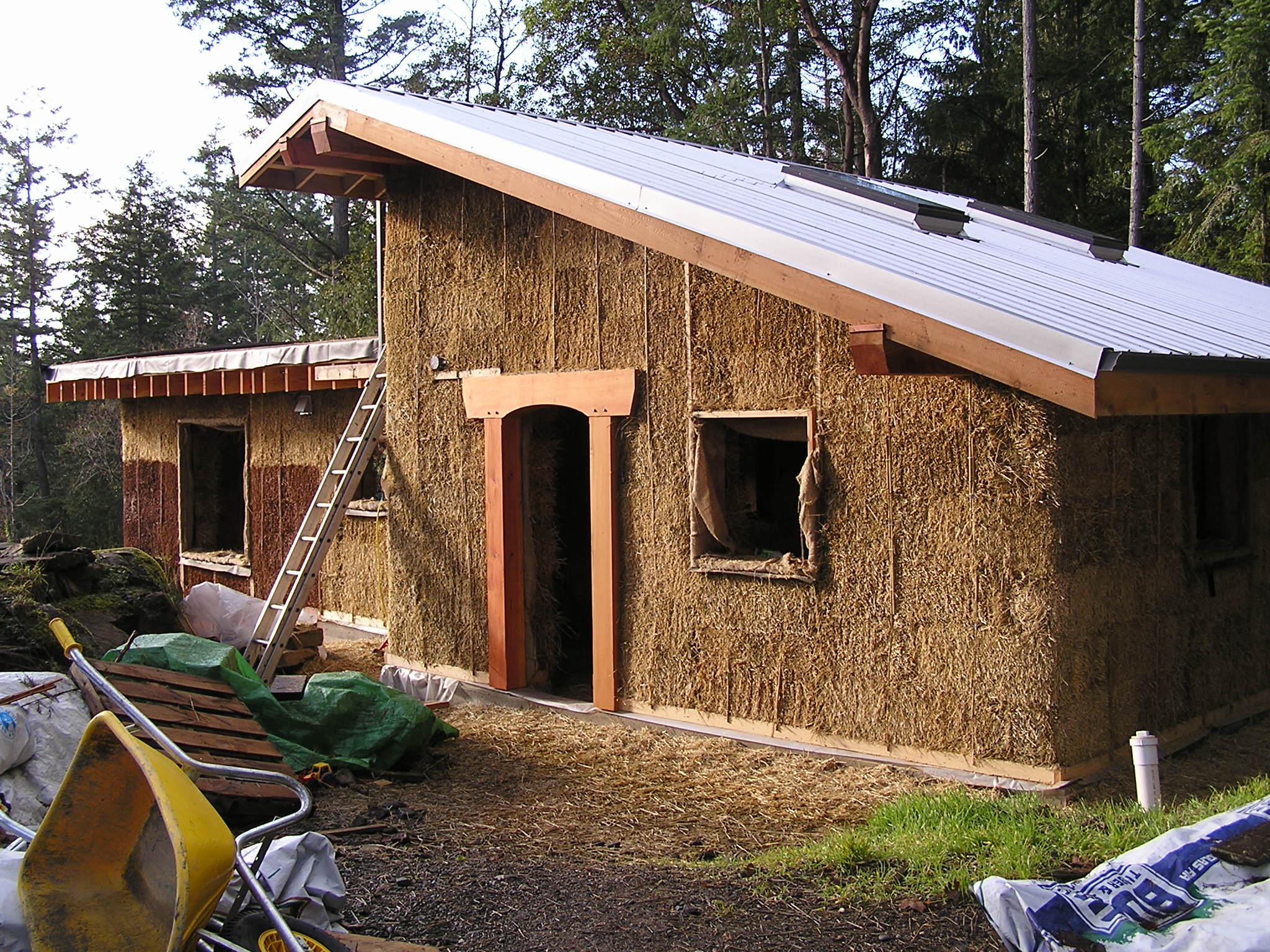
Most skeptics will immediately say that straw is not the best material from which you can build an eco-friendly house. However, pressed straw in bags can be used to build a solid structure with excellent insulating properties. The construction process consists of laying pressed straw on a masonry foundation, which are fixed with wooden studs. The outer surface is faced with lime or ground plaster, which is not able to pass air. This will allow the walls to breathe and eliminate the appearance of moisture in the straw. As a result, you get an environmentally friendly house made of straw, which has high fire-resistant qualities.
Building a house from straw and clay
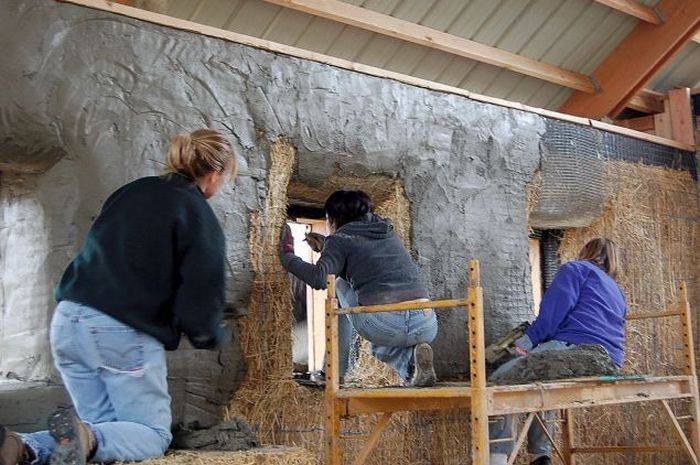 Inside, the house is plastered, and the outside is insulated with straw or reed.
This type of construction is also popular and reliable. The construction process is that clay is mixed with sand and straw. A frame is erected, and walls are built with the help of adjustable formwork. The inside is plastered, and the outside is insulated with straw or reed. Due to this, the design is light and has high thermal insulation characteristics.
Packed earth construction
In addition to the environmental friendliness of the material, such a house is fireproof, durable, reliable, and most importantly resistant to attack by various insects. Such designs made from environmentally friendly materials have become very popular in warm and dry places such as Australia. The construction process consists in the fact that the walls are erected from blocks of pressed and wet soil. You can build such a house on your own, or seek the help of specialists. In any case, such a design will be reliable and will last for more than a dozen years.
Construction of an eco-house from bags of pressed earth
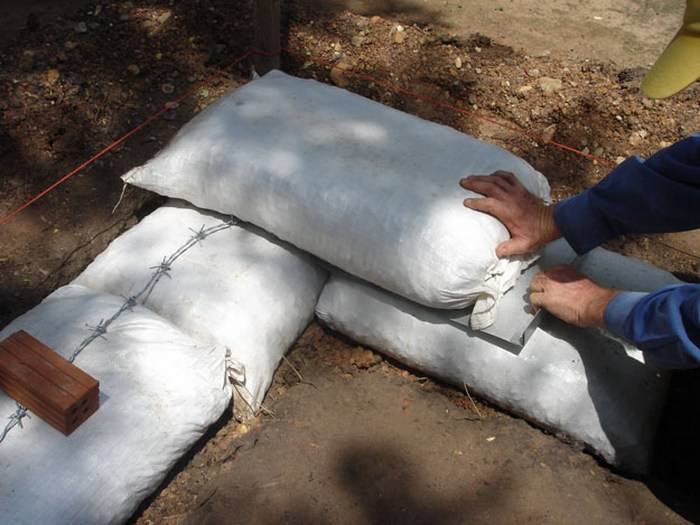 In order to make an eco-friendly house, you only need ordinary earth and polypropylene bags.
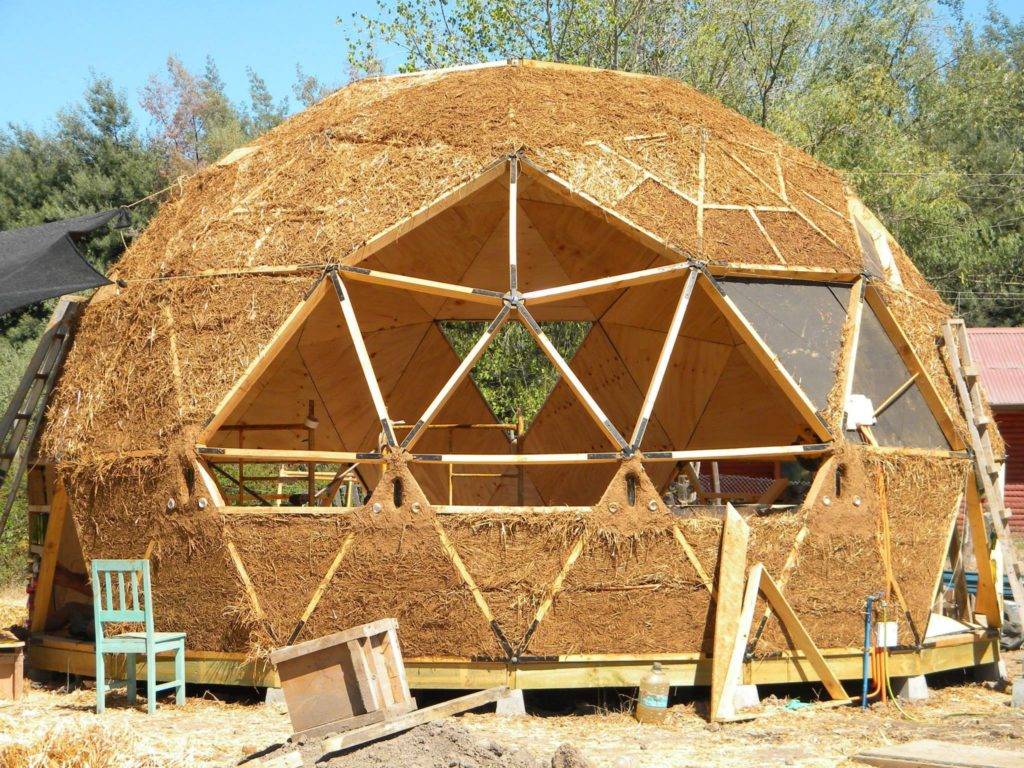
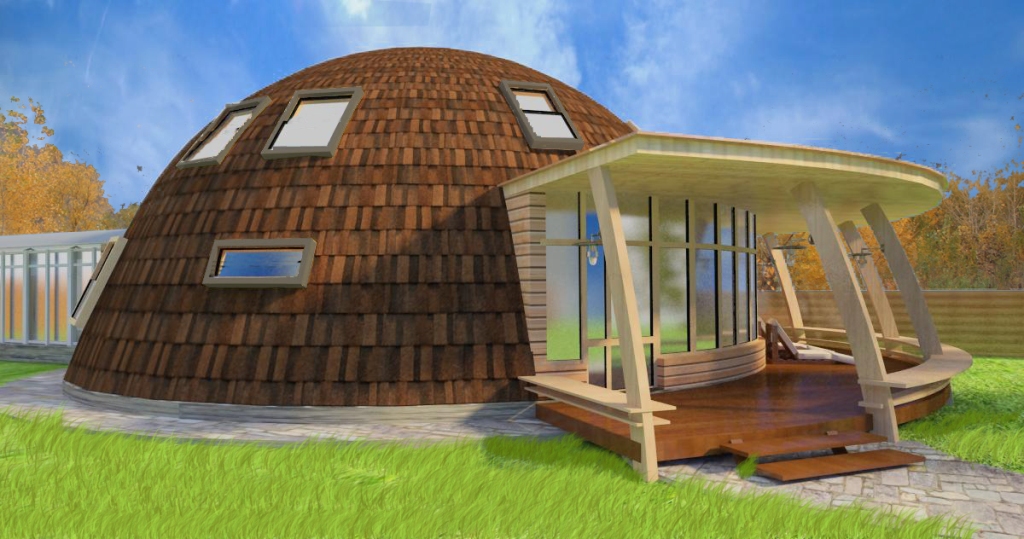
In order to make an eco-house, you only need ordinary earth and polypropylene bags. This type of building is the cheapest. The construction process consists in filling wet earth into bags that are tightly tamped. The use of bags makes it possible to build complex structures such as domes, rounded structures and even underground structures.
What are cavitation plants
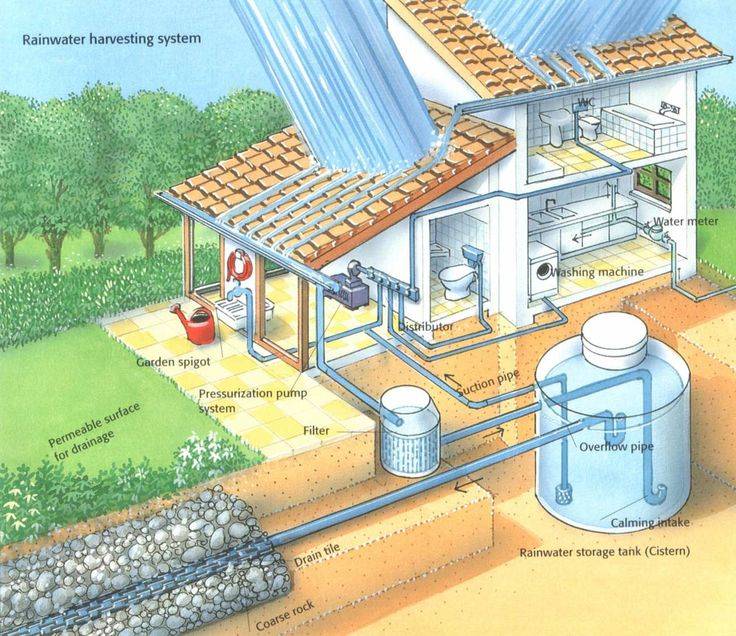
Cavitation plants are used for houses that are far from cities and are needed for water purification.If you live in an eco-house, then the water should be as clean as possible for consumption.
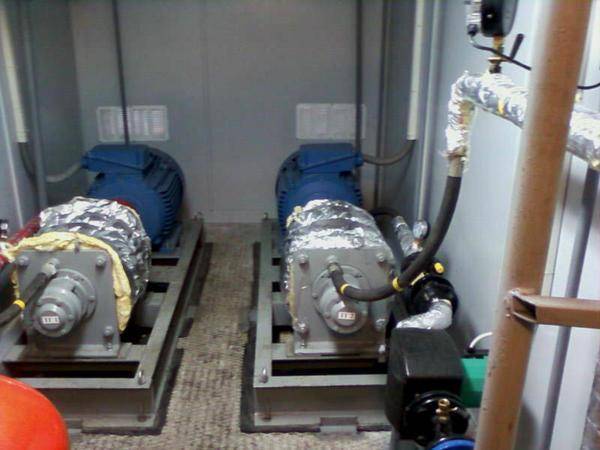
Water goes through the filter, then crosses the heat exchanger and tends to the hydrodynamic system. In this system, water is treated by cavitation. Then it goes back to cool, and then it is filtered again. Energy consumption is reduced by 40-50 percent. In such a filter, you can additionally use coal or a silver cartridge. They will improve the softness of the water. Therefore, purchase such installations for your home.
How to make an eco-house with your own hands
You can make an eco-house with your own hands if you have construction skills or are deeply familiar with this topic. Otherwise, you will have to dive into the eco-theme with your head. Alternatively, you can call specialists who will quickly and professionally make an eco-house.
There are several options for making an eco-house with your own hands. Each of them depends on the selected materials. You can make a house even without special materials, but using only improvised means.
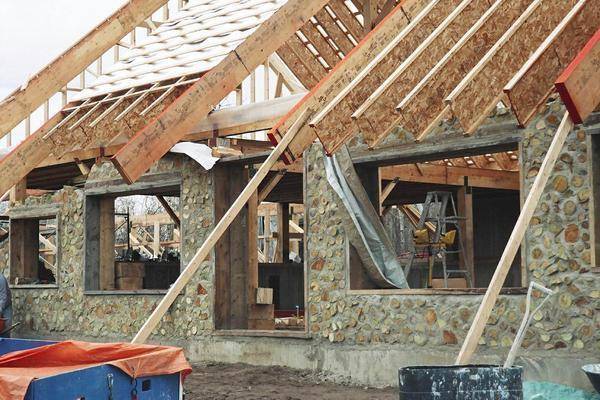
- Logs. Timber construction is a good option. For its construction, I use trees or materials that remain after the sawmill. For logs with a diameter of 30-90 cm, structures can be used both without a frame and with a frame.
- Rammed earth. One of the old technologies used today. In terms of reliability, the earth is almost identical to wood logs. To make such a house, you need to mix the earth with clay, gravel and concrete. After pressing this mixture, a solid material is obtained. In addition, it can regulate the temperature of the house. In the cold, such housing will give off heat, and in the warm - cool.If we build an eco-friendly house from the earth, then it will still protect you from microorganisms.
- Straw. The material has strength and good thermal insulation properties, despite the fact that it is straw. The material is usually laid on top of a stone foundation. Packets of compressed straw must be fastened together with bamboo poles. This will give strength to the structure.
- Hemp. Used as a heat insulating material. It is a natural and non-toxic plant. Using hemp in an eco-house will save you a lot. And you will spend less money on heating. At the same time, mold or microbes do not appear on the material.
- Adobe. It is made from clay, straw and sand. When the mixture hardens, it becomes strong and strong. Therefore, buildings of any complexity can be made from them.
These are the main eco-friendly materials from which the house is made. As you can see, each material has its own characteristics.




Ventilation system
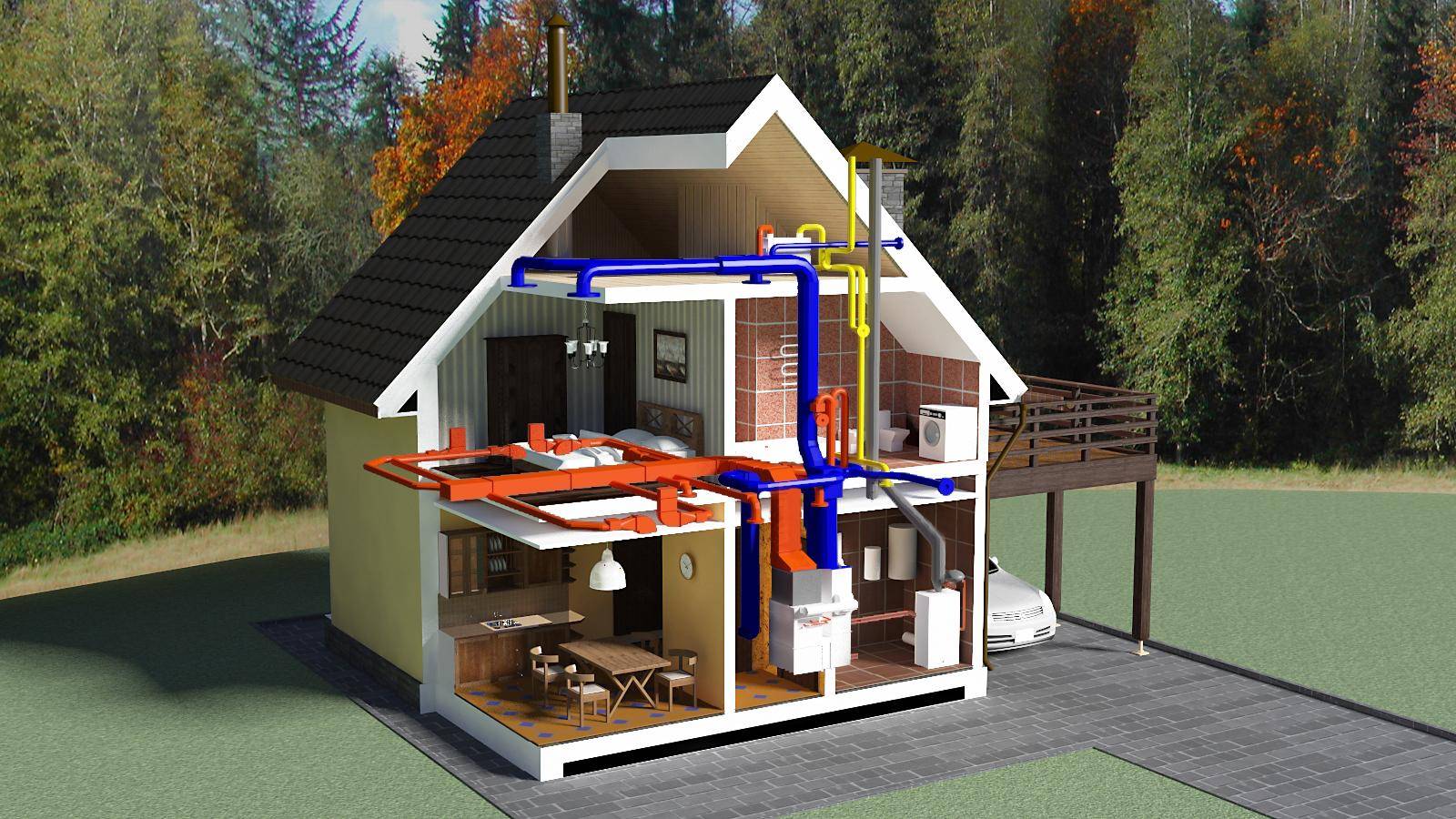
In any home, the most important issue is the arrangement of the ventilation system, since the health of the microclimate depends on it.
The recuperator regulates the ventilation in the eco-house
A heat exchanger is a device that circulates air and at the same time retains heat inside a building. That is, it works on the principle of recuperation of heat flows from ventilation. Therefore, there is no heat loss through the ventilation ducts, as if exhaust fans were installed in them. Supply fans bring cold air into the premises, which requires energy to heat it. Thanks to its capabilities, the recuperator is becoming more and more popular among owners of private houses.
Smart home system
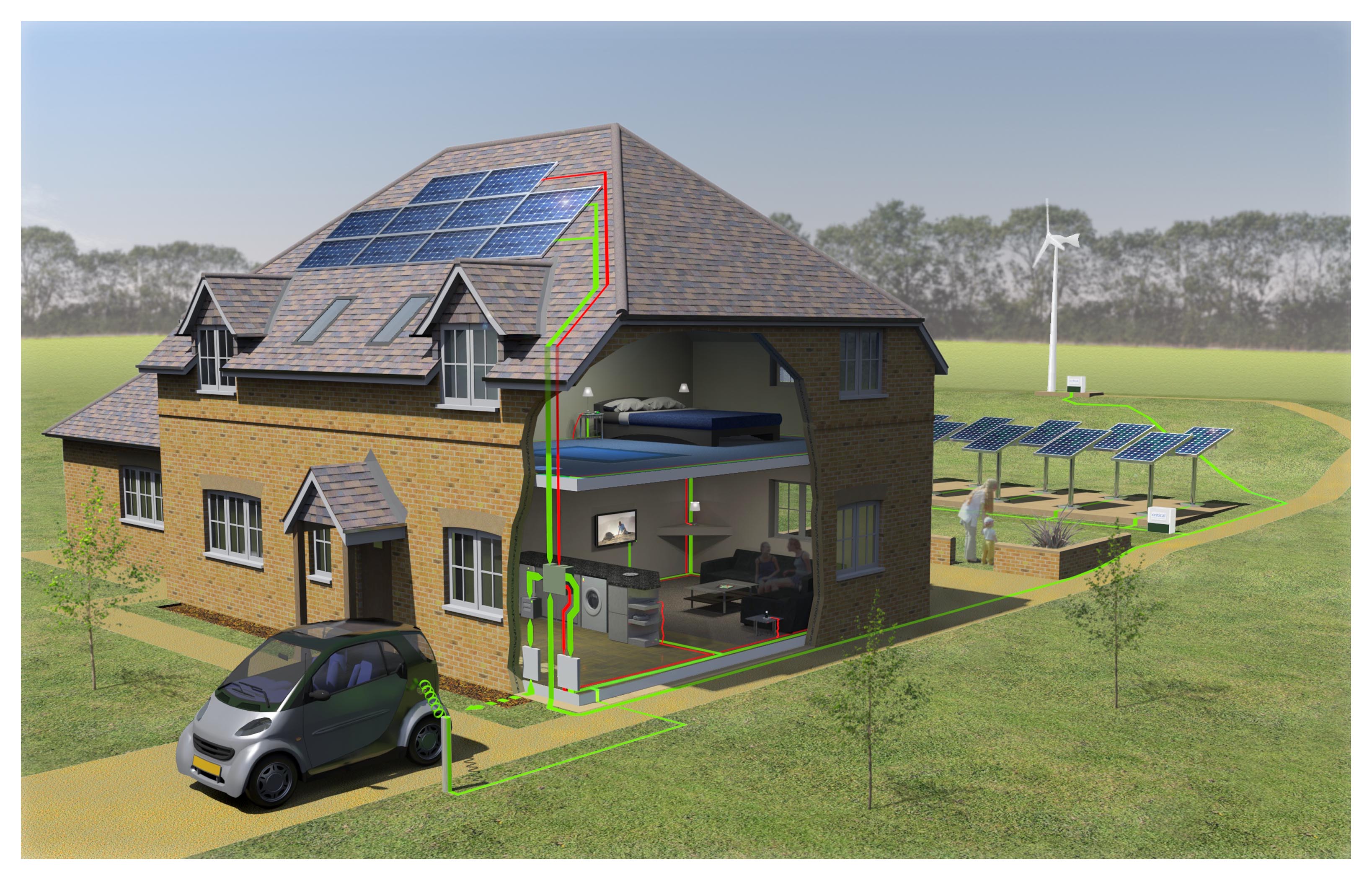
In order for all extracted resources to be used rationally, as a rule, a “smart home” control system is installed in the eco-house.
The larger the area of solar panels, the more renewable energy will enter the house
The system controls the optimal temperature and humidity in the premises, ventilation, air flow and other parameters. In the absence of people in the premises, the Smart Home switches the operation of all climatic devices into economy mode, which allows the correct use of energy.
In addition to climatic devices, the system can regulate the supply of hot water and the temperature of heating devices.
Today in Russia there are companies involved in the development of eco-house projects, which include all communication systems. If you plan to start building your own house in the near future and there is a desire to get rid of materials that adversely affect human health, you should think about an environmentally friendly building. However, it should be understood that the construction and arrangement of such a house will be expensive.
Features of insulation and heat supply
Usually, the heating system of a house functions by burning fossil fuels: fuel oil, coal, gas, and even firewood. During the combustion process, a large amount of waste products enters the air. How to avoid it? Firstly, you should insulate the house as much as possible, and secondly, it is worth considering alternative energy sources.
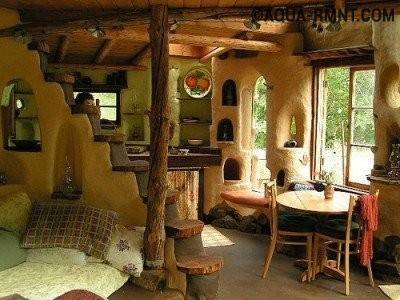
Oddly enough, houses made of clay, sand and straw have gained immense popularity.Round-shaped buildings perfectly retain heat in the southern regions, but they are not suitable for northern latitudes with harsh winters.
Ecological materials for building a house are considered to be any natural resources - wood, stone, brick, made, as you know, from clay, clay itself, straw blocks.
Sheathing is made with wood board, clapboard, block house. Between the walls of the log house and the sheathing, heat-insulating mats with vapor protection are laid. The optimal material for windows is a three-layer glued beam, which has the thermal conductivity of wood, but is more durable. The foundation is decorated with stone or ceramics, which not only serve as an element of decoration, but also protect the lower part of the building. from moisture and wind. Thus, the house turned out to be environmentally friendly. How can the heating system be arranged so that it does not contradict the general trend?
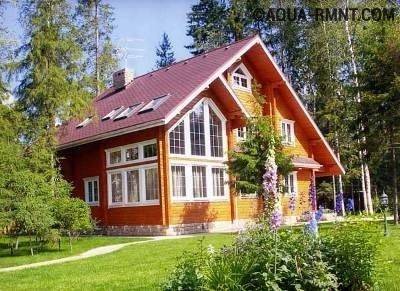
Softwood veneer, which is the basis of glued beams, gives the structure extraordinary strength and durability. In addition, log houses do not need additional finishing work, as they look quite presentable.
The operation of the heat generator with a cavitator is ensured by connection to an electrical source, without which the operation of the pump motor is impossible. The principle of cavitation is based on the fact that the liquid, circulating in a closed circuit, gradually heats up, that is, it does not require additional heating by the boiler, which usually results in the formation of scale.
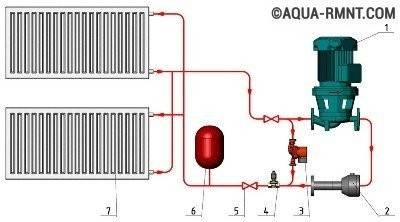
The heat generator circuit diagram includes: 1 - main pump; 2 - cavitator; 3 - circulation pump; 4 - electric / magnetic valve; 5 - valve; 6 - expansion tank; 7 - radiator.
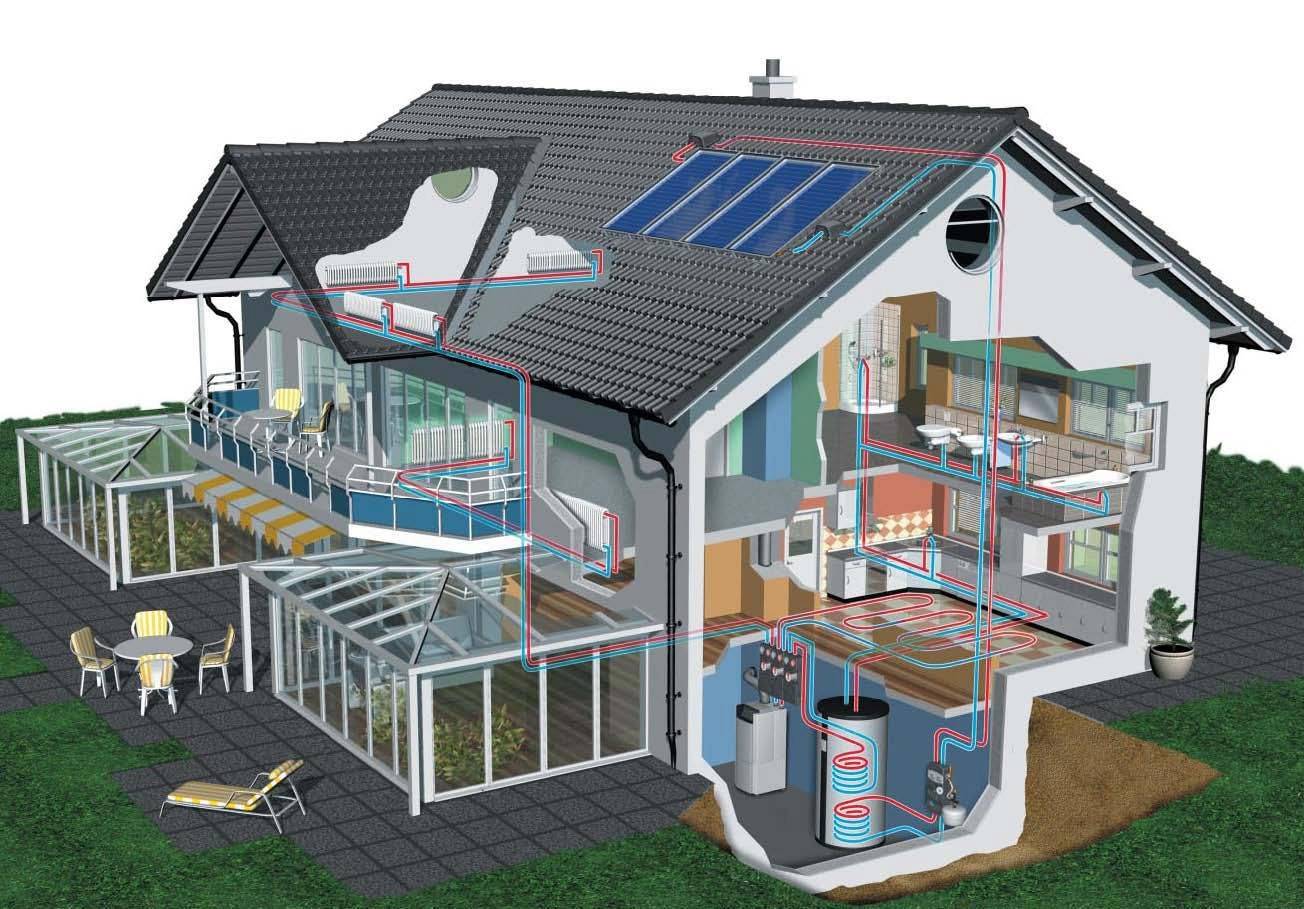
The efficiency of the fuel-free heat generator can be increased by using an additional storage tank and a "warm floor" heating system. To ensure a sufficient amount of hot water, an indirect heating boiler is connected. A solar collector can become a spare, and in the summer season the main source of heating. Thanks to solar systems, the heat generator is completely turned off in the summer.




What is an Ecohouse?
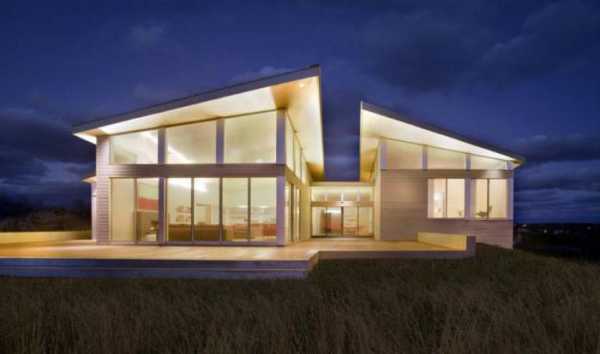
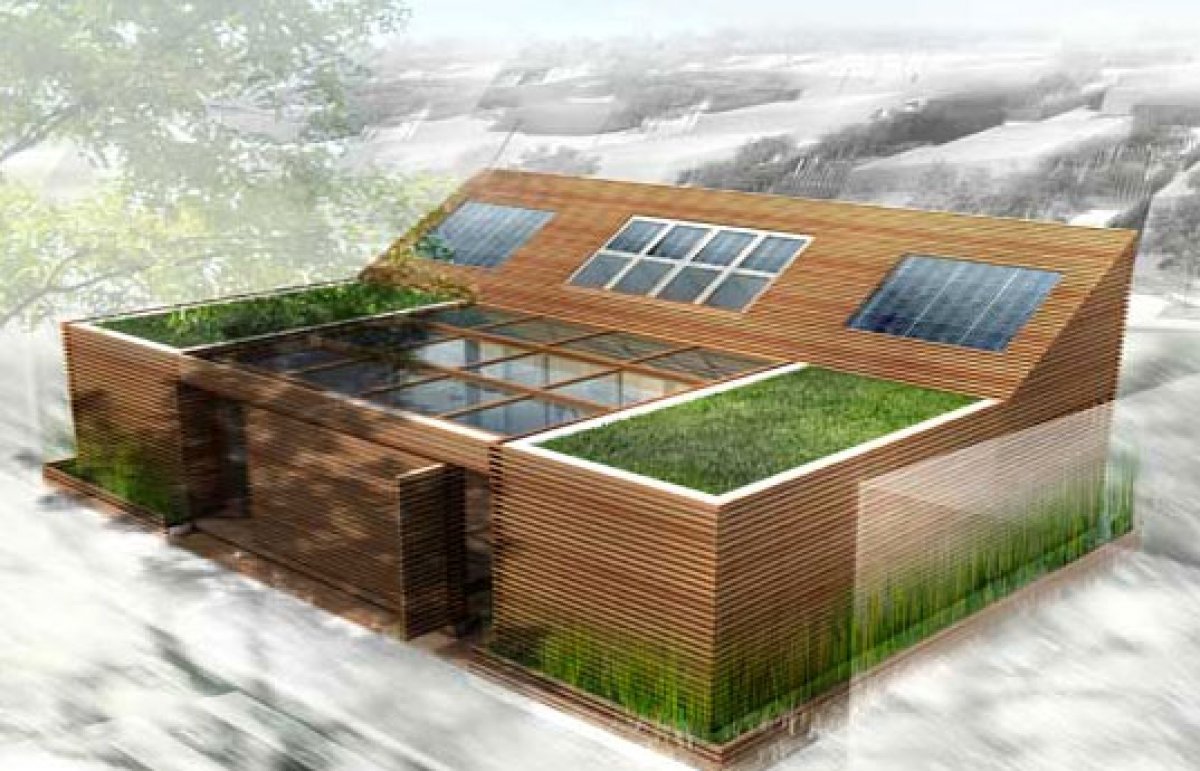
Speaking almost "talented", then an eco-house is a building that is built only from environmentally friendly materials, using energy-saving, environmentally friendly technologies. The prefix "eco" here means both environmentally friendly and economical.
The first example is Finland, or rather, the Finnish city of Otanieme. The construction of the complex, called "ECONO-HOUSE", lasted from 1973 to 1979. The concept was also worked on in Germany: the first eco-building appeared there in 1990, in Darmstadt. Many of us still have a rather vague idea of what a “strange” eco-house is, but the situation is gradually changing.
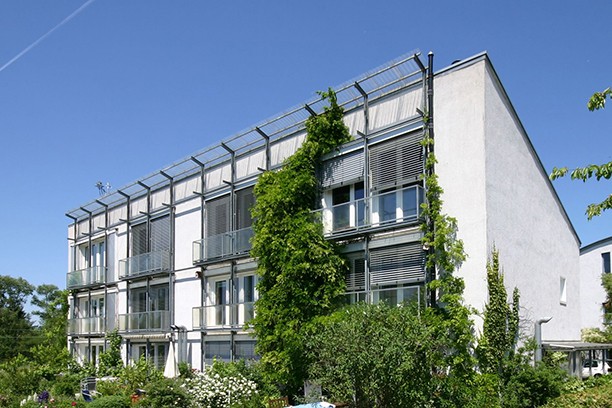
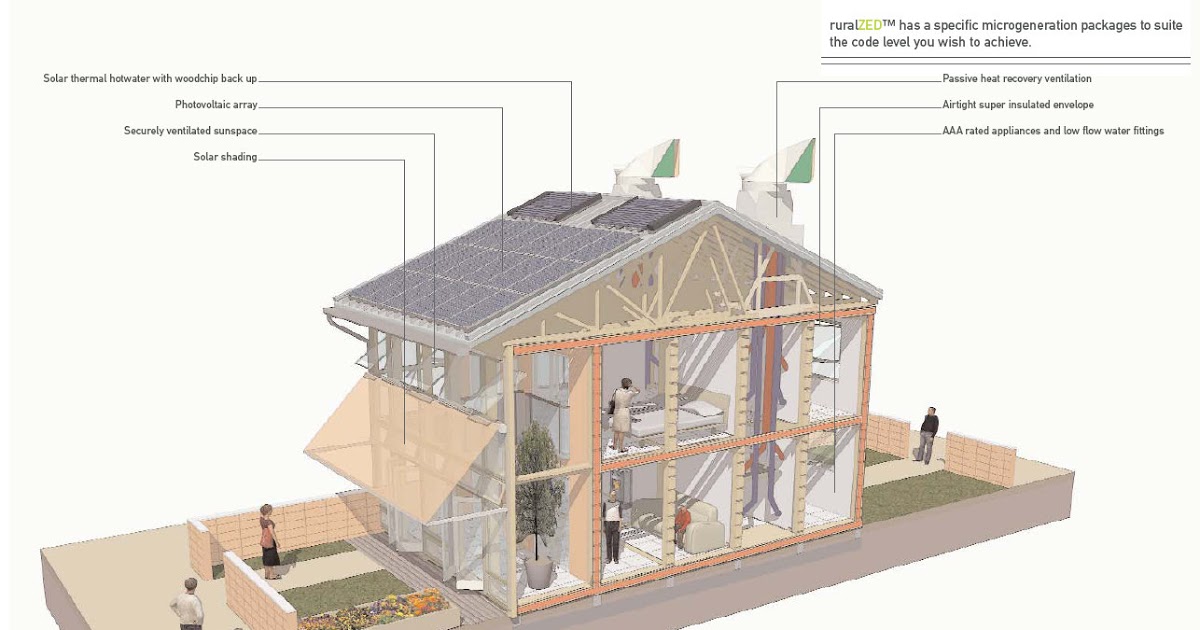
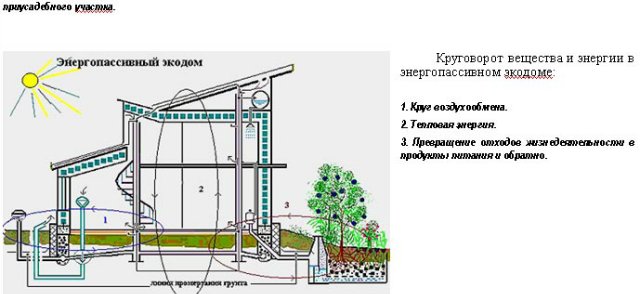
These buildings are as autonomous as possible, in addition, they significantly save energy resources. This is achieved through the use of heat-intensive building materials, and engineering systems that guarantee full support for the life of the owners. For example, wells or wells are used for water supply, energy is received from solar panels, heat pumps (often hydro or geothermal). Those eco-houses that are completely independent of any other external sources are called passive. In the remaining 10% of traditional electricity supply from the outside, the condition is acceptable.
Heat pump
To provide the house with free (or practically free) heating, heat pumps are successfully used, which work on the same principle as split systems with a heating function (by the way, they are three times more profitable than conventional heaters). Only here thermal energy is "sucked" from the ground - a special geothermal circuit is buried in a trench or in a well. The initial investment in this system is relatively large, but it quickly pays off. And by the way, you can do it yourself - there are manuals on the network, there would be a desire.
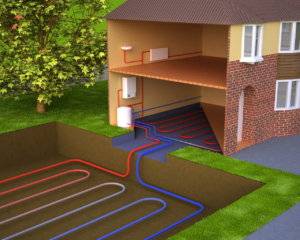 Geothermal heating, heat pump
In the meantime, watch this video, in which a real user who installed a heat pump for his energy-efficient home shares his experience with its operation, gives an estimate of costs, and tells a lot of other interesting things:
Now many people from big cities are trying to escape to nature. But if we continue to mindlessly exploit natural resources and pollute the environment with the products of our vital activity, then there will be nowhere to run - there will be no nature left. Therefore, people who care not only about themselves, but also about the future of their descendants, turn to the methods of environmentally friendly construction and management.
voice
Article Rating
DIY construction
During construction eco house an important criterion is its location, since it is necessary to use the energy of the sun to the maximum, both for heating all rooms and for heating hot water, and this must be taken into account when designing a house on your own.A house located correctly relative to the south will allow using the maximum amount of solar energy, thereby reducing the load on existing engineering systems.
Location selection
When choosing the location of the eco house and its correct placement on the land, it is very important to know that the eco house should not be shaded from the east side, and especially from the south and west, since the efficiency of the eco house completely depends on this. After choosing the right place for building an eco-house, they proceed to the direct construction of the building with their own hands
The main components of the body of an eco-house are its durability, good thermal insulation, as well as excellent mechanical strength. Along the entire perimeter of the eco-house, special buffer zones are installed, which can provide it with additional protection for the preservation of heat. Subsequently, you can attach a summer veranda, a workshop or a garage to the body of the eco-house
After choosing the right place for building an eco-house, they proceed to the direct construction of the building with their own hands. The main components of the body of an eco-house are its durability, good thermal insulation, as well as excellent mechanical strength. Along the entire perimeter of the eco-house, special buffer zones are installed, which can provide it with additional protection for the preservation of heat. Subsequently, it is possible to attach both a summer veranda and a workshop or a garage to the body of the eco-house.
Eco house thermal insulation
When building an eco-house with your own hands, increased attention is paid to the so-called "cold bridges", where cold can enter the house from the street.In the northern regions, during the construction of an eco-house, the creation of an additional thermal mask around the entire perimeter of the house should be provided
The thermal mask is constructed from heavier building materials. During the day, such a mask is able to effectively accumulate solar heat, and at night it effectively retains it.
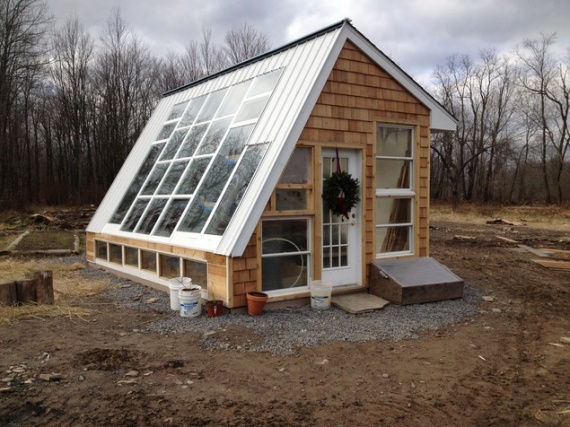



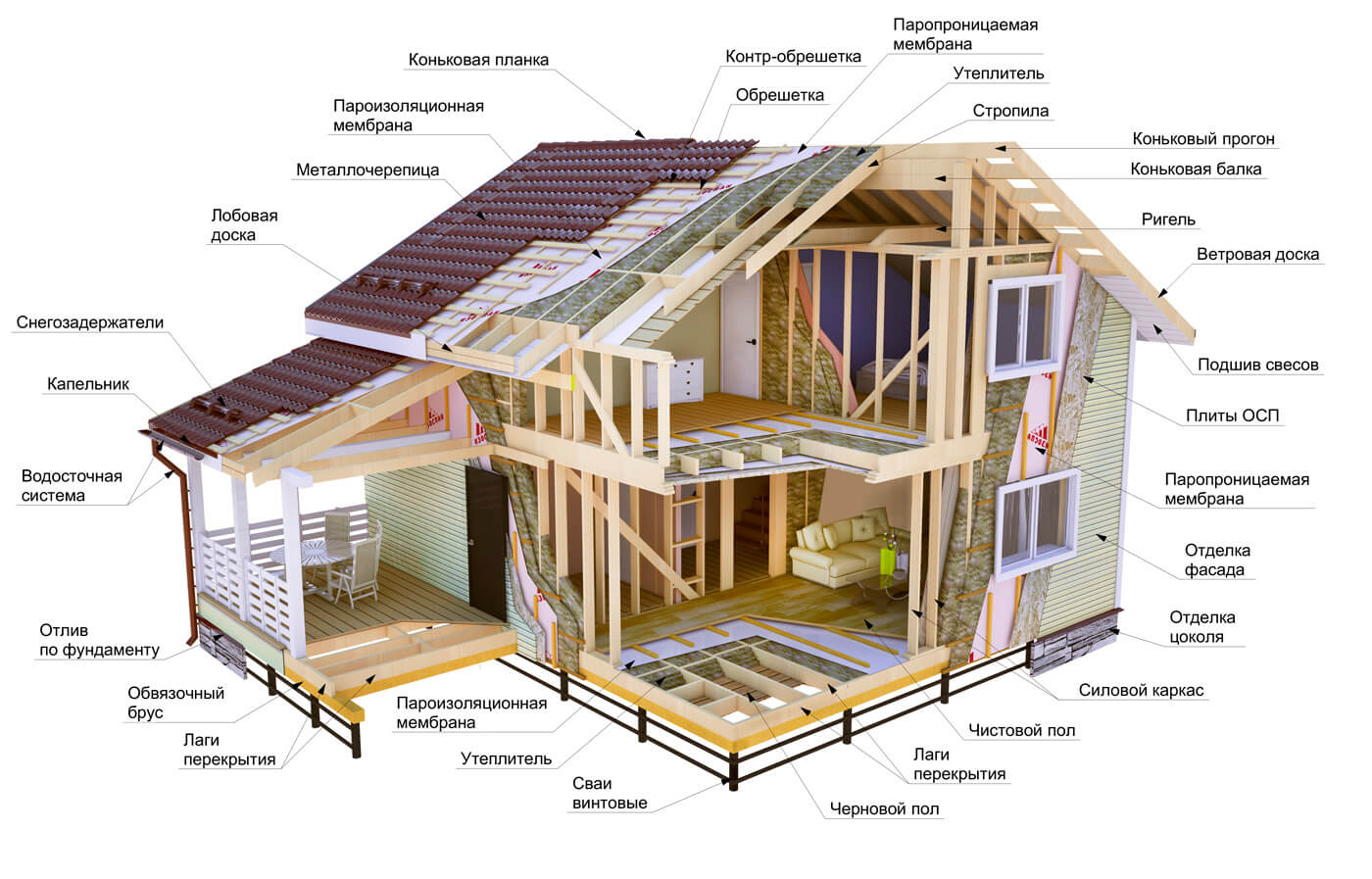
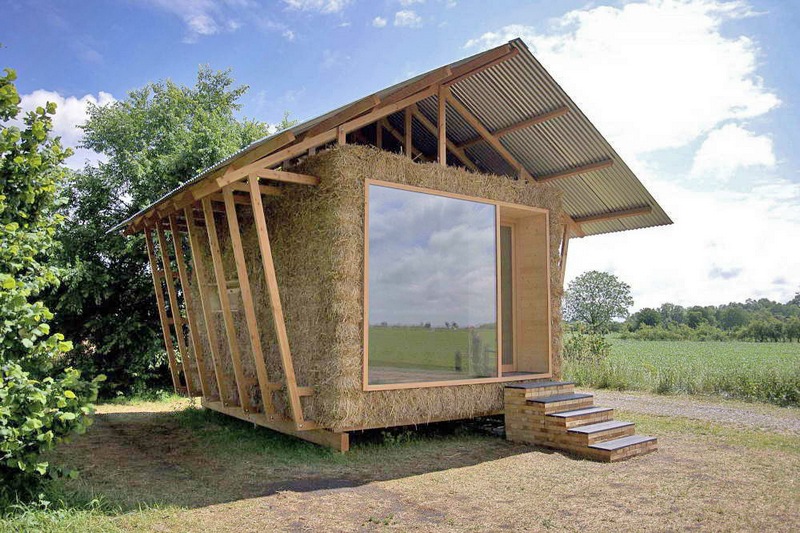
If an eco-house is built using frame technology, then its outer perimeter is usually made of light natural materials, such as straw. In this case, a system is installed in the house, which is an active heat accumulator. As such a system, both a conventional heater and an open chimney can act.
Foundation
Like all buildings, an eco-house also has a fundamental foundation. Depending on the type of soil on which the structure is being built, as well as the depth of groundwater and flood regimes, the following types of foundations can be used when building an eco-house: strip, columnar, or various small-block types of foundations. Along the perimeter of the entire foundation, it is imperative to arrange a reliable drainage system.
Walls and cladding
The walls of the eco-house are multi-layered and have up to four layers. The first layer consists, as a rule, of whitewash, wallpaper or paint. The second layer consists of plaster, as well as a vapor barrier and a load-bearing wall. The third layer contains insulation, which is often used as straw. The fourth layer is a ventilated gap and a facade cladding material. In order to further provide for the stratification of the walls of an eco-house, it is necessary to use special screeds in the process of erecting its walls.
The wall cladding of an eco-house is most often made of wood, decorative brick or plaster and can be done by hand. The main criterion when choosing a facing material for an eco-house is its increased resistance to various atmospheric precipitation.
We build an eco-house from logs
So, we are building an eco-house from logs. If you look at the walls of a log house from afar, they look like masonry, but as soon as you get a little closer, you will see that this structure is built of logs stacked on top of each other like a woodpile and fastened together with lime-cement mortar. Logs without bark with a diameter of 30 to 90 cm can be used for wall construction as a base material or in combination with a frame structure.
For the construction of an eco-house from logs, soft woods such as cedar and pine are used because of their resistance to expansion and contraction. The walls of the house, built of logs, are distinguished by good insulating properties and heat capacity.
Just like any other building technology using natural materials, building an eco-house from logs will require a lot of manual labor from you, but if you try hard, the result will meet all your wildest expectations. Usually, a mixture of portland cement, lime and water is used to hold the logs together, but recently some people have begun to build similar houses using adobe mixture instead of lime-cement mortar.
Buildings from glass containers
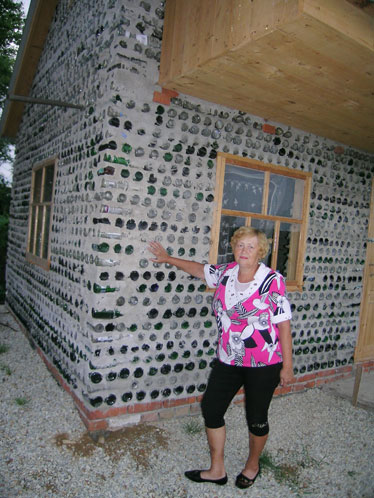
house made of glass bottles
Buildings based on glass bottles occupy a worthy place among eco-solutions.If it seems to someone that bottle houses are nothing more than a game of designer fantasies, then he is deeply mistaken. With the correct placement of bottle rows, compliance with the strength characteristics of the holding solution, it is possible to build full-fledged residential buildings.
Only one important nuance should be borne in mind: glass and air inside - zero thermal protection. Therefore, in cool regions, if the bottle bottoms “look” outward and play an artistic role, then from the inside it is necessary to provide an insulating barrier between external cold and internal heat.
The use of glass containers for construction
And yet, in regions with a cold climate, it is better to abandon glass in the construction of residential buildings. But for outbuildings, including gazebos, greenhouses, flower greenhouses - there are no limits to fantasy and cannot be. Feel free to use glass bottles of all colors, sizes and shapes. It is also expedient to “mure” the bottles tightly into the walls or foundation. It turns out savings on basic materials and increases the thermal protection of the structure.





Bottle Ranch located on Highway 66 in Helendale, California
Conclusions and useful video on the topic
Thematic videos will help you understand the nuances of building eco-houses.
Video #1 Review oriented to the ecological situation houses:
Video #2 A film about the construction of an adobe house in a northern ecovillage:
Video #3 Do-it-yourself clay pot technology:
As you can see, building a house using one of the well-known eco-technologies on your own is quite realistic. You can start not with a residential building, but with a small utility room, summer kitchen or country decor.Try to apply the principles of an energy-efficient home - it will be a small step into the future and a wonderful personal experience.
Do you want to talk about another original way of building and arranging an eco-house? Do you have any questions while reading the information provided by us? Please write your comments in the box below.



