
- What are the differences between dimmers
- By type of installation
- By execution
- By way of adjustment
- We assemble a dimmer with our own hands
- Circuit on triacs:
- Dimmer on the N555 chip
- Dimmer on thyristors and dinistors
- Dimmer for LED strip
- Do dimmers save energy
- Popular 220 Volt LED Dimmers
- Minimum brightness level
- Digital
- 04-10 Mini - dimmer 12 V, 72 W, RF
- ARLIGHT SR-2839DIM WHITE
- Schneider Electric Blanca BLNSS040011
- Benefits of Dimming LEDs
- Answers to common questions
- Dimmer classification for LED lamps
- Place and method of installation
- According to the principle of management
- Mechanics
- Sensor
- "Remote"
- The best rotary dimmers
- Werkel WL01-DM600-LED
- Schneider Electric Blanca BLNSS040011
- TDM Electric Ladoga SQ1801-0109
- ABB Cosmo 619-010200-192
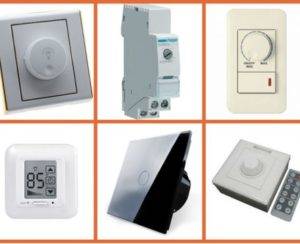
What are the differences between dimmers
There are many parameters that you should pay attention to when choosing a fixture. Some devices are suitable for most varieties of light bulbs, while others are used only in combination with dimmroids.
When purchasing switches with a dimmer, you need to pay attention to the type of installation. They can be for outdoor and indoor installation, as well as on DIN rails.
In addition, such devices differ depending on the method of control and execution.Dimmers are also divided according to the method of regulation.
By type of installation
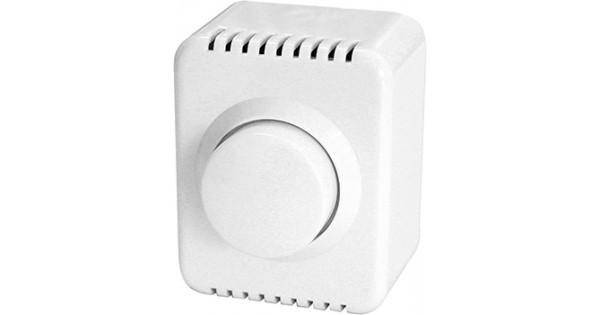
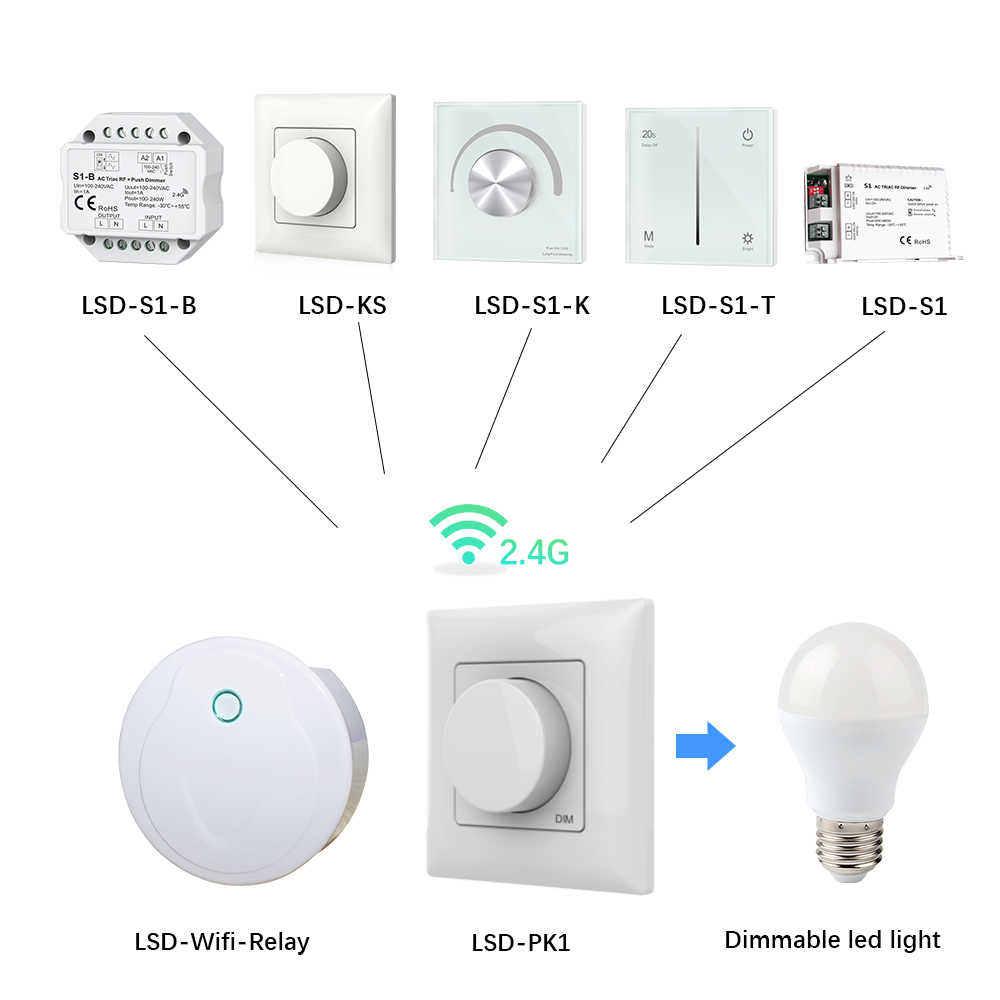
External mounting of the dimmer is the simplest. Such switches are a small box in which all the elements of the regulator are present. To install this type of dimmer, there is no need to drill a niche in the wall. The box can be mounted directly on the wall.
Outdoor dimmers are most commonly used in industrial lighting installations where the beauty of design is not a priority. In addition, such devices are used in interior design in urban and other styles, when outdoor wiring emphasizes the designer's intent.
There are 2 types of internal dimmers. The first includes devices that are a box, the installation of which requires drilling a niche. After installation, the upper part of the box does not protrude above the wall surface. The second type includes fixtures designed to connect spotlights, in which there are LED bulbs. Such devices are small in size and are attached during wiring. These portable dimmers are remote controlled.
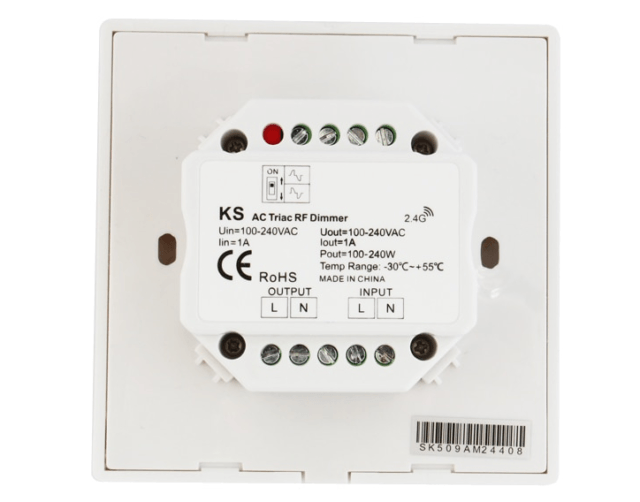
Modular dimmer for LED lamps mounted on DIN rails. This dimmer is installed in switchboards, but can also be used to adjust lighting and create lighting effects. Such devices are used in the creation of the "Smart Home" system. The dimmer is installed in a mounting box. The dimmer is controlled by a remote control, as it doesn't come to the surface.
By execution
Depending on the type of performance, dimmers can be:
- rotary-push;
- rotary;
- push-button;
- sensory.
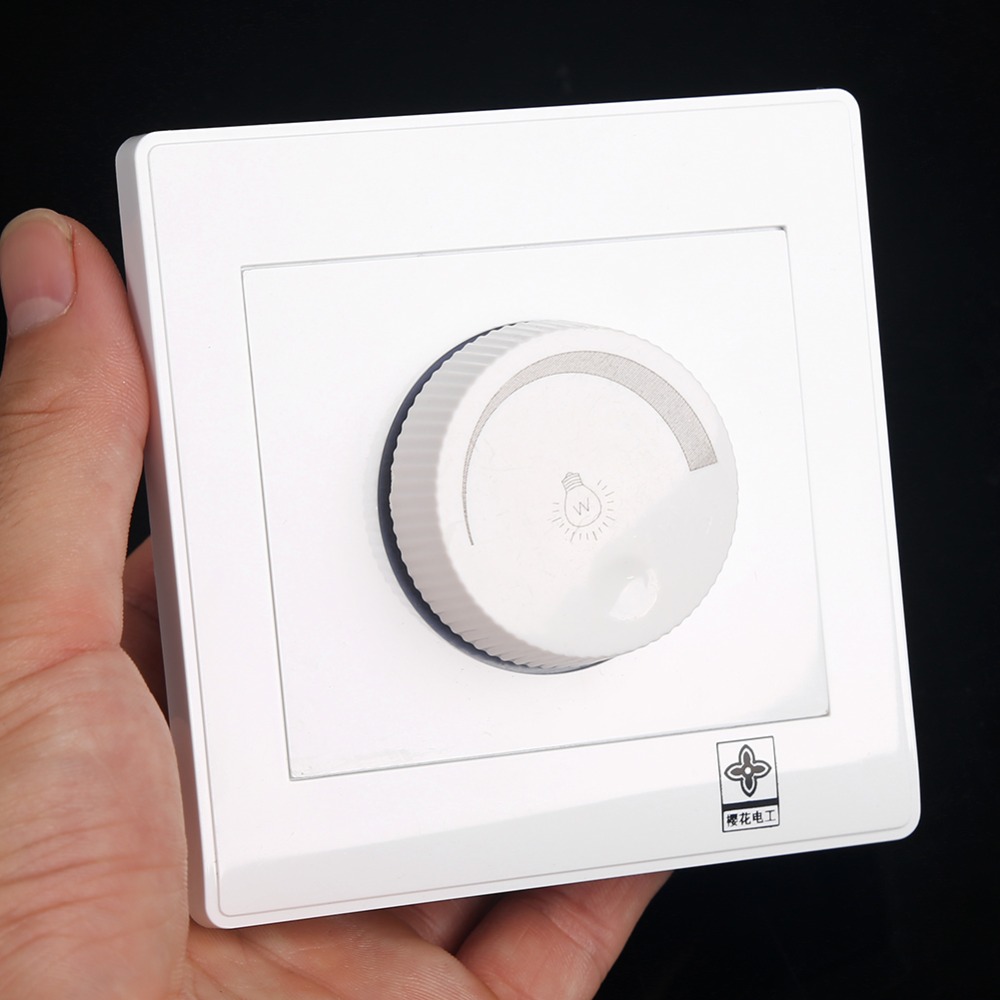
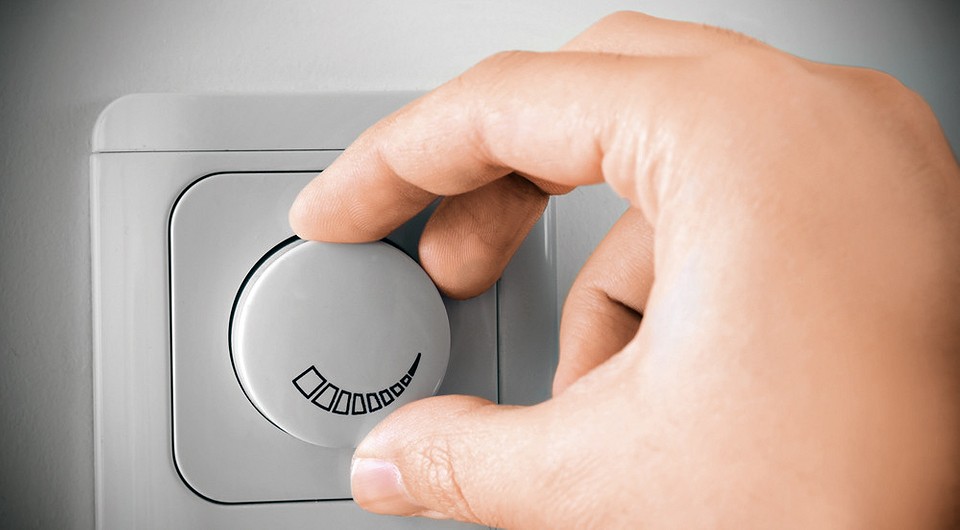
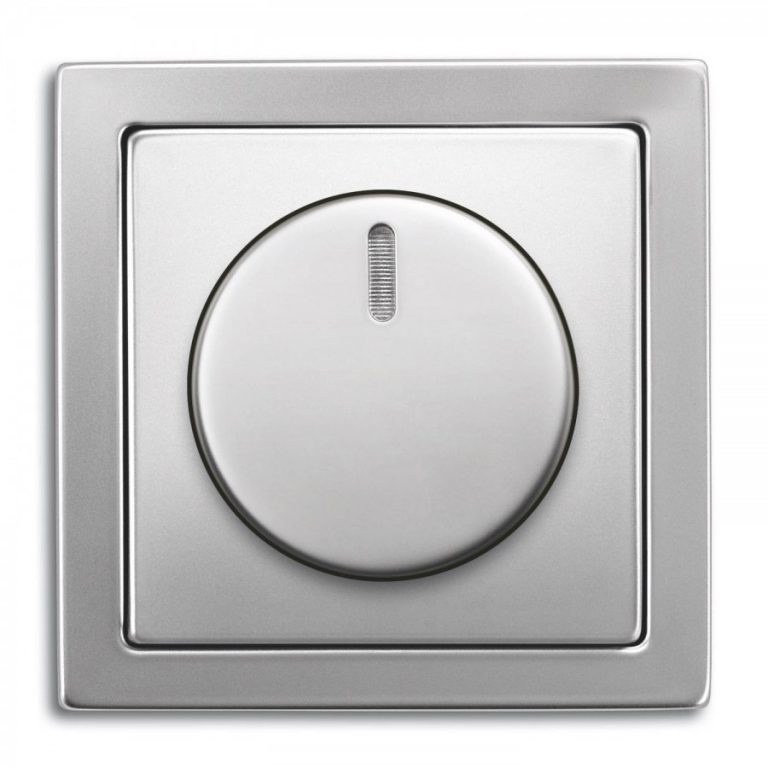
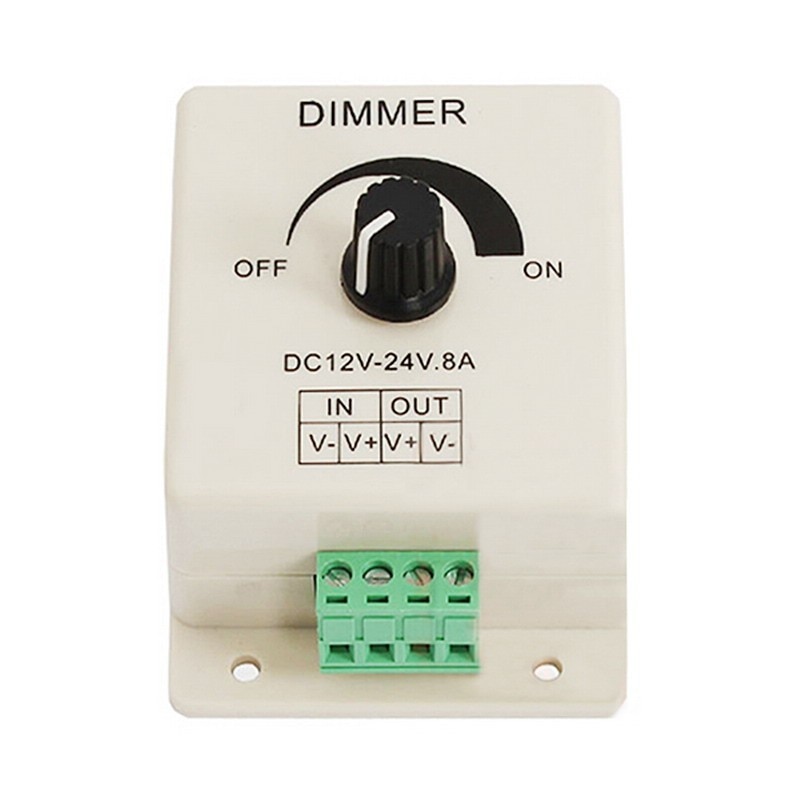
The simplest options include a rotary type of dimmer. It has simple functionality. Brightness control is carried out by a round rotary checker or knob. Its rotation is clockwise and counterclockwise.
The swivel type is almost the same as the swivel type. With a single press, the light lights up with the brightness that was last set. A rotary lever or checker is used to adjust the brightness.
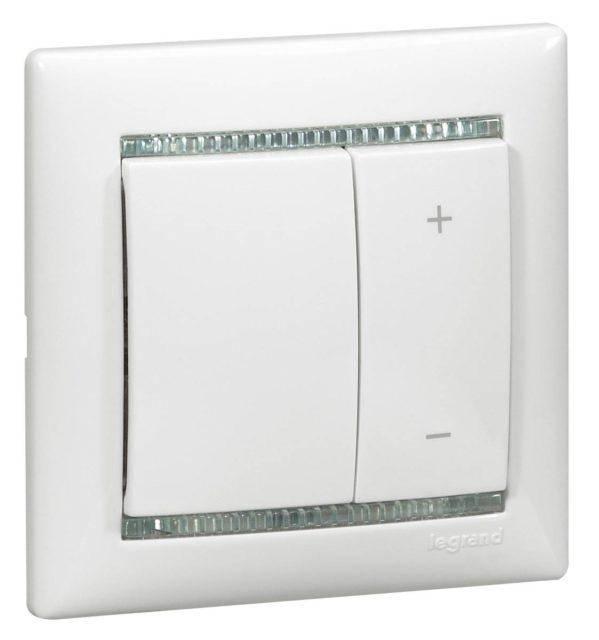
The push button type looks like a standard switch. There are 1 or 2 buttons on the controller. By clicking on them, you can quickly set the desired brightness. This design is simple and reliable, but looks modern.
Touch dimmers are the most technologically advanced. Their design can be very different. The sensor can be flat, represented by a circle, etc. Devices can be used in the design of most interior options. Such dimmers look beautiful, but in the event of a breakdown, it is often necessary to change the device.
By way of adjustment
AC dimmers are divided according to the principle of regulation of work. Leading edge dimmer is the cheapest and most common. Its scheme is simple: only a half-wave is supplied to the load inside, while its beginning is cut off. A load with a given amplitude is applied to the light bulb, and then its attenuation is observed when the sinusoid passes through zero.
The second option is a dimmer with trailing edge cutoff. In this case, the brightness regulation does not occur from "zero", but in a given range. In addition, luminaires with already installed regulators are allocated in a separate class. They are controlled by buttons or a remote control.
We assemble a dimmer with our own hands
Circuit on triacs:
In this circuit, the master oscillator is built on two triacs, a triac VS1 and a diac VS2. After turning on the circuit, the capacitors begin to charge through the resistor chain. When the voltage on the capacitor reaches the opening voltage of the triac, current begins to flow through them, and the capacitor is discharged.
The lower the resistance of the resistor, the faster the capacitor charges, the lower the duty cycle
Changing the resistance of the variable resistor controls the depth of gating over a wide range. Such a scheme can be used not only for LEDs, but also for any network load.
AC connection diagram:
Dimmer on the N555 chip
The N555 chip is an analog-to-digital timer. Its most important advantage is the ability to work in a wide range of supply voltage. Ordinary microcircuits with TTL logic operate from 5V, and their logical unit is 2.4V. CMOS series are higher voltage.
But the generator circuit with the ability to change the duty cycle turns out to be quite cumbersome. Also, for microcircuits with standard logic, increasing the frequency reduces the voltage of the output signal, which makes it impossible to switch powerful field-effect transistors and is only suitable for loads of small power. The timer on the N555 chip is ideal for PWM controllers, since it simultaneously allows you to adjust both the frequency and the duty cycle of the pulses
The output voltage is about 70% of the supply voltage, due to which it can even be controlled by Mosfets field effect transistors with a current of up to 9A
The timer on the N555 chip is ideal for PWM controllers, since it simultaneously allows you to adjust both the frequency and the duty cycle of the pulses.The output voltage is about 70% of the supply voltage, due to which it can even be controlled by Mosfets field effect transistors with a current of up to 9A. With an extremely low cost of parts used, assembly costs will amount to 40-50 rubles
With the extremely low cost of the parts used, the assembly costs will amount to 40-50 rubles.
And this scheme will allow you to control the load at 220V with a power of up to 30 W:
The ICEA2A microcircuit, after a little refinement, can be painlessly replaced by the less scarce N555. Difficulty may cause the need for self-winding of the transformer. You can wind the windings on a conventional W-shaped frame from an old burned-out 50-100W transformer. The first winding is 100 turns of enameled wire with a diameter of 0.224mm. The second winding - 34 turns with 0.75mm wire (the cross-sectional area can be reduced to 0.5mm), the third winding - 8 turns with 0.224 - 0.3mm wire.





Dimmer on thyristors and dinistors
LED dimmer 220V with load up to 2A:
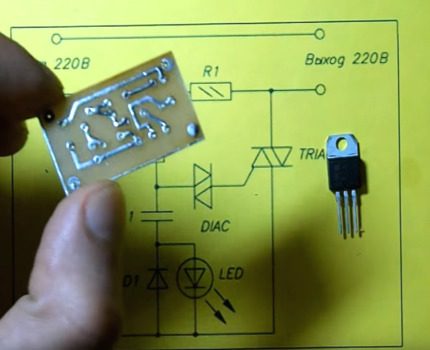
This two-bridge half-wave circuit consists of two mirror stages. Each half-wave of voltage passes through its own thyristor-dinistor circuit.
Depth of duty cycle is regulated by a variable resistor and a capacitor
When a certain charge is reached on the capacitor, it opens the dinistor, through which current flows to the control thyristor. When the polarity of the half-wave is reversed, the process is repeated in the second chain.
Dimmer for LED strip
Dimmer circuit for the LED strip on the integral stabilizer of the KREN series.
In the classic voltage stabilizer connection scheme, the stabilization value is set by a resistor connected to the control input. Adding capacitor C2 and a variable resistor to the circuit turns the stabilizer into a kind of comparator.
The advantage of the circuit is that it combines both the power driver and the dimmer at once, so the connection does not require additional circuits. The disadvantage is that with a large number of LEDs on the stabilizer there will be significant heat dissipation, which requires the installation of a powerful radiator.
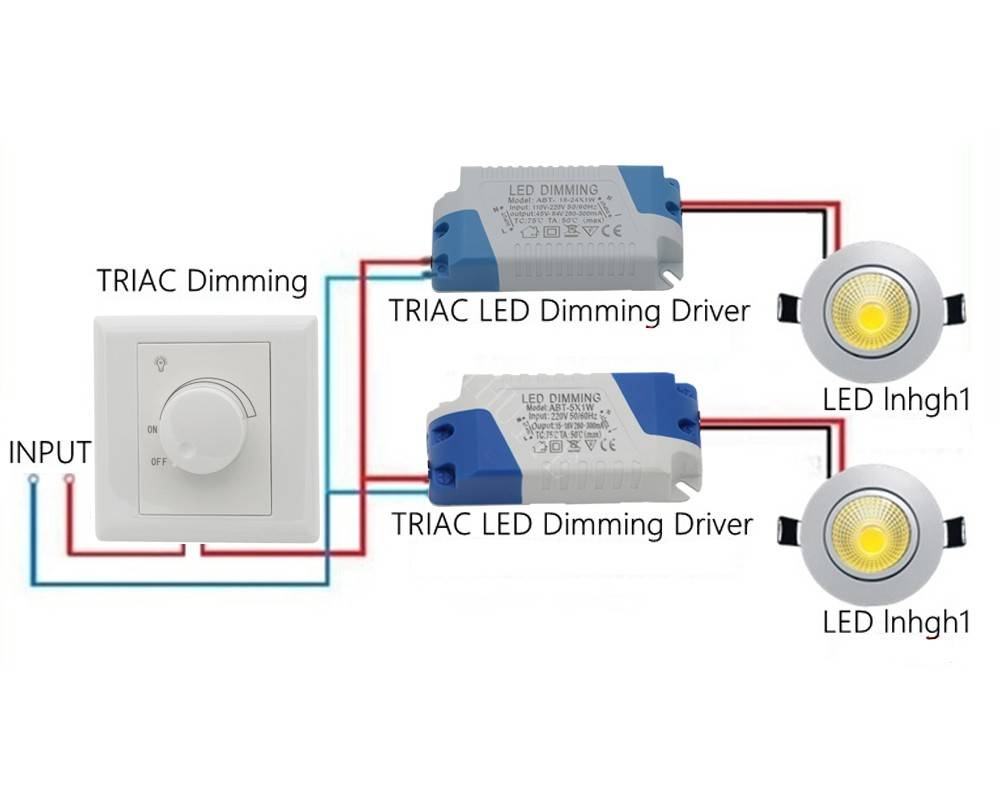
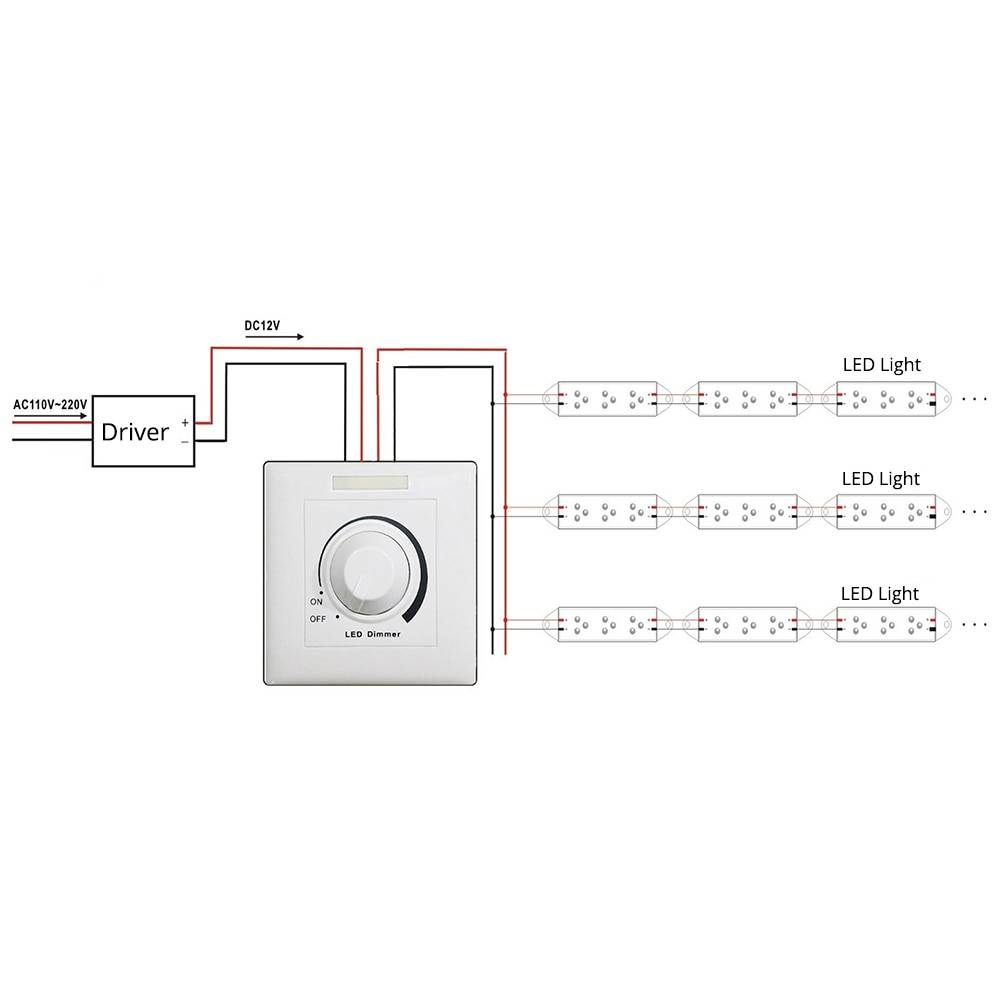
How to connect a dimmer to an LED strip depends on the dimming tasks. Connecting in front of the LED power driver will allow you to adjust only the general illumination, and if you assemble several dimmers for the LED with your own hands and install them on each section of the LED strip after the power supply, it will be possible to adjust the zone lighting.
Do dimmers save energy
Another myth is that you save energy when using dimmers. First of all, this applies to incandescent lamps.
Most users still believe that if you leave ordinary incandescent bulbs in the lamp and unscrew the dimmer by 50%, then you will pay 2 times less for light. This is not entirely true.
To reduce the brightness of an incandescent lamp by 2 times, you need to lower the voltage by about 80%. In this case, the current strength will decrease slightly, due to the non-linear resistance of the filament.
The actual power consumption of the lamp in this case will be 75-80% of the original. You will receive 2 times less light, and save only a miserable 20%.
Therefore, the only real savings are achieved not by dimming, but by replacing simple lamps to LED.
A positive point and advantage of constantly running LEDs in a dimmed mode is an increase in their service life.
For example, if you initially take a light bulb twice as powerful as you needed, and unscrew it with a dimmer to the required brightness, such a lamp will last 100% not only for the period declared by the factory, but also much longer.
But with halogen lamps, the situation may be the opposite. In addition, dimming leads to a decrease in heat generation.
Based on the foregoing, experts always recommend buying dimmers and lamps for them in the same store, with a visual check for compatibility of their functions. In this case, you will 100% not encounter any surprises and troubles.
Popular 220 Volt LED Dimmers
LED dimmers today can have a huge range. Also, dimmers can be divided according to the type of installation:
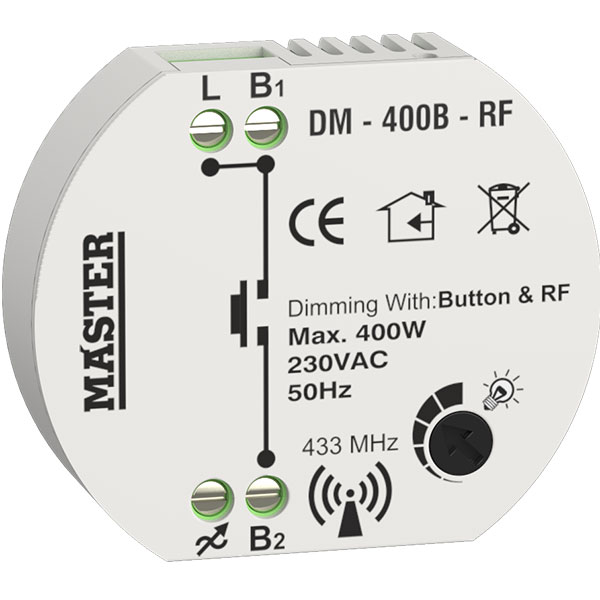
Modular dimmers for LED lamps are installed in switchboards. These devices can not only adjust the brightness, but also perform a wide range of other functions. You can easily control this device using the remote controller.
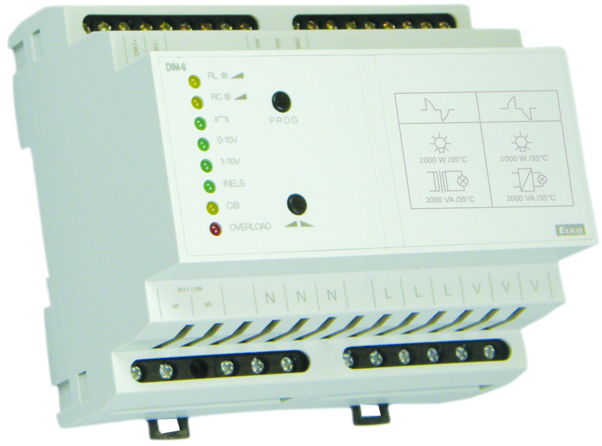
Usually these devices are produced only for controlling LED lamps. In domestic conditions, they are used quite rarely, as they have a high price.
Monoblock dimmers for LED lamps are also considered a fairly common product. This type is considered the most common.
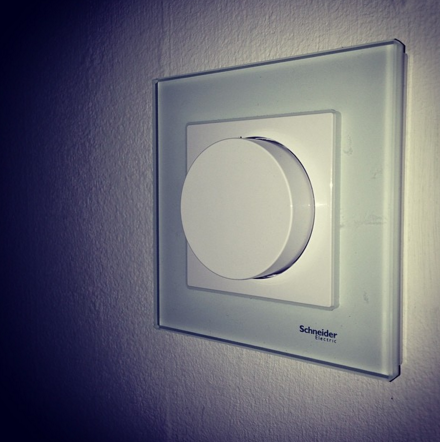
You can install it instead of a regular lamp. In order to use this device you can control the LED lamp, you need a PWM function.
LED dimmers can also vary in the way they are controlled. Here are their main varieties:
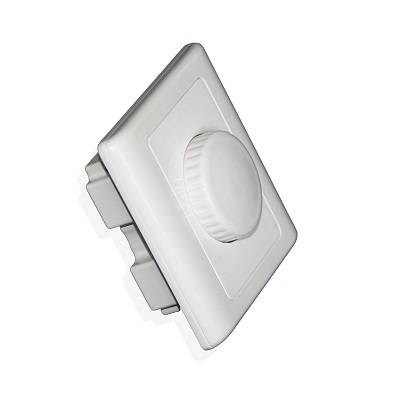
- Swivel.The control process will take place with the help of a handle.
- Swivel-push. The control process in this device will take place by pressing and turning the knob.
- Keyboards. By pressing the keys, you can increase or decrease the brightness of the lighting.
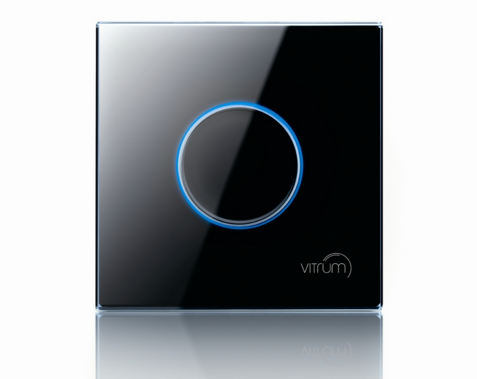
- Touch. This product is considered more modern. With their help, you can also use other functions.
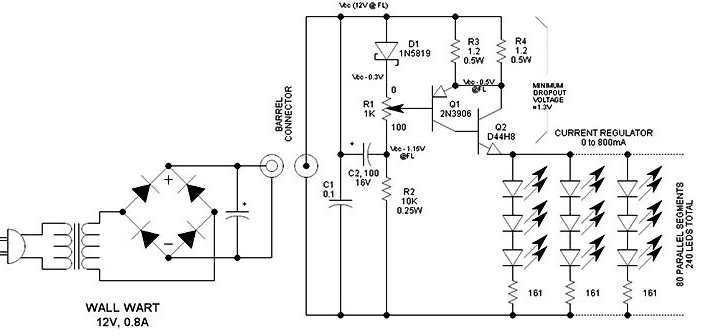
The dimmer circuit for LED lamps does not differ from the circuits of other products. In the photo below you can see this scheme.




Minimum brightness level
Another unpleasant moment is that with most instances you will never achieve a uniform decrease in brightness, down to zero values.
LED lamps cannot make such a minimum illumination of the room, which can be achieved with a barely luminous tungsten filament. That is, at the very maximum twisting of the dimmer (in the direction of decrease), a fairly visible stream of light will still be observed.
You want to lower it even more, but nothing will come of it. Then the light will just turn off.
Also, do not forget that different dimmers and light bulbs each have their own minimum level.
And there is also the incompatibility of certain types of lamps with certain types of dimmers.
This may be due to the difference in dimming principles. The phase of the sinusoid in one device is cut off at the leading edge of the Leading edge (R, RL), and in the other at the trailing edge of the Trailing edge (RC, RCL). Accordingly, in one case the lamp will work normally, but in the other it will not.
Get acquainted with the characteristics and check all the inscriptions in the store.
Another difference that already applies to filament lamps is that they light up a little later.And not only ordinary light bulbs, but even later than their other LED counterparts.
You twist the regulator from the very minimum, but they do not light up. And only when a certain value is reached, light begins to appear.
Their actual dimming interval is somewhat shorter than that of other species. Therefore, if you are already going to buy filament lamps, then look for special brightness controls for them.
On almost any dimmer, you can catch the position when the bulbs begin to blink, as it were. This is due to their unstable operation in the lower and upper limits of regulation.
The lamps of some manufacturers even begin to crack at the extreme points of adjustment. All these problems can be solved with adjustable dimmers. In them, you can throw out a certain range and configure the microcontroller for the desired mode of operation.
Digital
Devices that regulate the brightness of LED strips, related to digital, are very comfortable when controlling the brightness of all LED strips. Digital regulators provide more stable current operation and reduce power loss to a minimum. Also, the use of such switches does not allow the LEDs to overheat, thus the period of their operation is significantly increased.
04-10 Mini - dimmer 12 V, 72 W, RF
A miniature radio-controlled device that is in demand among consumers, thanks to it it is possible to transfer the SMD (monochrome) tape to several operating modes, there can be up to 25 of them. The kit comes with a remote control that allows you to adjust the regulator from a distance.The device works at a distance of about 50 meters, which is very convenient, it also differs from the others in that it does not require direct aiming at the distributor itself to control the functions. Allows the user to independently set the required brightness, turn the power on and off.

04-10 Mini - dimmer 12 V, 72 W, RF
Advantages:
- belongs to the budget category;
- has a small size;
- a good complete set the remote control is included in the set;
- the remote control works without direction to the unit itself and at a great distance.
Flaws:
- signal failures occur when receiving from the remote control;
- maximum power 4/8 W/m.
ARLIGHT SR-2839DIM WHITE
A single-zone device for adjusting the brightness of diode strips, to which a control panel with a sensor is attached, it also has a built-in controller with a power of 1-10A. Dimming comes from a circuit whose voltage can be 12 or 24V.
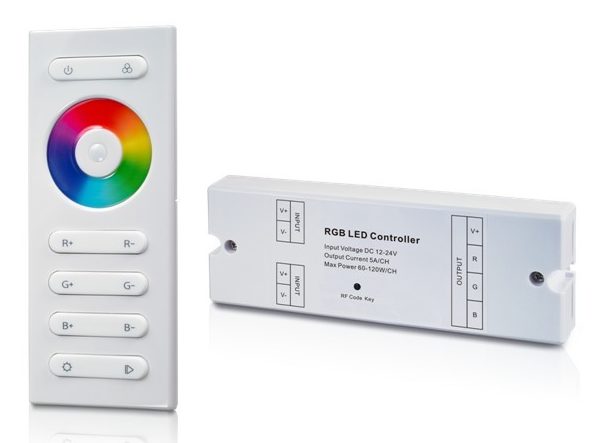
ARLIGHT SR-2839DIM WHITE
Advantages:
- adjustment is carried out remotely;
- easy to install;
- a sensor is installed on the remote control;
- excellent kit.
Flaws:
- high price;
- dimensions.
Schneider Electric Blanca BLNSS040011
The dimmer of this model is produced by a French company engaged in the manufacture of lighting equipment. The device has a hidden type of installation and a mechanism equipped with a special lining. Equipped with a rotary and push button, has a glossy surface made of thermoplastic. Power can reach 400V, and voltage up to 220W. Can be used with motion sensors. Built-in memory function remembering the last level of illumination.

Schneider Electric Blanca BLNSS040011
Advantages:
- functional;
- can be installed hidden;
- easy to install;
- high-quality material from which it is made;
- small dimensions;
- in connection with its qualities has an acceptable price.
Flaws:
- quickly dirty surface;
- it is difficult to set the minimum brightness level, first you need to set the average level and slowly lower it.
Benefits of Dimming LEDs
Adjusting the brightness of the LEDs allows you to fully reveal their full potential. The performance characteristics of LED make this lighting element an ideal candidate for dimming.
- The brightness of the LED can be changed over a very wide range, unlike fluorescent lamps.
- Changing the brightness does not affect the color temperature and color rendering, unlike incandescent lamps.
- Reducing the brightness leads to an increase in service life, and not vice versa, as is the case with halogen lamps.
- LED luminaires are dimmable without delay, allowing them to be used even in the most dynamic lighting scenarios.
Answers to common questions
Question number 1. What are the differences between Legrand dimmers?
- automatic on / off;
- voice or sound type of control;
- possibility of remote control;
- the main element of the smarthouse.
Question number 2. Which regulator is more practical: keyboard or rotary?
- Push-button light controllers have a built-in controller that allows you to memorize the desired amount of lighting. There is no need to adjust to the desired level each time you turn it on.
- Rotary dimmers - do not have a built-in micro-controller, so every time you turn on you need to turn the knob to the desired level. Such species do not have functional memory, and therefore have a lower cost.
Question number 3. Why use dimmers?
Control elements allow you to create the desired amount of lighting for different events:
- book reading;
- work at the computer;
- concert/theatrical productions;
- drawing or drawing;
- sports competitions.
Changing the amount of light allows you to reduce the power consumption of the network, respectively, power consumption is reduced, and costs are saved.
Question number 4. What are the main types of LEGRAND dimmers?
- single - this type works with only one light bulb or work with several sources combined into a group;
- group - working with a specific group. Thus, it is possible to illuminate the room with an unequal value. There may be more light in the workplace, less in the non-working part of the room.
Touch dimmer for LED strips
This small device has become widely used when connecting LED strips. Due to its dimensions, it can be mounted directly into the aluminum profile housing.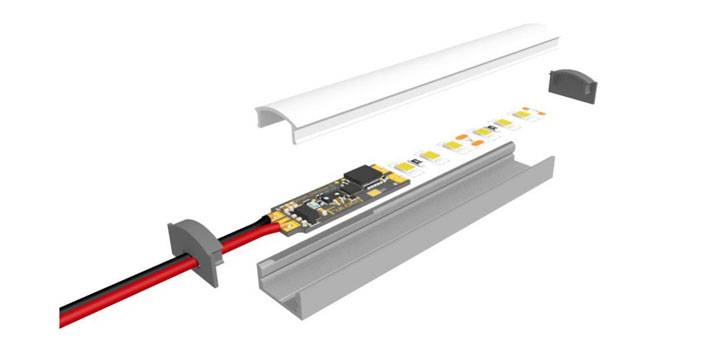




The connection is made by soldering the wires from the LED strip on one side and the power wires from the unit on the other.
The board has a touch pad that responds to light pressure. A short press turns the backlight on or off. A long press makes it possible to smoothly adjust the luminous flux from minimum to maximum.
Such instances are usually designed for a voltage of a volt.
There are models that do not need to be clicked at all. They react to the approach of an object or hand, the so-called smart dimmers.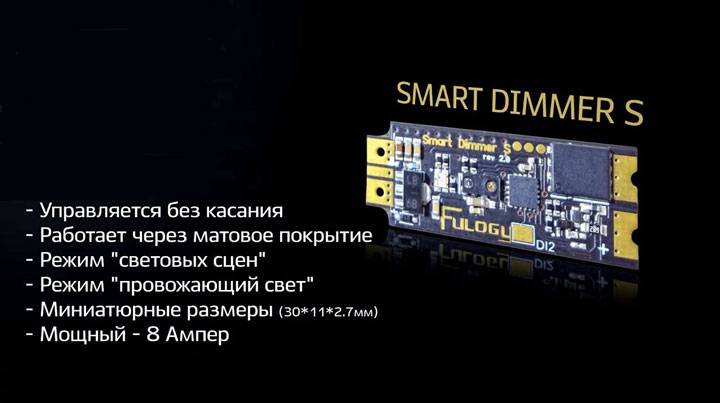
They are dimmers based on an infrared sensor and a microcontroller. The microcontroller is responsible for smooth turning on and off the backlight.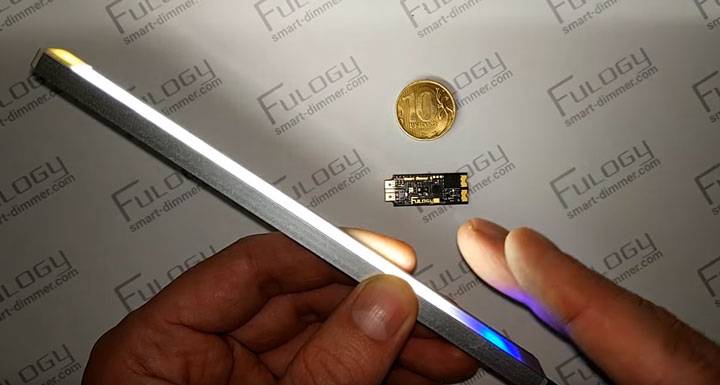
It is very convenient to mount such devices and LED strips in the kitchen in the working area of the countertops, in cabinets or in floor lighting.
They are also used in laboratories and other industrial facilities where it is required to minimize hand contact with any surfaces.
Here, the control of the light flux occurs only through the remote control. No handles, wheels, etc.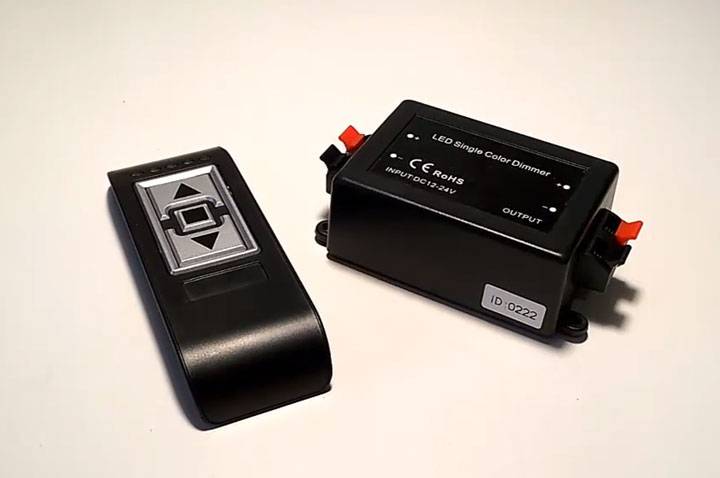
However, unlike infrared dimmers, radio-controlled ones have the ability to send a signal through various obstacles - partitions, a false ceiling, and even through a wall into an adjacent room.
Such models are powered by single-color LED strips.
If for RGB options there are special controllers that help change not only colors, but also the backlight intensity, then for single-color SMD tapes, such dimmers are the best solution.
This can be very convenient when you don’t want to change the design on the walls at all and stick additional elements there. The dimmer is hidden behind the ceiling or other partitions, or even mounted directly into the electrical panel in the corridor of the apartment.
You can order high-quality dimmers from long-established brands such as Schneider Electric, Legrand, Werkel with home delivery here.
Other equally useful and chic models (with a European certificate of conformity) can be picked up from our Chinese comrades here.
Dimmer classification for LED lamps
When buying dimmers, you need to take into account that variators for energy-saving, LED and conventional incandescent lamps have certain differences and classification.Dimmers are divided according to design features, method and place of installation, control principle and other characteristics.
A variety of dimmers makes it easy to choose the right device
Place and method of installation
According to the place of installation, dimmers are divided into remote, modular and wall-mounted.
- Modular. This type of dimmer is mounted on a DIN rail in a distribution board together with an RCD. Such variators can be easily installed or replaced at any time, but for this device it is necessary to provide for the laying of a separate wire during repair or construction. Modular dimmers are perfect for home improvement according to the "smart home" system.
- Remote. These are small devices 20÷30 mm long and having three control sensors. Since they provide for remote control, such dimmers can be mounted next to the lamp or directly in the lighting fixture itself. The dimmer can be installed simultaneously with the chandelier and does not require chasing the walls or ceiling. An ideal option if it is decided to install variators for lighting, and the repair has already been done.
Remote control of the dimmer is quite convenient
Wall. Such dimmers are mounted in the same way as sockets and switches directly in the room where the dimmable LED lamps are located. The installation of such a dimmer must be carried out before the repair and application of the finish coating, since the installation requires chasing the walls or ceiling.
According to the principle of management
If we talk about the principle of controlling the dimmer and, then they, in turn, are divided into mechanical, sensory and remote.
Mechanics
Mechanically controlled lighting variators are the earliest and simplest devices for adjusting the intensity of the luminous flux of lamps. On the body of the dimmer there is a rotating round knob, through which the variable resistor is controlled and, accordingly, the lamps are turned on and off.
Good old and trouble-free mechanical dimmer
Among mechanical dimmers there are push-button and keyboard models. Such devices, as well as conventional switches, have a key to turn off the lighting fixture from the mains.
Sensor
Touch control dimmers have a more solid and modern look. To dim LED lamps, you just need to lightly touch the touch screen. However, these dimmers are more expensive than their mechanical counterparts.
Such a touch dimmer will not leave anyone indifferent
"Remote"
Technology enhances comfort
Remote control dimmers are equipped with a remote control, with which the optimal level of luminous intensity of the lamps is adjusted via a radio channel or via an infrared port. Radio control is possible even from the street, while the remote control with an infrared port can only perform settings when pointing it directly at the dimmer.
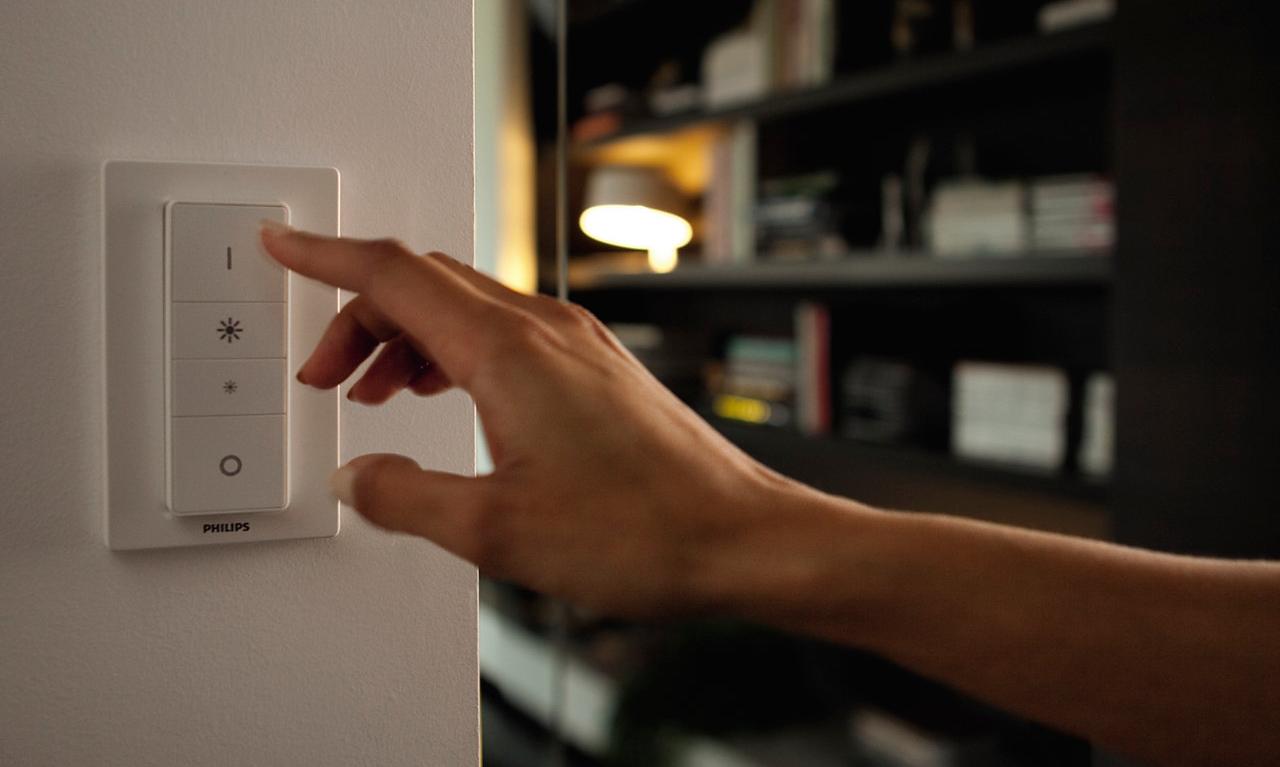


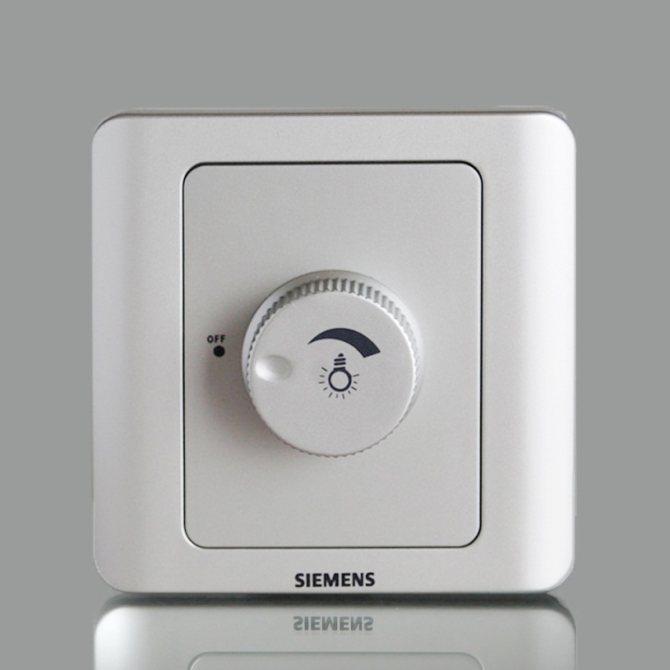

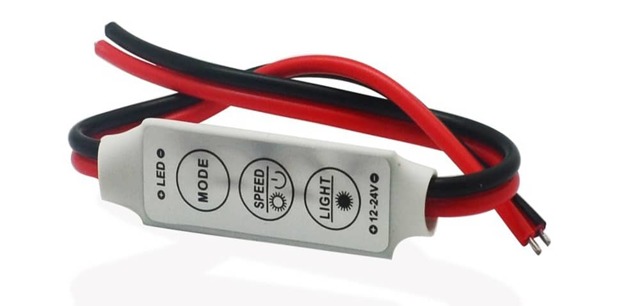


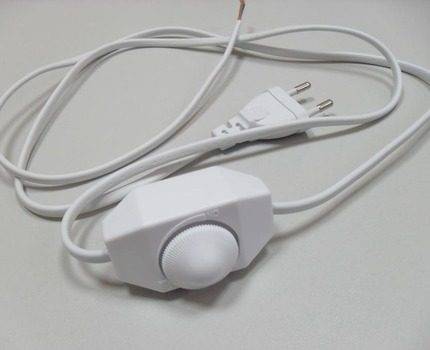
Dimmer with radio remote control
There are also models of dimmers that allow you to control lighting via Wi-Fi, and they are mainly used in smart home systems.
One of the varieties of dimmers are acoustic dimmers that respond to claps or voice commands.
The best rotary dimmers
Such models have a simple design, are distinguished by ease of operation and a long service life.They are able to remember the settings and are designed to smoothly adjust the brightness of the light source.
Werkel WL01-DM600-LED
5
★★★★★
editorial score
100%
buyers recommend this product
The body of the model is made of high quality polycarbonate. It is resistant to mechanical damage and has high thermal stability. The device is connected to the circuit according to the circuit switch and does not require rewiring.
Maximum power - 600 watts. Contour LED backlight transmits information about the current mode of operation of the device and makes it easy to find it in the dark. Automatic intensity reduction at high light levels guarantees economical energy consumption.
Advantages:
- stylish and strong case;
- safety of use;
- simple connection;
- voltage indication in the network;
- The stated service life is 10 years.
Flaws:
high price.
Werkel WL01-DM600-LED will perfectly fit into any modern interior. The right choice for dimming incandescent or halogen lamps.
Schneider Electric Blanca BLNSS040011
4.9
★★★★★
editorial score
94%
buyers recommend this product
The model has a light level memory, which makes it easier to adjust after a sudden power outage. The frame has slots for screws and allows you to quickly install the dimmer.
The case is made of thermoplastic, is not afraid of high temperatures and wear. Protective surface coating protects the device from mechanical damage. A rigid stop is provided to eliminate the risk of scrolling. The maximum power of the dimmer is 400W.
Advantages:
- durable case;
- simple installation;
- long service life;
- remembering settings;
- good power reserve.
Flaws:
turns slowly.
Schneider Electric Blanca is able to dim halogen or LED lamps.
TDM Electric Ladoga SQ1801-0109
4.8
★★★★★
editorial score
92%
buyers recommend this product
The body of the dimmer is made of self-extinguishing ABS plastic. This provides it with high strength, resistance to ignition and high thermal stress, exposure to sunlight.
The maximum power of the device is 600 W, the current strength is 2.5 A. The spring-loaded stem guarantees reliability with strong twisting. The open type of installation simplifies self-installation. The device can have both horizontal and vertical orientation.
Advantages:
- reliable and heat-resistant housing;
- fast installation;
- durable regulator;
- affordable price.
Flaws:
large dimensions.
TDM Ladoga SQ1801-0109 is designed to control lighting networks in residential and unheated premises.
ABB Cosmo 619-010200-192
4.6
★★★★★
editorial score
84%
buyers recommend this product
All elements of the body of the model are made of ABS plastic, which ensures their resistance to mechanical damage and wear. The bezel has a semi-matte finish for an extra layer of protection against scratches and dirt.


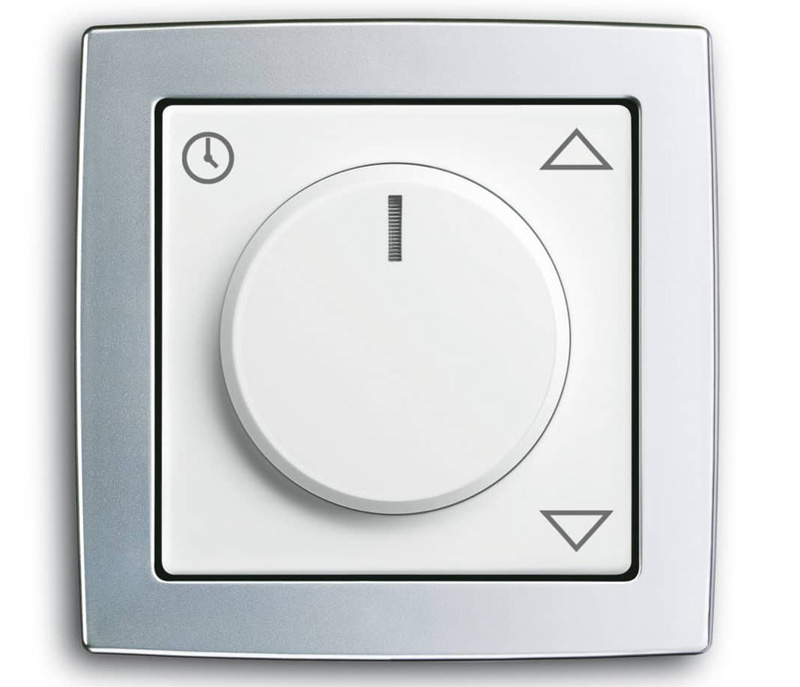
The maximum power is 800 W, the nominal frequency is within the range of 50-60 Hz. The heat-resistant frame has holes for fasteners. A special pattern-pointer on the panel eliminates the possibility of incorrect installation.
Advantages:
- very large power reserve;
- strong case is not afraid of overheating;
- convenient installation;
- voltage indication in the network;
- low price.
Flaws:
no overload protection.
ABB Cosmo is suitable for controlling halogen light sources and incandescent lamps in the home or office.



