
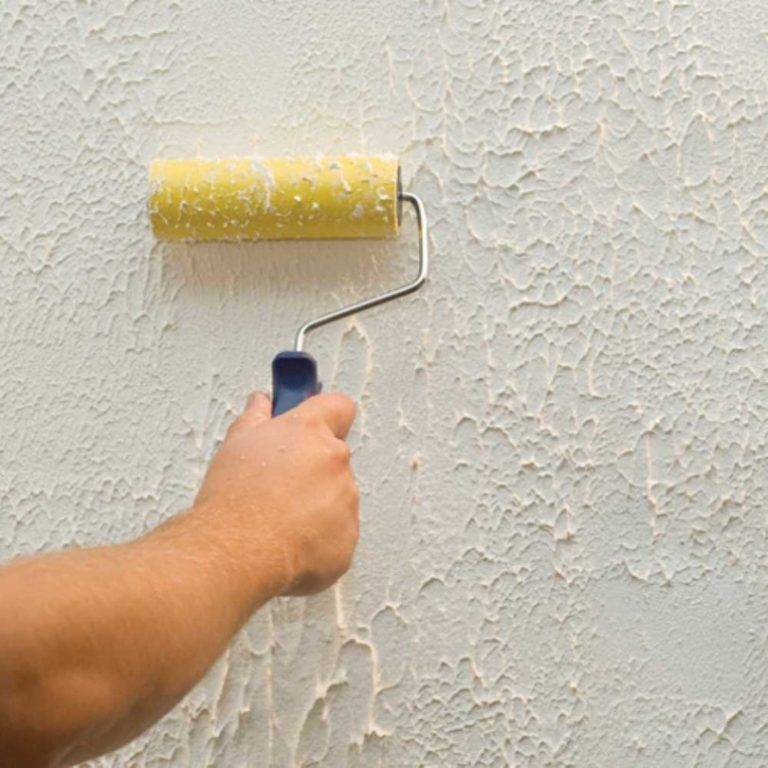
- How to paint the walls in the apartment with your own hands: video
- How to paint a surface with irregularities in the apartment?
- Training
- How to do it without alignment?
- Training
- Ways to decorate walls
- Decorative plaster
- decorative paint
- Tools used for decorative painting of walls in an apartment
- Textured wall paint - features, characteristics
- How to apply decorative paints
- Removing the old coating
- wallpaper
- Whitewash
- Plaster and ceramic tiles
- old paint
- Decor paint effects
- Features, pros and cons
- decoration
- Stencil
- stardust effect
- Contrasting staining
- aging effect
- Pattern effect chaos or abstraction
- Wrinkled skin effect
- skin effect
- Features of applying decorative paints
- Structural paint with sand for decorative plaster
- Water based paints
- silicone paints
- Acrylic compositions
- Latex coloring materials
- Alkyd compounds
- silicate compounds
- Marker and chalk to help
- Interesting examples
- The effect of sand or sand dunes on the walls
- Application and operation
- Painting process
How to paint the walls in the apartment with your own hands: video
Choosing the type of paint is good, but you also need to know how to work with it. Each of the paints has its own characteristics of application and surface preparation. But in general, the following steps are almost always present:
- Removal of the old coating, if any. The thoroughness of this stage depends on the compatibility of the old finish and the new layer. If they are compatible, only detached or poorly adhering fragments need to be removed. If the coatings are incompatible, you will have to clean everything completely.
- Wall putty. The technology is standard: they take a suitable composition and apply it with a spatula, covering up cracks and irregularities.
- Surface grinding. Use either sandpaper or a special mesh mounted on a holder or a wooden block. In a circular motion, remove all unnecessary, leveling the walls.
- Dusting of the polished surface. It is better to carry out with a vacuum cleaner, but you can wipe everything with a dry cloth several times, but each time it is clean.
- Primer. Primer for each surface and paint must be selected separately. It is advisable to purchase it along with paint. Priming performs two tasks: it improves the adhesion of paint to the surface (it will not flake off) and reduces paint consumption.
- Painting. Painting usually in several layers, applying the composition in different directions. if we talk about the walls, then from top to bottom, and then from right to left. Each layer is applied after the first has dried. The instructions usually indicate this time and it is desirable to withstand it.
That's all. Painting of the walls in the apartment is completed. But a verbal description cannot convey some of the features of working with paints or putties. Watch the video tutorial, some subtleties will become more clear. After viewing it, painting the walls with water-based paint with your own hands will not be a problem.
How to create the effect of decorative paint on the walls with simple means, see the video.
How to paint a surface with irregularities in the apartment?
Painting walls with irregularities has its own specifics. The main purpose of such decoration is the visual smoothing of existing depressions, bulges, and other defects.
Training
Before painting the walls in the apartment, it is necessary to prepare the surface for applying future decor. To do this, remove the remnants of the previous finish.
If wallpaper was previously pasted, you need to get rid of them. It is enough to sprinkle them with water from a spray bottle, wait a bit - they can be easily removed. The old layer of paint also needs to be cleaned. Water-based formulations must be moistened with water. The wet layer is easily scraped off with a spatula. Oil-based compounds are removed in one of three ways:
Special washes. The caustic substance will dissolve the structure of the coating, then it can be scraped off with a spatula
It is important to ventilate the room well, since the vapors of such a solution are toxic, with a pungent odor.
By heating. The paint layer is softened with a building hair dryer.
mechanically
You can use a grinder, a metal brush or a regular spatula. You will have to work in a respirator, as there will be a lot of dust.
How to do it without alignment?
Painting walls without leveling means that the laborious stage of work to bring their surface to the ideal will be skipped. That's true, but there are still some things that need to be done. To make the painted wall look good, you need to align the corners of the room. This is the detail that catches the eye. And also you need to get rid of large cracks. If this is not done, they will be visible both under the wallpaper and after painting. Do not forget about priming - it will significantly improve the structure of the base, the paint will lie more evenly, and the wallpaper will hold well.
Training
Before the main work, it is necessary to create good ventilation. If finishing is carried out outside, the air temperature should be from +5 to +30 degrees. Do not work in hot or rainy weather.
- At the very beginning, as with any construction work, it is necessary to isolate the ceiling and floor from unwanted pollution. To do this, you can use the film and ordinary tape.
- Then you need to remove the old finishing material, rust, stains, and also repair deep cracks. Tap with a hammer to loosen unnecessary pieces of plaster. If there is mold, it must be treated with an antifungal primer.
- When all surface defects are eliminated, we cover the entire area of work with an acrylic primer with the effect of "deep penetration". It will give adhesion between the wall and the paint. It is better to apply it with a regular paint roller.
- Wait at least 5 hours for the material to dry.
Ways to decorate walls
There are many ways to decorate walls, ranging from elementary painting to frescoes and mosaics. The best thing about such a variety is that everyone can choose a way that satisfies aesthetic needs and financial possibilities. So, let's look at the main ways of decorating walls.
Decorative plaster
Decorative plaster - a special composition for designer wall decoration. Depending on the nature of the ingredients, such plaster can produce completely different effects. If you decide to opt for decorative plaster, in addition to it, you will need a lot of tools.
The main tools and materials for working with decorative plaster:
- narrow spatula;
- wide spatula;
- decorative spatulas;
- drill with a mixing nozzle;
- roller;
- brushes;
- foam sponge;
- sandpaper No. 1 and No. 0.
It is quite simple to work with decorative plaster - it is enough to distribute it in an even layer on a cleaned, even wall. The principle of operation is exactly the same as for ordinary plaster. With the help of a narrow or decorative spatula, grooves or wavy patterns can be made on wet plaster to create an interesting effect. After creating the texture and completely drying the plaster, clean the sharp corners of the surface with sandpaper.
AT as a protective layer it is recommended to cover the plastered wall with water-based paint.
decorative paint
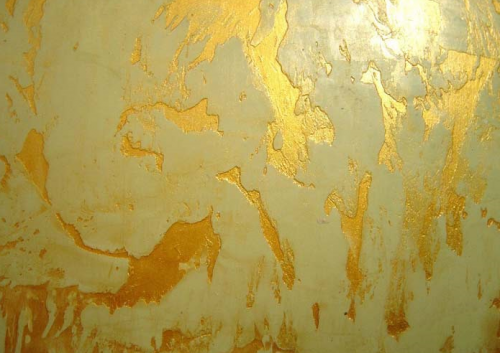
Decorative paint provides unlimited possibilities to decorate, transform and change the interior. The variety of textures and colors is dizzying, and the performance characteristics make it possible to use paints not only in living rooms and bedrooms, but even in bathrooms and kitchens.
Decorative paints have the following advantages:
- high aesthetics;
- long service life (from 10 years);
- ease of application;
- do not fade in direct sunlight;
- protected from mechanical damage (bumps, scratches, abrasions, etc.);
- high anti-corrosion properties (not susceptible to damage by fungus, mold);
- lack of joints, unlike wallpaper;
- the possibility of wet cleaning (especially useful in places around switches);
- variety of shades and textures;
- absolutely harmless to health (great option for children);
- universality (use in any premises);
- antistatic coating (does not accumulate dust).
But they also have a couple of disadvantages:
- careful pre-treatment of the walls is necessary;
- high price.
However, you must admit that these disadvantages simply fade before the benefits that you get after painting the walls with decorative paint.
Tools used for decorative painting of walls in an apartment
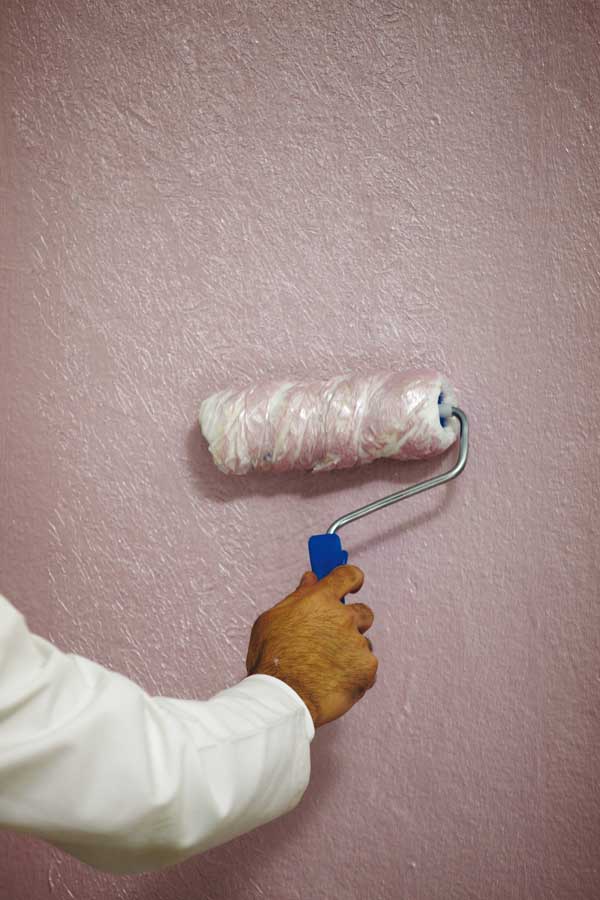
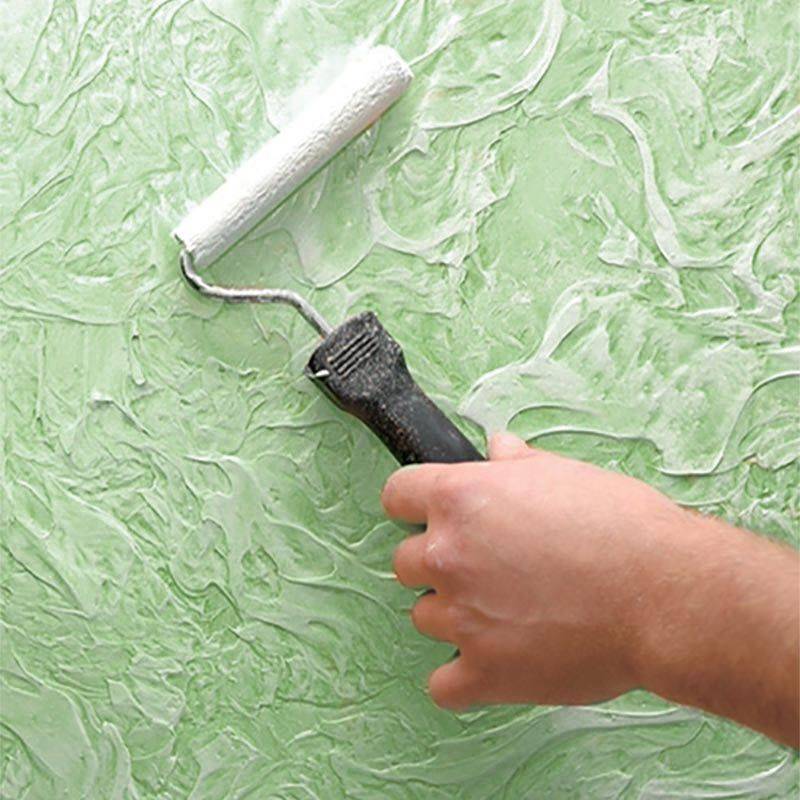
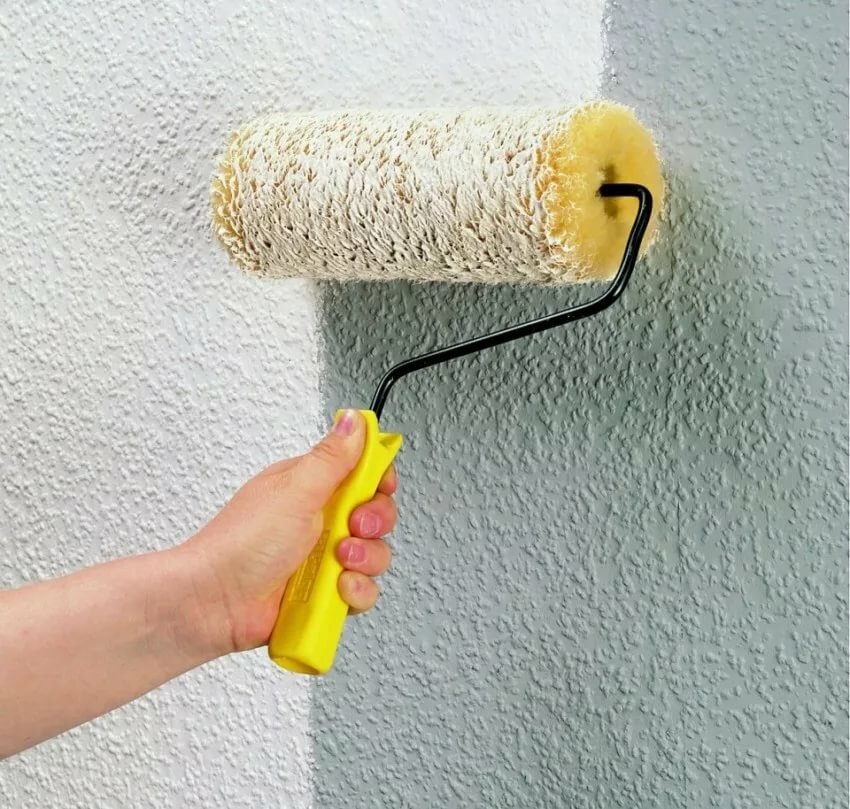
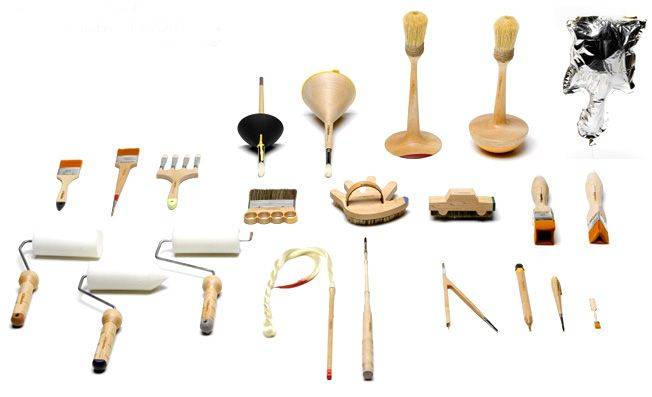
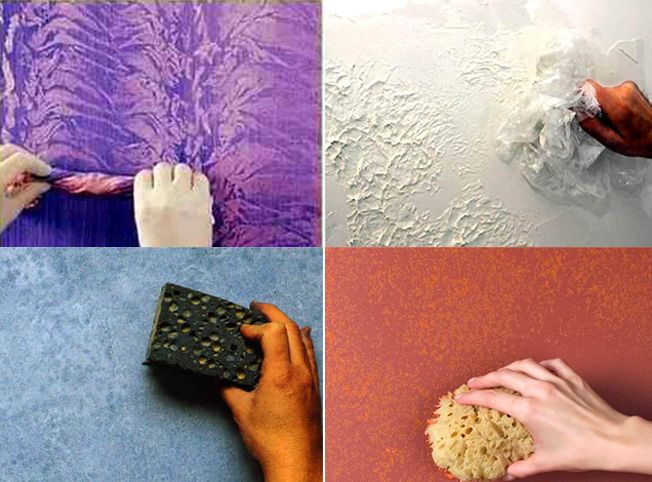
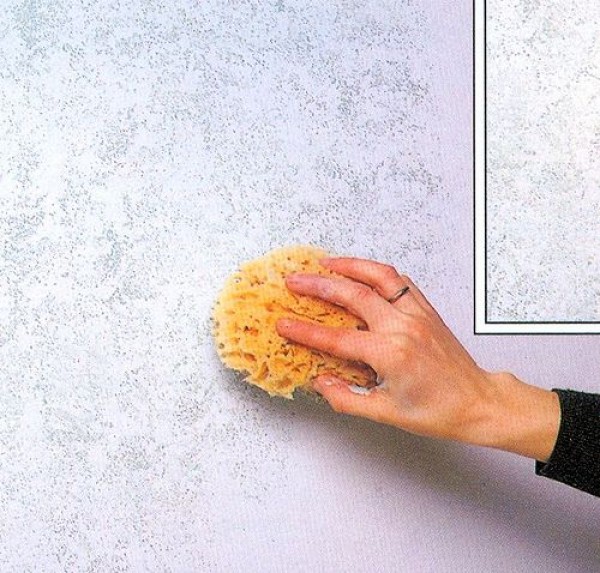
Experts say that thanks to a special set of tools, it is possible to achieve a decorative effect even using ordinary paint. These are rollers (ordinary foam, fur, rubber or texture), brushes, brushes, scrapers, spatulas (plastic, metal, rubber, toothed), Venetian trowel, sponges (foam and natural, marine), pieces of crumpled paper and fabric, bars for sanding, sandpaper and stencils.




You do not have to spend money on acquiring all this arsenal: what exactly you need from the list will depend on what effect you want to get on the walls. The cost of all these tools is not so high, but they will last a sufficient time - if you handle them carefully, and rinse immediately after painting.
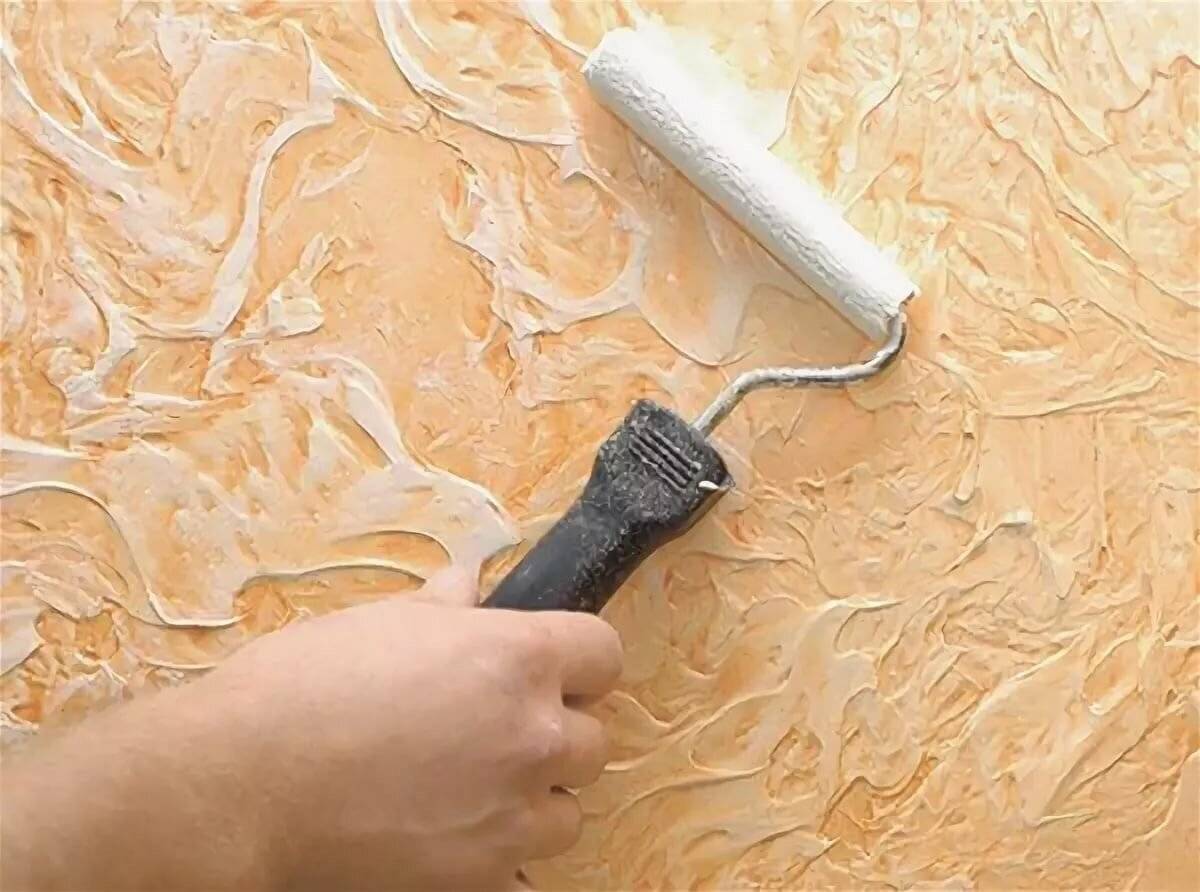
Craftsmen figured out how to use even more affordable analogues instead of some tools. For example, a texture roller can be made from a regular one using a piece of cloth or a plastic bag and rope. The paint application pattern will turn out to be unpredictable and interesting, and no one else will have this for sure.
 Professionals consider decorative wall painting one of the most economical ways to transform rooms. Paints are applied in 1-2 layers (the 2nd layer of paint usually takes 20% less). So the 1st can of 2.5 liters may be enough to cover 40 m2.The exact consumption of material will depend on what effect and tool is used.
The services of specialists in decorative painting of walls are expensive. And this is the case when you can save a lot by doing decorative wall painting with your own hands. The main thing is to carefully study the application instructions and the various options for obtaining decorative effects.
Textured wall paint - features, characteristics
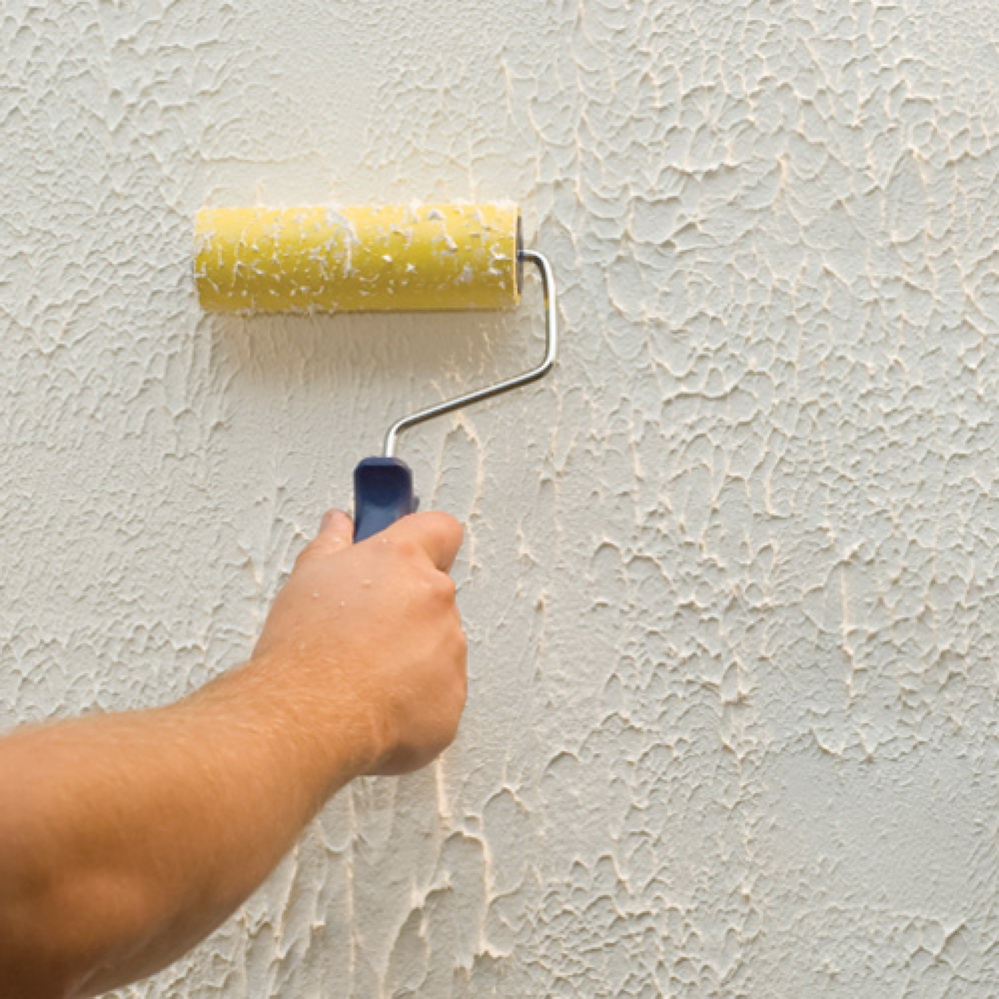
Textured paints are a dense, viscous, thick composition based on various polymers, acrylic. Components that create a relief are usually added to this mixture - they “scratch” the surface, give volume. The consistency of the material is many times thicker than that of other paints - oil, enamel, acrylic, water-based, therefore slightly different tools are used for application.
Similar mixtures are used for both internal and external cladding, finishing painting of the ceiling, walls, and various elements. Textured compositions are a cross between ordinary paint and decorative putty, which allows you to halve the time of repair work. The main purpose of the material is not to level the plane, but to give it a beautiful texture.

How to apply decorative paints
A variety of types of decorative wall paints, presented on the modern market, provide a huge expanse for the implementation of creative ideas. The advantage of these unique ready-made compositions is that their application does not require special skills and the use of special tools.
Compositions with the effect of mother-of-pearl (“chameleon paints”) change their color at different angles of illumination, which creates the impression of walls covered with silk fabric.
In coloring compositions with the effect of velor or velvet, solid multi-colored particles are present. After applying such paint, the surface of the wall becomes textured, visually soft, deep - like a real velor canvas.
A feature of granite (mosaic) paint is the multi-colored acrylic bubbles included in this mixture. When painting from a spray gun, the bubbles break against the wall, as a result of which a perfect illusion of a granite texture is created.
Such compositions usually do not require additional tinting or the use of special technologies. All that is required is a preliminary surface preparation and a decision in favor of using one of the devices for decorative wall painting: a roller or an airbrush.
Removing the old coating
Before you start preparing the wall for painting, you need to get rid of the old finish, and this is not easy. Our tips will help you do it quickly and without unnecessary labor.
wallpaper
At first glance, removing the wallpaper is easy, but sometimes you have to work hard to get rid of all the remnants of the coating. The base must be completely cleaned, and only after that you can proceed to the next step.
Removing paper sheets is quite simple. Pry them from below with a spatula, and they will easily move away from the surface. If the material is firmly rooted into the base, arm yourself with a spray gun. Pour warm water into it and treat the old finish. Do not spare the water - the more the wallpaper is saturated, the better. When the paper gets wet, it can be easily removed with a trowel.
Modern options - non-woven, vinyl so easy to remove will not work. Such wallpapers, especially the latest ones, are almost impossible to get wet through.Therefore, it remains to literally “punch” the way for water with a toothed roller or knife. Moisture will penetrate through the damaged surface and soak the dried glue. If the toothed roller does not cope, a steamer will come to the rescue, of course, if it is at hand.
If there are no such units on the farm, you will have to tune in to a long and painstaking process of scraping wallpaper and glue. If you need to clean the wall to a concrete or brick base, you have every right to skip this unpleasant process and remove the wallpaper along with the old plaster.
Whitewash
Cleaning walls from whitewash is an incredibly difficult and tedious undertaking. It is necessary to get rid of even the reminder that this material was present on the walls. Remains lime or chalk will not allow to apply a new finishing layer evenly and efficiently. A lot of spools form on the walls, which will need to be cleaned off.
To completely remove the remnants of whitewash will help:
- warm water - spray the wall with a spray gun and remove the composition with a spatula. Water is quickly absorbed, so you need to repeat the wetting from time to time. Compositions that do not contain special hardeners and other additives can simply be washed off with plenty of water;
- tools with which you can scrape off whitewash - a grinder, sandpaper, an iron brush and a spatula. During grinding, a large amount of building dust is generated in the room. From time to time, you should take breaks and leave the room until the suspension settles;
- a folk remedy consisting of soda, crushed laundry soap and water.A thoroughly mixed solution is applied to the surface, after which the finish layer is removed with a spatula or sponge.
The main requirement is a thorough cleaning of the base. If you treat this stage without due attention, you will have to say goodbye to the dream of beautiful walls.




Plaster and ceramic tiles
Old plaster can sometimes be left. If there are small defects, it is more profitable to simply repair them and thereby save a lot of money. Sometimes putty leaves, voids form between it and the plaster. Then you can remove only this thin layer, after wetting it with water. If, upon careful study of the reservoir, you find places of shedding, this is a sure sign of the presence of voids. It is better to get rid of the fragile base. Often the problem comes with removing hard-to-reach areas, but don't let that fool you. It is impossible to guarantee their reliability subsequently.
The tile must be removed together with the tile adhesive. Cleaning of walls from ceramic cladding is carried out using a perforator equipped with a chisel-shaped nozzle. First, the tile is knocked down, then the fixing material is removed. If there are defects in the opened layer of plaster, you need to clean it off to a concrete base. Don't skimp on durable coverage.
old paint
The paint is cleaned with special solvents. The composition must be applied to the wall, and then scraped off with a spatula. Overlapping old paint with new paint is not recommended, since a perfect result cannot be guaranteed.
A building hair dryer will be a great helper. When the painted area is heated with hot air, the paint swells up with bubbles and is easily removed.
Decor paint effects
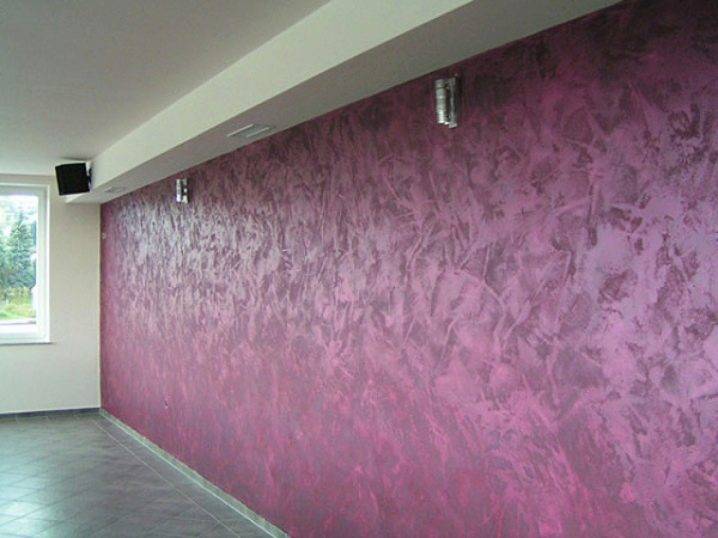
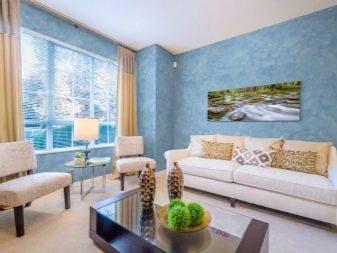
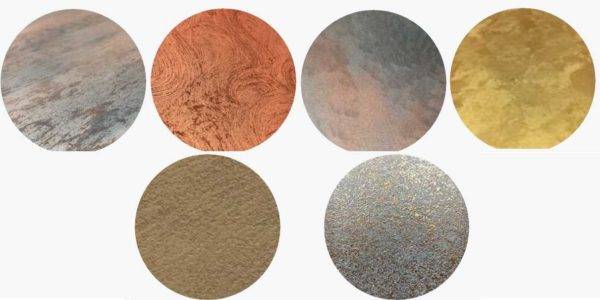
As already mentioned, decorative wall paint reproduces certain textures of natural materials. In this case, they often talk about the paint "with effect." For example, with the effect of silk, sand, stone, leather, etc. There are many options and variations, and you can get lost in specialized catalogs. It will be a little easier if you have an idea of what can be found and what it might look like.
- Antique, patinated.
- Silk, silk threads.
- Velvet and velour.
-
Sandy surface.
- Under decorative plaster.
- Nacre.
- Metallic.
- Leather, suede.
- With the effect of natural stone.
As you can see, the list alone is impressive. And different colors will look the same effect in different ways. This is due to the fact that components and placeholders differ. And the difference is sometimes significant. In general, it is usually difficult to decide. But know that whatever you choose, it will be interesting.
Features, pros and cons
The main purpose of painting walls with a textured color scheme is to give individuality to the design. In total, there are 2 main types of decorative paints: liquid and dry.
The difference between dry dye is that before starting work it must be diluted with water with the addition of color. Liquid textured paint is initially ready for use.
The dense and thick consistency of textured paint allows you to create beautiful, interesting patterns that complement the interior. In addition, they can be used to hide small wall imperfections (unlike wallpaper or ordinary paint). Due to its water resistance, structural dyes can protect the room not only from moisture, but also from mold.
Let us consider in more detail the positive qualities of such materials:
- All variants of this finish are absolutely safe and do not cause allergic reactions in humans, so they can be used in a children's room without worrying about the child's health.
- Textured dyes have a fairly long service life; in this they “outstripped” wallpaper and simple paint. The average service life is 5-10 years.
- Resistance to moisture, sunlight (unlike wallpaper, decorative paint is not subject to fading) and frost.
- Permeability does not interfere with air circulation.
- Anti-stack is a characteristic feature of textured paints. Repulsion of dust and dirt is inherent in such materials, which allows you to keep the surface clean.
- Masking minor imperfections.
- A unique design that you can create according to your tastes and preferences.
There are few drawbacks to decorative paint, but they still exist:
- Such compositions are quite expensive. Consumption is 1 kg / sq m, and this is a big item in the family budget.
- They need preparation. The surface must be level.
- The paint will hide minor flaws, but deep cracks will need to be repaired by other means.
decoration
Stencil
Stencil
Buy at the store or make your own stencils. Suitable material for:
- thin sheet plastic;
- a piece of thin linoleum;
- thick oilcloth, etc.
The point is that the shape does not collapse after a few strokes with a roller or brush. If this is not taken care of in advance, the edges of the form will become uneven, and the applied pattern will have a blurry outline.
stardust effect
With the manual method of spraying the paint composition, a terry brush is often used.
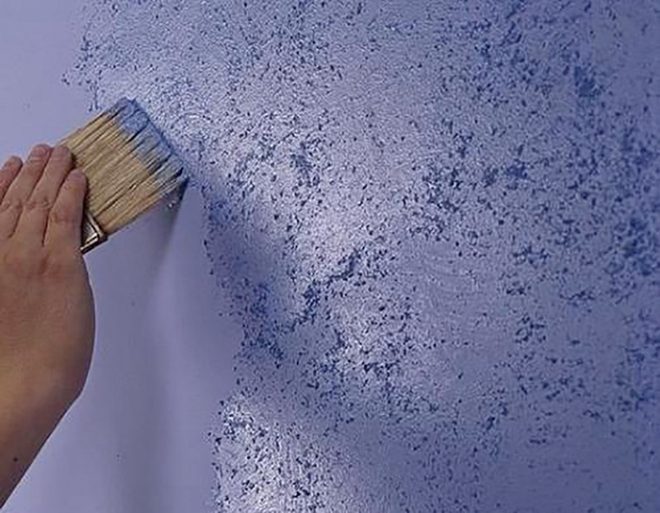
A simple and at the same time interesting design technique: “specks” are applied to the dried surface with paint of a different color. To do this, you need to take a rough brush with a hard bristle, dip it into the paint, wring it out carefully, and only then “splash” it in the right place: bend the bristle in the opposite direction, and then release it. Practice in advance somewhere else to achieve the desired quality.




Contrasting staining
Contrasting staining
Contrasting staining
The decoration turns out to be very original when you paint the walls in the same color, but in a different color - separate sections or different walls of the same room. Perhaps it will be large rhombuses or squares, stripes, circles, stains. Draw a design on paper in advance and act based on the picture.
Contrasting staining
aging effect
Another name is stippling. On a plain surface, apply glaze in a contrasting color. Use a wide flat brush for this. Without waiting for it all to dry, repeatedly touch the surface with the same rough brush (or take a rough round brush). Spread the "touches" either completely over the entire surface, or zoned. As a result, an original texture is formed, and no traces of brush stains will be visible.
Pattern effect chaos or abstraction
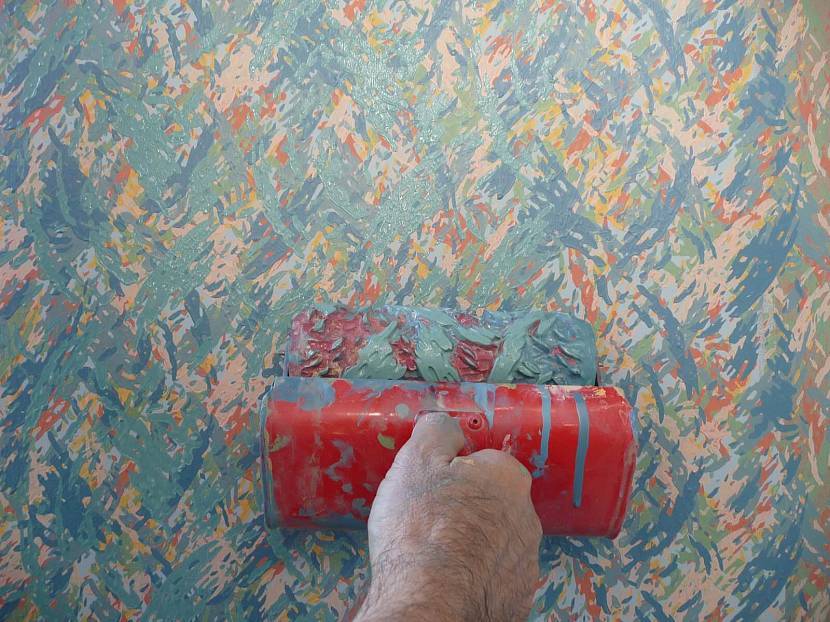
Make a simple roll with a "torn" coating. It will help you apply finely divided wall paint so that irregular shapes appear on the walls. Naturally, the applied layer should differ in color from the main one.
How to paint walls spotty with a modified roller
How to paint walls spotty with a modified roller
How to paint walls spotty with a modified roller
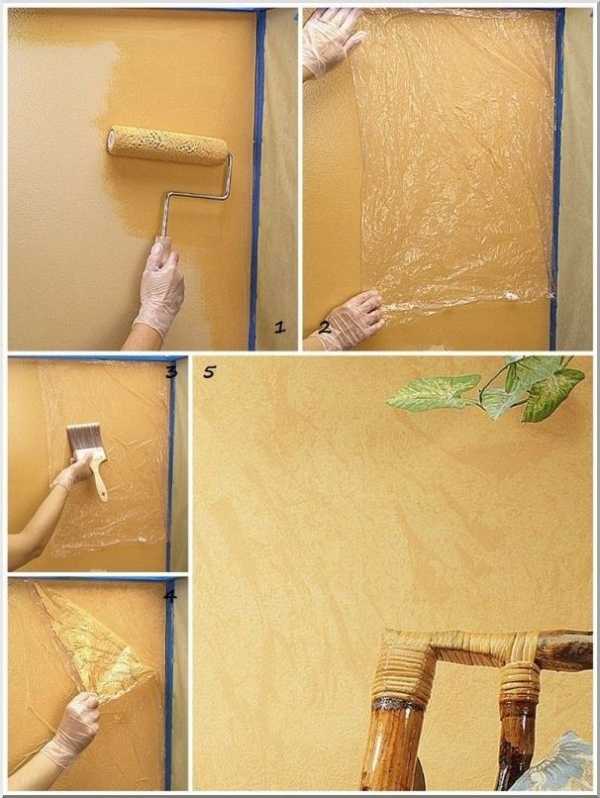
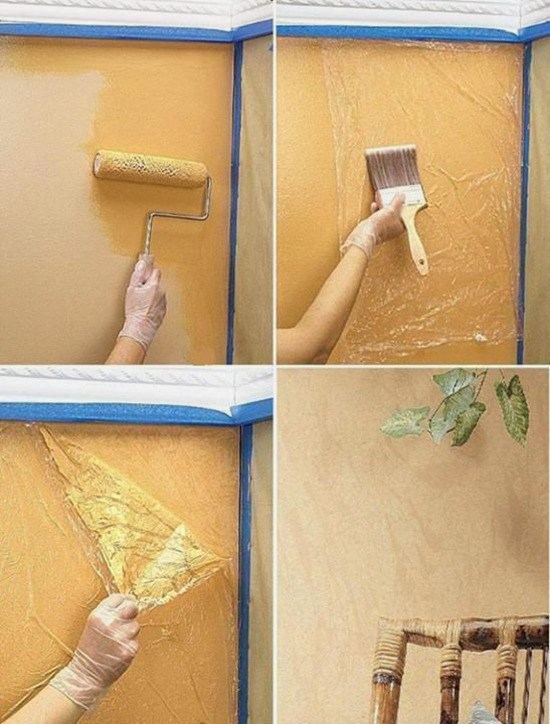
Wrinkled skin effect
Wrinkled skin effect
You will need:
- acrylic primer;
- vinyl paint in two shades;
- mother-of-pearl azure;
- decorative paper.
The procedure is priming and painting, applying paper and wrinkling it, painting again, removing excess paint from the folds of the “skin”.
skin effect
To obtain this effect, you should use the following materials and tools:
- Latex paint in light and dark shades;
- glaze;
- Rags;
- roller;
- Scotch tape;
- Suede fabric.
How to get the intended result of decorative wall painting with your own hands:
- Carefully remove the old coating, remove dirt, wipe with a rag.
- Those places that do not need to be painted are sealed with adhesive tape.
- The surface is covered with latex paint using a roller. If necessary, it is applied in two layers. We are waiting for the paint to dry.
- Suede fabric is cut into strips 10 cm wide, then we collect them together in a kind of brush.
- In the bath, mix the glaze and latex dye, the shade of which is darker than that of the main color.
- The resulting paint is applied to the wall.
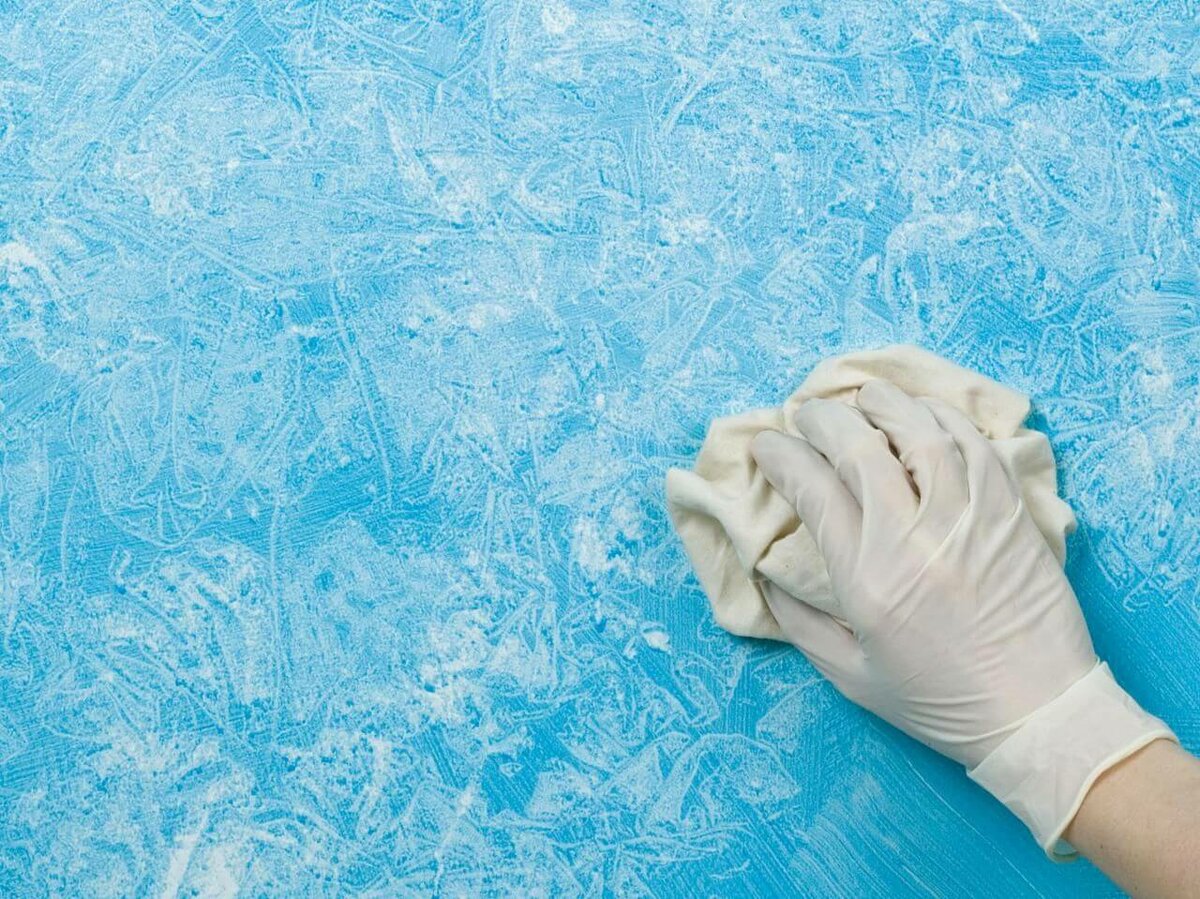
- A suede brush is wetted in water and wrung out. She needs to touch the glaze, which has not yet completely dried out. In this case, the coating is partially removed.
Features of applying decorative paints
Before applying the composition, it must be thoroughly mixed, and then applied to the base with a brush or roller. When choosing a brush, paint should be applied to the wall with horizontal movements, and then shaded with vertical strokes. They are the opposite. When working with a roller, the material is applied in wide overlapping strips.It drives the paint more densely into the surface, so it is better painted. But the consumption of material also increases.

Different ways of applying decorative paints give different effects.
A good result is obtained when using two tools at once: first, the base is formed by shading, then the uniformity of the shade is formed with a roller. Coloring with several layers helps to achieve a special decorative effect. For this, paints of the same color, but different shades are used.

Applying multiple layers of paint

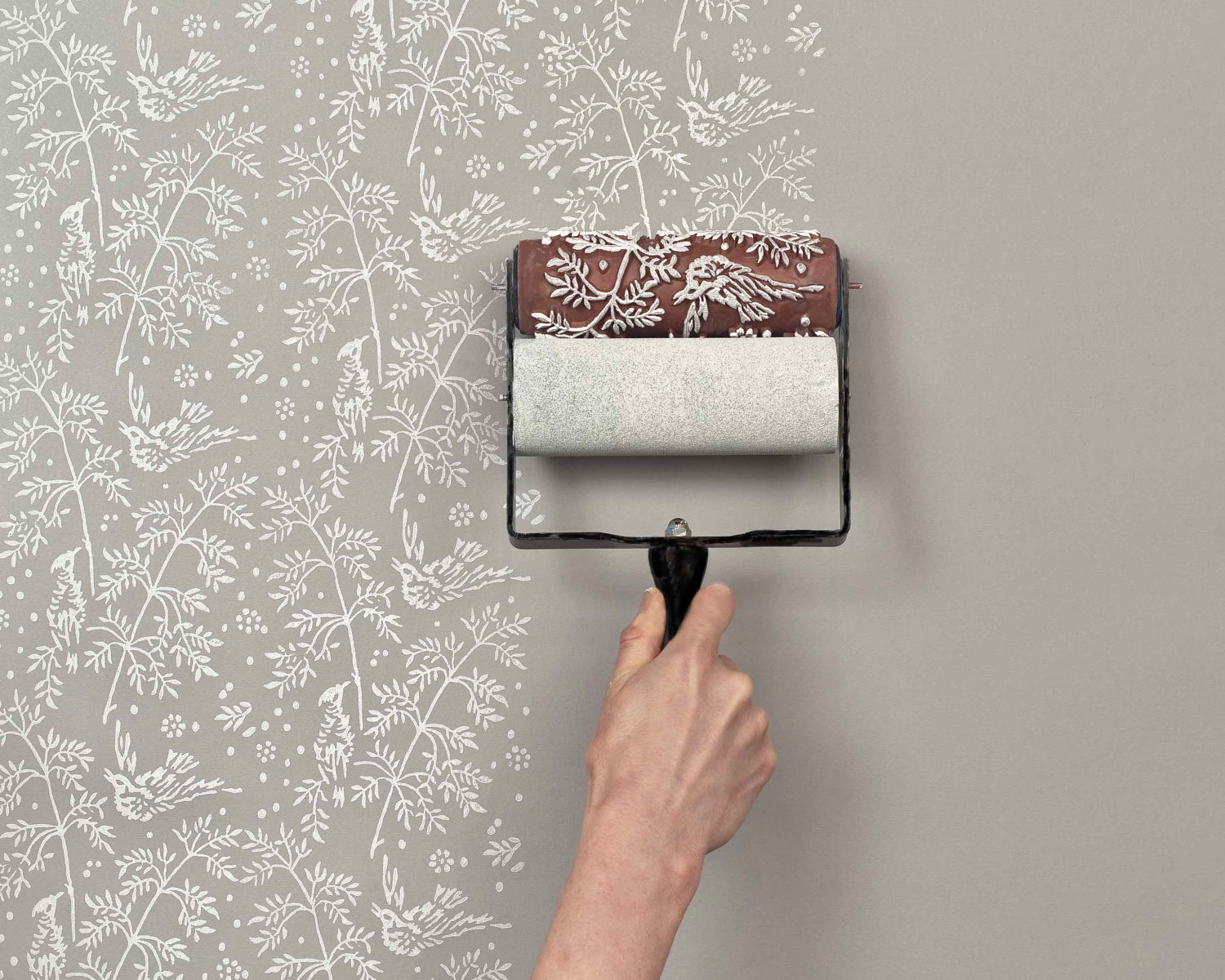
Creating texture using different shades and a textured roller

Another unusual way to paint the walls
At first, dark is usually used, light lies on top of it. To create a pattern, rubber sponges, special mittens, rollers are used, the roller of which has a textured surface. Sometimes at the finishing stage, the surface of the wall to make it more decorative, it is additionally processed with transparent varnish or beeswax.
Each new layer is a different color
If you need to focus on deepening the color, apply the blur technique. The base is made light, and then, when the first layer is thoroughly dry, a darker shade of paint is applied on top, and then rubbed with a mitten. It turns out a very beautiful effect.

Sponge paint smear

Creating patterns with stencils
Structural paint with sand for decorative plaster
This type of coating is similar to decorative plaster. But the paint has a more liquid consistency, so it is applied in a thin layer with a roller or brush, sometimes spatulas are also used. But this is not necessary, and they are also used to obtain relief on the surface. Structural paints with sand are based on acrylic water dispersion with fillers of various sizes.






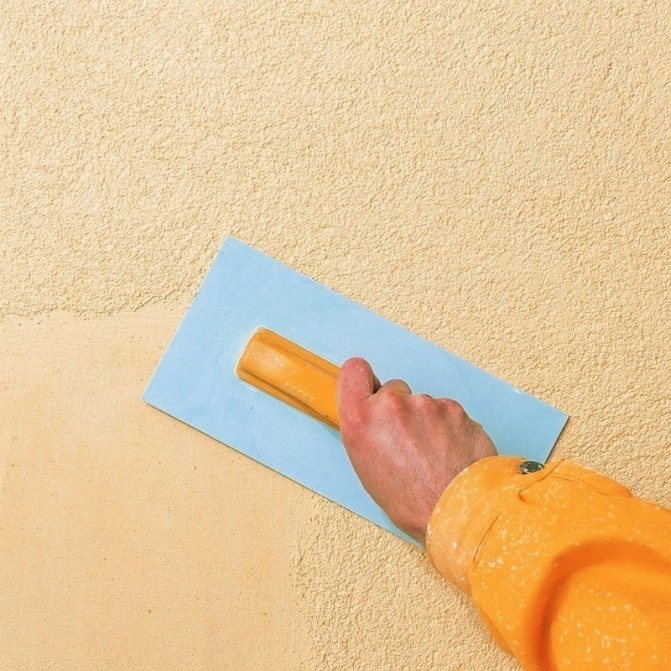


Structural interior paint gives a surface that is similar to decorative plaster
Paint with the effect of decorative plaster can be painted in mass, the base color is white. It can be used in a single-color version, but it is possible to make a two-tone coating. For this, structural paint is applied as a base. After it dries, with a semi-dry roller or brush, paint is applied in a darker or lighter tone. It can be matte, glossy or with some kind of effect. There are options. Get the so-called "glazing".
Water based paints
Today, water-based formulations are most often used. Due to their positive properties, they are used much more often than other types. So, among the water-based compositions, emulsion and dispersed ones are distinguished. Among them are the following types:
- Water emulsion;
- Silicone;
- Acrylic;
- Latex.
What does decorative wall painting look like?
The main advantages of such paints are as follows:
- They do not have a pungent odor during repair and after drying;
- Dry quickly;
- The ability to make absolutely any color and shade;
- Easy to use;
- Vapor permeable.
This type of material is distinguished by its versatility. Special components make it resistant to mechanical stress and abrasion. Due to different fillers, such as quartz or marble chips, it is possible to achieve different surface textures: imitation of sand, silk or glossy sheen.
silicone paints
Decorative wall painting in the interior
Paints based on silicone - This is a water-dispersed composition. They have a number of advantages, almost universal. Silicone compounds have excellent hiding power. Paint applied in two layers can even hide small cracks on the surface. After painting, a smooth film is formed on the surface, which protects the walls from abrasion; makes them virtually waterproof.
Acrylic compositions
Today, the leading positions among paintwork materials are occupied by acrylic paints. use for painting surfaces from any materials: wood, brick, drywall, concrete. The color range of these compositions is striking in its diversity. Using acrylic paints, the surface can be made glossy, matte or mother-of-pearl. They differ in that they dry quickly, practically do not have a pungent odor, and are relatively resistant to moisture. All these characteristics make it possible to use acrylic-based coatings for children's rooms, hallways, and bathrooms.
Latex coloring materials
The most expensive water-based paint is a latex-based composition. The high price is explained by the excellent characteristics that this type of paintwork has. Their main advantage is the absolute water resistance of the treated surface. Therefore, latex paints are used for wet rooms: kitchens, bathrooms and shower rooms. With their help, you can mask small defects and cracks. Among the shortcomings can be called the fact that it quickly burns out.
Alkyd compounds
The solvent for such paints is gasoline, turpentine, white spirit. Therefore, staining is accompanied by a strong solvent odor, which is very toxic.Thanks to alkyd resins, the paint is easy to apply, very durable after drying, resistant to sunlight and temperature changes. But at the same time, it differs in a short service life - it quickly fades, acquiring a yellow coating.
silicate compounds
Decorative wall painting in the living room
In paints based on silicates, the main component is the so-called "liquid glass". This composition makes the surface particularly durable. In terms of vapor permeability, silicate paints are in first place among other types of coatings. Special additives prevent the appearance of mold and fungus, so the painted surface is not afraid of high humidity.
Marker and chalk to help
Increasingly, walls and furniture painted with slate paint are appearing in modern interiors. This allows you to take notes on the surface and draw all kinds of images. So the interior is always updated depending on the mood of its owners.
Method number 14. Wall painted with slate paint
Marker paint also belongs to innovative types of coatings. After its complete drying, which occurs within seven days, you can draw on such a surface with dry-erase markers.
Method number 15. You can draw funny pictures on marker paint
Method number 16. A regular marker will help decorate the wall
Interesting examples
Decorative plaster, with the right choice, can turn even the most ordinary room into a real work of art:
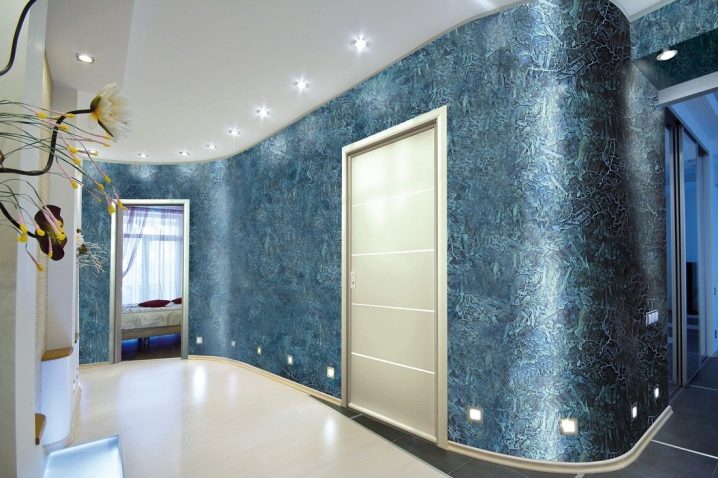
The rich golden color and textured surface of the finishing material turned this living room into a royal chamber. Such a room looks quite expensive, stylish and unique.The color of the plaster harmonizes perfectly with the curtains and flooring, and emphasizes the delicate color of the living room furniture.

The wall in the hallway, which has such a beautiful plastered wall, immediately becomes extraordinary and stylish, hinting at the delicate taste of the owner of the house.
A well-chosen color scheme gives the space coziness and the atmosphere of a home, a textured butterfly refreshes the whole design as a whole.
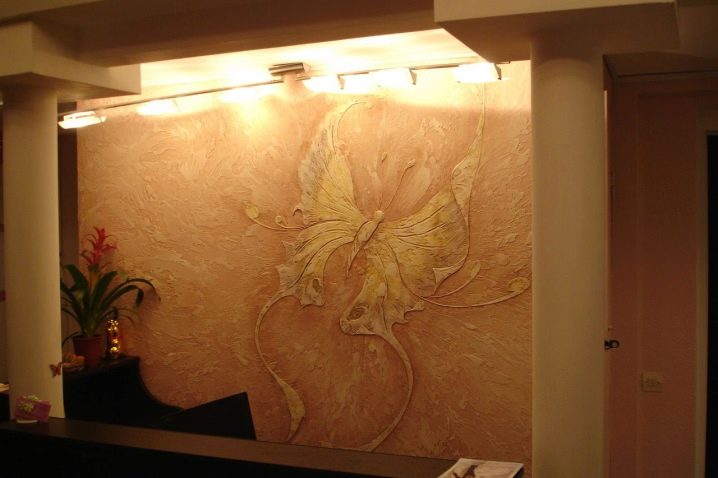
How to apply decorative plaster with the "Flowers" effect, see the following video.
The effect of sand or sand dunes on the walls
The composition of the paint with the effect of sand includes binders, solvents, antiseptics, crystal dispersions. When applied, we get overflows, after drying, the texture appears. With different application techniques, we get a different look - dunes, dunes, sand overflows.




The effect of sand and sand dunes is created using a special decorative wall paint.
The paint is easy to apply, no special techniques are required. Due to the pronounced texture, minor wall defects are hidden. So the requirements for the surface are not so strict.
Application and operation
The paint is easy to apply, no complicated techniques are required. Unless you want to have not just “sand”, but dunes. But to create such an effect, special formulations are required.
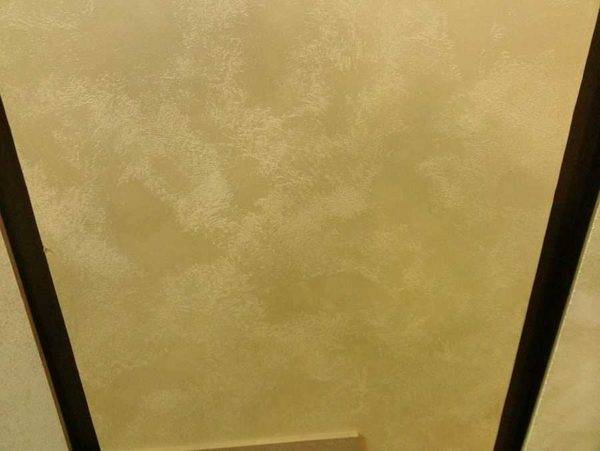 Washing the paint with the effect of sand with a brush will not work. Gentle cleaning with soft nozzles on the vacuum cleaner. And keep in mind, if you touch a wall painted with sand effect paint, then the relief crumbles. But this is imperceptible and does not affect the appearance. The surface is initially heterogeneous, the relief just changes slightly. The view does not suffer from this. The service life is up to 10 years, which is not bad at all for paint.
Pay attention to the availability of hygiene certificates for this type of paint.Binder is not always harmless
So the presence of certification and a certificate from the sanitary inspection on the amount of emitted substances is simply necessary.
Painting process
To decorate the walls with a curly coating, you will have to use at least two shades of decorative paint: the base one and the one with which the ornament itself is applied directly.
You can make the main painting in a darker tone, and put a light-colored pattern on top, or vice versa. The main thing is to observe relative contrast so that the shades do not merge. Staining is carried out as follows:
- The surface is carefully prepared, that is, cleaned and leveled, if necessary (in any case, it should be perfectly clean and even). To solve the latter problem, ordinary and finishing putties, as well as sandpaper, are used.
- The walls are treated with a primer to create strong adhesion (adhesion of the coloring material to the surface), as well as for the purpose of more economical consumption of the decorative coating.
- A base coat of paint is applied to a completely dry base. At the beginning of this stage, you will have to work with a brush to paint over joints, corners and other hard-to-reach places, bypass sockets and switches. Do-it-yourself decorative wall plastering from ordinary putty video? The remaining area is treated with a roller, moving from top to bottom, and alternating movements vertically and horizontally, in order to thoroughly paint over the entire surface.
- When the first layer is completely dry, proceed to the most interesting thing - working with a curly nozzle. A firm hand is important here, because you need to act carefully and accurately. Having practiced beforehand, you can be sure of success.The roller is rolled from top to bottom, scrupulously combining each new strip with the previous one (there should be no overlap).
Sometimes the resulting dried surface is also treated with a transparent varnish to give the coating strength and extend its service life.



