
- How to understand that the dishwasher has a problem with this particular device?
- Replacement nuances for different dishwashers
- How to extend the service life?
- The principle of operation of the dishwasher
- Replacement nuances for different dishwashers
- Tools
- Training
- Replacement procedure
- How to replace the heating element
- How to find out about a breakdown?
- What causes most breakdowns
- Dishwasher Repair Tool Set
- The dishwasher does not drain water: reasons
- Water in the Bosch appliance: what to do?
- What could be the problem?
- Bosch
- Electrolux
- Korting
- Indesit
- How to repair a dishwasher with your own hands
- Solving problems with the filling system
- Checking the circulation pump
- Troubleshooting the drain system
- Replacing the level sensor
- Heating element diagnostics
- Checking the correct use of the dishwasher
- Types of dishwashers
- Dishwasher device
- Dishwasher cycles
- Types of drying dishes
How to understand that the dishwasher has a problem with this particular device?
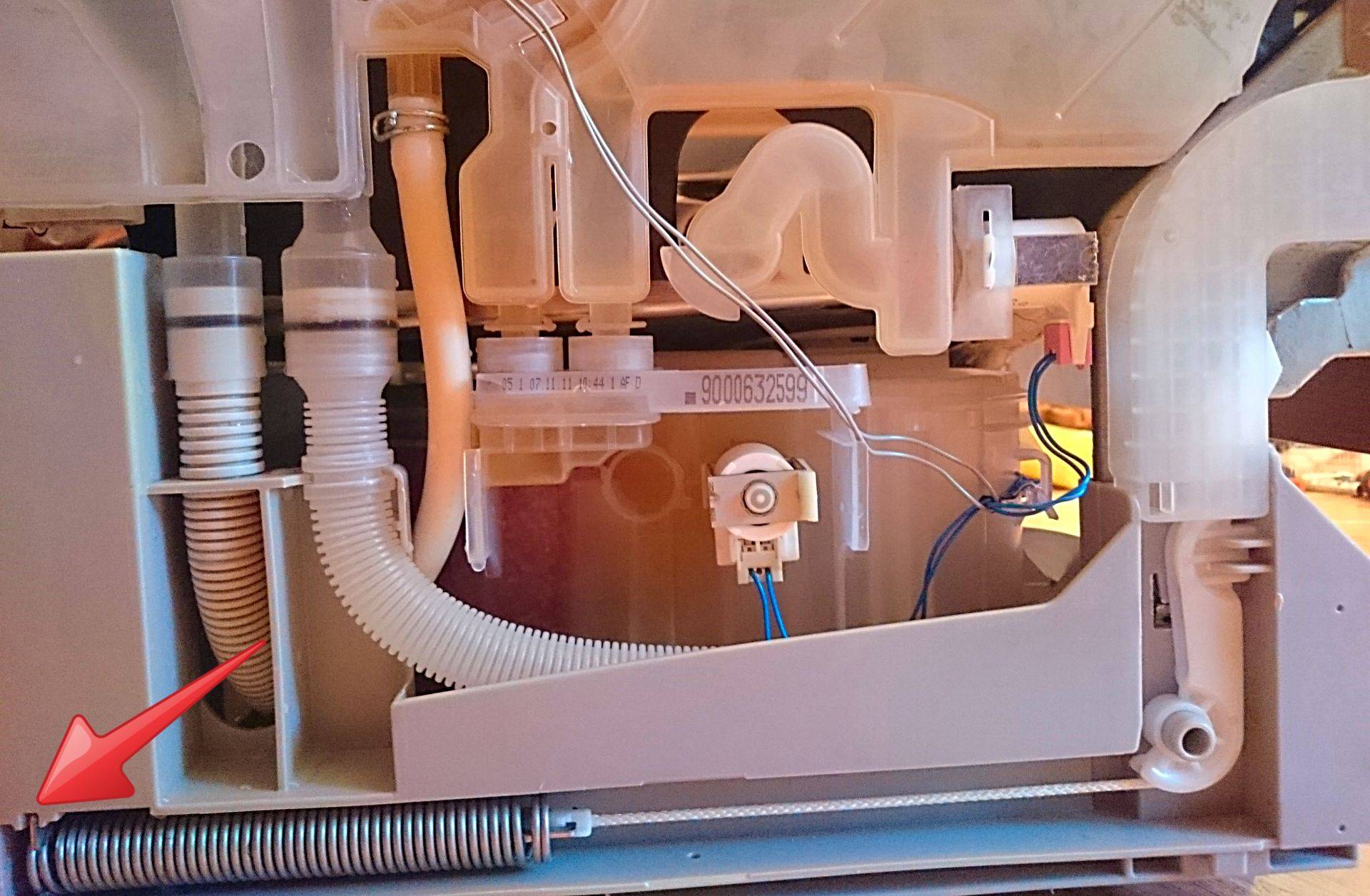
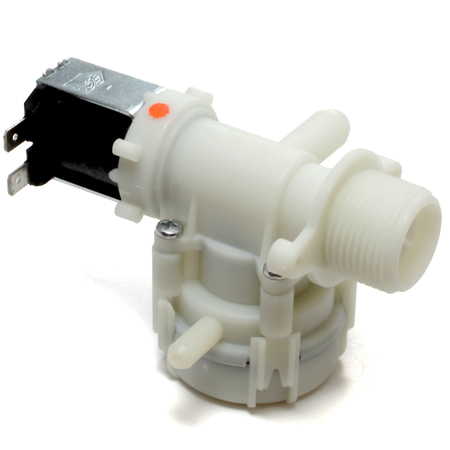
The filling valve is located inside the machine body and is hidden from view. However, even if it were outside, the plastic case would not allow you to see the status of the device. Therefore, possible problems can only be determined indirectly by analyzing the specifics of the problems.
The main signs of an element failure are:
- lack of water supply when starting the program;
- non-stop water supply to the machine, accompanied by a constant discharge into the sewer;
- intermediate states, when the amount of water in the machine does not correspond to the level determined by the program.
As a rule, these signs most reliably indicate the occurrence of problems with the water supply to the machine.
Replacement nuances for different dishwashers
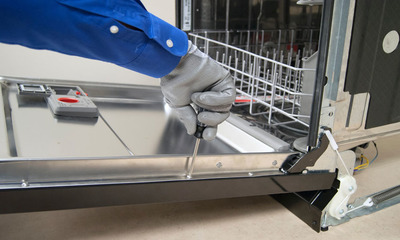 The method for replacing the inlet valve for dishwashers from different manufacturers is not too different. The only caveat is the location of the device.
There are models with a lower and upper water supply (the location of the connecting pipe), so the method of disassembling the machine will depend on the type of construction.
Some models are more convenient to lay on their side, others are enough to deploy and tilt slightly, leaning against the wall.
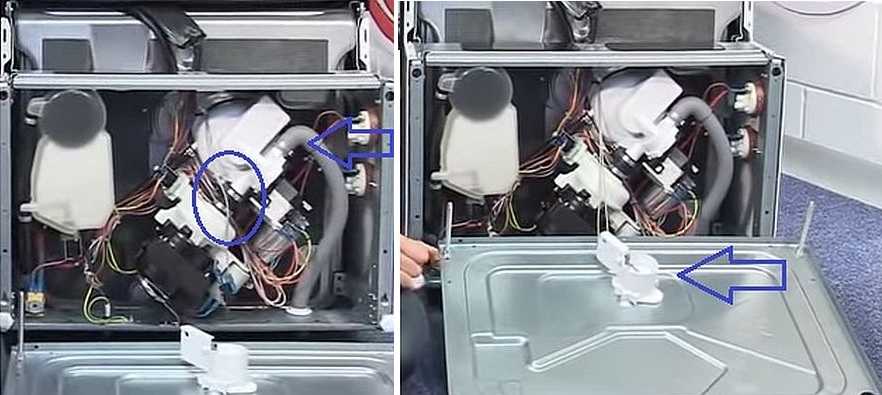
For Bosch dishwashers, a complete overturn is considered the best way, since all the main nodes are located in the bottom area. Otherwise, the replacement procedure is almost the same.
How to extend the service life?
The resource of parts and assemblies of the PMM is quite high. However, it depends on the operating conditions, which may not be acceptable. This significantly reduces the duration of the device.
The following actions will help increase the service life:
- Using a water filter. Rust, small particles fill the internal cavity of the valve and prevent the seats from blocking the water.
- Installation of an apartment pressure reducer. Excessive load at the inlet contributes to the early failure of not only the valve, but also other components.
- Using a power stabilizer This is a general rule that allows you to protect not only the valve, but also the entire PMM electronics.
Unfortunately, most dishwasher owners ignore these tips, but the result is only a shortened lifespan.
The principle of operation of the dishwasher
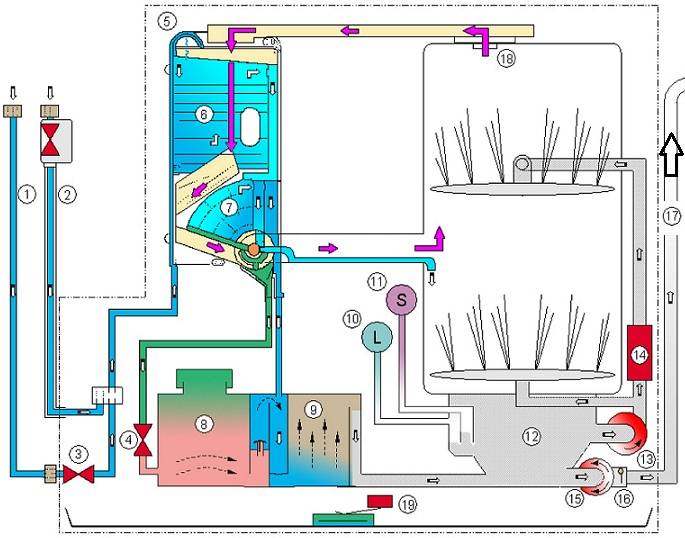
Copying the washing process, water enters the dishwasher, bypassing the inlet valve. Single node. Water fills the tank, touching the level of the lower waterproofing of the door, sometimes heats up, is pumped by a recirculation pump through a pipe into the rocker arms. The rain of the jets washes the dishes, the individual holes are directed to create a torque on the rocker. There is movement.
Water is collected by the lower part of the compartment, passes through a cascade of a coarse and fine filter, is collected by a sump, and is re-supplied according to the program. When completed, the drain pump discharges the dirty stream into the sewer.
The pressure switch monitors the course of the cycle, the heating element heats the water if necessary, the solenoid valve adds softening salt according to the sensor readings set by the regulator. Powder, other means are poured into the door dispenser, as the need arises they are thrown into the working chamber.
We add that the pressure of the pressure switch is taken in two places:
- On the side water storage tank during the recruitment period (preheating).
- In the sump, the level is controlled during the descent.
Clearly, the central board is free to use the information in various ways.
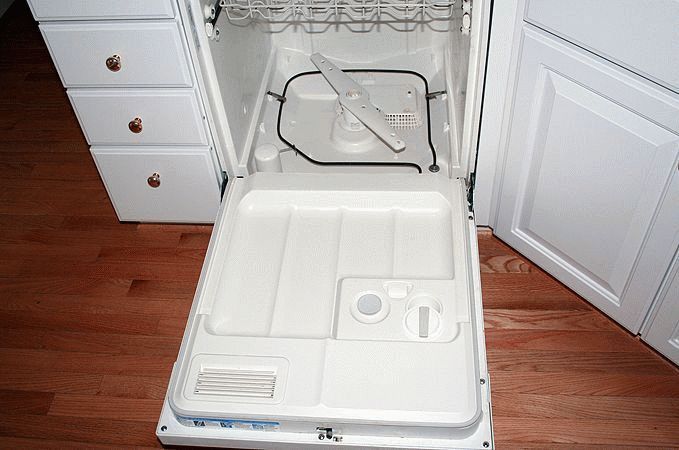
Replacement nuances for different dishwashers
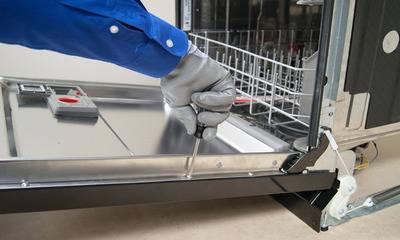
The method for replacing the inlet valve for dishwashers from different manufacturers is not too different.
There are models with a lower and upper water supply (the location of the connecting pipe), so the method of disassembling the machine will depend on the type of construction.
Some models are more convenient to lay on their side, others are enough to deploy and tilt slightly, leaning against the wall.
For Bosch dishwashers, a complete overturn is considered the best way, since all the main nodes are located in the bottom area. Otherwise, the replacement procedure is almost the same.





Tools
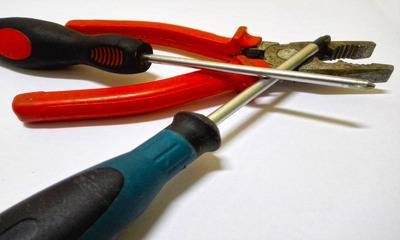
just regular tools:
- Phillips or slotted screwdriver;
- pliers.
Depending on the model and design features of the PMM, other tools may be required, this is determined during dismantling.
Training
Before starting a direct replacement, you need to perform several preparatory steps:
- turn off the water supply valve (outlet from the pipe to the PMM);
- disconnect the machine from the mains;
- disconnect all hoses (especially the water supply hose;
- partially disassemble the body to get to the valve.
Finding the element is not a significant problem, since most machines have a supply hose attached to it. However, for some models, you will first have to disassemble the body of the AquaStop system.
Replacement procedure
Part replacement consists of the following steps:
- Disconnect all hoses and wires from the defective device. It is recommended to take a picture of their location in order to have a sample in front of your eyes during assembly.
- Remove the used valve and install a new one.
- Connect all the wires to it, attach the hoses.
The procedure is not complicated and is quite affordable for any home master.
How to replace the heating element
If the problem is in the heater, buy a part and change the heating element. Before that, calculate how profitable the repair will be: if the PMM is old and they won’t give more than 10,000 rubles for it, then buying a spare part is not profitable. But the decision is up to you.
How to replace the heating element:
- Open the bunker, take out the baskets.
- Power off the machine, remove the hoses.
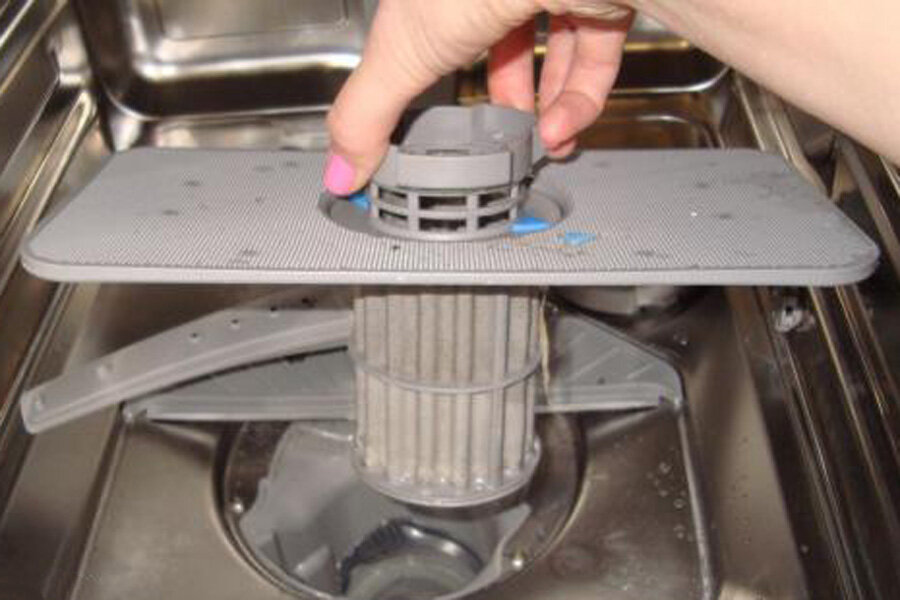
- Remove the sprinkler.
- Unscrew the filter.
- Remove the stainless mesh.
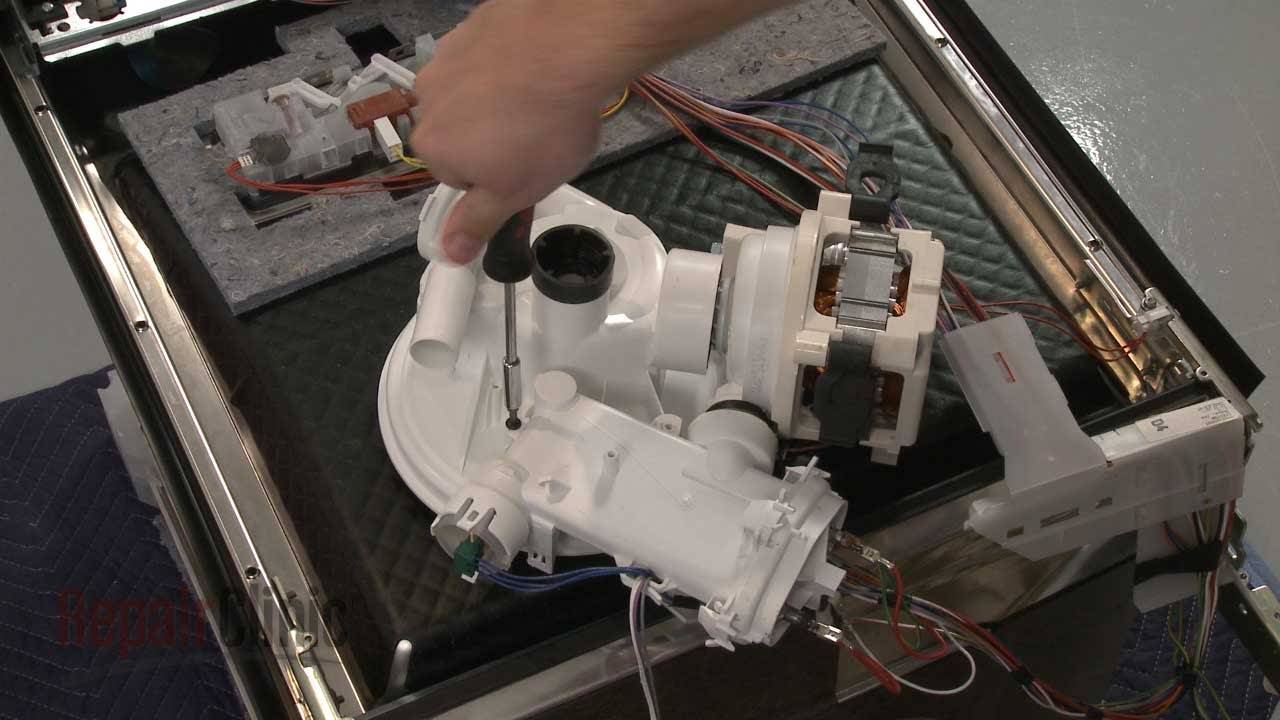
- Unscrew the fasteners that hold the pipe and instantaneous water heater.
- Turn the device upside down.
- Rotate the pump half a turn to the right and pull to remove the part.
- Remove the sensor, set the pump aside.
- The flow heater is held on a rubber mount. Find fasteners and disconnect.
- Then remove the sensor plugs, pipes and remove the burnt-out heating element.
- Install a new part, assemble the machine, proceeding in reverse order.
How to find out about a breakdown?
The main function of this device installed in the Bosch dishwasher is the constant monitoring of the required liquid level. In the case when the device starts to work incorrectly, this means that the working tank of the unit is probably overfilled, which will lead to poor-quality washing of kitchen utensils and flooding
To avoid such problems, you must carefully monitor the level of liquid in the working tank. If you notice that it exceeds the norm, then this indicates the failure of the pressure switch.
Typically, water sensor failures in any dishwasher occur for the following reasons:
- Wear of parts of the device.
- The contacts on the connections of the device have undergone an oxidation process.
- The low quality of the dishwasher components, which limits the life of the pressure switch.
What causes most breakdowns
Unfortunately, in many cases, dishwasher malfunctions are the fault of users. Owners who do not carefully read the operating instructions create problems for themselves.
The most common causes of their occurrence are:
- improper connection of the PMM to the water supply, electricity and sewerage;
- violation of the rules for the operation of the dishwasher;
- the use of detergents, salts and rinse aids that are not intended for these household devices.
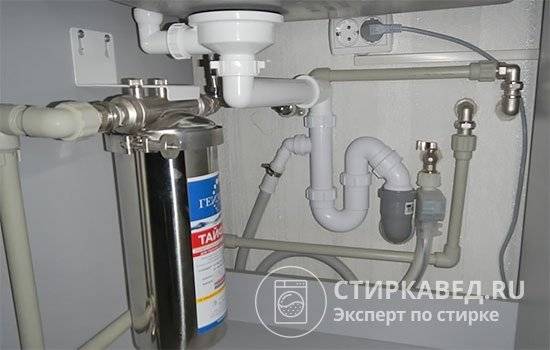 You need to connect the dishwasher with skill or entrust this work to professionals
If the connection to communications is incorrect, the PMM may not work. One example of installation errors is exceeding the maximum length of hoses connected to the water supply and sewerage. As a result, the drain pump (hereinafter referred to as the pump) may not have enough power to pump liquid into the sewer, and water from the water supply will not flow into the tank in sufficient volume.
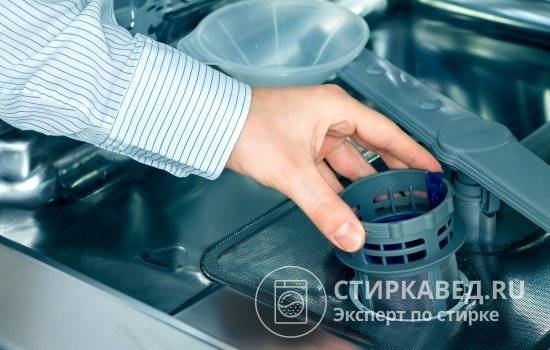 Putting dishes with a lot of dried dirt in the appliance, you run the risk of clogging the dishwasher filter.
Before washing in PMM, the surface of the dishes must be cleaned of dried and burnt pieces of food - this is one of the important rules of operation. Otherwise, even soaking and prolonged intensive washing will not help wash kitchen utensils well. In addition, the machine may stop working if the filters clogged with dirt stop passing liquid through them. Therefore, clean the filter from grease and dirt after each working cycle and at least once a week.
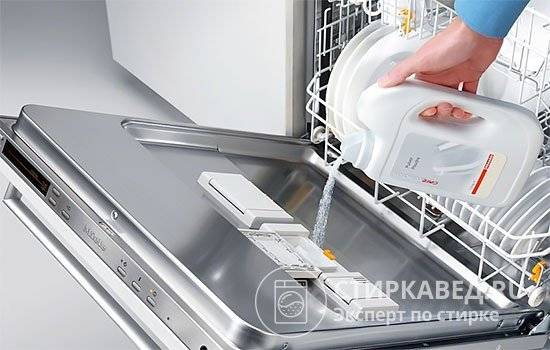 If you use household chemicals that are not intended for dishwashers, this is fraught with poor washing of dishes or damage to the unit
The use of cheap and low-quality preparations leads to poor quality of washing and rinsing. For example, stains with a whitish tint remain on the surface.Sometimes this is fraught with a high level of foaming and leakage of liquid into the pan, as a result of which the dishwasher will stop working, and an error code will appear on the control panel.





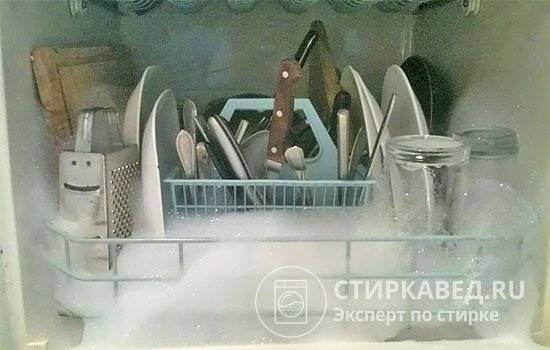 Abundant foam in the chamber does not allow washing utensils
In addition to the above reasons, there are those that arise through the fault of utilities. For example:
- too high level of hardness of tap water;
- voltage surges in the mains, leading to damage to electronic circuits.
With a large amount of salt impurities in the water, regenerative salt cannot soften the liquid to the desired level. This situation leads to the appearance of lime deposits in the parts of the PMM and on the walls of the working chamber. The scale that forms on the surface of a flowing electric heater (hereinafter also referred to as a heating element) does not allow it to heat the water to the desired level. Limescale clogs the holes in the spray arms, causing the washing quality to drop sharply.
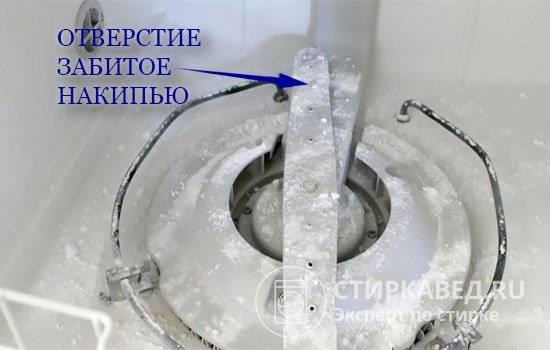 This amount of scale is unacceptable for a dishwasher - it urgently needs to be washed with a special cleaning agent.
Powerful power surges (sometimes up to 380 volts) are fraught with fatal consequences for household appliances. Dishwasher control units suffer the most from such processes. In most cases, experienced technicians will check and replace the burnt part. But it also happens that you have to change the entire module.
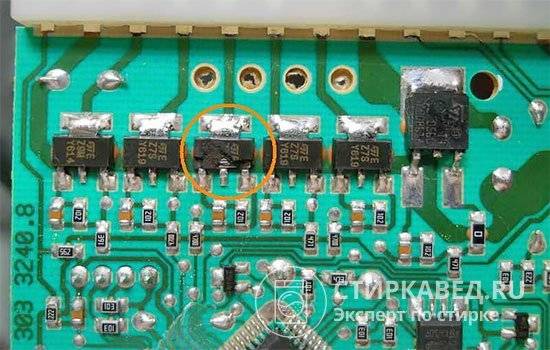 The control triac in the control unit, burned out from a voltage surge
The last cause of PMM damage is the wear of parts or defects that have arisen during their production. Over time, this leads to a breakdown of the household appliance.
Readers can learn how a dishwasher works and what breaks in it from the following video:
Dishwasher Repair Tool Set
Before you start repairing the dishwasher, you should know for sure that all the necessary tools are at hand. It is very inconvenient to constantly be distracted and run to the hardware store for a washer, nut, bolt or electrical tape.
Approximate list of required tools:
- A set of flat and curly screwdrivers. They take first place by necessity, as they are an almost universal tool.
- Set of wrenches. It is most convenient to use a special wrench with a set of heads, but open-end wrenches are also suitable for household appliances.
- Multimeter. A measuring device that is always useful in the household, especially in the field of electrics.
- Construction knife with a set of replaceable blades.
- Insulating tape or heat shrink tubing of various diameters.
- Flashlight. An ordinary pocket flashlight will do, as there is not always good quality lighting in the room.
- Operating instructions or electrical diagram of the dishwasher model that needs repair.
The dishwasher does not drain water: reasons
The first common cause is clogged filters. To an inexperienced viewer it seems: the gaps are large. In practice, a coarse step is followed by a thin one; it is almost impossible for a person without a magnifying glass to discern the size of the holes. Except in the light. It will be more difficult for the owners of Whirlpool, if there are such in Russia. To remove the filter, you will have to disassemble the impeller subsystem, first removing the lower one, undocking the plastic water supply segment. After that, you can somehow remove the sump cover with filters.
Clean the filter, rinse with running water, try to pump it out. You can manually fill the working chamber with a couple of glasses. After turning on the dishwasher, detecting the presence of water, it will try to get rid of it by turning on the pump. The convenience of the equipment, unlike the washing one, is obvious: the drainage pump is relatively easy to dismantle. Recommended remove bottom bezel. You will find access to the pump from the bottom. Do the necessary operations.
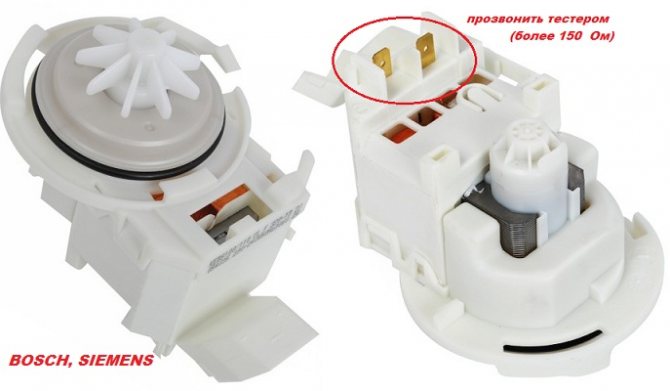
The drain pump is held in place by a pair of screws, in the case of the Whirlpool it will be Torx. The mechanism resembles what was seen in the washing machine:
- The asynchronous motor is equipped with a pair of coils at the base.
- The rotor is magnetic with several poles.
- The impeller in a cross, due to centrifugal acceleration, pushes water to the periphery like a snail.
- Mains power 230 volts.
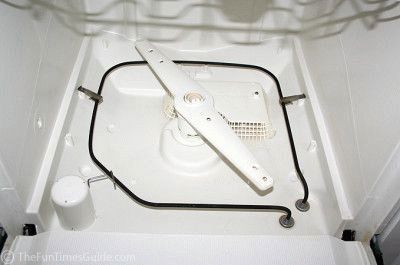
Bottom impeller
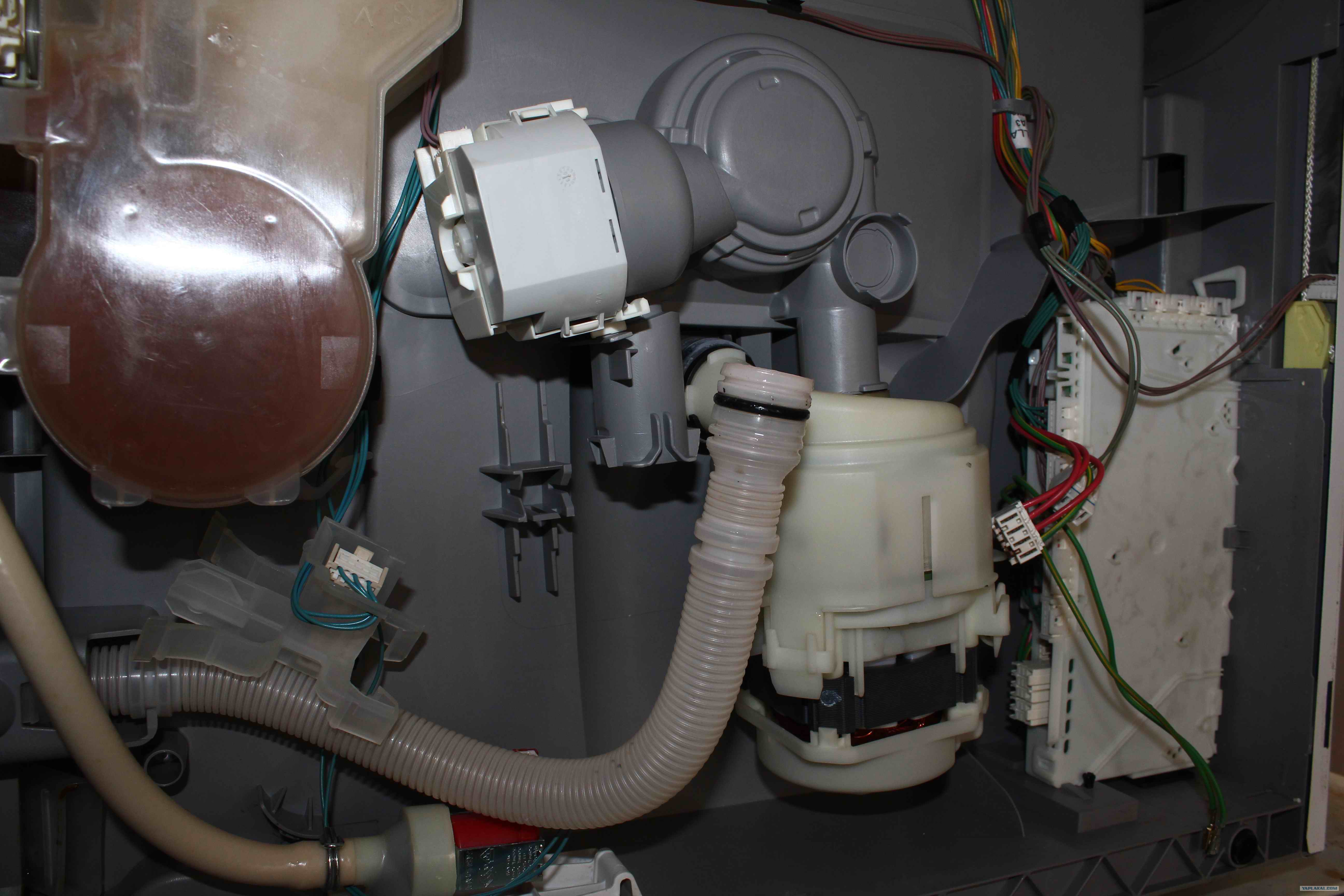
Check if the pump impeller is spinning. It rotates tightly, immediately a quarter (half) of a turn, in jerks (synchronous motor). The coils ring, the value is about 200 ohms. It is easy to check the mechanism by connecting 230 volts to the network. We remind you again: the start mode is individual, it is indicated in more detail by the body of the unit. When dismantling the pump, water will probably pour down. There are no emergency measures in dishwashers, the volume is small, inferior to washing machines (devoid of Aquastop).
In most cases, the pump coils are wound by hand. The cost of a new part starts from 300 rubles. Whether it is worth wasting time, decide for yourself. The rotor can be adapted for improvised designs in the future.
Water in the Bosch appliance: what to do?
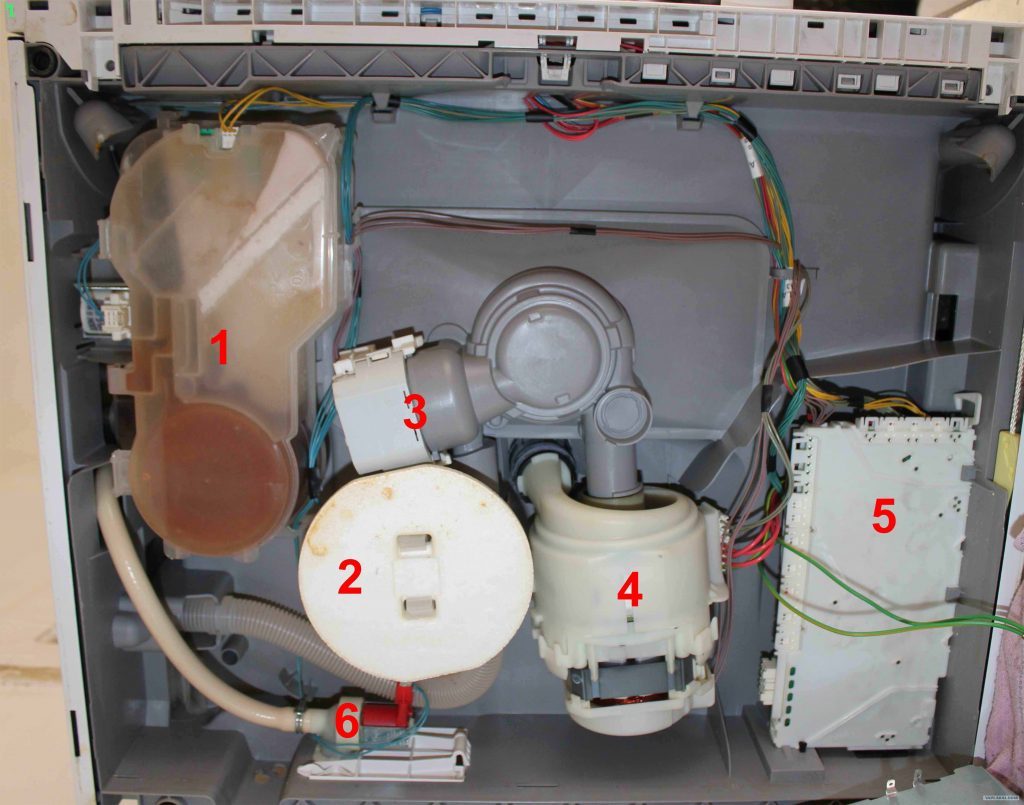
The question deserves special attention, what are the reasons if there is water in the Bosch dishwasher.In appliances manufactured by the Bosch trademark, moisture often accumulates at the bottom or in the filter. The flow sensor may also not work correctly. If it is broken, then either the liquid will constantly drain, or the water level will not be displayed correctly.
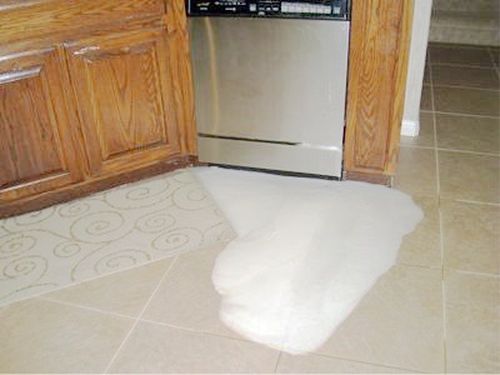
There are a lot of reasons why there is water in the dishwasher. It is quite difficult to correctly identify malfunction provocateurs without special equipment and experience. That is why, in order to extend the life of your equipment, it is recommended to contact qualified craftsmen for repairs.




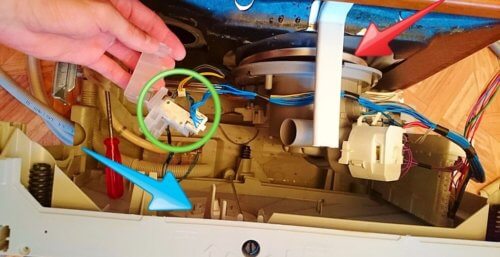


What could be the problem?
The lack of heating can be caused by several factors:
- TEN burnt out. This is the most common malfunction that is checked first.
- Incorrect installation or connection of the machine. Because of this, it can constantly drain water, which simply does not have time to heat up. Other violations of the water treatment regime are also possible.
- The heating element is covered with a thick layer of lime deposits. They act as a heat insulator, which is why the heating element cannot heat water, although it works at full capacity.
- Problems with the thermostat. He does not give a command to heat the water.
- The electronic control unit is out of order or has failed the firmware.
Most often, the problem is registered by the electronic control unit, and a certain combination of characters is displayed on the display (usually, this is a letter and one or two numbers).
The self-diagnosis system allows you to quickly detect a malfunction, which simplifies the work of repairmen.
Bosch
In addition to the standard cause (malfunction of the heating element), Bosch dishwashers may have a problem with the water filter. If it is clogged and does not pass water well, the circulation mode stops.
The control unit may therefore give a command to replenish the water level, which will make heating impossible. It is quite simple to determine such a malfunction - during operation, you need to open the door and look at the pallet. If the filters are clean, there should be no water in them.
Electrolux
The main factors for the lack of heating in PMM Electrolux are:
- failure of the heating element;
- breakage of wires;
- failure of the control unit.
Most often, the reason lies in the malfunction of the heating element. On the PMM Electrolux, it is combined with a circulation pump, so the entire assembly will have to be changed.
Replacing one heater is quite possible, but they are rarely sold separately, only ready-made assemblies.
Korting
Korting dishwashers, like all German equipment, are very sensitive to water quality. Due to the appearance of deposits, heating elements quickly fail.
The heater operates normally, but cannot provide the set water temperature, as it is covered with an insulating layer of limescale. Because of this, the control unit gives a command to increase heating, the element overheats, and fails.
Another risk factor is the temperature sensor. With him the same problem - scale, which reduces the heating of the thermistor.
Indesit
The design of PMM Indesit differs little from analogues of products from other companies. She also has problems with heating water as a result of the failure of the heating element, sensors, and the control module.
Often the cause is clogging of the filter, due to which the pressure switch does not give a command to execute the work program.
How to repair a dishwasher with your own hands
If, after turning on the network, the PMM gave an error code on the display, try to reboot.How to reset the system and restart the dishwasher:
- disconnect the equipment from the power supply for 15-20 minutes;
- reconnect to the network.
If, after a reboot, the PMM started up without an error code, then there was a failure in the system. You can continue to work.
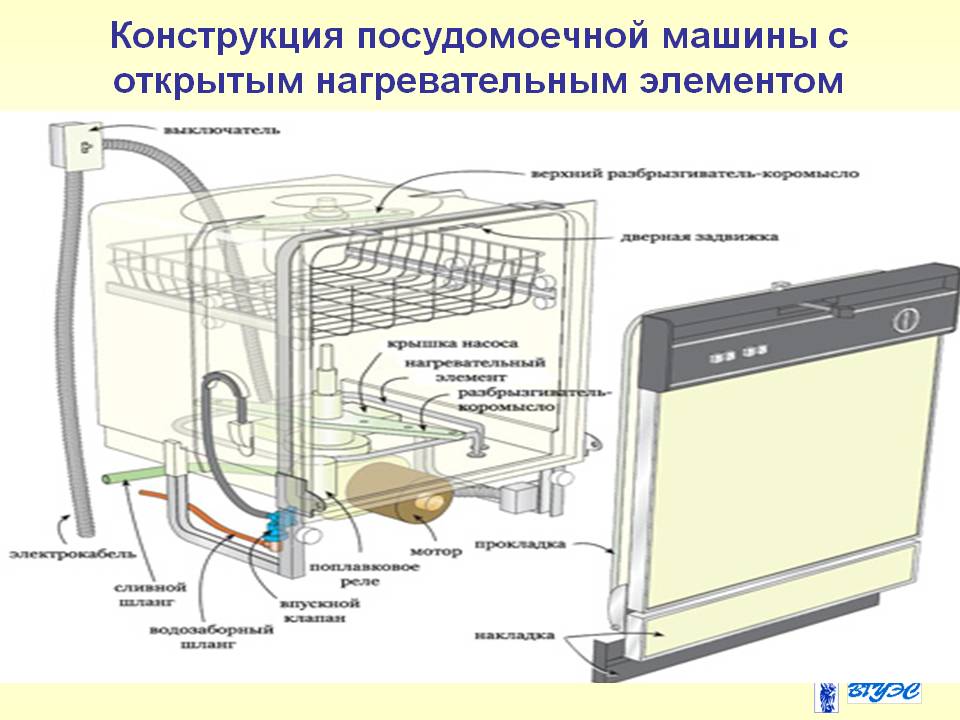
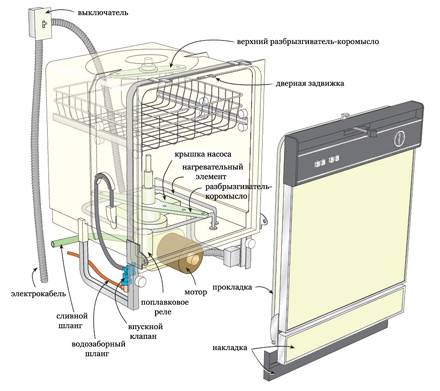
Repair needed? Before disassembling the machine, look at the diagram of its device.
Solving problems with the filling system
Water not getting into the tank? Let's see how to fix the situation.
Clear blockage:
- Shut off the water supply to the machine and unplug it from the mains.
- Disconnect the fill hose from the body.
- Check it for blockage.
- Pull out the mesh filter. Rinse it under the tap. For heavy soiling, leave the filter soaked in a solution of citric acid.
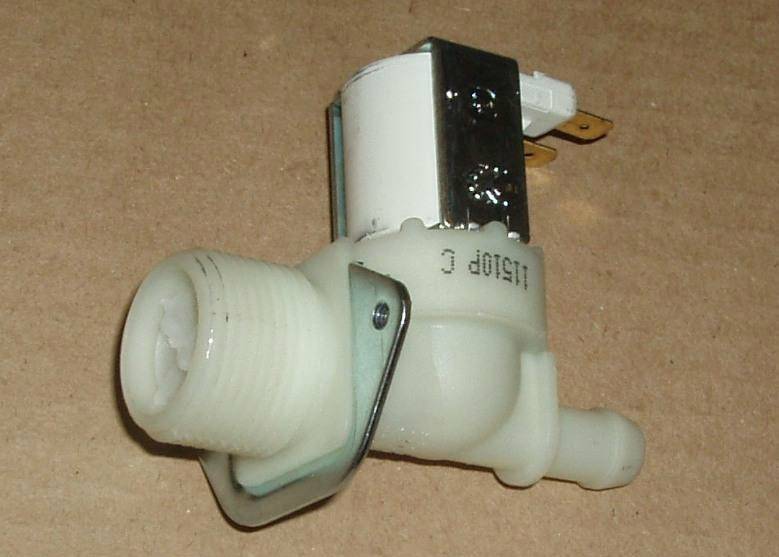
- Check fill valve.
- Ring the electrical coils with a multimeter.
In case of malfunction, install a new valve. How to do it:
- Empty the tank of the machine, remove the baskets and remove the sprinkler.
- Pull out the filter and remove the water with a sponge.
- Turn the car over to access the bottom.
- Remove the front panel at the bottom by unscrewing the fixing screws.
- Disconnect the valve wiring and unscrew the mounting bolt.
Install a new part.
Checking the circulation pump
The circulation pump in the dishwasher is used to pump water. Thanks to the pump, water enters the rocker arms, and the washing of dishes begins. If you notice that the motor (pump) is noisy, buzzing and does not spray water, then it needs a replacement.




Do-it-yourself repair:
- Access the bottom of the machine as described above.
- Unscrew the bottom panel if your model has one.
- First you need to disconnect the drain pump.
- Unscrew its fastening screw.
- Turn the pump clockwise.
- Disconnect the engine wiring.
- From the inside, the engine is fastened with a clamp. Press it down to disconnect the motor.
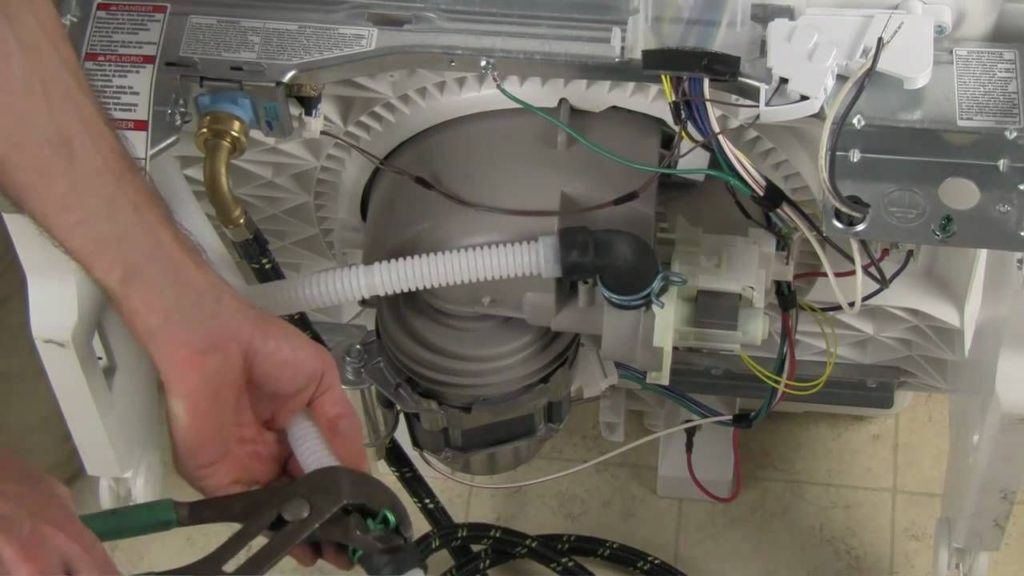
- Using an adjustable wrench, remove the clamps from the hoses that are attached to the pump motor.
- In total, three hoses need to be disconnected.
- Remove the spring clip from the old pump and install on the new one.
- Reassemble in reverse order.
Troubleshooting the drain system
When water does not drain from the machine, dishwashing is poor, check the system for blockage:
- Pull out the bottom rocker by pulling it towards you.
- Unscrew the upper rocker and remove.
- Inspect the sprinkler nozzles for blockage.
- Clean the holes with a toothpick.
At the bottom of the tank is a drain filter. Pull it out and the metal mesh next.

Eliminate food and debris. Wearing gloves, check the pump impeller. Possible glass shards.
Replacing the drain pump is easy. See the description for replacing the circulation pump.
Replacing the level sensor
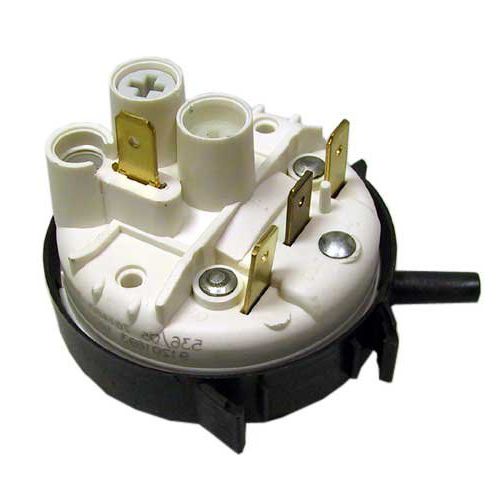
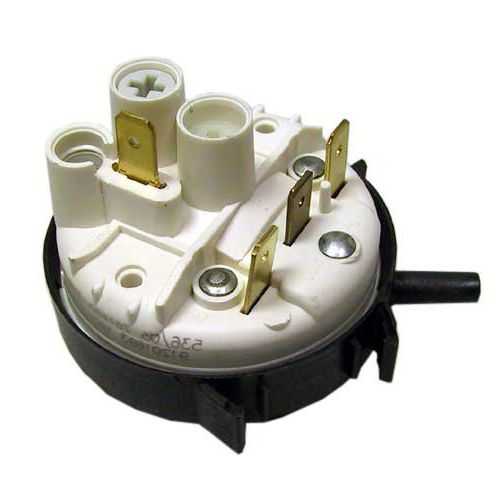
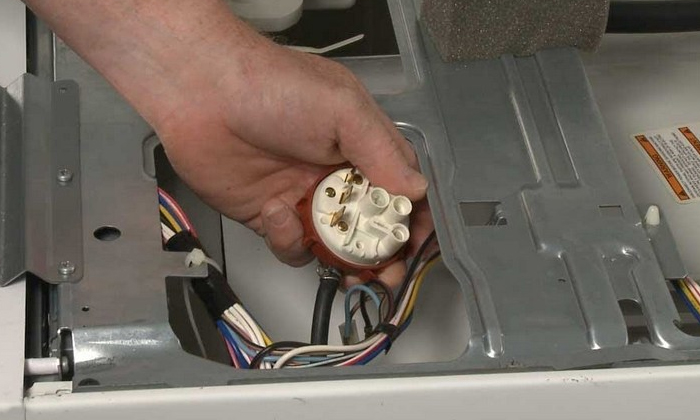
The level sensor or pressure switch in the dishwasher monitors the amount of water in the tank. Its electronic or mechanical part may break, the tube may become clogged. Therefore, before replacing, check the device for serviceability, clean the tube from blockage.
The pressure switch is located on the bottom of the machine. The device looks like a box from which the tube comes. Unscrew the two fastening screws, disconnect the clamp and tube. You can check the part by blowing into the tube. If clicks are heard, then the sensor is working. The electronic part is checked with a multimeter.
Heating element diagnostics
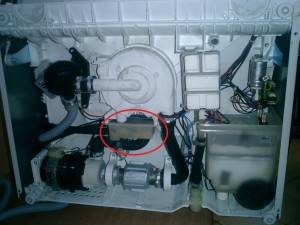
The flow heater is used to heat water when washing dishes.If heating does not occur, you need to check the wiring and connectors of the heating element, it is located under the bottom of the Hansa PMM. In case of burning, its parts need urgent replacement. The heater contacts are called with a multimeter.
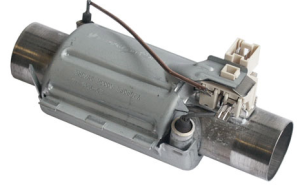
How to install a new part:
- The flow heater is connected to the pump.
- Unscrew the pump mount, turn clockwise, remove from the seat.
- Disconnect the heater rubber seal.
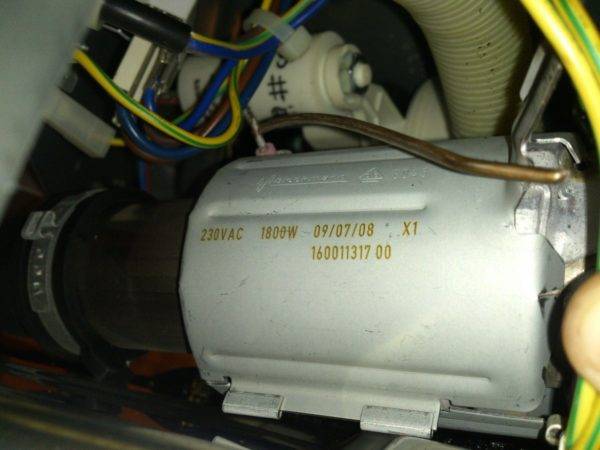
Remove all pipes and connectors that are attached to the heating element.
Carry out the installation in reverse order.
Checking the correct use of the dishwasher
Often the cause of many malfunctions is non-compliance with the manufacturer's instructions for operating the equipment.
It is important to check the correct use of the dishwasher. First of all, you should make sure that water flows into the faucet.
In apartments, water is supplied to the kitchen by one riser. If water does not enter the faucet, it will also not be drawn into the dishwasher. Interruptions in the water supply often lead to temporary malfunctions of the dishwasher.




It is important to use a suitable and high-quality detergent. The use of low-quality household chemicals can lead to serious malfunctions of the dishwasher
Usually the manufacturer gives recommendations regarding the choice of detergents.
The water supply valve may be closed. The mechanism is located at the point where the hose of the device is connected to the plumbing system. When the tap is turned off, the equipment cannot draw water, so it should be opened.
Types of dishwashers
The main difference between a domestic and industrial dishwasher is the way it is loaded.
In the domestic unit, alternate loading is used, that is, a certain amount of dirty dishes is loaded for each cycle of the machine.
Industrial dishwashers use stream loading, where dirty plates or trays are constantly added to a continuously moving conveyor (with dish grippers). In addition, in many industrial designs, used water is filtered and reused, providing a more economical operation.
Dishwasher device
Dishwasher device
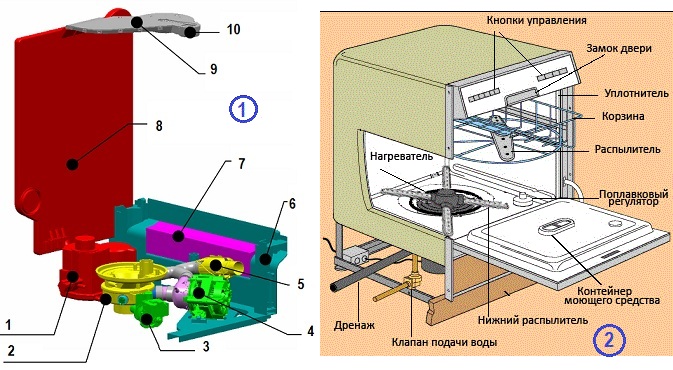
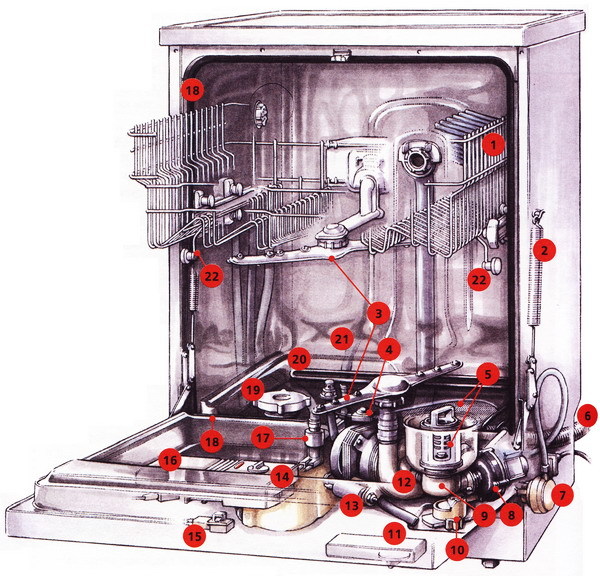
not complicated. Any such unit consists of several elements: 1) Housing. As a rule, plastic or assembled from stamped metal sheets; 2) Electronic control unit. Electronic control board with microcontroller. Allows the user to set the dishwashing mode. Manages all processes in the car; 3) Electric motor. Operates the water pump and sprinklers (rocker arm); 4) pump pump. Provides pressurized liquid supply to the sprinkler nozzles; 5) Water spray system. Represents the rotary block of atomizers (rocker arms). When spraying, the rocker arms change the angle of water supply to cover the entire surface of the dishes; 6) Drying system. A powerful fan (hair dryer) blows air through the heating element onto the surface of the dishes (in some models, condensation drying is used - in fact, the dishes dry on their own, due to the heat accumulated during the washing process).
Dishwasher cycles
The whole process of the machine is controlled by a special electronic control unit.The microprocessor monitors the readings of multiple sensors (temperature, water level, door closing, etc.) and sets the operating mode of the device. The washing process consists of several stages:
- Water inlet. Water (usually cold) begins to flow into the machine from the water supply when the solenoid valve is opened. The amount of incoming liquid is monitored by level sensors. Some models allow the supply of both hot and cold water, such machines are more economical, as they do not consume electricity for heating. After the solenoid valve, the water is softened by a special device (usually an ion exchanger with resin). Soft water washes dishes better and does not leave limestone deposits on machine parts;
- Heat. The water that enters the machine is heated by heating elements (heaters) in batches or continuously (in a flow heater);
- Supply of cleaning agent. Heated to a certain temperature (determined by the washing mode), water is mixed with detergent (supplied from the chemical container). The delivery time and the amount of cleaner is determined by the washing program;
- Washing dishes. The electric motor drives the pump-pump, which, under pressure, supplies hot (mixed with a cleaner) water to special spray units. Rotating at different angles, sprayers clean the entire surface of the dishes with jets of water. In some models of dishwashers, dishes are pre-cleaned from heavy soiling by steam. Steam is generated in a special device - a steam generator. At the end of the wash, dirty water is automatically drained into the sewer (in the cycle itself, it runs in a circle);
- Rinsing.After the washing process is completed, the dishes are cleaned of detergent residues with jets of cold water under pressure. This process can take place for a certain time (cheaper models) or controlled by special sensors for the cleanliness of dishes and the level of sewage contamination (expensive models).
Types of drying dishes
There are the following types of drying dishes:
1) Condensation drying. The most common type of drying, massively used in inexpensive household models. Washed dishes are sprayed with hot water, which evaporates and condenses on the inner walls of the machine, and then flows down the drain. This process is very time consuming. 2) Turbo dryer. The process occurs through continuous exposure to washed dishes of hot air. Air is blown by a special fan, then, passing through the heating element, it heats up and enters the dish compartment. Turbo drying allows you to dry the dishes in the shortest possible time, while leaving no streaks on them. Dishwashers equipped with this drying mode are quite expensive, due to the use of additional devices in addition. In addition, they consume a lot of electricity.
The source of information.



