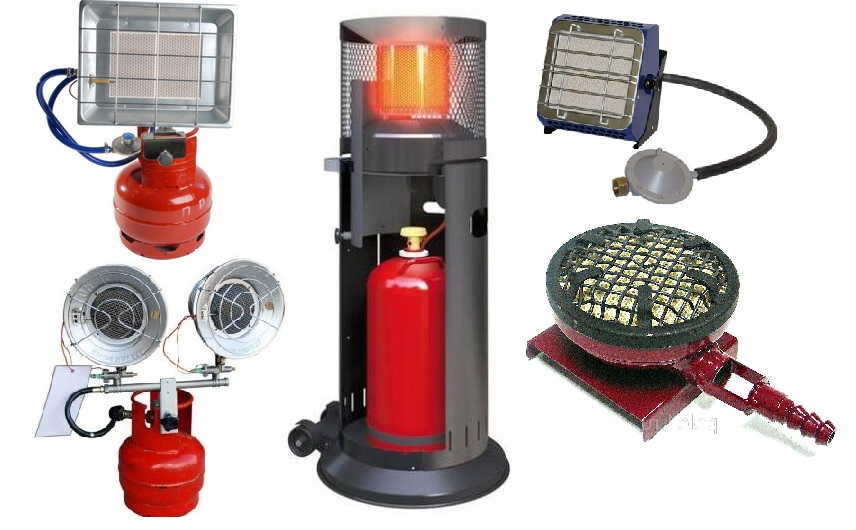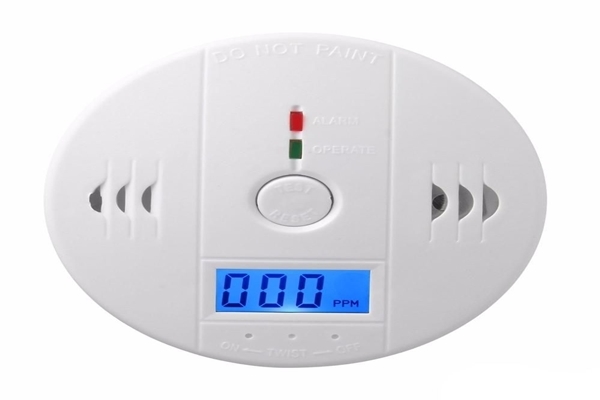
- Household natural gas detector
- Purpose and principle of operation of the gas contamination detector
- Gas detector operation
- Gas detector installation technology
- The principle of operation of gas leakage sensors
- Gas alarm - about the nuances of work
- Household gas detector - operating features
- Purpose of the sensor
- The system of automatic control and protection against gas pollution and gas leakage in a house, apartment
- Dangerous properties of gas fuel:
- Gas alarm - gas leak sensor, is it necessary to install
- Gas detector for LPG
- How to choose?
- Sensor classification
- By type of gas detected
- By the method of determining the concentration of gas
- By installation method
- Carbon monoxide detectors for the home: installation
- Checking work
- Emergency protection means
Household natural gas detector
The use of natural gas for domestic purposes is a very common phenomenon. But unfortunately, few people think about the risks that this explosive substance carries. Therefore, in order to protect yourself and your loved ones from the negative consequences of a gas leak, experts recommend installing household alarms.Read on to find out how to choose, install and operate this device correctly.
Purpose and principle of operation of the gas contamination detector
The gas contamination detector (SZ) is designed for continuous monitoring of the concentration of natural gas (methane) in the room, timely notification of exceeding the permissible threshold, as well as giving a signal to shut off the gas pipeline.
All SZs operate in automatic mode, have sound and light alarms, and are set to a certain response threshold in accordance with GOST. The signaling devices can be used both independently and together with a gas supply blocking device.
The principle of operation of the SZ is quite simple. When exposed to natural gas on a sensitive sensor, its electrical parameters change. The processor module then processes the sensor signal. In case of exceeding the specified parameters, it gives a command for light and sound notification, as well as a signal to block the gas pipeline with a locking mechanism.
Varieties of gas contamination devices
Household SZ are of two types:
- Single-component - control only the content of natural gas.
- Two-component - monitor the concentration of methane and carbon monoxide.
The second option is considered the most preferable, since in the event of a deterioration in chimney draft, an excess of the concentration of combustion products is possible. Although this cannot lead to ignition, it is also very dangerous for the lives of residents.
Devices are also sold in a monoblock version, where sensitive sensors are built into the housing and with remote sensors that allow remote control of the room. For example, you can install a sensor in a boiler room and monitor it from the living room.
The Basics of Installing a Natural Gas Alarm
Gas detectors are usually located in possible areas of gas accumulation. However, they should not be:
- more than 4 meters from the source of the likely leak;
- near windows, ventilation shafts;
- close to ovens and burners;
- directly exposed to dust, water vapor and ash.
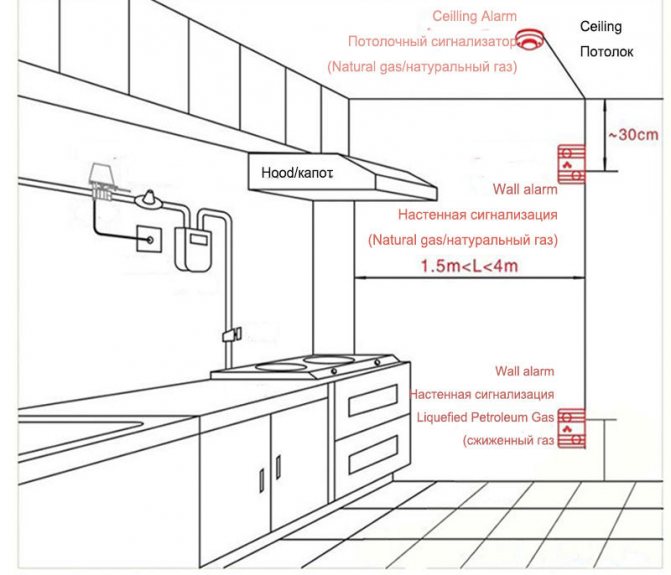
The installation height of the SZ should be at least 0.5 meters from the ceiling, and carbon monoxide alarm not less than 0.3 meters.
Operation and maintenance of a household gas detector
After installation of the SZ, the following routine inspections and checks are required to maintain the device in working order:
- monthly external inspection with cleaning from dust and dirt;
- check the response threshold once every six months;
- Once a year, the instrument is calibrated and verified.
For technical checks, it is recommended to contact the representatives of the gas service!
Given that the gas detector is a device to ensure the safety of residents, you should not neglect the advice gas services and save on installing it. The spent several thousand rubles sometime, perhaps, will save people's lives from tragedy.
Gas detector operation
Metrological verification of the gas content sensor is carried out once a year, and also after replacing the sensors. Verification is performed by a specialized organization that has the appropriate permission to carry out such work.
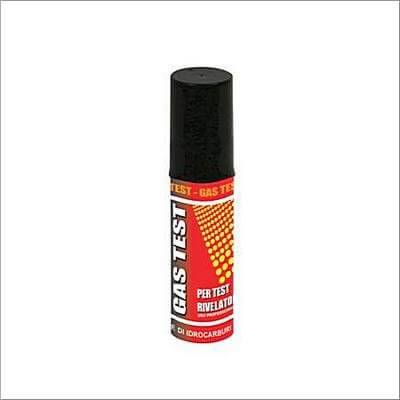 Test - a cylinder with a calibration gas mixture for testing and checking the operation of a gas alarm. Designed for 70 tests.
Once every six months, the operation of the signaling device is checked from a test gas mixture containing a certain percentage of the test gas. It is forbidden to carry out checking the instrument with, for example, gas from lighters, because this can lead to failure of the sensing element.
The "TEST" button is designed to test the light and sound detectors, as well as to test the operation of the gas shut-off valve.
Within the period specified in the factory documentation, it is necessary to replace the sensor in the device - a sensor sensitive to gas. After replacing the sensor, the alarm threshold is adjusted and the instrument is subjected to metrological verification. The work of replacing the sensor should be entrusted to a specialized organization.
Gas detector installation technology
You can install a household gas alarm with your own hands. It is necessary to determine the location of the sensor, install it and supply power, and then connect additional equipment. Detailed installation instructions and a connection diagram are indicated in the passport of a particular device. The location of the gas detector is determined in advance - even at the design stage of the gasification system.
Experts remind: when installing a gas detector, it is necessary to take into account all the requirements of regulatory documents. This issue is regulated by the relevant paragraphs of the following regulations:
- Federal Law N 384-FZ;
- SNiP 42-01-2002;
- SP 62.13330.2011;
- SP 41-108-2004.
If you have doubts about your own abilities, there is not enough knowledge to choose a place to place the sensor, it is better to invite gas workers.
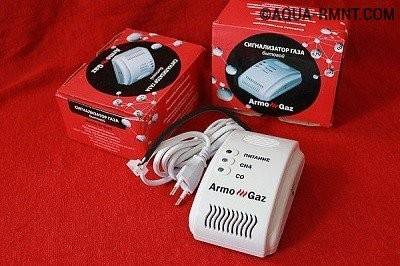
When installing gas detectors, you must follow the instructions, building codes and regulations
The signaling device is placed in places where a gas leak is most likely - next to the boiler, geyser for hot water supply, counter, stove. The maximum distance from the sensor to the gas equipment is 4 m. It is forbidden to place the devices in such places:
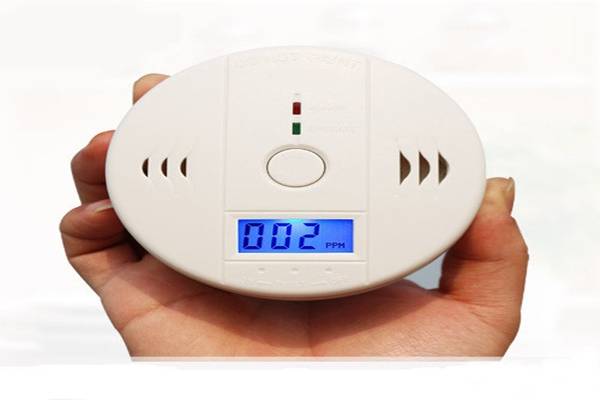
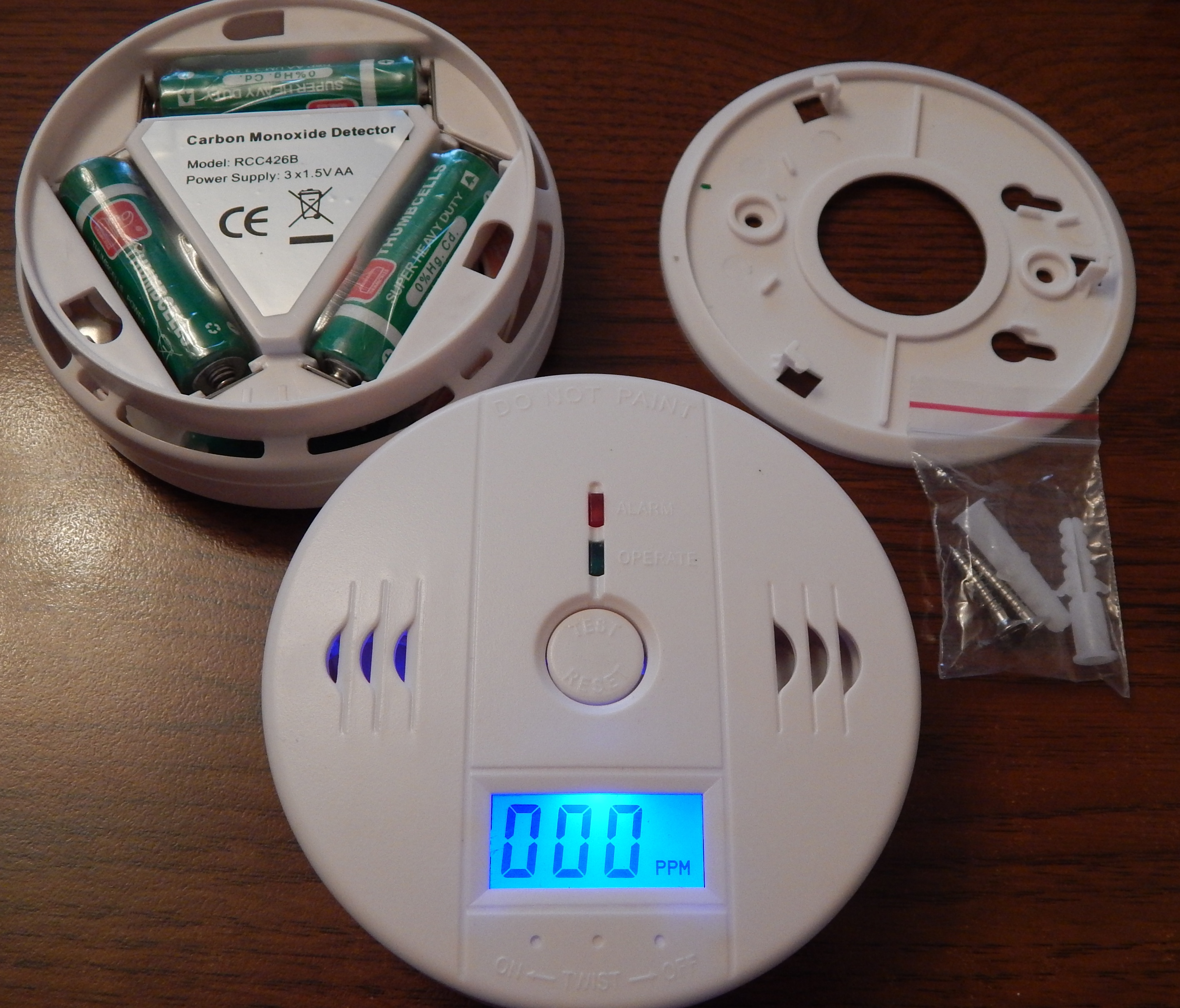


- near sources of open fire, gas burners, ovens; the distance must be at least 1 m;
- near places that can become sources of fat droplets, dust particles, steam or ash;
- near windows, uninsulated chimneys or ventilation;
- near paint and varnish compositions, solvents, combustible and fuel materials.
When determining the installation height of the signaling device, it is necessary to take into account the type of device, since sensors that respond to different gases (CH4, C3H8, CO) determine the density of air and gas. Focus on the following distances:
- for a sensor that detects CO (carbon monoxide) - 1.8 m above the floor, but not lower than 0.3 m to the ceiling;
- C3H8 (propane) - maximum 0.5 m from the floor, and if there are any noticeable recesses, care must be taken to install an additional sensor;
- CH4 (methane) - 0.5 m from the ceiling;
- CH4 and CO (combined) - 0.3 m-0.5 m to the ceiling.
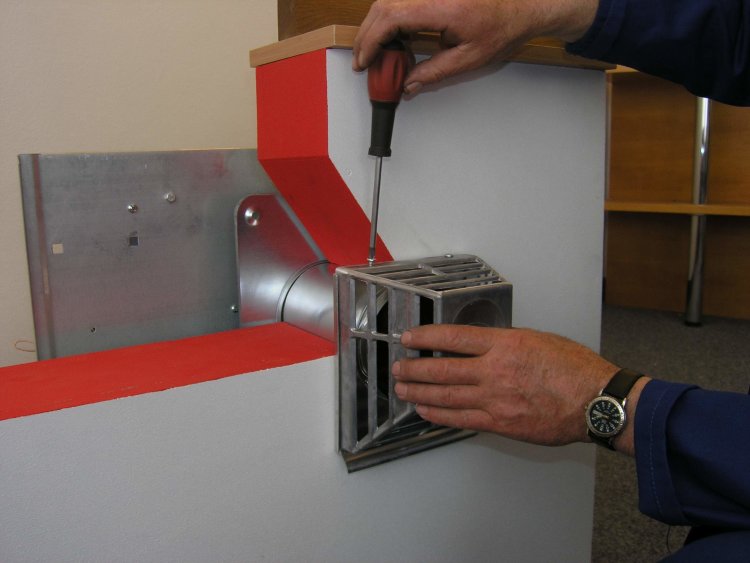
The mounting method may differ depending on the model, but, as a rule, household gas detectors are attached using dowels. Usually, special holes are provided in the housing for installing sensors. Before installation, be sure to carefully read the product passport.
The passport of each model indicates the temperatures at which the device can be operated. Long-term storage at low temperatures may affect the performance of the detector.To restore it, you need to leave the device in the room for 3-4 hours at room temperature. The operating manuals for some CO signaling devices describe the procedure for restoring the zero threshold. It usually takes several minutes.
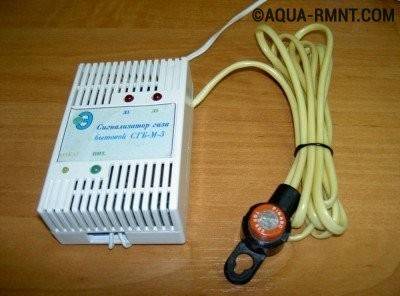
Pay special attention to the temperature regime of operation, in some cases it is necessary to keep the device at room temperature
The principle of operation of gas leakage sensors
The principle of operation of different types is slightly different. Conventionally, all signaling devices are divided into wired and wireless. This speaks to the source of their nutrition. But behind the leak detection technique, there is another classification of sensors.
Types of gas detectors:
- Semiconductor;
- catalytic;
- infrared.
The principle of operation of the catalytic device is to change the platinum coil as carbon monoxide passes through the device. Another coil with a measuring device is used to detect the temperature increase. There is a direct relationship between resistance and the amount of carbon monoxide particles.
Semiconductor devices are a bit similar to catalytic devices in terms of how they work. Recognizing element coated with a thin film of metal oxide. When carbon monoxide touches the film, it absorbs the substance and changes the resistance to an inverse proportion. This option is great for the home, but rarely used in industry. It is believed that the signaling is not accurate enough. In addition, the device has a slow response.
Infrared sensors are widely used for industrial buildings.They are quite accurate, do not squeak unnecessarily, use little energy and quickly respond to a possible leak. They work under the influence of solar energy.
Gas alarm - about the nuances of work
Gas equipment has long been the key to a comfortable life. Compact gas water heaters that fit perfectly into the design of the apartment provide heat and hot water in the room, and a gas stove allows you to quickly cook food.
Unforeseen gas leakage makes these devices potentially dangerous, in order to eliminate such a nuisance, a gas alarm is installed.
The automatic gas control system is a precision instrument used to analyze and control the process of fuel combustion. Depending on the purpose, the gas detector can be used in domestic and industrial environments.
Household gas detector - operating features
The household gas control system, unlike the industrial one, has a simpler design. The sensor is automatically activated when the gas concentration begins to exceed certain values.
Continuously monitors the accumulation of quantities in the air:
Such gas alarms can have both automatic and manual control types, differ in the type of power supply. In domestic conditions, as a rule, 220 V gas analyzers are used.
Measurement of the degree of concentration is based on:
- on the physical method of analysis;
- analysis, with physical impact;
- with physical and chemical effects.
Models of a household gas detector, in addition to giving a light and sound alarm indicating an increased degree of gas contamination, are endowed with a number of additional functions performed by controller connectors:
- Activation of the solenoid shut-off valve blocking the flow of gas.
- Commissioning of the relay responsible for the functioning of: annunciator - signaling to the dispatcher's console; exhaust fan and other devices.
- Provides connection of autonomous power sources.
- Enables self-diagnostics (technical condition of the device).
- Memory function (some models of gas analyzers record the results of measurements).
Characteristics and operation of the industrial gas detector
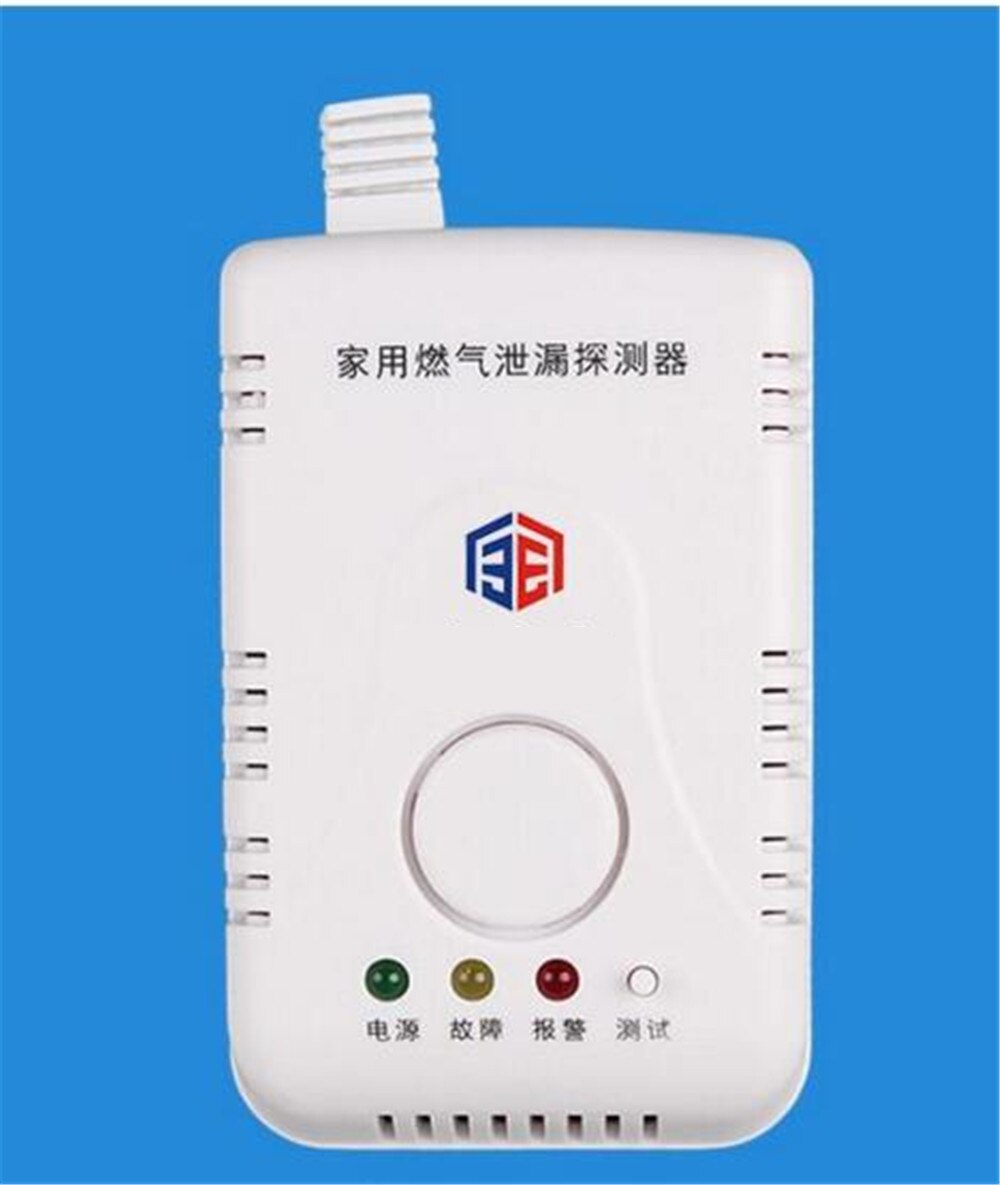
The industrial type of gas detector is a complex system consisting of a control unit and sensors with an increased level of explosion protection. Industrial gas alarms have found their application in factory, hangar, warehouse conditions. In auto repair rooms, in gas boiler rooms, buildings with a large crowd of people.


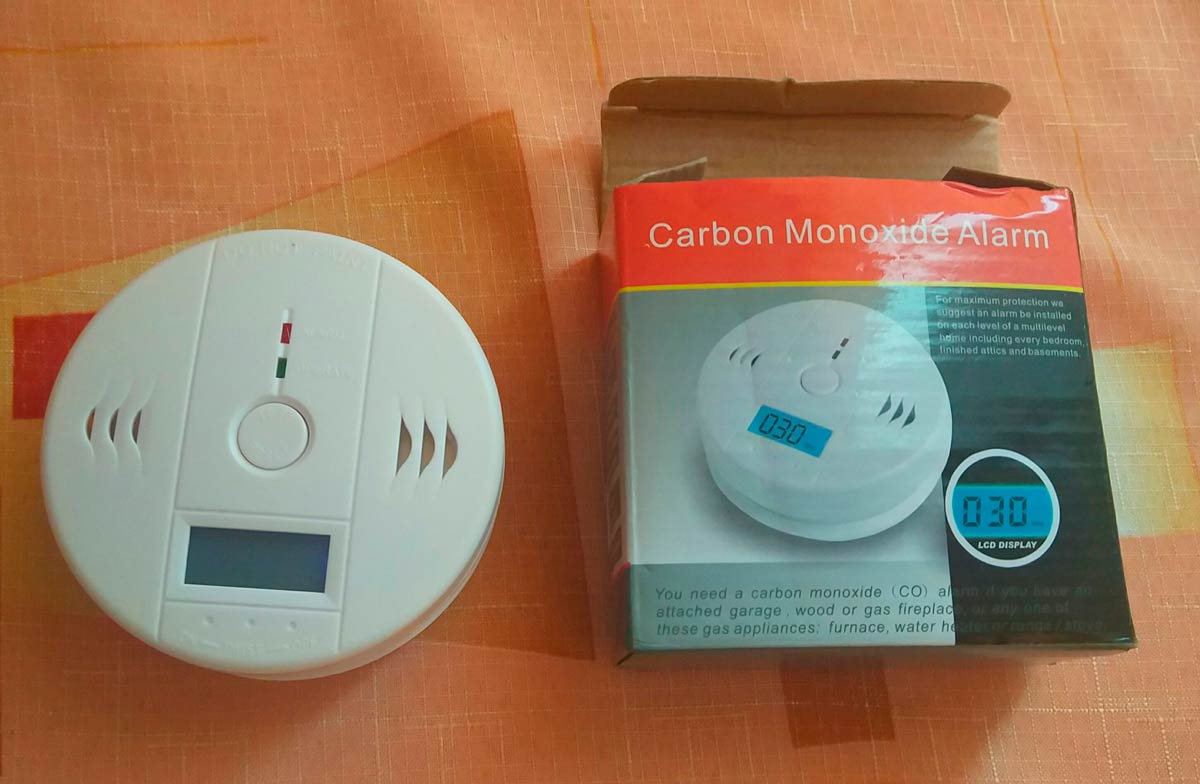



Stationary industrial gas detector operates on the principle of continuous automatic monitoring of pre-explosive accumulations of gaseous substances.
The sensors of the automatic gas control system are endowed with the ability to control the concentration of quantities in the air
- methane
- propane
- carbon monoxide
- air temperature
In the event of an increase in the established level of accumulations of harmful substances in the airspace, gas pollution control sensors provide the supply of:
- sound-light signal;
- electrical signal - to external equipment, for switching external electrical circuits.
The gas contamination alarm device belongs to the stationary type of devices. It has the following properties: scattered air supply to the sensitive element of the sensor; semiconductor method for measuring the accumulation of gases.
The number of working sensors of the gas contamination detector, in various combinations, can vary from 1 to 24 and more. Divided into two main groups: general and separate alarms (specifically for each sensor).
Purpose of the sensor
The gas analyzer, which determines the dangerous concentration of carbon monoxide in the air, is intended for installation in all places where stove heating is used, especially solid fuel, when firewood, coal, coke, peat are heated.
It can also be used where gas heating equipment is used on methane or propane.
The main purpose of a sensor with an alarm (detector) is to give a light and sound signal indicating a dangerous concentration of CO in the air. Some models are capable of automatically shutting off the fuel supply.
It is very important to install such a sensor in the garage, since the exhaust of any car with a modern engine contains up to 30% CO, the engines of previous generations produced an even higher concentration. If the leak occurs at night, then people usually do not have time to wake up to take action.
And even a waking person does not always have time to figure out what is happening to him before he loses consciousness.
If the leak occurs at night, then people usually do not have time to wake up to take action. And even a waking person does not always have time to figure out what is happening to him before he loses consciousness.
To avoid this, the home fire system must be equipped with a gas analyzer designed to detect carbon monoxide.Sensors designed to detect other gases (domestic, carbon dioxide, methane, propane) are not suitable here, since these substances have different physical properties. A smoke detector cannot replace a gas analyzer either. The opposite rule is also true - the gas detector does not detect smoke. For example, in exhaust gases internal combustion engine there is practically no smoke in its pure form if the car is in good condition.
The system of automatic control and protection against gas pollution and gas leakage in a house, apartment
Dangerous properties of gas fuel:
- the ability of gas to form flammable and explosive mixtures with air;
- suffocating power of the gas.
The components of gas fuel do not have a strong toxicological effect on the human body, but at concentrations that reduce the volume fraction of oxygen in the inhaled air to less than 16%, they cause suffocation.
When gas is burned, reactions occur in which harmful substances are formed, as well as products of incomplete combustion.
Carbon monoxide (carbon monoxide, CO) - is formed as a result of incomplete combustion of fuel. A gas boiler or water heater can become a source of carbon monoxide if there is a malfunction in the combustion air supply and flue gas removal path (insufficient draft in the chimney).
Carbon monoxide has a highly directed mechanism of action on the human body up to death. In addition, the gas is colorless, tasteless and odorless, which increases the risk of poisoning. Signs of poisoning: headache and dizziness; there is tinnitus, shortness of breath, palpitations, flickering before the eyes, redness of the face, general weakness, nausea, sometimes vomiting; in severe cases, convulsions, loss of consciousness, coma.Air concentrations greater than 0.1% result in death within one hour. Experiments on young rats have shown that a concentration of CO in the air of 0.02% slows down their growth and reduces activity compared to the control group.
Gas alarm - gas leak sensor, is it necessary to install
Since 2016, building regulations (clause 6.5.7 of SP 60.13330.2016) require the installation of gas alarms for methane and carbon monoxide in the premises of new residential buildings and apartments in which gas boilers, water heaters, stoves and other gas equipment are located.
For buildings that have already been built, this requirement can be seen as a very useful recommendation.
The methane gas detector serves as a sensor domestic natural gas leaks from gas equipment. The carbon monoxide alarm is triggered in case of malfunctions in the chimney system and the ingress of flue gases into the room.
Gas sensors should be triggered when the gas concentration in the room reaches 10% of natural gas LEL and CO content in the air is more than 20 mg/m3.
Gas alarms must control a quick-acting shut-off (cut-off) valve installed at the gas inlet to the room and shutting off the gas supply by a signal from the gas contamination sensor.
The signaling device must be equipped with a built-in system for emitting a light and sound signal when triggered, and / or include an autonomous signaling unit - a detector.
The installation of signaling devices allows you to timely notice a gas leak and disturbances in the operation of the smoke exhaust path of the boiler, to prevent a fire, explosion, and poisoning of people in the house.
NKPRP and VKPRP - this is the lower (upper) concentration limit of flame propagation - the minimum (maximum) concentration of a combustible substance (gas, vapors of a combustible liquid) in a homogeneous mixture with an oxidizing agent (air, etc.) at which flame propagation through the mixture is possible at any distance from source of ignition (open external flame, spark discharge).




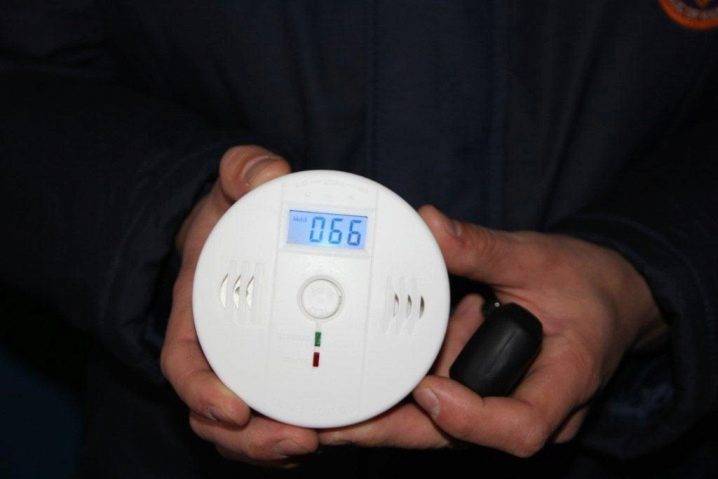
If the concentration of a combustible substance in the mixture is less than the lower limit of flame propagation, such a mixture cannot burn and explode, since the heat released near the ignition source is not enough to heat the mixture to the ignition temperature.
If the concentration of a combustible substance in the mixture is between the lower and upper limits of flame propagation, the ignited mixture ignites and burns both near the ignition source and when it is removed. This mixture is explosive.
If the concentration of a combustible substance in the mixture exceeds the upper limit of flame propagation, then the amount of oxidizing agent in the mixture is insufficient for complete combustion of the combustible substance.
The range of concentration values between NKPRP and VKPRP in the "combustible gas - oxidizer" system, corresponding to the ability of the mixture to ignite, forms an ignitable region.
Gas detector for LPG
The building regulations do not contain mandatory requirements for the installation of gas alarms in rooms when using liquefied gas. But liquefied gas alarms are commercially available and installing them will undoubtedly reduce the risks for you and your loved ones.
How to choose?
The first thing you should know is what specific gas you will be interested in. Typically, these models are designed to detect carbon monoxide. But there are quite a few models that detect natural gas, carbon dioxide or propane. And there are practically no models that can detect several types of gas at once. The second point that will be important when choosing is the category of the device. That is, it will be an option with infrared sensors, a semiconductor-based solution, or an electrochemical analyzer.
For the home, an infrared device or a semiconductor-based option will be best. You should not buy an electrochemical sensor, as it contains chemicals that can harm others if replaced or used incorrectly. The third point that will also be important is the physical dimensions of the device. It must be such that it can be installed in the required place.
Sensor classification
With the general design of the types of gas analyzers, there are many. They are classified according to various criteria. This concerns both consumer characteristics - the method of signaling, the action performed - and the design of sensitive elements.
By type of gas detected
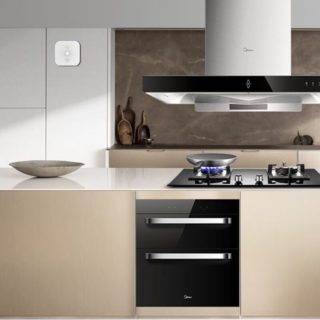 Methane leak sensor installed in the kitchen next to the boiler and plates
The kitchen does not need universal appliances, but simple sensors to warn of possible dangers. Most often, the following models are installed:
- Measuring the leakage of natural gas - methane, butane, propane. Since the gas stove is the most common source of domestic gas, the threat of incomplete oxidation of the fuel is rare here.And flooding the burner and uncontrolled release of gas or leakage if the stove or pipe is damaged is a very real danger. A gas household carbon dioxide alarm is sufficient.
- Carbon monoxide sensor - required when installing autonomous heating. The biggest danger is charcoal and wood stoves, especially those that have been recently built. However, gas boilers and heaters of any kind also pose a threat. Although such equipment is equipped with its own leakage sensors, it is worth duplicating them.
- A carbon dioxide detector is the best option for forced exhaust equipment. Usually has the option of turning on ventilation.
By the method of determining the concentration of gas
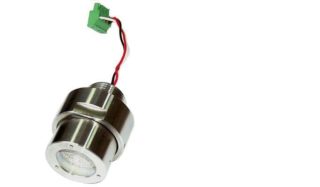 Infrared gas sensors rarely work due to breakage, are considered the most reliable
A sensitive element responds to an increase in the concentration of toxic gas. According to the type of device, there are several types of household detectors:
- Semiconductor - the basis of the element is a silicon plate coated with a thin layer of ruthenium or tin oxide. Carbon monoxide interacts with oxide. The conductivity of ruthenium or tin oxides is very low, and pure tin is liberated during the reaction. Its conductivity is much higher. The measuring module reacts to the change in conductivity. If the value exceeds the set value, the sensor contacts close and the device emits an alarm signal.
- Catalytic - when air passes through the analyzer plate, carbon monoxide is further oxidized to carbon dioxide. The level of monoxide in the air is determined by the amount of emitted substances. Catalytic ones are noticeably more expensive, difficult to maintain and are used at industrial facilities.
- Electrochemical - the measurement takes place by changes in the conductivity of the solution. In this case, air is passed through a vessel with electrolyte. If the permissible concentration is exceeded, the conductivity of the solution changes, and according to the readings of the electrode, the sensor module calculates the gas concentration and issues a signal.
- Infrared is a very accurate option. The sensitive element analyzes the electromagnetic spectrum and evaluates the absorption band of the gas. The sensor responds instantly, is very easy to operate and almost never falsely triggers.
- Photoionization - measure the concentration of volatile compounds. The device is monosensitive, only 1 substance is evaluated.
Any of the models can work together with a shut-off valve. In this case, the device notifies of the danger and turns off the gas supply.
By installation method
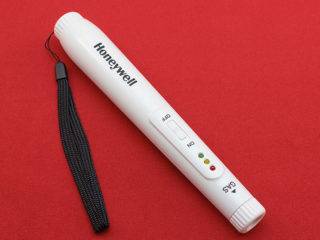 Portable gas analyzer
The design is carried out in 2 versions:
- Stationary - mounted on a wall or other surface. This is usually done when the gas sensor also performs a regulatory task: shuts off the gas supply, turns on the hood.
- Portable - simpler in design and do not "attach" to sources of danger. They serve only as a signaling device.
Carbon monoxide detectors for the home: installation
Modern devices have a special mounting bracket. It is on it that the instrument boxes should be installed. It must be mounted on a wall not far from the ceiling. Let's make a reservation right away, in some European countries, installing a detector on a wall is a gross violation. In such countries, devices are installed only on the ceiling. In turn, in Russia, as in other CIS countries, it is customary to mount devices on the wall.
Due to the fact that the detector is also aimed at recognizing natural gas, it is necessary to correctly calculate the installation location. Devices must be fixed at different heights. Let's take a closer look at how to do this.
If your apartment is equipped with a pipeline with gas, the detector should be installed high, not far from the ceiling. If a gas cylinder is used in the apartment - low, not far from the floor. This is due to the density of gas substances: in the event of a leak, natural gas tends to rise, while the gas from the cylinder descends.
note
Before installing the security system, we recommend checking the operation of the hood. If the ventilation is faulty, it is worthwhile to postpone the installation of the detector and deal with it first.


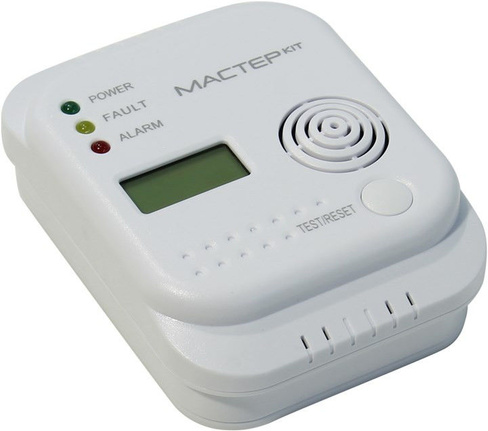
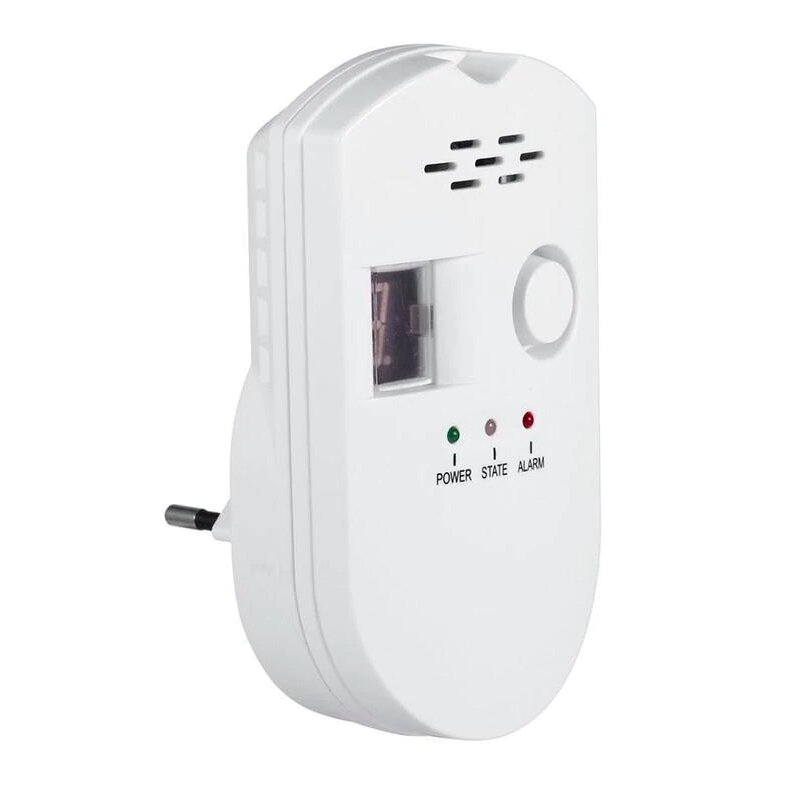
If your device is not powered by batteries, but by the mains, we strongly recommend that you use the services of a wizard. If the device is connected incorrectly, it may malfunction or not work at all.
Also, when choosing places for fastening carbon monoxide sensors, we recommend placing at least one in the bedroom. From year to year, many cases of poisoning are recorded in this particular room. If you live in a multi-storey apartment or a private house, the detector must be placed on each floor.
When installing the appliance in the kitchen, do not forget the rules prescribed in the instructions. Usually they say that the device must be placed at a distance of four to five meters from the source of fire. This is due to the fact that some brands of detectors react to the general air temperature. The average should not exceed fifty degrees Celsius.This is explained by the fact that in some fires, the fire may already begin to spread, and the level of toxic substances has not yet reached the mark set for the sensor.
Also, do not place the sensor behind a curtain or blinds. This will significantly interfere with its correct operation. After all, for the proper functioning of the device, it needs air circulation. If you install the device in a place that does not correspond to this parameter, the device will not work correctly.
Checking work
To test if your detector is working, you can purchase a small can of carbon monoxide from the store. Spray a small amount of the contents near the sensor. If it worked and the alarm turned on, the device is installed correctly.
Before checking, pay attention to the precautions. When spraying gas from a cylinder, do not direct pressure onto the device itself. The level of toxic substances that enter the sensor will exceed several times the device operation norms
This threatens to temporarily disable the detector, and in the worst case, break it.
The level of toxic substances that enter the sensor will exceed several times the device's response rate. This threatens to temporarily disable the detector, and in the worst case, break it.
Also, for further proper operation, it is necessary to monitor the cleanliness of the device and prevent dust from accumulating on the box.
Emergency protection means
To eliminate false fears about a possible leak, it is worth installing a carbon monoxide identification system. The device will report on the state of the air in the room and notify residents in case of exceeding the norm of toxic fumes.
The detector does a good job of identifying not only CO, but will also inform residents of a household gas leak. If a fire has already started, the sensor does not recognize it, however, in terms of a preventive measure, it is indispensable.
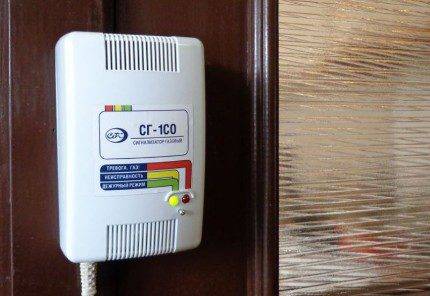
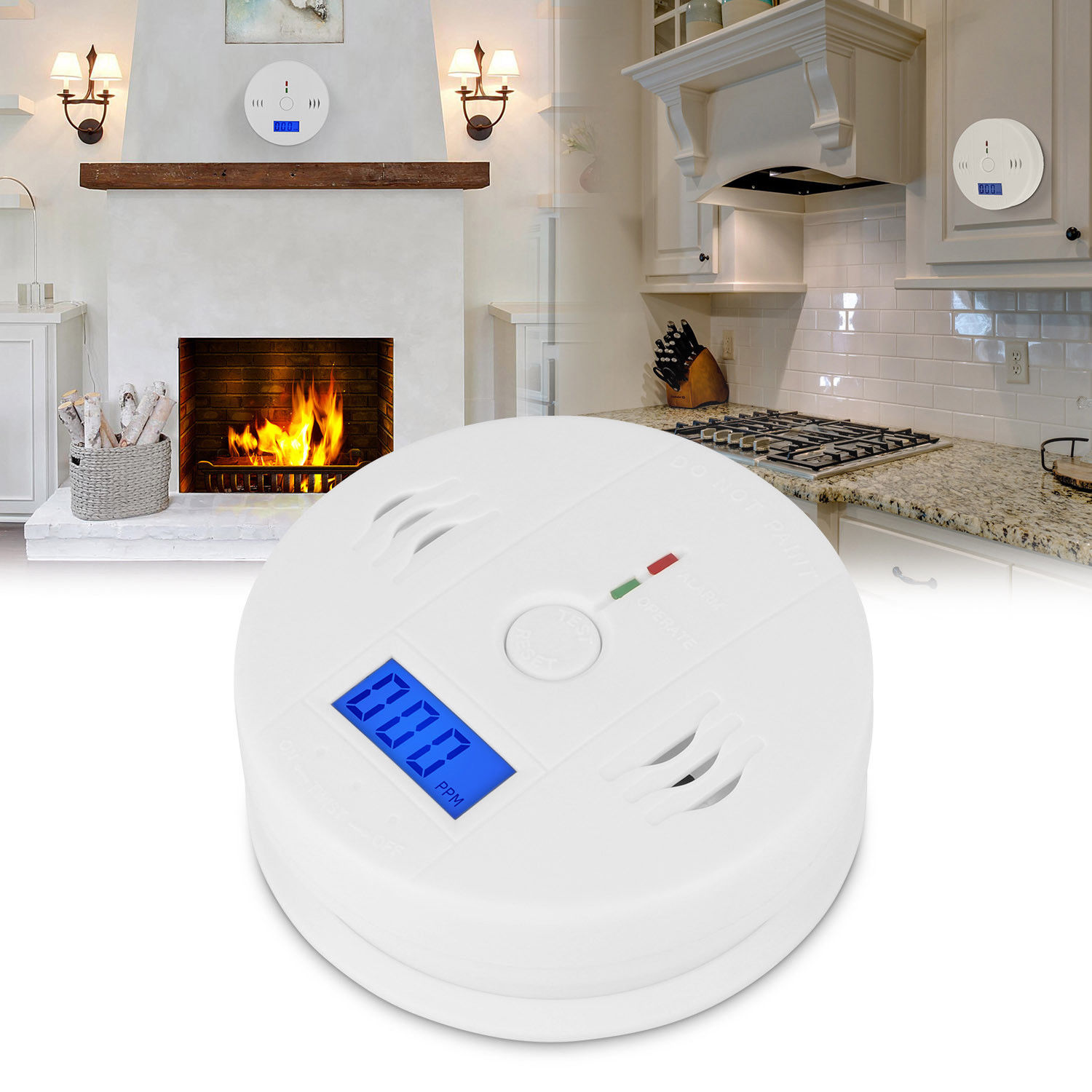
The detector can be placed on any vertical surface. Indication constantly informs about the status of the device and the level of toxic gases in the air
The device will instantly respond to changes in the chemical composition of the air. According to the installation rules, it is best not to install sensors in the immediate vicinity of open flame sources, but simply in the same room with heating equipment.
If the room is equipped with several heating units, it is necessary to organize a system of an equal number of detectors.
A wide range of manufacturers each year provides the consumer with different carbon monoxide detection devices. Despite the fact that the form factor of each device is determined individually, the design principle is almost always the same.
The photo introduces the principle of operation and the specifics of the sensor device:
A distinctive feature of the gas detection device is that the detector is not designed to identify smoke. This means that in addition to the CO sensor, it is recommended to separately install the fire safety system.
The reaction of the sensor to exceeding the permissible parameters in the air is an audible signal, which indicates a leak of toxic gas. Before operation, it is necessary to read the instructions and test the device in an accessible, non-hazardous way, because. Often people confuse the CO leak signal with the audible low battery indicator.
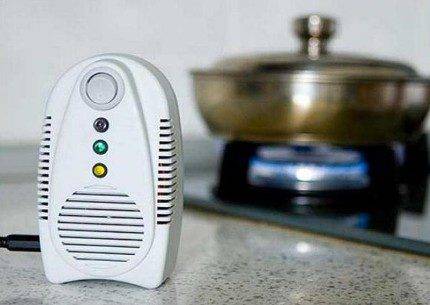
There are portable devices that have already become an integral attribute of fire safety in many countries, including Russia.
Also, almost all devices have the function of notification of their own malfunction. The tone and interval of each sound is different. If the detector signals a low battery, the sound in most cases has a clear jerky character and occurs 1 time per minute.
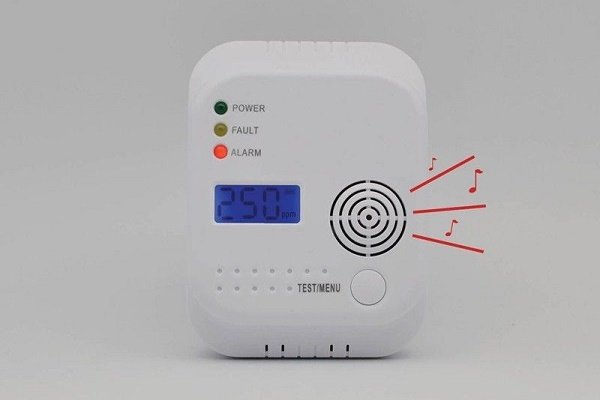
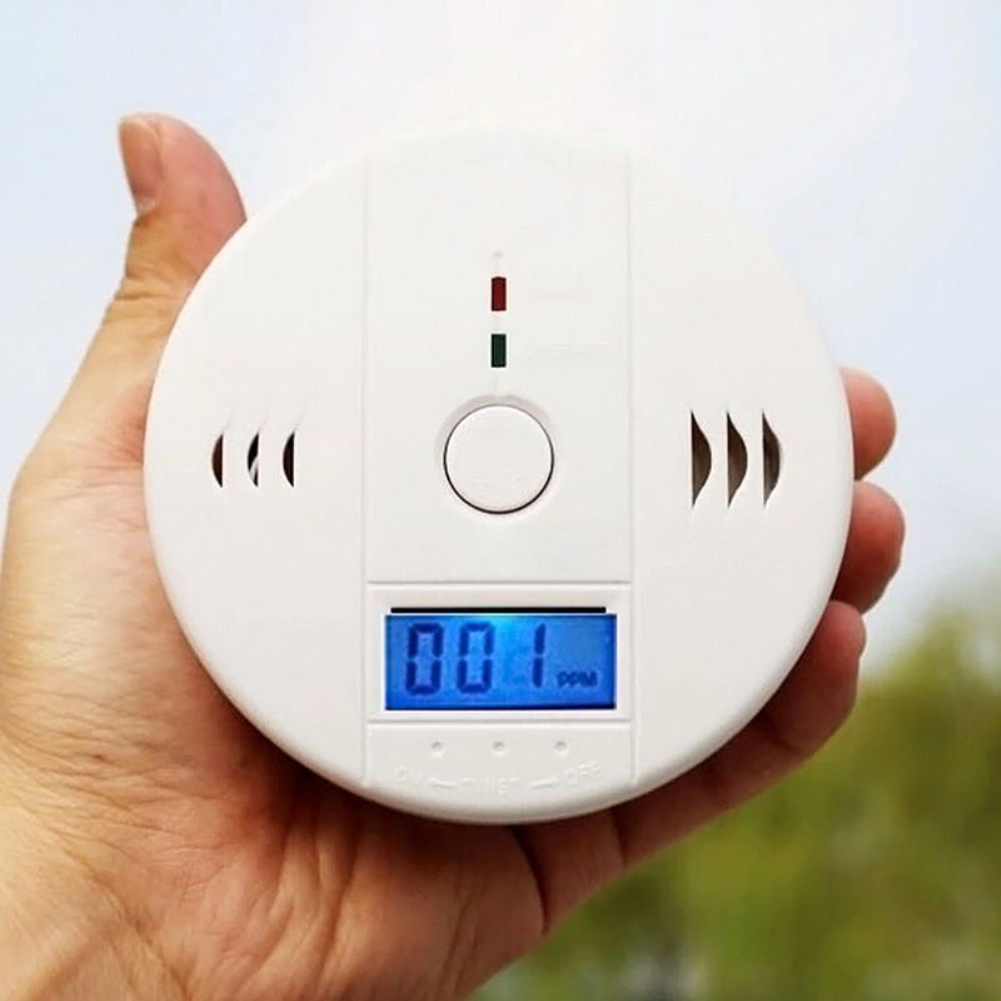


It is recommended to replace the battery in a timely manner, since the health and life of the household depends on the correct functioning of the device. Mostly replacement should be done no more than 2 times a year.
The constant squeak of the detector may indicate an increase in the level of toxins in the air, or a breakdown of the equipment. In any case, you need to immediately call the emergency service.
If symptoms of poisoning are detected, it is necessary to immediately open all the windows and, after leaving the room, wait for the brigade on the street.
Specialists will check the oxygen level and identify leaks. If, nevertheless, it turns out that the signal is false, the detector will need to be replaced with a new one.
Some carbon monoxide and natural gas sensors for the home are able to recognize even fairly harmless substances that have a high degree of evaporation. First of all, this applies to alcohol and all alcohol-containing liquids.

When using alcohol-based cleaners, you need to better ventilate the room in order to avoid false alarms of the security system.
If the vapor concentration is high, the system may sound an alarm, but do not worry and immediately call the emergency service.Also, the detector may be triggered during the cooking of some products that have mainly undergone a fermentation process.
This is mainly characteristic when the device is close to the hob. If this happens quite often, you should install the sensor away from the hearth of cooking procedures.