
- What is dew point?
- Dew point and vapor permeability of structures
- How to avoid window fogging?
- Causes of fogging windows and how to fix them
- Poor ventilation
- Dew point in the wall of the house - why it is important to know
- How to move the dew point in a wall
- Comfortable dew point values for humans
- A few facts about the dew point.
- Features of insulation outside
- External wall insulation technologies
- How to calculate dew point?
- Estimated
- Using a special program
- Tabular
- Dew point calculation: step by step instructions
- Laser pyrometer prices
- When is internal insulation possible?
- Putting all the factors together
- We remove the dew point from the house
- How to find
What is dew point?
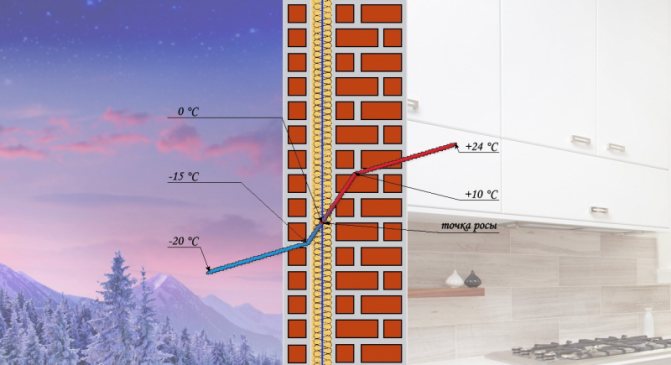
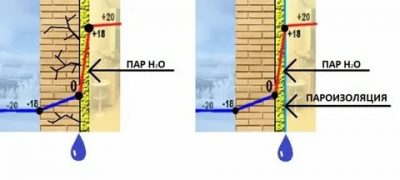
Scheme of formation of a dew point in a wall.
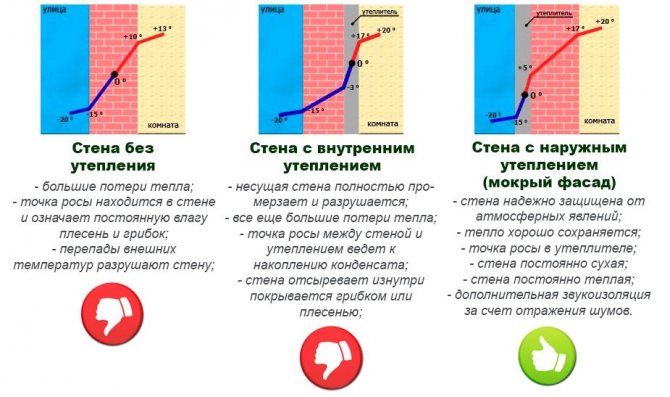
When you insulate the surface from the inside of the room, you fence it off from the heat of the room. Thus, the position of the dew point moves inward, closer to the room, the temperature of the wall itself decreases. And what conclusion can be drawn from this? The occurrence of condensate.
By definition, the dew point is the temperature at which condensation begins to fall, that is, the moisture in the air turns into water and settles on the surface. This point can be in different places (outside, inside, in the middle, closer to any of its surface).
Depending on this indicator, the wall remains dry all year round or gets wet when the temperature drops outside.
For example, if the temperature in the room is +20°C, and the humidity level is 60%, then condensation will form on any surface even when the temperature drops to +12°C. If the humidity level is higher and is 80%, then dew can already be seen at +16.5°C. At 100% humidity, the surface gets wet at 20°C.
Consider the situations that arise when insulating with foam plastic from the outside or from the inside:
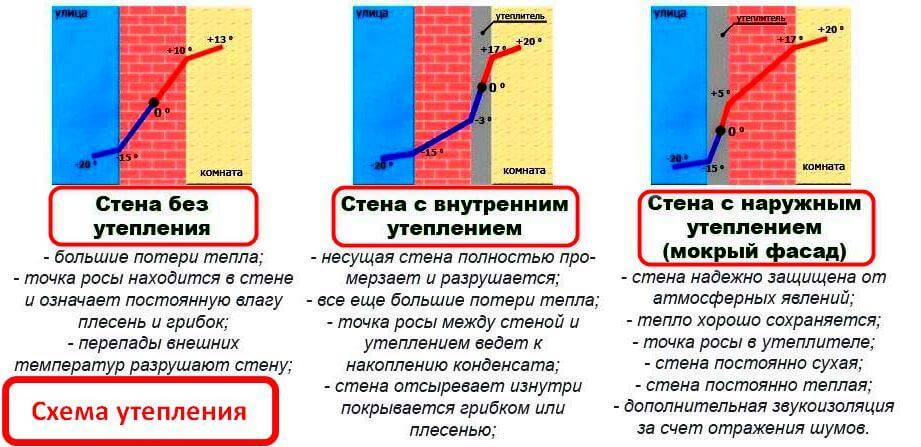
- Point position for an uninsulated surface. It can be located in the thickness of the wall closer to the street, approximately between the outer surface and the middle. The wall does not get wet at any temperature drop, it remains dry. It often happens that the point is closer to the inner surface, then the wall is dry in most cases, but gets wet when the temperature drops sharply. When the indicator is on the inner surface, the wall remains wet all winter.
- When insulating with foam plastic outside the house, several situations may occur. If the choice of insulation, or rather its thickness, was carried out correctly, then the dew point will be in the insulation. This is the most correct location, in which case the wall will remain dry under any circumstances. If the heat insulator layer was taken less, then three options for the location of the dew point are possible:
- in the middle between the central part of the wall and the outer one - the wall remains dry almost all the time;
- closer to the inner surface - when it gets cold, dew falls;
- on the inner surface - in winter the wall is constantly wet.
Related article: Concrete floors on the ground: pouring and concreting (video)
To determine the condensation rate, you can use the following formula:
Tp=(b*y(T,RH))/(a-y(N,RH))
Tp is the dew point
constant values: a=17.27 and b=237.7 degrees (Celsius).
y(T,RH) = (aT/(b+T))+ln(RH)
T - temperature,
RH - level relative to humidity (greater than zero, but less than one),
Ln is the logarithm.
When using the formula, it is necessary to take into account what material the walls are made of, what is their thickness, and much more. It is better to perform such calculations using special computer programs.
Dew point and vapor permeability of structures
When designing enclosing structures, ensuring the normative thermal protection of premises, it is of great importance to take into account the vapor permeability of materials. The vapor permeability value depends on the volume of water vapor that a given material can pass per unit time. Almost all materials used in modern construction - concrete, brick, wood and many others - have small pores through which air carrying water vapor can circulate. Therefore, designers, when developing enclosing structures and selecting materials for their construction, must take into account vapor permeability. In doing so, three principles must be observed:
- there should be no obstacles to remove moisture in case of condensation on one of the surfaces or inside the material;
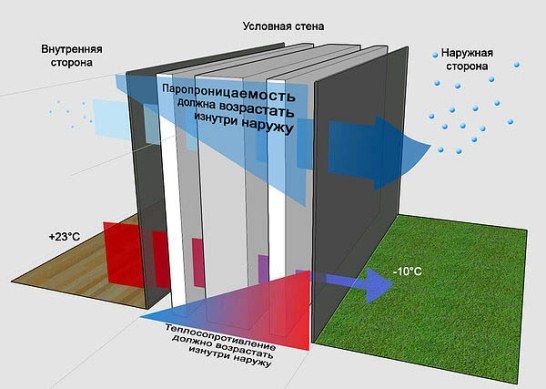
- the vapor permeability of enclosing structures should increase from the inside to the outside;
- the thermal resistance of the materials from which the outer walls are constructed must also increase towards the outside.
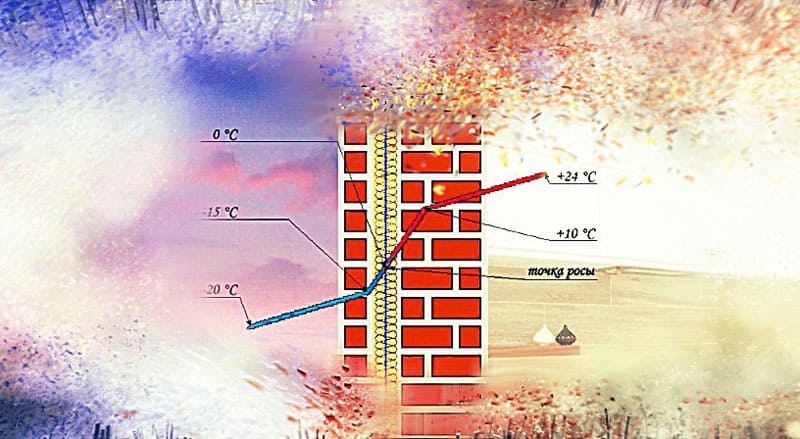
In the diagram, we see the correct composition of the structure of the outer walls, which provides the normative thermal protection of the interior and the removal of moisture from the materials when it condenses on the surfaces or inside the thickness of the wall.
The above principles are violated with internal insulation, so this method of thermal protection is recommended only as a last resort.
All modern exterior wall designs are based on these principles. However, some heaters, which are included in the structure of the walls, have almost zero vapor permeability. For example, polystyrene foam, which has a closed cellular structure, does not allow air to pass through and, accordingly, water vapor



In this case, it is especially important to accurately calculate the thickness of the structure and insulation so that the boundary of condensate formation is within the insulation.
How to avoid window fogging?
The appearance of condensation on the windows is a problem that requires a mandatory solution. And it's not just about aesthetic unattractiveness. If no measures are taken, then the window sill, frame and slopes will become covered with mold, which will lead to damage to the material, the growth of fungus. The substances emitted by mold have a negative impact on human health. A set of measures that should be taken not only at the stage of installation of a plastic window structure, but also during its operation will help to solve the problem.
Before installing windows, correctly calculate the dew point
Its calculation is carried out using a special formula and is quite complicated, however, a variety of calculators are widely available on the Internet designed to facilitate this procedure. But in addition to the dew point, one more physical concept should be taken into account - the isotherm.In this case, it means a line that limits the freezing zone of the wall. If the window is installed beyond this border, then the likelihood of condensation increases dramatically.
Energy saving glass
To prevent condensation from forming on the glass surface, you need to increase its temperature. This can be done by equipping the window structure with special energy-saving glass. It has a sputtering, which provides a higher temperature on the surface of the double-glazed window, in contrast to the usual translucent filling.
Airing
Active air circulation, removing excess moisture from the room, prevents condensation. Modern plastic windows allow ventilation in various ways, the most common of which are ventilation with fully open sashes or using the micro-slit ventilation function.
Rising temperature near the window
- access to warm air is blocked by a wide window sill that does not have ventilation holes;
- when choosing a double-glazed window, the climatic features of the region were not taken into account;
- no energy-saving coating is applied to the glass;
- the heating system does not work efficiently, so the air rising from the batteries is not hot enough;
- the installation of windows was carried out with violations, resulting in the appearance of cracks at the joints between the frame and the slope or under the window sill.
Humidity reduction
As mentioned earlier, relative humidity is one of the most significant parameters that affect the dew point value. To reduce it, you can:
- purchase a special device - an air dryer;
- ventilate the room more often;
- prevent the entry of moist air from the bathroom, kitchen;
- increase the air temperature in the apartment;
- remove other sources of moisture.
Causes of fogging windows and how to fix them
The first reason for the formation of condensation on the front door is based on high humidity when the figure exceeds 55%. Then the collection of condensate occurs on the surface, where the temperature is slightly below the "dew point". In winter, such a surface is precisely the front door.
It is important to adhere to indoor air humidity of about 45% for the health of residents. The humidity of the internal climate is affected by both ventilation devices and the temperature of the heated air in the room. The second reason for condensate is hidden in low thermal insulation - a metal door is more prone to a large amount of condensate due to poor sealing between the metal sheet and the frame. In a typical case, there is not enough air outflow for those purposes so that vapors come out, but it is quite enough to deposit them on the surface
In a typical embodiment, there is not enough air outflow for those purposes, so that vapors come out, but it is quite enough for their deposition on the surface.
Example of a thermal break door
Peculiar "cold bridges" with an increased thermal conductivity on the front door are concentrated mainly on the door handle, peephole, feigned part. Vulnerable freezing points especially concern metal doors, in which heat transfer is increased.
Condensing moisture settles due to the large temperature difference between outside and inside.It is recommended in this embodiment to equip an unheated vestibule at the entrance. It will not be superfluous to equip a visor above the entrance that protects the door from direct exposure to the rays of the sun and precipitation. It is recommended to open the metal sheet of the front door with special powder polymers. It is better to fill all hollow elements in a metal door with foam in order to exclude the manifestations of cold bridges.
Very often, manufacturers of modern windows have to accept claims that their customers' windows fog up. The formation of condensation on the windows is not only aesthetically unsightly, but also threatens with waterlogging of wooden structures and, as a result, the formation of moldy fungus. Let's look at the possible causes of condensation on the windows.
Well, if this happened on windows, then only windows and their manufacturers are to blame. Logically, this is correct, but if there is no water in the window itself and it cannot emit it, where does the condensate come from?
Single-chamber double-glazed window - you should not save on double-glazed windows, as they say, the miser pays twice. An ordinary double-glazed window with one chamber (not energy-saving) will certainly allow you to get acquainted with the condensate on the windows. To eliminate the cause of fogging, it is necessary to replace the double-glazed window, not the entire window, but only the double-glazed window.


Not properly
Correctly
Heating radiators blow warm air over the window and if they are blocked by a window sill, then there will be no circulation of warm air - the window will always be cold, as a result, condensation will appear on it.
You can get rid of the appearance of condensate by reducing the size of the window sill or by moving the battery outside the window sill. If there is no possibility for such options, you will have to look for an additional source for glass heating.
Poor ventilation
Ventilation grilles often tend to get clogged with all sorts of rubbish - dust, cobwebs, after which they stop drawing in moist air, moisture settles on the glass and the windows begin to cry. And in the houses of the old building, the ventilation ducts are almost always clogged and never cleaned.
An example of air flow organization: ventilation and air ionization
Dew point in the wall of the house - why it is important to know
For most of the year, between temperature andhumidity conditions of the street and premises there is a significant difference. That is why areas of condensation often appear in the thickness of walls with insulation. When weather conditions change, they move closer to the outer or inner surface of the wall. That is, to a colder or warmer area.
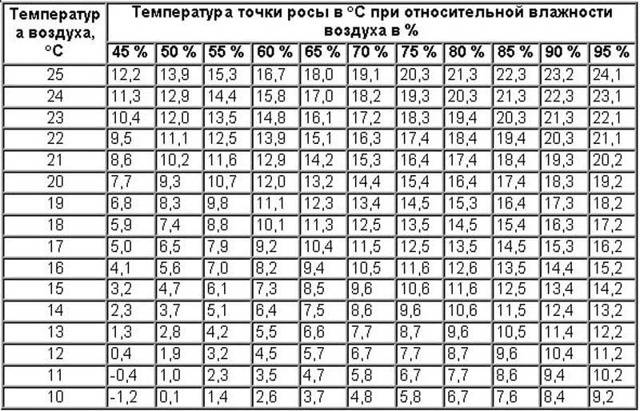
Example: Air temperature is stable at 25°C and humidity at 45%. In this case, condensate is formed in the area with a temperature of 12.2°C. When humidity rises to 65%, the dew point shifts to a warmer area, where 18°C.
Why is it important to know the location of the condensation point? Because it determines which layer of the wall "pie" is exposed to the damaging effects of moisture. The worst option is when the insulation gets wet
Under such conditions, most thermal insulation materials lose their properties. They are deformed, pass cold air, rot, lose their elasticity. Mineral wool is especially susceptible to these processes.
How to move the dew point in a wall
If, after carrying out all the calculations, you are not satisfied with the location of the dew point, you should think about its displacement. For this you can:
- increase the insulation layer outside;
- use material with high vapor permeability;
- dismantle the layer of internal insulation, transferring it to the outside;
- adjust the microclimate in the room - install forced ventilation, additionally heat the air.
A suitable option is chosen based on the climatic conditions of the region of residence, the design features of the house, financial capabilities and the building materials used.
Ignoring such a phenomenon as moisture condensation in the wall "pie" can be too costly. At a minimum, this is an unpleasant smell in the room, constant dampness. As a maximum - large colonies of mold fungi that spoil the interior decoration of walls, destroy insulation and harm the health of households
Thus, calculating the dew point is essential if you want to build reliable and dry walls for your home.
Load new article…—-
- Where to begin
- DIY construction
- Projects and drawings
- Varieties
- Tools and materials
- Technology
- Foundation
- frame
- Roof and roof
- Network engineering
- facades
- Finishing and arrangement
-
Most Helpful
Frame houses - an introduction to technology
Photo frame houses
9 options for exterior decoration of a frame house
Domokomplekt frame house
Programs for designing frame houses
- Recent publications
- Ways of forming and sheathing warm corners in a frame house
- Frame device and instructions for building a frame change house with your own hands
- Frame houses from the company "TSNA"
- How to calculate a beam online on a calculator - the principle of operation and important points
- How to raise a frame house for repairs and move it to a new location
Comfortable dew point values for humans
Dew point, °C Human perceptionRelative humidity (at 32°C), %
| over 26 | extremely high perception, deadly for asthma patients | 65 and up |
| 24-26 | extremely uncomfortable condition | 62 |
| 21-23 | very humid and uncomfortable | 52-60 |
| 18-20 | unpleasantly perceived by most people | 44-52 |
| 16-17 | comfortable for most, but feels the upper limit of humidity | 37-46 |
| 13-15 | comfortable | 38-41 |
| 10-12 | very comfortable | 31-37 |
| less than 10 | a bit dry for some | 30 |
A few facts about the dew point.
- The dew point temperature cannot be higher than the current temperature.
- The higher the dew point temperature, the more moisture is in the air
- High dew point temperatures are in the tropics, low in deserts, polar regions.
- Relative humidity (RH) around 100% causes dew, frost (frost dew), fog.
- Relative humidity (RH) reaches 100% during the rainy season.
- High dew points usually occur before cold temperature fronts.
Features of insulation outside
The advantages of such a procedure are:
- Availability. Outdoor work is not limited by the size of the room.
- No need to move furniture. At the same time, not only the interior is not disturbed, but the finishing layer of the wall is not removed either.
- Due to the insulation, the useful area of \u200b\u200bthe living space is not hidden.
- Protection of surfaces from temperature extremes.
- No increase in the load on the foundation and supporting structure.
- Unique aesthetic finish on the outside.
However, all these advantages are achieved only when the insulating material is correctly selected, installed and calculated with high quality.
Factors affecting the quality of external insulation:
- type of material used as a heater;
- surface condition;
- general condition of the frame of the house;
- purpose of the premises;
- the climate in which the building is located (temperature, precipitation).
External wall insulation technologies
Frameless foam installation is a technology using glue to fix sheets on the wall. However, with this installation, there is a possibility of the formation of cold stripes at the joints of the material sheets. Laying a double layer of material will help to avoid this. Sheets are fixed with plastic dowels, and covered with a polymer mesh from above.


The frame method is more laborious, therefore it is rarely used. Usually it is relevant for subsequent finishing with siding or clapboard. If you need to determine the dew point, you may not need a calculator, but such materials often move it.
The warming process consists of the following steps:
- To begin with, the surface is cleaned to the main layer.
- Then it is primed and leveled.
- The next step is the construction of a frame from a metal profile.
- When the frame is ready, you need to proceed to filling the space between the profiles with heat-insulating material.
- Next, the installation of the finishing layer and the finishing of the wall are carried out.
External insulation allows you to save up to 25% of energy.
Features of proper insulation of the room from the inside
Wall insulation from the inside has several advantages:
- low cost;
- the ability to work at any time of the year;
- the possibility of partial insulation;
- soundproofing;
- opportunity to work independently.
How to calculate dew point?
Of course, each person strives to provide comfortable living conditions, which is impossible with a high level of humidity, because then the room becomes damp.The accumulation of condensate not only negatively affects the standing of floors and insulation, but also causes diseases that are dangerous to health. In addition, growing mold will be difficult to fight.
Therefore, in order to avoid the above troubles, it is necessary to carry out calculations in advance. This will allow you to find out whether it is advisable to insulate the walls of this room or whether it is better to build a new house. At the same time, it is worth remembering that for each structure there will be an individual value, so it will not be possible to make insulation according to general calculations.
Calculation of the dew point is the most important moment of construction
It should be borne in mind that, to one degree or another, moisture is present in any material, so it is important to ensure that this level does not increase. Therefore, even if you contact a specialist because of the problem of damp walls, then most likely he will find incorrect thermal insulation, where the thickness of the material does not correspond to the norm.
After all, it is the exterior finish that largely affects the location of the place where moisture accumulates.
To determine the temperature threshold at which condensation forms, the following methods are used:
- settlement;
- using a special program;
- tabular.
Estimated
In this case, the calculation will require a cumbersome formula that takes into account some coefficients and climate features. The calculation method involves a method for determining the logarithm of humidity. This option is not popular because of the complexity, because you have to spend a lot of time on calculations.
This is how the formula according to which professional builders carry out calculations looks like
Using a special program
If you wish, you can find a huge number of sites where there is a special calculator, thanks to which you can quickly get the desired value. Here it will be enough to choose a building material from the presented list, as well as indicate the thickness. Then all you have to do is click on the "Calculate" button.
It is necessary to select certain values in the calculator
Tabular
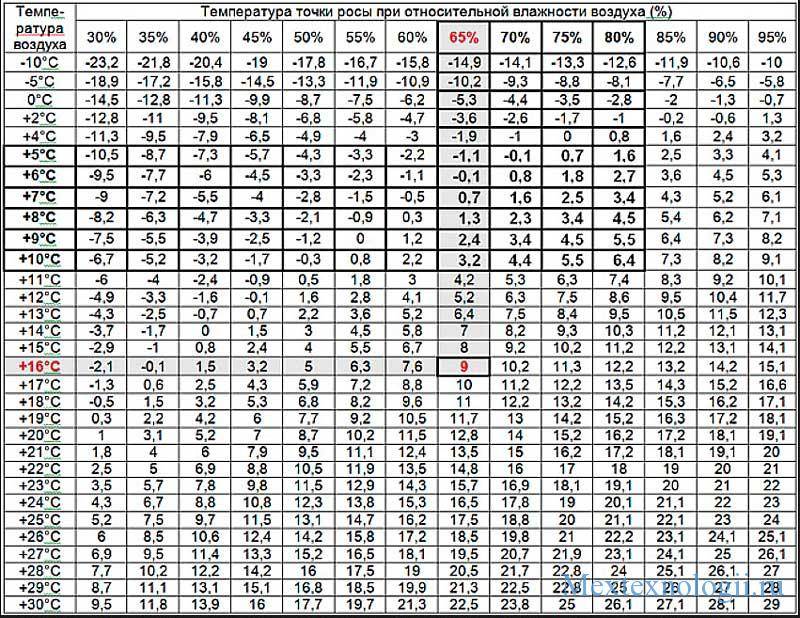
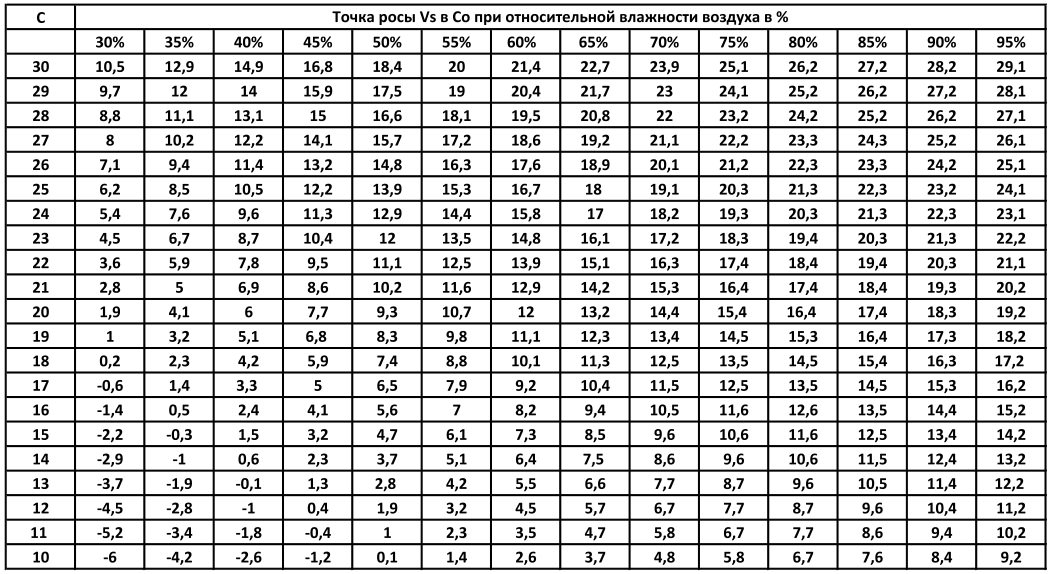
This is a handy method when you need to get a value quickly. For such purposes, a special table is used, where the values \u200b\u200bof the temperature in the room in relation to humidity are already indicated. In order to understand how to do this, we will look at table calculation example.
Dew point calculation: step by step instructions
Before starting the process, you need to prepare the following equipment:
- thermometer;
- laser pyrometer;
- hygroscope.
Step 1: In the room where you want to determine the value, you need to measure a distance of about 55 centimeters from the floor. Now in this position, temperature measurements should be taken.
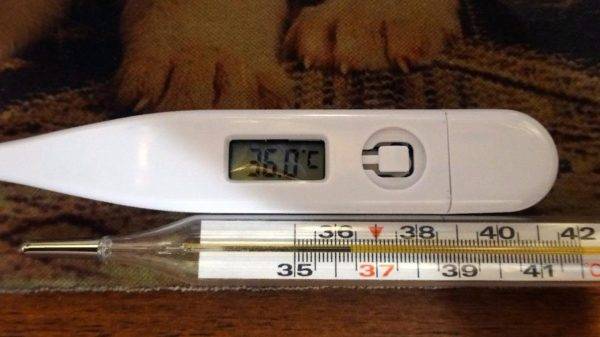 It is better to place the thermometer on a table surface of the same height.
Step 2: now you need to measure the humidity at the same height with a hygroscope.
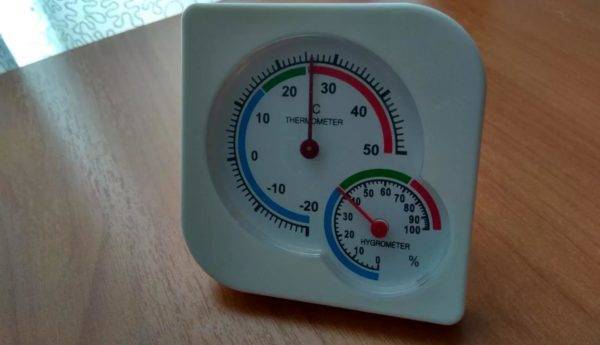 Hygroscope
Step 3: Next, you need to find the value in the table, which will allow you to determine the point.
Table for determining values
Step 4: after that it is necessary to check the possibility of carrying out repairs in the building with the obtained level of humidity. To do this, measure the overlap temperature at the same distance.




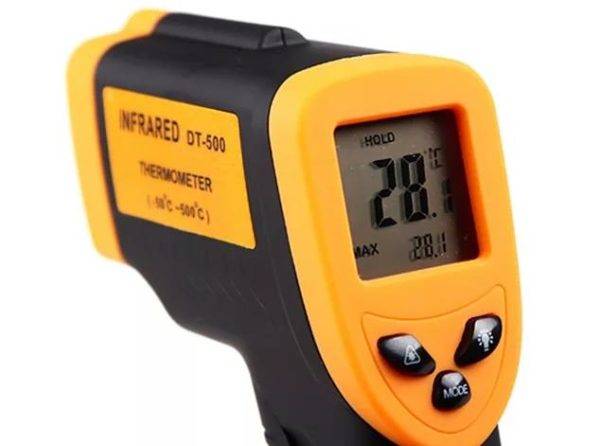 For this purpose, a laser pyrometer is used.
Laser pyrometer prices
Laser pyrometer
At the end, it remains only to compare these indicators with each other.So, if the floor surface has a temperature of four degrees more, then there is a possibility of a dew point, so the choice of insulating materials plays a key role here. It is recommended to entrust this responsible task to a specialist.
When is internal insulation possible?
Table for determining the dew point depending on air temperature and humidity.
It is not always possible to insulate from the inside, since if the actions are not performed correctly, dew will constantly fall out from the inside, rendering all building materials completely unusable, creating an uncomfortable microclimate inside. Consider when it is not recommended to make insulation from the inside, what it depends on.
Is it possible or not to insulate from the inside? The solution to this issue largely depends on what will happen to the structure after the work is completed. If the wall remains dry all year round, then work on its thermal insulation from the inside of the room can be carried out, and in many cases even necessary. But if it constantly gets wet every winter, then it is impossible to carry out thermal insulation categorically. Insulation is allowed only if the structure is dry, and it gets wet very rarely, for example, once every ten years
But even in this case, the work must be carried out very carefully, since otherwise such a phenomenon as the dew point will be observed constantly.
Consider what determines the occurrence of the dew point, how to find out whether or not the walls of the house can be insulated from the inside.
As already mentioned, the dew point occurs due to factors such as:
- humidity;
- indoor temperature.
Related article: How to replace cistern fittings
Humidity in the room depends on the presence of ventilation (exhaust, supply ventilation, air conditioners, etc.) and on the mode of residence, temporary or permanent. The temperature inside is affected by how well the insulation was laid, what is the level of thermal insulation of all other structures of the house, including windows, doors, roofs.
From this we can conclude that the consequences for internal insulation depend on:
- temperature of precipitation of condensate moisture, that is, from the dew point;
- from the position of this point to the thermal insulation and after it.
How to determine where the dew point is? This value depends on many parameters, among which it is necessary to highlight:
- thickness, wall material;
- average indoor temperature;
- average temperature outside (influenced by the climatic zone, average weather conditions throughout the year);
- indoor humidity;
- the level of humidity in the street, which depends not only on the climate, but also on the operating conditions of the house.
Putting all the factors together
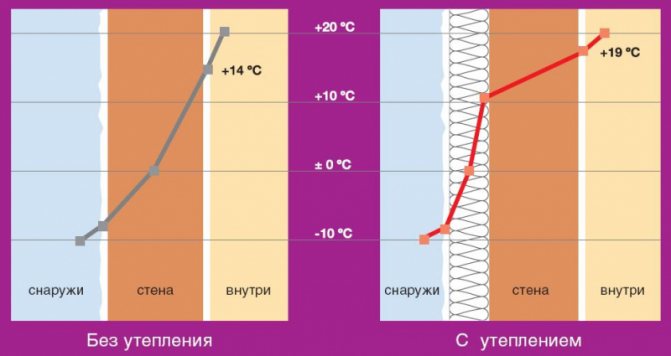
Thermal resistance graph and dew point shift when using insulation.
Now we can collect all the factors that affect where the dew point will be located:
- mode of residence and operation of the house;
- the presence of ventilation and its type;
- the quality of the heating system;
- the quality of work when insulating with foam plastic or other material of all house structures, including the roof, doors, windows;
- thickness of individual layers of the wall;
- temperature inside the room, outside;
- humidity indoors, outside;
- climatic zone;
- operating mode, i.e. what is outside: street, garden, other premises, attached garage, greenhouse.
Warming from the inside is possible, based on all the above factors, in such cases:
- with permanent residence in the house;
- when installing ventilation in accordance with all standards for a particular room;
- during normal operation of the heating system;
- with a heater that is laid for all house structures that need thermal insulation;
- if the wall is dry, it has the required thickness. According to the standards, when insulating with foam, mineral wool and other materials, the thickness of such a layer should not be more than 50 mm.
Related article: Polycarbonate canopy attached to the house: installation, photo
In other cases, it is impossible to perform insulation from the inside. As practice shows, in 90% of cases the walls of the house can only be thermally insulated from the outside, since it is quite difficult to provide all the conditions, and often not entirely feasible.


We remove the dew point from the house
If you place a layer of insulation on the outer part of the wall, an important indicator will move into it. Then the temperature drops will not be so sharp, and therefore the internal surfaces will not suffer.
The thicker the width of the insulation, the lower the risk of damage to internal surfaces.
How to find
When cold and warm air meet, condensation appears, and the process of converting steam into moisture in this case is called condensation.
What is a dew point and where is it located? The dew point can be located on the wall, or in its thickness. The location in the wall depends on such factors:
- wall type.
- Internal temperature level.
- Climate outside the building.
- Humidity.
On a wall without insulation, the location can be as follows:
- in the wall, closer to the outside. The wall inside the building does not get wet;
- in the thickness of the wall, offset to the room.The wall is without moisture, but when the temperature drops, wetting spots may occur;
- on the wall inside the room. The inside of the house structure will be wet during the autumn-winter period.
On the wall, insulated according to all the rules from the side of the street, the point can move depending on the insulation:
- if the choice is made according to all the rules, then it is located inside the insulation;
- when the layer thickness is insufficient, the wall gets wet.
The location of what is called the dew point in the wall insulated inside shifts:
- if it is in the middle of the wall, humidity may be noted when the temperature changes;
- if it is located under the insulation, the wall may get wet in the winter.
- if the dew point is in the very thickness of the insulation, at low temperatures not only the wall, but also the insulation itself can get wet.
Therefore, before warming, it is necessary to take into account various variations of the consequences.



