
- How to connect a dimmer with your own hands?
- Instructions for connecting a dimmer for LED lamps
- Dimmers: advantages and disadvantages
- Features of adjusting different types of lamps
- Dimmable LED lamps - what is it
- What dimmer is needed for conventional LED bulbs
- Is it possible to dim the brightness of 12V LED lamps
- Types of dimmers
- Simple dimmer
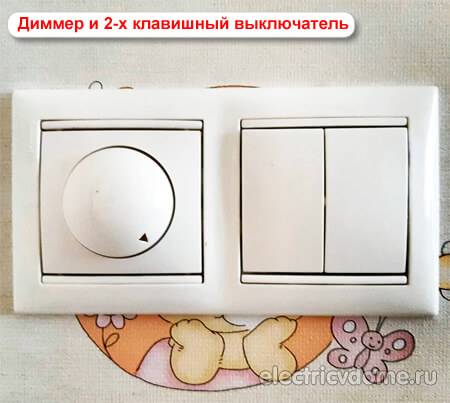
- Dimmer with switch
- How to choose a dimmer according to the type of lamps?
- Types of device and how does a dimmer for incandescent lamps work?
- Selection Guide
- DIY dimmer manufacturing
- Application area
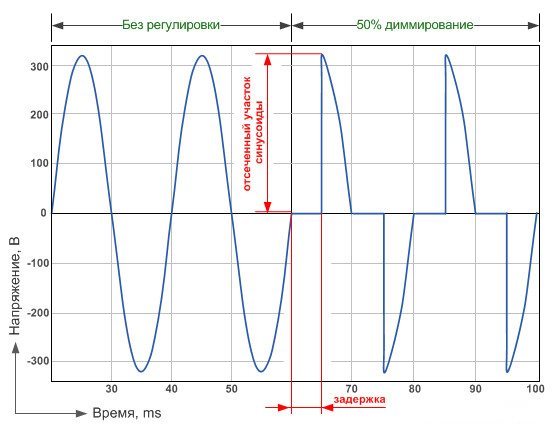
- The principle of operation of the dimmer
- Operating Parameter Control - Operation Control
- Waste of energy
- Monoblock dimmer connection diagram
- Connecting and operating a dimmer: what should everyone know?
- Instructions for installing a dimmer instead of a conventional switch
- Condenser dimmer
How to connect a dimmer with your own hands?
You can connect a dimmer for LED lamps yourself. To do this, you need to have minimal knowledge in the field of electrics and have a screwdriver.
Instructions for connecting a dimmer for LED lamps
The procedure for connecting the device using the Legrand regulator as an example:
- The first step will be to turn off the electricity in the household network.Using the indicator, it is necessary to determine the phase power line. Disassemble the voltage regulator with a screwdriver and release the socket.
- There are three connectors on the body of the device. The first is the phase, the second is the load, and the third is for connecting additional switches. The dimmer package includes a circuit, with its help the connection will be made.
- Using a Phillips screwdriver, loosen the clamping bolts and install the circuit contacts into the connectors. When connecting, use the pinout. In our example, the white wire contact is the phase, and the blue one is for connecting the load. After installing the wires, the bolts are clamped, this is required to ensure high-quality contact. But it is not recommended to pinch the screws so as not to damage the contact.
- Then the dimmer is installed in the socket, it must be securely fixed in the box itself with two screws.
- The next step will be the installation of a protective plastic frame and buttons. The key is mounted taking into account the nuances specified in the service documentation. Typically, a wide button is designed to turn the light on and off, and a narrow button is needed to adjust the brightness of the light.
- At the final stage, the diagnostics of the operation of the regulatory device is performed; before that, it is necessary to turn on the electricity in the network.
Dimmers: advantages and disadvantages
The advantages of dimmers include:
- Comfortable brightness control. In some cases, this can be done remotely or with an acoustic signal.
- Possibility of using regulators as switches for lighting and extinguishing lamps.
- Reducing the load helps to extend the life of lighting fixtures.
- Modern models often have a programming function that allows you to simulate the presence of the owner in case of departure.
The assortment of specialized stores includes a wide range of devices that differ in their design, design, cost, and a set of various options.
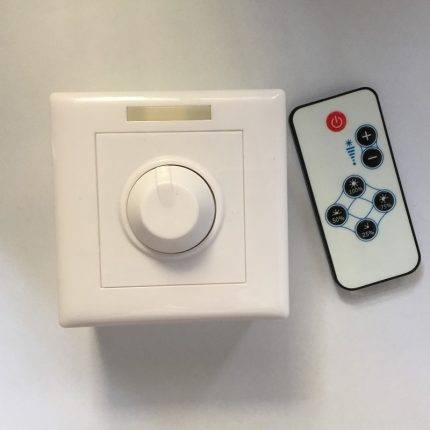 An extremely convenient device is a remote dimmer that allows you to turn on and off the light, as well as change its brightness from a distance using the remote control.
At the same time, these devices have a number of certain disadvantages. First of all, they are sensitive to overheating, so it is recommended to install them in rooms with a temperature not exceeding +25°C.
When using dimmers, a minimum load level of 40 watts must be observed. If this indicator is often violated, the regulatory mechanism will fail prematurely.
The applied pulses can become sources of radio interference. To compensate for this not too pleasant effect, coils with capacitors (LG filters) are sometimes introduced into the circuit.
If powerful lamps with long filaments are included in the circuit, you should be careful not to apply a minimum voltage to them, as the devices may begin to “sing”.
It is strictly forbidden to connect TVs, computers, tablets, radios to the power circuit. It is not allowed to connect electronic ballasts (electronic ballasts), fluorescent lamps.
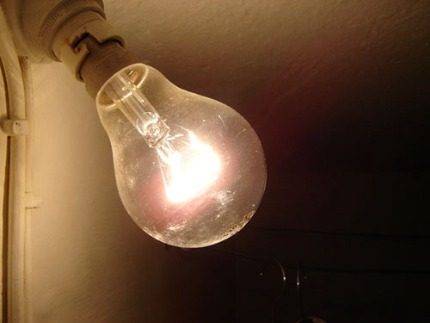
According to experts, a 50% reduction in the power of an incandescent lamp using modern dimmers saves 15% of electrical energy.
A debatable issue is energy savings when regulating the operation of incandescent lamps.
Research by scientists has shown that the use of modern types of dimmers contributes to some reduction in power consumption, but this figure can hardly be called impressive.
Features of adjusting different types of lamps
Different types of lamps require different control schemes for their operation. So, for incandescent lamps and halogen analogues, designed for an operating voltage of 220 volts, only the option of changing the supplied voltage is possible. This leads to a change in the intensity of the glow of the light source. For devices with an operating voltage of 12 Volts DC, the change in the luminous flux is carried out by means of a PWM REGULATOR, which is capable of smoothly changing the output operating voltage without increasing or decreasing its amplitude.
Dimmable LED lamps - what is it
LED lamps equipped with a device that allows you to smoothly adjust their glow are called dimmable LED lamps.
Note! LED light sources equipped with dimming devices do not outwardly differ in any way from analogues that are not equipped with such devices. The presence of the possibility of dimming the lamp is indicated in its marking with the designation dimmable.
Lamps that do not have a dimmer in their design work only in two modes: on and off. And in the presence of a dimming device, they are able to adjust the intensity of the glow in accordance with the specified values (usually from 10 to 100%).
What dimmer is needed for conventional LED bulbs
When choosing a regulator for led light sources, the following indicators will become the criteria:
- technical characteristics - electric power and operating voltage;
- type of device (its purpose) - for incandescent lamps, halogen or LED lamps;
- design - determines the type of execution, method of adjustment and location.
When choosing a specific model, it must be remembered that non-compliance with the above criteria can lead to the following negative consequences:
- overheating of the device if the power of the light sources connected to it is exceeded;
- the inability to perform the required settings or save them in the device's memory adversely affects the functionality of the regulator;
- the design of the dimmer does not allow it to be placed in the selected installation location due to the peculiarities of the fastening elements provided for by a particular model.
Is it possible to dim the brightness of 12V LED lamps
For backlighting and artificial lighting, LED strips are widely used, in which light sources operate at a voltage of 12 volts.
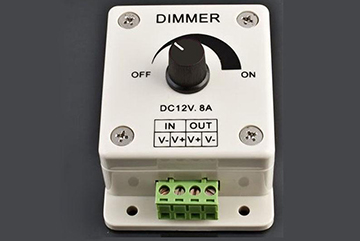
To control the operation of such a device, a dimmer for an LED strip is used, which is included in the power supply circuit of the light source and can control its operation both in a given mode and using a remote control.
A dimmer for an LED strip of the same glow color has one control channel, which involves changing only the brightness of the glow. For tri-color tapes (RGB-glow), the devices are equipped with three control channels, which also allow you to adjust the rate of change of all colors.
Types of dimmers
Electronic devices for adjusting the brightness of light are created according to several parameters. The main thing that distinguishes dimmers from each other is the type of execution.According to him, light intensity regulators are:




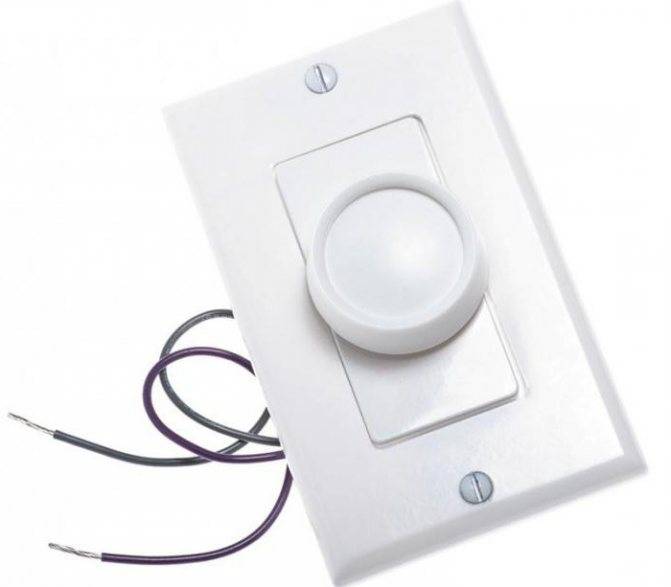
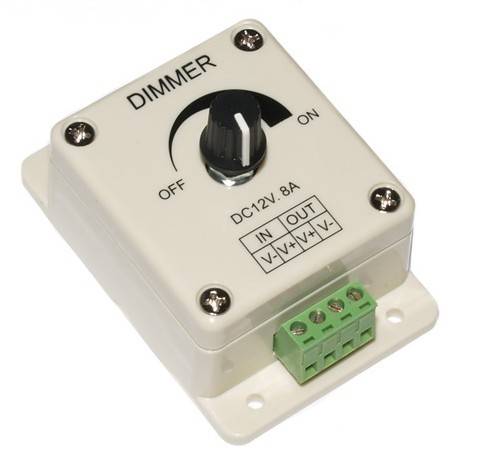

The last type of electronic devices - monoblock dimmers - are divided into types depending on the control method. Therefore, dimmers are further subdivided into the following devices:
- rotary (equipped with a handle, which, if directed to the left, turns off the light, and when turned to the right, increases the intensity of illumination); To change the brightness of the light, this dimmer must be turned
- rotary-push, acting in the same way as conventional rotary, but differing in that they turn on the light only after lightly pressing the handle; Such a dimmer is similar to a button
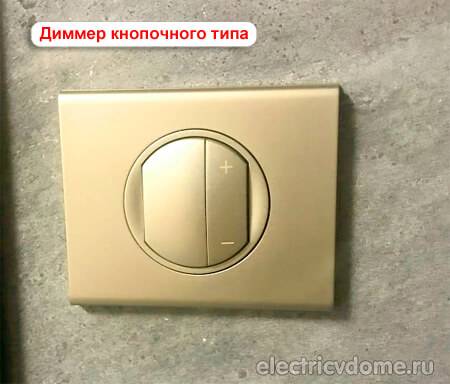
- keyboards, which are devices, one part of which is responsible for turning on and off the light, and the second for decreasing and increasing its brightness. On this device, “+” and “-” are often marked
An essential role in choosing a dimmer is played by the type of lamp, the light from which must be adjusted. For example, it is customary to equip incandescent lamps with simple electronic devices that carry out their task by changing the voltage. Standard dimmers are also well suited for halogen lamps connected to a 220 V power source.
One dimmer is connected to an incandescent lamp and the other is connected to a halogen lamp.
If you need to regulate the light supply from a halogen lamp operating at a voltage of 12 or 24 V, then you will have to use a more complex device. It is desirable that the dimmer for such a lighting device work together with a step-down transformer. If the device for converting current is winding, then it is recommended to use a dimmer marked with the letters "RL". And together with an electronic transformer, it is more reasonable to use a regulator marked "C".
Version of the device for devices operating from a voltage of not more than 24 V
Lamps with light emitting diodes require the use of a light intensity regulator of a special kind, that is, a device that modulates the frequency of the current in pulses. For an energy-saving or fluorescent lamp, choosing a dimmer is not easy. The most acceptable option is a dimmer, whose circuit includes an electronic starter.
Simple dimmer
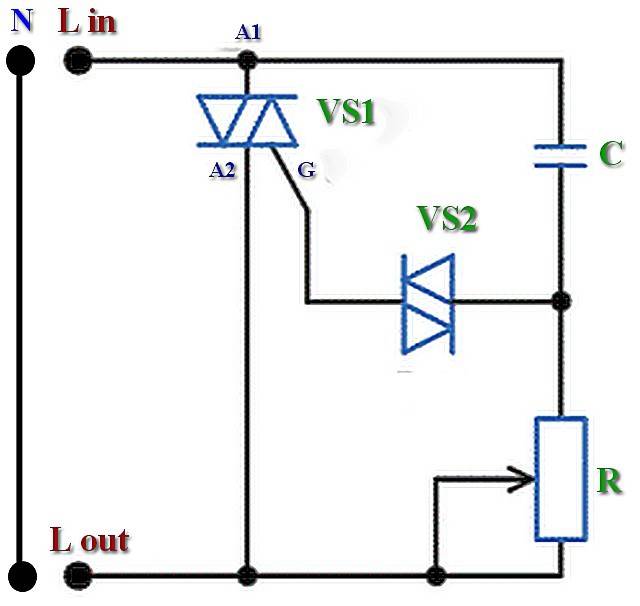
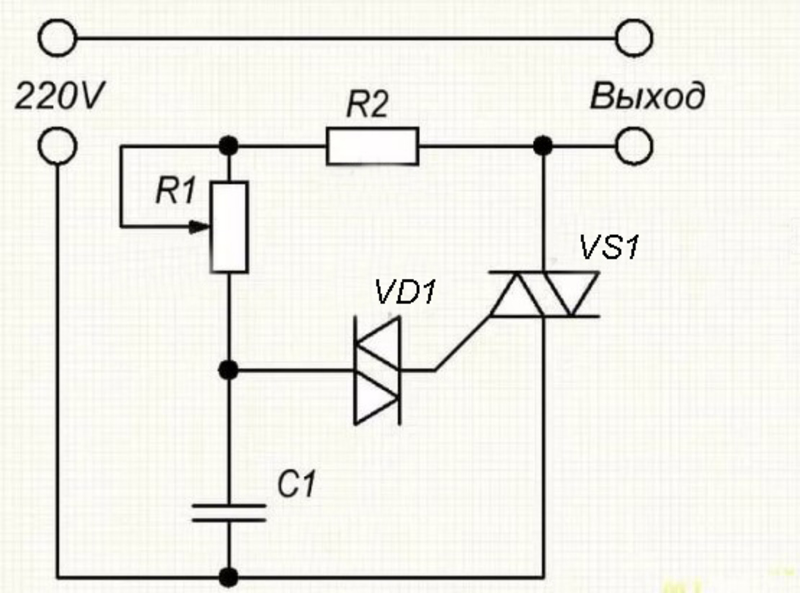
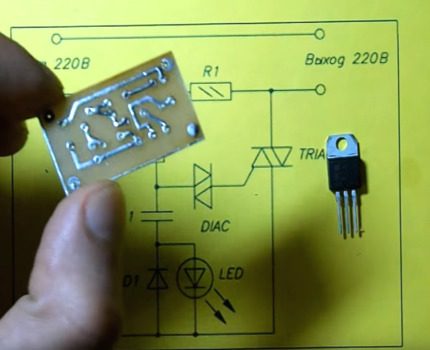
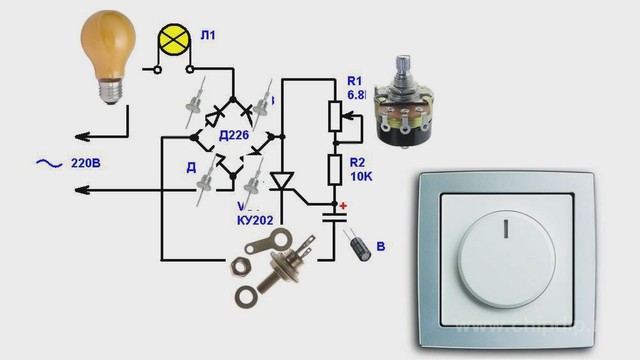
The easiest way to put into operation is a dimmer that operates with a dinistor and a triac. The first device is a semiconductor device that performs its task in several ways. In other words, the dinister looks like two connected diodes located opposite each other. And the simister is a complicated thyristor that starts to pass current at the moment the control current is applied to the electrode.
In addition to the dinister and simister, the simple dimmer circuit includes resistors - constant and variable. Together with them, several diodes and a capacitor are also used.
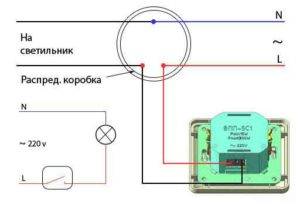
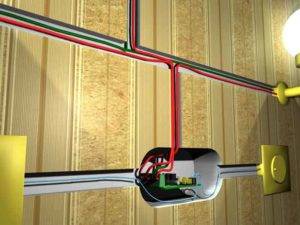
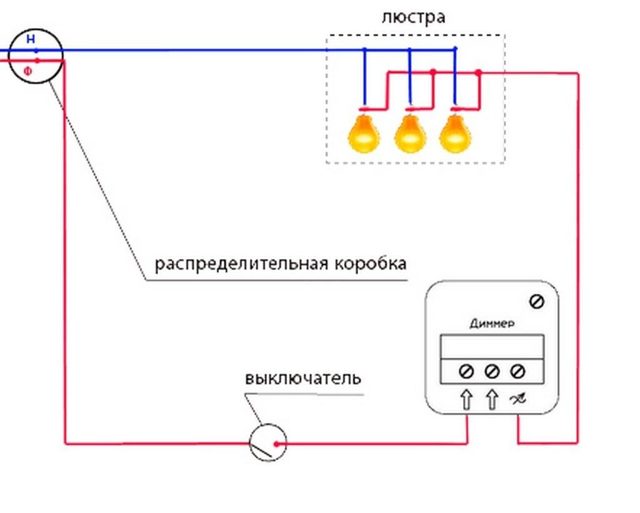
The device is connected with the switchboard, junction box and luminaire
This is interesting: Which wire to use for wiring in the house - how to choose and calculate, types (copper, aluminum, solid, stranded, non-combustible)
Dimmer with switch
A slightly more complicated circuit is also popular, but, of course, very convenient, especially for use in bedrooms - a switch is installed at the phase break in front of the dimmer. The dimmer is mounted near the bed, and the light switch, as expected, at the entrance to the room. Now, while lying in bed, it is possible to adjust the lamps, and when leaving the room, the light can be completely turned off.When you return to the bedroom and press the switch at the entrance, the bulbs will light up with the same brightness with which they were burning at the moment of switching off.
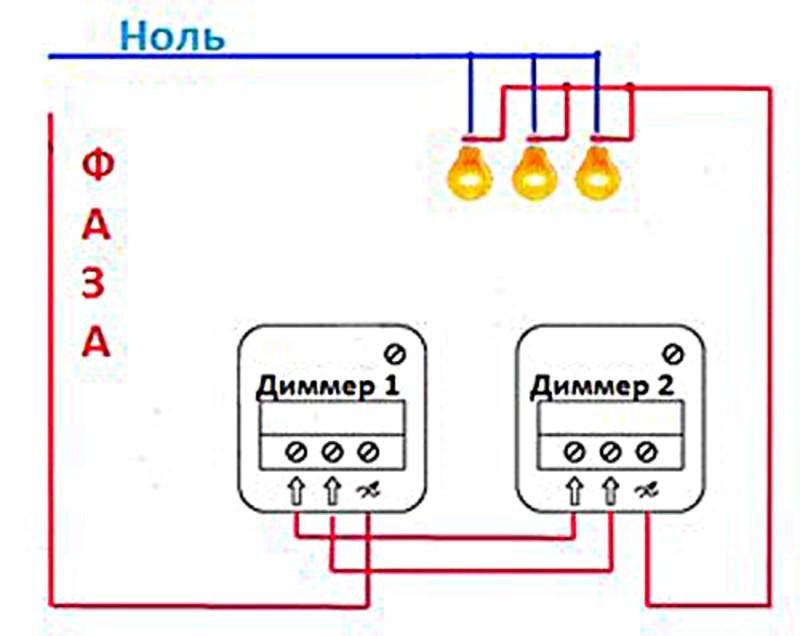
Similarly to pass-through switches, pass-through dimmers are also connected, which makes it possible to control lighting from two points. From each dimmer installation location, three wires should fit into the junction box. A phase from the mains is supplied to the input contact of the first dimmer. The output pin of the second dimmer is connected to the lighting load. And the two pairs of remaining wires are interconnected by jumpers.
How to choose a dimmer according to the type of lamps?
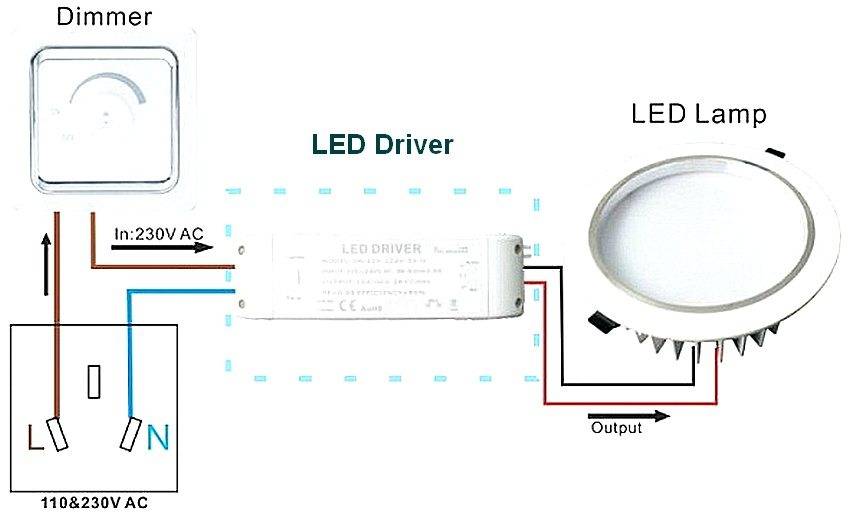
Dimmers can be universal - for any lamp, and narrowly focused - for example, for low-voltage halogen lamps. The device of dimmers is also different: regulators for incandescent lamps withstand a voltage of 220 volts, the lamp filament heats up, and the brightness of the light depends on the magnitude of the applied voltage. For luminescent and diode lighting sources, units with an electronic throttle are purchased - it regulates the intensity of the gas discharge. For halogen lamps, a transformer is included with the dimmer, which converts the source voltage to 12-24 volts.
Classification by type of control:
- Analog. The control signal is a constant voltage, the signal comes from the control panel;
- Digital. The regulators are controlled by a digital sequence, the dimmer is based on a microprocessor that converts the digital code into a signal.
- Digital-analog. Such a block is considered universal and supports both types of signals.
Types of device and how does a dimmer for incandescent lamps work?
The peculiarity of the very first dimmers was the mechanical method of control and the ability to only change the brightness of the lighting device. Advanced devices are multifunctional.
Such light controllers are necessarily equipped with a microcontroller, and also have advanced functionality that allows:
- control the brightness of the light flux;
- turn off in automatic mode;
- imitate the presence of a person in the room;
- smoothly turn on and off the light source;
- apply different modes and effects, including dimming and flashing;
- control the device remotely.
According to the type of execution, modular dimmers mounted in the switchboard, monoblock models with installation for a phase break in the circuit, as well as block socket-switch regulators are distinguished.
Depending on the design features and level of functionality, all dimmers can be represented by several varieties:
- the simplest and most common rotary models that allow you to adjust the brightness of the light through a round rotary device;
- push-button models that allow you to control the lighting fixture by pressing dedicated keys;
- touch models, which are often equipped with automatic shutdown systems, a timer and presence effect.
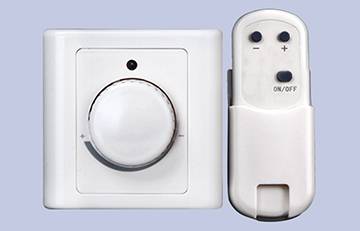
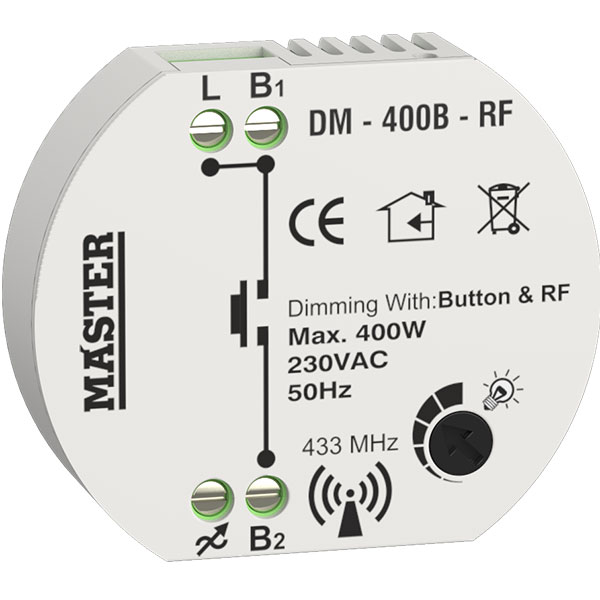
The most modern devices include models with a remote control that allow you to control lighting remotely. With such dimmers, in addition to turning the light source on and off, you can easily adjust the level of light output.
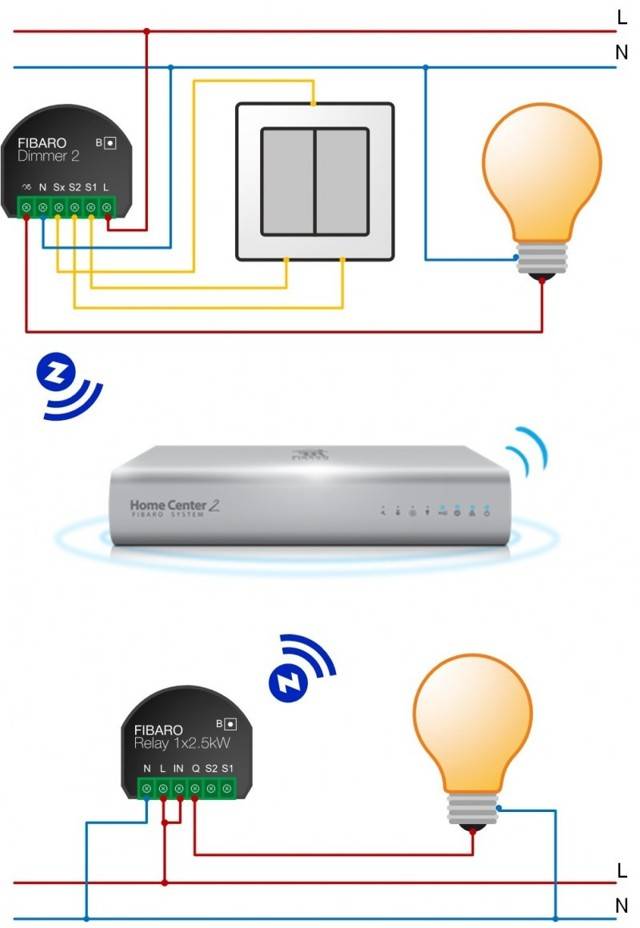
It is the touch dimmer for incandescent lamps (with a remote control) that is used in the arrangement of the "smart home" system, and remote control can be carried out via infrared or radio channel, acoustic or voice commands.
Selection Guide
To choose the right device, you should study the installation options:
- The standard connection option is to control the light from one point in the room.
- In the bedrooms, you can install two devices - at the entrance to the room and near the bed, which allows you to change the intensity of lighting when going to bed.
- Let's assume the option when the regulation of light is carried out from one place, and control - from two. This can be a switch at the entrance and two regulators in different areas of the room.
- Option in the ratio "three control points and one control point". Here you can use pass-through dimmers, when turning on the lamps in one zone of the room automatically turns off the lighting devices in others.
Two dimmers and one switch
Two point control
Single point control
A variety of ways to connect a dimmer allows you to choose the best option for each room, taking into account the characteristics of its operation.
DIY dimmer manufacturing
Initially, it is necessary to decide on a number of parameters, including power, type of placement, control. Without this procedure, a workable regulator can only be created by chance, which is rare.

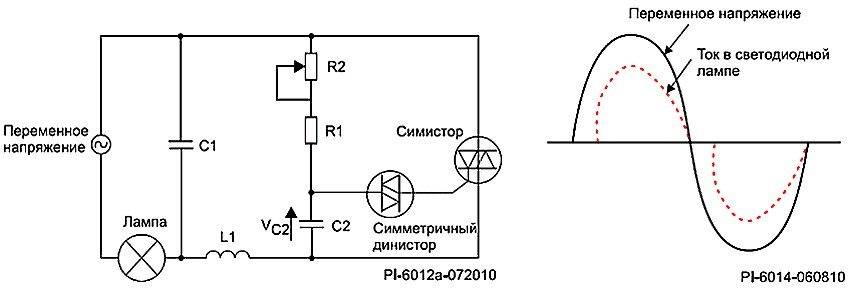


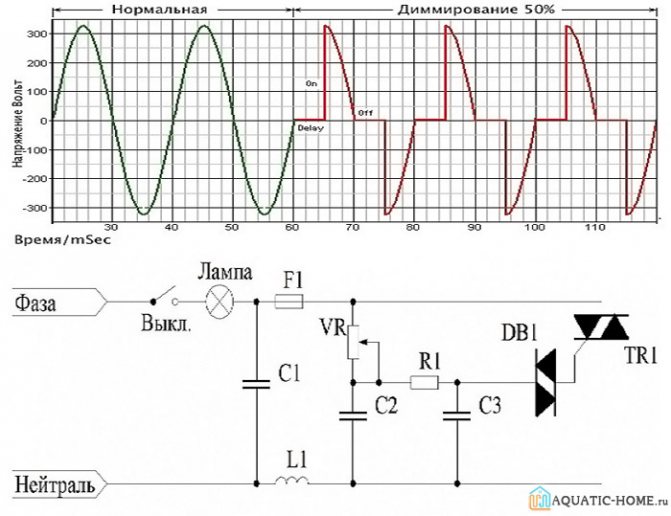
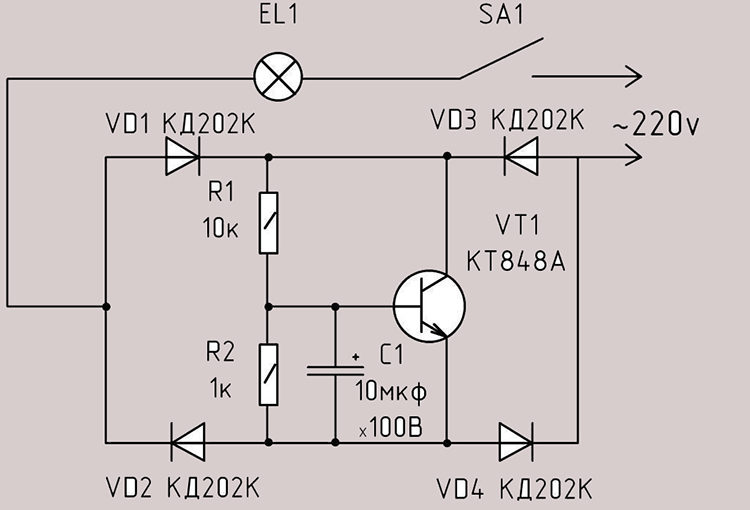

Next, you need to purchase or acquire ownership in another way of a triac, dinistor, as well as a node that generates a control pulse, for example, take it from an unnecessary device.
In addition, you will need a capacitor and 2 resistors that can support the previously determined power. And one of them must be variable. This feature will allow you to change the voltage.
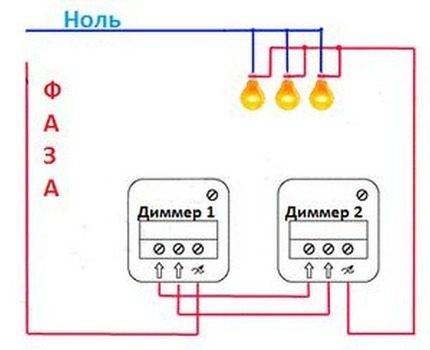
The diagram shows how the user can control one light source using two controllers installed in different parts of the room, which is convenient
And when its value reaches the maximum possible for the dinistor used, it triggers and delivers the necessary command pulse. Which is sent to the triac, and then goes to lamps or other electrical appliances.
When this power key opens depends on the position of the controls. Since it can be both 220 V and 40 V, if a person needs it.
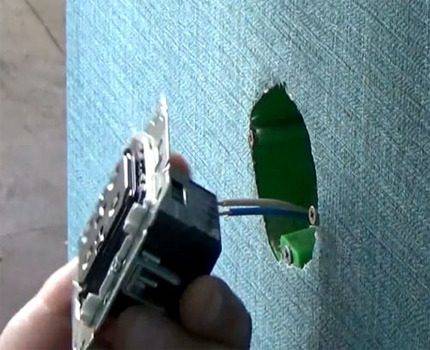
Since the craftsmen mainly make overhead dimmers, it will not be difficult to install it in the circuit. Since this operation is no different from installing a traditional switch
All of the above structural elements are connected into one product according to the attached diagram using wires and soldering. Contacts must be carefully isolated. Since a short circuit is one of several common causes of electrical equipment failure.
Application area
In everyday life, a dimmer is most often used to adjust the brightness of lighting lamps. By connecting it to the power supply circuit of halogen lamps, a ready-made device for smooth ignition of light is obtained, which at times prolongs the life of the lighting device. Often radio amateurs assemble a dimmer with their own hands to adjust the heating of the soldering iron. The power regulator with increased load capacity can be used to change the rotation speed of the electric drill.
It is forbidden to connect the dimmer to electrical appliances that contain an electronic signal processing unit (for example, a power supply). The exception is LED lamps with the possibility of dimming.
The principle of operation of the dimmer
When choosing a dimmer, you should consider the type of lamps with which it will be used. The principles for adjusting the power of various types of lamps (incandescent, halogen, fluorescent, etc.) are different, so their dimmers are built according to different schemes:
- 1) the heating of the filament depends on the magnitude of the voltage that is supplied to it from the dimmer. As a result, its brightness changes. This circuit is used for halogen lamps and incandescent lamps (operating voltage 220 V);
- 2) using a transformer that converts the voltage level supplied by the dimmer to a value of 12 - 24 V. This circuit is designed to work with low-voltage halogen lamps. It should be borne in mind that the transformer used in this circuit must be electronic and adjustable, providing a "soft" inclusion. This is necessary to warm up the lamp filament. With an initial low current, there is no overload;
- 3) with the use of lamps containing an electronic choke. Such lamps are called fluorescent. The electronic circuit on which the dimmer is built converts the mains voltage to values in the range of 0 - 10 V. This voltage applied to the lamp electrodes regulates the power of the electric discharge created between them, which controls the strength of the gas glow.
Operating Parameter Control - Operation Control
There are 4 ways to control the dimmer operation:
- - mechanical;
- - electronic;
- - acoustic;
- - remote.
The simplest and most common method is mechanical (with a rotary knob). It assumes the presence in the circuit of a potentiometer included in the low-voltage control circuit of a power element - a thyristor, inductor, rheostat, etc.
The dimmer dimmer, the voltage regulation of which is electronically controlled (buttons, sensors), incorporates various sensors.
Remote control of the dimmer is carried out using the remote control via radio or IR signals.
And to control the acoustic dimmer, a sound signal is used (clap, voice command, etc.).
When choosing this type of switch, you should also take into account the total power of the lamps connected to it. The value of the maximum dimmer power is recommended to choose more than the calculated load power. The standard power of household dimmers ranges from 40 to 1000 watts.
Related content on the site:
- Illuminated switches
- Relocating an outlet
- How to install an outlet
Waste of energy
Generally speaking, voltage is the equivalent of the useful work done by an electric field to move a charge. The given power for electrical appliances and gadgets is often much greater than what they actually need. It seems that the difference is obvious if we are talking about household electrical appliances such as:
- vacuum cleaner electric motor;
- microchip in a laptop;
- small incandescent lamps in the lamp.
Using the term "electric hammer" to break a nut is a waste of money as well as energy and, as a result, a significant reduction in the life of expensive equipment. After all, LED light bulbs are a very expensive pleasure.
One solution is to use voltage optimizing equipment. The latter constantly regulates the supply of electricity, so that the consumer receives exactly the voltage that is needed. Let's brush up on our dimmer knowledge and take a closer look at how it works!
Monoblock dimmer connection diagram
Most often, monoblock dimmers are independently connected. They are put in place of a switch. With a single-phase network, the connection diagram is the same as on a conventional switch - in series with the load - in a phase break. This is a very important nuance. Dimmers are placed only in the gap of the phase wire. If you connect the dimmer incorrectly (into the neutral gap), the electronic circuit will fail. In order not to be mistaken, before installation, it is necessary to determine exactly which of the wires is the phase and which is the neutral (zero).
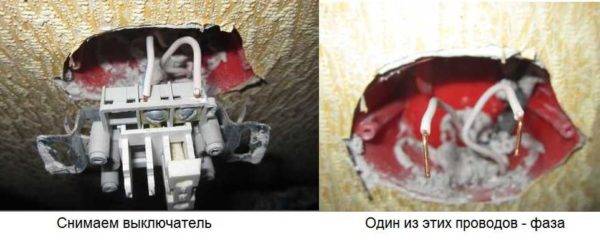
Before you put a dimmer, you need to find a phase wire
If we are talking about installing a dimmer in place of the switch, then you must first disconnect the wires from the switch terminals (with the power turned off on the panel), turn on the machine and use a tester, multimeter or indicator (screwdriver with LED) to find the phase wire (when touching the probe to the phase on the device some readings appear or the LED lights up, and there should be no potentials on the neutral (zero) wire).
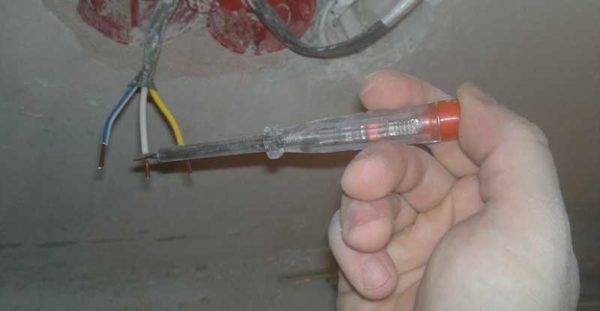
Definition of a phase wire by an indicator
The found phase can be marked in some way - put a line on the insulation, stick a piece of electrical tape, colored tape, etc. Then the power is turned off again (the input switch on the shield) - you can connect a dimmer.

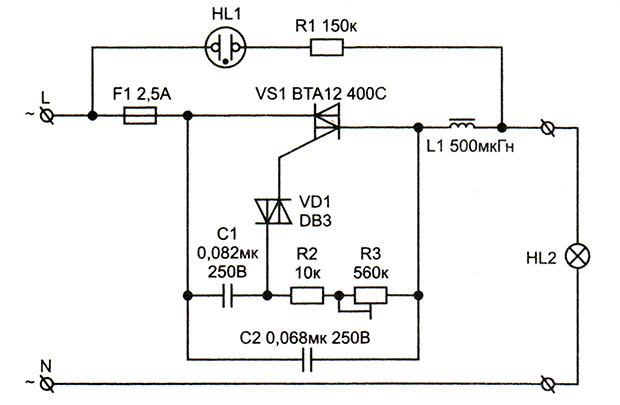

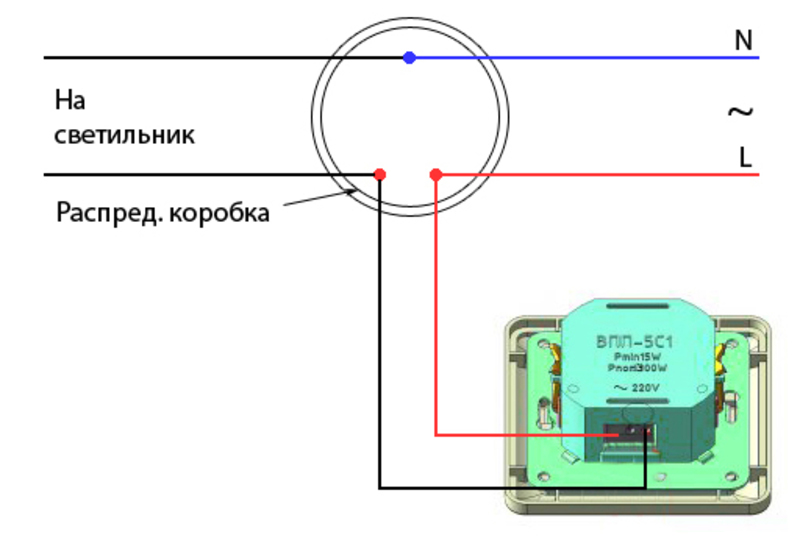
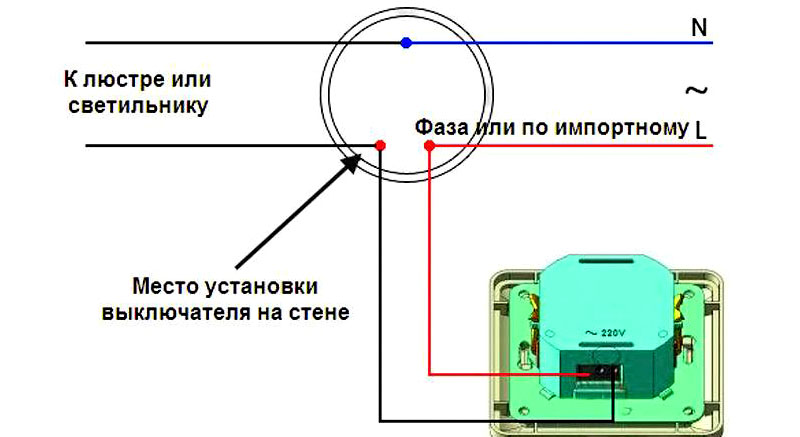


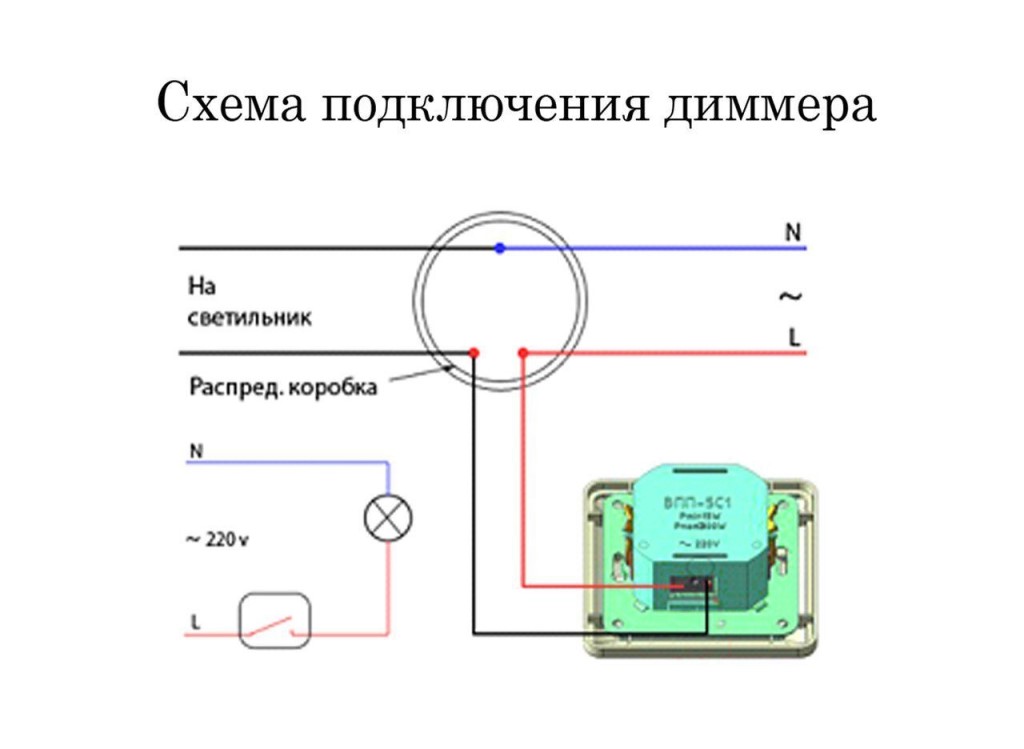
Dimmer connection diagram
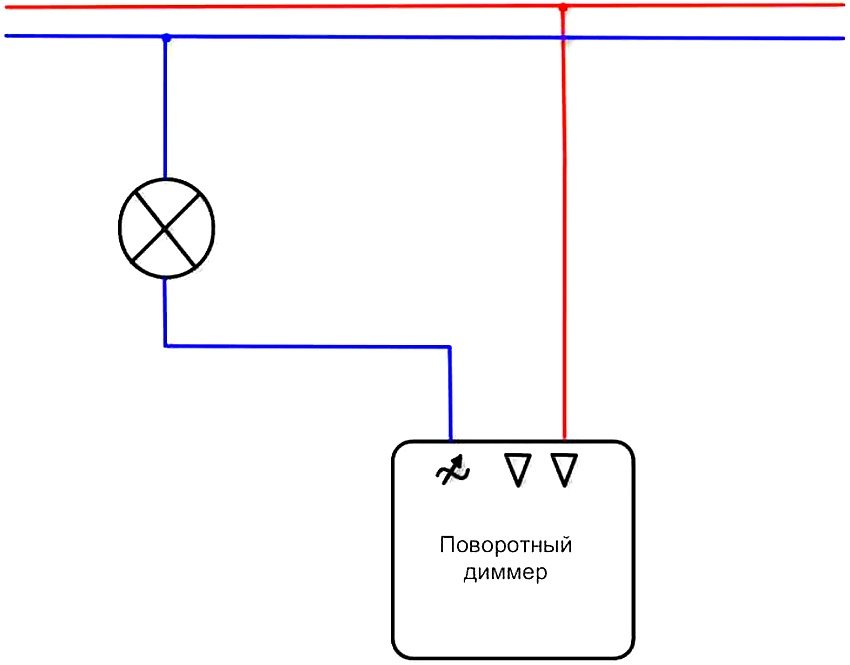
The connection diagram of the dimmer is simple: the found phase wire is fed to the input of the device, from the output the wire goes to the load (in the figure to the junction box, and from there to the lamp).
There are two types of dimmers - in one, the input and output contacts are signed. In this case, you must follow the instructions and apply the phase to the signed input. On other devices, the inputs are not signed. In them, the phase connection is arbitrary.
Consider how to connect a dimmer with a rotary dial. First you need to take it apart. To do this, take out the disk - you need to pull it towards you. Under the disc is a button, which is fixed with a clamping nut.
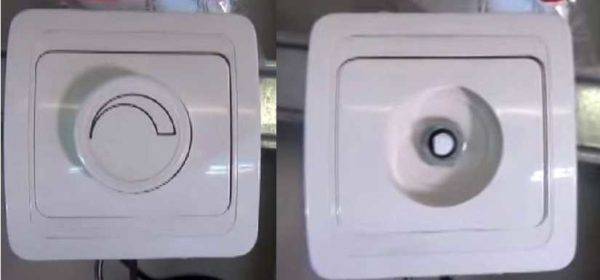
Before installation, disassemble the dimmer
We unscrew this nut (you can use your fingers) and remove the front panel. Under it is a mounting plate, which we will then screw to the wall. The dimmer is disassembled and ready for installation.
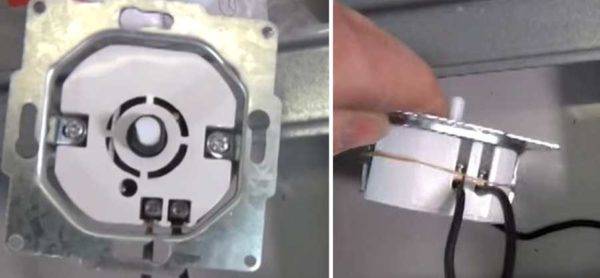
Dimmer without face plate
We connect it according to the scheme (see below): we start the phase wire to one input (if there is an input marking, then to it), we connect the conductor to the second input, which goes to the lamp / chandelier.
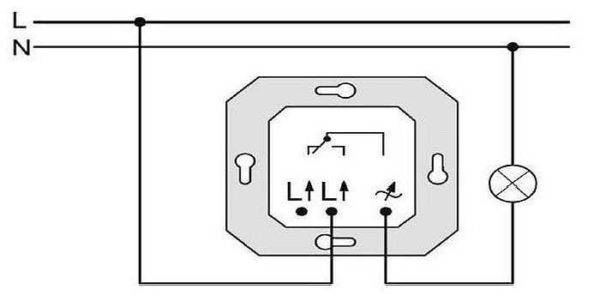
Scheme of connecting a lamp to a dimmer
It remains to fix. We insert the connected regulator into the mounting box, fix it with screws.
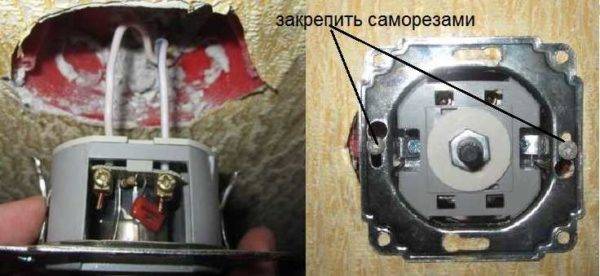
Installing a dimmer
Then we impose the front panel, fix it with the nut removed earlier and, last of all, install the rotary disk. Dimmer installed. Turn on the power, check the work.
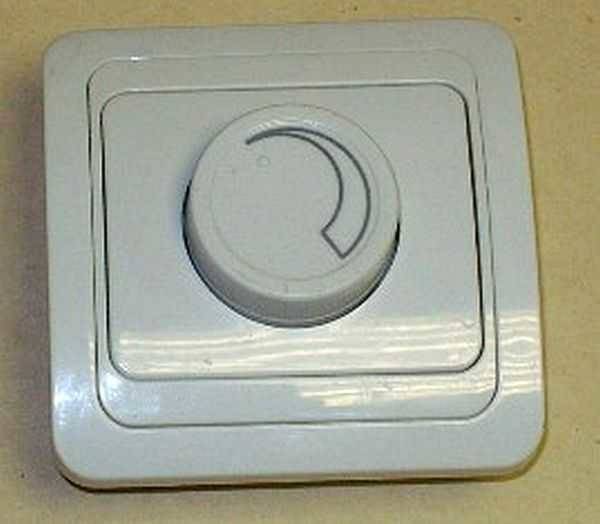
All is ready
Connecting and operating a dimmer: what should everyone know?
How to install a dimmer
Before you buy a dimmer and install it instead of a regular switch, read the important facts about the device in question.
Many users are mistaken in believing that installing a dimmer will significantly reduce lighting costs. In reality, with the minimum brightness of the lamps, the savings are unlikely to exceed 10-15%. The dimmer will simply dissipate the remaining "extra" energy.
Dimmer device, purpose of terminal blocks
Connection and operation of dimmers must be carried out in compliance with the following rules:
- The controller must not be overheated. The maximum allowable air temperature in the room is +27 degrees;
- the value of the load connected to the regulator must be at least 40 watts. At lower values, there is a significant reduction in the service life of both lighting fixtures and the regulator itself;
- the dimmer can only be used in combination with lighting fixtures listed in the technical data sheet.
The considered regulators are designed to work with certain types of load. So, most dimmer models can only be used to control the brightness of halogen lamps and incandescent bulbs. It is impossible to use them in combination with fluorescent lamps, LED lamps and most energy-saving lighting devices, because. this will cause them to break very quickly.


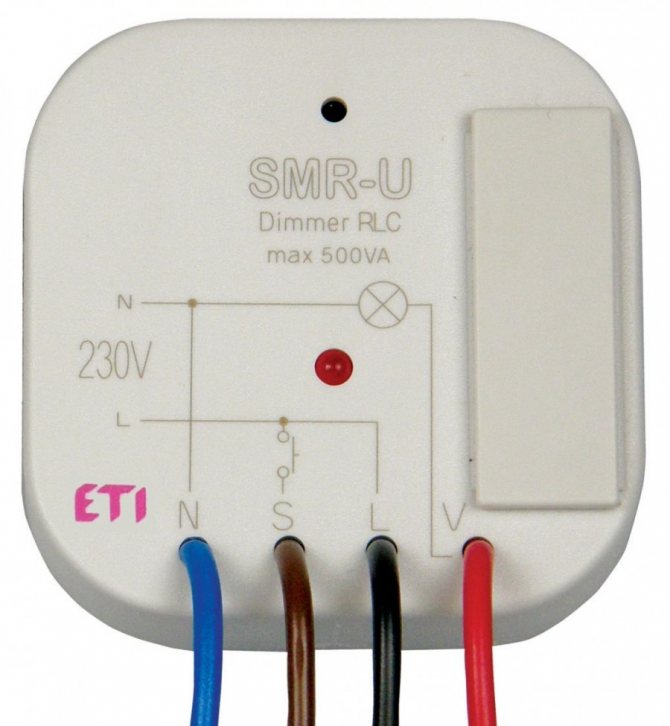


The principle of connecting a dimmer
If you need to connect a dimmer to LED lamps, buy a regulator model specially designed for this.
Beforehand, be sure to check with the store employee whether the purchased dimmer is designed to work in combination with the lighting sources of your home. Also make sure that the wattage of the regulator matches the total wattage of the fixtures in your home.
Instructions for installing a dimmer instead of a conventional switch
Replacing a traditional switch with a rotary control will not cause any difficulties, because. they are installed in the same way. You just need to carefully study the technology and follow the established sequence.
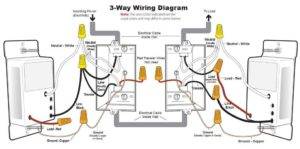
First step. We turn off the electricity supply and additionally make sure that it is absent using a special indicator screwdriver.
Wiring diagram (change the switch to a dimmer)
Second step. We remove the button of the installed switch.
Third step. We unscrew the screws that secure the decorative frame of the switch, and remove it.
Removing the circuit breaker
Fourth step. We unscrew the fixing screws and take out the switch mechanism from the mounting box. We can install the dimmer in the same box.
Fifth step. We unscrew the electrical wires from the switch.
Sixth step. We see two free wires.
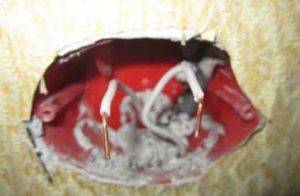
One of them (supply phase) is connected to the switch, the second - to the chandelier. We carefully study the diagram given in the instructions for the dimmer or on the cover of its case.
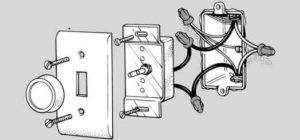
Dimmer circuit
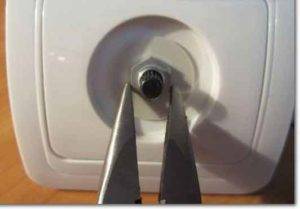
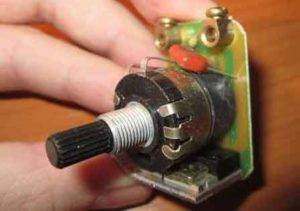
To disassemble it, you need to unscrew the locknut and remove all decorative trims
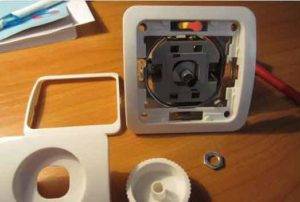
Dimmer disassembled
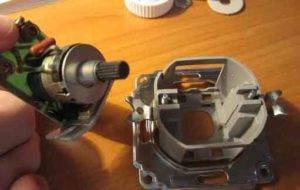
Disassembled dimmer
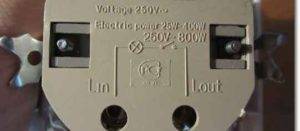
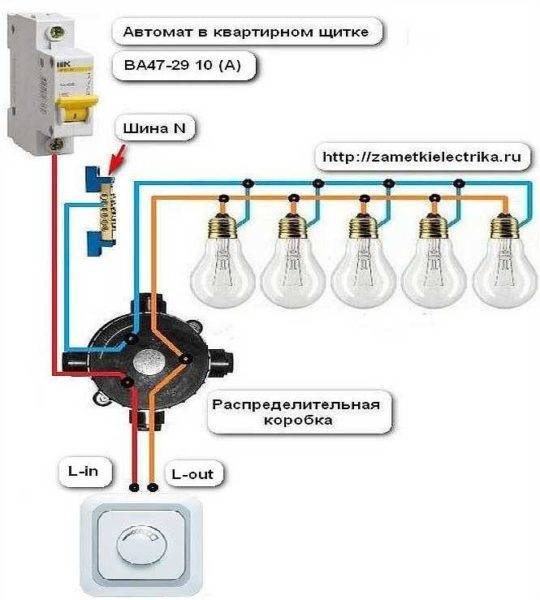
Wiring diagram
In the case of dimmers, as noted, you must strictly adhere to the connection procedure recommended by the manufacturer. We connect the phase cable (it is red in the diagram) to the dimmer terminal, signed as L-in. The next cable (it is orange in the diagram) is connected to the regulator terminal, signed L-out.
Dimmer installation
Seventh step. We insert the dimmer into the mounting box.To do this, carefully bend the wires, insert the regulator into the socket, tighten the spacer screws, attach a decorative frame, fix it with screws and install the adjusting wheel.
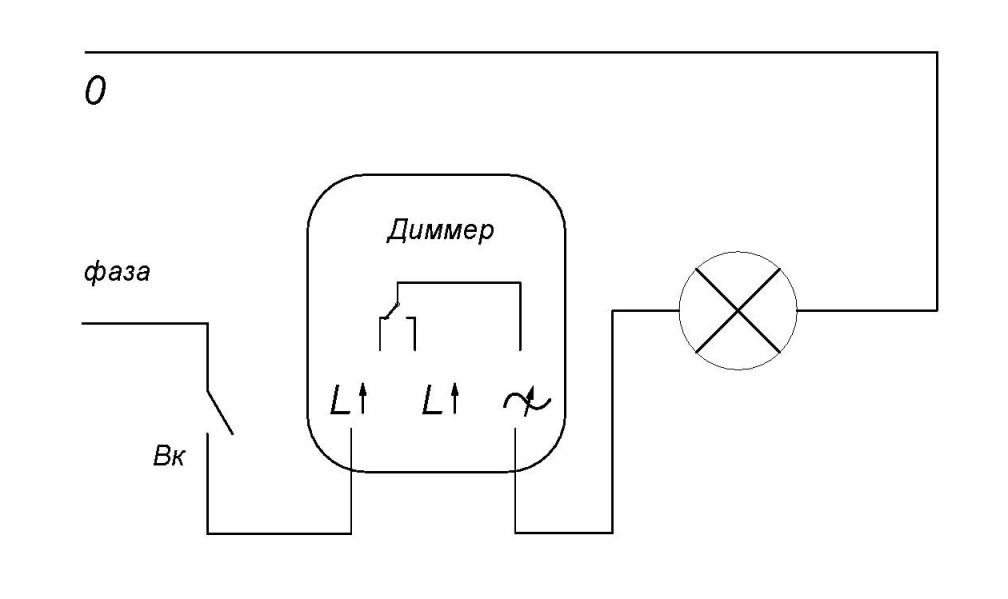


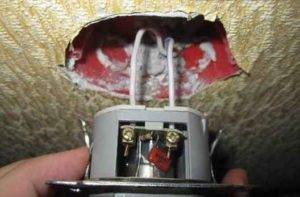
We connect the wires and insert the dimmer into the box
Eighth step. We check the operation of the installed dimmer, after turning on the electricity supply. To check, turn the dimmer knob until it clicks in a counterclockwise direction - the lamps will not light up. We smoothly turn the regulator clockwise - after a similar click on the lamps, the voltage will gradually increase, as evidenced by a gradual increase in the brightness of the light.
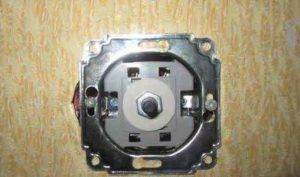
We tighten the fasteners
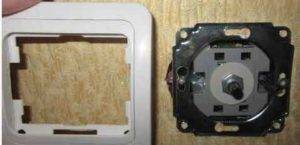
We put on all the decorative trims and the swivel wheel
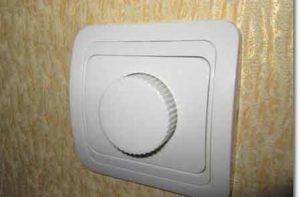
We put on all the decorative trims and the swivel wheel
The dimmer is connected and working properly. We can accept it for permanent operation.
Replacing a switch with a dimmer
Connecting an LED strip to a mini dimmer
Condenser dimmer
Along with smooth regulators, capacitor devices have become widespread in everyday life. The operation of this device is based on the dependence of the transfer of alternating current on the value of the capacitance. The larger the capacitance of the capacitor, the more current it passes through its poles. This type of homemade dimmer can be quite compact, and depends on the required parameters, the capacitance of the capacitors.
As can be seen from the diagram, there are three positions of 100% power, through the quenching capacitor and off. The device uses non-polar paper capacitors, which can be obtained in old technology. We talked about how to properly solder radio components from boards in the corresponding article!
Below is a table with the capacitance-voltage parameters on the lamp.
Based on this scheme, you can assemble a simple night light yourself, use a toggle switch or switch to control the brightness of the lamp.



