
- Preventive work
- Air conditioner inverter or conventional
- And yet, inverter or conventional air conditioner to choose?
- Inverter air conditioner: Mitsubishi Electric MSZ-LN25VG / MUZ-LN25VG
- Features Mitsubishi Electric MSZ-LN25VG / MUZ-LN25VG
- Pros and cons of Mitsubishi Electric MSZ-LN25VG / MUZ-LN25VG
- What to look for when choosing?
- Equipment selection guidelines
- Which Inverter Air Conditioner is Best?
- Daikin inverter split systems
- Mitsubishi Electric
- Toshiba
- Fujitsu
- Samsung
- LG Inverter Air Conditioner
Preventive work
Even a state-of-the-art air conditioner can fail without proper maintenance.
It is important to know that inverter-controlled split systems require certain maintenance rules to be followed.
- Do not allow liquid to enter the cold circuit. This is fraught with the formation of acid, which will corrode the insulation of the engine.
- It is important to constantly monitor the level of oil and refrigerant used. Freon will decrease - the pressure in the system will also drop, which means that the device will start to work for wear.
- Regular cleaning of the heat exchanger is also important, because the accumulation of dirt is a direct path to its overheating, pressure increase and load.
Information about what inverter split technology is allows you to understand the prospects for its use in all its beauty.But is it worth it to overpay for its purchase? The answer will be this: with a small budget, it is better to opt for conventional air conditioners, but of the highest class. There are service centers available where they can provide qualified assistance.
Air conditioners of this type can be recommended for installation in apartments - residents will appreciate the "soft" cold and quiet operation. But if there are constant power surges in the house, it is better to refuse such a purchase. And one more thing: it is not worth thinking that the device will quickly pay for itself due to its energy-saving consumption. According to experts, such a period should be at least 5 years - during this time, no equipment is insured against breakdowns and overloads.
Air conditioner inverter or conventional
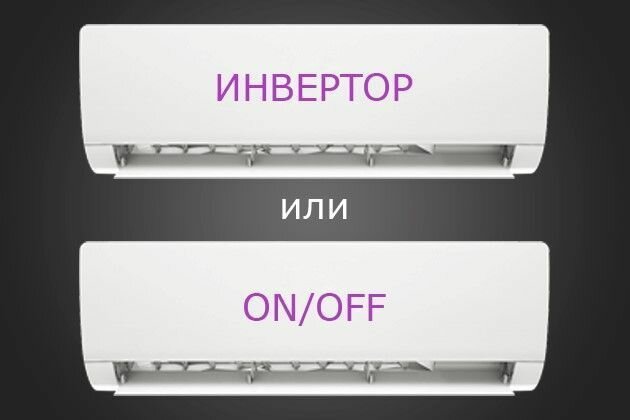
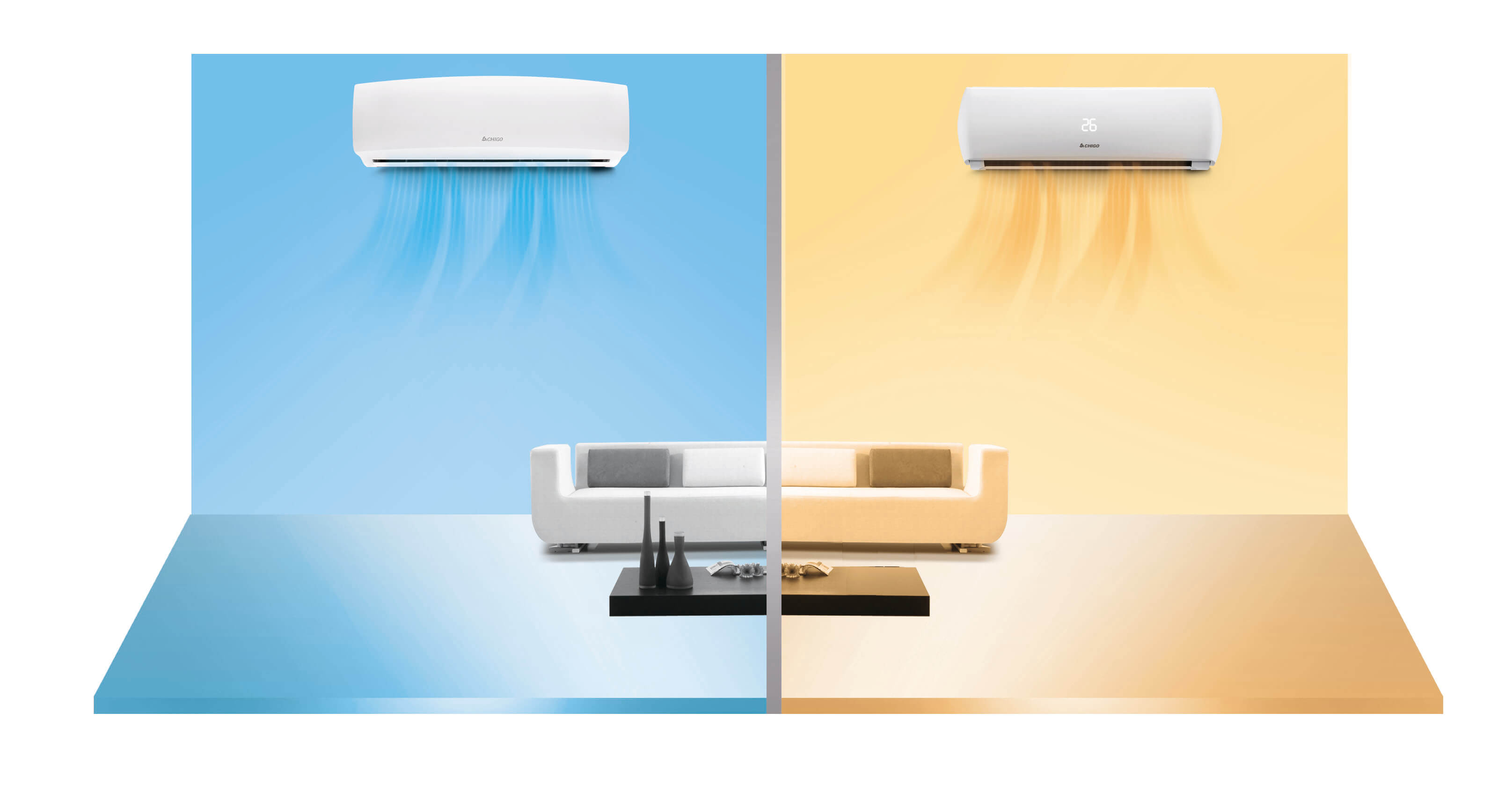
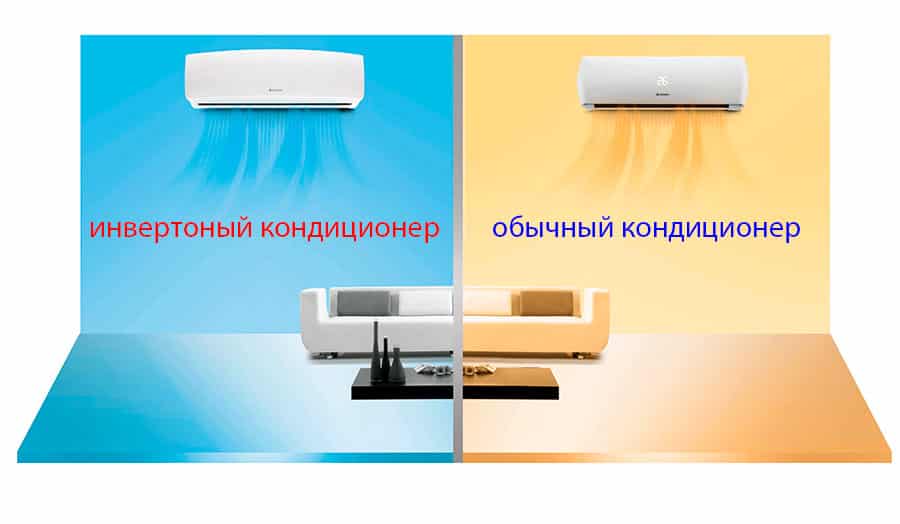
So, the most important choice is to buy an inverter or non-inverter model. What are their differences?
Inverters are more modern products. Their outdoor and indoor units are much quieter.
If you have problematic neighbors who constantly quarrel and complain to all authorities for any reason, then your choice is definitely an inverter option. Therefore, they say that living in a high-rise building, there are two potential buyers for the air conditioner - you and your neighbor.
Some even rest to such an extent that they forbid mounting anything under their windows. We have to take out the route of the freon main and the block itself as far as possible.
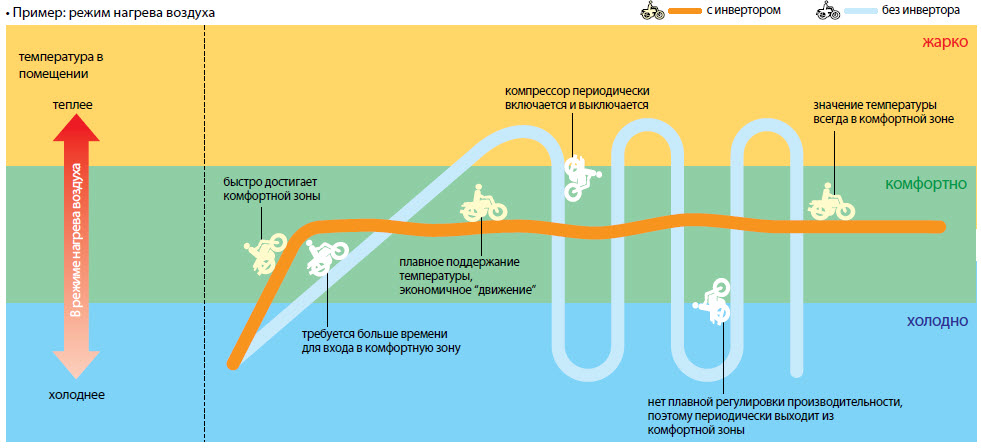
Also, if you are going to be heated by air conditioning in winter, in winter, and not only on cold days in autumn and spring, then your choice is again with the inverter.
A conventional air conditioner normally works for cooling when the temperature outside is from +16C and above. It is capable of heating when outside the window is not lower than -5C.
Inverter options will be able to heat your apartment at an outside temperature of -15C. Some models work even at -25C.
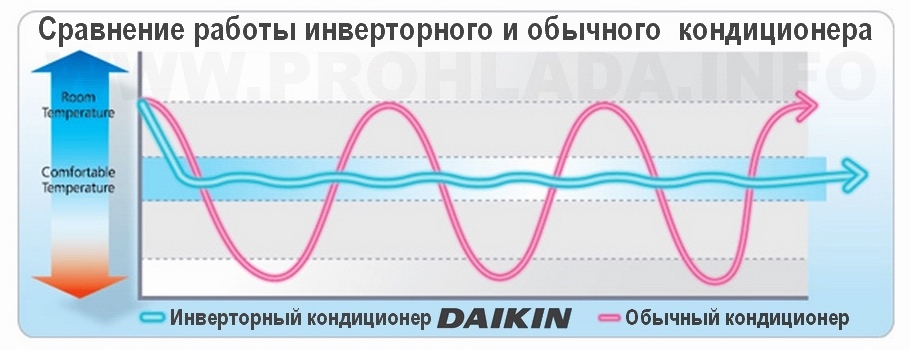
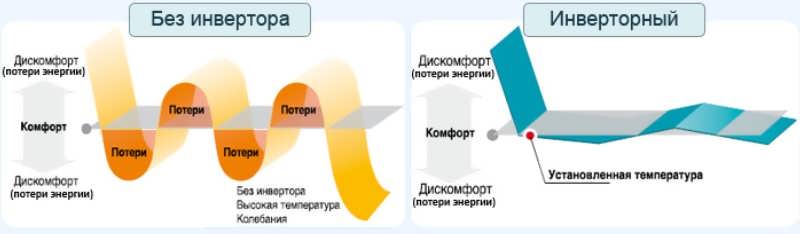
In addition, ON / OFF air conditioners periodically turn on and off during operation. Actually, hence their name.
Inverter ones do not turn off at all, but independently maintain the optimal mode, if necessary, smoothly changing their power from 10 to 100%.
As the advertising materials say, this ensures:
significant energy savings
longer service life
However, practically no one will tell you that all this is true when the device is running 24 hours a day, that is, continuously. This scheme works well, for example, in the southern states of the United States.

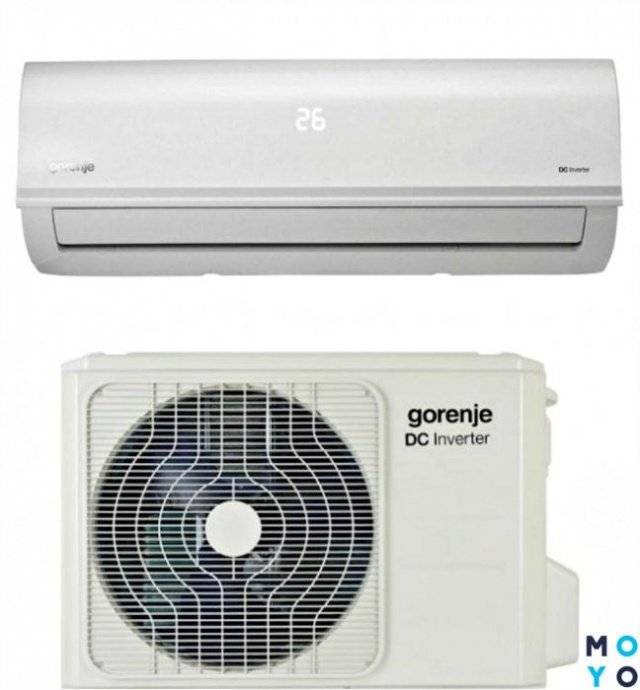
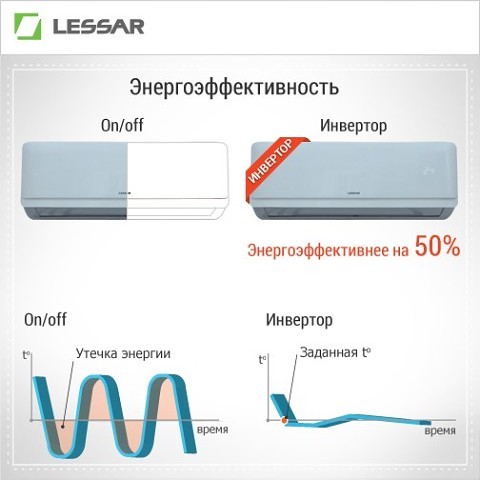

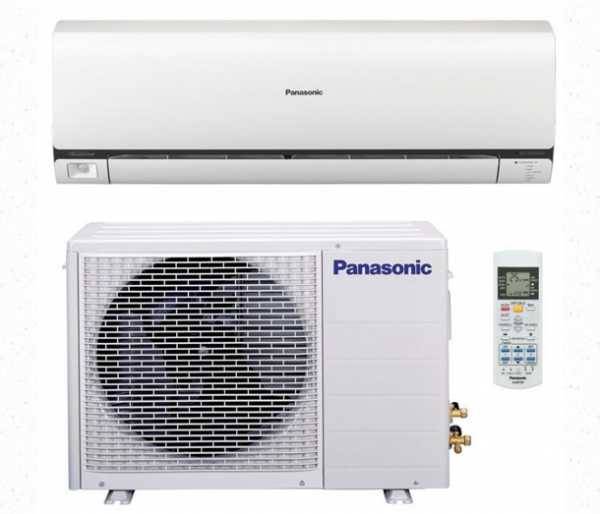
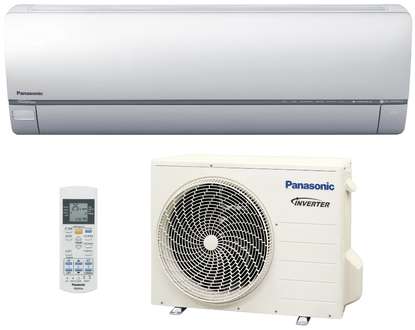
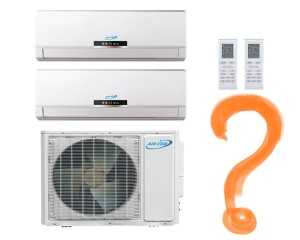


In our reality, when we leave for work in the morning, we turn off the air conditioner. In the evening or at night, turn it on for several hours. At the same time, both a modern inverter system and a conventional one will work almost the same in this short period of time, at maximum modes.
Therefore, the advantage in the form of significant energy savings can be safely crossed out as a publicized myth. At least for our living conditions and our climate.
The same applies to durability in this mode of operation.
And if it is an inverter, then there are already two masters - a refrigerator + electronics engineer.
A big drawback of fashionable inverter models is sensitivity to power quality.
For dachas, where voltage drops due to accidents in the networks or lightning during a thunderstorm are not uncommon, failure of the air conditioner electronics is the most common problem. Saves only the installation of special protection.
It is not in vain that masters say that it is more difficult to find inverters and spare parts, and the repair itself is more expensive.
In terms of maintainability, the budget inverter is evil. Instead, it is better to take a branded ON / OFF split system from Daikin, Mitsubishi, General, etc. at a comparable price.
Therefore, the only real plus of the inverter is the ability to warm up in winter. If this is not relevant to you, then you should not overpay.
So, the arguments FOR the inverter:
heating
less noise
FOR the normal version:
price
ease of maintenance
And yet, inverter or conventional air conditioner to choose?
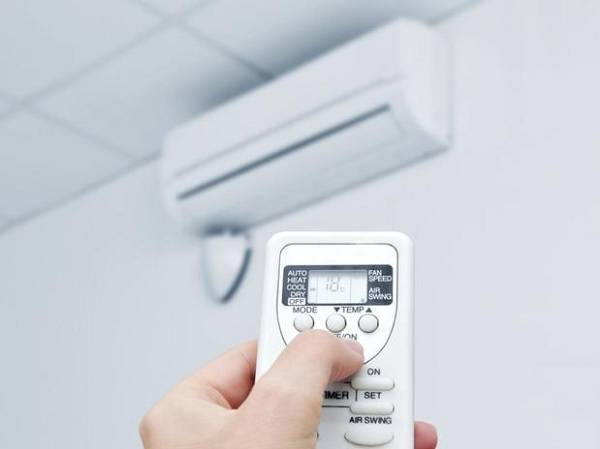 For an apartment, the most ordinary air conditioner with standard functionality (remote control, night mode, auto-restart, remembering settings, coarse filters, timer) is quite enough.
The main thing is to follow a few elementary rules of use:
- The difference between the temperature in the street and in the room should not exceed 7 degrees Celsius.
- The air flow should be directed along the ceiling and not towards the most frequently used functional areas (sofa, bed, workplace, etc.).
However, if you want the maximum level of comfort and agree to a high price + possible problems with warranty / post-warranty repairs, then you can also purchase an inverter model.
But, it is important to consider that the characteristics of a split system depend not only on the technology used, but also on the quality of production. And much more important than it might seem.
For example, an ordinary air conditioner from Mitsubishi Electric assembled in Thailand or Japan will be an order of magnitude better than a cheap inverter "Chinese" (quieter, more economical, more accurate to maintain the temperature, etc.).
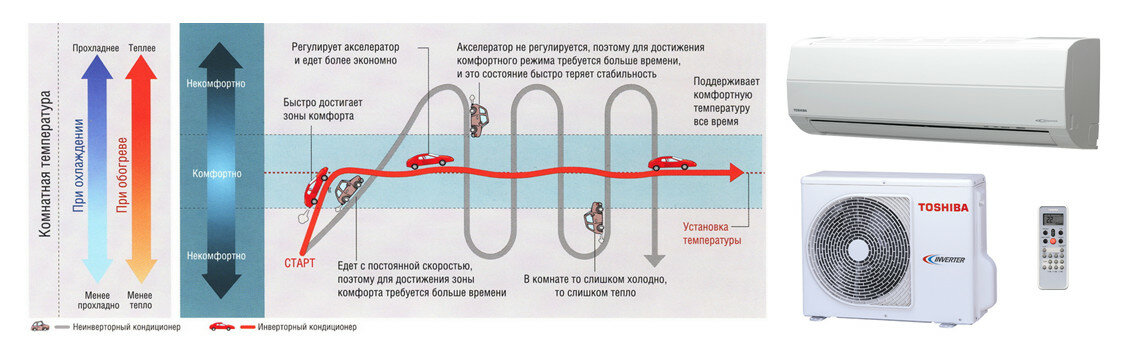


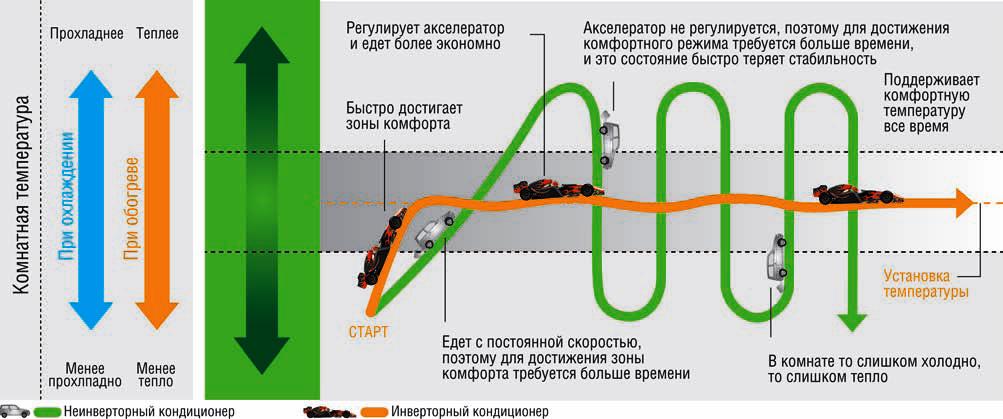


From this we can conclude that if you take an inverter, then from a trusted manufacturer (Mitsubishi Electric, Daikin, Toshiba, etc.).
Recommended assembly is Malaysia or Japan.
From the following video you will learn how an inverter air conditioner differs from a conventional one and which one is better to choose:
Inverter air conditioner: Mitsubishi Electric MSZ-LN25VG / MUZ-LN25VG
Features Mitsubishi Electric MSZ-LN25VG / MUZ-LN25VG
| Main | |
| Type of | air conditioning: wall split system |
| Served area | 20 sq. m |
| Inverter (smooth power control) | there is |
| Maximum communication length | 20 m |
| Energy class | A |
| Main Modes | cooling / heating |
| Max airflow | 11.9 cu. m/min |
| Cooling capacity | 9000 btu |
| Power in cooling / heating mode | 2500 / 3200 W |
| Power consumption in heating / cooling | 580 / 485 W |
| Fresh air mode | No |
| Additional Modes | ventilation (without cooling and heating), automatic temperature maintenance, fault self-diagnosis, night |
| Dry mode | there is |
| Control | |
| Remote control | there is |
| WiFi | there is |
| On/off timer | there is |
| Peculiarities | |
| Indoor unit noise level (min/max) | 19 / 45 dB |
| Refrigerant type | R32 |
| Phase | single-phase |
| Fine air filters | there is |
| Fan speed control | yes, number of speeds - 5 |
| Other functions and features | deodorizing filter, plasma filter, adjustable airflow direction, anti-icing system, memory function, warm start, motion sensor |
| Minimum temperature for air conditioner operation in cooling mode | -10 °С |
| Minimum temperature for air conditioner operation in heating mode | -15 °С |
| Dimensions | |
| Split system indoor unit or mobile air conditioner (WxHxD) | 89×30.7×23.3 cm |
| Split outdoor unit or window air conditioner (WxHxD) | 80x55x28.5 cm |
| Weight of indoor / outdoor unit | 15.5 / 35 kg |
Pros and cons of Mitsubishi Electric MSZ-LN25VG / MUZ-LN25VG
Pros:
- Modern design;
- Energy efficiency A+++;
- Built-in Wi-Fi;
- Plasma Quad air purification technology;
- Works quietly;
What to look for when choosing?
Despite the fact that inverter climate equipment is more technically advanced, it does not have obvious advantages in operation, and in some cases the available performance characteristics are lower than those of analogues. As a result, buyers will have to evaluate many nuances.
An important feature is that, due to smooth thermal control, inverter air conditioners may not show the expected results. This often happens in walk-through premises - shopping, office halls.
But conventional systems in such situations will be as effective as possible.
For the same reason, you should not place inverter equipment in kitchens, any other rooms where temperature changes occur abruptly. After all, for them, even boiling water in the kettle will be a big problem.
For economic reasons, conventional air conditioners will be the best choice where the need for air cooling rarely occurs, for example, in the country. And they will also be more effective in situations where the use is one-time. So, in conference rooms it is better to install traditional equipment.
But their inverter counterparts with greater efficiency will be able to provide comfort in apartments and hotels.
Both types of split systems are equally difficult to install.For example, the cost of installation can reach 20-50% of the price of equipment, and saving here is to your detriment.
Maintainability is an important feature, but not everything is in favor of inverter systems. The reason is that the components are as expensive as the products themselves.
In addition, they are not yet very common with us, as a result, the craftsmen may not have the necessary part at hand, so you will have to wait until it is delivered.
This creates significant inconvenience, especially given that these models are more sensitive to voltage drops than their conventional counterparts. And such a shortcoming in the supply of electricity is often found even in large cities.
In any case, it is necessary to correctly determine the power of the unit or the air cooling will be inefficient. That is, when it is insufficient, then the desired level of comfort is unlikely to be achieved. And if it does, it will only be at the cost of overloading the equipment. For excess power, you will have to overpay.


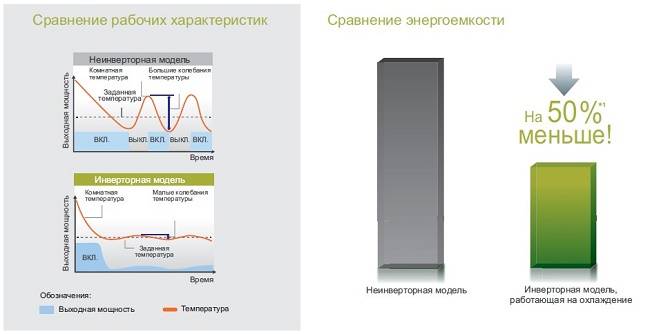


An important advantage of inverter systems is the ability to work for heating up to temperatures reaching significant -25 ° C, and conventional analogues can compete with them in efficiency only up to -5 ° C
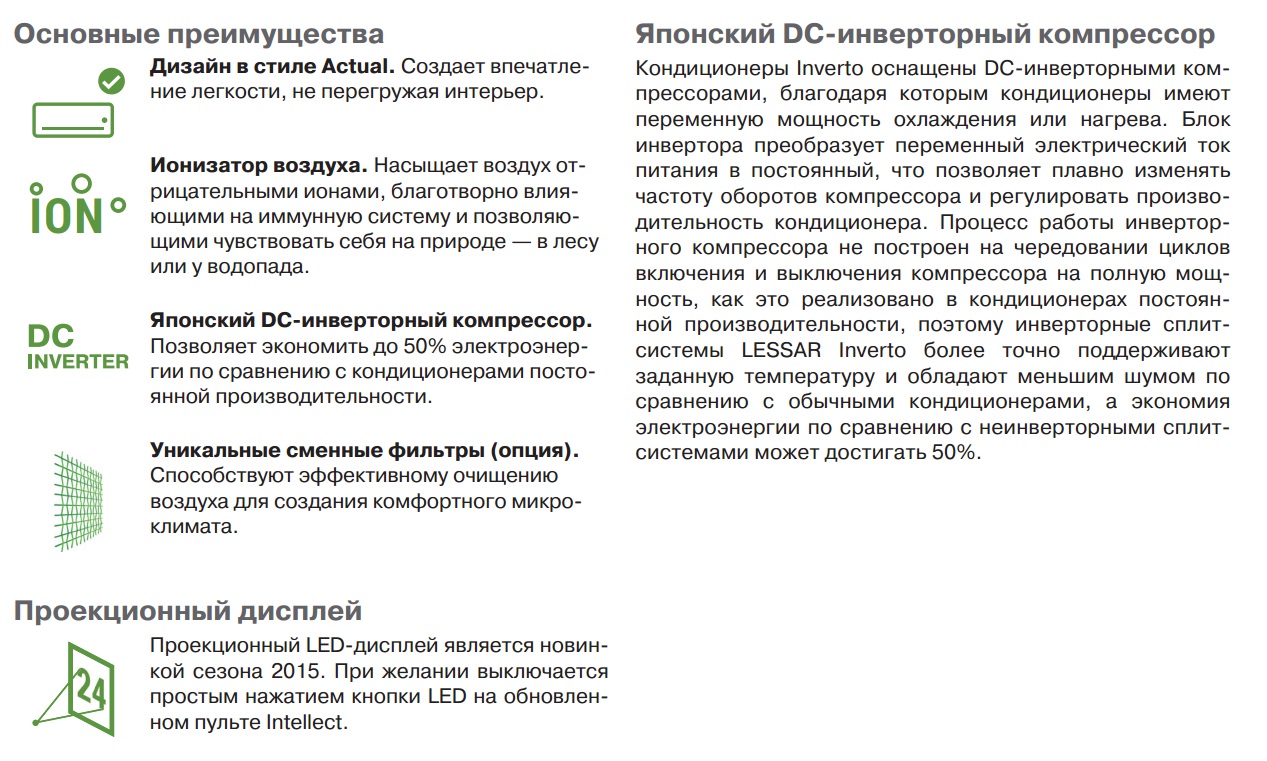
In the case of inverter systems, attention should be paid to such a parameter as the adjustment range of the operating frequency of the electric motor. This is an important indicator, since the principle of operation of this type of climate control equipment allows you to achieve the maximum combination of efficiency, economy and durability only at a certain value.
This is an important indicator, since the principle of operation of this type of climate control equipment allows you to achieve the maximum combination of efficiency, economy and durability only at a certain value.
So, the depth of adjustment should not be less than 25-80%. If the characteristics of the model you like do not reach these indicators, then this product is outdated or simply cheap, and therefore not functional enough.
For example, the adjustment range of modern inverter systems reaches 5-90%. This allows you to quickly respond to temperature changes and remain economical.
Equipment selection guidelines
At its core, air conditioners and split systems are two varieties of the same type of demanded climate equipment. That is, they are designed to solve the same problems, while the principle of their operation is similar.
And the only difference is that the air conditioner is monoblock, that is, its body is one block, and each split system offered to customers consists of two parts. Moreover, they are always placed in different places - one of them is installed outside the heated room, and the second inside.
Since the functionality of monoblock models and split systems is similar, they are all able to effectively cool the air in a residential, working and any other relatively small room. Air dehumidification is carried out at the same time. It is necessary to ensure sufficient comfort in the room, to prevent the development of bacteria.
The wall-mounted indoor unit of the split system ensures uniform distribution of warm air
In addition, today an important feature of air conditioners, split systems has become versatility.As a result, heating with associated dehumidification may not be the only function available to the user.
Therefore, anyone can purchase a unit that additionally provides ventilation and filtration.
Nevertheless, you should be aware that the listed functions in both varieties can be considered nothing more than additional. Since there are a number of operational restrictions. For example, it is best to use the ventilation mode only in winter, if warm air accumulates at the top, and it is cold near the floor.
Filtration, on the other hand, often allows you to deal only with dust, but more and more often manufacturers equip their products with:
- ionizers - designed to destroy bacteria, purify the air from odors and other contaminants;
- fine filters - they serve to purify the air from various allergens, mold, etc.
But only air conditioners belonging to the most expensive category, which are not available to everyone, will still be able to compare in efficiency with air purifiers.
There are most models on the market related to split systems. You can install such equipment in the apartment room of a multi-storey building, cottage or country estate
And all the models related to the indicated types of equipment are household. That is, they serve to cool apartments, small shops, restaurants, private houses, offices. For air treatment in large rooms, units of a completely different class are used, which are considered professional.


Which Inverter Air Conditioner is Best?
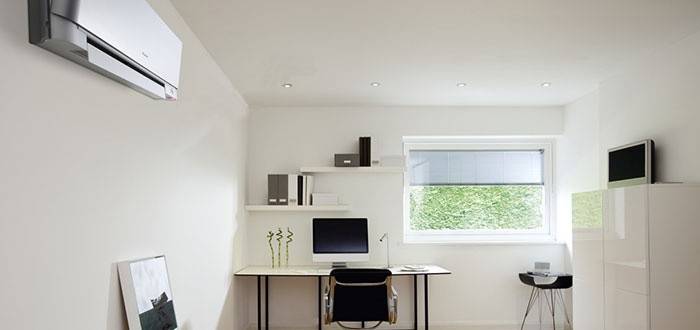
Many brands produce this category of home climate systems.The highest quality products are considered Japanese brands - Daikin, Toshiba, Panasonic, Mitsubishi and others. These manufacturers are constantly improving the design of their products, which are becoming more perfect: more economical and less noisy. Most models of Japanese manufacturers are able to change performance in the range from 25 to 75%, and top models from 5 to 95%.
Korean companies produce good inverter-driven air conditioners, which are slightly inferior in quality to famous Japanese brands. Compared to Japanese counterparts, Korean devices are not much worse, but they are somewhat cheaper. Chinese manufacturers produce inexpensive split systems with an inverter, but they are able to reduce their own power only in the range from 35 to 70%, which is noticeably worse than the units produced by Japanese and Korean brands.
Daikin inverter split systems
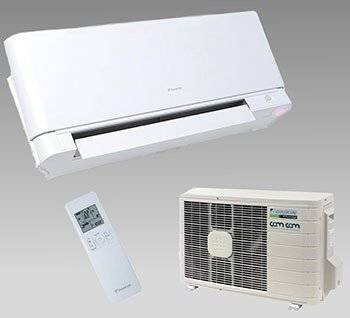 The Japanese company Daikin specializes exclusively in the production of climate control equipment. All products manufactured at the company's factories undergo mandatory testing. Daikin units are distinguished by a long service life (both wall and floor modifications), low noise (22-27 dB, for top models - 19 dB), excellent ergonomics and economy, the presence of many functions, including the self-diagnosis function. 2 lines are popular - FTX and FTXN.
Mitsubishi Electric
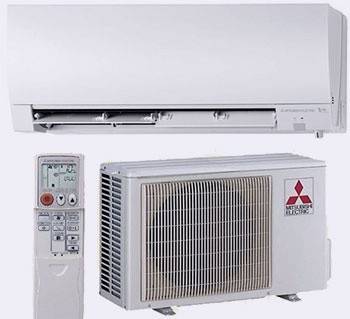 In terms of price / quality ratio, Mitsubishi Electric air conditioners are unmatched. The manufacture and assembly of units and assemblies is carried out using modern technologies. Each assembled air cooler undergoes a 20-minute inspection, and some products undergo a deep random inspection.Some modifications of the split systems of this brand are adapted to work for heating at an external temperature of minus 10 to 25 degrees. The company produces products with inverter series MCZ-GE and MSZ-HJ, which have minor differences.
Toshiba
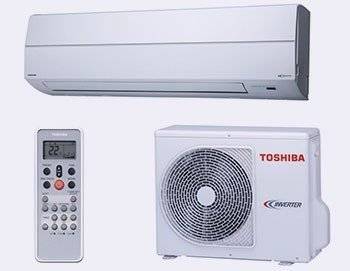 The Toshiba company is engaged in the production of split systems of all modifications, including an inverter. The products of this company compare favorably with the products of other Japanese brands in their price: it is somewhat lower than that of Panasonic, Mitsubishi and Daikin air coolers, and the quality is no worse than theirs. The company produces several lines of inverter air conditioners - SKV, PKVP (with an increased long route), SKVP-ND (adapted to work at outdoor temperatures down to minus 10 degrees).
Fujitsu
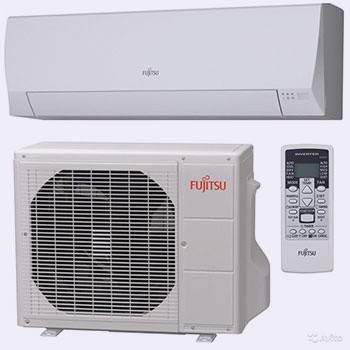 Split systems with an inverter of this brand are distinguished by high build quality, unpretentiousness in operation and maintenance. Particularly popular are models of low power for the home, the power of which is from 5 to 8 kilowatts. The refrigeration equipment manufactured by the Japanese company Fujitsu has all the necessary functions: sleep timer, self-diagnosis mode, restart system, etc.
Samsung
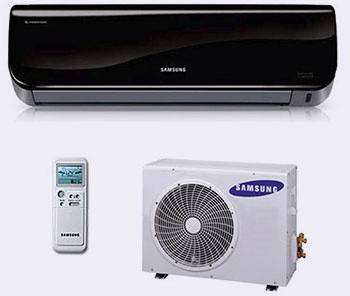 The products of the Korean company "Samsung" are considered economy class products, they differ from the products of Japanese brands in their affordable price. Samsung Inverter Air Conditioners, despite their reasonable price, are of high quality: all components and assemblies of the air cooler meet quality standards. The reduction in the cost of the product was achieved by reducing the service life (7-9 years) and reducing useful functions.
LG Inverter Air Conditioner
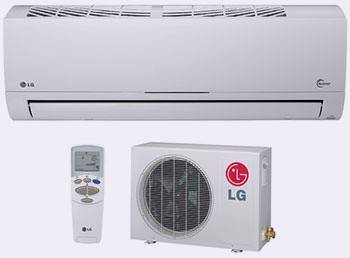
The products of the Korean company LG belong to the economy class, the prices of a split system with an LG inverter are significantly lower than for products of Japanese companies.Inverter air conditioners manufactured by LG have sufficient quality and reliability, and are popular with customers. Excellent design, the presence of many functions, including automatic cleaning, plasma air purification, ionization make LG products attractive to buyers on a budget.



