
What is a black hole?
To begin with, it is necessary to indicate that black holes have been studied very poorly and for the most part at a theoretical level. Until 2019, humanity had only theoretical knowledge. However, on April 10 of the same year, scientists managed to get the first X-ray photograph of a supermassive black hole at the center of the Messier 87 (M87) galaxy.
What is a black hole
In short, a black hole is the heaviest and at the same time the smallest of all possible objects in the universe.
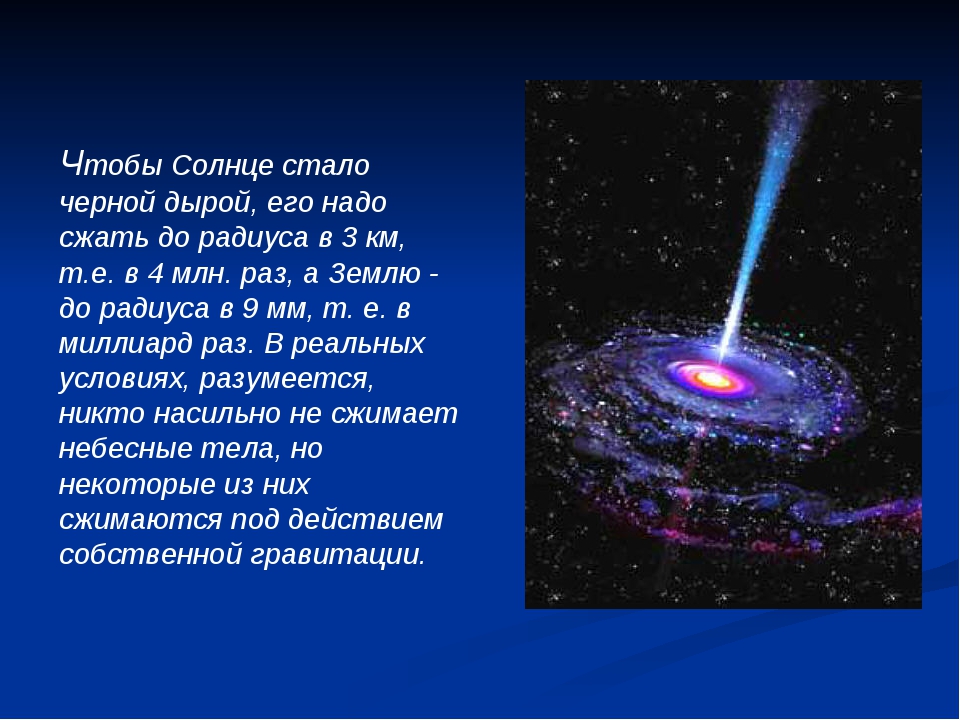
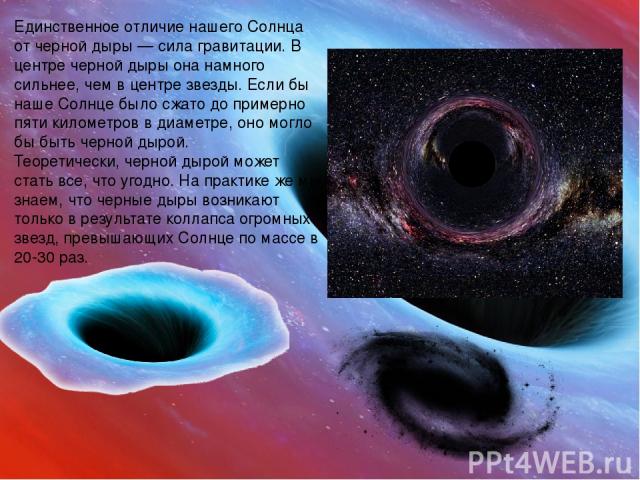
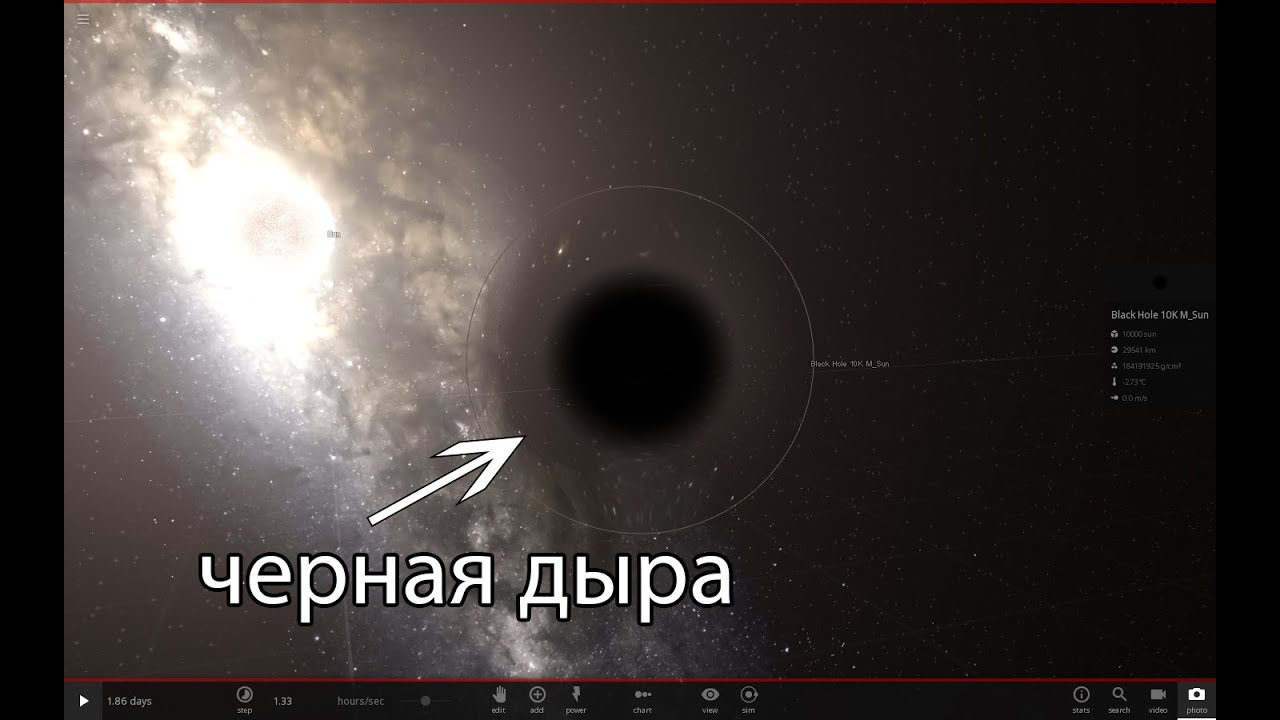
A black hole is an object in outer space in which a huge amount of matter is compressed. To roughly understand the scale of compression - imagine a star that is 10 - 100 - 1,000,000 times larger than the sun, and compressed into a sphere with a diameter of the Kyiv region. As a result of incredible density, a strong gravitational field arises, from which even light cannot escape.




Why are black holes called that?
At the moment, it is known that black holes have unimaginable gravity, so strong that even such tiny particles as photons (visible particles of light) can't overcome her strength attraction, and they, for a moment, move at the speed of light. It is precisely due to the fact that light is not reflected (more precisely, cannot overcome the force of gravity) from the surface that outwardly “black holes” remain dark areas for any existing observation devices, while the above does not mean at all that the surface of a black hole is black, just from outside it impossible to see, a paradox, and far from the only one!
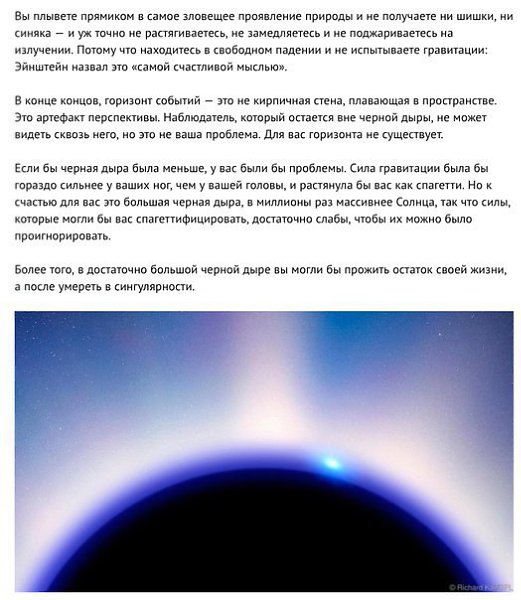
The region of space around a black hole, beyond which matter and any particles, including light quanta, cannot break through (return), is called. Being under the event horizon, any object, body, particle will move, exist only within the black hole and will not be able to escape outside the event horizon. An external observer who is on the outside of the event horizon cannot observe what is happening inside.
With an event horizon it's not all right simply, thanks to quantum effects, it radiates energy (a stream of hot particles) into the universe. This effect is known as Hawking radiation and it is due to it that, theoretically, a black hole can cease to exist (it gradually evaporates radiating energy) and turn into an extinct star. This statement is true within quantum physics, where matter can move by tunneling, overcoming obstacles that cannot be overcome under normal conditions.
It is not known for certain what happens to matter when the gravitational forces of a black hole attract it and it passes the event horizon.From a theoretical point of view, it is likely that the body/matter after passing the event horizon falls into the so-called singularity, and before that it is destroyed due to gravitational forces.




A gravitational singularity is a point in space-time where the laws of physics familiar to us most likely do not work or work differently. For example, quantities describing gravity under normal conditions, under singularity conditions, can be infinite or indefinite.
Why is there a glow around the black hole in the photo?
Watch this video on YouTube
On the accretion rings of a black hole
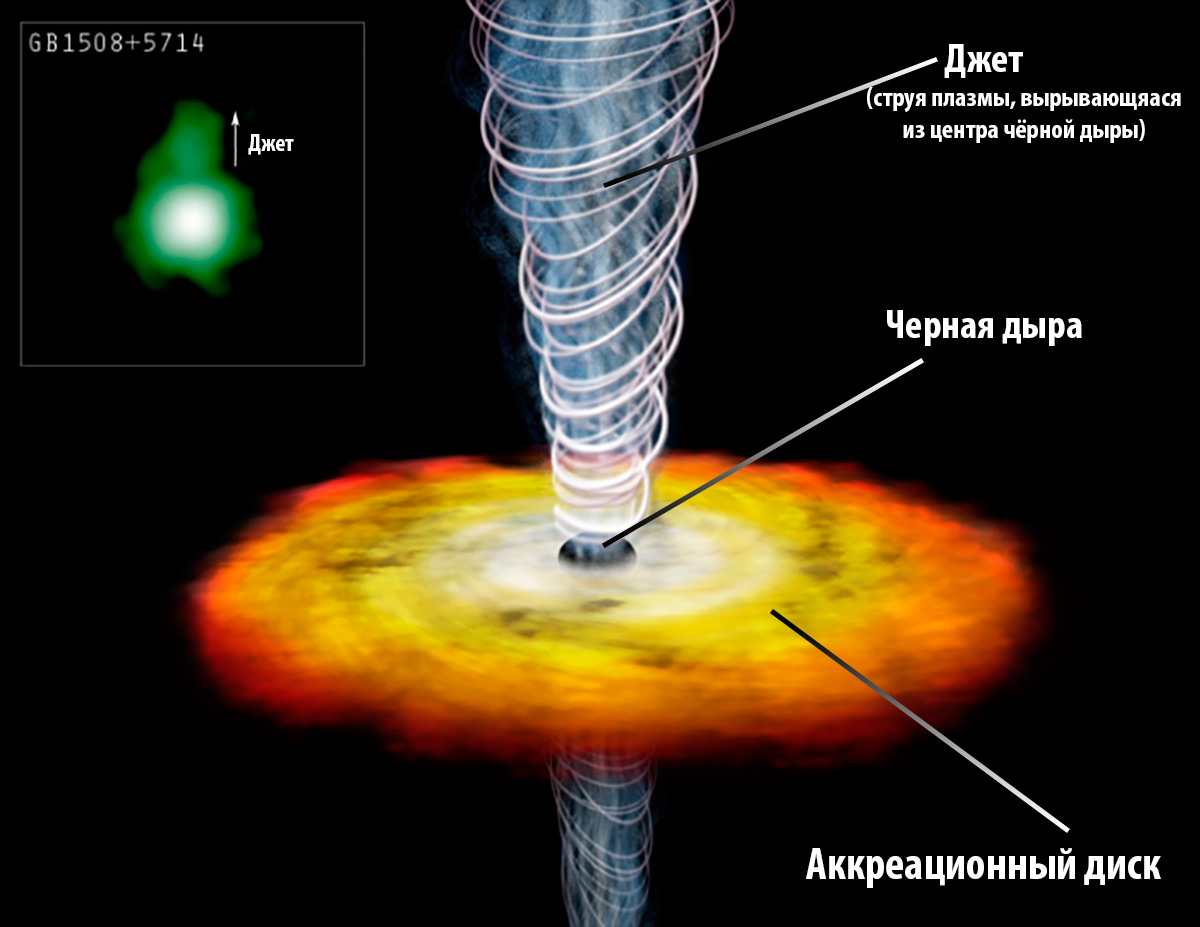
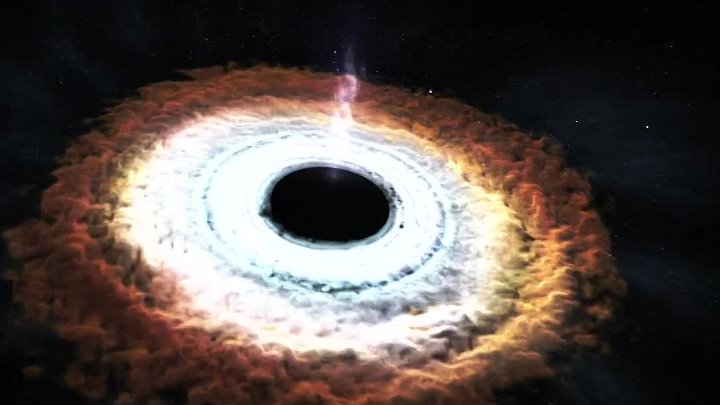
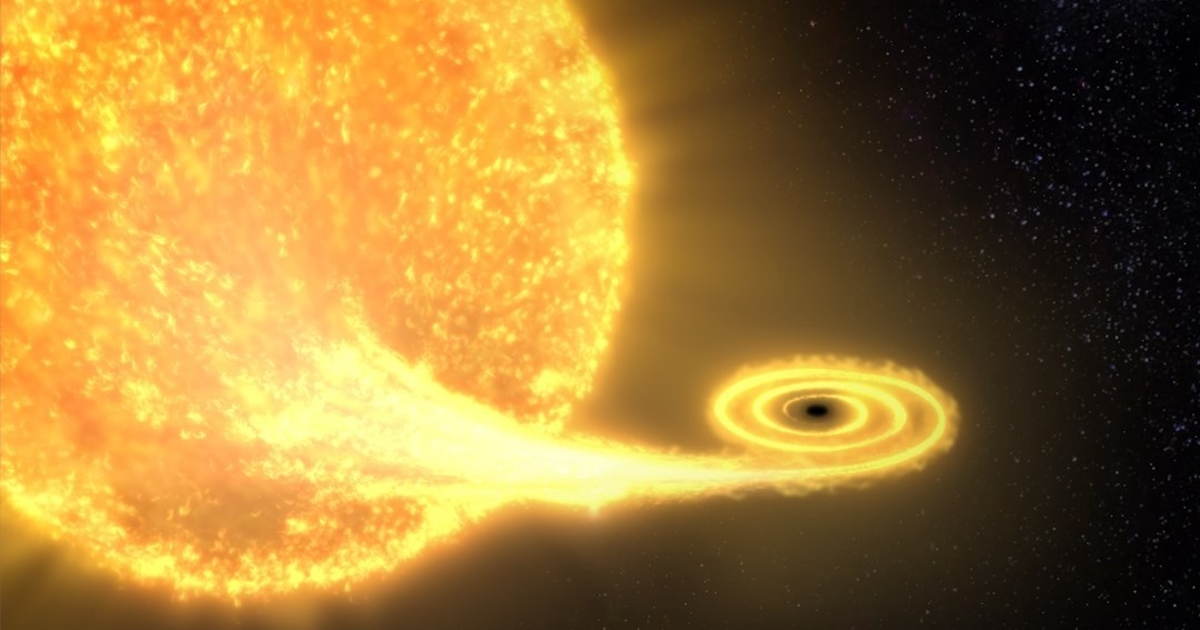
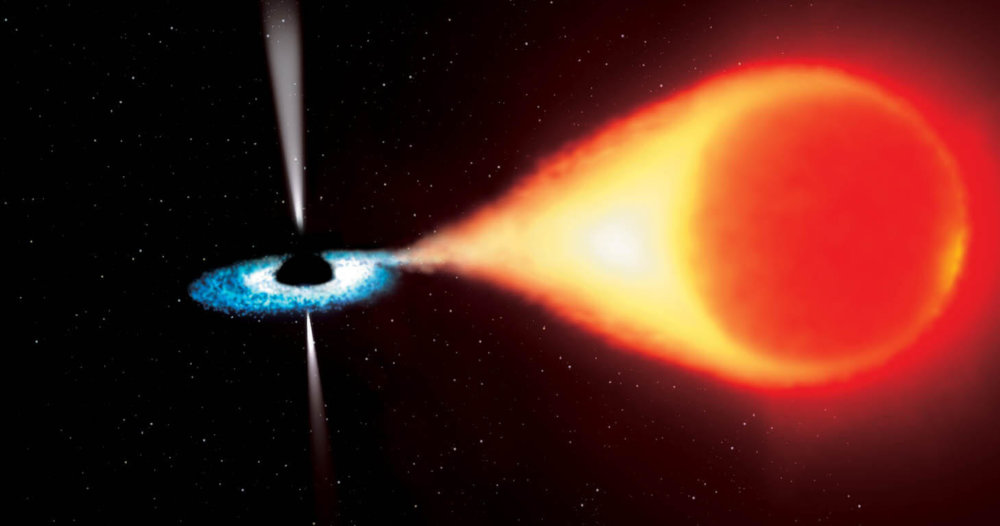
The glow around a black hole is not Photoshop or computer special effects. By virtue of the laws of attraction, black holes attract to themselves everything that falls into the zone of its gravity. It can be gas, dust and other matter. In this case, the matter, falling under the attraction of a black hole, does not immediately fall on its surface, but begins to rotate in a circular orbit. During rotation, it heats up due to the colossal speed and friction, and emits X-rays, radiation. The apparent rotation of luminous matter is called the accretion disk, and it is precisely this that is displayed in the photograph of the black hole at the beginning of the article.





What other ways are there to detect black holes?
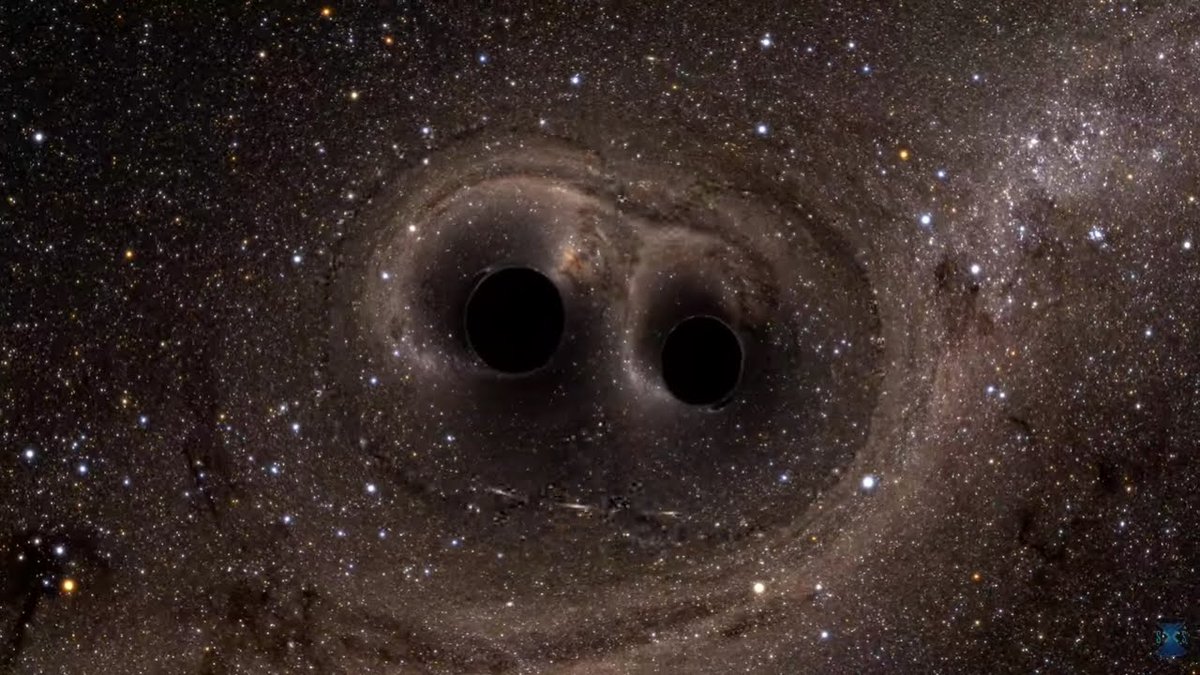
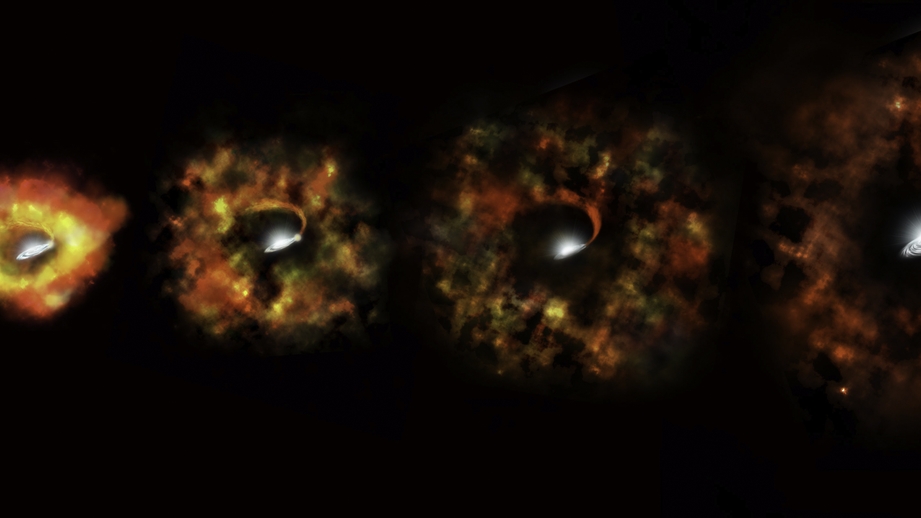
Telescopes that study black holes look at their environment, where material is very close to the event horizon. The substance is heated to millions of degrees and glows with x-rays. The huge gravity of black holes also distorts space itself, so you can see the effect of the invisible gravitational pull on stars and other objects.



