
- Manufacturer rating
- The highest quality
- Normal quality at a low price
- Lumens
- Additional assortment
- YOURSELF MASTER
- Very interesting posts on this topic:
- Packing of LED lamp
- Power
- Life time
- Energy efficiency class
- How to choose the right base for the cartridge
- LED lamps: characteristics, advantages and disadvantages
- Rare holders
- Characteristics of rare types of plinth
- Glass and cable variations
- How marking is done
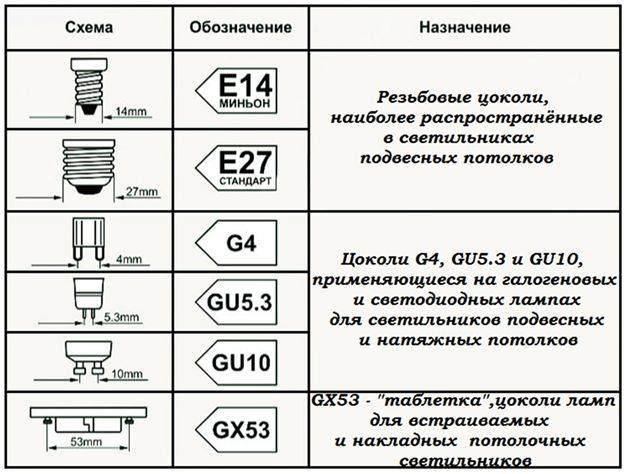
- Characteristics of threaded holders
- LED lightening
- Table of automotive lamps and their replacement
- Table-list of automotive lamps
- H9
- Types of car lamp sockets
- How to determine what type of xenon lamps are installed in your car?
- Base pin bayonet
- Popular g4 lamp manufacturers
- g4 halogen bulbs
- g4 led bulbs
- Marking LED lamps
- Beam Angle
Manufacturer rating
Choosing an LED lamp according to technical parameters is not all. You still have to decide on the manufacturer. In light of the fact that LED lamps are not so cheap, I want to save money and buy from those that are cheaper. These are, as a rule, Chinese lighting devices, and from which they do not differ at least in normal quality.Their distinguishing feature is poor packaging, the absence of a warranty period, or it is, but very small. They are assembled mainly from the cheapest parts, as a result, the color rendering coefficient (real, not written) may not exceed 60, due to poor-quality parts in the lamp converter, it flickers. It is difficult to talk about the service life of such products - how lucky. In general, no matter how much you want to save money, it is better to choose an LED lamp from the products of normal manufacturers.
The highest quality
Very good products are produced by European companies Philips and Osram. Their offices are located in Europe, but the factories are mainly located in China. Despite this, they produce very good quality LED lamps. The image must be maintained, because the quality is tightly controlled. Yes, but their prices are high. Philips LED lamps cost from 800 to 1800 rubles apiece, Osram has budget lines with a cost of about 100 rubles, there is a premium one with a price of 2700 rubles, and the middle range is from 400 to 800 rubles.
Normal quality at a low price
The best combination of price and quality can be found in representatives of the middle price category. There are Russian manufacturers, there are Chinese ones, and some other Asian countries are also represented. The products of these firms have a predominantly good product rating. Also, the declared data coincide with the realities:
- Russian company Feron (Feron). One of the areas of activity is the production of lighting devices based on LEDs. Prices from 60 rubles for low-power embedded, up to 360 rubles.
- Camelion (Camelion). The campaign from Hong Kong produces several lines with different plinths. Prices from 75 rubles to 400.
- St. Petersburg firm Jazzway (Jazzway).Produces LED lamps with various bases, bulb and tubular. The price range is about the same - from 100 to 370 rubles for lamps of normal power (up to 20 W), there are powerful (for 30-60 W) their price - from 3700 to 6700 rubles.
-
Another Russian company Gauss (Gaus) is considered the leader of this market among domestic manufacturers. Prices - from 83 rubles for lines with not the best characteristics, up to 1600 rubles for super-economical ones.
- Another representative of Russia is the Navigator campaign. They differ in that they have a reliable driver that ensures stable operation of the lamps even at low voltage (from 170 V to 250 V). Prices - from 60 rubles for small ones with a pin base to 800 rubles for products with increased efficiency.
- And another Russian company - Era (Era). This brand is on the market quite recently, but it has good reviews and very competitive prices - from 100 to 500 rubles. What sets them apart is consistent quality.
- Selecta (Selekta) is a Chinese company whose products receive consistently good reviews. Prices are approximately in the same range - from 80 to 750 rubles.
- Another representative of the Celestial Estares (Estares). Lamps in fixtures cost from 200 to 500 rubles, thin built-in ones - from 1200 to 1700 rubles.
There are many other companies, but reviews on the products of these companies are often negative. If you want to choose a good led lamp quality for sane money - take a look at the above brands.
Lumens
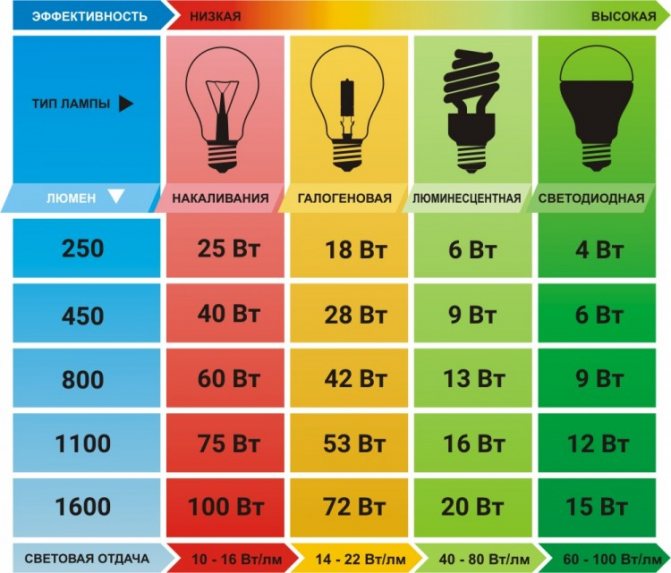
How bright the light will be depends not on the usual power, but on lumens. They are designated as “lm” and mean the luminous flux that will be emitted when using the lamp.
Compared to an incandescent lamp, an energy-saving lamp consumes much less electricity, while giving out more light. So, the same luminous flux of 450 lm is produced by incandescent lamps with a power of 40 watts, and LED lamps with a power of 6 watts. A light of 2600 lm is equally obtained when you turn on a 150 W incandescent lamp and a 25 W LED.
With all the advantages over conventional incandescent lamps, energy-saving ones are also artificial lighting. Therefore, for the working area of \u200b\u200bthe children's room or office, it is better to take care of sufficient natural sunlight.
Additional assortment
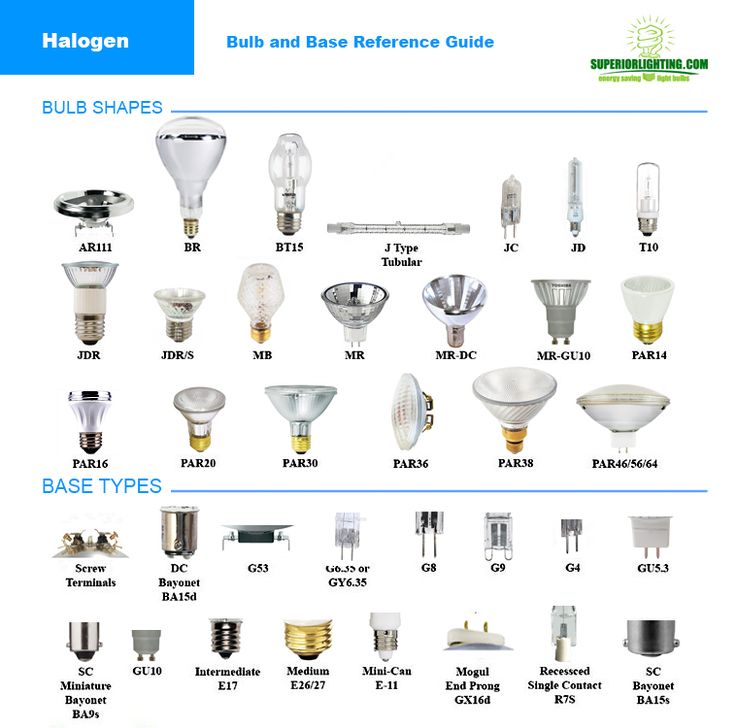
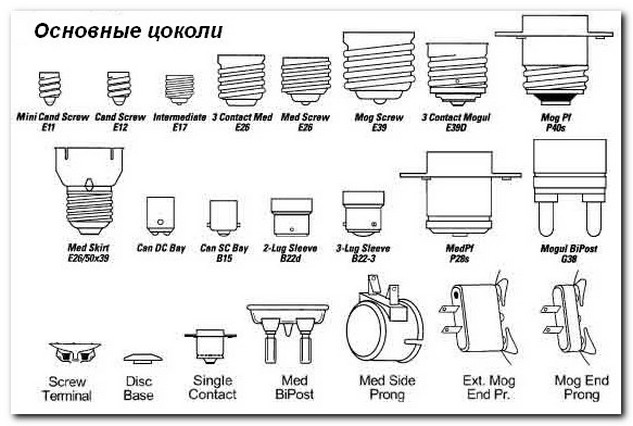
In addition to the above-described plinths, which are most often used in everyday life and in other areas, there are types of them that are used quite rarely. But you also need to know about such products in order to use them for their intended purpose if necessary. Rare types of socles include:
- pin. They are marked with the letter B. They are characterized by asymmetrical side contacts. With their help, the positioning of the light source in the cartridge (holder) takes place according to a strictly specified pattern. As a result, it becomes possible to focus the light flux in a certain direction. Such elements are often used in automobile headlights to create a low beam, as well as on ships;
- In fact, they are an improved analogue of threaded products. With their help, you can quickly replace the lamps;
- with one pin. The letter F is used to mark them. The following types are distinguished here: corrugated, cylindrical and of a certain shape;
- soffit. The letter S is used to designate them. Their distinguishing feature is the bilateral arrangement of contacts. Most often, these bulbs are used to illuminate cars and hotels;
- fixing.They are designated by the letter R. Their scope is lanterns, as well as special spotlights;
- telephone. The letter T is used to mark them. Usually, various backlights, control panels, as well as signal lamps in automation panels are equipped with such bulbs.
A rare type of plinth
As you can see, the types of socles of modern lighting lamps have a fairly extensive range.
YOURSELF MASTER
The classification of LED lamps is carried out according to several parameters: by purpose, by design type and properties, and by the type of base.
Depending on the purpose, LED lamps are divided into:
for residential premises - as the main lighting;
for interior design lighting - local lighting, backlighting;
· for outdoor lighting and landscape design – architectural local lighting of design objects;
For use in an explosive environment;
for street lighting - lighting of streets, sidewalks, bridges, parking lots, railway stations, etc.;
· for lighting spotlights - lighting of industrial buildings and territories.
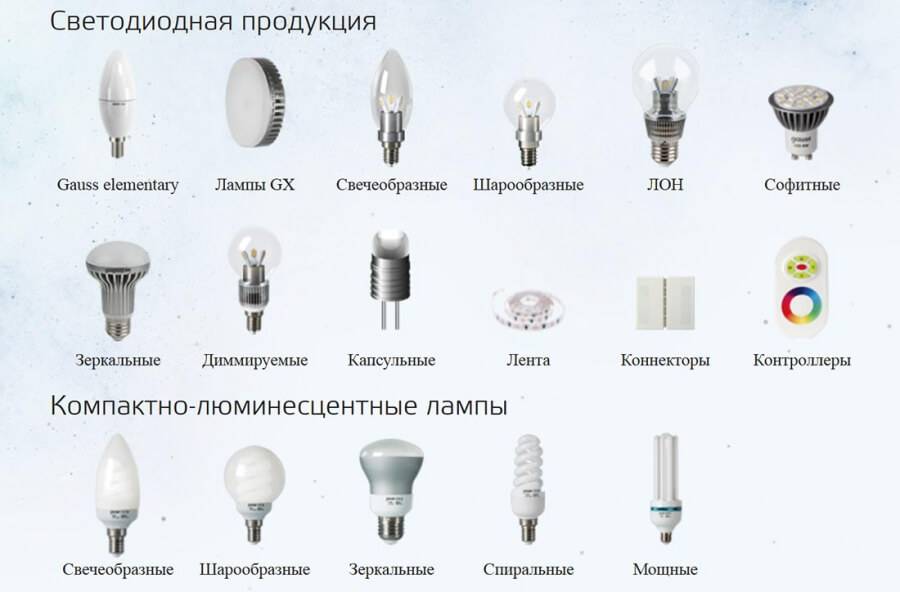
Manufacturers produce, depending on the design of LED lamps and their properties, the following types of LED lamps:
general purpose - used for lighting in offices, residential premises, with a diffused light flux, which is most suitable for human gases;
Directional light - in spotlights and lamps for local illumination of interiors, buildings, landscapes, in shop windows, advertising;
linear lamps - they are in the form of an oblong tube and are used in lamps instead of a fluorescent lamp. They have a directed angle of light along the lamp and a swivel base.
According to the type of base, LED lamps are settled on the following:
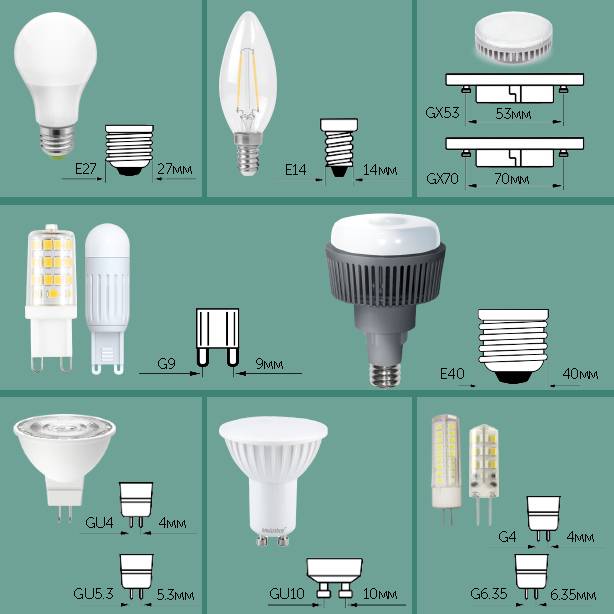
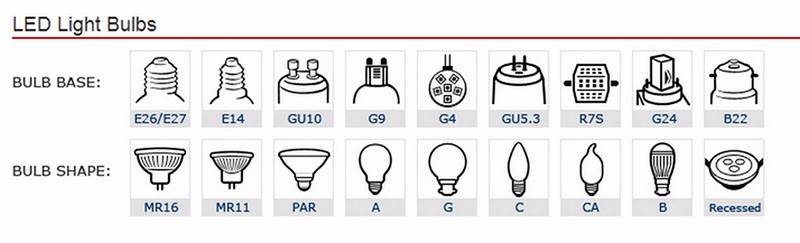
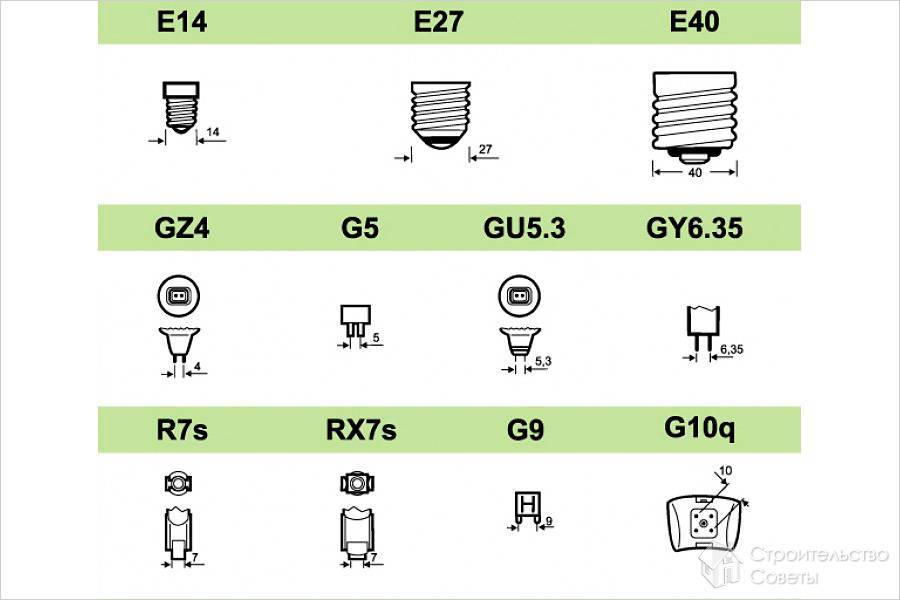
· with Edison base (E) - they have a base as in conventional E27 incandescent lamps or a smaller E14 base. These lamps are connected directly to 220 volts without converters;
with a pin base (G) - they have pins with straight ends of a certain thickness or rounded ends as contacts. The designation indicates the diameter of the base, the distance between the centers of the pins with a 2-pin connector. The number of pins is indicated by letters: s - 1 contact, d - 2, t - 3, g - 4, p - 5 contacts. Lamps with a pin contact for 220 V or for low voltage are connected through a special power supply - driver.



For lamps with a swivel base - a special marking is used that indicates the diameter of the base for a certain lamp size. For T5 lamp - 5/8"/15.9mm, T8 lamp - 8/8"/25.4mm, T10 - 10/8"/31.7mm and T12 lamp - 12/8"/38.0 mm
With special plinths - they are rarely produced. But they have the following marking: for a base with a recessed contact - (R), a base for focusing lamps - (P), for spotlights - (S) and a pin base - (B).
The marking of LED lamps is not much different from the marking of compact fluorescent lamps. On the packaging, in addition to the manufacturer of the lamp and the letter designation led, indicate:
the voltage to which the lamp is connected;
lamp power and the corresponding power of the incandescent lamp at the same illumination;
plinth type;
light flow;
number of hours of work.
On the lamp body or the glass of the bulb, the tubes indicate the manufacturer, power, and sometimes other indicators.
Very interesting posts on this topic:
Flush mounting preparation
Choosing an ecological chimney
Electrical wiring in the apartment
How does a thermostatic mixer tap work?
How to choose a hydraulic pump for home gardening
How to choose a modern shower cubicle
Packing of LED lamp
The first place where the marking will be placed, of course, is the packaging of the lamp itself. Here is all the information we need. True, it is not always clear what to do with it and how to understand it.
Let's take a look at some packaging examples:
Marking of LED lamps
Marking of LED lamps
Marking of LED lamps
As you can see, each of them has similar indicators, these are the brightness of the lamp in lumens, its power consumption, color rendering, color temperature, as well as a few more incomprehensible icons. But let's talk about everything in order.
Power
The wattage must be indicated on the label of the LED lamp. This is the amount of current the lamp will draw per hour. For example, a power of 15 watts means that this light bulb uses only 15 watts of energy in one hour of operation, and to gain one kilowatt, it will need to work as much as 66 hours. Typically, the power of LED lamps is in the range of 1 - 25 watts. These are the same Watts that we are used to when using incandescent lamps. But now we can't estimate the brightness from them as before. LEDs from different manufacturers can draw different amounts of current at the same brightness, so Lumens are now used to measure this parameter, and Watts mean only what they really mean - power consumption.
Life time
Sometimes manufacturers of LED lamps indicate the lamp life on packages.
It is important to understand that the service life is a very approximate value. It depends on many factors, such as the stability of the power supply, the environment, the quality of the diode, etc.Under normal conditions, according to statistics, LED lamps can work up to 50,000 hours.
But manufacturers often quote lower numbers, such as 20,000 hours and a two-year warranty.
Under normal conditions, according to statistics, LED lamps can work up to 50,000 hours. But manufacturers often quote lower numbers, such as 20,000 hours and a two-year warranty.


Energy efficiency class
Marking of LED lamps
Back in 1992, the EU directive required manufacturers of electrical appliances to indicate the EC level of energy efficiency on the packaging. This value showed how efficiently the device uses energy. The class was designated by Latin letters from A to G. Class A meant the minimum use of energy and the highest efficiency, and class G - the highest energy consumption. In fact, this is the ratio of the power consumed by the lamp to the luminous flux produced. With the invention of LED lamps, the A+ and A++ classes were introduced, showing even higher efficiency. In this class, it is easy to compare products and choose a more efficient lamp.
How to choose the right base for the cartridge
In order not to make a mistake in choosing, you need to take into account the parameters of the lighting device for which you choose the base.
When choosing a plug-in connection, consider the following nuances:
- The network parameters for different types of socles are different. Some devices operate at 12 - 24 V, while others operate at 220 V.
- Decide on the choice of light source: halogen, fluorescent or light-emitting diode (LED) lamps. The last option is considered the best.
- For LED lamps with switches or dimmers, bulbs with E14 or E27 sockets cannot be used.
- The range of pin lamps is large, so it is easy to get confused.To prevent this from happening, do not throw away the burnt element.
LED lamps are suitable for almost all types of socles. However, when choosing a device, consider the rated power of the lighting device.
LED lamps: characteristics, advantages and disadvantages
Above, we tried to consider all the negative aspects and characteristics of LED lamps. It is time to get acquainted with the positive aspects of these devices.
Here are the following indicators:
- They allow you to save energy. Such lamps are able to consume 6 times less energy than a conventional incandescent lamp. Or 2 times less than fluorescent.
- They have a long service life. Even if you use the lamp every day without interruption for 6 hours, the lamp life will be approximately 5 years.
- Do not include harmful substances. If we take into comparison fluorescent lamps, in which there are both harmful fumes and mercury, LEDs are completely safe.
- Includes anti-shock property. The body of such lamps, as a rule, is made of metal, and the bulb is made of plastic, which does not allow it to break in the event of a fall.
- Can be sent in for repair. Unlike other types of lamps, these can be sent in for repair and they will serve you for a long time.
- Large selection of temperature shades. For example, incandescent lamps are capable of shining exclusively with white light, as well as fluorescent lamps, while LED lamps can have both the first and second shades.
- Big warranty period. If you buy a quality lamp, then it will be given a warranty period of at least 3 years.
As you can see, such a purchase is an excellent choice for those who are going to purchase LED lighting.
Rare holders
Some types of these integral elements of the lighting device are quite rare. These include devices with a recessed contact.
Characteristics of rare types of plinth
With recessed contact. The presence of the symbol "R" in the marking indicates belonging to this species. They are used in lamps of small dimensions and light weight.
Soffit "S". There are options for location both on one side of the tubular lamp, and on two. Such bases are appropriate in lamps used as mirror illumination, in bathrooms, as well as in car interiors.
The base is soffit with contacts spaced on opposite sides of the lamp. Once they were used only to illuminate the stage, hence the name.
Fixing "R". In film projectors, lanterns, searchlights, the “P” base is used - fixing. By design, it resembles a soffit. The difference is in the presence of an additional scattering area.
The direction of the desired light flux is set by the combined lens. The design is used for film projectors, spotlights, flashlights.
Telephone "T". This type is used in lamps used as backlights, in consoles, instrument panels in cars.
The T6.8 base is used in KM (switch) lamps. The number after T indicates that the terminals are placed at a distance of 6.8 mm from each other
In the European Union, KM bulbs with smaller dimensions are used. On the base they are marked 6 T4.5; T4.6; T5.5.
Glass and cable variations
Among the wide variety of LED lamps, there are those that are called baseless. This element is there, but it is glass, like the lighting fixture itself.
Their use is narrow-profile.Most often found in the automotive industry. When the symbol “W” is at the beginning of the marking, then this is a lamp with a glass base
On its basis there are current conclusions. Through them, the glass base contacts the cartridge. The numbers present in the marking indicate the thickness of the glass part. They are followed by the "x" sign and the size of the plinth in width.
Cable plinths (K) are not so common either. Their area of application is projector lamps.
How marking is done
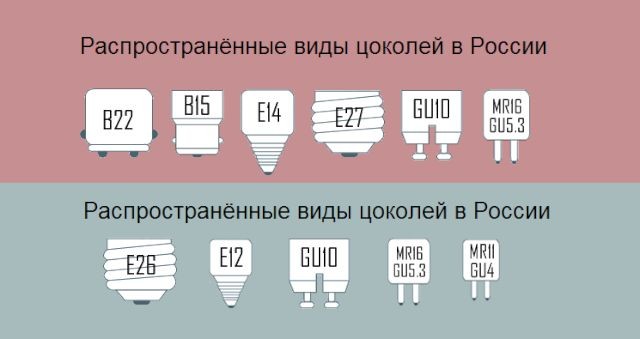
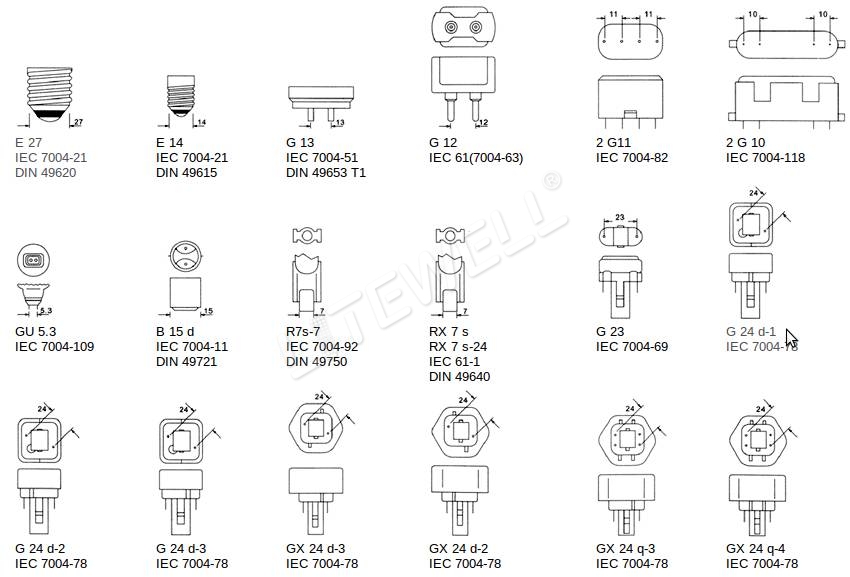
The marking is a combination of a letter or several letters in front and a number at the end.
The type is determined by the letter in front:
- E - Threaded base (sometimes the name Edison screw is also found);
- G - Pin base;
- R - Base, which has recessed contacts;
- B - Pin type base;
- S - Soffit base;
- P - Base of focusing type;
- T - Telephone type base;
- K - Cable plinth;
- W - baseless lamp.
Also, after these letters, information about the subtype of the lamp that is used can be indicated:
- U - Light bulb operating in energy-saving mode;
- V - Base, which has a conical completion;
- A - Automotive lamp.
The letters are followed by numbers that indicate (in mm) the diameter of the base or the distance between its contacts. If after you see another letter - this is the number of contacts (s means 1, d - 2, t - 3, q - 4, p - 5).

Characteristics of threaded holders
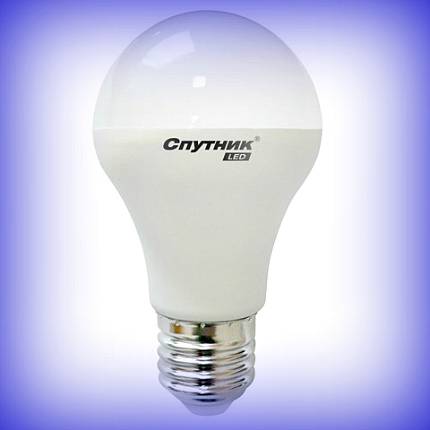
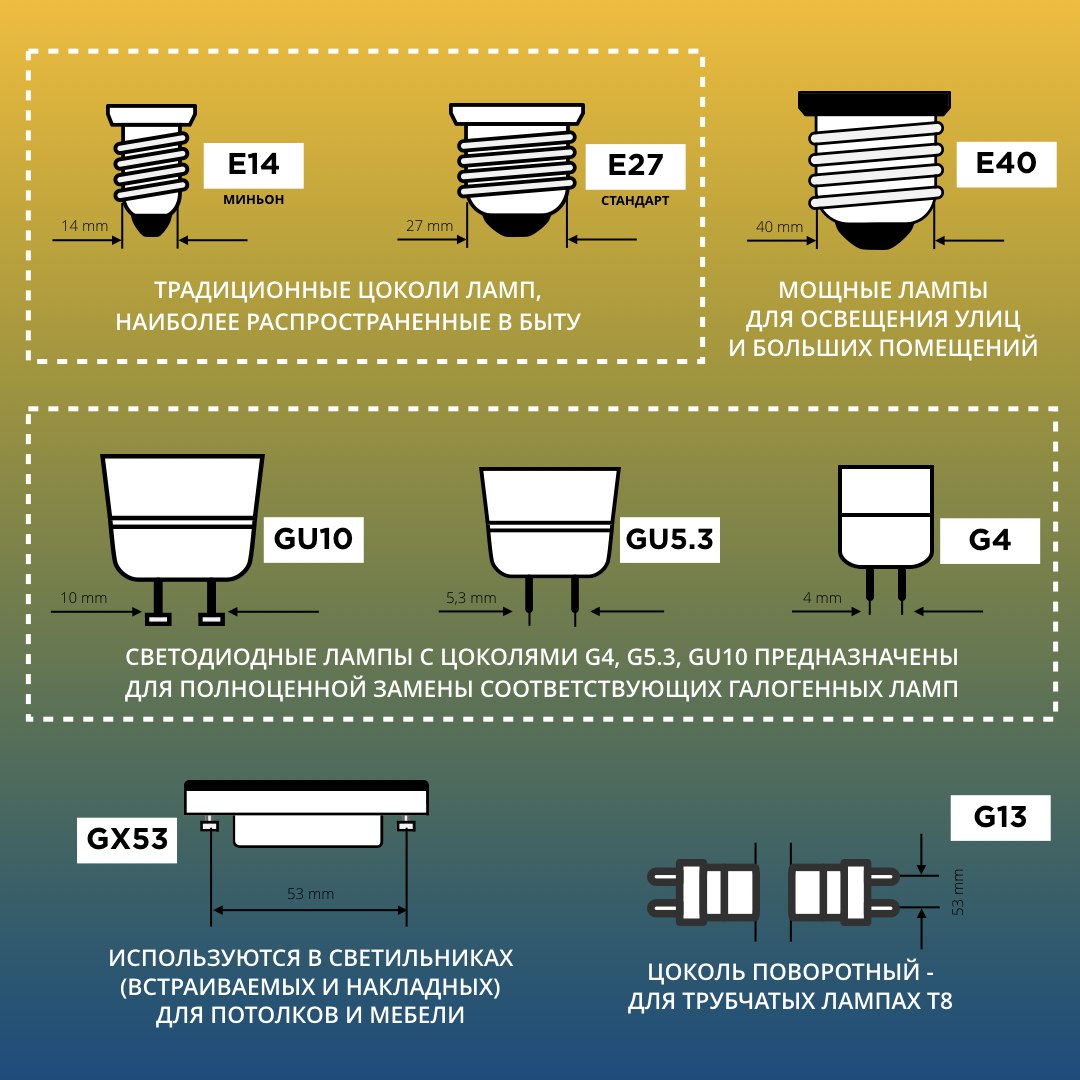
Threaded products are the most purchased plinth options. They equip floor lamps, table lamps, lamps, lanterns. E14 is more often used in sconces, small table lamps, hanging lamps, chandeliers.
LED lamps with such an adapter are gradually replacing incandescent lamps, “housekeepers”, from household use.
For high power luminaires, E40 bases are the most suitable. They are used in industrial workshops, in street lighting.
There are less popular types of threaded plinths:
- E10, E12, E17 - small with diameters of 10, 12 and 17 mm, respectively;
- E5 - microscopic with a diameter of 5 mm;
- E26 - medium.
Threaded base is glued to the flask
If you need to replace the lamp, you must do it carefully, otherwise the base may break off. In the case when this still happens, you need to de-energize the lighting fixture. The next thing to do is carefully unscrew the damaged base with pliers.
Better yet, in order to avoid such situations, it is advised to rub the threads with graphite when replacing the lamp
The next thing to do is carefully unscrew the damaged base with pliers. Better yet, in order to avoid such situations, it is advised to rub the threads with graphite when replacing the lamp.
LED lightening
The LED lamp is one of the most popular types of lighting fixtures.
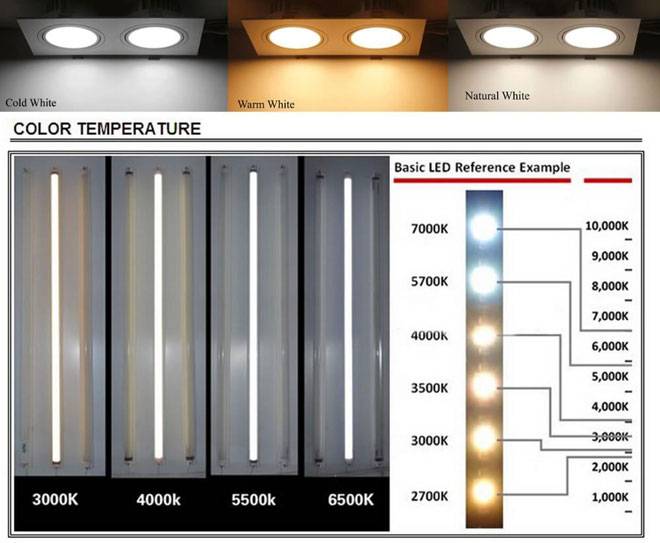
The color temperature of LED incandescent lamps is represented by the following shades:
- warm white (Warm White) - up to 3300 K;
- natural white (Natural White) - up to 5000 K;
- cold white (Cold White or Cool White) - more than 5000 K.
The temperature characteristics of diodes are a determining factor in choosing the scope of their application. They are used for street lighting, billboard lighting and vehicle lighting equipment.
The advantages of cold light include contrast, due to which it is widely used in lighting dark areas. Such LED lamps can spread light over long distances, so they are often used in road lighting.
LEDs that emit a warm glow are mainly used to illuminate small areas. The luminous flux of warm and neutral tones creates the desired effect in cloudy and rainy weather. Precipitation influences the emission of cold light, while warm light does not suffer any significant distortion in rainy or snowy weather.
The peculiarity of the warm glow of LED lamps is that they allow you to clearly see both the illuminated object and the surrounding area. Due to this specificity, warm gamma is effectively used in underwater lighting.
The color rendition of LED lamps has its own characteristics: cold shades of the glow incorrectly convey the colors of the surrounding things. Such light creates sharpness and brightness, which negatively affects vision. The warm color of the glow has a more beneficial effect on the eyes.
The glow of energy-saving lamps is characterized by warm colors. They are close to natural light sources, so they are good to use to illuminate homes.
Table of automotive lamps and their replacement
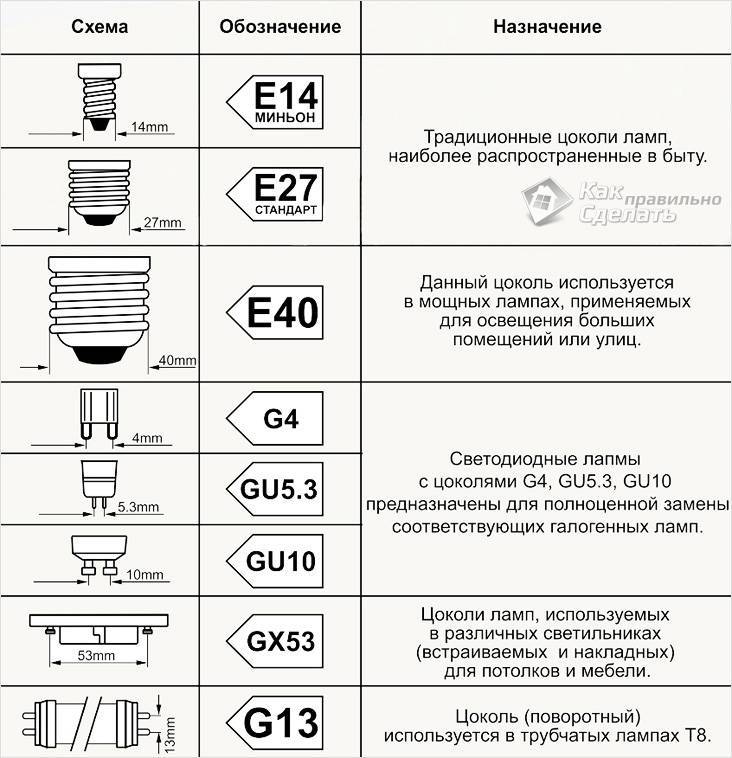
Table-list of automotive lamps
The designations in the table are presented in two formats. New international and old designation of automotive lamps. An additional image will help identify the lamp.
* At first glance, the lamps H8, H9, H10, H11, H12 and H13 are absolutely identical, but they are not!
Power - 35W
Voltage - 12V
Luminous flux - 800 lm
Base - PGj19-1
Power - 55W
Voltage - 12V
Luminous flux - 1350 lm
Base - PGj19-2
H9
Power - 65W
Voltage - 12V
Luminous flux - 2100 lm
Plinth - PGj19-5
- the power consumption of all these lamps is different, which indicates different requirements for vehicle wiring.So, for example, an H11 lamp will require thicker wires, because. its rated power is 55W, and the maximum is about 62W. If you install H11 lamps instead of H8, this can lead to a fuse blowing or, in extreme cases, to a fire in the car's electrical wiring, which is unacceptable;
- manufacturers of automotive lamps took care and made the base of these lamps with slight differences. Each of these lamps has three "antennae", but they are made with slight differences so that the consumer cannot install one lamp in exchange for another and endanger his car and himself;
- and finally, the last reason is the connector, as you can see in the photo, the connector for these lamps is different, which also does not allow you to install one lamp instead of another.
The bases of the W5W, WY5W, W16W lamps are the same, but the diameter of the W16W lamp itself is much larger, so it may not fit into all W5W sockets. W5W, respectively, will fit instead of any W16W.



Interchangeable lamp sockets P21W, R5W, R10W, RY10W.
Types of car lamp sockets
Depending on the number of contacts, the corresponding letter is added to the lamp base.
s - one contactd - two contactst - three contactsq - four contactsp - five contacts
BUT - car lampAMN - miniature car lamp.AC - car soffit lamp.ACG – quartz halogen car lamp.T - miniature base lamp. The base is made together with the flask. An example designation for the example (T5 4W) is a 5/8 inch lamp, 4 watts.
R - a lamp with a metal base 15 mm and a bulb of 19 mm. The designation for the example (R 5W) is the power of 5 watts.R2 - The diameter of the flask is about 40 mm.Incandescent lamps used in Soviet times for high and low beams. Currently almost never used.P - a lamp with a 15 mm base and a bulb diameter of up to 26.5 mm.
The designation for the example (P21W) is the power of 21 watts.SV(C) - soffit lamp (the base is located on both sides). As a rule, it is used for interior lighting, license plate lighting. The designation for the example is SV8.5 5w - the lamp has a base diameter of 8.5 mm, a power of 5 watts. May be referred to as C5W.
VA - a pin-type lamp in which each pin is located symmetrically with respect to the others.BAY - pin lamp, in which one of the pins is offset in height.BAZ - a pin lamp with an offset pin in height and radius.W - the lamp base is made together with a glass bulb.
An example of designation (W 2 * 4.6d 5W) - the base is made together with a glass bulb, the thickness of the base is 2 mm, the width is 4.6 mm, 2 contacts, the power is 5 watts.
The designation "/4W", "/5W" and "/7W" indicates that the lamp has 2 filaments (in LED lamps - 2 operating modes: soft / bright). The lamp sockets are the same. Power difference: for incandescent lamps: 4W, 5W and 7W respectively.
Socle lamps -T4W, P21W, P21/4W, P21/5W, R5W, R10W, RY10W for dimensions, turn signals, brake lights.
Baseless lamps - W16W, W21W, WY21W, W21 / 5W, P27W, P27 / 7W, T5.
How to determine what type of xenon lamps are installed in your car?
Many xenon car lamps look the same at first glance, but they are not. They are completely different in appearance, characteristics and serve different purposes.
Last letter:
- S — For lensed optics.
- R — For reflex optics.
Voltage:
- D1S/D1R — 85v.
- D2S/D2R — 85v.
- D3S/D3R - 45v.
- D4S/D4R - 45v.
Not interchangeable!
If the lamp in the car is missing for any reason? We determine by the landing hole. Which, respectively, will be in a mirror form.
Base pin bayonet
There are special pins on the body of this connecting device. With their help, the base is connected to the cartridge. When developing the product, a specific goal was set - to make the lighting fixture more compact and reduce the time to replace light bulbs.
Round side pins (2 pcs.) are located symmetrically on the base. They are fixed in the slots of the cartridge intended for this, and then rotated ¼ turn for better fixation.
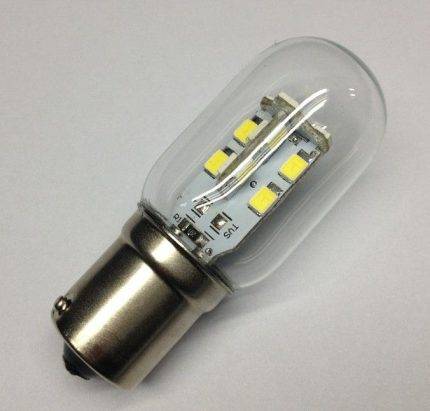 In the photo there is a LED light bulb with a bayonet base, marking - BA15D. lamp dimensions - 22 * 60 mm, voltage - 0.5-1 V
One type of pin product is the BA base with asymmetrical side contacts. It is used in cars. A peculiar design allows you to insert the lamp into the socket in a special way and focus the luminous flux of the headlights.
In some countries, mostly English-speaking, pin connectors are designated BC, short for Bayonet Cap, in Europe - B22d, in Russia - 2Sh22.
The analogue of the European B15d is the domestic 2Sh15 and in English - SBC, the full name is Small Bayonet Cap. MBC/MBB corresponds to Russian 1Sh9 and European Ba9s.
Popular g4 lamp manufacturers
g4 halogen bulbs
Among the leading companies are foreign Philips, Osram and Russian "Navigator" and "Era".
Philips has the Capsuleline and Brilliantine series. The first series is capsule-type light bulbs. Brilliantine - light sources with a reflector coated with a special composition for a high intensity light beam. The bulb is filled with xenon.
Osram produces several lines.Do low-voltage 6V - IRC lamps from 10 to 35 watts. The Decostar 35 series are 10W, 20W, 35W reflector lamps. Glow angle 10⁰ or 36⁰. They have good heat dissipation, suitable for suspended ceilings. The third series Decostar 35 Titan has an extended service life.


"Navigator" produces two series: NH with reflector and capsule miniature series NH-JC.
"Era" also produces capsule models and models with a reflector. For Russian "halogens" a high-quality transformer is very important, otherwise the lamps will flicker.
g4 led bulbs
Philips, Osram also produce high-quality LED lamps. Their products are quite expensive.
Good analogues, but at lower prices, will be the products of Gauss, Navigator (Russia), Foton Lighting (Great Britain), Maxus, Biom (China).
Marking LED lamps
If you take the packaging of any product, then it has a marking that reflects all its technical data. It is similar to the marking of housekeepers and includes the following parameters:
- the main parameter is the power of the light source, for example, 10 or 25 W;
- service life of the product. For different brands, the indicator may vary slightly, but the main lamp life is calculated at 50 thousand hours;
- economy class is indicated by letter designation. Previously, the designation "A" was considered a high indicator. Now "A +" and "A ++" have appeared, which indicates high efficiency;
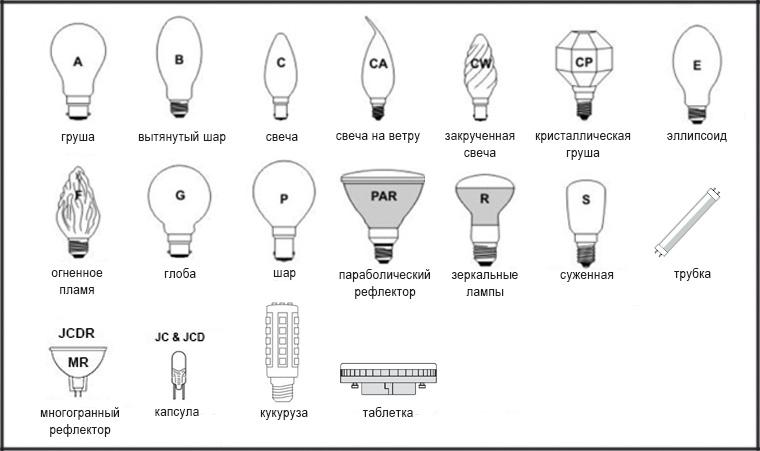
- the type of flask is indicated by an alphabetic and numeric designation. For example, model A55 has a standard bulb like an incandescent lamp. Other markings indicate mirror flasks, candle-shaped, frosted, transparent, and so on;
- the type of base must be indicated, for example, E27 or another;
- color temperature is indicated to select the desired glow color;
- luminous flux indicates the brightness of the light source;
- the color rendering index is also reflected on the packaging;
- consumption parameters indicate what voltage the LED lamp is designed for. For example, alternating voltage 150-220 V with a frequency of 50/60 Hz. The range of permissible temperatures for normal operation of the product is indicated. LED lamps work stably at temperatures from -40 to + 40 ° C, which again indicates their advantages.
A properly selected LED light source in all respects, subject to all the requirements of the manufacturer, is guaranteed to last for many years. Now the main disadvantages of products are only high cost, but over time they will become available to all consumers.
You can also read the article about LED lights for the garage.
Beam Angle
Incandescent bulbs emit light in all directions, as they have a transparent bulb. In most cases, this does not bother anyone. But if it is necessary to create directional illumination, such radiation will be characterized by large losses. LEDs emit light in a beam. This means that there will be no such losses, since the light is directed to certain objects.
Degree of radiation depending on the type of light bulb.
So that the product can illuminate more space, the chips are installed under the flask at different angles. If it is a night light or a spotlight, you will not need a large scattering angle. For a room in an apartment or house, an angle of 180 ° is considered acceptable. If you need to fill a large space with light, you should choose a lamp with an angle of 270 °.



