
- Dishwasher Diagram
- Rules for the operation and maintenance of equipment
- The amount of water consumed
- Economy
- Features of washing dishes with the help of technology
- How to load dishes correctly?
- The nuances of the dishwasher
- How long does it take to wash dishes
- We determine the degree of loading of the device
- How to choose a dishwasher
- By size and capacity
- Consumption and power
- By washing class and drying type
- There are also several types of drying:
- Availability of an automatic water hardness meter
- Availability of programs and modes
- Who is right?
- Water consumption
- Water savings in dishwashers
Dishwasher Diagram
Modern man has simplified his life as much as possible - all kinds of electrical devices guard our comfort and convenience - washing machines, food processors, microwaves, vacuum cleaners ..
. All this is in the house (especially in the kitchen) of every person. And now it's time to get acquainted with another household appliance that greatly facilitates household chores - a dishwasher.
Dishwasher operation
1. Before supplying hot water to the tank, you need to make sure that there is no water left in the tank after the last rinse.Therefore, in most models of machines, a new wash cycle begins with the drain pump running for some time.2.
The electric water inlet valve opens the hot water supply to the tank. The timer controls how long the solenoid valve remains open, providing water level control. Flow control washers built into the valve compensate for differences in water pressure.
Most models use anti-leakage float switches to prevent accidental overflow during the fill cycle.3. After that, the pump starts in the "wash" mode. The water is sent to the sprinklers which spray hot water onto the dishes.
Most dishwasher models are also equipped with a water heater in the tank to keep the water at the right temperature during washing. In some designs, the heater also dries the dishes at the end of the wash.
5. At the end of the "wash" and "rinse" cycles, the pump goes into "drain" mode. Water can be pumped out of the tank in one of two ways. In some "reverse direction" designs, the motor, when rotated in the reverse direction, engages the pump impeller to drain the water.
6. The "drying" cycle makes the heater. In other models for drying dishes, the fan drives the air inside the case, the steam condenses in the cooling circuit, the condensate drains out of the machine.
Designation of circuit elements:
X1-2 - clamp pads; SO1-4 - switches; SL - relay RU-ZSM; EV - single-section valve KEN-1; EK - NSMA water heater; H1, NZ - indicator IMS-31; H2, H4 - indicator IMS-34; MT - DSM electric motor-2-P; M - electric motor DAV 71-2; C1-2 - capacitors (4 uF); KL1 - clamp for ground connection; FV - fuse socket;
SK - relay-sensor DRT-B-60.
Either more complex, with a built-in controller that controls the dishwasher modes according to a built-in or manually compiled program. Manual programming can be useful when it is necessary to reduce water consumption, or vice versa - to increase the duration of washing too dirty dishes. You can download the circuit diagrams of such models (manufactured by LG) along with their description in the archive for free.
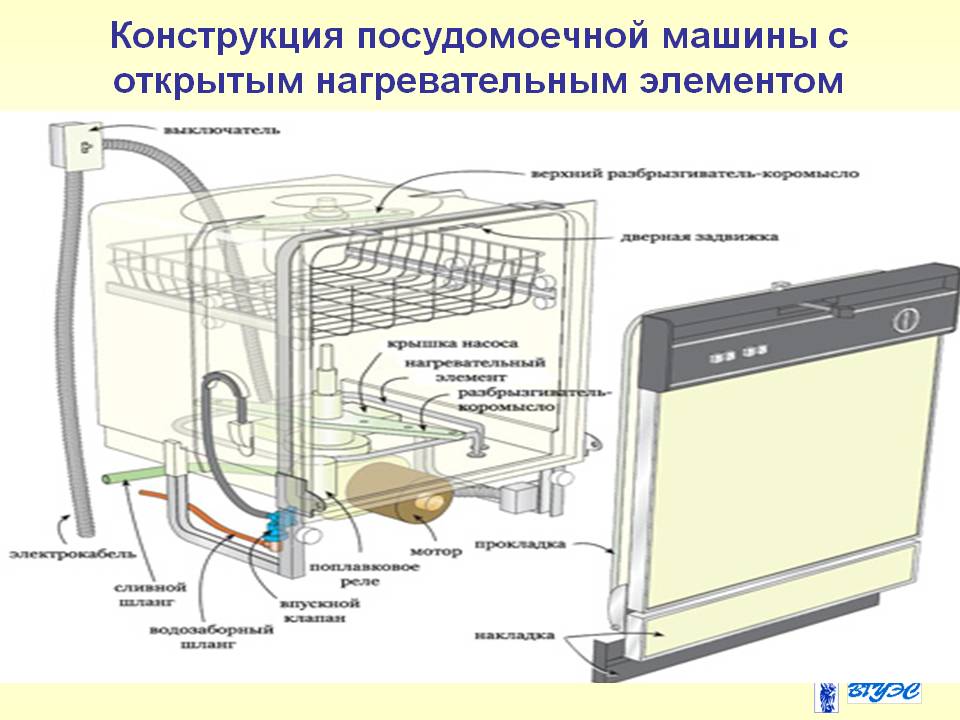
Dishwasher device
1 Control panel2 Upper spray unit3 Lower spray unit4 Float valve5 Drain hose6 Power cable7 Hot water hose8 Filter9 Inlet valve10 Motor11 Pump12 Heating element13 Gasket14 Timer control button15 Door latch.
The second version of the description of the PM device
Modern dishwashers with digital control are equipped with the function of displaying error codes when malfunctions and malfunctions occur during operation. If the malfunction is simple, then understanding what the error code means, you are able to eliminate it yourself without calling the service departments. Below is a table of error codes for Bosch dishwashers. Click to enlarge the picture.
If your dishwasher is not working, do not rush to send it in for repair. Here are a few verification operations that you should do yourself:
– Make sure that the dishwasher is connected to the power supply, check the wires, plug, socket, make sure they are not damaged.
– Check the fuses in the switchboard. Make sure the switch that controls the dishwasher is turned on.

– Make sure the door is tightly closed. The machine will not turn on until the door is closed, most likely there is a problem in the latch mechanism of the lock, check this.
– Check if there are any problems with the water supply, perhaps somewhere the taps are not open and water does not enter the dishwasher.
– Make sure the controls are set up correctly, such as the anti-tamper feature is enabled.
– Look around and under the car for small smudges. Gaskets may be worn out or hoses and pipes may be damaged.
Rules for the operation and maintenance of equipment
In order to ensure the safety in proper condition and durability of the dishwasher, it is imperative to follow a number of rules:
Before loading dishes into the machine, wash the cutlery under running water.
To fully and efficiently load the dishes into the machine, use the clamps and holders provided.
It is forbidden to put sponges, waffle towels, various clothes in the machine.
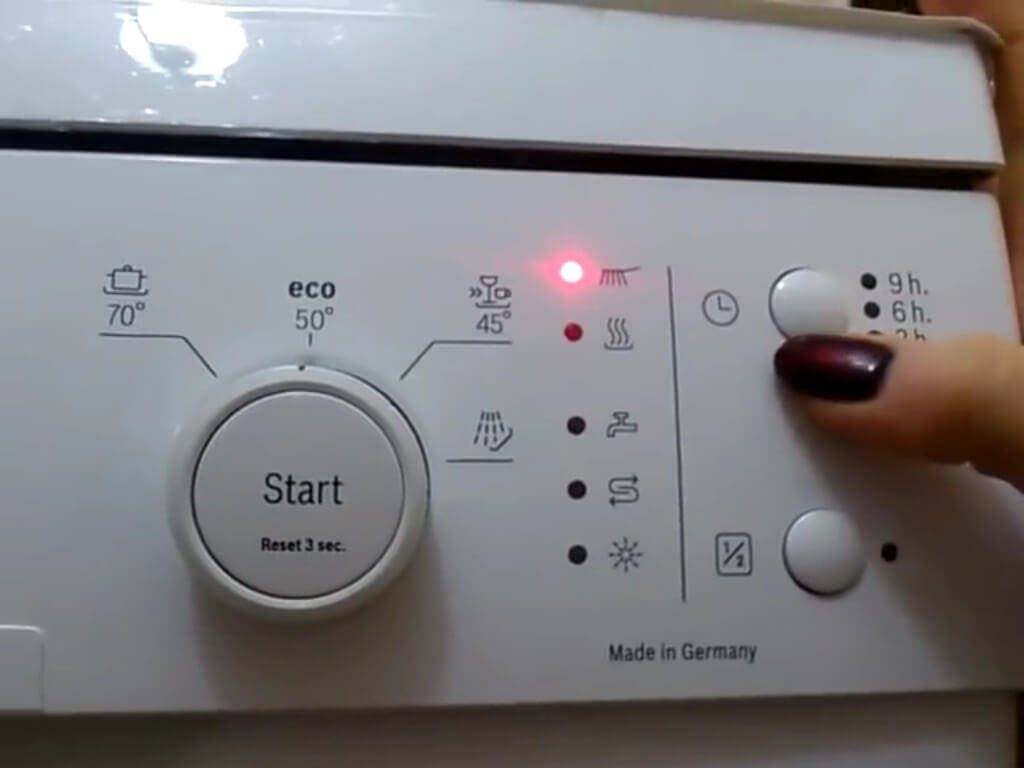
It is necessary to select the program and temperature mode in accordance with the quality of the loaded dishes.
It is allowed to use special means that are dosed correctly.
After the end of the regime, do not rush to get the dishes.
Filters, baskets and washing compartments should be checked and cleaned from time to time.
Each time after the machine is finished, it is necessary to wipe the door, trays from water residues.
It is necessary to take special care of the rubber parts of the machine.
Of course, you can also wash the dishes by hand, but this cannot be done if the water is very hot. Undoubtedly, the dishwasher will cope with this much better. The duration of the washing process directly depends on the selected mode of the model of this technique.Also, the advantage of a dishwasher is the fact that, using it, the hostess significantly saves not only resources, but also the time spent on daily dishwashing.
Therefore, it is better to invest once in the purchase of such a dishwasher in order to enjoy the fact that now there is no need to manually wash kitchen utensils.
The amount of water consumed
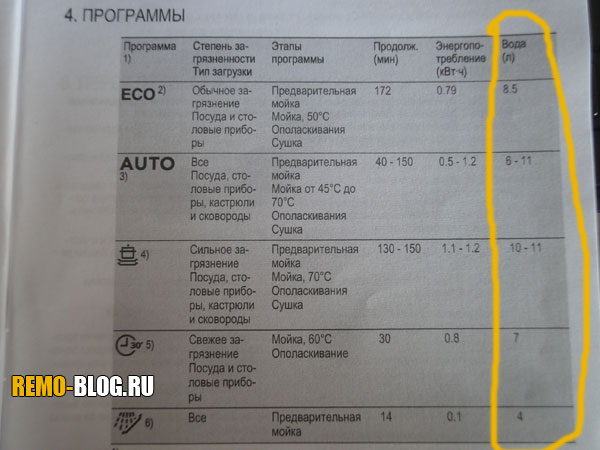
How much water does a dishwasher consume per wash? Considering the water consumption of dishwashers of different brands and models, we can say that, of course, it will vary. But even the most "ancient" models of dishwashers do not consume more than 20 liters of water.
The washing equipment of dishwashers is divided, depending on the dimensions, into two types: narrow and full-sized. Based on this information, it is possible to judge how many dishes a particular model of the machine can hold and be able to wash in one cycle.
Full-sized equipment will be able to wash 13-14 sets of dishes. The largest water consumption in this case will reach 15 liters. More compact (narrower) machines will be able to wash about 6-9 sets using no more than 10 liters of water.
Economy
And yet, the most exciting question for housewives is: is it more profitable to use a dishwasher or is it cheaper to wash kitchen utensils the old fashioned way? Let's figure it out. Special experiments were carried out, which proved that the same amount of dishes, which corresponds to one load of the machine, when hand washed, costs 70 liters of hot and 30 liters of cold water (plus or minus). Thus, washing kitchen utensils in the dishwasher proves to be much more economical compared to the manual one we are used to.
In order to roughly understand exactly how much water modern washing equipment consumes, let's take some well-known models as an example:
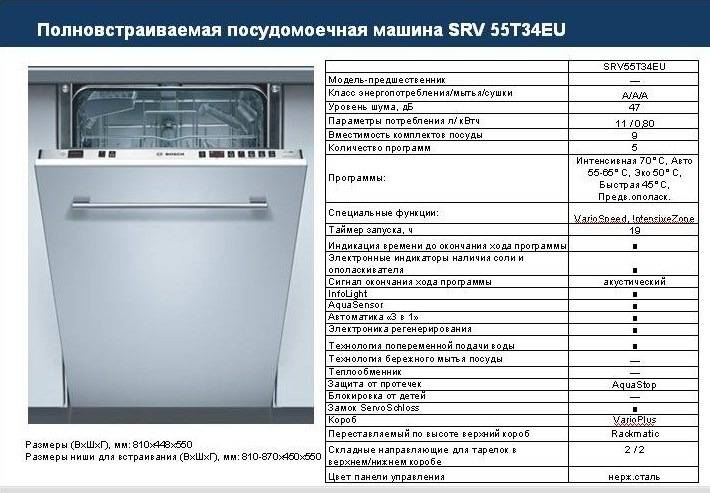
- Bosch SPV63M50 (compact) holds up to 9 sets per load, consumption 8 liters;
- Candy CDI 6015 WIFI (full-size) is able to wash 16 sets of dishes in one cycle, using 10 liters of water.
A family of two is better off buying a compact model. Otherwise, washing several items from a set of dishes will take the amount of water calculated for a full set, and there will be no savings. Of course, you can accumulate dishes until the machine is fully loaded, but this option will not be convenient for everyone.
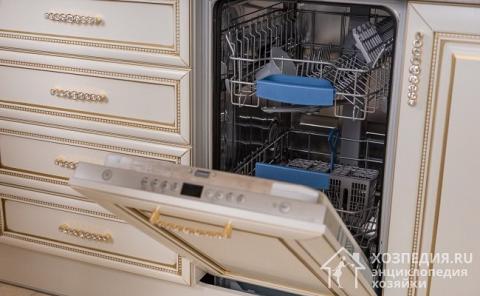 For a small family, a compact model is suitable
To date, brands from Europe are recognized as the most economical. It is worth choosing just such a machine if saving water resources for the consumer is a priority. Well-known firms Indesit, Candy, Bosch, Siemens, Beko, Whirlpool and others have energy class A, which corresponds to economical technology. Their average electricity consumption fluctuates between 0.7 and 0.9 kW (depending on the dimensions of the machine). Interestingly, some brands include a half-load function in their equipment, which saves water by about 30%.
Features of washing dishes with the help of technology
What saves water in a dishwasher? The fact is that modern equipment uses a special technology in which the volume of water that was initially collected is used several times during the washing process.First, the kitchen utensils are sprayed, then there is a direct washing with detergents and, finally, rinsing.
After performing one operation, the machine does not immediately pour water into the sewer, but filters it and uses it further, in the following cycles. During dishwashing, the liquid is only partially drained, and its fresh portions come from the water supply. Sprinklers throw out water under strong pressure in thin jets, which also helps to save a lot on water consumption.
In terms of time, washing and drying kitchen utensils in the dishwasher takes approximately 2 hours. But if you consider that the hostess will only have to remove the stuck food residues from the plates, the process will no longer seem long. And if we take into account that the machine will also wash pots and pans, for washing which any, even the most experienced, housewife usually takes the lion's share of the time, it becomes clear that 2 hours is not a time for such laborious work.

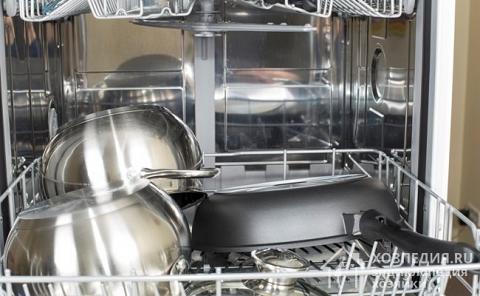 Dishwasher cleans pots and pans
How to load dishes correctly?
Sometimes improper loading of dishes causes non-fulfillment of the PMM programs embedded in it and, as a result, a deterioration in the quality of washing. All the details of loading dishes into the machine are listed in our recommended article.
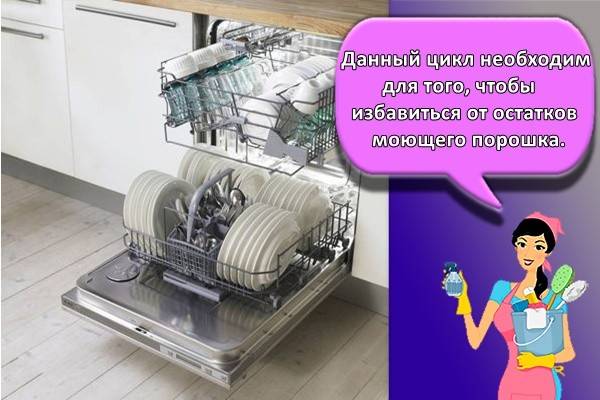
If you place large kitchen utensils in the center - pots, pans, baking sheets, cutting boards, trays, the water jet will be blocked. It is better to move all this closer to the edges or lower it into the lower compartment.
The volume of a one-time load depends on the dimensions of the dishwasher. Some manufacturers in the attached instructions describe in detail the process of laying dishes in the PMM
When a large amount of dishes that need to be washed accumulate, it is impossible to process them all at once. Water and detergents will not have enough free contact with the surfaces of the kitchen utensils.
To do this, there must be free gaps between kitchen utensils. The dishwasher in case of overload will not be able to perform its work efficiently.
For the correct functioning of the dishwasher, it is important that the powder or washing tablets are strictly in the compartment intended for this. Due to the fact that the cycle is programmed in advance, all means come into action clearly at the set time.
If there are stains on the dishes, this indicates excess salt or rinse aid. When there is not enough detergent, dirty streaks will remain. If food remains are found on the bottom of the unit and on the dishes, the filters should be checked. Most likely they got messed up. Experts advise cleaning them after one or two washes.
Dishes that have not been washed for a long time or burnt are subject to preliminary manual cleaning. When an excess of foam forms during rinsing, it means that an excess amount of rinse aid has been loaded. In this case, the correct setting of the dispenser or the addition of a defoamer in the form of a powder will help.
The nuances of the dishwasher
If you just purchased a car, then it is better to test run the device. It will help get rid of lubricants that may have remained on the product. In addition, it will help to check the quality of installation of the dishwasher design. Check the rate at which water enters, how it heats up and whether liquid is pouring out of the device. All problems can be removed at this stage.
In order to carry it out, you need to use a special salt or detergent, which usually comes with the kit. First you need to find out how hard your water is. This will not be difficult for a working Bosch dishwasher. They are equipped with special strips that will help determine the hardness of the water. Just dip one of them into the liquid and refer to the plate, which is also included. The hardness influences the amount of salt to be set in the device.
The compartment with salt must be filled completely with water. It must be poured there once, just before the test run. In order to place salt in this compartment, you must use a special watering can. It needs to be visible through the hole. If a little water spills out of there, then it's not scary. When you close the compartment with a lid, just wipe it off.
For the device to work effectively, you need to get a special rinse aid, tablet or powder detergent and salt that softens the water (this is exactly the salt that is needed for the test run). You can buy all these tools separately. But it is better to take ready-made kits from one manufacturer. As a rule, in this case they have components that are perfectly combined and complement each other in the process.
How long does it take to wash dishes
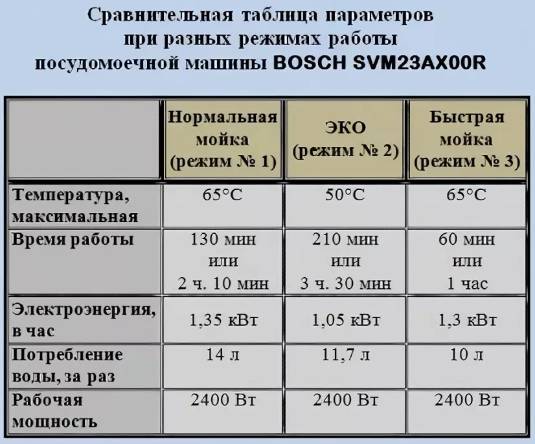
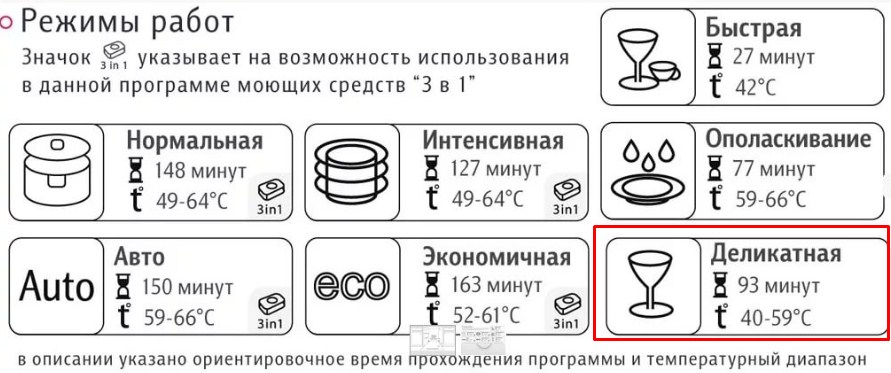
The operating time of the dishwasher depends on which mode you have selected and on the model of the device. For example, if you have chosen a program with a soak and pre-rinse, then be prepared for the fact that the unit will run for 20 minutes longer.The mode should be selected depending on how dirty the dishes you put to wash.
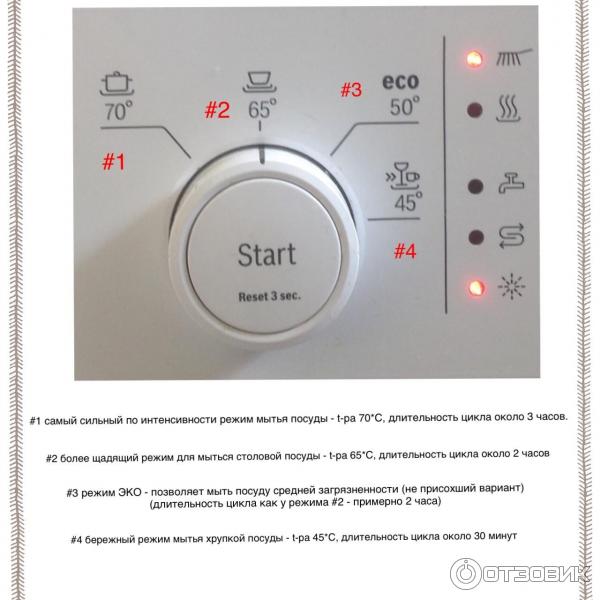
Also, the operating time of the unit is affected by the temperature of the water required for washing. For example, if you select a mode that requires water of 70 degrees, you will have to wait another 20 minutes longer. The dishwasher can run from half an hour to three hours.
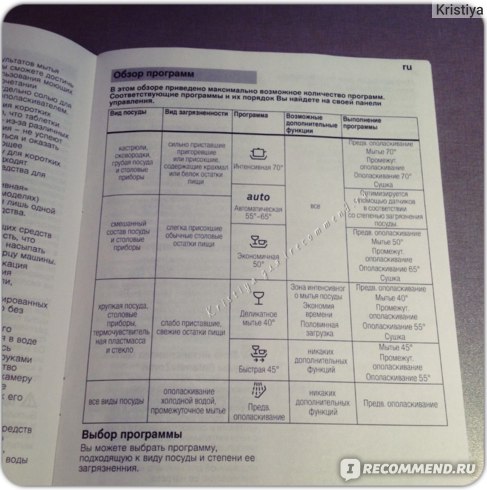
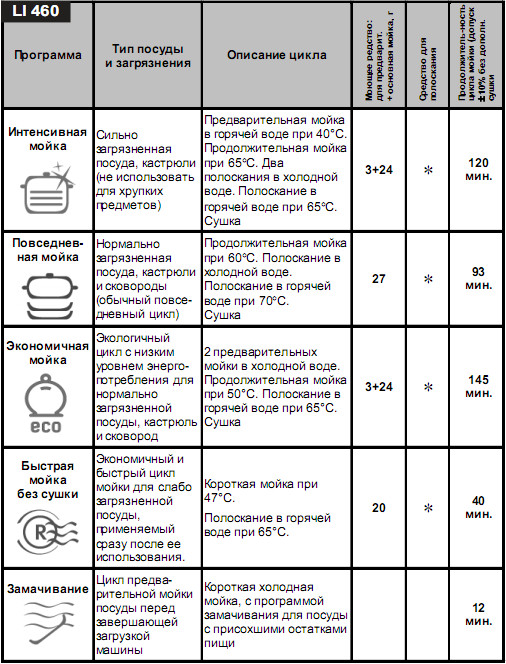
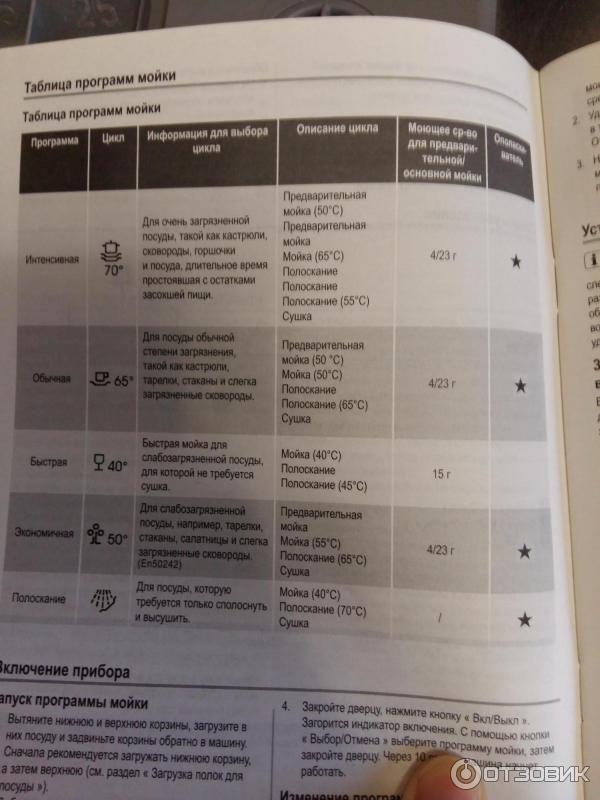
Here are some of the most popular modes and the time in which you get clean dishes:
- Intensive mode is used for washing very dirty dishes using water at a temperature of 70 degrees. Washing takes 60 minutes.
- Normal mode involves drying and additional rinsing. In this case, the wash will last 100 minutes.
- A quick wash is needed to cope with light dirt, and lasts half an hour.
- The economy mode is used to save resources and wash standard dirt. This mode lasts 120 minutes.
These are the most standard modes. In most devices, there are many more with additional features. For example, a fairly common additional mode is delicate. It is needed to wash fragile dishes made of crystal, glass or porcelain. As a rule, the duration of the device in this mode is almost two hours. But if the names of these modes are not found on the device, then be guided by the temperature. The mode at 35-45 degrees will work for an hour and a half, at 45-65 degrees - 165 minutes, at 65-75 degrees - 145 minutes, quick wash - a little more than half an hour, pre-rinse - 15 minutes.



We determine the degree of loading of the device
The machines are designed for a certain number of sets of dishes. It is different for every car. Can be for 6 or 12 sets.This information is written in the technical data sheet of the device.
However, you do not always need to wash just as many dishes, and there is simply nothing to load the device completely. Therefore, manufacturers of units made sure that housewives do not have to save up dirty dishes and wash only a certain number of sets of dishes.
Modern dishwashers, for example, the Electrolux brand, have an operating principle in which you can select a mode not only based on time and water temperature, but also on the degree of load of the unit. The half load feature is very popular. It helps if instead of, for example, 12 sets, you need to load only 6. The device calculates the required amount of water, detergent and electricity for these six sets. That is, it will work only half of the possible power.
How to choose a dishwasher
By size and capacity
Table of standard sizes of dishwashers
| Dimensions: height, width, depth | capacity |
| 44x55x50 | 6 sets |
| 85x45x60 | 10 sets |
| 85x60x60 | 12 sets |
Capacity is measured in conditional sets of dishes. The set includes a set of plates (4pcs), a cup and a spoon with a fork.
Often different manufacturers write 1-2 sets more for the same sizes. This is one of the marketing ploys. It's just that no one knows what cups and plates should be in a standard set.
If you load not the specified number of sets, but a little more, this will affect the quality of the sink. And if, while saving space, the dishes are not placed correctly, then fragile products may break.
For a family of 3-4 people, a car for 10 sets is enough. But if possible, it makes sense to consider a more accommodating one.
Consumption and power
Water consumption varies little from model to model. For us, the main thing is that in any case it is less than with a manual wash.
Power consumption is also an insignificant parameter.
Power consumption is important. The more power, the:
- the price of the car is higher;
- it has more power of the pump that supplies water;
- the heating element is more powerful, it heats the water faster.
In general, the power is related to the washing speed.
By washing class and drying type
The washing class indicates the level of dirt that can be removed from the dishes. Even option "A" is already a good quality of laundering, the highest class "A ++" is if the dishes should be just perfect.
The drying class indicates the degree of probability that drops and streaks will remain on the dishes.
There are also several types of drying:
Condensing - machines with this type of drying are the cheapest. There are no additional elements here. Water drips off dishes and walls. But there are a number of drawbacks here: water does not drain from horizontal surfaces, puddles remain. In addition, if the door is not opened slightly after washing, a musty smell may occur.
Convective - drying is carried out due to the flow of air that passes through the washing chamber. Models with such drying are more expensive, but the result is better.
A turbo dryer is the most efficient option. Here, the fan drives the heated air through the chamber with dishes. The result of such drying is very good, but it requires more energy consumption.


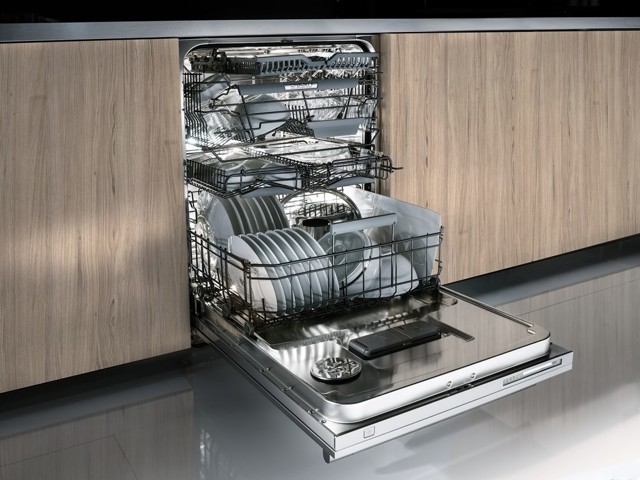
Availability of an automatic water hardness meter
This is a convenient but not necessary option. To soften the water, almost all dishwashers have ion-exchange filters installed.
These filters use salt to make the water softer. The fact that the salt in the filter is over is signaled by a special sensor.
Salt consumption can be set manually, depending on what kind of water you have.
But if there is an automatic determinant of water hardness, then nothing needs to be set. He himself will measure the hardness and will control the consumption of salt.
Availability of programs and modes
Express program - reduces the washing time if the dishes are not very dirty.
Economical - saves water and electricity, but is greatly extended in time.
Intensive - increased water temperature during washing. It should not be used for plastic and fragile glass.
Delicate - not high temperature for fragile products. Not good quality.
Rinsing - if you have not used clean dishes for a long time, you need to rinse them.
Soaking is a very important mode. It allows you to accumulate dishes and wash them as needed. It is also the only way to wash burnt dishes.
Option with connection to hot water - this is not relevant with a hot water meter. Heating water is cheaper than using it from the tap.
The noise level is not higher than 45 dB - if the apartment is made in the form of a studio, and you turn on the sink at night.
Who is right?
Has anyone tried to open the instructions for their dishwasher and read what is written there? If not, here is a list of recommendations from the manufacturer: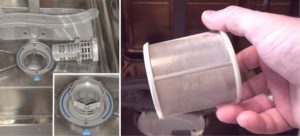
- After the end of the washing and drying program, it is advisable not to immediately take out the dishes, but to let them dry completely for another couple of hours. In order not to face the lack of plates or glasses, run the sink at night, and by morning the dishes will be clean and dry.
- Clean the filters regularly and as often as possible.The main unpleasant smell comes from them, especially if you run a problem.
- With frequent use of the machine and regular cleaning of the filters, it makes no sense to dry the unit from the inside every time. With such active work, mold and other microbes will not have time to multiply.
- If the dishwasher is used infrequently, it can and should be dried to prevent the growth of bacteria. It is enough to leave the door open at least a little bit, and not to open it completely.
The dishwasher is designed to be used at least once a week. Otherwise, the water will stagnate and emit an unpleasant odor.
Share your opinion - leave a comment
Water consumption
One of the main questions of the consumer is how much water is consumed by the dishwasher per cycle, is there really a saving?
In the machine, the water is not drained until the end of work, it only passes through special filters, and is again fed clean to the top to rinse the dishes. Additional savings are also formed due to the fact that washing takes place with the help of sprinklers, that is, the dishes are washed not with a jet, as in manual washing, but with small sprays. You can reduce water consumption by 20-30% by choosing economical modes of operation. It should be noted that the size of the device does not play a special role.
Pay attention to the level of efficiency before buying, as a rule, it is indicated by letters:
- A, B, C - dishwashers that consume from 9 to 16 liters are called highly economical machines;
- D, E - machines that use water in a volume of up to 20 liters are of the medium economic category;
- F, G - dishwashers that consume up to 26 liters of water per cycle are low-economic.
Class A dishwashers not only save water, but also lead in terms of minimal energy consumption.
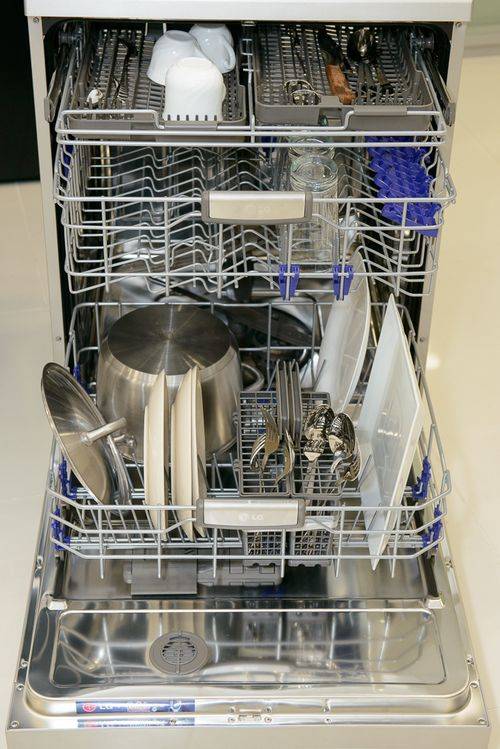
What to look for when buying?
Before buying, you should know how many dishes you plan to put in the machine, pay attention to the number of baskets for this. The dimensions and type of dishwasher depend on the intended installation site, one buyer prefers built-in appliances, the other desktop option
Notice how quiet the dishwasher cycle is. The control panel should be clear and convenient
It is better to abandon complex technology if you are unable to make out most of the buttons.
The control panel should be clear and convenient. It's best to skip the complicated technique if you can't make out most of the buttons.


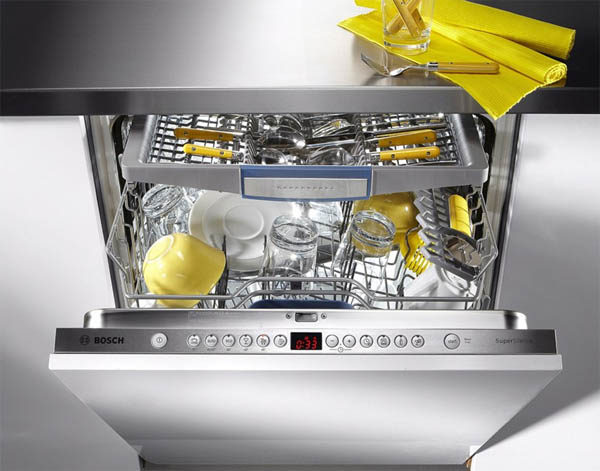
Entrust the installation and connection of the dishwasher to professionals, this will give you an additional guarantee and confidence in the correct operation of the machine. Ask them to run the machine once in front of you to verify that the machine is working.
Water savings in dishwashers
Both the selected washing mode and the PMM model determine how much water it will consume. On average, this is from 10 to 13 liters per procedure as a whole. Unlike manual washing, all water is used only for its intended purpose without any loss.
In the process, the working fluid is cleaned by means of special filters and is completely renewed for rinsing. Economy modes reduce the amount of water used by 25%.
Saving water when using PMM is obvious. The unit uses a special technology in which the collected water is used several times
The profitability of PMM is indicated by symbols.Highly economical units are marked with the letters A, B, C. They consume 9 - 16 liters. Medium economical dishwashers are designated in the form of the letters D, E. They consume a little more water - up to 20 liters. Low-economy machines with the letters F, G need 26 liters per cycle.



