
- Brief overview of other methods
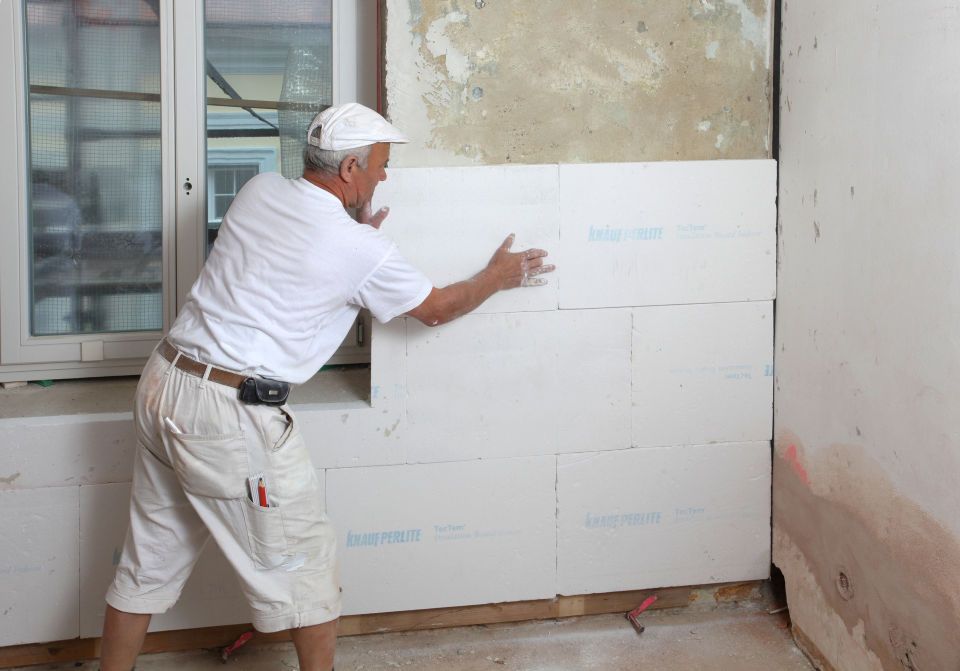
- Installation of expanded polystyrene or polystyrene
- Spraying liquid-ceramic insulation
- Cork and Styrofoam Wallpaper
- What does "corner apartment" mean?
- Advantages and disadvantages
- Insecurity of external walls from the cold
- dew point offset
- Reducing the volume of premises
- Features of insulation of corner apartments of a panel house
- The nuances of installing thermal insulation from the inside of the room
- Mounting from the outside of the panel
- Wall decoration with cork - a problem of dry air
- Wall insulation technology from the inside
- Frame insulation
- Installation of insulation on glue
- Which material to choose - mineral wool or foam?
- Mineral wool
- Styrofoam
- The choice of material for wall insulation from the inside with your own hands, insulation technology
- 1 Rules and main disadvantages of wall insulation from the inside
- We provide effective ventilation of the room insulated from the inside
- How to choose a heater?
- Mineral wool
- Styrofoam
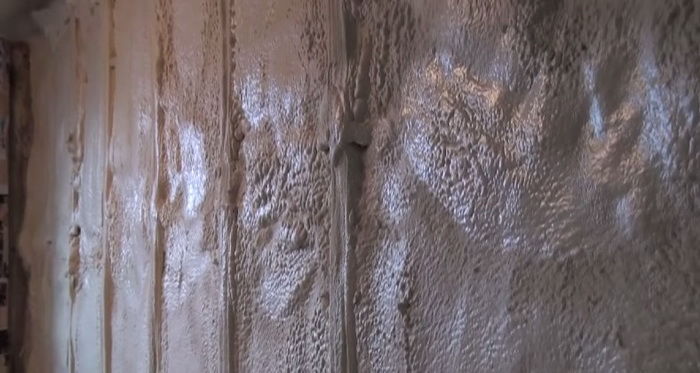
- polyurethane foam
Brief overview of other methods
Other technologies are also used, among which there are both outdated, but cheaper, and modern, requiring considerable investments.
Installation of expanded polystyrene or polystyrene
With the advent of EPPS, it has become impractical to use ordinary non-pressed polystyrene foam (PSB), since it has degraded characteristics.
Namely:
- burns and melts, releasing hazardous substances;
- has brittleness, due to which the pieces break under mechanical pressure;
- not protected from rodents.
In terms of parameters, it is inferior to extruded polystyrene foam, and this can be seen from the table of physical and technical properties of expanded polystyrene plates:
For example, the compressive strength of EPPS is 0.25-0.50 MPa, and for PSB it is only from 0.05 to 0.1 MPa (at 10% linear deformation), the water absorption of EPPS is 0.2% of the volume, and for PSB - as much as 2.0
However, light and thick plates are still used when it is necessary to quickly and inexpensively insulate a room. We recommend using this material for lining garages and utility rooms, that is, non-residential premises.
Spraying liquid-ceramic insulation
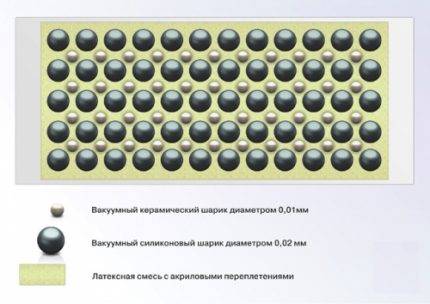 Schematic representation of the composition of the liquid-ceramic mixture: vacuum microspheres of various diameters and a latex binder mixture enriched with antifungal and anti-corrosion additives
Advantages of liquid ceramic spraying:
- moisture resistance;
- mechanical stability;
- elasticity;
- ease of application;
- environmental friendliness;
- minimum load on the structure.
The main advantage is the thinness of the applied layer while maintaining important thermal insulation characteristics.
In terms of efficiency, a 1 mm layer of LCD is equal to a 50 mm thick basalt wool slab and is able to increase the temperature in the room by 3-4 degrees. The sprayer is loved by builders for its ease and high speed of application.
After applying the liquid-ceramic mixture, no additional hydro- and vapor barrier is needed. A thin layer withstands temperatures from -60 °C to +250 °C, and, subject to the application technology, serves up to 30 years.
Cork and Styrofoam Wallpaper
Of course, sticking in one layer cannot be compared with a full-fledged heat-retaining “pie”, however, wallpaper is actively used both in corner apartments and in rooms on the first floors.
Styrofoam wallpapers resemble ordinary non-woven ones, have a thickness of 0.3-1.0 mm, are sold in 10-meter rolls, and are glued according to the same principle - end-to-end. However, a special glue is intended for them.
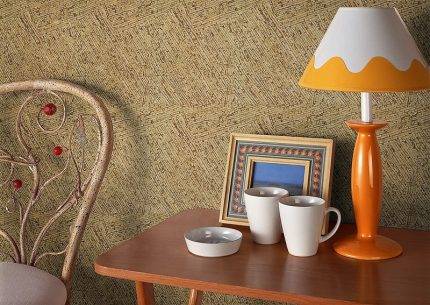
Cork is eco-friendly, light, easy to process, and it is also a finishing decorative coating. However, its thermal insulation properties are minimal.
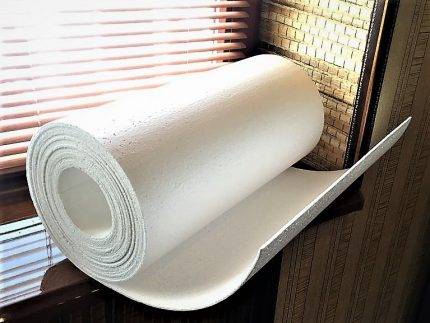 In terms of effectiveness, 6 mm PPS wallpaper replaces a brick wall with half-brick masonry, resists the formation of fungus and mold, and performs an additional soundproofing function.
Material disadvantages: Like PPS boards, wallpaper shifts the dew point closer to the living space and is classified as a combustible finish, like paper wallpapers.
In addition to the listed materials, eco- and glass wool, chipboard, arbolite, foamed polyvinyl chloride and polyethylene insulation, fiberboard, honeycomb boards, reflective thermal insulation with a foil layer are used - materials such as Penofol or Armofol.
Each of the listed heaters has the right to life and, in suitable conditions, perfectly performs its functions. In more detail, all the popular types of insulation that can be used for the walls of the house from the inside, we examined their pros and cons and characteristics in our other article.
When choosing a material, you need to focus on the technical properties, cost and complexity of installation - sometimes the installation technique causes difficulties for unprepared amateurs.
What does "corner apartment" mean?
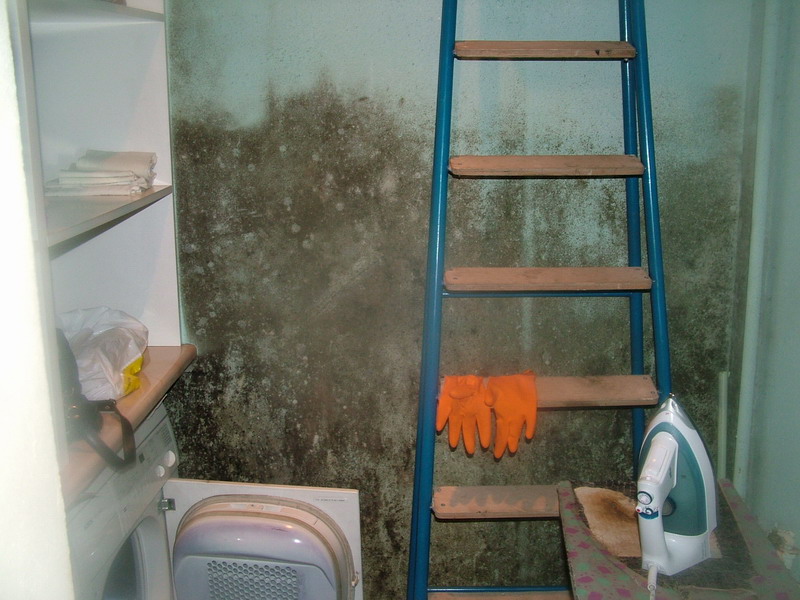
Corner apartments are located in the end sections of residential buildings.One or two rooms in such apartments have two adjacent walls bordering the street. The layout of such apartments is no different from the configuration of all the others in the house, only an additional window and a heating radiator appear, moreover, such an addition is not found in all corner rooms. To compensate for heat losses through enclosing structures resulting from an increase in the area of external walls, an increase in the internal temperature by 2 ° is provided, which is ensured by an increase in the standard number of radiator battery sections. In practice, this is achieved either by having a battery installed under an additional room window, or by installing a larger radiator (number of sections).
These measures rarely work as intended, as they are designed to solve the problems of the conventional premises and do not take into account many of the impacts that exist in reality:
- The outer wall is located on the windward side of the house;
- Worn-out heating networks, non-compliance of the heating regime with regulatory requirements;
- Mistakes and shortcomings made during the construction of the house.
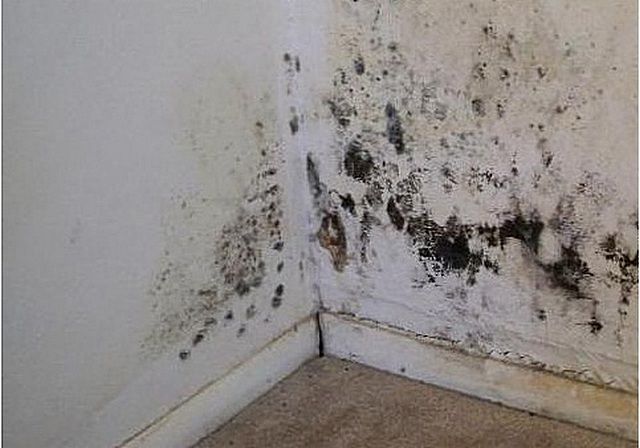
These factors are often present all together, significantly changing the temperature in the apartment for the worse. The cold surface of the walls begins to get wet due to the active formation of condensate, the apartment becomes cold and uncomfortable. Such situations are quite common and require appropriate measures.





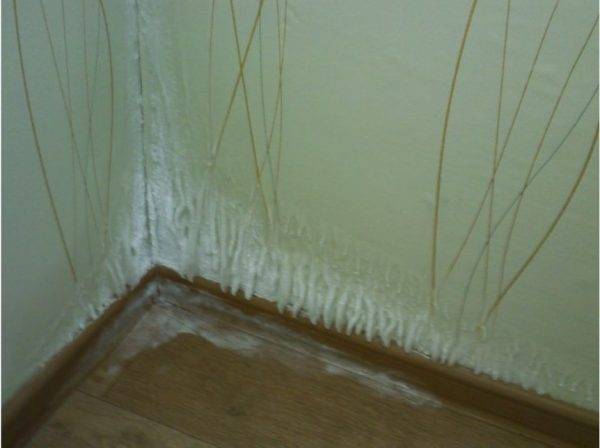 Wall freezing is a common occurrence in corner apartments.
Advantages and disadvantages
The need for an efficient thermal insulation layer in the building structure is quite obvious - the better the walls are insulated, the less heat loss will be in the winter season.And this, on the one hand, will lead to significant savings in heating the apartment, and on the other hand, it will create a comfortable microclimate in the room.
However, the internal insulation of the walls of the house entails a number of problems that affect the durability of the building and the comfort of living in it. These shortcomings stem from the design and technical features of the building and the elementary laws of physics. Among the main disadvantages of wall insulation in an apartment from the inside, the following can be noted.
Insecurity of external walls from the cold
One of the main indicators of the durability of any structural material is its frost resistance. This criterion characterizes the ability of a building material to withstand a certain number of freeze / thaw cycles without visible damage. At the same time, the technology of wall insulation from the inside does not protect them from the effects of seasonal temperature changes, and, as a result, the service life of the building is significantly reduced.
With the external method of insulation, the effect of temperature fluctuations on the walls is significantly reduced, which, accordingly, increases the duration of the operation of the house. In addition, the placement of heat-insulating material outside the building allows you to create protection from precipitation, aggressive chemical elements and solar radiation.
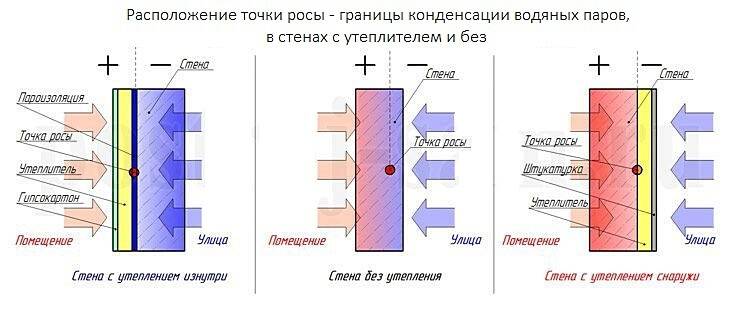
dew point offset
Another unpleasant effect that accompanies the insulation of walls from the inside of the apartment is the shift of the dew point on their inner surfaces under a layer of heat-insulating material.
As for the walls of the building, when they are insulated from the outside, they are heated by internal heating devices, and air freely passes through them, condensing only on the street side. From here, moisture is freely removed, evaporating under the influence of sunlight or wind.
If the thermal insulation is installed from the side of the interior, then the dew point is shifted to the inner surfaces of the walls. And this, in turn, becomes the cause of fungus and mold. And what is most unpleasant, this whole process occurs unnoticed by the residents under a layer of insulation and wall decoration.
A similar damage to the walls is found mainly by accident during the current repair, or by a pronounced putrid smell in the room, therefore, before insulating the walls of the house from the inside, care should be taken to create reliable vapor and waterproofing.
Reducing the volume of premises
Another disadvantage that you should pay attention to before insulating the walls of the apartment from the inside is the reduction in internal space. Depending on the type of insulation and its thermal insulation properties, the length and width of the room will be reduced by 5 - 10 or even more cm.
Features of insulation of corner apartments of a panel house
The installation process of panel wall fencing is different for wall decoration inside or outside the room. Let's take a closer look at the main differences.
The nuances of installing thermal insulation from the inside of the room
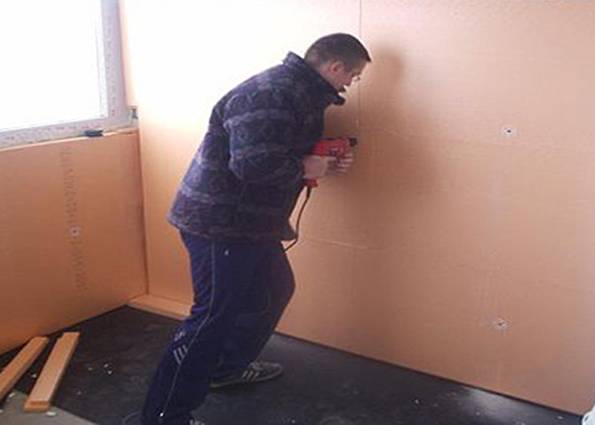
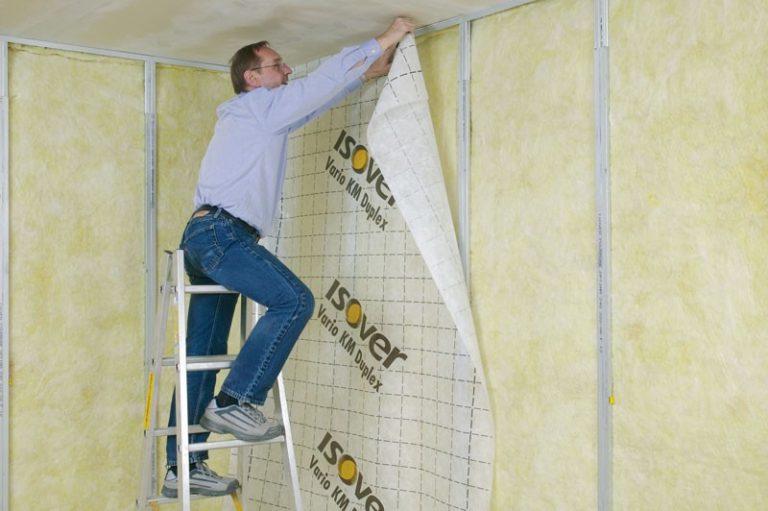
In a panel house, with internal insulation, the material must be laid on bare walls, which is why the procedure is best carried out during the overhaul process.Installation work begins with the installation of a waterproofing layer, which is most often a polyethylene film with special breathable membranes. It is best to use a single piece of film on the entire surface of the wall. A metal frame is installed on the waterproofing layer. After installation of the crate, sheets of insulating material are installed.

An example of internal insulation of the corner of an apartment with mineral wool on a steel frame
Mounting from the outside of the panel
When carrying out work from the outside of the room, all foreign objects are initially removed from the surface of the walls, their surface is thoroughly cleaned. The crate is installed directly on the surface of the walls. Next, two layers of waterproofing are installed with a layer of vapor insulator between them. Sheets of the main insulation are installed on top. Outside, decorative cladding is performed.
Wall decoration with cork - a problem of dry air
Included batteries reduce the level of air humidity to a critical level. Does it seem insignificant? You should also think about health. In conditions of low humidity, bacteria multiply faster, the skin and mucous membranes dry out. It is during the winter period that we get sick more often, there are complications of a cold to bronchitis and pneumonia, the skin flakes, irritations appear, dryness leads to wrinkles.
And what about wall plugs? A humidifier will solve this problem! That's right, but decorating the walls with cork panels will allow you not to turn on radiators at all or turn on less often and reduce the power of electric heaters, and this will increase air humidity.In addition, a remarkable property of cork finishes was revealed to maintain optimal conditions not only for temperature, but also for humidity in the room. Not only does it prevent the temperature from dropping or rising too much, but the change in humidity is much slower.






Suppose, you say, it will be possible to solve these problems, to insulate a cold wall from the inside, but cork has its drawbacks, it is more expensive than wallpaper, for example. Let's take a look at the main opinions against cork panels.

Wall insulation technology from the inside
Experts advise using room insulation from the inside only in special cases, for example:
- if the apartment is located above the second floor, and for external insulation it is necessary to involve industrial climbers;
- in new buildings, if it is not possible to remove the facade finish and produce external thermal insulation;
- if the insulation of the facade violates the architectural ensemble.
Ways to insulate walls from the inside:
- by frame;
- on glue.
The first method does not require careful leveling of the bearing surface. In addition, it is very easy to fix the facing material to the frame, so if it is planned to build plasterboard walls after insulation, then the crate does not need to be mounted. If after insulation it is planned to plaster the surface, then there is no need for a frame. In any case, the method of fastening the material directly depends on the further finishing of the walls.
Frame insulation
How to insulate the wall from the inside of the room on the frame? This thermal insulation of the walls from the inside, the process is laborious, but more reliable. Thanks to the frame, the fragile material is not subjected to mechanical stress, this is especially true if foam plastic is chosen as the heat-insulating material.
The wall does not need to be leveled, but before installation it is worth cleaning the surface of the plaster, if it has peeled off, dirt, dust and cover it with an antiseptic composition.
The frame is constructed of aluminum profiles or bars. Fastening is carried out on dowels or self-tapping screws - depending on the material from which the base is made. The step of the racks should be equal to the width of the material, for example, if a soft insulation for walls inside the walls is chosen, then the distance is reduced by two centimeters, when using foam or polystyrene, exactly 60 cm.
As soon as the frame is ready, a heat insulator is laid in the gaps, all seams between the material are sealed with mounting foam. After the foam dries, it is cut flush. After that, you can proceed to the final finish.
Thermal insulation of walls inside the premises on the frame is made by the following materials:
- glass wool;
- basalt insulation;
- Styrofoam;
- wood fiber.
Any of the above materials can be mounted using lathing on the walls, except for foil insulation.
Installation of insulation on glue
This type of installation requires careful preparation of the plane of the walls before insulating.
They are cleaned of dust and dirt, degreased. Further work goes according to the following algorithm:
- walls after cleaning are subject to alignment and repair. Cracks are puttied, large protrusions are knocked down, and cavities are sealed with mortar;
- all planes are treated with an antiseptic, or a primer with an antimicrobial effect;
- the primer is applied in two layers;
- after drying, you can start mounting the plates on the glue, it is applied to the wall and to the material with a notched trowel;
- the glue will dry for 2-3 days;
- as soon as the surface dries, you need to perform additional fixation with dowels-umbrellas.
The arrangement of insulation for glue has its limitations, since only dense pits are used for this, for example:
- Styrofoam;
- wood fiber;
- penoplex;
- forged insulation.
As soon as all the measures for the installation of the heat insulator are completed, proceed to the finish.
Which material to choose - mineral wool or foam?
When choosing a heater, you need to take into account the features of the room. Any material must have properties:
- fire resistance;
- environmental friendliness (in the case of internal insulation, this factor plays a key role);
- ability to absorb moisture;
- high properties of thermal insulation and air permeability.
Mineral wool
Mineral wool is made from basalt and is the most popular material for wall insulation. It perfectly retains heat indoors, but easily passes air, which provides good ventilation. The air in the room is always fresh and does not stagnate, which also allows you to get rid of high humidity. The material is highly elastic, which is convenient for installation. However, over time basalt wool has the ability to deform, absorbing excess moisture. Therefore, when installing mineral wool, they arrange a crate.
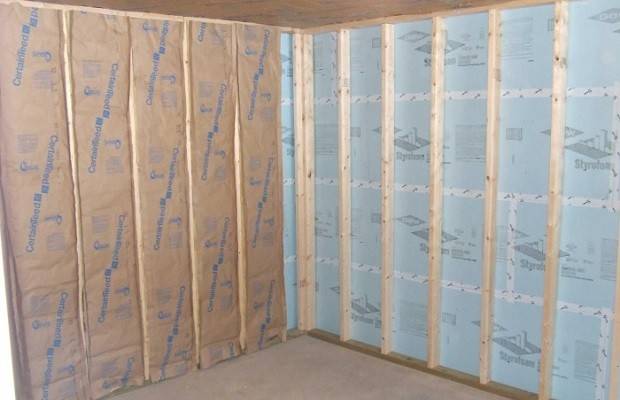
For basalt wool, a frame device is required
Among other shortcomings, one can note the harmfulness to the respiratory system. When used indoors, the degree of toxicity is not very high, but still the material is more suitable for outdoor decoration. Another disadvantage is the increased weight.




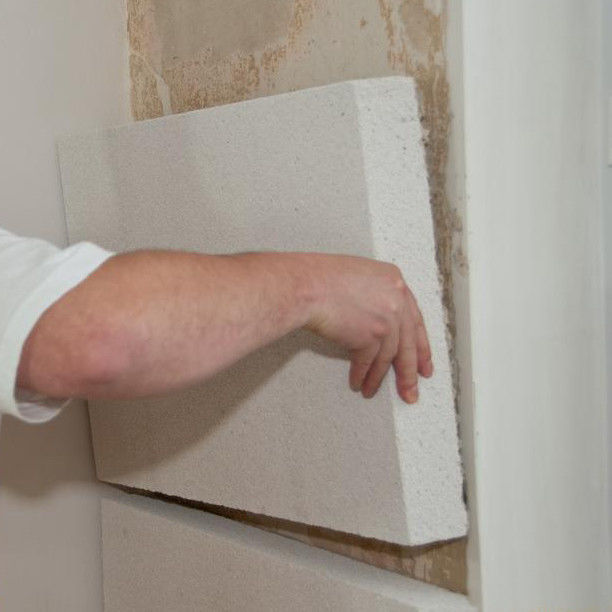


Styrofoam
The main advantages of polystyrene are its cost and high thermal insulation ability. The material is breathable, lightweight and easy to install. It is non-toxic, which makes it great for interior decoration. Light weight will allow all work to be carried out independently without the involvement of builders. Particularly effective for internal insulation. However, there are also disadvantages. Styrofoam is highly flammable, and is also not suitable for insulating wooden structures, since condensation will form on such surfaces.
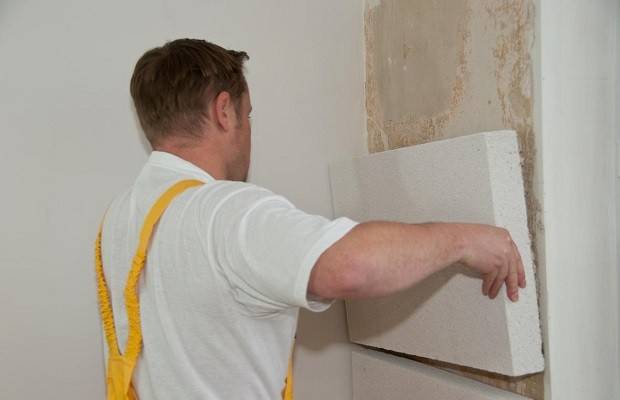
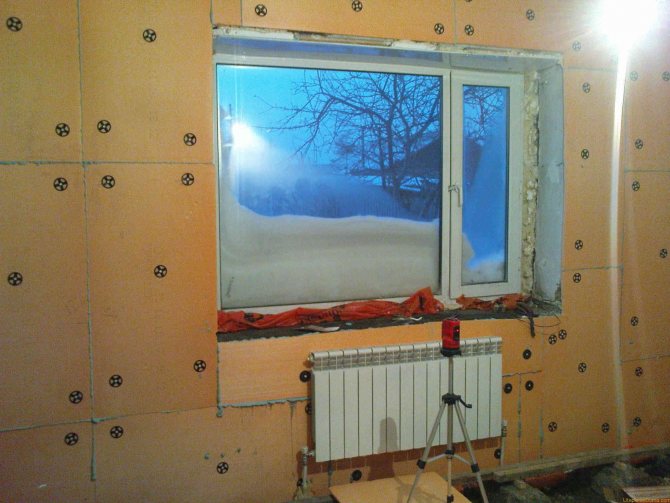
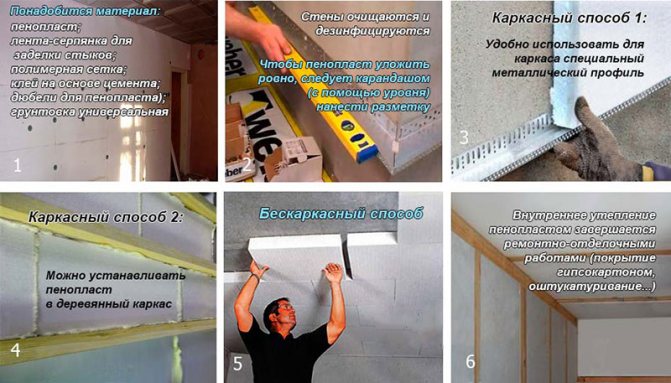
Installation of foam boards
The choice of material for wall insulation from the inside with your own hands, insulation technology
The first requirements when choosing materials for internal wall insulation are their high density, low vapor permeability, and the minimum number of joints during installation. The most common insulation materials for indoor use are materials based on foam, polyethylene, warm plaster, ceramic compounds, mineral wool and many others, and we will consider the most acceptable types of materials and technologies for their installation while doing do-it-yourself insulation.
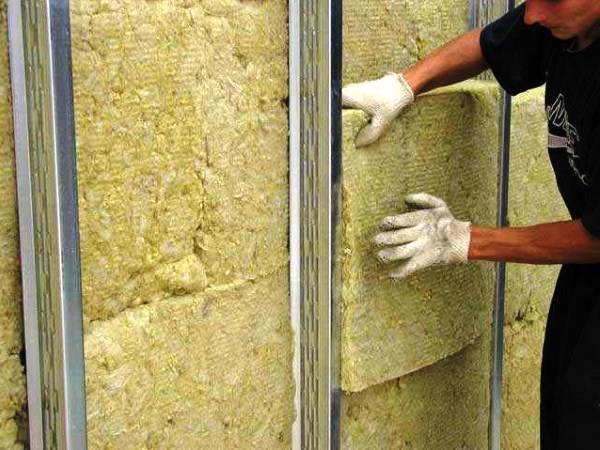
Internal wall insulation with mineral wool is one of the most common, but not ideal types of insulation, since wool can eventually absorb moisture and contribute to dampness, however, with careful work, processing of joints and impregnation of the wall and insulation with antifungal compounds, its service life is quite long and can be up to 10 years old.
When insulated with mineral wool, the wall is equipped with a metal frame, the cells of which are filled with mineral wool slabs, carefully compacted and covered with drywall sheets on top. The disadvantage of this method of insulation is a decrease in the area of \u200b\u200bthe room.
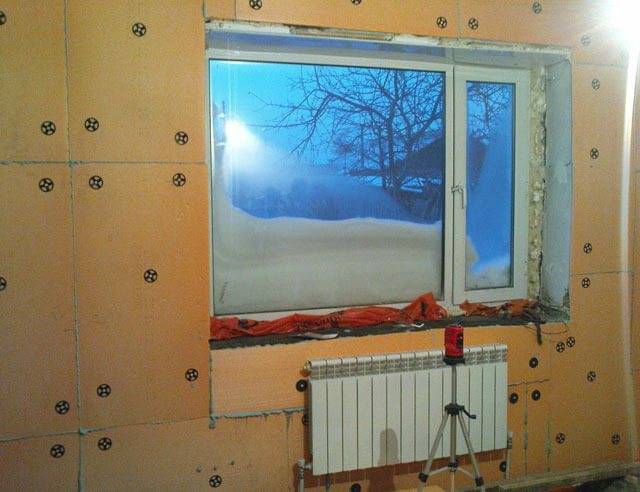
Wall insulation from the inside with expanded polystyrene is also popular, since expanded polystyrene sheets have a low specific gravity and high resistance to moisture, and their small thickness does not require prior placement of the frame on the wall. Fastening to the prepared wall can be done using building glue, dowels, liquid nails, be sure to treat the joints with polyurethane foam.
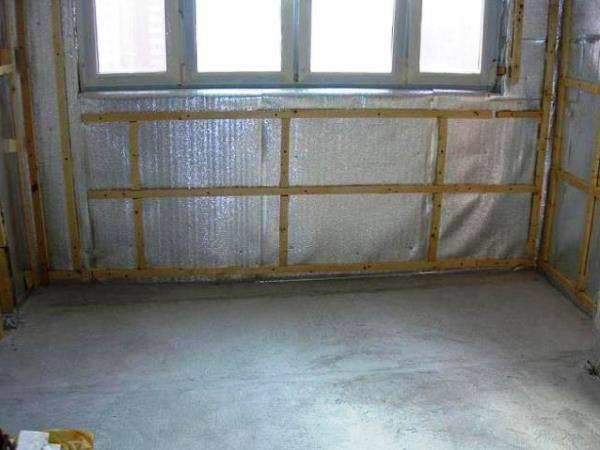
Insulation of internal walls with polystyrene foam, or expanded polystyrene foam, is considered one of the most reliable ways to protect a room from dampness. This material is absolutely environmentally friendly, has high strength and wear resistance, is fireproof, easy to install and relatively inexpensive.
Penoplex is glued or nailed to the prepared wall and requires the creation of a reinforcing layer to give the structure greater strength, as well as additional leveling of the surface - only after that you can start finishing the walls.
Internal wall insulation with foam plastic is also carried out using the frameless method by gluing foam panels to the wall using ceramic tile adhesive.
The surface of the foam is covered with a layer of glue and a reinforced mesh with an overlap of 10-15 cm is placed on top of it with a slight indentation, which is eventually covered with a layer of plaster for painting or wallpapering, or ceramic or tile is mounted directly on the insulation.
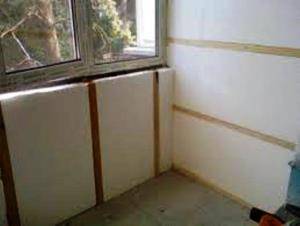
- insulation of a brick wall from the inside can be done using polystyrene foam, polystyrene foam and mineral wool;
- internal insulation of walls made of foam blocks is best done with foam plastic, foam plastic or expanded polystyrene;
- to insulate the internal walls of a wooden house, it is better to use foam or polystyrene foam;
- it is possible to insulate concrete walls from the inside using any of the described heaters.
When choosing materials for internal insulation, it is important that they meet the following requirements:
- resistance to high temperature, fire safety;
- low thermal conductivity - the selected material should not release heat from the room in winter and should not contribute to heating the apartment in summer;
- environmental friendliness or safety for health;
- durability, strength and ability to retain shape and volume;
- high resistance to moisture.
Also, when planning self-insulation of walls, it is advisable to consult with specialists who could recommend the optimal thickness of the material.
1 Rules and main disadvantages of wall insulation from the inside
Internal insulation compared to external insulation has a number of disadvantages that you need to know about before starting work on the installation of thermal insulation. Due to the location of the insulation on the inside of the apartment, the wall does not accumulate heat and it will not be possible to completely avoid heat losses, in any case they will be up to 15%. Also, when insulating from the inside, the “dew point” will be located between the installed thermal insulator and the wall.Therefore, condensation can accumulate on the wall, which can cause fungus and mold to appear in the rooms.
It is much more difficult to insulate a wall correctly in an apartment from the inside than from the outside, and making even minor mistakes during installation work will lead to the fact that the wall will still freeze, which is why building, facing and heat-insulating materials will be subject to increased wear.
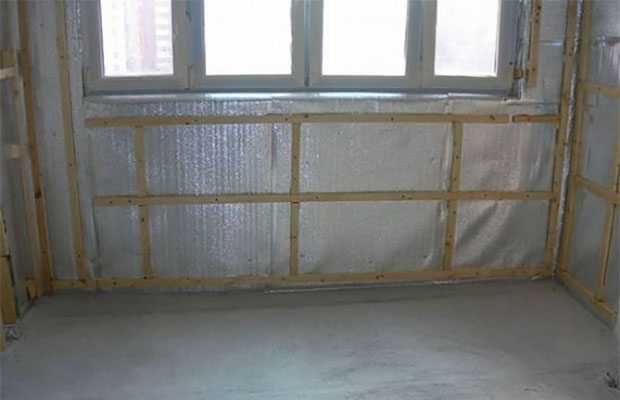
To protect the insulation from moisture, a high-quality vapor barrier is necessary
For work, we need a high-quality vapor barrier film and construction waterproof tape (for sealing the seams of the installed vapor barrier). Materials with low vapor permeability should be used as thermal insulation.
It is very important that the vapor permeability of the insulation is lower than that of concrete walls. This will allow moisture to evaporate outside, and not inside the apartment.
When installing vapor barrier and insulation material, they should be very carefully coated with glue and fixed tightly on the wall so that there are no cavities between them. Walls before installation work should be primed with special compounds that protect surfaces from fungus and mold. They also help to improve the adhesion of the materials to be mounted.
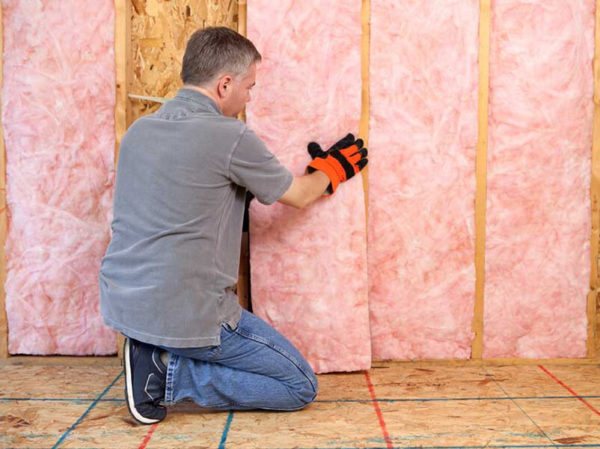



It is also recommended to provide high-quality ventilation in an insulated apartment. Standard natural ventilation is unlikely to be sufficient, so you need to either install a forced air circulation system or equip window frames with special valves through which fresh air will enter the rooms.
It is extremely important to correctly calculate the required thickness of the installed thermal insulator.The thickness of the insulation must correspond to the material of the walls and the climatic conditions in the region
If the insulator layer is too small, it will not be able to reliably protect the apartment and its residents from the cold.
Particular attention during installation must be paid to the joints of the plates, there is a high probability of the occurrence of "cold bridges"
We provide effective ventilation of the room insulated from the inside
Proper ventilation is essential for the health of both the home and the occupants. Insulation of an apartment often leads to a violation of certain ventilation conditions of the apartment
That is, it is important to ensure the temperature, humidity, speed of air flow. If the balance is disturbed, then fungi, mold appear on the walls, and due to lack of oxygen, residents will suffer from headaches and weakness
Natural ventilation has a number of disadvantages: heat loss in winter, it is impossible to carry out normal air conditioning in summer, noise, dust. To create an optimal microclimate, forced ventilation using duct fans is necessary. Their start can be blocked with the inclusion of lighting. It is necessary to open all ventilation grilles for better air exchange.
Do not interfere with the daily ventilation of the rooms.
Insulation of apartments is carried out in combination with insulation of the floor (especially the first floor), ceiling or roof (important if the room is located on the top floor), doors, windows. Share
tweet
Pin it
Like
Class
whatsapp
Viber
Telegram
Share
tweet
Pin it
Like
Class
whatsapp
Viber
Telegram
How to choose a heater?
Every year more and more new building materials are produced.Some of them are suitable for warming apartments, but there are three proven heaters, the pros and cons of which are well studied:
- mineral wool;
- expanded polystyrene;
- polyurethane foam.
Mineral wool
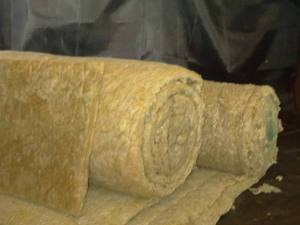
this material is quite easy to work with
The positive thing is that she seems to "breathe". On the other hand, moisture penetrates through the wool fibers to the dew point, and then it is absorbed into the material. Of course, there are more expensive and high-quality options, but if you insulate with ordinary cheap mineral wool, then it does not guarantee dryness.
To reduce the risk of moisture penetration, you should not save on vapor barrier and glue with the highest quality glue. If smudges appear on the walls, or, even more so, a fungus, then all the insulation work will have to be redone.
Styrofoam
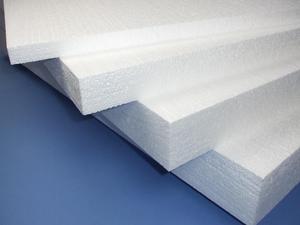
Expanded polystyrene does not conduct heat well and does not absorb moisture, while it has low vapor permeability. It easily copes with loads, can survive strong compressions and tears, while being very light and pliable: it can even be cut with a knife. Therefore, the installation of insulation will not be a problem.
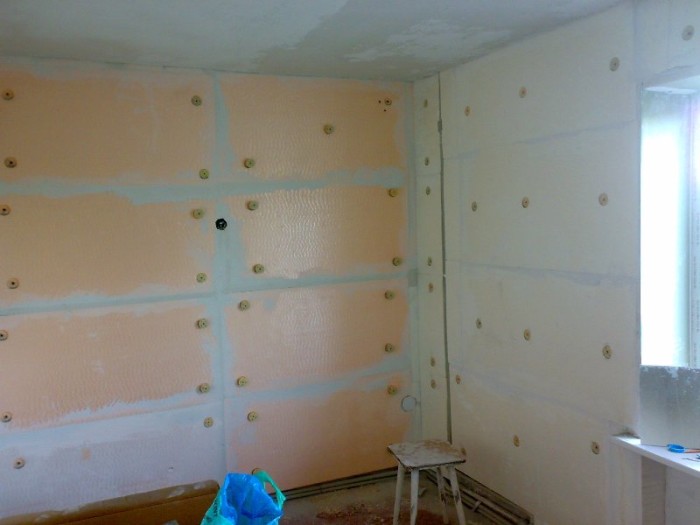


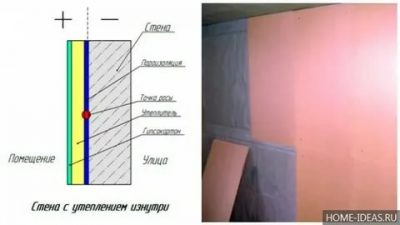

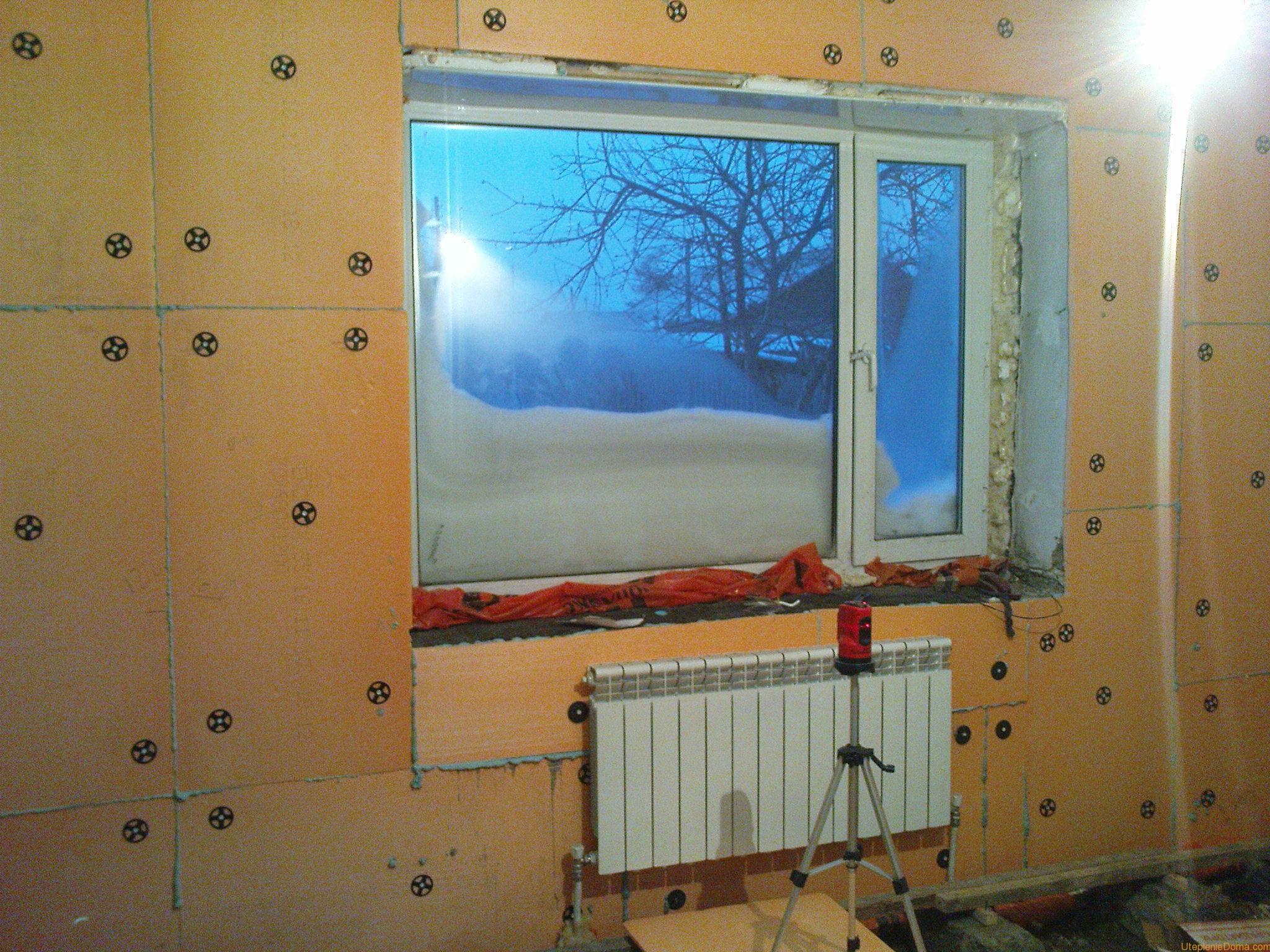

Accordingly, a thin layer of expanded polystyrene will solve the problem with insulation and will not allow moisture to reach the dew point. The only negative is that it does not protect against noise and is destroyed at temperatures above 80 degrees Celsius. The latter, as a rule, is irrelevant for the weather conditions in Russia.
polyurethane foam
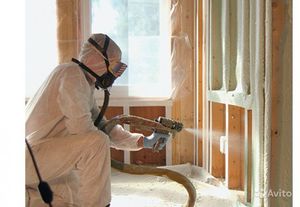
Of course, the material has its downsides.
Most often, the first thing consumers pay attention to is the price. Polyurethane foam is a rather expensive insulation, moreover, its installation is also expensive.
In addition, if it catches fire, it will smoke heavily and release various toxic substances.When exposed to it, UV quickly decomposes into products that can cause great harm to health in a few years.



