- The need for insulation
- Build Options
- How to prepare a chicken coop for the winter cold?
- Warming
- Ventilation
- Tips
- How to insulate a chicken coop with your own hands
- natural options
- Needles and sawdust
- Shingles
- Peculiarities
- Ceiling insulation in a chicken coop
- Was everything done right?
- What should be the gender?
- Earth
- Concrete
- Wood
- Repair and wall cladding
- Insulation of the ceiling and roof of the chicken coop
- Heating systems
- Potbelly stove or brick oven
- Diesel oven
- Radiator
- infrared lamps
The need for insulation
Warming the chicken coop for the winter is a prerequisite, on which their performance directly depends. In order for chickens to lay eggs at this time of the year, they need a certain temperature - about 15 ° C. For normal maintenance, the temperature must not be below zero.
The following parts need to be improved:
- walls;
- floor;
- ceiling;
- windows, door.
Build Options
When calculating the area of \u200b\u200bthe chicken coop being built, you need to immediately decide where the heater will be located.
If the insulation is located outside or inside the walls, then the usable area is calculated based on the accepted optimal ratio - 1 sq. meter for five birds. In the event that it is planned to fix it from the inside, the total area of \u200b\u200bthe building must be increased by the thickness of the insulation.
The foundation should be wider than the walls by 120 ÷ 150 mm, while the wall should be in the middle of the width of the foundation.A concrete reinforced foundation will not only help maintain the insulation of the building, but also protect it:
- From damage to the wooden elements of the structure, which may occur under the influence of moisture coming from the ground. A concrete foundation will significantly extend the functionality of the building.
- From the possible penetration of various animals inside the chicken coop, which can easily dig under the wooden base of the structure - it can be a fox, rats and other predators. Given this possibility, the foundation can be raised above the ground by 250 ÷ 300 mm.
There are other options that help keep the bottom of the chicken coop from "visits" of unwanted guests. For example, you can raise its floor above the ground by 200 ÷ 250 mm by arranging a columnar foundation. Another way of protection can be metal sheets, which sheathe the lower part of the building, sinking them into the ground by 300 ÷ 350 mm.
How to prepare a chicken coop for the winter cold?
A chicken coop or barn that contains chickens will need to be prepared for the winter - it will need to be insulated, and ventilation should be checked. If there is none, then it will need to be equipped. Also, before starting the chickens for the winter, it will be necessary to disinfect the premises with two kilograms of lime diluted in ten liters of water.
Warming
The choice of insulation will be influenced by the type of material from which the chicken coop is made. If the walls and roof are wooden, then foam, polystyrene, mineral, basalt wool, and slabs are suitable for insulation.
Read more about how to insulate a chicken coop in winter.
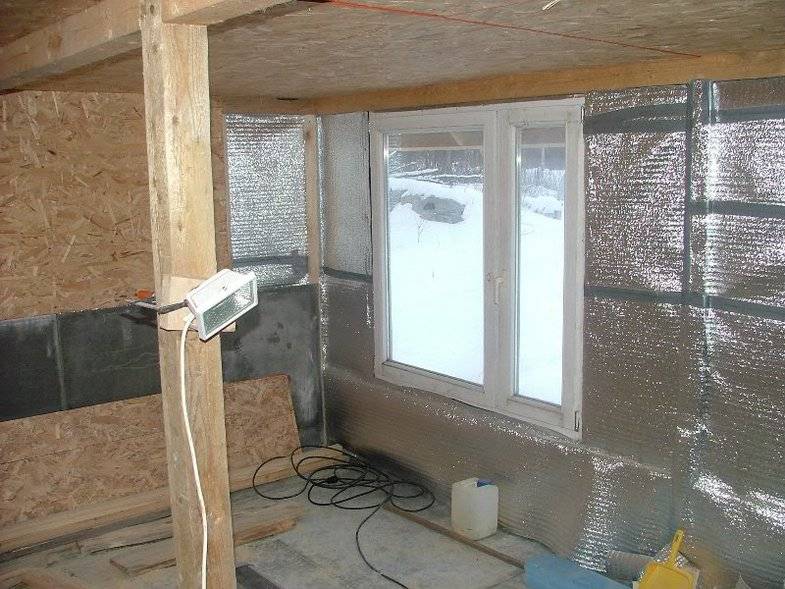
When building a bird's dwelling "from scratch", most often foam or sawdust is used for insulation. One of the economical options is foil foam.
It is important to remember that any insulation inside must be well installed so that the birds do not have access to it, cannot peck, and thus pose a threat to their health and life. The floor should be underlayment with a layer of at least 15 cm.
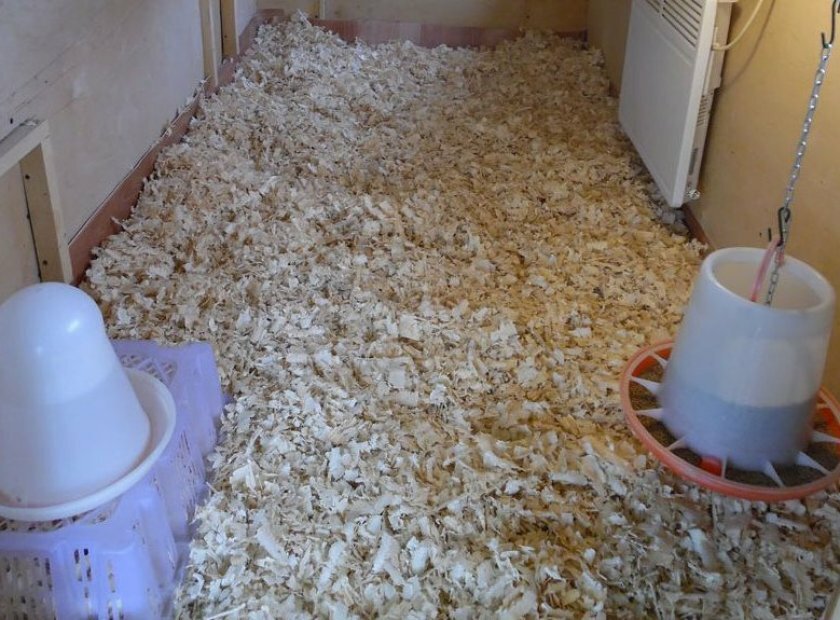
Peat and sawdust are suitable for chickens as bedding material. They can be mixed with straw.
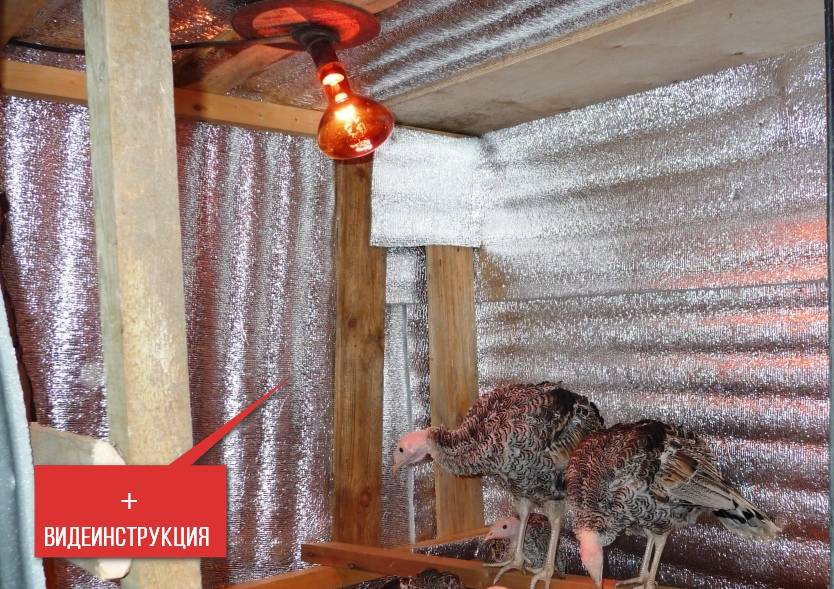
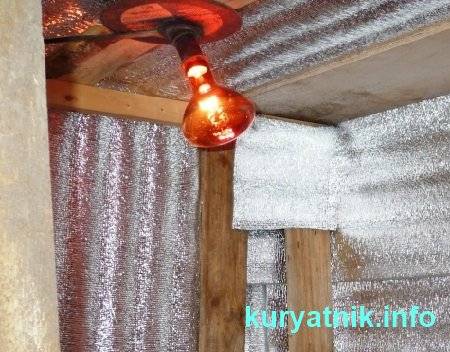
Important! One of the most economical options for heating a chicken coop is to install infrared lamps as they serve multiple functions. In addition to heating chickens and roosts, they illuminate the room and reduce aggression in birds.
One lamp in 250 W is able to heat the area in 12 sq. m.
Insulating walls and roofs is a good, low-cost way to keep your chicken coop warm and suitable for temperate regions. But during severe winters, artificial heating will be required - using heating devices. To maintain positive temperatures, electric heaters, gas, stove, water heating, infrared radiation from lamps and heaters are used. Choosing a heating system will depend on the size of the house and the number of birds kept. Heaters must be installed in such a way that chickens do not have access to them. The most practical way is to place it in a wooden box with holes.
Ventilation
Ventilation in the chicken coop performs several functions:
- supply of fresh air;
- removal of harmful vapors that emit bird excrement;
- maintaining the optimum temperature;
- normalization of air humidity level.
There are 3 types of ventilation:
- Natural. Ventilation can occur through small windows or vents. In this case, it will be necessary to ventilate the house daily.But in cold weather, this option is fraught with the fact that a sharp temperature drop will occur in the chicken coop, drafts will appear, and this is fraught with the development of diseases and, possibly, frostbite.
- Supply and exhaust. This ventilation option should be resorted to when the chicken coop contains more than 20 birds. This is the most optimal and cost-effective type that needs to be equipped at the stage of building a poultry house. Such ventilation can be primitive and suitable for small areas and more solid, which is created according to the project and used in large rooms.
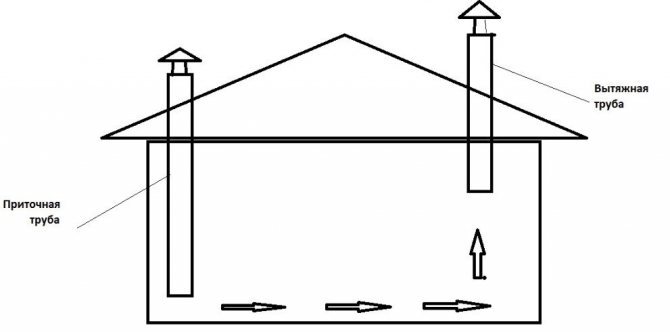
Mechanical. Most often used in industrial production. It is not suitable for small farms, since it requires considerable expenses for paying for the electricity necessary for the operation of the fans.
Tips
It is important that the bedding does not become dense due to litter. To do this, they throw grain on the floor and the birds look for it and loosen the flooring. Chickens are fed with vitamins B or B6 and they become more active
The fallen litter must be loosened with a rake yourself.
If there is no big frost on the street, then the birds are let out for a walk. Protect the site with natural brushwood, straw, reeds. They make such a fence, build a canopy on top, and throw a litter on the floor.
For dry bathing, they put basins with sand and ash.
From autumn to winter, daylight hours in the chicken coop are gradually increased, and gradually reduced by spring.
Eggs are harvested daily to prevent laying hens from eating them.
In the evening, dry grain is offered to the birds. It is high-calorie and gives energy at night, thanks to which they will not freeze.
It is necessary to clean the poultry house regularly in winter so as not to breed unsanitary conditions.
Chickens are fed with vitamins B or B6 and they become more active.The fallen litter must be loosened with a rake yourself.
If there is no big frost on the street, then the birds are let out for a walk. Protect the site with natural brushwood, straw, reeds. They make such a fence, build a canopy on top, and throw a litter on the floor.
For dry bathing, they put basins with sand and ash.
From autumn to winter, daylight hours in the chicken coop are gradually increased, and gradually reduced by spring.
Eggs are harvested daily to prevent laying hens from eating them.
In the evening, dry grain is offered to the birds. It is high-calorie and gives energy at night, thanks to which they will not freeze.
It is necessary to clean the poultry house regularly in winter so as not to breed unsanitary conditions.




How to properly keep chickens in winter? It is important that the owner feeds the birds in a balanced way, provides the necessary air temperature, humidity, insulates the floor, closes the cracks, arranges a yard for walking, and encloses it with a fence. Chickens in the greenhouse in winter can walk. Watch an interesting video on how to insulate a chicken coop for the winter on a budget with your own hands.
About the article
How to insulate a chicken coop with your own hands
There are two ways to insulate a chicken coop - ⦁ Artificial way; ⦁ Natural way.
The essence of the natural method of heating is that nothing needs to be heated. That is, heating is due to the proper feeding of chickens. But this method is in no way suitable for harsh and frosty winters. But, let's consider in more detail the artificial method, how to heat a chicken coop in winter.
Floor, it is recommended that there be bedding about 8-12 cm high. Peat, straw or even sawdust can be used as bedding.The litter can be used in the future for a garden or flower garden as compost. Every month, the litter must be turned up using, for example, a pitchfork, and add another 4-7 cm. Do not be afraid that the litter will be very high, with proper care, by spring, the height of the litter reaches 25-30 cm.
It should be noted that bedding made of straw has some advantages, namely: ⦁ Bedding, for example, from straw during the winter, emits heat, ⦁ Due to the fact that the bedding is warm, the process of decomposition of the litter is slower; ⦁ And most importantly, the heat does not allow harmful bacteria.
But, all poultry farmers should remember that the litter is removed only in the spring, so good ventilation is needed. If the winters are very severe, then it is better to periodically open and close the ventilation pipe.
Walls it is desirable to insulate inside using, for example, foam, glass wool can also be used for insulation. Some poultry farmers also use other materials as wall insulation, it all depends on financial capabilities. The easiest and most economical method is to insulate the walls with bales of hay or straw. Ready bales are simply attached to the wall of the chicken coop. But this method can only be used for a small chicken coop, with a small number of chickens.
Ceilingalso should not be ignored. It needs to be insulated and for this you can use mineral wool or ordinary roofing material.
Windows, doors - as a rule, they are hung with rags. But, winter - winter is different. If one winter the minimum temperature is -100C, then another may be -250C. therefore, it is necessary not only to insulate the room, but also to heat it.
Next, consider how to heat the chicken coop artificially in winter - you can use a gas or electric heater.
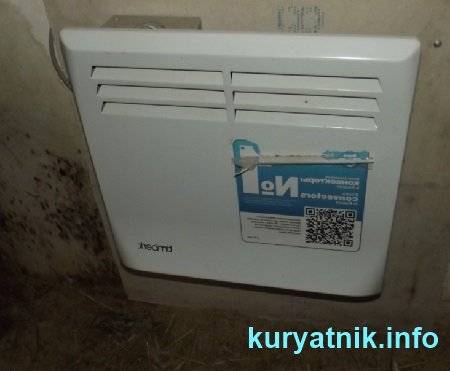
This method of heating the chicken coop in winter is most beneficial for large poultry farms. It is also convenient for large poultry farms to heat with gas, since buying a gas boiler in this case will be justified, and for an ordinary poultry farmer, the best way to heat a chicken coop in winter is to use a potbelly stove.
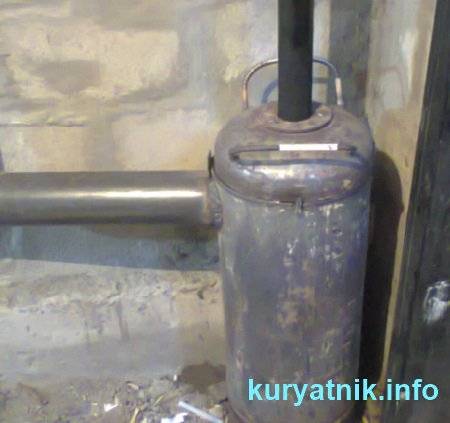
"potbelly stove" - is a metal stove that is used for heating. The convenience of a potbelly stove is that ⦁ Easy to use, that is, it’s easy to heat; ⦁ you can heat with any raw materials; ⦁ the room heats up quickly.
But the "potbelly stove" has a significant drawback, which is that it quickly becomes covered with rust, so it needs care and the firebox process must be constantly monitored, that is, it is necessary to monitor the entire process.
Those poultry farmers who opted for this method of heating the chicken coop in winter should equip the chicken coop in advance, namely: ⦁ Install a “potbelly stove” in the chicken coop; ⦁ Make a chimney; ⦁ Isolate the entire heater from chickens, and also observe safety rules; ⦁ And most importantly, stock up on fuel in advance, that is, you need to purchase coal and prepare firewood or briquettes for the furnace.
So, in this article, all methods have been described on how to heat a chicken coop in winter. The poultry house decides which method to choose, but the main thing to remember is that if the chicken coop is warm, the egg production will not change, but will remain at the same level. And birds in a warm chicken coop will not only not get sick, but will honor themselves much more comfortably in the harsh winter.




natural options
Needles and sawdust
To use sawdust, pine needles or dry leaves as a heater, you will need a non-standard frame design.
Step back from the wall of the chicken coop, covered with vapor barrier film, 5-7 cm. Make a double frame of boards or plywood, which you will fill with insulation. In fact, you need to make two more thin walls. The distance between them should be about 10 cm.
Then mix the natural material of your choice with lime (25 to 1). Carefully tamp the resulting insulation into the gap between the boards.
As a result, the following alternation of layers will be obtained: a chicken coop wall, a vapor barrier film, a frame wall, a heater, and again a frame wall.
The advantages of such insulation in the environmental friendliness of materials. And the low cost of thermal insulation of the chicken coop.
Shingles
Thin wooden plates of small size (shingles) are evenly attached to the wall of the chicken coop in two layers.
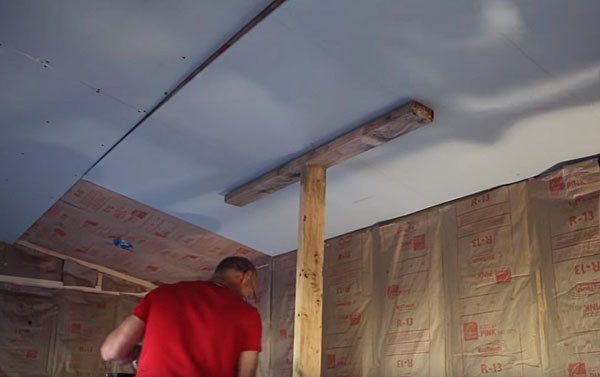
If you are insulating the chicken coop with this material, it is important to fix the wooden plates with an overlap. So that there are no "bare" spaces
The insulation must completely cover the wall.
When finished, mix wet clay with sawdust. Determine the proportions yourself
It is important that the mixture is thick enough and does not flow down the wall.
Let the "plaster" swell for 4 hours. Then apply it on top of the shingles with a thick layer of 3-4 cm. After drying, seal the resulting gaps with a mixture of sand and clay (2 to 1).
After drying, cover the plaster with slaked lime. And cover the insulation with panels or plywood. Otherwise, the chickens will quickly peck it.
Peculiarities
Such material is environmentally friendly, provides excellent insulation of the house. Doesn't reduce the size of the coop much.In addition, it saves your wallet from serious expenses.
The disadvantage of using shingles is that such insulation is not only laborious, but also takes a lot of time.
Ceiling insulation in a chicken coop
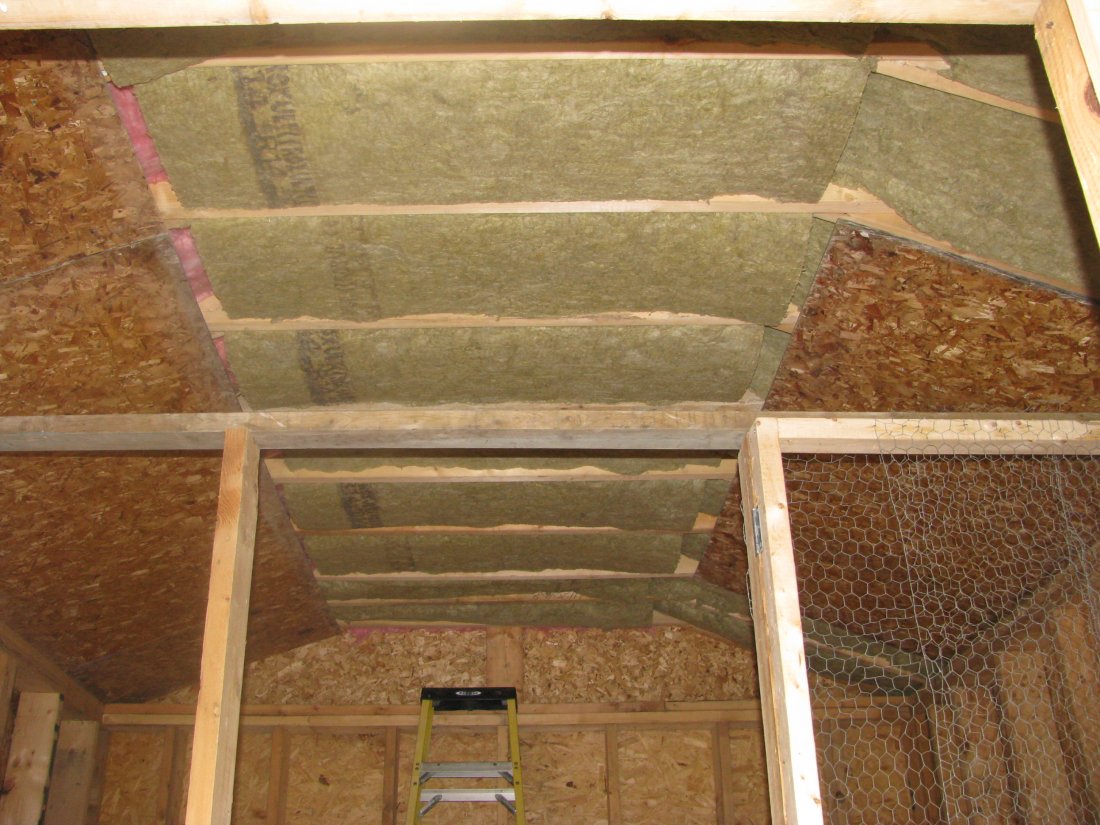
Insulation of the ceiling in the chicken coop is done if they want the hens to lay eggs not only in the warm season, but also in winter. Laying hens are finicky birds. If the temperature in the barn is below zero, they will not rush. And if the room is warm in winter, there are no drafts and good lighting - chicken eggs will be on the table all year round. Experienced poultry farmers know this and be sure to insulate the chicken coop.
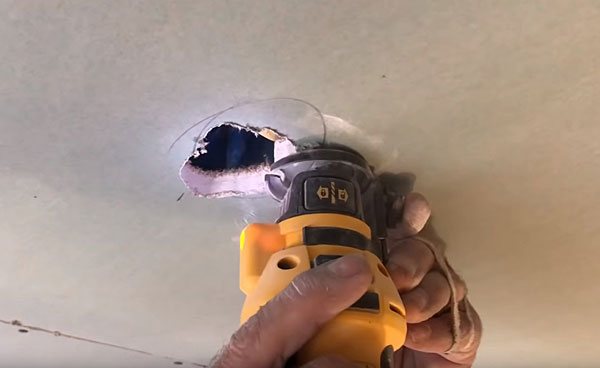
According to the law of physics, warm air is lighter than cold air, which means that it rises in a room. If there are cracks or holes in the ceiling in the barn, then all the heat will come out through them. Therefore, it is necessary to carry out the insulation of the ceiling. Especially if you heat the chicken coop in winter. How to make ceiling insulation in a chicken coop with your own hands is the topic of this article.
We got the chicken coop from the previous owners. Its walls are made of a mixture of flour and cement, quite thick. The roof is gabled, covered with slate, plywood panels and old boards were thrown over the ceilings. There were huge gaps between them. In winter, the temperature in such a room was always below zero. 
When we decided to raise chickens, we didn’t think about insulation at first. But in winter, in severe frost, the layers stopped laying, and the rooster froze the comb - and the issue of insulating the ceiling in the barn was decided by itself.

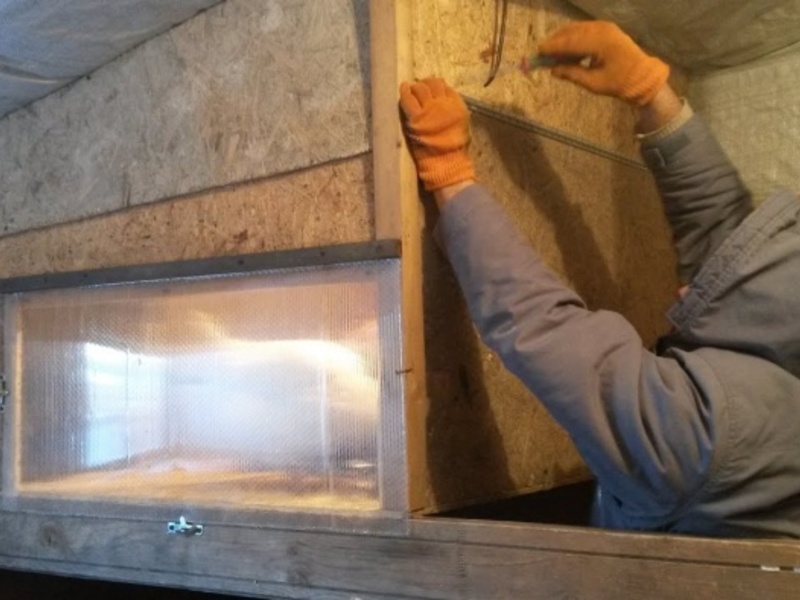
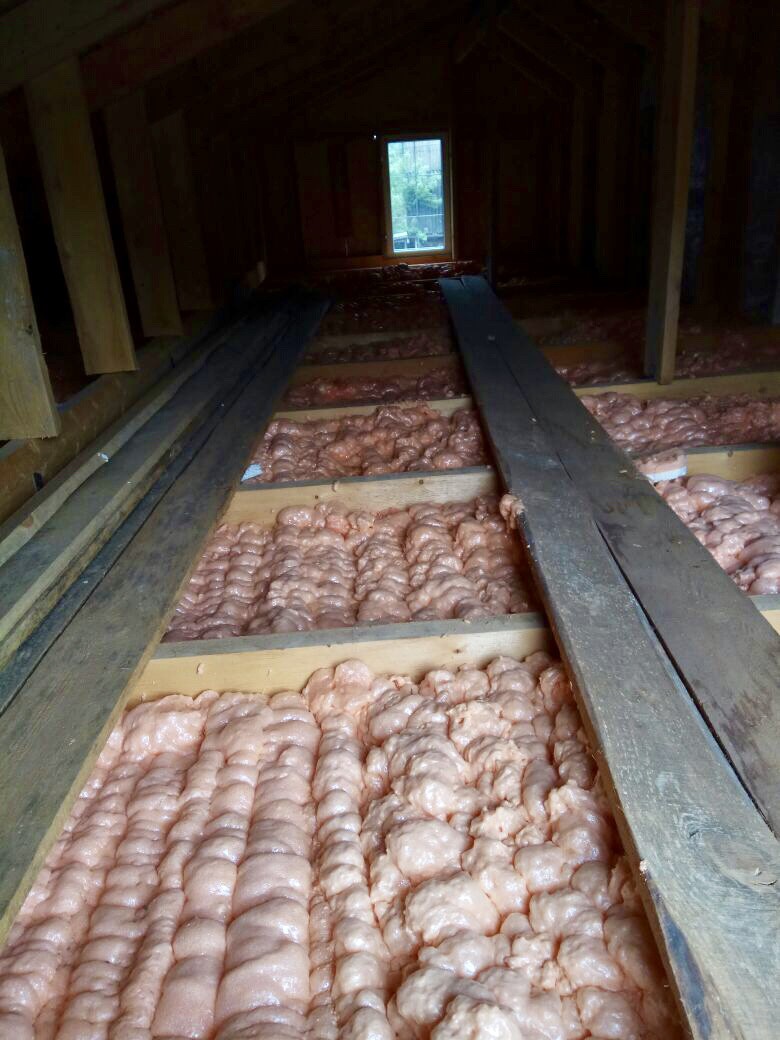


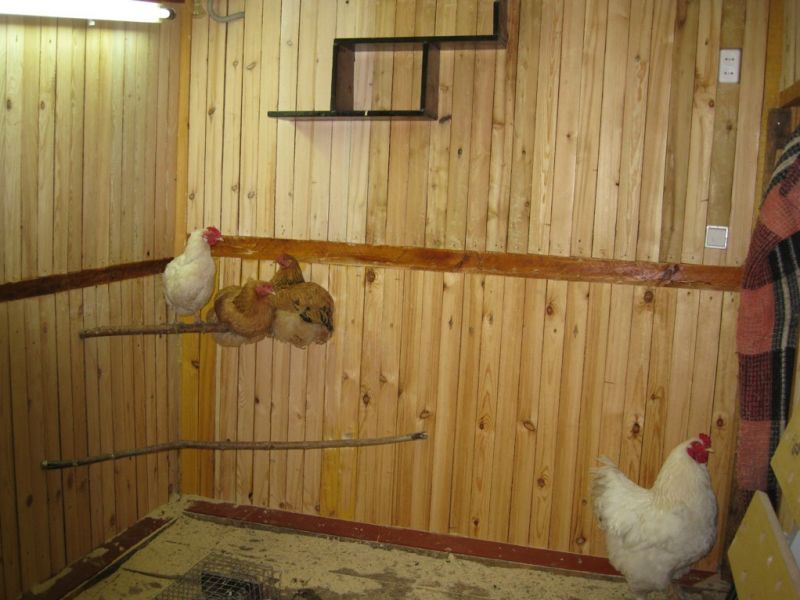


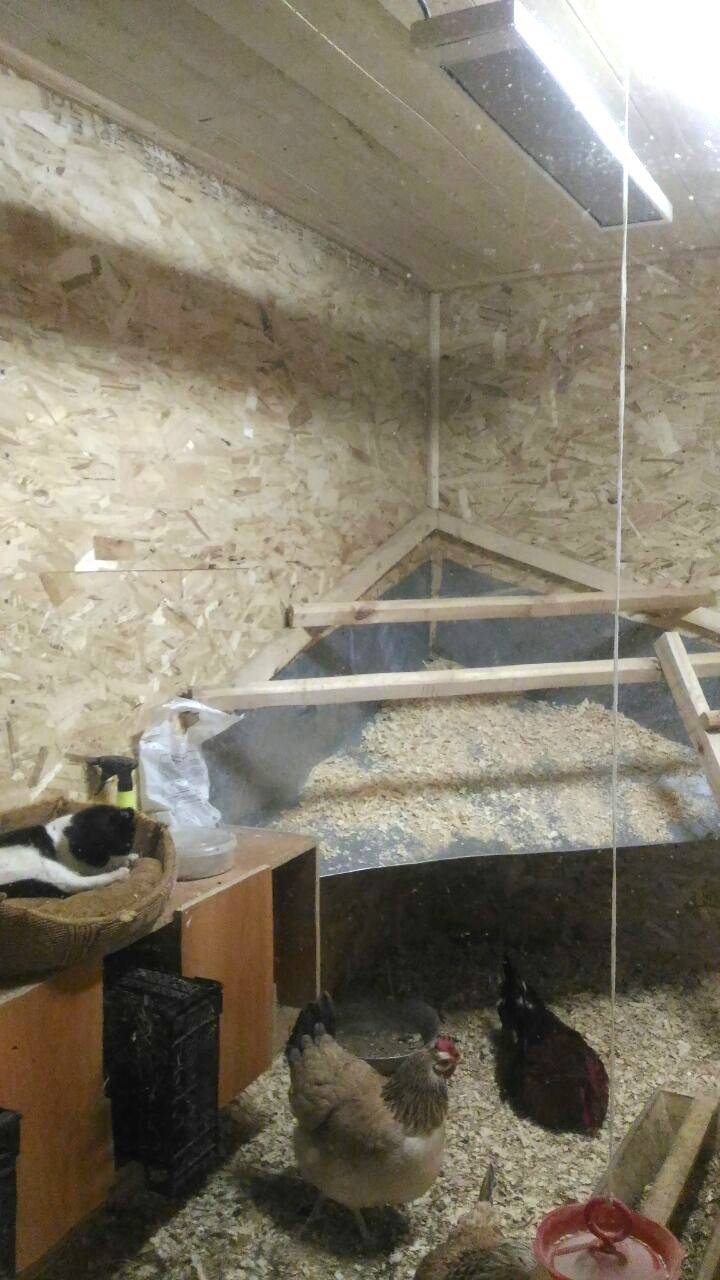
We promptly nailed Stizol insulating material to the floors, and in the most severe frosts turned on the heater.We somehow survived the winter, and in the summer, having collected building materials, we decided to thoroughly insulate the ceiling in the chicken coop.
Was everything done right?
How well you did the work, it will become clear only in the winter. When it's too late to change things.
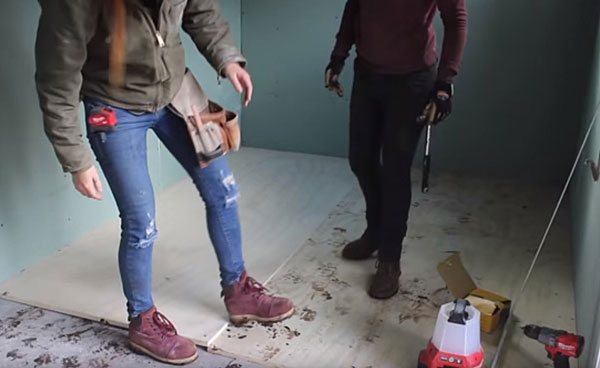
Therefore, it is necessary to initially ensure that all the rules for attaching insulation are observed. And use only high quality materials.
Violation of the tightness of the structure, improper fastening of the vapor barrier, errors in fastening the insulation and gaps can lead to the fact that the room will not keep warm. And the walls will get wet and even freeze.
Use only high-quality materials from reputable manufacturers. Carefully study the technical characteristics of different types of insulation.
Also refrain from using damaged thermal insulation materials. For example, having gaps.
Be careful with foam. Do not use very dense, strongly pressed plates for insulation. They are easier to install. But they keep warm worse.
What should be the gender?
The floor allows birds to have protection from bad wet weather and predator attacks. These two factors are the most detrimental to livestock. In addition, by providing the chicken coop with the right flooring, you can improve the sanitary performance in it.
If the floor is correct, the bird's dwelling will not only be warm in the winter season and cool in the summer, but in general the whole habitat for birds will be more favorable.
The warm floor in the chicken coop will allow you to get protection from pneumonia and severe cold in the legs in winter.If chickens settle in the bird house, then it will be necessary to close one of the corners with a piece of rubber sprinkled with straw or hay on top.
This type of bedding will help to keep the maximum amount of heat, and it is also very easy to replace it with a clean one when cleaning.
Currently, several types of flooring for floors in a chicken coop are most often used:
- land;
- concrete;
- wooden.
Each of these types has its pros and cons. They differ in installation time, porosity, structure, price. Let's talk about each of them separately to make it easier for you to make your choice.
It is worth remembering that it is necessary to start the construction of any type of floor with the correct selection of the type of foundation and its correct installation. To do this, you will need minimal knowledge in construction and free time.
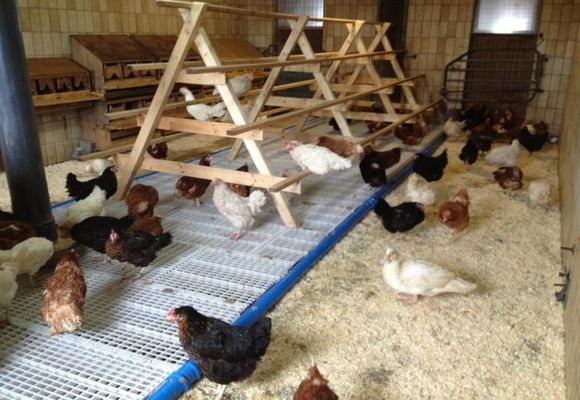
Earth
If you put earth on the floor in a chicken coop in a simple way, then this will certainly turn out to be very economical. This technique is very popular among many chicken coop owners and has been passed down by word of mouth for several generations in a row. Despite such popularity, the technique has a lot of negative qualities:
- The temperature drops very quickly in winter.
- Virtually no protection from predatory animals.
- The earth is a favorable environment for parasites to live.
In a very quick amount of time, such a floor can turn into a mass of dirt as it mixes with liquid, grains and bird droppings.
If we compare all the pros and cons, we can understand that this type of chicken coop is unlikely to meet the needs of a modern farmer who seeks to improve the living conditions of birds and make them as clean as possible.
You can strengthen the earthen floor with plastic type clay.The characteristics of this material will allow moisture to be absorbed faster, the floor will be denser day by day, which will lead to its long-term use without repair.
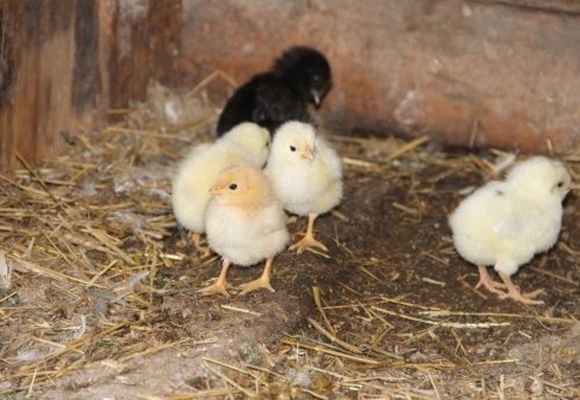
In this situation, the thickness of the clay layer will be ten centimeters, which will provide high-quality insulation from moisture.
In addition, you should pay attention to the number of chickens living in the barn: the more individuals in the chicken coop, the denser the coating structure should be.
Concrete
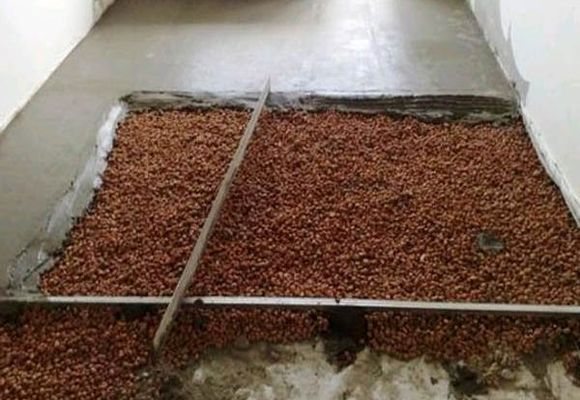
Concrete is also very popular with farmers when it comes to flooring. The coating technology is quite simple and does not require certain skills and knowledge, it is done very quickly. Even an inexperienced poultry farmer can make a concrete floor on their own.



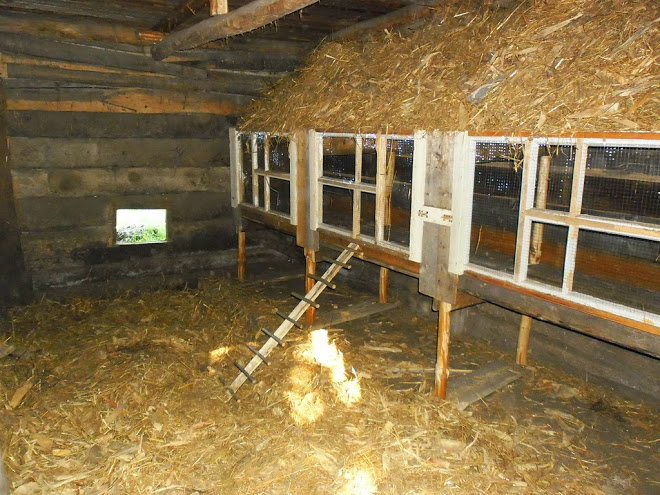


Concrete provides impeccable protection against predators, however, it will make it very cold in the chicken coop in the winter season, as the concrete cools very quickly. Let's say more, it will be cool even in summer.
But this problem can be solved, for this, several layers of synthetic or natural bedding are applied to the concrete, which will help slow down the process of lowering the temperature.
But in this case, it is important to take care of the quality of the litter, do not forget about drainage and compaction in the form of earth
Among the advantages are special stability and durability. It is not affected by alkalis, it does not burn. If you properly lay a concrete floor, then it can serve you for more than twenty years, this is a record among all types of coverage.
Wood
This option is among the most rational, as it will help maintain the desired temperature regime and does not need additional measures to preserve heat.The board will not freeze in winter, which is a very significant advantage over other types of coverage. In addition, wood is an environmentally friendly material and is very easy to install.
But this floor also has a number of disadvantages:
- It flares up very quickly.
- It can be inhabited by parasites and fungi.
- The material breaks down, its structure collapses over time.
- This type of floor must be regularly and carefully looked after.
In order to prevent the impact of adverse factors on the state of the integrity of wood, limestone mortars are most often used. They treat the surface of the wooden floor.
Some mount the wooden floor at a slight slope to make it easier to clean the chicken coop.

Repair and wall cladding
It is recommended to insulate the walls of the chicken coop in winter with foil foam. If non-wood material was used, slab materials and basalt-type wool will be the best insulation for the walls in the chicken coop.
Insulation with foam plastic and polystyrene is best done from plates. Installation will not take much effort and time, but for the installation of mineral wool, everything will happen the other way around.
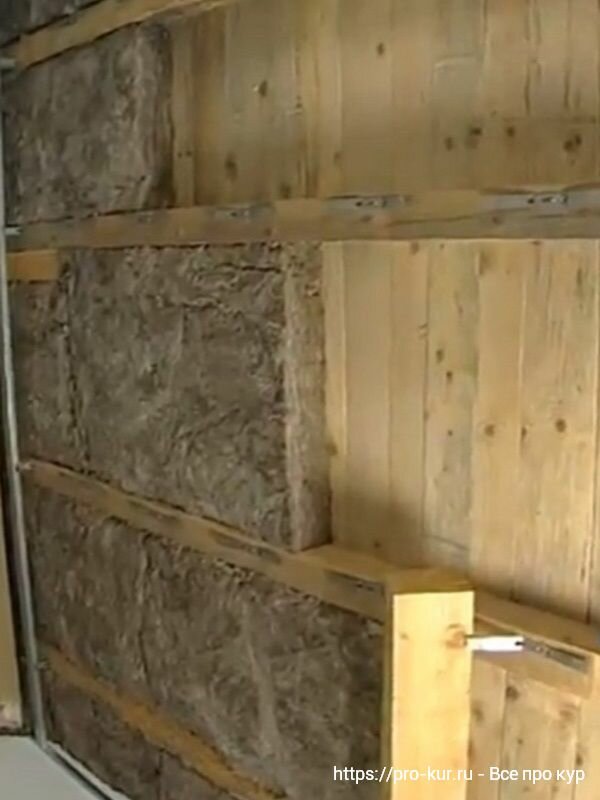
It is worth considering in more detail how to insulate the home of chickens from the inside. Initially, you need to make a crate for the walls, which has parameters of 50 × 50 cm. After you managed to nail the first beam, you need to level it in a vertical or horizontal position. The distance of the beam from the wall depends on what kind of insulation material. For example, if you take mineral wool with a parameter of 60 cm, then the distance between the boards will be 59 cm.
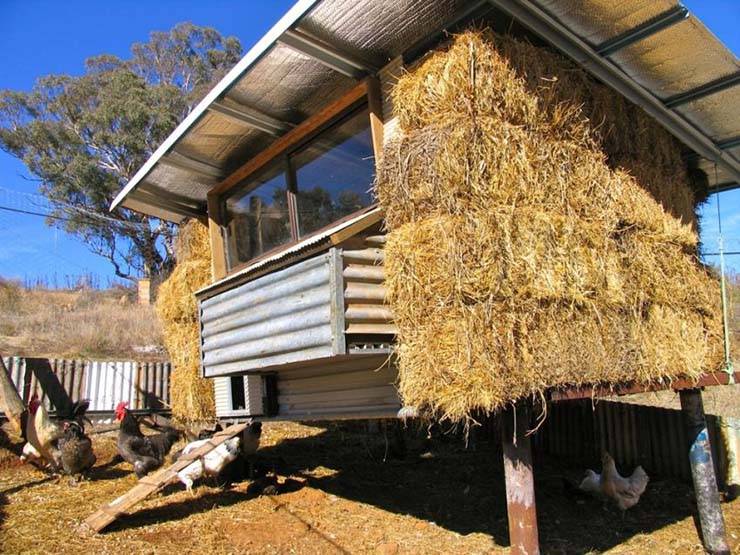 If you insulate the chicken coop according to the instructions, then moisture will not seep through
If everything is calculated correctly, then this is how it will turn out tightly and reliably insulate the house. To strengthen the walls of wood, it is necessary to use nails and self-tapping screws. If the wall is made of expanded clay block or foam block, then the lattice should be strengthened with dowel-nails. It is also necessary to install a vapor barrier film if a mineral product is used as a heater. When installing, you need to consider some details:
- you need to decide on the external and internal side;
- fixing the material should take place using special staples that are attached with a stapler;
- sheets need to be superimposed on each other at a distance of about 3 cm;
- seams should be tightly glued with a certain solution.
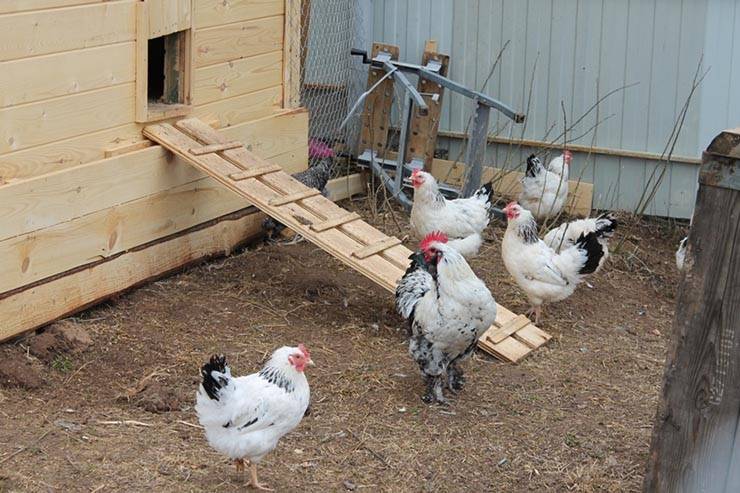 Do not forget that the quality of the products will depend on whether it was cold in the chicken coop or not.
If you carry out the installation process correctly and accurately, then moisture will be absorbed steadily in the chicken coop. Once the film has been stabilized normally, you can apply the insulation itself. The material should be applied closely to each other, and the thickness should be approximately 4 cm. If holes form between the materials during installation, they can be easily eliminated with building foam. However, it is better to avoid this, otherwise heat will accumulate in such places.
And you also need to stock up on a certain fastener that can be combined with ordinary nails. Approximately 5 dowels should be used per slab, and then a vapor barrier film should be applied.
Insulation of the ceiling and roof of the chicken coop
The ceiling covering is insulated by analogy with the walls.A rough board is used as the first layer, then a waterproofing material, usually garden polyethylene, is installed. Then a crate is created, only the width between the bars should be slightly less than the heat insulator.
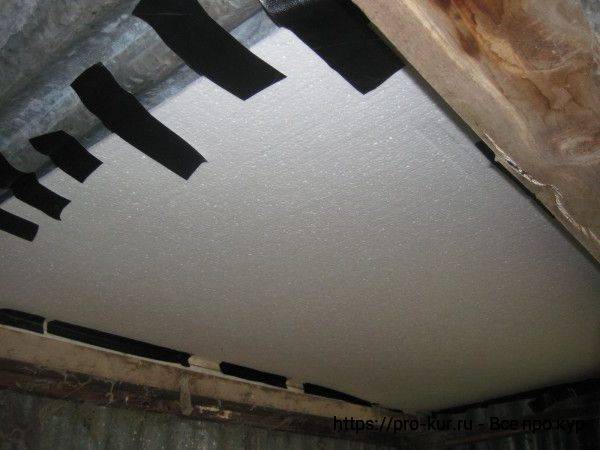
Thus, the ceiling crate goes in increments of 0.57 - 0.58 m. The distance decreases purposefully in order to be able to lay the insulation more tightly on the ceiling so that the sheets do not fall out.
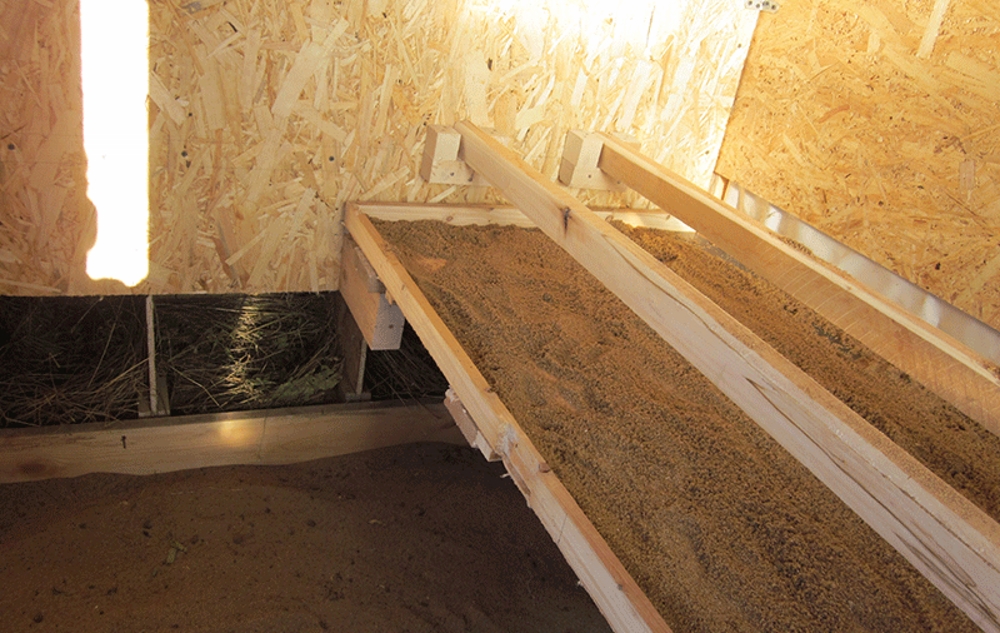


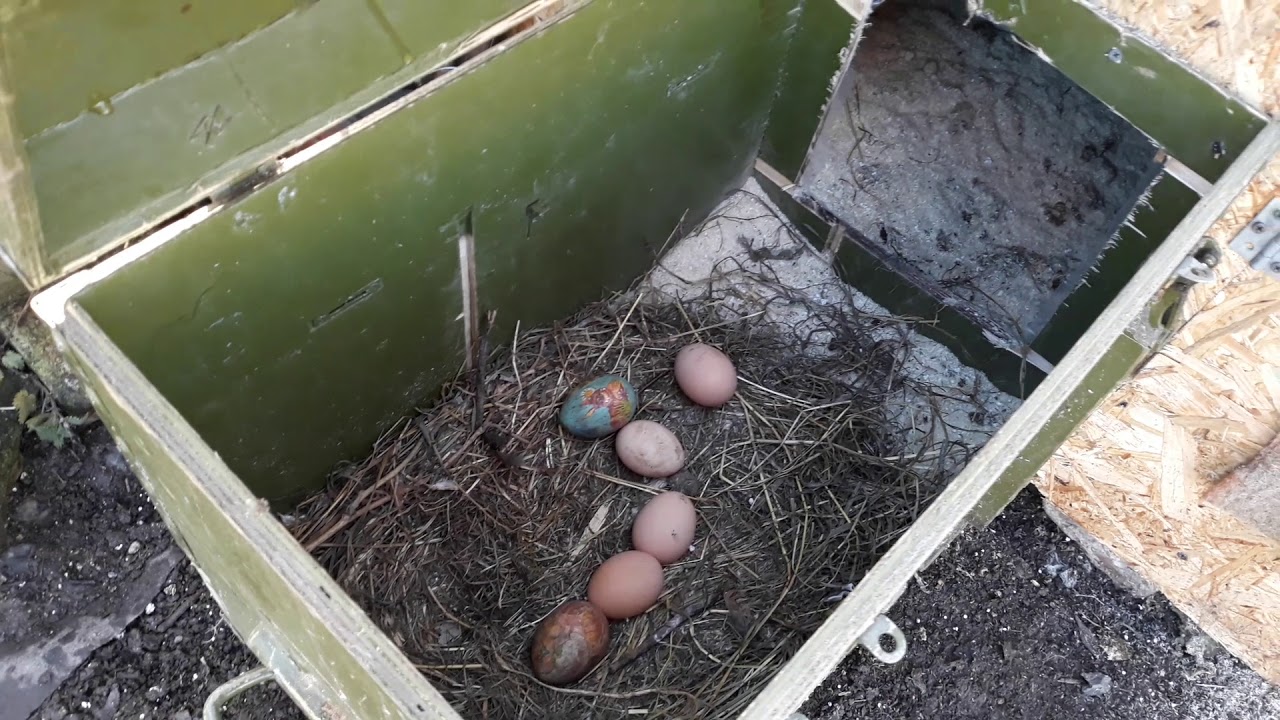


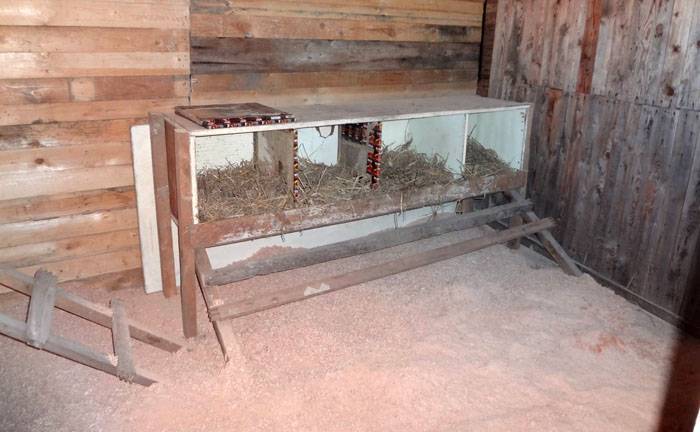


Next, a heat insulator is laid - polystyrene foam or mineral wool, which is covered with a vapor barrier fabric.
Moisture-resistant plywood, OSB sheets or moisture-proof chipboard are used as the final finishing of the ceiling covering.
Heating systems
Even in an insulated chicken coop, with their heat, the hens will not be able to maintain the temperature necessary for the production of eggs. In most regions, laying hens will please with an abundance of eggs only in heated rooms.
If the chicken coop is located near the house where the family lives permanently, the most cost-effective and safe is to connect it to the house heating system. It is advisable to build a chicken coop near the house so as not to pull and insulate pipes with water.
Consider which heating systems it is advisable to use in chicken coops, how experienced amateur poultry houses heat their laying hens.
Potbelly stove or brick oven
The simplest and most affordable option is a brick oven or potbelly stove. Heating requires a boiler or stove and a chimney. Advantages:
- simple installation;
- simple inexpensive fuel;
- easy care.
Significant disadvantages of this type of heating are almost open fire and, as a result, low fire safety. From an accidental spark, the chicken coop bedding can quickly flare up.In addition, the fuel has to be constantly thrown up, which is possible only for those who are at home most of the time and can keep track of the chickens.
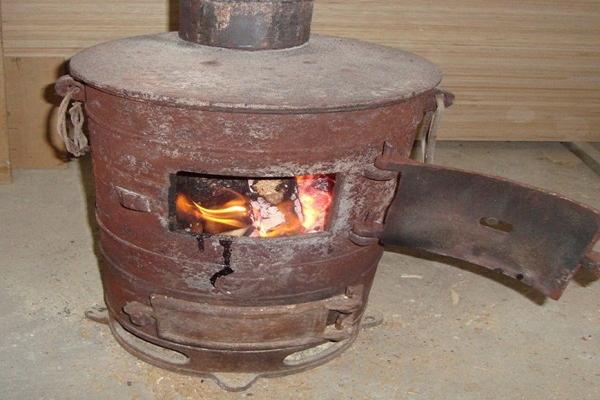
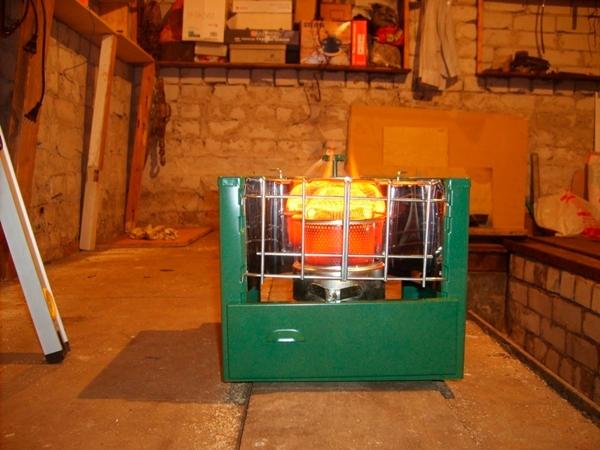
Diesel oven
Diesel-fueled chicken coop stoves are safer, have a temperature control, which allows you to maintain heat at the right level. They are smokeless, do not poison the air with an unpleasant odor.
When choosing a diesel oven, a power calculation is required to ensure that the chicken coop is heated correctly. You must always have a supply of fuel. For many, diesel prices are too high to operate diesel stoves.
Radiator
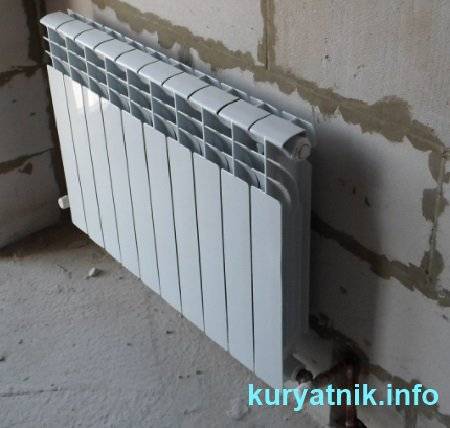
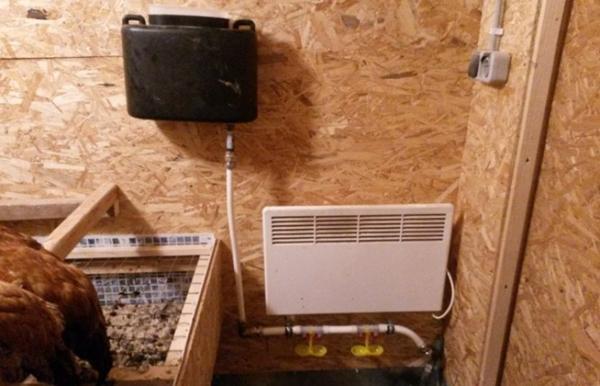
Radiators are a safe and convenient way to heat your chicken coop. Electric radiators do not require the constant presence of the owners, they supply a constant flow of heat, its intensity can be set by the regulator.
If necessary, they put an additional device for heating chickens, the radiators are mobile, they can be moved to the right place.
The obvious disadvantage is high electricity bills, which many cannot afford. When installing radiators, it is necessary to take all the wires into special boxes, install reliable electrical outlets so that curious chickens do not damage the equipment and do not suffer themselves.
infrared lamps
Using electrical appliances to heat the chicken coop is the easiest way to reduce costs with using infrared lamps. These devices do not heat the air, but directly the objects to which they are directed. Advantages of infrared lamps:
- ease of installation;
- complete security;
- low energy consumption;
- positively affect the health of chickens, protect against infections;
- a large selection of types - stationary and mobile, panel, film.
With the help of lamps, it is convenient to heat individual places, directing them, for example, only to chickens. Among the shortcomings, experienced poultry farmers note the high price, the need to have a constant supply, since the lamps often fail.
Many people keep chickens for the summer, but, getting used to the delicious eggs from their laying hens, decide to keep the bird in the winter. Insulation of the chicken coop helps to provide the chickens with a comfortable and safe existence in the cold season, and the owners to eat healthy and tasty eggs all year round.