
- 5 Thermal barrier device on the attic floor - available methods
- Warming
- Overlappings
- roofs
- How to calculate the thickness of thermal insulation
- How to properly insulate the ceiling in the house with sawdust
- How to make ceiling insulation in a wooden house with expanded clay
- Insulation of the ceiling in the house with mineral wool
- Insulation in a wooden house with foam
- Sheathing from the inside
- 13 Features of internal insulation - tips for beginners
- Thermal insulation of the loggia and windows on the second floor
- Useful tips and tricks
- Features of cold roofs
- On reinforced concrete floor
- Without cement-sand screed
- With cement-sand screed
- Effective ways to insulate the ceiling
- Work indoors
- Work outdoors
- Determining the thickness of the thermal insulation
- Expanded clay
- How to calculate the layer thickness?
- Ways to insulate the ceiling
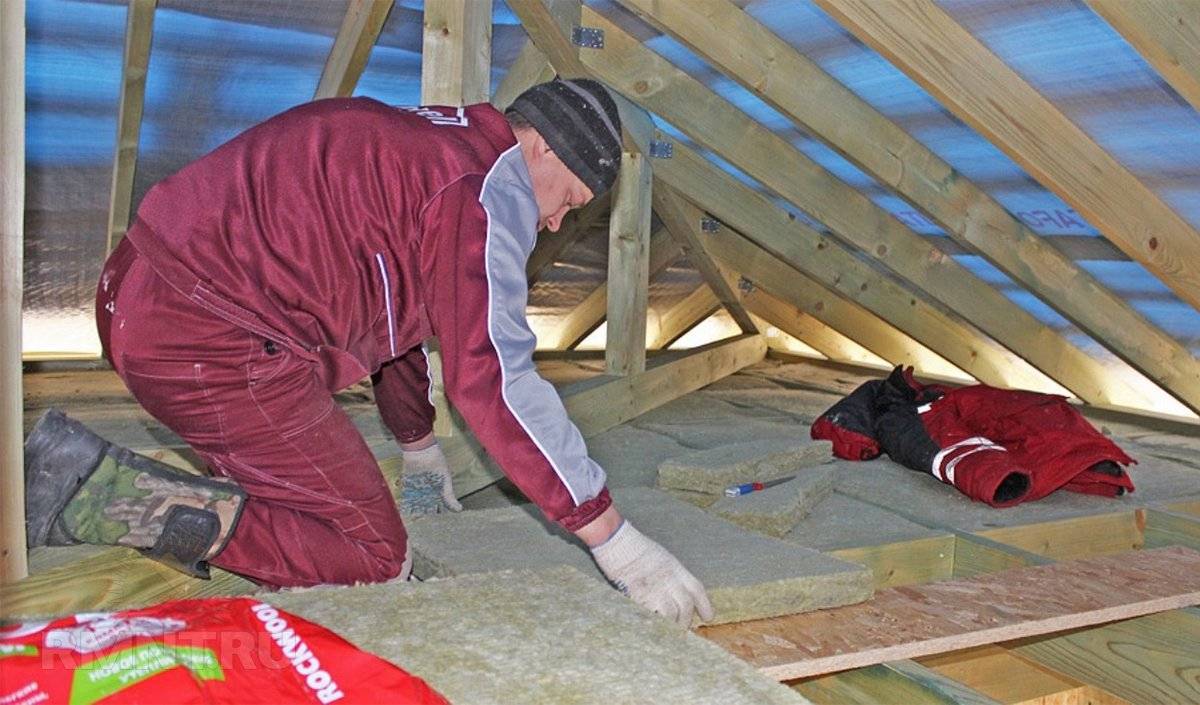
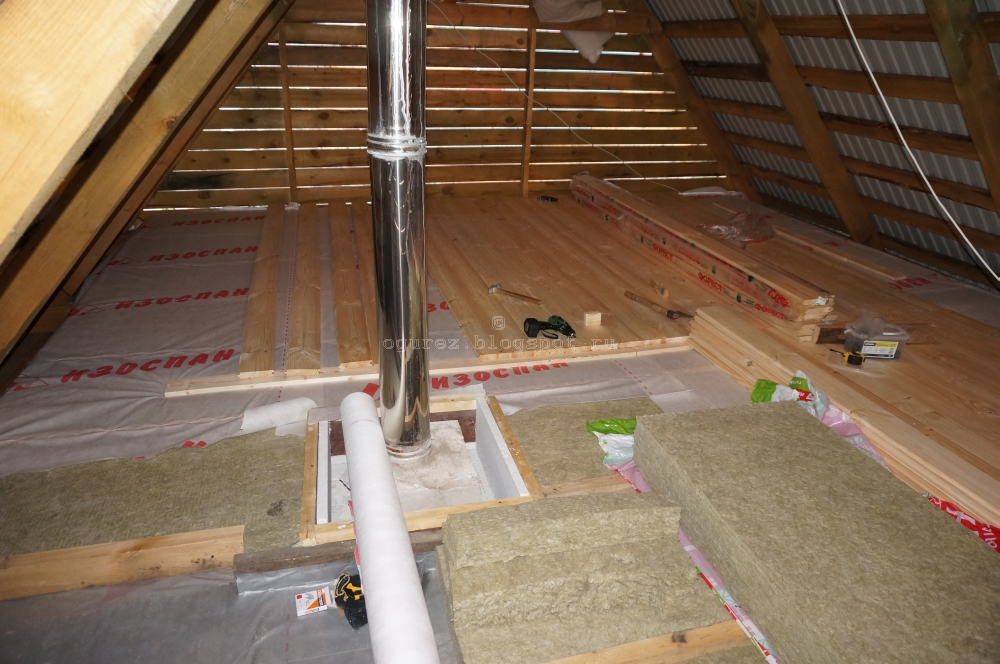
- 7 Order of installation of mineral wool from the side of the attic
5 Thermal barrier device on the attic floor - available methods
For the installation of a thermal barrier on the side of the attic, all of the materials mentioned above are applicable. If you need to hire specialized teams for insulation with ecowool or polyurethane foam, it will not be difficult for any home craftsman to form heat-insulating layers with expanded clay, mineral wool or polymer sheet insulation.
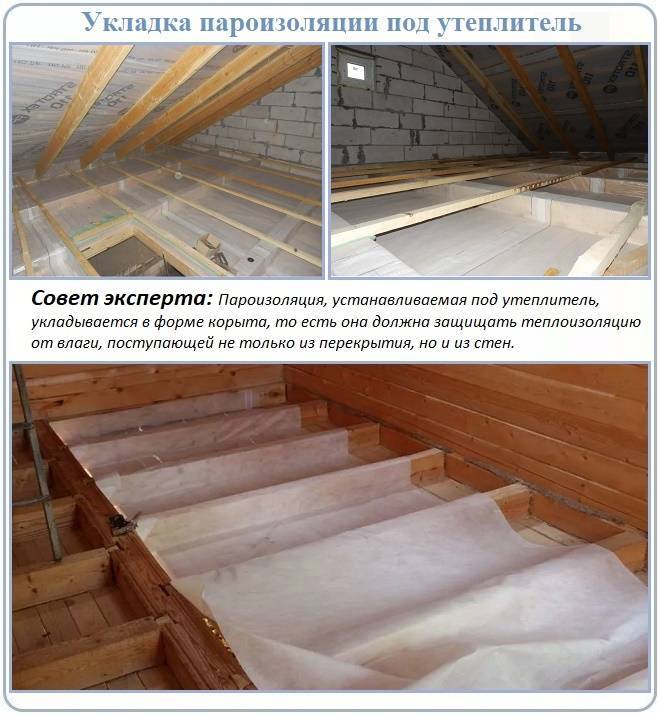
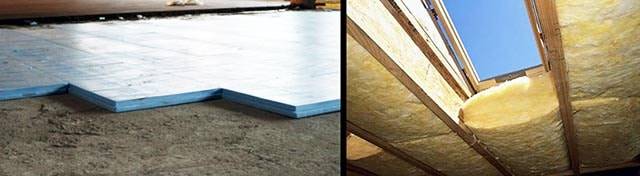
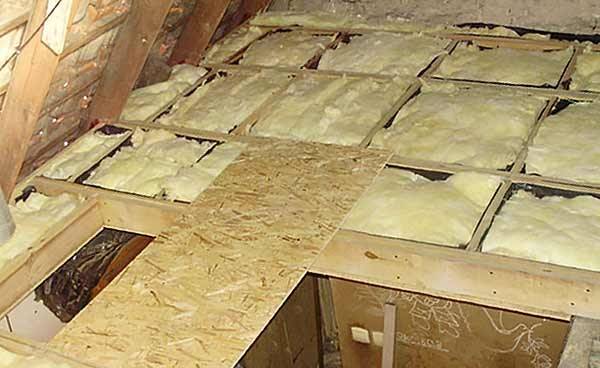
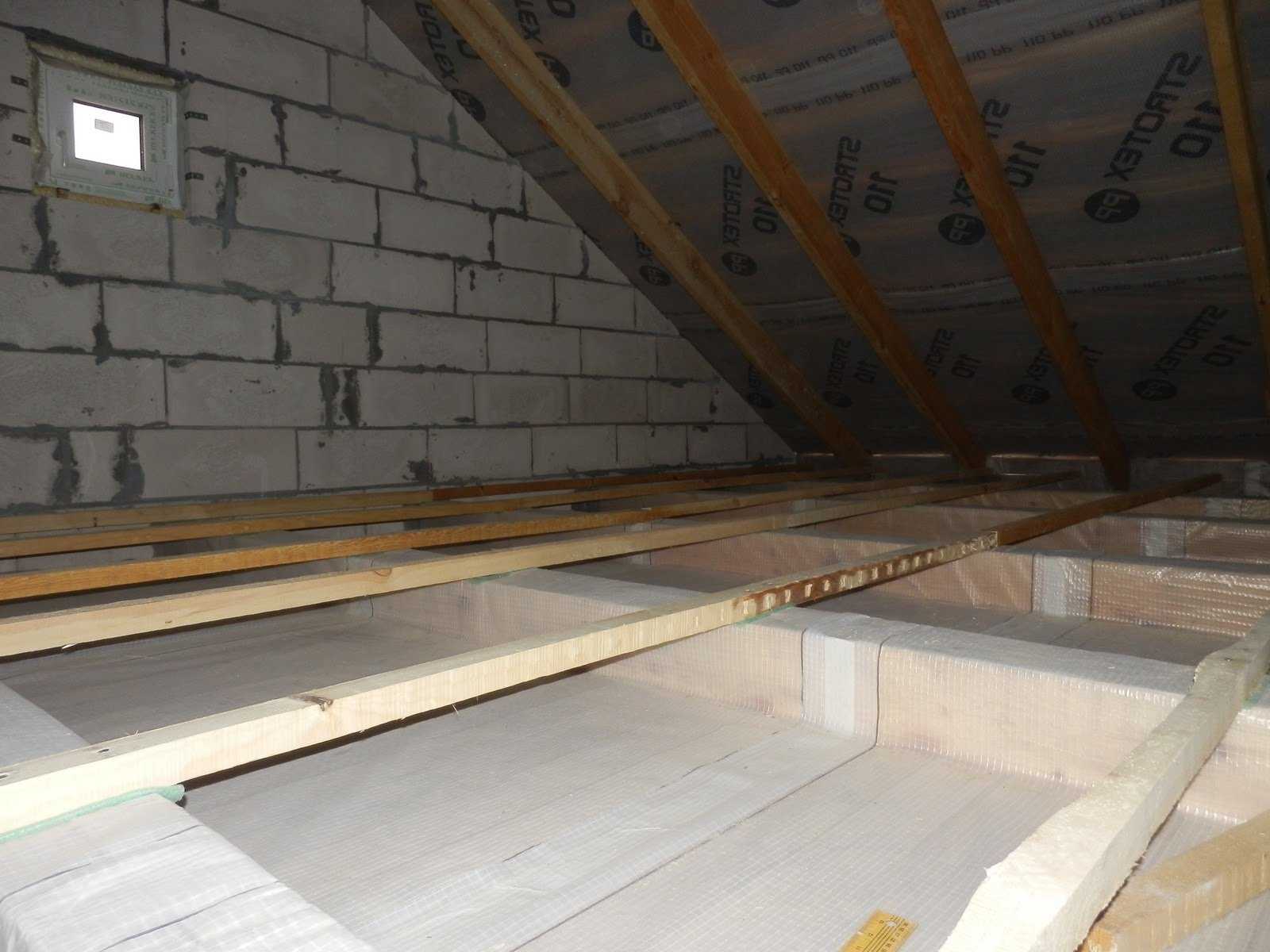
If the overlap is made with a reinforced concrete slab, it is more advisable to use expanded clay, filling it with a layer of up to 15 cm, or lay penoplex, filling the seams between the sheets of polymer insulation with mounting foam. For wooden floors, it is better to use mineral wool, since it is similar to wood in terms of its ability to pass water vapor. Fibrous insulation is laid between the load-bearing wooden beams, after which a vapor barrier is made of the appropriate film. Then counter-rails are sewn along the beams, which will be the basis for laying the attic floor boards.
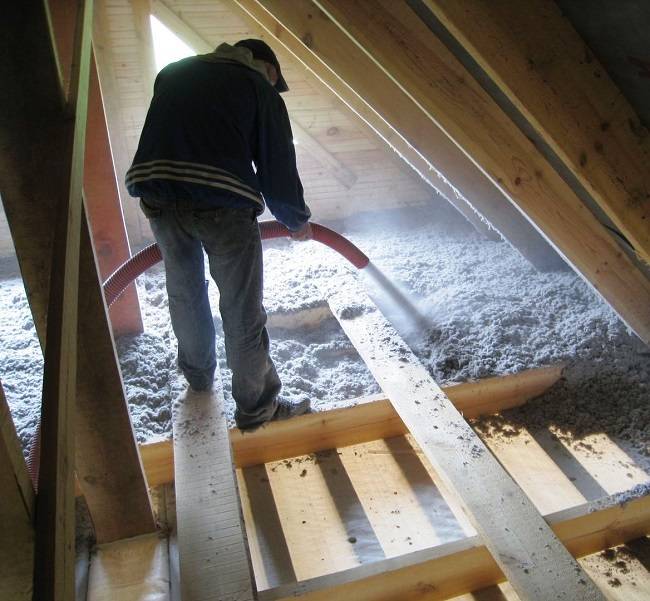
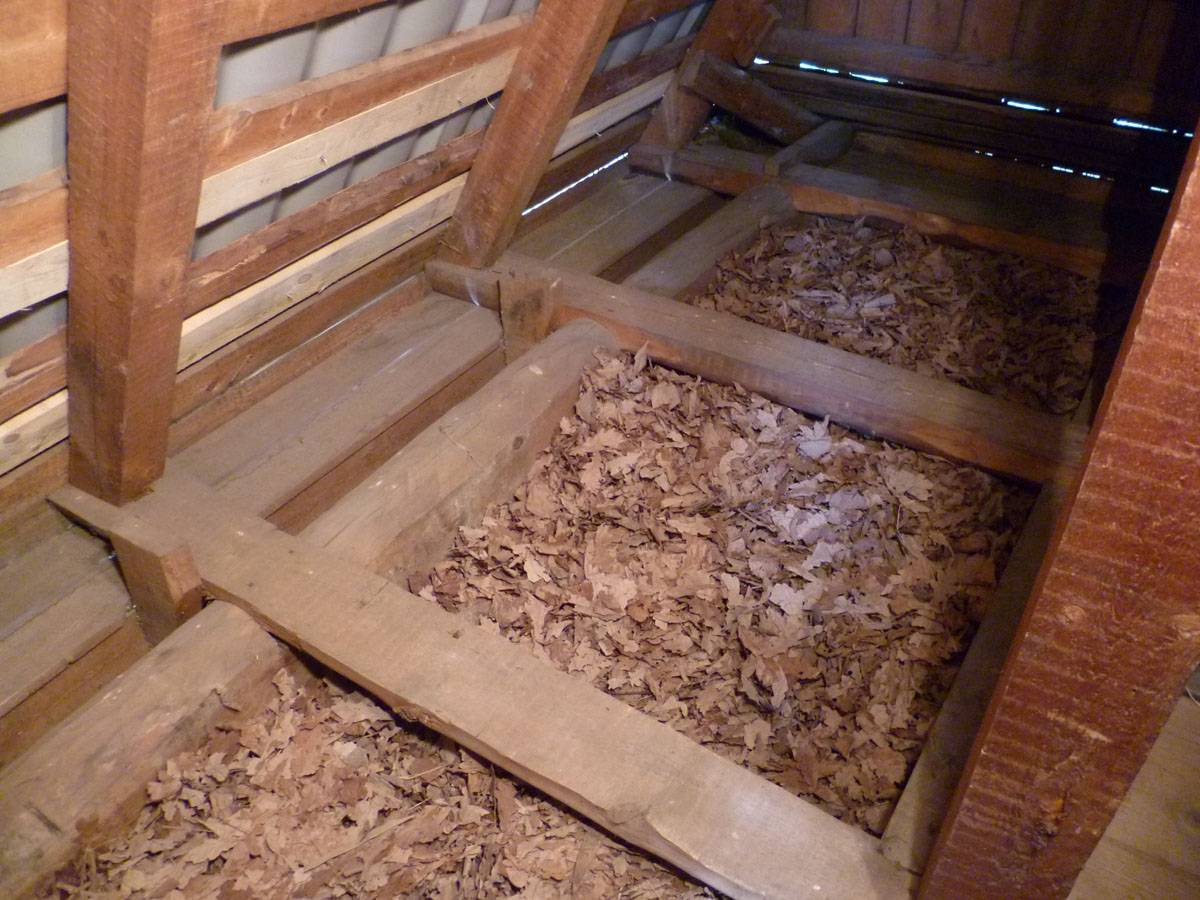
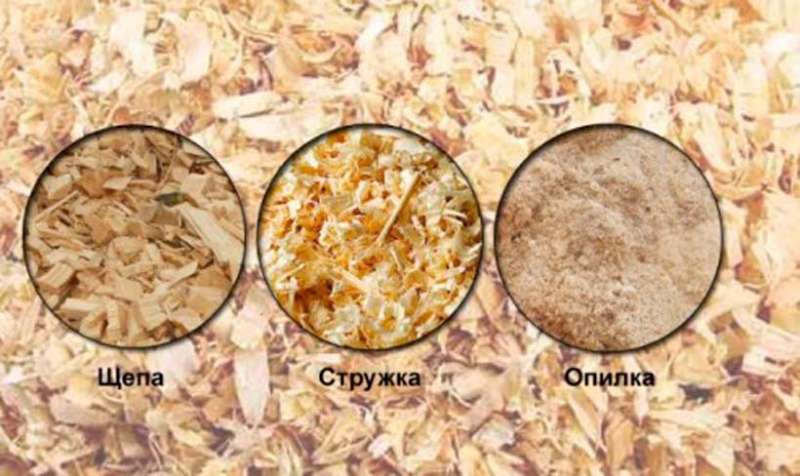
If there is free access to lumber waste, you can reduce the cost of the event as much as possible by filling the spaces between the beams with a mixture of small chips and sawdust. This method of thermal insulation will be the most environmentally friendly and natural for floors made of wood materials.
Warming
It will not be possible to disassemble the laying technology of all possible coatings. You need to stop at one option. For example, such as mineral mats.
First you need to remove the board run and attach a vapor barrier layer to the beams. For fastening membrane films, it is worth using staples 14 - 16 mm, driven into the base with a stapler. The gaps of the structures are filled with mats, which are fixed with the help of transverse rails with a section of 20x50 mm. These slats will help hold the extra vapor barrier.
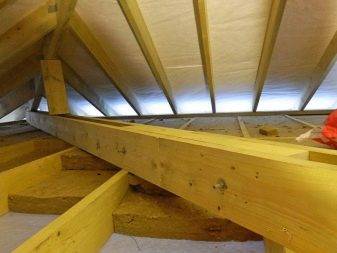
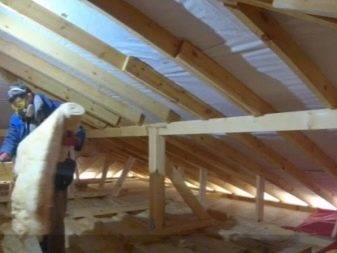
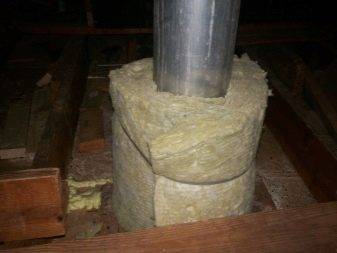
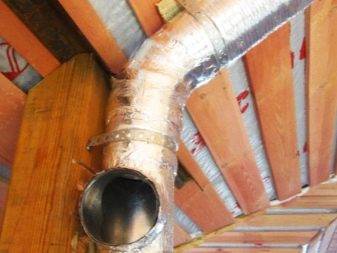
Then you need to make a boardwalk with your own hands and equip the ceiling. Materials that form a kind of shell (for example, penofol) are better suited to protect ventilation pipes from the cold. It is better than polyethylene foam, it does not so much absorb dust, which is inevitably present in any room.
If the ventilation pipe passes through the main wall, it must be placed in a heat-insulating sleeve. When the ventilation duct goes through the room, you need to lay the material where freezing begins to be felt. Ventilation protection is done before covering the rest of the building.
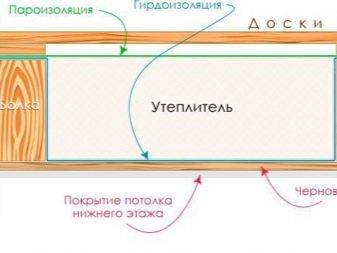
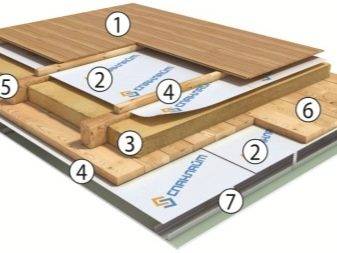
A typical pie involves stacking:
- solid board 25x100, 30x100 mm;
- a two-layer membrane that protects against wind;
- timber 5x5 cm across the overlapping beams (the distance between the blocks should be 59 cm);
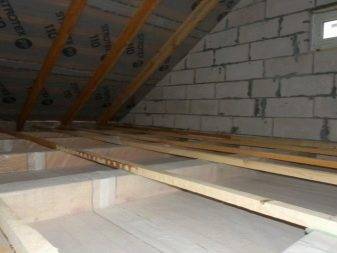
- beams based on a double beam 5x20 cm;
- new timber 5x5 cm;
- vapor barrier (best with aluminum foil);
- boards on the overlaps of the vapor barrier.
In attics, one has to deal with the problem of a freezing wall or even several walls at the same time. Only the simultaneous insulation of the structure both outside and inside the building will help eliminate this trouble. The minimum thickness of the inner layer should be from 20 cm. This is the rare case when there is nothing better than simple mineral wool.
Using another old method of warming the main part of the attic (using flax), you should act in exactly the same way as when working with sawdust. The difference is manifested only in the closure of the formed layer with kraft paper, due to which the risk of damage to the material and its wetting is reduced.
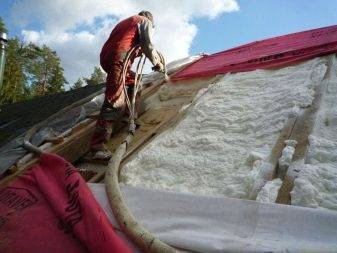
Overlappings
Interfloor wooden floors can not be insulated, unless separate space heating is planned in order to save money. In this case, the vapor barrier layer will have to be mounted from above and below.
The sequence of work with concrete floors is as follows:
- cleaning;
- relief leveling;
- preparation on the basis of monolithic screeds slopes for the outflow of moisture;
- placement of waterproofing (release at the edges is required);
- formation of a cement-sand screed up to 50 mm thick;
- roof covering and its sealing.
roofs
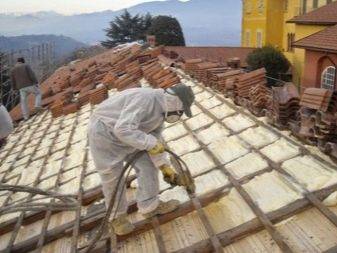
To ensure a sufficient level of thermal protection, it is required to insulate not only the ceiling, but also the overhangs of the cornices, grooves, and junctions with the walls. They work strictly from lower points to higher points, keeping all slopes intact. The overlaps are at least 15 cm, the insulation layer itself must go end-to-end.


Cloths are laid from the ridge to the overhang with a slope of not more than 15% parallel to the ridges, with a larger one - perpendicularly. It is necessary to carefully monitor that the rolls are stacked without dents, air bubbles and leakage.
How to calculate the thickness of thermal insulation
We will show the determination of the thickness of the insulating layer with examples. We take the formula for calculating thermal resistance as a basis (in the previous sections, we have already used it to compare the effectiveness of different materials):

- R is the heat transfer resistance of the insulating "pie", m²•°С/W;
- δ is the thickness of the insulation, m;
- λ is the coefficient of thermal conductivity of the material, W/(m•°С).
The essence of the calculation: according to the standard thermal resistance specified for your region of residence, calculate the thickness of the insulation, knowing the characteristic λ. The value of R is determined according to the scheme given in the regulatory documents, the map with indicators for the Russian Federation is shown in the photo.
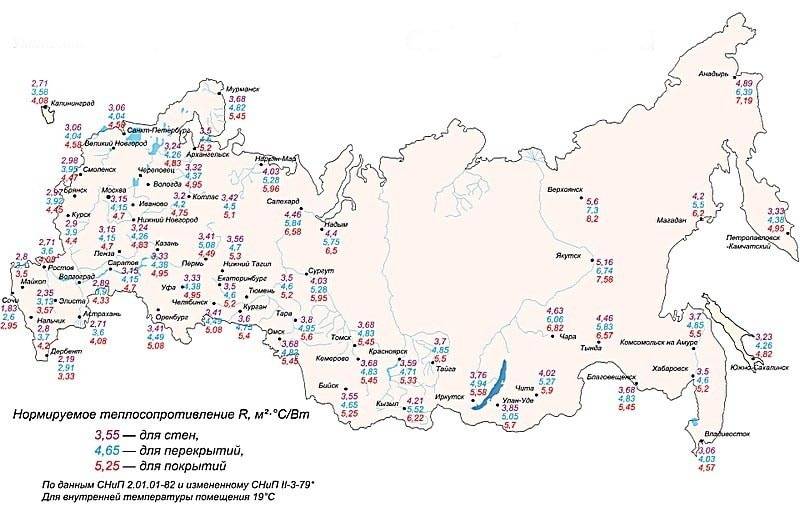
Example 1. It is necessary to calculate the insulation of a summer house with an attic, located in the suburbs. We find the characteristics R for Moscow, select the indicator 4.7 m²•°С/W (for coatings), take the coefficient λ of basalt wool equal to 0.05 W/(m•°С) and calculate the thickness: δ = 4.7 x 0.05 = 0.235 m ≈ 240 mm .
Example 2We determine the thickness of the insulating layer from "Penoplex" for concrete floors, location - Cherepovets. The algorithm is this:
- We find on the Internet or reference literature the thermal conductivity of reinforced concrete λ = 2.04 W / (m • ° C) and find out the thermal stability of a standard floor slab 220 mm: R = 0.22 / 2.04 = 0.1 m² • ° C / W.
- According to the map-scheme, we find the normative value of R for Cherepovets, we take the overlap indicator - 4.26 m² • ° С / W (the figure is highlighted in green).
- We subtract the found resistance of the plate from the required value of heat transfer: 4.26 - 0.1 = 4.16 m² • ° C / W.
- We calculate the thickness of the polystyrene foam insulation λ = 0.037 W / (m • ° С): δ = 4.16 x 0.037 = 0.154 m ≈ 160 mm.
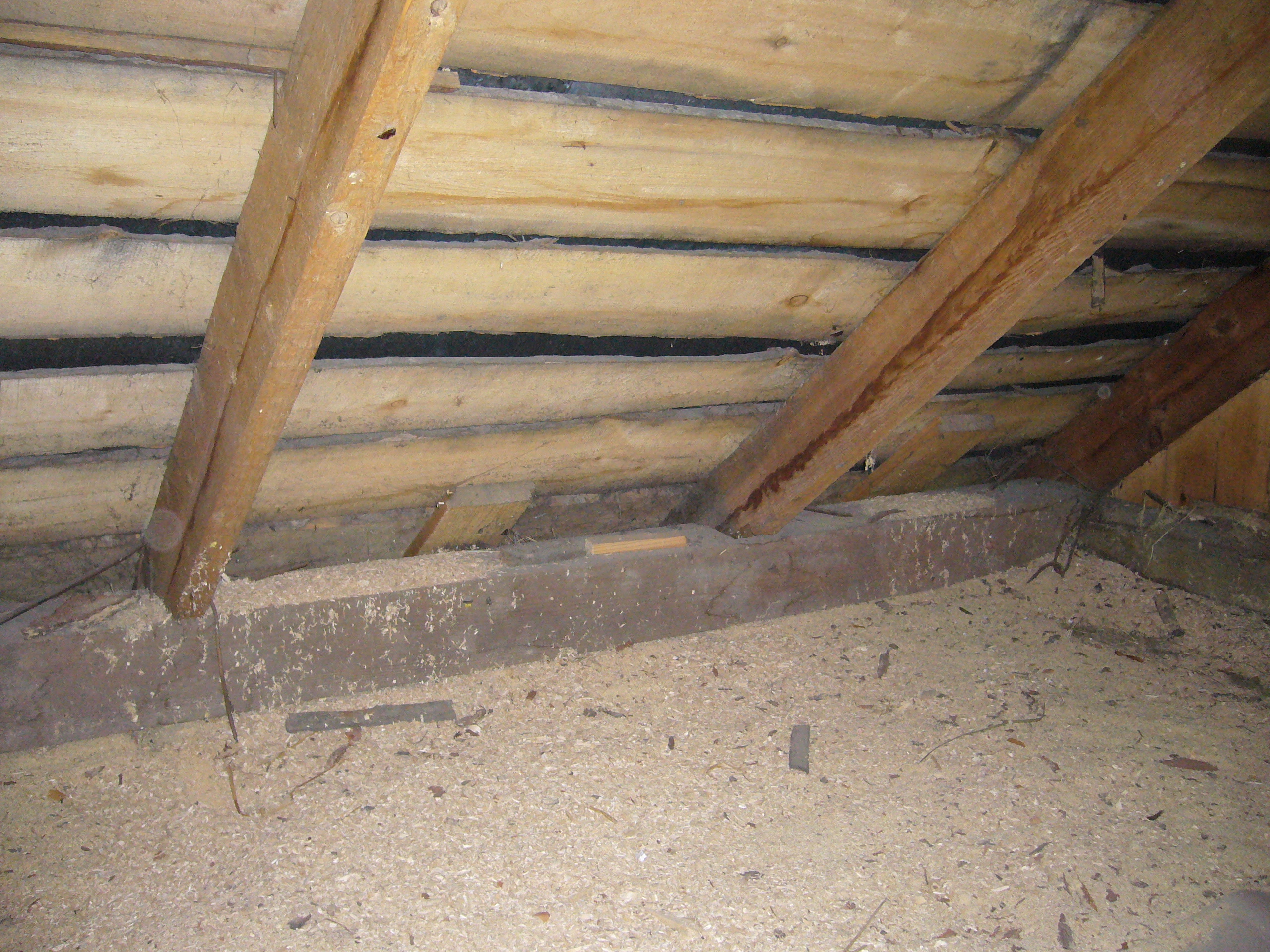
How to properly insulate the ceiling in the house with sawdust
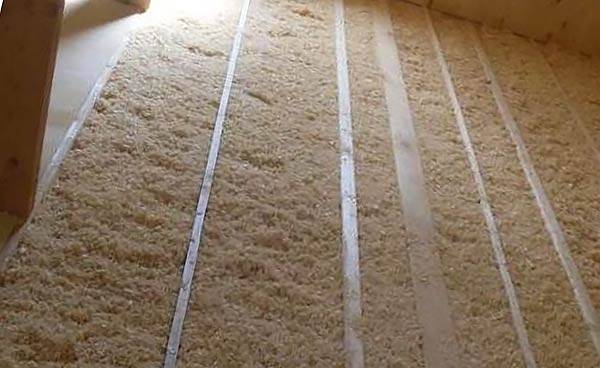
When the ceiling is insulated with sawdust, the house turns out to be warm and environmentally friendly. For this process, well-dried clean sawdust of medium or large size is purchased. From below, sheet or rolled parchment is used. Lime and copper sulfate are used as an antiseptic and protection against rodents. The average layer of insulation of a wooden house, bathhouse or cottage is 25 cm.
To prepare a heater with your own hands, take:
- 10 buckets of sawdust;
- lime bucket,
- 250 grams of copper sulfate;
- a bucket of cement;
- 10 liters of water.
Lime and blue vitriol are mixed with dry cement. The mixture is poured into sawdust and kneaded, then water is slowly poured in. The resulting mixture should form a homogeneous dense structure.
The chimney is insulated with fire-resistant material, and the wiring is closed with a metal pipe. The parchment is spread, then the sawdust mixture is poured and rammed. After this flooring remains to dry for 2 weeks.
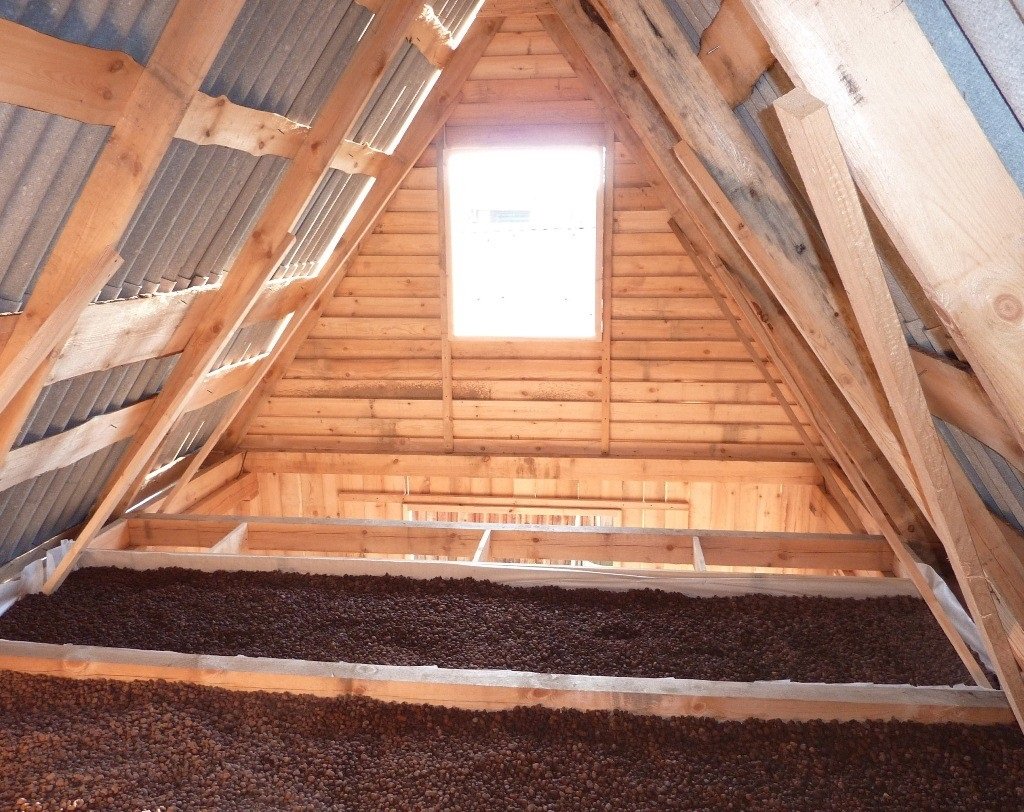
How to make ceiling insulation in a wooden house with expanded clay
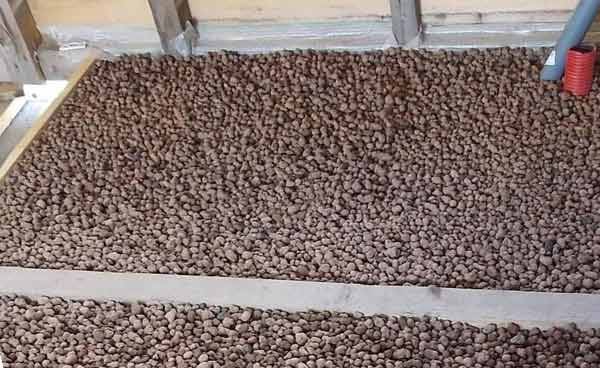
Expanded clay is environmentally friendly, refractory, does not rot, is not exposed to various temperatures
Rodents do not start in expanded clay, which is important for owners of wooden houses. Steam and waterproofing is spread in the upper part of the ceiling. Pipe, wiring are insulated with refractory materials (sheet metal or iron pipes)
Pipe, wiring are insulated with refractory materials (sheet metal or iron pipes).
Waterproofing or parchment is spread, while the width of the material should be 10 centimeters greater than the distance between the beams of the house. Laying is carried out with an overlap on beams, walls. The roofing material is fixed with rubber-based mastic. When using simple adhesive tape at the joints, aluminum plates are additionally installed.
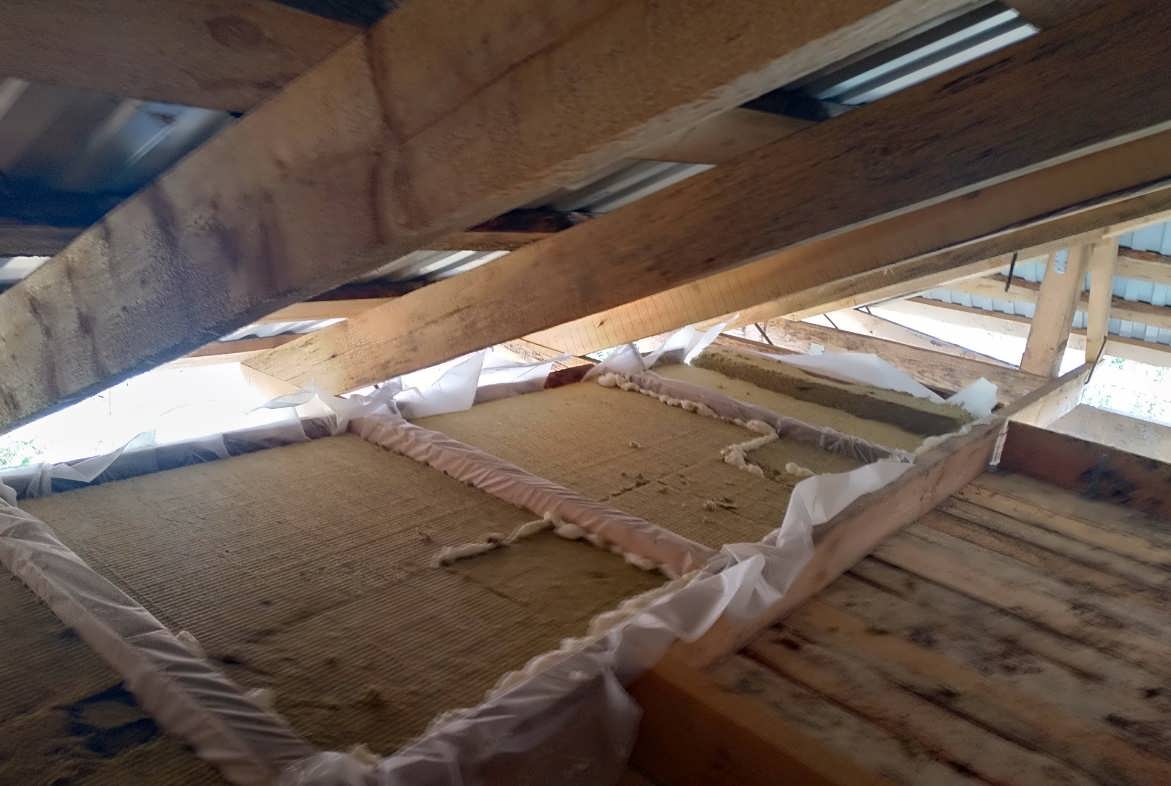


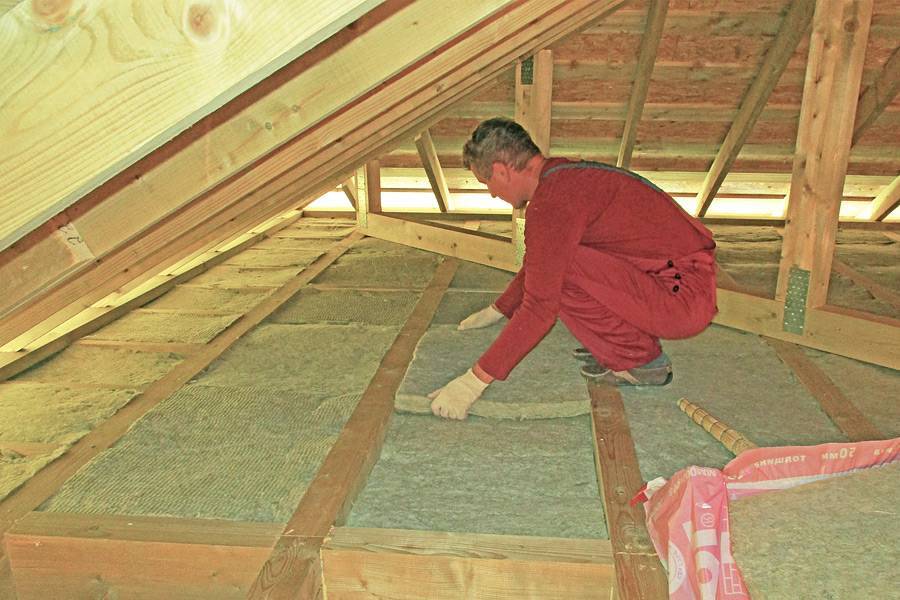


With an overlap of 15 cm, there is a vapor barrier, and the exit to the walls after backfilling with expanded clay is also 15 cm. A 50 mm layer of clay is laid out, then there is a layer of expanded clay. The minimum thickness is about 15 cm. A screed of sand and cement is poured onto it. To use the attic, chipboard or plank flooring is made from above.
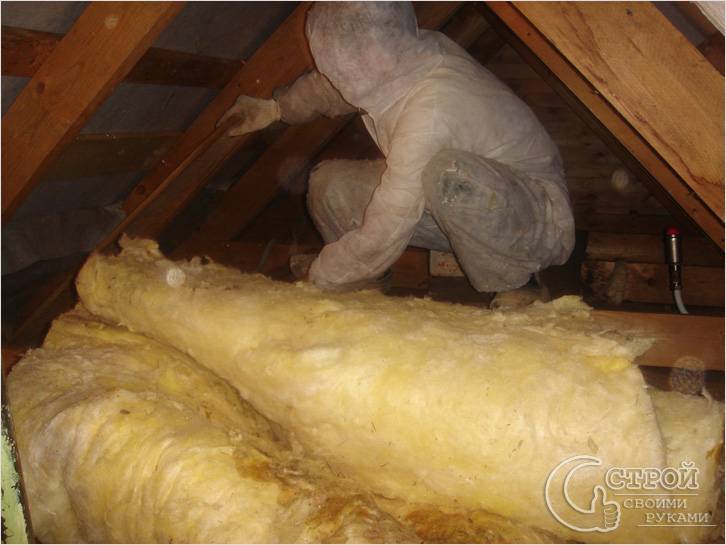
Insulation of the ceiling in the house with mineral wool
Basalt and mineral wool reduce the thermal conductivity of the ceiling. These types of insulation are easy to install and environmentally friendly. They cost a little more than previous analogues, but they allow you to insulate the outside and inside of the ceiling. Plates are used outside.
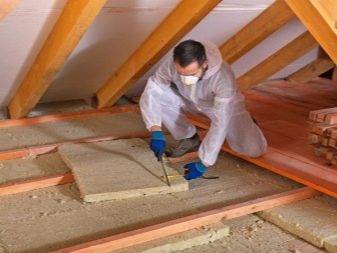
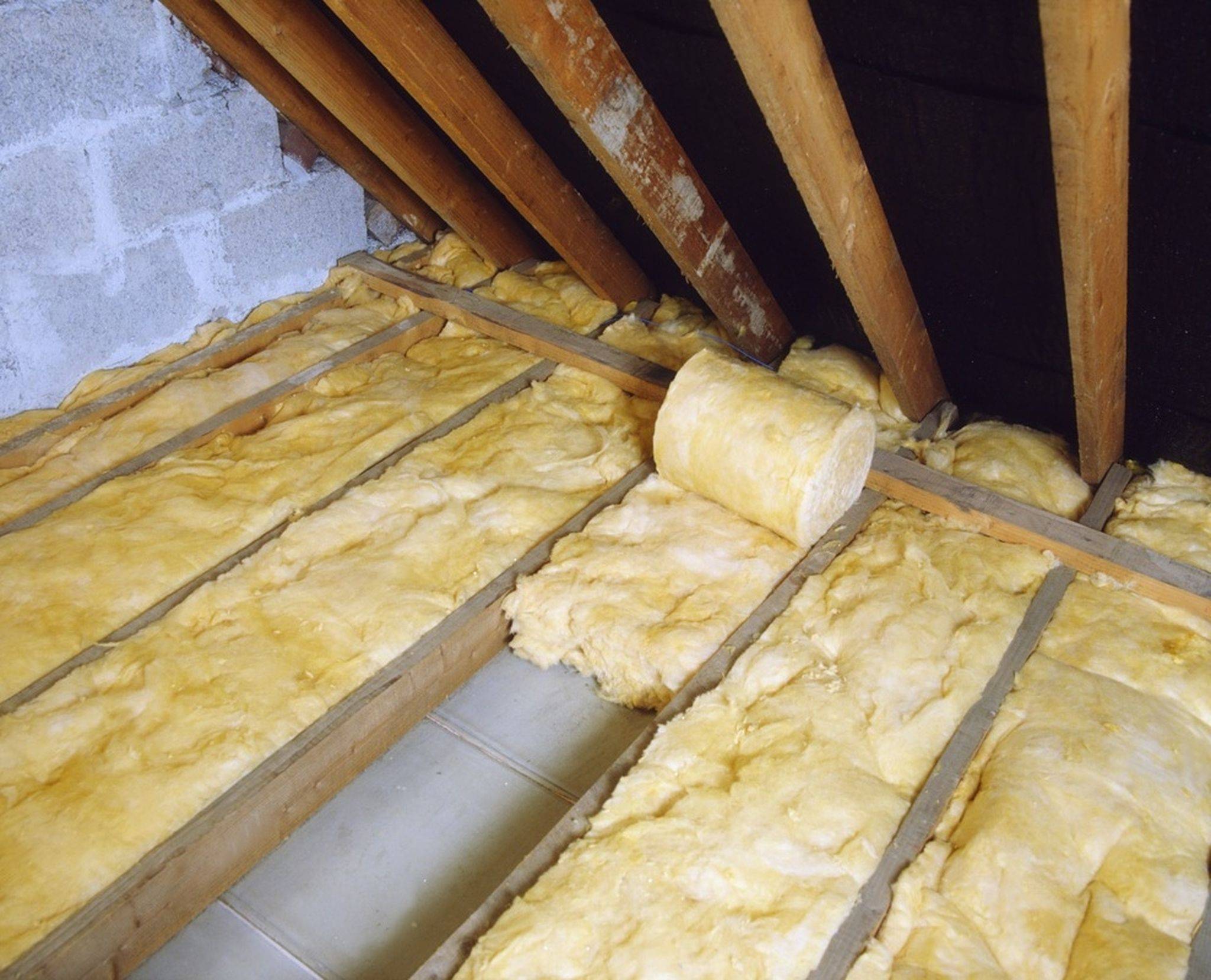
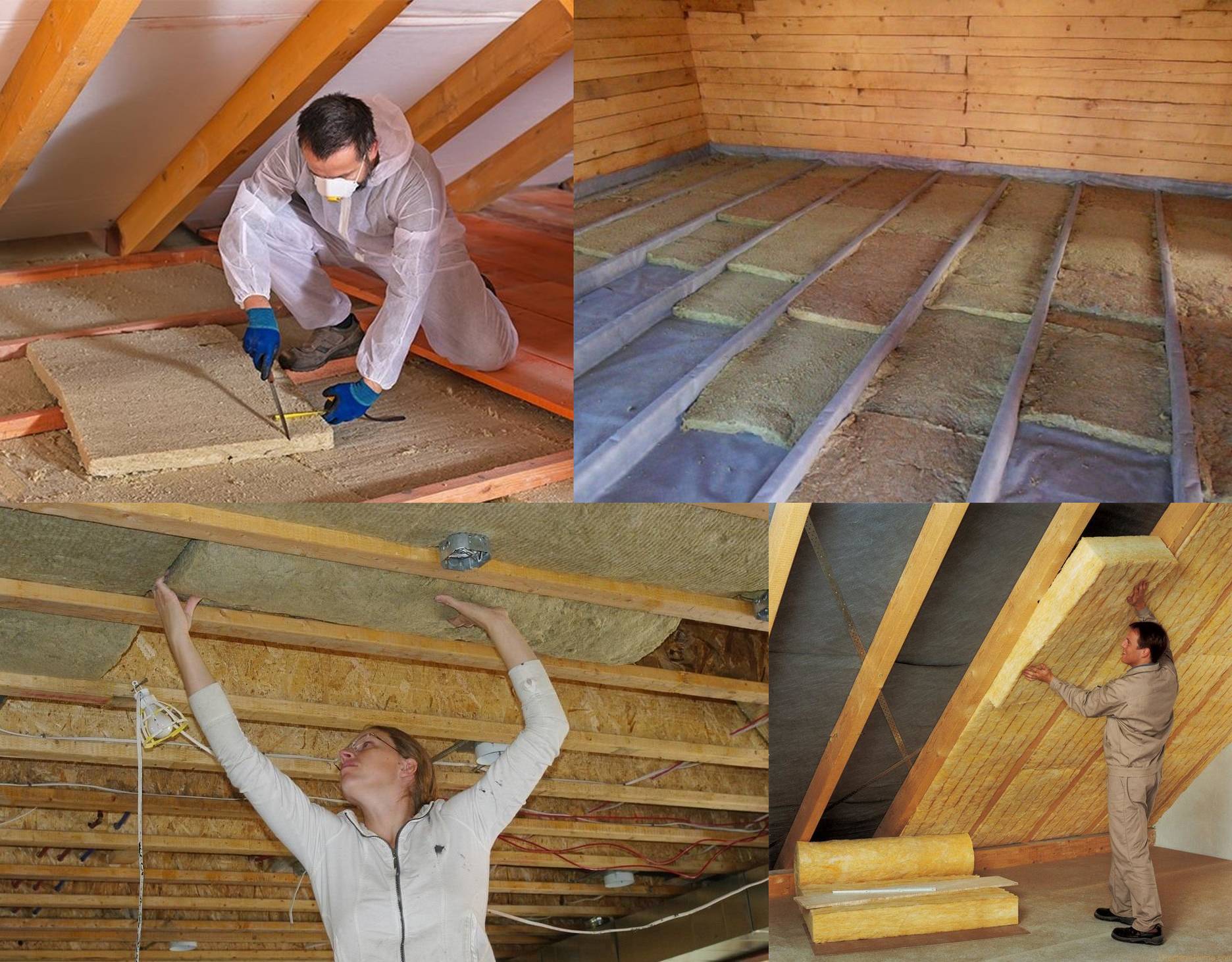
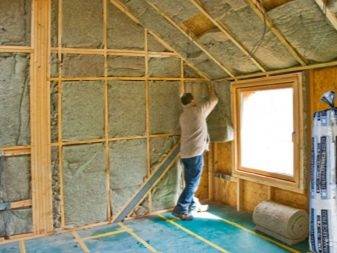
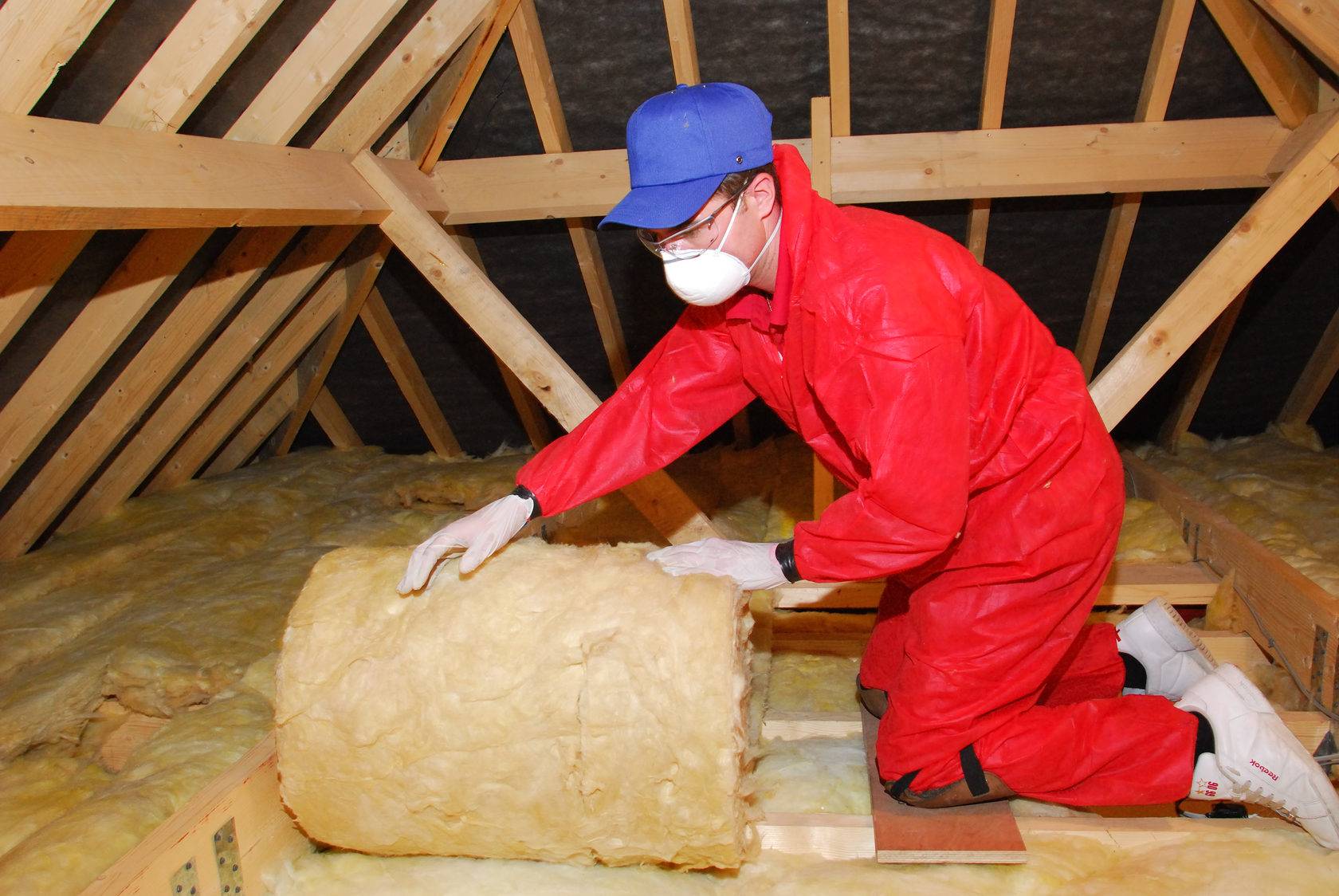
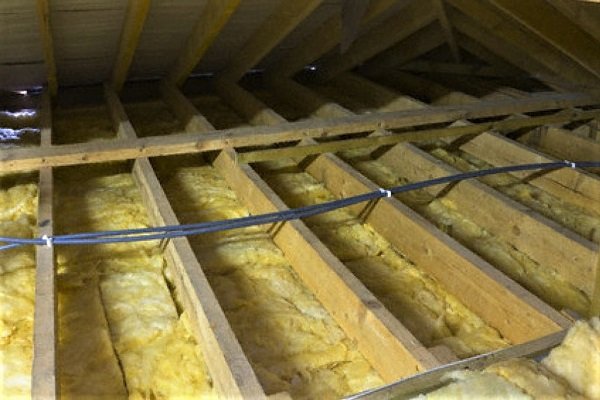
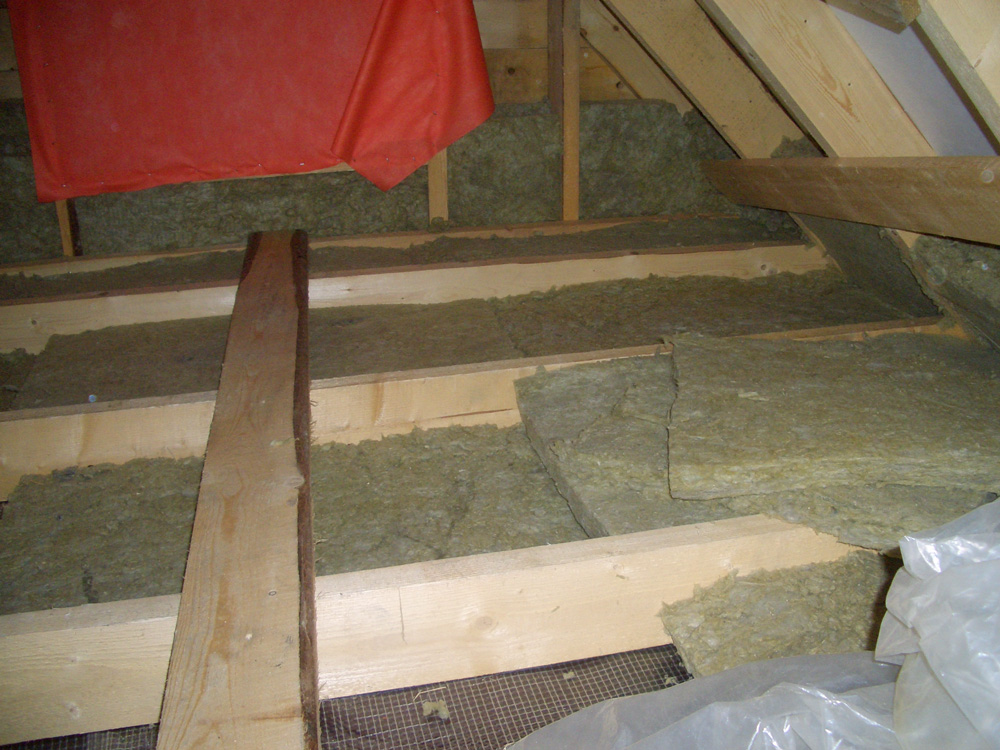
When insulating the ceiling in a wooden house, the vapor barrier is laid out with an overlap of 15 cm. The overlap lies on the walls, the beams and are fixed, and mineral wool is laid between the beams.When using rolls, keep in mind that they must fit the openings. Rolling is carried out along the location of the beams. The mats are tightly packed. Another layer of insulation is laid across the top.
Beams, joints are hidden, and the gaps are sealed with mounting foam. A vapor barrier is laid with an overlap of 15 cm. The seams are glued with adhesive tape. From above there is a screed of cement with sand. In a residential attic, boards or laminate are laid on the screed.
Insulation in a wooden house with foam
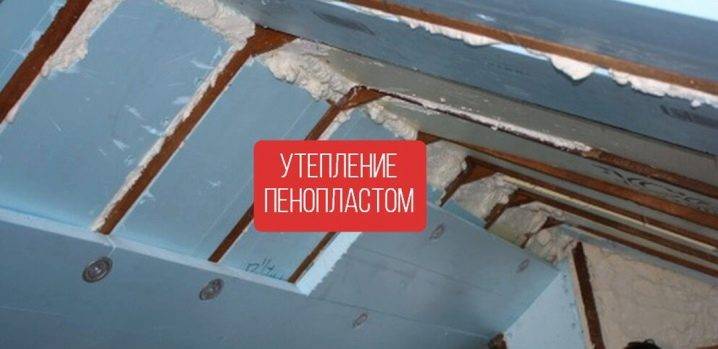
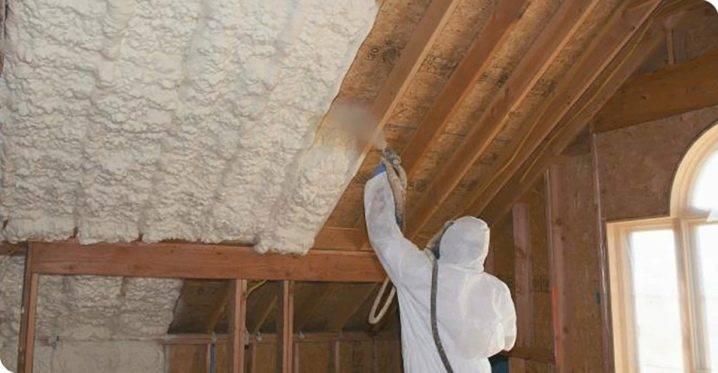
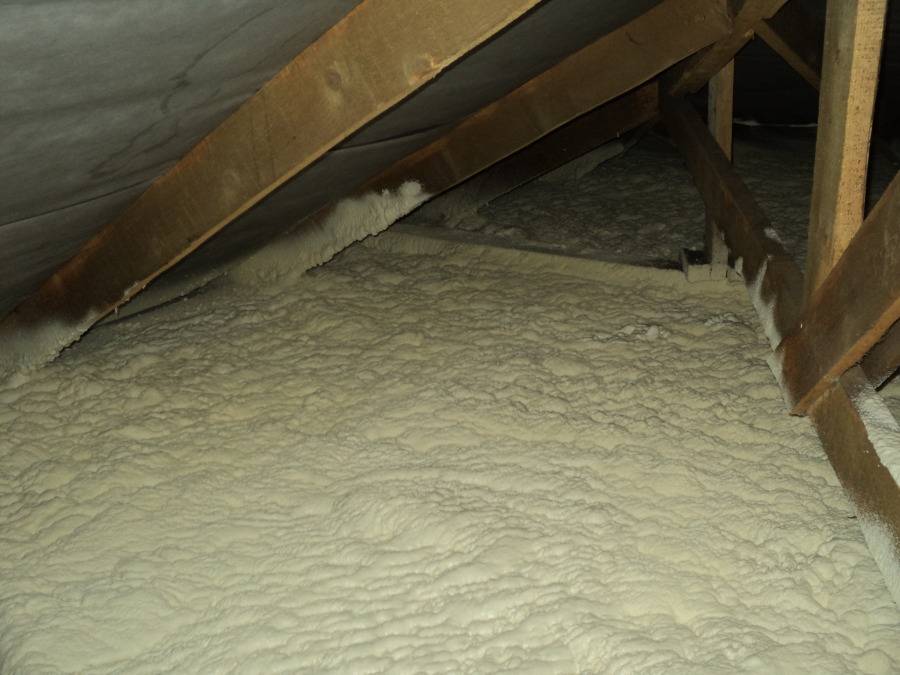
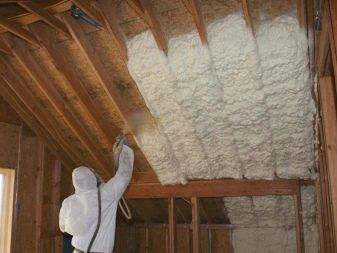
The most reliable type of insulation for the home is the use of polyurethane foam or polystyrene foam boards. These materials are the most expensive. Installation, in comparison with the previous view, is more time-consuming from the inside, but at the same time, the attic area in this option is the least lost. The insulation lies more tightly than others during the insulation of the ceiling in a wooden house.
A rolled vapor barrier is mounted on the inside of the ceiling of the house. Styrofoam is tightly inserted between the bars. To do this, it is measured and cut to size. Then comes another layer of vapor barrier material with an overlap of 15 cm. The seams are closed. A crate of wooden or iron bars with a cross section of 5 by 5 centimeters is installed on the beams. A ceiling made of GKL or GVL is attached to it.
All these materials can be used for insulation in a private house, bathhouse or cottage. Knowing how insulate the ceiling in a wooden house with your own hands, you can complete repair or construction work in a short time without involving specialists. Insulation not only allows you to keep warm in the house, but also becomes a good option for soundproofing.
Sheathing from the inside
It is not always technically possible to independently perform external thermal insulation of coatings. There are many examples: top-floor apartments, loggias with balconies, attics of private houses. In these cases, there is nothing left but to insulate the ceiling from the inside. So feel free to proceed with the preparation - seal all the cracks with mounting foam, treat the wood with an antiseptic, and concrete with an appropriate primer.
There are 2 ways of internal insulation of the coating:
- Installation of plate material - polystyrene or basalt wool - on glue, followed by fixing with dowels, if we are talking about a concrete surface.
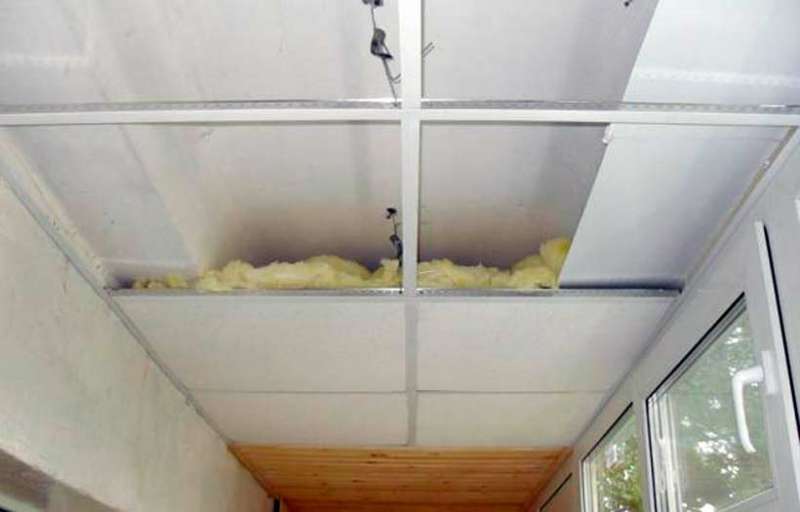
- Installation of suspended ceilings with laying insulation under the cladding.
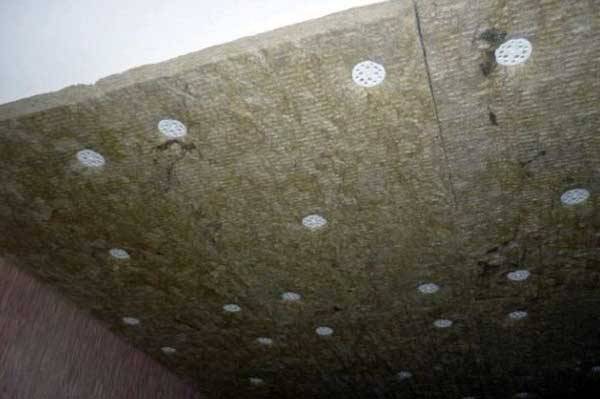
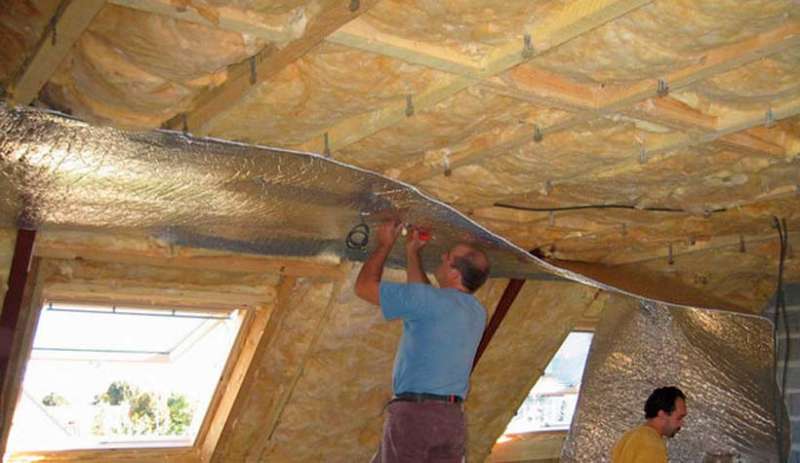
In the first option, mineral wool or polystyrene boards are attached to the ceiling with an adhesive mixture or mounting foam in such a way that the joints of adjacent rows do not match. After the glue has hardened, each element is additionally fixed with dowels in the form of fungi, as shown in the photo. From below, the insulation is closed with vapor insulation, after which the finishing coating is mounted - plaster or stretch ceiling.
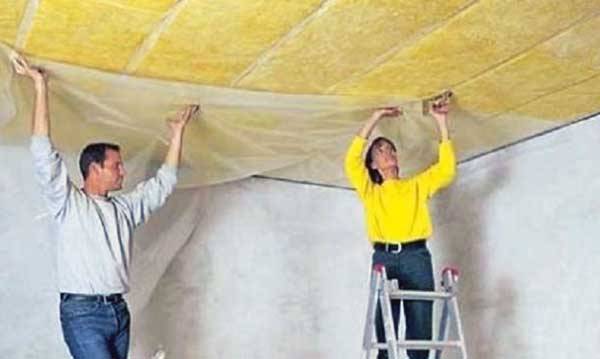
In the second case, a metal or wooden frame is attached to the ceiling with a spacing of rails equal to the width of the insulation (usually 600 mm). The lower plane of the frame should be separated from the ceiling by the thickness of the insulation or be lower. Then a rolled mineral wool is taken and inserted between the slats by surprise with additional fixation with dowels, the expanded polystyrene plates sit on the glue. Next - vapor barrier and finishing.
13 Features of internal insulation - tips for beginners
If the insulating materials are planned to be sheathed with clapboard or drywall, a crate must be built on the ceiling.The surface is marked with a level (normal, laser). Smooth straight lines are beaten off on it, serving as a guide for mounting metal or wooden rails. The distance between the latter is equal to the width:
- insulation plus 4 cm if mineral wool is used;
- expanded polystyrene boards, ordinary foam plastic and other hard materials.
The frame structure made of wood is attached to the ceiling with self-tapping screws or dowels in increments of 50–60 cm, and made of metal with special suspensions. After the construction of the crate, they begin to lay the thermal insulation, which is then covered with a vapor barrier membrane.
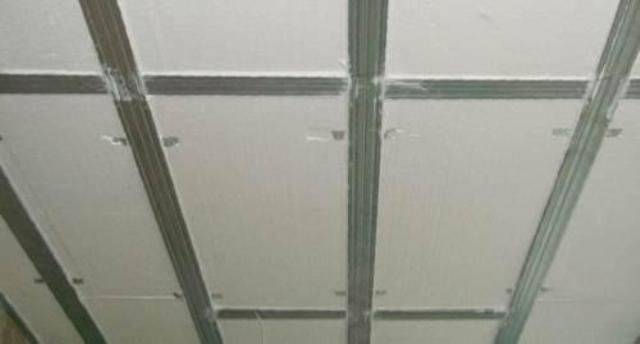
The film is fixed with double-sided tape (on steel profiles), staples and a stapler (on wooden bars). The created cake is sheathed with clapboard, plasterboard sheets. The joints between the latter are reinforced using sickle, and then they are puttied with a plaster composition. It is also used to mask the holes from the caps of fasteners (self-tapping screws).
If the insulation does not get off, it is allowed to glue it to the base ceiling with liquid nails, mounting foam or cement-based compositions. The algorithm for performing work is given below:
- The selected adhesive is applied pointwise with a spatula or trowel on the reverse side of the heat-insulating boards.
- The product is pressed against the ceiling, wait 10-20 seconds.
- The mounted insulation is additionally fastened with fungi with spacer plastic nails.
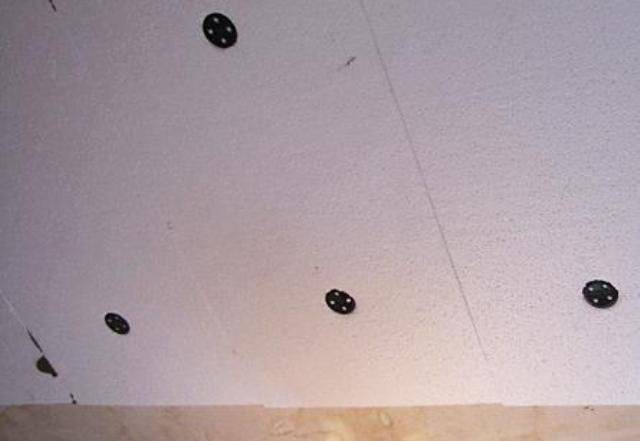
The gaps formed between the laid and fixed plates are blown out with foam. The excess is cut off with a knife. Styrofoam and XPS products are recommended to be covered with sickle and treated with plaster.



Thermal insulation of the loggia and windows on the second floor
The “weak” point of any room and attic, including glass surfaces, window and door openings. Through them, the lion's for warmth from the premises flows. Even if initially plastic double-glazed windows were installed in the window and doorway of the loggia, it is necessary to additionally insulate the slopes.
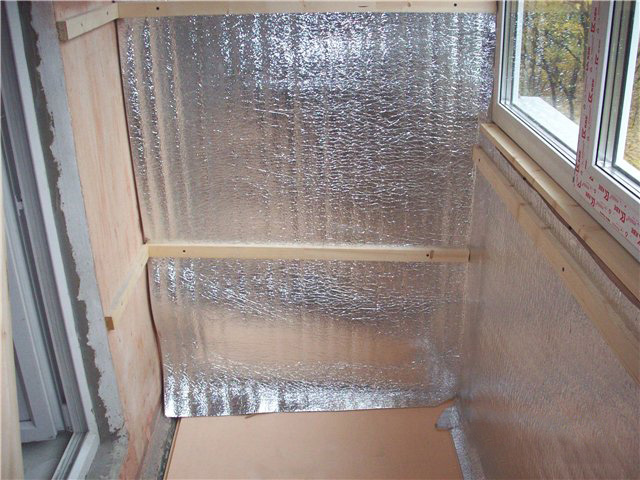
Any material can be chosen to insulate the window and door slope on the 2nd floor of a wooden building, but experts recommend using expanded polystyrene, polystyrene foam or any other cellular product.
The thermal insulation of the loggia is carried out by analogy with the work aimed at insulating the pediment.
Useful tips and tricks
Each material for insulating the ceiling from the attic side has its own advantages and disadvantages. The choice largely depends on the personal preferences of the owner of the premises, his financial situation and future plans for using the attic. Of course, it is better to give preference to environmentally friendly materials that will not cause allergies in households and will not pose a threat to the life and health of adults and children.
After insulation, you can convert the attic into additional living space, organize a pantry there for storing unnecessary things, or even make a small room. But this is at the discretion of the owner of the house.
For information on how to properly insulate the ceiling from the attic, see the following video.
Features of cold roofs
To protect a residential building from the effects of external phenomena, a cold-type roof is arranged. There are many thermal insulation products that help reduce heat loss.The temperature inside and outside the attic should vary within 4 ° C, so the air through the ventilation ducts should enter the attic, and not into the space under the roof. Then the humidity and temperature indicators will correspond to the street. Otherwise, the imbalance of modes will lead to the destruction of the truss structure and roofing.
The advantages of a cold roof are:
- Ease of maintenance. The roof has free space for access to any point, so repair and maintenance activities are carried out without difficulty.
- Good waterproofing. A warm attic involves the use of add-ons that violate the integrity of the waterproofing material. When installing a cold roof, installation of additional elements is not required.
- useful use. Despite the fact that the temperature in the attic is lower, it can be used as a temporary warehouse, and later converted into an additional room.
- Minimum heat transfer surface area. Heat loss is only possible through the ceiling.
Inlet and outlet vents work most effectively at a great distance from each other. When they are arranged under the wind board along the entire length, a full-fledged air exchange of the entire attic space is ensured. The inlets are located in places of greatest pressure, due to which the intensity of the blowing increases.
A cold roof is arranged on various types of buildings with a height of 1-5 floors. Therefore, the installation of thermal protection on the ceiling is carried out with an estimated thickness depending on the material and the region of location (climatic conditions). Often it is laid in a layer of 20-50 cm
It is equally important to take into account the exit areas of ventilation and chimneys through the attic floor. It is these zones that contribute to the maximum removal of heat to the outside.
On reinforced concrete floor
Reinforced concrete flooring is arranged in brick and block houses. It is carried out with hollow panels, monolithic filling. In PC slabs, mesh reinforcement is used only up to 4.5 meters. Longer panels are reinforced with prestressed reinforcement. Conclusion: with a length of more than 4.5, durable PB boards are preferable. So that the joints between the plates do not crack, they are glued with an elastic material.
It is much easier to close the warm contour of a house with reinforced concrete floors at the junctions of the ceiling and walls than with wooden ones (the problems of building operation are eliminated). Such an overlap allows, with a large span, to arrange a support frame for the roof without any problems.
There are two options for insulation.
Without cement-sand screed
The most rational solution, but for maintenance of the roof it is necessary to arrange walking bridges. Vapor barrier (despite the fact that concrete is vapor-tight) along the slab and parapet to the height of insulation is performed with bituminous mastic 2-3 mm thick. This layer separates concrete and insulation, prevents the latter from rotting.
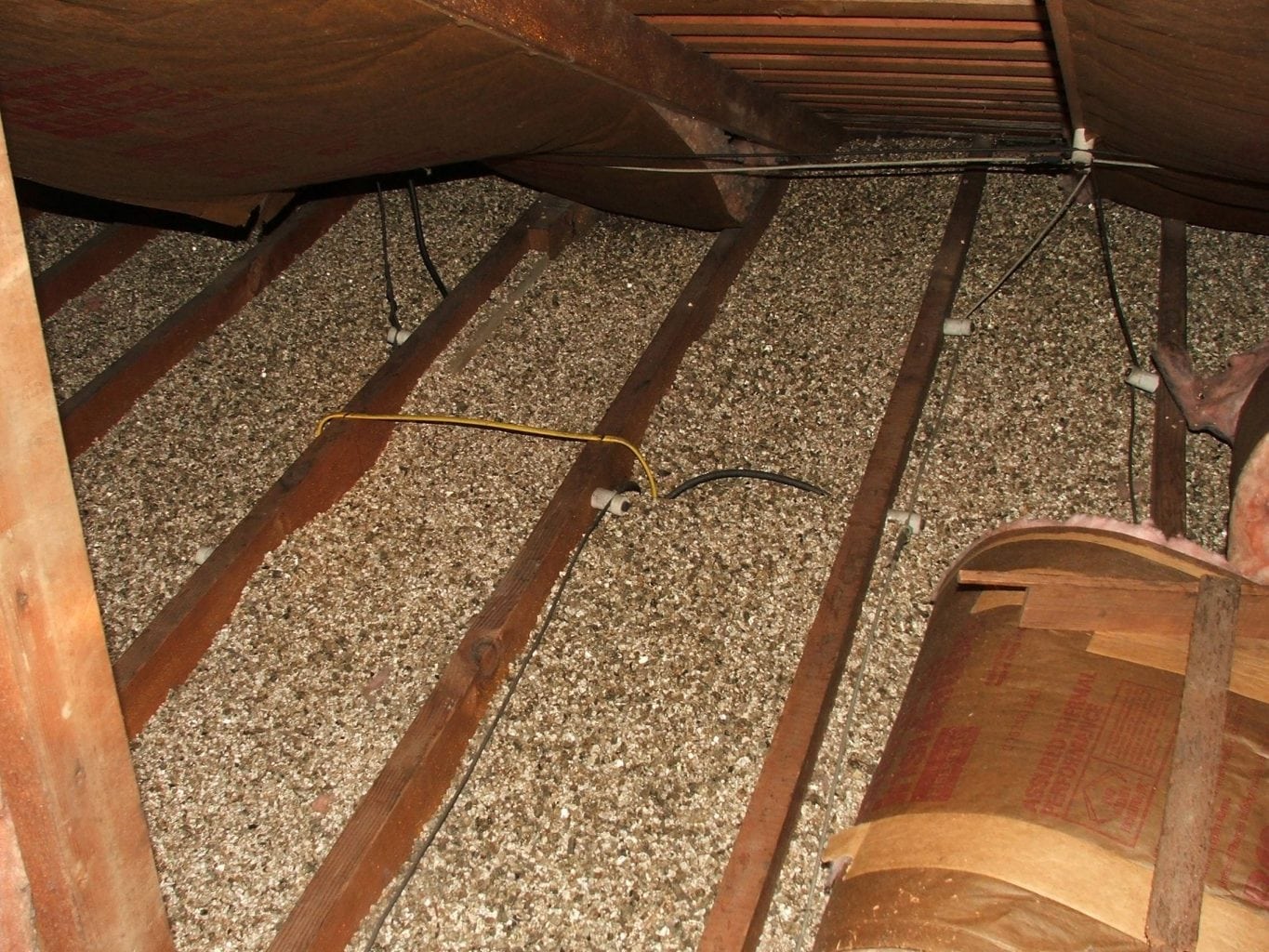
Insulation on ceiling in private house in this case - bulk and rolled materials. Mineral and ecowool, perlite, vermiculite. Expanded clay due to the high coefficient of thermal conductivity (in the light of modern energy saving requirements) is difficult to attribute to heaters. But when the insulation of the ceiling with expanded clay is a severe necessity, this layer must be increased and protected from blowing.


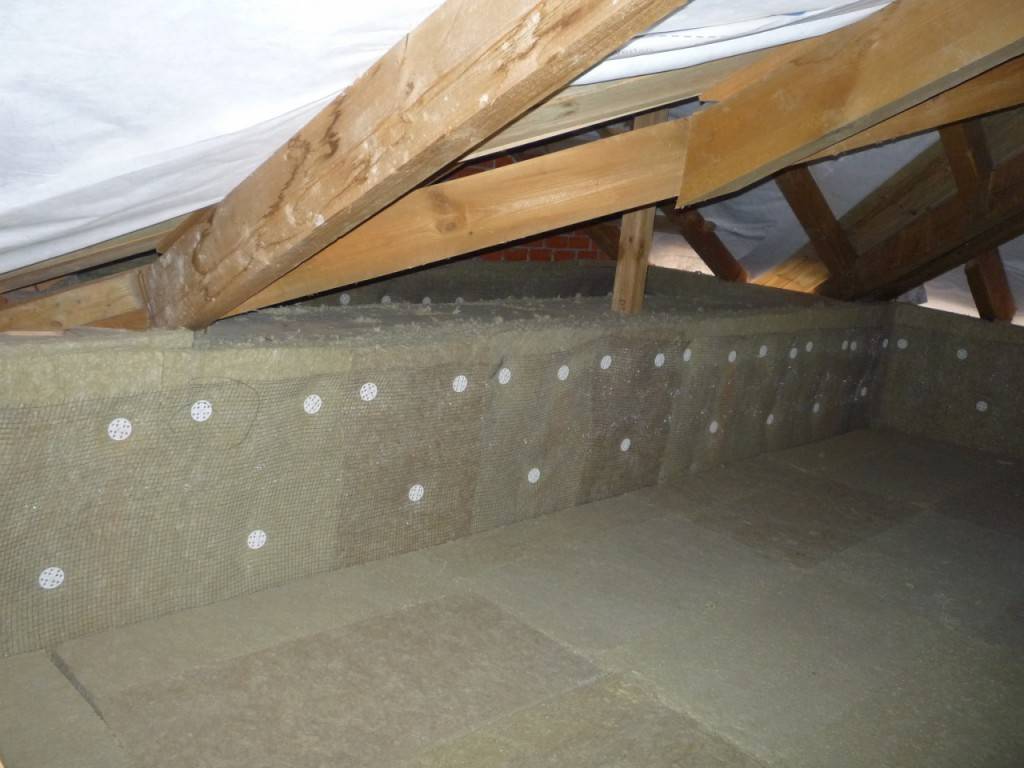


It can be insulated with D150 aerated concrete, foam concrete: it all depends on the area where the house is located.Sawdust, shavings with clay, gypsum, lime are also suitable for warm regions.
The pie looks like this.
- Reinforced concrete slab.
- Leveling strap.
- Vapor barrier (welded mastic or film) with access to the parapet.
- Arrangement of a lag when the attic is in operation or walking bridges when it is not in operation.
- Insulation.
- Vapor permeable wind barrier.
- The boardwalk is solid or revision.
A hatch for visiting the attic is arranged similarly to the option of insulation along the beams.
With cement-sand screed
Styrofoams work perfectly under the screed - white and extruded. Vapor-proof materials do not require additional protection against moisture, steam. Screed thickness - 3 - 5 cm (depending on the brand of foam). Insulation of the ceiling with foam plastic is more effective, since the plates have a selected quarter that overlaps the joints.
Effective ways to insulate the ceiling
There are several types of attic floor insulation: from the inside by nailing the insulation to the ceiling, and from the outside, using a rolled product and rolling it over the attic surface. Both methods are very practical, the main difference is the choice of the appropriate product and installation method.
Work indoors
When warming from the inside, you can use mineral wool due to its high heat-insulating and vapor-permeable properties. Often it is laid inside a suspended structure made of metal profiles and sheathed with drywall. However, it is forbidden to compress it, as it has air gaps. When compressed, they disappear, and the thermal performance decreases sharply.
Other materials can also be installed on the frame or screwed directly to the ceiling, taking into account the laying of the vapor barrier layer.
Work outdoors
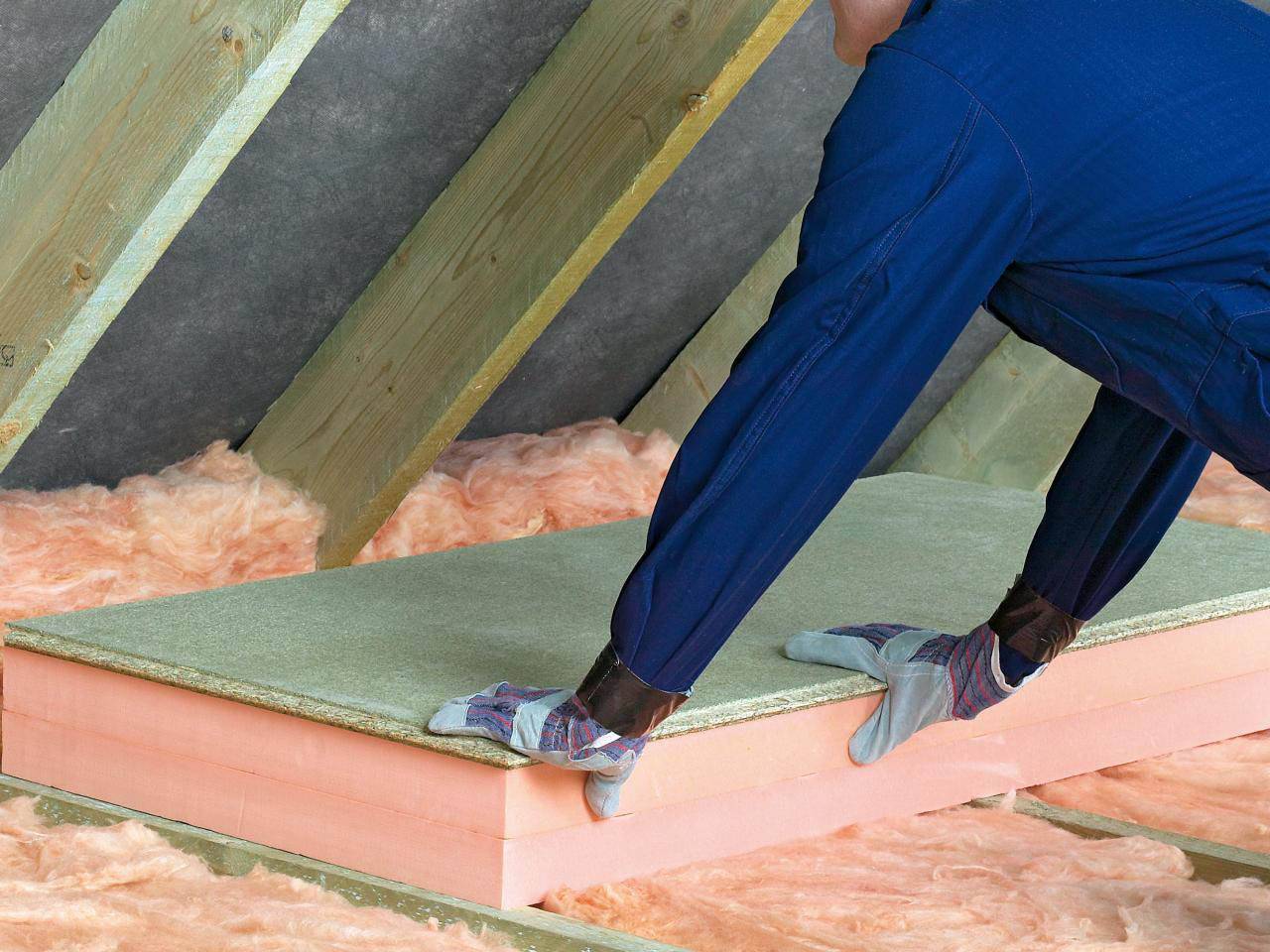
From the side of the attic it is recommended to lay roll or slab material, since it does not require careful fixation or frame manufacturing. This is a practical way, since the insulation does not take away the useful height of the room. Before carrying out work, the surface should be thoroughly cleaned of foreign debris. Laying can be carried out in one or two layers with a thickness of 30-50 cm using mounting foam to fasten them.
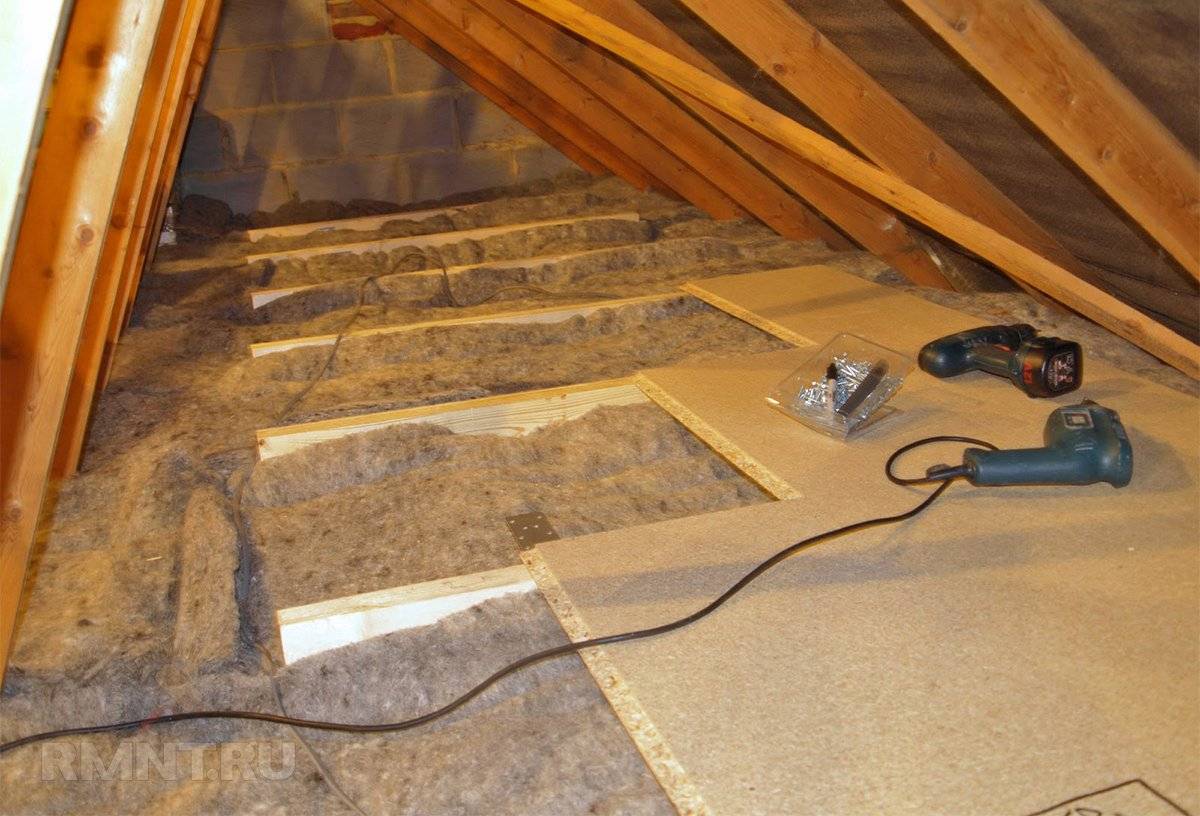
If the attic space is not used in the future, then additional coatings are not required. If it will be equipped for storing things, then the insulation is covered with plank flooring or sheet moisture-resistant plywood. When using bulk materials, coating is also not required, but this does not apply to dry leaves or sawdust.
Recommendations for thermal insulation work:
- thickness should be calculated according to the region of residence and type of material;
- based on the selected product, you should know how to properly insulate the ceiling with a cold roof to ensure maximum effect;
- when laying several materials on top of each other, the vapor barrier indicators should increase from the bottom to the top (the other way around is impossible);
- mineral wool cannot be covered with expanded clay or vermiculite in order to avoid its punching;
- it is forbidden to lay vapor barrier on both sides of the heat insulator, so as not to lock in moisture and not spoil the material;
- all joints of the connection of steam and heat-insulating materials must be sealed to eliminate cold bridges.For this, adhesive tapes, mounting foam, a special solution or glue are used.
Determining the thickness of the thermal insulation
When we figured out how to insulate the ceiling, it is necessary to find out the thickness of the insulating layer. Ideally, such calculations should be performed by design engineers using a rather complex technique. It takes into account the thermal conductivity of all construction materials, up to plasterboard cladding.
We offer a simpler method that allows you to determine the thickness of the insulation with acceptable accuracy using a simple formula. The algorithm of actions is as follows:
- Find out the exact thermal conductivity λ (W/m°C) of the selected material or take the value shown in the table below.
- Refer to the building regulations for your country of residence to find out the minimum allowable heat transfer resistance R (m² °C / W) for floors in a particular region.
- Calculate the thickness of the insulation in meters using the formula δ = R x λ.
Example. According to SNiP, floor insulation in Moscow should provide heat transfer resistance R = 4.15 m² ° C / W. If foam plastic with thermal conductivity λ = 0.04 W / m ° C is laid on the ceiling, a thickness of δ = 4.15 x 0.04 = 0.166 m or rounded 170 mm will be required. The thinnest layer will come out of polyurethane foam - 125 mm, and the thickest - from expanded clay (415 mm).
Expanded clay
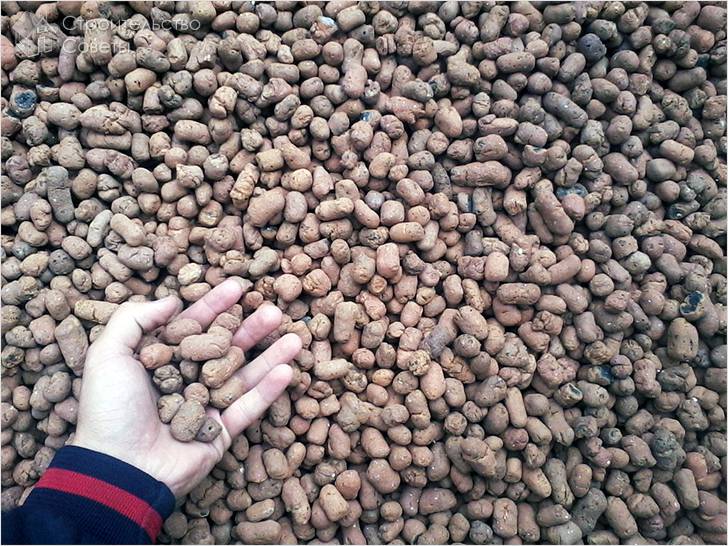
Expanded clay is a heavy substance, it is used to insulate ceilings from concrete floors, because there is a possibility that a wooden ceiling can collapse under the weight of this insulation.
Insulation of the ceiling from the side of the attic begins with a vapor barrier film. It is necessary to cover it with an overlap, and glue the joints with adhesive tape. The overlap on the walls will be up to 50 cm. The wooden rafters and the chimney are pasted over with the same film.
The next step is to place the mixed clay. Further, on top - expanded clay.


A sand-cement screed is laid on top of the expanded clay in a layer of 50 mm. The solution is quite thick. After drying, such an attic is used as a boiler room. It is fireproof and environmentally friendly.
How to calculate the layer thickness?
To calculate the thickness of the required layer of insulation, special calculations should be carried out. It will not be difficult if you use an online calculator. In general terms, the calculation scheme is based on the physical parameters of substances and established building codes.
For example, in Moscow, SNiPs established that the insulation of all types of floors should give resistance to heat transfer, R = 4.15 m2C / W. When a foam with a thermal conductivity of 0.04 W / mS is used, the required coating thickness is calculated as follows: 4.15 x 0.04 \u003d 0.166 m. Polyurethane foam will require a layer thickness of 125 mm, and expanded clay should be taken 415 mm in height.
Ways to insulate the ceiling
Material content
First you need to talk about ways to insulate the ceiling. In our case, this will be the ceiling of the last floor, above which there is only an attic and a roof - it is through it that the main heat losses occur.
The first method of insulation is external. If you do not plan to make an attic under the roof, then this method is suitable for you. A frame is mounted on the floor of the attic with the help of a wooden beam and boards, the inner space of which is filled with heat-insulating material. The design of the frame depends on what kind of insulation you use.
Scheme of external insulation of the ceiling in the house
If you want to arrange an attic or a small warehouse in the attic, then the ceiling should be insulated from the inside.In this case, in the rooms of the last floor, the above-mentioned frame is formed on the ceilings, fixed with dowels-nails. After laying the heat-insulating material, it is closed with drywall, plastic panels or clapboard. This method of insulation is very time consuming and also reduces the height of the dwelling. Therefore, at the stage of building a house, this moment should be taken into account and the walls of the last floor should be made a little higher.
Scheme of internal insulation of the ceiling in the house
7 Order of installation of mineral wool from the side of the attic
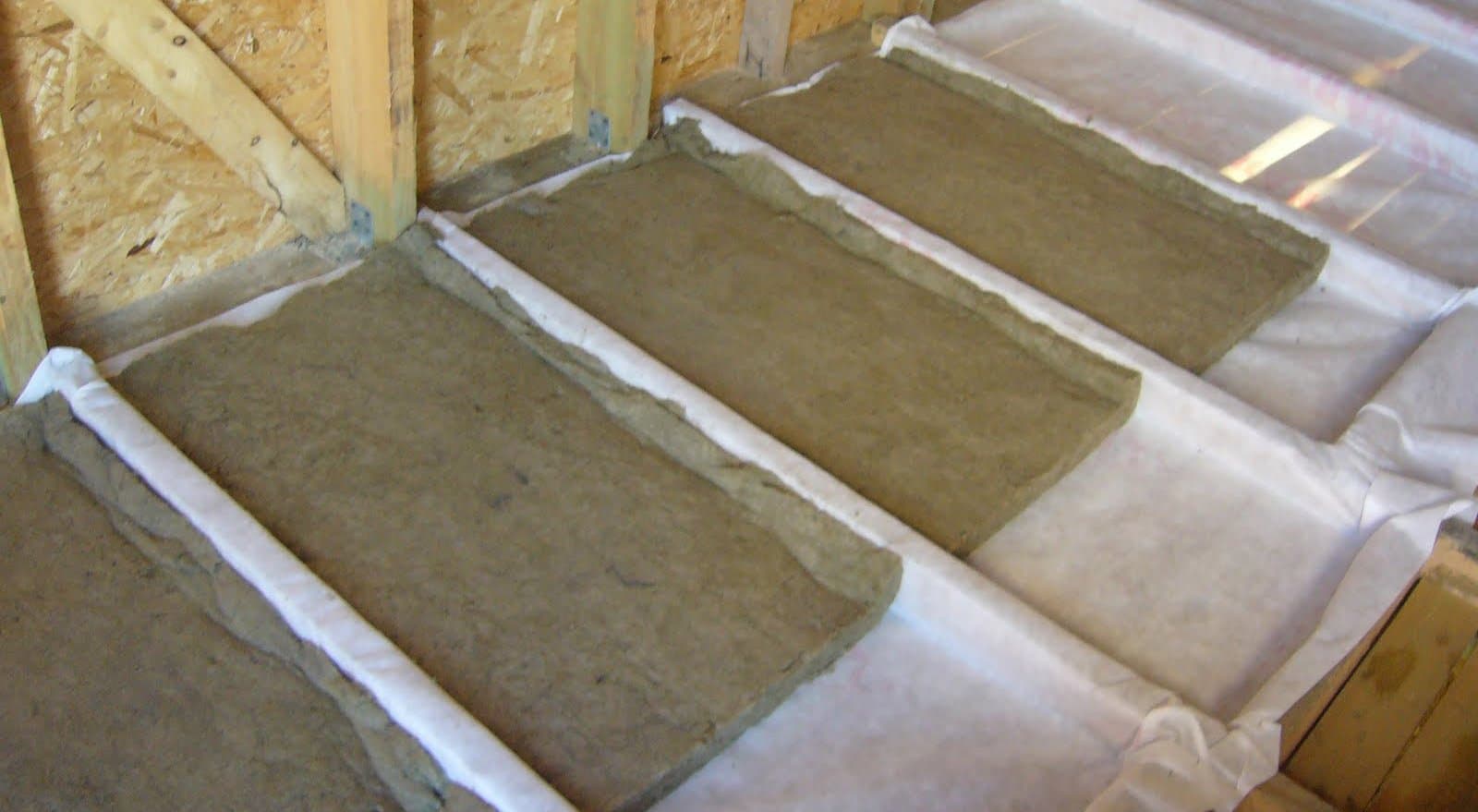
Warming is carried out using rolled or slab products. The former are best used when the floors in the house are wooden, the latter - if the ceilings are concrete.
Laying rolled mineral wool is an elementary process. The scheme of work execution is given below:
- The space between the beams is covered with a vapor barrier film. It is mounted with an overlap with an overlap (15–25 cm) on vertical surfaces. The joints are sealed with tape.
- A layer of mineral wool is laid on top (its thickness is calculated in advance). The cut pieces should fit snugly into the gaps between the beams.
- The insulation is covered with a waterproofing membrane.
- A boardwalk is being built.
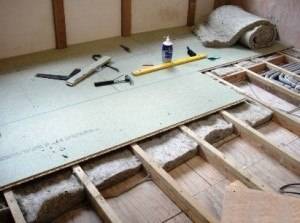
Before using mineral wool, concrete floors are carefully leveled and covered with a moisture-proof film. Plates are installed on top of it. The laying of the latter is carried out separately. The finished structure is covered with boards or plywood sheets.



