
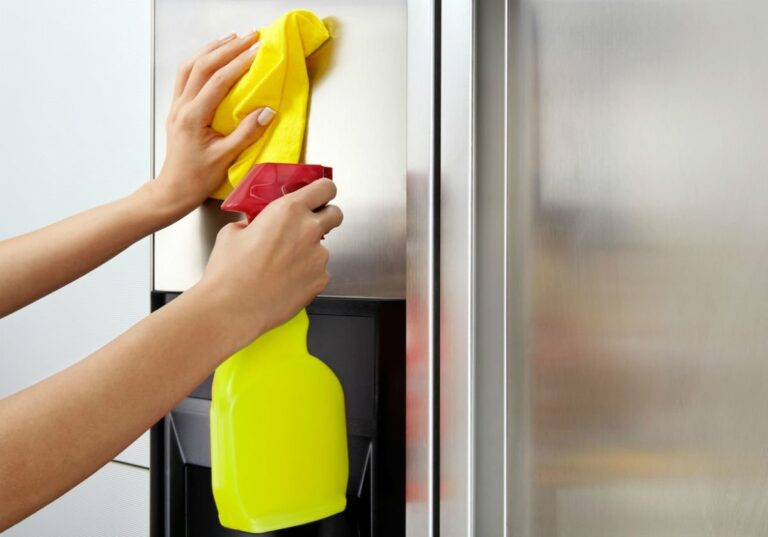
- Features depending on the material and color
- Making a cleaning schedule in the refrigerator
- Features of daily care
- Task for the week
- General cleaning of the refrigerator
- Refrigerator care instructions
- Commissioning a new refrigerator: how to properly wash and connect
- My new refrigerator before the first use
- Household chemicals
- Folk remedies
- Cleaning Prohibitions
- How to remove traces of thermal stickers or labels at home?
- Wash
- Scotch
- Boiling water
- hair dryer
- Freezer
- Vegetable oil
- Alcohol
- Acetone
- mine slowly
- Effective odor control
- Purchased fresheners and odor absorbers
- Gel compositions for the refrigerator
- Filter container or indicator egg
- Dispensary odor absorber
- Ionizer to absorb foreign odors
- Effective hand tools
- How to remove adhesive from refrigerator stickers
- Why shouldn't you use bleach?
- What means to wash the pollution?
- Cleaning products
- Folk remedies
- Vinegar solution
- Soda
- ammonium chloride
- Toothpaste
- Lemon acid
- Chemicals
- Wash preparation
Features depending on the material and color
It is not enough just to wash the refrigerator, it is important that after cleaning the device retains its original appearance:
- So refrigerators, the body of which is coated with polymeric materials or metallic, are strictly forbidden to clean with hard sponges and abrasive dry powders. The result of such actions will be the appearance of numerous scratches, which cannot be removed.
- It is also worth excluding from the range of detergents that include chlorine, acid, alcohol or ammonia. The application of such compounds leads to the fact that the colored polymer coating becomes cloudy.
- An excellent cleaner for a white or colored case is dishwashing gel.
- Refrigerators with paintwork also do not tolerate cleaning with hard sponges and abrasive scouring powders. In cleaning use only soft sponges, microfiber cloths, soap solutions.
- Stainless steel refrigerator. To maintain its presentable appearance, you should forget about cleaning products that contain chlorine, alcohol or acid. For a stainless steel refrigerator, special care products for household appliances will be an ideal solution. Also, glass cleaners (without alcohol) or soft microfiber cloths will come to the rescue.
- Of particular note are refrigerators, the front panel of which is made of glass. Ammonia diluted with water or special glass care products will help keep such surfaces clean.
Making a cleaning schedule in the refrigerator
Cleanliness is the key to health. This statement becomes an axiom when using household kitchen appliances. A clean refrigerator is the key to keeping food fresh and free of unpleasant odors.
To prevent the unit itself from causing food poisoning, it is necessary to monitor the condition of all compartments of the refrigerator and freezer.
In order not to risk the health of the household and not to start the state of the kitchen assistant, experienced housewives recommend sticking to a simple cleaning schedule.
Features of daily care
Maintenance comes down to the timely removal of "fresh" streaks and stains - it is much more difficult to remove dried dirt.
It is advisable to wipe the refrigerator handle with a disinfecting wipe or treat it with an antibacterial spray after 1-2 days.
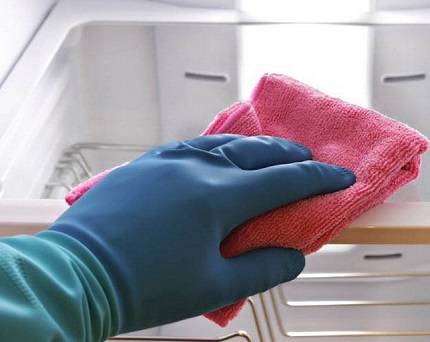
Minor contamination should not be underestimated – pathogens and pathogens rapidly develop, spread and infect stored food
Task for the week
Before a test purchase of products, an audit of the contents of the refrigerator should be carried out. It is necessary to get rid of stale products and clean the shelves from traces of contamination.
General cleaning of the refrigerator
The frequency of cleaning depends on the intensity of use of the refrigerator, the load of its products and the type of cooling system. The frequency of general cleaning of the refrigeration compartment is once every 3-4 months, freezers - every six months.
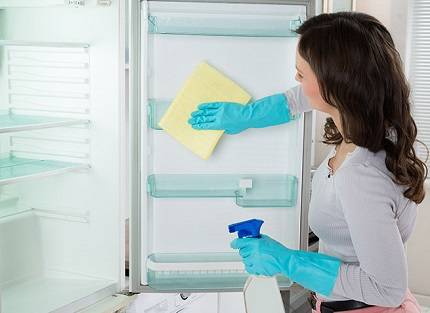
In order not to spend half a day on cleaning, washing different parts can be done on different days, for example: on Wednesday, clean the boxes for vegetables, on Friday - shelves, etc.
Refrigerator care instructions
Dear hostesses, if you want your refrigerator to always be clean, it must be washed regularly. But here, in order not to do this every day, follow the simple rules of care:
- Store meat and fish on the lower shelves of the refrigerator compartment so that the juices do not drip or drip onto other foods. In addition, it will reduce the risk of possible food poisoning.
- Separate raw and cooked foods into separate shelves.
- If some foods start to spoil, try to eat them first. Do not let them get moldy, otherwise you will not avoid washing the refrigerator.
-
Clean up any spilled liquid or spilled food immediately and wipe down the refrigerator shelves. Let it become a habit, and for a long time you will forget what general cleaning is and how to wash the refrigerator;
- If you're always careful not to accidentally spill soup in the fridge, you still need to wipe down the shelves every week.
- Store all foodstuffs in airtight containers or plastic bags so that they do not stain the surfaces of the refrigerator compartment.
- So that one day you do not spend several hours washing boxes for vegetables and fruits, cover them with polyethylene or thick paper. So you protect the plastic from severe contamination.
- Any food should be thawed in deep containers. For example, when defrosting meat, do not put it in a shallow plate, otherwise melt water with blood will flood the shelves of the refrigerator, and then you will have to wash the entire refrigerator.
- Even if you are in a hurry to get to work, wipe off any dirt immediately.
Throw away those canned zucchini that are in the farthest corner of your refrigerator. If you haven't eaten them within a week, you're unlikely to ever put them on the dinner table. Although regular cleaning of the refrigerator is not a very exciting activity, but this way you will save a lot of free time on weekends and can spend it on a family walk in the park.
Commissioning a new refrigerator: how to properly wash and connect
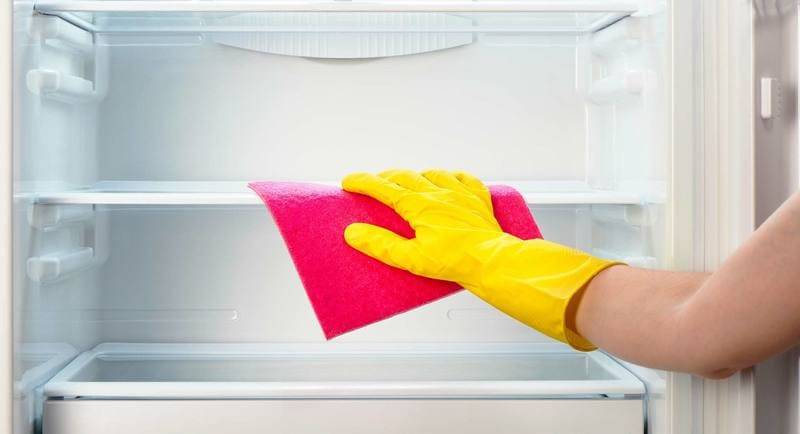
Before plugging in a new refrigerator, it needs to stand for several hours - this is especially important in the cold season. In summer, an hour will be enough
It is necessary to wash the new unit with a soft sponge, without using abrasive agents, so as not to damage the surface coating. Means for removing unpleasant odors are not needed, because. there should be no smell inside the new refrigerator.
Ideal for use would be a solution with soda. Thoroughly dry all surfaces of the refrigerator, including removable parts. After washing, remove the soda with a clean sponge and wipe the refrigerator with a dry cloth. When all surfaces of the refrigerator are clean and dry, you can connect it to the mains and put food inside.
My new refrigerator before the first use
Washing a new refrigerator before turning it on for the first time is quite simple, because only the purchased equipment does not have serious contamination obtained during operation. That is why washing household appliances is quite simple.
Household chemicals
Today, there are a lot of different household chemicals, which are widely used to clean various surfaces in the house. In the store you can even buy special detergents exclusively for the refrigerator. This product can also be used to wash household equipment before first use.
Instructions for use are identical for almost all detergents:
- The first step is to install the refrigerator and clean it with a dry cloth from dust and small debris, if any.
- Next, you should dilute the purchased product in warm water. We collect liquid in a small basin, add detergent and stir it.
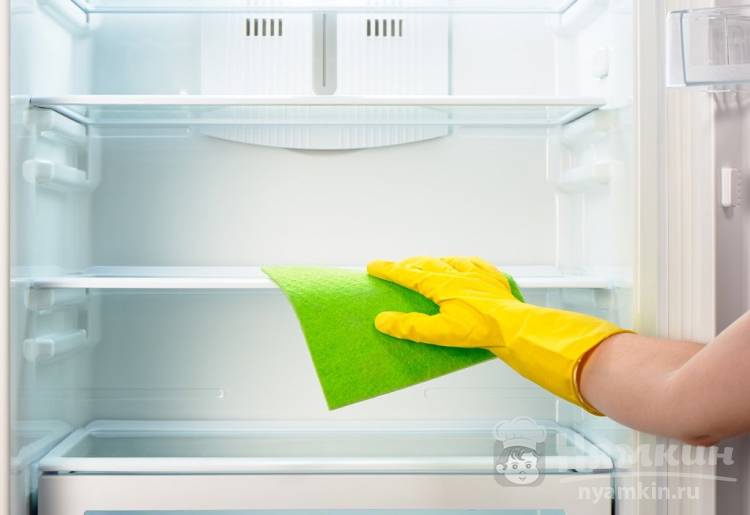
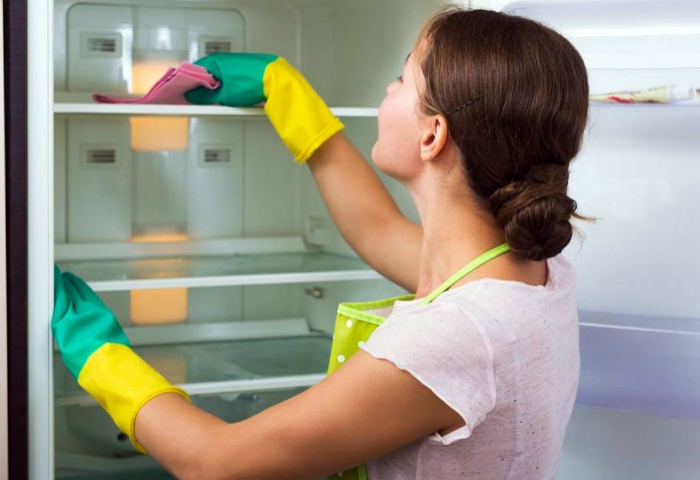
- With a soft sponge or cloth dipped in soapy water, carefully treat all surfaces inside the refrigerator, especially wiping plastic trays and shelves from all sides with high quality.
- After cleaning with detergent, the new refrigerator must be additionally rinsed with clean water to get rid of soap stains.
- At the final stage, we wipe the walls and shelves with a dry towel so that there is no water left.
After washing, leave household appliances alone for several hours by opening the doors of the freezer and refrigerator. In this case, household appliances will ventilate by themselves, and the unpleasant smell of new plastic will disappear. Until this moment, you should not turn on the household appliance in the network and certainly should not put food on the shelves.
There are three main types of household chemicals for the refrigerator: liquid, helium and pasty. Do not use abrasive detergents containing acids. In this way, you can damage the plastic walls of the refrigerator.



Folk remedies
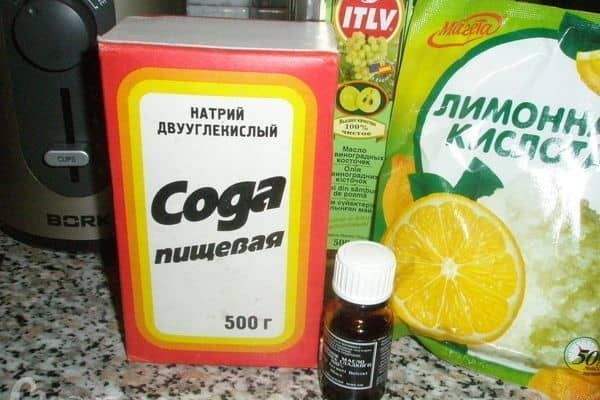
You can also rinse and disinfect the refrigerator after purchase using folk remedies. The easiest and most effective way is to use baking soda. Such a detergent is affordable and completely safe, as it is not an allergen.
To properly treat the refrigerator with baking soda, follow the following step-by-step instructions:
- First of all, as in the case of household chemicals, the refrigerator must be cleaned of dirt and dust with a dry cloth.
- Pour a liter of warm water into a small enameled basin, add about one hundred grams of baking soda to the liquid, stir the liquid thoroughly.
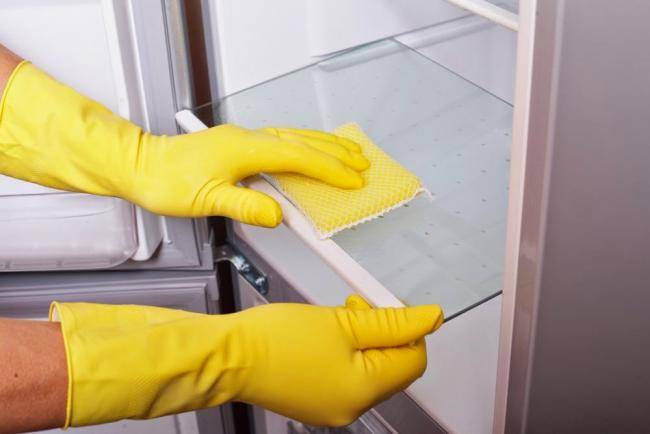
- If the refrigerator is equipped with shelves that can be removed, then we do this and wash the elements of household appliances separately. Use a new soft sponge or flannel cloth to clean the walls and shelves.
- Be sure to wipe the inside of the refrigerator with a dry cloth to get rid of excess water.
After treatment with soda, it is not necessary to rinse household appliances with clean water, but this can be done if desired. We ventilate the refrigerator for several hours, and then turn it on and use it for its intended purpose.
Baking soda is an all-purpose cleaner that not only cleans and sanitizes the inside of your refrigerator, but also completely absorbs bad odors.
With an unpleasant smell in the new refrigerator, a solution of nine percent vinegar will help to cope. We dilute a few tablespoons of vinegar in a liter of water at room temperature, after which we treat the shelves and walls of household appliances with liquid from the inside. The acid will eliminate all unpleasant technical odors, and airing will help eliminate the smell of the vinegar itself.
Do not put food in the refrigerator immediately after turning it on. Wait until the temperature in the cells returns to normal, which can take about half an hour. After that, fill the refrigerator with food.
Remember! If, when choosing a refrigerator, you felt that a very strong and persistent aroma comes from household appliances, this is definitely a reason to abandon the chosen model. In this case, the manufacturer used low-quality materials to reduce the cost of production. Surely you will not be able to get rid of persistent technical aroma even after several years of using such a technique.
Having studied the proposed material, now you know how and with what you can properly wash a new refrigerator at home before turning it on for the first time and whether it needs to be done.
Cleaning Prohibitions
Despite the desire to return whiteness to the refrigerator quickly, certain rules should be followed:
- When cleaning, do not use objects with abrasive surfaces - hard brushes, scrapers, knives, etc.
- Glossy surfaces should not be cleaned with powder products, only with liquid ones.
- Any cleaning agent used must be thoroughly rinsed off at the end of cleaning, unless otherwise specified by the manufacturer.
- Do not use chemicals that are not intended for cleaning the refrigerator, especially inside the device. Not only can they damage the surface, but they can also be harmful to health.
- After cleaning, the refrigerator must be allowed time to ventilate. To do this, it should not be left open for a long time.
The more carelessly the refrigerator is operated, the more difficult it will be to restore its whiteness.
Useful tips and tricks for cleaning the refrigerator can be found in this section.
How to remove traces of thermal stickers or labels at home?
There are many ways to deal with sticky residue. The thing can simply be washed, poured over with boiling water, or frozen.
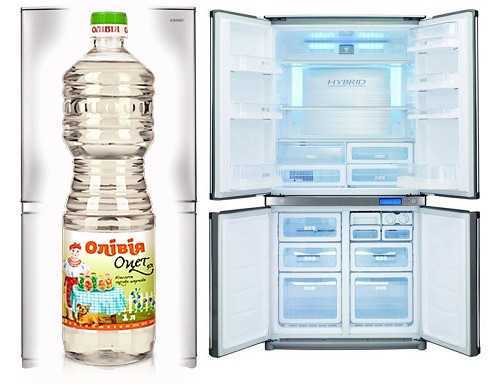
If the fabric does not tolerate contact with high and low temperatures, improvised means in the form of alcohol, vegetable oil or acetone come to the rescue.
Wash
The easiest way to get rid of a sticky residue is to wash it. To begin with, you can resort to a classic wash, using a regular powder. If there is no effect, they are "armed" with laundry soap.It contains fats that effectively dissolve the adhesive base.
Mode of application:
- Moisturize the contaminated area and lather thoroughly.
- Leave the thing to act for an hour.
- Clean the area with a toothbrush.
- Rinse the thing in water.
Instead of soap, you can use liquid dishwashing detergent.
Scotch
The adhesive tape has a sticky base, which, like an eraser, can be used to remove a sticky trace from the label. They operate as follows:
- lay the fabric on a flat surface;
- a strip of adhesive tape is applied to the stain;
- iron it with your hand for a tight connection;
- tear off the tape with a sharp movement, holding the fabric;
- repeat the procedure until the thing is completely cleared.
If visible glue particles remain on the fabric, they are removed with a cotton pad moistened with vodka or cologne.
Boiling water
You can remove the adhesive from the label with boiling water. Before proceeding with the procedure, you need to study the information indicated on the label.
If the manufacturer allows washing in hot water, then proceed as follows:
- Heat up water in a kettle.
- Place the thing in a basin and pour boiling water on it. Under its influence, the glue should come off.
- When the water has cooled slightly, the thing is inspected, the remaining glue is removed with a brush and laundry soap.
This method is not suitable for brightly colored and delicate fabrics.
hair dryer
If the fabric is not afraid of contact with high temperatures, then a hair dryer comes to the rescue in the fight against sticky marks. With it, you can remove even the most difficult sticky stains.
Procedure:
- put the thing on a flat surface;
- turn on the hair dryer;
- bring it to the stain as close as possible, but not close;
- use the back of a knife to remove the softened glue from the clothes.
If after the procedure it was not possible to completely clean off the glue, alcohol is used. It is applied to the hard side of the sponge, which is used to process a piece of fabric in the direction from the edge to the center.



Freezer
The sticky layer lends itself well to removal if it is frozen. This method does not require much effort.
Procedure:
- Put the item in a bag.
- Put it in the freezer for an hour.
- Remove frozen glue with the back of a knife, plasticine stack or spatula.
It is not recommended to use an object that is too sharp, such as a blade, so as not to damage the fabric.
The adhesive base does not tolerate exposure to low temperatures, so removing it is not difficult. To fix the effect, clothes are washed.
Vegetable oil
Vegetable oil perfectly dissolves the adhesive base, but it itself can leave greasy stains on the fabric. So that after cleaning the thing does not have to be thrown away, you need to follow the instructions:
- vegetable oil is applied to a cotton pad and the sticky mark is cleaned with it - you need to act with precision, without affecting a clean cloth;
- absorb the remaining oil with a paper towel;
- apply dishwashing liquid to the stain, leave for 30 minutes;
- wash the fabric in warm water with powder or soap.
It is necessary to soak a cotton pad with a minimum amount of oil so that it does not drain from it.
Alcohol
Alcohol and substances based on it, for example, vodka or perfume, dissolve the glue well.
Mode of application:
- Apply an alcohol-containing liquid to gauze folded in several layers.
- Wipe the stain with it until completely removed.
- Rinse item in warm water.
If the adhesive layer is dense, alcohol is applied directly to the stain and left for 15 minutes. After that, start cleaning.
Acetone
Acetone is not only a pungent odor, but also a caustic composition, so you need to use it carefully, in a well-ventilated area. If the fabric is colored, then it is better to use nail polish remover to remove stains.
The concentration of acetone in it is not too high, but it is enough to remove sticky marks.
If the fabric is colored, then it is better to use nail polish remover to remove stains. In it, the concentration of acetone is not too high, but it is enough to remove sticky marks.
Mode of application:
- apply liquid to a cotton pad;
- use it to remove glue from the fabric;
- if the stain is poorly cleaned off, the disk is left on it in the form of a compress for 5-10 minutes;
- after processing, the thing is washed.
You can work with acetone only with gloves. In order not to spoil the thing, the product is tested on an inconspicuous area.
mine slowly
With daily and weekly cleaning, everything is clear, but how to wash the refrigerator when it's time for a general cleaning? In this case, it is important to follow the sequence of actions correctly.
First of all, unplug the refrigerator to defrost it. The defrosting process is carried out every few months and is necessary for any model.
After that, open the doors and take out all the products. Here it must be said that if you plan to wash the refrigerator in the coming days, then you do not need to fill it to capacity with food, buying for the future. Products must be placed in a more or less cool place so that they do not have time to deteriorate during the time when you wash and clean the shelves. In general, it will be correct to put some products in a container that does not conduct heat well.
Remove all shelves, stands and containers. They will need to be washed separately and dried thoroughly.
The next step is to wash the refrigerator inside. Here the question arises of how to wash the refrigerator, which product to choose so that it is safe for health and well removes adhering food residues, as well as other dirt
A solution of baking soda in warm water works best.
When you wash inside, pay attention to every corner, every recess, sealing parts, door, so that there is no food left for bacteria to grow.
Be sure to wash all exterior surfaces to remove fingerprints, accidental splashes and dust. It will be right if you vacuum or clean the back wall, the space under the refrigerator and on top of it with a long-handled brush.
At the final stage, it will be necessary to wipe everything with a sponge with clean water and then dry with a soft cloth
Inspect everything and check if you managed to wash off the dirt well. If traces of some foreign smell remain, then you can wipe the shelves with a slice of lemon and ventilate the cooling unit for several additional hours.
As you can see, these seven points fit the main recommendations on how to clean the refrigerator. On average, the procedure takes about an hour, but it all depends on what size refrigerator you have and how hard it was run.
It is possible to return shelves and products to their place only after complete defrosting, however, we will not count the time for waiting for defrosting, since there are different models of refrigerators and different methods of defrosting.

Effective odor control
Untimely cleaning and improper storage of products often cause extraneous odors in the refrigerator.An odor may appear if the unit has been turned off for a long time with the door closed, or if the drainage system is clogged. Regardless of the source, a general cleaning of all equipment is required.
To prevent the appearance of an unpleasant odor, specialized household chemicals are used or folk proven methods are used.
Purchased fresheners and odor absorbers
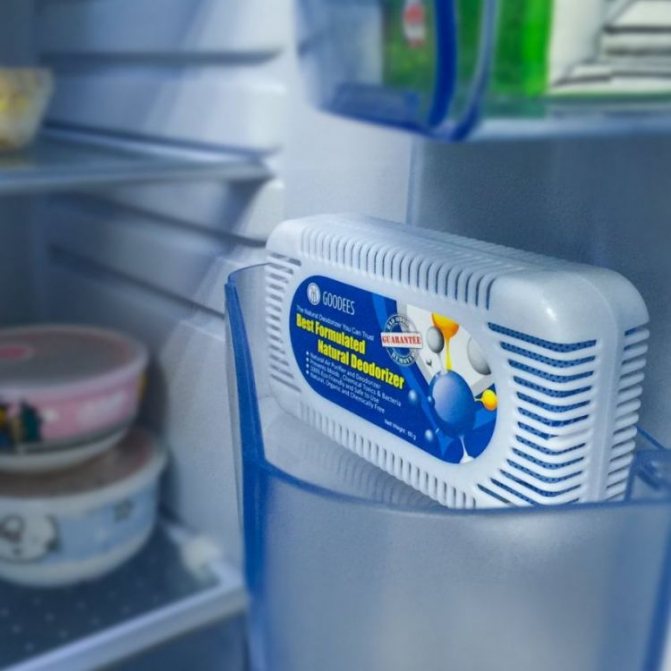
Only devices designed for use in kitchen appliances are allowed for proximity to food products. It is unacceptable to place appliances intended for refreshing rooms and furniture in the refrigerator.


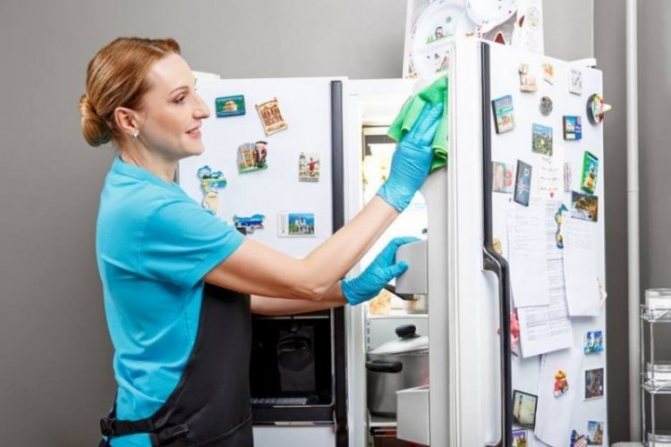
The following types of absorbers-fresheners are on sale:
- gel granules;
- indicator egg;
- dispensary neutralizer;
- ionizer.
Gel compositions for the refrigerator
They are a compact plastic container with helium content.
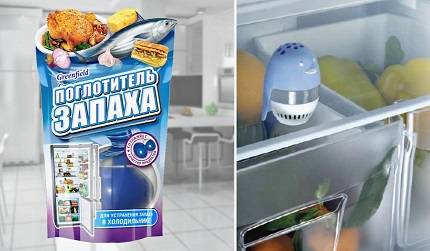
The device does not change the natural flavor of the food, and at the same time, effectively eliminates persistent odors of garlic, fish, dairy products.
Gel filler neutralizes odors for three to four months. The absorber can be installed on the shelf of the refrigerator door or fixed to the wall - Velcro is provided on some models.
Filter container or indicator egg
It performs two functions: it absorbs unpleasant odors and signals a change in temperature in the refrigerator. With an increase in degrees, the container acquires a blue-violet color, with a decrease, it becomes white.
The charcoal filter takes on the role of neutralizing odors. In order for the absorber to remain effective, the filler should be renewed every one and a half months.
Dispensary odor absorber
The device consists of a plastic case and a carbon filter.As a rule, it is sold complete with replaceable cartridges.
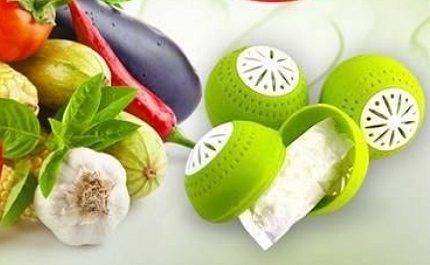
The active action of the carbon absorber is about 3-5 months - depending on the workload of the refrigerator with products. The dispensary is absolutely harmless and can be placed as close as possible to the products
Ionizer to absorb foreign odors
The odor neutralizer is battery operated and does not require constant presence in the refrigerator. To maintain freshness, it is enough to place the device in the chamber for 10-15 minutes a day.
Manufacturers of ionizers assure that the device not only removes extraneous odors, but also prevents premature spoilage of products.
Effective hand tools
Knowing the absorbent and deodorizing abilities of some products, it will be possible to create an effective odor neutralizer with your own hands.

Most often, housewives resort to lemon, rye bread, activated charcoal, soda and coffee beans. Selected products are placed in an open container, and the container itself is installed in the refrigerator
Apple cider vinegar works well. The concentrate must be diluted with water, and then wipe the shelves and walls of the unit with a solution.
Instead of vinegar, you can use ammonia or lemon juice. The refrigerator must be completely dry before loading food.
Using improvised means, you can create an aromatic diffuser.
For work you will need:
- orange or grapefruit;
- soda or salt;
- citrus essential oil.
Cut the orange in half and carefully remove the pulp, being careful not to damage the peel. Fill an impromptu basket with a soda-salt mixture and add a few drops of aroma oil to the filler.
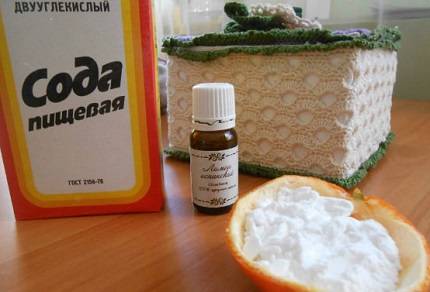
Soda and salt absorb unpleasant, old odors well, and citruses fill the interior of the refrigerator with freshness. It is better to install the basket in the door, so as not to overturn it and not to scatter the filler
More methods to get rid of unpleasant odors in the refrigerator, we discussed in the next article.
How to remove adhesive from refrigerator stickers
It is often more difficult to remove adhesive residue than the sticker itself. You can use the following cleaning methods:
- rubbing with an eraser. The eraser works mechanically, effectively removing not only the sticker itself, but also the adhesive layer. You need to rub hard enough and for a long time. After the gum, it is advisable to wash the place with soapy water;
- nail polish remover works well with almost any glue. It is enough just to rub the required area a little. Acetone effectively dissolves glue;
- the place with glue can be lightly sprinkled with flour, and then cleaned with a soft cloth.
If the glue is not removed by the above methods, you will have to use special chemistry. On sale there are means for removing old glue
They must be used carefully, following the instructions and safety precautions.
Why shouldn't you use bleach?
Chlorine is an inexpensive and popular remedy. It is used for purification and disinfection of drinking water for the population, in industry and the production of medicines, for cleaning bathrooms and hospital wards. Chlorine lime helps to get rid of extraneous odors, bleaches and destroys bacteria. However, it is better not to use it for a refrigerator. There are several reasons for this:
Poor ventilation and lingering chlorine smell.After treatment with bleach, even in a well-ventilated room, a specific pungent odor remains for several hours. From the refrigerator, it disappears many times worse and longer. The solution may remain under the rubber bands or get into the interior of the equipment.


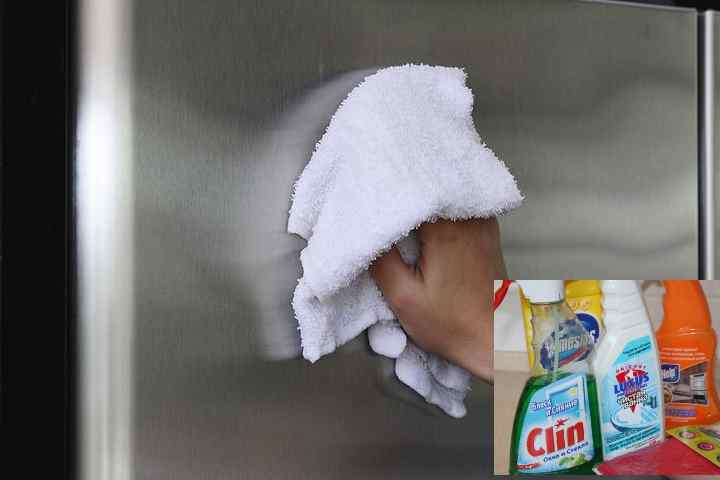


When using bleach, it is important to be able to rinse off the product with running water.
Damage to refrigeration equipment. Many modern materials do not tolerate the use of chlorine (acrylic, silicone, etc.).
d.). Parts of the refrigerator compartment may become discolored or deformed.
Danger of use. Bleach causes chemical burns not only when it comes into contact with the skin and mucous membranes, but also when its vapors are inhaled. Washing with bleach can result in bronchospasm, pulmonary edema, severe poisoning, and an acute allergic reaction.
Washing the refrigerator with bleach is impractical and dangerous. To do this, there are many other effective means. It would be right to choose something more gentle.
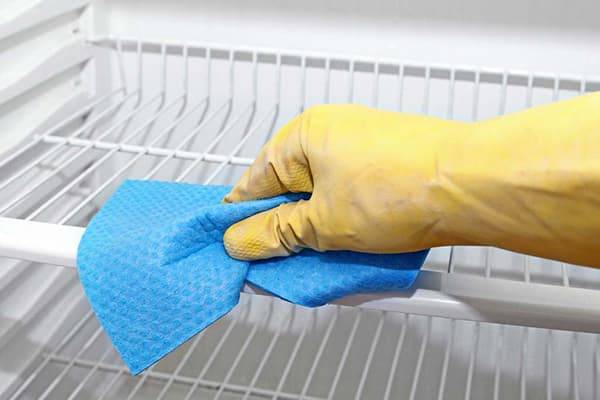
What means to wash the pollution?
Now you know the washing technology and the answer to the question “How to properly wash the refrigerator?”, But I’ll tell you how (by what means) to wash it from the inside. This information will be especially useful for those who do not like household chemicals, preferring folk remedies for cleaning.

So, with pollution and an unpleasant smell inside the refrigerator, they will do just fine:
1. Sodium bicarbonate (baking soda).
Stubborn or dried food stains and drips can be washed out with the familiar baking soda. But you need to prepare a liquid gruel:
- mix baking soda and warm water to the consistency of kefir;
- apply the resulting slurry to a soft gauze cloth;
- apply to the dried spot and leave for 30 minutes;
- after that, rub the contaminated area a little and rinse with warm clean water;
- Be sure to dry the area to be cleaned.
The baking soda will quickly loosen dried-on stains so they can be easily removed.
2. Hot soapy water.
Laundry or any other soap will qualitatively clean the rubber seals of the refrigerator:
grate a small piece of laundry soap on a fine grater and dissolve in hot water;
mix thoroughly to completely dissolve the soap;
wash all rubber seals with hot soapy water, paying special attention to wrinkles as they
it is in them that various dirt accumulates most of all;
after treatment with a soapy solution, wash off its remnants with clean water;
dry all the seals with a dry gauze cloth (due to its soft structure, it will remove excess moisture from the folds).
3. Only warm water for glass shelves.
Never wash the glass shelves of the refrigerator compartment with hot water. Due to a sharp temperature difference, the glass may crack. If you need to quickly clean the refrigerator, then wash the glass with lukewarm or cool water. If you decide to dedicate some of your time to cleaning, then take out a glass shelf and put it in the room. Let it warm up to room temperature. Only then can it be washed with hot water.
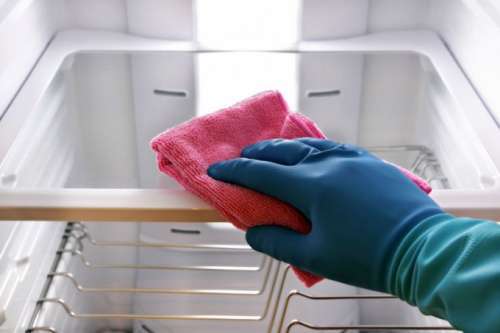
4. Hot water + ammonia.
In order to wash old stains and streaks, you can use a solution of hot water and ammonia:
- put on rubber gloves before the procedure;
- dissolve a little ammonia in hot water in a ratio of 1: 7, respectively;
- soak a cloth in the resulting solution and place it on the dried stain;
- leave for 30-45 minutes;
- at the end of the specified time, wipe the contaminated area with a soft sponge;
- only after that you can wash the refrigerator with plenty of water.
5. Apple cider.
Try not to resort to using aggressive chemicals to clean the inside of the refrigerator, it is better to replace it with those improvised means that are in your home.
You can clean the inside of the refrigerator just as well as professional products with apple cider. You will not believe, but this is a great tool for washing the refrigerator at home.
Cider should be used as follows:
- mix a glass of apple cider and a liter of warm water;
- stir well and soak a soft sponge in the solution;
- start washing all surfaces inside the refrigerator;
- then rinse all shelves and walls with clean water and dry with a kitchen towel.
6. Toothpaste or tooth powder.

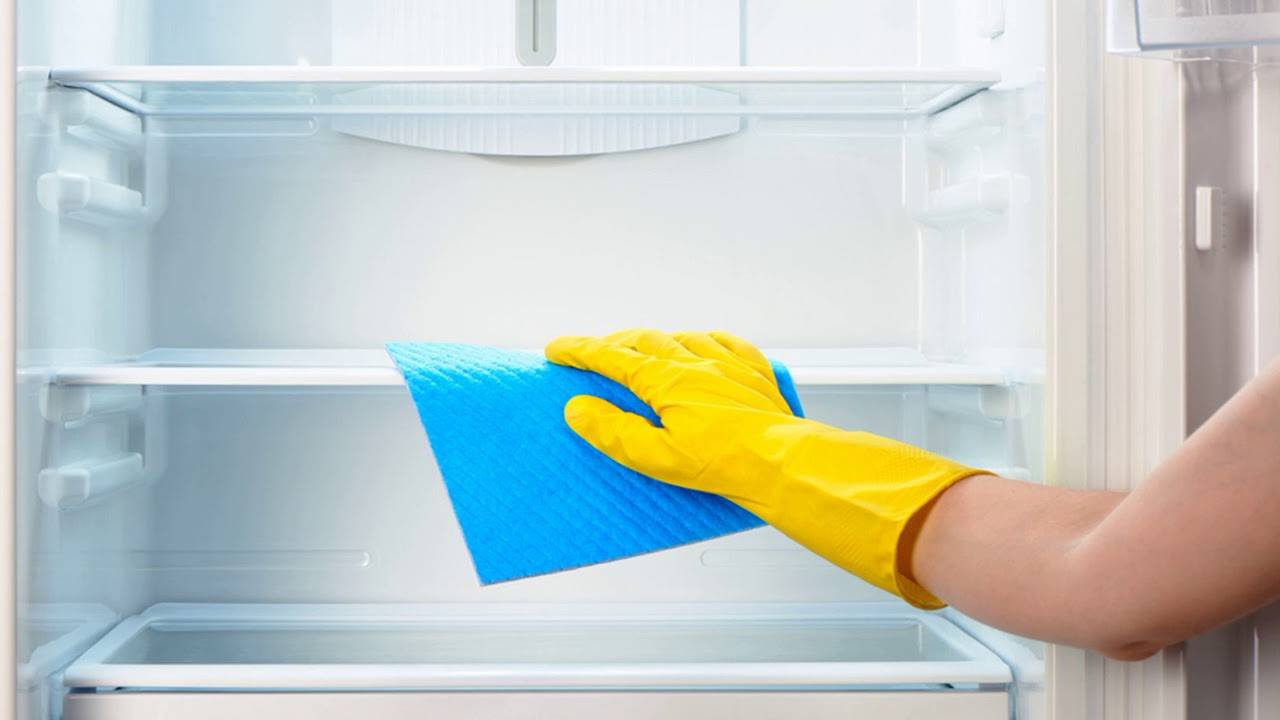


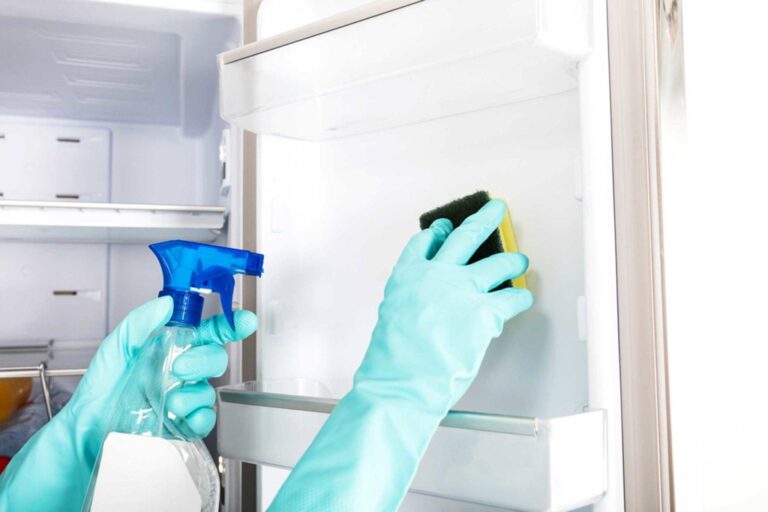
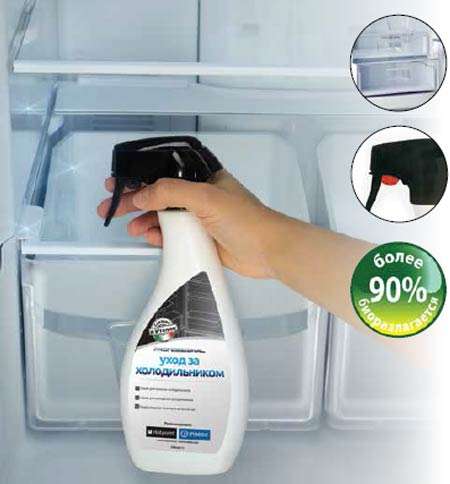


Old dried stains can be removed with toothpaste or tooth powder. Toothpaste is considered a mild abrasive that will effectively and gently clean the plastic surface of the refrigerator compartment:
- apply a small amount of toothpaste to a porous sponge and treat all surfaces inside the refrigerator;
- remove shelves, drawers and trays and wash in the bathroom or in the kitchen sink;
- finally rinse the paste thoroughly with plenty of water and wipe the surfaces dry;
- replace all removable elements.
In addition to effective cleaning, the mild flavor of the toothpaste will rid the refrigerator compartment of unpleasant odors.

An alternative to toothpaste can be tooth powder:
- mix tooth powder and water so that the paste has the consistency of thick sour cream;
- follow the same procedure as with toothpaste, then rinse with plenty of water and dry all surfaces with a dry towel.
Cleaning products
Refrigerator cleaner is not for everyone. Do not forget that we are talking about a place to store food, so aggressive and toxic detergents disappear immediately. Let's start with the best examples of "folk chemistry".
 With any kind of pollution and an unpleasant odor, not only ready-made store-bought preparations, but also folk recipes will help to cope.
Folk remedies
However, in order to effectively clean the walls, seals and shelves of the refrigerator, it is not at all necessary to spend money on purchased chemical products. Many folk remedies are quite capable of coping with the task: a solution of vinegar, ammonia, soda, citric acid and even toothpaste.
Vinegar solution
How to wash the refrigerator so that there is no unpleasant smell? The vinegar solution will help us. Prepared in a ratio of 1:1. Thoroughly wipe the interior surfaces. After that, we leave a rag soaked in vinegar solution in the chamber for several hours. Let's see the effect.
 Vinegar removes dirty stains of any complexity, disinfects the surface and removes odors.
Soda
Baking soda is great at absorbing odors. To begin with, it is worth thoroughly rinsing the internal compartments, including the freezer, with a soda solution. Then put an open jar of soda in the refrigerator and change it regularly, every three months. This will become a reliable prevention against bad odors - the unpleasant "ambre" will disappear forever. Perhaps this is not the most expected answer to the question of how to wash the refrigerator inside to eliminate the unpleasant smell, but the tool is quite effective ... and almost free.
 Perfectly copes with pollution soda solution.
ammonium chloride
Ammonia is a real "heavy artillery". It will help us get rid of unnecessary kitchen odors when other means have not helped. So, if you have already washed the walls, doors, seals, and even plastic containers, but the smells still remain, use ammonia. To begin with, it is worth wiping the walls, then turn off the power and leave the door open for several hours. Remember that the freezer may need to be defrosted.
 An effective composition based on ammonia.
Toothpaste
Learn how to use toothpaste the right way! Few would think to use it to clean the refrigerator ... but in vain! Toothpaste can effectively clean the sink, the side walls of furniture, the stove and even a dirty mirror. It is good to use it to get rid of dirt on the refrigerator membrane. It is more convenient to do this with an old toothbrush, it just fits the size of the gasket. You can try replacing the paste with powder. The purity and whiteness of the membrane is ensured (toothpaste gives a whitening effect).
 Toothpaste is easy to wash even the dirtiest areas.
Lemon acid
Another popular method is to wash the refrigerator with citric acid. The recipe is simple. Add a few drops of water to the yellow citrus jelly mass. Proportions are determined by eye. In the end, we should get a homogeneous mass of liquid slurry consistency. There is nothing “revolutionary” in the procedure itself either - wipe all surfaces with the resulting mixture, not forgetting first, if necessary, to defrost the chamber.
 Citric acid or essence allows you to quickly remove dirty stains and unpleasant odors in a short period of time.
Chemicals
Every woman has her favorite products, but we will look at those products that many housewives advise. Rating for I Recommend service. TOP Readers' Choices:
- Luxus Professional Clean Fridge. Brand of the German company Oricont. The first and most effective remedy on our list.
- Aqualon Light House, a product from the Russian Aqualon Group, one of the leading manufacturers of household chemicals for the domestic market. Effectively removes grease stains and other dirt.
- Top House, refrigerator cleaner. Top House is a new line of household cleaning products from the Italian company Tosvar Srl.
- Tortilla, eco-friendly product, cleans, effective disinfection (helps to destroy bacteria), manufacturer - Sirena, Ukraine.
- Edel Weiss, manufacturer Edelweiss-N, Russia.
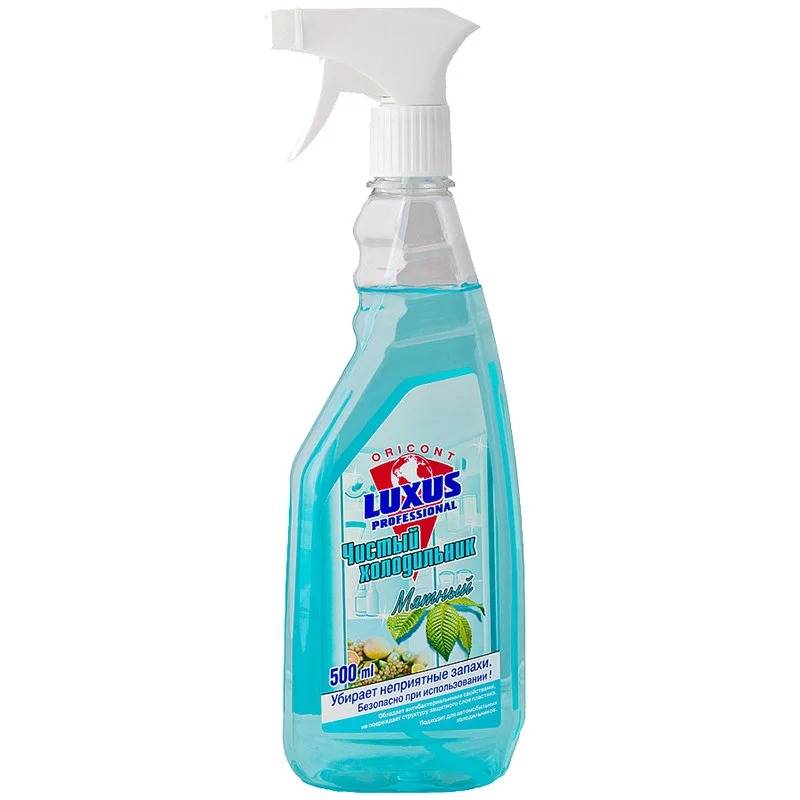 Cleaning with Luxus Professional A clean refrigerator will not take long.
Wash preparation
They brought you a refrigerator. The first thing to do is look inside. In the refrigerator and freezer, there may be items that are completely unnecessary for further use. We are talking about packaging materials - film, foam spacers. Throw away this garbage.
Gather all the items you need to sanitize the unit so that you have them at hand:
- household gloves made of rubber to protect the skin of the hands;
- sponges, napkins or clean rags;
- a clean, dry towel to remove excess moisture;
- the entire set of selected means - traditional or chemical;
- if you need to make a solution - prepare it.
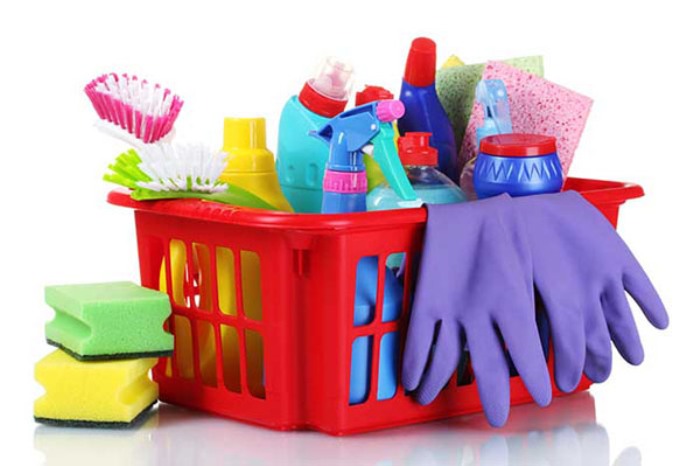
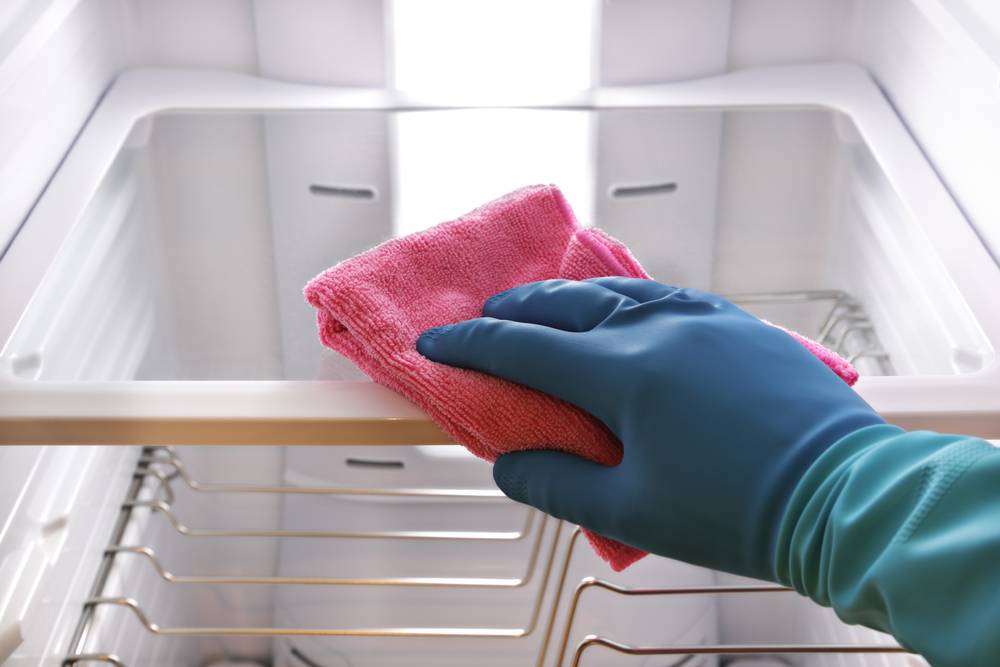
A sponge, rubber gloves, and household chemicals are all you need to clean your refrigerator.



