
- The need to protect the power grid
- Buying mistakes
- Load shedding switchgears
- Circuit breakers - modified "plugs"
- RCD - automatic protection devices
- Differential circuit breaker - maximum protection
- difference in purpose
- Purpose of residual current devices
- The purpose of the differential machine
- Other differences
- Price
- Dimensions and maintainability
- Connection
- What is better RCD or differential machine?
- Breakdowns: how to fix them and prevent them
- How to find out what "dwells" in the insides of an electrical panel, a differential machine or an RCD?
- The design and principle of operation of the RCD
- Criteria for selecting electrical protection devices
- Features of installation in the electrical panel
- Difficulty in wiring
- How is the operation diagnostics performed?
- What appliances are cheaper to buy and fix?
- Conclusions and useful video on the topic
The need to protect the power grid
A home electrical system is a complex branched network consisting of many circuits - lighting, sockets, separate power and low-current circuits. It includes all electrical installations that you have to use on a daily basis. The simplest among them are sockets and switches.
During the operation of household electrical appliances, unforeseen situations arise, which result in the failure of individual circuits, devices, as well as accidents.
The causes of trouble are the following phenomena:
- excessive load on the power lines;
- leakage currents;
- short circuits.
An overload can be encountered if you use new powerful equipment in an apartment with old wiring. The cable does not withstand the total load, overheats, melts and fails.
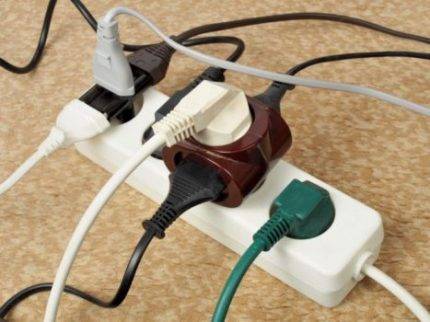
A magnificent example of the thoughtless use of a Chinese-made extension cord without a fuse, coupled with tees. Simultaneous use of several devices on the same power line can cause contact and insulation melting, as well as fire
The risk of leakage currents appears when the insulation of electrical cables and devices becomes unusable, the installation is incorrectly performed or the equipment is grounded.
If the current rises above 1.5 mA, the effect of electricity becomes noticeable, and more than 2 mA causes convulsions.
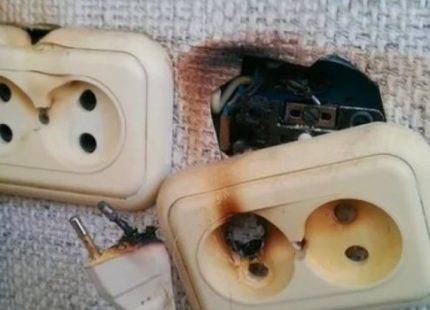
A short circuit, which occurs due to the unintentional connection of zero and phase, also leads to irreparable consequences. The result of the formation of an electric arc is the ignition of a separate section of the wiring, and often surrounding objects.
To protect equipment, property, and most importantly, the life and health of residents, emergency shutdown devices are used. Without them, a modern electrical wiring system in an apartment or a private house is considered inferior and dangerous.
Buying mistakes
The main mistake when buying a difavtomat is the desire to protect yourself.In this connection, consumers choose devices with a minimum current of protection and overload. As a result, numerous false positives are observed.
Exceeding the trip current does not guarantee reliable tripping at high load currents.
Competent selection of protection automation parameters is usually performed by specialists who also give recommendations on the distribution of electrical circuits and the installation of a power shield. Lack of proper qualification does not guarantee normal protection of consumers from emergency situations.
Load shedding switchgears
If the electrical system of an apartment or house is divided into separate circuits, it is recommended to equip each circuit line with a separate circuit breaker, and install an RCD at the output.
However, there are many more connection options, so first you need to understand the difference between an RCD and a differential machine, and then already make the installation.
Circuit breakers - modified "plugs"
When the variety of protective devices was out of the question, with excessive load on the line, “plugs” worked - the simplest emergency devices.
Their functionality was improved and circuit breakers were obtained, which operate in two cases - when a short circuit occurs and when the load increases, close to critical.
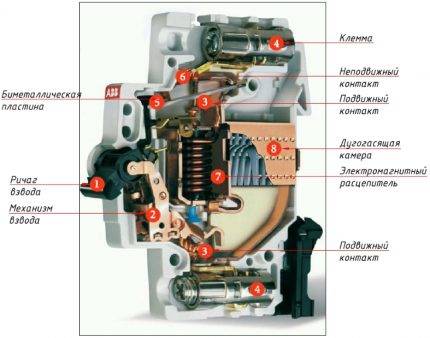 The design of the machine is simple: several functional modules are enclosed inside the case made of durable technoplastic. Outside there is a lever for closing / opening the circuit and a mounting groove for “landing” on a DIN rail (+)
In one switchboard there can be one or several switches, their number depends on the number of circuits serving the apartment or house.
The more individual lines, the easier it is to replace or repair electrical devices. To install one device, you do not need to turn off the entire network.
A prerequisite for assembling a home electrical network is to connect the machine. The circuit breakers trip quickly when the system is overloaded and due to a short circuit. The only thing they cannot protect against is leakage currents.
RCD - automatic protection devices
It is the RCD that is the device that automatically analyzes the current strength at the input / output and protects against leakage currents. In terms of the shape of the case, it is similar to a circuit breaker, but it works on a different principle.





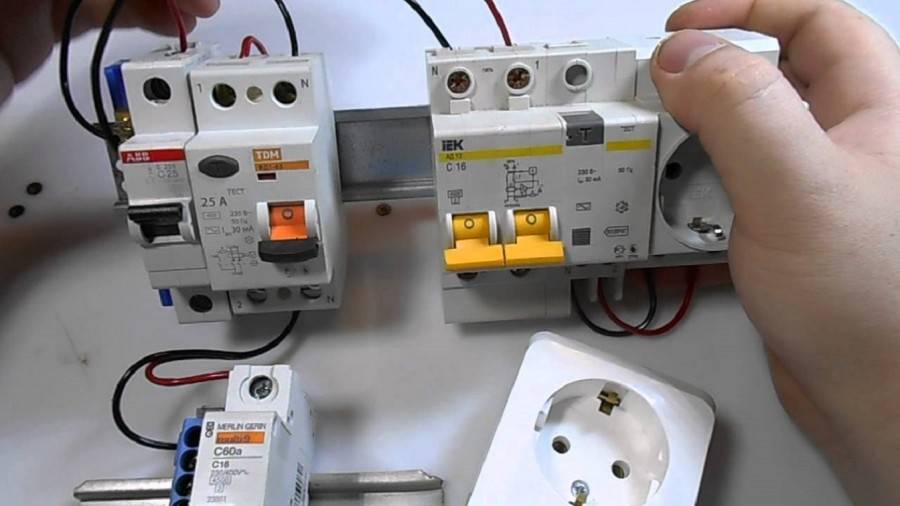
Inside the case there is a working device - a core with windings. The magnetic fluxes of the two windings are directed in opposite directions, which creates a balance. Thus, the magnetic force in the core is reduced to zero.
As soon as a leakage current occurs, a difference in the values of the magnetic fluxes appears - the output value decreases. As a result of the interaction of flows, the relay is activated and breaks the circuit. The response time interval is within 0.2-0.3 sec. This time is enough to save a human life.
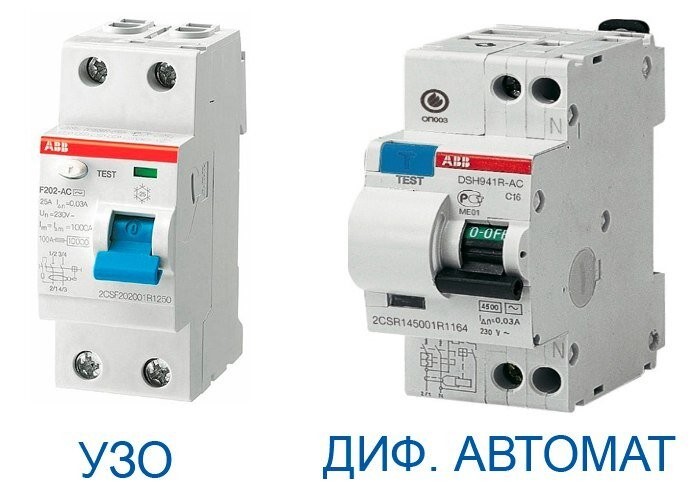
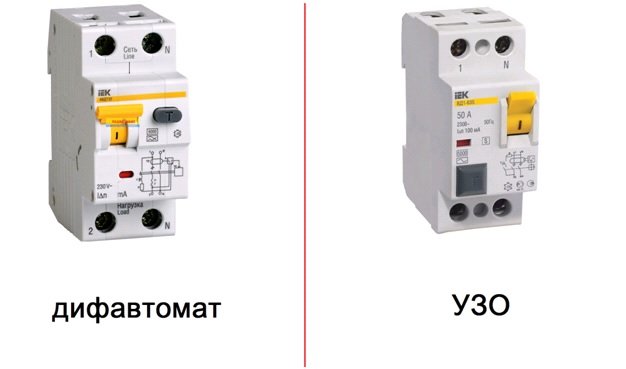
 External distinguishing features are the presence of additional terminals (the machine has 1 piece at the top and bottom), a test button, a wider front panel, other markings (+)
On the case you can see the marking 10 ... 500 mA. This is the rated leakage current. For home use, an RCD with an indicator of 30 mA is usually chosen.
Devices with the designation 10 mA can be useful if a separate circuit is brought to the children's room or to the bathroom, where there is an increased level of humidity.
RCD protects against leakage currents, but it is useless with an increased load on the wires, and will not help in any way in case of a short circuit. For this reason, two devices - an RCD and a circuit breaker - are always mounted in pairs.
Only together they will provide a full degree of protection, which must be present in every household electrical system.
Differential circuit breaker - maximum protection
When we talk about how the RCD fundamentally differs from the differential machine, we do not mean a separately installed RCD device, but a pair of "RCD + switch".
The residual current circuit breaker (RCB), in essence, is this pair, but combined in one housing.
Thus, it immediately performs three main functions:
- protects against leakage currents;
- prevents line overload;
- works instantly in the event of a short circuit.
Despite its small size, the device operates efficiently and quickly, but on one condition - if it is released under a reliable, proven brand.
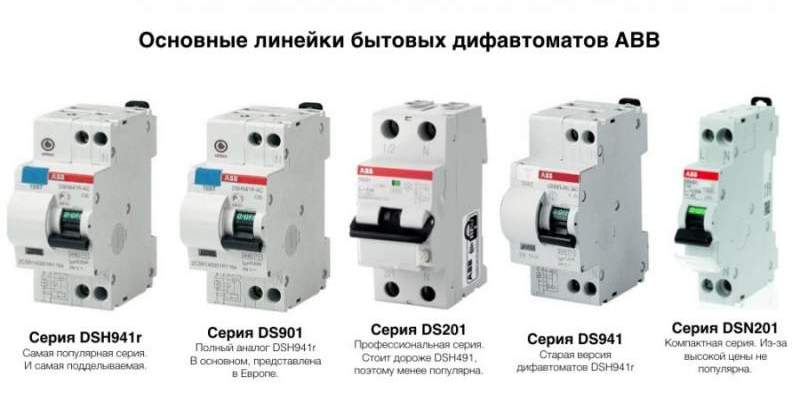
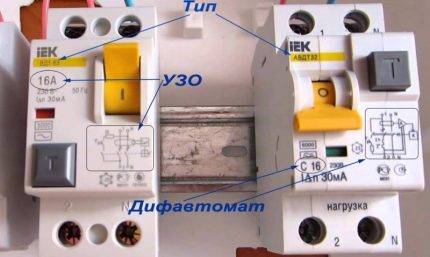 If you do not know the nuances of the device and the symbols placed on the case, the difavtomat can be easily confused with an RCD. One clue is the RCBO label (+)
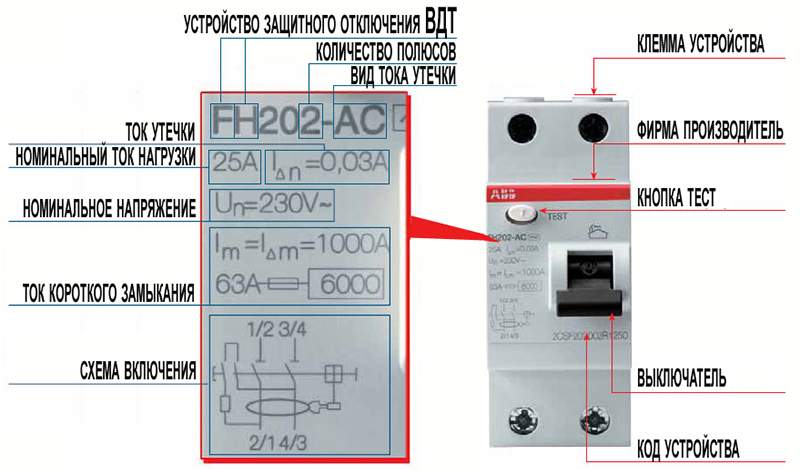
The technical documentation, which is necessarily attached to the device, lists its characteristics. The designation of the most important indicators is printed on the case on the front side.
In addition to the name marking, the rated load current and leakage current are indicated here. The units of measurement are the same as for simple machines - mA.
At first glance, it may seem that the appearance of a difavtomat completely crosses out the “switch + RCD” scheme that originally existed. However, there are many nuances that govern the choice of one or another solution, and as a result, both installation schemes are relevant and in demand.
difference in purpose
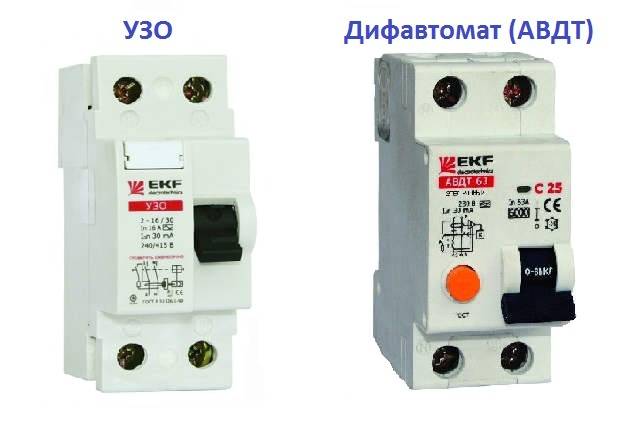
Differences in device names. At the moment, in order to prevent misunderstandings with the correct definition of the functions of the device by its designation, many manufacturers use the front side or one of the sides of the cover to print the name of the equipment, indicating that it is either an RCD or a difavtomat.
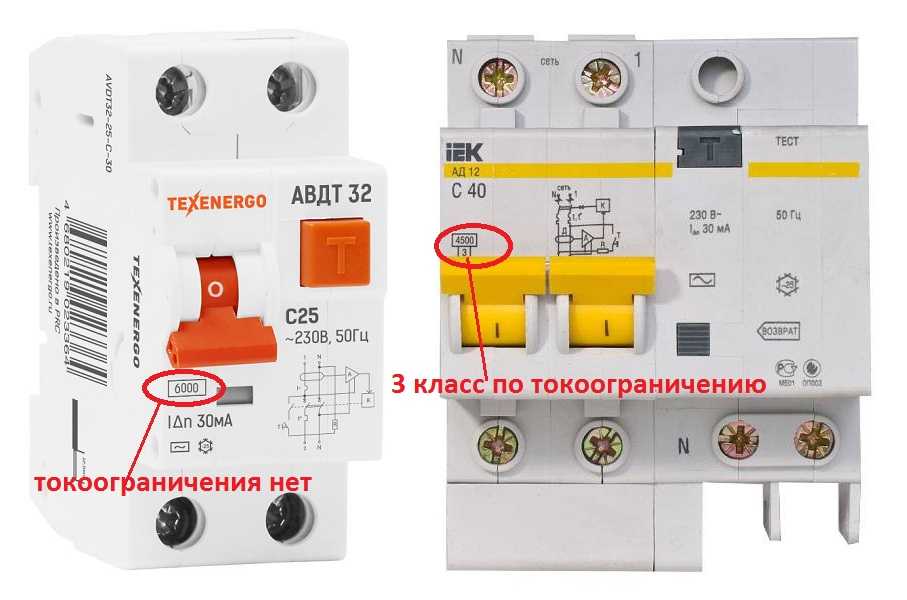
Marking. It is quite simple to determine which device is in front of you, for this you need to correctly decipher its marking
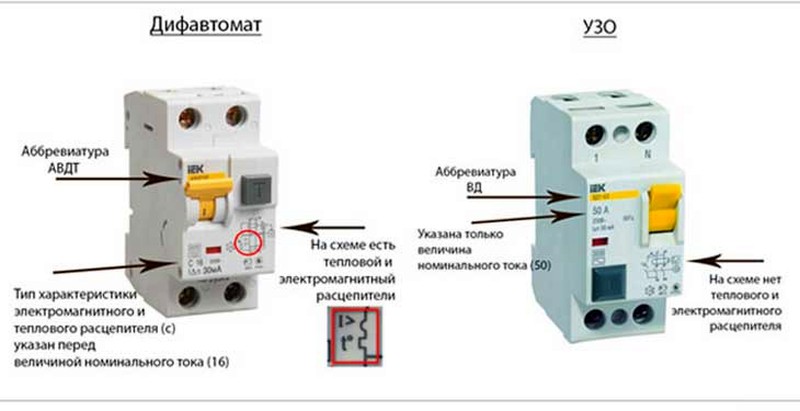
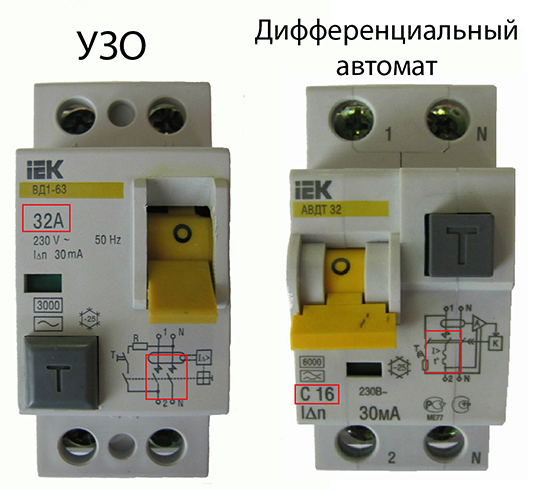
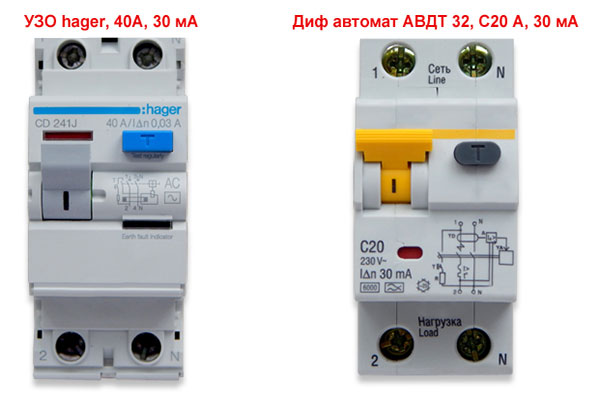
To determine that you have an RCD in front of you, and not a difavtomat, pay attention to its case, or rather to the information that is indicated on it: if there are no letters at the beginning of the marking, then this is a clear sign that this equipment is an RCD .
For example, for RCD VD-61, only the value of the rated current (16A) is indicated, while there is no letter with the type of characteristic. If there is a letter before the value of the rated current of the protective equipment, then this indicates that this equipment is a difavtomat. For example, the AVDT32 automatic difautomatic device has the letter C in front of the rated current, which indicates the type of characteristics of the releases present in it.




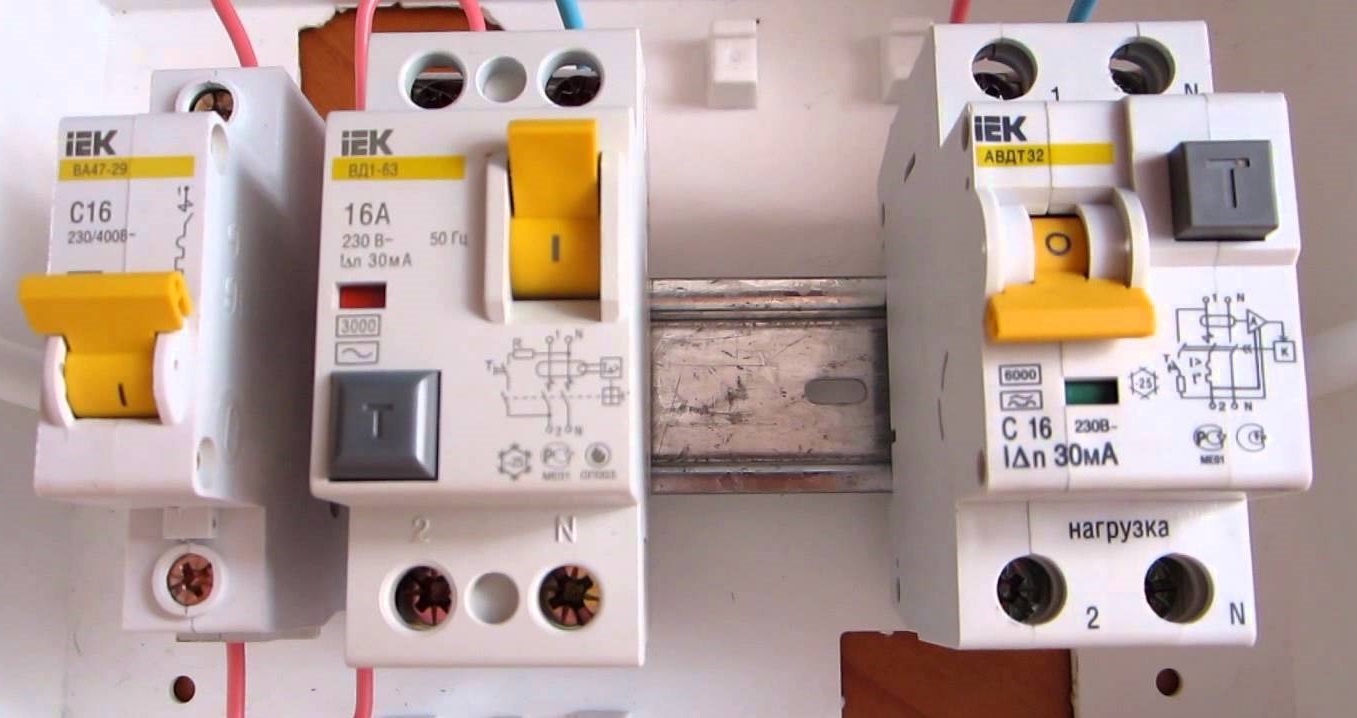
Schematic features. This way of finding differences will be relevant primarily for "advanced" users who are familiar with the basics of circuitry and are able to read the simplest connection diagram.So, if the diagram shows only a differential transformer that has a "Test" button, then you should know that only the RCD is marked in this way.
Purpose of residual current devices
The RCD protects the insulation of the electrical wiring and prevents the occurrence of a fire. And it protects a person from the effects of electric current when touching parts of devices that have phase voltage.
The RCD is triggered by current imbalance in the phase and neutral wires of the protected electrical network. This happens when insulation breakdown occurs and additional leakage appears. The flow of current through unsuitable materials may cause a fire. In buildings with dilapidated electrical wiring, fires from damaged insulation occur quite often.
Another dangerous case is touching the current-carrying parts of devices, which in the normal state should not be energized. The current begins to flow to the ground through the person, bypassing the neutral wire. In this case, the circuit breaker will not work, since it needs currents of at least tens of amperes to turn it off.
For human life, currents starting from 30 mA and above are dangerous. Ability residual current devices respond to 10-30 mA is a reliable protection against the effects of electricity. You should be aware that the RCD does not provide protection against overcurrents, this is the main difference RCD from difavtomat.
In a situation where there is only an RCD and a short circuit occurs, the device will not react, and it may also burn itself out. Separately, without a circuit breaker, it is not used.If the question is what to choose - RCD or difavtomat - you need to understand that together with the RCD, you will definitely have to install a circuit breaker in the circuit.
The purpose of the differential machine
Difavtomat is used to protect the electrical network from overload, short circuit and leakage. In addition to the capabilities of the RCD, it performs the functions of a circuit breaker.
It happens that a person connects an extension cord with five, six additional sockets to one outlet, and through them connects several powerful devices. Under such circumstances, overheating of conductors is inevitable. Or, let's say, when the electric motor is turned on, the shaft is jammed, the winding starts to heat up, after some time a breakdown occurs, followed by a short circuit of the wires.
To avoid this, a difavtomat is installed. If the excess current is significant, then the difavtomat within a few seconds, without waiting for the insulation to melt, will turn off the line, thereby preventing a fire.
The speed of switching off the difavtomat depends on how many times the flowing current exceeds the rated current for a given line. If it is repeatedly exceeded up to a short circuit, the electromagnetic release is instantly activated.
If the current flowing through the line exceeds the rated current by more than 25%, then after about an hour the device will turn off the line, the thermal release will operate. If the excess is greater, then the shutdown will occur much earlier. The response time can be determined from the time-current characteristics given for each device.
Other differences
Already from the purpose of the devices it becomes clear what is the difference between them.The difavtomat is more versatile, it includes the functions of an RCD. But, besides the functions and appearance, there are other differences.
Price
An important difference is the price. The differential circuit breaker is much higher in price than the RCD. Even if the RCD is functionally equated with a difavtomat by connecting an additional circuit breaker, the cost of the difavtomat will still be higher.
Dimensions and maintainability
The volume occupied by such a design due to the additional machine will be one and a half times more than the space for the difautomatic machine. This is important for small electrical panels.
But the maintainability of devices with equal functionality is better in the RCD + automatic system than just a difavtomat. In addition, the reason for the shutdown immediately becomes clear - leakage currents or overload in the network.
Connection
But when installing a differential switch, you don’t have to think about how to install an RCD, connect it before or after the machine. In fact, most experts recommend installing a circuit breaker first, then a differential one.

As for the RCD, there are two options. If the RCD is installed on several consumer groups, then it goes first, followed by circuit breakers for each group.
If one line is protected by one RCD and one machine, then the machine goes first.
So, the main difference between a difavtomat and an RCD is their functions, markings, cost, connection method and the space occupied in the shield.
What is better to use, each owner decides independently. The main thing is to connect all devices correctly and provide reliable protection against fire or electric shock.




What is better RCD or differential machine?
As is known from all the experience of our life, that nothing is eternal, or as they say to every old woman, sooner and later a hole comes and it happens that the electrical filling of the shield has failed. A quite reasonable question arises in the process of replacement, RCD or differential machine, what to choose? There is no definite answer here, it all depends on various parameters, both the network itself and the user equipment, as well as the purpose for which this or that automation is needed.
In this case, what is better than an RCD or a differential machine is not a completely correct question. If the goal is protection against electric shock, for example, a washing machine or a heater, then it is recommended to apply double protection by installing both a difavtomat and an RCD.
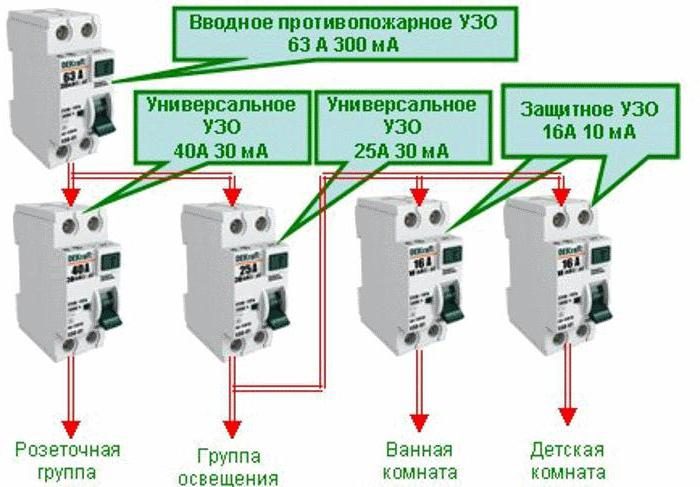
Therefore, not a single professional electrician who respects his reputation will say from the end that a differential or an RCD with an automatic device is better. Most likely, he will recommend the installation of the entire set of these circuit breakers according to the diagram below, which is one of the many options for connecting them.
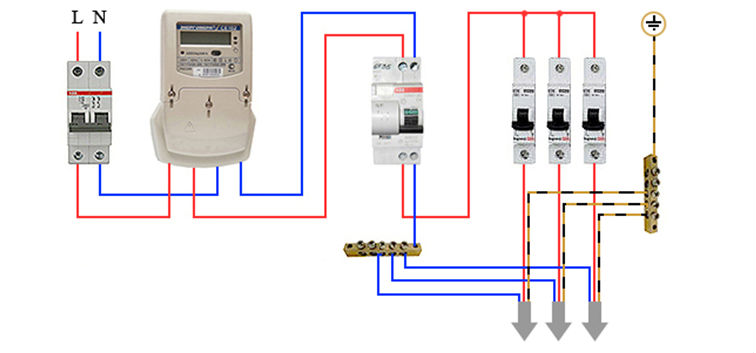
By applying this connection scheme, the questions will disappear by themselves: RCD and difavtomat, what to choose or which is better difavtomat or RCD automatic?
Breakdowns: how to fix them and prevent them
The devices can be triggered by touching a live cable and touching a phase conductor to a grounded part of the housing. Of the main breakdowns, electricians distinguish the failure of the test button, the malfunction of the switching mechanism, the failure of the leakage inside the device, and the operation of the equipment when household appliances are damaged. Most often, a malfunction occurs due to improper connection of equipment.All this can be avoided by strictly following the instructions that come with the device.
Thus, a difavtomat is a device combined from protective switching devices of RCDs and circuit breakers. Both devices have technical characteristics, dimensions for normal operation in the home, in production. Connected according to the electrical circuit. Break down infrequently as a result of power outages. You can fix and prevent their breakdown by following the simple instructions for working with devices.
How to find out what "dwells" in the insides of an electrical panel, a differential machine or an RCD?
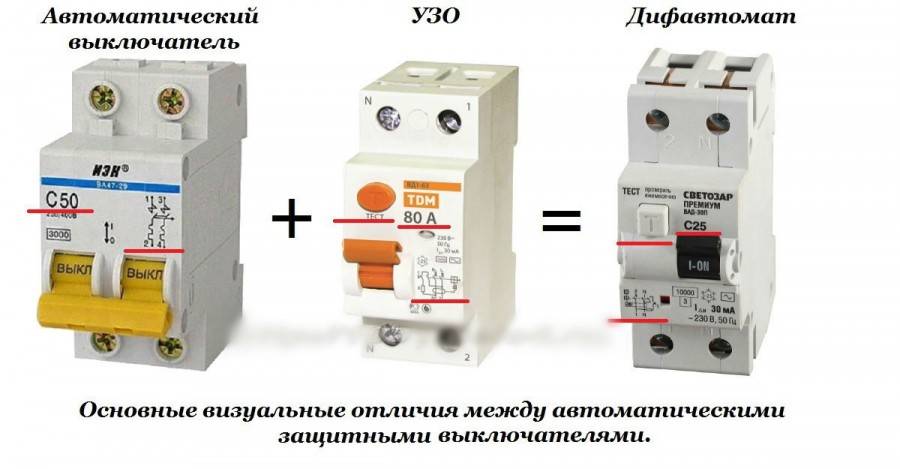
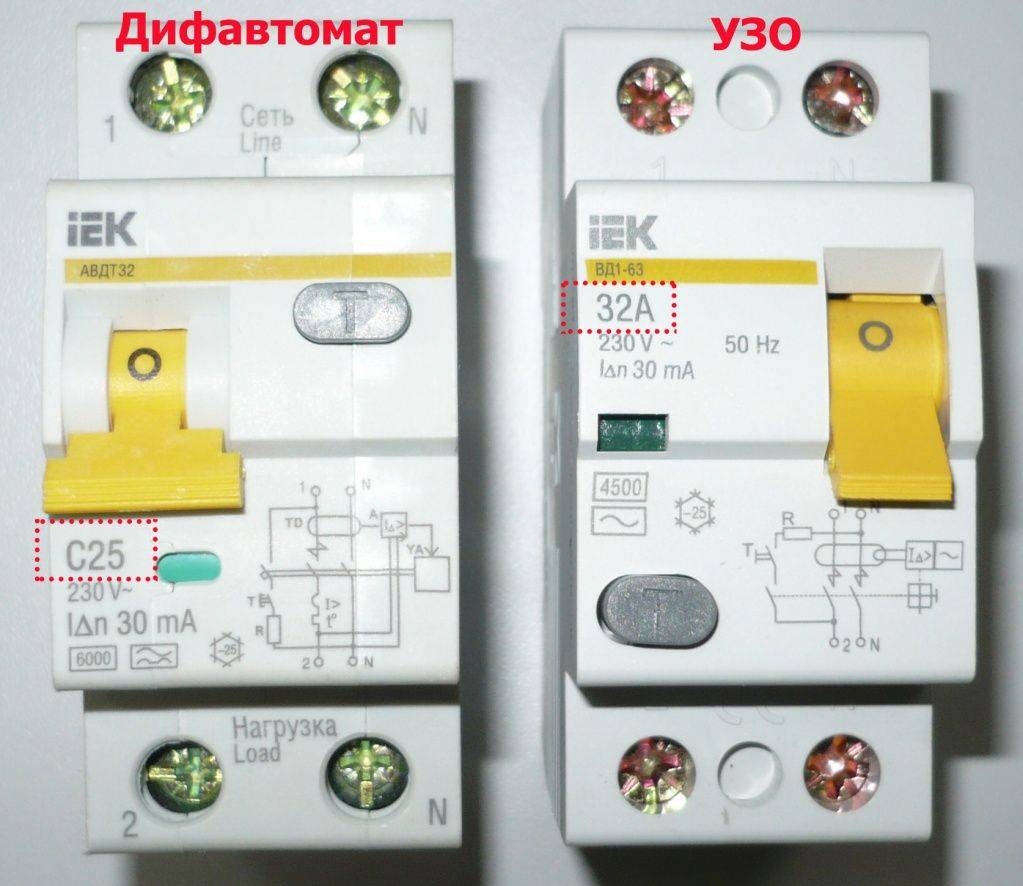
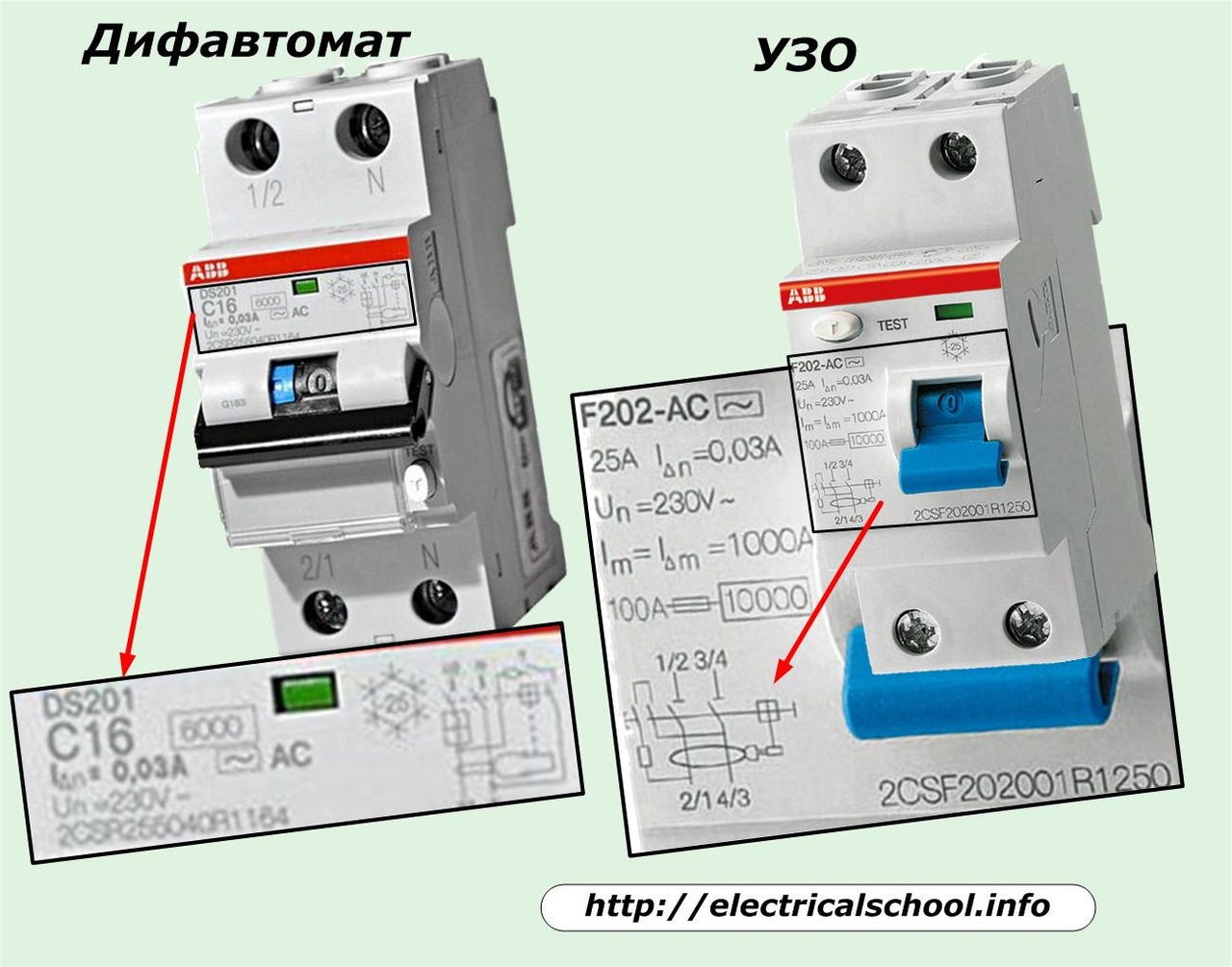
Despite the external similarity that a differential machine and an RCD have, differences can be detected by visually comparing the markings of these devices. Looking more closely, you can see that different schemes are applied to the body, there are differences in marking.
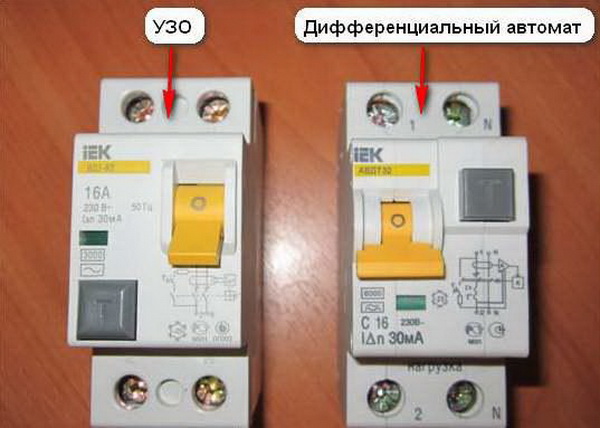
In order to find out at a glance or as they say right off the bat how to distinguish an RCD from a differential machine, we look at the picture and remember.
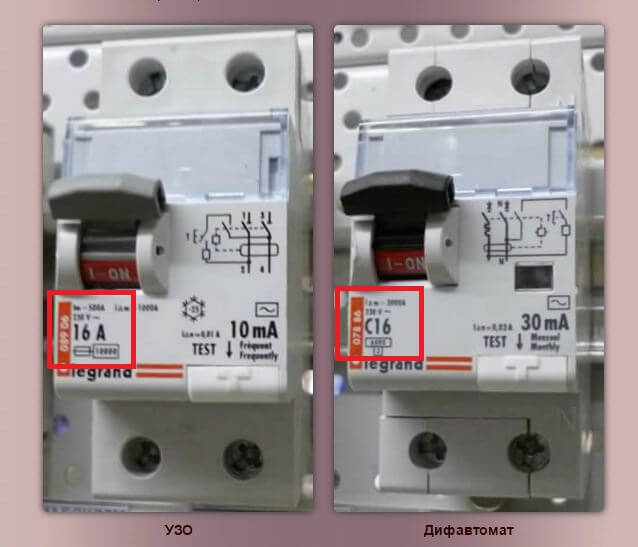
On any electrical device, its characteristics are applied. We look at the marking of the current strength (highlighted in red square). To find out what it is, an automatic device with an RCD or a difavtomat, then if there is a number on the case first that indicates the current strength, and then the letter A, in our case it is 16 A, then this is an RCD. And if first a letter, and then a number, we have C16, then this is a difavtomat.
For from the general series of distinguished “dummies”, we repeat, in order to determine the difavtomat or RCD is in the shield, you need to look at the marking, in the first case it will be a letter, and then a number, and in the second, on the contrary, first a number, and then the letter A.
In fact, the problem of how to determine what is in front of the eyes of an RCD or a difavtomat is more likely to be related to the goods of foreign firms and companies. For domestic products, there are usually designations in the marking or VD - this is an RCD or AVDT - this is a difavtomat.
The design and principle of operation of the RCD
A residual current device or RCD is a switching electrical device that interrupts the supply of current when the differential current exceeds the operating value. To accomplish this task, it includes several elements that perform the tasks of measuring / comparing currents and opening / closing conductive contacts
Please note that the design of the RCD does not include elements that provide direct protection for the wiring, circuit or the device itself - it only interrupts the power
Thus, we can name the main goals of using RCDs:
- protection of electrical network users from injuries caused by electric current;
- fire prevention in case of current leakage.
In both cases, the device is designed for situations where the insulating material of electrical wiring or cables becomes unusable and loses its tightness, due to which current begins to flow to the body of electrical appliances, conductive objects or flammable materials.
In the working state of the electrical network, the current passes through the sensor (transformer) and creates on its secondary winding magnetic fluxes of equal strength, compensating each other. The trip relay does not operate because the secondary current is close to zero.
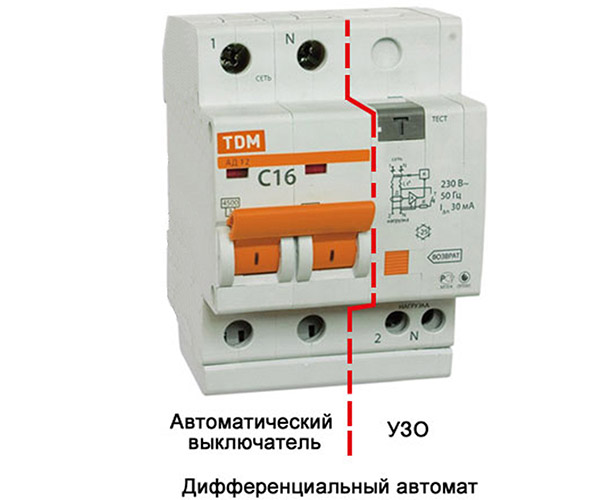


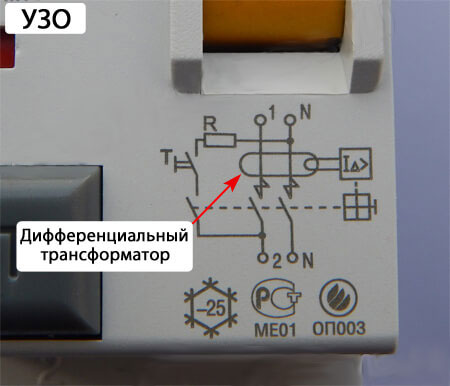

As soon as a current leakage occurs, a difference occurs between the values of the flows and, accordingly, the trip relay is activated.
Criteria for selecting electrical protection devices
We will try to figure out what is best for the home - an RCD or a differential machine, and consider various installation situations. Most often, the choice is influenced by factors such as the position of the device in the electrical panel, the nuances of connecting to power lines, the possibility of maintenance or replacement.
Features of installation in the electrical panel
The electrical panel is a metal box, inside of which protection devices and an electric meter are usually located. The working panel to which the instruments are attached is limited in size.
If there is an improvement in the power grid and at the same time additional modules are installed, then there is a shortage of free places on DIN rails. In this case, difavtomatov are in a winning position.
Scheme of location on the din-rail of pairs "automatic + RCD" (top row) and difavtomatov (bottom row). Obviously, lower devices take up less space. The difference will increase if the protection is designed for more circuits.
Modern equipment of apartments with electricity is focused on increasing the number of circuits. This is due to the emergence of a large number of powerful equipment, and to the division of the network into many lines. In such a situation, in the absence of additional space, the only reasonable solution is to connect difavtomatov.
When selecting devices, pay attention to devices that occupy one module-place. Such models have already appeared on sale, but their cost is slightly higher than that of traditional ones.
Difficulty in wiring
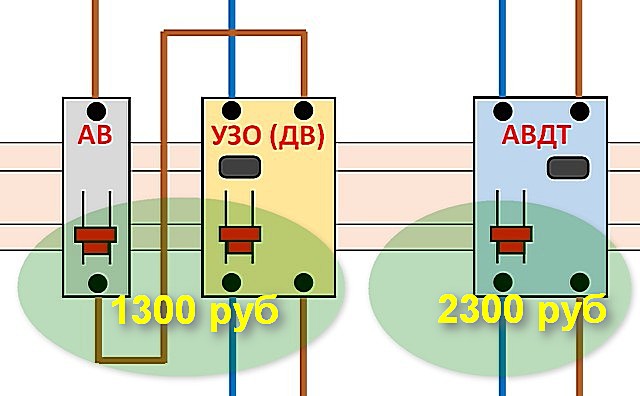
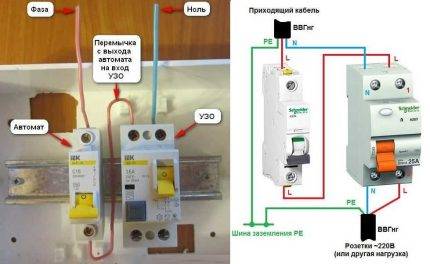
The main difference between the connection between the two indicated options is the number of wires. Two separate devices in total have more terminals - 6 pieces, while the difavtomat has only four. The wiring diagram is also different.
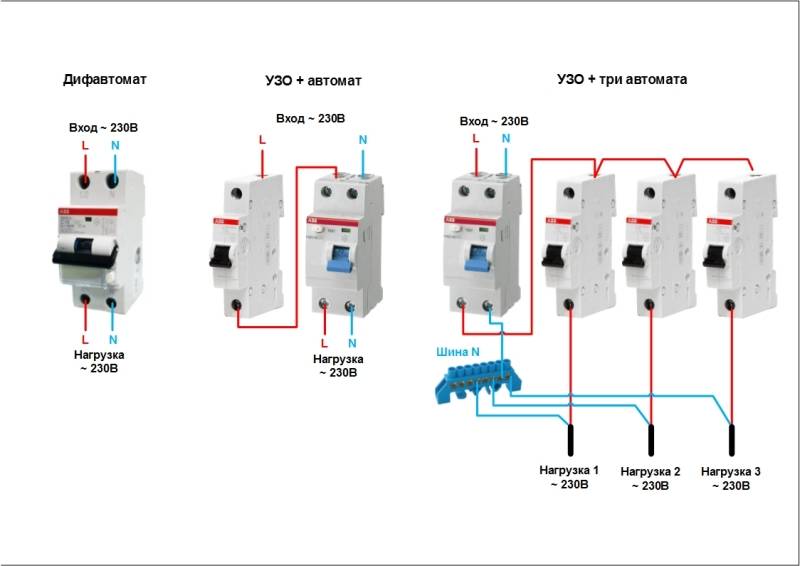
Comparative diagram of installation and connection of a protective pair and difavtomat. The result of operation in an emergency and the reliability of the devices is the same, but the order of connecting the wires is different
The diagram shows the wiring well.
When connecting a pair of AB + RCD, the layout is as follows:
- the phase wire is connected to the AB terminal;
- the jumper connects the output of the machine and the L-terminal of the RCD;
- the output of the RCD phase is sent to electrical installations;
- the neutral wire is connected only to the RCD - at the input with an N-terminal, at the output - it is sent to electrical installations.
With a difavtomat, the connection is much easier. Jumpers are not needed, only the phase and zero are connected to the corresponding terminals, and the outputs are sent to the load.
What does this give the installer? Facilitates the connection process, reduces the number of wires, respectively, guarantees more order on the electrical panel.
How is the operation diagnostics performed?
If we consider devices from the middle price segment, then the tandem “automatic + RCD” has advantages here. Suppose there was an emergency power outage on one of the circuits.
It is difficult to immediately determine the cause of the protection operation, since it can be a leakage current, a short circuit, and the total load that the wires could not cope with.
By a triggered RCD or machine, you can immediately see where to look for the cause. In the first case - an insulation problem, in the second - an increased load or short circuit. The latter can be determined by additional features
If a difavtomat reacted to a network failure, then the cause will have to be looked for longer. It is necessary to check all versions, and this will take more time and effort.
To simplify diagnostics, it is recommended to purchase devices from a more expensive price segment - they are equipped with an additional indication indicating a possible problem.
What appliances are cheaper to buy and fix?
There are situations where the choice is based on cost. For example, there is a budget that cannot be exceeded. In this case, the total cost of all connected protection devices plays a decisive role.





At first glance, a larger number of devices is characterized by a higher price. In fact, everything is different: a universal difavtomat costs a round sum, and a set of other devices turns out to be economical.
If you monitor the price tags of all the designated machines, it turns out that one difautomatic machine is almost twice as expensive as the “AV + RCD” set
It should be remembered that the number of lines is usually 3 or more, so the difference between purchases grows. If for one circuit the purchase of a RCBO is only 1 thousand rubles more expensive, then for five circuits the difference in amounts grows to 5 thousand rubles.
Thus, both difautomats and RCD units with automatic switches have their advantages and disadvantages. If RCBOs win in compactness and ease of connection, then they clearly lose in diagnostics and cost accounting.
Conclusions and useful video on the topic
To better navigate the protection devices and choose the right solution depending on the situation, we suggest watching thematic videos.
Interesting information about the principle of operation and installation of RCDs:
A few tips from a professional electrician:
What played a role in choosing a difavtomat:
As you can see, the topic of choosing an RCD or RCBO is not being discussed in vain: there are many points that speak in favor of both devices. In order to choose the best protection option correctly, it is necessary to consider the installation and connection conditions, as well as draw up a preliminary estimate.
Have something to add, or have questions about the topic? You can leave comments on the publication, participate in discussions and share your own experience in using RCDs and a differential machine. The contact block is below.



