
- Selection of materials for work
- Answers to popular questions
- What is the best insulation for the attic under the metal tile
- How to insulate the attic if the roof is without waterproofing
- How to insulate the attic from the outside
- How to insulate an attic
- Criterias of choice
- Comparison of heaters by criteria
- Thickness of the thermal insulation layer
- Ways to insulate the attic
- External thermal insulation
- Internal thermal insulation
- Preparing to insulate the attic
- Factors affecting the thermal insulation of the attic
- Brief characteristics of modern heat-insulating materials
- Mineral wool from basalt volcanic rocks
- glass wool
- A few words about polystyrene, expanded polystyrene, polyurethane foam and ecowool
- Styrofoam
- Styrofoam
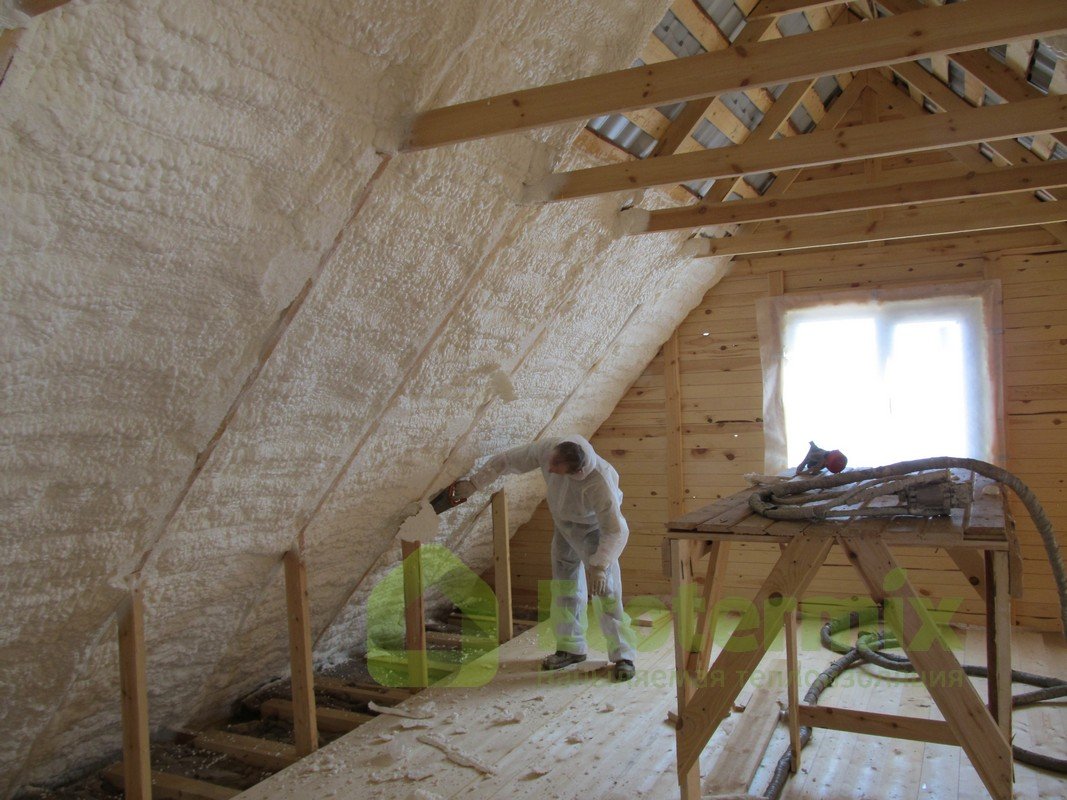
- polyurethane foam
- Ecowool
- Conclusion
- Conclusions and useful video on the topic
Selection of materials for work
 To maintain heat and create a cozy atmosphere at any time of the year, the mansard roof should be insulated. You can do this both with your own hands and with the help of specialists.
Many specialists in the field of room insulation recommend insulating the attic, regardless of whether someone will live there in the winter or not. As a rule, the attic space is very voluminous, and a significant amount of heat escapes through it.This is a significant disadvantage, since you have to spend more money on heating. In addition, an uninsulated roof is a favorable place for the development of mold and fungus, because moisture and condensate will actively accumulate there. In the future, this will lead to irreversible consequences, and the roof will be hopelessly damaged, and the wood will rot.
The degree of insulation of the attic space depends on how severe the climate is in a certain region of residence. Accordingly, the colder the winter, the stronger the level of insulation should be. In the northern regions, it will be rational to use double insulation, and the thickness of the insulation should be more than 200 mm.
Today there is a wide range of materials for mansard roof insulation. However, from all this variety, it is necessary to choose the most suitable one, respectively, you need to know the features of each of them. After all, the material must have a long service life. It is inappropriate to save on the insulation of the attic room, since it will not work to achieve the desired result using the cheapest heaters.
The most popular materials for roof insulation from the inside:
- Mineral wool
- Penofol
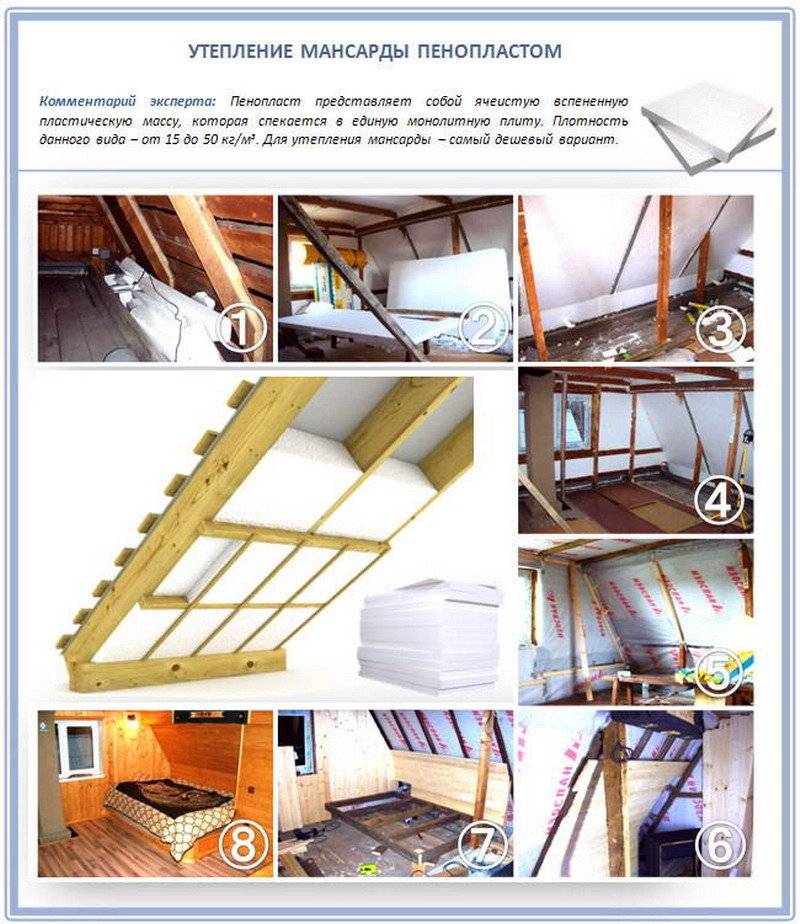
- Expanded polystyrene (foam)
- Styrofoam
- polyurethane foam
- Sawdust
- Ecowool
Answers to popular questions
What is the best insulation for the attic under the metal tile
The metal tile does not impose special requirements to a heater. All varieties of mineral wool and foam foams are suitable. The main condition is a sufficient layer of insulation, reliable waterproofing and vapor barrier.
Under the metal roof, soundproof insulation should be laid. Such qualities are possessed by basalt wool, polystyrene foam.In addition, rolled and block insulating materials with a soundproof substrate are produced.
How to insulate the attic if the roof is without waterproofing
If there is no waterproofing, it should be installed. With a cold roof, the absence of a hydrobarrier is not critical - in the absence of a difference in the external and internal temperatures, there will be no condensate, as well as frost.
If you install a roofing pie for a warm attic without waterproofing, then the insulation will get wet and lose all performance properties.
The waterproofing film can be laid from the inside, reliably connecting the joints. In this case, the need for ventilation under the roofing should be taken into account. Therefore, there must be an additional crate above the waterproofing film to form a ventilation gap. If there is no gap, the roofing material is laid on the rafters, then it must be removed.
Waterproofing is laid on top, connected without gaps, a crate is made and a roofing is mounted.
How to insulate the attic from the outside
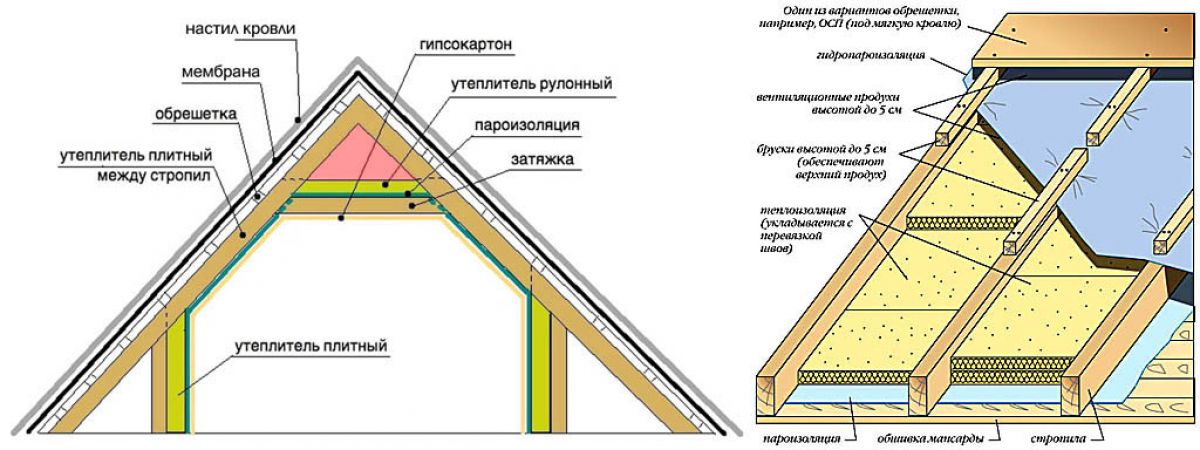
Outside, the attic has a standard roofing pie. Installation is carried out in the reverse order. A vapor barrier is laid on the rafters, a crate is made, and a heater is mounted. From above, waterproofing, crate is done and the roof is laid.
How to insulate an attic
If the residential attic is insulated after the completion of the construction of the house and the arrangement of the roofing, the problem of insufficient lag thickness may arise. Why is this happening?
Attic insulation can be divided into two conditional types:
- basic;
- additional.
The base is called thermal insulation, which is performed at the stage of arranging the roof, it involves the installation of special material directly into the truss structure. As for additional insulation, it makes the attic a residential attic.

The main task of basic thermal insulation is to minimize heat loss in the house through the roof. This type of insulation can replace internal additional insulation, if the choice of material is approached correctly and the structural solution of the truss system is carefully considered. This is often done by homeowners who initially decide to make the attic residential and do not want to finish it in the future.
If in the process of building a house, its owners saved on insulation, and then decided to use this room, for example, for a library, a bedroom, then they will have to deal with additional thermal insulation, taking into account all the nuances of such work, including the insufficient thickness of the truss system, which was not designed for internal insulation .
There is a solution to this problem: in order to insulate the attic from the inside, an additional frame should be attached to the rafters.
Criterias of choice
Today, a large number of requirements are imposed on thermal insulation materials, which, in principle, they must comply with. But even the above do not fit all the required criteria.
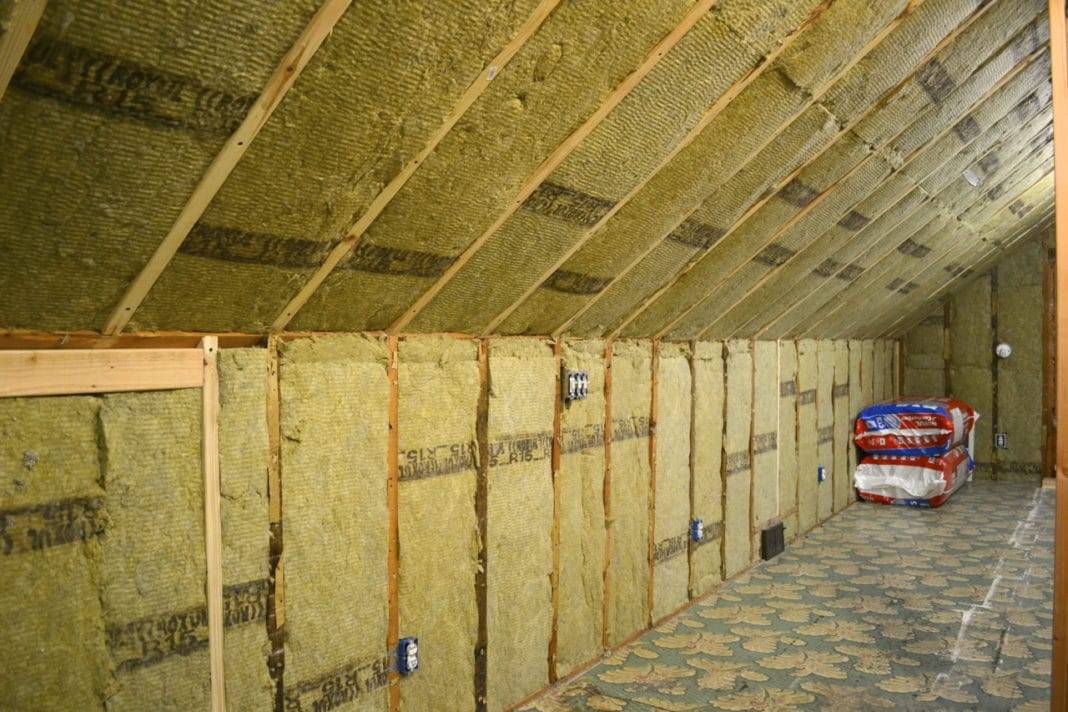

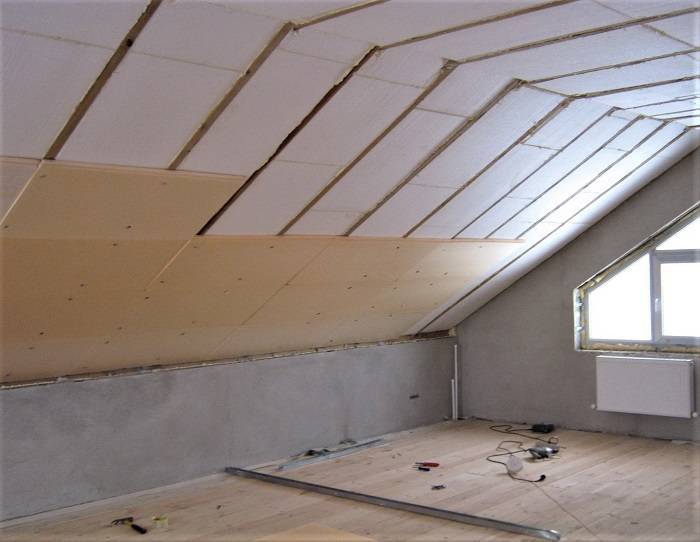


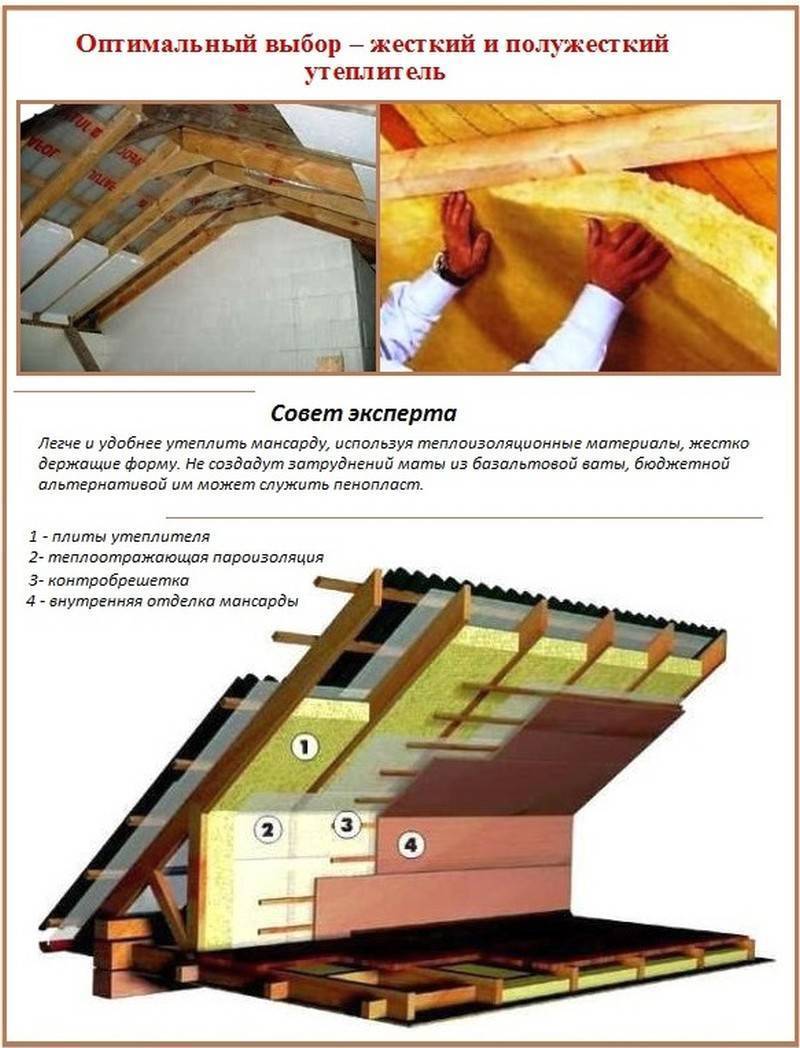

So what you need to pay attention to when choosing a heater:
- thermal conductivity;
- the density, on which the thickness of the insulation used will depend, here, the denser the material, the smaller the layer can be laid;
- low flammability;
-
ease of installation;
long-term operation;
-
environmental friendliness, the material should not emit unpleasant odors and toxic substances.

Comparison of insulation with other building materials
Comparison of heaters by criteria
For ease of perception of information, to make it easier to compare heaters with each other, we have reduced the characteristics into a single table by points.
| Characteristics | Mineral wool | Styrofoam boards | polyurethane foam | Ecowool |
| Thermal conductivity, W/m K | 0,042 | 0,034 | 0,028 | 0,038 |
| Density, kg/m³ | 50-200 | 25-45 | 55 | 40-45 |
| Flammability class | NG | G3 | G2 | G1 |
| Ease of installation | simply | simply | special equipment required | special equipment required |
| Service life, year | 50 | 20 | 80 | 100 |
| Environmental friendliness | + | + | + | + |
It would be possible to add several purely technical parameters that would reflect the strength of the insulation. But in our case, when the task of thermal insulation of the mansard roof is set, these indicators are not so important, because the material is not subjected to mechanical loads in the truss system.

Polyurethane foam - the best insulation for roof structures
In terms of the complexity of the insulation processes, the simplest are mineral wool in mats and expanded polystyrene boards. They are simply manually laid between the truss legs of the mansard roof, and no fasteners are used. And although the thermal conductivity of both heaters is higher than that of polyurethane foam, today these are the most popular and sought-after thermal insulation products.
And a few words about flammability. Of the four proposed materials, only mineral wool belongs to the "non-combustible" class, because it is made from stone. But at high temperatures, it melts, turning into a viscous mass.The remaining heaters burn to varying degrees at different temperatures. And there is a lot of controversy here.

Polyurethane foam and expanded polystyrene - combustible materials
There are opponents who are categorical about everything that burns. They argue that in private housing construction, combustible materials should be used as little as possible. In a way, they are right. But if you follow their statements, then first of all it is necessary to abandon the roofing structure made of lumber. After all, wood is the most combustible building material.
And a few words about ecowool, so that readers have an idea of what it is. It is 100% cellulose made from wood. In structure, it resembles cotton wool, hence, in principle, the name itself. No glue or fastening additives. The only thing that is necessarily added to the material is an antiseptic and a flame retardant. The first is protection against pests, the second is to reduce flammability, so ecowool belongs to the category of “low-combustible materials”.

Ecowool insulation - low combustible material
Thickness of the thermal insulation layer
Since, apart from the heat-insulating material, nothing closes the attic from the external environment in terms of resisting street temperatures, it is very important to choose the right thickness of the mansard roof insulation. Of course, everything will depend on the temperature on the streets itself, on its average annual value.
So the first thing to do is to find out. This is not classified information, it is freely available. For example, the photo below shows a map with a breakdown of winter temperatures by regions of Russia.

Map of average minimum temperatures in Russia
For example, for the middle zone of the country it is optimal - the thickness of the mineral wool for attic insulation: calculated 214 mm, used within 150-200 mm. For polystyrene boards - within 120-150 mm, for polyurethane foam - 70-100 mm
Please note that the denser the material, the higher its thermal conductivity, the thicker it will be necessary to form a protective insulation layer
Ways to insulate the attic
In order to figure out how to insulate a mansard roof for winter living, you need to know that there are several options for insulation: internal and external.
Insulating the roof from the outside is ideal, insofar as such a design will not allow heat to pass through from the inside due to the warm contour and will be reliably protected from freezing. This prevents the formation of condensation, respectively, the risk of fungus and mold is minimized. However, if the attic roof is already covered with roofing material, then it will be extremely difficult to insulate it, and the roofing material will have to be removed.


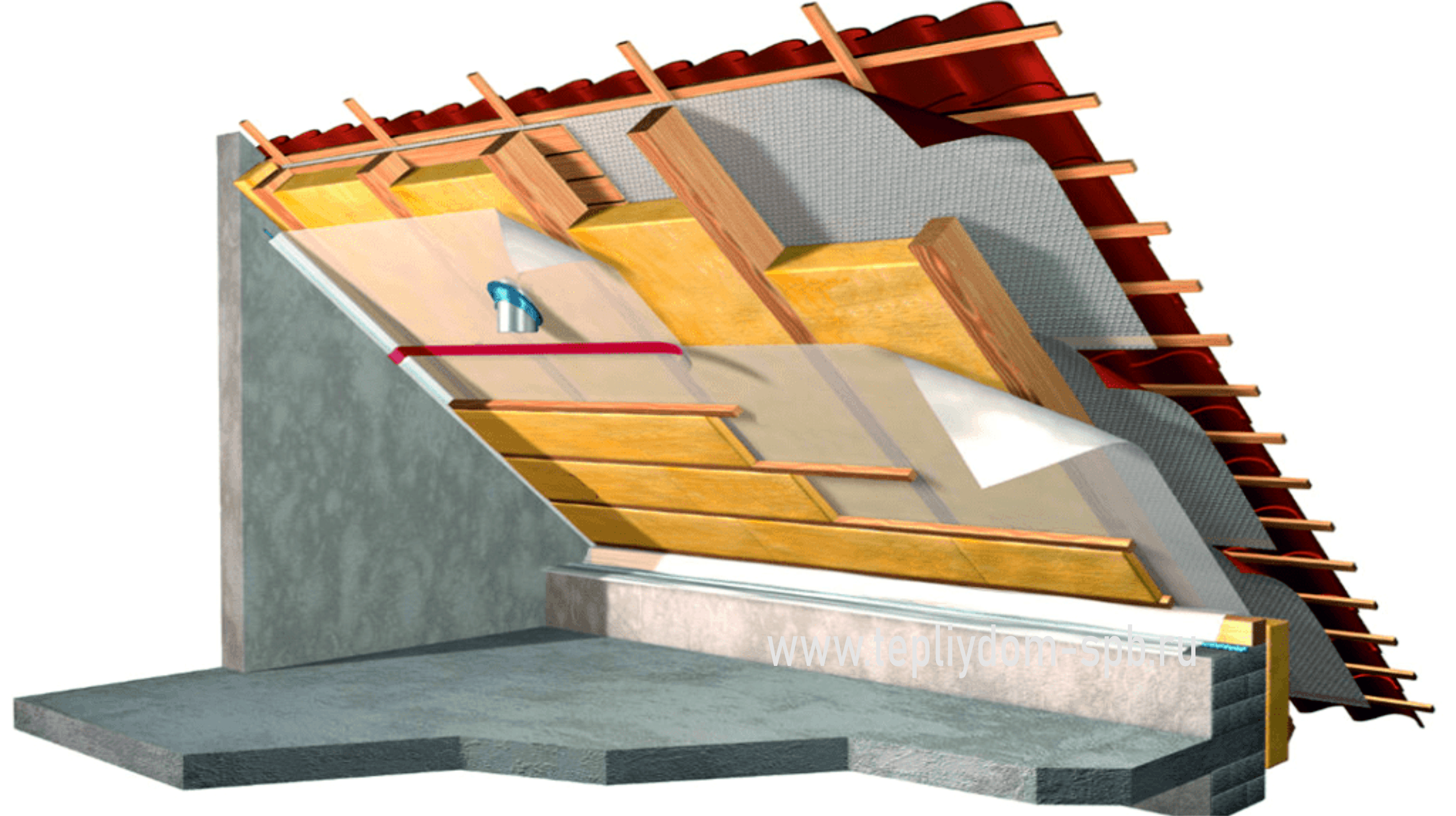

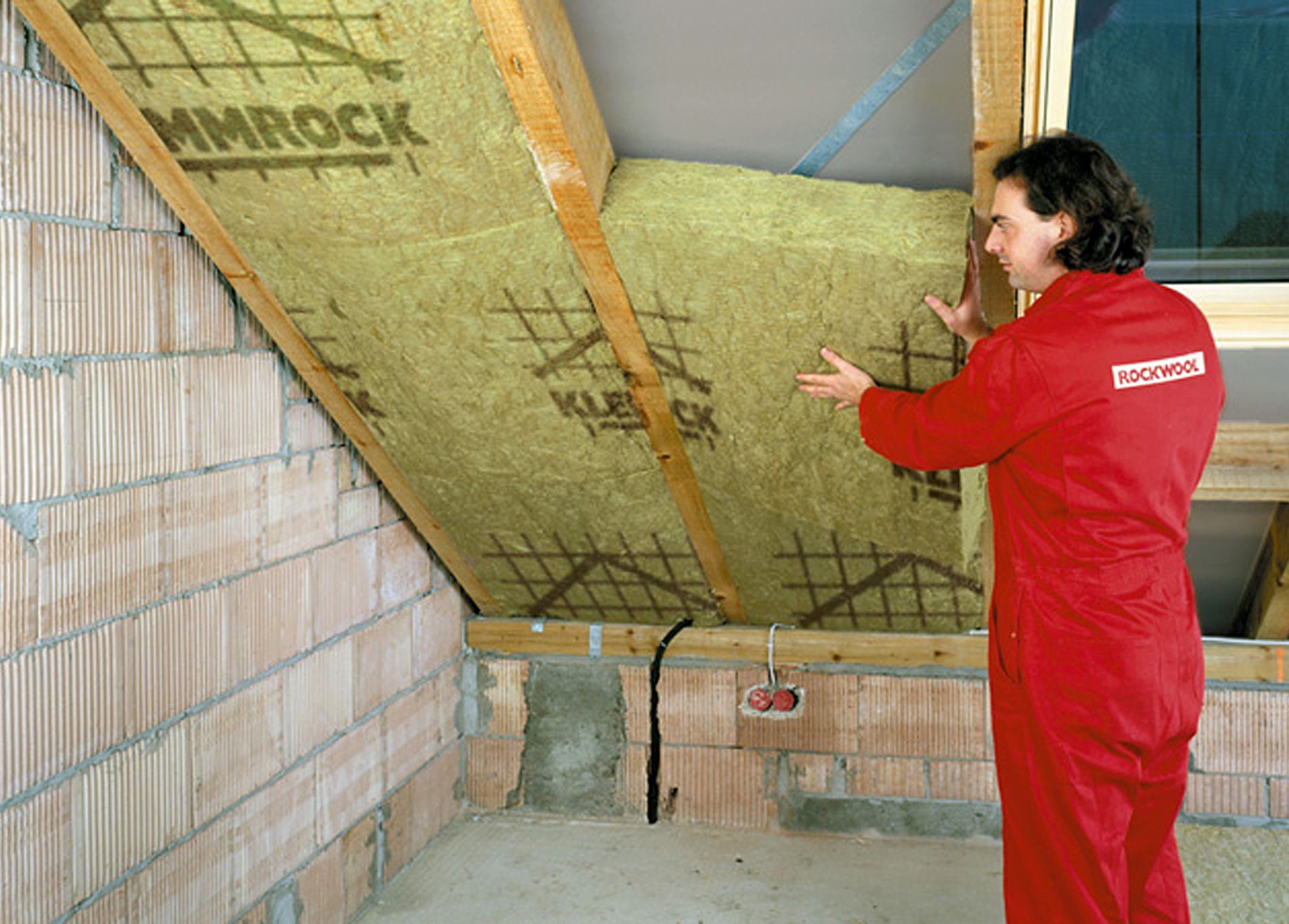
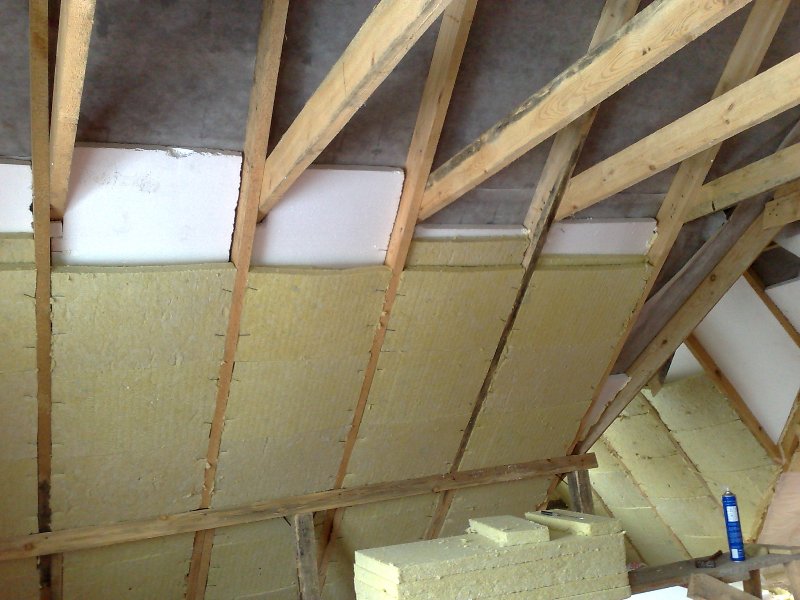

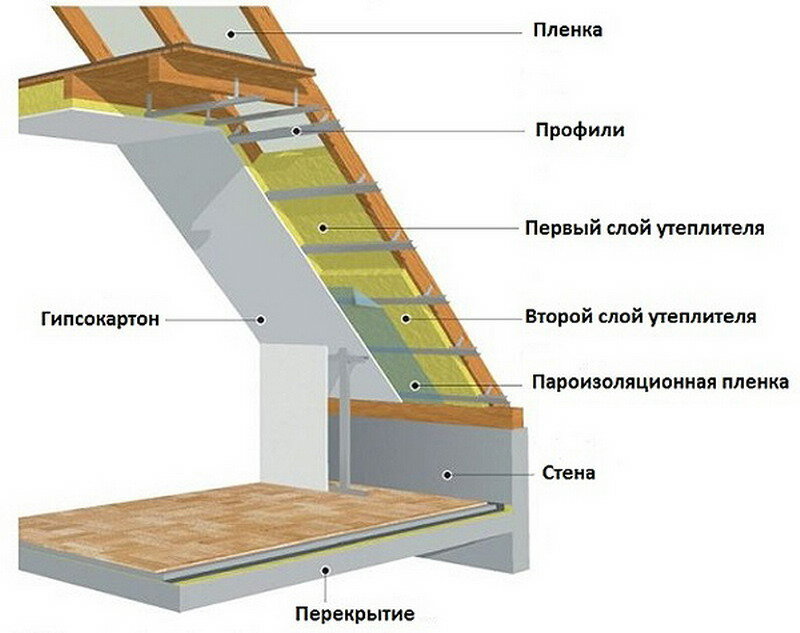
Most often, the attic is warmed for further living in it from the inside. To this end, a wooden frame is being erected in the attic, which will serve as a niche for laying insulation. There are various technologies for thermal insulation.
External insulation of the attic occurs during the construction of the building. The gable roof is insulated. Internal thermal insulation is carried out with the roofing material already covered (if it becomes necessary to make this room comfortable for living at any time of the year).
External thermal insulation
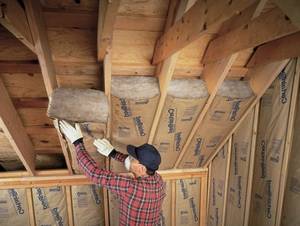
However, all work on the external insulation of the attic is carried out exclusively in the warm season in dry sunny weather.All surfaces are carefully examined for any flaws before being directly insulated. All areas must be dry. Wood must be impregnated with antiseptics. Metal surfaces are treated with butyne mastic to prevent corrosion.
External insulation of the attic is as follows:
- The crate of the boards is stuffed from the bottom of the rafters
- Vapor barrier film covers the batten and rafters
- Insulation is laid between the rafters
- Heat-insulating material is covered on top with vapor barrier
- The crate of the boards is stuffed over the insulation
- The roofing material is fastened with self-tapping screws to the crate.
Internal thermal insulation
When choosing a material for thermal insulation, it is necessary to pay close attention to its characteristics. It should be relatively light and easy to install, without overloading the ceiling of the attic. It is also desirable to use environmentally friendly and fire-resistant material.
It is also desirable to use environmentally friendly and fire-resistant material.
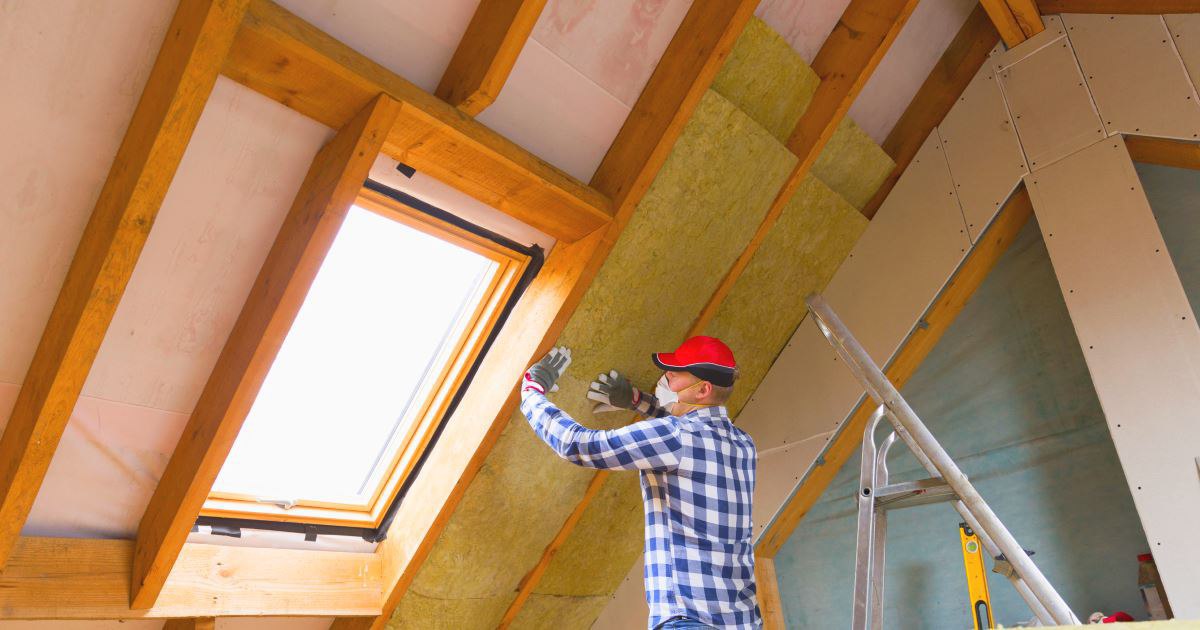
It is best to use basalt insulation, it is laid without the formation of cracks and voids. If insulation is used in the form of plates, then the gaps must be blown out with mounting foam. When covering the vapor barrier membrane, it must be remembered that the insulation sheets must go with an overlap of not less than 20–30 mm.
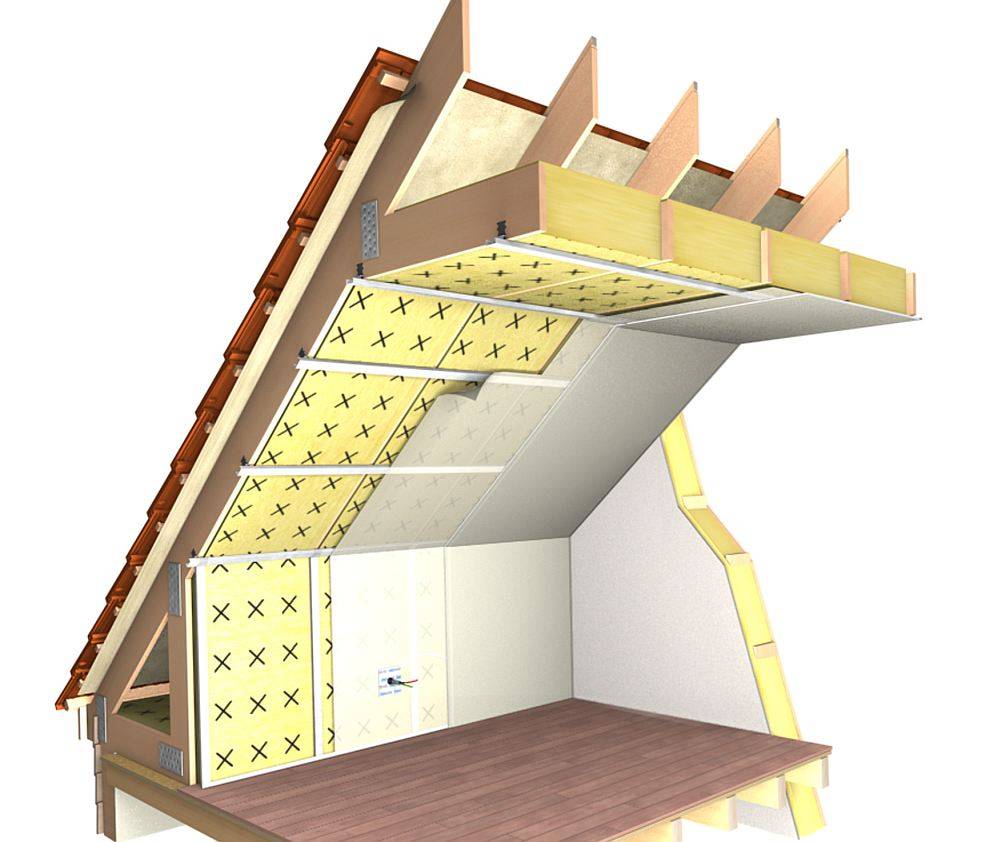
With internal warming the room, the procedure for carrying out work consists of the following:
- The crate is stuffed onto the rafters or a specially prepared frame.
- To prevent the penetration of wind, the building is covered with a protective film.
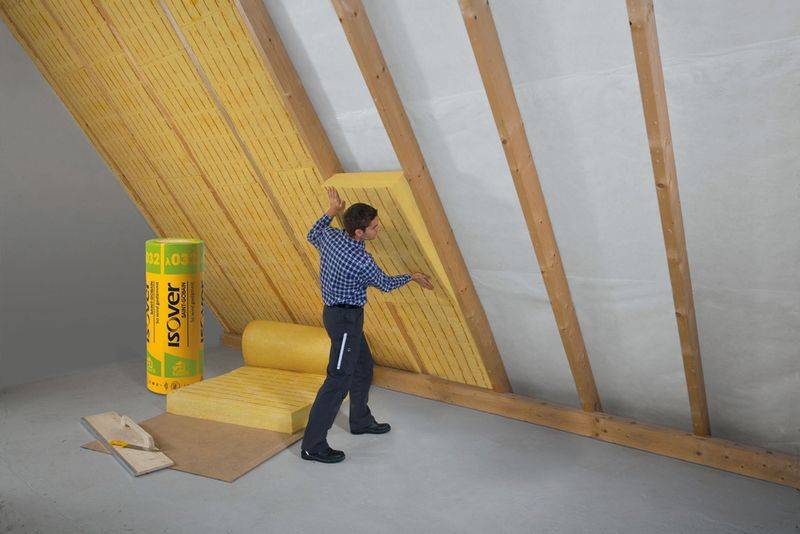
- A layer of thermal insulation is laid between the rafters and the frame.
- A vapor barrier membrane is placed on top of the insulation.
- The crate for the ventilation hole is stuffed on top of this design.
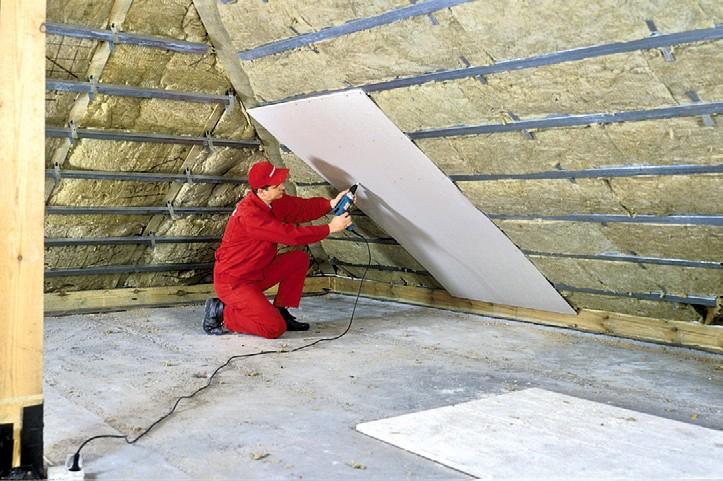
- The crate is sheathed on top with gypsum boards or OSB boards.
Today, many people are in a hurry to leave the noisy metropolis and find themselves in the bosom of nature, which energizes and gives cheerfulness and new strength. A rare person does not dream of living outside the city and enjoying the freshness of the air every day. However, at the same time, he faces some difficulties, because the climatic conditions do not allow him to carelessly live alone with nature all year round.
Creating favorable conditions for living in a country house is not an easy task, and this article aims to help in overcoming difficulties. Create coziness in the house, and let a warm and comfortable atmosphere always reign in it!
Preparing to insulate the attic
A specific feature of the attic is the presence of a sloping ceiling. Moreover, according to the standards of SNiP 2.08.01-89 "Residential buildings", the height of the attic floor cannot be lower than 2.5 m. It is allowed to reduce the height in an area not exceeding 50% of the total area of \u200b\u200bthe premises.
Other features of the attic include:
- the dependence of heat loss on the material from which the house is built: wood, cellular concrete, brick, or a combination thereof;
- dependence of attic engineering systems on those existing in the house. This leaves imprints on technical solutions for the device of communications;
- a variety of architectural forms of the mansard roof: broken, one, gable roof;
- variety of design solutions.The material for the manufacture of load-bearing elements of the attic can be wood, metal, reinforced concrete;
- location specifics. The attic can be located within the area of the building or go beyond its boundaries, supported by columns or a cantilevered extension of the interfloor ceiling.
Thus, when deciding how to insulate the attic for winter living, one must proceed from the design features of the attic floor.
Note that it is correct to carry out work on the insulation of a residential building or apartment outside the premises, because. this approach provides a shift in the freezing point towards the insulation mounted on the outside of the wall.


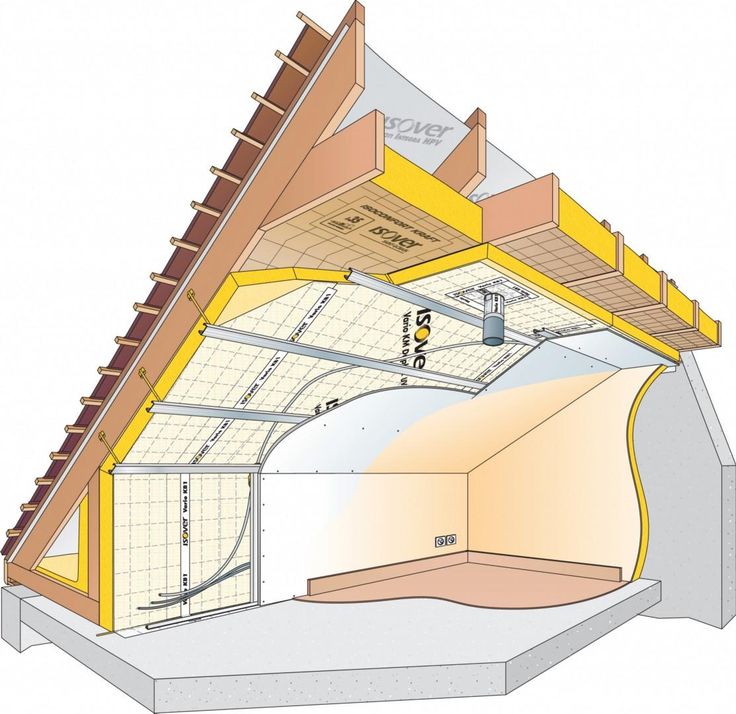

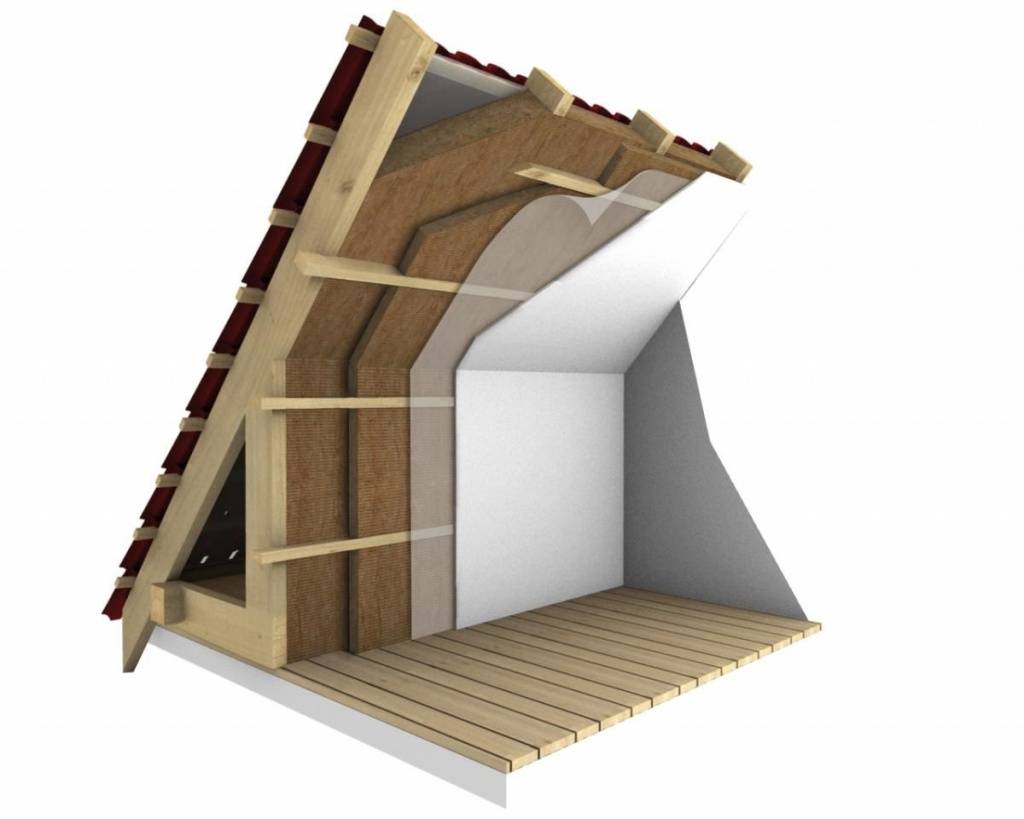
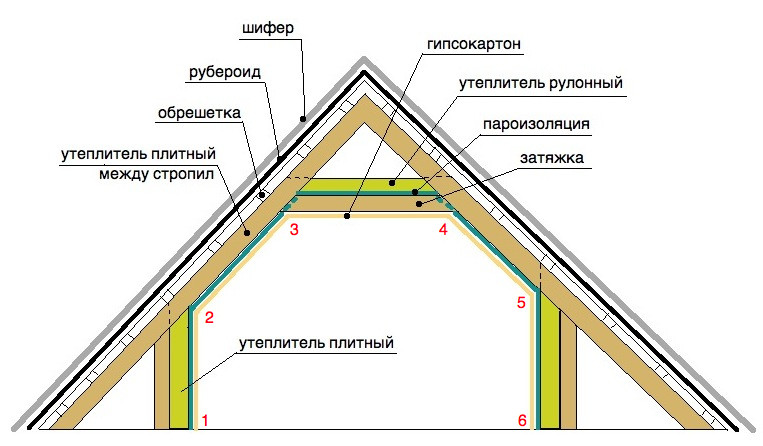

However, attic insulation from the inside - a ubiquitous option, because. all surfaces that are subject to insulation are located inside the attic (room) floor - ceiling, floor and walls. The exception is the pediment, which can be insulated as part of the attic thermal insulation or at the same time as the insulation of the whole house.
Factors affecting the thermal insulation of the attic
Professionals identify two key factors that have a significant impact on the level of heat loss and the performance of the attic after the insulation work has been completed.
First, it is a heat-insulating material. Taking into account the fact that the attic floor is the coldest room in the house, and it is supposed to do the attic insulation with your own hands, you need to carefully consider the choice of insulation.
Secondly, it is a waterproofing film. It is she who is designed to protect the insulation from moisture entering the attic from the outside (outside), through the roofing material, and from the inside, through the floor.
Brief characteristics of modern heat-insulating materials
Today, so many different thermal insulation materials are produced that it is very difficult for some consumers to figure it out. Manufacturers often take advantage of this, and with the help of not entirely honest advertising, they artificially inflate the prices of their products. Let's look at some of the most striking examples.
Mineral wool from basalt volcanic rocks
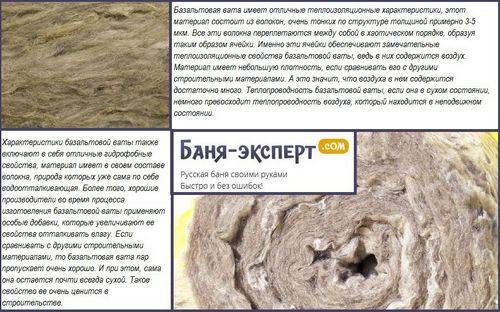
Mineral wool from basalt volcanic rocks
It sounds tempting, not everyone understands, but attractive, as manufacturers call their products. The phrase “environmentally friendly” is necessarily added to these words, and the consumer is ready to pay big money. At the same time, the companies “modestly” keep silent that basalt volcanic rocks are 60-80% ordinary glass, and the rest are impurities that are removed during production.
Rockwool stone wool
In principle, their products are ordinary long-known glass wool. Due to the use of “free” glass, the cost of mineral wool should be much less than the cost of glass wool. But advertising does its job, due to its action, the price increases significantly.
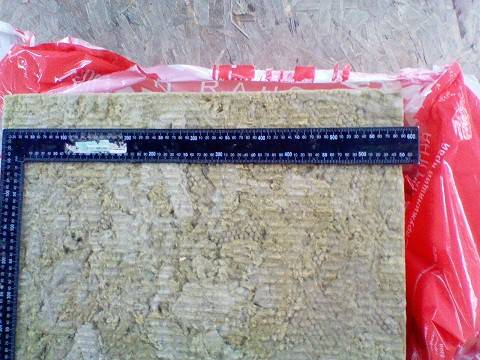
stone wool slab
glass wool
Previously, glass wool was difficult to work with, it caused rather unpleasant irritations on the skin. Outdated technologies did not allow making the fibers very thin. The thick glass fibers were strong enough to damage the top layers of the skin. Now technology makes it possible to reduce the diameter of glass fibers to 6 microns, to the touch such products are no different from cotton wool.
Characteristics of glass wool
But the buyer reacts negatively to the word "glass wool", manufacturers do not use it today. A striking example of expensive ordinary glass wool is the Izover brand. An incomprehensible word and the absence of "glass" makes it possible for manufacturers to raise the price of their goods made of ordinary glass.
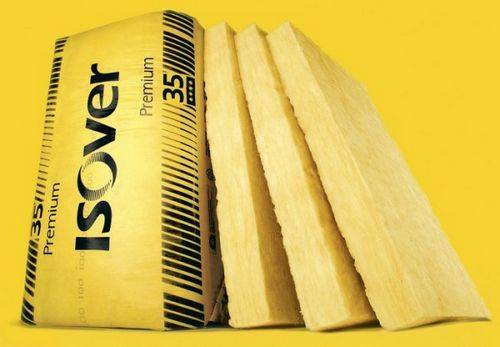
Glass wool Isover
What do we recommend? For attic insulation, mineral or glass wool is an excellent material in all respects, but you should not buy fashionable well-known brands. Their performance does not quite meet the high price. There is an opportunity to buy glass wool - take it, in terms of quality it is no worse than the most fashionable items, and at a cost thirty percent cheaper. Any mineral wool is safe for health, unlike other modern thermal insulation materials.
Another tip for mineral wool. It can be rolled or pressed.
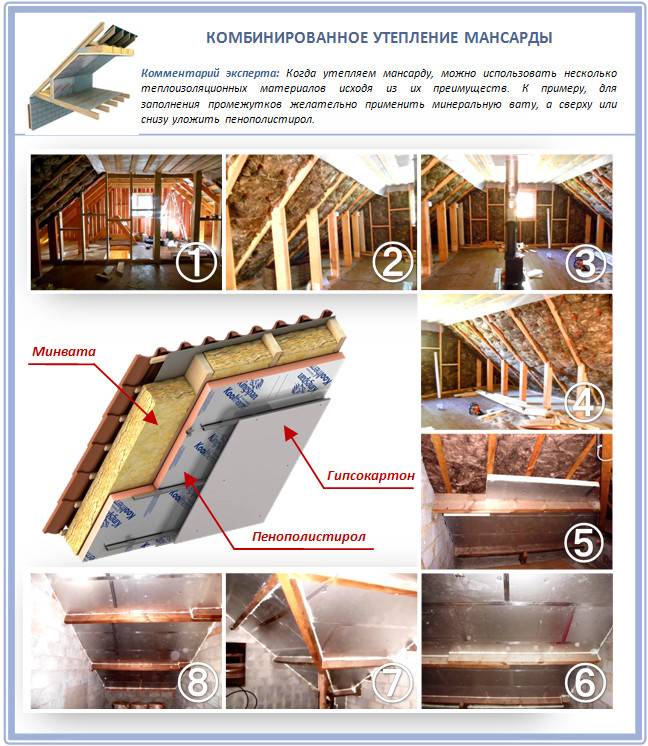
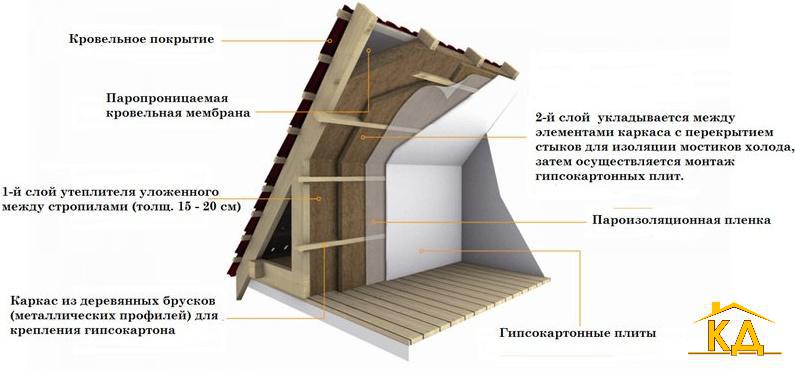




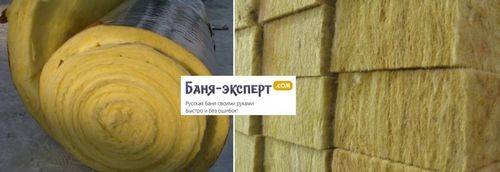
Minvata. Rolls and slabs
Insulating the attic with rolled mineral wool will cost about one and a half times cheaper than pressed one. The thermal conductivity of both options differs by no more than twenty percent. Think before you start warming the attic in the bath.
A few words about polystyrene, expanded polystyrene, polyurethane foam and ecowool
These are the so-called "budget" heat-insulating materials, the average price is one and a half to two times lower than that of mineral wool. The main common drawback is that chemical compounds are released into the air. The number of these compounds is regulated by the sanitary authorities, but they are necessarily present in one percentage or another.
Styrofoam
Very technologically advanced, easy to cut, not afraid of moisture.But he is afraid of rodents, after a few years they can “grind” foam sheets into powder, it will crumble and, as a result, the quality of thermal insulation will decrease.
- Styrofoam. Texture
- Styrofoam specification table
Styrofoam
Styrofoam
The "sibling" of polystyrene foam, universal use, has slightly increased indicators of physical strength.
polyurethane foam
The most "harmful" insulation, it is not recommended to be used for residential premises. The main advantage is that it is applied in liquid form to any complex surfaces. After cooling, it forms an impervious coating.
-
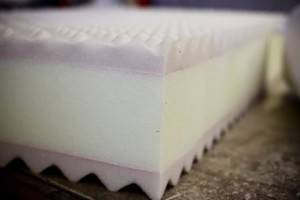
- Elastic polyurethane foam
- Liquid polyurethane foam
Ecowool
Also sprayed, can be used for insulation in hard-to-reach places of finished buildings. It is made from woodworking waste and waste paper; to slow down the processes of decay, it is impregnated with antiseptics. And then here "eco" is understood only by advertising agents of manufacturing companies.
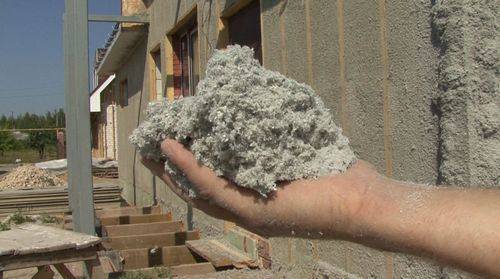
Ecowool
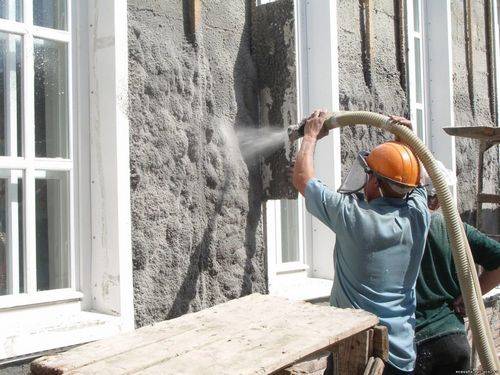
Application of ecowool
We hope that this knowledge will allow you to consciously select materials for attic insulation, we are sure that additional knowledge has not bothered anyone yet. Now you can talk about the technology for performing work on the insulation of the attic above the bath. We will consider the two most common options - mineral wool and foam sheets were used as heaters.
Conclusion
Never save on the thickness of the insulation layer. If it gets too hot, you can always open the windows to ventilate the rooms. And if it is too cold, you will have to spend additional significant money on heating to comfortable temperature values.
We did not consider options with "ecowool" and liquid polyurethane foam for several reasons.
- Firstly, state sanitary authorities recommend using these insulation options only for external work.
-
Secondly, it is impossible to make such insulation on your own; you have to use the services of specialized construction companies. How much such “pleasure” will cost, you can guess on your own.
- Thirdly, "ecowool" for thermal insulation of vertical surfaces is a very bad option. It will definitely shrink over time, the effectiveness of the money invested in thermal insulation work will approach zero.

An example of a warm operated attic bath
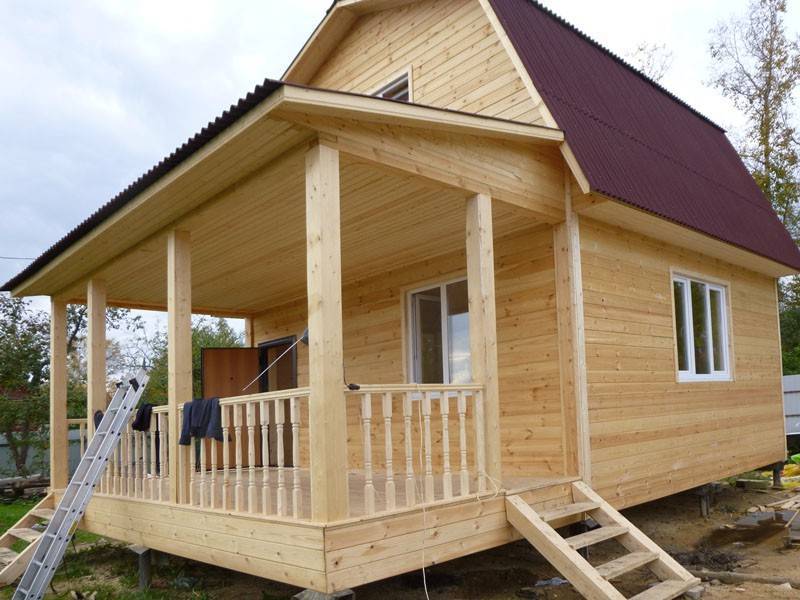
Bath with insulated attic
Conclusions and useful video on the topic
An example of attic insulation with mineral wool:



Thermal wool blowing technology:
Universal material - stone wool. Full review from the manufacturer TechnoNIKOL:
When choosing a heater, do not forget that the attic is a living space that should not only be warm, but also safe. If possible, purchase materials that comply with sanitary standards, with an appropriate flammability class and the absence of toxins in the composition.
And the best characteristics of thermal conductivity, stability and hygroscopicity are a guarantee of comfortable use of the premises for a long time.



