
- Folk remedies
- spring-cleaning
- How often should your cubicle be cleaned?
- Detergents
- Overview of specialized household products
- How and with what you can wash the glass in the shower
- Why choose?
- Causes of plaque and dirt
- How to clean?
- Tiles and ceramic tiles
- Acrylic
- Selection of necessary tools
- Soft cloth and microfiber
- rubber scraper
- foam sponge
- Toothbrush
- Causes of plaque and dirt
Folk remedies
If you think that household chemicals are harmful to humans, you can use folk remedies. How to wash the shower cabin from lime and soap deposits at home?
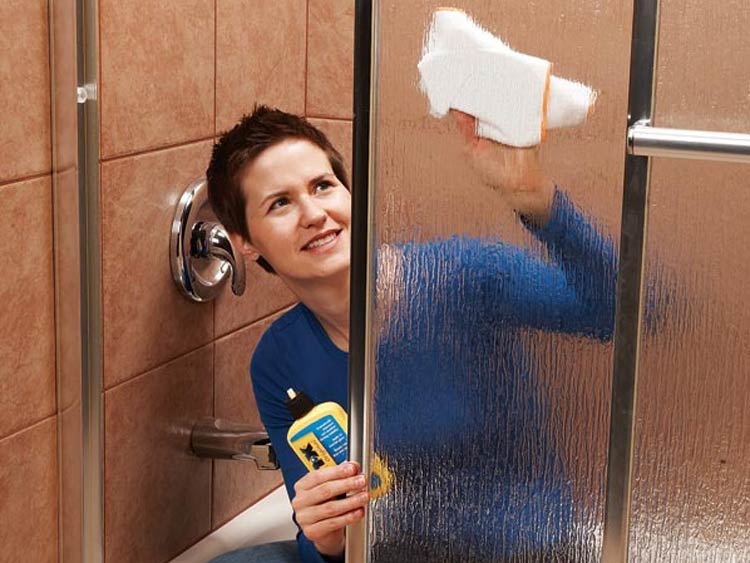
- Vinegar. Mix a glass of table vinegar (9 percent) with two glasses of water, apply to glass or plastic cubicle doors and leave for 10-15 minutes. Then rinse thoroughly with water and wipe with a dry cloth. This will solve the problem, than to wash the shower cabin from lime and soap deposits, the glass will shine with its original brilliance. A solution of vinegar can also be used to wipe tarnished plumbing: faucets, hydromassage heads and other chrome parts.
- Lemon acid. Dissolve a 100-gram sachet of citric acid in 0.5 liters of warm water, spray the mixture onto contaminated surfaces with a spray bottle. Rinse with clean water after 10-15 minutes.You can use citric acid in combination with baking soda, for this, add 20 grams of soda to the mixture described above.
- Vodka or alcohol. They will not only remove dirt, but also disinfect. Mix a spoonful of alcohol or vodka with two tablespoons of water, soak a soft cloth in the prepared mixture and wipe problem areas. Then wipe dry with a dry cloth.
- Hydrogen peroxide. Peroxide will help dissolve mineral salt deposits on the walls, faucet and other parts. It is enough to moisten a soft cloth in peroxide and wipe the problem areas with it. If the plaque cannot be removed immediately, the napkin can be left for a while (video).

Means, how and with what to wash the shower from lime and soap deposits are now on sale in stores in a large assortment. Buying them is not a problem. However, it is better not to bring the booth to the appearance of plaque.
spring-cleaning
Once every 10-14 days, the shower cabin should be thoroughly cleaned from various contaminants. General cleaning should also be carried out in cases where the structure has not been used for a long time, for example, you were away.
General cleaning is carried out in several main stages:
Cleaning of walls and plastic elements. Get rid of lime deposits and other types of contaminants. To do this, apply the selected product to the surface, leave for a while and rinse with clean water.
When cleaning walls, pay special attention to the seams between the tiles, as this is a favorite place for mold.
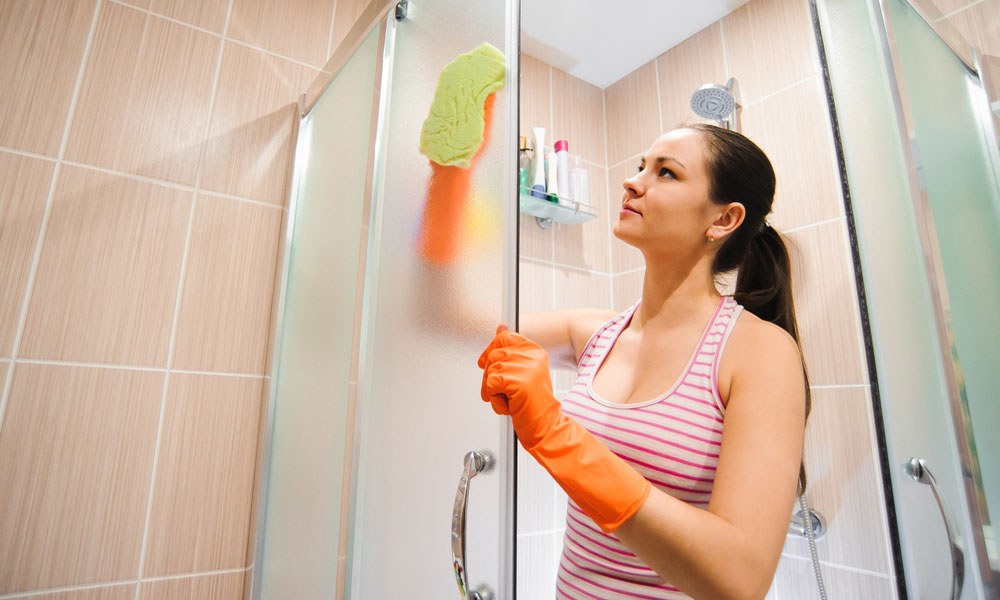
Washing glass doors. Thoroughly wash the glass from soap stains
Well, special sprays for windows and glasses will cope with this task. A solution of vinegar, citric acid or ammonia is also suitable.Use the product as directed, then wipe dry with a soft cloth.
Cleaning of chrome elements. Thoroughly clean the mixer, hydromassage head and other elements from mineral salts. With the help of purchased or folk remedies, return them to an attractive shine.
Tray wash. The last step is to wash the pan. When choosing a detergent, consider the material from which it is made. For example, for acrylic pallets it is strictly forbidden to use formulations with formaldehyde, formic acid. Enameled pallets are more resistant to chemicals, but it is better to refuse abrasive.
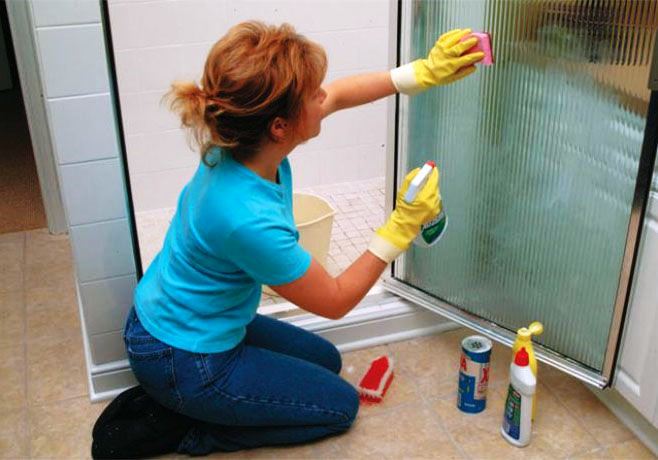
Going to do a general cleaning in the shower, arm yourself with the following tools and fixtures:
- soft rags and microfiber;
- spray gun;
- rubber scraper;
- foam sponge;
- toothbrush.
We remove limescale from the shower cabin - video:
Do not use hard brushes or metal scrapers as they may leave scratches.
How often should your cubicle be cleaned?
Caring for such a comfortable bathroom is conditionally divided into three varieties:
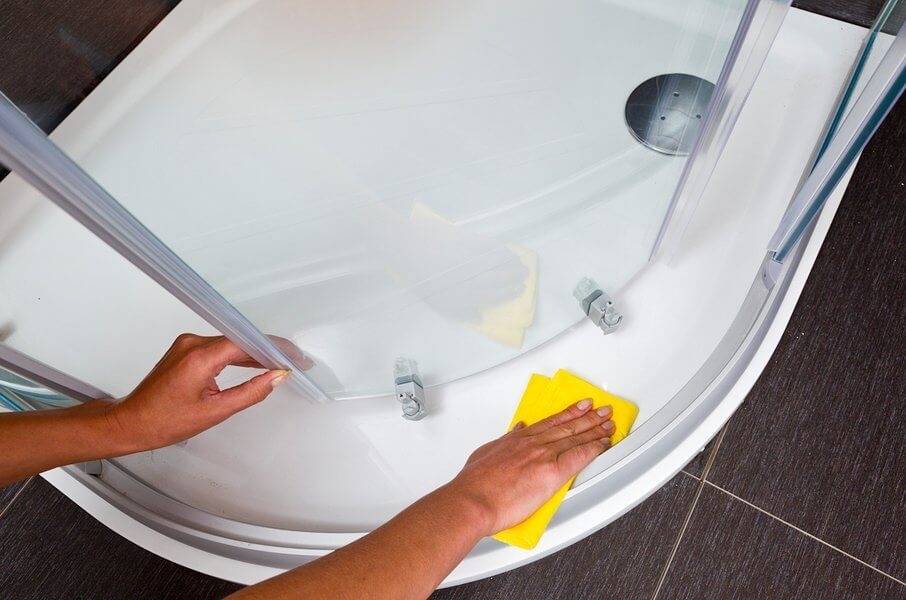
- Daily cleaning. It is carried out every day, immediately after the hygiene procedures. First, everything in the booth should be washed off with hot water, then rinsed with cool water and wiped all surfaces with a dry cloth.
- Basic cleaning, which is recommended to be carried out no more than once a week with the use of cleaning components. At the end of cleaning all surfaces, they should be thoroughly rinsed with warm water, after which they should be wiped with a dry cloth.
- Intensive cleaning, which consists in the use of more aggressive cleaning agents, is required in cases where the appearance of a strong limescale deposit is noted or when it has not been used for its intended purpose for a very long time.
Detergents
Plumbing stores sell a variety of shower cleaners. They can be in any form: creamy, bulk, liquid. But if you don't want to spend money, regular home remedies will work for you.
Vinegar
Water must be mixed with vinegar in a ratio of one to one. When applying liquid to plumbing, it is advisable to use a sponge that absorbs moisture well. To get rid of scale from metal taps, you can take cotton rags moistened with the product.
To achieve the best effect, sections of the booth are wrapped with napkins with liquid and left for an hour. Next, the plumbing is rinsed with clean water, wiped dry.
Citric acid solution
This tool perfectly cleans glass and plastic materials from plaque. To prepare the solution, we need one package of citric acid and half a glass of cold water. If there is one whole lemon, you can replace the powder with it. Mix ingredients and add to spray bottle. Apply the product on the surface and leave for 15 minutes. Then rinse with water, wipe with a dry cloth. If plaque remains, then next time during processing, increase the concentration of citric acid.




Vodka or alcohol
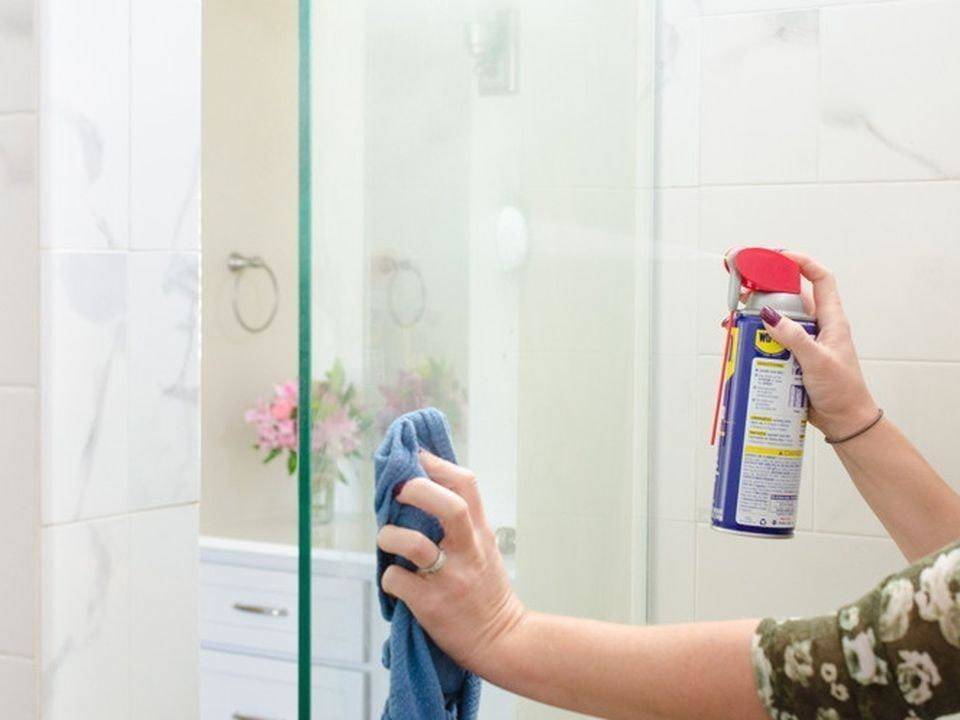
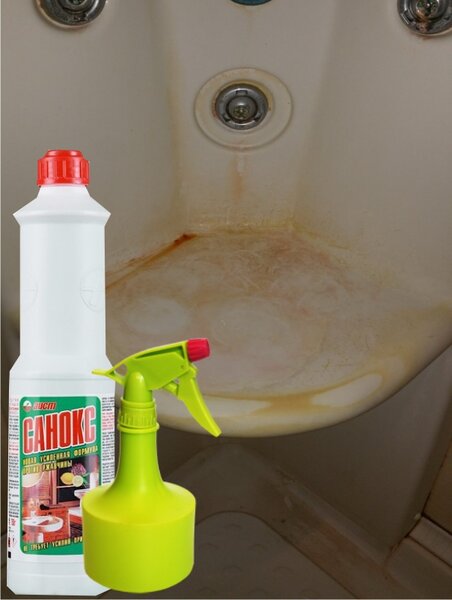
Often soap stains remain on the walls of the booth, which look unaesthetic. To eliminate this trouble, we need vodka or ammonia. To prepare the solution, add 5 ml of alcohol to a five-liter jar. The liquid can be combined with vinegar.To make a water repellent for showers, add 30 ml of glycerin to the solution.
Tooth powder or paste
This method of cleansing is the softest and most gentle. Toothpaste is well suited for processing metal taps and fittings. It is desirable to use the product in white color so as not to stain the acrylic coating with pigments. Apply the paste to problem areas with a soft sponge and rub it in with light movements. Leave the product for half an hour, then wash off.
Overview of specialized household products
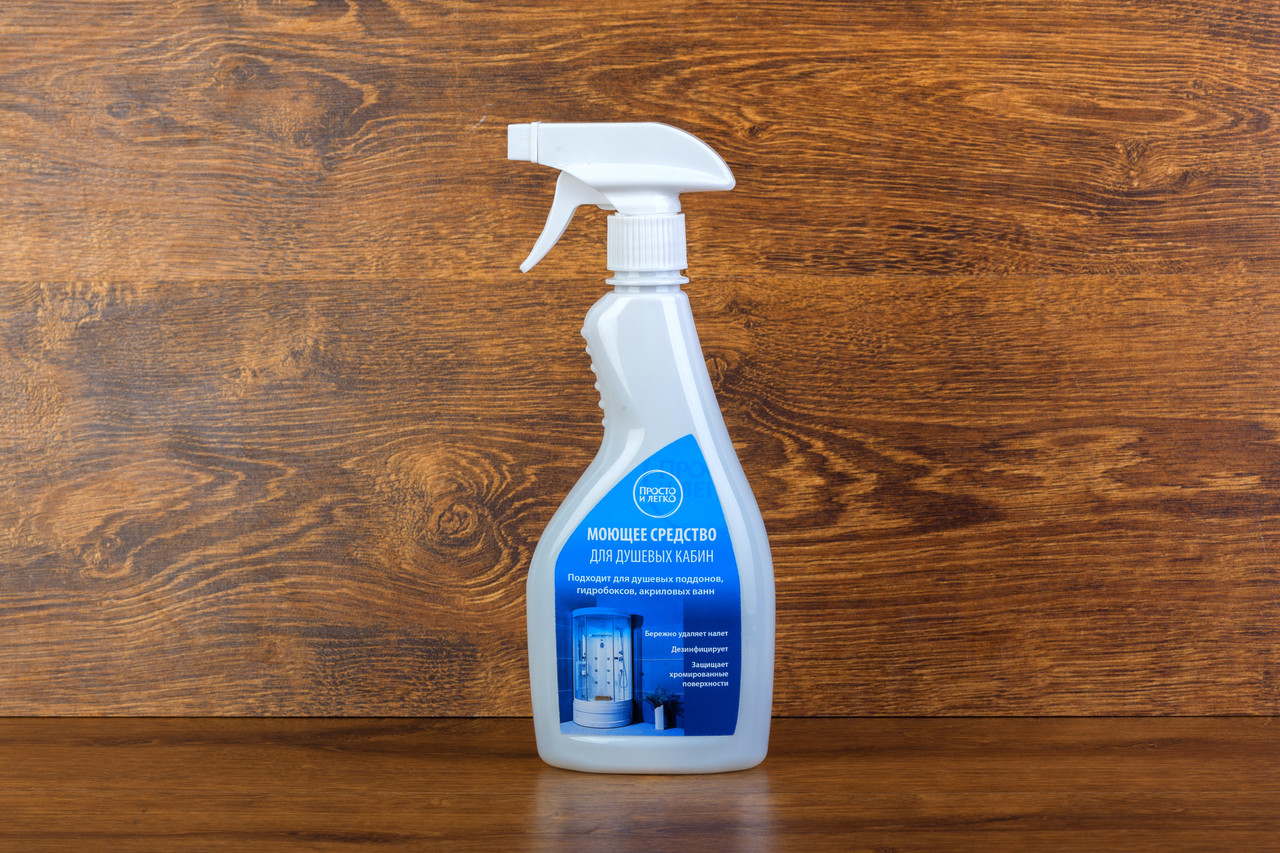
In order to qualitatively wash the tray and glass of the shower cabin, not only improvised means are used. For effective cleaning, special household chemicals are used, the assortment of which can be found in any supermarket.
The choice of cleaning gels, liquids, creams must be taken responsibly. Unlike household detergents, professional chemicals have an aggressive composition that, if not used properly, can damage the materials of structural parts. Despite manufacturer's assurances about the safety of substances, it is desirable to avoid cleaners containing ammonia, high concentrations of alcohol, or with fine abrasive particles. Mixtures based on fruit acids are considered a safe substitute for alkali.
You can wash the shower cabin from soap scum with chemical means:
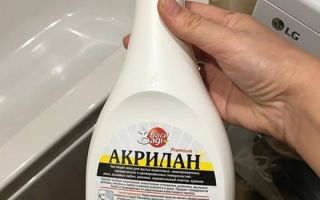
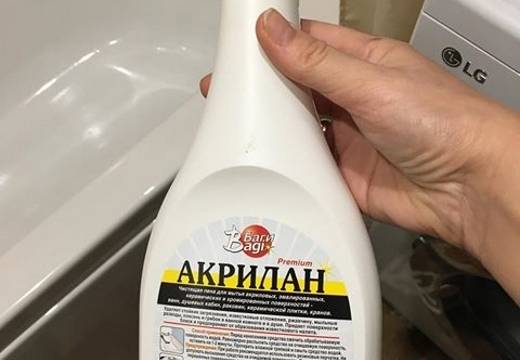
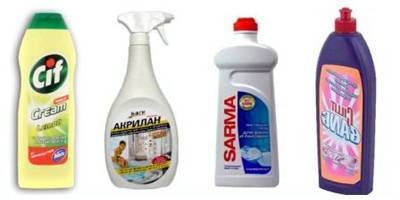
- Akrilan is a high-quality Russian cleaning agent. Allows you to wash the tray and walls of the old shower cabin from accumulated dirt, mold, rust, hardened limescale;
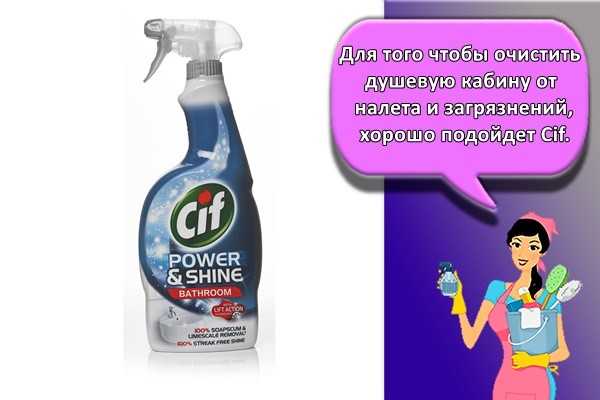
- "Cif" - in addition to layers of mineral salts, rust spots, the substance of the joint production of Great Britain and the Netherlands has excellent bleaching properties;
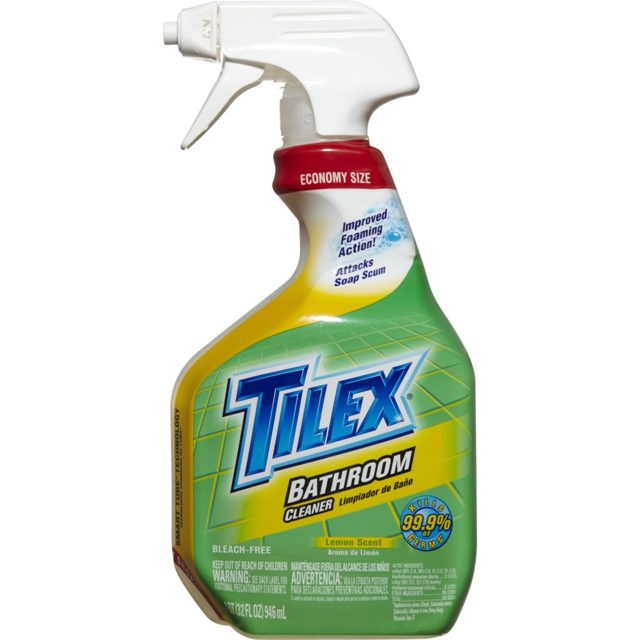
- "Tilex" - a good American concentrate for antibacterial treatment of shower cubicles, tiles, washes dried soap stains, is not washed off;
- "Frosh" is a German cleaner for chrome parts, with a safe composition based on natural ingredients.
Gels and creamy cleaners are used to wash enamelled shower trays. Enamel is the only exception to the rule that allows the use of powder products (abrasives).
How and with what you can wash the glass in the shower
Cleaning shower glass is easy when cleaning the bathroom rooms. Such surfaces are durable, easy to process and unpretentious in cleaning agents. The only detail that affects the choice of substance is the material from which the walls of the plumbing are made. If they are made of plastic, you should avoid household chemicals, which contain formaldehyde, formic acid, solvents like acetone.
For cleaning glass doors, mild detergents are used, the consistency of which does not flow from the surface to be cleaned.
High-quality chemistry forms a transparent protective shell on the glass, preventing the rapid re-accumulation of soap and limescale. After applying the substance and wiping the dirt, the remaining foam is carefully removed with a dry cloth or sponge.
From folk remedies for cleaning glasses and parts of showers contaminated booths, aqueous solutions based on citric acid, vinegar, medical alcohol and vodka are actively used. All options do an excellent job of restoring shine and do not leave streaks behind.
Article checked by the editors
Why choose?
From what has been said, it should be clear that the aggressiveness in relation to the raid is different. Some manufacturers try to make their cleaning agent soft so as not to harm plumbing equipment at home. Others release the most aggressive liquid. The latter will help to clean any plaque, but will easily corrode some surfaces. For example, chrome steel.
Shower enclosure cleaners
So, the whole process of choosing how to get rid of limescale comes down to determining the pH of the composition. Everything else is marketing gimmicks. Now, when you watch Bude Dobre's program on the indicated topic, note to yourself that the presenter uses at home products whose cleaning action is on different planes:
- Soap is an alkaline factor.
- Ammonium chloride is an acid factor.
- Vinegar is acidic.
- Soda is an alkaline factor and so on.
These mixtures affect different types of pollution. Sometimes it will be better to use one of them, and in other cases - the other. Thus, plumbing care and cleaning are highly dependent at home on the lifestyle of the owner himself. That is why reviews on cleaning products are so controversial. And it cannot be said that this will be the best, and that will be the worst. This is an obvious conclusion, because stupid compositions quickly disappear without a trace.



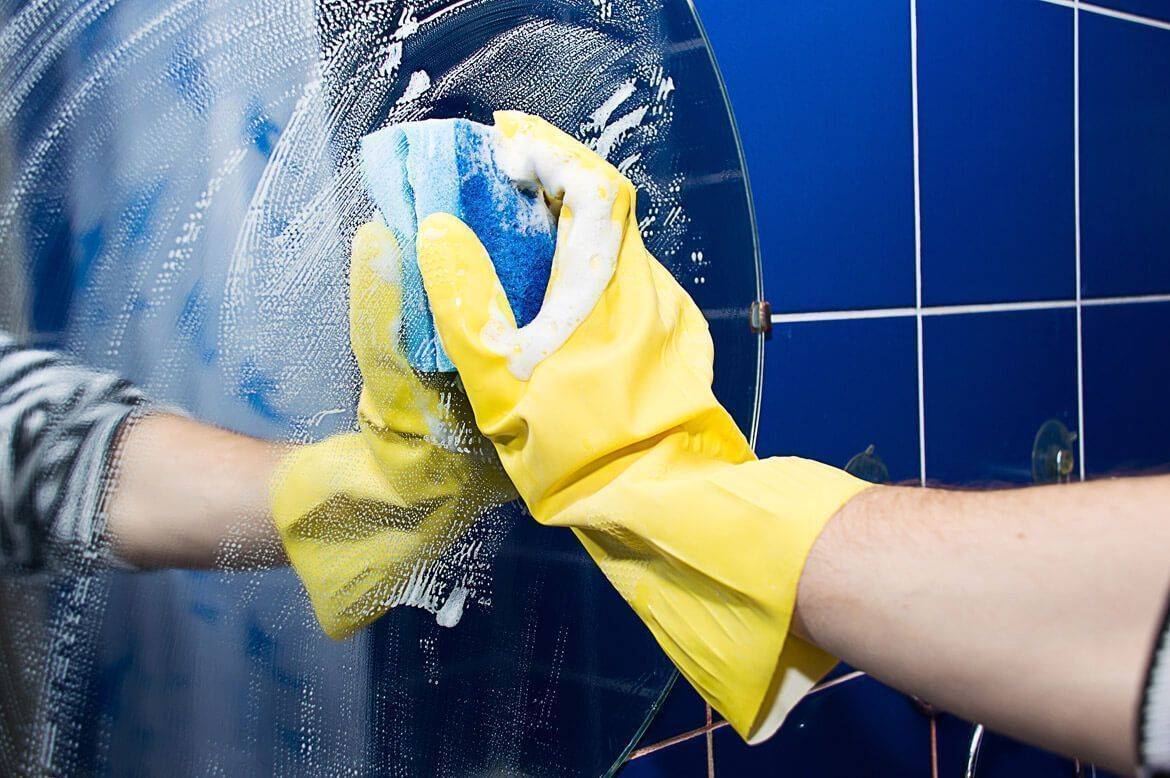
In many cases, the price of getting rid of plaque depends on secondary qualities: smell, color, gentle effect on the hands, and so on. This is why cleaning with chlorine bleach is always cheaper, but it will never be the best. Competitors will take care of it. And, on the contrary, you can wash your shower cabin from plaque with an advertised composition and still remain dissatisfied. But what about hundreds of reviews on the Internet? Publicity stunt, many leave such information for a modest fee. And we pay for this and for having the right to clean our pallet with the brand, we, the buyers ...
This is called business - hypocritical and two-faced. But they haven't thought of anything else yet, or they don't want to think of anything else. Because no one needs it.
Causes of plaque and dirt
A dirty and untidy bathroom is a sentence for the hostess. Keeping it clean is not so difficult, it is enough to clean it regularly and follow our simple tips.
Folk remedies that can be found in any home are suitable in almost any case.
Cabins are a convenient thing, especially for those who prefer a shower to taking a bath and who save space in the room. Cabin designs are different, most often it is a completely enclosed space in which after water procedures it becomes very warm and humid. And that causes mold.
To avoid such a nuisance, always ventilate the cabin well, and while cleaning, do not forget about the joints and nooks and crannies. After a shower, do not forget to wash off all dirt with warm water and a soft cloth. Take care of your shower every day if possible. It is possible without additional funds, it is enough to rinse the booth with water and wipe it dry with a microfiber cloth or a simple soft cloth.
Dealing with limescale is very difficult. This is due to the quality of the water itself, which is almost impossible to fight. Hard water will accumulate on the tray and walls over time, it must be removed with a soft scraper after a shower.

Here are some tips on how to clean your shower stall at home.
You can use household chemicals: anti-scale liquid for the base and glass cleaner and any improvised means. However, avoid hard sponges and brushes and powders that can scratch the surface. Otherwise, you will spoil the booth not only externally: microbes will accumulate in the damage.
Be especially careful with acrylic coating. But still, it’s better to stop at folk methods.
The doors are the most visible and therefore the most problematic part of the booth. Even a dried drop of water becomes a stain on them.
You can restore shine to glass and chrome-plated plumbing with a mixture of vodka and water (dilute in a ratio of 1 to 2). Soak a cloth in the solution and wipe dry.
Vinegar will deal with rust. Spray it on dirt, leave for half an hour and rinse.
Limescale from the door will remove ammonia. Pour it into warm water in a ratio of 1 to 10.
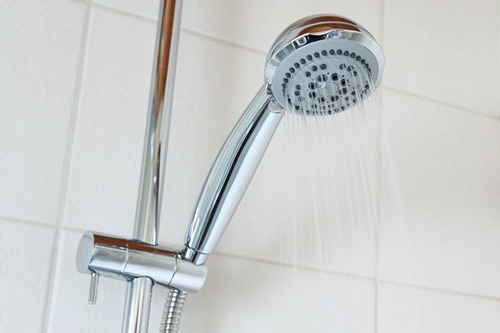
The shower head also accumulates plaque on itself, which can worsen the pressure. We clean the watering can as follows: remove it and soak for several hours in 3% table vinegar.
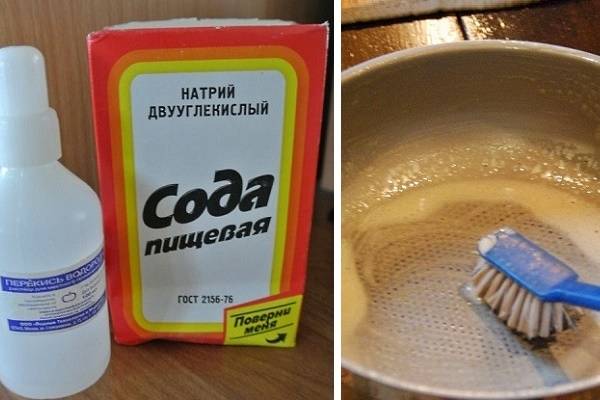
You can get rid of mold with home remedies as follows: pour hot water into a container and add vinegar and ammonia (half a glass of liquids for three liters of water) and ¼ cup of soda.Protect your hands with gloves, moisten the sponge and treat problem areas. Rinse with water afterwards and pat dry. The smell is not pleasant, but it's worth it.
To spend less time cleaning, protect the doors from sediment. How to do it? It is enough to treat them with furniture polish and rub with a soft cloth.




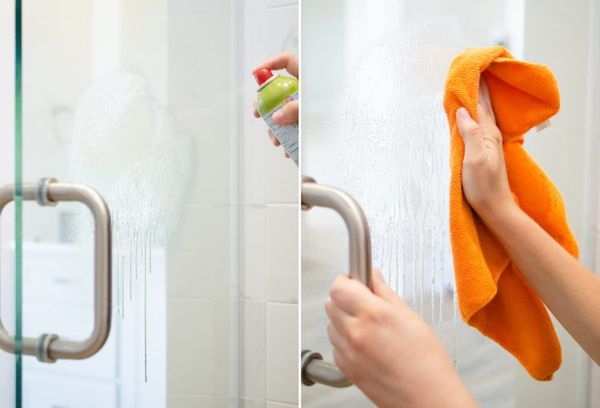
Stains on doors can be cleaned with an unusual cleanser such as toothpaste. Of course, it is better if it is without dyes. In this case, the sponge will perfectly replace the old toothbrush. Then wash off the foam with water or vinegar.
That's all. These simple steps will keep your bathroom clean and tidy, you and your family in good health, and your family treasury in abundance.
Want even more helpful articles on how to maintain your beauty and keep your home clean without the hassle? Subscribe to our group.
Natalia Bryantseva
How to clean a shower?
This question arises both during its purchase and during operation.
Before you start cleaning, you need to pay attention to the materials from which the shower cabin is made. There are varieties that need to select a special cleaning agent so as not to spoil their appearance.
How to clean?
To figure out how to clean a shower cubicle, you must first understand for yourself that this is a complex multi-component structure. Its elements can be made from a variety of materials. Therefore, to wash this plumbing fixture, it is appropriate to use different cleaning compounds - each for the corresponding surface.
Below we will deal with the materials involved in the manufacture of a shower cabin.
- The walls and the door are usually made of glass or plastic.And also they can be made from polystyrene sheets.
- Pallets are acrylic, marble, ceramic, metal. They also produce models with a pallet made of artificial stone.
- Frames and guides are made of aluminum. Moreover, the metal is laminated or painted.
- Chrome-plated steel is used for shower heads and taps. The shower tube can also be equipped with a similar metal braid.
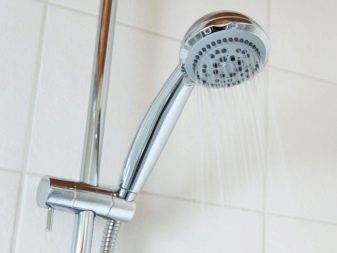
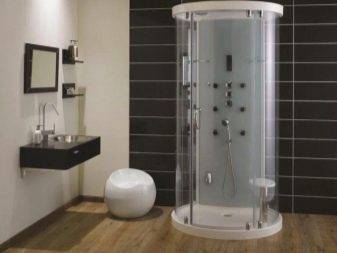
Cleaning the booth should not be started - immediately after you have taken a shower, rinse the contaminated surfaces. And use hot water first, and then cold. So you reduce the risk of condensation, and it is he who is one of the causes of mold.
With a cloudy film and slight traces of limescale, any ordinary dishwashing detergent can easily cope. But you can also consult the sellers of hardware stores, the better it is to clean the shower stall after each shower.
Today on sale there are a variety of sprays and detergents specifically designed for cleaning glass, plastic and tile surfaces from limescale. To clean the cabin from the lime film, it is enough to apply a cleaning compound. For better performance, you can wait a bit. Then you need to rinse everything with water and wipe dry with a soft cloth.
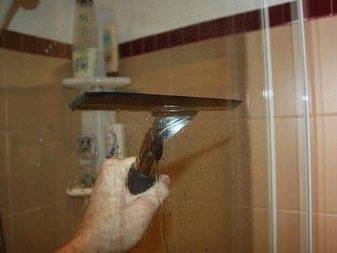
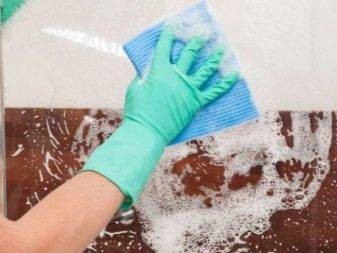
Consider home options for dealing with limescale.
Tiles and ceramic tiles
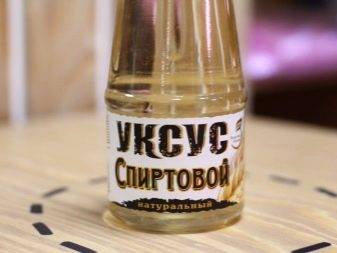
Ordinary six percent vinegar is suitable here. It is advisable to pour it into a spray bottle - it will be more convenient to use. To get rid of lime, spray the solution on contaminated areas, wait 15 minutes, then wipe dry with a soft cloth.
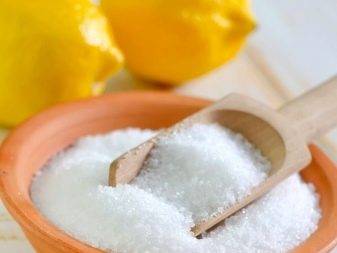
Citric acid also copes well with plaque. Its main advantage is harmlessness - its use does not harm the material
A little powder of citric acid should be poured onto a sponge and gently rub the lime deposits. Rinse thoroughly at the end
Acrylic
Any aggressive compounds are contraindicated here. Here is one way to deal with plaque: mix two sachets of citric acid with 1 liter of water. We apply the resulting mixture to the problem areas of the shower stall and wait a third of an hour. After we go through the mixture again. Rinse with water and dry thoroughly to avoid streaks.




Another option is to use oxalic acid. It must be diluted with water in proportions of 5 to 1. After application to a contaminated surface, it is necessary to withstand 20 minutes. Then you need to carefully wipe the problem area, then repeat the procedure using a solution of ammonia, wait 10 minutes. and rinse with clean water.
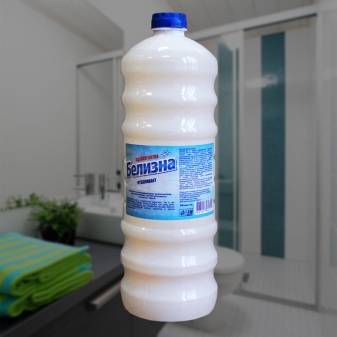
Copes well with the lime film and "Whiteness". It should be applied to places with plaque and kept for 4 hours. Then gently rinse the treated surface, wipe thoroughly with microfiber and finish with a glass cleaner.
Another remedy is hydrogen peroxide. We take 30 ml of water, 90 ml of peroxide and 60 g of gelatin, mix and wait 15 minutes. (gelatin should swell). Apply a thick layer of the mixture to the contaminated areas and leave overnight. In the morning you need to walk with a sponge and rinse with water.
Selection of necessary tools
When caring for a shower stall, you need to take into account the fact that it is made of dissimilar materials. Therefore, for work we need certain tools.But before picking up the tools, let's see what our booth is made of:
- for the manufacture of walls, doors and roofs, plastic and glass are usually used;
- pallets are usually made of acrylic, but also use ceramics, natural or artificial stone, enameled steel;
- frame elements and guides are made of aluminum;
- faucet, handles, shower heads - chrome-plated steel.
 To clean the cabin, you will need a soft sponge, a thin cloth made of cotton, viscose or microfiber, a rubber glass scraper.
Soft cloth and microfiber
In order to properly wash the shower box, first of all, you need to arm yourself with a rag. This is a universal washing tool, but it also has certain technical requirements:
- The material must be strong and durable;
- It is good to absorb water, dirt and leave no streaks behind.
- Easy to wring, lint-free and gentle surface care.
These requirements are fully met by the material of the new generation - microfiber. This is a fabric made of polymers, the thickness of the fibers of which is several micrometers. The structure of the material resembles a sponge. It absorbs four times its own volume of water, and after push-ups it remains almost dry.
 Microfiber is an unnatural fabric material, which is made from the finest polymer fibers.
rubber scraper
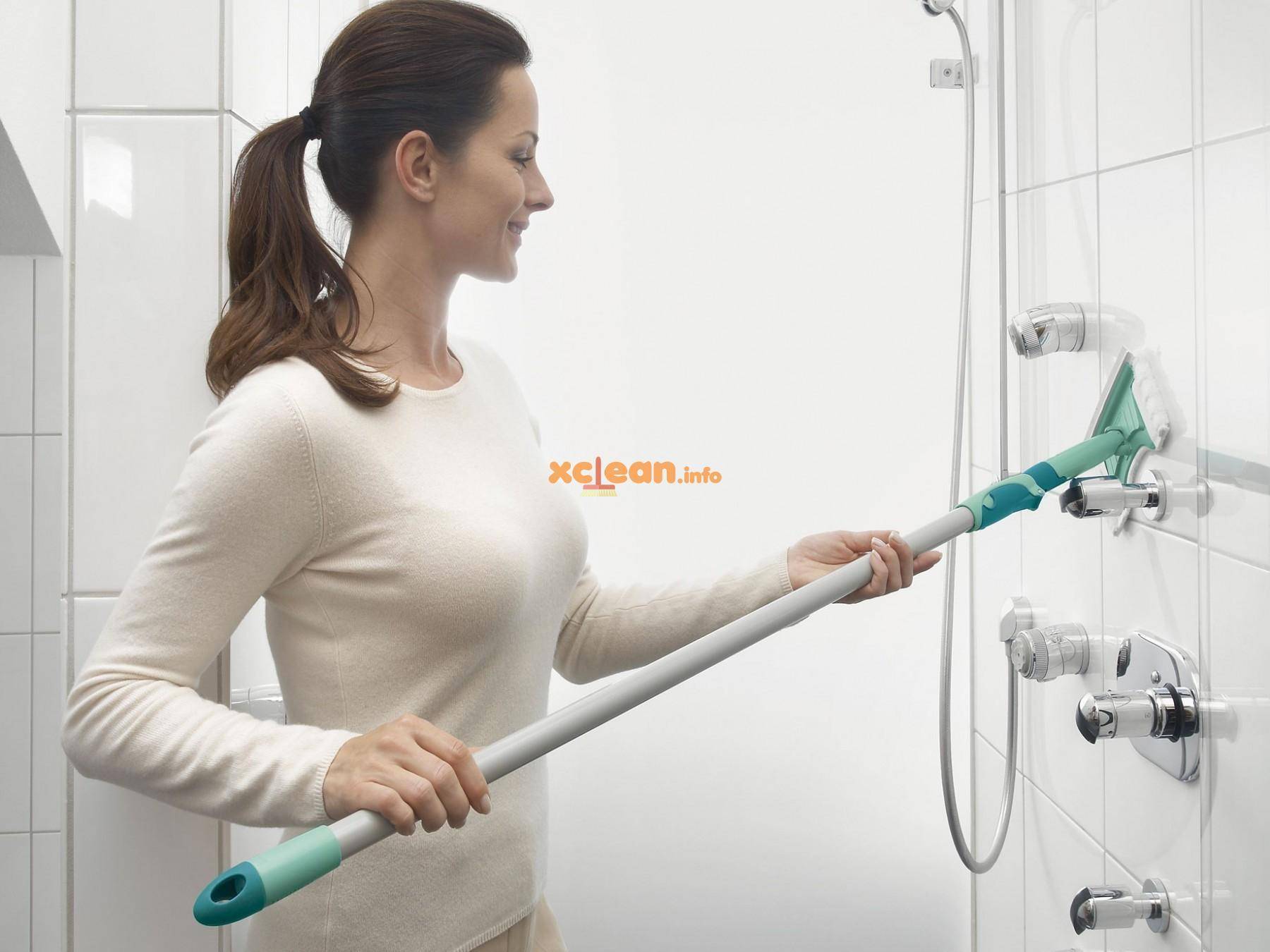
Quick and effective cleaning of glass surfaces can be done with a scrubbing brush. Structurally, the scraper looks like a mop with a double-sided working surface.The upper part of the tool is equipped with a foam nozzle, the bottom is a soft rubber scraper. A foam insert on the glass is applied with a cleaning solution. After washing, dirty water is carefully driven off with a rubber scraper.
 A glass scraper is an ideal option for those who want to save time and effort. It is easy to use, even enjoyable.
foam sponge
Foam rubber is the most common material for sponges. Its porous structure promotes abundant foaming. The difference between sponges in their size and density of the material. The defining characteristic is the density, the higher it is, the more foam is formed during washing, therefore, the detergent is saved. The double-sided sponge is equipped with an abrasive layer, which is used to treat surfaces with old dirt.
 A foam sponge is one of the best helpers in the fight against a wide variety of pollution, paired with a good detergent, it can work wonders.
Toothbrush
In showers, as you know, high humidity. If the bathroom does not have an effective ventilation system, then in a closed space, like a cubicle, mold spots form. It is a harmful substance in the form of a black coating on the corners, in the seams, on the joints. Such places, without delay for a long time, must be treated with an antibacterial agent. Since mold most often appears in hard-to-reach places, you should use a toothbrush to clean it properly.
 Do not throw away your old toothbrush, it can be useful for cleaning.
Causes of plaque and dirt
A dirty and untidy bathroom is a sentence for the hostess.Keeping it clean is not so difficult, it is enough to clean it regularly and follow our simple tips.
Folk remedies that can be found in any home are suitable in almost any case.
Cabins are a convenient thing, especially for those who prefer a shower to taking a bath and who save space in the room. Cabin designs are different, most often it is a completely enclosed space in which after water procedures it becomes very warm and humid. And that causes mold.
To avoid such a nuisance, always ventilate the cabin well, and while cleaning, do not forget about the joints and nooks and crannies. After a shower, do not forget to wash off all dirt with warm water and a soft cloth. Take care of your shower every day if possible. It is possible without additional funds, it is enough to rinse the booth with water and wipe it dry with a microfiber cloth or a simple soft cloth.
Dealing with limescale is very difficult. This is due to the quality of the water itself, which is almost impossible to fight. Hard water will accumulate on the tray and walls over time, it must be removed with a soft scraper after a shower.

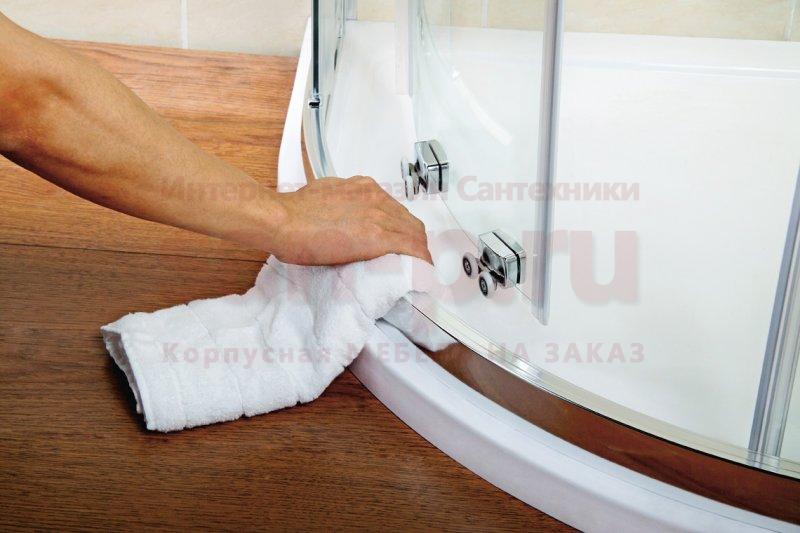
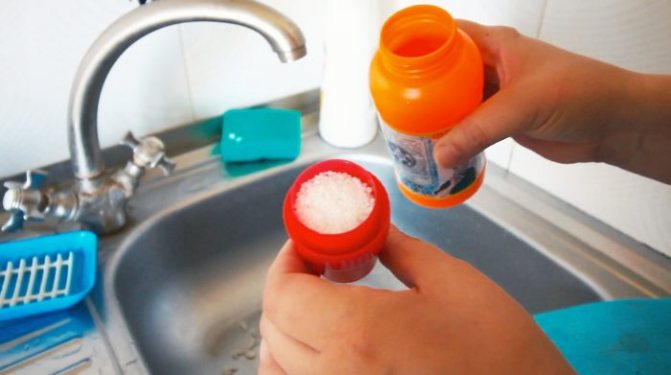


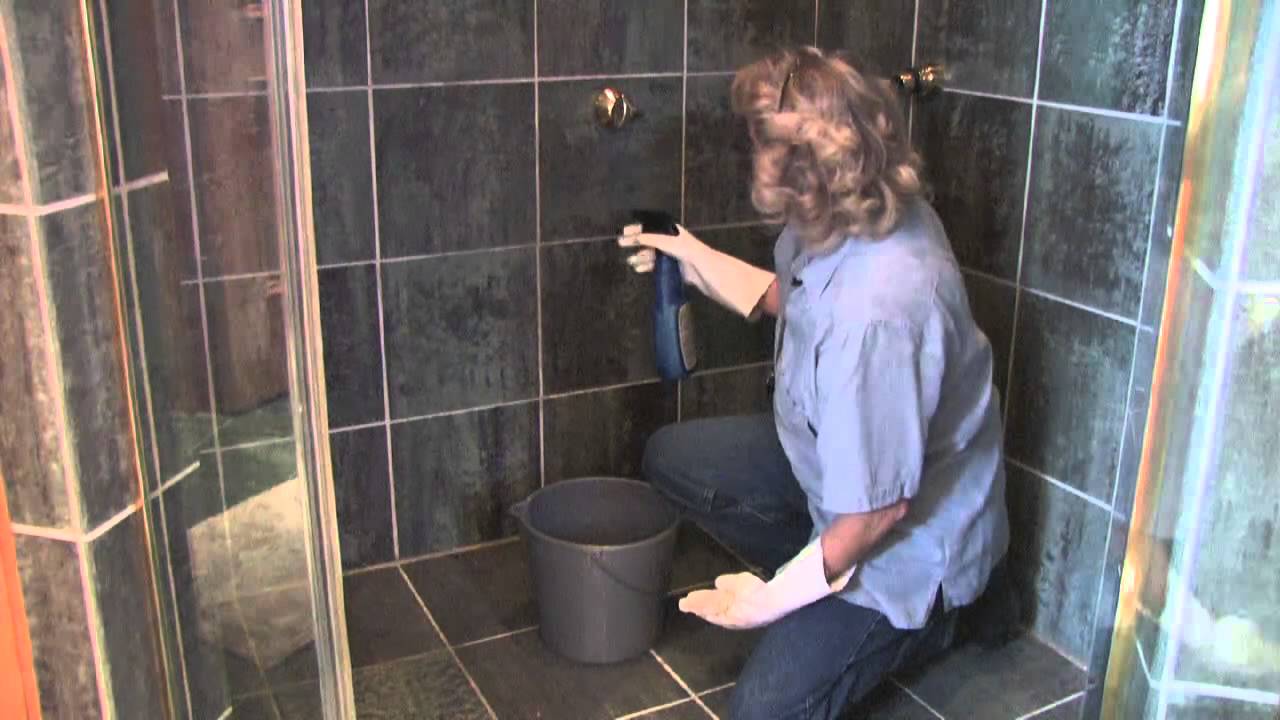

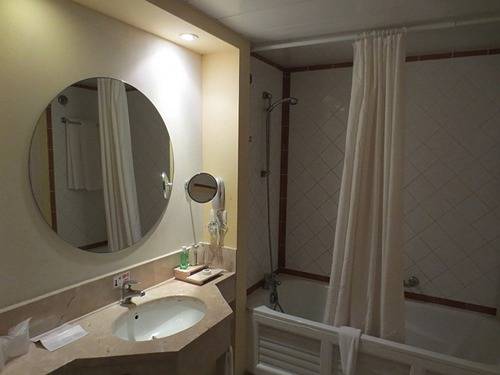
Here are some tips on how to clean your shower stall at home.
You can use household chemicals: anti-scale liquid for the base and glass cleaner and any improvised means. However, avoid hard sponges and brushes and powders that can scratch the surface. Otherwise, you will spoil the booth not only externally: microbes will accumulate in the damage.
Be especially careful with acrylic coating. But still, it’s better to stop at folk methods.
The doors are the most visible and therefore the most problematic part of the booth.Even a dried drop of water becomes a stain on them.
You can restore shine to glass and chrome-plated plumbing with a mixture of vodka and water (dilute in a ratio of 1 to 2). Soak a cloth in the solution and wipe dry.
Vinegar will deal with rust. Spray it on dirt, leave for half an hour and rinse.
Limescale from the door will remove ammonia. Pour it into warm water in a ratio of 1 to 10.
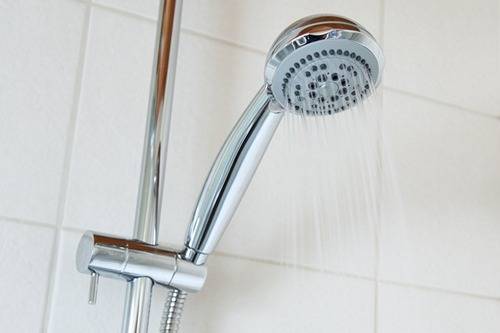
The shower head also accumulates plaque on itself, which can worsen the pressure. We clean the watering can as follows: remove it and soak for several hours in 3% table vinegar.
You can get rid of mold with home remedies as follows: pour hot water into a container and add vinegar and ammonia (half a glass of liquids for three liters of water) and ¼ cup of soda. Protect your hands with gloves, moisten the sponge and treat problem areas. Rinse with water afterwards and pat dry. The smell is not pleasant, but it's worth it.
To spend less time cleaning, protect the doors from sediment. How to do it? It is enough to treat them with furniture polish and rub with a soft cloth.
Stains on doors can be cleaned with an unusual cleanser such as toothpaste. Of course, it is better if it is without dyes. In this case, the sponge will perfectly replace the old toothbrush. Then wash off the foam with water or vinegar.
That's all. These simple steps will keep your bathroom clean and tidy, you and your family in good health, and your family treasury in abundance.
Want even more helpful articles on how to maintain your beauty and keep your home clean without the hassle? Subscribe to our group.
Natalia Bryantseva



