- Gas boilers for heating an apartment - the basics of choice
- Mounting Features
- Alternative to gas
- Option #2 - electric heating
- Keep in mind!
- Positive Factors
- Features of individual apartment heating
- Is it legal to install in an apartment building?
- Where to get permission?
- Approximate list of documents
- How to get them?
- The choice of radiators
- Water heating installation
- Gas heating of the apartment
- How to choose the right heat source
- Heaters for cold areas
- How to heat in warm regions
- Types of systems
- Gas autonomous heating system
Gas boilers for heating an apartment - the basics of choice
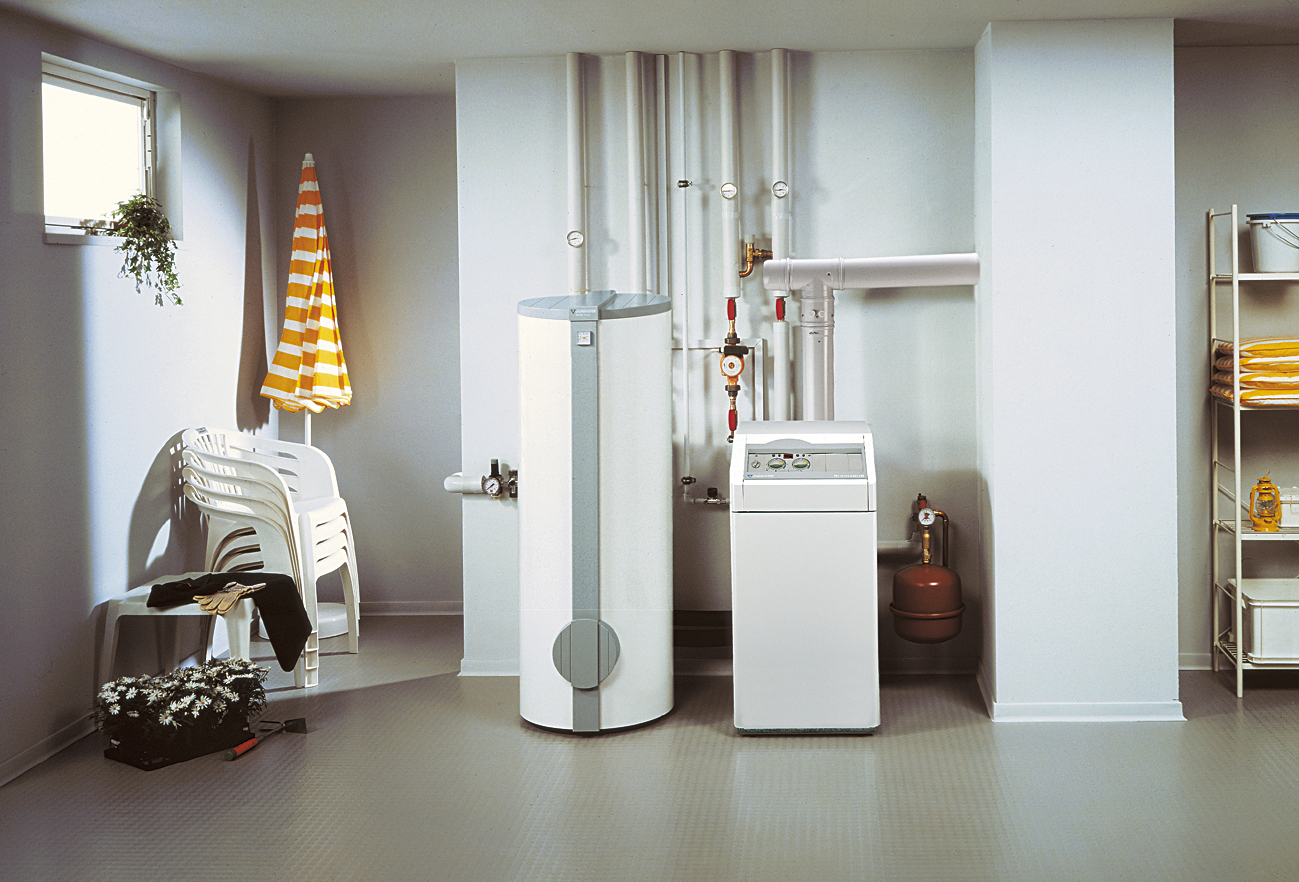
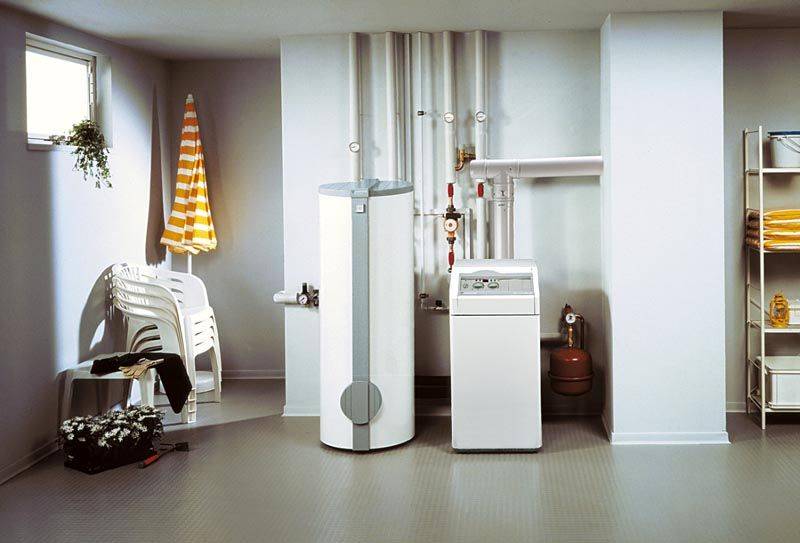
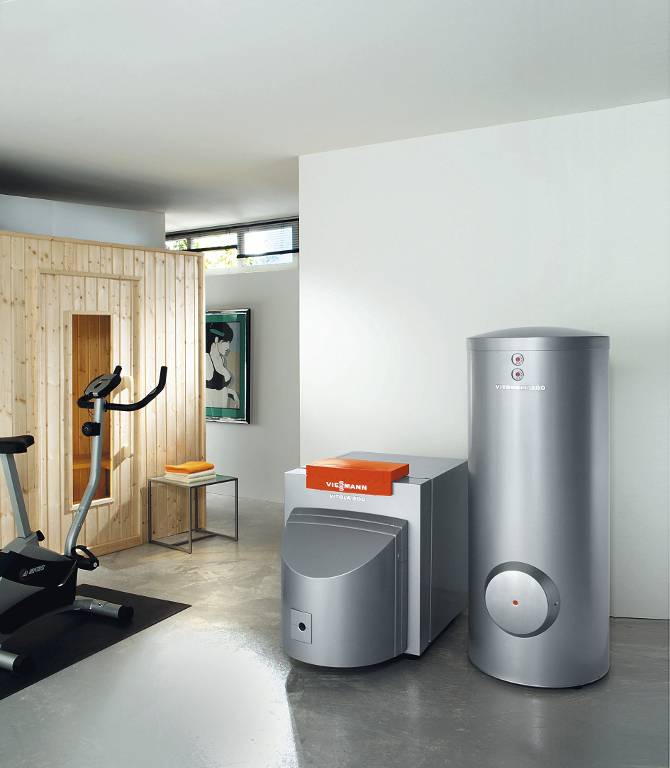
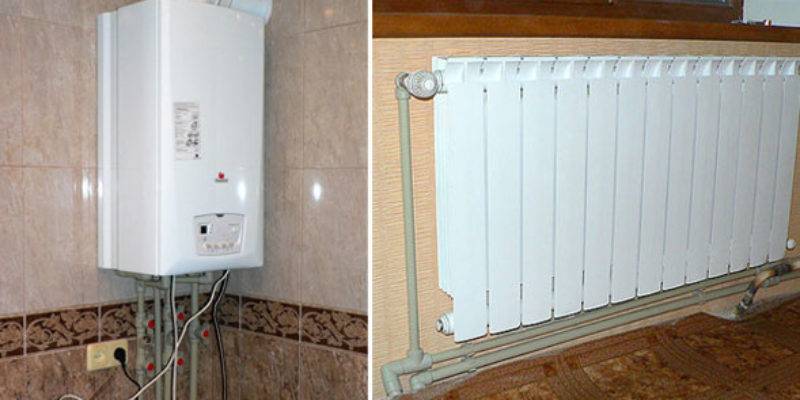
According to the type of installation, gas boilers can be wall-mounted and floor-standing. Both of them can be installed in apartments. More acceptable from an aesthetic point of view and for ease of placement are wall-mounted options. They have dimensions comparable to the dimensions of hanging kitchen cabinets and fit well into the interior. With the installation of floor boilers is somewhat more complicated - not all of them can be placed close to the wall, although there are such options. It all depends on the location of the chimney pipe. If it comes out at the top, then the unit can be moved to the wall.
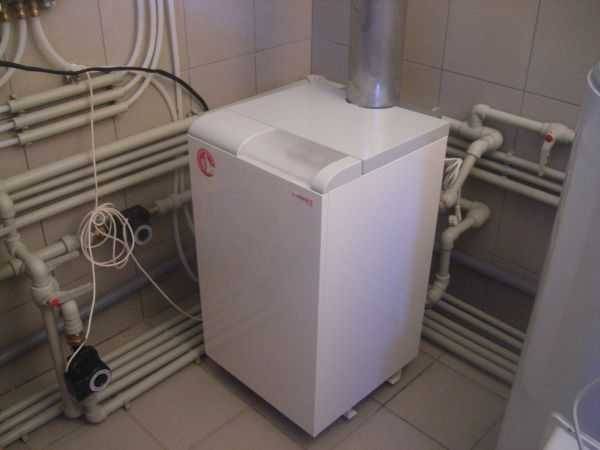
The floor gas boiler looks a little worse
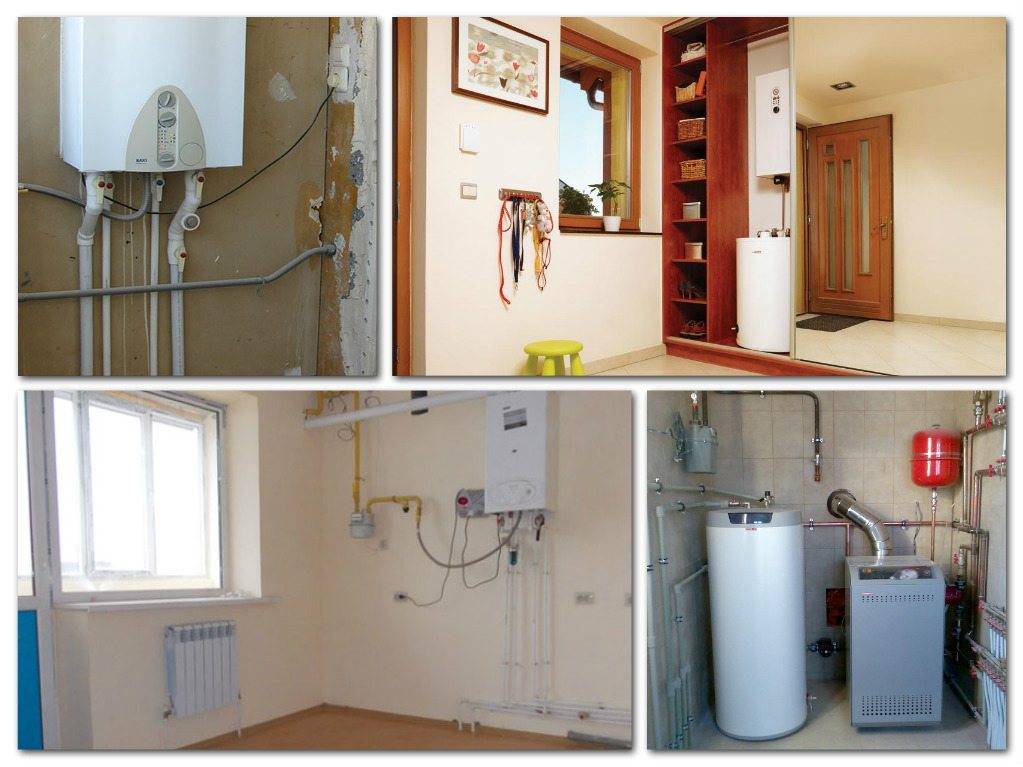
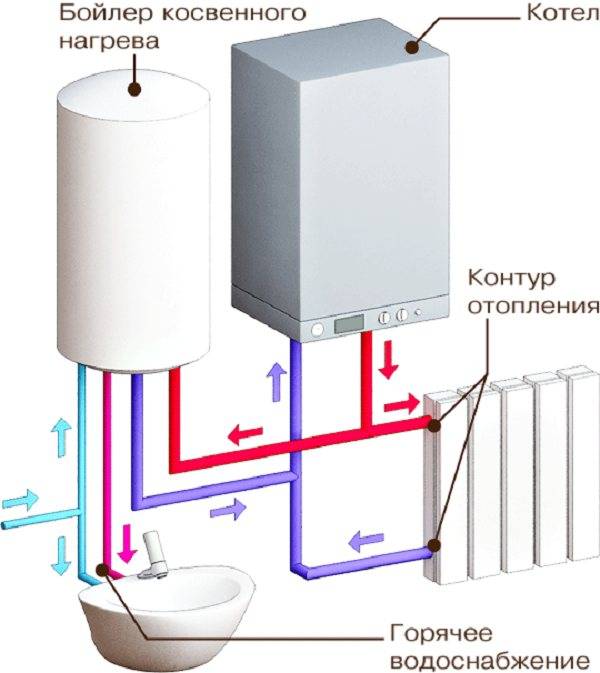
There are also single and double circuit models.Single-circuit work only for heating. Double-circuit - both for heating and for heating water for hot water supply. If your water is heated by another device, a single-circuit boiler will suit you. If you are going to heat water with a gas boiler, you will have to choose another heating method: a flow coil or an indirect heating boiler. Both options have drawbacks. When using a coil (flowing water heating), not all boilers stably “keep” the set temperature. To maintain it, it is necessary to set special operating modes (called differently in different boilers, for example, “hot water priority” in Navien, Beretta or “comfort” in Ferrolli). Boiler heating has a drawback: a certain amount of gas is spent to maintain a constant temperature of the water in the tank. Because the fuel consumption is higher. In addition, the supply of hot water is limited. And after it is used up, you have to wait until a new batch heats up. Which of the methods of heating water is more suitable for you, choose the one. With flow heating, be guided by the productivity of hot water per minute, and with boiler heating, by the volume of the tank.
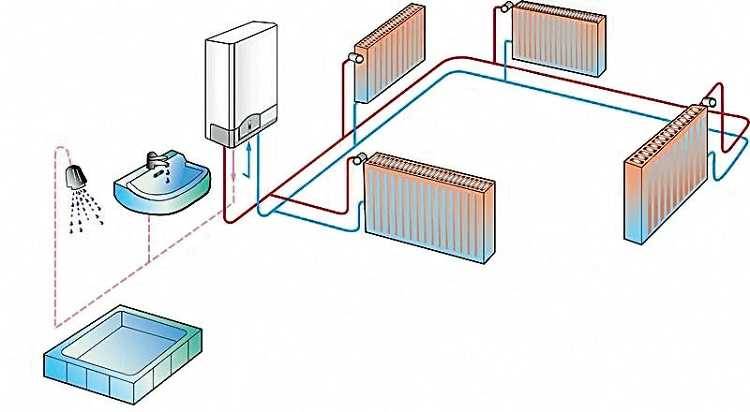
The gas boiler can be single-circuit or double-circuit
Gas boilers differ in the type of burner used: they are single-position, two-position and modulated. The cheapest are single-position, but they are also the most uneconomical, as they are always turned on at 100% power. Two-position ones are a little more economical - they can work at 100% power and at 50%. The best ones are modulated. They have a lot of operating modes and therefore save fuel.Their performance is controlled by automation, which supplies exactly the amount of gas that is required at the moment to maintain the specified temperature.
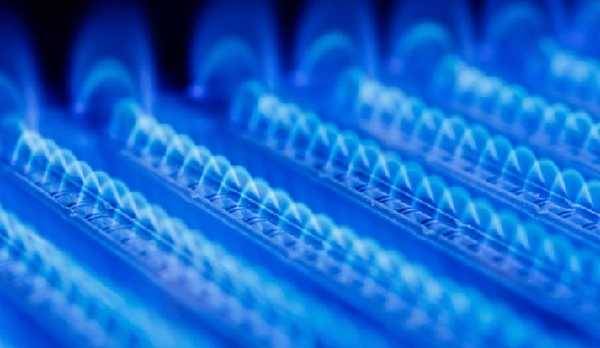
This is how a modulating burner burns in a gas boiler
The burner is located in the combustion chamber. The chamber can be open or closed. Open-type chambers take oxygen for gas combustion from the room, and combustion products are removed through an atmospheric chimney. Closed-type chambers are equipped with a coaxial chimney (a pipe in a pipe), and oxygen for combustion is taken from the street: combustion products are discharged along the central contour of the coaxial chimney, and air enters through the outside.
Mounting Features
Installation, adjustment of gas boilers
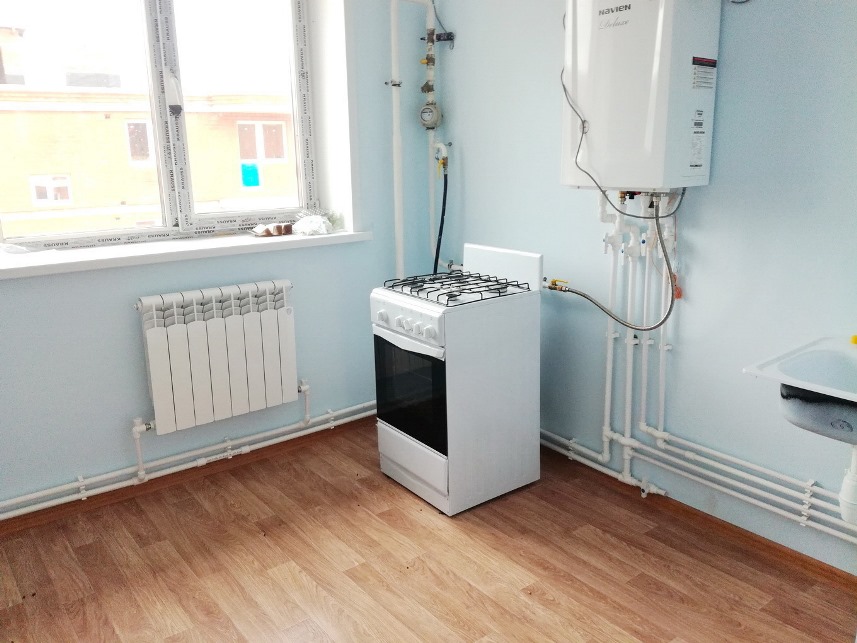
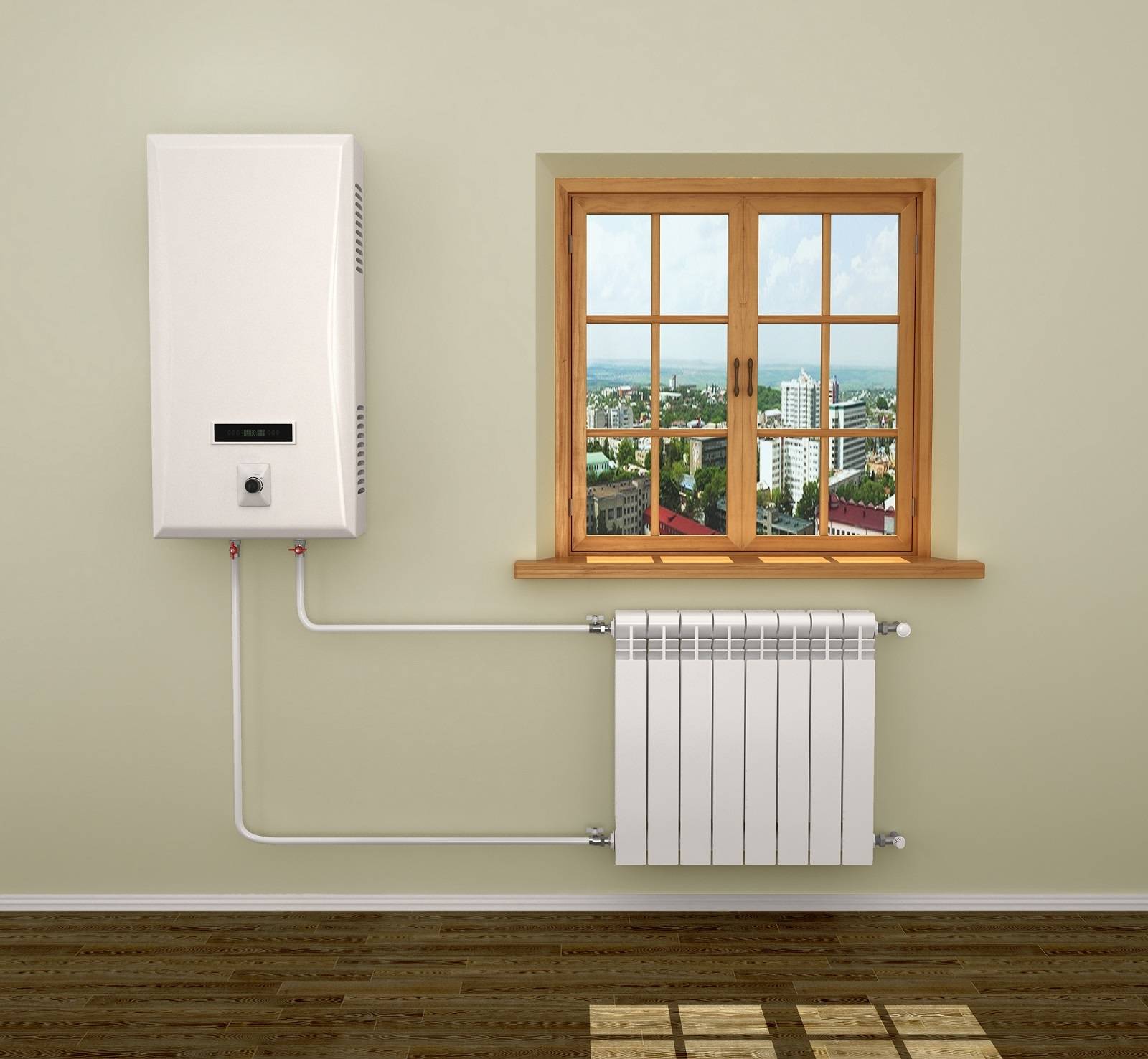
If you choose from all types of gas devices, then the most acceptable option for an apartment is a double-circuit wall-mounted boiler. With it, you can provide heat in the room and hot water for domestic needs. And placing on the wall will significantly save usable space.
If in private houses it is possible to choose even a separate room for a heating unit, then for a city apartment the most acceptable option is a kitchen, where there is already a gas stove, cold water supply and, as a rule, reliable ventilation. Therefore, installing gas heating in the kitchen is the best solution for a small area of a city apartment.
Modern products of the double-circuit type incorporate a circulation pump, the operation of which requires the constant presence of electric current. In the event of an emergency situation with the provision of electricity in country houses, a backup power source is installed in the form of a power plant.
Important! This cannot be allowed in an apartment, so for emergency connection you can use an uninterruptible power supply, like for a computer, only more powerful. It will last for several hours of work until the accident on the electrical networks is eliminated.
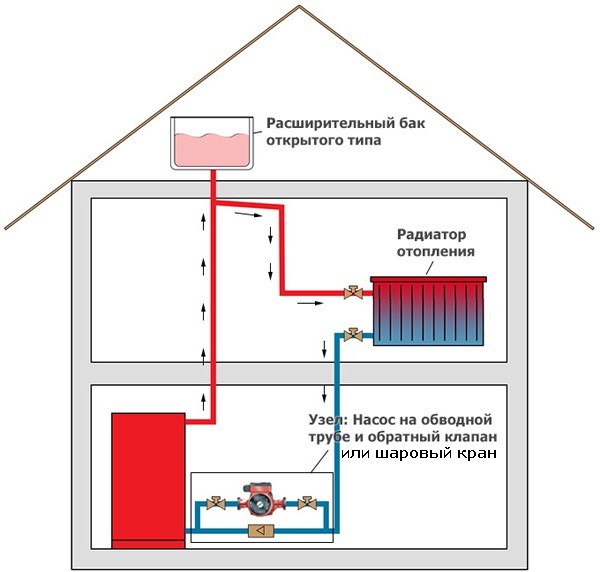
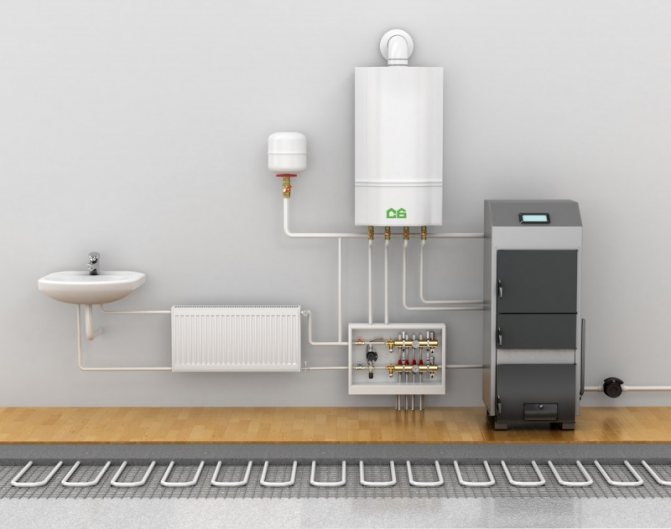
For normal operation of the gas boiler, an expansion tank is also required, in which there must always be water for the heating system. Water or another type of coolant expands when heated, and its excess enters this container, and when cooled, it goes back into the system. That is, the principle of operation of the expansion tank is the same as for the car cooling system.
The installation of gas boilers is strictly prohibited in the following cases:
- installation of devices near combustible objects
- in the hallway and bathroom due to high humidity and reduced fresh air supply
- in dormitories
- in the basement and on the balcony
- in the basement, which is located below ground level
- in rooms not equipped with air vents
Regarding the basement - it is allowed to install gas equipment if there is a special permit from the regulatory authorities.
Alternative to gas
Despite the numerous advantages of blue fuel, its supply will require significant costs from the owners. That is why it is worth considering alternatives to autonomous gas heating at home.



One option is diesel equipment. However, its acquisition and installation will require significant financial investments from the owners. In addition, a special place will need to be allocated on the site where a container for liquid fuel will be installed. But it should be borne in mind that this substance has a peculiar and rather unpleasant odor.It should also be taken into account that the country is experiencing a constant increase in the cost of hydrocarbon fuel. In this regard, creating coziness and comfort in a home using such an autonomous system will become one of the most costly ways.
The main advantages of this type of heating are the high level of work automation and the prevalence of this type of fuel.
Option #2 - electric heating
The owner of the apartment has several options for heating with electricity:
- electric boiler;
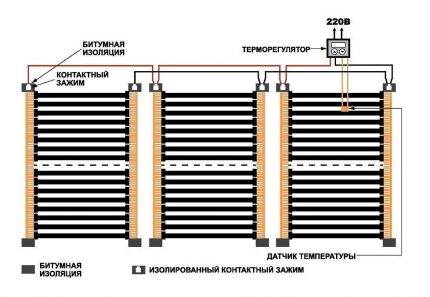
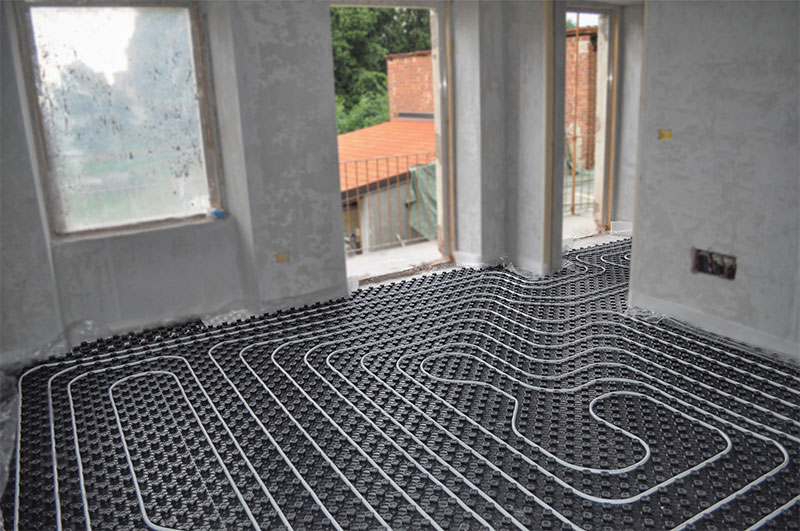
- warm floor;
- Heat pump.
The first two options can be quite costly during operation, since electricity is constantly becoming more expensive, like other energy carriers. To install an electric boiler, as with a gas boiler, you will need to remove the old pipes and radiators and install new ones. The underfloor heating system is considered more efficient due to its features. When the heating elements are evenly distributed throughout the floor, and the air in the room is heated from the bottom up, less heat is needed to heat the room than with traditional hot water heating.
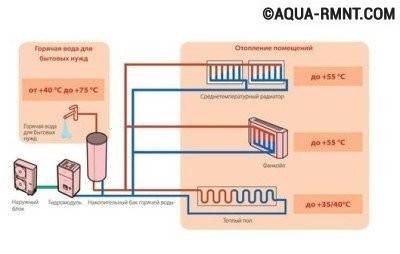
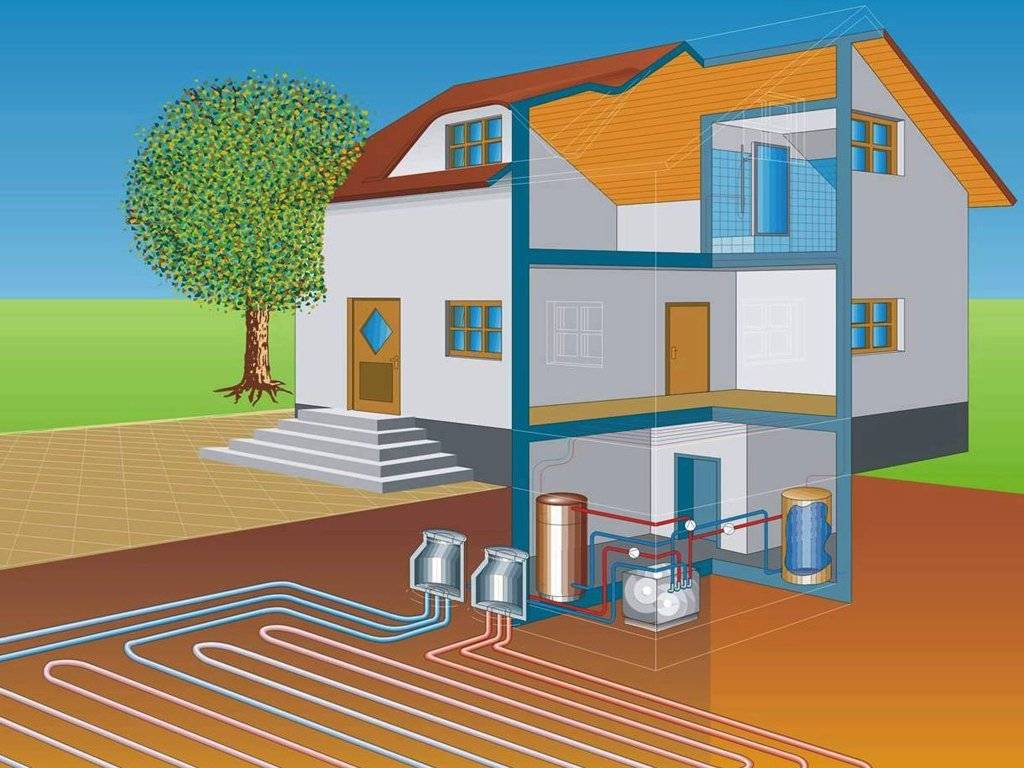
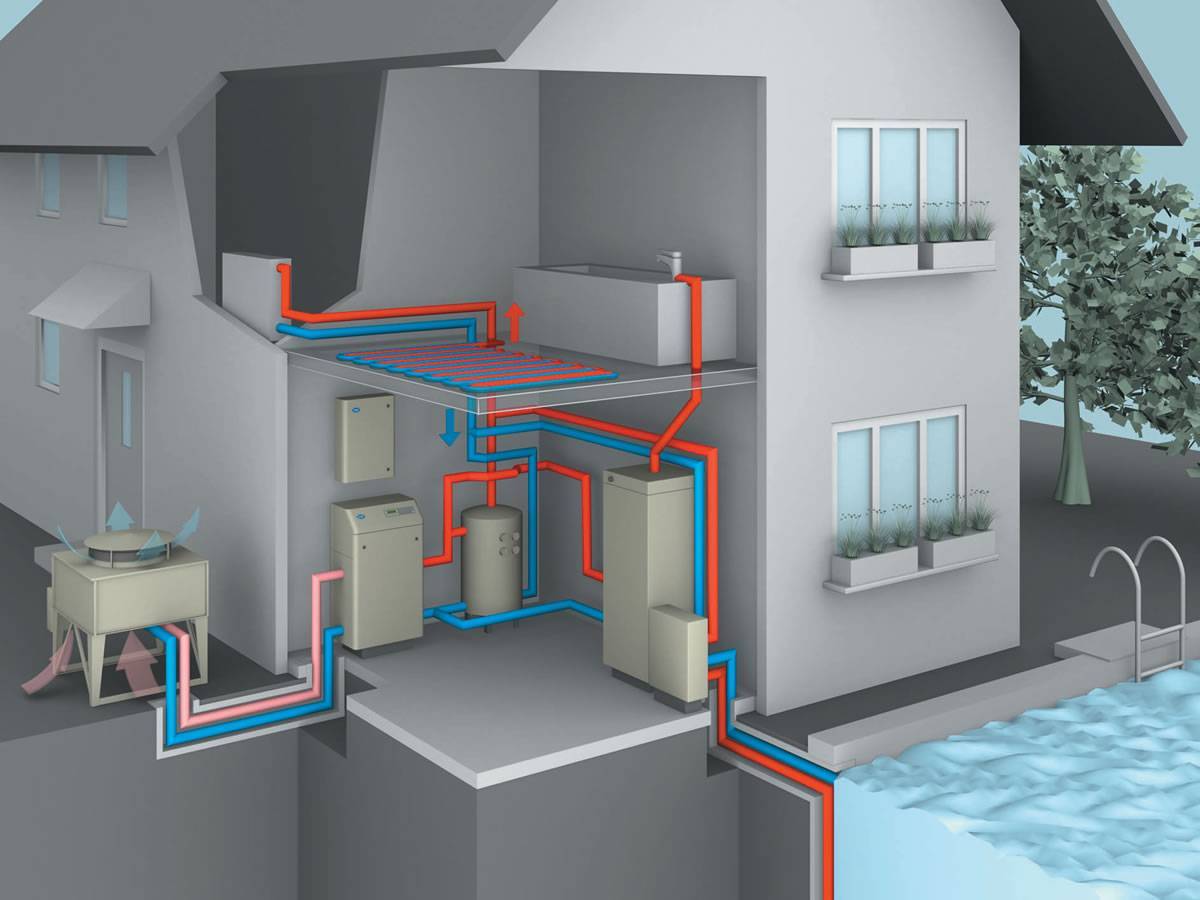
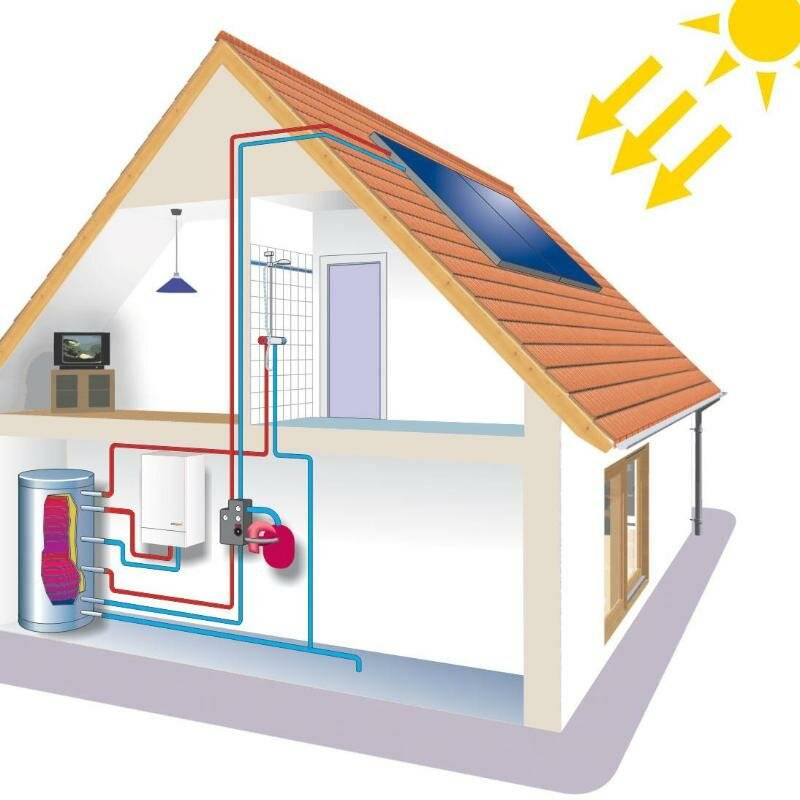
The diagram shows the options for connecting an air-to-water heat pump to various types of heating systems: radiators, fan coil, underfloor heating
The most profitable for autonomous heating of an apartment is an air-to-water or air-to-air heat pump. In this case, electricity is used in a relatively small amount to operate equipment that extracts low-potential thermal energy from the environment and converts it into high-potential energy. A heat pump is an environmentally friendly heating method that uses a renewable source of thermal energy.But it is considered effective only in warm climatic zones, i.e. where the air temperature does not drop below -25 degrees.
The cost of air source heat pump equipment can be quite high. Compared to the cost of individual gas heating, a unit of heat obtained from the operation of a heat pump is somewhat more expensive. However, in the long run, such a solution may turn out to be more profitable than a gas boiler. In addition, the air-to-air heat pump can act as an air conditioner in summer. The operation of these devices is based on general principles, which is why a heat pump is sometimes called an air conditioner.
To install an air source heat pump in an apartment, you need to choose the right model. Large duct systems are more suitable for large apartments. In this case, you will have to install a central unit, from which warm air will be distributed through the ducts. In addition, the cost of equipment can be quite high. A multi-split system works in approximately the same way: a common unit is mounted outside, connected by highways to indoor units for each room.
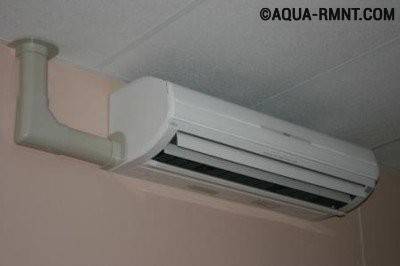
The indoor unit of an air-to-air heat pump is very similar to a split air conditioner unit, since these units work on similar principles.
In a small apartment, it makes sense to install a separate split system for each room. In this case, you do not have to lay a network of air ducts around the apartment. This is very convenient if the final finishing in the apartment has already been completed and a major alteration is not planned in the near future.The amount of heat for each kilowatt-hour of electricity consumed in multi-split systems is 3.5 kW or less. An inventory split system with one external and internal unit can produce up to 5 kW of heat.
In areas with severe winters, some apartment owners use a combined option: in cold weather, they use a gas boiler, and when it gets warmer, they turn on the heat pump. An interesting option may also be a combination of a heat pump and underfloor heating.
Keep in mind!
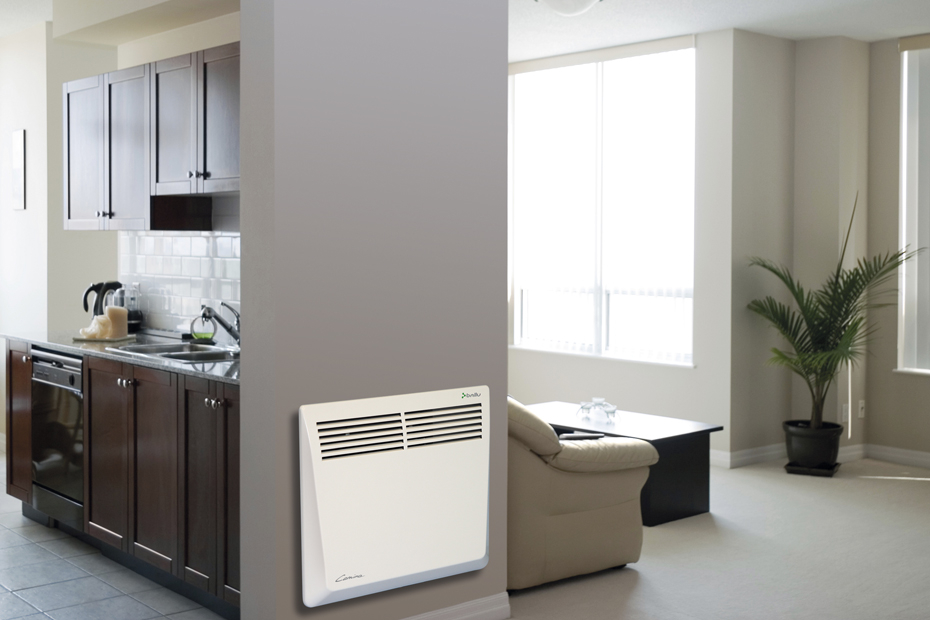
It should immediately be noted that electric heating in an apartment will cost much more than city water heating. This is due to the high power of heaters and high electricity tariffs. Despite this, if you correctly calculate the power of electric heaters, set the economical mode of operation and correctly place the devices in the rooms, you can significantly save on the electricity bill and use an individual heating system without overpayments. Next, we will tell you which electric heaters are best to choose and where to install them correctly so that the work is efficient.
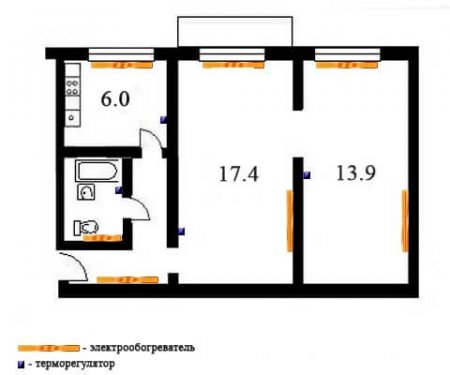
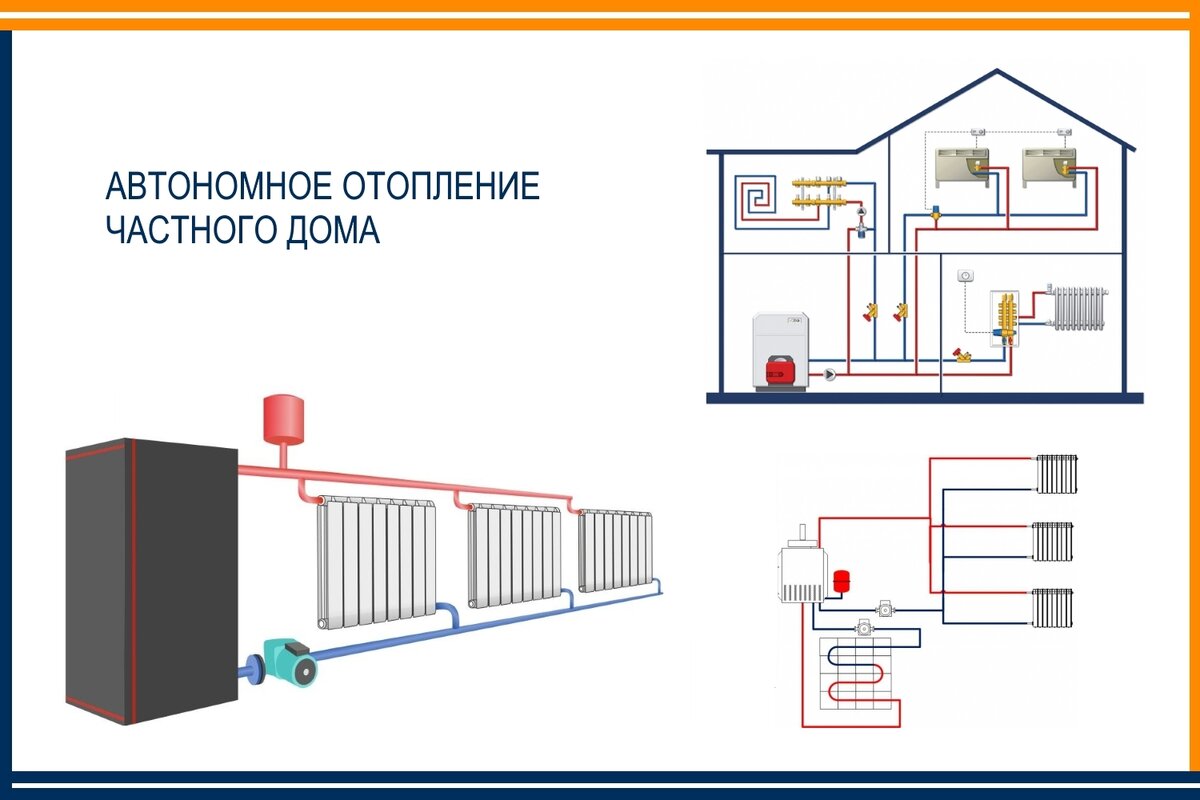
Scheme of the heating system of a two-room Khrushchev
It is equally important to immediately highlight the pros and cons of electric heating in the apartment. As for the advantages, this, of course, is ease of connection, high efficiency of heaters, durability and small dimensions, which significantly saves free space in the room.
In addition, the installation of electric heating does not require additional permits, which take a lot of time and nerves. The disadvantages, as you understand, are the high material costs for utilities and the replacement of wiring, if necessary.
We immediately recommend watching a video that provides a modern idea for domestic use:

Positive Factors
The owner must evaluate all the benefits of the reorganization, find out the negative points in a radical replacement of the system. Positive indicators that the owner receives:
- The apartment can be heated at any cool time, regardless of the season. The central system is switched on and off according to the norms established in the region, based on the average temperatures for the seasons. Often this does not coincide with weather conditions that are unstable with large fluctuations per day.
- With autonomy, they regulate the temperature in the rooms, the central heating does not keep records of energy consumption by their location, insulation. In the house, the apartment can be located inside or be cornered, which is blown by external winter air currents. In the management company, the costs for resources are distributed so that there are no losses, the accrual is carried out in the same amount per 1 sq.m. The owner pays according to the size of the occupied area. Apartments, as well as rooms in them, may differ from each other in location and the amount of heat consumed. With autonomous heating, every factor is taken into account to create a comfortable microclimate and save money.
- It is easy to set up an individual heating system for a specific mode so as not to heat completely, but to maintain the temperature in the absence of residents. When there are inhabitants in the apartment, the automation heats the rooms to optimal parameters. Technical devices regulate heating remotely, when installing programs, the equipment reacts to worsening weather, they can be controlled.
- Less energy consumption reduces operating costs, but increases efficiency.
- If you install a double-circuit boiler, it will create hot water supply bypassing the central supply. The apartment will be exempted from general preventive maintenance in the house. The owner will pay for the actual consumption of resources recorded by the counter.
Features of individual apartment heating
If you are going to switch to autonomous heating, you need to realistically assess your capabilities and understand that most of the options that are quite acceptable for private houses are not possible in a high-rise building. Solid fuel and liquid fuel boilers of all varieties should immediately be “swept aside”.
This is due to the fact that their uninterrupted operation requires a supply of fuel, which is unsafe in an apartment building.
Individual heating in the apartment can be arranged in different ways. There are certainly fewer options than in a private house, but it is quite enough to choose the system that is most suitable for existing conditions.
In addition, it is also extremely inconvenient. It is forbidden to use in this case a warm water floor. It is only possible to install one of its electrical varieties.
You need to know that when arranging individual heating in a high-rise building, you will have to take into account not only your own interests, but also the interests of other residents who may be dissatisfied with some of the difficulties that arise as a result of your actions.
Thus, the correct choice of heat source is very important. This is a crucial stage that determines, in fact, the success of the planned event.
Despite the limitations, there are still quite a lot of options for autonomous systems. First of all, it is gas-fired heating.Moreover, it must be taken into account that we are not talking about bottled fuel, but about connecting to a gas main.
The option with cylinders is not even worth considering, since it will cost much more than centralized heating, and it is extremely inconvenient. Heating on the main gas is very economical and can work completely autonomously.
The best source of heat for one of the apartments in a high-rise building will be a wall-mounted double-circuit boiler with a thermostat and electronic ignition. It will automatically maintain the most comfortable temperature and supply hot water.
If the apartment has enough free space, you should pay attention to the boiler with a boiler. So it will be possible to stabilize the supply of hot water
Electric heating can also be installed in apartment buildings. It can be implemented in several ways, when electricity is used for direct heating, which is more expensive, or indirect.
A gas wall-mounted boiler paired with a boiler will certainly take up a lot of space, but this will ensure an uninterrupted supply of hot water at the desired temperature and in any volume
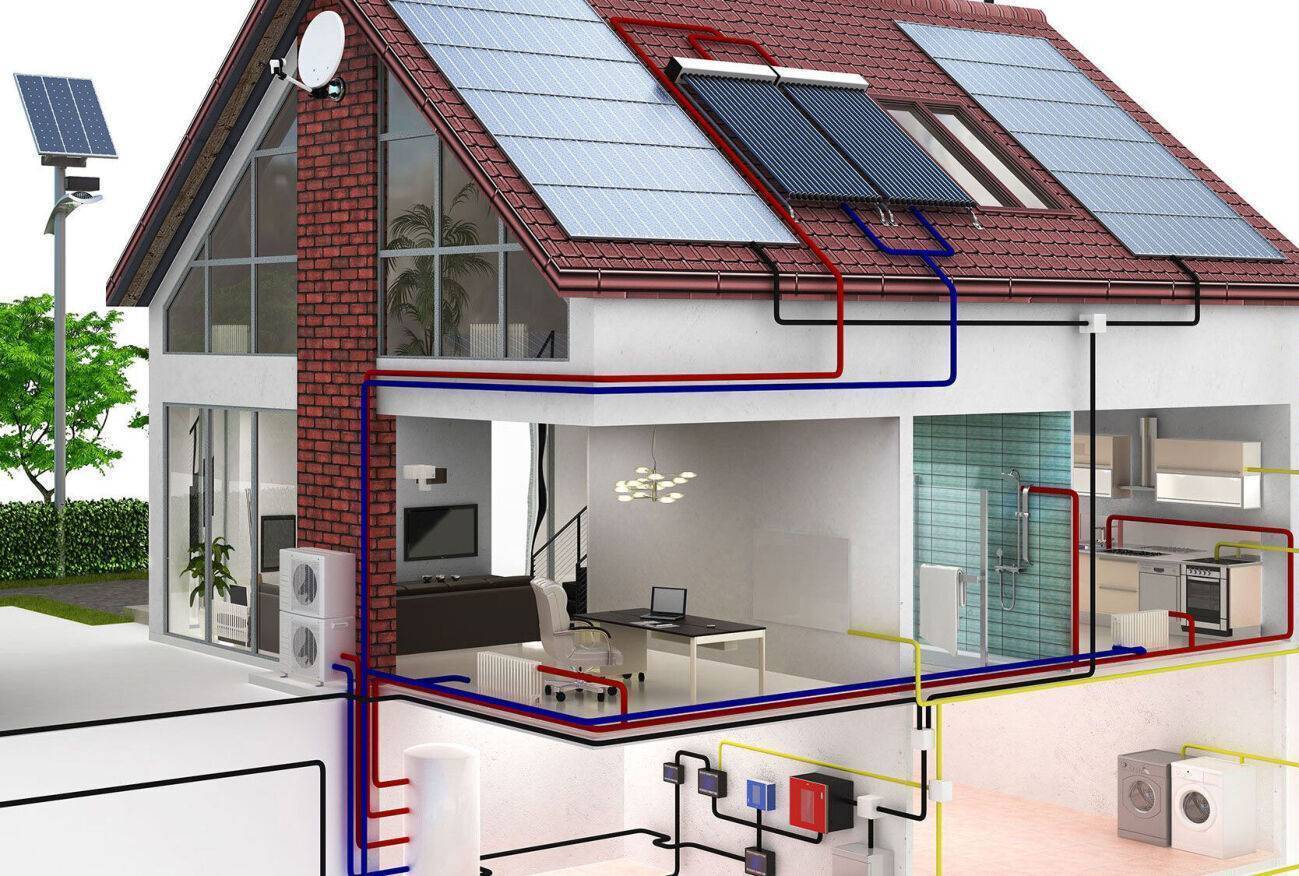
A system powered by electricity can have a boiler, a heat pump as a heat source, and an electric cable floor, infrared film, baseboard radiators or electric convectors as an energy transmitter.
The owner of the apartment can choose any suitable option or combine several. For example, underfloor heating and convectors. Let us consider in detail each of the possible ways of arranging autonomous heating.
Is it legal to install in an apartment building?
The installation of autonomous heating is regulated by several federal laws:
- Federal Law No. 190-FZ "On Heat Supply".
- Articles 26-27 of the Housing Code.
- Government Decree No. 307.
Where to get permission?
- If the owner is an energy company, the application is sent to the head of the company.
- Homeowners – permission to waive all homeowners. It is easier to do this at a general meeting of tenants, but at the same time you will have to go around all the apartments in order to collect the required number of signatures.
Reference! A permit is not required if the system does not have an owner, and disconnection from the central system will not violate the rights of other residents.
Approximate list of documents
To refuse heating network services, you will need the following set of documents (Article 26 of the Housing Code):
- a petition-statement written in free form;
- technical passport for the apartment indicating the passage of the heating main through the apartment (a photocopy certified by a notary is allowed);
- an extract from the house book, where all the people registered in the apartment are indicated;
- permission of the heat supplier;
- certificate of ownership of real estate;
- consent signed by all apartment owners over 18 years old;
- if the house belongs to architectural monuments, then a permit from the organization for the protection of architectural monuments will be required;
- the conclusion of the commission.
Important! Regulatory authorities cannot require additional documents that go beyond Article 26. A technical project for the reorganization of the system, approved by gas and heat energy suppliers, must be attached to the package of documents.
The package of documents must be accompanied by a technical project for the reorganization of the system, approved by the suppliers of gas and heat energy.
The project shows:
- the impact of an individual heat supply system on the general one (residual level of heating from risers and deck chairs);
- thermal-hydraulic calculations;
- names a new type of system and its influence on the central system of the house.
If the calculations show the possibility of shutdown, then the project can be submitted for approval to the municipality.
If the project shows a negative impact on the thermal system of the house, then it will not be possible to get approval.
How to get them?
Documents are received according to the following algorithm (observance of the order is mandatory, since each subsequent instance will require documents from the previous one):


- District heating network - issues permission to disconnect from the general heating network.
Consent is issued if the declared project does not violate the engineering structures of neighboring apartments. If an unreasonable refusal is issued, then it can be appealed in court.
- With a letter of agreement, you must contact the suppliers of gas or electricity to obtain conditions for the installation of an autonomous system. Technical documentation is issued within ten days from the date of application.
- A design organization that develops projects of this type. If the boiler has already been purchased, then the technical passport of the device must be provided to the design organization.
Almost all the technical requirements imposed by the control authorities are spelled out in SNIPE 41-01-2003 "Individual heating systems", clause 6.2 "Heating, ventilation and air conditioning".
Important! The design organization can carry out the collection and execution of all required papers as an additional service.Collected documents for permission must be sent to the city administration
It can be done:
The collected documents for permission must be sent to the city administration. It can be done:
- personally;
- with the help of a management company.
A decision on the application is made within 45 days, after which the authorities have three days to issue permission or refusal in writing to the applicant.
Municipal authorities are not very willing to give permission to connect heating systems to an apartment. You can get permission to install in court.
The choice of radiators
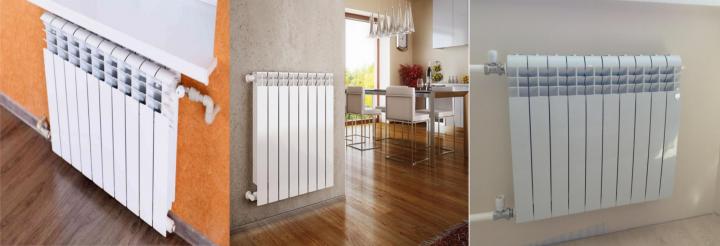
The most suitable option for autonomous heating is sectional batteries. The heat transfer quality of one section affects the length of the radiator, which, in turn, depends on the material of manufacture. One cast-iron section, for example, gives off 110 watts of heat, steel - 85 watts, aluminum - from 175 to 199 watts, the heat transfer of one section for bimetallic radiators is 199 watts.
To calculate the area heated by one section with a ceiling height of 2.7 m, you need to divide the heat transfer index of the section by 100. For example, a section of a cast-iron battery heats 1.1 m². Depending on the size of the room, you can calculate the number of sections for the radiator.
Nuances that may be present when calculating the number of sections in a room:
- in a corner room, or having access to a balcony, 2-3 sections are added;
- a decorative panel covering the battery reduces heat transfer by 15%;
- a niche under the windowsill, in which the radiator is installed, reduces heat transfer by 10%;
- windows from a multi-chamber profile, on the contrary, make the room warmer;
- insulated walls and floors keep the temperature in the room well.
Water heating installation
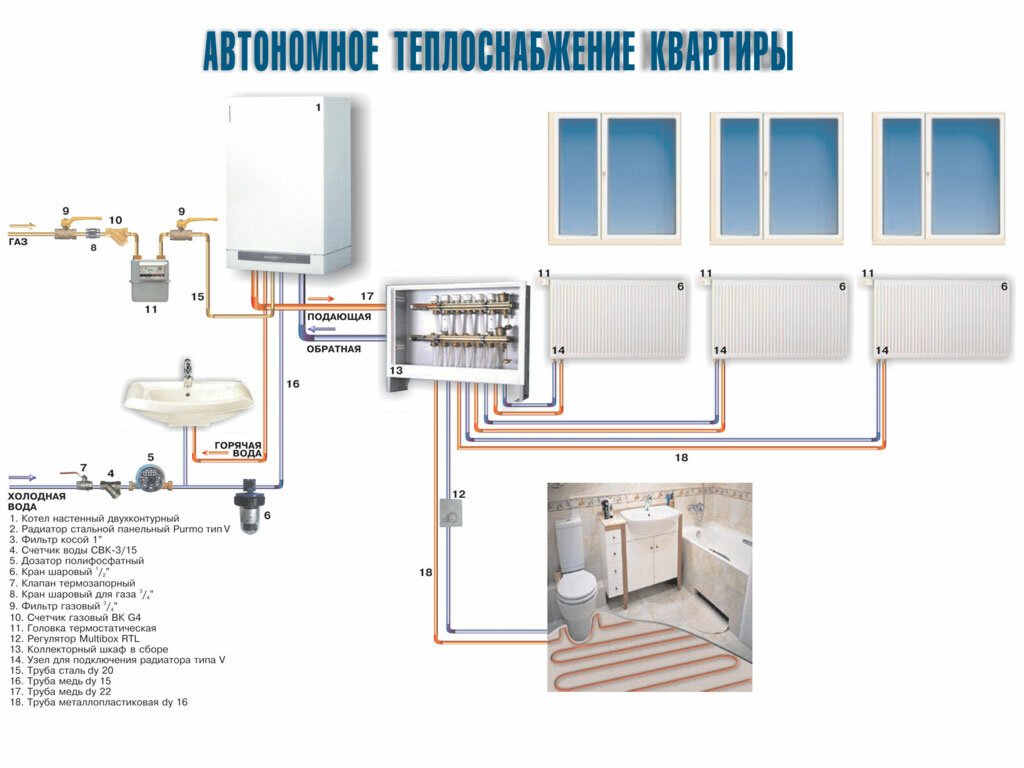
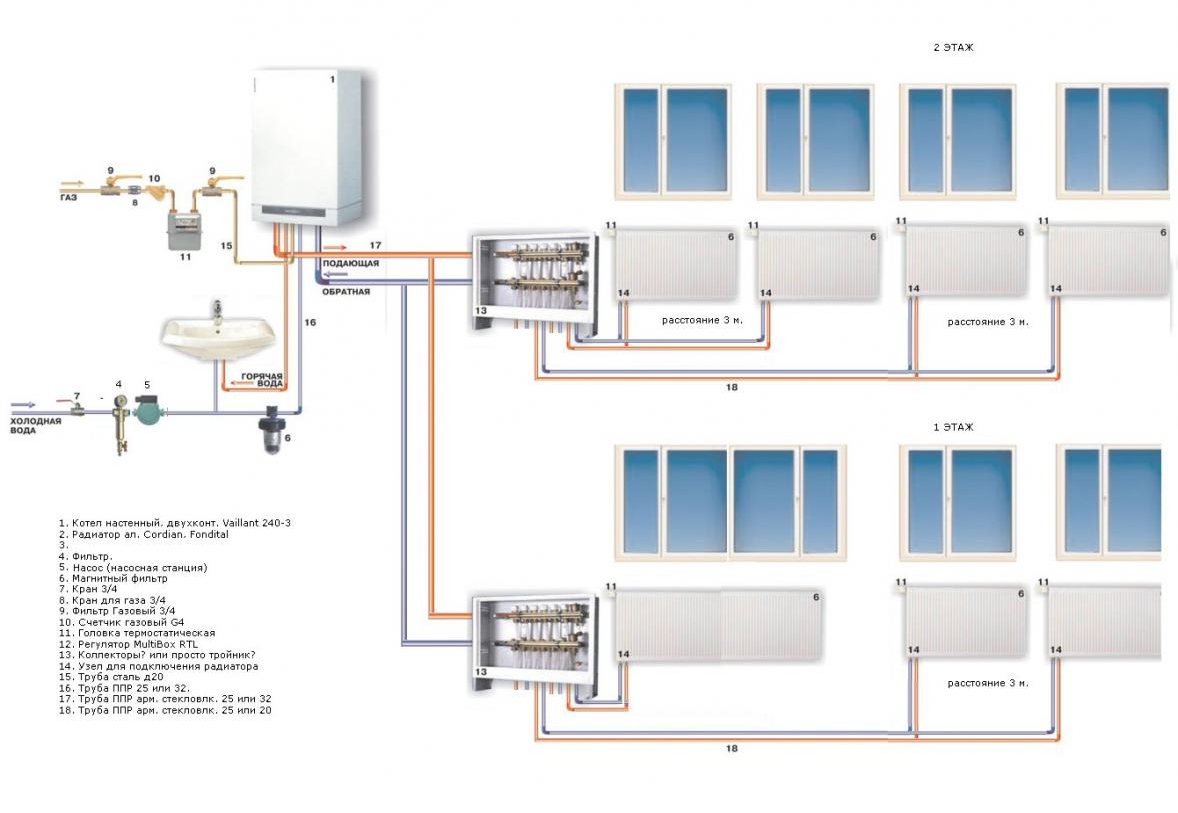
Before installing electric heating in an apartment building, it is necessary to develop a connection piping scheme. In this case, piping refers to the switching of the boiler with other nodes. Drawing up a diagram, measurements of the area and height of the premises are made. After that, they finally determine the type of system (single-circuit or double-circuit), calculate the power of the equipment and its location.
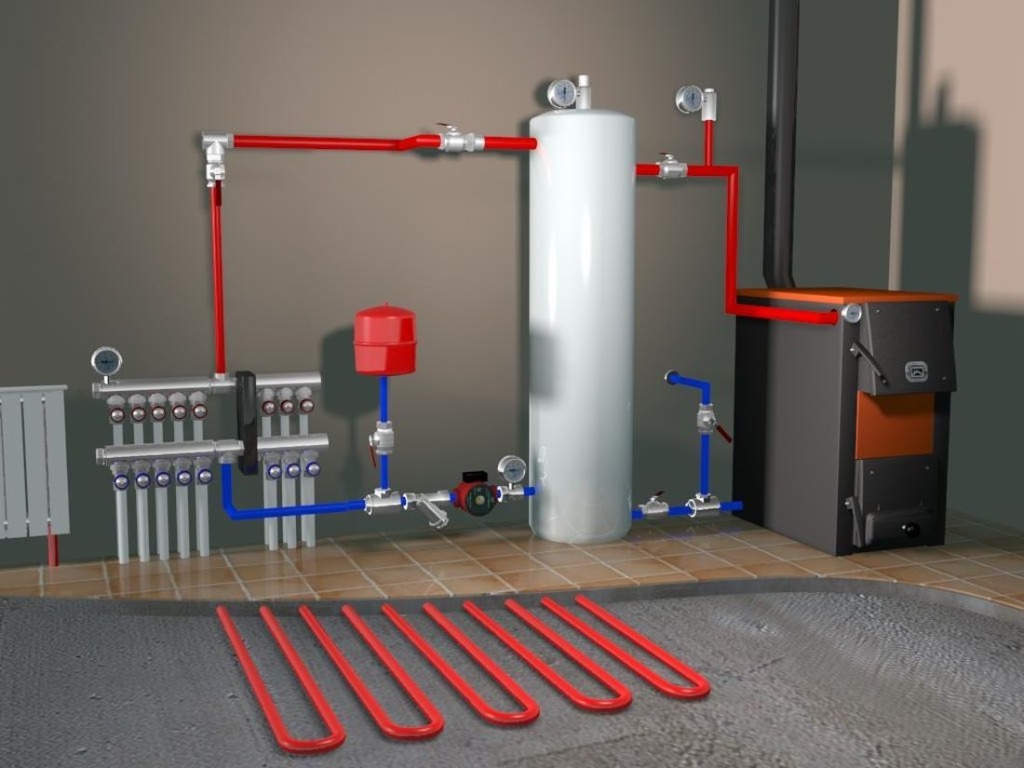
The scheme of individual electric heating consists of the following elements:
- Electric boiler.
- expansion tank.
- Pipes and heating batteries.
- circulation pump.
- Stop valves.
- Thermal sensors.
- Filters.
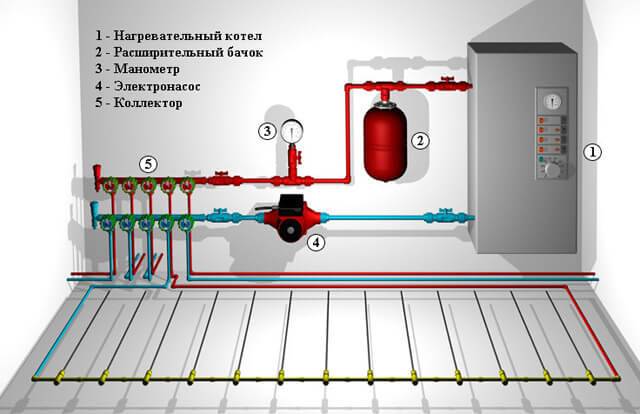
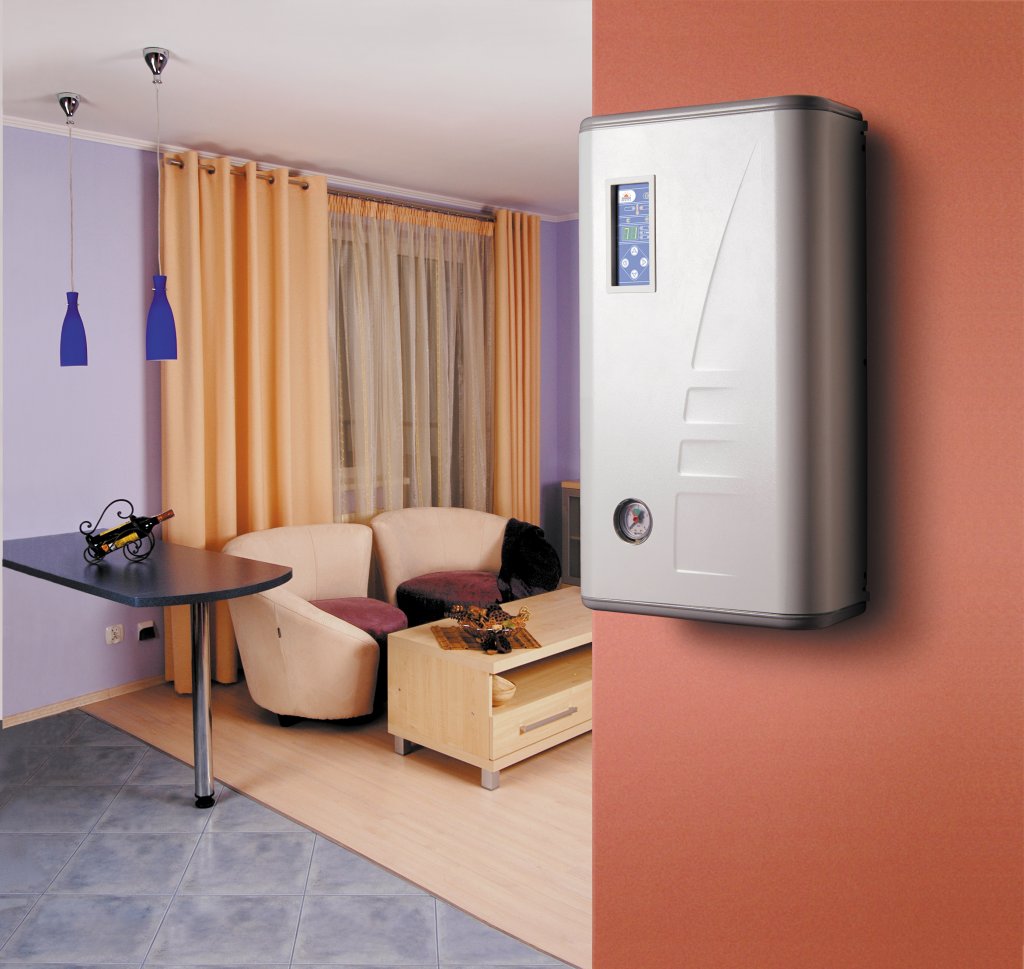
The advantage of electric boilers over gas boilers is also the possibility of installation anywhere in the apartment. If a gravity system is used, it is recommended to install the heating device at the lowest point of the circuit. The unit must be located away from the water supply: in this way, a short circuit is excluded in case of water supply leaks.
The heater is powered by an autonomous power line. The calculation of the boiler power provides for taking into account the area of \u200b\u200bthe room, the level of thermal insulation of the dwelling, the number of batteries, as well as the climatic zone in which the house is located. Apartments up to 60 m2 can be equipped with appliances with a power of 6-7 kW. The place of installation of heating radiators is traditionally the areas under the window sills, provided that they completely overlap the width of the window opening. Two batteries can be used if one is not able to cover the specified distance.
Gas heating of the apartment
The installation of a gas boiler takes place after completing the previous steps, which include:
- obtaining permission from the gas supply service;
- purchase of equipment in accordance with the project;
- reconstruction of the existing heating system;
- ventilation and chimney device.
When choosing a model of a gas boiler, the area of \u200b\u200bthe apartment, the installation location of the equipment and other factors are taken into account. On sale you can find floor and wall gas boilers of various capacities. But in apartments it is still preferable to install compact wall-mounted models that save usable space. Some manufacturers produce boilers with remote control, which makes their use more comfortable.
For a small apartment, the ideal solution would be the purchase and installation of a gas double-circuit boiler. On such boilers, not only a programmable remote thermostat is usually installed, but also electronic ignition - systems that can provide a uniform temperature at the time of the day you need, and fully automatically.
For heating larger apartments, it makes sense to install a boiler with a storage boiler, which is able to maintain the set temperature more stably, as well as provide you with uninterrupted hot water supply (DHW). With such a device, you will no longer have to suffer from eternal problems with the mixer.
It would seem that all the facts tell us that gas heating is almost the most ideal. However, this case also has its own difficulties. Let's list them.
The first problem: household gas is explosive, and quite a small leak is enough. Second: the ventilation system in the room with gas equipment must comply with all requirements and standards; that is, it must be perfect.The removal of smoke from the boiler and column through the wall of the apartment (facade) sometimes requires obtaining complex permits, which is very tedious and not even always possible. Third: in the process of operation, gas heating equipment emits waste - greasy soot, which will surely settle in the ventilation duct and will regularly clog the air duct with combustion products with an unpleasant odor.




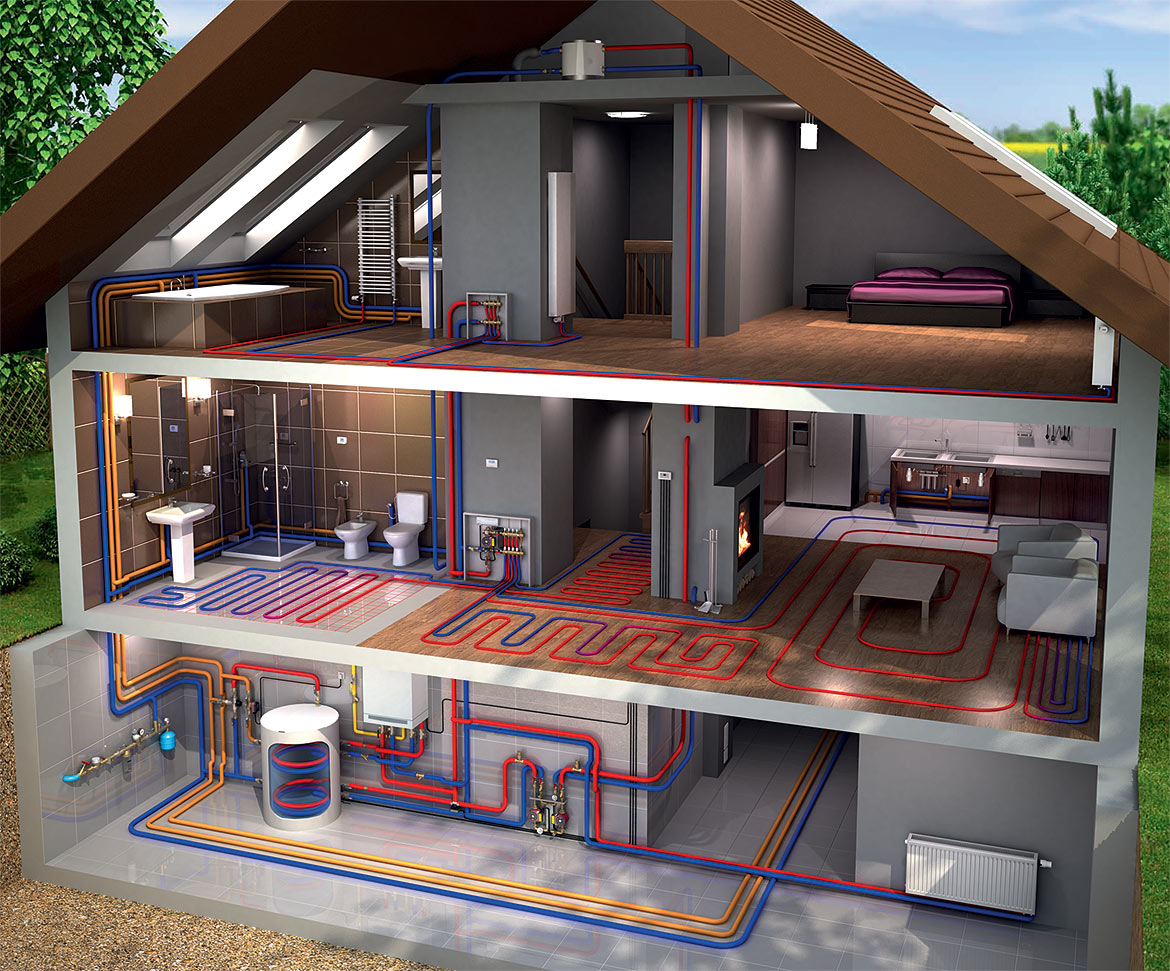


Thus, gas provides many conveniences, but creates difficulties. Nevertheless, it can and should be used, because it is an ideal fuel for a heating boiler, and instead of batteries, you can connect a system of underfloor heating. Let's talk about whether it is worth messing with underfloor heating in an apartment at all.
For the safe operation of a gas boiler, it is very important to ensure the flow of air. And if there is not enough natural draft, it is necessary to provide for forced air intake using a fan and air ducts
It is equally important to ensure the removal of combustion products and control the condition of the chimney.
How to choose the right heat source
The choice of a suitable heat source for autonomous heating in an apartment is a responsible and serious issue. An inattentive attitude to the situation will lead to the fact that the new heating system simply will not cope with the tasks and will not be able to provide the proper level of comfort in the living room.
Heaters for cold areas
If the property is located in a region that is characterized by harsh winters and aggressively low temperatures, only stand-alone equipment powered by mains gas will provide maximum efficiency and high levels of heat compared to central heating systems.
Heating an apartment with bottled gas is not economically profitable. The balloon complex consumes 6-8 times more gas than units using trunk supplies, and it is inconvenient and dangerous to store fuel supplies in a limited space
All other sources of thermal energy will not provide tangible benefits, and the efforts spent on the purchase of equipment, redevelopment of the premises and obtaining permits will be in vain.
How to heat in warm regions
In areas with a milder, warmer climate, in addition to the main gas, it is important to use electricity for heating. Systems operating on this resource are distinguished by operational convenience and a high level of security, but they cannot be called economical. With direct heating, the equipment “winds up” a decent amount, and paying for a communal apartment costs a pretty penny for the owners.
In order to use energy wisely and not spend big money on bills every month, owners are advised to install heat pumps. The principle of operation of these progressive devices is not based on direct heating of the air, but on pumping a heat resource from a low-potential source. This functionality allows you to reduce electricity costs by 3-5 times, without lowering the level of comfort in residential premises.
An air-to-air heat pump will do an excellent job of heating a city apartment.You can place the equipment on the load-bearing wall of the house, having previously found out whether the building structure can withstand the additional load
However, due to the specific location and layout, it is objectively impossible to install pumps in apartment buildings that use geothermal heat or the energy of non-freezing open water bodies. Available for installation in apartments remains equipment that heats the room by extracting heat from the surrounding air.
Another good option for heating city apartments is the “warm floors” cable system that runs on electricity. But its arrangement requires significant financial resources and increases the load on the central power grid.
If it is intended to use the system as the main source of heating, it must occupy at least 70% of the total area of the room. Otherwise, it will not be possible to achieve uniform comfortable heat throughout the apartment.
Types of systems
To date, two systems are most often used for individual heating of apartments - gas and electric.
Gas autonomous heating system
The layout of the autonomous heating system largely depends on what kind of effect you want from its implementation in your apartment, as well as on the size of the rooms that need to be heated. To install an individual system, you will certainly need a clear plan for the future system. It should be borne in mind that, since you are planning to install a new heating system in the apartment, it should meet all the requirements as much as possible. That is, no original approach or the introduction of unusual ideas - only strict adherence to the rules.To create a system diagram and its further installation, specialists should be invited. Do-it-yourself self-made autonomous heating of an apartment often causes tragedies - so it's better not to risk it.
Gas boiler in a new building
In no case should you start installing the system without collecting the necessary documentation. There are cases when people installed individual heating systems without securing the approval of utilities. As a result - huge fines and forced dismantling of the system.
Many craftsmen involved in the installation of gas equipment for heating apartments note that the most suitable for such purposes is the installation of autonomous heating in an apartment using a wall-mounted boiler. It has a separate combustion chamber and multi-stage protection. In addition, these boilers are equipped with a high-quality smoke exhaust system - it includes a small horizontally directed pipe through which smoke is removed to the street without causing inconvenience to the residents of the apartment.
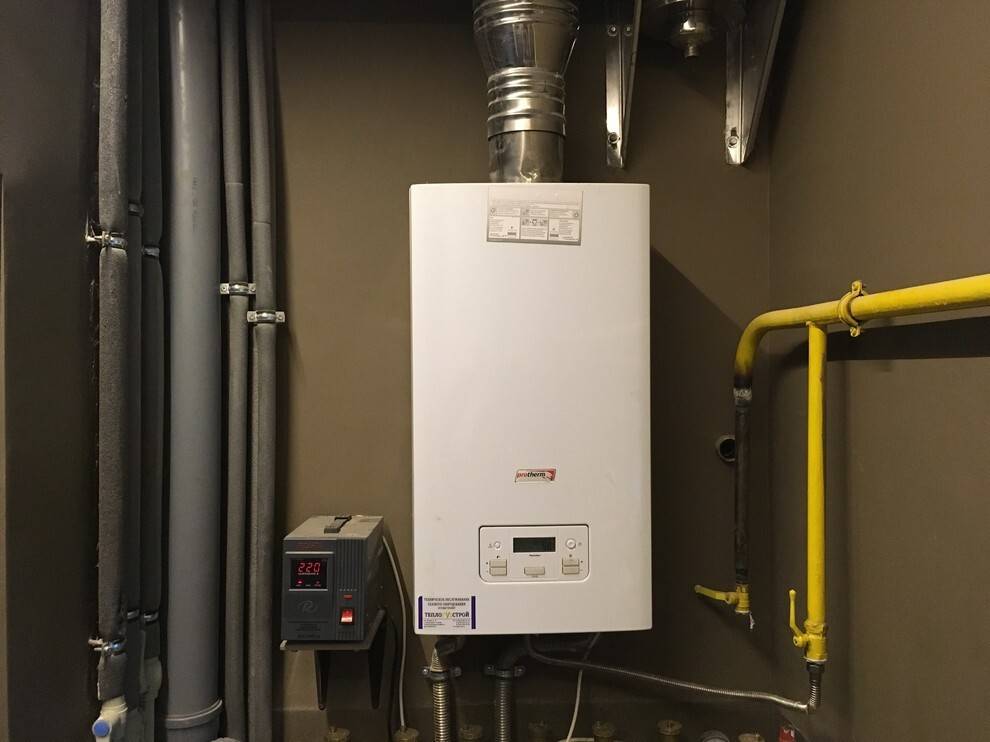
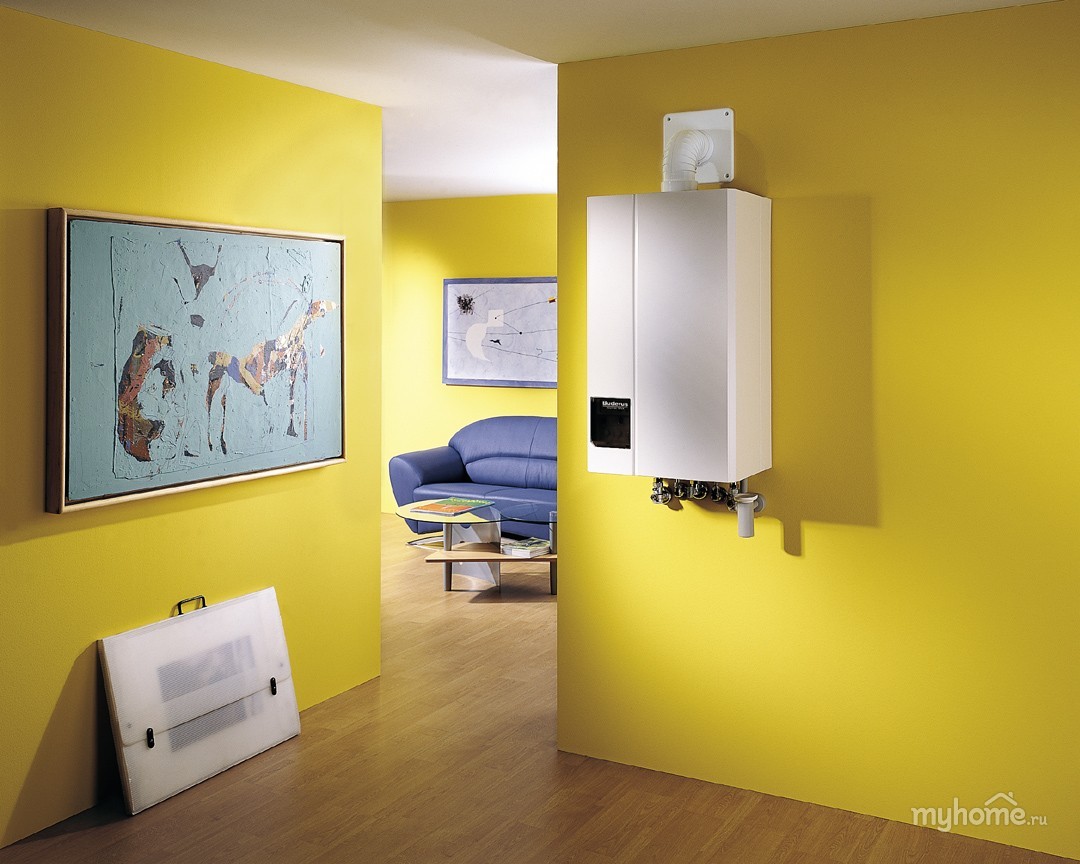
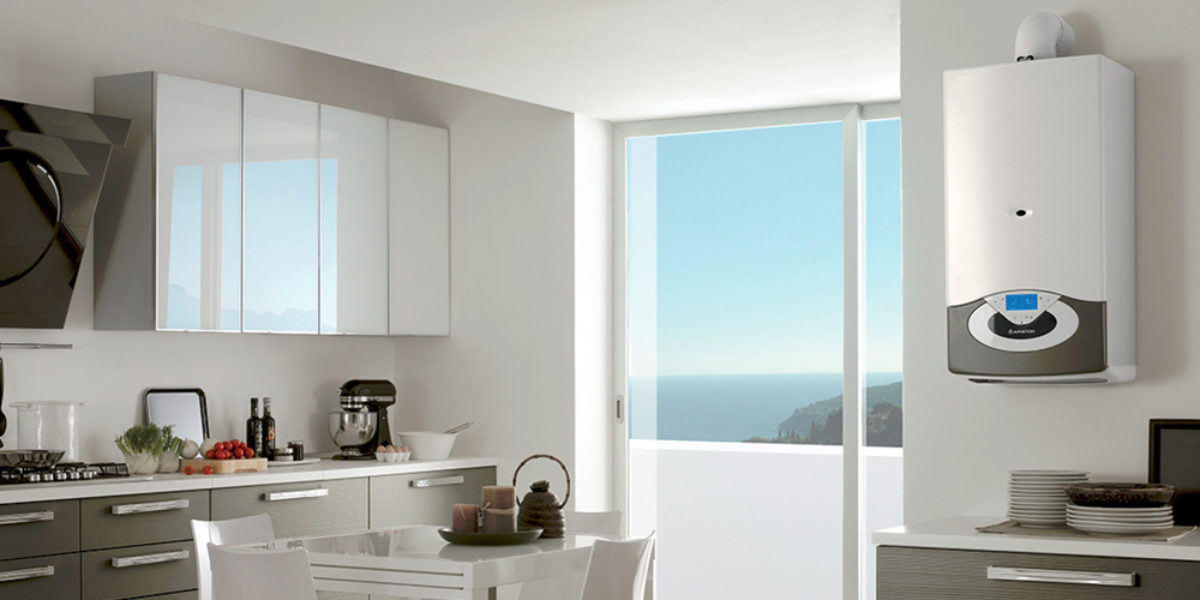
Modern gas boiler in the kitchen of the apartment
Consider the main advantages of a gas autonomous heating system:
- affordable cost - the cost of the system, as well as its installation and operation, is quite low. Gas autonomous heating of an apartment can be afforded even by those families whose wealth is moderate.
- a large number of models - in fact, the modern market offers consumers a wide selection of boilers for space heating. You can choose it according to individual characteristics - cost, volume, power, heating area, amount of fuel consumed.
- ease of use - most modern models have the ability to automatically adjust. In addition, you can independently turn the system on and off when required. Also, some models allow you to set the optimal heating temperature and automatically maintain it.
Gas boiler
complete set - today it is easy to find a gas boiler, which is supplemented with all the elements necessary for installing the heating system
In particular, you do not have to invent anything to create ventilation.
compactness and noiselessness - despite its importance, a gas heating boiler is a rather small device that can be easily used even in a very small apartment. In addition, it works almost silently - and this is also an important advantage of the system for many.
As already mentioned, it is extremely important to trust the installation of the heating system to professionals. Contact a company specializing in this service, by all means conclude an agreement and get permission for autonomous heating of an apartment
Do not rely on your own strength - the visible simplicity of the installation process is very deceptive. The system requires compliance with all installation features that you may simply not know about. In addition, only a professional will be able to dismantle the elements of the old heating system so that it continues to work throughout the house.
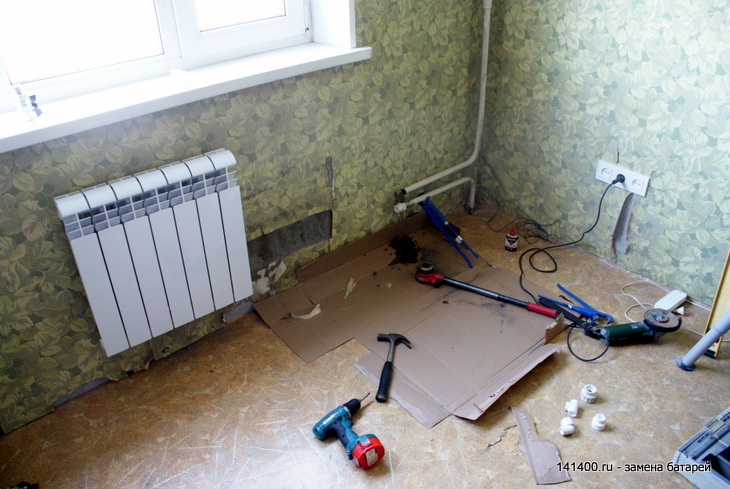
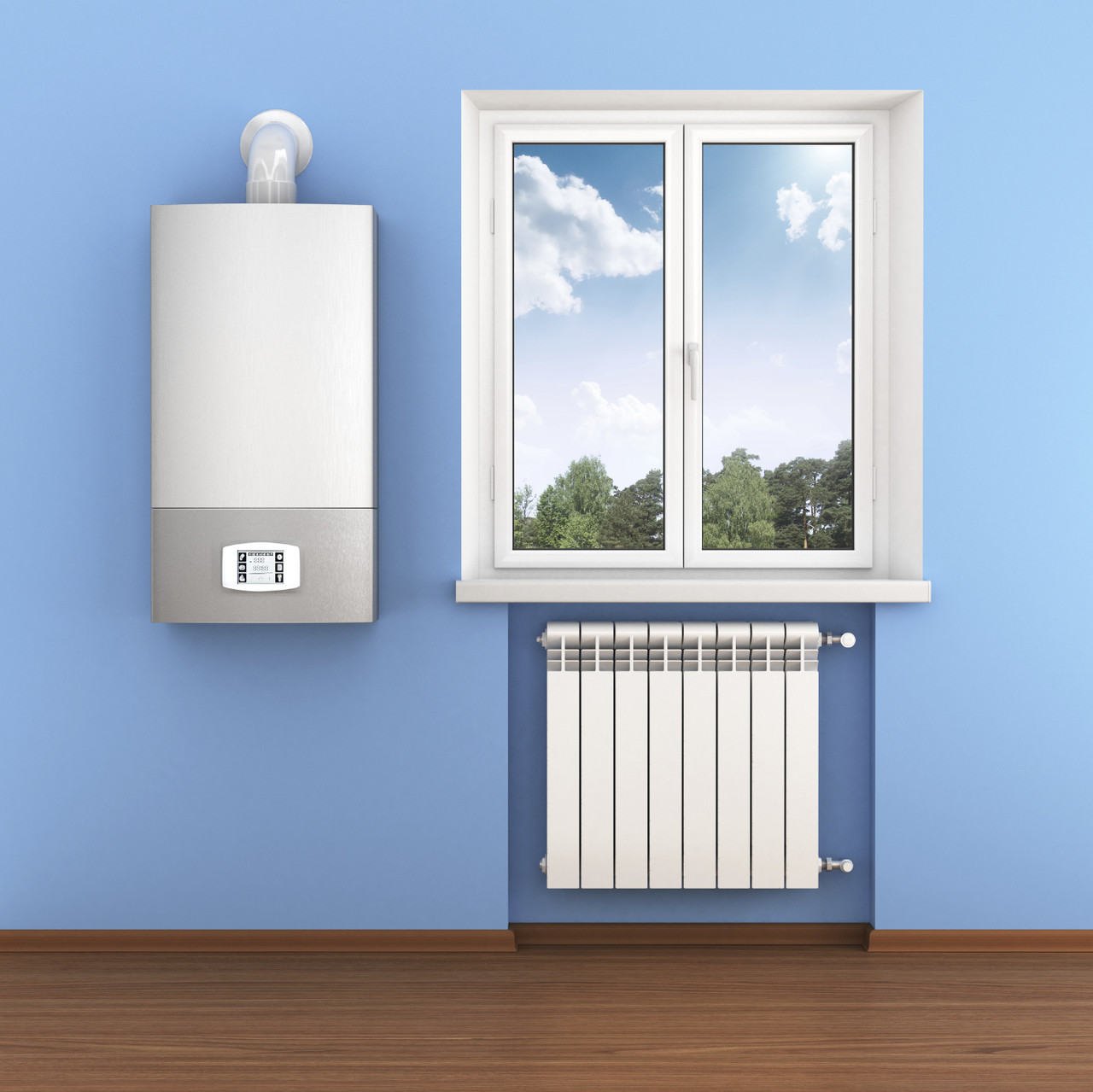


Of course, many are upset by the fact that it is required to pay for the installation of the system - after all, everything can be done by hand
But, few people are able to install it actually correctly, and most importantly - quickly.In addition, a specialist who installs the system can guarantee its performance and safety.
And this is extremely important.