
- Methods for ensuring reliable TV signal reception
- Ways to amplify the power of a TV antenna
- Using the Antenna Amplifier
- Best Amplifiers
- SWA 9001/999/9999/9009/9701 (L) wideband
- RTM LNA02
- Alcad AI-200
- WISI VM 8351
- TERRA HA126
- Choosing an amplifier for a TV
- 1. Antenna amplifier
- 2. Cable amplifiers
- 3. Satellite TV amplifiers
- Causes of signal degradation
- Antenna Signal Booster: Causes of a Bad Signal and Possible Solutions
- Supposed causes of signal weakening
- What to do and how will the amplifier help?
- Classification of television antennas
Methods for ensuring reliable TV signal reception
There is no ready recipe. Each case is specific and requires an individual approach. What to do in this situation? In many cases, the signal does not require maximum amplification, just as it is not necessary to amplify the entire “bouquet” of signals.
To make sure which case we are really dealing with, it is necessary to accurately measure the signal level from the receiver antenna. This is necessary in order to understand whether we are receiving a direct or reflected signal (or even several), and to determine the next steps.
One way to get good reception is to correct the direction of the antenna or its location in height, and often both.Sometimes it is enough to move the antenna mast a meter or two to get much better quality air.
A level meter is also worth having on hand when you need to make sure that the broadcast quality is sufficient and only requires additional amplification, or maybe you are receiving a strong but excessive signal? In the case of a strong signal, you can choose the right antenna. It may also be enough to deliberately change the direction of reception or the location of the antenna to attenuate the signal, while at the same time eliminating its reflected beams.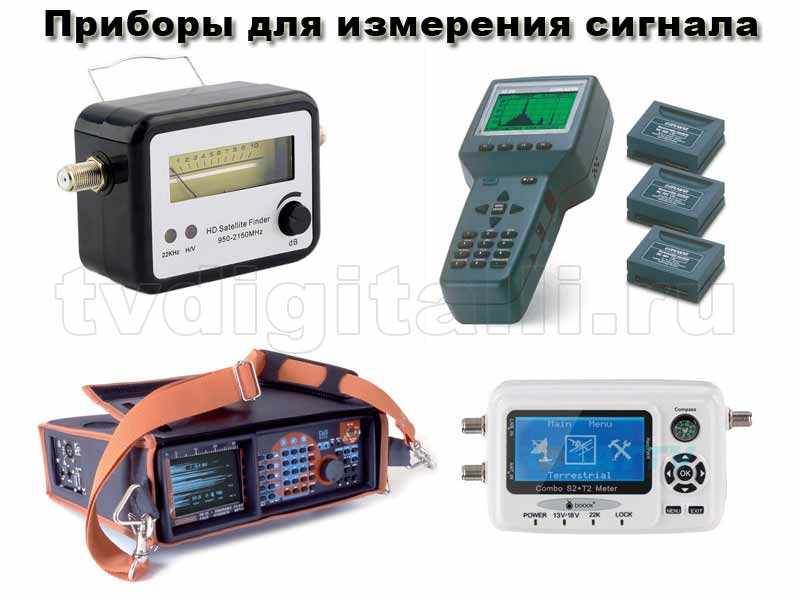
When receiving digital TV, it should be remembered that when strong radio frequency vibrations are superimposed on each other, you need to make a choice in favor of a passive directional antenna without using any amplifying elements. The amplifier to the TV antenna in this case will contribute to intermodulation, which will lead to malfunctions and instability of the digital decoder.
Ways to amplify the power of a TV antenna
In fact, ways to increase the power of a TV antenna can be correlated with medical approaches: apply "therapy" or go straight to the "surgical" path. As for drastic measures, the very first step here is to change the antenna itself to a stronger and more expensive one. This also includes the purchase of an active antenna instead of a passive one.
But you can act more gently, especially if your antenna has served you honor by honor for more than one year:
- experiment with the direction of reception;
- raise the antenna higher;
- if possible, clear the path of the signal;
- eliminate all "non-contacts", replace the cable;
- equip the antenna with a signal amplifier. Many external antennas are technologically capable of installing an amplifying board if it turns out that one is needed.
Using the Antenna Amplifier
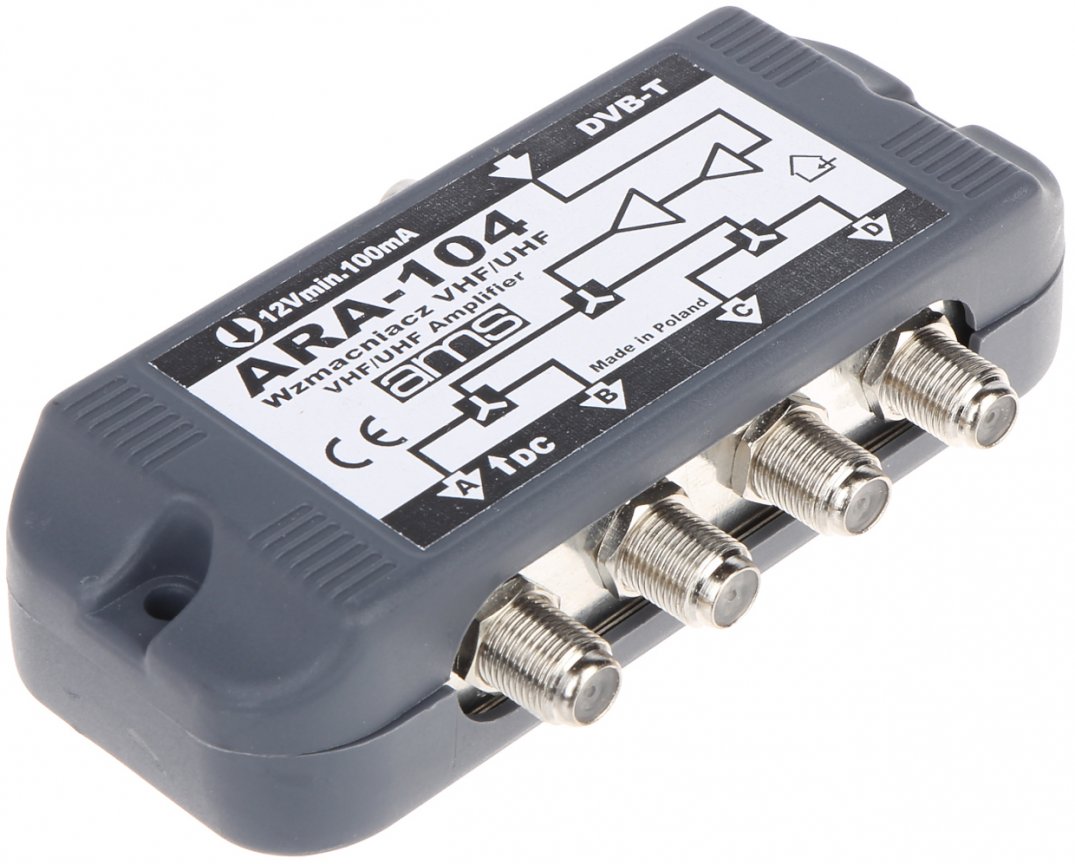
The antenna signal amplifiers of the TV are the very first, after the antenna, to perform the initial correction of its level.
The type of device that is right for you depends on the reception conditions in your area and on the specific needs of the entire television installation. If you need to amplify the entire RF band, you can use a fixed-gain broadband amplifier. If, on the contrary, in your area, the correct reception of frequencies from the upper UHF band is significantly affected by high-frequency transmitters and there is interference caused, for example, by passing cars or a neighbor's lawn mower, then you will need a different amplifier model - with a fixed gain, but with a limited operating range frequencies.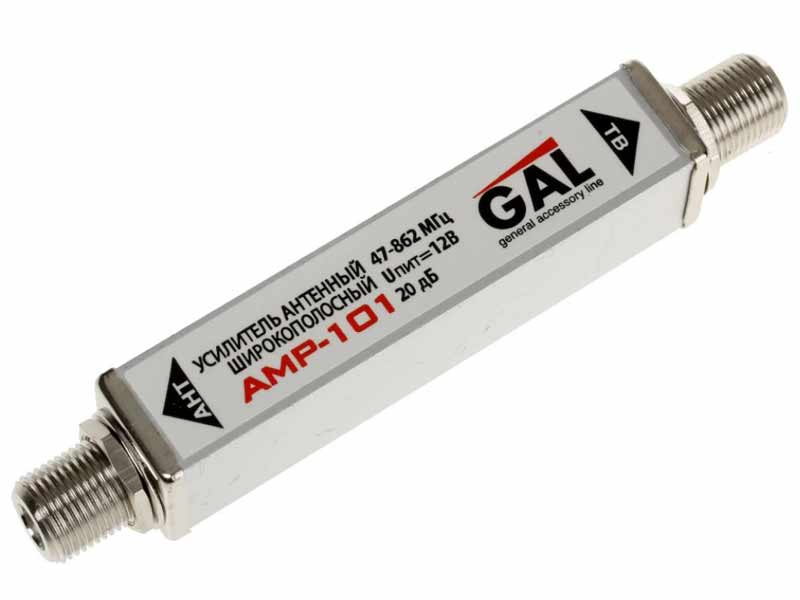 Modern amplifiers from various manufacturers have a fairly ergonomic shape, which, in fact, allows them to be mounted anywhere on the coaxial antenna cable. This means that you can use the amplifier in an existing antenna installation without having to dismantle the antenna. However, it should be remembered that due to the violation of the signal-to-noise ratio with increasing distance from the antenna, it is recommended to install it as close to the antenna as possible.
Best Amplifiers
The rating of the best includes devices with different purposes of application, type of execution and regular installation site. They do not require complicated setup and show good results in a huge number of cases. Some models allow you to fine-tune the signal characteristics in order to obtain the optimal picture quality on all received channels without exception.
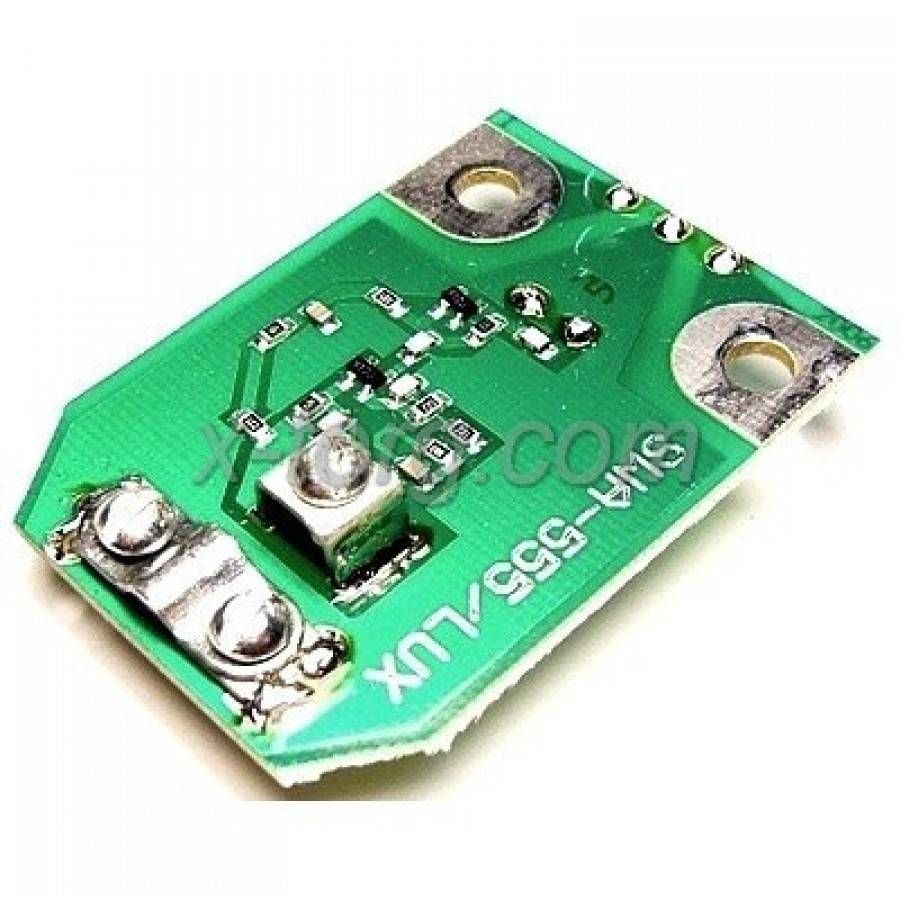
SWA 9001/999/9999/9009/9701 (L) wideband
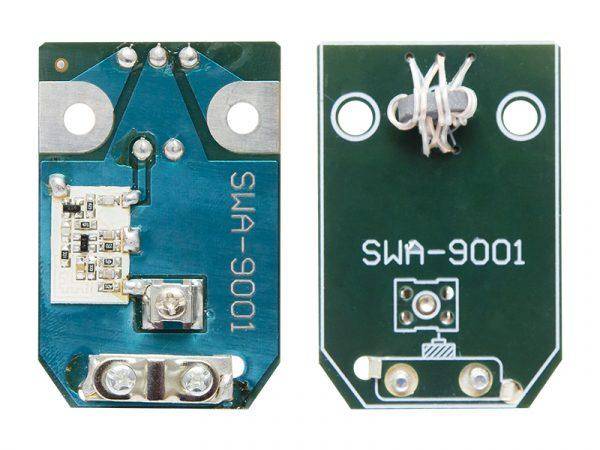
Cheap and cheerful - this is how you can characterize this amplifier. It doesn't have any adjustments. The device is simply connected to the antenna, it receives power through the signal cable. Broadband amplifier. It can be installed on both indoor and outdoor antennas. In the latter case, it is necessary to protect the body from precipitation. The device provides a reception range of up to 90-110 km, suitable for the CETV signal.
Pros:
- price tag;
- versatility of application;
- reception range;
- ease of installation.
Minuses:
- offered without protective housing;
- has an uneven gain within the frequency range;
- there is no way to adjust.
RTM LNA02
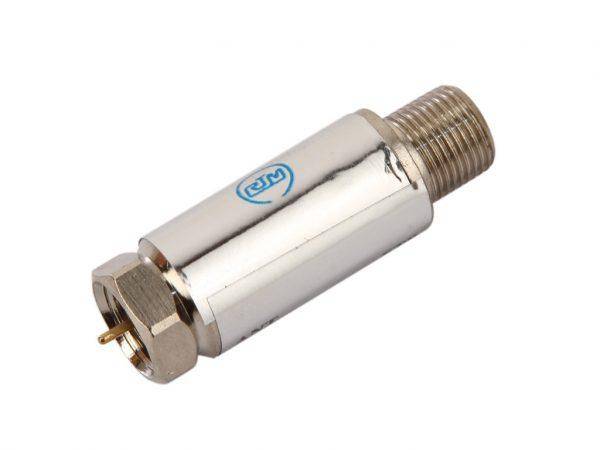
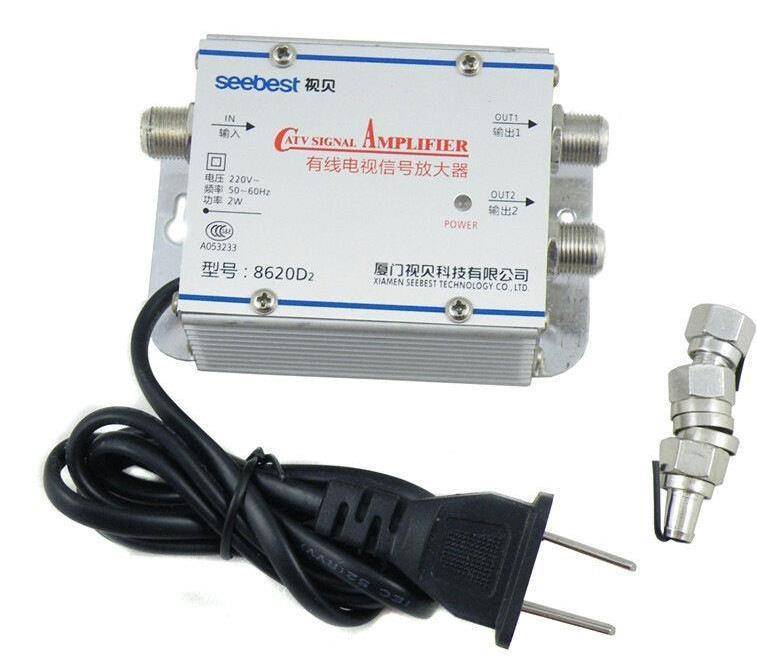
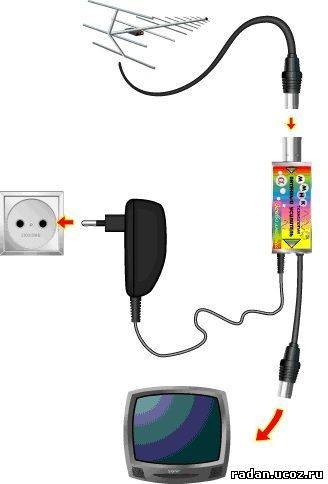
This product is distinguished not only by an acceptable price, but also by good characteristics. The amplifier is designed to be connected to set-top boxes with power on the port. Its main advantage is the low level of parasitic noise. It is optimal to use the device in areas of average reception, the maximum gain is 20 dB. The model will show good results for increasing the length of cable lines, acting as a tool for stabilizing the signal level. The device is suitable for all types of antennas, installed directly on the F-connector, does not require special settings.


Pros:
- price tag;
- suitable for CETV;
- ease of installation;
- LN (Low Noise) low noise level.
Minuses:
- no settings;
- average gain;
- different KU in separate frequency bands;
- only for set-top boxes with power on the port.
Alcad AI-200
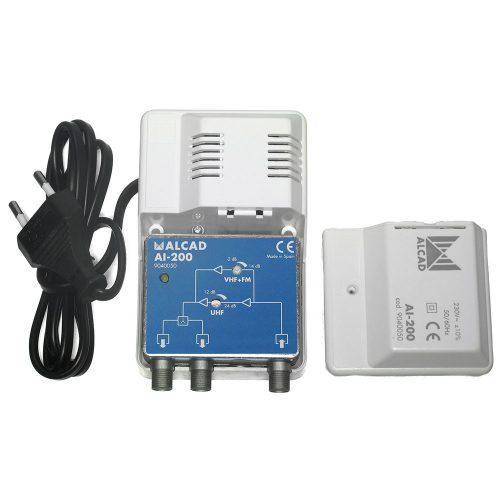
This amplifier is very popular.It is simple and at the same time offers a good level of performance. And most importantly - the safety of use. Installed indoors, it does not require special ventilation conditions. The device consumes only 7 W, has two outputs, provides a decimeter wave gain of 24 dB. The device is suitable for receiving the DTT signal. It is completely self-sufficient, it is connected directly to the 220V network.
Pros:
- simplicity;
- safety;
- good CETV gain;
- two exits.
Minuses:
- for indoor installation only;
- 220V socket required;
- The power cable is quite short.
WISI VM 8351
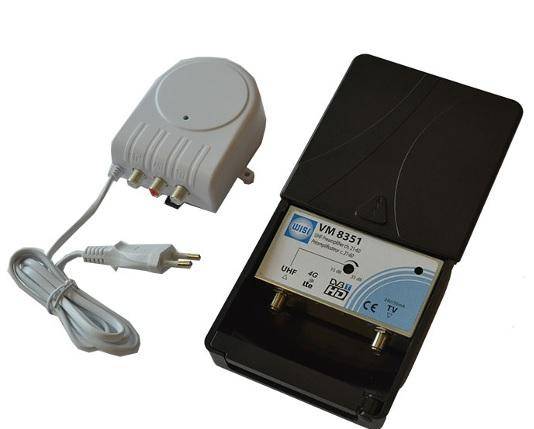
This amplifier is able to save its owner from any problems with the reception of DTTV on an external antenna. The device belongs to the mast type and is designed for installation on the street and work in the most difficult conditions. It is made in a fully sealed metal case. Supplied with its own 24V power supply. The gain is adjustable, from 15 to 35 dB, you can adjust the equipment in accordance with the reception area. The amplifier is connected with F-connectors, it has one input and two outputs.
Pros:
- protected execution;
- full set;
- gain control;
- suitable for CETV.
Minuses:
- only for work with TsETV;
- 220V socket required;
- two functional blocks.
TERRA HA126
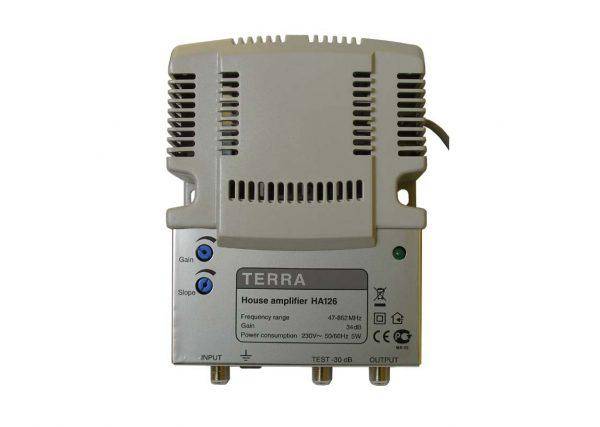
Positioned as a brownie, this amplifier will be an excellent solution for private homes with a large number of TVs. Or for an apartment where CETV is received on an external antenna. The device generates a high signal level, has a gain of up to 20 dB, and is able to adjust the slope of the frequency response to set the optimal quality on all channels.The frequency response unevenness is only 0.5 dB. The amplifier can operate at temperatures from -20 to 50 degrees, but must be installed indoors. It has a low noise figure.
Pros:
- high output level, suitable for a network of several TVs;
- broadband, from 47 to 862 MHz;
- suitable for CETV;
- allows for fine tuning;
- there is a test port for tuning the antenna.
Minuses:
- average basic KU;
- price tag;
- only one exit;
- to connect you need a 220V socket.
Choosing an amplifier for a TV
Often, having determined that the poor image quality is caused by an insufficient level of the television signal and, having learned that a television amplifier will help solve the problem, the user is faced with the task of choosing a specific type and model of this device:
- The first parameter by which the compatibility of a television receiver and an amplifying device is determined is the frequency range compliance - the amplifier must provide an increase in the signal level in the television frequency range.
- The second indicator is the maximum signal level at the output of the device that will be fed to the input of the TV - it is advisable to choose household devices in which this parameter is approximately 100.0 decibels per microvolt (dB / μV).
- The third parameter is the gain of the device, which must be at least 40.0 decibels (dB).
In addition, the choice of a particular model depends on what type of television - antenna, cable or satellite is used. user.






1. Antenna amplifier
Used by the user in the following cases:
- With a significant removal of the home from the repeater.
- The signal level is weakened by natural obstacles - houses, trees, industrial structures.
- When the antenna type is incorrectly selected or its orientation is incorrect.
Of course, if the antenna is not oriented to the repeater TV tower, before purchasing an amplifier, you should try to increase the signal level by fine-tuning it. In addition, when choosing a device, one should take into account the frequency range of television in which retransmission is carried out in a given region.
Quite often, to improve image quality, purchase an active antenna, which has a built-in amplification path in its design. This option is often used by residents of city apartments. The advantages of an active antenna include its compactness and mobility, which, by moving, turning or tilting, allows you to find the zone of the most confident and high-quality reception in a residential area.
2. Cable amplifiers
They are rarely used in everyday life, which is explained by the acceptable signal level provided by the cable TV provider. Usually, the installation of the device is required when several television receivers are connected through one cable gland. At the same time, two devices are often installed in one device - a separator and a signal amplifier. If the TV signal is strong, then signal amplification may not be required.
An ordinary splitter is enough, which is placed in any convenient place. However, it is advisable to install it at the cable entry into the apartment.In this case, interference of extraneous noise will not be amplified, as can happen when the amplifier is installed near the TV receiver, when the length of the cable transmitting the attenuated TV signal is large enough.
If there are three or more television receivers, each of which takes a certain power, it is advisable to install a device that amplifies the signal. Typically, these radio products installed in cable trunks have their own power source.
3. Satellite TV amplifiers
They have not found wide application. Usually, improving the quality of satellite TV broadcasting is carried out by installing a larger-diameter antenna "dish" or replacing all equipment for receiving satellite broadcasting with a more modern one, or with better leather performance.
If you want to amplify the signal, some users install a cable amplifier in front of the TV's antenna input. In this case, it is necessary to provide for the correspondence between the frequency ranges of the amplifier and the signal converted by satellite television equipment. However, all recommendations relate to the field of experiments and have not been widely adopted.
Causes of signal degradation
Each reason for the deterioration of the air should be analyzed individually, since its reception depends on local conditions: on the direction in which the signal passes, what obstacles are in its path, on the presence of hills, tall buildings in your area.
Before you finally decide to use an amplifier for your TV, let's get acquainted with the most likely causes of TV signal degradation.
Transmitter Maintenance
In almost all cases of problems with TV display, their cause is on the user's side - cases on the sender's side are usually a break in the maintenance of the transmitter, which sometimes takes several hours.
Hardware failure
Outdoor antennas are exposed to external natural influences from day to day. Frost, heat, blizzards and rain - all this antenna is able to endure for years. If it is installed correctly. And if not, then one day moisture will penetrate the wires, splitters, amplifiers, and the problem will arise at the least expected moment.



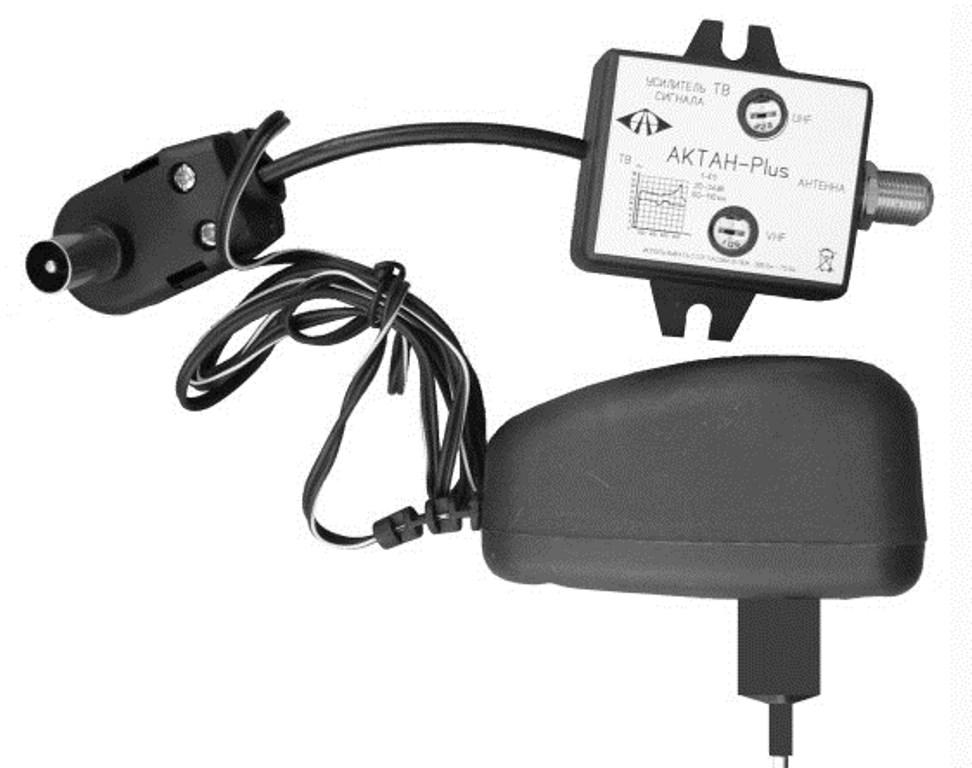

Wrong antenna
The most common cause of poor reception is too low a signal level that comes from the antenna. The only correct solution is to use its best model - preferably directional, not necessarily with an amplifier. But the situation can be partially improved by installing the antenna higher.
Too high signal strength
Too much intake can also be a common cause of problems. Living near a TV tower and using a high gain antenna, we can overload the signal at the tuner's input.
Cables
A coaxial cable has a significant impact on the reception quality. An old cable with frayed insulation, bought at a flea market or worse - a cable from pieces that you scrape "through the barns and bottomholes" can cause such strong attenuation that it will absorb the signal from even a very good antenna before it reaches the TV .
Separators and connectors
The properties and number of splitters used also affect the picture quality. Each such passive element (i.e. one that is not an amplifier) reduces the reception level.Careless installation of connectors, especially outside the housing, can lead to rapid oxidation of the connections and, as a result, to a significant attenuation of the TV signal.
Noises
We are surrounded by a mass of transmitting devices - relay stations, mobile phones, modems, routers, radio stations, alarms, etc. Radio waves from different frequency ranges can interfere with TV reception. Interference is caused even by devices without antennas: microwave oven, fluorescent lamps, electric cars.
Antenna Signal Booster: Causes of a Bad Signal and Possible Solutions
A signal amplifier is not always required. And besides, you must first find out exactly what reasons caused the poor quality of TV reception.
Supposed causes of signal weakening
We have already partially touched upon this issue when it came to choosing an indoor antenna. But in connection with the question of the need to purchase a signal amplifier, you should once again return to it. Some consumers, after buying a good TV in their country house (we are talking about it, and not about giving in the usual way for many), are faced with the fact that even with an external antenna, the signal is weak. But attempts to blame equipment sellers or manufacturers are often in vain. The causes of the defect may be completely different. Most often this can be caused by:
remote location of the repeater;
cable connection problems (The reason here can be quite simple. To extend the cable from the antenna to the TV, sometimes ordinary twisting is used instead of soldering. And this method is unacceptable if you want to receive a stable, high-quality signal.If you can’t make a solder, then it’s better to spend money on buying a longer one-piece cable


In addition, you should pay attention to the life of the cable. If it is old, then, perhaps, the cause of the bad signal is wear and tear);
the presence of natural or artificial interference (In the first case, we are talking about the features of the terrain when the house is located in a lowland or near elevations or mountains
In the second case, one should take into account the location of various buildings and devices created by man. Often they create serious interference with the incoming signal).
If similar situations arose (except for the cable), then installing a television antenna amplifier could be a possible solution to the problem.
What to do and how will the amplifier help?
The amplifier, of course, will be able to solve many of these difficulties and significantly improve the image quality, and in some cases even help to catch a few more channels. If this suits you, then it is worth spending some money to buy an antenna amplifier as an additional device. It should also be borne in mind that antenna amplifiers are available for TVs with a built-in amplifier.
In the latter case, we are talking about an active antenna. An active antenna is designed to perform two functions: signal capture and amplification. However, it is not without its shortcomings. If your home is located in a windy area, then using such an antenna is not recommended. In conditions of frequent winds, an active antenna quickly loses its qualities and fails. Replacement of damaged parts is problematic due to the high location of the device.
Classification of television antennas
Television signals are received by antennas operating in the meter (MV) and decimeter range (UHF). These devices are shown in Figures 1 and 2. There are also so-called hybrid designs (Figure 3), which combine the details of the meter and decimeter ranges. All devices have noticeable visual differences in accordance with their name.
For example, for MW antennas, the average length is from 0.5 to 1.5 meters, while for decimeter devices this figure drops to 15-40 cm. In hybrid broadband antennas, structural elements of both sizes are used. In digital television, devices operating in the decimeter range are used.
1.
All antennas designed to receive and transmit digital signals are classified according to several criteria. First of all, the place of possible installation is taken into account. Many devices are installed indoors. This is a well-known indoor antenna, represented by many modifications. Such placement is possible provided that the TV receives a high-quality signal. In turn, such a signal is obtained if the building is located directly near the broadcast tower. Otherwise, there is a large amount of interference created by other houses, power lines and other sources.
Indoor antennas turn out to be ineffective in summer cottages and in settlements located at a distance from the city. Even inside the premises themselves, the quality of the signal will be different, so a specific model must be selected for each room.Receiving equipment designed for outdoor installation is considered universal with the ability to use in any place, including suburban facilities. As a rule, their installation is carried out by specialists, which guarantees a high-quality and reliable signal, regardless of the presence of interference and distance from the broadcast site.
The next criterion is the technical ability of a particular device to amplify the received signal. In this regard, antennas are divided into passive and active. In the first case, the signal amplification occurs taking into account the features of this design. Passive devices do not connect to the network, they do not have active elements - microcircuits or transistors that amplify signals. They themselves do not create any interference. However, quite often the power of these devices is not enough to receive a high-quality image. Their effective use is possible when placed at a height of more than 10 meters, directly next to the television tower.
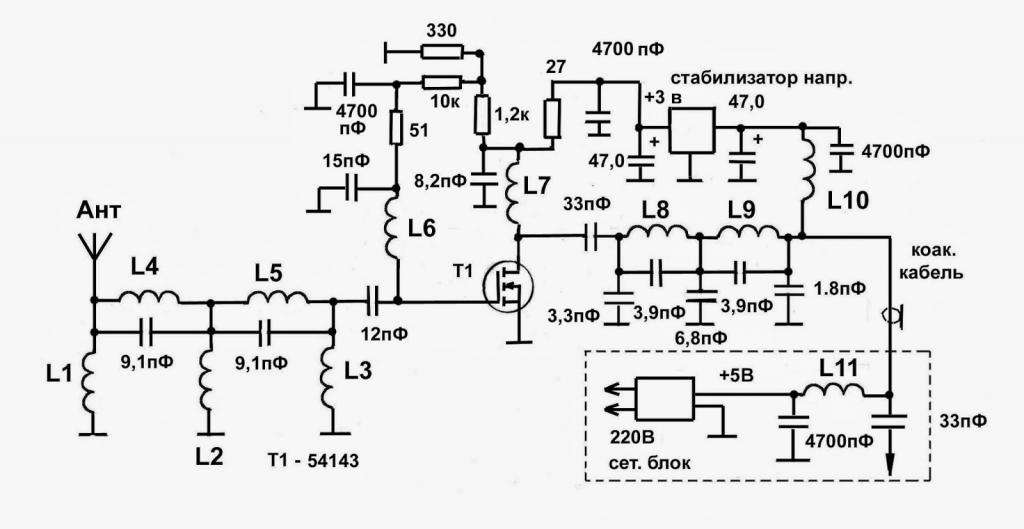
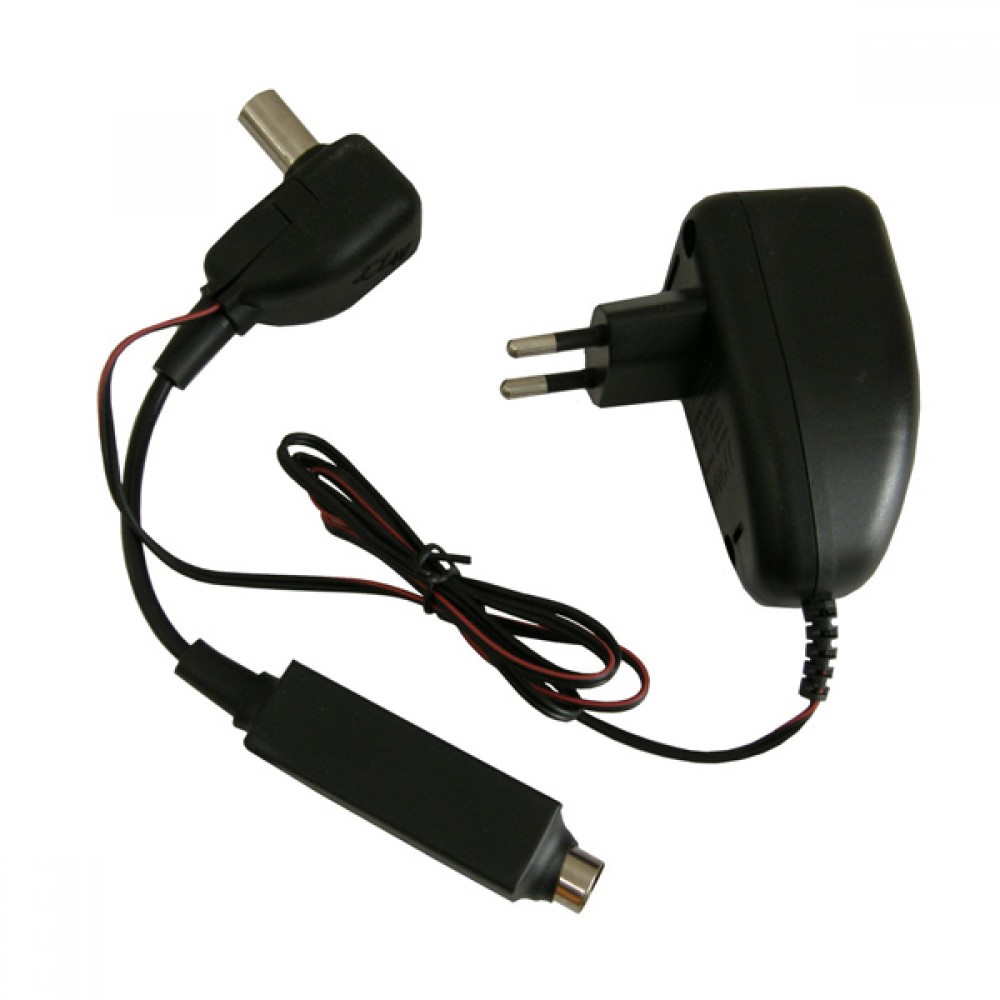
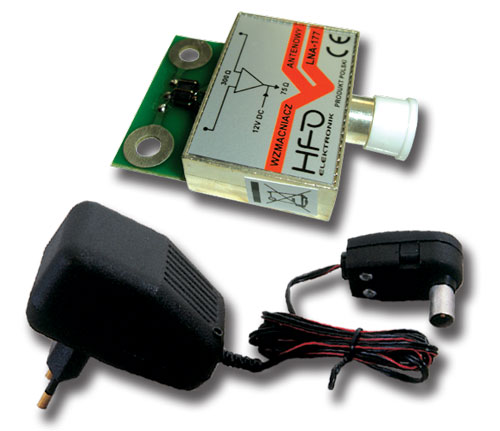
Amplification of the signal of active antennas is carried out not only due to their design features. Additionally, built-in amplifiers are used, placed inside the devices, or located separately. The voltage is supplied through a power supply connected to the electrical network.
One of the varieties of such devices is a directional antenna with an amplifier for digital TV, which has a higher gain. Most often they are installed in cottages located at a considerable distance from the towers. In the signal received by the device, interference and noise sometimes occur, mainly due to the wrong choice of the model, the gain in which exceeds the required value.The reason may be the low quality of the product itself.




There is a classification of antennas according to the range of received frequencies. Channel devices receive certain channels at a set frequency. In everyday life, such devices are used very rarely. Range devices provide reception of waves of a specific range. For example, the reception of digital channels provides the UHF range. The greatest demand is for all-wave antennas capable of operating in the MV and UHF bands.



