- Is it worth buying Chinese radiators
- Which steel radiators are better to buy
- Steel panel or tubular radiators
- Radiators with bottom or side connection
- An example of calculating the required radiator power
- Why Radiator Certification Is So Important
- Pros and cons of aluminum radiators
- Heating bimetallic devices
- Heating radiators aluminum section dimensions
- Which heating batteries to choose for a private house and cottage
- Prices for radiators
- Conclusion
- Cast aluminum radiators.
- The best bimetallic radiators with a center distance of 500 mm
- Royal Thermo Piano Forte 500
- Rifar Monolit 500
- Global Style Plus 500
- Sira RS Bimetal 500
- Fondital Alustal 500/100
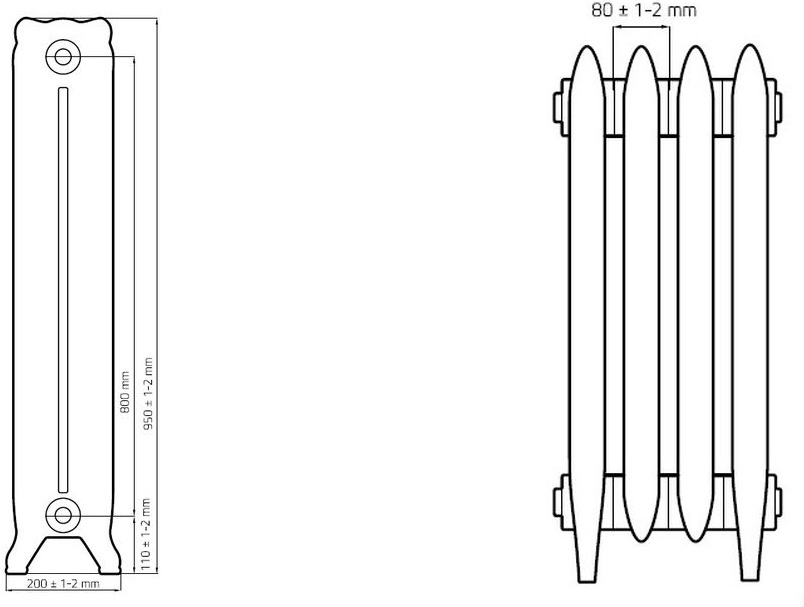
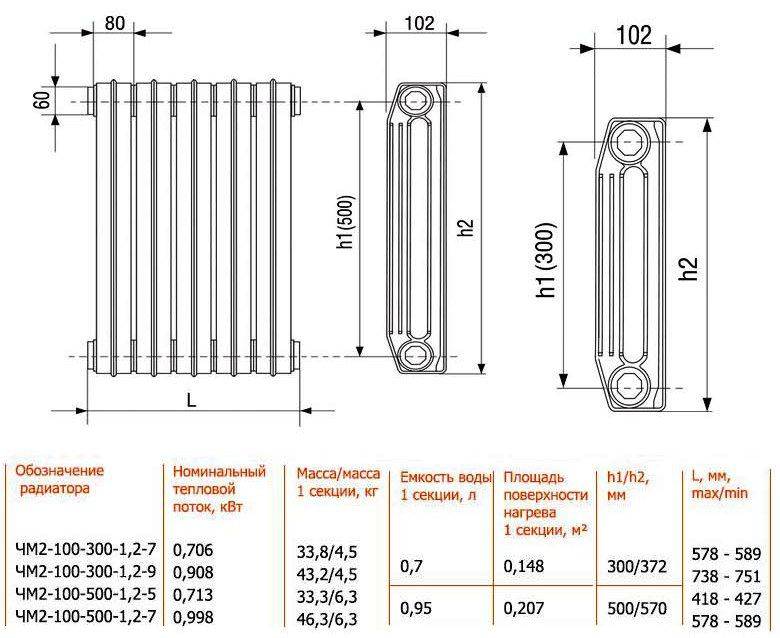
- Specifications of Conner Cast Iron Batteries
- What should be the dimensions
- TOP-4 steel heating radiators
- Axis Classic 22 500×1000
- Buderus Logatrend K-Profil 22 500×1000
- Kermi FKO 22 500×1000
- Arbonia 2180 1800 270
- Main characteristics of a typical radiator
Is it worth buying Chinese radiators
Heating appliances from European manufacturers are a luxury, many are switching to cheap counterparts - radiators from Chinese manufacturers.
Is it worth buying products?
If we compare the service life of the device, the Chinese counterpart has a shorter operating period.Sometimes it does not reach the end of the warranty period.
If we divide the total mass of Chinese radiators, two groups of manufacturers will come out. Some do conscientious work, manufacture products at factories. The latter use garage production, the quality of goods is lame.
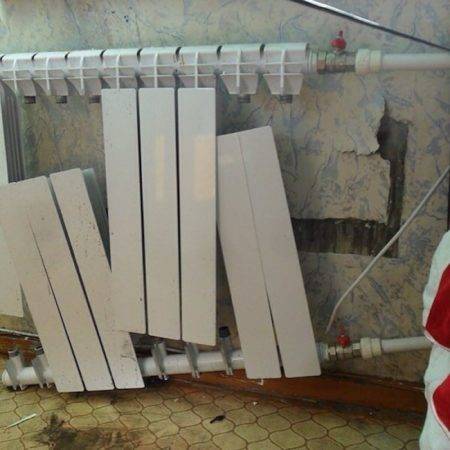 Breakage of a Chinese product
Chinese manufacturers use aluminum alloy - recycled. Perhaps a product with cracks, the presence of harmful impurities in the alloy, which are released into the air when heated. Characteristic:
- Non-compliance with the performance indicated on the product packaging.
- The discrepancy between the parameters of pressure, heat transfer.
- Weight is less than European counterparts.
- The painting is of poor quality, there are peelings.
Which steel radiators are better to buy
Steel radiators are divided into two types: panel and tubular. The former are cheaper and lighter, but less durable. The latter are more expensive and heavier, but withstand increased pressure and last longer. Models differ in design and principle of operation. Let's consider these two types in more detail to understand which radiators are best for specific operating conditions.
Steel panel or tubular radiators
Panel steel radiators
The design is a panel filled with a coolant and a corrugated metal sheet in contact with it for accelerated heat removal (the metal sheet increases the heat transfer area). The device works in two ways, combining them. Heat from the panel is given off to the surrounding air, and its passage through the fins starts natural convection in the room.
Steel panel heating radiator in a cut.
Panel radiator - type 11.
Panel radiator - type 22.
Panel radiator - type 33.
Advantages of steel panel radiators
- light weight;
- good heat dissipation;
- affordable cost.
Cons of steel panel radiators
- low resistance to hydraulic pressure shocks;
- low inertia (quickly cool down after the boiler is turned off);
- the appearance of dust in the air from convection.
Tubular steel radiators
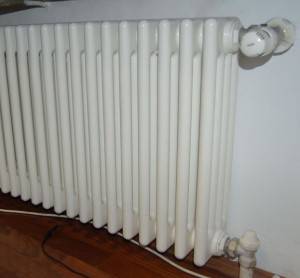
This category is visually similar to cast-iron batteries, but since the walls here are 1.2-1.5 mm thick, they are much thinner and more aesthetically pleasing, unlike bulky heavy metal radiators. The design is based on the lower and upper collectors, connected by vertical steel pipes. There can be two, three or four of them in each section, which increases the volume of the coolant and the area for heat exchange.
Steel tubular radiator.
Often the design can be expanded by adding additional sections if the current number is not enough to heat a particular room. This cannot be done in panel types. This type of battery does not create strong convection.
Advantages of tubular steel radiators
- resistance to water hammer;
- long service life;
- more attractive look;
- less hull depth;
- the possibility of growing or shortening.
Cons of tubular steel radiators
- higher cost;
- increased weight;
- may leak between sections.
Radiators with bottom or side connection
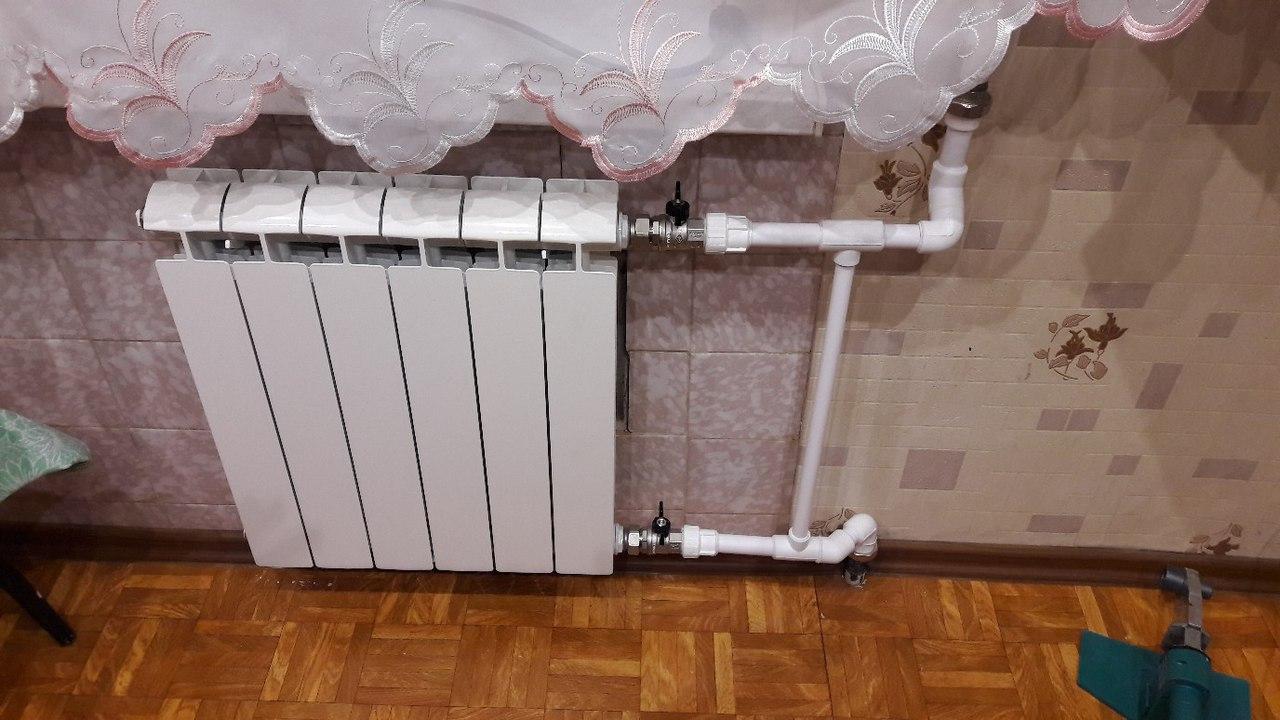
Lateral connection means coolant supply to the upper radiator fitting, and water outlet through the bottom, located on the left or right on the body. This allows the fluid to pass through all internal channels faster and more efficiently in heat transfer. But with such installation will require more pipe for supply to the top fitting, which can be located at a height of 300-850 mm.Still, such communications can spoil the interior, and you will have to think about how to hide them behind false panels.
Panel radiator with side connection.
The bottom connection involves the supply and removal of water through the fittings from the bottom of the radiator. When the panel is located close to the floor at a distance of 50 mm, such communications are not visible at all. This helps to make hidden wiring around the room without the cost of decorative materials. But the lower connection is less efficient in terms of the mixing speed of the hot and cold coolant, so the heating efficiency is reduced by 2-7%.
Panel radiator with bottom connection.
An example of calculating the required radiator power
In order not to miscalculate with the efficiency of heating, it is important to calculate in advance how much power the radiator should be, so that this is enough to heat a particular room. Here is the calculation formula:
Here is the calculation formula:
P=V*B*40+To+Td.
Let's take a look at these values:
- P is the power of the radiator, which we need to determine by substituting other values.
- V is the area of the room.
- B is the height of the ceilings in the room.
- 40 kW is the approximate heating power required to heat 1 m³.
- That is the inevitable heat loss on the windows, where one standard opening takes about 100 watts.
- Tg - similar losses occurring on the doors. Up to 150-200 watts can be lost on one leaf.
Now we count. There is a bedroom with an area of 15 m², in which there is one standard window and one door. Which radiator to buy for such a room?


15 m²*2.5 m (ceiling height)*40+100+200=1800 W. It is with such a minimum power that it is necessary to look for a radiator among panel or tubular options. If there is no exact value, then the choice is given in favor of a larger one.
Why Radiator Certification Is So Important
When certifying radiators, the following is checked:
- compliance with the declared heat transfer in terms of power;
- thickness of steel walls (should be at least 1.2 mm);
- maintaining nominal and maximum pressure.
Pros and cons of aluminum radiators
Over the past half century, nothing has changed with respect to aluminum radiators - they are also actively used to equip the heating systems of public institutions and multi-apartment residential buildings. Neat, light and easy to install, devices are also readily purchased for the improvement of private housing.
The undoubted advantages of aluminum radiators several, and often they "outweigh" the shortcomings (which also exist) and are decisive arguments in the choice.
According to user reviews, aluminum devices harmoniously complement the interior of rooms, and if they stand out from the general picture with their industrial design, they are easily masked by a decorative screen or a box with holes.
But batteries made of relatively soft metal also have their weaknesses, including:
- a characteristic feature of aluminum to enter into chemical reactions with the coolant, resulting in the formation of corrosion, as well as gases;
- air vent valves save from the occurrence of air jams;
- low resistance to high pressure and water hammer, characteristic of central highways;
- sensitivity to incorrect installation - installation errors can disrupt the uniform distribution of the coolant in all sections.
Experienced installers, due to the listed technical characteristics, do not recommend equipping circuits dependent on the central line with aluminum heating radiators.
The system functions in such a way that water hammer, a sharp change in pressure are not excluded. Due to instability, the most unprotected places - joints and connections - can fail.
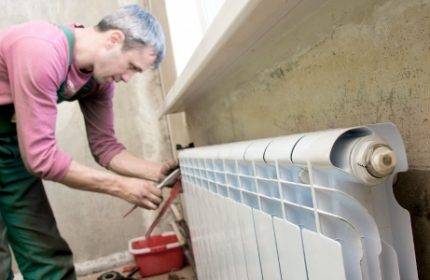
Aluminum is sensitive to stray currents, which are one of the causes of corrosion. Too acidic or alkaline coolant also causes accidental destruction of the material, resulting in the replacement of the device
In connection with the listed disadvantages, it is better to connect aluminum devices to a more stable cottage heating system. It is protected not only from water hammer, but also from low-quality coolant. If you still choose an aluminum battery for a high-rise building with main heating, it is better to prefer anodized models.
Heating bimetallic devices
To date, bimetallic radiators most in demand, because they combined the advantages of aluminum and steel products. They are ideal for housing with central heating, and their disadvantage is high cost.
STOUT heaters of this type have been specially adapted to the Russian market. They are able to withstand operating pressure up to 100 atmospheres, and effectively operate at ambient temperatures up to 135°C.
The manufacturer provides a 10-year warranty for this product. The number of sections can be 4 - 14 pieces and therefore there will be no problems with which batteries to choose for the apartment.
For the production of bimetallic radiators, two metals are used - aluminum and steel. In order to improve technical performance, various silicon compounds are sometimes added to the composition, which increase wear resistance and service life.
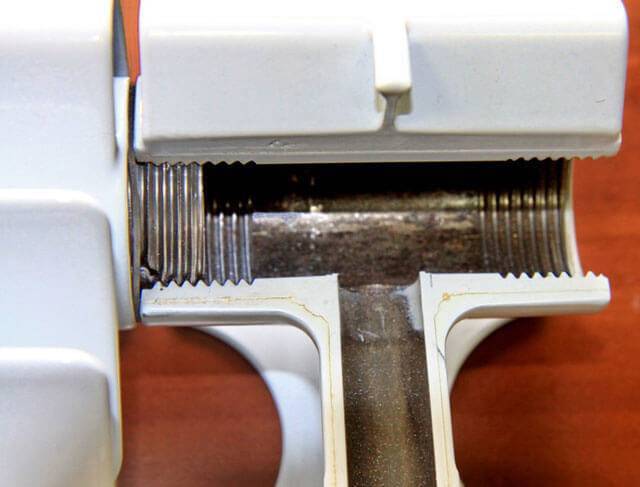
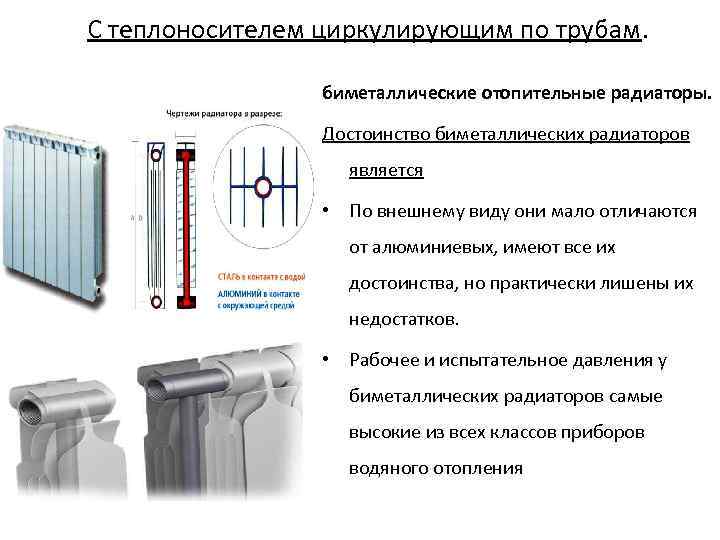
Inside the bimetallic product there is a structure consisting of two parts. The first of them is a steel core along which the coolant moves. Its functional purpose is to accumulate thermal energy and transfer it to the second part, made of aluminum. Heat enters the room through the heat exchanger.
The aluminum casing has no direct contact with the working medium. This task is performed by a high-quality steel alloy. Outside, the radiator is covered with enamel paint, and the modern design provides a protective coating.
The strength of steel and the high heat transfer of aluminum make it possible to manufacture highly efficient heating devices that can quickly warm up a room, they are not afraid of pressure drops that occur in the system. They are resistant to corrosion processes.
The steel core can easily withstand a working pressure of 35 - 40 atmospheres, and when tested for strength in production conditions, even 45 - 50 atmospheres. If the house has an unstable heating system, choosing which is better batteries in the room from the entire range, you don’t have to worry that bimetallic devices will fail.
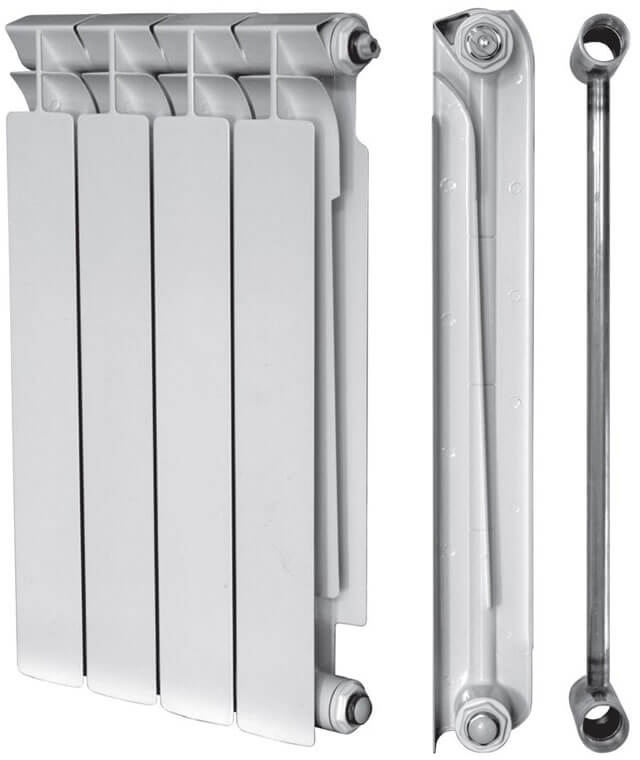
In some models, the cores are made of copper, not steel. They are intended for autonomous systems in which a coolant with the addition of antifreeze functions, and it destroys steel parts.
The outer panel of the radiator has a ribbed structure to enhance heat transfer. Since the design weighs a little, there are no problems with its installation. The inside of the radiator is covered with a special layer with the addition of polymers. It protects the device from the negative effects of abrasive components present in the water.
Today there are no problems with the acquisition of such units: their center distance can be from 200 to 800 millimeters. To determine the number of sections, it is necessary to make calculations.
To make the right choice, you need to know what kind of batteries are available for heating an apartment of a bimetallic type - monolithic and sectional. The first of them are more expensive, but they also have the best technical indicators, and the absence of joints prevents leaks.
Advantages of bimetallic devices:
- ease of installation;
- resistance to high pressure and water hammer;
- light weight;
- stylish look;
- variety of design solutions;
- high degree of heat transfer;
- long service life - about 50 years;
- minimum requirements for the quality of the coolant.
These devices have one drawback and this is their high cost, but it pays off due to a long period of operation and reliability. When solving the problem of how to choose heating radiators, the choice in favor of bimetallic products can be called the best option for apartments with central heating in multi-storey buildings.
There is one circumstance that must be taken into account attention before buying. Bimetallic products are outwardly similar to aluminum appliances
These designs are difficult to distinguish, so before choosing a radiator for a room, you need to look inside them.
Heating radiators aluminum section dimensions
Today in every home and the apartment has heating radiators. Cast iron radiators are widely used due to their efficiency, durability and high heat transfer coefficient. However, over time, they become clogged with rust and silt that enters the heating system through pipes.This disadvantage significantly reduces the efficiency of cast-iron radiators. It is for this reason that aluminum heating radiators have come to replace cast iron


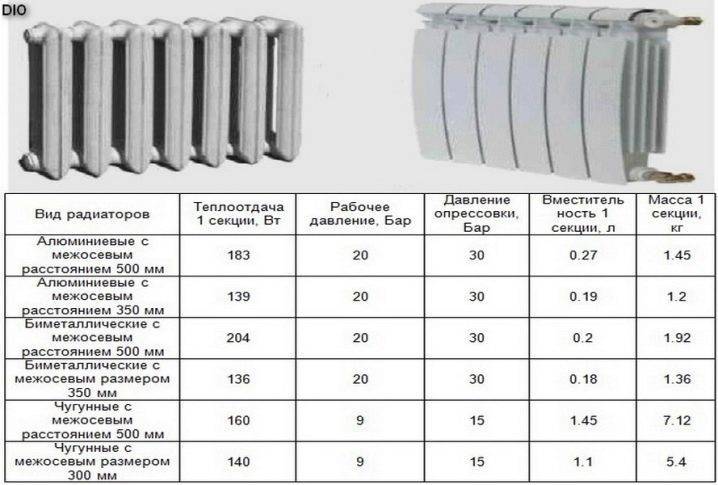

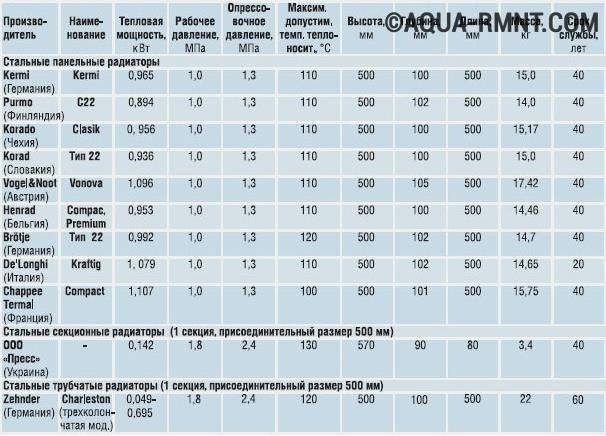

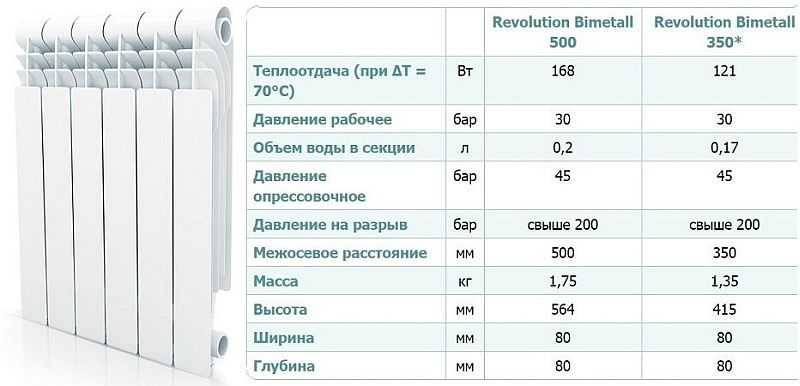
Heating radiators aluminum section dimensions should be chosen based on the following factors:
- Room area;
- Estimated capacity of the section;
- Heat transfer coefficient;
- Availability of free space for installation.
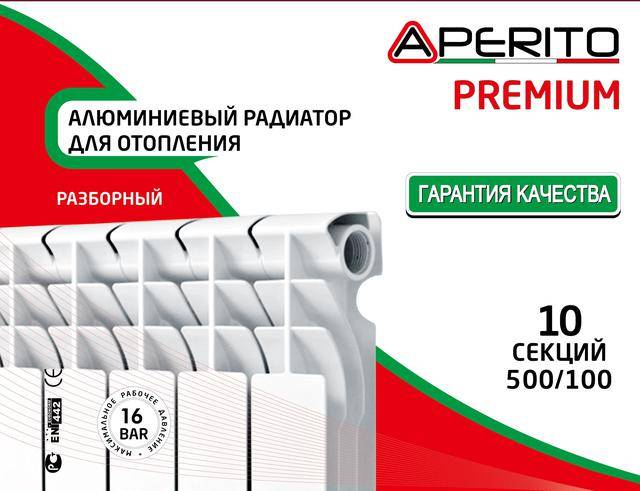
What is an aluminum radiator section?
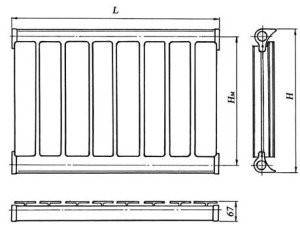
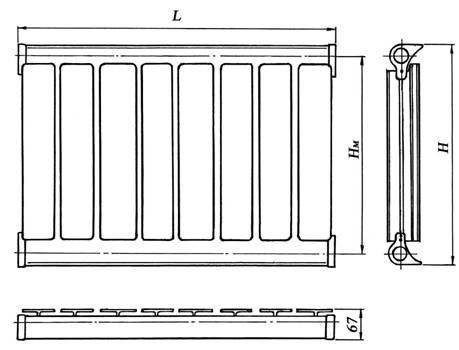
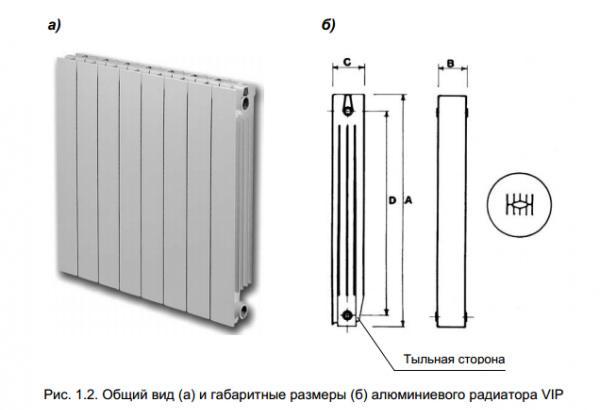
The section (heating radiator) is a two-tube aluminum structure, which is finned by convection and radiation methods to improve thermal transfer. The section is the smallest structural element of a heating radiator.
Available sizes of sections of aluminum radiators:
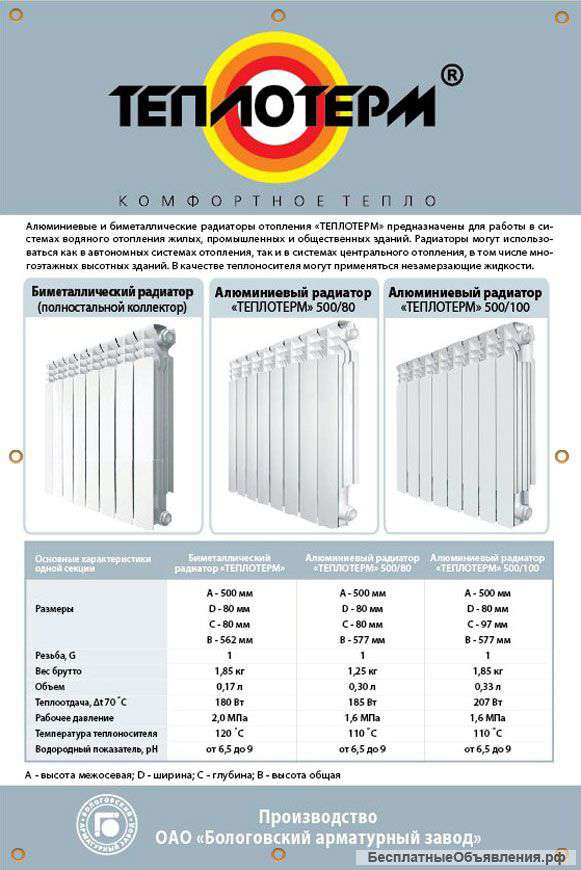
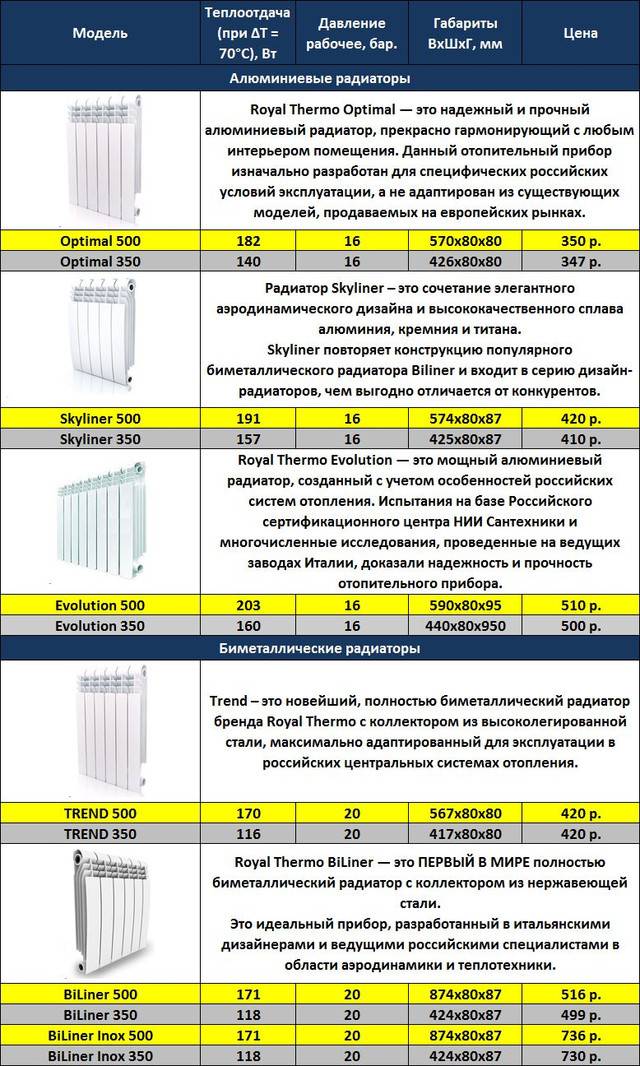
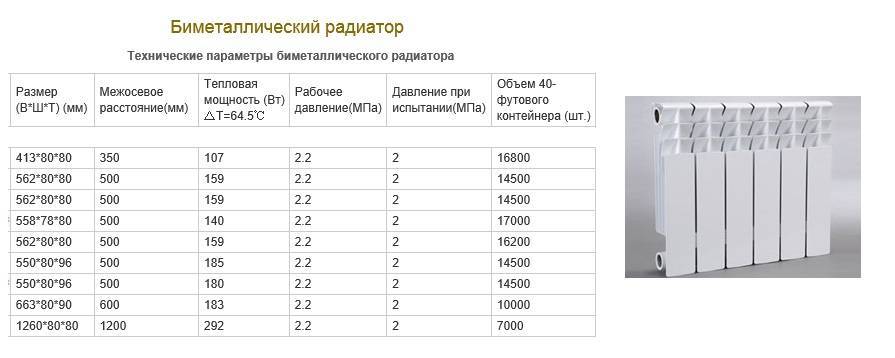
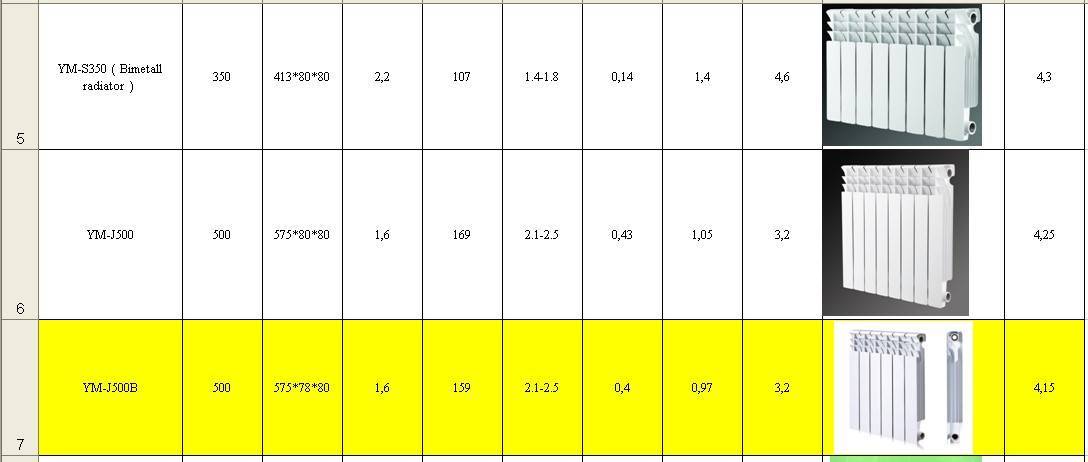
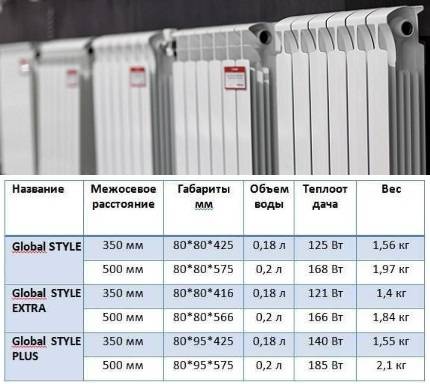
- Section width - 80 mm;
- Section height - 350, 500, 600, 700 mm;
- Section depth - 80, 95 mm;
The working pressure of aluminum sections can reach 16 bar.
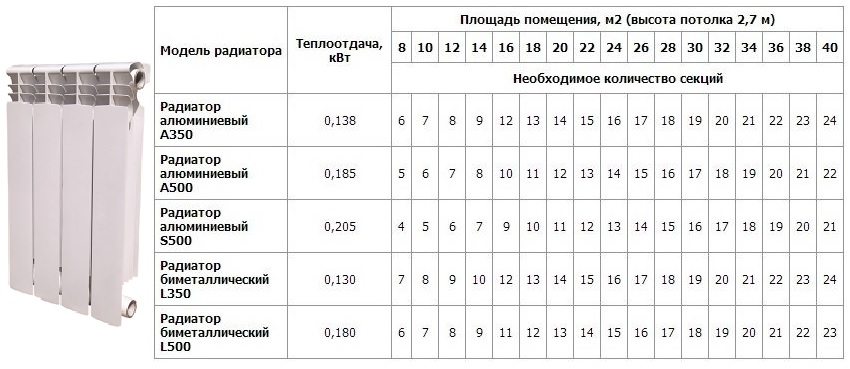
In order to choose the right size of aluminum sections, it is necessary to calculate the power of the radiator. As a rule, this value is indicated by the manufacturer on each of the available models of aluminum radiators. There is also a simple and effective formula for calculating the required number of radiator sections:
S is the area of the heated room (room);
P is the power of the aluminum radiator section;
K is the number of sections;
100 - the value of 100 watts per 1 sq.m. with a standard ceiling height in the room of 2.7 meters.
When calculating and choosing the size of an aluminum radiator section, it must be taken into account that the power reserve should be at least 20%.
To date, aluminum sections of various sizes are presented by the following famous manufacturers:
Aluminum heating radiators - impeccable quality, high efficiency and versatility.
A very important topic. Especially today, when there are many varieties of radiators, and you have to make the choice yourself, since it is simply dangerous to entrust this choice to anyone. Will boiling water explode somewhere in the middle of winter! They are so light and elegant that they seem unreliable when you are not used to them. Although it's beautiful. So I study everything that is on the Internet. You have written well the calculations for the number of sections and heat transfer. Healthy. When replacing radiators, I ordered to put ball valves on all pipes. So that if anything immediately shut off the hot water. So I made sure.
Which heating batteries to choose for a private house and cottage
For a private house batteries are easy to pick up, because the operation of an autonomous heating system occurs without significant overloads, which are experienced by a centralized system. Here you can connect any radiators, focusing on the required power, quality, efficiency, cost of the device.
If you want to choose batteries based on the brand name, then you can take into account the unspoken rating of aluminum heating radiators for a private house. The top positions here belong to the brands Calidor, Global, Rifar, STI, which are well suited for operation in Russian climatic conditions.

Modern radiators, even in the coldest time, will provide a comfortable atmosphere in the room
Among the worthy brands producing bimetallic radiators, one can note the Russian Rifar and the Italian Global
Those who decide to purchase cast iron heaters should pay attention to Konner (Russia), Guratec (Germany), Retro Style (Russia)
As a result, all radiators are universal, which means that the question of which heating batteries are best for a private house with a gas boiler is not entirely correct, because when choosing, they are mainly guided by the required power, room features and budget possibilities.
Visually about the differences in radiators, see the video:


Prices for radiators
The cost of heating devices varies significantly depending on the following factors:
- brand and country of origin;
- material and production technology;
- design.
Italian, German, Finnish, Czech batteries are more expensive than Russian ones, but in terms of their technical and operational characteristics, products of a domestic manufacturer are not much inferior and even surpass many foreign counterparts.
Buying heating radiators for a private house is a rather expensive article. But if you make the right calculations and choose economical devices, then costs can be significantly reduced.
Batteries in retro style can be found from 8000 rubles.
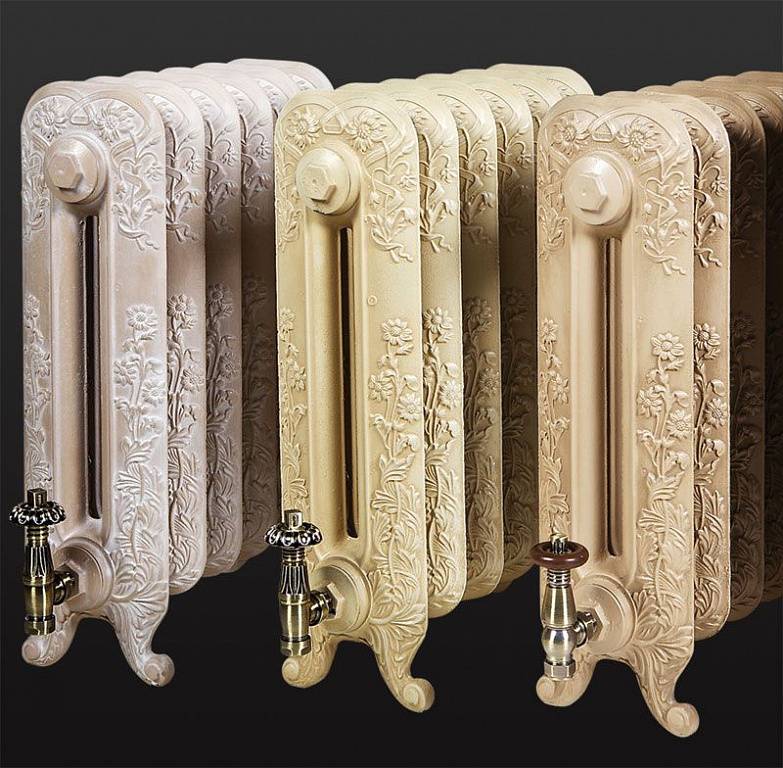
Cast iron batteries in retro style
If batteries are needed for a whole house, then even inexpensive devices cost a pretty penny. In addition, the cost of related products will be added: valves, thermostatic heads, brackets and other parts.
Conclusion
The correct installation of the heating system in general and any of its components in particular requires specialized knowledge, without which it is difficult not only to install, but even to select all the components. As a result, this issue should be addressed to professionals - experienced craftsmen will make accurate calculations and take into account not only the footage, but also other features of the room, they will tell you which heating is best for a private house in your case.They dismantle old batteries, quickly and, most importantly, correctly, install new ones. They will check the operation of the heating system and provide technical and warranty documentation.
Cast aluminum radiators.
The next type of aluminum models are products made by casting. They have higher positive characteristics during operation. Cast devices are more durable, have increased resistance to aggressive environments. But as a result, they are more expensive. In production, from 88% aluminum and up to 12% alloys with silicon are used as feedstock. The manufacturing process is as follows: molten aluminum enters special molds, where it solidifies. The resulting products are cooled and processed. They are also tested for tightness and covered with a special composition that protects the finished product from corrosion. It is worth noting that radiator manufacturers are constantly experimenting with this technology and, as a result, they are releasing more and more new types of cast aluminum radiators.
In addition to the usual cast batteries, there are anodized models. Their surface is covered with an oxide film, which serves as protection against aggressive environments. It also serves as a decoration.
The best bimetallic radiators with a center distance of 500 mm
The choice of heating equipment with a center distance of 500 mm for the rating is not accidental. The vast majority of modern residential premises have sufficiently large window openings, and the distance between the window sill and the floor is, as a rule, at least 60 cm. Therefore, bimetallic radiators of this qualification are most popular among the population.
Royal Thermo Piano Forte 500
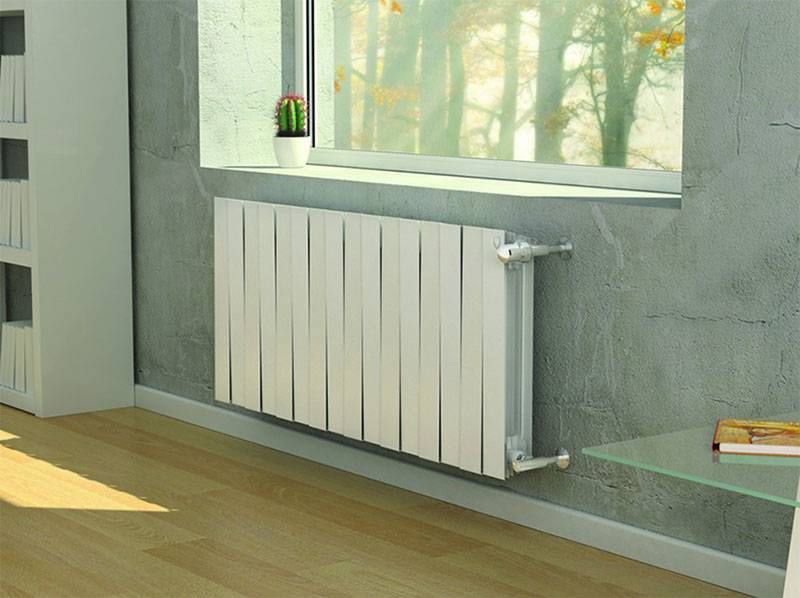
A lot of positive user ratings for this Italian radiator on Yandex.Market, which fully confirm the reliability of the design, long service life, original design, puts it in first place in the rating.
- heat transfer from 740 W to 2590 W (depending on the number of sections);
- the number of sections varies from 4 to 14;
- Power Shift technology that increases heat transfer;
- steel collectors are designed for pressure surges in the system up to 30 atmospheres;
- resistant to the most aggressive coolants;
- wall and floor mounting possible;
- original design;
- manufacturer's warranty - 10 years.
rather high cost.
In general, as the British say, we are not rich enough to buy cheap things. Therefore, in this case, the price corresponds to the quality. Particular emphasis is placed on the presence of Power Shift technology - the presence of additional ribs on the vertical collector, which significantly increase the heat transfer of the model. In addition, in addition to the basic white and black colors, the buyer can order other tones or RAL palettes.
Rifar Monolit 500
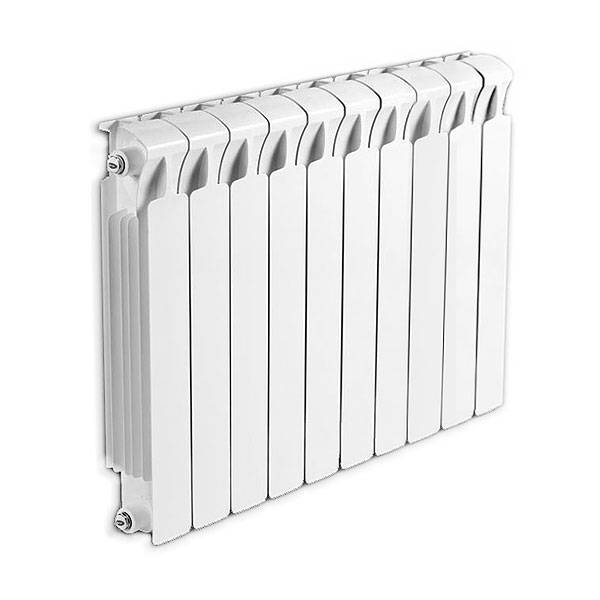
Domestic development, deservedly taking second place in the rating in terms of the number of collected laudatory reviews in its direction. The features include the technology of the same name used in the production process - the sections are connected using contact-butt welding.
- a monolithic design that allows operation in the most severe conditions;
- heat transfer from 784 W to 2744 W;
- complete set of sections - from 4 to 14;
- high resistance to aggressive coolants (pH 7 - 9);
- there is a bottom connection;
- manufacturer's warranty - 25 years.
- expensive for a domestic product;
- there are no odd sections - for example, 5 or 7.
However, in general, the radiator of this model collects extremely positive reviews. Moreover, management companies strongly recommend it for use, due to the high resistance of the model to corrosion and a long guaranteed service life.
Global Style Plus 500
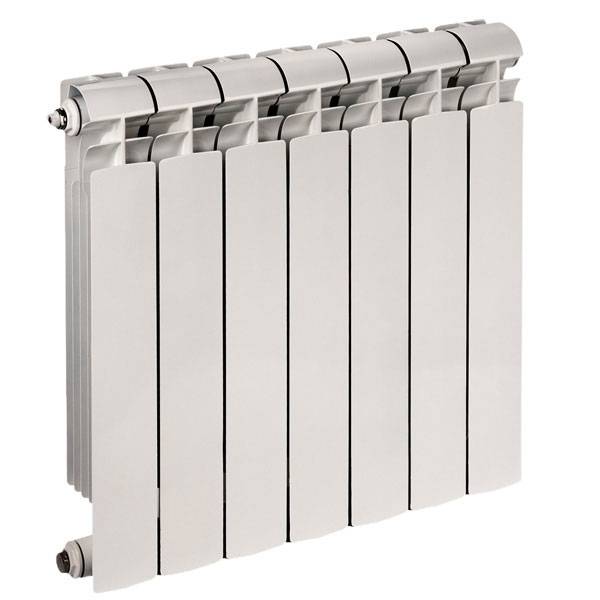
Once again, the Italian model, who has collected a significant number of admiring reviews addressed to her. The inside of the radiator is made of alloy steel, while the outside is coated with aluminum alloy.
- high strength;
- maximum working pressure 35 atmospheres;
- crimping pressure - 5.25 MPa;
- heat transfer in the range from 740 W to 2590 W;
- equipment - from 4 to 14 sections;
- pH value (aggressiveness of the coolant) - from 6.5 to 8.5;
- manufacturer's warranty - 10 years.
heat transfer decreases slightly with a decrease in the temperature of the coolant.
Satisfied with the purchase, the owners shower this model with extremely positive assessments - high resistance to pressure drops in the system, the presence of silicone gaskets between the sectional joints prevent leaks, adjustment works stably, and so on.
Sira RS Bimetal 500
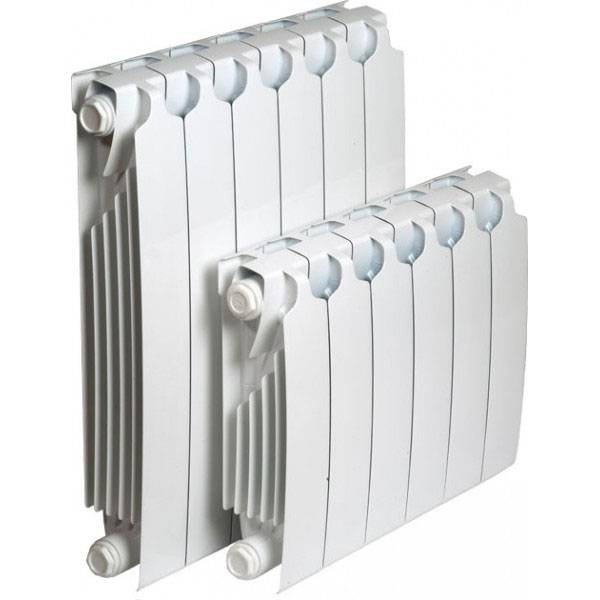
Another Italian, appreciated by the domestic user, as the reviews speak eloquently.
- high strength - working pressure up to 40 bar;
- heat transfer from 804 W to 2412 W;
- equipment - from 4 to 12 sections;
- coolant resistance is expressed in terms of pH - from 7.5 to 8.5;
- manufacturer's warranty - 20 years.
Well, that's what premium class is for! In addition to satisfactory assessments regarding the technical characteristics of this radiator model, satisfied with the purchase, the owners note the unique design - smooth, curved shapes, the complete absence of sharp corners.
Fondital Alustal 500/100
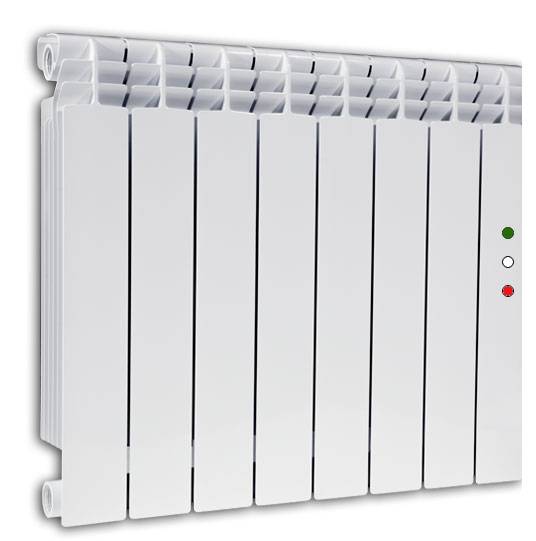
Also, the Italian miracle of engineering, which won the approval of Russian users, which was reflected in the number of positive reviews.
- heat transfer from 191 W to 2674 W;
- equipment from 1 to 14 sections;
- high strength - working pressure up to 40 bar;
- the most aggressive coolants are not afraid (pH 7 - 10);
- manufacturer's warranty - 20 years.
In general, a minor minus, due to the fact that this model is a continuous water chamber. On the other hand, there is an internal anti-corrosion coating, as the owners of this radiator note, and a stroke pattern that prevents the system from airing.
Specifications of Conner Cast Iron Batteries
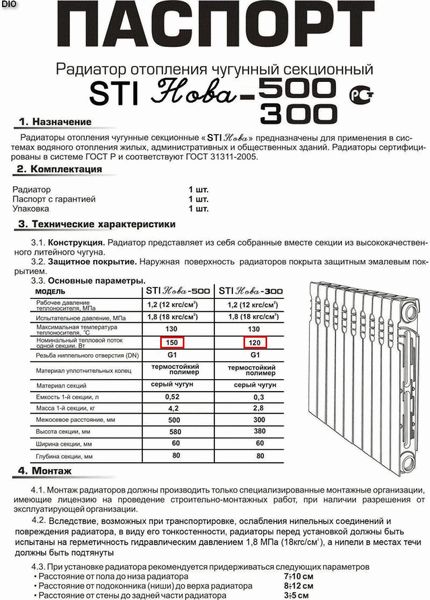
Main technical specifications for cast iron radiators Conner are shown below:
- power - 120-180 W;
- the maximum temperature of the heat carrier is +110 degrees;
- battery operating pressure - 12 atmospheres. But the device can cope with a pressure of 20 atmospheres. Water hammers are not terrible for Conner units;
- radiators have wide channels. Therefore, they do not create much local resistance.
The dimensions, weight and volume of the section of this model are slightly reduced. For heating radiators cast-iron Conner reviews of the owners can be reduced to the following: they warm up the room efficiently and quickly, are durable, and have an excellent design.
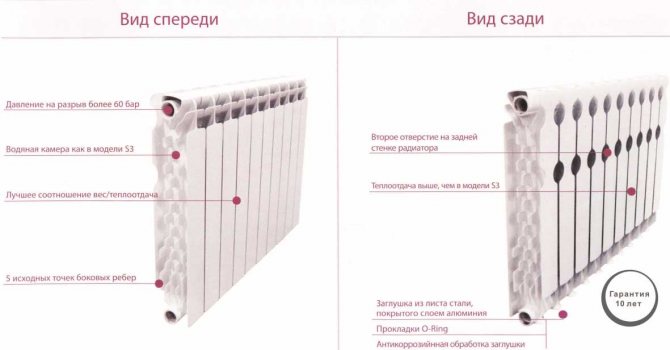
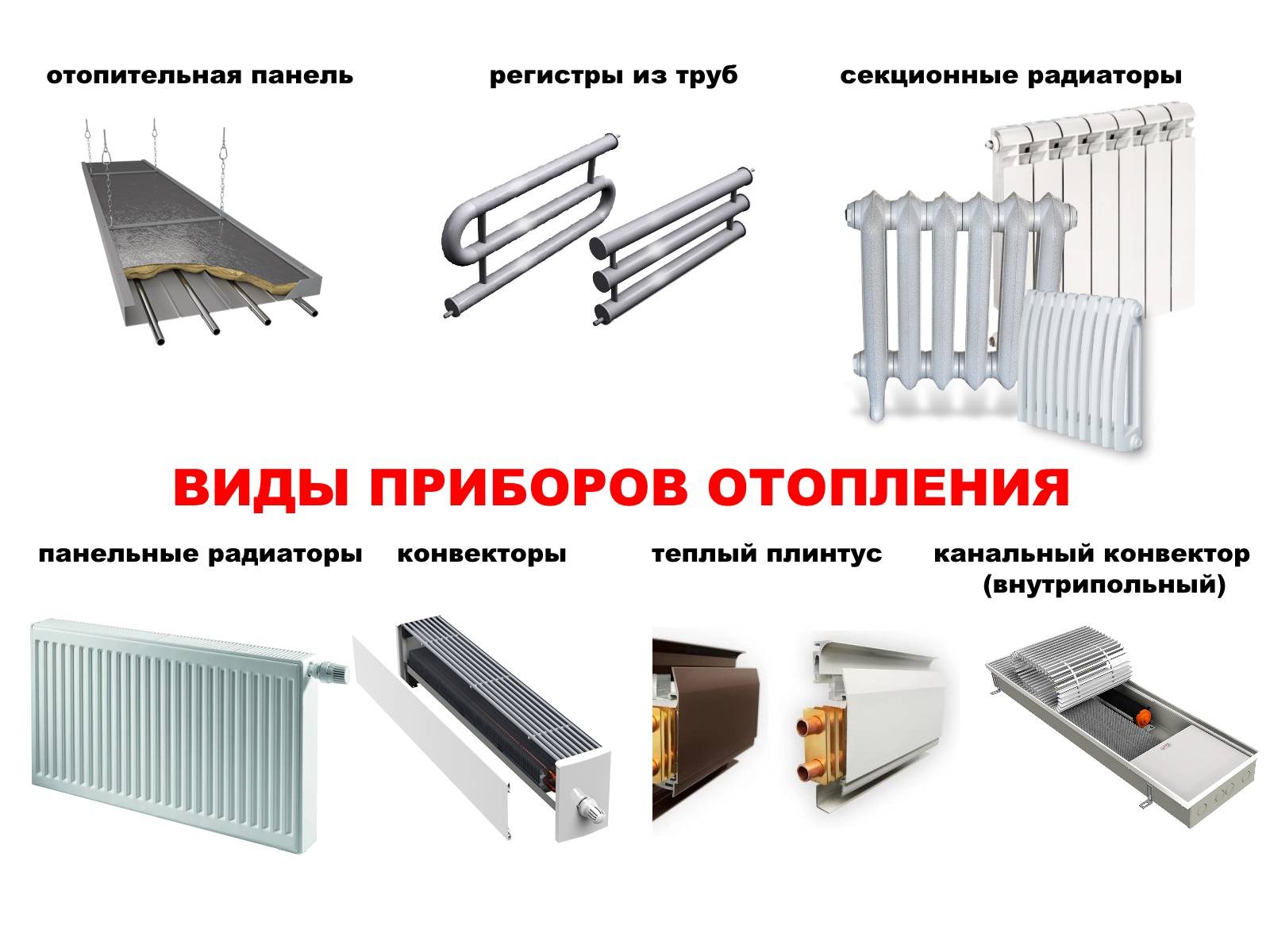


The choice of cast-iron heating radiators today is quite large.
The choice of type, model, size, power and other characteristics of a cast iron battery depends on the area and features of the room, the number of windows and external walls, and the conditions for using the heater.Any cast-iron heating battery whose characteristics correspond to the heated room will work efficiently, create warmth and comfort in the apartment.
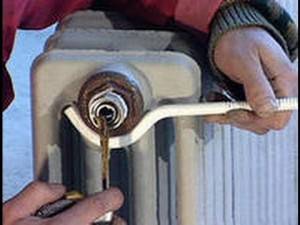
You can install a cast iron battery by calling a plumber or carry out this procedure yourself.
If you decide to install cast iron radiator on your own, it is very important to connect it correctly
You also need to make sure that the device is in good condition. Especially when the manufacturer's battery life is coming to an end. A cast iron radiator can last much longer than the specified period if the appliance is of high quality, installed correctly and maintained in good working order.
- How to pour water into an open and closed heating system?
- Popular Russian-made outdoor gas boiler
- How to correctly bleed air from a heating radiator?
- Expansion tank for closed heating: device and principle of operation
- Gas double-circuit wall-mounted boiler Navien: error codes in case of malfunction
Recommended reading
2016–2017 — Leading heating portal. All rights reserved and protected by law
Copying site materials is prohibited. Any copyright infringement entails legal liability. Contacts
What should be the dimensions
In order for the heating radiator to give off maximum heat (in this case, we are not talking about its thermal power, but about the efficiency of its work), the dimensions should be as follows:
- The length should be more than 70-75% of the width of the window opening.
- The height should be such that between the floor and the battery was 8-12 cm, and at the same time between the window sill and it was 6-12 cm.
If the recommendations are not followed, then the operation of the aluminum radiator will be accompanied by heat loss. Therefore, even if he can issue the necessary for a room with an area of 20 square meters. m 200 watts of heat, then due to incorrect dimensions in the room there will be insufficient heat. After all, part of it can be lost under the windowsill or go to heat gender.
When the length is less than 70% of the width of the window opening, the battery will not be able to create a thermal curtain that can block the movement of cold air entering through the window. The consequence of this situation will be the appearance of cold and warm zones in the room. Also, the windows will be constantly covered with steam. And even more from need heating radiator power cannot become a lifesaver.
Therefore, if the window has a width of 2 m, then the length of the battery must be at least 1.4 m
Of course, in order to select a device with such a length, it will be necessary to take into account sections of different heights and their heat transfer. The calculation can take a long time, but it's worth it
TOP-4 steel heating radiators
Steel radiators are distinguished by reliability, high heat transfer. Of the minuses, it is worth highlighting the instability to water hammer, susceptibility to corrosion. Some manufacturers use special coatings to protect against it. Most steel radiators have a panel view, i.e. it is impossible to dial the required number of sections, as in aluminum and bimetallic ones. The exception is tubular steel radiators.

Axis Classic 22 500×1000
The steel radiator consists of two water-conducting panels and two convection rows.The outer grille is removable: you can clean the internal parts. It differs from the standard dimensions characteristic of all models of the rating (50 × 100 × 10 cm) by a slightly larger thickness - 11 cm. Almost all radiators weigh about 28 kg. The capacity of water is 5.63 liters. Steel radiators differ from bimetallic ones in smaller working pressure - 9 bar (13.5 - during pressure testing). Side connection ½ inch. The center distance is non-standard - 449 mm. Designed for coolant temperatures up to 120 °C. The model has increased power - 2188 watts.
Advantages:
- Nice view. Simple design.
- Quality build. Russian production on Italian equipment.
- The kit includes everything you need for installation.
- Heats well.
- Inexpensive.
Flaw
- Non-standard center connection. There are no problems if the eyeliner is made of polypropylene pipes.
Axis Classic 22 500 1000 costs 3700 rubles. The model surpasses all types of steel radiators included in the rating in terms of power. Provides rapid heating of the room. The quality of the metal, reliability satisfied demanding users, so the vast majority of them recommend the product for purchase.

Buderus Logatrend K-Profil 22 500×1000
It features a large volume of water - 6.3 liters. The working pressure in the system is higher - up to 10 bar, but less power - 1826 watts. According to the manufacturer's calculations, one radiator is enough to heat a room of about 18 square meters. m. The model undergoes anti-corrosion treatment by phosphating and hot powder spraying. Center distance - 450 mm.


Advantages:
- Laconic design.
- Good painted. Does not turn yellow over time.
- They heat well.
- Build quality is ok.
Flaw:
- One radiator is not enough for the declared area (but it depends on the coolant temperature).
Price Buderus Logatrend K-Profil 22 500 1000 - 4270 rubles. The model is somewhat inferior to Axis Classic 22 in terms of power, but it has a better anti-corrosion coating. Customers are satisfied with the quality of workmanship and the operation of the radiator.

Kermi FKO 22 500×1000
Differs in the smallest volume - 5.4 liters. But it loses in power to the first two models - 1808 watts. Designed for system pressure up to 10 bar (13 bar - pressure testing). Provides operation at a coolant temperature up to 110 °C. Center distance - 446 mm. The manufacturer has applied Therm X2 technology, which increases the energy efficiency of the equipment. The outer coating is made of two layers of powder paint, which increases the resistance to mechanical damage.
Advantages:
- Beautiful view.
- Quality made.
- Ease of care.
- Good heat dissipation.
Flaw:
There are cases of leakage after several years of use (in an apartment building where the system is drained for the summer).
Kermi FKO 22 500 1000 for 6200 rubles provide a normal level of heat. Due to the small volume of coolant, the heating of the radiator and the room is faster. Recommended for installation in a closed system without draining the coolant for a long period.

Arbonia 2180 1800 270
The only representative of tubular steel radiators in the review. It differs from panel models in non-standard dimensions. This is a narrow model (65 mm) with a very high height (1800 mm). The width of one section (tube) is 45 mm. Center distance - 1730 mm. One section weighs 2.61 kg, but it includes a much larger volume than aluminum and bimetallic radiators - 1.56 liters.In terms of heat transfer, the six-section Arbonia is expectedly inferior to other models in the rating - 1730 W. Power - 990 watts.
Advantages:
- Interesting view.
- Normal heat dissipation. Heats up well.
- Quality build.
Flaw:
- It is necessary to take into account the place for installation, the possibility of piping. If there are windows in the room, they will blow (you cannot place such a radiator under them).
The price of Arbonia 2180 1800 270 is 9950 rubles. Can pick up number of sections vs. other steel samples. Non-standard sizes significantly increase heat transfer due to the larger radiator area. Can become part of the interior. Customers have no complaints about the quality.
Main characteristics of a typical radiator
Regardless of the complexity of the heating system, the main task is to maintain the desired temperature in the house or apartment. The heating radiator plays a key role in this, exchanging heat between the air in the room and the coolant.
Uniform heating, efficient heat transfer, maintaining a microclimate, stable operation are the main requirements for a heating battery.
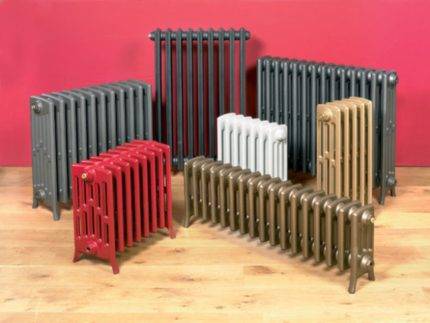
In residential premises, single, panel or sectional paired radiators are installed that do not emit toxins when heated
The main parameters influencing the choice of a particular model:
- Working pressure of the system. Depends on whether the device is included in an autonomous or centralized network. It is arranged by gravity or forced principle. On average, it varies from 3 to 10 bar or in a similar range of atmospheres.
- Thermal power. The characteristic required to calculate the thermal power required to heat the room. It is also needed for the selection of individual components of sectional batteries.For processing 10 m², 1 kW is rounded.
- Modularity. The quality inherent in prefabricated radiators, which makes it possible to assemble and disassemble the device according to individual requirements.
- Speed of reaction to tº. More precisely, the ability to respond to changes in the temperature of the coolant. period of time for cooling and warming up.
- The possibility of equipping with automation. Devices that monitor weather conditions and independently eliminate air congestion.
The devices presented now for sale provide free circulation of the liquid heat carrier through the system. Differ in corrosion resistance and attractive appearance.
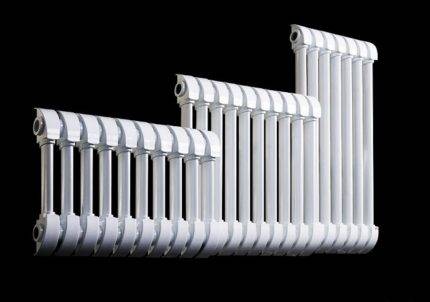
Sectional radiators differ in the shape and size of the sections, which ensure the supply of the required amount of thermal energy
The thermal efficiency of a heatsink depends on the surface area of the energy dissipation. A flat metal convector has a much smaller area compared to a sectional aluminum convector of the same geometric size. Because the latter radiates heat over the entire area of the fins.