- Simple heating of a country house: without gas and electricity
- oven
- Pros and cons
- Efficient boilers for space heating
- Condensing gas
- Pyrolysis
- solid fuel
- Electric boiler
- Option #1 - biofuel boiler
- Gas heating - a popular method
- Economical alternative heating
- solar plants
- Traditional systems
- Underfloor heating system
- Warm baseboard and infrared heating
- What heating is more profitable in the Russian Federation
- Analysis of calculation results
- Types of alternative heating sources
- How to choose the most efficient energy-saving boiler for heating a private house
- Electrical installations
- Solid fuel and gas boilers
- Inappropriate Options
- Conclusions and recommendations
- Conclusions and useful video on the topic
Simple heating of a country house: without gas and electricity
Heating a home with electricity is expensive and unreliable. The use of gas is cheaper, but it is not always possible to connect it. Then you have to look for other options.
There are several modern alternative sources: the energy of the sun, underground bowels or a non-freezing reservoir. But their installation is quite expensive and complicated. Therefore, often for a summer residence they choose such a traditional option as stove heating.
oven
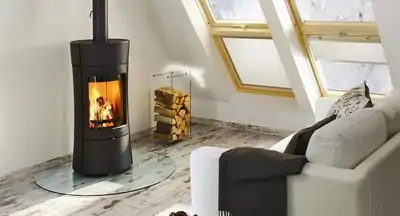
It has been known for a long time, but remains relevant to this day. There are many types of ovens. They are able to heat the whole house or a separate room. Sometimes they are connected to a water heating system. Furnaces not only heat, but also cook food.
Fuel burns in the combustion chamber. It heats the walls of the furnace, which give off heat to the house. The following materials are used:
- brick;
- cast iron;
- stainless steel.
The brick heats up for a long time, but it also gives off heat longer. To maintain a comfortable temperature in the country, 1-2 heatings per day are required. Steel ovens heat up quickly and also cool down quickly. Cast iron also heat up quickly, and in terms of heat transfer they occupy an intermediate place between other varieties.
As fuel use:
- firewood;
- coal;
- pallets;
- fuel briquettes.
Pros and cons
The advantages of heating a cottage with a stove include:
- Autonomy. No dependence on gas and electricity.
- Suitable for houses in which they do not live permanently.
- You can also cook in the oven.
There are such disadvantages:
- Requires storage space for fuel.
- Brick ovens are quite massive, and it is advisable to lay them with the house.
- Less heating efficiency.
- If the water circuit is not connected, it will be cooler in rooms far from the stove.
- It is necessary to make a chimney.
Efficient boilers for space heating
For every type of fuel, there is equipment that works best.
Condensing gas
Cheap heating in the presence of a gas main can be performed using condensing-type boilers.
Fuel economy in such a boiler is 30-35%. This is due to the double heat extraction in the heat exchanger and condenser.
We produce boilers of the following types:
- wall-mounted - for small areas of apartments, houses and cottages;
- floor - heat apartment buildings, industrial facilities, large offices;
- single-circuit - only for heating;
- double-circuit - heating and hot water.
In addition to all the advantages, the installations also have disadvantages:
- Higher price compared to equipment of outdated designs.
- The boiler must be connected to a sewerage system to drain condensate.
- The device is sensitive to air quality.
- Energy dependence.
Pyrolysis
Pyrolysis heat generators operate on solid fuel. These are relatively economical boilers for a private house.
The principle of their operation is based on the process of pyrolysis - the release of gas from wood during its smoldering. The coolant is heated by the combustion of gas that enters the chamber from the loading compartment, and the subsequent afterburning of charcoal.
Pyrolysis-type systems are made with forced ventilation, powered by an electrical network, or natural, created by a high chimney.
Before starting such a boiler, it must be preheated to + 500 ... + 800 ° C. After that, fuel is loaded, the pyrolysis mode starts, and the smoke exhauster turns on.
Black coal burns the longest in the installation - 10 hours, after it brown coal - 8 hours, hard wood - 6, soft wood - 5 hours.
solid fuel
In addition to pyrolysis systems, which cost 2-3 times more than classic ones, do not operate on damp fuel, have ash-contaminated smoke to heat the house, and use automated versions of standard solid fuel boilers.
For the correct choice of equipment, you need to determine which type of fuel is most available in the region of residence.
If there are nightly electricity tariffs, then combined systems can be used, for example, wood and electricity, coal and electricity.
To obtain hot water, you will have to purchase a double-circuit boiler or use indirect heating of a boiler connected to single-circuit equipment.
Electric boiler
Economical heating of a private house without gas at the lowest cost can be done using electric boilers.
If the power of the device is up to 9 kW, then there is no need to coordinate with electricity suppliers.
Budget equipment, which uses heating elements as a heating element, occupies 90% of the market, but is less economical and easy to use.
Modern induction-type boilers do not have a number of disadvantages (the heating element does not come into contact with water), but at the same time they take up a lot of space and have a high price.
You can save on electricity if:
- monitor the condition of the coolant;
- periodically clean the heating elements;
- use night tariffs for the cost of electricity;
- install a boiler with multi-stage power control, which works depending on weather conditions.
Option #1 - biofuel boiler
To refuse gas and replace it with another energy carrier, it is enough to change the boiler. The most popular options are electric and solid fuel. But heating an energy carrier with electricity is not always economically viable.


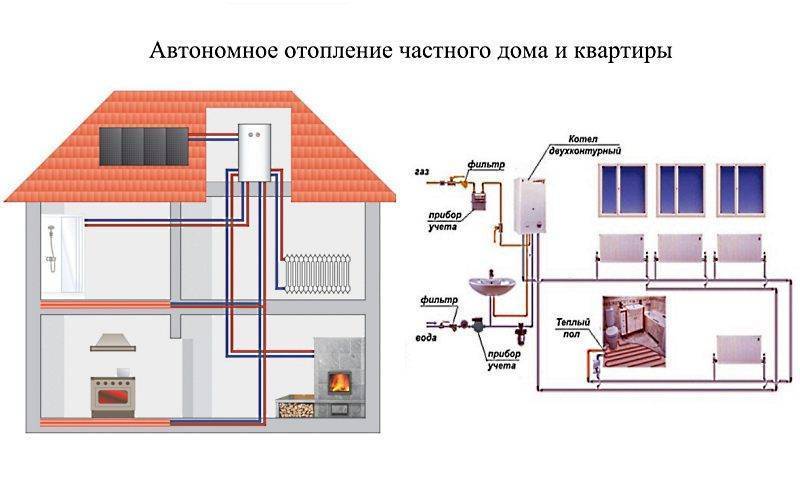

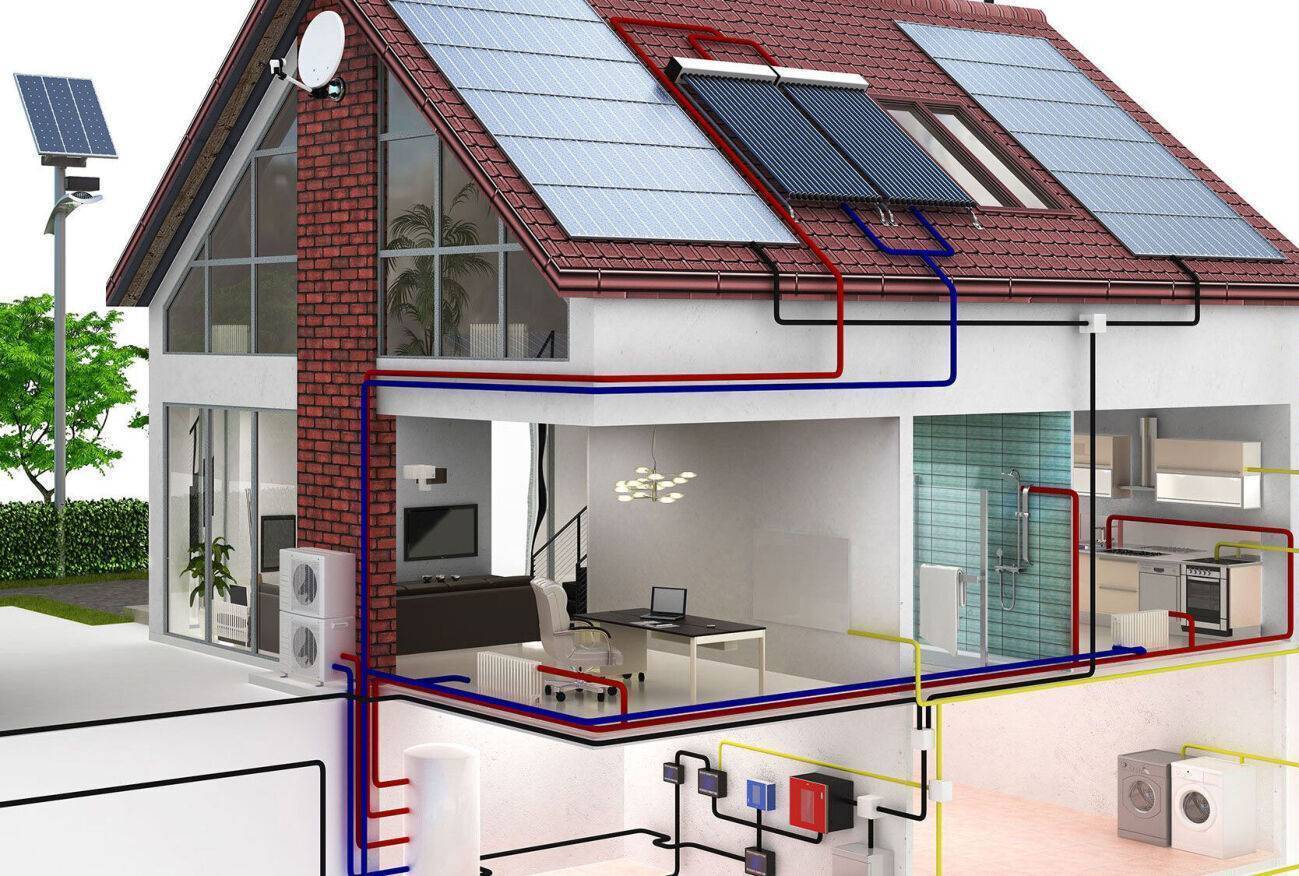
An interesting option could be the use of biofuel boilers. For their work, special briquettes and pellets are used, but materials such as:
- wood pellets and chips;
- granulated peat;
- straw pellets, etc.
The use of briquettes allows you to make the fuel supply to the boiler automatic, you will no longer need to worry about it. However, it should be noted that the cost of such a boiler can be ten times higher than the price of gas analogues, briquettes are also quite expensive.
Please note that a properly arranged fireplace is a good alternative to modern heating methods. It is quite capable of effectively heating a small cottage
Gas heating - a popular method
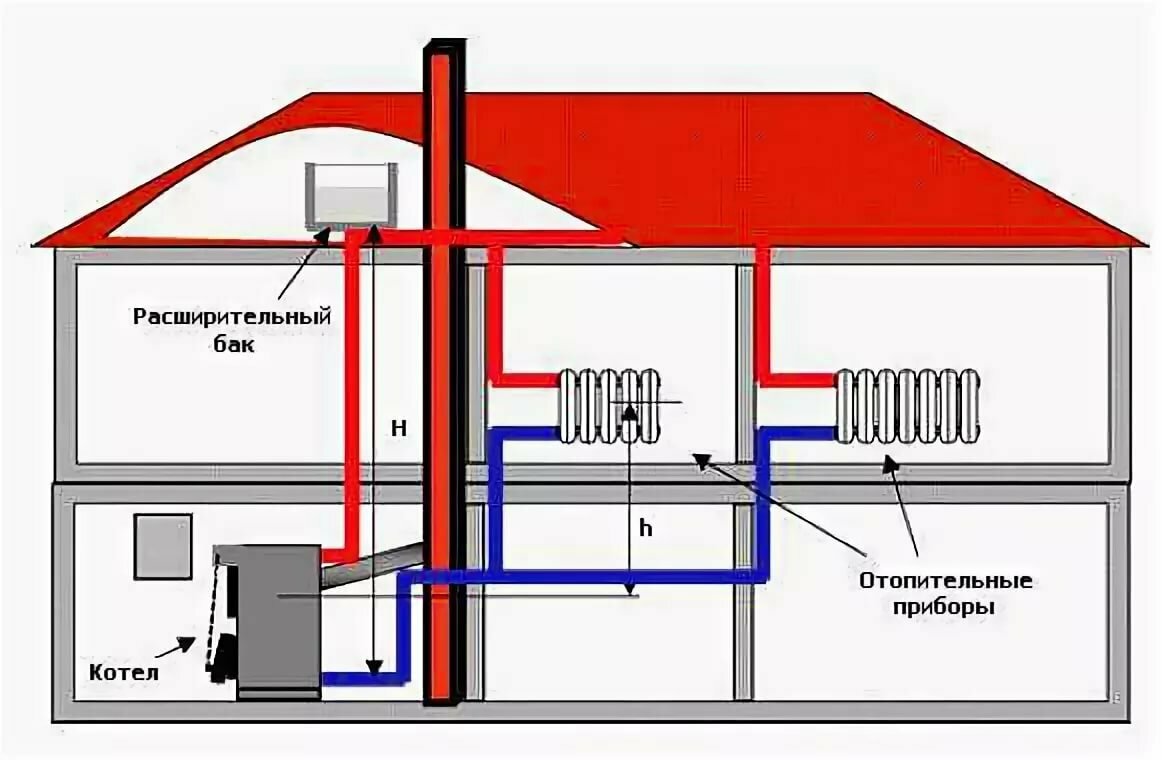
If it is possible to connect to the main pipeline, the use of natural gas will be a profitable solution. This type of fuel is the most economical, because its cost does not greatly affect the budget. To organize a full-fledged system, you need to purchase a boiler, with which the coolant, metal-plastic pipes, radiators, an expansion tank, a circulation pump, shut-off and control valves, and fasteners will be heated. Also, we must not forget about the safety group, consisting of a safety valve, an air vent, a pressure measuring device. It is located in close proximity to the boiler and controls, ensuring trouble-free operation of the system.
Gas heating must be installed by craftsmen, because there are many nuances in this process
Gas heating in a wooden house has many advantages:
- efficiency - heating equipment has a high efficiency and has excellent technical characteristics. The boilers are equipped with automation, which greatly simplifies the operation process.The range of equipment is huge, so owners of private housing can select boilers according to several criteria: dimensions, power, type of heat exchanger, design features (closed and open combustion chamber), design (floor and wall);
- main gas practically does not pollute the environment, and combustion products are removed using a chimney;
- reliability - the system is equipped with automatic devices that react with lightning speed to emergency situations;
- complete autonomy - there are boilers, the operation of which does not depend on the electrical network.
Heating a wooden house with gas is always popular, despite the presence of certain disadvantages. The disadvantages include strict fire safety requirements. First of all, we mean the arrangement of a separate room in which the equipment will be located.
Economical alternative heating
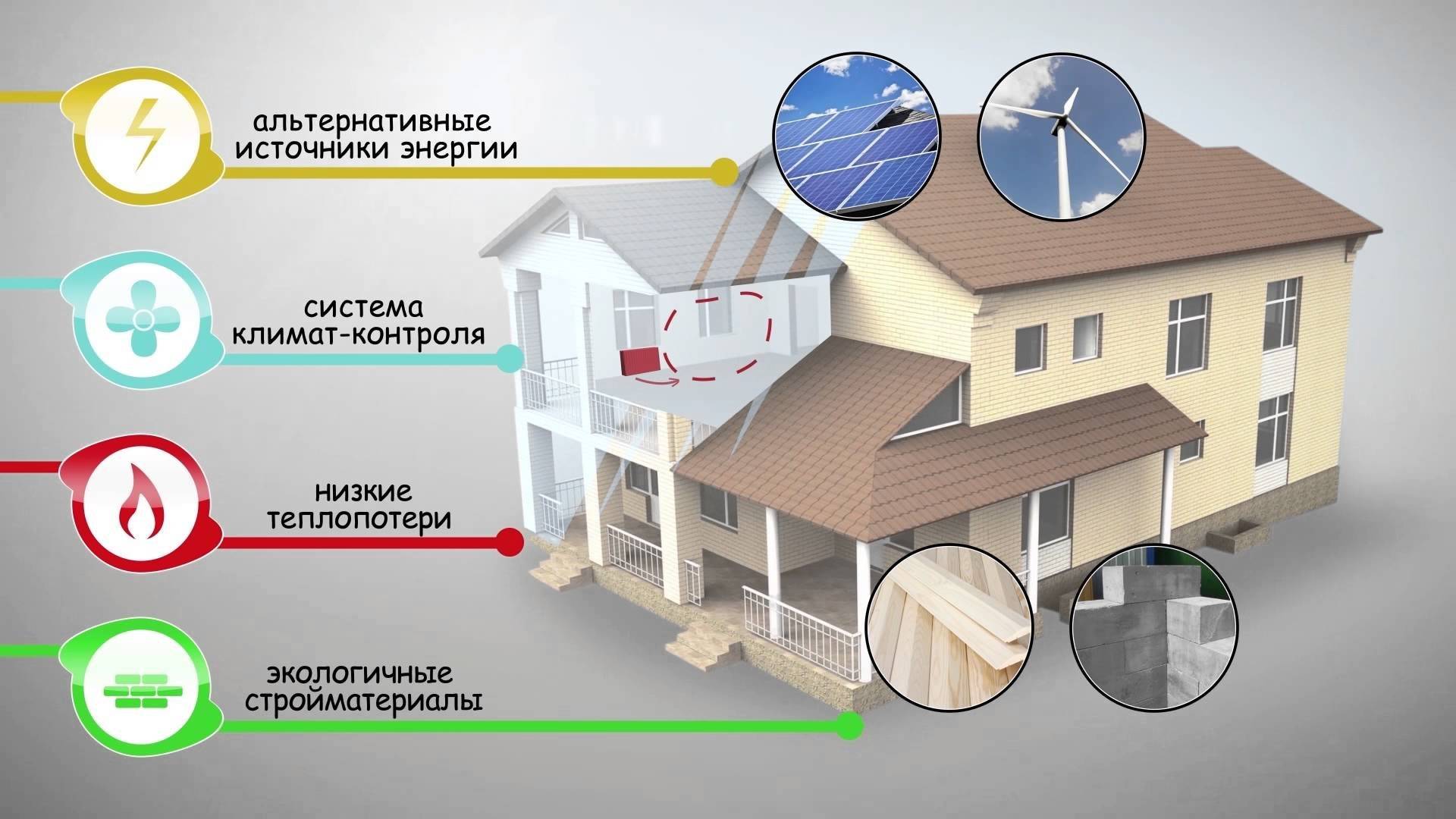
After analyzing the financial component of alternative types of heating, we can come to a disappointing conclusion - significant funds will be required at the initial stage. Now, after 3-7 years, depending on the chosen heating method, significant savings will become noticeable thanks to a non-volatile system.
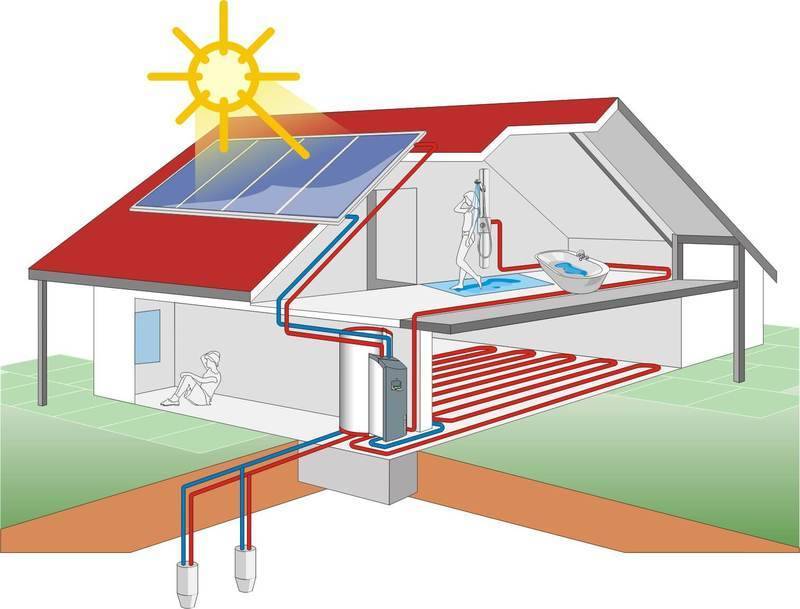
It is profitable and convenient to use a combined source of alternative heating. To do this, you can choose the most optimal combination for your home.
It is possible to save on the use and installation of alternative heat generation installations.Many home craftsmen are very enthusiastic about creating analogues of factory-made alternative energy conversion devices with their own hands. So, it is quite simple and inexpensive to assemble a solar plant from a hose, which will serve as an additional source of water heating.
Small windmills are successfully assembled at home from improvised means. Also, well-read farmers living in rural areas are building installations for converting biological waste of plant and animal origin into biogas.

Homemade wind turbines are quite efficient. But for their assembly, you will need to make preliminary calculations, purchase consumables, spend your time
In the future, it is used for the needs of the economy. Depending on the size of the digestion tank and the size of the private house, it is possible to fully supply the farm with biogas to meet all needs.
solar plants
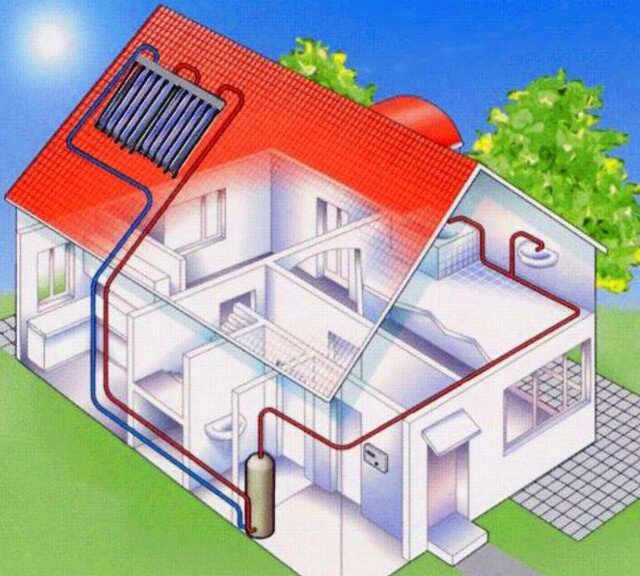
Solar energy is an almost inexhaustible resource. The principle of operation of solar plants is based on the use of solar radiation.
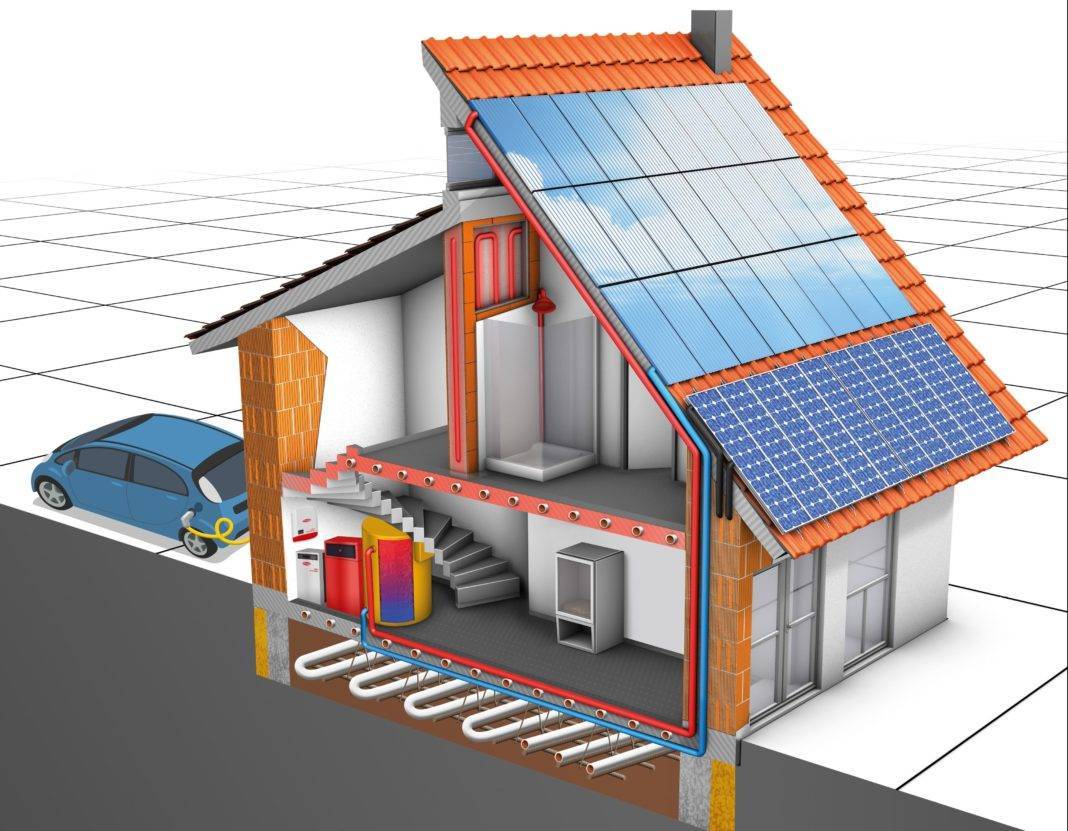
Solar panels absorb radiation energy and convert it into other types - electrical or thermal. The conversion into electric current occurs through photovoltaic cells. Another type of batteries - collectors - heats the coolant circulating through them.
In the case of electricity production, batteries are connected to the system, in which the unused amount of energy is concentrated. With direct heating of the coolant, a heat accumulator is integrated into the system.
Practice has shown that a full replacement of traditional fuel for heating needs is possible in the southern latitudes of our country - south of 50 north latitude. The regions further north are characterized by more frequent cloudy phenomena, while the performance of solar heating systems is significantly reduced.
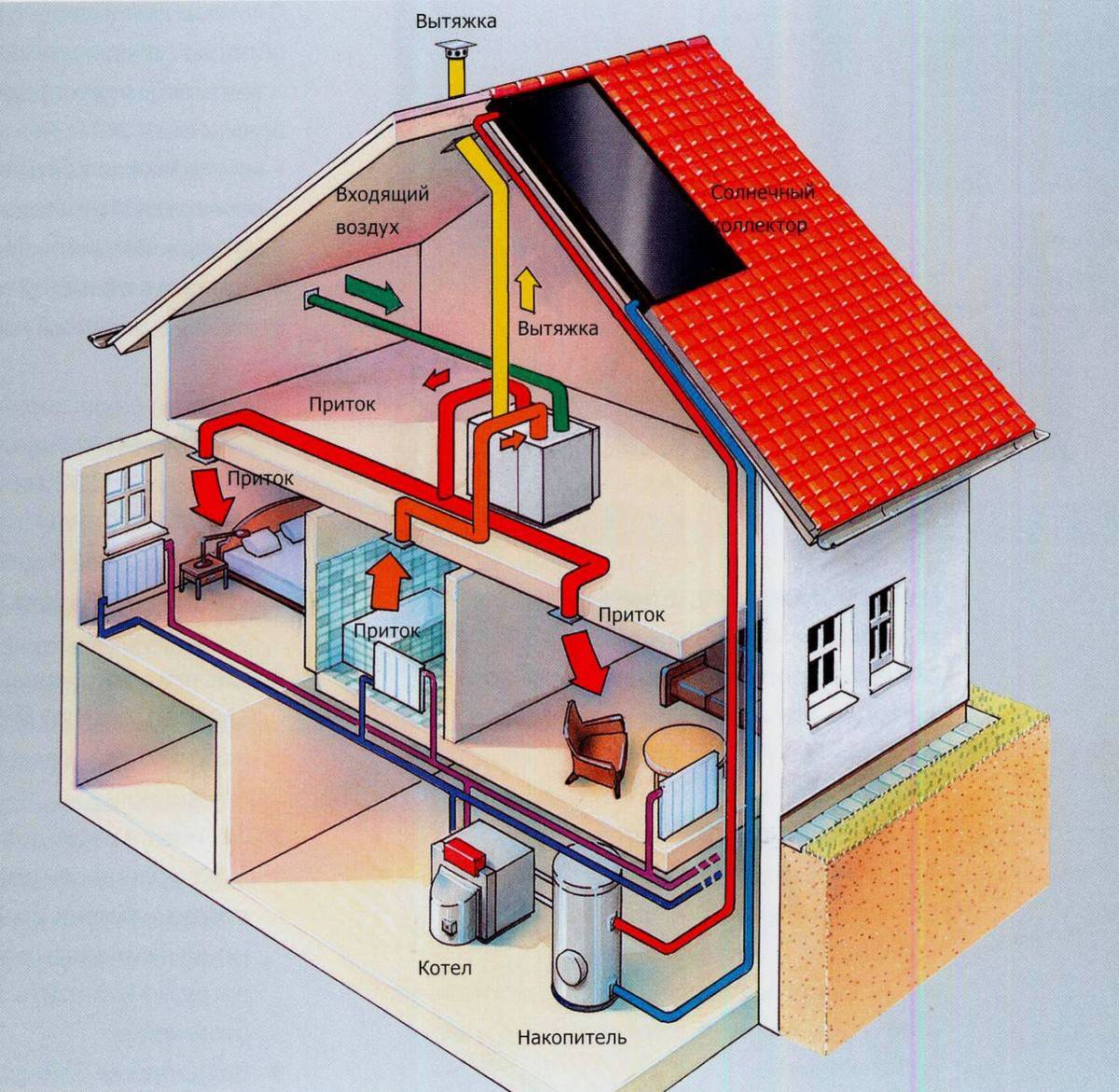





In this case, solar installations can still be used as an additional source of energy. A decrease in productivity allows you to switch the system to cover the needs of hot water supply.
Traditional systems
Modern heating systems in private houses and cottages stand out for their diversity. They can be classified according to criteria such as the method of heat transfer and the type of fuel used. If you do not take into account such systems that heat the room through a fireplace or stove, then water heating systems are considered the most popular. Such heating systems of country houses heat the air in the house due to the contact of air with hot radiators and pipes. The heated air begins to move upward and heats up with colder air and thus the space in the house begins to heat up. Such heating is called contact. Contact heating is more efficient when the air circulates more or less freely near the radiator. Heating appliances must be placed in each room.
The movement of heated air when using a contact heating system
During the drafting of the water heating system of a private house, it is necessary to adhere to such calculations as the area of \u200b\u200bthe house and the number of floors.Heating systems for one-story houses can differ significantly from heating systems for houses with two or more floors. The differences relate to the types of boilers, as well as the selection of the necessary equipment.
However, not all private sectors have access to the gas pipeline. If a gas pipe passes near a private house, then it is best to organize a heating system that will run on fuel such as gas. Plain water will also serve as a coolant in a gas heating system, sometimes antifreeze can also be used. The boiler, as well as its piping, must be designed for gas combustion.
Gas heating system
The choice of a heating system for a country house powered by the mains is a rather controversial issue. The advantages of such a system can be called its safety from an environmental point of view and a fairly simple installation. But the disadvantages include the high price of electricity and the fact that various interruptions can often occur in the supply of electricity. This forces the owners of cottages and country houses to install alternative heating methods.
Underfloor heating system
Such a scheme would be the most successful solution for heating a private or country house. During the installation of such a system, there is no need to make additional redevelopment. Such a system also allows you to save money on organizing heating. Such a system is mounted under the floor covering.
Warm electric floor
Warm baseboard and infrared heating
Increasingly popular in recent years is infrared efficient heating of a country house.Infrared systems of the modern type are based on the fact that infrared rays heat objects in the vicinity, and not the air. They are not able to harm the residents of the house, are safe for the environment, and can quickly bring the temperature in the room to optimal parameters. Through such a system, you can heat the house, and very efficiently and with minimal financial costs. Another advantage of this system is the ease of installation.
Infrared film, which is used for a system such as "warm floor", is also in great demand recently. Such a film can be laid under the floor covering, and this somewhat facilitates its installation. No complex repairs required. All that needs to be done is to remove the flooring, place an infrared film under it and then re-lay the flooring.
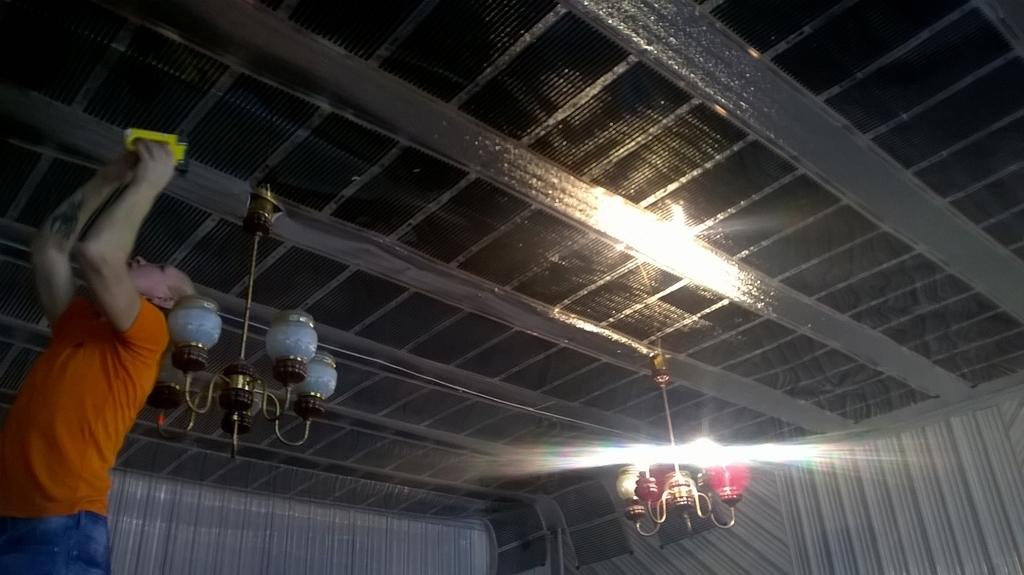
Infrared Ceiling Heater
The "warm baseboard" system has also been very popular recently among owners of private or country houses. Such types of heating of a country house are installed along the walls. The walls are the first heated elements and already, in turn, heat the air in the room. They also prevent warm air from escaping outside.
Such an alternative method of organizing the heating system of a private house is also not expensive and is quite effective.
It does not require the installation of additional communications, which means that the interior of the room will not suffer at all. The use of such a heating system allows you to maintain the most optimal humidity for a person in the room.
Heating system "warm plinth"
What heating is more profitable in the Russian Federation
Before determining the cheapest way to heat, we list all the energy sources available to residents of the Russian Federation:
- various types of solid fuels - firewood, briquettes (eurofirewood), pellets and coal;
- diesel fuel (solar oil);
- used oils;
- main gas;
- liquefied gas;
- electricity.
To figure out which heating is the cheapest, you need to find out how much each energy carrier can release heat and how much it will result in, and then compare the data. To determine the most economical heating will help the table, which contains the results of the calculations:
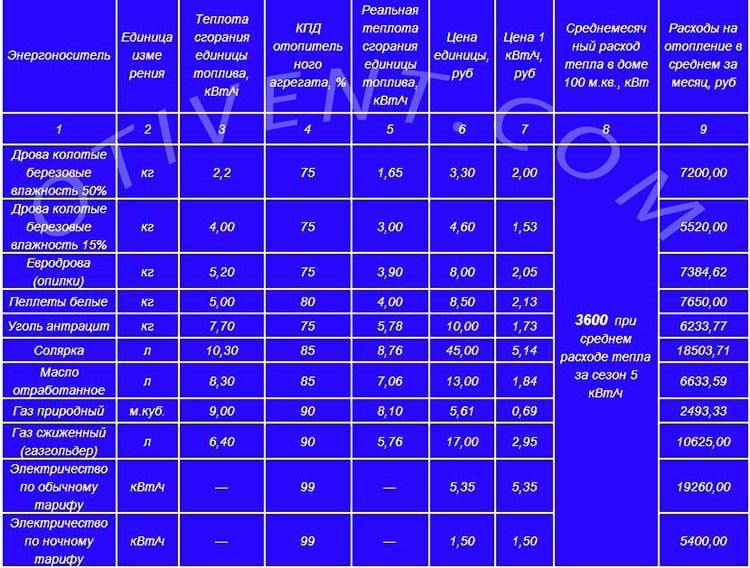
Anyone can perform such a calculation by substituting in the table the heat load on the heating system of their building and the cost of fuel in the region of residence. The calculation algorithm is as follows:
- Column No. 3 contains the values of the theoretical heat transfer per unit of fuel, and column No. 4 - the efficiency (COP) of heating equipment using this energy carrier. These are reference values that remain unchanged.
- The next step is to calculate how much heat actually enters the house from a unit of fuel. The calorific value is multiplied by the boiler efficiency divided by 100. The results are entered in the 5th column.
- Knowing the price of a unit of fuel (column No. 6), it is easy to calculate the cost of 1 kW / h of thermal energy received from this type of fuel. The unit price is divided by the actual heat output, the results are in column No. 7.
- Column No. 8 shows the average heat consumption per month for a country house with an area of 100 m², located in the middle zone of the Russian Federation. You must enter your heat consumption value for the calculation.
- The average monthly heating costs for housing are indicated in column No. 9. The figure is obtained by multiplying the monthly heat consumption by the cost of 1 kW obtained from various types of fuel.
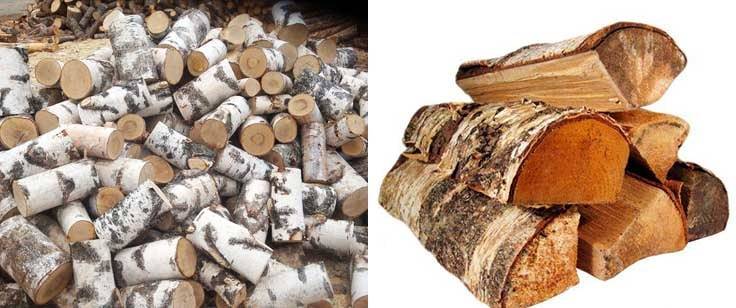
The table shows 2 types of firewood commonly available for sale - freshly cut and dry. This will help you understand how profitable it is to heat a stove or boiler with dry wood.
Analysis of calculation results
The calculations show that the most economical heating in 2019 for private houses in the Russian Federation is still provided by natural gas, this energy carrier remains unrivaled. Consider the fact that gas-using equipment is relatively inexpensive, and is quite efficient and comfortable to use.

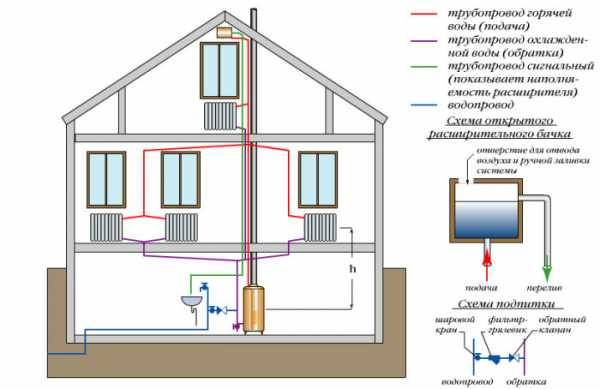


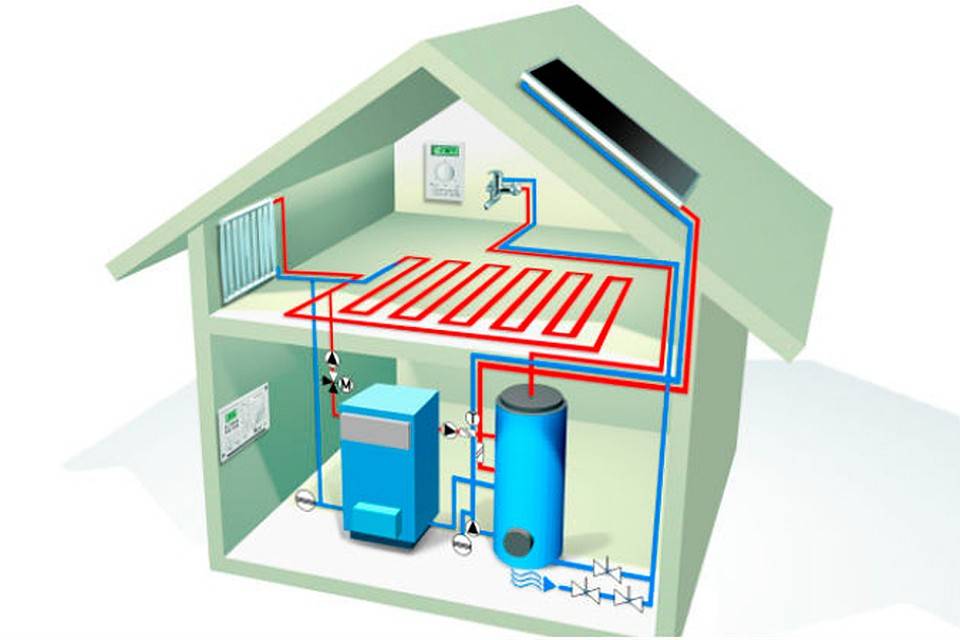

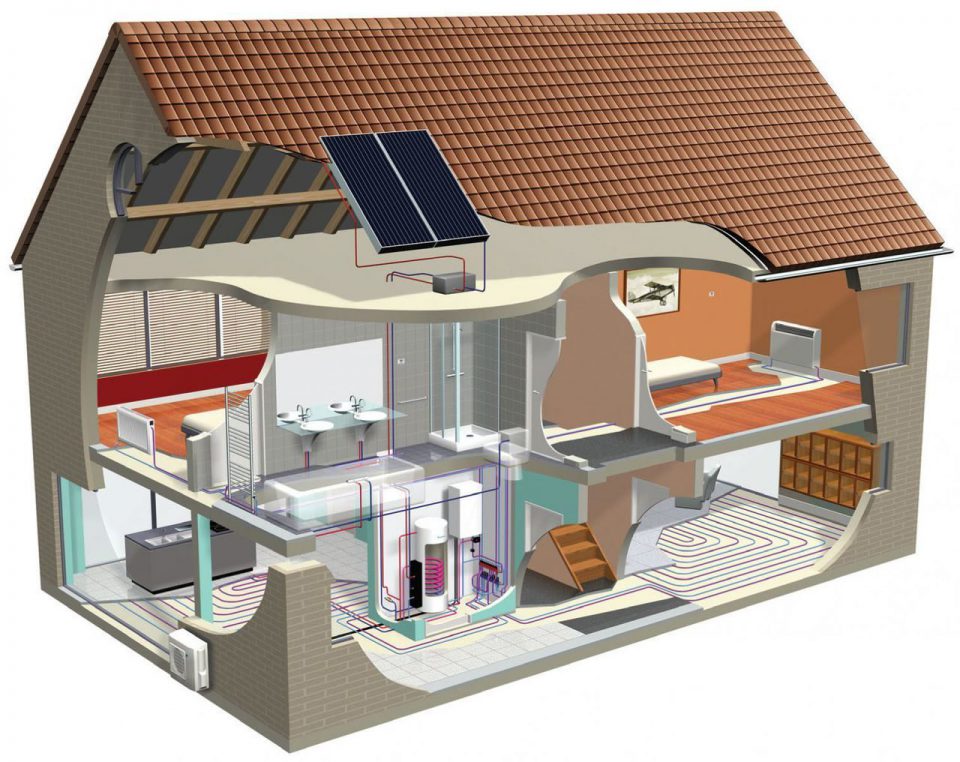
The problem with gas in the Russian Federation is the high cost of connecting to existing pipelines. In order to economically heat a home, you will have to pay from 50 thousand rubles. (in remote regions) up to 1 million rubles. (In the Moscow region) for joining a gas pipeline.
Having learned how much the connection costs, many homeowners are thinking about how and with what to heat their house without gas. There are other energy carriers listed in the table:
The use of purely electric equipment for round-the-clock heating of the house cannot be called profitable, since the cheap nightly rate is valid for 8 hours a day, and the rest of the time you will have to pay the full rate. So heating with electricity alone will not work out cheaply.
Types of alternative heating sources
In order to equip the alternative heating of a private house with your own hands, there are several options that will help you save a considerable amount of money, while spending absolutely renewable energy.
1. Biofuel.This option is completely environmentally friendly due to the use of special briquettes and pellets, which include manure, plants, sewage and other natural waste. By the way, this fertilizer can be obtained at home.
A boiler is used as a converting device, the fuel supply to which is carried out automatically. To switch from gas heating to biofuel, it makes no sense to change the entire heating system: just replace the boiler and connect it to the system.
In order to independently organize an efficient biofuel heating system, you can also build a fireplace, which, subject to all installation rules, is quite capable of heating a small private house with high quality.
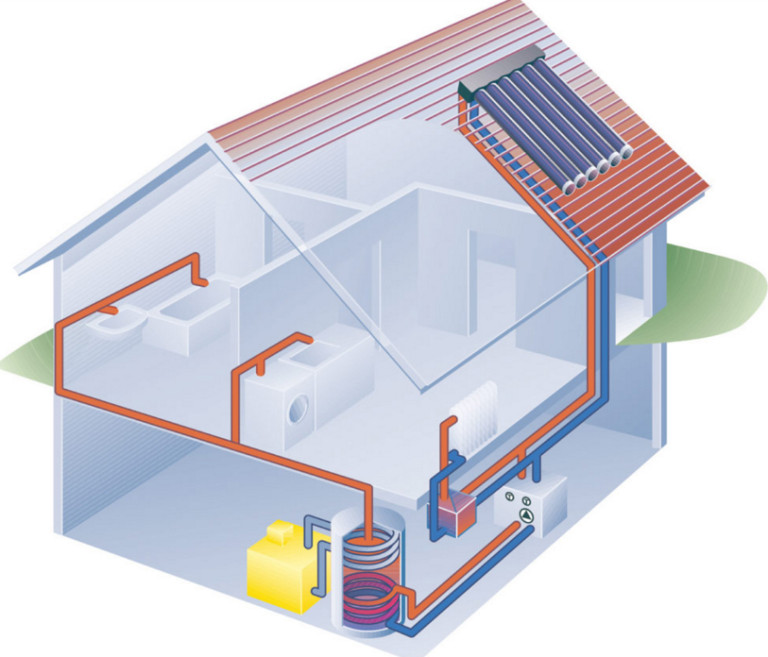
2. Solar energy. Converting solar energy into thermal energy is a modern and fairly economical way to heat a room. Such heating is obtained almost free of charge: all that is required of you is to buy a solar collector or assemble it yourself from components that can be easily found in specialized stores. Installing the collector is quite simple, so you can do it yourself. The collector is mounted on the roof, where the device will collect solar energy and transfer it to a mini-boiler room located inside the house. Modern solar collectors are effective even in cloudy weather.
This option of heating a private house will allow you to heat your house for free even in severe frosts. Moreover, if you correctly installed the collector and connected it to internal communications, you can use the energy of the sun to heat water for domestic needs.
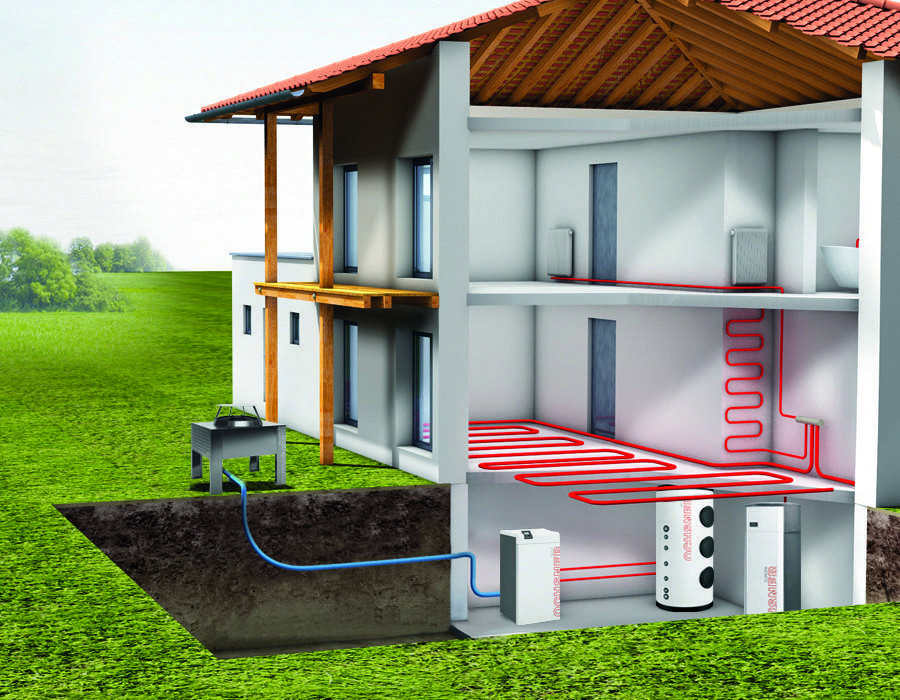
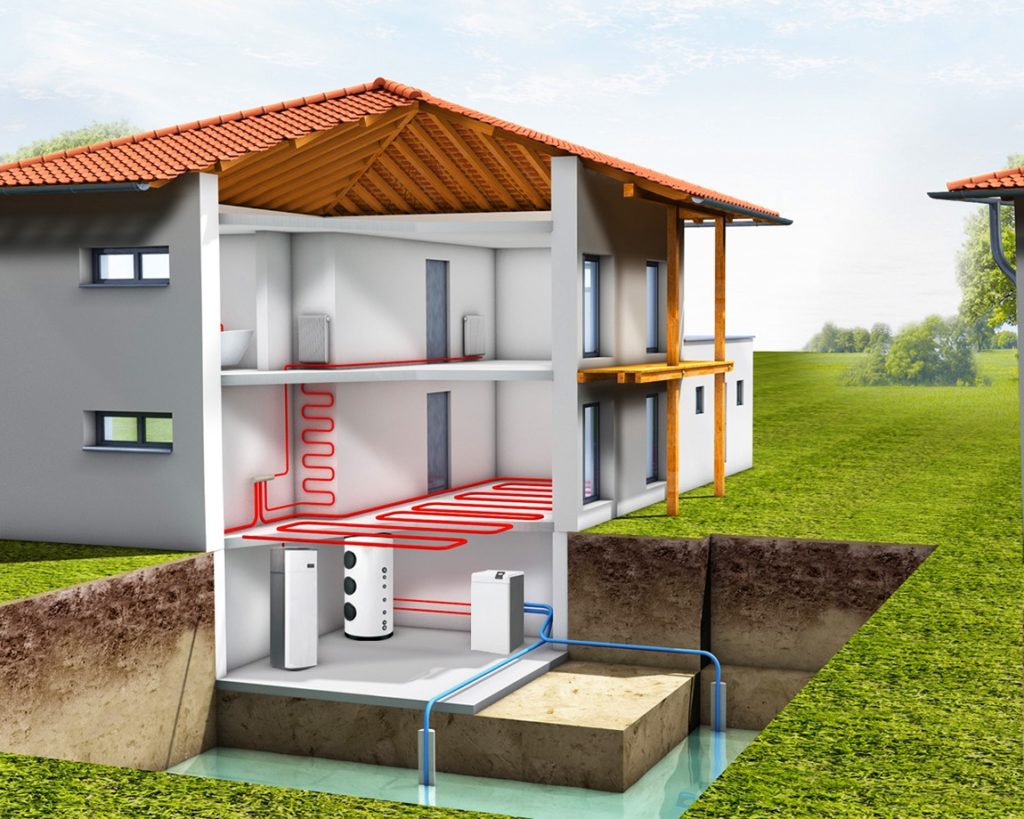
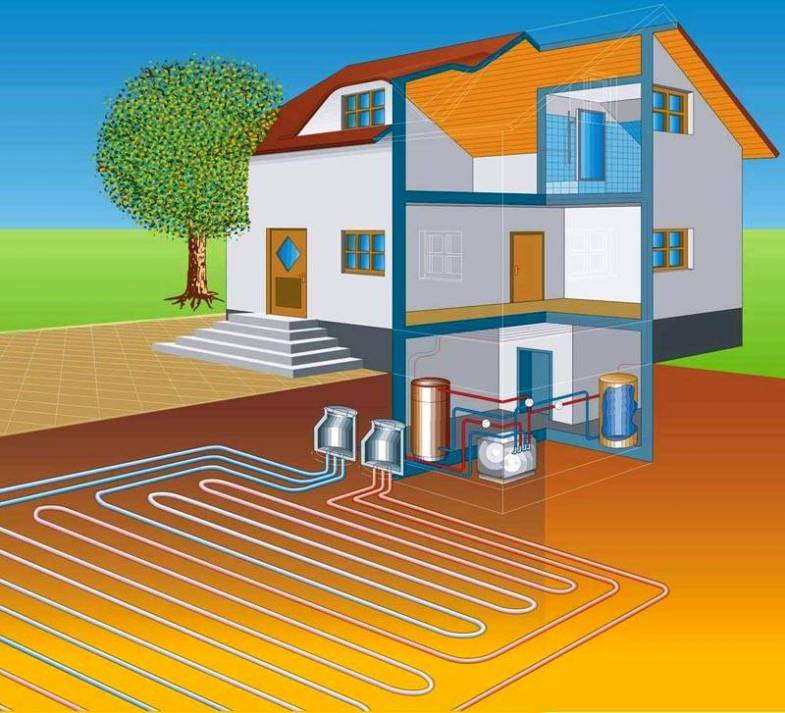
3. Energy of the earth and water.To equip such a heating system, you will need to install a heat pump, which requires electricity to operate. In this case, you can save 10-20% of cash costs compared to gas heating. The heat pump can also be installed independently, especially since, compared to gas equipment, it is absolutely safe.
Heat pumps can operate in 2 types:
- water-water;
- brine-water.
For the first type, it will be necessary to drill 2 wells for lifting and 2 for draining water, about 50 m deep. All these works can be carried out on their own, but with the permission of government agencies.
For the second type, you will need a well with a depth of at least 200 m. Pipes with a solution must be laid in the well. In order to reduce the difference in heat at the outlet at different times of the year, a heat exchanger can be installed.
Despite the relative complexity of installation, such a heating system will allow you to receive almost free heat, the main thing is to make the right calculations and take into account all the nuances.
4. Infrared heating and "warm floor" system. Heating with infrared heat sources can be easily arranged independently. To do this, you just need to buy infrared heaters and arrange them in the house. Their cost is relatively inexpensive, besides, such devices can become a spectacular element of home decor.
The underfloor heating system can also be installed on your own in just a couple of days. To do this, you will need an infrared film, which must be laid immediately under the top layer of the flooring.This process does not require any special skills, it is enough just to remove the existing coating, lay the film and lay a new coating.


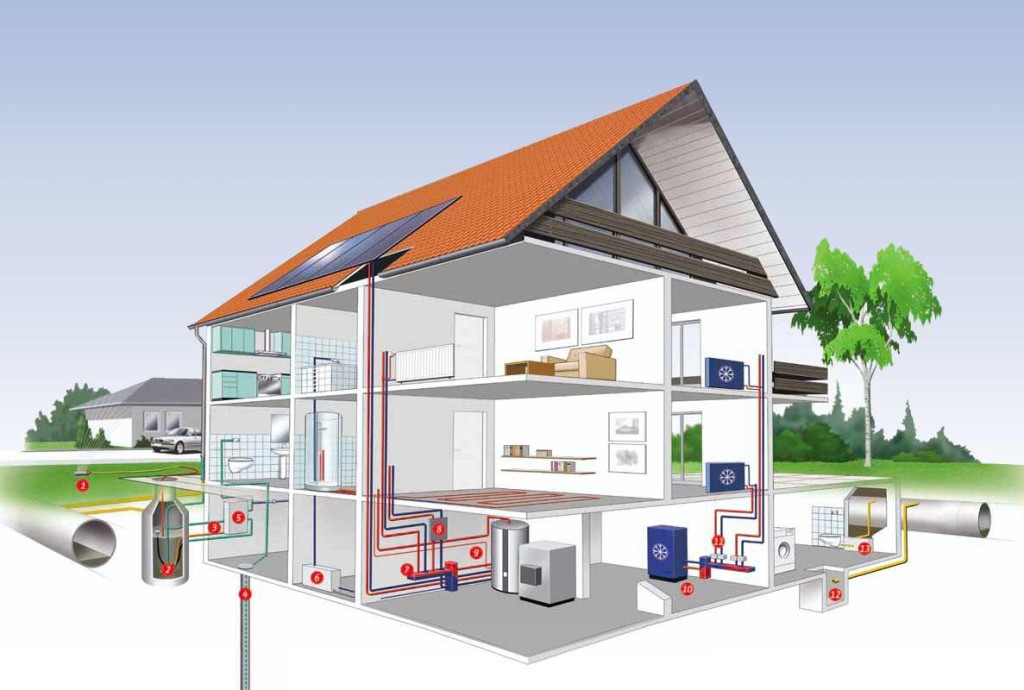

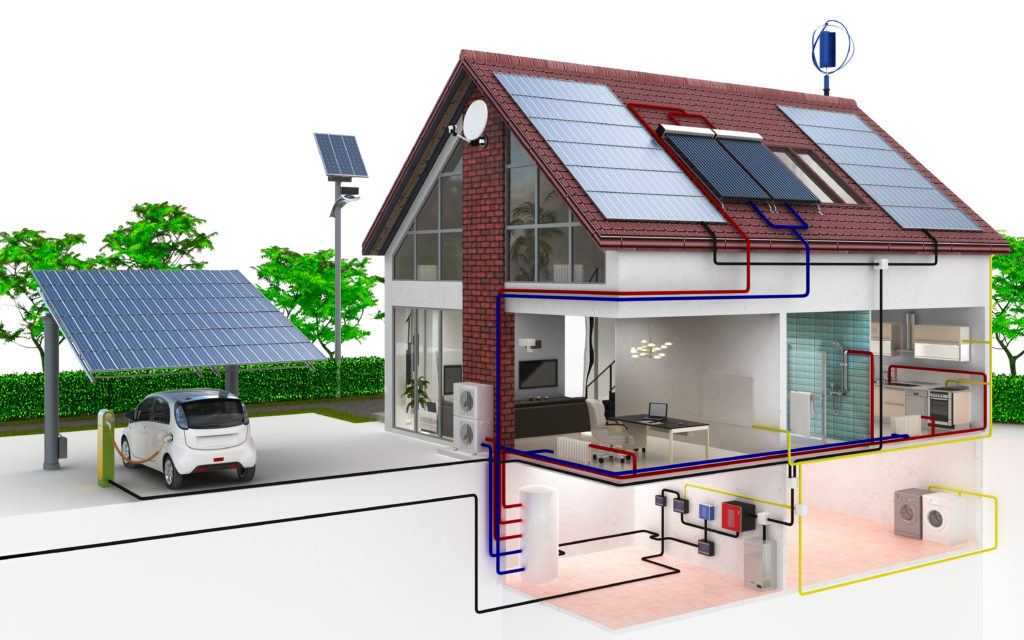

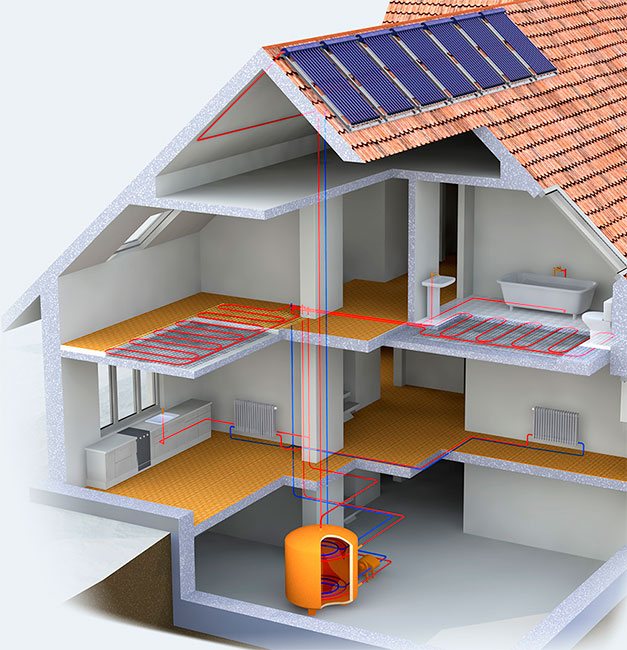

Such an alternative heating of a private house is quite simply mounted and allows you to efficiently heat the room.
How to choose the most efficient energy-saving boiler for heating a private house
Before you start choosing an energy-saving heating boiler, you need to divide them according to the types of fuel used. So, boilers are:
-
electric;
-
solid fuel;
-
gas.
Let's take a closer look at each of these types.
Electrical installations
This type of boilers has the highest efficiency - about 98-99%. In principle, this is a conditional indicator, since electricity itself is generated at nuclear or thermal power plants, where the efficiency will be lower. However, we are considering the process of obtaining thermal energy from electrical energy, and the efficiency and economy of such installations are undeniable here.
An energy-saving electric boiler has a number of unconditional advantages over other heat generators for private houses:
-
the compactness of the boiler, which allows it to be installed in relatively small private houses;
-
except for the electrical and heating network, connection to other communications is not required;
-
non-inertia, that is, heating stops immediately after the power is turned off;
-
simplicity of design and high maintainability.
It is also obvious that an energy-saving boiler goes well with any automation - sensors, controllers, actuators - which gives another advantage to electric boilers.Energy-saving electric boilers differ from each other in the way they work and come in three types: tubular (heater), induction and electrode. At the same time, all three types have the same efficiency of 98-99%.
The boiler with a heating element has the largest dimensions and is a metal container for water, inside of which there are electric heaters - heating elements. The difference between such a boiler lies in the long heating of the coolant.
Electrode energy-saving boilers heat the coolant much faster, since its operation is based on the electrochemical properties of water, and heating occurs when DES is applied to the electrodes.
Induction boilers have a coil with a metal core, eddy currents from the coil heat the core, and it heats the water. Thus, heating in such boilers is also fast. The only disadvantage of this boiler is the high price, otherwise it is a perfect device that is suitable for working with any energy-saving heating system.
Solid fuel and gas boilers
The most economical energy-saving boiler that runs on solid fuel sources will be a boiler that uses wood pellets for operation. The efficiency of such a boiler is 92%, and this is the highest efficiency indicator among solid fuel boilers. It is good because it uses a renewable heat source and minimally pollutes the atmosphere with combustion products.
Gas energy-saving heating boilers are not inferior to electric ones in terms of their efficiency. These condensing boilers have a closed combustion chamber with forced airflow. Heat is generated from water, which is obtained by the chemical reaction of metal combustion.Water instantly evaporates in the flame, and the heat exchanger condenses the steam on its surface, taking away its heat. The efficiency of such a boiler reaches 96%.
Inappropriate Options
There are several types of electrical equipment designed for space heating, but not recommended for use as the main source of heat:
- Thermal fans. These devices have the simplest device and are a large hair dryer, consisting of an incandescent spiral and a fan that drives a stream of air through it. Their use will definitely not be cheap - the air cools extremely quickly, and it will not work to maintain a comfortable temperature for a long time. Do not forget also about the loads on the electrical network and the harm - too dry air is harmful to domestic plants and people.
- Oil radiators are probably the most common device used by residents of apartment buildings when there is not enough central heating power. Surprisingly, this is still the least efficient way of heating. And even if it is possible to heat the room to a comfortable temperature, it will come out not at all cheap.
Why is this equipment so common if it is inefficient. The fact is that all these are auxiliary devices designed to help out in emergency situations or when the main heating does not cope with its tasks. For a garage, for example, constant heating is not always needed. For the period of repair work, it can be heated with a heat gun (fan heater) powered by electricity or gas. But in a house where it is necessary to constantly keep the temperature at a certain level, infrared panels are much more effective.
Conclusions and recommendations
After a comprehensive analysis, we can draw the following conclusions about the choice of economical heating of a private house:
Residents of the Russian Federation, whose houses are connected to gas mains, can continue to sleep peacefully - they will not find a more economical way of heating. Unless it is good to warm the dwelling in order to reduce fuel consumption. In the short term, natural gas will remain unrivaled.
The cheapest heating without mains gas is the combustion of solid fuels. But for the sake of financial gain, you will have to give up the time and effort spent on loading firewood and maintaining equipment.
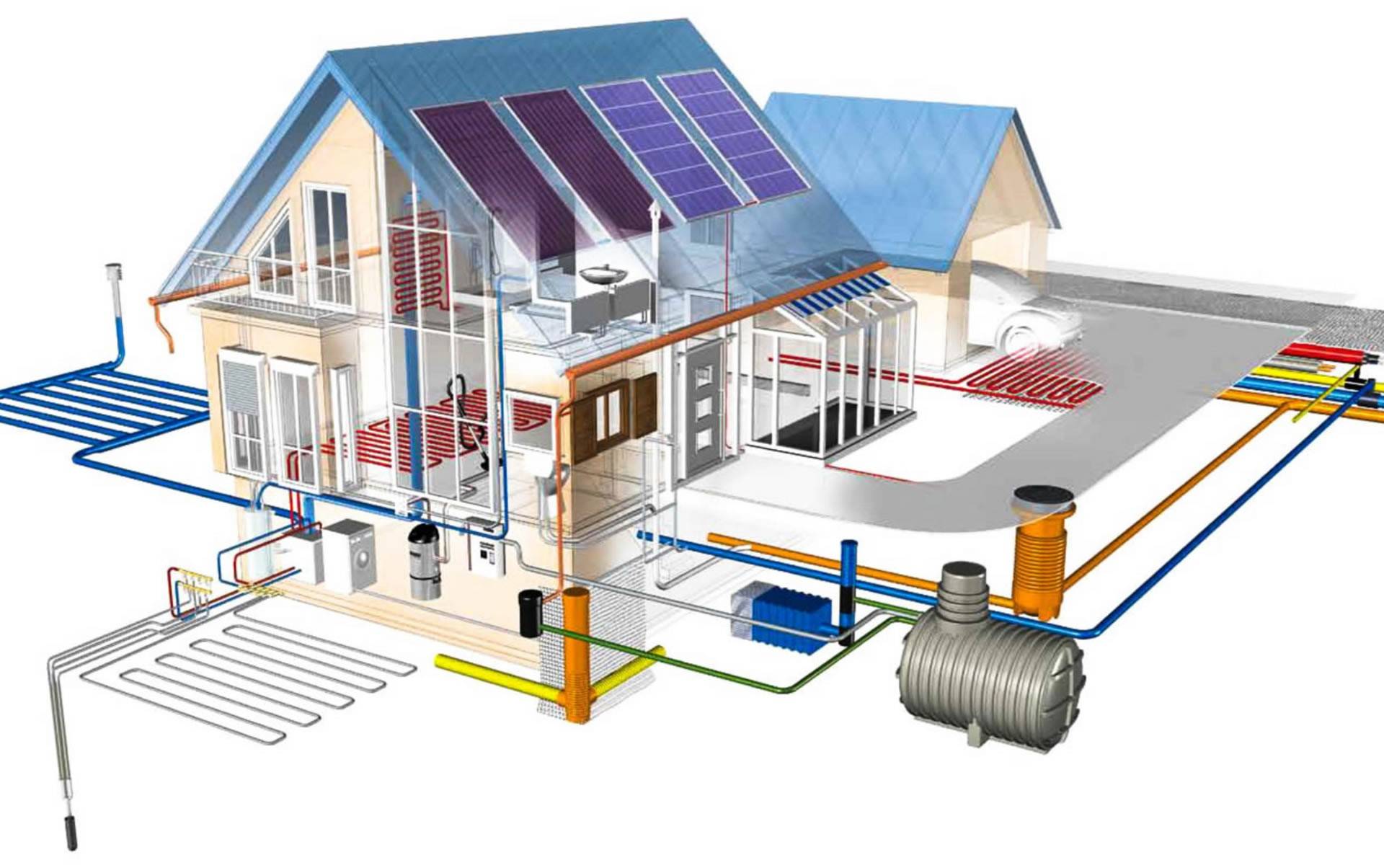


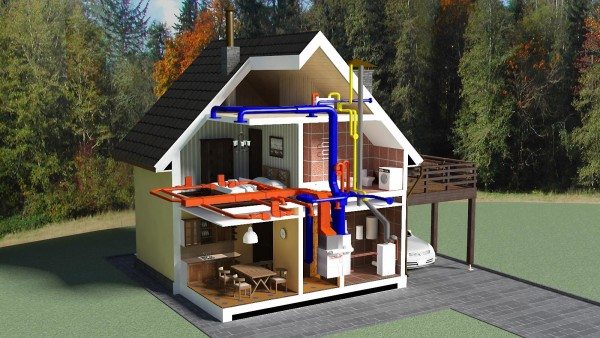

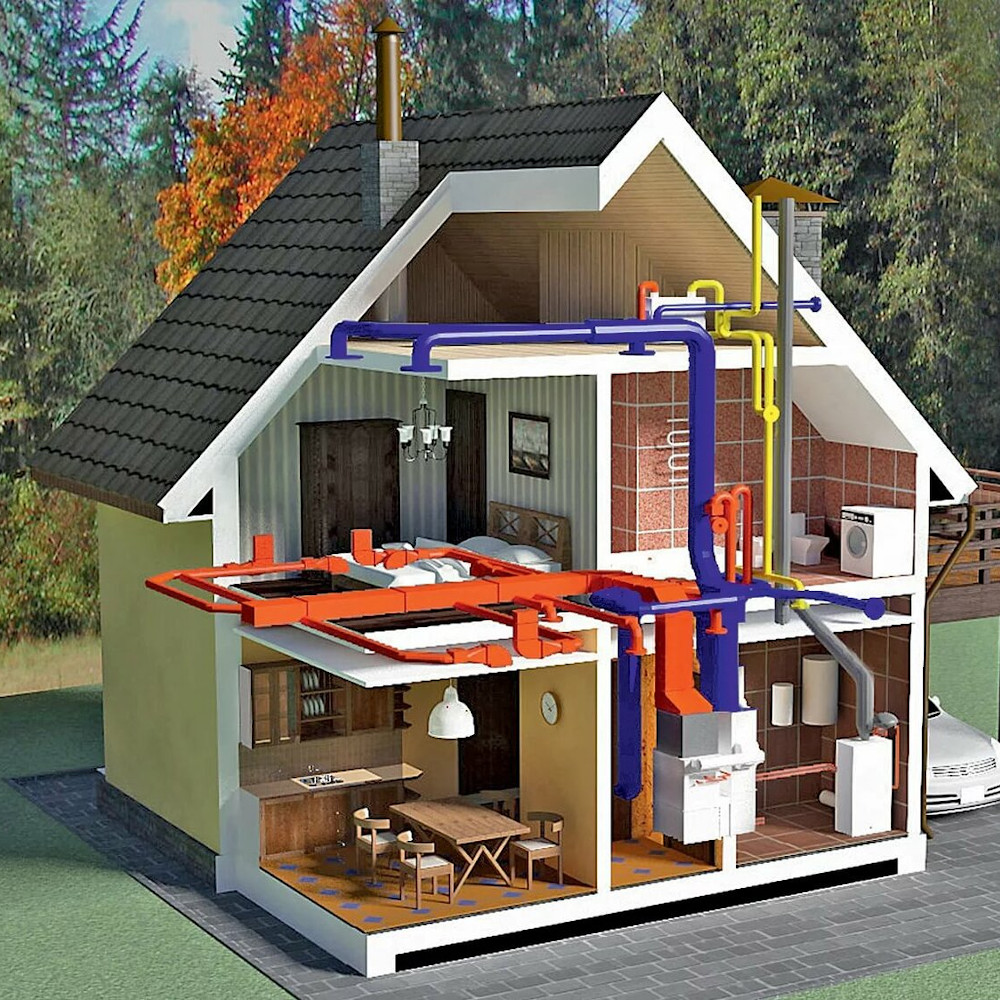


In this case, you should pay attention to solid fuel boilers for long burning and choose one of them.
If there are financial opportunities, the best option for economical heating is a pellet boiler. If you have little space for storing pellets, then the issue is solved by periodically supplying pellets during the season, although the purchase price will then increase.
The best results in terms of efficiency are obtained by a combination of 2-3 energy carriers
For Russia, the most popular pair is solid fuel and electricity at a nightly rate. For Ukraine - electricity at night and natural gas during the day (including subsidies and without exceeding the limit of 3600 kW).
To endure dirt and odors in the boiler room is possible only if you get used oil inexpensively. Like diesel fuel, mining is not the best option for a residential building, except to place the equipment in a separate building.
Residents of the Russian Federation with incomes above average can afford to heat their homes with liquefied gas, for the sake of comfort. In Ukraine, this method is practically not considered as very uneconomical.
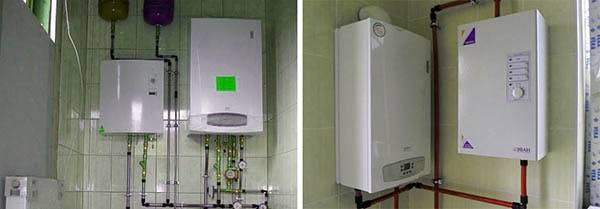
Combination of a wall-mounted gas and electric boiler, the second one serves as a backup (night) heat source
At the moment, when energy prices tend to European ones, the insulation of private houses is becoming increasingly important. This is also a way to get economical heating, because with small heat losses it becomes possible to constantly use an electric boiler with a water heating system or local electric heaters, which is very convenient.
Conclusions and useful video on the topic
When choosing the most economical heating option for your cottage, you should take into account many factors and parameters, and the selection of videos below will definitely help you with this.
Which heating is better:
What fuel is the cheapest to heat a country house:
How much does gas and electric heating cost:
There is no universal option for the cheapest and most economical heating. For each particular house, it is necessary to calculate all the costs of fuel, equipment for heating the coolant and the arrangement of the heating system as a whole.
Often you have to build on the availability of a particular fuel, and only then select a boiler for it. Plus, you should definitely not forget about the high-quality insulation of the cottage and pipes to the radiators.
Share with readers your experience in improving the efficiency of the heating system. Please leave comments on the article and ask your questions. The feedback form is located below.