- Types, diameters
- Aerator 110 mm
- Aerator 50 mm
- Built-in aerator
- Sewer aerator - an effective solution to the problem of unpleasant odors in the room
- What is an aerator and why is it used
- Types and application of aerators
- What it is
- Features of installing aerator
- How to install?
- Basic installation rules
- Which valve to buy?
- Operation features
- Choosing an aerator
- Types of aerators
- Valve diameter
- Sewer aerator 50
- Sewer aerator 110
Types, diameters
A considerable number of varieties of sewer aerators of domestic and foreign production are sold in the distribution network, differing among themselves in the installation diameters of the housing, location, and design of the shut-off valve. Below are the main types of aerators installed in domestic sewers.
Aerator 110 mm
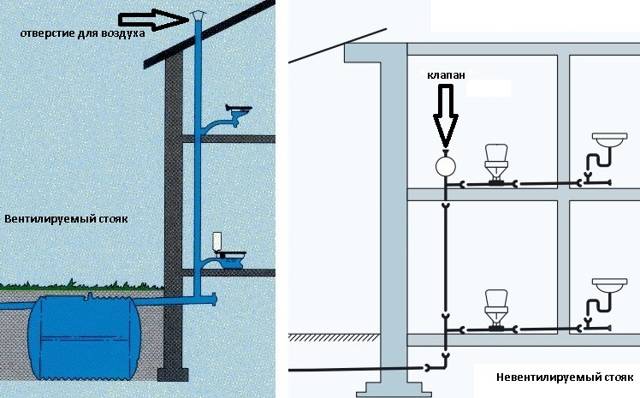
One of the popular methods of dealing with sewer odors in multi-apartment and private houses is the withdrawal of a riser pipe (in individual construction it is called a fan pipe) through the roof to the outside. If in a communal building this does not create difficulties and the pipe sticking out of the roof is covered with a metal umbrella, then in a private house pulling a fan pipe causes a lot of problems.
It must pass through the attic and roof, in which it is necessary to make appropriate holes, to isolate the junctions with the structures. In addition to increasing installation costs, the riser pipe takes up space, creates inconvenience in the use of living quarters and worsens their aesthetic appearance if the attic is used for living.
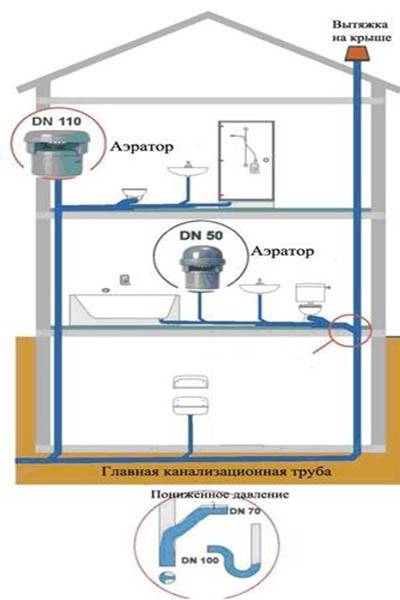
Therefore, it is reasonable not to lengthen the riser pipe, but to leave a short section and close it at the highest point with a vacuum filter, which is a 110 mm sewer aerator. Also, such a filter is also installed in an extensive sewer network with several risers - the main one is taken out through the roof, and the auxiliary ones are closed with aerators.
The landing part of the aerator body can be placed both outside and inside the pipe, the devices are equipped with valves of a membrane or float type, some models have a protective grill, sometimes two stem valves are installed in them.
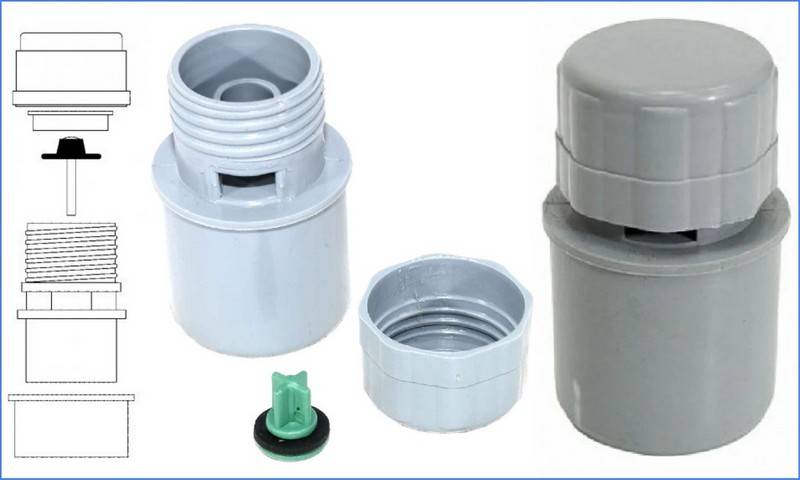 Aerators 50 mm - device
Aerator 50 mm
A 50 mm sewer aerator allows you to do without a protruding riser when installing sewers. To do this, a pipe from the toilet is lowered into its upper point or a plug is placed, closing the outlet, and a vacuum filter of a suitable size is placed in the sewer pipeline with a diameter of 50 mm.
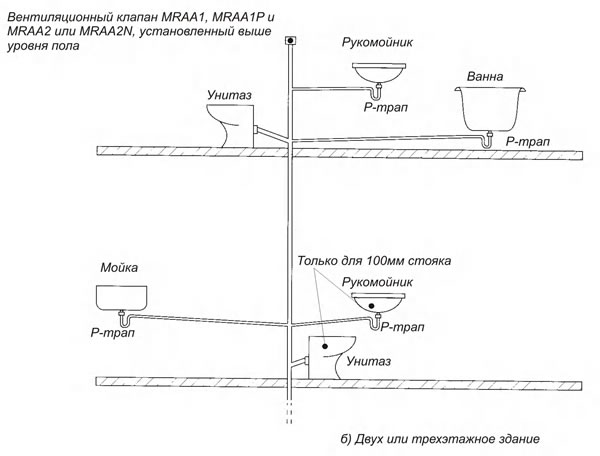
Important: The d50 mm aerator is installed only in a vertical section of the pipeline, using a tee for connection, the main condition for its placement is that it must be located after the water seal and as close as possible to the riser pipeline
Built-in aerator
An even more practical thing than 50 or 110 mm vacuum valves is an aerator built into the siphon.The advantage of the device is ease of installation - instead of the usual one, a siphon with a valve is taken and installed according to the standard scheme, without having to buy a separate aerator, tees, or cut the pipeline.
Also, for ease of installation in the distribution network, aerators built into the tees are implemented, which are connected to a horizontally located 50 mm pipeline.
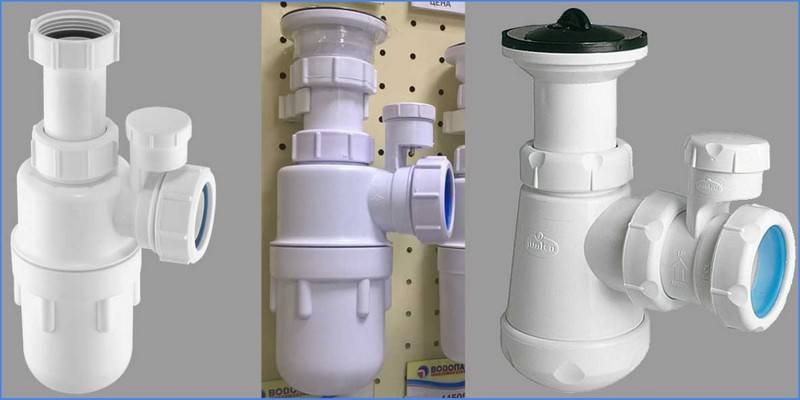 Aerators in siphons
Sewer aerator - an effective solution to the problem of unpleasant odors in the room
One of the most important requirements for the sewer system is the absence of an unpleasant odor in the home. To do this, a number of measures are being taken, which include the sewer aerator 50 or 110. But what is this device, what function does it perform and what do these numbers mean?
Next, I will try to answer all these questions, and also tell you in what cases it is necessary to use an aerator.
What is an aerator and why is it used
Purpose of the device
The sewer pipeline itself is sealed, so it does not have any smell. However, reverse air flow can enter living spaces through intake points, i.e. plumbing fixtures.




To prevent this from happening, siphons are installed between each plumbing fixture and the sewer. The latter provide a water seal (water lock), as in the diagram below.
Scheme of a water seal in a siphon
However, in some cases, as a result a sudden change in pressure in the system, the water seals are broken. This happens due to the drain of a large amount of liquid. In practice, the failure of water seals most often occurs after use, and it looks like this:
- in the process of salvo discharge of water, the pressure in the system increases sharply;
- as soon as water enters the riser, a vacuum occurs in the system due to lack of air, i.e. water works like a piston in a pump - before the flow, the pressure rises, and behind it, on the contrary, it is discharged.
When such processes occur in the system, a characteristic gurgling of water is heard in the sinks and washbasins, after which an unpleasant odor appears. Most often, a breakdown occurs in one place where the water seal is the weakest, i.e. small siphon.
Of course, the discharge of a large amount of water does not always lead to the failure of hydraulic seals. Most often, the cause of large pressure drops is insufficient ventilation of the system. This may be caused by:
- errors in the design of the sewer system;
- simultaneous use of a large number of plumbing fixtures, for example, in apartment buildings;
- the absence of a fan (ventilation) pipe, which is led from the riser to the roof.
In this case, there is only one way to solve the problem - by installing an additional air intake point. But here another problem arises - an unpleasant smell will leak from the sewer. As you probably guessed, to solve it, just designed aeration valve for sewerage or, for short, aerator.
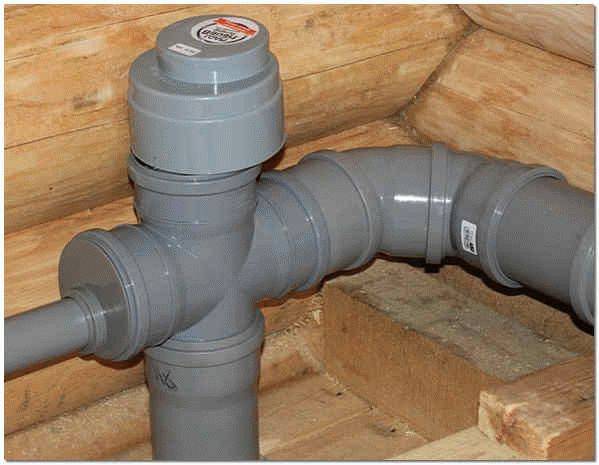
In the photo - an example of the use of an aeration valve in the system
Thus, given The device performs two important functions:
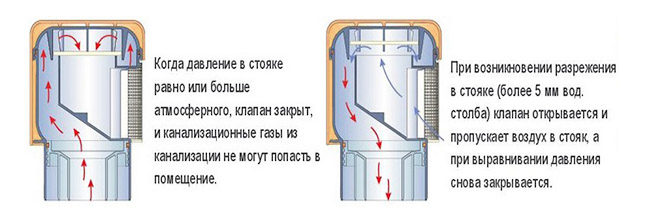
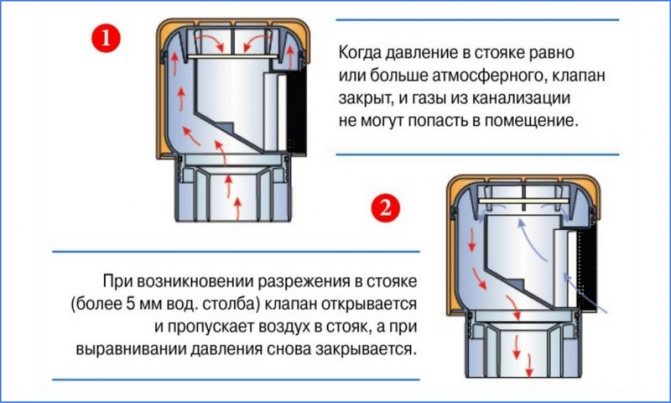
- when a discharged pressure occurs in the system, it provides air flow, and thereby balances it;
- prevents the ingress of gases from the sewer into the room as a result of overpressure.
Device
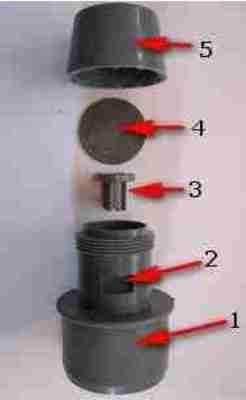
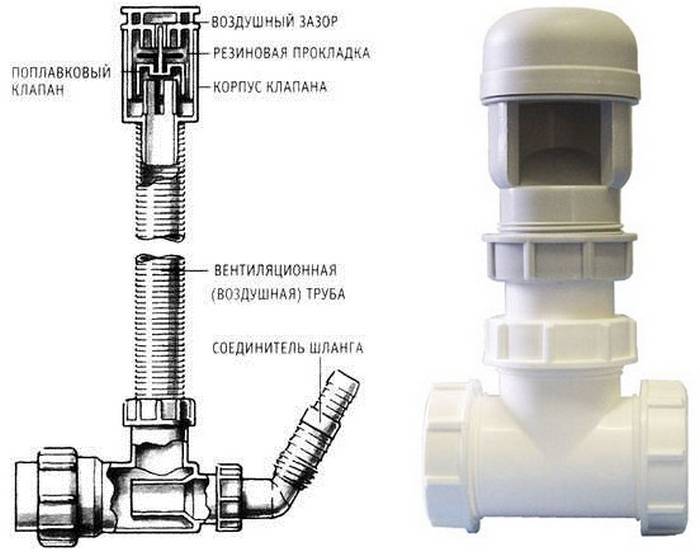
The design of sewer aerators is extremely simple. The device includes several main elements:
- housing - made of the same material as the sewer pipes, i.e. PVC;
- inlet - provides air supply when pressure is released in the sewer system;
- locking mechanism - is a valve that closes the inlet at elevated or balanced pressure. With discharged pressure, the valve opens the hole;
- rubber gasket - provides reliable sealing of the inlet when closed.
Scheme of the device of the aeration valve
According to the type of device, the locking mechanism is divided into two types:
- a stem that rises with a pressure difference;
- single membrane.
It should be noted that the membrane system is more preferable, as it is reliable. The rod, with prolonged inactivity, can jam as a result of debris. In addition, the system stabilization time for such a device is higher.
If you notice that the device has stopped working or is not working correctly, you need to remove the top cover and clean its channels.
Types and application of aerators
So, we have analyzed the principle of operation of the aerator for sewage. Now let's get acquainted with the types of this device, and also consider the cases in which its use is justified.
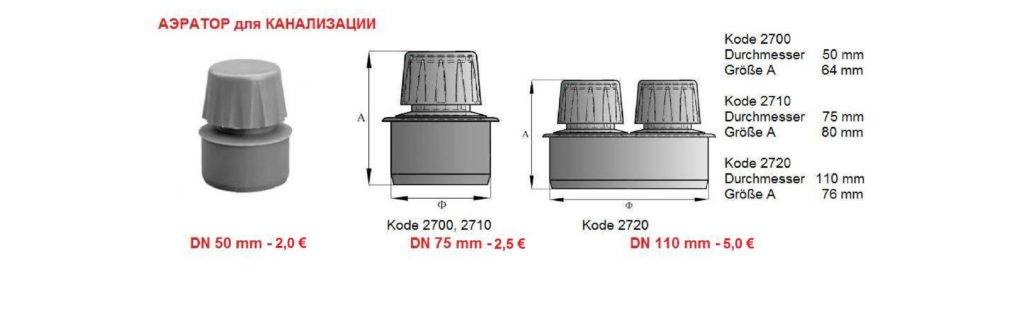
As mentioned above, there are two types of valves 50 and 110. These numbers indicate the diameter of the pipes for which the device is intended. This also depends on the scope of its application.


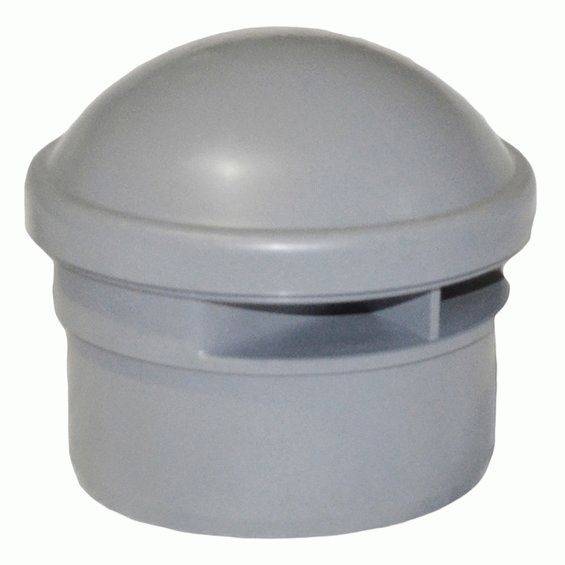
Aerator with a diameter of 110 mm
Aerator 110 mm
Aerator for sewerage with a diameter of 110 mm, depending on the type of installation, there are two types:
What it is
An air valve is a design that is necessary to maintain specific pressure indicators in the sewer. The aerator is designed to remove unpleasant odors, gases, and so on. A house in which residents use fan ventilation for such purposes will not be spared the problem of the disgusting smell that the sewer contains. This method does not solve the problem of pressure surges, which are the cause of poor drainage performance.
 Remote control valve
The air valve is a membrane device of the classical type. Due to the fact that the design is equipped with a flexible partition, gases and unpleasant odors that the sewer contains do not enter the house.
Principle of operation
By the nature of use, the following air valves are distinguished:
- membrane;
- cylindrical type
- with lever mechanism
The first are made of PVC. They are fixed to the inlet of the fan pipeline. It is connected to the sewer as ventilation. With pressure surges, the membrane changes position. Therefore, gases are not able to seep through the valve into the sewer. The principle of operation of the aerator will be successful if oxygen enters the fan pipe.
The design of the air valve for sewage
Cylindrical is made from steel and alloys. Externally, the device resembles a shut-off valve. The item has a durable metal case, which has a thread. As well as a standard size lid. Usually, it is 110 millimeters. Sometimes there are models of different sizes. The cover is fixed at the base. When direct pressure arises, it opens, thereby passing water, drain.After, it returns to the opposite position. Due to the fact that the lid opens inward, there is little chance that the waste will return. In this case, the private house will be protected from the unpleasant smell that the sewer contains.
Video: using a non-return air valve for sewers
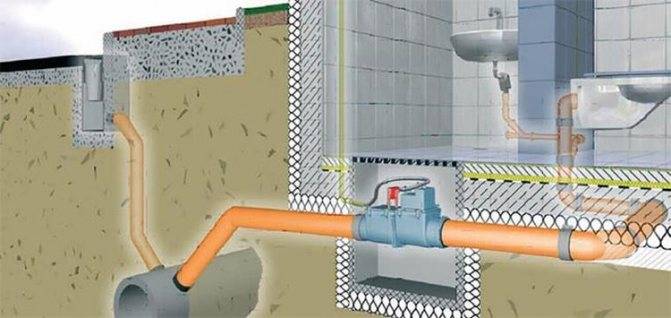
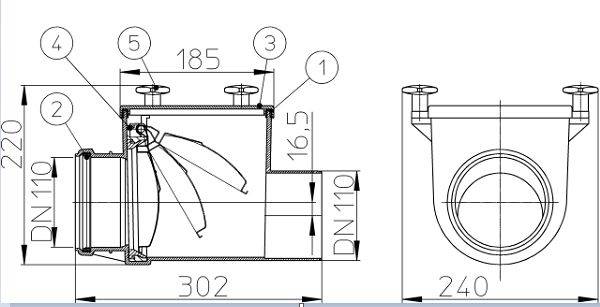
In non-ventilated sewers, a lever version is used. The device must be configured manually. Principles of operation: in the direction that was set by the arrow, sewage flows. For urgent repairs, this method is convenient.
In addition, they produce vacuum, automatic valves. The difference lies in the configuration of the process itself. Vacuum opens the way for drains in one set direction, excluding reverse. With an automatic device, you can change this direction depending on the need.
 vacuum valve
According to the principle of the locking mechanism, valves are divided into:
- Swivel. The design is similar to pneumatic locking mechanisms. The control mechanism is a lever, a spool. Are established on pipes by insertion in the general design. Under the influence of wastewater, the spool turns, and then the water leaves the riser;
-
Ball. Air valves for sewerage are used only in pipes with a small diameter. For example, in showers. The locking mechanism is a metal ball. It connects to a spring that controls the operation so that the sewage does not return back;
- Wafer type. Small size, easy to install. The design is installed on the pipe by means of a thread. In view of this, such mechanisms are installed on both plastic and metal pipes. For the first taps, a compression fitting is used.The locking mechanism is a flexible membrane that is able to change its position depending on the head and pressure of the wastewater. Wafer type are single-sided and double-sided;
- Lifting. Suitable for riser installed in vertical position. The principle of operation lies in the ability of the PVC membrane to change position, focusing on the pressure of wastewater. Due to the vertical fastening, the reverse return of drains is excluded.
Features of installing aerator
First, let's decide on constructive solutions. Aerators can be point and continuous. The former are located over the entire surface of the roof, they provide ventilation for individual sections of the roof. Installation of the second aerators on a soft roof is carried out along its entire length, so that it is possible to ventilate the entire roof.




Point devices are made in two versions:
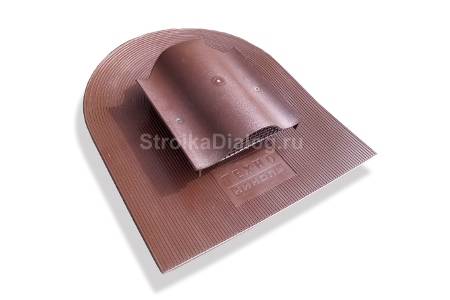
- Pitched installed on a solid surface of the roof. Places for their location are chosen where it is necessary to increase the movement of air. Particular attention is required to individual components of complex roofs: valleys, skylights, lanterns, ridges. In these areas, it makes sense to install aerators for a soft or other roof on both sides of the obstacle.
- Skate shoes are mounted on a skate. The mass of warm moist air, as a rule, rises from the inside of the premises and goes out through the ridge structures. At the same time, cornice ventilation ducts supply portions of fresh air from outside. Thus, the air mass is renewed. Ridge aerators for soft roofs contribute to the enhancement of these processes, as well as the removal of bituminous fumes from the roofing material.
Installation of aerators can be carried out during the construction of a building, during the replacement of roofing, or as an independent procedure for an existing roof. An aerator for a flat soft roof can be installed independently, but it is better to entrust this matter to specialists. The process itself looks like this:
- First you need to determine the installation location of the deflectors and choose their design.
- In the roofing, a window is cut out 10-20 mm wider than the diameter of the pipe.
- The perimeter of the resulting hole over the entire thickness must be abundantly smeared with bituminous mastic.
- In the same way, the pipe of the roofing aerator for soft roofs should be treated.
- The pipe is inserted into the window, fixed, and then the entire structure is assembled.
Fastening to the main coating is carried out using special roofing fasteners (self-tapping screws, dowels)
Particular attention should be paid to the places where the aerator meets the roof. For a guarantee, it is better to lay an additional layer of waterproofing or roofing material under the aerator skirt
How to install?
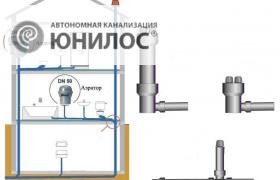
Aerators can be installed at the following points:
- a fan pipe, which is a continuation of the sewer riser;
- place for draining plumbing fixtures - toilet, sink, shower, etc.
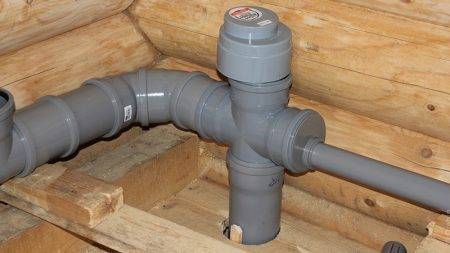
How to install down the drain? First of all, inspect the device itself, it must have an arrow on it. Install the valve so that the arrow indicates the direction of water flow. If the device is installed incorrectly, the aerator will not function, moreover, it may cause the system to stop working.
Basic installation rules
It is quite possible to install an aerator in the sewer system yourself. There is nothing particularly difficult in this work. But you need to do the work, taking into account a number of rules. Basic requirements for the performance of work:
- install the valve in the narrowest places of the pipeline;
- it is impossible to increase the diameter of the sewer riser during the installation process;
- valves with a diameter of 50 mm must be installed after all plumbing elements are connected;
- the cylindrical valve must be located above all connection points of the taps to the riser. It is installed only indoors, it is strictly forbidden to mount this device on the street;
- if the system has a drain drain (a drain device installed in shower enclosures and cabins), then the installation of the valve should be planned at least 35 cm from the floor level;
- it makes sense to install a vacuum valve only in low-rise buildings, the maximum number of floors in a house is three;
- do not install the cylindrical valve horizontally or with a slope, the device must be installed strictly vertically.
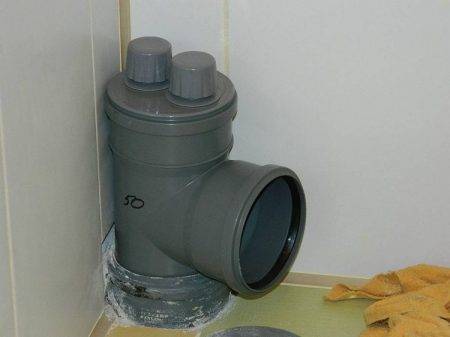
The advantage of installing an aerator on a sewer riser:
- Reduction of pipeline footage. If the installation of an aerator is not planned, then the removal of the fan pipe above the roof will be required. When installing a vacuum valve, fewer pipes will be required.
- Availability. The sewer aerator is inexpensive, it is quite possible to install it yourself.
- Autonomy. The device works autonomously, it does not require an electrical connection.
Which valve to buy?
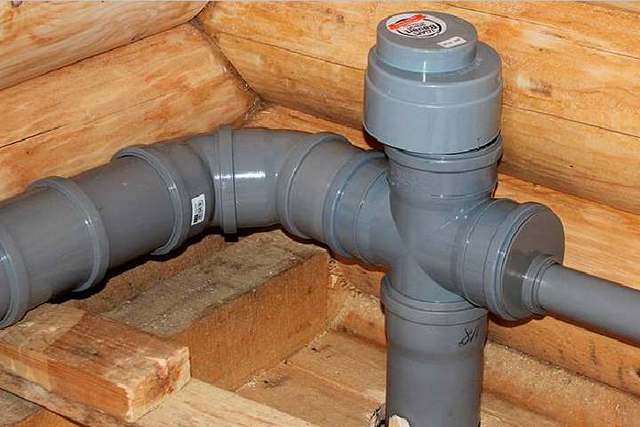
The question is not easy in the sense that there are no obvious “favorites” or “promoted” models. But at the same time - there is a very serious variation in prices.And plus everything - there are no clear selection criteria, except, perhaps, the diameter of the pipe on which the valve is mounted, dimensions, if the place for its installation is limited, and the most convenient way to connect to the pipe.
Of course, it should be assumed that the more well-known manufacturers of plumbing products and the valve will offer the most durable and reliable. But you can find a lot of examples when the most uncomplicated and inexpensive aerators of domestic production serve for decades and continue to serve.
Therefore - just a brief overview of the models offered for sale and their prices, but without any recommendations in favor of a particular product.
Probably, this is already enough to understand how the prices for such products “dance”. Moreover, with approximately equal characteristics, material of manufacture, etc. So the author of this article in no way assumes the responsibility to recommend certain models - everything is too non-obvious.
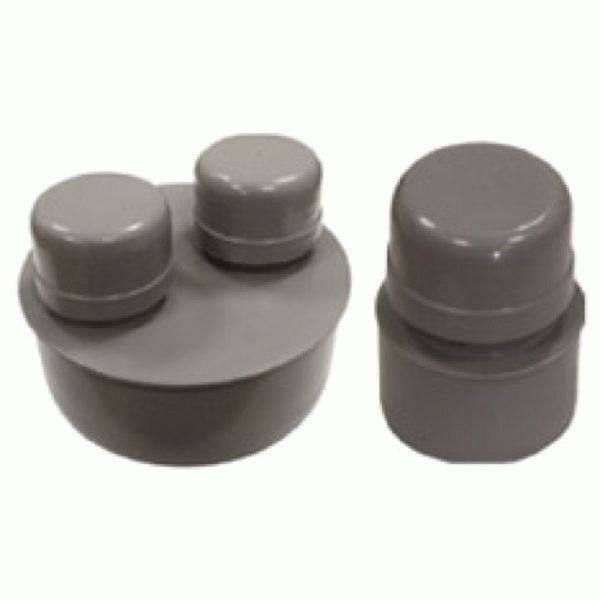
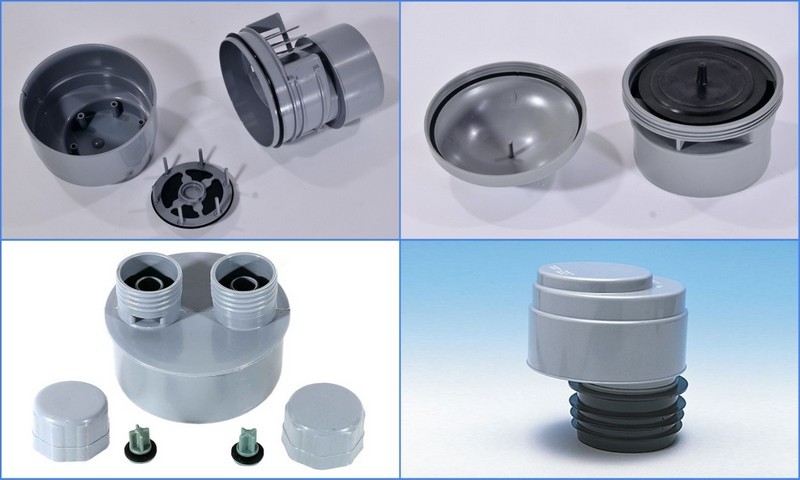
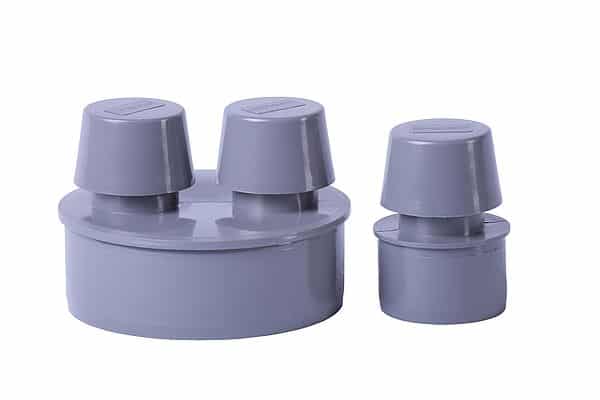
True, they may ask a question - why do some DN110 aerators have one common head, and others have two small ones?
There is no particular secret here. It's just that the manufacturer produces models for both 50 mm and 110 mm pipes. And it is technologically easier for him to combine two smaller valve heads in one body to get an aerator for a larger diameter. And this does not affect the operation of the device itself. Unless you have to take care of two membranes. But if one fails, it will cost less to replace than one large one.



Operation features
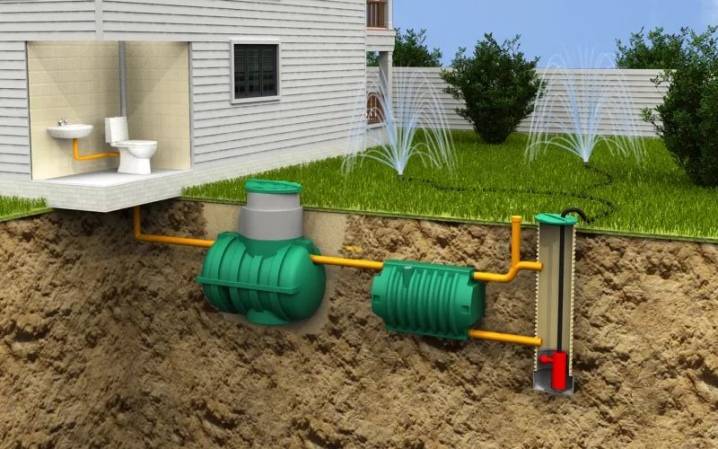
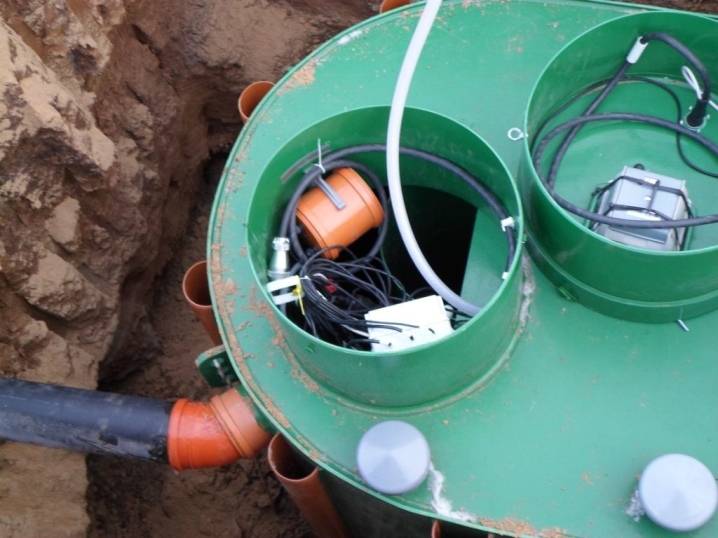
In order for the installation to please with a long service life and without unnecessary problems, a number of certain rules should be observed.Of course, you need to start by carefully reading the instruction manual that came with the unit. Before using the device, it must be grounded. The location of the compressor is possible only in a box protected from moisture. During installation, it should be taken into account that the suction zone, as well as the cooling part of the unit, must be fenced off from vapors and various gases that come from the tank.
Do not forget that the device has an air filter at the inlet, which needs timely cleaning. The device must be handled carefully so that it does not fall or be subjected to mechanical damage.
Particular care must be taken during operation, as well as when removing the aerator before the septic tank is mothballed. It is necessary to constantly monitor the condition of the cleaning tank
It must not be allowed to overflow or be flooded.
When using devices related to the membrane type, it is necessary to change the working element to a new one at certain intervals. This is due to the fact that in the process of work it loses its elasticity and wears out. While the warranty is valid, a specialist can replace it, and then you can do it yourself. It is desirable that the membrane aerator repair kit is always at hand. You can make a replacement, guided by thematic videos from the Internet and the recommendations of professionals.
If the unit overheats quite often and the thermal relay trips, the device should be checked for contamination.Most often this is due to organic deposits that are able to penetrate inside with gases and fumes from sewer water. In this case, the device will have to be completely disassembled, cleaned and rinsed thoroughly.
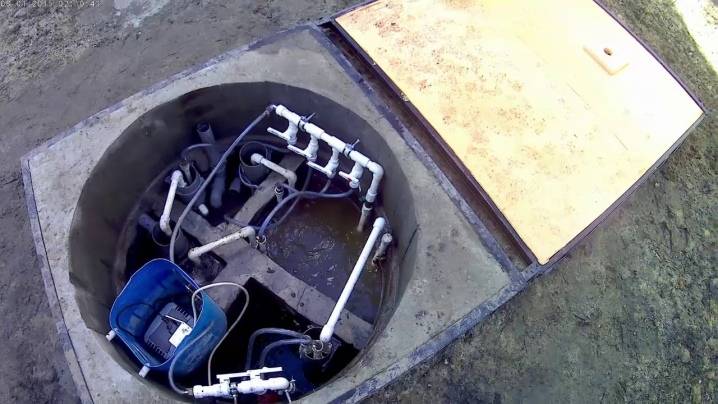
How to make aeration of a septic tank with your own hands, see the next video.
Choosing an aerator
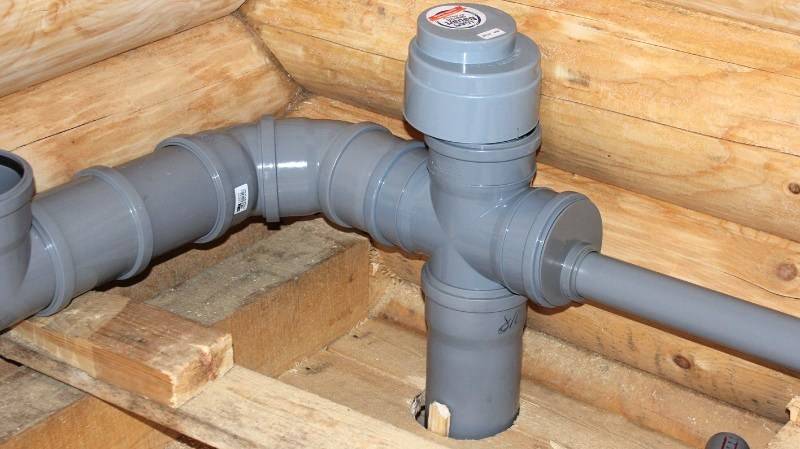
Before you buy an aerator for the sewer system, you need to know how to choose it correctly. Experts recommend that you familiarize yourself with the device before purchasing internal sewerage in a private house, find out its weaknesses and decide on the appropriate type of device.
Before purchasing an aerator, you need to consider the following nuances:
- type of sewerage pipeline in a private house;
- nominal pressure level in the riser;
- dimensions of the fan pipe valve mechanism;
- installation method;
- aeration valve material and its strength level;
- type of aerator (membrane, anti-vacuum, etc.);
- the possibility of smooth adjustment of the device in the event of a breakdown;
- valve mechanism;
- the presence in the design of a specialized unit that prevents the penetration of microorganisms and bacteria from the sewer into the premises.
The most important selection criterion is the diameter of the pipe. At the same time, you need to focus on certain tasks that the installation of a sewer air valve must perform. The drain valve for sewage is very important for the proper operation of the drainage system in the house.
Types of aerators
Specialists combine aerators into groups according to various criteria.
Place of installation:
- to the main riser;
- to drain plumbing fixtures (sinks, washbasins).
According to the principle of work:
- automatic. These are the most common mechanisms of the gravitational type.They are used in apartments and country houses, because they do not have a large bandwidth;
- anti-vacuum. They work not only for intake, but also for air exhaust. They can ensure the reliable functioning of several systems at once;
- combined. The mechanism combines the properties of both previous types.
By type of performance:
- membrane. A rubber gasket acts as a vacuum valve of the aerator, which bends under high pressure and passes the required amount of air;
- cylindrical. These are the highest quality devices made of durable metal and equipped with a screw cap that serves as a check valve. Such structures are designed for sewage in a private house or small apartment;
- lever. Such devices are made of high quality metal. The non-return valve is located on a special lever, which is raised by high air pressure from the sewage system, and lowered by its own weight.
The most common devices are models that are designed for installation on a pipeline with a diameter of 110 mm. Often they are mounted near the main riser, so that they instantly respond to any change in pressure and keep the water seals of plumbing mechanisms.




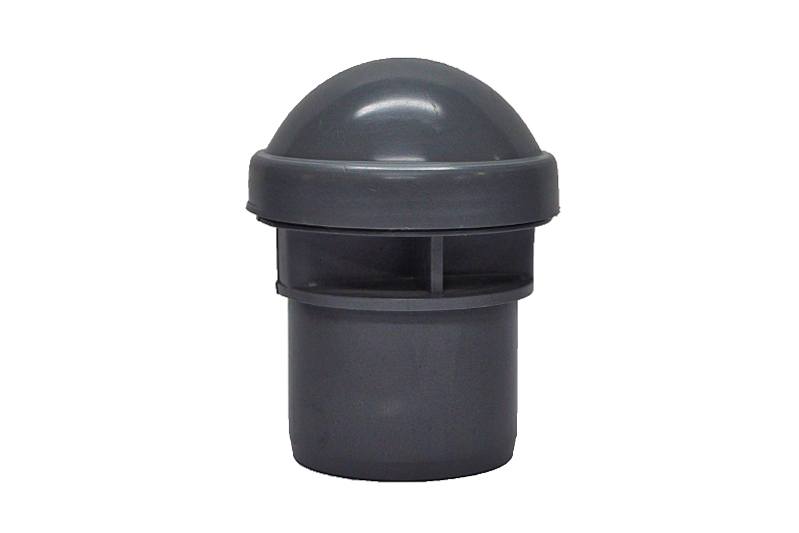
Valve diameter
The diameter of the aerator valve is of two types: 50 and 110 millimeters. These figures correspond to the diameter of the pipeline where the device is supposed to be installed.
The first type is used on locally operating branches of the system. In many cases, such aerators are mounted in country houses or small apartments with an inclined or horizontal pipe.
This method prevents clogging of the pipeline and protects against the negative effects of too low temperatures in winter.
Also, this device is used for auxiliary risers, since thanks to the valve, only one riser can be brought to the roof.
Sewer aerator 50
Such a device can only handle a small amount of drains, so it is mounted directly on the drain from sinks or toilets. There are certain rules to install a vacuum valve for sewer ventilation.
The mechanism can only be connected to the pipeline with the smallest diameter. A 50 mm aerator is connected after the very last drain hole and is installed at the highest point of the riser.
Sewer aerator 110
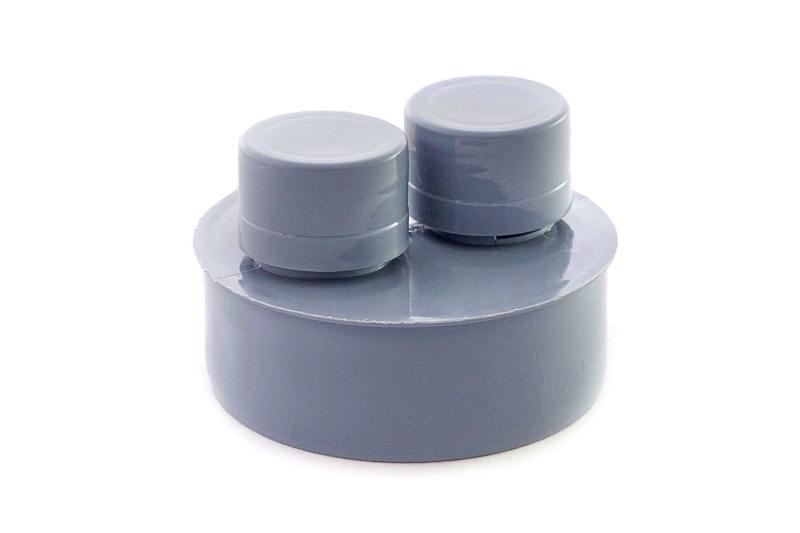
Such aeration units can easily cope with a huge amount of liquid and are connected to the main riser with a diameter of 110 mm, or a valve is placed on the end of the aeration pipe. They are available with both internal and external mounting brackets.
Their main advantage is that there is no need to display pipeline through the roof and floor slabs. They also have automatic pressure adjustment, differ in a simple way installation for sewer pipes with a section of 110 mm and a fairly low price.
Do you have an aerator installed?
Yes 11.11%
No 88.89%
Voted: 9
I like1 Dislike